Businesses and citizens want to ‘feel safe’, says EU tech sovereignty VP.
European Parliament lawmakers and member states have agreed on a provisional deal for a simpler application of the Artificial Intelligence (AI) Act as part of the EU’s digital omnibus package.
Announced last November, the digital omnibus is proposing a consolidation of all rules around data into two major laws – the Data Act and the General Data Protection Regulation. The AI Act and the various laws around cybersecurity are seeing amendments aimed at simplifying administrative burdens.
The AI omnibus has faced repeated criticism for potentially enabling weaker laws around the technology that might substantially impact EU residents’ rights. In a blogpost, the Jacques Delors Centre in Germany said that current market concentration and the dominance of foreign Big Tech in Europe mean deregulation might not primarily benefit European businesses.
Advertisement
Meanwhile, corporate leaders from big companies including Mistral AI, ASML and SAP argue against a potential progressive deindustrialisation led by bureaucratic burdens.
As part of the deal, rules for high-risk AI systems in the EU, including biometrics, critical infrastructure, education, employment, migration, asylum and border control, are now postponed by a year – set to apply from 2 December 2027. These were first set to apply starting August 2026.
“This sequencing will help ensure that technical standards and other support tools are in place before the rules start to apply,” the Commission said in a press release.
“Ireland is committed to driving AI adoption across enterprise, particularly among SMEs, to enhance productivity and competitiveness,” said Minister for Enterprise, Tourism and Employment Peter Burke, TD.
Advertisement
“Regulation plays an important role in ensuring markets operate fairly and in protecting consumers, and it is essential that such regulation is proportionate and targeted to its objectives, protecting citizens while promoting innovation and competition.
“The digital omnibus on AI strikes a balance by simplifying and clarifying the EU AI Act, while maintaining clear and predictable safeguards. By reducing unnecessary barriers to investment and innovation, we can unlock the growth opportunities created by rapid technological change.”
Nudification ban
The provisional deal also introduces an explicit prohibition on AI systems that generate non-consensual sexually explicit and intimate content or child sexual abuse material.
Commenting on the deal, Ireland’s Michael McNamara, MEP said: “We secured a ban on nudification applications, one of our key demands. We fought for it because non-consensual intimate imagery is a systemic harm being industrialised by AI and in which the overwhelming majority of victims are women and girls.”
Advertisement
Issues surrounding AI-powered sexual harassment took the limelight a few months ago, after X enabled its AI chatbot Grok to ‘nudify’ pictures. Shortly following the incident – and strong public backlash – the EU, Ireland and the UK launched official investigations into the platform.
“We want European companies to continue to thrive in the AI age but they need certainty to invest and plan. The stop-the-clock mechanism and the simplification measures we have secured give businesses the breathing room they need,” McNamara added.
Henna Virkkunen, the Commission’s executive vice-president for tech sovereignty, security and democracy, said: “Our businesses and citizens want two things from AI rules. They want to be able to innovate and feel safe. Today’s agreement does both.”
Don’t miss out on the knowledge you need to succeed. Sign up for the Daily Brief, Silicon Republic’s digest of need-to-know sci-tech news.
A pinhole camera is almost a rite of passage in photography, given that you can make one so easily with little more than a cardboard box and enough tape to keep the light from coming through the cracks. [Socialmocracy] has made one that’s 3D printed, and it’s a nice design that takes 4″ by 5″ photographic paper. The shutter is held on with magnets, and the lid is attached with thumbscrews.
As neat as printed pinhole cameras are, it’s not as though they’re particularly uncommon. What makes this one stand out from the rest is that it’s actually two cameras in one. One box, two cameras, side by side. Landscape format and it’s a pair of panoramic cameras, while in portrait mode it’s a stereo camera. Even the simplest of cameras can do wigglegrams!
We like this camera, because it manages to add something to such a simple formula.. He’s taking comments on whether to release the STLs, so drop in your two cents.
This, as well as Anthropic’s other recent compute deals, including with Amazon and Google, is allowing the company to increase usage limits for Claude Code and Claude API.
The company announced yesterday (6 May) that it is doubling Claude Code’s five-hour rate limits for Pro, Max, Team and seat-based Enterprise plans; removing the peak hours limit reduction on Claude Code for Pro and Max users; and raising API rate limits “considerably” for Claude Opus models.
Advertisement
Colossus 1 features more than 220,000 Nvidia GPUs, including dense deployments of H100 and H200 chips, and the newer GB200 accelerators.
The SpaceX data centre in Tennessee, US, considered to be one of the world’s largest, came under regulatory scrutiny earlier this year after it was ruled that xAI – now under SpaceX – acted illegally by using methane gas turbines to power Colossus 1 and 2.
Musk, at the time, said that the merger would allow for data centres to be transported to space in order to harness near-constant solar energy from the Sun. SpaceX’s Starship rockets are expected to begin delivering its next-generation satellites into orbit this year, according to his comments.
Advertisement
As part of its agreement with SpaceX, Anthropic has also “expressed interest” in partnering to develop multiple gigawatts of orbital AI compute capacity, the two jointly said. Both companies are preparing to file historic initial public offerings this year, with Anthropic hitting a $1.2trn implied valuation and SpaceX targeting $1.75trn.
“Grateful to be partnering with SpaceX here. We are going to need to move a lot of atoms in order to keep up with AI demand, and there’s nobody better at quickly moving atoms (on or off planet Earth),” said Anthropic co-founder and chief compute officer Tom Brown in a post on X.
Musk, meanwhile, said people at Anthropic were “highly competent and cared a great deal about doing the right thing”. These comments from Musk come just months after he called Claude “misanthropic and evil” for allegedly “hat[ing]” people of certain races, as well as “heterosexuals and men”.
Earlier this week, Anthropic partnered with investment giants Blackstone, Hellman & Friedman, and Goldman Sachs to form a new AI services company, further cementing itself into the enterprise market as AI inevitably becomes a core productivity tool.
Advertisement
In April, SpaceX said that it had an agreement in place to acquire AI start-up Cursor for $60bn. Cursor plans to leverage the Colossus infrastructure to scale up the intelligence of its models.
Don’t miss out on the knowledge you need to succeed. Sign up for the Daily Brief, Silicon Republic’s digest of need-to-know sci-tech news.
Are you even online in 2026 if you haven’t experienced the verbal tics of ChatGPT? It loves goblins, em dashes, and “it’s not A; it’s B” sentence constructions. But what you might not know is that the chatbot also has plenty of strange phrases it loves to say in Chinese, and they are driving Chinese users crazy.
ChatGPT does a decent job answering questions in Chinese, which is why it’s widely used in China despite being blocked by the government. But when users make a request, be it a math problem or an image-generation prompt, the chatbot loves to answer: 我会稳稳地接住你, which literally translates to “I will catch you steadily [when you fall].”
Catch … what? A more generous translation could be, “I’ll hold you steadily through whatever comes.” But to any native Chinese speaker, the expression is annoyingly affectionate and out of place. Sometimes, the model gets more effusive and says in Chinese: “I’m right here: not hiding, not withdrawing, not deflecting, not running. I’ll be steady enough to catch you.” Yes, the sound you just heard was millions of Chinese ChatGPT users rolling their eyes at the same time.
Today, this sentence is the most prominent example of many verbal tics that OpenAI’s models have exhibited when talking to people in Chinese. Another tic widely talked about on social media is how the model loves to say 砍一刀 (“Help me cut it once”), a maddeningly ubiquitous marketing slogan by PDD, a major Chinese ecommerce platform that also owns Temu.
Advertisement
The phenomenon where models latch onto a specific phrase and overuse them to the point that they feel forced is called “mode collapse,” says Max Spero, cofounder and CEO of Pangram, an AI writing detection tool. It’s usually caused by post-training where AI labs give LLMs feedback on their responses. “We don’t know how to say: ‘This is good writing, but if we do this good writing thing 10 times, then it’s no longer good writing,’” Spero says.
Becoming a Meme
The phrase “I will catch you steadily” comes up so often in ChatGPT’s responses that it has become a meme on the Chinese internet. One image depicts the chatbot as an inflatable rescue airbag, eagerly waiting to catch people as they fall.
Zeng Fanyu, a 20-year-old developer from Chongqing, China, tells WIRED the meme inspired him to develop an April Fools’ project called Jiezhu, or “catch” in Chinese. Jiezhu is an open-source-prompt engineering tool that helps chatbots understand a user’s intention. “The idea for Jiezhu was so funny that I had a lot of motivation when I was developing it,” Zeng says. When he used ChatGPT to help with coding, the chatbot once again used the phrase jiezhu in its responses, completely unprompted.
OpenAI is aware of the meme. When releasing its new image model in April, one of the sample images shared by the company actually made fun of the phenomenon. In the picture, which resembles a comic book, Boyuan Chen, a Chinese researcher at OpenAI, depicts himself looking frustrated that the new image model has once again learned to say the same phrase. “This sentence has been memed as an unnatural but funny Chinese sentence GPT likes to use on Chinese internet,” his prompt reads.
Advertisement
OpenAI didn’t immediately respond to WIRED’s request for comment.
Is It a Bad Translation?
There are two likely explanations for why ChatGPT has become obsessed with the phrase “I will catch you steadily.” The first is that it could be the result of an awkward translation.
Several people I spoke with noted the phrase has a similar meaning to “I’ve got you,” which makes sense as a catch-all response in English. But while “I’ve got you” in English reads casual and concise; “I will catch you steadily” in Chinese sounds wordy and desperate. One user also looked through their chat history to show me that the model often says jiezhu, the Chinese word for “catch,” in places where it likely meant to say “understand,” pointing to a potential misunderstanding of what jiezhu means in specific contexts.
The vivo X300 Pro was perhaps the best phone of 2025, and still is. But vivo has decided to do one better by launching the even more powerful Vivo X300 Ultra, along with the X300 FE. These two smartphones highlight the company’s strategy of covering both compact flagship users and ultra-premium buyers. Each device offers a different set of features, especially in performance and camera capabilities. Here’s what you need to know about both.
Vivo X300 FE Specifications
The Vivo X300 FE is designed for convenience. With its 7.99mm thin profile and just 191 grams, users will find it easy to carry and use daily. There are three colors from which consumers can pick their preferred choice, namely Lilac Purple, Noir Black, and Urban Olive.
The smartphone has a 6.31-inch Full HD+ AMOLED display that runs at a high refresh rate of 120Hz, ensuring fluid animations and smooth page scrolling. The smartphone ensures not only good screen performance but also efficient battery usage. Furthermore, the device uses a Snapdragon 8 Gen 5 processor along with quick memory and storage.
Battery performance is another major highlight of the Vivo X300 FE. The smartphone comes with a large 6,500mAh battery designed to last through heavy daily use. It also supports 90W wired charging and 40W wireless charging for quicker top-ups.
The company has paid great attention to photography in the X300 FE. This model is equipped with a 50MP primary camera with a Sony IMX921 image sensor, a 50MP telephoto camera with 3x optical zoom, and an 8MP ultra-wide camera. The front camera has a 50MP resolution. The manufacturer has also included additional useful camera options, such as ZEISS portrait effects, adaptive zoom flash, and a dedicated street photography setting.
Advertisement
Vivo X300 Ultra Specifications
The Vivo X300 Ultra is built with a clear focus on professional photography and premium performance. It comes in Eclipse Black and Victory Green, with a design that reflects a camera-inspired look.
The key feature of the Vivo X300 Ultra is its high-end ZEISS Master Lenses Camera. This comes with a 50MP ultra-wide-angle camera, 200MP main camera, and 200MP APO telephoto camera. Vivo has also ensured enhanced stabilization on this device, enabling users to capture sharp, detailed pictures at various zoom levels.
The Vivo X300 Ultra now supports external telephoto lens attachments, enhancing its zoom capabilities. In addition, a Photographer’s Kit will be available, including essential photography equipment and battery support. The smartphone can capture 4K videos at 120 fps with professional-grade video features.
For performance, the Vivo X300 Ultra uses the Snapdragon 8 Elite Gen 5 chipset paired with a large 6,600mAh battery. The device supports fast wired and wireless charging options. Vivo has also included a cooling system to prevent overheating during heavy use. Along with this, the phone will receive five years of OS updates and seven years of security support.
Price and Availability
In terms of pricing, Vivo has placed the X300 FE at Rs 79,999 for the 12GB + 256GB model and Rs 89,999 for the 12GB + 512GB variant. Meanwhile, the Vivo X300 Ultra has been priced at Rs 1,59,999 for the 16GB + 512GB variant. Both phones will be available starting May 14 through online and offline retailers, with pre-bookings already open.
Alongside its smartphones, Vivo has also launched optional photography accessories for users who want an enhanced camera experience. The X300 FE gets a Telephoto Extender Kit priced at Rs 15,999. Meanwhile, X300 Ultra buyers can purchase the Imaging Grip for Rs 11,999 and the advanced Telephoto Extender Gen 2 Ultra kit for Rs 27,999.
Apple’s first foldable iPhone, expected to launch as the iPhone Ultra, is shaping up to tackle one of the biggest pain points in the category: repairability.
According to a new leak, Apple is taking a surprisingly different approach to internal design that aims to make the device far easier to service than today’s foldables.
Foldable phones like the Samsung Galaxy Z Fold 7 and Google Pixel 10 Pro Fold have long struggled with cramped internals and fragile ribbon cables, making repairs complex and expensive. However, Apple’s version reportedly leans heavily toward a modular internal layout, a design that reduces complexity rather than adding to it.
The key idea is what the leak describes as a “logical yet elegant” stacking system. Instead of routing cables across the folding display area (one of the main failure points in foldables), Apple has allegedly reworked the internal layout. Now, connections run more directly through the chassis, with the motherboard reportedly positioned on the right side. Cables are routed upward to simplify disassembly and reduce strain on delicate components.
Advertisement
There are also some interesting hardware decisions tied to that approach. Leaked renders suggest Apple has moved the volume buttons to the top edge to help free up internal space and avoid cable congestion around the hinge area. It’s a small change on the surface, but one that feeds directly into the broader focus on serviceability.
Advertisement
Despite the structural rethink, the iPhone Ultra still sounds like a flagship device. It will feature a 7.8-inch inner display, a 5.5-inch cover screen, and Apple’s upcoming A20 Pro chip. The design will also accommodate what would be the largest battery ever in an iPhone, reportedly around 5,400mAh, made possible by more efficient internal stacking.
Other leaked features include Touch ID, a dedicated Camera Control button, and an eSIM-only setup. Analysts expect pricing to start near $2,000, with a launch window tipped for September alongside the iPhone 18 Pro lineup.
Advertisement
If the leak holds up, the iPhone Ultra won’t just be Apple’s first foldable; it could also be the one that finally makes the category feel less like a repair headache.
With the June 2026 deadline for implementing the EU’s Pay Transparency Directive just weeks away, many large member states are at risk of missing compliance.
Pay remains the main driver of job search decisions across Europe, yet despite this, salary information is still frequently absent from job postings, despite a years-long, EU-driven policy push to increase salary transparency, according to a recent report published by job-search platform Indeed.
Indeed’s research found that several major European markets are likely to miss targets set out by the upcoming EU Pay Transparency Directive deadline, which states that by June 2026, employers must have created an environment in which the discussion of pay is not shrouded in secrecy or otherwise restricted.
When it comes to the rate of inclusion of salary information on jobs postings, several large European economies, such as Germany (12pc) and Spain (17pc), were found to be lagging significantly, in comparison to the UK (56pc), the Netherlands (48pc) and France (43pc).
Advertisement
Italy is the only country so far to have noted a sustained rise in recent months, jumping from 22pc to 36pc. In contrast, the UK, though not directly impacted by the directive, experienced a decline, as the share of postings mentioning salary dropped from almost two-thirds to just over one-half.
In the three years since the Bill was first established, Indeed found, many major EU member states are still legislating, noting that Germany and France are unlikely to meet the June deadline and the Netherlands has pushed implementation out to 2027.
Ireland was found to be in the ‘middle of the pack’, with the new data from Indeed indicating that 39pc of Irish job postings feature salary information as of March 2026. However, concerns remain.
Recent additional research on Irish SMEs and the EU directive, published by HRLocker, found that the level of “unpreparedness is systemic”, noting that just 14pc of contributors to the research “strongly understand” the directive, leaving around 300,000 “in the dark”.
Advertisement
Commenting on the results of Indeed’s report, Lisa Feist, an economist at Indeed, said: “With most large EU member states yet to pass national legislation, many employers do not appear willing to change their job posting practices.
“Against this backdrop, the June 2026 EU deadline is less a hard trigger than a starting point for legislative processes that will play out across most member states over the coming months. Individual countries may go further than the directive and mandate upfront disclosure, but until they do so, the directive allows postings to omit pay.”
She added: “Until the introduction of a legal obligation, European employers will likely remain reluctant to adjust their job posting practices. Even then, the quality of disclosure is not guaranteed; some employers may respond by posting ranges wide enough to satisfy the letter of the law while revealing little about actual pay.”
Don’t miss out on the knowledge you need to succeed. Sign up for the Daily Brief, Silicon Republic’s digest of need-to-know sci-tech news.
Jamo’s 2026 comeback now has real products attached to the promise. Following its relaunch under Cinemaster and Rayleigh Lab, the Danish loudspeaker brand is introducing two new speaker families, Concert Legacy and Concert Element, both scheduled to arrive in August 2026 and both set to make their public premiere at High End Vienna 2026, running June 4 through June 7.
That matters because Jamo’s return was never going to survive on heritage alone. The brand still carries weight with listeners who remember when Scandinavian hi-fi meant clean design, practical engineering, and speakers that didn’t require a home equity conversation. But the market in 2026 is crowded, especially with DALI, KEF, Q Acoustics, Wharfedale, and others already fighting for the same living rooms. Concert Legacy and Concert Element are Jamo’s first real test: can the brand turn a familiar name into something relevant again, or is this just another comeback wearing nice Danish shoes?
Who Is Jamo Today? Danish Roots, New Global Muscle
Before we get to Concert Legacy and Concert Element, it is worth remembering that Jamo in 2026 is not simply being dragged out of the attic, dusted off, and told to look Scandinavian for the cameras. The revived brand is now being shaped by a team that combines Danish design heritage, European creative direction, and serious engineering and production resources from Asia.
Xiaodong Yang, CEO of Cinemaster, is central to the relaunch and brings prior experience with Jamo, which matters. This comeback needs someone who understands why the name still means something, not just someone hunting for an old badge with resale value. On the engineering and production side, Rayleigh Lab founder and CEO Thomas Li brings Shenzhen based development and manufacturing expertise, while the creative and design effort includes Kim Michel, Simon Matthews, Jamie Cobb, and Danish design agency HarritSorensen, founded by Thomas Harrit and Nicolai Sørensen.
Advertisement
That is the new Jamo equation: Danish DNA, global execution, and a brand trying to prove it can be relevant again without turning into another nostalgia act with nicer veneer. Heritage gets people to look. The speakers have to make them stay.
Jamo Concert Legacy Series
Concert Legacy is Jamo’s premium passive loudspeaker range for 2026, and the name is not accidental. This is the line designed to reconnect the revived Danish brand with one of its most respected chapters, the original Concert 8 and Concert 11 loudspeakers introduced in 1996.
The guiding idea is straightforward: what would the original Concert Series look and sound like today if Jamo had kept developing it for the past 30 years? That is a much better starting point than the usual “let’s slap an old badge on a new box and hope nobody asks questions” routine. Concert Legacy is not being pitched as a retro copy. It is Jamo trying to move the original concept forward with modern parts, updated acoustic engineering, and a stronger Scandinavian supply chain.
That Scandinavian angle matters here. Concert Legacy is made in Denmark, with drivers developed in partnership with ScanSpeak in Denmark and SEAS in Norway. Jamo also says the woofer materials use Finnish wood fibre, giving the range a genuinely Nordic engineering story rather than just a pale cabinet finish and some moody lifestyle photography.
Advertisement
The range also introduces some meaningful acoustic choices. Jamo DualCore architecture physically separates the midrange and bass chambers, which is designed to preserve midrange clarity as low frequency output increases. The speakers also use down firing bass loading, allowing for more flexible placement while keeping the cabinet design clean. In normal English: Jamo is trying to deliver bass that does not hijack the midrange and turn your living room into a badly supervised nightclub.
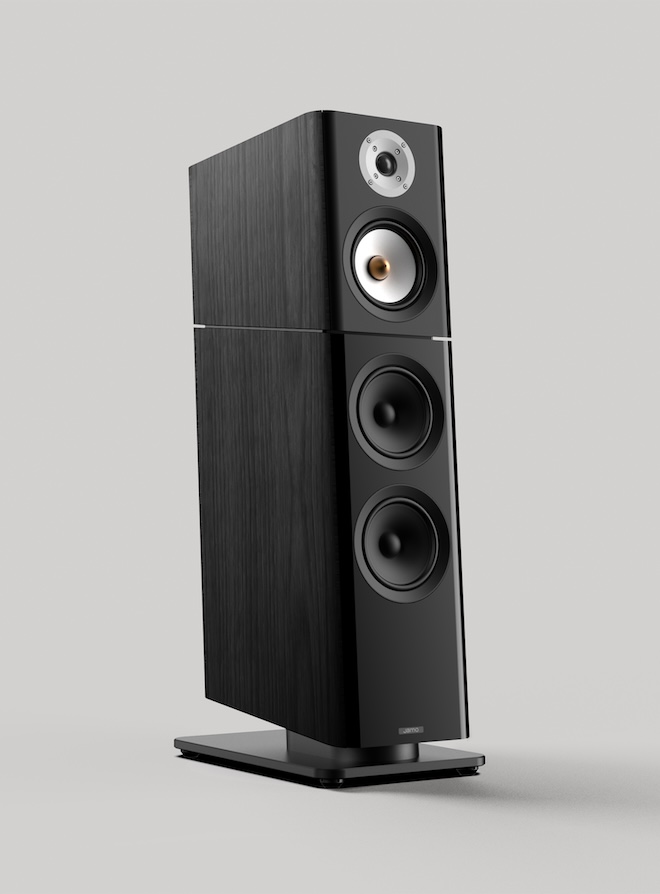
At the top of the range is the Jamo Concert Legacy 11, the flagship floorstanding model for listeners who want the most complete expression of the new series. The Concert Legacy 9 offers a more compact floorstanding option, while the Concert Legacy 8 brings the same design language and acoustic goals to a standmount format.
Pricing is per pair for all three Concert Legacy models. The Jamo Concert Legacy 11 will be available in Onyx, Heritage, and Northern Frost finishes for $7,999 per pair in the U.S. and €8,999 including tax in Europe. The Concert Legacy 9 is priced at $5,299 per pair and €5,499 including tax, while the Concert Legacy 8 comes in at $2,999 per pair and €3,299 including tax. All of the models are available in the aforementioned finishes.
Advertisement. Scroll to continue reading.
Advertisement
Jamo Concert Legacy 11
The Concert Legacy 11 is the flagship floorstanding model in the new Concert Legacy range and the most technically ambitious speaker in the family. It uses a 3-way bass reflex design with three 165 mm Scan Speak woofers, a 165 mm SEAS aluminium and magnesium midrange driver, and a 25 mm Scan Speak soft dome tweeter. Jamo’s DualCore cabinet construction isolates the midrange and tweeter section from bass pressure using a sealed upper chamber and a 75 Shore A rubber decoupling layer. With 94 dB sensitivity, a 4 ohm impedance, and a rated frequency response of 32 Hz to 21 kHz, this is the model aimed at listeners who want the full scale version of Jamo’s new Danish built Concert Legacy platform.
Drivers: 3 x 165 mm Scan Speak woofers, 1 x 165 mm SEAS midrange, 1 x 25 mm Scan Speak tweeter
Woofer material: Wood fibre cone material from Finland
Midrange material: Aluminium and magnesium cone with copper accented phase plug
Frequency response: 32 Hz to 21 kHz
Low frequency cut off: 26 Hz
Crossover points: 250 Hz and 3 kHz
Sensitivity: 94 dB
Impedance: 4 ohms
Recommended amplifier power: 50 to 250 W
Inputs: Bi-wiring terminals
Dimensions: 47.5 x 12.1 x 18.9 inches
Weight: 88.2 lbs per speaker
Included accessories: Magnetic grilles, adjustable rubber feet, terminal jumpers
Finishes: Heritage, Northern Frost, Onyx
Jamo Concert Legacy 9
The Concert Legacy 9 is the smaller floorstanding option and keeps much of the same design language and engineering approach as the Legacy 11. It uses a 3-way bass reflex configuration with two 165 mm Scan Speak woofers, a 165 mm SEAS aluminium and magnesium midrange driver, and a 25 mm Scan Speak soft dome tweeter. It also includes the DualCore enclosure, down firing port with aluminium plinth, bi-wiring terminals, and the same Heritage, Northern Frost, and Onyx finish options. Its 92 dB sensitivity and 33 Hz to 21 kHz frequency response make it the more room friendly floorstander without turning it into the “we made it smaller and hoped nobody would notice” version.
Drivers: 2 x 165 mm Scan Speak woofers, 1 x 165 mm SEAS midrange, 1 x 25 mm Scan Speak tweeter
Woofer material: Wood fibre cone material from Finland
Midrange material: Aluminium and magnesium cone with copper accented phase plug
Frequency response: 33 Hz to 21 kHz
Low frequency cut off: 27 Hz
Crossover points: 250 Hz and 3 kHz
Sensitivity: 92 dB
Impedance: 4 ohms
Recommended amplifier power: 40 to 200 W
Inputs: Bi-wiring terminals
Dimensions: 39.6 x 12.1 x 18.9 inches
Weight: 79.4 lbs per speaker
Included accessories: Magnetic grilles, adjustable rubber feet, terminal jumpers
Finishes: Heritage, Northern Frost, Onyx
Jamo Concert Legacy 8
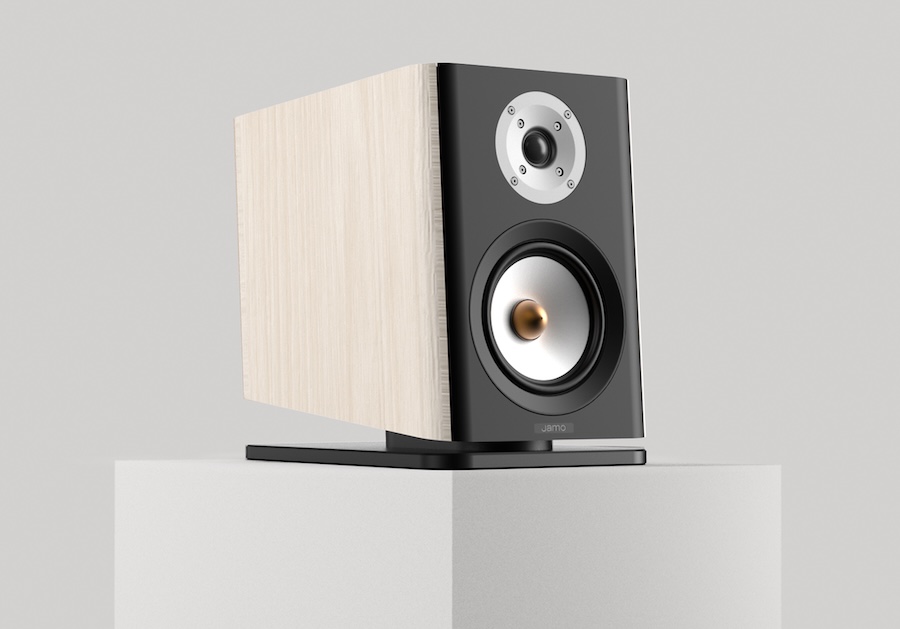
The Concert Legacy 8 brings the Concert Legacy concept into a standmount speaker. It is a 2-way bass reflex design using a 165 mm SEAS aluminium and magnesium midwoofer and a 25 mm Scan Speak soft dome tweeter. The cabinet features real oak veneer, a 40 mm front baffle, bead blasted aluminium trim, bi-wiring terminals, and a down firing port in the plinth to reduce rear wall placement sensitivity. It is the smallest and most affordable model in the Legacy lineup, but it still uses Danish assembly and Scandinavian driver sourcing.
Drivers: 1 x 165 mm SEAS midwoofer, 1 x 25 mm Scan Speak tweeter
Midwoofer material: Aluminium and magnesium cone with copper accented phase plug
Frequency response: 34 Hz to 21 kHz
Low frequency cut off: 28 Hz
Crossover point: 3 kHz
Sensitivity: 87 dB
Impedance: 4 ohms
Recommended amplifier power: 40 to 200 W
Inputs: Bi-wiring terminals
Dimensions: 14.4 x 9.9 x 14.6 inches
Weight: 26.5 lbs per speaker
Included accessories: Magnetic grilles, terminal jumpers
Finishes: Heritage, Northern Frost, Onyx
Jamo Concert Element Series
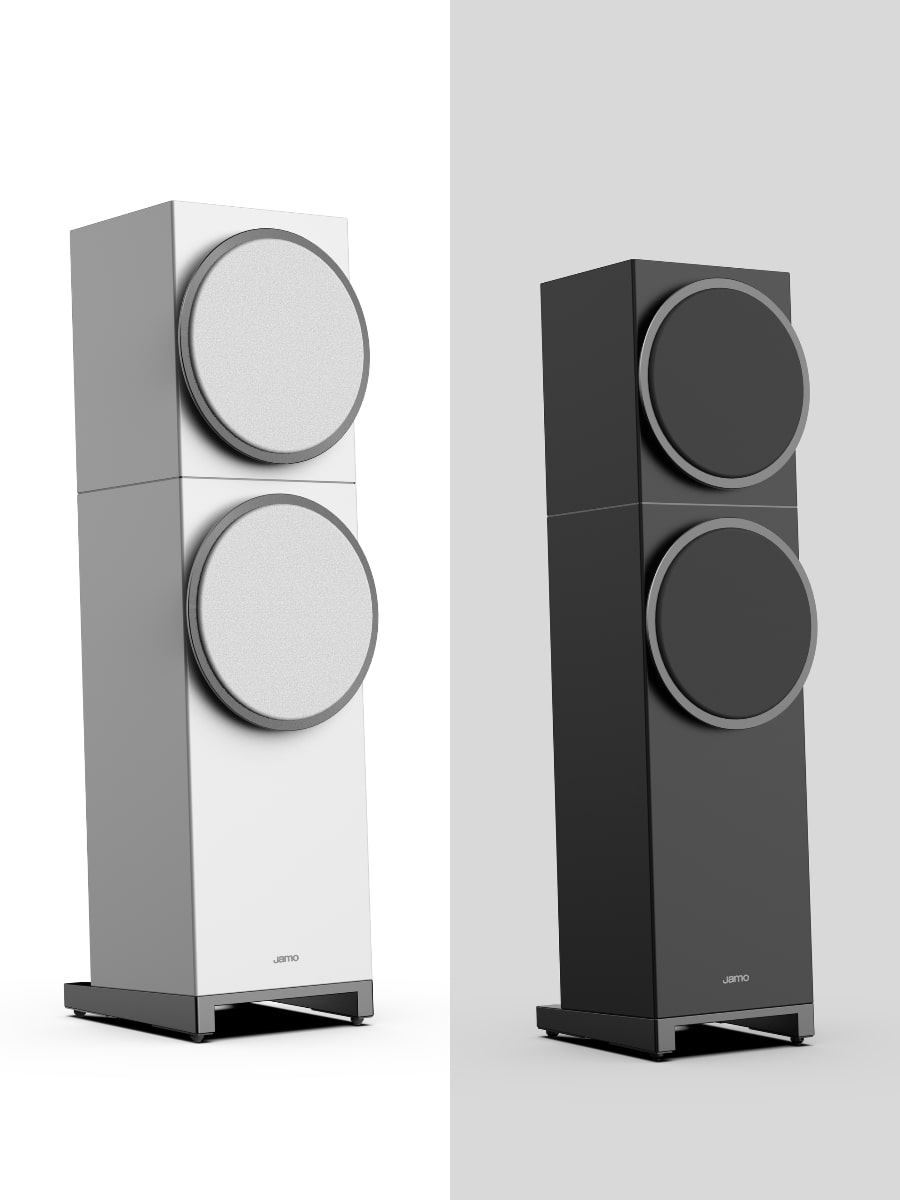
Concert Element is the more design driven half of Jamo’s 2026 Concert Series, developed with Copenhagen based HarritSørensen and built around the range’s “circle over rectangle” visual language. The circular driver module extends beyond the shallow cabinet, making the driver both the acoustic focus and the main design element. It is a cleaner, more domestic approach than the Concert Legacy range, but still uses passive loudspeaker architecture, bespoke drivers, and down firing ports across the speaker models.
The Element speakers were developed with SB Acoustics and use drivers tuned to their specific cabinet volumes. The range includes the Concert Element 50 bookshelf speaker, Concert Element 70 compact floorstander, Concert Element 90 larger floorstander, and the matching Concert Element SW10 subwoofer. Finishes are Onyx and Northern Frost, with magnetic grilles included in dark grey and light grey.
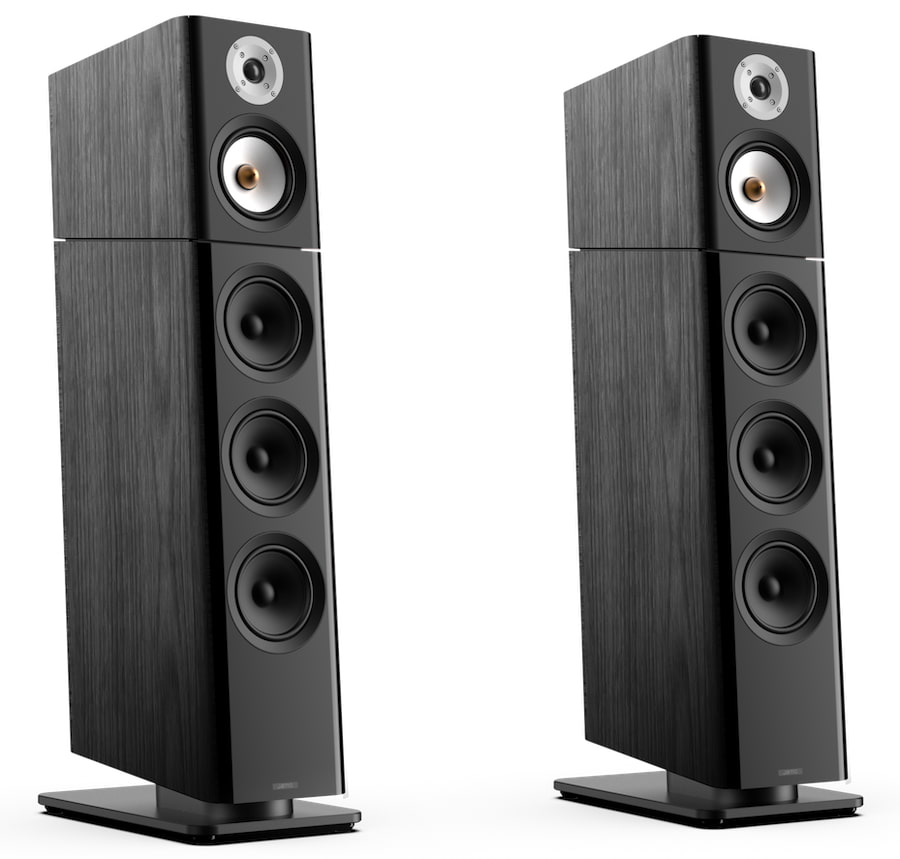
Jamo Concert Element 90
Jamo Concert Element 90 (left) and 70 (right)
The Concert Element 90 is the largest passive speaker in the Element range and uses a 3-way bass reflex design. It combines a 250 mm woofer, a 165 mm midrange driver, and a 25 mm soft dome tweeter. Both the woofer and midrange use Scandinavian nettle fibre cones, and the midrange includes a Jamo phase plug. The cabinet uses a dual chamber layout, with a ported woofer section and sealed midrange chamber, which is intended to keep bass output from affecting the midrange. The down firing port is designed to make placement less dependent on rear wall distance.
Midrange material: Scandinavian nettle fibre cone with Jamo phase plug
Tweeter: 25 mm soft positive dome
Bandwidth: 35 Hz to 22 kHz, plus or minus 3 dB
Low frequency cut off: 30 Hz at minus 6 dB
Sensitivity: 87 dB
Impedance: 4 ohms
Recommended amplifier power: 60 to 250 W
Inputs: Bi-wiring terminals
Dimensions: 43.8 x 12.6 x 14 inches
Weight: 73.2 lbs per speaker
Included accessories: Magnetic grilles in dark grey and light grey, adjustable rubber feet, terminal jumpers
Finishes: Onyx, Northern Frost
Jamo Concert Element 70
The Concert Element 70 is the smaller floorstanding speaker in the range. It uses a 3-way bass reflex design with a 200 mm woofer, 130 mm midrange driver, and 25 mm soft dome tweeter. Like the larger Element 90, the woofer and midrange use Scandinavian nettle fibre cones, while the midrange also includes a Jamo phase plug. The shallow cabinet keeps the footprint relatively compact, while the down firing port is intended to support more flexible placement in typical rooms.
Drivers: 1 x 200 mm woofer, 1 x 130 mm midrange, 1 x 25 mm tweeter
Woofer material: Scandinavian nettle fibre cone
Midrange material: Scandinavian nettle fibre cone with Jamo phase plug
Tweeter: 25 mm soft positive dome
Bandwidth: 40 Hz to 22 kHz, plus or minus 3 dB
Low frequency cut off: 35 Hz at minus 6 dB
Sensitivity: 87 dB
Impedance: 4 ohms
Recommended amplifier power: 50 to 200 W
Inputs: Bi wiring terminals
Dimensions: 40 x 10.8 x 12 inches
Weight: 41.4 lbs per speaker
Included accessories: Magnetic grilles in dark grey and light grey, adjustable rubber feet, terminal jumpers
Finishes: Onyx, Northern Frost
Jamo Concert Element 50
The Concert Element 50 is the bookshelf model and the most compact passive speaker in the Element family. Jamo describes it as a true bookshelf speaker rather than a standmount speaker, with a shallow cabinet designed to fit on actual shelves. It uses a 2-way bass reflex design with a 165 mm woofer and a 25 mm soft dome tweeter. The woofer uses a Scandinavian nettle fibre cone, 4 layer voice coil, and Jamo phase plug. The down firing port is intended to reduce placement issues when the speaker is used closer to walls or furniture.
Woofer material: Scandinavian nettle fibre cone with 4 layer voice coil and Jamo phase plug
Tweeter: 25 mm soft positive dome
Bandwidth: 45 Hz to 22 kHz, plus or minus 3 dB
Low frequency cut off: 40 Hz at minus 6 dB
Sensitivity: 89.5 dB
Impedance: 4 ohms
Recommended amplifier power: 40 to 150 W
Inputs: Single wiring terminals
Dimensions: 14.9 x 12.5 x 10.6 inches
Weight: 18.3 lbs per speaker
Included accessories: Magnetic grilles in dark grey and light grey, rubber pads
Finishes: Onyx, Northern Frost
Jamo Concert Element SW10
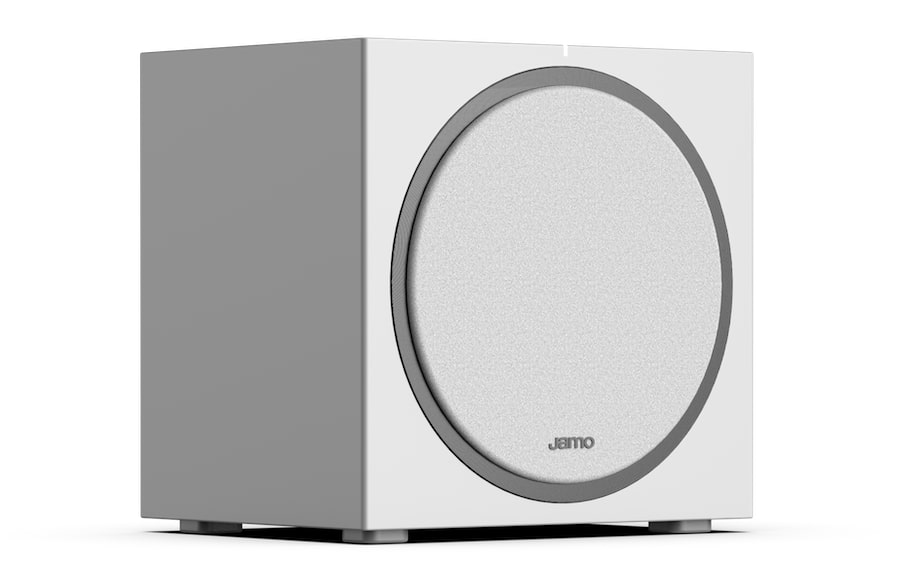
The Concert Element SW10 is the matching subwoofer for the Element range. It uses a sealed enclosure, a 250 mm long throw woofer, and Class D amplification rated at 150 W RMS and 300 W maximum. It includes a variable low pass filter from 40 Hz to 140 Hz, continuously adjustable phase from 0 to 180 degrees, and a fixed EQ boost option at 55 Hz. Inputs include dual RCA and LFE line in, with Auto and On operating modes. One important note: the product sheet lists the SW10 as an active bass reflex subwoofer in the technical specifications, while the feature section describes it as a sealed enclosure. That needs clarification from Jamo.
Specifications:
Type: subwoofer, active bass reflex
Driver: 1 x 250 mm long throw woofer
Voice coil: 4 layer voice coil
Bandwidth: 30 Hz to 250 Hz, plus or minus 3 dB
Low frequency cut off: 20 Hz at minus 6 dB
Adjustable low pass: 40 Hz to 140 Hz
Adjustable phase: Progressive 0 to 180 degrees
Adjustable EQ: 0 to plus 6 dB fixed at 55 Hz
Inputs: Dual RCA and LFE line in
Mode: Auto or On
Amplifier power: 150 W rated, 300 W maximum, Class D
Power supply: AC 100 to 120 V at 60 Hz, 220 to 240 V at 50 Hz
Standby power consumption: Less than 0.5 W
Dimensions: 14.2 x 14.4 x 11.6 inches
Weight: 26 lbs
Included accessories: Magnetic grilles in dark grey and light grey, power cord, rubber pads
Finishes: Onyx, Northern Frost
The Bottom Line
Jamo’s revived Concert Series looks like a real two lane comeback. Concert Legacy is the more traditional hi-fi play, with Danish assembly, Scan Speak and SEAS drivers, premium passive designs, and pricing aimed at listeners who still care about two-channel performance first. Concert Element is the more design-forward range, with HarritSørensen styling, shallow cabinets, SB Acoustics drivers, and pricing that should make Jamo visible again in real living rooms.
What is missing? No center channel speaker, no dedicated surround channels, and no subwoofer for the Concert Legacy lineup. The Element range does get the SW10 subwoofer, but Jamo still needs to clarify its enclosure description. On paper, this is a smarter return than another badge revival with nice veneer and better lighting. Legacy is for traditional hi-fi buyers. Element is for modern homes, apartments, and music fans who want proper speakers that do not visually mug the furniture.
Pricing & Availability
The new Jamo speaker line-up is expected to start shipping in August 2026.
MetHealth CEO Dr Fiona McGillicuddy bagged the runner-up prize.
Substrato Medical, a pre-spin-out business from RCSI University of Medicine and Health Sciences, won yesterday’s (6 May) Enterprise Ireland (EI) pitching contest. The winning start-up’s co-founder and chief technology officer, Maeve McCarthy, now has the opportunity to participate in a European market access programme.
Describing her company, McCarthy said that Substrato is a “redefining” oxygen therapy for tissue repair, specifically in venous leg ulcers. Substrato, an EI commercialisation funded project, plans to spin out by the end of this year.
Prior to starting her business, McCarthy spent nearly 10 years at Stryker, working as a programme manager in her last role.
Advertisement
“We’re really starting that journey now of talking to investors and trying to get ourselves out there as a spin-out,” she told SiliconRepublic.com.
Substrato’s Spin-out Showcase Award win at the event shows the “development to date [of] the expertise of the tissue engineering research group (TERG) in RCSI”, McCarthy added. “That’s been huge hugely beneficial to us over the years with our early stage development.”
This year, eight companies took part in the live spin-out showcase pitching competition at EI’s Start-Up Day event in Dublin’s Aviva Stadium. The showcase highlighted innovative companies emerging from research activities in Ireland’s third-level institutions.
Advertisement
Participating companies included University College Dublin (UCD) spin-outs MicroJect Bio and Nanoformix; OcuHealth, a joint UCD and South East Technological University project; and Narrative, a Dublin City University spin-out.
MetHealth, a UCD spin-out developing recovery pathways for people suffering with obesity, received the runner-up award. The company’s CEO Dr Fiona McGillicuddy told SiliconRepublic.com that the business stemmed from her research identifying risk signatures in people with obesity.
“That made me think that there might be something special about what we were measuring,” she explained. “We built a technology around that with the help of Enterprise Ireland funding.”
The company’s proprietary biomarker platform, integrated with AI-driven algorithms, delivers critical insight into cardiometabolic health – launching first with a non-invasive, blood-based, in-vitro diagnostic for metabolic liver disease.
Advertisement
“It’s really nice to see other people acknowledge that this is important, that it’s [a] commercial opportunity, that it can have impact … It’s going to give me the confidence to really take that next leap into the next phase of commercialisation,” McGillicuddy added.
Jim Woulfe, EI’s chairperson, said: “This is not just a competition, but a platform connecting great research, great founders and partners to bring solutions to market.
“The event also highlights the high calibre of research commercialisation activity within Ireland, and the significant impact these companies will have to help address huge global challenges.”
Last year, University of Limerick deep-tech Oscil took home the top award at EI’s Start-Up Day. The company provides real-time data analytics for powder manufacturing to address issues in the production process and the end product’s overall performance.
Advertisement
Yesterday, EI also launched its annual report detailing support it has offered to start-ups in the past year. The state agency said that it spent nearly €33m in 2025 to support 198 new start-ups in the country.
The investment marked a 19.2pc jump from 2024, when the agency supported 157 home-grown start-ups with €27.6m.
Don’t miss out on the knowledge you need to succeed. Sign up for the Daily Brief, Silicon Republic’s digest of need-to-know sci-tech news.
Updated, 7 May 2026, 12:15pm: The article has been updated with additional information from Enterprise Ireland.
Watch Aston Villa vs Nottm Forest live streams to see who will advance to the 2025/26 Europa League final. Forest hold a narrow one-goal advantage thanks to Chris Wood’s second-half penalty in the first leg, but the Villans have won their last nine European fixtures at Villa Park and won the corresponding Premier League fixture 3-1.
Unai Emery was clearly prioritizing this fixture at the weekend when he named a weakened side that went on to lose to relegation-threatened Tottenham. The decision may have caused some controversy but reaching a first major European final since 1982 would be a remarkable achievement for the Spaniard. The four-time Europa League-winning manager, a record, knows what it takes to succeed and will believe his first-choice XI featuring Ollie Watkins and Morgan Rogers can turn this tie around.
Vítor Pereira also rang the changes on Monday but it was a very different result as Forest romped to a 3-1 win away at Chelsea. The Tricky Trees have been in increasingly fine form since the Portuguese took charge in February and in seven-goal Igor Jesus they have the joint top-scorer in the Europa League so far. The club will have everything crossed that influential midfielder Morgan Gibbs-White will be fit to start despite suffering a deep cut to his forehead in the win at Stamford Bridge.
Advertisement
Here’s how to watch Aston Villa vs Nottm Forest in the 2025/26 Europa League online and from anywhere in the world.
Can I watch Aston Villa vs Nottm Forest for free?
Yes. Aston Villa vs Nottm Forest will be broadcast live onTabii in Turkey for FREE via the TRTSpor channel.
It’s also available in Germany on RTL+ without cost.
In the US? Though there’s no free stream, you can get Paramount Plus for FREE with Walmart+ 30-day $1 trial.
Advertisement
Outside of Turkey, Germany or the US? You can use a VPN to access your Tabii stream from anywhere in the world. NordVPN is our top pick of the options.
Use a VPN to watch any Aston Villa vs Nottm Forest live stream
VPNs are a handy piece of software that can make your device appear as if it’s back in your home country, thereby letting you unlock your usual streaming service. The best VPN right now? We recommend NordVPN – it does everything and comes with a 75% discount.
Advertisement
Using a VPN is incredibly simple:
1. Install the VPN of your choice. As we’ve said, NordVPN is our favorite.
2. Choose the location you wish to connect to in the VPN app. For instance, if you’re visiting the UK and want to watch Villa vs Forest on Tabii, you’d select Turkey from the list.
3. Sit back and enjoy the action. Head to your usual local streaming service and watch the game.
Advertisement
How to watch Aston Villa vs Nottm Forest live streams in the USA
The Aston Villa vs Nottm Forest live stream is on Paramount+ in the US.
Subscriptions to Paramount+ start at $8.99 per month and you can save on any package by committing to a yearly subscription.
As we’ve mentioned above, you can also get a Paramount Plus trial with Walmart+ for $1 as with this sneaky trick we found.
Advertisement
This game will also go out live on CBS Sports Network at 3pm ET / 12pm PT on Wednesday. Cord cutters can watch CBS on OTT streaming platforms such as Fubo and DirecTV, which feature a free trial for new users.
How to watch Aston Villa vs Nottm Forest live streams in the UK
Aston Villa vs Nottm Forest will be live on TNT Sports 1 in the UK.
Advertisement
You can get it by adding TNT Sports to your Sky, Virgin Media or EE TV package, or pay from £25.99 per month for an HBO Max plan that includes TNT Sports.
Traveling away from the UK right now? Use aVPN to watch HBO Max while you’re away from home.
How to watch Aston Villa vs Nottm Forest live streams in Canada
In Canada, DAZN is the place to go for Europa League coverage – including Villa vs Forest.
Advertisement
DAZN prices start at CA$24.99/month on an annual deal. You can also access DAZN through Fubo with prices starting at CA$54.99 for the Sports Pro Plan.
For fans traveling outside of Canada, use NordVPN to login to your DAZN account from anywhere in the world.
How to watch Aston Villa vs Nottm Forest live streams in Australia
As with all Europa League games, it’s Stan Sport who will be broadcasting Aston Villa vs Nottm Forest.
Advertisement
Stan Sport subscriptions start at AU$32, which includes the base plan ($12) with the sport add-on ($20).
Missing the game because you’re outside Australia?Use a VPN to login to your Stan Sport account.
Can I watch Aston Villa vs Nottm Forest on my mobile?
Of course, most broadcasters have streaming services that you can access through mobile apps or via your phone’s browser. For example, HBO Max (UK) and Paramount Plus (US) both have mobile apps.
You can also stay up-to-date with key 2025/26 Europa League moments on the official social media channels on X/Twitter (@EuropaLeague), Instagram (@EuropaLeague), TikTok (@europaleague) and UEFA’s YouTube (@UEFA).
Advertisement
We test and review VPN services in the context of legal recreational uses. For example: 1. Accessing a service from another country (subject to the terms and conditions of that service). 2. Protecting your online security and strengthening your online privacy when abroad. We do not support or condone the illegal or malicious use of VPN services. Consuming pirated content that is paid-for is neither endorsed nor approved by Future Publishing.
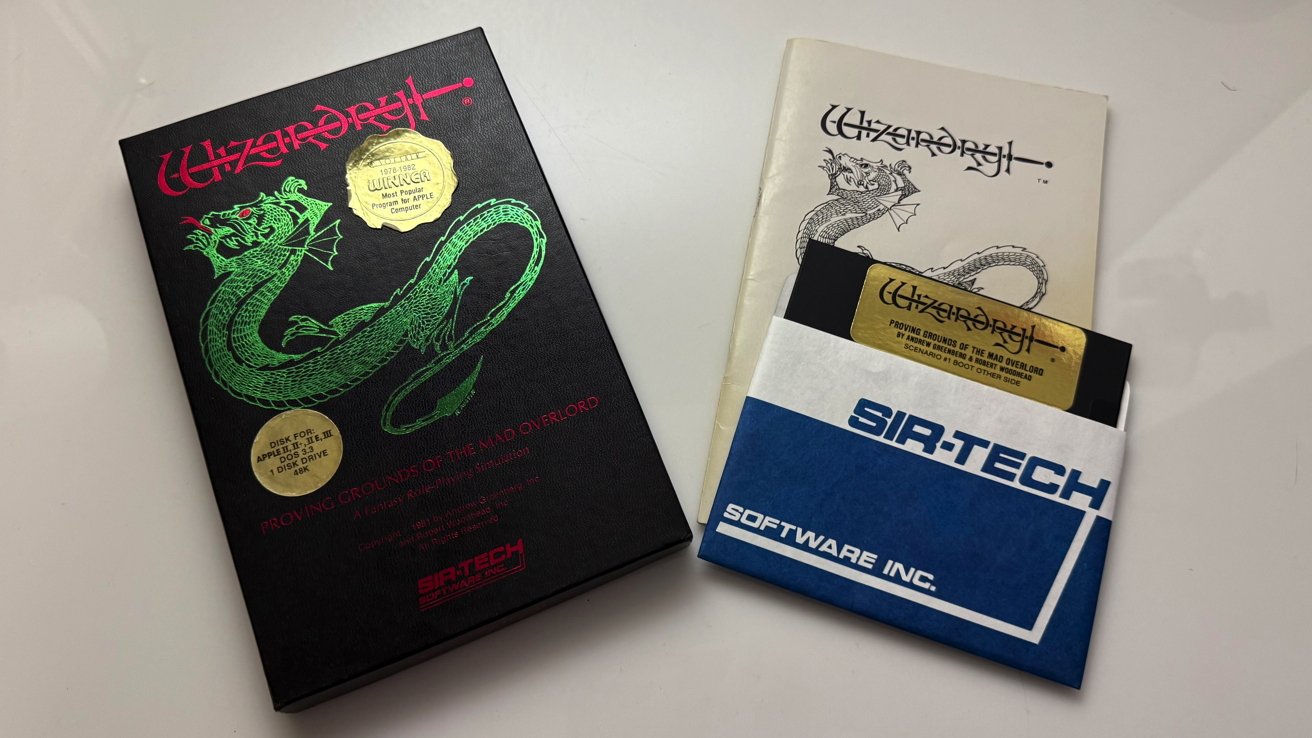
The author’s WIzardry box. Not his original, that one is lost to time
This one is for some of our long-time readers. Atari, yes, that Atari, has bought the rights to early “Wizardry” games.
I get asked a lot how I got started using Apple products. Specifically, it was an Apple II in the late seventies, no plus, e, C, or GS. Amongst the early titles gifted to young me was the original Wizardry.
That was in eighth grade, for graduation. I’m sure some high school grades suffered from having it.
Advertisement
It didn’t always boot on my single-drive DOS 3.3 system. But the disks were portable, and I’d lug them over to my friends’ houses, who later in that high school period had Apple IIc and Laser 128 compatibles.
Thanks, Luke and John. Also, thanks to a reset key on the keyboard, which, if you hit either it alone on my Apple II keyboard or control-open Apple-reset on the others before the drive updated the characters as dead, would allow you to recover them easily.
Anyway, for years, emulation, sketchy acquisition methods, and more recently classic game vendors were the only way to play the first few games in the series, despite the franchise flourishing in Japan. Flash forward to 2026, and the modern incarnation of Atari has purchased the “complete and exclusive rights” to the first five games and their intellectual property.
Starting with Breakout developed by Steve Jobs and Steve Wozniak, Atari has had a tough time across the decades in an evolving industry. Without delving into the various sagas, the most recent major shift was a leadership shift in 2021, including a strange blockchain and NFT period.
Advertisement
In 2026, the present Ship of Theseus Atari has a big focus on releasing modernized versions of classic titles, and Wizardry is one of them already.
“Wizardry is such an influential RPG franchise, yet many of the games have been unavailable for more than two decades,” said Wade Rosen, CEO and Chairman of Atari. “We are excited to have this rare opportunity to republish, remaster and bring console ports and physical releases of these early games to market.”
The acquisition, announced on May 7, comes two years after a Wizardry “remake.” The remake essentially layers modern graphics over the old Apple II interface, similar to how Halo, the Master Chief Collection layers 2012 graphics over the 2000 Xbox original.
Unfortunately, it’s not great. I’ve been playing it off and on, on my gaming PC, and it has some show-stopping character-deleting bugs.
Advertisement
Atari managed to talk to Robert Woodhead, one of the co-creators of the franchise.
“When Andrew Greenberg and I created Wizardry back in the 1980s, the video game industry was still in its infancy, and the original games were some of the first to bring the role-playing experience to PCs and consoles,” said Woodhead. “As Atari continues to reintroduce the games on new platforms and to new audiences, I’ll definitely be paying attention to the reactions of gamers who decide to take on a real old-school challenge.”
Andrew Greenberg, the other co-founder, passed away at age 67 in August of 2024.
So far, I’m not encouraged by the state of the first remake, which was made by one of Atari’s in-house studios. We’ll see if things improve after this announcement.
Advertisement
The titles included in the deal are:
Wizardry: Proving Grounds of the Mad Overlord (1981)
Wizardry II: The Knight of Diamonds (1982)
Wizardry III: Legacy of Llylgamyn (1983)
Wizardry IV: The Return of Werdna (1987)
Wizardry V: Heart of the Maelstrom (1988)
All of them had Apple II versions. The first two had Macintosh versions in the US, and a third was released in Japan, covering the first three installments. There are other titles past V, but they are owned by a different company, not covered under this deal, and considered an alternate universe.
The acquisition also includes many other Wizardry related video games, contract rights, and other related intellectual property. Presumably, this also includes WizEdit and other character editors that I used back in the day to make my characters younger.
Advertisement
In case you were wondering, I managed to beat the first two titles back in the day.

























































You must be logged in to post a comment Login