Microsoft Azure Local can now run fully disconnected without needing the cloud
European customers are increasingly demanding sovereign options
CISPE welcomes the changes, Civo warns of US CLOUD Act implications
Microsoft has announced three new updates to the company’s sovereign offerings, including improvements across Azure Local, Microsoft 365 Local and Foundry Local.
The additions come as US-EU trade tensions continue, with Europe pushing for more digitally sovereign options.
European customers are increasingly demanding local infrastructure, protection from potential US CLOUD Act data access and reduced dependency on hyperscalers.
Microsoft offers three new sovereign options for the likes of Europe
Though Microsoft’s Local additions don’t respond to the desire to step away from hyperscalers, they do tackle data and infrastructure sovereignty demands while offering already-familiar experiences for existing customers.
In a blog post, Microsoft Specialized Clouds President and CTO Douglas Phillips explained organizations can now use on-prem infrastructure with Azure’s governance and policy controls, all without cloud connectivity, in the form of the new Azure Local.
“Disconnected operations, management, policy and workload execution stay within the customer-operated environments,” he wrote.
Advertisement
Previously, Azure Local needed periodic cloud connectivity. Staying offline for too long reduced functionality, but with the latest update, it can now run fully disconnected, making it ideal for highly regulated industries including defence and critical national infrastructure.
Sign up to the TechRadar Pro newsletter to get all the top news, opinion, features and guidance your business needs to succeed!
CISPE, Europe’s body representing cloud infrastructure companies, welcomed the changes, promising to test Microsoft’s changes against its upcoming Sovereign Cloud Services Framework to see if they pass.
Microsoft doesn’t even stand out in the world of hyperscalers, with Google offering its own Google Cloud Airgapped solution and AWS selling its equivalent, the European Sovereign Cloud.
Advertisement
“Our approach helps customers to meet strict sovereign requirements in fully disconnected scenarios without compromising simplicity, while retaining flexibility where connectivity is possible,” Phillips concluded.
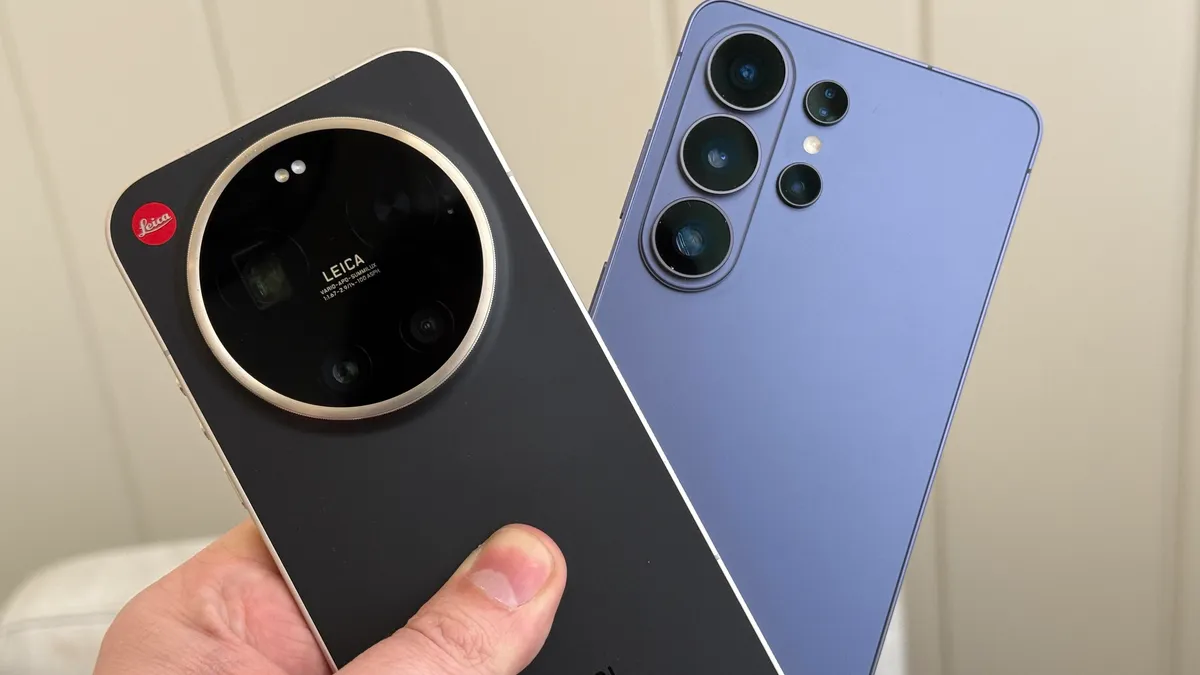
In the last week, both Samsung and Xiaomi have taken the wraps off their latest superphones, but only one of them has properly impressed me. I’ve spent weeks testing the Leica Leitzphone by Xiaomi ahead of its launch at MWC 2026 and I concluded that it’s the best camera phone I’ve ever used. I even gave it a CNET Editors’ Choice award because it has been so damn impressive — and I think Samsung should be worried.
Samsung’s Galaxy S26 Ultra is a jack-of-all-trades phone, packing a supercharged processor, a funky privacy screen and that all-important S Pen stylus. But its cameras only saw small improvements, with a slightly larger aperture on the main and telephoto cameras being the most notable upgrades. Beyond that, it really comes down to Samsung’s various software AI tricks, like the ability to change the style of hat you’re wearing in a photo.
Advertisement
The S26 Ultra’s cameras haven’t seen much of an upgrade this year.
Andrew Lanxon/CNET
This has become a trend for Samsung, with the last few Ultra phones only slightly iterating on previous camera setups, adding a few extra megapixels here and there but largely leaning into software updates to make up for a lack of hardware innovation. While Samsung’s top-tier phones have been among the best camera phones around, Xiaomi and Leica’s Leitzphone has shown what true photography innovation looks like.
This camera beast packs a number of firsts. We’ll start with the LOFIC image sensor, which stands for Lateral Overflow Integration Capacitor and is basically a new type of sensor technology that improves dynamic range in a single image. It’s capable of taking gorgeous images in all conditions, including at night. Samsung was rumored to be considering LOFIC sensors for its phones (as is Apple) but evidently opted not to go down this route just yet.
Advertisement
The Leica Leitzphone by Xiaomi has some amazing photography skills that help it take photos that look almost as good as those I take from my actual Leica camera.
Andrew Lanxon/CNET
The Leitzphone is also among the first phones ever to use real moving lens elements in its telephoto zoom, allowing true lossless zooming rather than jumping only between specific zoom levels. It works well and a similar setup has been rumored to appear on the last few generations of Ultra, but it’s never actually happened.
Then there’s the physical control ring around the Leitzphone’s camera, the stunning Leica colour profiles built right into the camera experience and the pristine quality of the Leica Summilux optics used in the lenses.
The Photos I’ve Taken on Xiaomi’s Leica Phone Are Some of My Best Ever
By partnering with such a photography icon, Xiaomi has truly innovated its photography, delivering multiple firsts that genuinely improve the image-taking experience. As both a professional photographer and a genuine enthusiast myself, I’ve been blown away by the photos I’ve been able to shoot with the phone.
Advertisement
But Samsung hasn’t excited me this time round. Its new generative AI tools might be fun gimmicks, but they’re not appealing to an actual photographer like myself. The S26 Ultra needs to be more than a cameraphone, of course — it needs to be “ultra” in every sense of the word. But Samsung’s latest model shows that proper photography isn’t a priority for the company.
The Leitzphone is arguably more camera than it is phone.
Andrew Lanxon/CNET
As such Samsung risks losing out on the huge number of photographers and content creators (both professional and amateur alike) who are instead going to be looking at rivals like Xiaomi for products that can live up to their imaging demands.
Researchers have found that the extra wireless network you set up for visitors may not isolate devices the way router makers advertise, potentially allowing attackers on the same network to intercept traffic.
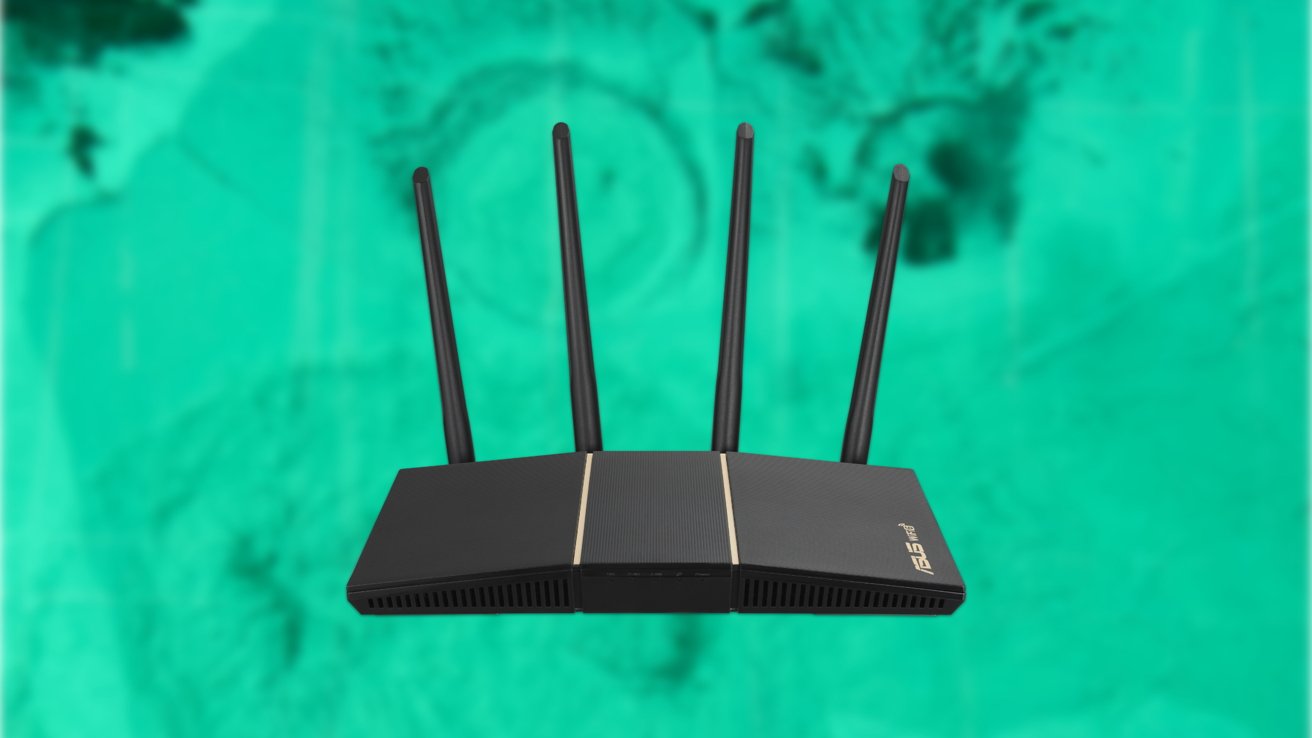
Asus RT-AX57 router
Wi-Fi security researchers have found new vulnerabilities that let attackers on the same network intercept and mess with traffic. These issues exist even when WPA2 or WPA3 encryption and client isolation are turned on. The techniques, known as AirSnitch, were shared on February 25 at a security symposium in San Diego. Researchers from the University of California, Riverside, and KU Leuven presented their findings. Continue Reading on AppleInsider | Discuss on our Forums
Deepfakes are evolving and are no longer confined to misinformation campaigns or viral media manipulation. Most security teams already understand the deepfake problem; however, the more urgent shift is how synthetic media is being operationalized.
This fraud vector is being leveraged inside the identity moments that power the internet and economy – such as customer onboarding at a bank, driver onboarding for gig and delivery platforms, marketplace seller verification, account recovery, remote hiring, partner access, and privileged access workflows.
As more work and business is done remotely, identity has become a primary control point – and a primary target. Bad actors don’t only want to fool a selfie check; they want to impersonate a real person, establish durable access, and reuse that foothold across consumer and enterprise environments.
Advertisement
Cybersecurity and fraud teams are now dealing with a convergence of tactics that all aim at the same decision – the moment a system concludes “this is a real person”:
High-fidelity synthetic faces and voices that can pass quick checks
Replayed real footage from stolen or harvested sessions
Automation that probes verification flows at scale
Injection attacks that compromise the capture pipeline and substitute the input stream upstream
This is why “deepfake detection” alone is no longer enough. Enterprises need full-session validation: including perception, device integrity, and behavioral signals… all in a single, real-time control.
That is the model behind Incode Deepsight: an approach built to validate identity sessions end-to-end, not just evaluate the media in isolation.
The right question is not only “Does this face look real?” It is “Can we trust this entire session end-to-end?”
Deepfakes and injection are enterprise security issues
In enterprise systems, a successful bypass is not a reputation event; it’s an access event. When verification accepts a manipulated or compromised session as real, attackers can:
Advertisement
Create fraudulent accounts using synthetic identities
Take over existing user accounts
Bypass HR verification in remote hiring
Gain unauthorized access to sensitive internal systems
Unlike social media deception, these attacks can enable persistent access inside trusted environments. The downstream impact is durable: account persistence, privilege-escalation pathways, and lateral movement opportunities that start with a single false verification decision.
An independent study from Purdue University evaluated leading biometric vendors under advanced deepfake and presentation attack scenarios.
See how Incode’s DeepSight performance ranked across real-world attack simulations.
Where identity checks fail: assuming the sensor is trustworthy
Most identity checks are built around two signals: facial similarity and “liveness.” Both are useful, and both can be undermined if the system assumes the input stream is authentic.
Attackers break that assumption in two complementary ways.
Advertisement
First, they mimic real media. Deepfakes and voice clones are improving under real operating conditions – short clips, mobile capture, compression, and imperfect lighting. A workflow that depends on a narrow visual surface area is increasingly exposed to false acceptance.
Second, they bypass the sensor entirely. Injection attacks substitute the input stream before it reaches analysis. Instead of presenting a face to a camera, attackers can:
Use virtual camera software to feed synthetic or pre-recorded video
Run verification sessions inside emulators designed to mimic legitimate mobile devices
Operate from rooted or jailbroken devices that bypass integrity checks
Substitute live capture with manipulated streams upstream
In these scenarios, the media can look perfect because it never had to survive a real capture path. That is why perception-only defenses (even strong ones) are necessary but not sufficient.
What the Purdue Political Deepfakes Incident Database benchmark shows
One practical problem for deepfake defense is generalization: detectors that test well in controlled settings often degrade in “in-the-wild” conditions.
Researchers at Purdue University evaluated deepfake detection systems using their real-world benchmark based on the Political Deepfakes Incident Database (PDID).
Advertisement
PDID contains real incident media distributed on platforms such as X, YouTube, TikTok, and Instagram, meaning the inputs are compressed, re-encoded, and post-processed in the same ways defenders often see in production.
Key factors include:
Heavy compression and re-encoding
Sub-720p resolution
Short, mobile-first clips
Heterogeneous generation pipelines
Detectors were evaluated end-to-end using metrics such as accuracy, AUC, and false-acceptance rate (FAR). In identity workflows, FAR is often the more consequential metric, because even a small false-acceptance rate can allow persistent unauthorized access.
Purdue’s results also highlight a practical reality for defenders: performance varies dramatically across detectors once inputs look like production.
Among the commercial systems evaluated in Purdue’s PDID benchmark, Incode’s Deepsight delivered the strongest results when the task is purely visual deepfake detection – evaluating video content itself under real incident conditions.
Advertisement
But that is only the first layer of the problem.
It’s important to be precise: PDID measures robustness of media detection on real incident content. It does not model injection, device compromise, or full-session attacks.
In real identity workflows, attackers do not choose one technique at a time; they stack them. A high-quality deepfake can be replayed. A replay can be injected. An injected stream can be automated at scale.
The best media detectors still can be bypassed if the capture path is untrusted. That’s why Deepsight goes even deeper than asking “Is this video a deepfake?”
Advertisement
Deepsight closes that gap by validating the full session across three layers: perception, integrity, and behavior, so that the system can stop attacks whether they arrive as a convincing deepfake, a replay, or an injected stream.
Manual review doesn’t close the gap
Human review can reduce some classes of fraud, but it is not a scalable security control against synthetic media.
Even trained reviewers struggle to determine real from fake as generative models improve.
Today’s injection attacks invalidate the premise and undermine human judgment entirely: a session can appear legitimate while the input stream is substituted upstream. Even consensus reviews among several experts cannot establish that the capture path was authentic.
Advertisement
The security model that holds up: trust the session, not just the pixels.
If attackers can win either by improving the media or by bypassing the sensor, defenses have to validate the session across multiple layers in real time:
Perception: Is the media itself manipulated?
Integrity: Is the device, camera, and session authentic?
Behavior: Does the interaction reflect a real human and a normal verification flow?
This model creates resilience. If a high-quality deepfake evades perception, integrity and behavioral signals can still prevent a successful bypass. If media is injected, integrity checks can fail the session regardless of how realistic the pixels look.
How Incode Deepsight blocks deepfakes and injection attacks in real time
Attackers are scaling. They can iterate against verification flows quickly, probe edge cases, and operationalize what works. Deepfakes raise the baseline risk of false acceptance, injection removes the camera as a reliable sensor and automation increases the volume of attempts.
Enterprises that treat identity verification as a one-time check rather than a real-time security process will struggle to keep pace.
Advertisement
Incode Deepsight is designed around a simple premise: if identity workflows are being attacked at both the media layer and session layer, defenses must validate the entire verification session end-to-end.
During live verification, Deepsight combines three layers in real time:
Perception analysis: Multi-modal AI that evaluates video, motion, and depth signals across multiple frames to detect synthetic media and physical spoofs. Deepsight also protects ID capture by detecting AI-generated identity documents.
Integrity validation: Camera and device authenticity checks to identify and block injected media sources, such as virtual cameras, emulators, and compromised environments.
Behavioral risk signals: Detection of automation indicators and bot-like interaction patterns that frequently accompany scaled attacks.
This layered model is what makes Deepsight resilient in practice. If a high-quality deepfake evades perception, integrity and behavioral signals can still prevent a successful bypass. If media is injected, integrity checks can fail the session regardless of how realistic the pixels look.
The goal is straightforward: determine whether the entire verification session can be trusted – not only whether a face looks real, but whether a real human is present on a trusted device in a live, untampered interaction.
Closing the gap between detection and deployment
Defending identity workflows now requires controls that assume adversarial AI and untrusted capture environments.
Advertisement
Deepfake defense must evolve from spotting manipulated pixels to validating the authenticity of entire verification sessions. Layered defenses across media authenticity, device integrity, and behavioral signals are the most reliable way to reduce false acceptance without adding unnecessary friction for legitimate users.
Learn how Deepsight blocks deepfakes and injection attacks in real time. incode.com/deepsight
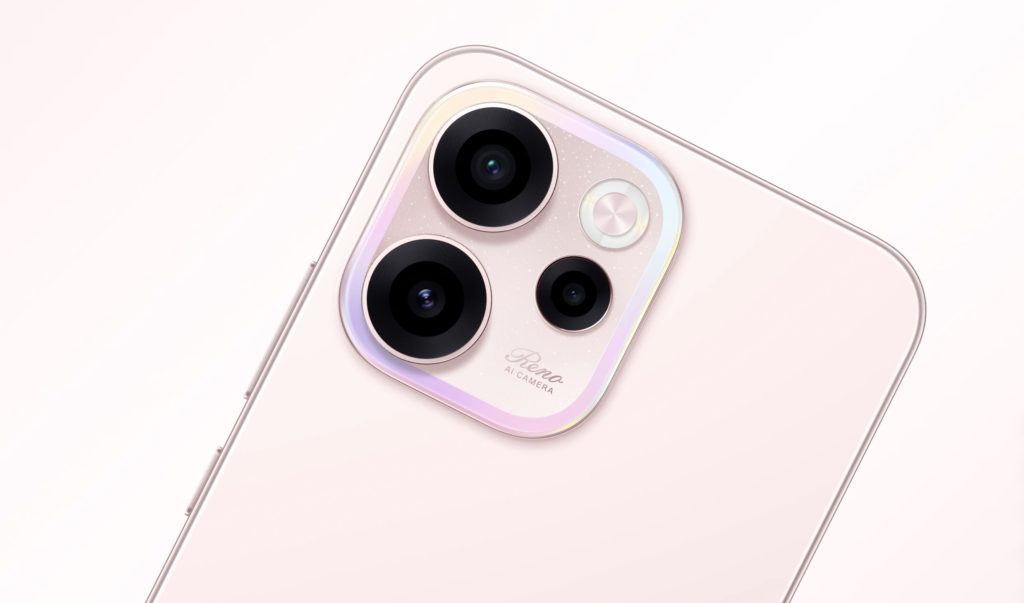
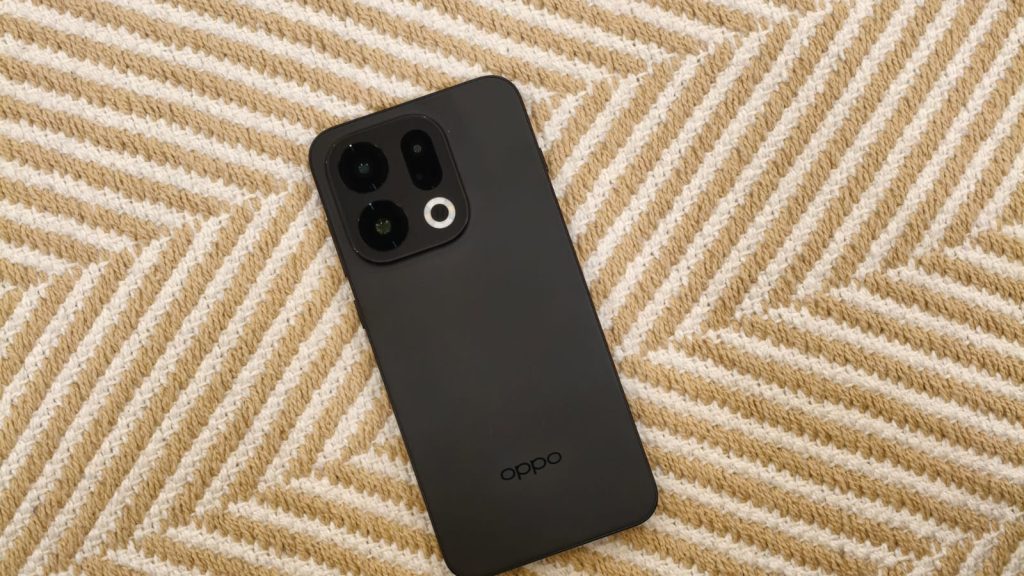
To mark Holi 2026, OPPO India has introduced festive offers on its Reno Series and Find X9 models. Customers will be able to take advantage of interest-free EMI options, zero-down-payment options, and other cashback benefits. These offers will be available for a brief period of time from March 1st to March 8th.
Festive Holi Offers
1. Zero Down Payment & Interest-Free EMI
Model
Variant
EMI Tenure
OPPO Reno 15 Pro Mini
512GB
24 Months*
OPPO Reno 15 Pro Mini
256GB
24 Months*
OPPO Reno 15
12GB + 512GB
15 Months
OPPO Reno 15
12GB + 256GB
15 Months
OPPO Reno 15
8GB + 512GB
15 Months
OPPO Find X9
12GB + 256GB
18 Months
OPPO Find X9
16GB + 512GB
18 Months
OPPO A6 Pro
8GB + 128GB / 8GB + 256GB
8 Months
OPPO A6
6GB + 256GB / 6GB + 128GB / 4GB + 128GB
6 Months
2. Bank Card Cashback Benefits
To make upgrades more attractive, OPPO is offering customers up to 10% cashback on bank card transactions. These offers will be available for EMI and non-EMI transactions. The cards issued by SBI, Axis Bank, Bank of Baroda, Federal Bank, DBS, IDFC First Bank, Kotak Mahindra Bank, and Yes Bank are eligible for these offers.
3. 10% Cashback on UPI Transactions
OPPO is offering up to 10% cashback on UPI transactions during the Holi sale. This benefit helps reduce the overall purchase cost. At the same time, it encourages customers to use digital payment methods.
OPPO Reno15 Series
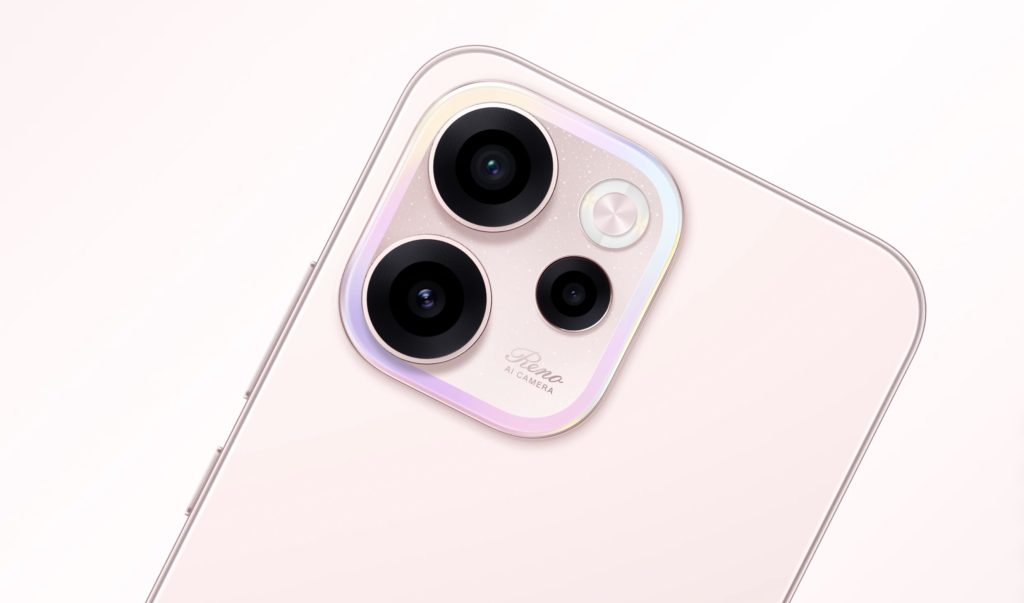
The OPPO Reno15 Series is built for those who love capturing colourful moments. The Pro Mini model features a 200MP camera, while the Reno15 comes with a 50MP main camera.
Both devices offer 3.5x telephoto zoom, PureTone Technology, and 4K HDR video recording. The Pop-Out feature makes photos look more dynamic. The Reno15 starts at Rs 41,399, and the Reno15 Pro Mini starts at Rs 53,999.
Advertisement
OPPO Find X9
The OPPO Find X9 combines premium imaging with festive offers, starting at Rs 69,499. It includes a Hasselblad-tuned triple camera system led by a 50MP Sony LYT808 sensor with OIS, supported by a 50MP ultra-wide and a 50MP Sony LYT600 3X periscope telephoto lens.
The phone sports a 6.59-inch 120Hz AMOLED display protected by Gorilla Glass 7i and carries an IP69 rating. With the MediaTek Dimensity 9500 chipset, a 7025mAh battery, 80W wired and 50W wireless charging, plus AI tools like AI MindSpace, AI Editor, and O+ Connect, it delivers a complete flagship experience.
OPPO’s special Holi deals are valid between March 1 and March 8, 2026. Since the campaign runs for a short time, buyers should plan their purchase accordingly.
Apple on Monday unveiled the latest version of its budget-friendly iPhone line. The iPhone 17e retails for $599 and will be available on March 11.
The smartphone comes with the A19 chip that’s found in the base iPhone 17, and will support Apple Intelligence. The base model comes with 256 GB of storage, which Apple says is twice the entry storage from the previous generation.
One of the most notable changes from the previous budget iPhone is the addition of MagSafe and Qi2, which supports wireless charging up to 15W.
The smartphone is available in black, white, and a new soft pink color.
Advertisement
Additionally, the iPhone 17e comes with C1X, Apple’s latest-generation cellular modem, which, the company says, is up to twice as fast as the C1 modem in the iPhone 16e, and uses 30% less energy.
As for the camera, the iPhone 17e features that same 48-megapixel camera as the iPhone 16e.
The iPhone 17e is rated IP68 for dust and water resistance, and its 6.1-inch Super Retina XDR display is protected by Ceramic Shield 2, which is said to offer trice the scratch resistance than the previous generation.
Techcrunch event
Advertisement
San Francisco, CA | October 13-15, 2026
The iPhone 17e supports Emergency SOS via satellite, Roadside Assistance, and Find My.
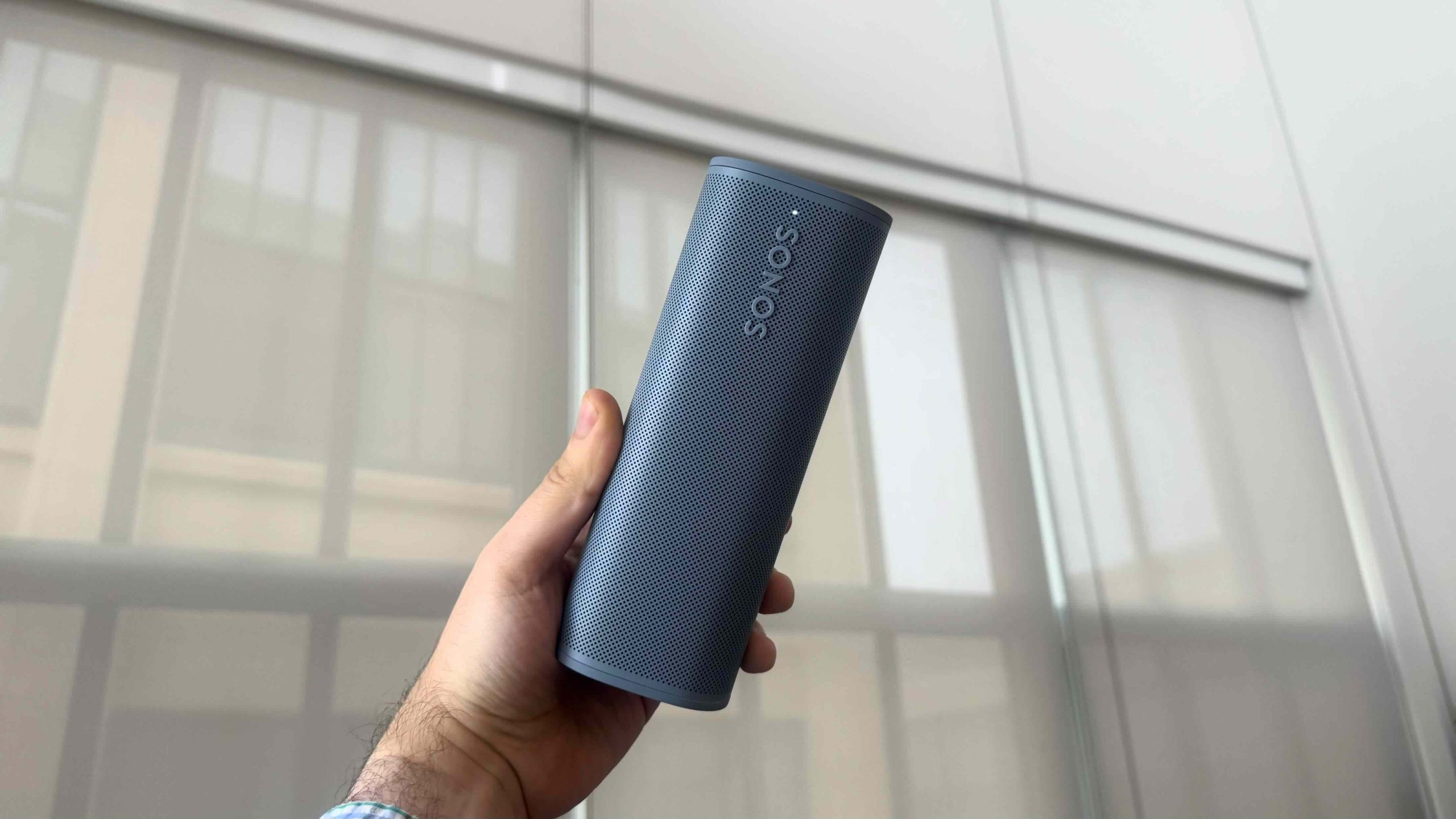
Sonos could finally be making good on its ‘two products per year’ pledge and if this Sonos AirPlay 2 speaker leak proves legit, I think it’ll be the perfect mid-range portable buy
Best Buy Canada leaked a listing page for the ‘Sonos Play’ speaker, but it has since been deleted
It’s set to arrive March 31, and costs $399.99
The new Bluetooth speaker could be Sonos’ mid-range option alongside the Roam 2 and Move 2
Apple isn’t the only one with new devices on the way, as leaks of a new Sonos portable Bluetooth speaker hint that the audio giant could be dropping the device imminently — and people already like what they see.
Dubbed ‘Sonos Play’, the speaker was leaked on Best Buy Canada’s site with a full gallery of images and a thorough list of specs, but has since been taken down. Luckily, a user on Reddit managed to snap some images before the listing was removed from Best Buy’s online store (see below).
According to the listing, the Sonos Play portable speaker will be available in black or white and will cost CAD $399.99 (or around USD $300), though international prices have yet to be announced. It’s supposedly arriving as soon as March 31, but Sonos hasn’t confirmed or denied the launch date.
At first glance, it seems that the Sonos Play will serve as the mid-range option in Sonos’ lineup of Bluetooth speakers, which consists of the Sonos Roam 2 ($179/ $179) and the significantly larger, higher-end Sonos Move 2 ($499 / £449) — both of which are some of the best Bluetooth speakers we know. But let’s get into the specs.
Bigger than the Roam, smaller than the Move 2
The Sonos Roam 2 is great for portability, but the Sonos Play could beat it on the battery life front (Image credit: Future/Jacob Krol)
Prior to taking the listing down, Best Buy’s product overview shared the following: “Take quality sound wherever you go with the Sonos Play Bluetooth wireless speaker. Its compact design fits easily in your hand, while automatic Trueplay tuning optimizes audio for any environment. Wi‑Fi and Bluetooth let you stream high‑quality audio from different devices and sources. Up to 24 hours of battery life avoids the need for frequent recharging.”
Design-wise, Sonos keeps it cohesive, and the new Bluetooth speaker doesn’t have any crazy design changes that are out of the ordinary for the brand. Its shape is reminiscent of the UE Epicboom speaker, packing a handy carrying strap, 24-hour battery life, a wireless charging base, an aux port for connecting to other audio devices such as turntables, and a USB-C port, allowing you to use the speaker as a battery pack.
Advertisement
As for dimensions, it’s likely that Best Buy messed up on this one. The screenshots of the listing show the Sonos Play speaker to be W19.23cm, D11.25cm, H7.67cm, which, looking at the product image, is definitely not just under 8cm tall. It’s likely that these have been mixed up (I’d guess that the real dimensions are H19.23cm, W11.25cm, D7.67cm), hinting that someone from Best Buy might have published the listing a bit too promptly.
Sign up for breaking news, reviews, opinion, top tech deals, and more.
Despite this mix-up, its size is a perfect starting point for Sonos’ venture into mid-range speakers. Though the Sonos Move 2 is a powerful speaker fit for both indoor and outdoor use, its bulky size contradicts the portability aspect of Bluetooth speakers, while the Sonos Roam is the ideal portable audio companion, but doesn’t quite pack a punch on the battery life front.
As well as WiFi connectivity, the Best Buy listing reveals that the Sonos Play will support Apple AirPlay 2 and Alexa, in addition to Spotify and Sonos app compatibility. As per the listing overview, Sonos’ flagship sound-optimizing tool Trueplay is coming to the Play speaker, which tunes the audio based on your surroundings and speaker placement.
Advertisement
Though Best Buy was quick to eradicate all traces of its Sonos Play listing, its first-look images have been well received online, even though it comes in at $400 – though that price level is standard for Sonos. That said, we know that Sonos has other tricks up its sleeve – it’s apparently got another app overhaul in the works — so a new Bluetooth speaker would be highly welcomed alongside a fresh app redesign.
And of course, you can also follow TechRadar on YouTube and TikTok for news, reviews, unboxings in video form, and get regular updates from us on WhatsApp too
Writing in a press statement, Gartner warns that soaring memory costs are projected to cause a 10.4% worldwide decline in PC shipments while smartphone shipments are expected to drop by 8.4% in 2026. Read Entire Article Source link
Tai Neilson, a senior lecturer at Macquarie University explores how data has become a ‘hot commodity’ for companies training AI systems.
When the World Wide Web went live in the early 1990s, its founders hoped it would be a space for anyone to share information and collaborate. But today, the free and open web is shrinking.
The Internet Archive has been recording the history of the internet and making it available to the public through its Wayback Machine since 1996. Now, some of the world’s biggest news outlets are blocking the archive’s access to their pages.
Major publishers – including The Guardian, The New York Times, the Financial Times, and USA Today – have confirmed they’re ending the Internet Archive’s access to their content.
Advertisement
While publishers say they support the archive’s preservation mission, they argue unrestricted access creates unintended consequences, exposing journalism to AI crawlers and members of the public trying to skirt their paywalls.
Yet, publishers don’t simply want to lock out AI crawlers. Rather, they want to sell their content to data-hungry tech companies. Their back catalogues of news, books and other media have become a hot commodity as data to train AI systems.
Robot readers
Generative AI systems such as ChatGPT, Copilot and Gemini require access to large archives of content (such as media content, books, art and academic research) for training and to answer user prompts.
In response, some tech companies have struckdeals to pay for access to publishers’ content. NewsCorp’s contract with OpenAI is reportedly worth more than $250m over five years.
Similar deals have been struck between academic publishers and tech companies. Publishing houses such as Taylor & Francis and Elsevier have come under scrutiny in the past for locking publicly funded research behind commercial paywalls.
Now, Taylor & Francis has signed a $10m nonexclusive deal with Microsoft granting the company access to over 3,000 journals.
Publishers are also using technology to stop unwanted AI bots accessing their content, including the crawlers used by the Internet Archive to record internet history. News publishers have referred to the Internet Archive as a “back door” to their catalogues, allowing unscrupulous tech companies to continue scraping their content.
Advertisement
The cost of making news free
The Wayback Machine has also been used by members of the public to avoid newspaper paywalls. Understandably, media outlets want readers to pay for news.
News is a business, and its advertising revenue model has come under increasing pressure from the same tech companies using news content for AI training and retrieval. But this comes at the expense of public access to credible information.
When newspapers first started moving their content online and making it free to the public in the late 1990s, they contributed to the ethos of sharing and collaboration on the early web.
In hindsight, however, one commentator called free access the “original sin” of online news. The public became accustomed to getting their digital editions for free, and as online business models shifted, many mid- and small-sized news companies struggled to fund their operations.
Advertisement
The opposite approach – placing all commercial news behind paywalls – has its own problems. As news publishers move to subscription-only models, people have to juggle multiple expensive subscriptions or limit their news appetite. Otherwise, they’re left with whatever news remains online for free or is served up by social media algorithms. The result is a more closed, commercial internet.
This isn’t the first time that the Internet Archive has been in the crosshairs of publishers, as the organisation was previously sued and found to be in breach of copyright through its Open Library project.
The past and future of the internet
The Wayback Machine has served as a public record of the web for more than three decades, used by researchers, educators, journalists and amateur internet historians.
Blocking its access to international newspapers of note will leave significant holes in the public record of the internet.
Advertisement
Today, you can use the Wayback Machine to see The New York Times’ front page from June 1997: the first time the Internet Archive crawled the newspaper’s website. In another 30 years, internet researchers and curious members of the public won’t have access to today’s front page, even if the Internet Archive is still around.
Today’s websites become tomorrow’s historical records. Without the preservation efforts of not-for-profit organisations like The Internet Archive, we risk losing vital records.
Despite the actions of commercial publishers and emerging challenges of AI, not-for-profit organisations such as the Internet Archive and Wikipedia aim to keep the dream of an open, collaborative and transparent internet alive.
By Tai Neilson
Advertisement
Tai Neilson is a senior lecturer in media at Macquarie University. His areas of expertise include the political economy of digital media and critical cultural theory. He is the author of Journalism and Digital Labor and a co-editor of the book Research Methods for the Digital Humanities.Tai has published work on journalism and digital media in Digital Journalism, Journalism, Media International Australia, Journalism and Media, Triple-C, Fast Capitalism, and the Global Media Journal.
Don’t miss out on the knowledge you need to succeed. Sign up for the Daily Brief, Silicon Republic’s digest of need-to-know sci-tech news.
Thinking of opening a gym? Don’t expect quick money.
Running a gym in Singapore is not cheap.
When Vulcan Post spoke to Ryan Cheal, Group Chief Operating Officer of Inspire Brands Asia—the exclusive regional master franchisee of Anytime Fitness (AF)—in Jan 2026, he shared that it takes up to US$450,000 to become a franchisee of an AF gym here.
Despite the high startup costs, more gyms have been popping up across the island. As of Oct 15, 2025, Singapore had 505 gyms—a 3.05% increase since 2023. With rising fitness trends like HYROX, it’s no surprise that both individuals and operators are trying to ride the wave.
But hopping on trends doesn’t always guarantee success. The industry has also seen its share of closures, including Ritual, which abruptly shut all four of its Singapore outlets in 2024, and high-profile names like UFC Gym.
Advertisement
These examples show that even well-known brands can struggle to sustain operations in a competitive market. Even with sufficient startup capital, keeping a gym running—attracting members, covering monthly expenses, and managing unexpected costs—requires careful planning and a strong financial runway.
So what does it really cost to open and operate a gym in Singapore?
To find out, we dug into industry data and spoke with two operators: Unstoppable Fitness, a homegrown bodybuilding gym, and Snap Fitness, a US-born fitness chain with 10 outlets in Singapore (and one more at West Mall slated to open in Apr).
Opening doors is just step one
Based on industry estimates online, the startup capital required to open a gym can range between S$150,000 and over S$800,000, depending on size, location, equipment needs, and franchise fees.
Advertisement
Broadly speaking, here’s how it breaks down:
Category
Startup Investment Range
Typical Size (sqft.)
Focus
Key Calculations/Factors
1. Boutique/ Specialist Studio
S$150,000 – S$350,000
1,200 – 2,500
Personal training, Yoga, Pilates, or specialised strength.
Initial Franchise Fee: S$40,000 – S$90,000. Total Initial Investment: S$410,000 to S$650,000 (single outlet). Working Capital: Higher buffer required.
When we spoke to operators at Unstoppable Fitness and Snap Fitness, their startup costs largely lined up with these estimates.
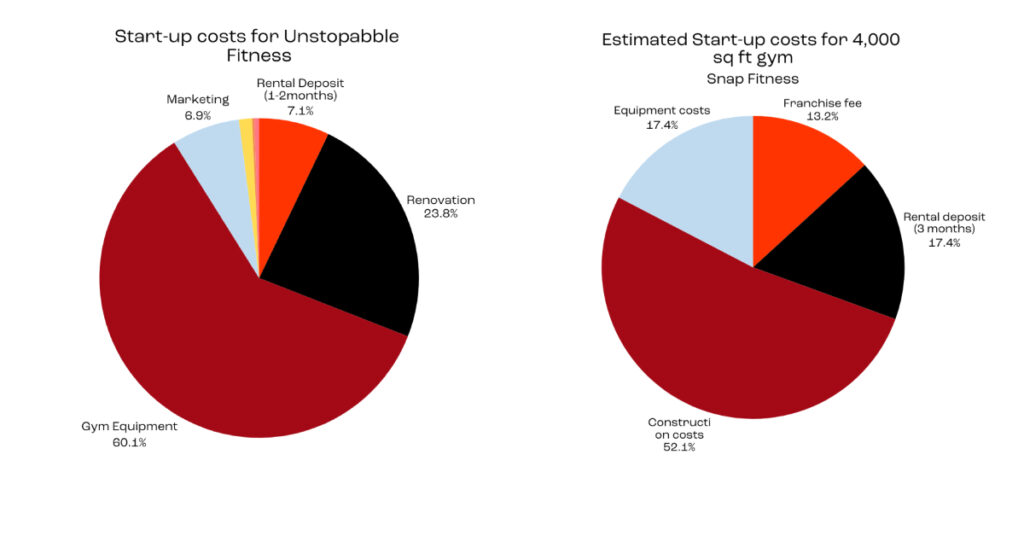
Luke Yeo, 33, founder of Unstoppable Fitness, spent nearly S$400,000 to launch his 3,875 sqft. facility. On the other hand, Snap Fitness master franchisee Noah Oberman shared that it costs around S$600,000 to open a 4,000 sqft gym franchise. “Most gyms we’ve opened are anywhere between S$600,000 and over S$1 million,” he added.
Gym equipment is one of the highest upfront costs for the two businesses, with Unstoppable Fitness spending more than half of its startup capital on machines and weights, while Snap Fitness’ equipment expenses can roughly match the rental deposit.
Advertisement
On top of that, miscellaneous inventory—from water dispensers to towels—can add thousands more, quickly increasing the total initial outlay before a single member walks through the door.
Cost breakdowns from Unstoppable Fitness and Snap Fitness.
These figures only cover the cost of opening a gym. To sustain and keep it running, owners needs to have additional capital—to market the business, grow membership, and maintain a buffer for unexpected expenses or changing client needs.
For Snap Fitness, monthly operating costs can reach at least S$55,000. Luke, on the other hand, shared that his monthly expenses hit around S$25,300, meaning he would need roughly another S$300,000 in reserves to stay adequately funded for a year.
Monthly running costs for Unstoppable Fitness
Monthly running costs for Snap Fitness
Luke added that bills continue regardless of early traction or revenue earned, emphasising the need for sufficient runway in the first year.
“Cash burns fast. Without strong reserves, you won’t fail slowly—you’ll shut down quickly,” he said. “Most gyms don’t close because the owner lacks passion or knowledge. They close because they run out of money before they earn trust,” he explained.
“Not the highest ROI business“
Gyms aren’t a quick-profit business. It can take years before you start seeing a real return on your investment.
Advertisement
“As gyms are not the highest ROI business, you are likely to break even only in year 2.5 or more,” said Noah.
Industry
Initial Capital Intensity
Operational Break-Even
Full ROI (Payback Period)
Primary Revenue Driver
Gyms & Fitness
High (Equipment/ Renovation)
4 – 18 Months
2 – 3 Years
Monthly recurring subscriptions
F&B (Restaurants)
Medium to High (Kitchen/ Interior)
6 – 12 Months
2 – 5 Years
Daily individual transactions
Retail (Physical)
Medium (Inventory/Fit-out)
12 – 24 Months
3 – 5 Years
Seasonal product sales
SaaS/Tech Startups
Low to Medium (R&D/Staff)
18 – 36 Months
3 – 7+ Years
Scalable user licenses
The average number of years for businesses to break even, according to industry estimates.
When Vulcan Post compared this to other industries, the break-even period for gyms is actually shorter than in sectors like F&B or retail.
However, startup costs are higher for gyms, and the figures we found are based on established franchises such as Anytime Fitness, which benefit from brand recognition and pre-existing systems. Some even claim that AF gyms can break even within six months or even before they open.
That said, these are outliers. Here’s a closer look at what it takes for different gym models to reach break-even:
Advertisement
Gym Model
Typical Size (sq. ft.)
Members Needed to Break-Even Each Month
Monthly Fee (Avg)
Time to Full ROI (Payback)
Boutique Studio
1,200 – 2,500
150 – 350
S$150 – S$350
18 – 24 Months
Mid-Sized Gym
2,500 – 5,000
400 – 700
S$90 – S$160
2 – 3 Years
Franchise Gym
3,500 – 6,000
800 – 1,000+
S$90 – S$130
2 – 3 Years
The average number of members for a gym to break even by gym size and monthly fees, based on industry estimates.
Based on its S$24,828 monthly costs and its lowest-tier annual plan (S$119/month), Unstoppable Fitness would need at least 277 members to break even each month.
Snap Fitness will need over 561 members to cover their monthly operating costs. It’s worth noting that more funds are needed to run a franchise gym than an independent gym, hence the difference in the number of members needed to break even.
No one “owes you a chance”
As newer and smaller players, both Unstoppable Fitness and Snap Fitness have to find a way to stand out in a crowded market against established brands, as they face a higher risk of failure.
Mockups of Snap Fitness’s newest gym in West Mall, which is slated to open in Apr 2026. According to Noah, this location would be the biggest in Western Singapore, having taken over the space where used to be, and would include space for a pilates studio./ Image credits: Snap Fitness Singapore
“The real problem? Opening your doors and having no customers at all,” Luke candidly shared. “No one owes you a chance. If you’re new, unknown, and lack social proof, people simply won’t walk in.”
As such, both operators not only have to spend more on marketing, but also focus their efforts on building strong communities within the brand that can tide them through the high and low seasons, through activities such as supporting members at competitions or celebrating physical transformations.
Advertisement
Gym-goers at Unstoppable Fitness./ Image Credit: Unstoppable Fitness
Independent gyms like Unstoppable Fitness often reinvest earnings into upgrades in their equipment and amenities. These might sound simple, but they help customers feel more comfortable in the space as they work out.
“People can leave for cheaper gyms, but they rarely leave a place that feels like home,” added Luke.
He added that many health and fitness businesses make the mistake of building around a single trend, so when the hype dies down, the brand goes with it. Building evergreen offerings beyond trends is key to long-term survival, and adjusting them to meet demand adds to their versatility.
“There’s a fine balance between hopping on trends and diluting the brand by changing too much, versus staying to the core of what the brand is supposed to do and service. But generally, we try to keep an open mind and see what the market really wants and try our best to accommodate that.”
Advertisement
Only those with strong foundations are likely to survive
Overall, opening a gym remains viable in Singapore, given the strong demand for health and fitness in the country. However, as the market becomes more saturated and competition for the lifestyle dollar intensifies, gyms can’t be seen as a way to get a quick buck.
Aspiring owners must carefully assess whether they have the financial runway to sustain at least two years, offer competitive prices, and ensure that their services provide enough value for their members to increase loyalty.
As Singapore’s fitness scene matures, newer players can’t win in scale: they have to differentiate themselves through other means to attract members and at least break even. Nevertheless, Noah and Luke remain optimistic.
“I would agree that the first mover advantage is definitely real, and some of the longstanding gyms will be very hard to displace. But I do think there’s still plenty of opportunity in the market,” Noah encouraged.
Advertisement
“We can’t compete with big box gyms on size. We win on service, elite equipment, and culture,” added Luke.
Read more about the gyms featured below:
Read more stories we’ve written on Singaporean businesses here.
Featured Image Credit: Unstoppable Fitness/ Snap Fitness