
TL;DR
Anthropic launched Claude Tag, an always-on Slack AI that follows conversations, learns context, and proactively jumps in to flag updates and tasks.




On Techdirt, we often complain about lawyers and bad lawyering and bad cases. But there are times when lawyers are helpful, and my one-sentence summary after spending many days trying to understand a viral dispute about [checks notes] some old Star Wars LEGO sets is that a lot of people should have spoken to competent lawyers before doing… whatever the fuck they decided to do here.
If you haven’t been following the Bricks & Minifigs saga, congratulations on your peaceful existence. It’s a genuinely difficult story to track, partly because you have to watch a bunch of long YouTube videos to piece it together, and partly because almost everyone covering it is pushing a specific angle. Just as a point of reference, Bricks & Minifigs is a company that franchises its concept of stores for buying and selling lego blocks and sets — and, yes, minifigs. They have about 300 stores, most of which are franchised.
The basic summary (and some of this is disputed) is that a local Bricks & Minifigs franchise in Keizer, Oregon made an agreement with a guy named Bryan Mansell to sell a very large collection that his father had put together over many years of collectable unopened Star Wars LEGO sets. The intention of the collection had (we are told) always been to pay for college for Bryan’s children. His father, an 83-year-old man, had agreed to have Bryan sell the sets via the Keizer store on consignment. The collection was advertised, including on the store’s Instagram page where they made it clear that it was “one of the largest, most valuable privately held collections of Star Wars LEGO in the world” and that it was about to go on sale.

Later photos in that post detailed that they believed the collection was “worth well over $200,000” and that the entire collection would be sold through the store. The actual value of the legos in question is disputed, but the lowest number I’ve seen is closer to $60k. The entirety of the Instagram post text reads:
Saturday and Sunday, the 11th and 12th of November, the Bricks and Minifigs store in Salem-Kaiser will display one of the largest, most valuable privately held collections of Star WarsTM LEGO in the world. The event will be open to journalists and the public for photos before the collection goes on sale.
In the early 90s, Ed Mansell predicted Star WarsTM LEGO would be a good investment. Over the next 15 years, he purchased approximately $20,000 of Star WarsTM LEGO and preserved them, sealed, in their original boxes. The investment really paid off. The collection is now estimated to be worth well over $200,000. Multiple sets, including the highly prized, incredibly rare Cloud City set, are now worth more than $10,000 each. Some of the individual minifigs are worth more than $1,300 each. The ten-fold increase in the value of Mansell’s collection is a greater return than if Mansell had put the same amount of money into the stock market in a Dow Jones Index Fund.
When Ed Mansell decided it was time to divest, he turned to his son, Bryan Mansell. Bryan knows more about his father’s comic book and baseball card collection but didn’t feel confident in his knowledge of the LEGO secondary market. He saw the sign for the Bricks and Minifigs store while passing by on North River Road, came in, and asked the store owner, Chrystal Law, if she could help. “I told him, even if we couldn’t sell the collection, I would help him figure out how much it was worth because I didn’t want him to get ripped off. And I think that’s why he trusted me,” Law said. The entire collection will be sold through Law’s store, but first they wanted to put it all on display so the public can see it in its entirety.
The collection will be on display in the store’s party room from 10am till 6pm on Saturday, November 11th, and 11am till 6pm on Sunday. The collection will be available for sale immediately, so the best time for pictures will be Saturday morning. The collection will not be stored on-site after hours for security reasons, and after Sunday the sets will be available for purchase but stored elsewhere. Bricks and Minifigs is located at 3670 River Road in Kaiser.
Apparently, over the course of 2024, various parts of the collection were sold off and Mansell would stop by each month to collect his cut of the sales. There is a dispute over how much of the collection was actually sold before everything went off the rails in late 2024.
In November 2024, as you may have heard, Donald Trump was elected. Chrystal’s partner, Ben Gorman, runs a small publishing company called Not A Pipe Publishing, which (among other things) publishes something called the “Antifa Lit Journal.” Gorman felt like publishing such things in the US under a Trump regime might be problematic and looked into moving out of the country. As part of that, Law contacted corporate Bricks & Minifigs about selling or closing their franchise (exactly what she told them is disputed).
This next part is also disputed. Law & Gorman say corporate told them they had a franchisee who was interested in taking over the franchise. Bricks & Minifigs corporate claims that Law had told them she was shuttering the store and that she wasn’t allowed to do that, so they had to rush to reclaim the store. Almost immediately someone associated with Bricks & Minifigs, Brandon Best, showed up at the store, saying he was taking over the store and demanding the keys and that Law leave immediately. There’s also a dispute over whether or not Law & Gorman were in violation of their franchise agreement (Law & Gorman claim that the breach was due to failures by BAM corporate, which had been worked out months prior, and any claim of ongoing breach is misleading).
There’s a bit that is caught on video where Law tells Brandon and someone from the company on the phone that they have a large collection on consignment and that they owe Mansell money, and Bricks and Minifigs corporate tells Law they’ll “take on the consignment liability.”
Law and Gorman push back on Bricks & Minifigs just taking over the store, but are told by a B&M “official” name Ki McAllister (recorded by Gorman) that if they try to fight this, B&M will make their lives difficult: “If we go the legal route, it’s gonna be a very expensive battle for you and it’s not going to be a good position for you guys to get into. There’s not a whole lot of options for you. If you want to go the legal route, it’s just going to be a mess and it’s gonna be expensive for you.” When Gorman pushes back and asks if McAllister spoke “with” or “at” Crystal, McAllister admits he spoke “at” her and then says: “If you fight this, then you’re putting yourself into a whole lot of shit. It sounds like a threat and I can acknowledge that, because in a way it is.“
From there, it appears corporate Bricks & Minifigs transferred the franchise to two of its partners, Joshua Johnson and Brandon Best (the guy who showed up at the store) and they just… basically denied owing Mansell anything at all or even having his legos. Or sometimes they’d admit it and sometimes they wouldn’t. It became messy. Mansell claims that the people he spoke to store gave an almost identical message to him that Ki McAllister gave to Gorman & Law that it would be too expensive for him to go to court to get back what he owes.
Mansell then reached out to YouTubers, some of whom detailed how Bricks & Minifigs appeared to have effectively stolen all these lego sets. But then (according to one of the YouTubers) Bricks & Minifigs threatened to sue them (sense a pattern?) and they took down the videos.
Mansell then contacted another YouTuber named Ben Schneider, who goes by the handle Reckless Ben — best described as a Temu Nathan Fielder. He puts himself in ridiculous situations, goes to equally ridiculous lengths to justify them, and stares blankly into the camera with that specific combination of cluelessness and overconfidence that comes from someone who has talked himself into believing every move he makes is correct.
In this case, that included (not a complete list) trying to get back Mansell’s money and/or remaining legos by going to the store, confronting the employees, confronting the owners (who were difficult to track down), showing up at Bricks & Minifigs corporate, speaking to the CEO, setting up a registered religion in order to run a raffle for the lego sets to try to make this a criminal case to get law enforcement involved (not how any of this works), filing a bunch of small claims cases against the store and the company and the owners of the store, creating a company called We Steal from Old People, setting up a “franchise” structure for We Steal from Old People to use a mirror argument of Bricks & Minifigs that he can’t be held liable for franchisee actions, putting up signs for that store, and much more.
Some of these moves are interesting. Some are genuinely clever. Many are very stupid — particularly agreeing to talk to cops without a lawyer present after being arrested (more on that shortly), and believing that tricking a store employee into signing what she thought was a delivery receipt, but which was actually an unenforceable “contract” against trespassing him, accomplished anything at all. Mostly what all of this does is generate attention, rather than anything legally compelling.
The one potentially legally interesting move in all of this was filing the ten separate small claims cases against the store (I won’t even get into how they were able to structure things to file the ten separate claims even though that’s interesting, because this is freaking long enough, and the details are in some of the videos below). The store refused to show up in the cases, meaning that default judgments were entered in each case. When Schneider went to the store to try to collect, he found that the store had been permanently shuttered the day after the default judgments came down (which looks very, very bad for Bricks & Minifigs and the franchise owners).
The cops get called on Schneider repeatedly through all of this. When he’s in Utah trying to confront both Bricks and Minifigs CEO Ammon McNeff and the supposed franchise owners, Joshua Johnson and Brandon Best. He tries to take Johnson to small claims court and the court tells him he needs to first try to resolve the issue with Johnson, but Johnson (who at one point offers to give Mansell the lego back if Mansell apologizes, but then doesn’t) has blocked Schneider’s phone number and calls the police when he sees Schneider and associates near his house.
At multiple points the police stop cars that Schneider is in (one time after falsely claiming they didn’t stop at a stop sign, even though the dash cam shows they clearly did) and generally appear to be harassing Schneider and his colleagues. In what appears to be a tremendously egregious move, they pull them over and hold them for hours claiming that they believe there are drugs in the car which they search for and are unable to find. Later the cops get a warrant and raid the Airbnb where Schneider and others are staying, arresting them all.
Schneider and some of the others working with him are arrested at various points for stalking and harassment, while Schneider insists he’s just trying to serve Johnson with the papers from the small claims case. There’s also an attempt to claim that the Go Fund Me campaign that Schneider set up at some point violates some law. The whole thing goes off the rails in so many ways.
Schneider also gets access to various bodycam footage, some of which is redacted in places that look sketchy but happens all the time with police body cams. Some of the bodycam footage looks damning against the police (including a couple of admissions that they don’t really think Schneider and his friends have violated the law, even if the police chief later disputes that).
Very stupidly, Schneider and his friends/colleagues repeatedly talk to cops without a lawyer present. This is a very bad thing to do. Multiple people who were arrested later put up their own videos about it, including one (the guy who was arrested for trying to lock his phone when a cop tried to take it), who claims that he’s got a high IQ so was never going to get bested by a cop (this is also a stupid thing to say).
Bricks & Minifigs’ position on all of this appears to be that (1) anything bad that happened was because of the franchise owners and not corporate, both the previous ones and the ones they arranged to take over who appear to be closely associated with corporate Bricks & Minifigs anyway, (2) Law & Gorman violated their franchise agreement in many ways and the takeover of the store was necessary because of that, (3) that Gorman & Law “stole” Mansell’s legos and the new store really didn’t have any, (4) that Gorman & Law weren’t allowed to do consignment deals in the first place (despite evidence to the contrary, including the franchise agreement that lays out that consignment is acceptable), (5) that Ki McAllister is a low level employee and his statements don’t matter (not how it works), (6) that they didn’t know about any consignment deal (clearly untrue given video evidence as well as notifications from both Law and Mansell), (7) that Schneider is only giving a one-sided account (true, but doesn’t deal with many of the factual claims), and (8) that this is all an illegal harassment campaign against them designed to get them to pay out way more money than they owe (if they owe anything at all).
On top of all that we have competing additional civil lawsuits filed in Utah state courts and the various misdemeanor (not felony) charges against Schneider (though he claims he’s also being threatened with felony charges, though as far as I can tell none have been filed yet). Oh and the potential of criminal charges against… someone… in Oregon for the possible theft of Mansell’s collection.
Phew.
Let’s now insert some of the many videos on this. I will say that Bricks & Minifigs corporate (and the replacement franchise owners) come out of this all looking very, very, very sketchy. Ben Schneider comes out of it looking like both a hero for getting a tremendous amount of viral attention to all of this, but also kind of a dumbass for doing a bunch of very stupid things that he thinks helps his cause but don’t, which he could have avoided by… actually talking to a lawyer. Yes, Schneider got a ton of attention on the issue, but also did a ton of things that likely made everything worse for Mansell and himself.
If literally anyone involved had spoken to a lawyer at any point, an awful lot of this mess could have been avoided.
That’s why I’ll start with the most even-handed summary I’ve seen of the whole thing, from the always excellent Lawful Masses with Leonard French, who walks through the legal reality in exhaustive detail. It’s more complicated than any of the other coverage suggests, though yes, Bricks & Minifigs still comes out of it looking like people who took control of collectible legos they had no rights to.
Some of the key points highlighted by French that haven’t made it into most of the other videos I’ve seen:
Then as I was finishing up this already incredibly long article, I saw French has released part II, looking at some of the filed lawsuits that I discuss below and coming to similar conclusions that I do (i.e., no one comes out of any of this looking good).
Then there are some of Schneider’s amusing/cringey videos, starting with him talking about the effort to get back the legos. This is the main video that made this go viral and currently has around 3 million views.
He then published a follow up detailing how the police in American Fork treated him and his friends including stopping them multiple times and eventually raiding their AirBNB and arresting them.
And also a short video reading through and reacting to a leaked letter that Bricks & Minifigs corporate sent to their franchisees about how to deal with the controversy.
There is also a short video from Law and Gorman regarding their side of the story.
Then there are the American Fork police who released this bizarre video showing their side of the story, which appears to be set in… I dunno… heaven? John Oliver’s void? The entirely white background is a freaking choice is all I’m saying. So too is the “I’m reading you a bedtime story” tone of voice from police chief in the video.
The police chief also fails to address the weird redactions in the bodycam footage, and the multiple times his cops are caught effectively admitting that Schneider and his crew weren’t actually breaking the law.
Schneider has released a response video using a similar backdrop and highlighting problems and inconsistencies with the claims in the police video.
Then there’s Bricks & Minifigs CEO Ammon McNeff going on a livestream and doing a poor job of defending the company, including saying a few things that won’t do him any favors in court.
Believe it or not, there’s even more in all these videos that I don’t have time to go into, but we’re at almost 3,000 words already and we haven’t gotten to some of the competing lawsuits.
We have discussed the small claims cases (which have mostly ended in default because BAM folks ignored them) but the bigger deal are the competing lawsuits that have been filed in Utah’s state court and have received less direct attention. While it’s one thing to say things on a one-sided YouTube video, what you say in court can be a bit more serious. And we have two competing cases to look at. The first was filed by Law and Gorman and the LLC they had set up to run the Oregon store, and filed in Utah’s Chancery Court back in March.
It adds some useful details to the whole mess, including saying that the only breach they had regarding their franchise agreement with BAM corporate was… because BAM themselves refused to live up to the requirements of the agreement. Apparently Law had simply managed the store before this, but had approached corporate about taking on the franchise, which they agreed to do. But after working out a deal, the company failed to transfer the lease and the bank account over to Law & Gorman, which caused a bunch of problems regarding payments:
Shortly after the sale closed, BAM failed to fulfill its obligations to properly transfer the store’s bank account and assign the store lease to Plaintiffs’ LLC. These were not minor administrative oversights—they were fundamental obligations without which the franchisee could not operate the business. Without control of the bank account, Plaintiffs could not make the automated payments required under the Franchise Agreement. Without the lease in their name, Plaintiffs had no direct relationship with the landlord and no ability to ensure rent was paid. BAM’s failure to complete these transfers was the first material breach of the Franchise Agreement and the proximate cause of every subsequent “default” BAM later cited as grounds for termination.
BAM did not return the bank’s documentation needed to change account ownership, causing the account to be frozen without Plaintiffs’ knowledge. As a result, automated payments for franchise royalties and for the remaining purchase price were not withdrawn as scheduled.
Similarly, because BAM never assigned the store’s lease to BAMF Salem 1, LLC, the landlord’s notices of bounced ACH rent payments went to BAM as the tenant of record—not to Plaintiffs. BAM did not promptly inform Plaintiffs of these issues, effectively concealing the problem until it had compounded. Plaintiffs thus could not pay rent through no fault of their own: the lease was not in their name, the bank account was frozen, and the party responsible for both failures—BAM—kept Plaintiffs in the dark. BAM’s own Director of Operations later confirmed this failure on a recorded call, admitting that “the lease is technically in our name still.”
That is a pretty bad look. Especially given that, in BAM’s own lawsuit, they claim the reason they repossessed the store and handed its franchise to someone else was… the very things that Law & Gorman say they caused. BAM corporate’s massive lawsuit filed against Ben Schneider, Bryan Mansell, and a bunch of folks working with them (and, of course, claiming civil RICO because why not?) claims that they took back Law & Gorman’s franchise because of breaches to the agreement, such as those that Law & Gorman say were BAM’s fault n the first place (oddly, the BAM lawsuit refers to everyone by their first names, rather than last, which would be more typical).
Despite the foregoing plain requirements, Chrystal and Benjamin materially breached their obligations, as required APA payments were not completed, FA royalty payments became delinquent, the lease and various accounts were never properly transferred and lease amounts were unpaid. Chrystal’s outstanding contractual obligations mounted, eventually exceeding an estimated $175,000….
… Based on the foregoing uncured breaches and anticipatory repudiation, BAM, inter alia, issued a written 11/14/24 Notice of Immediate Termination to Salem LLC pursuant to the FA, exercised its priority rights to the collateral in the Security Agreement, pre-scheduled a repossession with Chrystal and repossessed the Salem LLC store on or after 11/14/24 and assumed the lease, as expressly permitted under the FA and APA, including any and all fixtures, inventory and other assets, and credited an estimated $38,000 paltry value thereof as an offset to the unpaid $175,000 debt.
That’s a pretty big factual dispute that the two courts are going to need to dig into.
The BAM lawsuit also claims that they had no notice of Mansell’s consignment, which is plainly bullshit given the video clip that shows up in basically all of the videos above:
Excepting only respecting the foregoing unpaid lease, BAM did so as a bona fide purchaser, without notice of any third party claims or liens of any kind, including Chrystal and Benjamin’s undisclosed and alleged 11/22/23 Consignment Agreement with Brian, referenced infra.
Prior to and at the time of repossession, BAM’s representative, Brandon, conducted an informal and video inventory of the Salem LLC fixtures and inventory. While he did not locate or identify any product that was identified as consigned or not owned by Salem LLC, he concluded that the maximum value of any residual inventory was less than $38,000. Less than $5,000 worth of Star Wars LEGO product could be located and identified in the entire residual Salem LLC onsite inventory.
This is quite a claim to make given the video evidence to the contrary, which had already gone viral by the time this lawsuit was filed last week.
There are other claims in the BAM lawsuit that seem problematic including this:
Bryan showed up later that day and began yelling at personnel and holding up purported consignment paperwork demanding the immediate return thereof or payment of $80,000. Josh interceded and asked to review it and briefly did so and pointed out that neither BAM (nor Josh and Brandon) were a party to this purported arrangement.
Again, taking over the store also meant taking over the consignment liability, which they had already been made aware of and which they admitted they were taking over (as recorded in the security camera video). That they hadn’t personally been a party to the arrangement doesn’t matter, because when they took over the franchise they also took over that agreement.
The complaint then says that Johnson and Best tried to find the alleged sets owned by Mansell but were unable to do so, concluding that they were all gone. This is, obviously, contested by Mansell and others who have pointed to evidence that the sets were still in the store, including Mansell having someone go in and purchase one of the sets after he had demanded them back in a written notification.
The complaint also claims that it was only in late 2025 and early 2026 that Best was able to dig into the old franchise’s accounting system to find details of sales of what were likely many of Mansell’s legos. The complaint argues that it appears most, if not all, were sold by Law prior to the takeover and if Mansell is owed money, it’s from Law and Gorman.
Many months later in the fall of 2025, and only after Baker Salem had entered its 3/27/25 Business and Asset Purchase Agreement, Brandon gained access to Salem LLC’s archived and incomplete POS accounting system, which he discovered identified Star Wars “lot sets” from Star Wars regular “lots” inventory sales. This inventory sale distinction was unclear to Brandon and Josh, and Chrystal had never explained the significance, if any, to anyone, but Brandon much later in 2026 discovered that approximately 367 purchases of lot sets (for an estimated retail value of $46,000) and 336 purchase of lots (for an estimated retail value of $12,600) had occurred after 2023. He still could not, however, confirm the specific products sold (and whether they had been consigned or not).
Then we get the RICO claims. The supposed “conspiracy”:
Upon information and belief, though they had no legitimate legal recourse or evidence upon which to file a claim, Chrystal, Benjamin and Bryan conspired to, inter alia, threaten, intimidate, extort and defraud Plaintiffs anyway possible, as detailed herein, including the formation of an Enterprise to engage in wrongful activities.
As an initial step, Salem LLC caused a 12/24/24 legal demand letter to be sent to BAM, variously alleging it had been damaged based on the termination of its FA, which was a private business matter between Chrystal and Salem LLC. On 1/10/25, BAM responded, denying the allegations and providing support for its termination. Neither Salem LLC, nor Chrystal or Benjamin, thereafter pursued any claim in the letter further with BAM until 1/2/26, when a separate legal demand letter was sent, as discussed infra.
Instead, upon information and belief and in furtherance of such threats, Chrystal, Benjamin and/or Bryan learned of Schneider and communicated with him, whereby they provided information regarding their unsupported claims against Baker Salem and/or BAM, ignoring and excluding Salem LLC and/or Chrystal’s sole obligation regarding any private consignment agreement with Bryan. In connection therewith, they, together with others (i.e., DOES 1-15) conspired to intentionally, maliciously, fraudulently and illegally threaten, extort, harass, profiteer, interfere with and damage Plaintiffs in furtherance of the Enterprise, including based on the unlawful activities described herein.
Upon information and belief, Schneider and the Schneider Group acquired a direct or indirect financial interest in Bryan, Chrystal, Benjamin and/or Salem LLC’s unsupported claims against Plaintiffs, whereby co-Defendants (with Bryan, Chrystal, Benjamin and/or Salem LLC’s assistance and support) organized and established the Enterprise that would launch a campaign of deception, disinformation and destruction intended to cause Plaintiffs injury and damage, to extort a demand of over $200,000, to deceive and manipulate Plaintiffs, to interfere with Plaintiffs economic and family relations, to harass Plaintiffs, to cause private and public nuisances, to trespass and to otherwise engage in a pattern of unlawful activities, as described herein.
They then claim that this “enterprise” engaged in numerous “unlawful activities” in support of the supposed conspiracy:
Commencing after Baker Salem began operations as a new franchisee and continuing to date, Schneider and the Schneider Group (with the support of Bryan and Chrystal) waged a malicious and intentional campaign of extortion and destruction through independent episodes of unlawful activities against Plaintiffs. Such included periodic harassment through phone calls, numerous disruptive store or office visits, repeated instances of trespass, deceptively staged events (i.e., disingenuous coronation, rally, raffle, store front table promotion, a fictitious Lego Club rally, manufactured and frivolous complaints to police, private and public nuisances, threatening phone calls, numerous deceptive live and telephonic impersonations, in person and remote threats (and via proxies), frivolous sham lawsuits (splitting claims in multiple ineffective small claims actions), etc.), issuing the Publications of defamatory and disparaging images and content, all in furtherance of the Enterprise.
The complaint quotes Schneider’s viral video in ways that… Schneider himself made easy for them to quote. The “we have to do something illegal” is not a great line for Schneider and the other defendants in this case. They also highlight this bit, which is also not a great fact for Schneider:
5/21/26 YouTube Video, Minute 12:46 through 14:46 (Schneider attempted extortion and directly threatened Ammon by stating that, “if you just want to give it back now, it’s going to be a lot easier for you guys. You know, I think you guys would prefer the easy way” or “the hard way. I don’t think you guys are really going to like it”. An implied depiction of the threatened violence associated with the “hard way” is an explosion at BAM’s corporate headquarters).
Of course it’s a bit rich for them to complain about the “easy or hard way” complaint when they apparently made similar statements to Law & Gorman as well as Mansell.
Once again, so so so much of all of this could have been avoided if either side had competent lawyers and listened to them.
Johnson and Best also claim that they tried to settle with Mansell and he rejected their offer, which they claim is evidence that “the enterprise” was seeking more than they were legitimately entitled to:
In late 2025 and based on co-Defendants’ ongoing harassment, Brandon and Josh further investigated the Baker Salem store inventory, and though they still could not reliably identify any product that appeared to belong to Bryan, they located a few (approximately 20) Star Wars LEGO sets in a back office lockable cupboard, on which they noticed stickers not previously recognized. As a precaution only, but still without knowledge that Bryan in fact had any right thereto, they directed that such not be sold from Baker Salem’s inventory and remain locked up pending completion of their ongoing investigation and receipt of reliable evidence of ownership and other conditions.
On or about 12/3/25, in a text exchange between Josh and Bryan (deceptively orchestrated by Schneider) and after sustaining incredible business disruption and harm, Josh discussed a possible settlement scenario under economic duress. Purely as an accommodation (and without any legal obligation to do so), Josh discussed a possible settlement scenario to allow Bryan to retrieve the few sets that had been provisionally identified as merely Star Wars related product in the back office (i.e., described above, though not necessarily belonging to Bryan), which as a precautionary matter, Josh had set aside pending receipt of ownership documentation from Bryan. Josh indicated a written apology and other concessions would need to be made and the harassment must stop. Bryan rejected this proposal outright and responded, “Unless you are going to make us whole on the whole Lego collection, I don’t see where we have anything to discuss.” This confirmed the Enterprise’s interest. Referring to the sets he had identified, Josh replied, “We can give you what was left when [presumably Chrystal] left. We can’t and aren’t responsible for what she sold the two years yall were working together. If you want what she left let me know.” Bryan refused this offer. This exchange further evidenced Bryan’s objectives were not about recovering a LEGO collection, but rather about extorting payment for the Enterprise beyond any legitimate claim.
That argument may sound good to the BAM folks, but I’m pretty sure they’re wrong when they claim they’re not responsible for what Law sold prior to them taking over, because (again) when they took over the store they took on any liabilities with the store. And that would be one of them. Also, there appears to be some evidence in the videos that some of the times they offered to return Mansell’s legos and then… didn’t.
Believe it or not, the 5,000+ words I’ve already written here barely scratches the surface.
Strip it all back and the core of this is pretty simple: an 83-year-old man’s carefully assembled lego collection — built over 15 years, meant to fund his grandkids’ college — appears to have been taken (at least in part) by people who calculated that it would cost more to fight them than to walk away. That bet almost paid off. The only reason this became a national story is that Bryan Mansell found someone willing to be very, very extremely online about it.
But “going viral” is not a legal strategy. And Schneider’s willingness to do basically anything for content — including things that are genuinely legally stupid, like talking to cops without a lawyer present, or making statements on camera that now appear in a civil RICO complaint — may have made things considerably worse for Mansell in the long run, even as it made things considerably more uncomfortable for Bricks & Minifigs in the short run. If Schneider had talked to a lawyer before doing half of what he did, he might have accomplished more with less collateral damage.
Though it might not have made such “good content.”
Meanwhile, if Bricks & Minifigs had talked to a lawyer — a good one, not just whoever is filing these complaints — they might have been advised that explicitly threatening people on recorded calls, taking over a store while explicitly acknowledging a consignment liability on video, and then denying that consignment existed in court filings, was not a sequence of events that tends to end well. And that shuttering the store the day after default judgments came down looks, to put it diplomatically, quite bad.
The deeper structural problem here — one that Leonard French articulates better than I can — is that the US legal system has a genuine dead zone around mid-five-figure disputes. Too big for small claims (even with Schneider’s claim splitting exploit), too small to justify the cost of a full civil suit, it’s exactly the range where a well-resourced defendant can make a calculated bet that the other side will run out of money or patience before getting justice. That’s a feature of the system Bricks & Minifigs happened to exploit, but is not unique to them.
The answer to that structural problem shouldn’t be “find a YouTuber willing to go to ridiculous lengths to get attention on this issue.” Though in 2026, that does appear to be working better than most alternatives — at least in the court of public opinion, where the verdict has already come in decisively on the side of Mansell and Schneider. That’s a real problem for Bricks & Minifigs and every one of their ~300 franchisees, regardless of how the legal cases resolve. You don’t get to un-become the lego store that allegedly stole an old man’s retirement collection. That story is going to follow this brand around for a long time.
None of this had to go this way. A competent lawyer on either side, at almost any point in this saga, probably changes the outcome significantly. Instead, both sides made calculated bets — Bricks & Minifigs that the costs of fighting would deter anyone from trying, and Schneider that going maximally viral would substitute for having an actual legal strategy. The first bet nearly worked. The second is still being litigated, in multiple senses of that word.
Filed Under: american fork pd, ammon mcneff, ben gorman, ben schneider, brandon best, bryan mansell, chrystal law, consignment, contracts, franchise, josh johnson, ki mcallister, lawyers, legos, oregon, utah
Companies: bricks & minifigs


A three wheeled roadster in supercar clothing recently crossed the auction block and turned plenty of heads along the way. From a distance the sharp creases and menacing front end easily pass for a Lamborghini Aventador in full flight. Move in closer and the proportions shift. A single large rear tire sits centered under an otherwise familiar open air cabin while Polaris script still marks the sides.

Polaris set out to build the Slingshot R, a motorcycle that has the power of a high-performance sports car but without the fuss. The developers behind this project chose a 2-liter inline four cylinder engine that likes to rev, up to 8,500 RPM in fact, and produces a robust 203 horsepower and 144 pound feet of torque. This raw power is transmitted to the rear wheels via a five-speed automatic manual gearbox and a seriously sturdy belt drive. All of this is supported by a seriously low curb weight of approximately 1,650 pounds, which is due to the simple design and the lack of a roof or doors. According to the manufacturer spec sheet, all of this results in a 0-60 mph time of around 4.9 seconds.
The 2023 version of this model experienced a full visual transformation, while the machine’s core remained intact. You still have that wicked low center of gravity and wide front track, which combine to make the thing dart about like a go kart. The lateral grip values are very outstanding, reaching 1.02 g during testing. All of this is sent directly through the belt final drive, while the automatic manual gearbox changes using the wonderful hydraulic actuation. If you’re sitting behind the wheel and pedals, you could be forgiven for believing you’re in a real sports car, but at the end of the day, this thing seems like a heavy bike.

A lot of custom work was done on the front of the item to make it look more aggressive. Some very capable tuners added a fiberglass fender modeled like the Aventador, a reprofiled hood and headlight surrounds, and this amazing radioactive green paint that complements the rest of the bodywork. Then there’s this massive wing hanging over the roll cage. Larger tires were also added, 20 inches in the front and 22 inches in the rear. The interior has been upgraded with new leather and suede, as well as amazing lime green stitching and inlays to complement the outside hue.

The team that worked on the body kit also replaced the wheels and modified the inside to reflect the new appearance. Stock Slingshot Rs are already aggressive, but with the fiberglass and paint, this thing is just dramatic. Not to mention, it sparks conversations wherever it goes. However, the mechanicals have mostly remained unchanged, using the same old three-wheeled design.
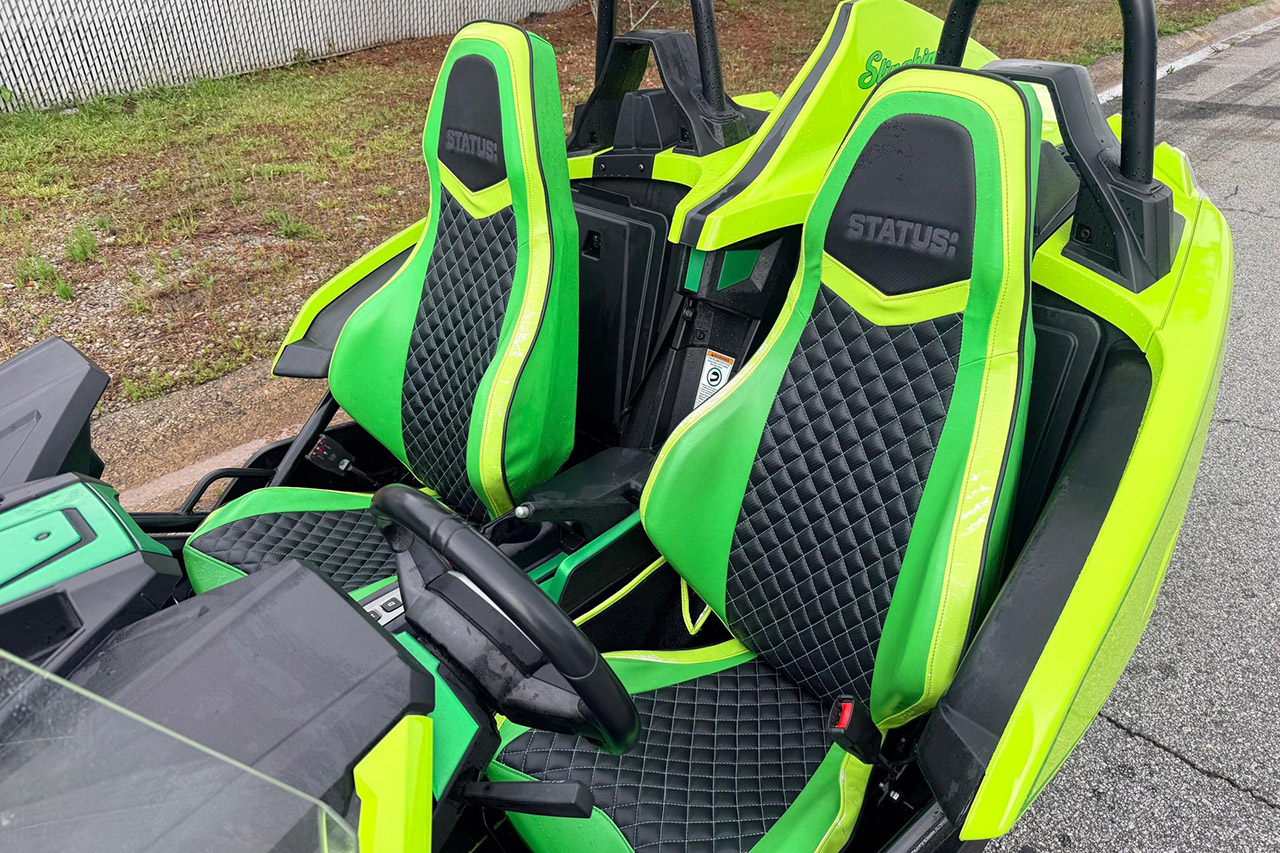
A few weeks ago, someone offered this custom project on Cars & Bids, and bidding reached a high of $13,786 before falling short of the reserve price. Clean, low-mileage Slingshot Rs are commonly priced between the mid teens and mid twenties. So, take your pick: this is either a daring or strange style choice. Whether this custom kit works depends on how you appreciate your motorcycles; is it a good idea to mix American motorcycle technology with Italian exotic styling cues?
[Source]

Anthropic launched Claude Tag, an always-on Slack AI that follows conversations, learns context, and proactively jumps in to flag updates and tasks.
Anthropic is launching Claude Tag in research preview, an “always-on Claude” that lives inside Slack and acts as a persistent AI teammate. The feature lets users tag @Claude to get insights in conversations and assign tasks. It is available to Claude Enterprise and Claude Team customers starting today.
Claude Tag is an evolution of Anthropic’s existing Slack integrations, which already let users direct-message Claude or tag it in channels for on-demand help. Claude Code in Slack can also route coding tasks from channel mentions to full coding sessions on the web, posting updates back into the thread. But Claude Tag adds a layer of persistent context and memory that the previous tools could not maintain.
“As Claude follows along with its channel, it learns ever more about the work,” Anthropic said in a statement. Claude can also automatically gather facts from elsewhere in the organisation if granted permission to read other channels. The result is an AI that accumulates institutional knowledge over time rather than starting from scratch with every interaction.

The 💜 of EU tech
The latest rumblings from the EU tech scene, a story from our wise ol’ founder Boris, and some questionable AI art. It’s free, every week, in your inbox. Sign up now!
Everyone in a given Slack channel can access a single Claude identity, meaning anyone can see what Claude has been working on and pick up the conversation from where the last person left off. System administrators specify which tools, information, and channels each Claude identity can access, and each identity stays scoped to whichever channels the admins define. A Claude set up for legal work cannot seed memories into the engineering channel, for example.
When assigned a task, Claude Tag breaks it into stages and works through them using whichever tools it has access to, responding in a Slack thread with what it has created. But the more notable feature is an ambient mode that proactively jumps into conversations to keep teams updated, flag relevant information from across the organisation, and follow up on threads or tasks that have been forgotten.
The ambient mode is the feature that separates Claude Tag from a conventional chatbot. Rather than waiting to be asked, Claude monitors the channels it has been assigned to and intervenes when it judges that a team would benefit from a reminder, a summary, or a piece of context pulled from another part of the company. Anthropic says this makes it feel like “working with a real colleague, one that can produce work in public view, with far greater context and understanding than before”
Organisational context is increasingly the battleground for enterprise AI. Microsoft has been building Work IQ, an intelligence layer expressed through Copilot that draws on Microsoft Graph to understand roles, collaboration patterns, and organisational structure. Startups like Viktor have raised tens of millions to put AI coworkers directly inside Slack and Teams.
Glean, which recently surpassed $300 million in annual recurring revenue at a $7 billion valuation, is building a permissions-aware knowledge graph that sits between the model and enterprise data.
Claude Tag is Anthropic’s answer to the same problem, but its approach is narrower and arguably more disciplined. Rather than building a horizontal intelligence layer across every enterprise application, it plants the AI inside the one surface where most knowledge work already happens: the team chat. The bet is that persistent presence in Slack, combined with cross-channel memory and admin-controlled scoping, is enough to accumulate the institutional context that makes an AI agent useful.
The privacy implications are substantial. An always-on AI that follows along with workplace conversations and autonomously decides when to intervene will face scrutiny from both employees and compliance teams. Anthropic’s admin-scoping controls are the structural answer to that concern, but the real test will come when enterprise customers deploy it at scale and discover how workers respond to an AI that is always listening.
Anthropic says it is working to bring Claude Tag to other platforms in the coming weeks. For now, Slack is the only surface, which limits the feature’s reach but also constrains its complexity, a deliberate trade-off for a research preview.


HPC
Use of Arm cores and Linux mean Beijing hasn’t broken away from the world
The TOP500 list of Earth’s mightiest supercomputers has a new leader: the 2.198 Exaflop/s LineShine machine housed at the National Supercomputer Center (NSC) in Shenzhen, which took the top spot without using any kit from Nvidia, Intel, or AMD.
Which is not to say that LineShine is an entirely Chinese creation. As explained in a pre-press paper, the machine’s LX2 processors are a local effort but use Armv9 designs – so chalk up a win for Blighty, the home of Arm. The machine also runs KylinOS – a Linux distribution that features contributions from around the world.
The paper reveals that LineShine comprises 20,480 computing nodes, and that each LX2 processor “integrates two compute dies (304 cores total) and eight on-package HBM stacks (32 GB, 4 TB/s aggregate bandwidth).”
“Each compute die contains 152 cores and 128 GB of off-package DDR memory organized into four NUMA domains,” the paper adds. “A dedicated SDMA engine handles data movement between DDR and HBM. The LX2 supports FP64/FP32/FP16/INT8 via SME and SVE units, delivering up to 60.3/120.6 TFLOPS in FP64/FP32. Nodes are interconnected via the LingQi high-speed network with a dual-plane multi-rail fat-tree topology, offering 1.6 Tb/s bandwidth per node.”
That network is also a Chinese creation, from the minds at Hangzhou LingQi Technology Co.
LineShine became the first system on the TOP500 to exceed two exaflops of sustained double-precision performance using CPUs only and the curators of the list think it could do better in future tests, because this time around it reached about 80 percent of its 2.736 Exaflop/s theoretical peak in tests conducted in preparation for this iteration of the TOP500 list.
News that LineShine topped the supercomputing charts comes as China’s government increasingly steers local organizations towards buying made-in-China tech. Beijing wants to decrease dependency on foreign products, because China has gone all-in on AI and other technologies to boost economic growth and enhance the capabilities of its military.
China’s Communist Party understands that reliance on imports can stymie those ambitions, with the USA’s ban on GPU sales to the Middle Kingdom offering ample evidence of the need to control tech supply chains. And now Beijing can point to its policies producing the most powerful single computer on the planet.
It’s conceivable that China could do even better in the future, as its GPU industry is nascent and currently producing products whose performance trails Nvidia and AMD by four or five years.
Those two paragons of US computing power, along with Intel, dominate this version of the TOP500 list – as has been the case for years. China is therefore on the march, but is a long way from global dominance.
Our sibling site The Next Platform has extensive analysis of the TOP500 list here. ®

An anonymous reader quotes a report from The Guardian: A tech sell-off shook global markets on Tuesday as attention turned away from developments in the US war with Iran and toward the future of AI companies and chipmakers that have driven stock markets to record highs. The tech-heavy Nasdaq index closed 2.2% lower on Tuesday. The S&P 500 was also down by Tuesday afternoon, dropping 1.43% while the Dow remained steady. All three major US indices have hit record highs this year, riding off a rush of funding to support AI technology and infrastructure. Nasdaq is up 10% for the year, while the Dow jumped 6% so far this year, breaching past 51,000 points, and the S&P 500 is up 7.3%.
But some economists have warned that the influx of AI spending is a bubble reminiscent of the dot-com bubble that burst in the early 2000s. Seven tech companies make up 30% of the S&P 500’s value. The heavy reliance on a single industry and a few key companies has some investors wondering if it’s a matter of when, not if, there will be a burst. Those concerns have been heightened by signals from the Federal Reserve last week that it may increase interest rates, and therefore the cost of borrowing, in order to tackle rising inflation. Alphabet fell 5% on Monday. SpaceX plunged 16%. The selloff also spread to Asia, with South Korea’s benchmark dropping 10% as SK Hynix and Samsung Electronics each lost more than 12%, while Japan’s Nikkei 225 declined 3.5%.

The growing use of AI contributed to Oracle laying off 21,000 workers in a year, according to a Securities and Exchange Commission filing on Monday.
In its annual regulatory filing for the fiscal year ending May 31, Oracle said it has 141,000 full-time employees. In its 2025 filing, Oracle said it had 162,000 employees. The reported 12.9 percent reduction followed March reports of mass layoffs at the database management software company.
“[T]he adoption and deployment of AI technologies across our operations have resulted, and may continue to result, in reductions to our workforce,” the filing reads.
However, the job cuts are also tied to large capital expenditure to build Oracle’s data center infrastructure to support AI workloads.
“The majority of the initiatives undertaken by the 2026 Restructuring Plan were effected to implement our continued emphasis in developing, marketing, selling, and delivering our cloud-based offerings,” this week’s filing reads.
Oracle plans to raise $45 billion to $50 billion in 2026 to expand its Oracle Cloud Infrastructure for customers like OpenAI, xAI, AMD, Nvidia, and Meta, it said in February. About half of that funding will come through debt, with the remainder coming from equity. When Oracle announced this, investors had already been concerned about Oracle’s growing debt to fuel its AI efforts. Overall, Oracle has over $120 billion in debt, per its fiscal year 2026 earnings report.
In February, bondholders sued Oracle, claiming that they lost money because Oracle hid the need to raise its debt to build its AI infrastructure, Reuters reported.

I recognize that when we talk about AI generally, and specifically AI in the gaming industry, there are some people out there who will simply dogmatically insist that this technology doesn’t have a place in the industry and never will. This typically comes along with two chief concerns: concerns about artistic expression if AI is used in the creation process and industry jobs being lost as a result of its use. As I’ve said in previous posts, people aren’t merely allowed these opinions, but we should be glad they’re there. If we’re going to move into the next phase of AI use in gaming, we need people to challenge its use, point out its potential negative outcomes, an spur the discussion about what it means for the art that is these games.
But journalists, including opinion journalists, are supposed to have a higher standard for topics like this. And it’s with that in mind that I say the following: Kotaku’s writing on AI in gaming is dogmatic and annoying in that it pre-judges all uses of AI in gaming in the same way I described above.
Now, I generally like Kotaku and have been a reader of the site for many years. But the pre-judgment in these articles is getting cringey. Take this recent post by Zack Zwiezen about how depressing Steam Next Fest was this year because gaming companies are using AI as a tool in their games. Zack uses a tool that informs him if a game he’s looking at comes with an AI disclosure. And this brought him great displeasure.
When I opened the main hub page for Steam Next Fest earlier today, right after my email inbox was flooded by PR messages reminding me that the event had started, I was excited to go exploring. But as I did, I started running into numerous games that feature disclaimers from the devs confirming the use of generative AI tools for various parts of the game or its marketing.
I clicked on 16 different games featured on the Steam Next Fest main hub page, and 10 of them triggered my extension and warned me of generative AI disclaimers. Of course, this will vary from user to user, as many of the hub’s slots are algorithmically driven. Still, my reaction is: Yikes. And scanning the most popular demos, I continued to run into AI warnings, so it’s not just my algo serving up slop.
Note that Zack knows almost nothing more about these games prior to his negative reaction about it all. He does note that some of the disclosures either come from small studios that explain that they don’t have the resources otherwise to produce these games without AI, which is the exact point I’ve been making about lowering the barrier of entry into the industry, or that the use of AI was very small and reviewed and edited by humans before anything went in the game. But seriously… that’s it. And the use of AI’s mere existence has resulted in Steam Next Fest being “depressing.”
That’s not how it’s supposed to work. Unless you believe that every use of AI in gaming is bad, that is. And if that’s your stance, you’re going to spend a lot of time being upset, because this isn’t going to stop. These are tools and tools will be used in the industry.
This isn’t a one-writer problem at Kotaku, either. Rebekah Valentine recently wrote a piece about how Epic produced a video showing how some of the art in Fortnite is made. And, yes, there is some use of generative AI tools involved. From there, Valentine discusses whether editing out undesirable contributions from AI, or mistakes, was actually saving time in the creation process. Then she notes that she’s not an artist and would believe artists if they said it did in fact save time. Then she says maybe that doesn’t matter at all because AI isn’t perfect and humans don’t always catch mistakes before something makes it into a game.
But then she questions whether any of the above matters because gaming companies have laid people off.
Or maybe none of that matters. Maybe we’re content with touches of generative AI here and there if it “helps” developers. We shouldn’t refuse the conveniences of new technology, right? Maybe this is good for the artists. Sure. But this is coming just three months after Epic games laid off 1,000 people because its leadership couldn’t keep an eye on their own balance sheet. What that tells me, in aggregate, is that Epic Games needs fewer artists to make new content for the game faster, which inevitably is going to mean tighter deadlines and more mistakes. I am not naive enough to think that Epic Games, having laid off this many folks, is going to use generative AI to give the artists that remain more generous deadlines that will allow them to reach their creative potential or fully realize their original ideas or whatever. Epic Games is concerned, first and foremost, with making money. If its leadership thinks they have a tool in hand that will allow fewer people to spit out art that’s good enough faster, they will use it.
This tendency to couple layoffs in gaming companies with the use of AI is lazy. I have no doubt that some layoffs, or slowing hiring trends, have been a result of the use of AI in some companies, some of the time. And I also understand that the gaming industry has suffered from some serious layoff numbers in recent years.
But the macro story is actually that layoffs have slowed in the industry, not sped up. They appear to have peaked in 2024, with a downward trend since then. We’ll have to see how 2026 ends up looking, but I very much believe that these claims are being made due to some very high profile layoffs at major gaming companies this year. The story of Epic’s layoffs is far more complicated than them deciding to use AI. The reasons behind Microsoft’s steady drip of layoffs and studio closures over the past few years is all the more so. And, industry wide, it needs to be remembered that there was a furious spate of acquisitions and consolidation in the market during the pandemic era of 2020 and 2021. That itself came with the dual problem of gaming companies overextending and lying about future plans when the regulators came calling about some of these acquisitions.
I’m not asking anyone to like bad uses of AI in gaming. I’m not even asking anyone to like AI in gaming generally. But dogma has no place in journalism, nor the market. Bad use of AI will produce bad games and the market will respond. Judging any and all uses as bad before you know anything else about a game is not the job of a journalist. Blaming every layoff in the industry on AI is no different than blaming piracy for every lost sale.
In short, writing about how game makers are using a tool and just shouting “It’s bad!” at it is not journalism. It’s not even really opinion journalism. It’s just lazy.
Filed Under: ai, ai in video games, journalism, video games
Companies: kotaku


The safety briefing at the start of any flight explains to passengers what they need to do in the event of an in-flight emergency. It will tell you things like where to find the emergency exits and where the life jackets are stored. One thing it won’t explain is where to find your parachute.
This might seem strange, as parachutes have been saving fliers since the 1910s, a few short years after the Wright Brothers’ historic 1903 flight. In fact, the first successful use of a parachute happened in the 18th century, when André-Jacques Garnerin successfully parachuted from a hot-air balloon. But there are very good reasons why we’re not all issued with parachutes upon boarding a commercial flight.
One of the biggest problems is altitude. Commercial jets typically fly at altitudes of about 35,000 feet or more, with some long-haul flights exceeding 40,000 feet. And while it’s easy to forget when you’re sipping a coffee at 37,000 feet, there are only a few inches of airplane separating you from freezing temperatures and air that’s too thin to breathe. Commercial planes also fly at incredible speeds, up to 575 mph in some instances. The fact that most passengers won’t have parachute training is another issue. Put simply, hundreds of flip-flopped holidaymakers exiting an aircraft into a minus 50-degree Celsius, 500-mph airstream without a clue how to skydive is not a scenario that’s likely to end well.

To illustrate why passengers are better off without parachutes, let’s look at an incident that took place on June 24, 1982, when a British Airways 747-200 unknowingly flew through a volcanic ash cloud. The ash caused the engines to fail, and the plane dropped 25,000 feet before the pilot managed to restart them and perform a successful emergency landing. Had passenger parachutes been available and the captain made the call to use them, the result would have been hundreds of passengers widely dispersed over the ocean.
There are no circumstances where turning off the seatbelt light and illuminating a hypothetical prepare-to-parachute light is viable. Even in instances where the altitude is survivable and the cabin doors can be opened (which can only happen if the plane is depressurized and below 10,000 feet), the idea of startled passengers with no parachute training forming an orderly queue, leaping into the airstream, and landing on the ground unscathed is unrealistic.
Modern airliners are incredibly safe, and flying remains the safest form of transportation. Issuing parachutes to passengers is unlikely to improve these stats. Parachutes only work when conditions allow them to, circumstances that commercial flights never satisfy. This is not a new realization either; as far back as 1931, airline operators maintained that the time element in crashes made passenger parachutes pointless. Perhaps slightly more plausible is a system like the whole-airframe parachutes fitted to Cirrus aircraft. However, weight, size, cost, and doubts about its effectiveness mean we probably won’t see such systems on commercial flights anytime soon.


It’s 100 feet shorter and $100 million cheaper than Meta CEO Mark Zuckerberg’s superyacht, but another billionaire’s ship had no trouble drawing attention in Seattle on Tuesday.
“Zen,” a $200 million, 289-foot yacht reportedly owned by Chinese billionaire Wu Guangming, motored smoothly through the Ballard Locks and out to Puget Sound, attracting onlookers along the railings of the popular Seattle destination.
Flying a Cayman Islands flag, the vessel displayed its port of registry, George Town, below its name on the stern.
@media (max-width: 600px) {
aside.callout { float:none !important; max-width:100% !important; margin-left:0 !important; margin-right:0 !important; }
aside.callout .callout-img { display:none !important; }
}
Wu is the founder of China’s Jiangsu Yuyue Medical Equipment and Supply, which supplies devices such as rehabilitation machines, oxygen tanks and diagnostic equipment.
Forbes ranks Wu, with a net worth of $2.6 billion, No. 1251 on its 2026 list of billionaires. It wasn’t clear if he was onboard or why the vessel was in Seattle.
Marine Traffic listed Alaska as the ship’s reported destination.
The yacht’s fenders and lines were tended to by a dozen or so crew members wearing matching white shirts and black shorts. U.S. Army Corps of Engineers workers guided the ship through the Locks, which connect the waters of Lake Washington, Lake Union, and Salmon Bay to the tidal waters of Puget Sound.
“Tis the season,” said one worker when asked by GeekWire if it seemed like an unusual number of superyachts were sailing into Seattle these days. He said it was not the biggest he’d seen and besides, the Locks are long enough to hold the 600-foot Space Needle lying down.
Zuckerberg’s “Launchpad” arrived in Seattle on May 26 and turned heads with its own trip through the Locks before mooring on Lake Union and drawing even more attention before moving out.
Zen was built in 2021 by Feadship, the same Dutch shipbuilder that made Launchpad. According to Superyacht Times, Zen can accommodate 16 guests and 25 crew members. In the world rankings for largest yachts, it’s listed at number 141.
Matt Sunday of Green Lake was out for a bike ride Tuesday evening when he stopped to check out Zen at the Locks. A director of engineering at Boeing, Sunday said he was interested in how the boat navigated the waterway.
“I’m fascinated by the precision and how it’s using the bow thrusters,” Sunday said. “It looks like it’s got space, but it’s tighter than that captain wants it to be, I’m sure.”
Sunday said he couldn’t really fathom the wealth of someone who could own such a vessel, calling it “a $200 million toy.”
Check out more GeekWire photos:



B&H’s flash Deal Zone drops a blowout 15-inch MacBook Air configuration to a record-low $949, with free 2-day shipping.
For 24 hours only, pick up Apple’s last-gen M4 MacBook Air 15-inch for $949 at Apple Authorized Reseller B&H Photo. Available in your choice of Midnight or Sky Blue, this laptop originally retailed for $1,199.
Buy 15″ MacBook Air M4 for $949
The 15-inch Air comes with Apple’s M4 10-core chip, along with 16GB of unified memory, and 256GB of storage. If you want to extend your storage, we covered network attached storage (NAS) deals that deliver savings of up to $215 off.
B&H is throwing in free 2-day shipping on the thin-and-light laptops when shipped within the contiguous U.S., ensuring your order will arrive quickly so you can enjoy it right away.
This Flash Deal Zone is valid now through 8:59 p.m. Pacific Time, or while supplies last.
If you need additional ports and storage, B&H is also running a coupon special on the M5 14-inch MacBook with a 1TB SSD. The Space Black model is marked down to $1,529, which is $170 off retail.
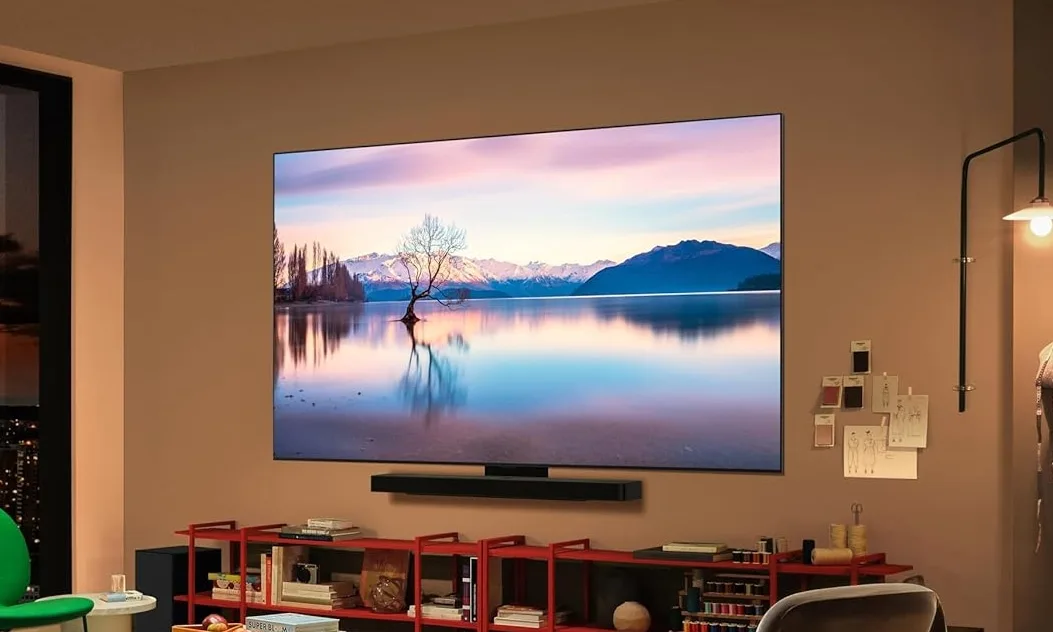
Amazon Prime Day is here, and it’s bringing some jaw-dropping deals on TVs. Whether you want a flagship OLED TV that delivers perfect blacks or a budget-friendly Mini-LED TV that punches above its weight, there is a deal for everyone this year. I have rounded up the five best TV deals so you don’t have to dig through endless listings. Let’s get into it.
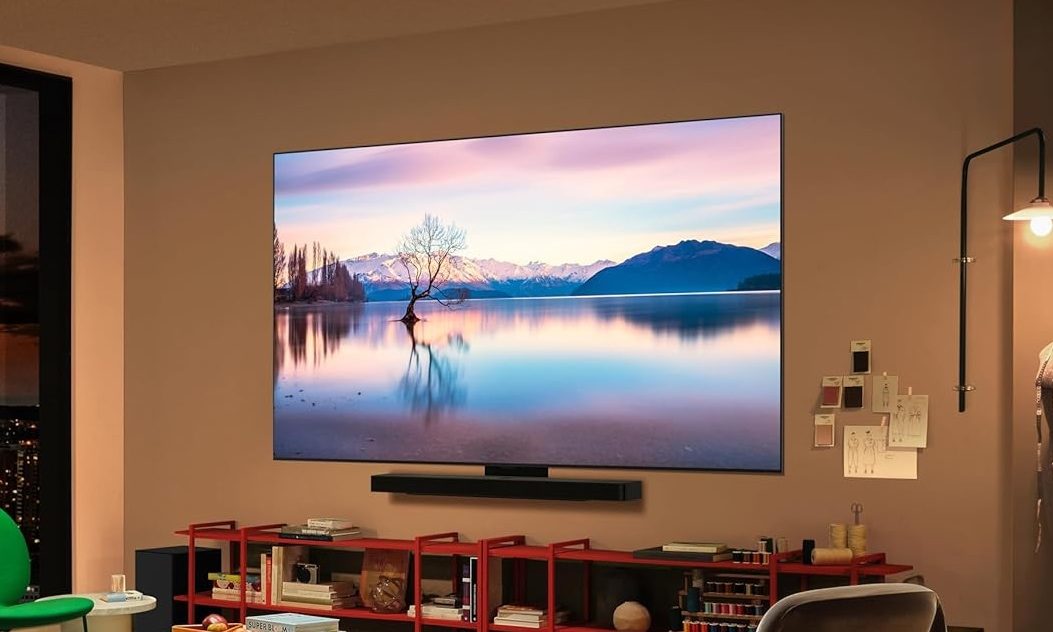
If you want the best of the best, the LG C5 OLED Evo is the one to beat. This 65-inch flagship OLED has dropped to around $1199, down from roughly $1399.
You get over 8.3 million self-lit pixels that deliver perfect blacks and stunning color, even in bright rooms. It’s powered by the Alpha 9 AI Processor Gen8 chipset, which provides all the performance needed to stream content smoothly and handle anything you throw at it.
The TV comes verified for glare-free viewing, so it performs great no matter the lighting in your room. Gamers get a 0.1ms response time, up to 144Hz refresh rate, and four HDMI 2.1 ports, plus NVIDIA G-Sync and AMD FreeSync. Toss in Dolby Vision and Dolby Atmos, and you have a TV that handles everything.
Pros
Cons
Deep inky black contrast.
Aggressive automatic brightness limiting.
Wide off-axis viewing angles.
Struggles in very bright rooms.
Ultra-low input lag times.
Excellent 144Hz gaming performance.
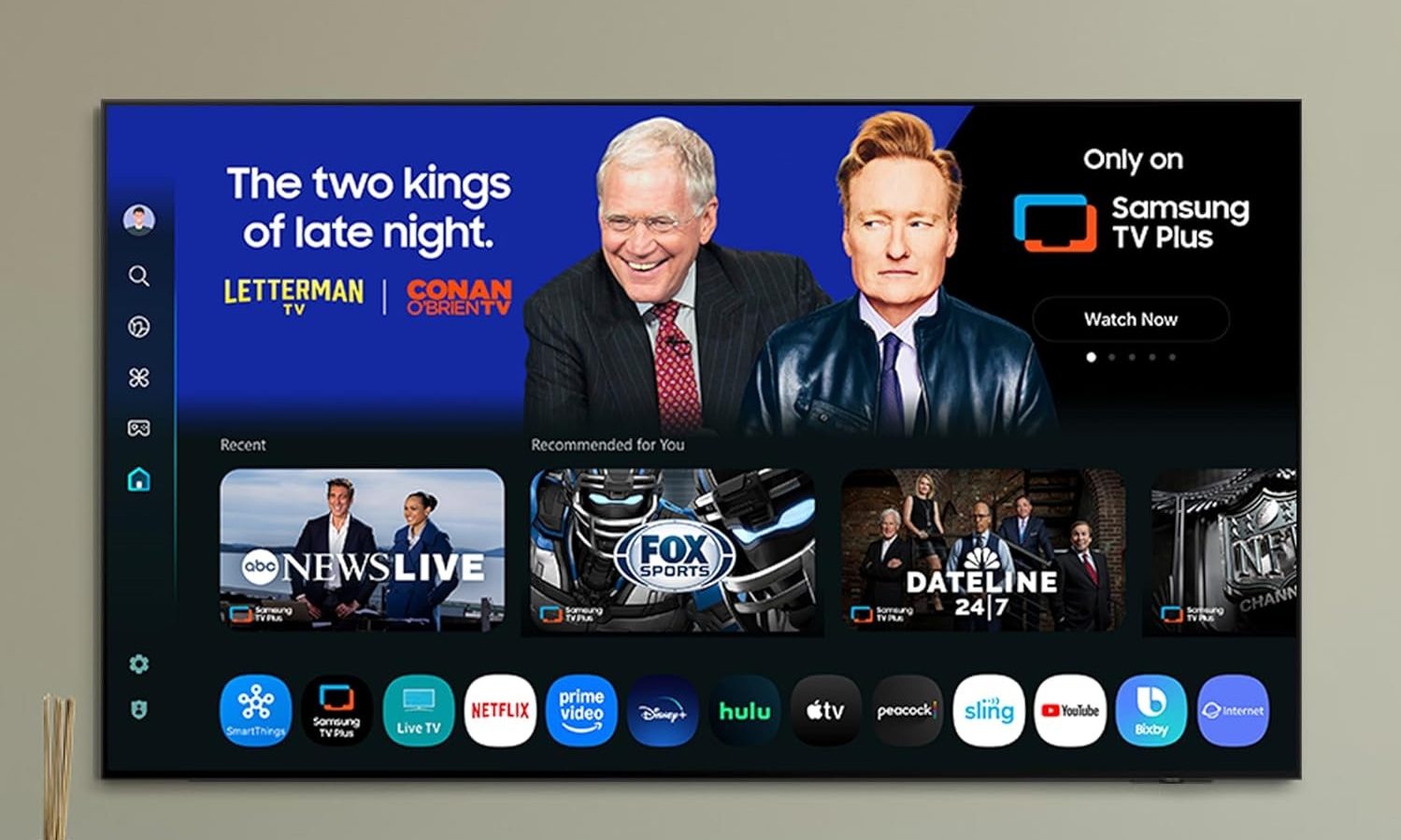
If you want an OLED TV at a friendlier price, the 55-inch Samsung S90F will be right up your alley. It has dropped to around $997.99, down from roughly $1,397.99. That is up to 28% off and a great entry point into premium OLED territory.
This TV runs on Samsung’s NQ4 AI Gen3 processor, which uses 128 neural networks to upscale everything you watch to crisp 4K quality. You get powerful brightness, deep contrast, and smooth motion for tear-free gaming at up to 4K 144Hz.
It can also transform SDR content to HDR-like quality with brighter highlights and more vibrant colors. If you want vibrant colors and inky blacks for mixed use and gaming, this one is a steal.
Pros
Cons
Excellent at 4K upscaling.
Audio quality is not up to par.
Runs on powerful NQ4 AI Gen3 processor.
The reflection handling could be better.
Supports smooth 144Hz lag-free gaming.
Produces vibrant colors.

The Samsung Frame is for those who want their TV to double as a piece of art. This 65-inch model has dropped to around $697.99, down from roughly $1,097.99, which is about 36% off.
When you are not watching, the Frame transforms into art with its matte, glare-free screen that makes digital paintings look like real prints. You can upload your own photos or pick from a curated collection in the Art Store, and customizable bezels let you match it to your decor.
The slim design mounts flush to the wall, and an external hub connects the TV to power and your devices with a single wire, so you don’t have to deal with messy cables. I have a Samsung Frame TV in my bedroom (a different model), and let me tell you, it looks far better than your regular TVs.
Pros
Cons
Matte screen kills glare beautifully.
Weaker viewing angles.
Doubles as beautiful wall art.
You don’t get as deep blacks as on OLED TVs.
Slim, single-cable flush mount.
Solid 4K QLED picture quality.

If you are shopping on a budget, the TCL QM7K is the deal for you. This 65-inch Mini-LED QLED has dropped to $498.99, down from $649.99, which is about 23% off and lands it under $500, which makes it a bargain in TV territory.
TCL’s QD-Mini LED combines the best of QLED and OLED tech, with up to 2500 precise local dimming zones for dark black levels. The high HDR brightness gives you a great picture in any room, and the CrystGlow HVA panel blocks reflections so your image stays crisp and visible.
Then there’s TCL’s Halo Control System working behind the scenes to deliver clean, halo-free images without that distracting glow around bright objects. With Google TV baked in, this is incredible value for the money.
Pros
Cons
Outstanding peak HDR brightness.
Narrow off-angle viewing.
Excellent 144Hz gaming capabilities.
Noticeable screen glare/reflections.
Effective backlight blooming control.
Audio lacks strong bass.
Premium feel, mid-tier price.

No best TV list can be complete without a Sony Bravia, and the one we are featuring on this list is the Sony X90L BRAVIA XR. The TV has an MSRP of $1398. But this Prime Day, the TV is getting a massive price cut, going down to $1198, giving you a savings of $200.
As for features, it hits all the right notes. It packs a 4K OLED panel with over 8 million self-lit pixels that are precisely controlled to deliver pure blacks with high brightness, while the XR Processor enhances every scene in real time, boosting color, contrast, and clarity on the fly.
One of my favorite features of this TV is the Studio Calibrated Picture mode, which ensures you watch your favorite movies just the way the creator intended.
Pros
Cons
Superb 4K picture quality.
Competitive models are cheaper.
Wonderfully natural color reproduction.
Prone to aggressive brightness limiting.
Excellent motion handling processing.
Loud immersive built-in audio.
It really comes down to your budget and what you want from your TV. If money is no object, the LG C5 OLED and the Sony Bravia are the clear winners. If you want OLED quality at affordable pricing, the Samsung S90F is a brilliant pick. The Samsung Frame is for the design lovers, while the TCL QM7K is the budget champion that doesn’t skimp on picture quality.





Weekend Open Thread: Miami – Corporette.com


Renter of Home in Anne Heche Crash Denies Settlement With Son


Microsoft accidentally kills epic Outlook email threads


Soccer-U.S. defends Iran World Cup travel restrictions, says discussions ongoing

Two goals and an assist by sheer aura: Cristiano Ronaldo just entered the World Cup chat
Bitcoin (BTC) Dips Below $62K, Ethereum (ETH) Plunges 6% Daily: Market Watch


BBC Reporter Discusses Cross Party Criticism Of Trumps Iran Deal

Wall Street Week Ahead: Investors see Micron earnings as pulse check of AI rally momentum
Entergy settles forward sale agreements, raises $672 million in cash proceeds


Andy Burnham and the meaning of Makerfield


AWS enters the context layer race with a graph that learns from agents, not manual curation

Can Charles Hoskinson Really Rescue Cardano?


HIVE shares jump as $220M AI deal speeds Bitcoin mining pivot


Jake Chervinsky accuses CME of protecting derivatives monopoly


Keir Starmer Allies Question His Chances For No 10

Nearly 7,000 fake Amazon domains registered ahead of Prime Day 2026, researchers warn


Brexit cost 6% of UK economy, Bank of England company data suggests


FIFA World Cup 2026: Canada beat 9-men Qatar 6-0 to register first ever win | FIFA World Cup 2026

Signal’s Meredith Whittaker says AI chatbots ‘are not your friends’ and calls Copilot agents a backdoor


Jose Alvarado Wants Taylor Swift at More Knicks Games


You must be logged in to post a comment Login