from the bricks-and-minifigs-and-influencers-and-lawsuits dept
On Techdirt, we often complain about lawyers and bad lawyering and bad cases. But there are times when lawyers are helpful, and my one-sentence summary after spending many days trying to understand a viral dispute about [checks notes] some old Star Wars LEGO sets is that a lot of people should have spoken to competent lawyers before doing… whatever the fuck they decided to do here.
If you haven’t been following the Bricks & Minifigs saga, congratulations on your peaceful existence. It’s a genuinely difficult story to track, partly because you have to watch a bunch of long YouTube videos to piece it together, and partly because almost everyone covering it is pushing a specific angle. Just as a point of reference, Bricks & Minifigs is a company that franchises its concept of stores for buying and selling lego blocks and sets — and, yes, minifigs. They have about 300 stores, most of which are franchised.
The basic summary (and some of this is disputed) is that a local Bricks & Minifigs franchise in Keizer, Oregon made an agreement with a guy named Bryan Mansell to sell a very large collection that his father had put together over many years of collectable unopened Star Wars LEGO sets. The intention of the collection had (we are told) always been to pay for college for Bryan’s children. His father, an 83-year-old man, had agreed to have Bryan sell the sets via the Keizer store on consignment. The collection was advertised, including on the store’s Instagram page where they made it clear that it was “one of the largest, most valuable privately held collections of Star Wars LEGO in the world” and that it was about to go on sale.
Later photos in that post detailed that they believed the collection was “worth well over $200,000” and that the entire collection would be sold through the store. The actual value of the legos in question is disputed, but the lowest number I’ve seen is closer to $60k. The entirety of the Instagram post text reads:
Saturday and Sunday, the 11th and 12th of November, the Bricks and Minifigs store in Salem-Kaiser will display one of the largest, most valuable privately held collections of Star WarsTM LEGO in the world. The event will be open to journalists and the public for photos before the collection goes on sale.
In the early 90s, Ed Mansell predicted Star WarsTM LEGO would be a good investment. Over the next 15 years, he purchased approximately $20,000 of Star WarsTM LEGO and preserved them, sealed, in their original boxes. The investment really paid off. The collection is now estimated to be worth well over $200,000. Multiple sets, including the highly prized, incredibly rare Cloud City set, are now worth more than $10,000 each. Some of the individual minifigs are worth more than $1,300 each. The ten-fold increase in the value of Mansell’s collection is a greater return than if Mansell had put the same amount of money into the stock market in a Dow Jones Index Fund.
When Ed Mansell decided it was time to divest, he turned to his son, Bryan Mansell. Bryan knows more about his father’s comic book and baseball card collection but didn’t feel confident in his knowledge of the LEGO secondary market. He saw the sign for the Bricks and Minifigs store while passing by on North River Road, came in, and asked the store owner, Chrystal Law, if she could help. “I told him, even if we couldn’t sell the collection, I would help him figure out how much it was worth because I didn’t want him to get ripped off. And I think that’s why he trusted me,” Law said. The entire collection will be sold through Law’s store, but first they wanted to put it all on display so the public can see it in its entirety.
The collection will be on display in the store’s party room from 10am till 6pm on Saturday, November 11th, and 11am till 6pm on Sunday. The collection will be available for sale immediately, so the best time for pictures will be Saturday morning. The collection will not be stored on-site after hours for security reasons, and after Sunday the sets will be available for purchase but stored elsewhere. Bricks and Minifigs is located at 3670 River Road in Kaiser.
Apparently, over the course of 2024, various parts of the collection were sold off and Mansell would stop by each month to collect his cut of the sales. There is a dispute over how much of the collection was actually sold before everything went off the rails in late 2024.
Advertisement
In November 2024, as you may have heard, Donald Trump was elected. Chrystal’s partner, Ben Gorman, runs a small publishing company called Not A Pipe Publishing, which (among other things) publishes something called the “Antifa Lit Journal.” Gorman felt like publishing such things in the US under a Trump regime might be problematic and looked into moving out of the country. As part of that, Law contacted corporate Bricks & Minifigs about selling or closing their franchise (exactly what she told them is disputed).
This next part is also disputed. Law & Gorman say corporate told them they had a franchisee who was interested in taking over the franchise. Bricks & Minifigs corporate claims that Law had told them she was shuttering the store and that she wasn’t allowed to do that, so they had to rush to reclaim the store. Almost immediately someone associated with Bricks & Minifigs, Brandon Best, showed up at the store, saying he was taking over the store and demanding the keys and that Law leave immediately. There’s also a dispute over whether or not Law & Gorman were in violation of their franchise agreement (Law & Gorman claim that the breach was due to failures by BAM corporate, which had been worked out months prior, and any claim of ongoing breach is misleading).
There’s a bit that is caught on video where Law tells Brandon and someone from the company on the phone that they have a large collection on consignment and that they owe Mansell money, and Bricks and Minifigs corporate tells Law they’ll “take on the consignment liability.”
Law and Gorman push back on Bricks & Minifigs just taking over the store, but are told by a B&M “official” name Ki McAllister (recorded by Gorman) that if they try to fight this, B&M will make their lives difficult: “If we go the legal route, it’s gonna be a very expensive battle for you and it’s not going to be a good position for you guys to get into. There’s not a whole lot of options for you. If you want to go the legal route, it’s just going to be a mess and it’s gonna be expensive for you.” When Gorman pushes back and asks if McAllister spoke “with” or “at” Crystal, McAllister admits he spoke “at” her and then says: “If you fight this, then you’re putting yourself into a whole lot of shit. It sounds like a threat and I can acknowledge that, because in a way it is.“
Advertisement
From there, it appears corporate Bricks & Minifigs transferred the franchise to two of its partners, Joshua Johnson and Brandon Best (the guy who showed up at the store) and they just… basically denied owing Mansell anything at all or even having his legos. Or sometimes they’d admit it and sometimes they wouldn’t. It became messy. Mansell claims that the people he spoke to store gave an almost identical message to him that Ki McAllister gave to Gorman & Law that it would be too expensive for him to go to court to get back what he owes.
Mansell then reached out to YouTubers, some of whom detailed how Bricks & Minifigs appeared to have effectively stolen all these lego sets. But then (according to one of the YouTubers) Bricks & Minifigs threatened to sue them (sense a pattern?) and they took down the videos.
Mansell then contacted another YouTuber named Ben Schneider, who goes by the handle Reckless Ben — best described as a Temu Nathan Fielder. He puts himself in ridiculous situations, goes to equally ridiculous lengths to justify them, and stares blankly into the camera with that specific combination of cluelessness and overconfidence that comes from someone who has talked himself into believing every move he makes is correct.
In this case, that included (not a complete list) trying to get back Mansell’s money and/or remaining legos by going to the store, confronting the employees, confronting the owners (who were difficult to track down), showing up at Bricks & Minifigs corporate, speaking to the CEO, setting up a registered religion in order to run a raffle for the lego sets to try to make this a criminal case to get law enforcement involved (not how any of this works), filing a bunch of small claims cases against the store and the company and the owners of the store, creating a company called We Steal from Old People, setting up a “franchise” structure for We Steal from Old People to use a mirror argument of Bricks & Minifigs that he can’t be held liable for franchisee actions, putting up signs for that store, and much more.
Advertisement
Some of these moves are interesting. Some are genuinely clever. Many are very stupid — particularly agreeing to talk to cops without a lawyer present after being arrested (more on that shortly), and believing that tricking a store employee into signing what she thought was a delivery receipt, but which was actually an unenforceable “contract” against trespassing him, accomplished anything at all. Mostly what all of this does is generate attention, rather than anything legally compelling.
The one potentially legally interesting move in all of this was filing the ten separate small claims cases against the store (I won’t even get into how they were able to structure things to file the ten separate claims even though that’s interesting, because this is freaking long enough, and the details are in some of the videos below). The store refused to show up in the cases, meaning that default judgments were entered in each case. When Schneider went to the store to try to collect, he found that the store had been permanently shuttered the day after the default judgments came down (which looks very, very bad for Bricks & Minifigs and the franchise owners).
The cops get called on Schneider repeatedly through all of this. When he’s in Utah trying to confront both Bricks and Minifigs CEO Ammon McNeff and the supposed franchise owners, Joshua Johnson and Brandon Best. He tries to take Johnson to small claims court and the court tells him he needs to first try to resolve the issue with Johnson, but Johnson (who at one point offers to give Mansell the lego back if Mansell apologizes, but then doesn’t) has blocked Schneider’s phone number and calls the police when he sees Schneider and associates near his house.
At multiple points the police stop cars that Schneider is in (one time after falsely claiming they didn’t stop at a stop sign, even though the dash cam shows they clearly did) and generally appear to be harassing Schneider and his colleagues. In what appears to be a tremendously egregious move, they pull them over and hold them for hours claiming that they believe there are drugs in the car which they search for and are unable to find. Later the cops get a warrant and raid the Airbnb where Schneider and others are staying, arresting them all.
Advertisement
Schneider and some of the others working with him are arrested at various points for stalking and harassment, while Schneider insists he’s just trying to serve Johnson with the papers from the small claims case. There’s also an attempt to claim that the Go Fund Me campaign that Schneider set up at some point violates some law. The whole thing goes off the rails in so many ways.
Schneider also gets access to various bodycam footage, some of which is redacted in places that look sketchy but happens all the time with police body cams. Some of the bodycam footage looks damning against the police (including a couple of admissions that they don’t really think Schneider and his friends have violated the law, even if the police chief later disputes that).
Very stupidly, Schneider and his friends/colleagues repeatedly talk to cops without a lawyer present. This is a very bad thing to do. Multiple people who were arrested later put up their own videos about it, including one (the guy who was arrested for trying to lock his phone when a cop tried to take it), who claims that he’s got a high IQ so was never going to get bested by a cop (this is also a stupid thing to say).
Bricks & Minifigs’ position on all of this appears to be that (1) anything bad that happened was because of the franchise owners and not corporate, both the previous ones and the ones they arranged to take over who appear to be closely associated with corporate Bricks & Minifigs anyway, (2) Law & Gorman violated their franchise agreement in many ways and the takeover of the store was necessary because of that, (3) that Gorman & Law “stole” Mansell’s legos and the new store really didn’t have any, (4) that Gorman & Law weren’t allowed to do consignment deals in the first place (despite evidence to the contrary, including the franchise agreement that lays out that consignment is acceptable), (5) that Ki McAllister is a low level employee and his statements don’t matter (not how it works), (6) that they didn’t know about any consignment deal (clearly untrue given video evidence as well as notifications from both Law and Mansell), (7) that Schneider is only giving a one-sided account (true, but doesn’t deal with many of the factual claims), and (8) that this is all an illegal harassment campaign against them designed to get them to pay out way more money than they owe (if they owe anything at all).
Advertisement
On top of all that we have competing additional civil lawsuits filed in Utah state courts and the various misdemeanor (not felony) charges against Schneider (though he claims he’s also being threatened with felony charges, though as far as I can tell none have been filed yet). Oh and the potential of criminal charges against… someone… in Oregon for the possible theft of Mansell’s collection.
Phew.
Let’s now insert some of the many videos on this. I will say that Bricks & Minifigs corporate (and the replacement franchise owners) come out of this all looking very, very, very sketchy. Ben Schneider comes out of it looking like both a hero for getting a tremendous amount of viral attention to all of this, but also kind of a dumbass for doing a bunch of very stupid things that he thinks helps his cause but don’t, which he could have avoided by… actually talking to a lawyer. Yes, Schneider got a ton of attention on the issue, but also did a ton of things that likely made everything worse for Mansell and himself.
If literally anyone involved had spoken to a lawyer at any point, an awful lot of this mess could have been avoided.
Advertisement
That’s why I’ll start with the most even-handed summary I’ve seen of the whole thing, from the always excellent Lawful Masses with Leonard French, who walks through the legal reality in exhaustive detail. It’s more complicated than any of the other coverage suggests, though yes, Bricks & Minifigs still comes out of it looking like people who took control of collectible legos they had no rights to.
Some of the key points highlighted by French that haven’t made it into most of the other videos I’ve seen:
Mansell should have filed a UCC-1 financing statement with the consignment to protect his property (this is genuinely useful information for anyone ever looking to sell things on consignment) but even if he didn’t do that, he’s probably protected by the “merchant exception” related to the Statute of Frauds. This is far beyond my own legal understanding, but is fascinating.
Mansell sent a termination letter to the new owners of the franchise, putting them on actual notice that the sets were his.
Mansell had a friend go in and purchase one of his sets after he had clearly informed the store not to sell one. As French points out, this is now a pretty clear theft case.
Bricks & Minifigs has some ways that they could (potentially successfully) challenge the small claims default judgments against them in Oregon, but the clock is ticking on that, and if they fail to, those judgments could follow them around.
Then as I was finishing up this already incredibly long article, I saw French has released part II, looking at some of the filed lawsuits that I discuss below and coming to similar conclusions that I do (i.e., no one comes out of any of this looking good).
Advertisement
Then there are some of Schneider’s amusing/cringey videos, starting with him talking about the effort to get back the legos. This is the main video that made this go viral and currently has around 3 million views.
He then published a follow up detailing how the police in American Fork treated him and his friends including stopping them multiple times and eventually raiding their AirBNB and arresting them.
Advertisement
And also a short video reading through and reacting to a leaked letter that Bricks & Minifigs corporate sent to their franchisees about how to deal with the controversy.
Then there are the American Fork police who released this bizarre video showing their side of the story, which appears to be set in… I dunno… heaven? John Oliver’s void? The entirely white background is a freaking choice is all I’m saying. So too is the “I’m reading you a bedtime story” tone of voice from police chief in the video.
The police chief also fails to address the weird redactions in the bodycam footage, and the multiple times his cops are caught effectively admitting that Schneider and his crew weren’t actually breaking the law.
Schneider has released a response video using a similar backdrop and highlighting problems and inconsistencies with the claims in the police video.
Advertisement
Then there’s Bricks & Minifigs CEO Ammon McNeff going on a livestream and doing a poor job of defending the company, including saying a few things that won’t do him any favors in court.
Believe it or not, there’s even more in all these videos that I don’t have time to go into, but we’re at almost 3,000 words already and we haven’t gotten to some of the competing lawsuits.
Advertisement
We have discussed the small claims cases (which have mostly ended in default because BAM folks ignored them) but the bigger deal are the competing lawsuits that have been filed in Utah’s state court and have received less direct attention. While it’s one thing to say things on a one-sided YouTube video, what you say in court can be a bit more serious. And we have two competing cases to look at. The first was filed by Law and Gorman and the LLC they had set up to run the Oregon store, and filed in Utah’s Chancery Court back in March.
It adds some useful details to the whole mess, including saying that the only breach they had regarding their franchise agreement with BAM corporate was… because BAM themselves refused to live up to the requirements of the agreement. Apparently Law had simply managed the store before this, but had approached corporate about taking on the franchise, which they agreed to do. But after working out a deal, the company failed to transfer the lease and the bank account over to Law & Gorman, which caused a bunch of problems regarding payments:
Shortly after the sale closed, BAM failed to fulfill its obligations to properly transfer the store’s bank account and assign the store lease to Plaintiffs’ LLC. These were not minor administrative oversights—they were fundamental obligations without which the franchisee could not operate the business. Without control of the bank account, Plaintiffs could not make the automated payments required under the Franchise Agreement. Without the lease in their name, Plaintiffs had no direct relationship with the landlord and no ability to ensure rent was paid. BAM’s failure to complete these transfers was the first material breach of the Franchise Agreement and the proximate cause of every subsequent “default” BAM later cited as grounds for termination.
BAM did not return the bank’s documentation needed to change account ownership, causing the account to be frozen without Plaintiffs’ knowledge. As a result, automated payments for franchise royalties and for the remaining purchase price were not withdrawn as scheduled.
Similarly, because BAM never assigned the store’s lease to BAMF Salem 1, LLC, the landlord’s notices of bounced ACH rent payments went to BAM as the tenant of record—not to Plaintiffs. BAM did not promptly inform Plaintiffs of these issues, effectively concealing the problem until it had compounded. Plaintiffs thus could not pay rent through no fault of their own: the lease was not in their name, the bank account was frozen, and the party responsible for both failures—BAM—kept Plaintiffs in the dark. BAM’s own Director of Operations later confirmed this failure on a recorded call, admitting that “the lease is technically in our name still.”
Advertisement
That is a pretty bad look. Especially given that, in BAM’s own lawsuit, they claim the reason they repossessed the store and handed its franchise to someone else was… the very things that Law & Gorman say they caused. BAM corporate’s massive lawsuit filed against Ben Schneider, Bryan Mansell, and a bunch of folks working with them (and, of course, claiming civil RICO because why not?) claims that they took back Law & Gorman’s franchise because of breaches to the agreement, such as those that Law & Gorman say were BAM’s fault n the first place (oddly, the BAM lawsuit refers to everyone by their first names, rather than last, which would be more typical).
Despite the foregoing plain requirements, Chrystal and Benjamin materially breached their obligations, as required APA payments were not completed, FA royalty payments became delinquent, the lease and various accounts were never properly transferred and lease amounts were unpaid. Chrystal’s outstanding contractual obligations mounted, eventually exceeding an estimated $175,000….
… Based on the foregoing uncured breaches and anticipatory repudiation, BAM, inter alia, issued a written 11/14/24 Notice of Immediate Termination to Salem LLC pursuant to the FA, exercised its priority rights to the collateral in the Security Agreement, pre-scheduled a repossession with Chrystal and repossessed the Salem LLC store on or after 11/14/24 and assumed the lease, as expressly permitted under the FA and APA, including any and all fixtures, inventory and other assets, and credited an estimated $38,000 paltry value thereof as an offset to the unpaid $175,000 debt.
That’s a pretty big factual dispute that the two courts are going to need to dig into.
The BAM lawsuit also claims that they had no notice of Mansell’s consignment, which is plainly bullshit given the video clip that shows up in basically all of the videos above:
Advertisement
Excepting only respecting the foregoing unpaid lease, BAM did so as a bona fide purchaser, without notice of any third party claims or liens of any kind, including Chrystal and Benjamin’s undisclosed and alleged 11/22/23 Consignment Agreement with Brian, referenced infra.
Prior to and at the time of repossession, BAM’s representative, Brandon, conducted an informal and video inventory of the Salem LLC fixtures and inventory. While he did not locate or identify any product that was identified as consigned or not owned by Salem LLC, he concluded that the maximum value of any residual inventory was less than $38,000. Less than $5,000 worth of Star Wars LEGO product could be located and identified in the entire residual Salem LLC onsite inventory.
This is quite a claim to make given the video evidence to the contrary, which had already gone viral by the time this lawsuit was filed last week.
There are other claims in the BAM lawsuit that seem problematic including this:
Bryan showed up later that day and began yelling at personnel and holding up purported consignment paperwork demanding the immediate return thereof or payment of $80,000. Josh interceded and asked to review it and briefly did so and pointed out that neither BAM (nor Josh and Brandon) were a party to this purported arrangement.
Again, taking over the store also meant taking over the consignment liability, which they had already been made aware of and which they admitted they were taking over (as recorded in the security camera video). That they hadn’t personally been a party to the arrangement doesn’t matter, because when they took over the franchise they also took over that agreement.
Advertisement
The complaint then says that Johnson and Best tried to find the alleged sets owned by Mansell but were unable to do so, concluding that they were all gone. This is, obviously, contested by Mansell and others who have pointed to evidence that the sets were still in the store, including Mansell having someone go in and purchase one of the sets after he had demanded them back in a written notification.
The complaint also claims that it was only in late 2025 and early 2026 that Best was able to dig into the old franchise’s accounting system to find details of sales of what were likely many of Mansell’s legos. The complaint argues that it appears most, if not all, were sold by Law prior to the takeover and if Mansell is owed money, it’s from Law and Gorman.
Many months later in the fall of 2025, and only after Baker Salem had entered its 3/27/25 Business and Asset Purchase Agreement, Brandon gained access to Salem LLC’s archived and incomplete POS accounting system, which he discovered identified Star Wars “lot sets” from Star Wars regular “lots” inventory sales. This inventory sale distinction was unclear to Brandon and Josh, and Chrystal had never explained the significance, if any, to anyone, but Brandon much later in 2026 discovered that approximately 367 purchases of lot sets (for an estimated retail value of $46,000) and 336 purchase of lots (for an estimated retail value of $12,600) had occurred after 2023. He still could not, however, confirm the specific products sold (and whether they had been consigned or not).
Then we get the RICO claims. The supposed “conspiracy”:
Upon information and belief, though they had no legitimate legal recourse or evidence upon which to file a claim, Chrystal, Benjamin and Bryan conspired to, inter alia, threaten, intimidate, extort and defraud Plaintiffs anyway possible, as detailed herein, including the formation of an Enterprise to engage in wrongful activities.
As an initial step, Salem LLC caused a 12/24/24 legal demand letter to be sent to BAM, variously alleging it had been damaged based on the termination of its FA, which was a private business matter between Chrystal and Salem LLC. On 1/10/25, BAM responded, denying the allegations and providing support for its termination. Neither Salem LLC, nor Chrystal or Benjamin, thereafter pursued any claim in the letter further with BAM until 1/2/26, when a separate legal demand letter was sent, as discussed infra.
Advertisement
Instead, upon information and belief and in furtherance of such threats, Chrystal, Benjamin and/or Bryan learned of Schneider and communicated with him, whereby they provided information regarding their unsupported claims against Baker Salem and/or BAM, ignoring and excluding Salem LLC and/or Chrystal’s sole obligation regarding any private consignment agreement with Bryan. In connection therewith, they, together with others (i.e., DOES 1-15) conspired to intentionally, maliciously, fraudulently and illegally threaten, extort, harass, profiteer, interfere with and damage Plaintiffs in furtherance of the Enterprise, including based on the unlawful activities described herein.
Upon information and belief, Schneider and the Schneider Group acquired a direct or indirect financial interest in Bryan, Chrystal, Benjamin and/or Salem LLC’s unsupported claims against Plaintiffs, whereby co-Defendants (with Bryan, Chrystal, Benjamin and/or Salem LLC’s assistance and support) organized and established the Enterprise that would launch a campaign of deception, disinformation and destruction intended to cause Plaintiffs injury and damage, to extort a demand of over $200,000, to deceive and manipulate Plaintiffs, to interfere with Plaintiffs economic and family relations, to harass Plaintiffs, to cause private and public nuisances, to trespass and to otherwise engage in a pattern of unlawful activities, as described herein.
They then claim that this “enterprise” engaged in numerous “unlawful activities” in support of the supposed conspiracy:
Commencing after Baker Salem began operations as a new franchisee and continuing to date, Schneider and the Schneider Group (with the support of Bryan and Chrystal) waged a malicious and intentional campaign of extortion and destruction through independent episodes of unlawful activities against Plaintiffs. Such included periodic harassment through phone calls, numerous disruptive store or office visits, repeated instances of trespass, deceptively staged events (i.e., disingenuous coronation, rally, raffle, store front table promotion, a fictitious Lego Club rally, manufactured and frivolous complaints to police, private and public nuisances, threatening phone calls, numerous deceptive live and telephonic impersonations, in person and remote threats (and via proxies), frivolous sham lawsuits (splitting claims in multiple ineffective small claims actions), etc.), issuing the Publications of defamatory and disparaging images and content, all in furtherance of the Enterprise.
The complaint quotes Schneider’s viral video in ways that… Schneider himself made easy for them to quote. The “we have to do something illegal” is not a great line for Schneider and the other defendants in this case. They also highlight this bit, which is also not a great fact for Schneider:
Advertisement
5/21/26 YouTube Video, Minute 12:46 through 14:46 (Schneider attempted extortion and directly threatened Ammon by stating that, “if you just want to give it back now, it’s going to be a lot easier for you guys. You know, I think you guys would prefer the easy way” or “the hard way. I don’t think you guys are really going to like it”. An implied depiction of the threatened violence associated with the “hard way” is an explosion at BAM’s corporate headquarters).
Of course it’s a bit rich for them to complain about the “easy or hard way” complaint when they apparently made similar statements to Law & Gorman as well as Mansell.
Once again, so so so much of all of this could have been avoided if either side had competent lawyers and listened to them.
Johnson and Best also claim that they tried to settle with Mansell and he rejected their offer, which they claim is evidence that “the enterprise” was seeking more than they were legitimately entitled to:
In late 2025 and based on co-Defendants’ ongoing harassment, Brandon and Josh further investigated the Baker Salem store inventory, and though they still could not reliably identify any product that appeared to belong to Bryan, they located a few (approximately 20) Star Wars LEGO sets in a back office lockable cupboard, on which they noticed stickers not previously recognized. As a precaution only, but still without knowledge that Bryan in fact had any right thereto, they directed that such not be sold from Baker Salem’s inventory and remain locked up pending completion of their ongoing investigation and receipt of reliable evidence of ownership and other conditions.
On or about 12/3/25, in a text exchange between Josh and Bryan (deceptively orchestrated by Schneider) and after sustaining incredible business disruption and harm, Josh discussed a possible settlement scenario under economic duress. Purely as an accommodation (and without any legal obligation to do so), Josh discussed a possible settlement scenario to allow Bryan to retrieve the few sets that had been provisionally identified as merely Star Wars related product in the back office (i.e., described above, though not necessarily belonging to Bryan), which as a precautionary matter, Josh had set aside pending receipt of ownership documentation from Bryan. Josh indicated a written apology and other concessions would need to be made and the harassment must stop. Bryan rejected this proposal outright and responded, “Unless you are going to make us whole on the whole Lego collection, I don’t see where we have anything to discuss.” This confirmed the Enterprise’s interest. Referring to the sets he had identified, Josh replied, “We can give you what was left when [presumably Chrystal] left. We can’t and aren’t responsible for what she sold the two years yall were working together. If you want what she left let me know.” Bryan refused this offer. This exchange further evidenced Bryan’s objectives were not about recovering a LEGO collection, but rather about extorting payment for the Enterprise beyond any legitimate claim.
Advertisement
That argument may sound good to the BAM folks, but I’m pretty sure they’re wrong when they claim they’re not responsible for what Law sold prior to them taking over, because (again) when they took over the store they took on any liabilities with the store. And that would be one of them. Also, there appears to be some evidence in the videos that some of the times they offered to return Mansell’s legos and then… didn’t.
Believe it or not, the 5,000+ words I’ve already written here barely scratches the surface.
Strip it all back and the core of this is pretty simple: an 83-year-old man’s carefully assembled lego collection — built over 15 years, meant to fund his grandkids’ college — appears to have been taken (at least in part) by people who calculated that it would cost more to fight them than to walk away. That bet almost paid off. The only reason this became a national story is that Bryan Mansell found someone willing to be very, very extremely online about it.
But “going viral” is not a legal strategy. And Schneider’s willingness to do basically anything for content — including things that are genuinely legally stupid, like talking to cops without a lawyer present, or making statements on camera that now appear in a civil RICO complaint — may have made things considerably worse for Mansell in the long run, even as it made things considerably more uncomfortable for Bricks & Minifigs in the short run. If Schneider had talked to a lawyer before doing half of what he did, he might have accomplished more with less collateral damage.
Advertisement
Though it might not have made such “good content.”
Meanwhile, if Bricks & Minifigs had talked to a lawyer — a good one, not just whoever is filing these complaints — they might have been advised that explicitly threatening people on recorded calls, taking over a store while explicitly acknowledging a consignment liability on video, and then denying that consignment existed in court filings, was not a sequence of events that tends to end well. And that shuttering the store the day after default judgments came down looks, to put it diplomatically, quite bad.
The deeper structural problem here — one that Leonard French articulates better than I can — is that the US legal system has a genuine dead zone around mid-five-figure disputes. Too big for small claims (even with Schneider’s claim splitting exploit), too small to justify the cost of a full civil suit, it’s exactly the range where a well-resourced defendant can make a calculated bet that the other side will run out of money or patience before getting justice. That’s a feature of the system Bricks & Minifigs happened to exploit, but is not unique to them.
The answer to that structural problem shouldn’t be “find a YouTuber willing to go to ridiculous lengths to get attention on this issue.” Though in 2026, that does appear to be working better than most alternatives — at least in the court of public opinion, where the verdict has already come in decisively on the side of Mansell and Schneider. That’s a real problem for Bricks & Minifigs and every one of their ~300 franchisees, regardless of how the legal cases resolve. You don’t get to un-become the lego store that allegedly stole an old man’s retirement collection. That story is going to follow this brand around for a long time.
Advertisement
None of this had to go this way. A competent lawyer on either side, at almost any point in this saga, probably changes the outcome significantly. Instead, both sides made calculated bets — Bricks & Minifigs that the costs of fighting would deter anyone from trying, and Schneider that going maximally viral would substitute for having an actual legal strategy. The first bet nearly worked. The second is still being litigated, in multiple senses of that word.
Finnish quantum start-up IQM has bolstered its pre-listing war chest to $146m with backing from pension giant Ilmarinen.
Finnish quantum computing company IQM has upsized its private investment in public equity (PIPE) financing to more than $146m ahead of its planned SPAC merger and US stock market listing, after securing a new commitment from Ilmarinen, one of Finland’s largest private earnings-related pension insurance companies.
The new commitment from Ilmarinen builds on the previously announced $134m private placement round tied to IQM’s planned merger with SPAC partner Real Asset Acquisition Corp and public listing. The total private placement commitment from new and existing institutional investors now exceeds $146m.
The transaction places IQM at a pre-money equity valuation of some $1.8bn, with a cash position expected to reach up to $477m. The company posted 2025 revenues of $36m.
Advertisement
IQM plans to list its American depositary shares on the Nasdaq stock market and its ordinary shares on the Helsinki stock exchange on completion of the transaction. As SiliconRepublic.com reported in February, this would make IQM the first European quantum computing company to list publicly in the US.
Jan Goetz, co-founder and CEO of IQM, said the addition of Ilmarinen underscores confidence in the company’s technology roadmap and its ‘production quantum’ model, under which customers own, operate and build on their systems.
“This commitment signals that the market recognises our product readiness and the real value we’re delivering to customers tackling some of the world’s most complex problems,” he said.
Peter Ort, CEO and co-chair of Real Asset Acquisition, said: “We reopened the PIPE because the demand is there from institutional investors who recognise what IQM has built: operational quantum computers, active customer deployments and a commercial foundation that most of the quantum sector has yet to achieve.”
Advertisement
IQM builds full-stack, open-architecture quantum computers that can be deployed at premises or accessed via the cloud. Founded in 2018 and headquartered in Helsinki, the company employs more than 350 people and operates across Europe, Asia and North America. The additional capital will be used, it said, to accelerate its technology development toward fault-tolerant quantum computing.
Don’t miss out on the knowledge you need to succeed. Sign up for the Daily Brief, Silicon Republic’s digest of need-to-know sci-tech news.
Looking for an easy way to track your key health data but don’t want to wear an unsightly wrist strap? A smart ring is an easy recommendation.
Not only are smart rings designed to blend in and not draw too much attention to themselves but, according to Oura, arteries in the finger give optical sensors a cleaner pulse signal that is up to 100 times stronger than at the wrist. With this in mind a smart ring is undoubtedly a great choice, but how do you choose between the options?
We’ve compared the recently announced Oura Ring 5 to the Ultrahuman Ring Pro, as both devices are promised to offer reliable, accurate and in-depth tracking. While we haven’t reviewed either yet, we’ve assessed their specs and noted the key differences (alongside any noteworthy similarities) between the two below.
At the time of writing, both the Oura Ring 5 and Ultrahuman Ring Pro are currently available to pre-order. The Oura Ring 5 will officially launch on June 4th, whereas the Ultrahuman Ring Pro will launch a bit later on July 15th.
Advertisement
The Oura Ring 5 comes in a choice between six colours, with the cheapest options being Silver and Black which start at £399. Alternatively you can opt for Stealth, Brushed Silver, Gold and Deep Rose which starts at £499.
SQUIRREL_PLAYLIST_10208548
Advertisement
In comparison, the Ultrahuman Ring Pro comes in a choice of four finishes: Bionic Gold, Raw Titanium, Space Silver and Aster Black – all of which start at £429.
Oura Ring 5 is hailed as the world’s smallest smart ring
If you want the lightest and thinnest possible ring, then the Oura Ring 5 is an easy recommendation. Weighing from a teeny 2g and at just 2.28mm thick, the Oura Ring 5 is hailed as being the “world’s smallest smart ring” – and it’s 40% smaller than the Oura Ring 4 too.
As we haven’t reviewed the Oura Ring 5 yet, we can’t verify how it really feels in use. However, considering we found the larger Oura Ring 4 sat well on the finger and felt light too, we expect the Oura Ring 5 to be even more comfortable.
Image Credit (Oura)
Advertisement
However, that’s not to say the Ultrahuman Ring Pro is particularly hefty. In fact, it starts with a thickness of just 2.65mm.
Advertisement
Oura Ring 5 requires a monthly subscription to see data
Unlike other fitness trackers, the Oura Ring 5 requires users to sign up to a subscription to really benefit from the data tracking. At £5.99/$5.99 a month, it’s one of the cheaper subscriptions, but it is still another cost to factor in.
An Oura membership allows you to actually see your health and fitness metrics, which are promised to be more accurate than ever before thanks to new signal architecture and more powerful LEDs. This means you should expect more consistent readings and more accurate activity detection than its predecessors.
Image Credit (Oura)
In addition, the Oura Ring 5 can reveal how well you slept and provide you with a relevant Sleep Score, alongside Readiness and Activity Scores. There’s also heart rate monitoring, blood oxygen sensing, stress levels and the ability to set personalised activity goals too.
In comparison, the Ultrahuman Ring Pro does not require an additional subscription to access its plethora of tracking features. This means you can access sleep and recovery data, activity results and more without needing to pay any extra fees.
Advertisement
Advertisement
Image Credit (Ultrahuman)
However, you can pair third-party subscriptions with the Ring Pro which may charge you an additional fee. Not only that, but there are also Ultrahuman PowerPlugs which are add-on apps that you can pick and choose from, depending on your health and lifestyle. For example, you can track the effects of taking GLP-1s, use migraine management tools and even track your vitamin D too. Some PowerPlus are completely free, while others are an additional fee via the app.
Ultrahuman Ring Pro includes the Pro Charging Case
The Ultrahuman Ring Pro will be shipped with the Pro Charging Case which not only provides convenient wireless charging, but also stores up to one year of ring data too. In addition, the charging case is designed to preserve the long-term performance of the Ring Pro’s battery, as it uses an energy-efficient mechanism that generates less heat than conventional wireless charging.
The case can also be easily located via Find My Case in the Ultrahuman app, where you can also receive faster updates, diagnostics and troubleshooting too.
Otherwise, the Oura Ring 5 comes with a size-specific charger that’s powered via USB-C connection. While it does also support wireless charging, you will need to buy a compatible charger separately and that’ll set you back £99.
Ultrahuman Ring Pro supports the world’s first biointelligence AI
The Ring Pro is fitted with what Ultrahuman describes as the “world’s first real-time biointelligence AI”. Coined Jade, the AI connects ring data with markers from across the Ultrahuman ecosystem to produce “unprecedented insights”. Ultrahuman explains that unlike normal LLMs, Jade is able to pull “real-time actionable insights” such as or triggering Afib detection.
Advertisement
Advertisement
Image Credit (Ultrahuman)
Ultrahuman also claims that, in the future, Jade will be able to order food, change your room temperature and flag health issues before they even occur – acting as an “autonomous health agent”. We’re intrigued to see how this really ends up working overtime, but we’ll have to wait and see.
Ultrahuman Ring Pro promises up to 15 days of battery life
Ultrahuman claims that the Ring Pro will see up to a whopping 15 days of battery life. That’s not even factoring in the Pro Charging Case which stores up to a whopping 45 days for topping up while you’re on the move.
That’s not to say the Oura Ring 5 is a slouch by any means. Sure, it’s a bit shy of the Ultrahuman Ring Pro’s promise of 15 days, but Oura’s claim of up to a week is still a solid effort. It’s just a shame the Oura Ring 5 doesn’t come equipped with a more convenient wireless charger.
Early Verdict
As we’re yet to review the Oura Ring 5 and Ultrahuman Ring Pro, we’ll refrain from giving a conclusive verdict. However, as it’s the “world’s smallest smart ring”, has an easy-to-use app and promises to be the most accurate Oura ever, the Ring 5 is undoubtedly an exciting prospect. Having said that, it’s not cheap to purchase outright and you will need to factor in the monthly cost.
Advertisement
Advertisement
In comparison, the Ultrahuman Ring Pro doesn’t need a monthly subscription fee, and still promises to deliver accurate tracking in a lightweight design. We also appreciate the inclusion of PowerPlugs, which allow you to track specific metrics depending on what’s really important to you.
For over 30 years I’ve been teaching teachers to engage in meaningful conversations with their students about real things. Strong teachers know how to pose thoughtful questions, elicit questions from students, and listen and engage respectfully with students.
And yet, 30 years in, there are still a shocking number of schools where adults and children fail to discuss important issues. For instance, according to findings recently released by RAND’s American Youth Panel, only about 1 in 3 students say their school has a school-wide policy on the use of AI. Many students say AI policy in their school varies by teacher, and 67 percent of students endorsed the statement, “The more students use AI for their schoolwork, the more it will harm their critical thinking skills.”
The RAND report recommends “direct conversations” with students about the use of AI. So let’s talk about how to do that.
Talking Directly About AI in Schools
According to the Center for Democracy and Technology, approximately 85 percent of teachers and students report using AI for schoolwork. If your school has a clear policy on AI use, great! Discuss it with your students. Ask them how they feel about it; what’s clear and what needs more explanation; what feels fair and what they might want to advocate to change.
Advertisement
If your school does not have a clear policy on AI, talk with your colleagues, and talk with your students. Here are some questions to get those conversations started.
With colleagues, including teachers and school leaders:
Is it our goal to make things easier for students? For teachers? AI can simplify, increase efficiency, and in other ways do the work for us. Is this what we want?
If so, when is this a good thing?
In what types of situations might we want to avoid making things easier?
How can we implement AI and LLM tools in a way that benefits our learning community, i.e. increased efficiency, time savings, ability to gather and analyze more data, etc.?
What guardrails can we put in place to ensure we maintain the learning experiences we value, such as engaging in productive struggle; working through complex problems and devising, testing, and refining solutions?
How are we going to teach students to critically analyze information and “answers” provided by AI tools?
How skillful are our students at identifying bias? Will our students ask, “What’s the source for this information?” “What perspective does this source have?” Can they distinguish fact (i.e. the distance between the Earth and the sun) from opinion (i.e. the filibuster as a tool for promoting democracy)?
What skills do they – and we – need to strengthen in order to ensure that we are the drivers of AI innovation?
Are there other schools or people we trust, admire, and respect who have implemented AI policies? What can we learn from them?
What processes do we have in place (or can we put into place) to include student voice in determining when and how to use AI in our school?
With students:
What is valuable about the work we do together in school? How might AI tools increase this value? How might AI undermine it?
What does integrity mean to us, as individuals and as a school? How can we implement AI in a way that supports integrity in our school?
What do you know about AI? What do you want to know about it?
What are some ways we might use AI in our school? What are the potential benefits and drawbacks?
Aligning AI with School Values
If this seems like a lot of work, and a lot to talk about, that’s because it is. An AI policy isn’t something to overlay on a school, and then continue with business as usual. AI is a powerful tool. It has the power to disrupt. That disruption can be beneficial, such as disrupting inequitable access to information and learning tools. It can also be harmful: AI can fuel complacency and undermine critical thinking and curiosity. So a school’s AI policy needs to be deeply aligned with the school’s values. And that requires thoughtful, school-wide conversations about those values.
During these conversations, make liberal use of the phrase, “I don’t know.” Because we don’t have all the answers. There is so much we don’t yet know about what AI can, or should, do. How it might support, or undermine, critical thinking and curiosity.
When you engage in conversations based on the questions above, you are modeling to your students – and your colleagues – how to puzzle through complex issues. You’re building uncertainty tolerance. You’re teaching problem solving at the highest level.
And isn’t that what we teachers are here to do in the first place?
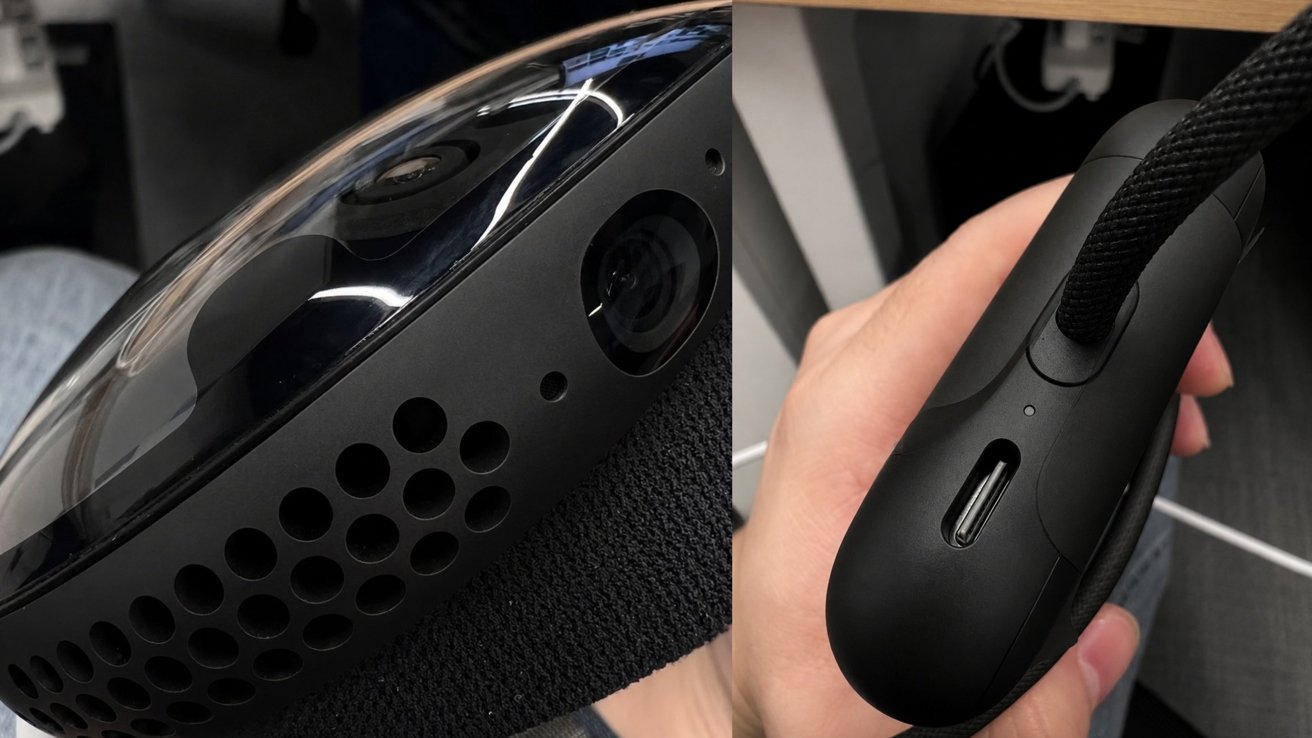
More images have surfaced of a black colorway for the Apple Vision Pro, this time showing more of the important parts of the headset sporting the hue. Though, you shouldn’t get excited about a potential release.
In late May, images of what are believed to be components for a black-colored Apple Vision Pro came to light. A week later, that same source has released more images of the fabled headset.
The images, posted to X on Wednesday by a Hong Kong-based developer known as Pipfix or LusiRoy8, are a collection of shots of a headset that looks like the Apple Vision Pro. One is a close-up image of a grille and a camera on the side of the headset, confirming it to be an Apple Vision Pro.
Other shots include the connector for the battery pack, with the mechanism left uncolored. Another shot is of the top of that battery pack, as well as a black braided cable.
Advertisement
One last image shows the knob used to adjust the band attached to the headset. Both the band and the knob are shown in black.
Previously, the account showed off images of the speakers on the side of the Apple Vision Pro, again in the black colorway.
The leaker does have a bit of a track record when it comes to colors, including those of the iPhone 17 Pro. While the previous leak briefly said that the Apple Vision Pro in black is “upcoming,” the new post simply asks readers if they like the color.
While the photographs are quite convincing, there’s no guarantee that Apple will actually release a version in that color. It’s equally plausible that they come from a prototype version that Apple made to test the color, but decided not to go through with the black model in the end.
Advertisement
There are some inconsistencies in some of the images. The fabric surrounding the visor doesn’t quite match the pattern of Apple’s current version, and the battery pack appears wrapped in some kind of film.
Then there’s this odd black wire wrapping between the person’s fingers and yet another white wire further in the background of the battery shot. However, these don’t appear to be AI renders, but genuine photos of black components.
That said, the inconsistent design aspects suggest these are early prototype models.
Possible hardware
While we have had previous rumors going back to April 2025 on the topic, as well as a December shot of a black headset connector, Apple hasn’t slipped up or hinted at new color options for the Apple Vision Pro.
Advertisement
Given the band appears to be the Solo strap, this is likely a prototype of the M2 model that never made it to production. Apple would have no reason to offer different colorways considering how few they sell.
There’s a remote possibility of a black option being introduced in a future model. Don’t expect any mention during WWDC.
Current rumors indicate that Apple Vision Pro won’t see a new hardware iteration for some time. Apple’s Vision Product Team has reportedly directed to focus on smart glasses development while technology for a thinner and lighter Apple Vision Pro can be developed.
Currently, the soonest a new model might be announced is 2028, but Apple hasn’t said as much to supply chains yet.
The catalytic converter in your car’s exhaust system has a complex emissions-related job to perform. Placed between the engine and the muffler, it reduces the amounts of the three primary pollutants found in the exhaust gases of internal combustion engines: nitrogen oxides, carbon monoxide, and hydrocarbons. By passing the engine’s exhaust through the catalytic converter’s honeycomb-like ceramic structure, which is coated with precious metals like palladium, platinum, and rhodium, these three pollutants are converted into less harmful substances. Catalytic converters have been mandated since 1975, with nearly every car required to have one.
Another major part of your car’s catalytic converter system is the oxygen sensor, which interfaces with your engine’s electronic control system to monitor its exhaust gas flow, preventing it from running either too rich or too lean. This keeps your emissions within the legal limits, while also balancing your car’s power and economy.
Catalytic converters can be susceptible to some common problems over their lifespan, which should normally be the vehicle’s entire life. Let’s look at these problems individually, going over why they may happen and what the best ways are to fix them.
Advertisement
Your catalytic converter has been physically damaged
Anastasija Vujic/Shutterstock
Your catalytic converter hangs underneath your car with the rest of the exhaust system, so anything that can cause damage to your muffler or exhaust pipes can also “impact” your catalytic converter. That can mean debris on the road, as well as going over a curb while driving. Doing this type of damage to your catalytic converter can cause its ceramic internal structure to crack or break, affecting its ability to properly convert the toxic substances in your unfiltered exhaust gases.
Physical damage anything like what’s shown above is likely to require replacing your catalytic converter. This type of damage to your catalytic converter will probably also lead to the illumination of your Check Engine Light, since your emission control system will severely impacted by it.
Advertisement
Be aware that certain states require CARB-compliant catalytic converter replacements, which meet the stricter standards set out by the California Air Resources Board. These standards apply to all cars replacing their catalytic converters in California, New York, and Colorado, including out-of-state vehicles. In addition, all CARB-compliant cars replacing their catalytic converters in the state of Maine that were made during or since the 2001 model year must be fitted with a CARB-compliant replacement unit. Be sure to check the local regulations in the state where you reside before replacing your car’s catalytic converter, and don’t even think about whether you should drive without a catalytic converter.
Advertisement
Your catalytic converter has become clogged up
Virrage Images/Shutterstock
There are numerous ways that your car’s catalytic converter can become clogged, and none of them have anything to do with the issue of external physical damage. If you have a leak of coolant or oil that makes its way into the exhaust system or into the cylinders, it can clog up the fine ceramic structure coated with those precious metals inside the convertor, rendering it ineffective. Clogging can also be the result of using substandard fuel, misfiring spark plugs, a fuel-air mix that’s too rich, or just wear and tear over time.
If you are facing the possibility of a clog, there are ways to clean your vehicle’s catalytic converter at home. It’s definitely worth a try if the only other alternative is replacing it out of pocket.
The symptoms of a clogged catalytic converter are pretty tough to ignore. You may experience much worse fuel economy as you drive, hard starting, high heat levels that can start fires under your car, a noticeable lack of performance from your engine, a rotten egg-like smell, and all of this will likely also trigger the Check Engine light on your dashboard to go on. Keep in mind that the clogged catalytic converter is creating an obstruction in your engine’s exhaust system that your engine has to work against, which can lead to leaking oil, seals blowing out in the engine, or even a blown engine if you wait too long to fix the problem.
Advertisement
Your catalytic converter has been stolen
Romanets/Shutterstock
This unfortunate scenario has been happening to car owners across the country. California’s the leader in catalytic converter thefts nationwide, with New York, Illinois, Texas, and Florida rounding out the top five. A thief can cut off your catalytic converter in about a minute, making it unlikely they’ll be apprehended unless they are caught sawing it off. And while thieves get $50 to $500 for stolen converters, you’ll have to pay up to $4,000 to repair your car. While SUVs and pickup trucks, with their increased ground clearance, make the easiest targets, we have compiled a list of the cars most likely to have their catalytic converters stolen.
There are some ways to minimize the risk of having your car’s catalytic converter stolen. These include parking your car in a closed garage, the use of motion sensor lighting where you park your car, never failing to set your car’s alarm and locking your vehicle. If you must park in an area out in the open, be sure that it is at least lit very well.
Additional strategies for protecting your catalytic converter from theft involve making it tougher to remove or making it identifiable. Theft prevention devices include straps, clamps, or cages that make catalytic converter removal much more time-consuming, encouraging thieves to leave your car alone and move on to an easier, unhardened target. Another proactive way to discourage theft is to have your catalytic converter etched or engraved with your VIN or license number, making it easier to identify the owner.
Advertisement
Your catalytic converter’s oxygen sensor goes bad
BLKstudio/Shutterstock
A modern catalytic converter’s oxygen sensor measures how efficiently it is doing its job by monitoring the amount of oxygen present in the exhaust gases. Over time, and possibly due to some engine-related issues like coolant leaking into the cylinders, a bad gasket, or a too-rich fuel mixture, the oxygen sensor can become contaminated or just wear out. In addition to this “downstream” oxygen sensor connected to the catalytic converter, there is usually an “upstream” or “pre-cat” sensor that controls the fuel supply to the engine.
Some indications that your car’s oxygen sensor is failing can include rough engine operation, reduced fuel efficiency, and the Check Engine light on your dash lighting up to alert you there’s a problem. And while you can clean a car’s O2 sensor, it’s not a great long-term idea. To identify the problem with your oxygen sensor, a diagnostic device should produce some trouble codes to guide you along. Make sure that there are no leaks detectible in your fuel injection system or your exhaust manifold, also checking the state of your ignition system parts. Once that you have properly diagnosed the problem and identified which of these sensors is faulty, the bad one can be replaced and correct engine operation restored.
The role of the oxygen sensor in your car’s emission control system, when operating properly, cannot be overemphasized. By consistently monitoring the flow of your car’s exhaust gases, it keeps emissions in check, maximizes performance, and gives you the best possible fuel economy.
AI PCs have quickly become the hottest trend in the tech industry, and Asus doesn’t want to be left behind. As the tradition goes in Computex, the Taiwanese company announced a massive lineup of new AI-powered devices, including creator laptops, consumer notebooks, desktops, all-in-one PCs, and even a brand-new tablet. Here’s everything you need to know about them.
New RTX Spark Laptops
Leading the announcement are the new ProArt P16 and ProArt P14 creator laptops. These are the first ASUS laptops powered by NVIDIA’s new RTX Spark platform, which combines NVIDIA’s Blackwell GPU architecture with the Grace CPU platform for AI-focused workloads.
ASUS says these machines are designed for creators, developers, and anyone working with AI-heavy workflows. The company is also bundling AI tools like MuseTree, StoryCube, and ProArt Creator Hub to help users manage creative projects and optimize system performance.
The laptops also come with ASUS’s latest Lumina Pro OLED displays that can hit up to 1,600 nits of HDR brightness and feature a 120Hz refresh rate. Interestingly, ASUS is introducing two new color options called Nano Black and Neo White, marking the first major design refresh for the ProArt lineup.
Zenbook and Vivobook Get the AI Treatment
For everyday users, ASUS refreshed the Zenbook 14 with a clear focus on portability. The laptop weighs just 1.1kg and uses ASUS’ Ceraluminum construction, which combines aluminum with ceramic-like durability. ASUS claims the laptop can deliver over 21 hours of battery life, making it one of the longest-lasting devices in the company’s lineup. Buyers can choose among Intel, AMD, and Snapdragon variants, with AI performance up to 50 TOPS, depending on the configuration. ASUS has also added new Arctic Blue and Komodo Coral color options to make the laptop feel less corporate than previous Zenbook generations.
Other highlights include a 1.7mm travel keyboard, an ASUS OLED display, Windows Hello support, Microsoft Pluton security, and adaptive privacy features that automatically dim or lock the screen when users step away.
Advertisement
Meanwhile, ASUS is also betting heavily on Snapdragon-powered Windows laptops with the new Vivobook S14 and Vivobook S16. Unlike previous Vivobook generations, these models exclusively use Snapdragon X processors and deliver up to 45 TOPS of AI performance. The laptops are clearly aimed at students and young professionals. ASUS says battery life can exceed 25 hours, while fast charging can take the battery from 0 to 60 percent in under 50 minutes.
The larger S16 model offers a 16-inch OLED display with an 89% screen-to-body ratio, while the S14 opts for a more compact 14-inch design. Both feature 100% DCI-P3 color coverage, TÜV-certified low-blue-light technology, and military-grade durability certification.
ASUS Is Back in the Tablet Business
One of the more surprising announcements from the event was the ASUS Pad, marking the company’s return to the tablet category. The tablet features a 12.2-inch 2.8K OLED display with a 144Hz refresh rate and runs on the MediaTek Dimensity 8300 chipset.
ASUS has equipped the tablet with a 9,000mAh battery, Dolby Atmos-powered quad speakers, Google Circle to Search, and GlideX integration for easier cross-device workflows. At just 6.5mm thick and weighing 523g, the company is positioning it as both an entertainment device and a productivity companion.
New Desktops and AiOs Join the Lineup
Beyond laptops, ASUS also announced the new V700 Mini Tower desktop and V200/V400 all-in-one PCs. The V700 desktop stands out for its unusual home-inspired design, featuring wood-grain finishes and softer aesthetics rather than the aggressive styling usually seen in desktop PCs. It can be configured with up to an Intel Core Ultra 9 processor and NVIDIA RTX 50-series graphics. The V400 AiO, meanwhile, uses Snapdragon-powered hardware and AI capabilities in a larger 27-inch all-in-one form factor aimed at family and home users.
Rounding out the announcements was ASUS Zenni Claw, a new AI assistant designed to simplify access to AI-powered workflows across work, travel, and everyday tasks. ASUS hasn’t revealed extensive details yet, but it appears to be the company’s attempt at creating a more unified AI experience across its devices.
Greenvolt Next also plans to allocate funding for the development of its Waterford headquarters.
Greenvolt Next Ireland – which is part of Greenvolt Group, a specialist in renewable energy solutions for the commercial and industrial sector – has today (3 June) announced the creation of 90 new jobs. 50 are to be made available at its Waterford headquarters and the remaining 40 will be based in the UK.
Over the next 12 months, the company will be recruiting mid-level to senior managers for roles including project engineers, senior project engineers, project managers and site managers. In expanding the team, the organisation aims to work on additional large-scale projects to support developers and landowners in advancing renewable assets and meet the UK and Irish demand for green energy solutions.
Greenvolt Next is also allocating funding for the further development of its Waterford headquarters, which is being increased by 2,176 sq ft and will be equipped with new technologies.
Advertisement
Commenting on the announcement, Owen Power, the CEO of Greenvolt Next Ireland & UK, said: “Our success to date has been driven by our ability to deliver the most reliable and cost-effective energy solutions to customers, underpinned by unmatched resources and expertise. Looking to the future, which will only see greater demand for such projects, we want to continue making a tangible impact for businesses and the environment.
“That means investing in operations, growing the team and innovating for customers. As well as marking the next stage in our own journey, this will allow us to make renewable energy easy for more organisations across Ireland and the UK. In turn, they will not only be more sustainable but also more successful.”
In 2024, Greenvolt Group announced a partnership with Enerpower, with both organisations agreeing to a joint commitment to install up to 500MW of renewable energy between 2024 and 2029 and create 100 new jobs. The strategy was designed to impact the Irish and wider European markets.
Don’t miss out on the knowledge you need to succeed. Sign up for the Daily Brief, Silicon Republic’s digest of need-to-know sci-tech news.
Springboard+ research found that adults often face financial difficulties when attempting to upskill or change the direction of their careers.
Educational platform Springboard+ has released the results of a survey exploring some of the challenges learners face as they aim to progress personally and professionally. The organisation commissioned an independent national survey collecting data from 1,000 Ireland-based adults across a wide range of ages, genders, regions and social backgrounds.
What was discovered is that almost half (46pc) of surveyed adults in Ireland struggle to afford learning and study opportunities to upskill and change the trajectory of their careers. The survey, which was part of Springboard’s ‘2026 Year of Me’ campaign, also identified which groups of people are typically more affected than others.
Perhaps unsurprisingly, women were found to be disproportionately impacted, as 53pc of women surveyed who were under the age of 45 agreed that they have very little time to invest in career growth. Half of parents also responded that time is a limited resource, while 54pc of women said that financially speaking, it is difficult to engage with upskilling opportunities.
Advertisement
Decision time
More than 40pc of people surveyed said that they are afraid of making the wrong decision when choosing a new career direction. This sentiment was particularly prominent among younger cohorts, with 32pc of adults aged between 18 and 24 responding that they would struggle with the stress associated with learning new skills.
The report found, however, that despite the barriers, Ireland’s professionals still value learning and self-development, as 93pc of respondents believe learning new skills as an adult can change the trajectory of one’s life; 93pc also agree that learning new skills opens doors that otherwise would remain closed.
Commenting on the findings of the report, Dr Vivienne Patterson, the head of skills, engagement and statistics at the Higher Education Authority, said, “The findings highlight that many adults across Ireland want to invest in their future and develop new skills, but are often held back by practical pressures such as time, affordability and uncertainty about returning to learning.
“Flexible and affordable learning opportunities can play an important role in helping people overcome some of these barriers. Many Springboard+ courses are delivered on a part-time or online basis, allowing people to balance learning with work, family and other commitments, while the significant financial support available through the programme helps make higher education more accessible.
Advertisement
“The strong demand we are already seeing for Springboard+ 2026 courses reflects the growing demand for flexible learning opportunities that can help people build confidence, develop new skills and explore new career opportunities.”
So far in 2026, a number of organisations and institutions have engaged in offering opportunities to boost skills among the Irish workforce.
In May, South East Technological University announced it is getting a new €11.5m computer system. The IBM z17 mainframe will support students and researchers in developing their skills. In April, the Government launched AIReady.ie, a national AI skilling platformdesigned to provide people across Ireland with the means to learn essential AI skills.
Similarly, in March of this year, Technological University of the Shannon launched its Regional Skills Horizon and Pathways to Employment (ReSHAPE) initiative, an AI-powered digital platform developed to support professionals based in Ireland’s midlands region, supporting economic development in counties such as Laois, Offaly, Longford and Westmeath.
Advertisement
Don’t miss out on the knowledge you need to succeed. Sign up for the Daily Brief, Silicon Republic’s digest of need-to-know sci-tech news.
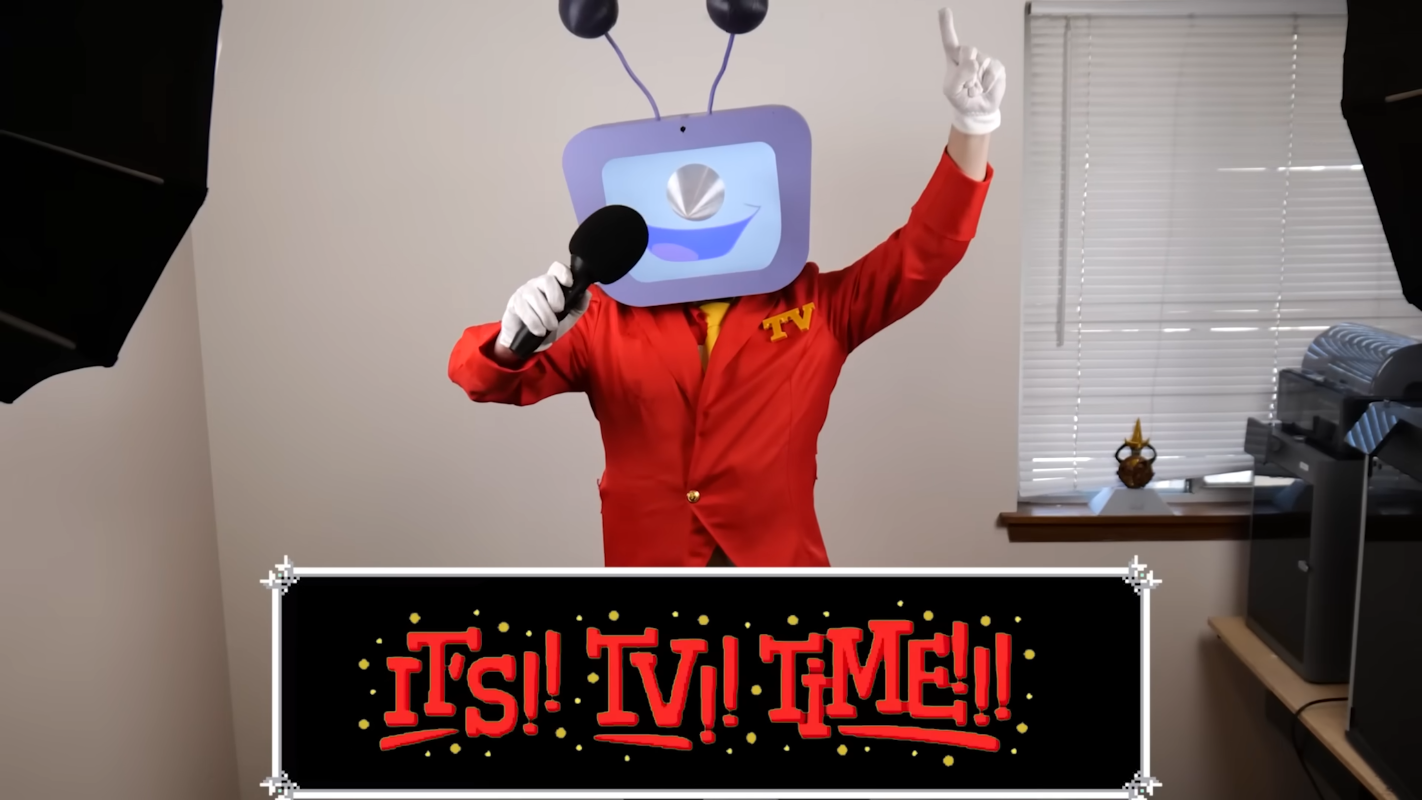
For those who have never played the hit video games Undertale and Deltarune, the games are partially known for their interesting characters, many of which have eerie, surreal, and expressive designs. One of the more memorable characters from Deltarune is Tenna, a game show host of sorts whose distinguishing feature is an old television as a head, as well as a colorful suit. As a result he’s been the subject of a number of recreations by various cosplayers and makers like [BigRig Creates].
This version of the character was actually inspired by a previous build by [BunnyBii] which used an iPad as the interactive screen/face. Inside the television, though, the actual human found this to be front heavy and limiting in the ways that it could be used interactively, especially since the only way to see the outside world in this version was with a small endoscope and screen. [BigRig Creates]’s version builds on this idea but swaps out the iPad for a Raspberry Pi, allowing for much more customization, and uses a pair of Xreal glasses instead of a screen for the view of the outside world from in the television.
To get the whole costume together, the head is 3D printed with all of the electronics inside, and a game controller integrated into a handheld microphone controls the animations shown on the screen. A vibrant, custom-tailored suit with white gloves rounds out the ensemble, along with a pair of 3D-printed shoe covers since actual yellow shoes were a bit pricy. There were some interesting problems to solve along the way, specifically with regards to power management for all the electronics, but in the end it all seems to have come together quite well. [BigRig Creates] is no stranger to builds with unusual displays, though; one of our favorites was the world’s largest Nintendo 3DS.
If there’s one group that knows how to move fast, it’s runners — and that’s exactly what you’ll need to do to take advantage of this deal. Strava members can earn a free two-week Runna Premium subscription by running a 5K on Wednesday, which marks Global Running Day.
Strava is a popular fitness app that records and logs your runs, rides, hikes and other activities, including strength training. Last April, Strava acquired Runna, an AI-personalized running app, to customize training plans for different race distances and coaching for its subscribers. Strava doesn’t provide training plans, but it can log your runs, let you create your own routes, view your running stats after each run and share them with your app followers.
You can use Strava for free, but to access additional features, you would need to upgrade your membership to an individual ($80 annually), family ($140 annually for a family of four) or student subscription ($40 annually) if you’re willing to pay for the Strava and Runna combination plan, which costs $150 a year. You can also experience Runna for free, but to access it fully, you’ll need a subscription for $120 annually.
Advertisement
However, if you run, walk, trail run or use a wheelchair and log a 5K on Global Running Day on your Strava app, you can experience Runna free for two weeks to decide for yourself if it’s worth the investment. Strava is counting GPS, virtual and manual activities toward the challenge goal.
Apple is also participating in Global Running Day and giving Apple Watch owners the chance to earn a digital badge by logging a 5K run indoors or outdoors. This also applies if you have other third-party fitness apps that log runs and connect to your Apple Health account.
























































You must be logged in to post a comment Login