The rich and famous who filed into the Kennedy Center’s opera house in December were there to enjoy one of the nation’s most exclusive celebrations of the performing arts: the center’s annual honors gala.
The black-tie event, hosted by President Donald Trump, prioritized tickets to people who donated more than $75,000 to the center. This year, it feted Hollywood icon Sylvester Stallone, the legendary glam rock band Kiss and the Grammy Award-winning disco pioneer Gloria Gaynor.
Advertisement
Among the attendees that evening were two lower-profile government officials whose regulatory decisions had been crucial to the future of the gala’s broadcast sponsor, CBS, and its parent company, Paramount.
Five months earlier, Federal Communications Commissioner Olivia Trusty cast a decisive vote approving Paramount’s historic $8 billion merger with Skydance Media. Now, the commissioner and a guest enjoyed the star-studded celebration thanks to tickets gifted to her by Paramount worth more than $12,000, according to ethics disclosure records obtained by ProPublica.
The other commissioner who approved the merger watched from a prized perch. FCC Chair Brendan Carr and his wife sat in a private skybox with Paramount CEO David Ellison and other executives from Paramount and CBS. Such seats sold for $125,000 a ticket, according to Kennedy Center guidelines.
It’s unclear if Paramount gifted Carr the premium seats because the FCC has yet to make public his financial disclosure for last year.
Advertisement
However, past disclosures show Carr and Trusty are among seven FCC commissioners who have accepted Kennedy gala tickets from CBS or its parent company over the last decade. Ethics experts told ProPublica this poses a blatant conflict of interest since the commission regulates the network. Carr’s previous financial statements show he has accepted tickets at least seven times since his 2017 appointment, totaling over $63,000 in gifts.
Last December’s ceremony attended by Trusty and Carr took place as Paramount was launching a hostile takeover bid for Warner Bros. Discovery, a move that would later result in a merger agreement that requires FCC approval.
Four ethics experts told ProPublica that by accepting the premium tickets Trusty and Carr compromised the FCC’s impartiality and should not take part in any upcoming decision on the merger.
Advertisement
“There’s no way that any top federal regulator should ever, ever accept a gift from a regulated company with interests their work will foreseeably affect,” said Walter Shaub, who led the federal Office of Government Ethics from 2013 to 2017. “The appearance of taking gifts like that is terrible. What’s at stake is nothing less than the public’s trust in government.”
Virginia Canter, who served as an ethics lawyer at the White House, Treasury Department, and Securities and Exchange Commission during the presidencies of George H.W. Bush, Bill Clinton, George W. Bush and Barack Obama, said the commissioners who accepted tickets cannot participate in this matter without damaging the integrity of the government’s decision-making process.
“This is shocking. Pretty disturbing, that’s what I would say. I just don’t understand what they were thinking,” said Canter, who now works as chief counsel for ethics and corruption at the nonpartisan government watchdog group Democracy Defenders Fund.
The FCC’s review of the merger is one of the final hurdles facing a historic $110 billion consolidation of two of the five largest film studios in Hollywood. The deal would unite Paramount Skydance with Warner Bros., bringing under the control of one company Paramount+ and HBO Max streaming services; CBS and CNN; and scores of other major broadcast channels, cable networks, and digital platforms.
Advertisement
The new megacorporation, which could reshape how millions will access news, movies, sports and video games, faces fierce opposition from inside and outside Hollywood. More than 5,000 actors, producers and entertainment workers — including stars such as Robert De Niro, Javier Bardem, Joaquin Phoenix and Glenn Close — signed an open letter decrying how the consolidation would eliminate jobs and compromise “the integrity, independence, and diversity of our industry.”
On Monday, California, New York and 10 other Democratic states filed a lawsuit seeking to block the merger under federal and state anti-monopoly laws.
American and international regulators are evaluating the deal for its potential national security implications and impacts to consumers worldwide. Last week, the British government signaled it planned to investigate whether the new entertainment titan that would emerge from the union would unfairly stifle competition. The FCC’s ongoing review includes examining the Middle Eastern sovereign wealth funds backing the deal, including from Saudi Arabia, Qatar and Abu Dhabi.
The FCC usually has five commissioners — all appointed by the president and confirmed by the Senate to serve five-year terms — but the agency currently has only three. Any vote by the full commission would likely be decided by Republicans Carr and Trusty over Democrat Anna Gomez. Gomez was not at the December 2025 show but has accepted tickets from Paramount in the past. Because the FCC requires a three-commissioner quorum for a vote, any recusal could leave the panel unable to decide on the merger. Carr could decide to ask staff to approve the deal rather than bring it to a commission vote, but the ethics experts said he should recuse himself from any decisions affecting the Paramount merger.
Advertisement
The experts warned the commissioners’ gifts might become central in legal challenges and said the Justice Department should investigate potential violations of federal rules or laws.
Neither Carr nor Trusty responded to ProPublica’s requests for comment. Gomez said in a statement that she followed agency advice when she attended the event in 2023 and 2024. Her statement did not elaborate or otherwise address why taking gifts from Paramount did not pose a conflict of interest.
An FCC spokesperson said agency ethics officers have for years cleared commissioner appearances, finding it consistent with ethics law.
“FCC Chairs and officials have attended the same event, in the same ways, consistently from the Trump Administration to the Biden Administration to the Obama Administration,” the FCC said in a statement. “There has been no change in recent years.”
Advertisement
Shaub called the justification outrageous.
“It’s no excuse to say that you took the gift because everyone else was doing it or that your agency has had a bad habit of indulging in gift taking for a long time,” Shaub said. “That kind of explanation doesn’t work for school children, and it sure as hell doesn’t work for government officials who are supposed to have better judgment than a fifth grader.”
Despite their oversight role, FCC members have long enjoyed a night out at the Kennedy Center courtesy of CBS or its parent company. Seven of the 10 commissioners who served since 2016 accepted tickets worth more than $260,000, according to a ProPublica analysis of ethics disclosures.
Carr’s predecessor, Jessica Rosenworcel, who was appointed FCC chair by President Joe Biden and stepped down in January 2025, attended regularly.
Advertisement
Rosenworcel and several other former commissioners who accepted the tickets did not respond to requests for comment. The one commissioner who didn’t accept a single gift, Nathan Simington, said he received the Kennedy Center invites from CBS and Paramount but turned them down because it “wasn’t my cup of tea.”
A review of 10 years of disclosures shows commissioners accepted paid trips from various sponsors to appear at banquets and speak at conferences. Some of those gifts came from other media companies regulated by the FCC. NBCUniversal, ABC-Disney and Fox News, for instance, paid for commissioners to attend White House Correspondents’ Association dinners, records show. The total value of the combined gifts topped $308,000. But the vast majority came from CBS and its parent company.
Melissa Zukerman, Paramount’s chief communications officer, said it was a decades-long “CBS practice to invite government officials from both parties” to the Kennedy Center show. She didn’t address why the practice continued after new ownership took over last year, the purpose of the gifts or whether the tickets posed a conflict of interest.
Carr, who joined the FCC as a staffer in 2012 and rose to become the agency’s general counsel, was appointed to serve as a commissioner by Trump during his first term. Since then, Carr has accepted tickets annually, except when the 2020 event was postponed due to the COVID-19 pandemic, according to his public disclosures.
Advertisement
Carr did not respond to an email request from ProPublica for his latest ethics report, which would indicate whether Paramount also paid for him to attend last December’s gala. The FCC referred us to the Office of Government Ethics, which told us that the FCC had not yet provided the disclosure. The FCC did not respond to our subsequent requests for the record.
A 2009 Office of Government Ethics memo gave federal employees the right to attend Kennedy Center events but explicitly said officials cannot accept free attendance “offered by persons other than the Kennedy Center and its trustees, officers and employees.” In 2016, the ethics office tightened its gift requirements, warning officials to avoid any appearance “of loss of impartiality.”
There is an exemption to the gift rules that allows free entry to gatherings that are widely attended and paid for by third parties, but only if certain conditions are met.
The event must “further agency programs or operations,” and the agency’s interest in an official attending must outweigh “concern that the employee may be, or may appear to be, improperly influenced in the performance of official duties,” according to the federal rules.
Advertisement
As an example, the Office of Government Ethics said an industry-wide seminar attended by more than 100 people could be allowed if the employee’s participation would be in the agency’s interest. But those attending should “represent a range of persons interested in a given matter” and the event must provide a “structured opportunity” to exchange ideas and views among invitees.
The office clarified in a 2007 memo that performing arts presentations would not count even if they, like the honors gala, have a reception before or afterward at which officials can mingle with other attendees.
Canter, the former White House ethics lawyer, said it would be a “stretch” for the FCC to argue the exemptions apply to the Kennedy Center’s annual show, where famous musicians perform and celebrities laud those who are being honored. “It’s not what we would consider a widely attended gathering,” she said.
Kedric Payne, general counsel and senior director of ethics at the Campaign Legal Center, a nonpartisan watchdog group, noted that federal rules also require agencies to weigh the market value of the attendance, its relevance to the agency, any sensitive pending matters involving the donor and whether accepting free tickets creates an appearance of preferential treatment.
Advertisement
“The ethics rules are designed to prevent this exact situation,” he said, adding that it is an “obvious conflict of interest” for an official to “accept expensive gifts from anyone with decisions pending before the agency. This matters because it makes the public question whether official decisions are free from the improper influence of wealthy special interests.”
An FCC official familiar with the legal guidance given to the commissioners said they were told the event met the criteria for the “widely attended gathering” exception. (The source was not authorized to talk publicly about agency legal discussions.)
Shaub, the former Office of Government Ethics head, disagreed, saying it would be “hard to understand what compelling interest the FCC could think it had in letting its commissioners” attend the gala.
“What possible reason could have outweighed the obvious ethics concerns?” he asked.
Advertisement
Federal rules require written authorization for an official to accept free entry to a widely attended gathering. The FCC did not respond to our requests to provide the authorizations for the Paramount tickets or say who authorized them. Two senior ethics officials at the agency, Kathleen Fulp and Lauren Northrop, did not respond to requests for comment.
While December’s event came at a particularly sensitive time for Paramount and the FCC, it wasn’t the first.
More than a year earlier, in September 2024, Paramount had filed paperwork seeking the commission’s approval for its merger with Skydance Media. A month later, the FCC launched an investigation of CBS after a conservative group complained about a “60 Minutes” interview with Democratic presidential candidate Kamala Harris. Trump later filed a lawsuit alleging the network deceptively edited the interview — an accusation CBS denied.
Then in November, less than two weeks after his election victory, Trump declared he would appoint Carr as FCC chair. Almost immediately, Carr accused CBS of biased election coverage and said it would be an obstacle to approving the Paramount-Skydance merger.
Advertisement
That December, Carr and three other commissioners — Rosenworcel, Gomez and Geoffrey Starks — accepted Kennedy Center gala tickets from Paramount worth a combined $48,156.
On Jan. 16, 2025, just days before Rosenworcel stepped down from the commission, she announced the agency was dismissing the election complaint against CBS. She and Gomez called the outcome a victory for the First Amendment.
To resolve Trump’s lawsuit, CBS agreed to pay the president $16 million, a decision criticized by legal experts who decried Trump’s claims as baseless.
Advertisement
Two days after Trump posted on social media that he had received the settlement money, the FCC took up the Paramount-Skydance merger. To meet Carr’s demands, Paramount agreed to appoint an independent ombudsperson who would evaluate claims of bias. The company also pledged to eliminate its diversity, equity and inclusion initiatives.
By then, Starks and Simington had unexpectedly stepped down from the commission. Trusty, a Trump appointee, had been confirmed by the Senate the previous month.
Trusty and Carr voted in favor of the merger. Gomez voted against, blasting the approval for requiring “never-before-seen forms of government control over newsroom decisions and editorial judgment.”
Experts said that while Trusty had no conflict yet, Carr and Gomez did. The fact that Gomez voted against Paramount did not mean she didn’t face a conflict under the rules, Shaub said.
Advertisement
Federal rules only require those who accept improper gifts to make a prompt reimbursement, but Shaub and the other experts said Carr and Gomez should have abstained from the vote.
“If you repay the face value of the ticket, the gift rules don’t require you to recuse — though common sense and any kind of conscience might lead you to recuse voluntarily for the good of the country,” Shaub said. “But if you refuse to repay the donor, I don’t see how anything short of recusal could remotely remediate the problem.”
With the Paramount-Skydance merger greenlit by the FCC, Ellison, the new company’s CEO, then set his sights on acquiring Warner Bros. Discovery.
Warner at first rebuffed Paramount’s overtures and on Dec. 5 — two days before the Kennedy Center gala — accepted a bid from Netflix to buy its studio and streaming assets. Ellison responded by making numerous calls to administration officials and had a long talk with Trump, according to The Wall Street Journal.
Advertisement
On the night of the gala, Trump told reporters the Netflix deal “could be a problem” and that he planned to get directly involved with the regulatory approval. Inside the Kennedy Center, Carr and his wife sat with Ellison in an exclusive skybox, Bloomberg reported. (Gomez said in her statement to ProPublica that she declined Paramount’s “invitation because of serious concerns about press independence connected to conditions Paramount agreed to as part of its merger transaction before the FCC.”)
If one or more commissioners choose to abstain from a merger vote because of ethical concerns, what would happen next is unclear. Under federal conflict of interest rules, an agency designee could theoretically permit commissioners to vote after considering several factors, including “the difficulty of reassigning the matter,” the nature of the relationship between the commissioners and Paramount, and the “effect that resolution of the matter would have upon the financial interests” of the firm.
Advertisement
Carr could bypass a full commission vote entirely, as he did with the recent acquisition of Tegna by Nexstar Media Group. In that case, Carr delegated authority to FCC staff to approve the takeover.
But any decision on the Paramount deal — whether by the full commission or by staff at the direction of the chair — is likely to be challenged.
Richard Painter, a former White House ethics attorney in the administration of George W. Bush, said while courts often defer to the government’s judgment, they also can become skeptical if a regulatory agency is shown to have violated ethics rules.
“A judge may very well say that the merger decision of the FCC isn’t worth jack because the process was corrupted,” he said.
Modern video games are nothing short of amazing. My son and I were playing through the one of the latest Zeldas, which involve a mix of combat and puzzle-solving that’s pretty much the hallmark of the franchise. But the most recent open-world Zelda is simply massive. Made by around 1,000 people at a development expense of $150,000,000, it takes probably 60-80 hours to play through if you’re not rushing, and more if you’re taking it easy. It has layers of game mechanics, and worlds in the sky, on land, and underground. It’s big in every way.
Contrast the games of my youth, which were a lot smaller. Written by a pair of people or maybe a handful, with playtimes in the single-digit hours, and of course fitting in the limited computing resources of the time. But the low-stakes nature of the early phases of the industry meant that software developers could take risks, and many of the games were consequently kinda idiosyncratic in this more innocent time.
I think there’s something to be said for small games. They don’t require a lifestyle commitment just to get through. They can still be fun, without taking all of your time. And honestly, when you’re done with a game quickly, you have more time for other stuff. Granted, some of this spirit lives on in the small indie games of today, but even so, game developers have the big studios’ products in the backs of their minds when they are working on their smaller oeuvres.
We were talking about preserving old games for posterity around Hackaday and on the podcast, and our conversations reminded me of a couple of educational games that, despite their rudimentary graphics, are still pretty good today. Both were electronics related, and both are still playable today thanks to efforts on emulation and software preservation. To get a feel for the 1980’s, give Rocky’s Boots a try. (I like the TRS-80 Color Computer version the best, but that may just be nostalgia.) Most of you grownups out there will get through it in an hour or so.
Advertisement
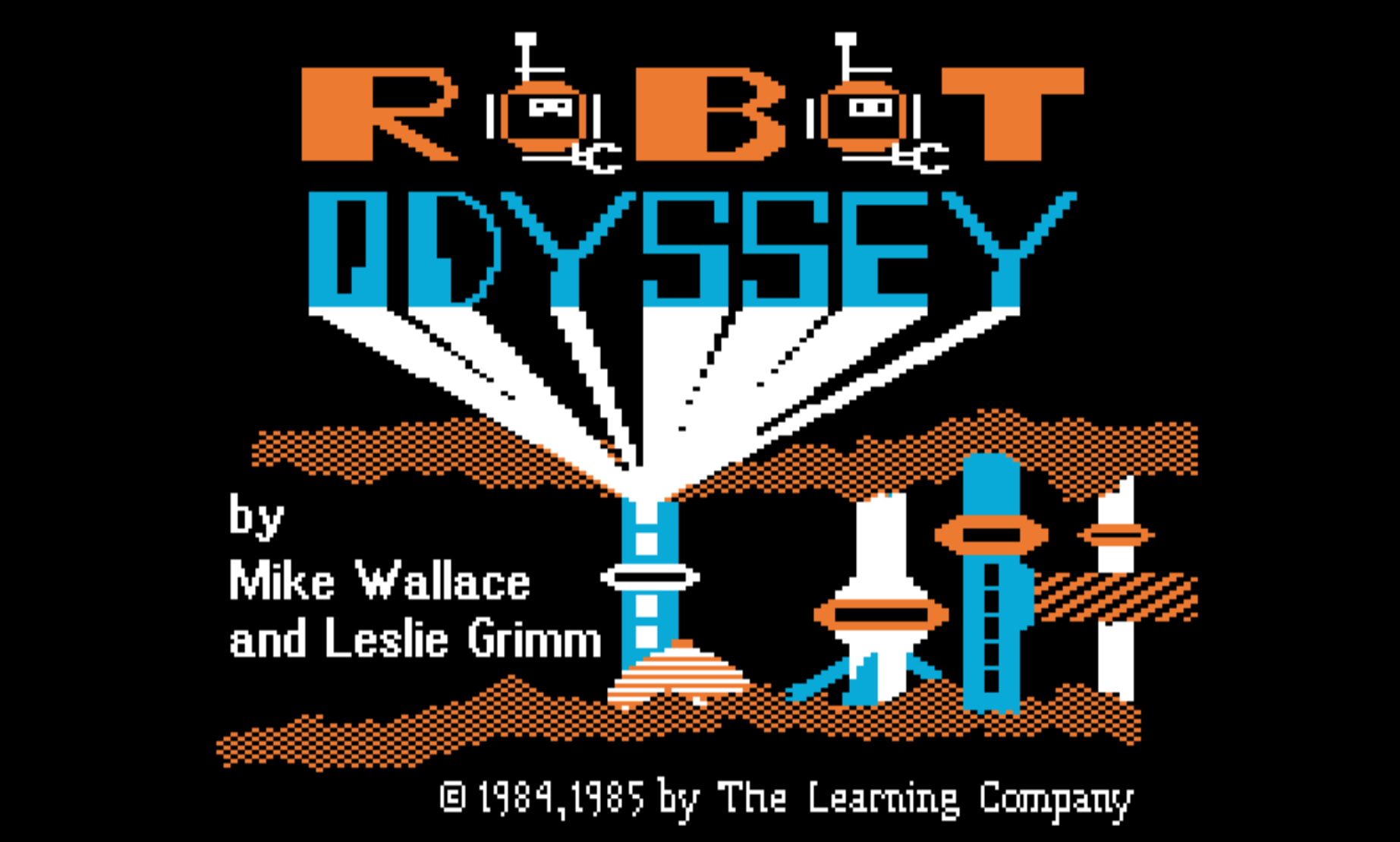
And if you want a challenge, try Rocky’s harder sequel: Robot Odyssey. If you already have a background in digital circuits, you’ll find it doable. Younger me hit a wall about two-thirds of the way through.
Both of these games stick with me because they taught me something, but also because they were simply quirky in a way that a game can only be when it’s written by a small team of folks who are just having fun programming it. If you pitched “a puzzle game about a raccoon who builds logic circuits to activate robot boots”, the boardroom would look at you like you’re out of your mind. But it’s just exactly the quirkiness and individuality of some of these early games that I cherish the most.
If you find yourself knee-deep in an endless modern game, take a side-quest off into a more naive time, and you’ll appreciate why people are putting efforts into archiving them.
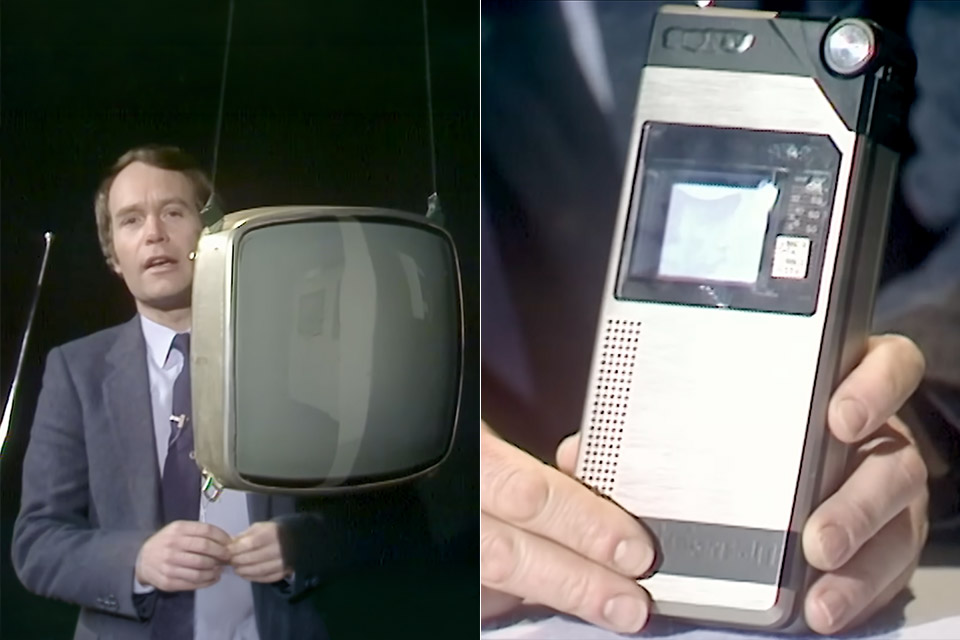
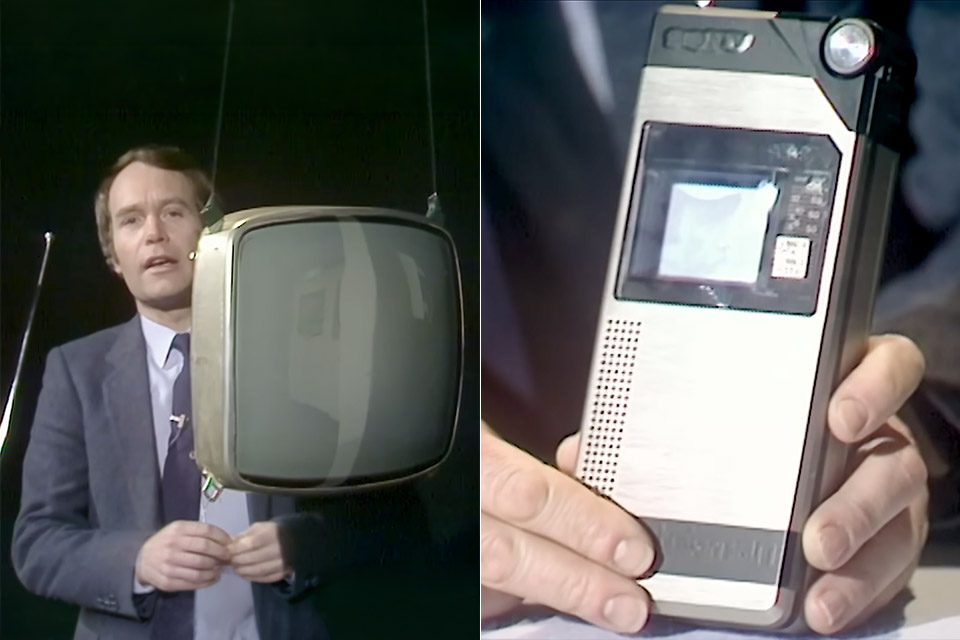
Viewers who caught the January 27, 1983 episode of BBC’s Tomorrow’s World saw presenter Peter Macann lay out real hardware that tried to solve an old complaint. Television sets of the day sat deep and heavy because their cathode ray tubes needed space for an electron gun to fire straight at the screen. Macann began with a plain observation: a set flat enough to hang on the wall like a picture would free up room and change how living spaces worked. The demonstration that followed showed both how close engineers had come and how many practical hurdles still stood in the way.
Macann begins with a small Sony pocket TV. It’s the same cathode ray tube idea everyone knows, but the engineers placed the electron gun to the side of the case, essentially sideways. The electron beam is then bent downward onto a small phosphor surface by charged plates. That clever method eliminates the majority of the depth that ordinarily extends from the back of the set. It still runs for about three hours on penlight batteries and receives BBC and the newer Channel 4 signals directly in the studio. The image quality is a little hazy, as if it were taken in a studio, but it appears to be something you could easily put into your pocket and take with you.
Monster Vision 2 features a brilliant 15.6” Full HD IPS Display and 60W audio power – the ultimate all-in-one experience for movies, music, and…
UP TO 8 HOURS OF VIDEO PLAYBACK: Connect your favorite smart streaming device or gaming console via the dual HDMI ports (3ft USB-C to HDMI cable…
UP TO 25 HOURS OF AUDIO PLAYBACK: Experience upgraded 60W sound performance for powerful, immersive audio. Stream wirelessly with Bluetooth 5.3, enjoy…
The segment then looks at an entirely new approach, this time with liquid crystals. This material requires significantly less electricity because it does not generate its own light. Instead, it twists under electric current to control how much light passes through or bounces back. Macann is holding up a modest handheld game with a screen comprised of small liquid-crystal shapes carved out to resemble motorcycles. By turning those shapes on and off in sequence, you can create the illusion of racing bikes without using a light tube or constant high voltage. The similar low-power approach is used in a portable oscilloscope, where the display consists of hundreds of small square cells that turn black or white when exposed to voltage. This implies that technicians may now bring the tool into the field using only battery power, which was previously impossible with classic tube-based scopes that required mains power and bulk.
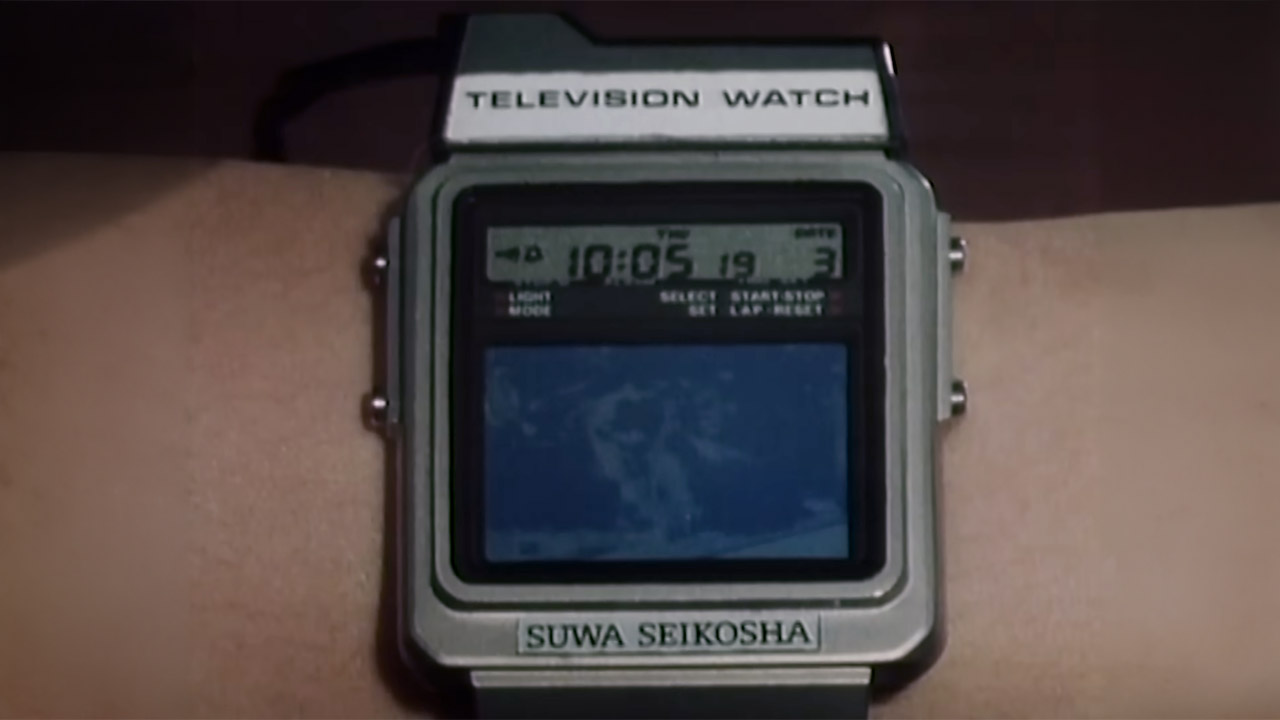
Tomorrow’s World kept its most visually appealing example for last. A Japanese prototype packed a liquid-crystal screen into a casing the size of a wristwatch. The screen is simply sitting there, ready to display moving images, but the rest of the circuitry and power supply are in a separate pack connected by a wire. Sound travels through a set of headphones. Macann demonstrates the device and then explains its limitations in plain English. Since the crystals simply reflect the light surrounding them rather than creating their own, the image can appear faint or washed out in a regular room. The detail is obviously a little rougher than what you’d get from a traditional tube, but the fact that a moving image appears on something tied to someone’s wrist is a step ahead that goes beyond simple whiteboard sketching.
Advertisement
Macann concludes by pointing out that liquid-crystal panels have already achieved several of the characteristics that TV designers have sought for years, such as thinness and low power consumption. With some more effort on brightness and viewing angle, the existing playthings could become something you’d want to watch at home. Macann is cautious, refusing to declare that the future has arrived. The team is only demonstrating what was accomplished in early 1983 and leaving viewers to wonder how long it would take before things are good enough to utilize in real life.
ManageEngine’s Vimalraj Sampathkumar explores how R&D recruitment requires a long-term approach.
In the modern era, the majority of organisations within STEM depend on strong and robust research and development teams to ensure that new discoveries are being made, that processes and techniques are up to date and that current knowledge is not stagnating.
But this requires a consistent and skilled talent pipeline that nowadays is not so easy to maintain.
In May, a report from recruitment platform IrishJobs found that employers are hiring for highly specific, rather than broad roles, with a focus on AI and cybersecurity in particular.
Advertisement
“Building a strong talent pipeline requires a long-term approach rather than simply hiring when demand arises,” explained Vimalraj Sampathkumar, the regional technical head for the UK and Ireland at Enterprise IT management company ManageEngine.
“Irish organisations should partner with universities, offer internships and graduate programmes and provide structured learning and career development opportunities.
“Equally important is creating an environment that encourages people to innovate, collaborate across teams and experiment with new technologies. When learning becomes part of the culture, organisations are better equipped to attract, develop, and retain highly skilled R&D professionals.”
Rise together
Despite best efforts, there is only so much you can achieve alone. Often the organisations with the most efficient teams are the ones in which there is clear collaboration and a committed effort to upskill as a unit.
Advertisement
Sampathkumar finds that, as technology continues to advance rapidly, continuous learning becomes an essential element of the workspace. He advised Irish organisations to provide access to technical training, certifications, mentoring and opportunities to work on emerging technologies and also cited the benefits of knowledge sharing across teams.
He said: “Investing in upskilling enables R&D teams to innovate faster, improve product quality, respond more effectively to changing customer needs and stay ahead of evolving security and technology trends.
“It also helps improve employee engagement and retention. This can be a critical differentiator in what is still a very competitive Irish labour market where highly skilled tech talent has no shortage of options despite the emergence of AI.”
Tech and talent
Of the challenges R&D teams face nowadays, Sampathkumar noted the issue of balancing innovation with the need to deliver secure, reliable and scalable products in a landscape where compliance requirements are ever-evolving and deadlines tightening.
Advertisement
“Simultaneously, customer expectations and technology within the European market continue to evolve rapidly, requiring teams to adapt quickly due to tightening regulatory demands, the EU AI Act, accelerating cloud and AI adoption and the evolving cybersecurity landscape,” he explained.
“The opportunity lies in embracing technologies such as AI, automation, and advanced analytics, which enable engineers to spend less time on repetitive tasks and more time solving complex problems that drive meaningful innovation.”
With the changing workplace environment in mind and as most companies continue the march forward, Sampathkumar made note of the tools and recent advancements that can aid R&D professionals in their work.
He explained that AI-assisted development tools, cloud-native platforms, automation and DevSecOps practices have transformed how engineering teams build and deliver software, while also improving productivity and maintaining quality and security throughout the development life cycle.
Advertisement
“One area I believe remains underutilised is customer feedback analytics. Organisations collect significant amounts of customer data, but many don’t fully leverage those insights to influence product decisions. Combining customer feedback with AI-driven analytics can lead to more informed and impactful innovation.”
It isn’t all about trendy tech and gadgets, however. For Sampathkumar, the space is driven largely by its people.
“Irish organisations that invest in developing talent, encourage collaboration between customer-facing and engineering teams and maintain a strong focus on solving real customer problems will be best positioned for long-term success.
“Ultimately, continuous learning and adaptability will remain the defining characteristics of successful R&D organisations.”
Advertisement
Don’t miss out on the knowledge you need to succeed. Sign up for the Daily Brief, Silicon Republic’s digest of need-to-know sci-tech news.
Apple has been accused of “aiding and abetting” the use of “nudify” AI apps on the iPhone, with San Francisco City Attorney David Chiu demanding they be removed from the App Store in a new cease-and-desist letter sent to the company.
A Wiredreport notes that both Apple and Google have been told to prevent the sale of AI apps that can be used to create deepfake images. They must also “sever” business relationships with all of the developers responsible for the apps.
So-called “nudify” apps have been around for some time. They allow users to create non-consensual intimate images of others, often minors, without the knowledge of the subject.
Such apps can be used to remove the clothes of subjects. Some allow the subjects to then be placed into specific scenarios of the user’s choosing.
Advertisement
Illegal, harmful, and completely unacceptable
In a statement provided to Wired, Chiu pointed out that generating deepfake imagery is “illegal, harmful, and completely unacceptable.” Chiu also noted that Apple and Google have likely made considerable sums from the sale of, or subscriptions relating to, such “nudify” apps.
Chiu also made it clear that Apple and Google have a responsibility to ensure that their platforms aren’t being used to create such content. His legal letters also pointed out to both companies that California law prohibits supporting services that can create deepfakes.
Google says that it investigates apps that are believed to be used to create deepfake content. It added that it “takes swift action” when required.
Apple issued a statement to AppleInsider on Friday evening after publication.
Advertisement
“The App Store was designed to be a safe and trusted place for users, and we have always strictly prohibited apps designed to generate, distribute, or consume pornography. ‘Nudification’ apps are against our App Review Guidelines and we have proactively rejected many of these apps and removed many others, including when users have flagged them via our reporting tools. We have removed three of the apps in question and are in the process of terminating their developer accounts from our program. We are in contact with four others that need to address policy violations or risk being removed as well.”
Apple previously removed a number of similar generative AI apps from the App Store. The company previously toldAppleInsider that nudification apps aren’t allowed in the App Store, with no exceptions.
App Store reviewers appear to give developers some benefit of the doubt. Developers are first notified if their apps are found to be used to create “nudify” images.
Violations that aren’t addressed generally result in the offending app being removed from the App Store. It’s not clear if any of the apps in question have gone through this process, or where they are in it.
Apple also says that it actively blocks App Store search terms for such apps.
Advertisement
As for Chiu, he intends to continue to pursue both companies. For now, he wants Apple and Google to remove the offending apps and strengthen the tools that they use to screen new apps before they are made available for download.
Update July 18, 10:03 AM: Updated with Apple’s statement on the matter.
The duo behind the major 2024 cyberattack are reported to have been leading members of the Scattered Spider cybercrime collective.
Two men responsible for the 2024 cyberattack on Transport for London (TFL) have each been sentenced to five and a half years in prison by a UK court.
Owen Flowers and Thalha Jubair, who were teenagers at the time of the cyberattack, were sentenced today (16 July) at Woolwich Crown Court after previously pleading guilty to the hack. The pair were arrested and charged last year.
In late August and early September in 2024, Flowers and Jubair gained access to TFL customer data after impersonating an employee and tricking a phone helpdesk worker into resetting that employee’s password – leading to the theft of around 10m customers’ data.
Advertisement
The cyberattack – which cost TFL £29m – disrupted a number of transportation services in the UK’s capital, including a booking service that provides transport to vulnerable Londoners, while 148 technology systems were rendered inoperable.
In order to stop the attack, all 27,000 TFL employees were summoned to one of the authority’s offices for a password reset and its IT team disconnected its system from the internet.
Had the attack been successful in shutting down TFL’s entire network, it’s estimated that damages could’ve totalled up to £56bn.
According to the UK’s National Crime Agency, both Flowers and Jubair were leading members of cybercrime collective Scattered Spider, which has been linked to other major cyberattacks such as the Marks and Spencer hack.
Advertisement
As well as the TFL attack, Flowers also admitted to conspiring to launch cyberattacks on American nonprofit healthcare systems SSM Health and Sutter Health.
According to the Crown Prosecution Service (CPS), devices belonging to Flowers linked him to all three attacks, while information linking Jubair to the TFL cyberattack was reportedly found overseas.
During the trial – which began last month – the court heard that the duo livestreamed the TFL hack online. Telegram messages of Flowers and Jubair joking about the consequences of the cyberattacks were also uncovered and then used by the prosecution as evidence of the pair’s involvement.
According to the CPS, Flowers and Jubair are believed to be the first hackers to be successfully prosecuted under Section 3ZA of the UK’s Computer Misuse Act 1990.
Advertisement
“Flowers and Jubair broke into and accessed sensitive systems to extract information from millions of Oyster card-holders,” said Lionel Idan, chief crown prosecutor for SEOCID Regional and Wales Division in a press release.
“The evidence revealed not only the sophistication and persistence of their attack but also the recklessness of those responsible. Both defendants showed a staggering disregard for the consequences of their actions as their cyberattack led to TfL having to ‘pull the plug’ on their own network to protect it from wider disruption to the transport network.
“This successful prosecution was a perfect example of collaboration with investigators, prosecutors and international partners working together to build a watertight case that left Jubair and Flowers with little choice but admit their crimes.”
Don’t miss out on the knowledge you need to succeed. Sign up for the Daily Brief, Silicon Republic’s digest of need-to-know sci-tech news.
Facepalm: GameStop CEO Ryan Cohen has sparked an unlikely controversy among gamers and long-time industry observers after stating that sales of physical video game discs are “totally irrelevant” to his company. While some are blaming Cohen for giving up on physical games, others argue that he is simply stating the obvious: these days, most AAA games are only available as digital downloads.
During an interview with Bloomberg News, Cohen was asked whether he worries about his company’s future in an era when publishers are increasingly pivoting to digital-only releases. Cohen replied that the decline of physical games would not hurt GameStop because “software makes up less than 12%” of the company’s overall business.
Explaining GameStop’s current business model, Cohen noted that trading cards and collectibles account for more than half of the company’s revenue, with Pokémon trading cards being the single most popular product on its store shelves. Cohen also pointed out that the $143 million the company earned in Q1 2026 represented “the highest operating earnings in the company’s history.”
According to GameStop’s latest financial report, collectibles and trading cards accounted for around 41% of the company’s revenue during the quarter, while software sales, once the company’s core business, accounted for only about 12%. The figures suggest that GameStop has evolved from the country’s leading video game retailer into a company whose business is now primarily driven by collectibles.
Advertisement
Still, Cohen’s remarks caught some gamers off guard, with critics arguing that stores like GameStop should be fighting to slow the decline of physical games, since they have long been central to the company’s business model. Other, more pragmatic gamers believe the CEO was simply stating the obvious, as sales of physical video games have long been surpassed by digital downloads.
Sales of physical copies of games have been declining for several years, with most AAA publishers no longer releasing physical editions of their latest titles. Recent high-profile games that launched as digital-only releases include Cairn, Marathon, Esoteric Ebb, and The Alters: Last Variable.
Rockstar Games also recently announced that the highly anticipated Grand Theft Auto VI will be a digital-only release, with the so-called physical edition containing nothing more than a code to download the game. However, following severe backlash from fans, the company hinted that it could release a true physical version at a later date.
Advertisement
Sony also joined the digital-only trend recently, announcing that it will no longer release physical copies of new PlayStation titles starting in January 2028. Despite protests, the decision is unlikely to be reversed, with the EU clarifying this week that it cannot prevent Sony from ending physical PlayStation game releases.
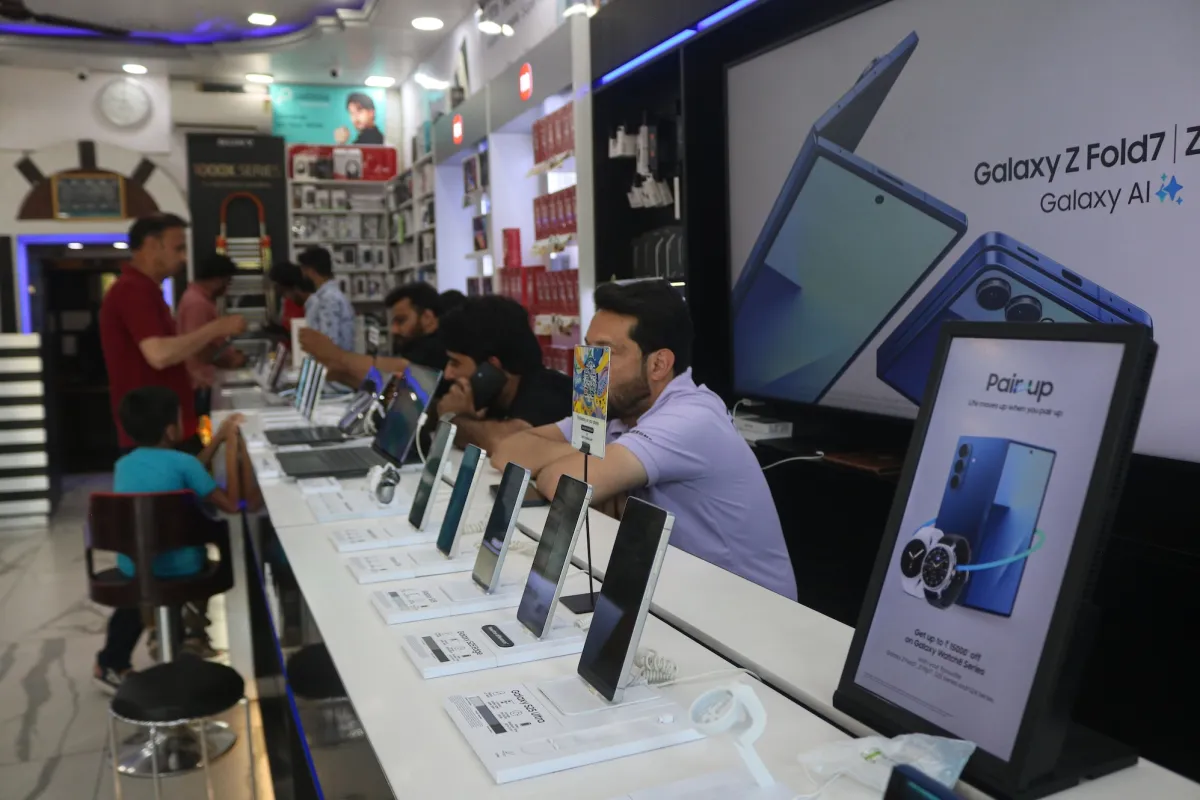
Months after analysts warned that AI-driven demand for memory chips would ripple through consumer electronics, India is providing the strongest evidence yet that the disruption has arrived, with rising handset prices reshaping the smartphone market.
The memory chips in question — RAM and storage components — are the same ones tech giants need by the truckload to build AI data centers. Manufacturers like Samsung, SK Hynix, and Micron have been shifting production capacity toward high-bandwidth memory, the specialized chips used in AI accelerators, because they’re much more profitable per wafer than the standard memory used in phones and laptops — leaving less capacity, and driving up costs, for everyday consumer electronics.
India, the world’s second-largest smartphone market by shipments after China, saw smartphone shipments fall 10% year-over-year in the April-June quarter, according to market research firm Counterpoint Research, marking the steepest June-quarter decline in six years as higher memory costs pushed up handset prices.
The impact has been more pronounced in India than in China, where smartphone shipments fell just 2% in Q2, according to Counterpoint. India has been hit harder because about 60% of its smartphone market is concentrated in the sub-₹20,000 (under $210) segment, where higher memory costs have had the biggest impact on prices, Tarun Pathak, the firm’s vice president of research, told TechCrunch.
Advertisement
India has been a prominent market for global smartphone brands for several years. The South Asian nation, home to more than 1.4 billion people and over 700 million smartphone users, has become a bellwether for consumer demand in price-sensitive markets, making shifts in buying patterns closely watched by device makers, chip suppliers, and investors tracking the broader health of the AI supply chain.
Pathak told TechCrunch that consumers are unlikely to abandon smartphones altogether. However, many of them are expected to delay upgrades, stretching replacement cycles to around four years from about 3.5 years previously, while premium brands such as Apple and Samsung remain better insulated from the slowdown.
The uneven impact is already reshaping competition among smartphone makers. Samsung was the only major smartphone brand to post shipment growth in India in Q2, with volumes rising 2% year-over-year, according to Counterpoint. Apple, by contrast, saw shipments fall 3% — though that dip largely reflected supply constraints and inventory shortages limiting how many iPhones Apple could deliver.
Consumers buying higher-end smartphones have proved less sensitive to price increases, with financing making expensive devices more affordable, Prachir Singh, a senior analyst at Counterpoint Research, told TechCrunch.
Advertisement
The pain has been most acute at the lower end of the market. Shipments in the sub-₹15,000 (under $150) segment fell 45% from a year earlier, Counterpoint said. Because Chinese brands are heavily exposed to entry- and mid-tier smartphones, their combined market share fell to its lowest level for a second calendar quarter since 2020.
The tougher economics are also prompting strategic shifts. This week, Chinese smartphone brand OnePlus said it would stop launching new products in Europe and North America, while maintaining its India business, following what it described as a careful assessment. Counterpoint data shared with TechCrunch showed China accounted for 74% of OnePlus’ global smartphone shipments to distributors and retailers in Q1, up from 59% a year earlier, while India’s share fell to 19% from 30%.
In other words, OnePlus is retreating to markets where it can still turn a profit and ceding ground elsewhere — a pattern likely to repeat across other budget-focused brands as margins tighten.
Indeed, Pathak told TechCrunch that running several sub-brands only makes sense if each one sells enough volume to cover shared costs, and that math stops working once margins get this thin. “Sub-brands normally have overlaps and shared resources, and you need a minimum base to justify the cut-throat margins. Profitability is the key to deciding market operations,” he said.
Advertisement
Consumers feel the squeeze
That pressure on brands is trickling straight down to the people buying their phones. Kiranjeet Kaur, associate research director for mobile phones research at IDC, said the Indian smartphone market is shifting from volume-led growth to value growth — meaning fewer phones are being sold overall, but each one generates more revenue — as higher component costs make lower-priced smartphones increasingly uneconomical.
The higher component costs are already filtering through to consumers. Smartphone prices in India have risen by between 4% and 68%, depending on the model, Pathak said, and as prices rise, consumers are either moving to higher-priced devices, delaying upgrades, or turning to the secondhand market.
Financing has meanwhile become “central to affordability,” Kaur told TechCrunch. She added that brands and retailers were also building inventory ahead of the festive season to lock in lower costs before further increases in component prices.
IDC also expects India’s smartphone shipments to decline by double digits in Q2, a steeper fall than the 4.1% decline in the first quarter and the 5.3% drop in the previous quarter, Kaur said. However, she noted the firm’s estimates were not yet finalized.
Advertisement
Kaur told TechCrunch that memory shortages and elevated smartphone prices were likely to persist until at least the end of 2027, although the pace of price increases should moderate as consumers gradually adjust to higher prices becoming the new normal.
“For Indian consumers, it is a double whammy as the weaker currency makes imports costlier, which has added to margin pressures for the market players, and they are passing on the cost to the consumer,” Kaur said.
When you purchase through links in our articles, we may earn a small commission. This doesn’t affect our editorial independence.
We may receive a commission on purchases made from links.
Many laptops try too hard to sell themselves. RGB lighting no one asked for, fans that wheeze under pressure, mysterious ports, and software bloated with trials and shortcuts. For business professionals, students, and frequent travelers, a machine that keeps things simple might be the better option. A minimalist laptop is light and compact enough to slip into a bag without a second thought. You’ll also want an uncluttered design, though port preferences vary. But this is a matter of personal choice. Apple’s bare-bones approach means you’ll need to carry adapters for certain devices. A laptop that covers your needs when it comes to ports means you won’t need to carry anything extra — but the look might not be so minimalist. Excellent battery life is another plus. This ensures you can leave the bulky charger at home, too.
Apple’s minimalist approach extends to software as well. macOS has long been renowned for arriving clean out of the box. Windows laptops tend to ship with a bit more preloaded software and might require a bit of a cleanup before they meet a minimalist’s standards. We’ve covered both platforms in our choices, and they’re all available with 13- or 14-inch displays for better portability. Larger versions are, of course, available, too, and won’t really break any minimalist rules. So here are 10 of the best minimalist laptops of 2026 for anyone who likes to keep their machine streamlined.
Advertisement
Apple MacBook Air 13-inch M5
The 13-inch MacBook Air may not be the budget MacBook any longer, but it has always been the benchmark when it comes to minimalist machines. It’s the envy of other manufacturers to the point that some even try to copy it. The newest M5 model hasn’t changed much in terms of aesthetics, but why would it? The aluminum chassis is clean on every surface. There are no vents, no grilles, no interruptions — just flat planes and rounded edges, with the iconic Apple logo as the only embellishment. Tom’s Hardware called it “the sum of years of refinements, with a mix of premium design, strong performance, and solid battery life,” which is a fair summary.
Advertisement
Minimalists have traditionally loved the 13-inch MacBook for its build and weight. At 2.7lbs, it weighs less than most hardbacks, and at under half an inch thick, it easily slides into any rucksack, briefcase, or laptop bag. You won’t need to carry the charger either, because you should get over 15 hours of battery life in real-world use. The MacBook Air M5 starts at $1,299 and is ideal for business travelers, remote workers, and students.
Connectivity is, as always, stripped down to the essentials. There’s MagSafe 3 for charging, two Thunderbolt 4 ports, and a headphone jack. The 13.6-inch Liquid Retina display is as vibrant as ever — sharp, color-accurate, and bright enough to work comfortably in most conditions. Minimalists can also rely on the bloatware-free macOS. Then there’s the new M5 chip. It’s powerful enough to handle the majority of professional demands. Documents, calls, countless browser tabs, and light creative work — it can do it all without any drama.
Advertisement
Apple MacBook Neo
The MacBook Neo is the laptop Apple should have made years ago. For as long as most people can remember, getting a MacBook meant spending at least $1,000. If you weren’t prepared to do that, your only option was the secondhand market. At $699, the MacBook Neo offers unbeatable value with reasonable compromises. It isn’t the best choice for power users and professional creatives. But the A18 Pro chip can manage countless tabs, constant multitasking, and video calls without the need to close anything down.
Minimalists will love that it has the exact same 2.7lb weight as the 13-inch MacBook Air, but with a slightly smaller footprint. It’s a hair thicker, however, but it still slips effortlessly into a bag. Display-wise, it’s also similar to the MacBook Air, which at this price is quite the luxury. It’s sharp, color-accurate, and bright enough for comfortable indoor use. Additionally, you’ll get close to Apple’s battery life claim of 16 hours of video playback or up to 11 hours of Wi-Fi browsing.
It arrives in a similar clean aluminum enclosure to the MacBook Air — rounded corners, flat surfaces, and the Apple logo pressed into the center — and comes in four stylish colors. You can choose from classic Silver, a soft Blush, bold Citrus, or a professional-looking Indigo. For students, first-time Mac buyers, or anyone switching from Windows, the Neo is an excellent starting point. SlashGear summed it up well: “The only thing keeping the Neo from being the perfect daily driver laptop for the average consumer is the lack of a keyboard backlight.”
Advertisement
Dell XPS 14 (2026)
The Dell XPS 14 may well be the most significant redesign the American company has delivered in years. It’s a beautiful laptop that excels at almost everything, and for minimalists shopping on the Windows side of the aisle, it’s definitely a compelling option. The lid is an aesthetically pleasing slab of uninterrupted dark Magnetite aluminum. It also features a more appealing XPS logo sitting where the Dell logo once did.
Advertisement
It has plenty more going for it than looks, though. Like most Dell laptops, the XPS 14 is highly configurable. The entry model runs on an Intel Core Ultra 5 325, which is ideal for everyday tasks. Step up to the Core Ultra X7 or X9, and you unlock the power demanded by professional workloads. There are also display options. The FHD panel is fine for everyday use, while the 2.8K OLED delivers that famed image quality the tech is known for — rich, saturated colors, perfect blacks, and a contrast ratio that LCD panels simply cannot match.
You can choose your storage and memory size, too, but the port selection is fixed — just slightly more generous than the MacBook, with three Thunderbolt 4 ports and a headphone jack. Minimalists will be happy to hear that it weighs about the same as the 13-inch MacBook Air while remaining only slightly thicker. You’ll get a comfortable full day out of the battery; TechRadar recorded just over 12 hours under moderately intensive use. And, unlike older Windows laptops, it showed very little battery drain when you close the lid. Windows 11 does come pre-installed with Dell apps and Copilot AI features that might not be ideal for a clean setup. However, most of them can be removed or disabled.
Advertisement
Apple MacBook Pro 14-inch (M5)
The MacBook Pro M5 delivers the kind of performance that makes it finally time to give up your old M1 Pro laptop if you still have one. It handles video editing and programming without complaint, while things like graphic design and music production are well within the capabilities of this machine. Memory is configurable at the point of purchase, which, of course, affects the price. The base model starts at $1,999 and runs all the way up to almost $10,000 for the M5 Pro Max chip with maximum processing power, 128 GB of memory, and 8 TB of storage. If you’re on the lookout for a machine your accountant will almost certainly advise against, max out by all means.
The 14.2-inch display is sharp, color-accurate, and perfect for creative professionals. However, pure minimalists should note that Apple is actually quite generous with the ports on this machine. As it’s a laptop for workstations, it has everything a professional needs: a full-size SD card slot, an HDMI port, MagSafe charging, three Thunderbolt 4s, and a headphone jack. That means no adapters, no dongles, and no extra clutter on the desk.
For all of its power, it’s still remarkably portable. At 3.4lbs, it’s not much heavier than the smaller MacBooks, and its 0.6-inch thickness mirrors the Dell XPS 14 — so it will still slide into a bag without a second thought. Apple rates the battery at 24 hours, which is, of course, overstated. RTINGS tested real-world use at 16 hours. Either way, a full working day is never in doubt, and for minimalists who need real horsepower, the MacBook Pro 14 is the best choice.
Advertisement
Lenovo ThinkPad X1 Carbon Gen 14 Aura Edition
Early in 2026, SlashGear listed the Lenovo ThinkPad X1 Carbon Gen 13 Aura Edition as one of the best laptops you can buy. The Gen 14 has since been released, and the headline upgrade is the Space Frame, a modular build that makes the battery, keyboard, ports, and SSD all replaceable. The aesthetics are still minimal. The carbon fiber and magnesium chassis is black, flat, and completely unadorned. There are no color options, no decoration, and nothing unnecessary. It’s also among the lightest business laptops on the market. It weighs about 2.2lbs, and at just 0.6 inches at its thickest point, it’s easily portable.
Advertisement
The base model of the Lenovo ThinkPad X1 Carbon Gen 14 Aura Edition starts at $2,199. With it comes a Core Ultra 5 processor and 32GB of RAM. More headroom is available if you step up to the Core Ultra 7, which unlocks configurations with up to 64GB of RAM. You also get the choice of a sharp, color-accurate screen with the 2.8K OLED display or a standard IPS panel that handles everyday business use without issue. You have every connection you’ll need, too. There are three Thunderbolt 4 ports, an HDMI 2.1 port, an audio jack, and even a USB-A port, which is becoming increasingly rare on slim laptops at this price point. However, ZDNET tested the battery at just seven hours, which is fairly modest for this class. Its saving grace is rapid charging — it can get to 80% capacity in about an hour.
Advertisement
HP OmniBook 5 14
The MacBook Air is a machine that usually sets battery life standards. However, some laptops outshine it. The HP OmniBook 5 14 is one. In fact, it doesn’t just outshine it; it shines so brightly that the MacBook Air is practically a night light in comparison. PCMag tested it at what it called an “astounding” 34 hours and 48 minutes. This is the best result for any conventional laptop it had recorded in years, beating the next-best machine by an incredible 14 hours. When the battery finally runs low, fast charging gets it back up to 50% in just 45 minutes.
What’s more, the glacier-silver aluminum chassis is clean and uncluttered and has a premium feel to it. But it doesn’t come with a premium price tag. At $899.99, it’s one of the most affordable minimalist laptops out there, but it can still put in a good performance. It’s a natural fit for students or business professionals who want a beautiful everyday machine — and at 3lbs and 0.6 inches thick, it slides into a bag without adding much bulk or weight — perfect for commuting or carrying around campus.
It’s not just the chassis that looks beautiful, though. The 14-inch OLED panel delivers deep contrast, vivid colors, and HDR support, while the Snapdragon X Plus processor handles everyday tasks and light photo editing without complaint. It isn’t built for professional creative work, gaming, or specialist software, and it does ship with a handful of trials and preloaded apps that minimalists will want to clear out before settling in. Other than that, it’s a very tempting machine.
Advertisement
Acer Swift Go 14 (8845HS)
The Acer Swift Go 14 is not a laptop that goes out of its way to impress. The aluminum chassis is plain and uncluttered. There are no decorative flourishes and no unnecessary details. You might go so far as to say it looks bland. Minimalist, but bland. However, it’s a cute and breezy Windows alternative to the MacBook Air, and it gets the job done. With a build more solid than the budget price suggests, it’s sturdy enough to carry around without having to baby it. It’s also compact and slim, and sits comfortably in any bag, with the 2.9lb weight barely noticeable.
The Go 14 starts at $699 for the base Ryzen 5 8645HS model with 8GB of RAM. But the Ryzen 7 8845HS model features one of the most powerful laptop processors. It might be the more sensible choice because PCMag‘s testing shows that it outperforms several pricier Intel rivals, and it’s still under $800 for 16GB of RAM and 1TB of storage. You can also go bigger with up to 32GB of RAM and a 2TB SSD available. The display is impressively bright, while the 14-inch matte IPS touchscreen hits 98% sRGB coverage for solid color accuracy.
Advertisement
Port-wise, everything you need is built in, including two USB4 ports, an HDMI 2.1 port, two USB-A ports, a headset jack, and a microSD slot. With all those ports, the sides might not have the minimalist aesthetic of a MacBook, but this means no adapters and no dongles. The battery life also means there’s no need to carry a charger on the go. At well over 15 hours, it comfortably lasts an entire working day, and maybe even two.
Advertisement
Asus Zenbook S 14 (UX5406)
The Asus Zenbook S 14 has a distinctive look. Clean geometric lines run across the lid to form the tasteful Zenbook logo pressed into the Zumaia Gray or Scandinavian White Ceraluminum. This is the Taiwan-based corporation’s own ceramic-aluminum alloy. It gives the laptop a texture and solidity that standard aluminum can’t match. Yet, at 2.65lbs and barely half an inch thick, it’s among the slimmest and lightest on this list.
The 14-inch 3K OLED touchscreen is high quality, too. It’s sharp, vivid, and color-accurate, and the 120Hz refresh rate keeps motion smooth. HDR peak brightness reaches 1,100 nits for content that demands it. There’s minimal glare on the screen, too, so you can comfortably use it in an office with overhead lights. Professionals will be happy to know that in Laptop Mag‘s testing, the Intel Core Ultra 7 258V handled multiple Chrome tabs, Photoshop, and Steam simultaneously without any sign of slowdown. It’s basically a showpiece for Intel’s Lunar Lake AI PC chips, but the battery keeps pace, too. Separate tests have shown between roughly 14 and 16 hours of use.
You’ll find two Thunderbolt 4 ports, one on each side of the device, which is very useful for desk setups. They sit alongside a USB-A port, an HDMI 2.1 port, and an audio jack. The Asus Zenbook S 14 (UX5406) starts at $1,600, with the base model featuring the Intel Core Ultra 7 258V that Laptop Mag tested, along with 32GB of RAM and a 1TB SSD. However, you can step up to the UX5406AA for $2,000, which brings a more powerful Intel Core Ultra 9 386H processor.
Advertisement
Lenovo Yoga Slim 7i Aura Edition Gen 11
For minimalists looking for the smallest footprint in their bag, the Yoga Slim 7i makes a strong case. At just 2.15lbs, it’s slightly lighter than the Lenovo ThinkPad X1 and easily beats the lightest MacBooks. That minimal weight has something to do with the 14-inch Plastic-OLED (POLED) display. It’s thinner, lighter, and more shock-resistant than standard glass OLED. Additional protection comes from its scratch- and drop-resistant Gorilla Glass 3, while the magnesium alloy chassis has been tested to U.S. military standards for durability. So, despite the low weight, it’s no pushover. At just 0.55 inches thick, it also rivals every laptop here for portability.
The display is bright. In fact, it’s the brightest laptop Tom’s Hardware tested, and the visuals are rich, color-accurate, and smooth. However, it’s one for those who keep to standard workloads. The Intel Core Ultra 7 355 can handle everyday tasks well, but push it toward CPU-heavy creative work and it starts to trail. In terms of battery life, it’s around the same as the MacBook Air; you should get more than 16 hours out of it. The port lineup also seems to have taken a leaf out of Apple’s book. There are just three Thunderbolt 4 ports. It takes things even further by omitting the headphone jack, which might disgruntle some — even minimalists. But, at $1,889.99 with 32GB of RAM and a 1TB SSD, it’s one that is worth the price if you don’t need heavy processing power.
Advertisement
Lenovo ThinkPad X9 14 Aura Edition
Business laptops often don’t prioritize the display, but that’s not the case with the Lenovo ThinkPad X9. It’s a solid business laptop with some quirks. The 14-inch 2.8K OLED screen not only delivers signature deep blacks and vivid colors, but it also has a smooth 120Hz refresh rate and a brightness of 475.6 nits, as measured by Tom’s Hardware. That reading is rather impressive for an OLED, and it was only beaten by the non-OLED MacBook Air. The rest of the laptop looks good, too. It has a recycled aluminum chassis that comes in either Thunder Grey or Glacier White and a ribbed bottom that gives it a tactile, premium feel. The 2.7lb weight and 0.5-inch thickness complete the minimalist-friendly look.
Advertisement
But the X9 can also handle a decent workload. It won’t handle the CPU-intensive tasks that Apple and Snapdragon rivals can, but the Intel Core Ultra processors take care of everyday productivity without issue. Bloatware is unusually clean for a Windows laptop, too. You’ll find mostly Lenovo’s own utilities, plus a handful of Microsoft apps, but nothing you can’t clear out with some light spring cleaning. However, battery life on the 2.8K model was recorded at just 10 hours. Step down to the 1,200p OLED to trade some visual quality for longer battery life. That standard model starts at $1,699, while the 2.8K display with its Core Ultra 7 processor, 32GB of RAM, and 1TB SSD starts at $2,399.
Advertisement
Methodology
PaeGAG/Shutterstock
We reviewed coverage from specialist tech publications, including Tom’s Hardware, PCWorld, PCMag, RTINGS, and Wired, as well as reviews from SlashGear and its sister websites. We specifically looked for laptops that combined lightweight, portable designs with clean, uncluttered aesthetics, bloat-free software, and good battery life. However, they also had to be powerful enough for the users most likely to choose a minimalist laptop, such as students, travelers, and business professionals.
Alibaba’s T-Head open-sourced SAIL, the software stack for its Zhenwu AI chips, at WAIC in Shanghai. It aims to lower the barrier to migrating off Nvidia’s CUDA.
Alibaba’s chip design unit T-Head announced at the World AI Conference in Shanghai on Saturday that it is open-sourcing SAIL, the full software stack for its Zhenwu series of AI chips. The move is designed to lower migration barriers for developers currently locked into Nvidia’s CUDA ecosystem. T-Head said programmers can adapt SAIL to mainstream AI frameworks in under seven days.
The vast majority of AI developers globally write software using CUDA, Nvidia’s proprietary toolkit for programming GPUs. That dependency effectively locks them into buying Nvidia hardware, a dynamic that has helped the company reach a $3.4 trillion market cap. Xi Jinping used the same conference on Friday to argue that no single country should monopolise AI, and T-Head’s open-sourcing of SAIL is the infrastructure-level expression of the same argument: if China wants AI independence, it needs to break the CUDA lock-in at the software layer, not just build alternative chips.
T-Head is not alone. Huawei open-sourced CANN, the software platform for its Ascend AI processors, in 2025. Moore Threads has pursued a similar strategy with its own GPU stack. All three are competing for the same developer migration: getting AI engineers to write code that runs on Chinese hardware without losing access to frameworks like PyTorch. The challenge is less technical than habitual. CUDA has a 17-year head start and the largest library ecosystem in the industry.
Advertisement
For Alibaba, the timing is loaded. Anthropic accused Alibaba’s Qwen lab of running the largest AI distillation campaign ever against a US company last month, and the Pentagon added Alibaba to its Chinese military companies blacklist in June. Open-sourcing SAIL positions the company as a contributor to open AI infrastructure while it fights those designations in court. The 560,000 Zhenwu chips Alibaba has already shipped to over 400 customers now have a publicly available software layer, which makes the ecosystem stickier and harder for any single government to shut down.
Apple has continued to put the prices up for its online services, with iCloud+ rising in cost in a number of territories.
Over the course of a few days, Apple has been increasing the prices of its various online services. Not to be left behind, iCloud+ has now upped its prices to join the rest of the roster.
The change, revealed by Apple’s iCloud+ pricing support page, doesn’t outright say what countries are affected by the pricing. However, comparisons with previous pricing, including via the Wayback Machine, shows it affects eight countries in total.
The affected countries, seeing higher iCloud pricing, include:
Advertisement
Egypt
Indonesia
Japan
New Zealand
Nigeria
Philippines
Turkiye
Vietnam
The price increases vary between territories, but fall in the range of 17% to 30%. For example, the 50GB plan was 150 yen per month but is now 180 yen, up 20%.
Pricing in other markets, including the United States and United Kingdom, remains unchanged. The perks of iCloud+ also hasn’t changed, including Hide My Email, iCloud Private Relay, a custom email domain, and HomeKit Secure Video support.
While Apple hasn’t explained why the prices have changed, it is most likely the company periodically accounting for changes in currency conversion.





















































You must be logged in to post a comment Login