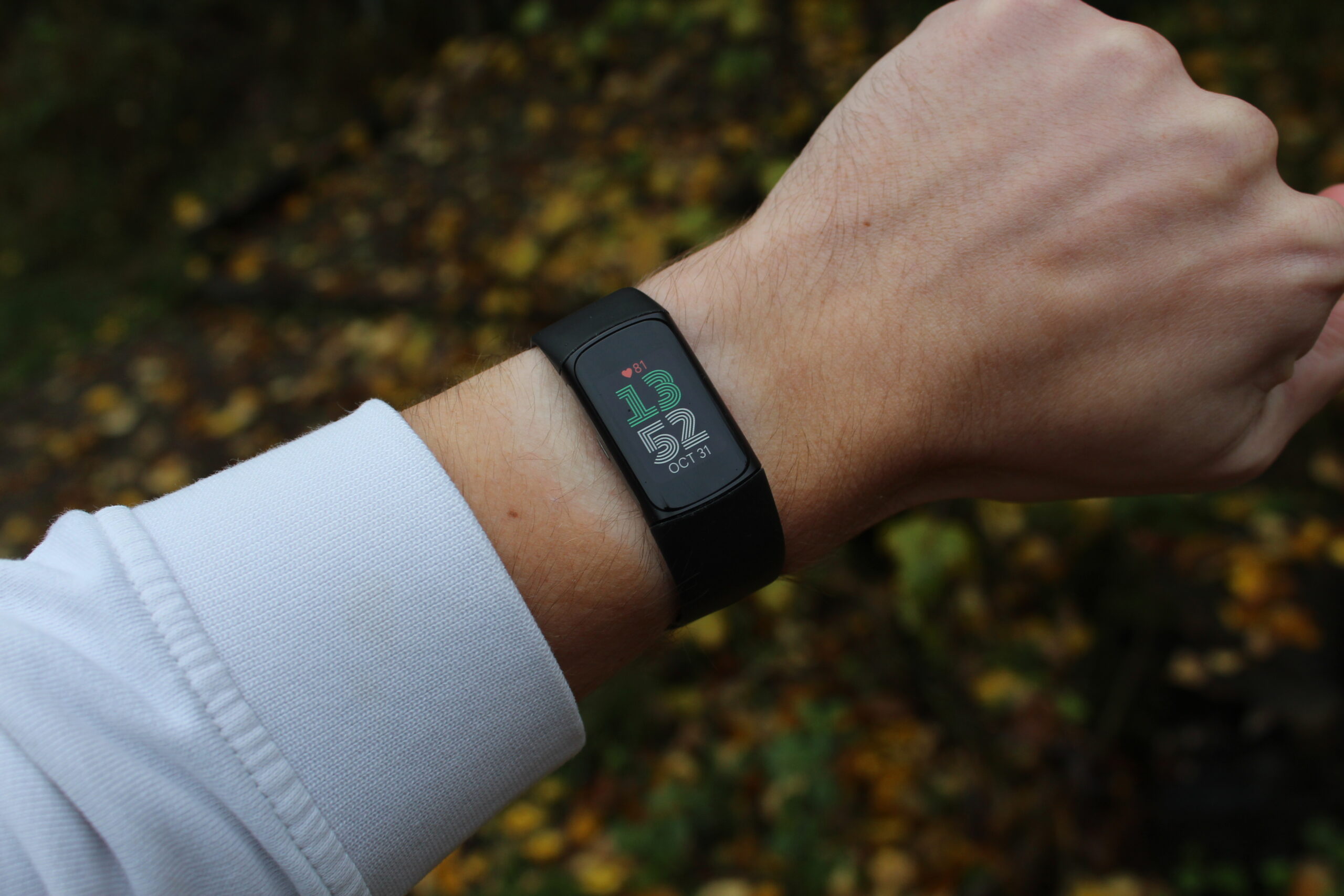
Fitbit is expanding its Gemini-powered health coach with a wave of new features, including nutrition tracking, cycle health tools, and mental wellbeing insights.
The update builds on the AI-driven coach launched earlier this year. It adds more ways for users to track and understand their overall health in one place.
One of the biggest additions is cycle tracking, which lets users log periods and symptoms directly within the app. While basic tracking appears to be available to free users, Fitbit notes that more personalised insights remain part of its Premium offering.
The coach is also gaining nutrition and hydration tracking. Users can log meals, monitor calorie intake, and keep track of daily water consumption. In addition, Fitbit says it will provide personalised macronutrient ranges. This will give users clearer guidance on how to balance their diet based on their goals.
Advertisement
Mental wellbeing is another new focus. Users can now log their mood, track mindfulness sessions, and get a better sense of how their body handles stress through an updated resilience score. This builds on Fitbit’s existing stress management tools.
Advertisement
Alongside these additions, Fitbit is loosening access to its Public Preview programme. Users no longer need a Fitbit Premium subscription to try the redesigned app. However, features like the AI coach itself, “Ask Coach” functionality, and custom fitness plans will still sit behind a paywall.
The update follows a steady stream of improvements to the health coach, including recent support for continuous glucose monitors. This lets users ask how certain foods might impact their glucose levels. Google has also been expanding availability. The company has been bringing the feature to markets including the UK, Canada, Australia, New Zealand, and Singapore in recent months.
If you own a computer that’s not mobile, it’s almost certain that it will receive its power in some form from a mains wall outlet. Whether it’s 230 V at 50 Hz or 120 V at 60 Hz, where once there might have been a transformer and a rectifier there’s now a switch-mode power supply that delivers low voltage DC to your machine. It’s a system that’s efficient and works well on the desktop, but in the data center even its efficiency is starting to be insufficient. IEEE Spectrum has a look at newer data centers that are moving towards DC power distribution, raising some interesting points which bear a closer look.
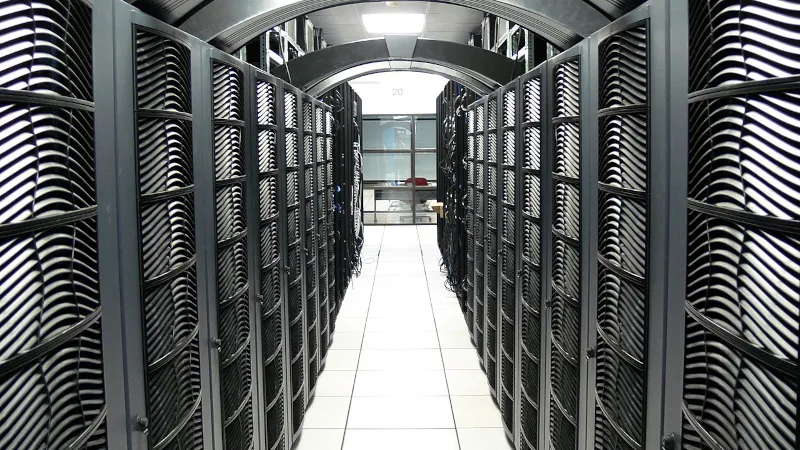
A traditional data center has many computers which in power terms aren’t much different from your machine at home. They get their mains power at distribution voltage — probably 33 KV AC where this is being written — they bring it down to a more normal mains voltage with a transformer just like the one on your street, and then they feed a battery-backed uninterruptible Power Supply (UPS) that converts from AC to DC, and then back again to AC. The AC then snakes around the data center from rack to rack, and inside each computer there’s another rectifier and switch-mode power supply to make the low voltage DC the computer uses.
The increasing demands of data centers full of GPUs for AI processing have raised power consumption to the extent that all these conversion steps now cost a significant amount of wasted power. The new idea is to convert once to DC (at a rather scary 800 volts) and distribute it direct to the cabinet where the computer uses a more efficient switch mode converter to reach the voltages it needs.
Advertisement
It’s an attractive idea not just for the data center. We’ve mused on similar ideas in the past and even celebrated a solution at the local level. But given the potential ecological impact of these data centers, it’s a little hard to get excited about the idea in this context. The fourth of our rules for the responsible use of a new technology comes in to play. Fortunately we think that both an inevitable cooling of the current AI hype and a Moore’s Law driven move towards locally-run LLMs may go some way towards solving that problem on its own.
Last June, Mia Ballard’s self-published novel Shy Girl took the internet by storm. After winning the hearts of readers and publisher Hachette alike, it was set for a major US debut in the coming months.
Now, the novel may never become available through any official channel again. Hachette has officially pulled the plug on the novel’s US release following a wave of allegations that generative AI played a role in the manuscript’s creation.
Originally self-published in February 2025, the horror novel was traditionally released by Hachette’s science fiction and fantasy label Orbit in the UK in November. After The New York Times provided evidence of AI usage in Shy Girl, Hachette canceled the planned spring US release and removed the book from its website completely.
Advertisement
“Hachette remains committed to protecting original creative expression and storytelling,” the publisher said in a statement to the Times.
Authors are required to disclose to Hachette whether AI was used in the creation of their work. Ballard has denied using AI tools to write the book, claiming an editor was responsible for the portions that appear to be AI-generated.
“My name is ruined for something I didn’t even personally do,” Ballard wrote in an email to the New York Times.
Advertisement
Hachette UK
The cancellation of Shy Girl by Hachette marks the first time a major publisher has publicly pulled an existing title due to suspicions of AI-generated prose.
For the past few months, readers online have raised concerns about the book’s apparent use of AI.
A video from YouTuber frankie’s shelf provides a lengthy analysis of the novel, pointing out linguistic patterns that are characteristic of AI writing. The video also lists words in Shy Girl that are repeated with unusual frequency (“edge” is used 84 times and “sharp” 159 times), often in ways that are abstract and nonsensical.
In January, Max Spero, founder and chief executive of Pangram, ran the text of Shy Girl through his AI detection program. He claimed that the novel was 78% AI-generated.
The rise of AI has caught the publishing industry off guard. Though AI writing has already appeared in many self-published books, traditional publishers like Hachette are more critical of the technology.
Advertisement
Representatives for Hachette didn’t immediately respond to a request for comment.
A research team determined that the torpedo bat, left, and traditional bat perform equally well in hitting power with only a slight difference in the location of the bat’s sweet spot (WSU Photo / Voiland College of Engineering and Architecture)
The New York Yankees just cruised through Seattle and won two out of three games against the Mariners. On the other side of Washington state, the Bronx Bombers’ “torpedo bats” were being scientifically scrutinized.
In what Washington State University is calling the first-ever laboratory experiments on the new baseball bat design, researchers found that torpedo bats and traditional bats basically perform the same.
It didn’t look that way last season, when the Yankees hit a franchise-record nine home runs in a game against the Milwaukee Brewers and drew viral attention to the bats that they were swinging.
The torpedo bat design relies on a slightly different shape in which wood is removed from the barrel tip and added to the bat’s sweet spot, so that the diameter tapers down, a little like a bowling pin. But the hype appears overblown.
“Wood is wood,” Lloyd Smith, a professor in WSU’s School of Mechanical and Materials Engineering and director of the university’s Sports Science Laboratory, told WSU Insider. “When it comes to baseball, there’s not a lot you can do with wood. If your goal is to keep the game steady and consistent and not have a lot of change, wood bats are good.”
Advertisement
Smith is part of a research team that includes Alan Nathan from University of Illinois and Daniel Russell from Penn State University. They’ll present their findings at the upcoming International Sports Engineering Association conference, June 1–4 in Pullman, Wash.
According to WSU Insider, the researchers created two maple bats that were duplicates of a standard Major League Baseball bat. Two additional maple bats were made with a torpedo-shaped barrel that gave them the same swing weight as the standard bat.
They measured how much energy the bat returns to the ball by firing baseballs from an air cannon at a stationary bat and using light gates and cameras to measure the speed of the incoming and rebounding ball.
The team found nearly identical performance for the torpedo and standard bats except that the sweet spot for the torpedo bat was a half inch farther from the bat tip than the standard bat.
Advertisement
“It was actually pretty phenomenal how close they were,” said Smith.
While some Yankees players said last year that any little tweak could provide an advantage, the team’s captain wasn’t convinced.
Aaron Judge hit an American League-record 62 homers in 2022, 58 in an MVP season in 2024 and 53 as repeat MVP in 2025. He had three homers using a traditional bat in that much-talked-about rout of the Brewers.
“The past couple of seasons kind of speak for itself,” Judge told ESPN last May. “Why try to change something?”
Slapping the Xteink X3 onto an iPhone takes only a few seconds. This is owing in part to its built-in magnets, which exactly align with MagSafe and allow it to be easily snapped into place. You get a thin black or white slab that sits flush against the phone’s back without adding any bulk. Anyone who is continually reaching for their phone dozens of times per day would appreciate having a book right at their fingertips, all from the same move.
At only 58 grams, this device is easy to forget about until you need it, and then, as if by magic, it appears. Its overall size is a modest 100mm long and 60mm wide, so it goes unnoticed in a pocket until reading time beckons. Commuters and individuals waiting in lines can just pull out their phones and start reading a chapter without having to dig through their bags for another device.
Pocket-Size Mini eReader for Reading Anywhere: Ultra-light at just 0.23 inch and only 2.72 oz, Xteink X4 is designed for true portability. Slip it…
4.3″ Paper-Like E-Ink Display: The 4.3-inch E-Ink screen delivers a natural paper-like reading experience that’s gentle on the eyes. Enjoy clear…
Magnetic-Ready Design for Quick Access: Includes magnetic stick-on rings, so you can attach Xteink X4 to the back of your phone or other magnetic…
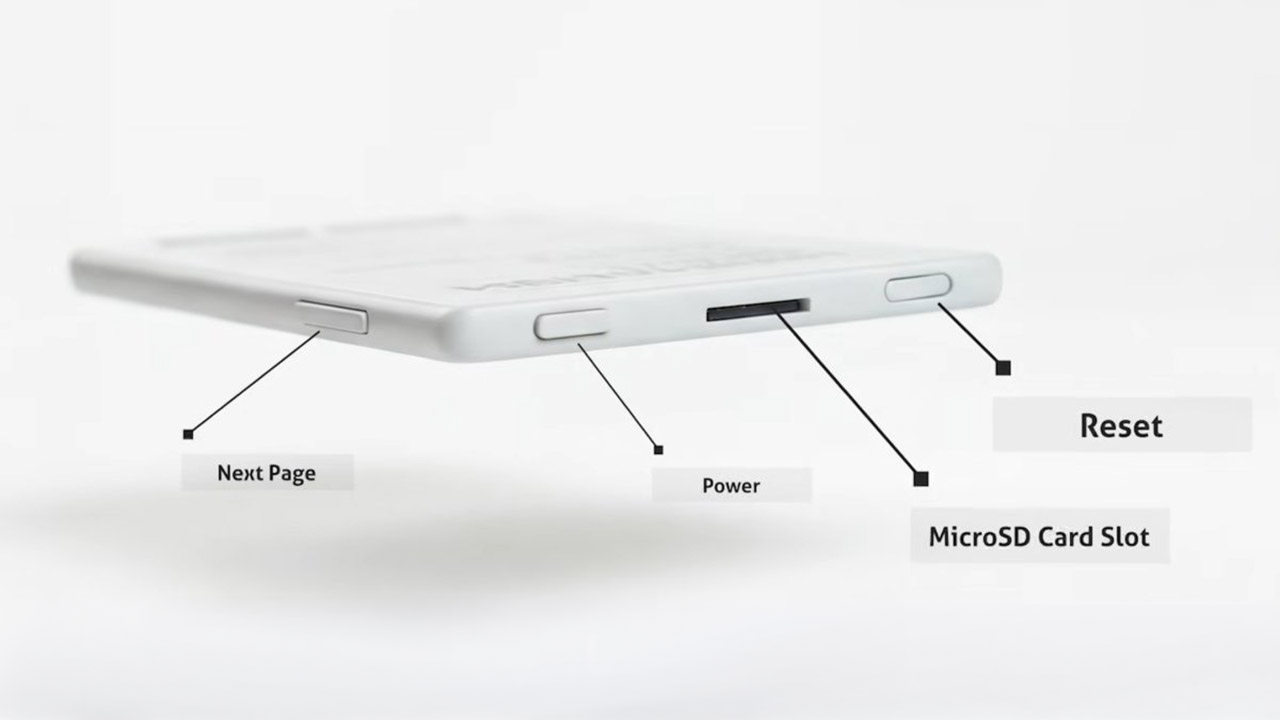
The 3.7-inch E Ink screen displays clear text, with over 250 pixels per inch. You can easily change the font size with a few simple adjustments, so even the smallest pages provide a comfortable reading experience. With adequate lighting, the characters simply pop, and there is no eye strain to contend with, as opposed to phone screens. You also have real buttons on the sides and bottom for turning pages and accessing menus. One-handed operation feels perfectly normal, whether you’re on a train or confined in bed. The gyroscope within detects even the tiniest shake and flips pages forward, allowing you to maintain a solid grip during those rapid reading periods.
Navigation is straightforward, with a grid of icons instead of swipes or touches. Choose a book or change the settings with a few presses, and it remains dependable even when your fingers are clumsy. The strategy minimizes distractions and allows you to concentrate on the words themselves. You can load books onto the device using either the 16GB microSD card included in the box or a companion app on your phone. Transferring EPUB files is quick and easy over Wi-Fi or by inserting the card into your computer, and storage increases up to 512 gigabytes, allowing you to carry thousands of titles without running out of space.
The battery will last you 10 to 14 days on a single charge, even if you only read for an hour or two every day, and charging is simple; simply insert the special cable with magnetic pogo pins into the gadget and it will clip right into place. Okay, there is one little flaw: there is no built-in front light (yet), but you can get a separate clip-on version for only $9.99 if you plan on reading late into the evening. If you need more connectivity, there are Bluetooth and NFC connections available, as well as Wi-Fi for the occasional update or transfer. It’s available now on the official Xteink website and can be purchased for $79. [Source]
Maybe the third time is the charm. Writer/producer David E. Kelley is adapting Tom Wolfe’s “The Bonfire of the Vanities” novel into a series for Apple TV, with “The Batman” director Matt Reeves.
Apple TV is dramatizing “The Bonfire of the Vanities” — image credit: Apple
David E. Kelley is still best known for “The Practice” and “Ally McBeal” shows, but he’s also the writer of Apple TV’s “Presumed Innocent” and “Margo’s Got Money Troubles.” Now according to Deadline, he’s dramatizing Tom Wolfe’s famous 1987 novel of greed and Wall Street money. Not to spoil the story, but as excellent as it is, Wolfe’s novel feels as if it fades out rather than have a big finish, which has made it difficult to successfully adapt. It was filmed in 1990, with Tom Hanks starring and Brian DePalma directing from a screenplay by Michael Cristofer, but that was a flop. Continue Reading on AppleInsider | Discuss on our Forums
Artificial intelligence is no longer a back office enabler or a set of isolated automation software tools. It is becoming a core component of how organizations operate, compete, and deliver value.
As businesses accelerate their adoption of increasingly autonomous systems, often referred to as agentic AI, a significant leadership dilemma is emerging. The workforce is no longer exclusively human.
Digital agents capable of making decisions, initiating actions, and influencing outcomes, are now woven into the operational fabric of the company.
Advertisement
Article continues below
Peter Connolly
This shift represents far more than a technological upgrade. It is a structural transformation that puts business leaders in uncharted territory.
The World Economic Forum’s Four Futures framework warns of rising technological fragmentation, declining trust, and widening governance gaps.
In this context, the question for leaders is no longer whether to deploy autonomous AI, but how to govern a hybrid workforce of humans and digital agents without introducing systemic risk.
For many organizations, this is becoming one of the defining leadership challenges of the decade.
Advertisement
Sign up to the TechRadar Pro newsletter to get all the top news, opinion, features and guidance your business needs to succeed!
The Rise of the Non Human Workforce
Agentic AI systems differ from traditional automation in one critical way: they do not merely execute predefined tasks but interpret data, make decisions, and adapt their behavior to context. In many organizations, these systems are already performing functions once reserved for skilled employees, triaging customer requests, optimizing supply chains, generating code, or even making financial recommendations.
The productivity gains are undeniable, but so is the complexity. When digital agents act with autonomy, they also introduce new forms of organizational risk. Decisions may be opaque, accountability may be unclear, and the potential for unintended consequences increases dramatically.
Advertisement
Leaders must now grapple with a workforce that does not think, behave, or act like humans, and who cannot be governed through traditional management structure. This is where structured identity, access, and behavioral governance become essential.
The Governance Gap: A Growing Leadership Risk
The most significant challenge is not the technology itself, but the governance vacuum surrounding it. Many organizations deploy autonomous systems faster than they establish the controls and guardrails required to manage them. This creates a widening gap between capability and oversight.
Advertisement
Several risks are already becoming visible:
1. Accountability gaps: When an AI agent makes a decision that leads to financial loss, regulatory exposure, or reputational harm, who is responsible? Without clear lines of accountability, organizations face legal and ethical uncertainty.
2. Insider threat like behavior: Autonomous systems often operate with high levels of privilege and can access sensitive data, trigger workflows, or interact with customers. If misconfigured or compromised, they can behave like highly privileged insider threats, an issue we frequently encounter when assessing digital identity posture.
3. Fragmentation and drift: As organizations deploy multiple AI agents across different functions, the risk of inconsistent behavior, configuration drift, and misaligned objectives increases. Without centralized governance, autonomous systems can evolve in ways that diverge from organizational intent.
Advertisement
4. Erosion of trust: Employees, customers, and regulators are increasingly concerned about how AI systems make decisions. A lack of transparency and explainability can undermine confidence and impede adoption.
AI adoption alone is no longer sufficient. Governance has become the true leadership mandate.
A Governance First Mindset: The New Leadership Imperative
To navigate this new landscape, business leaders must adopt a governance first mindset that aligns with the World Economic Forum’s call for Digital Trust and systemic resilience. This requires treating agentic AI not as a standalone technology, but as a governed member of the workforce.
Advertisement
Several principles should guide this shift:
Establish Clear Accountability Structures
Every AI agent must have an identified human owner responsible for its actions, performance, and outcomes. This includes defining escalation paths, decision boundaries, and audit requirements. Without explicit accountability, organizations risk regulatory exposure and operational ambiguity.
Apply Identity and Access Controls to Digital Agents
Advertisement
Just as employees have identities, permissions, and access levels, so too must AI agents. Leaders should ensure that digital agents are integrated into identity management frameworks with least privilege access, continuous monitoring, and lifecycle management. This reduces the risk of insider threat like behavior and prevents privilege creep, these are key principles central to our approach to digital workforce governance.
Implement Behavioral Guardrails
Autonomous systems require constraints that define acceptable behavior. These guardrails may include ethical guidelines, operational limits, safety checks, and real time monitoring. Guardrails ensure that AI agents act within organizational intent and do not drift into unsafe or unintended territory.
Build Oversight and Auditability into the System
Advertisement
Transparency is essential for trust. AI agents must be auditable, explainable, and observable. This includes maintaining logs of decisions, enabling post incident analysis, and ensuring that humans can intervene when necessary. Oversight is foundational to responsible autonomy.
Foster a Culture of Digital Trust
Governance is more than a technical challenge, it is a cultural one. Leaders must champion a culture that values transparency, accountability, and responsible innovation. This includes educating employees about how AI agents operate, how decisions are made, and how risks are managed. Organizations that succeed here tend to be those that treat governance as a strategic capability, not a compliance burden.
Advertisement
From Liability to Advantage: Building the Hybrid Workforce of the Future
When governed effectively, agentic AI can become a powerful force multiplier. It can enhance productivity, accelerate innovation, and enable organizations to operate with greater agility and precision. But without governance, the same systems can introduce systemic vulnerabilities that undermine resilience.
The role of business leaders is to ensure that autonomy does not outpace oversight. By reframing agentic AI as part of the workforce, subject to the same expectations, controls, and accountability as human employees, leaders can transform a potential liability into a strategic advantage.
The future of work will be hybrid. The organizations that continue to evolve in 2026 will be those that recognize that governing AI is not a technical task delegated to IT, but a core leadership responsibility.
Leaders who embrace this governance first approach will not only mitigate risk, but they will also build resilient, high performing organizations that define the future of the workplace and how businesses function.
As with any new tech, there’s a scale for AI adoption among businesses leaving some are ahead of the curve and others much further behind as they continue to resist and delay.
But what’s clear is that adoption is happening with or without formal strategy because nearly two-thirds (65%) of employees now say they intentionally use AI for work.
This shift is impacting expectations on many levels. It changes what organizations expect from their people, and it changes what people expect from their organizations.
Advertisement
Article continues below
Nick Pearson
Polished sounding, in-depth output can now be generated in minutes, meaning everyone has the ability at their fingertips to produce more in less time.
As managers and organizations increasingly realize that this doesn’t always lead to good work, the differentiator that defines what good really is, is becoming less about speed and more about who can work alongside AI well.
That means having the ability to analyze and assess its output and use it to make better human decisions – not replace them.
This marks a turning point for CIOs especially. The role that used to center simply on identifying and providing access to new tools to improve efficiency, is now increasingly responsible for shaping an environment in which AI tools truly raise the bar.
Advertisement
Sign up to the TechRadar Pro newsletter to get all the top news, opinion, features and guidance your business needs to succeed!
AI is resetting the performance baseline
AI is, and has for some time, been accelerating routine and repeatable work across every function, from drafting documents and analysing data to summarizing meetings and generating code. At first, many employees approached these tools with caution. AI made them faster, but they still treated its output as something to sense-check and refine.
Now, as AI becomes more normalized and trusted, that caution can slip. In some cases, speed is no longer paired with scrutiny and teams rely on confident-sounding outputs that may be incomplete, biased or wrong if they haven’t been properly reviewed. So, while managers are getting used to quicker turnaround and coming to expect it, they may also be receiving work that looks finished but hasn’t been validated.
Advertisement
If work is easier to produce across the board, then volume alone becomes a much less reliable indicator of value. It’s more about the ability to work with AI’s output, interpreting and analysing it in context and feeding it into final outputs and decisions rather than relying on it to do that for you.
Because of this, every role becomes more technical by default. This new expectation means employees need to be able to use AI tools but also use them well and understand their outputs. That includes framing prompts effectively, challenging assumptions, identifying bias and translating outputs within the right commercial and organizational context.
Without leaders prioritizing AI and how to use it correctly, this shift can create divergence. Some teams build confidence quickly, while others feel nervous and hesitate or over-rely on automation which can result in uneven standards and unnecessary risk. The responsibility for avoiding that fragmentation sits with the CIO.
Advertisement
The answer isn’t simply introducing more technology, in fact in many ways that may complicate things further. What employees need is better ways of working with existing tools that are embedded across the organization.
This starts with being clear about where AI is genuinely helping the business. Rather than experimenting everywhere at once, organizations need to identify the areas where AI can improve outcomes, whether that’s speeding up analysis, reducing manual work or improving decision-making.
Leadership teams play an important role here by setting priorities and making sure AI initiatives stay focused on solving real business challenges rather than chasing the latest trend.
Advertisement
But introducing tools alone aren’t enough. Employees need practical training on how to use AI well and how to check and interpret its outputs. Without that support, AI risks becoming either underused or over-relied on.
In many cases, the most effective approach is building confidence and competence over time through hands-on learning in the flow of work. When employees can experiment, feedback on what’s working and refine how they use AI in real situations, organizations create a much stronger foundation for long-term progress.
Governance that enables trust and better decisions
If capability enables AI use, governance ensures it is used responsibly and consistently. Without clear guardrails, AI adoption can quickly become fragmented, with employees using different tools, handling data inconsistently or relying on outputs that haven’t been properly checked.
Advertisement
In practice, governance means giving employees clear guidance on how AI should be used across the organization. That could include clearly outlining which AI tools or large language models are approved for work, when enterprise or paid versions must be used and what kinds of data can or cannot be entered into these systems.
It also means making sure teams understand how to handle sensitive information and comply with local regulations. When these boundaries are clear, employees can innovate confidently and leadership can better trust their employees, tools and the outputs that the two together are able to produce. Without governance, the risk is unchecked, low-value outputs that affect results and increase exposure.
The CIO has the power to connect aligning technology, ethics and responsibility. Embedding review mechanisms, defining who owns what and making sure human judgement sits firmly at the center of it all.
Advertisement
Conclusion
AI is raising the bar across the workplace. The organizations that approach it in the right way build in clear direction on where it should be applied, practical support that helps people use it well and a governance model that protects the integrity of decisions.
For CIOs, the aim is to create an environment where experimentation is encouraged while standards stay high and accountability is clear. When capability and trust are built in tandem, AI becomes a lever for stronger outcomes over time, not just quicker output in the short term.
Technology may be redefining how work is produced, but it is leadership that determines whether those higher standards translate into long-term advantage.
OpenAI said the purchase will be part of its strategy to further the conversation on the changes brought about by artificial intelligence.
OpenAI, in what is being described as an unusual move, is set to purchase the Technology Business Programming Network (TBPN), a daily, live tech talk show hosted by Jordi Hays and John Coogan, that often features high-profile tech leaders and entrepreneurs. OpenAI
OpenAI’s chief executive officer of applications Fidji Simo said: “As I’ve been thinking about the future of how we communicate at OpenAI, one thing that’s become clear is that the standard communications playbook just doesn’t apply to us. We’re not a typical company.
“We’re driving a really big technological shift. And with our mission to ensure artificial general intelligence benefits all of humanity comes a responsibility to help create a space for a real, constructive conversation about the changes AI creates, with builders and people using the technology at the centre.”
Advertisement
While the full details of the deal have yet to be disclosed, OpenAI said the TBPN team will maintain editorial independence and make decisions on their guests and programming. According to the Wall Street Journal, TBPN stated that it generated $5m in advertising revenue last year and is on track to exceed $30m in revenue in 2026.
However, an OpenAI spokesperson told Bloomberg that the platform is not aiming to make TBPN a money-making enterprise.
In a statement, Hays expressed excitement at the venture, while making note of the importance of a strong partnership where both parties work as a team to communicate change and innovation in the AI and tech spaces.
He said: “While we’ve been critical of the industry at times, after getting to know Sam and the OpenAI team, what stood out most was their openness to feedback and commitment to getting this right. Moving from commentary to real impact in how this technology is distributed and understood globally is incredibly important to us.”
Advertisement
Earlier this week OpenAI closed a larger than expected funding round in which it raised $122bn, exceeding the projected figure of $110bn. Part of that funding is expected to be put towards the scale and growth of the platform’s AI technologies and research, in line with current global demands.
Don’t miss out on the knowledge you need to succeed. Sign up for the Daily Brief, Silicon Republic’s digest of need-to-know sci-tech news.
The best thing about retail warehouse stores is obviously the selection. After all, where else can you buy a new T-shirt, birthday cake, and a set of tires on the same day? But the ability to fill up with gas before leaving the parking lot is a plus as well. That’s why stores like Costco, where you can use these tips to save time at the pump, are so convenient. But now the company is moving forward with standalone gas stations, and the company’s first in California is members-only.
Members will need to insert or scan their membership card to refuel, just as they would at Costco’s attached gas stations. However, non-members may be able to access the pumps using a Costco Shop card, as they currently can at on-site locations. Costco’s new gas station is located in Mission Viejo, California, and it’s a 17,000 square foot facility operated by company employees. It has 40 pumps covered by a large canopy, and it will run from 5 a.m. to 10 p.m. daily, Sunday through Saturday.
The station is expected to open by the end of June 2026. But if you don’t live in California, you may not have to wait long. Costco is planning to build more standalone gas stations, beginning in Honolulu, Hawaii. As of this writing, the company hasn’t publicly addressed this new program. But the belief is that stand alone stations can help reduce the heavy traffic flow that currently plagues many on-site locations.
Advertisement
Costco’s gas boom and competitive pricing strategy
Gary Hershorn/Getty Images
Costco’s first standalone gas station (which will also strategically stay cheaper than most) was initially announced in the summer of 2025. The facility is located off Interstate 5 in Mission Viejo, California, at the site where a Bed Bath & Beyond once stood. At the time of the announcement, the company’s gas stations were experiencing a boom in business, thanks mostly to extended operating hours. The decision to move forward with a new test store may have been influenced by this positive reaction.
Costco members get access to gas prices that can often beat other competitors by anywhere from 10 to 25 cents per gallon. This is possible because of the company’s warehouse approach, which includes buying fuel in large quantities. Costco also works directly with suppliers to get the best cost and then passes that savings on to its members.
Advertisement
Costco’s first gas station opened in 1995 and since then, their fuel business has grown. The company currently has over 700 stations around the world, serving millions of paid members every day. Those members can use the Costco app to check fuel prices in real time, as well as store hours, and locations near them.
Getting a lush, green lawn sometimes requires a bit of help. This is where a lawn sprinkler system, be it an energy-saving smart sprinkler system or a more traditional setup, comes into the picture by providing a yard with sufficient moisture for sustained growth. Installing such a system is just the start, though, and it’s also crucial to know how to use it to the fullest. That means knowing the right time of year to power it up, which isn’t necessarily a specific day or month. Instead, it’s a decision that’s largely predicated on environmental factors that make it clear winter has come and gone, and that spring is finally in bloom.
First and foremost is the temperature. It’s recommended that a sprinkler system only be activated in spring once daily temperatures are higher than 40 degrees Fahrenheit for 10 days or longer. This way, you know for certain spring is here and you’re not experiencing a random warmer day within an overall cold period. In a similar vein, the ground itself should be completely thawed and free of frost, further indicating that sprinkler season has arrived. No matter where you live, you should also refer to previous years’ weather patterns to get a rough idea of when the final snowfalls and freezes usually happen. Some news outlets may also offer estimated dates for these, so be sure to check around.
If all else fails and you’re unsure whether it’s a good time to turn on your sprinklers, there’s no shame in playing it safe and waiting until temperatures are consistently warm and the last vestiges of winter are long gone. After all, erring on the side of caution is preferred to activating your system too early and suffering the consequences.
Advertisement
Why lawn sprinkler timing is so important
Bilanol/Shutterstock
Turning on your lawn sprinkler system is anything but an arbitrary decision. It needs to happen when the environment is just right, or else there could be serious consequences. For one, it’s no secret that running and leaving water through unprepared pipes in freezing conditions can lead to damage. This water freezes, expands, and cracks pipes and fittings. If you manage to avoid pipe or sprinkler damage, you’re still at risk of shortening the lifespan of the system by running it when it’s not necessary. The longer you run your system, the more wear and tear it endures, potentially leading to it failing sooner than it should.
The consequences of activating a sprinkler system early go beyond the health of the system itself. Ice and snow melt takes time to soak into the ground, so any excess water from a sprinkler system may lead to sogginess and puddles at best, or leave your grass susceptible to disease at worst. Not to mention, running your sprinklers more than necessary will, of course, lead to a higher water bill. Thus, don’t be afraid to show some restraint, even if it looks like your lawn is in need of watering right out of winter.
Advertisement
Lawn care can very easily go wrong. There are many mistakes everyone makes with lawn mowers, for instance, and homeowners can also turn on their lawn sprinklers at the wrong time of year. That’s why it’s key to keep an eye on the weather and sustained temperatures before officially beginning your spring watering.





























































You must be logged in to post a comment Login