Connect with us
DAPA Banner

Tech

FLASH Radiotherapy’s Bold Approach to Cancer Treatment

Published

on

Inside a cavernous hall at the Swiss-French border, the air hums with high voltage and possibility. From his perch on the wraparound observation deck, physicist Walter Wuensch surveys a multimillion-dollar array of accelerating cavities, klystrons, modulators, and pulse compressors—hardware being readied to drive a new generation of linear particle accelerators.

Wuensch has spent decades working with these machines to crack the deepest mysteries of the universe. Now he and his colleagues are aiming at a new target: cancer. Here at CERN (the European Organization for Nuclear Research) and other particle-physics labs, scientists and engineers are applying the tools of fundamental physics to develop a technique called FLASH radiotherapy that offers a radical and counterintuitive vision for treating the disease.

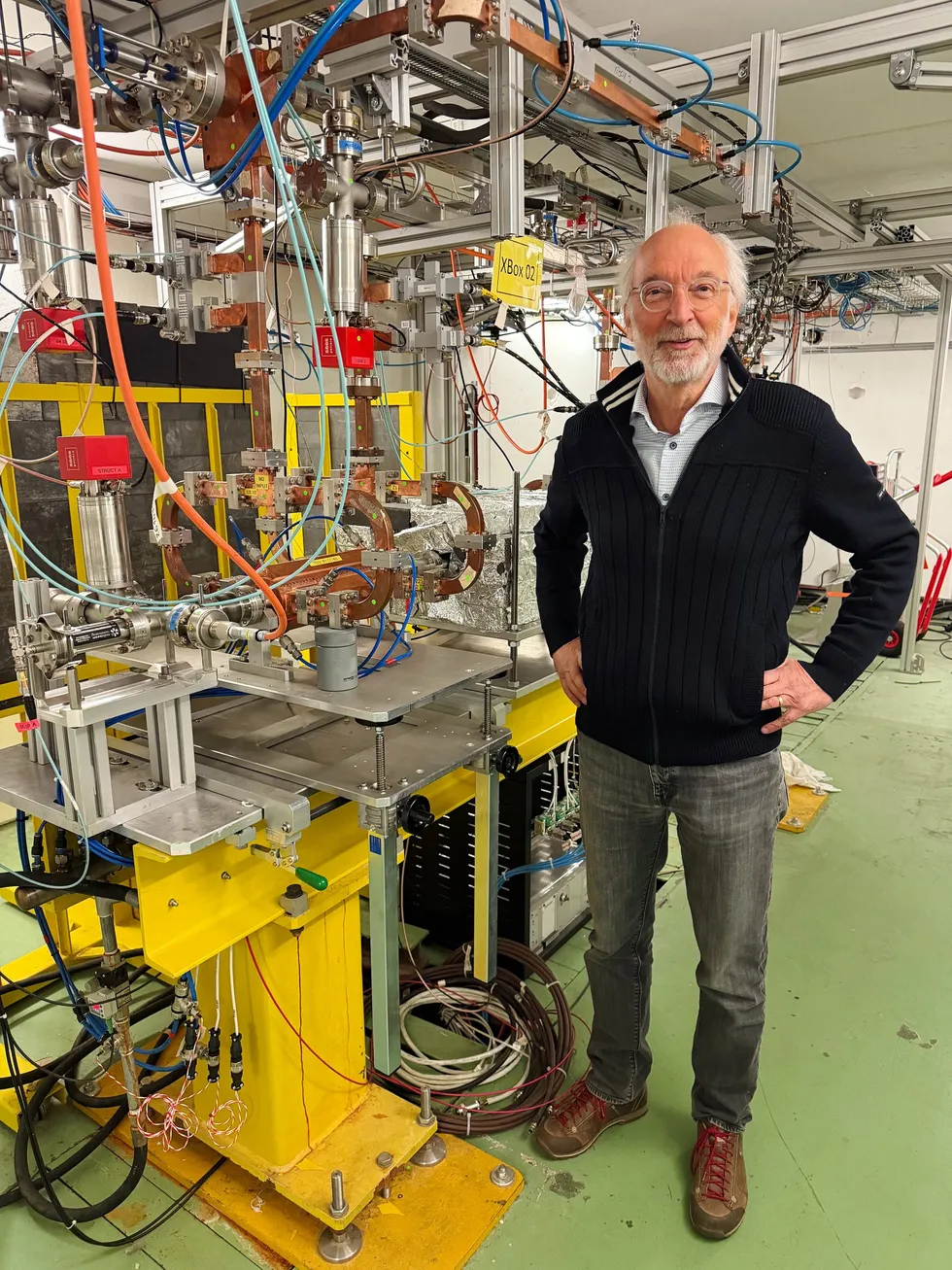
Photo of a white-haired man standing next to floor-to-ceiling experimental equipment with many tubes and wires. CERN researcher Walter Wuensch says the particle physics lab’s work on FLASH radiotherapy is “generating a lot of excitement.”CERN

Radiation therapy has been a cornerstone of cancer treatment since shortly after Wilhelm Conrad Röntgen discovered X-rays in 1895. Today, more than half of all cancer patients receive it as part of their care, typically in relatively low doses of X-rays delivered over dozens of sessions. Although this approach often kills the tumor, it also wreaks havoc on nearby healthy tissue. Even with modern precision targeting, the potential for collateral damage limits how much radiation doctors can safely deliver.

FLASH radiotherapy flips the conventional approach on its head, delivering a single dose of ultrahigh-power radiation in a burst that typically lasts less than one-tenth of a second. In study after study, this technique causes significantly less injury to normal tissue than conventional radiation does, without compromising its antitumor effect.

Advertisement

At CERN, which I visited last July, the approach is being tested and refined on accelerators that were never intended for medicine. If ongoing experiments here and around the world continue to bear out results, FLASH could transform radiotherapy—delivering stronger treatments, fewer side effects, and broader access to lifesaving care.

“It’s generating a lot of excitement,” says Wuensch, a researcher at CERN’s Linear Electron Accelerator for Research (CLEAR) facility. “We accelerator people are thinking, Oh, wow, here’s an application of our technology that has a societal impact which is more immediate than most high-energy physics.”

The Unlikely Birth of FLASH Therapy

The breakthrough that led to FLASH emerged from a line of experiments that began in the 1990s at Institut Curie in Orsay, near Paris. Researcher Vincent Favaudon was using a low-energy electron accelerator to study radiation chemistry. Targeting the accelerator at mouse lungs, Favaudon expected the radiation to produce scar tissue, or fibrosis. But when he exposed the lungs to ultrafast blasts of radiation, at doses a thousand times as high as what’s used in conventional radiation therapy, the expected fibrosis never appeared.

Puzzled, Favaudon turned to Marie-Catherine Vozenin, a radiation biologist at Curie who specialized in radiation-induced fibrosis. “When I looked at the slides, there was indeed no fibrosis, which was very, very surprising for this type of dose,” recalls Vozenin, who now works at Geneva University Hospitals, in Switzerland.

Advertisement

The pair expanded the experiments to include cancerous tumors. The results upended a long-held trade-off of radiotherapy: the idea that you can’t destroy a tumor without also damaging the host. “This differential effect is really what we want in radiation oncology, not damaging normal tissue but killing the tumors,” Vozenin says.

They repeated the protocol across different types of tissue and tumors. By 2014, they had gathered enough evidence to publish their findings in Science Translational Medicine. Their experiments confirmed that delivering an ultrahigh dose of 10 gray or more in less than a tenth of a second could eradicate tumors in mice while leaving surrounding healthy tissue virtually unharmed. For comparison, a typical chest X-ray delivers about 0.1 milligray, while a session of conventional radiation therapy might deliver a total of about 2 gray per day. (The authors called the effect “FLASH” because of the quick, high doses involved, but it’s not an acronym.)

Three sets of images comparing highly magnified tissue samples.

Although many cancer experts were skeptical about the FLASH effect on healthy tissue when it was first announced in 2014, numerous studies have since confirmed and expanded on those results. In a 2020 paper, a lung tissue sample taken 4 months after being exposed to conventional radiotherapy [center] shows many more dark spots indicating scarring than a sample exposed to FLASH [right]. The nonirradiated sample [left] is the control.

Advertisement

Vincent Favaudon/American Association for Cancer Research

Many cancer experts were skeptical. The FLASH effect seemed almost too good to be true. “It didn’t get a lot of traction at first,” recalls Billy Loo, a Stanford radiation oncologist specializing in lung cancer. “They described a phenomenon that ran counter to decades of established radiobiology dogma.”

But in the years since then, researchers have observed the effect across a wide range of tumor types and animals—beyond mice to zebra fish, fruit flies, and even a few human subjects, with the same protective effect in the brain, lungs, skin, muscle, heart, and bone.

Why this happens remains a mystery. “We have investigated a lot of hypotheses, and all of them have been wrong,” says Vozenin. Currently, the most plausible theory emerging from her team’s research points to metabolism: Healthy and cancerous cells may process reactive oxygen species—unstable oxygen-containing molecules generated during radiation—in very different ways.

Advertisement

Adapting Accelerators for FLASH

At the time of the first FLASH publication, Loo and his team at Stanford were also focused on dramatically speeding up radiation delivery. But Loo wasn’t chasing a radiobiological breakthrough. He was trying to solve a different problem: motion.

“The tumors that we treat are always moving targets,” he says. “That’s particularly true in the lung, where because of breathing motion, the tumors are constantly moving.”

To bring FLASH therapy out of the lab and into clinical use, researchers like Vozenin and Loo needed machines capable of delivering fast, high doses with pinpoint precision deep inside the body. Most early studies relied on low-energy electron beams like Favaudon’s 4.5-megaelectron-volt Kinetron—sufficient for surface tumors, but unable to reach more than a few centimeters into a human body. Treating deep-seated cancers in the lung, brain, or abdomen would require far higher particle energies.

Photo of floor-to-ceiling electromagnetic hardware with many tubes and pipes, some of which is copper-colored.

At CERN, researchers working on FLASH are developing this hardware to boost electrons to ultrahigh power within a short distance.

Advertisement

CERN

They also needed an alternative to conventional X-rays. In a clinical linac, X-ray photons are produced by dumping high-energy electrons into a bremsstrahlung target, which is made of a material with a high atomic number, like tungsten or copper. The target slows the electrons, converting their kinetic energy into X-ray photons. It’s an inherently inefficient process that wastes most of the beam power as heat and makes it extremely difficult to reach the ultrahigh dose rates required for FLASH. High-energy electrons, by contrast, can be switched on and off within milliseconds. And because they have a charge and can be steered by magnets, electrons can be precisely guided to reach tumors deep within the body. (Researchers are also investigating protons and carbon ions; see the sidebar, “What’s the Best Particle for FLASH Therapy?”)

Loo turned to the SLAC National Accelerator Laboratory in Menlo Park, Calif., where physicist Sami Gamal-Eldin Tantawi was redefining how electromagnetic waves move through linear accelerators. Tantawi’s findings allowed scientists to precisely control how energy is delivered to particles—paving the way for compact, efficient, and finely tunable machines. It was exactly the kind of technology FLASH therapy would need to target tumors deep inside the body.

Advertisement

Meanwhile, Vozenin and other European researchers turned to CERN, best known for its 27-kilometer Large Hadron Collider (LHC) and the 2012 discovery of the Higgs boson, the “God particle” that gives other particles their mass.

CERN is also home to a range of smaller linear accelerators—including CLEAR, where Wuensch and his team are adapting high-energy physics tools for medicine.

Unlike the LHC, which loops particles around a massive ring to build up energy before smashing them together, linear accelerators like CLEAR send particles along a straight, one-time path. That setup allows for greater precision and compactness, making it ideal for applications like FLASH.

Advertisement

At the heart of the CLEAR facility, Wuensch points out the 200-MeV linear accelerator with its 20-meter beamline. This is “a playground of creativity,” he says, for the physicists and engineers who arrive from all over the world to run experiments.

The process begins when a laser pulse hits a photocathode, releasing a burst of electrons that form the initial beam. These electrons travel through a series of precisely machined copper cavities, where high-frequency microwaves push them forward. The electrons then move through a network of magnets, monitors, and focusing elements that shape and steer them toward the experimental target with submillimeter precision.

Instead of a continuous stream, the electron beam is divided into nanosecond-long bunches—billions of electrons riding the radio-frequency field like surfers. Inside the accelerator’s cavities, the field flips polarity 12 billion times per second, so timing is everything: Only electrons that arrive perfectly in phase with the accelerating wave will gain energy. That process repeats through a chain of cavities, each giving the bunches another push, until the beam reaches its final energy of 200 MeV.

Close-up photo of an etched copper disc being held under a microscope by a gloved hand.

Physicist Marçà Boronat inspects one of the high-precision components used to accelerate the electrons for FLASH radiotherapy.

Advertisement

CERN

Much of this architecture draws directly from the Compact Linear Collider study, a decades-long CERN project aimed at building a next-generation collider. The proposed CLIC machine would stretch 11 kilometers and collide electrons and positrons at 380 gigaelectron volts. To do that in a linear configuration—without the multiple passes around a ring like the LHC—CERN engineers have had to push for extremely high acceleration gradients to boost the electrons to high energies over relatively short distances—up to 100 megavolts per meter.

Wuensch leads me to a large experimental hall housing prototype structures from the CLIC effort, and points out the microwave devices that now help drive FLASH research. Though the future of CLIC as a collider remains uncertain, its infrastructure is already yielding dividends: smaller, high-gradient accelerators that may one day be as suited for curing cancer as they are for smashing particles.

Advertisement

The power behind the high gradients comes from CERN’s Xboxes, the X-band RF systems that dominate the experimental hall. Each Xbox houses a klystron, modulator, pulse compressor, and waveguide network to generate and shape the microwave pulses. The pulse compressors store energy in resonant cavities and then release it in a microsecond burst, producing peaks of up to 200 megawatts; if it were continuous, that’s enough to power at least 40,000 homes. The Xboxes let researchers fine-tune the power, timing, and pulse shape.

According to Wuensch, many of the recent accelerator developments were enabled by advances in computer simulation and high-precision three-dimensional machining. These tools allow the team to iterate quickly, designing new accelerator components and improving beam control with each generation.

Still, real-world challenges remain. The power demands are formidable, as are the space requirements; for all the talk of its “compact” design, the original CLIC was meant to span kilometers. Obviously, a hospital needs something that’s actually compact.

Advertisement

“A big challenge of the project,” says Wuensch, “is to transform this kind of technology and these kinds of components into something that you can imagine installing in a hospital, and it will run every day reliably.”

To that end, CERN researchers have teamed up with the Lausanne University Hospital (known by its French acronym, CHUV) and the French medical technology company Theryq to design a hospital facility capable of treating large and deep-seated tumors with the very short time scales needed for FLASH and scaled down to fit in a clinical setting.

Theryq’s Approach to FLASH

Theryq’s research center and factory are located in southern France, near the base of Montagne Sainte-Victoire, a jagged spine of limestone that Paul Cézanne painted dozens of times, capturing its shifting light and form.

“The solution that we are trying to develop here is something which is extremely versatile,” says Ludovic Le Meunier, CEO of the expanding company. “The ultimate goal is to be able to treat any solid tumor anywhere in the body, which is about 90 percent of the cancer these days.”

Advertisement

Futuristic scientific equipment setup, featuring streamlined machinery and intricate components. Theryq’s FLASHDEEP system, under development with CERN and the company’s clinical partners, has a 13.5-meter-long, 140-MeV linear accelerator. That’s strong enough to treat tumors at depths of up to about 20 centimeters in the body. The patient will remain in a supported standing position during the split-second irradiation.THERYQ

Theryq’s push to bring FLASH radiotherapy from the lab to clinic has followed a three-pronged rollout, with each device engineered for a specific depth and clinical use. The first machine, FLASHKNiFE, was unveiled in 2020. Designed for superficial tumors and intraoperative use, the system delivers electron beams at 6 or 9 MeV. A prototype installed that same year at CHUV is conducting a phase-two trial for patients with localized skin cancer.

More recently, Theryq launched FLASHLAB, a compact, 7-MeV platform for radiobiology research.

The company’s most ambitious system, FLASHDEEP, is still under development. The 13.5-meter-long electron source will deliver very high-energy electrons of as much as 140 MeV up to 20 centimeters inside the body in less than 100 milliseconds. An integrated CT scanner, built into a patient-positioning system developed by Leo Cancer Care, captures images that stream directly into the treatment-planning software, enabling precise calculation of the radiation dose. “Before we actually trigger the beam or the treatment, we make stereo images to verify at the very last second that the tumor is exactly where it should be,” says Theryq technical manager Philippe Liger.

FLASH Therapy Moves to Animal Tests

While CERN’s CLEAR accelerator has been instrumental in characterizing FLASH parameters, researchers seeking to study FLASH in living organisms must look elsewhere: CERN doesn’t allow animal experiments on-site. That’s one reason why a growing number of scientists are turning to PITZ, the Photo Injector Test Facility in Zeuthen, a leafy lakeside suburb of Berlin.

Advertisement

PITZ is part of Germany’s national accelerator lab and is responsible for developing the electron source for the European X-ray Free-Electron Laser. Now PITZ is emerging as a hub for FLASH research, with an unusually tunable accelerator and a dedicated biomedical lab to ensure controlled conditions for preclinical studies.

A photo showing a row of experimental electronic equipment on racks

A photo of a closeup of a gloved hand holding a sample of a purple liquid above a piece of equipment. At Germany’s Photo Injector Test Facility in Zeuthen (PITZ), the electron-beam accelerator [top] is used to irradiate biological targets in early-stage animal tests of FLASH radiotherapy [bottom].Top: Frieder Mueller; Bottom: MWFK

“The biggest advantage of our facility is that we can do a very stepwise, very defined and systematic study of dose rates,” says Anna Grebinyk, a biochemist who heads the new biomedical lab, “and systematically optimize the FLASH effect to see where it gets the best properties.”

The experiments begin with zebra-fish embryos, prized for early-stage studies because they’re transparent and develop rapidly. After the embryos, researchers test the most promising parameters in mice. To do that, the PITZ team uses a small-animal radiation research platform, complete with CT imaging and a robotic positioning system adapted from CERN’s CLEAR facility.

What sets PITZ apart is the flexibility of its beamline. The 30-meter accelerator system steers electrons with micrometer precision, producing electron bunches with exceptional brightness and emittance—a metric of beam quality. “We can dial in any distribution of bunches we want,” says Frank Stephan, group leader at PITZ. “That gives us tremendous control over time structure.”

Advertisement

Timing matters. At PITZ, the laser-struck photocathode generates electron bunches that are accelerated immediately, at up to 60 million volts per meter. A fast electromagnetic kicker system acts as a high-speed gatekeeper, selectively deflecting individual electron bunches from a high-repetition beam and steering them according to researchers’ needs. This precise, bunch-by-bunch control is essential for fine-tuning beam properties for FLASH experiments and other radiation therapy studies.

“The idea is to make the complete treatment within one millisecond,” says Stephan. “But of course, you have to [trust] that within this millisecond, everything works fine. There is not a chance to stop [during] this millisecond. It has to work.”

Regulating the dose remains one of the biggest technical hurdles in FLASH. The ionization chambers used in standard radiotherapy can’t respond accurately when dose rates spike hundreds of times higher in a matter of microseconds. So researchers are developing new detector systems to precisely measure these bursts and keep pace with the extreme speed of FLASH delivery.

FLASH as a Research Tool

Beyond its therapeutic potential, FLASH may also open new windows to illuminate cancer biology. “What is really, really superinteresting, in my opinion,” says Vozenin, “is that we can use FLASH as a tool to understand the difference between normal tissue and tumors. There must be something we’re not aware of that really distinguishes the two—and FLASH can help us find it.” Identifying those differences, she says, could lead to entirely new interventions, not just with radiation, but also with drugs.

Advertisement

Vozenin’s team is currently testing a hypothesis involving long-lived proteins present in healthy tissue but absent in tumors. If those proteins prove to be key, she says, “we’re going to find a way to manipulate them—and perhaps reverse the phenomenon, even [turn] a tumor back into a normal tissue.”

Proponents of FLASH believe it could help close the cancer care gap worldwide; in low-income countries, only about 10 percent of patients have access to radiotherapy, and in middle-income countries, only about 60 percent of patients do, according to the International Atomic Energy Agency. Because FLASH treatment can often be delivered in a single brief session, it could spare patients from traveling long distances for weeks of treatment and allow clinics to treat many more people.

High-income countries stand to benefit as well. Fewer sessions mean lower costs, less strain on radiotherapy facilities, and fewer side effects and disruptions for patients.

The big question now is, How long will it take? Researchers I spoke with estimate that FLASH could become a routine clinical option in about 10 years—after the completion of remaining preclinical studies and multiphase human trials, and as machines become more compact, affordable, and efficient. Much of the momentum comes from a growing field of startups competing to build devices, but the broader scientific community remains remarkably open and collaborative.

Advertisement

“Everyone has a relative who knows about cancer because of their own experience,” says Stephan. “My mother died of it. In the end, we want to do something good for mankind. That’s why people work together.”

This article appears in the March 2026 print issue.

From Your Site Articles

Related Articles Around the Web

Advertisement

Source link

Continue Reading
Click to comment

You must be logged in to post a comment Login

Leave a Reply

Tech

Self-healing CMOS Imager To Withstand Jupiter’s Radiation Belt

Published

on

Ionizing radiation damage from electrons, protons and gamma rays will over time damage a CMOS circuit, through e.g. degrading the oxide layer and damaging the lattice structure. For a space-based camera that’s inside a probe orbiting a planet like Jupiter it’s thus a bit of a bummer if this will massively shorted useful observation time before the sensor has been fully degraded. A potential workaround here is by using thermal energy to anneal the damaged part of a CMOS imager.

The first step is to detect damaged pixels by performing a read-out while the sensor is not exposed to light. If a pixel still carries significant current it’s marked as damaged and a high current is passed through it to significantly raise its temperature. For the digital logic part of the circuit a similar approach is used, where the detection of logic errors is cause for a high voltage pulse that should also result in annealing of any damage.

During testing the chip was exposed to the same level of radiation to what it would experience during thirty days in orbit around Jupiter, which rendered the sensor basically unusable with a massive increase in leakage current. After four rounds of annealing the image was almost restored to full health, showing that it is a viable approach.

Advertisement

Naturally, this self-healing method is only intended as another line of defense against ionizing radiation, with radiation shielding and radiation-resistant semiconductor technologies serving as the primary defenses.

Source link

Advertisement
Continue Reading

Tech

AMD's Ryzen 9 9950X3D2 arrives as Intel scraps Core Ultra 9 290K Plus

Published

on


The Ryzen 9 9950X3D2 doubles down on AMD’s V-Cache formula by equipping each of its two CCDs with stacked cache memory. The design results in a massive 208MB of total cache, a configuration that AMD claims can yield 5% to 10% faster performance in select rendering and content creation workloads…
Read Entire Article
Source link

Continue Reading

Tech

Lindy West’s new memoir Adult Braces and its polyamory controversy, explained.

Published

on

You might remember feminist writer Lindy West from her days on X (né Twitter) yelling at sexist, anti-fat trolls. Or from her book Shrill. Now, West is back with Adult Braces, a memoir detailing her journey, a literal road trip, to accepting her husband’s request to open up their marriage. Except it wasn’t really a request, as West tells it. And this time, people across social media had very strong opinions about it.

Slate senior writer Scaachi Koul joined Today, Explained co-host Noel King to talk through the internet’s reaction to West’s new book, and all that came after.

Below is an excerpt of Koul’s conversation with Today, Explained, edited for length and clarity. There’s much more in the full episode, so listen to Today, Explained wherever you get podcasts, including Apple Podcasts, Pandora, and Spotify.

Tell me about Adult Braces.

Advertisement

It’s a very digestible book. Adult Braces is Lindy’s memoir. This is her fourth book. She’s written a lot of political polemics, social polemics, a lot of personal writing, but this is some of her most personal. It’s a memoir about her taking a cross-country road trip, but also about her reformatting her marriage and turning towards polyamory with her husband.

Why do you think [the polyamory] has got people so upset here?

I think there’s a few trains of controversy here, and some is legitimate and some is really not. So the illegitimate complaints are kind of about this narrative having to do often with Lindy’s weight. She’s fat. She writes a lot about being fat. Or some people are saying that it has a lot to do with gender. Her partner, Aham, who is her husband — Aham goes by he/him and they/them — is nonbinary. So there’s been a lot of needless jabs at this particular facet of the story.

The other side of it is that the story that Lindy tells in this memoir — and all we really have to go on is what she tells us — is pretty brutal to her. Their entry into polyamory is not necessarily honest. A lot of people have been using the word “coercive polyamory.” It’s not a term I’ve ever heard before, but the idea that you kind of tell your partner, “it’s this or nothing.”

Advertisement

She’s clearly a reluctant participant for the first spell of their jaunt into polyamory. They meet someone, he falls in love with her first, and then she also falls in love with this person, Roya. And now the three of them are together.

When we frame this as it was coercive, as she was talked into it. There’s an opposite side of this that says: No, Aham, her husband, was honest with her right from the beginning, and she sort of hoped that it would never come to pass.

It’s clear that he told her, A condition of our marriage will be polyamory.

I think she understood some of the risks. She’s an adult. Lindy does not want to be infantilized. She said that several times — that she had and has autonomy, and these are her decisions. I believe that they are her decisions.

Advertisement

I want to bring the third into this, as the marriage did: Roya. Tell me about where Lindy starts with Roya, where Lindy ends with Roya, and why you think the ending has also made people uncomfortable.

When Roya is brought into the picture, it is true that Aham had more than one other girlfriend in addition to his wife. And so Lindy is a little…I would say she was reticent to kind of learn anything about this person and was sort of like, go do what you must. Aham starts to travel to Portland once a month to spend a weekend with Roya.

He has a big medical issue come up while she’s touring, and Roya is there to help. That starts to change the nature of their dynamic. Lindy talks a lot about — Wow, is this what it’s like to get a wife? Somebody who’s so organized, who takes care of the medical details and listens to me?

Over time, they start to develop a friendship, and then their relationship turns, and it becomes romantic. It fundamentally reshapes the entire nature of their polyamory and of their marriage and of their family. And then after that, Roya, she moves into the woods with them, and that’s where she is now.

Advertisement

You went out to the place where the family lives now. You wrote a profile of Lindy West. When you were there, did you push her at all on the question of coercion?

She preempts that question. I think it’s something that people have already said to her. She says that that’s just not true, and I kind of understand what she’s saying, which is, How can I prove it to you other than living in this life?

But if you try to write anything to convince other people, especially when it comes to memoir, it will feel dissatisfying. And I know that intimately. There’s only so much I can do. What I can offer is a perspective and a version of events. But as soon as I cross a threshold into feeling like I’m evangelizing for something, if you don’t believe me about my own experience, then it doesn’t mean anything.

I think people look at Lindy as a one-way mirror in a lot of ways. They see themselves in her. And when she makes decisions — when anybody in that position, [whether] a celebrity, influencer, writer, [or] creative, makes decisions that their audience doesn’t like, [that audience] takes it really personally.

Advertisement

Lindy is someone who I think a lot of people, especially her fan base, have viewed as bombastic and confident and bawdy and fun. And [then] compare that with the version that we read in Adult Braces — who is anxious and insecure, and being harmed by this person in her life.

As the audience, your proxy is her. You feel defensive of her.

What do you think about this argument that Lindy West’s memoir about coming to polyamory is like the death of millennial feminism?

We can have feelings about anybody’s relationship as it is displayed to us. We are entitled to that, especially when we’re being offered a commodity like a book which you purchase. But one person’s personal story, discomfort, misery, contentment, fulfillment, or lack of fulfillment does not speak to the end of a social movement that was knit together over several decades, and has more to do with Lindy West’s corner of the internet.

Advertisement

Social movements flex. They change. I don’t think it’s the death of anything. It is just where that version of it maybe ended up.

Source link

Continue Reading

Tech

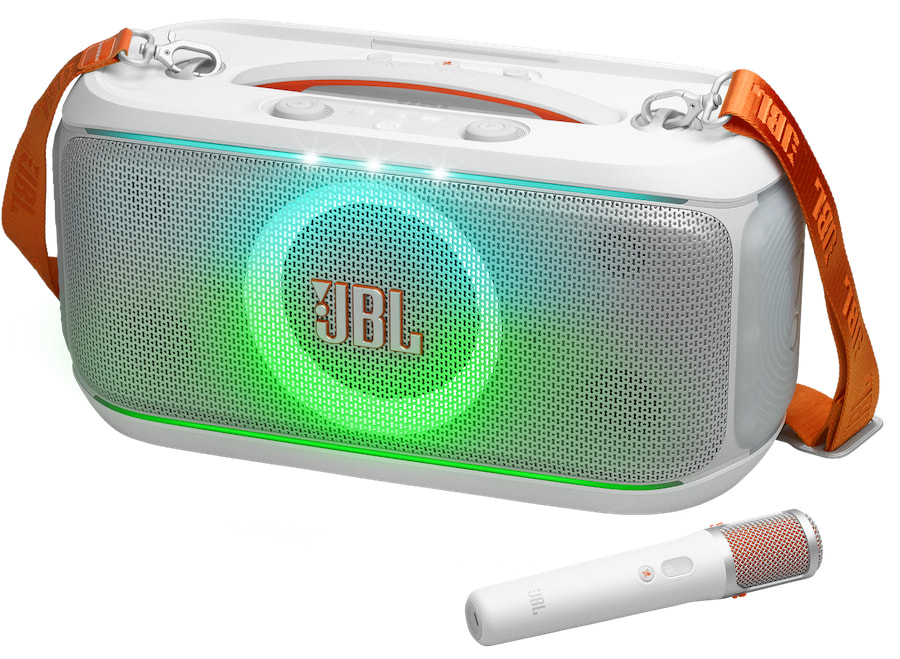
JBL PartyBox On-The-Go 2 Plus Launches as Portable Party Speaker with Wireless Mic, Bigger Sound, and All-Day Battery

Published

on

JBL is doubling down on portable party speakers with a clear focus on karaoke, expanding its PartyBox lineup with the new PartyBox On-The-Go 2 Plus alongside the EasySing microphone ecosystem. At the center of the launch is AI-powered EasySing technology, which uses on-device processing to separate vocals from music in real time—allowing users to reduce or remove the original singer without relying on cloud services or pre-processed tracks.

The system goes beyond simple vocal stripping. JBL integrates pitch support, Voice Boost for high-frequency clarity, and built-in effects like reverb, echo, and noise suppression to create a more controlled and customizable performance. Paired with the new EasySing microphones, the platform is designed to turn any song into an instant karaoke track while keeping latency low and setup straightforward—no apps, subscriptions, or external processing required.

As music continues to evolve, so does the way people experience it together,” said Carsten Olesen, President of Consumer Audio at HARMAN. “At JBL, we’re harnessing advanced AI technologies like real-time vocal separation and intelligent vocal enhancement to transform passive listening into shared, interactive moments. By integrating AI directly into our products, we’re creating new ways for people to connect and celebrate.”

JBL PartyBox On-the-Go 2 Plus

jbl-partybox-on-the-go-2-plus-black

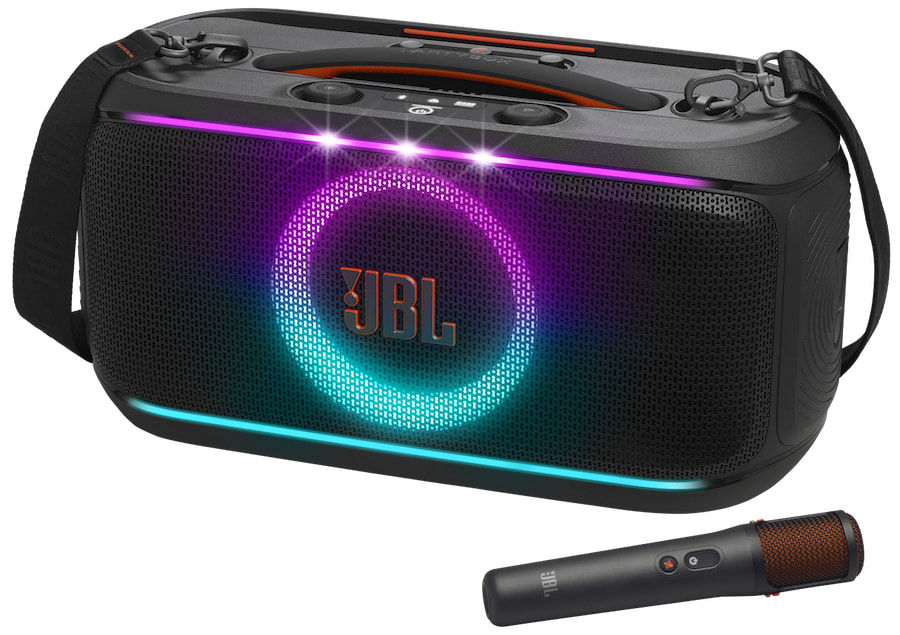
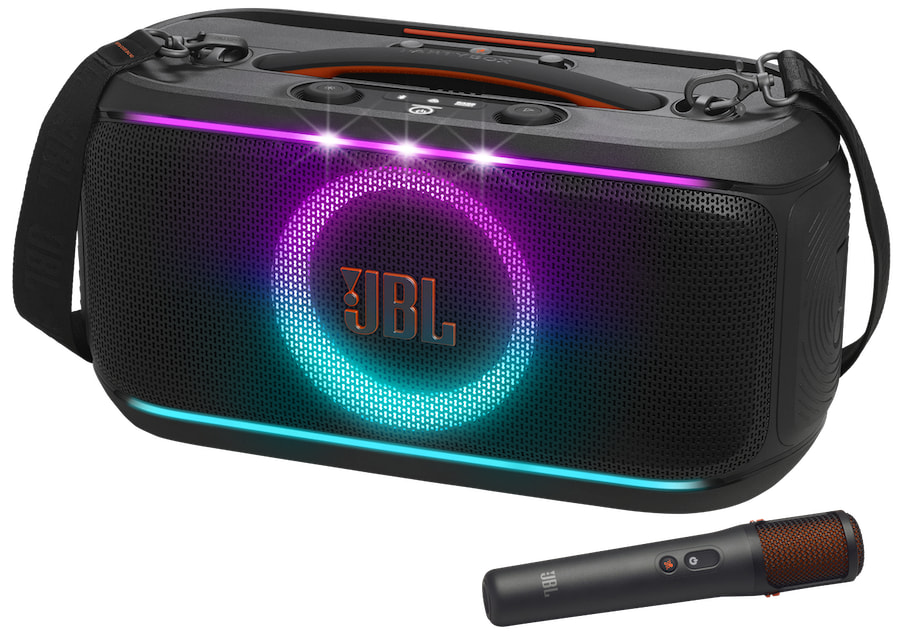
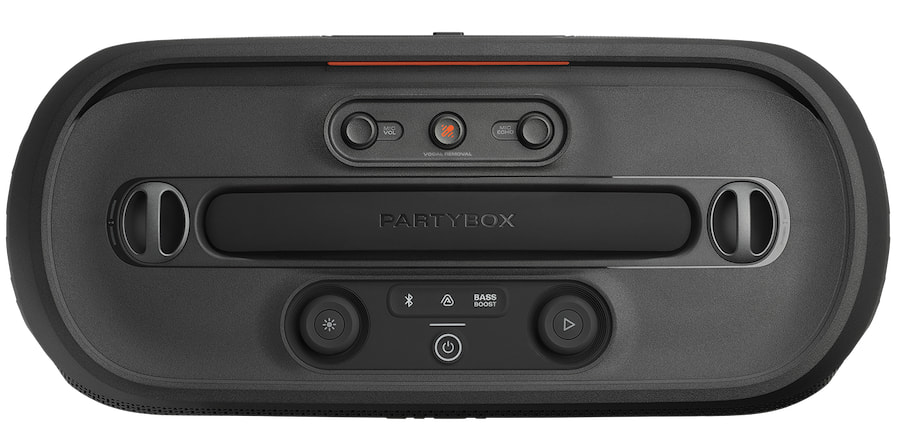
Designed to elevate both parties and karaoke nights, the JBL PartyBox On-The-Go 2 Plus combines JBL’s signature sound and dynamic lightshow with its new EasySing AI technology. Using the JBL One app, users can adjust sound and lighting settings, while the system brings vocals forward in real time to instantly transform any track into a performance-ready experience.

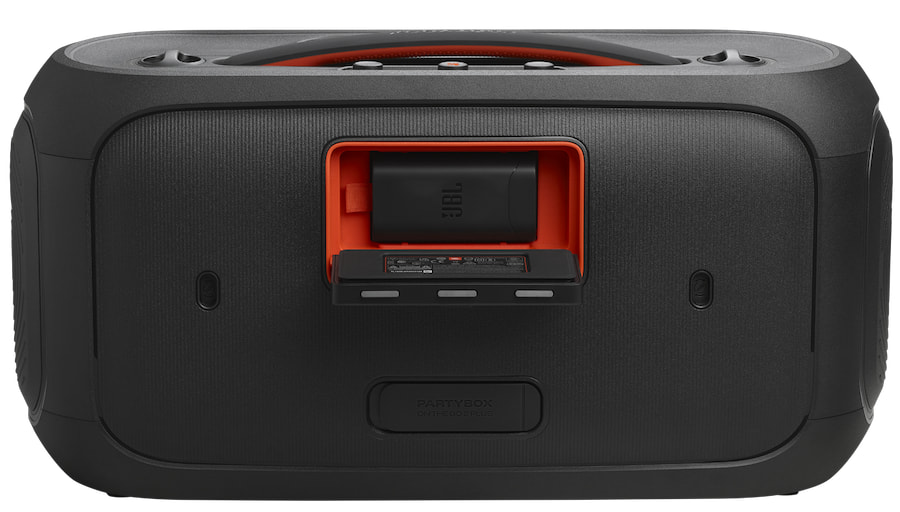
Portability gets a practical upgrade with a redesigned central handle for better weight balance, along with a wider, thicker shoulder strap that makes it easier to carry between locations.

Advertisement

Under the hood, the speaker delivers up to 100 watts of power, driven by dual silk-dome tweeters and a 5.25-inch woofer for solid bass and clear, detailed highs. Battery life is rated at up to 15 hours, and the inclusion of a replaceable battery means it’s built for extended sessions without cutting the party short.

For even more party flexibility, the PartyBox On-The-Go 2 Plus is also Auracast compatible for easy multi-speaker pairing with JBL Auracast-enabled speakers

Comparison

jbl-partybox-compare
JBL Model PartyBox On-The- Go 2 Plus (2026) PartyBox On-The- Go 2 (2026) PartyBox On-The- Go (2020) 
Product Type Party Speaker Party Speaker Party Speaker
Price  $419.95 $419.95 $249.95
Output Power 100 W RMS  100 W RMS  100 W RMS
Speaker Drivers 1 x 5.25-inch (135 mm) woofer

2 x 0.75 inch (20 mm) Dome tweeters  

Advertisement
1 x 5.25-inch (135 mm) woofer

2 x 0.75 inch (20 mm) Dome tweeters  

1 x 5.25in (133mm) woofer 

2 x 1.75in (44mm) tweeters

Advertisement
Frequency Response 40 Hz – 20 kHz (-6 dB) 40 Hz – 20 kHz (-6 dB) 50Hz – 20KHz (-6 dB)
Signal-to-Noise Ratio > 80dB > 80dB > 80dB
Bluetooth/USB Input -9dBFS -9dBFS -9dBFS
USB Playback Formats Supported (Disable for EMEA region) MP3, .WAV, FLAC  MP3, .WAV, FLAC  MP3, .WAV, WMA
USB File Format FAT16, FAT32 FAT16, FAT32 FAT16, FAT32
Bluetooth Version 5.4 5.4 4.2
Bluetooth® Profile  A2DP V1.4, AVRCP V1.6 (SW), TMAP1.0, PBP1.0 A2DP V1.4, AVRCP V1.6 (SW), TMAP1.0, PBP1.0 A2DP 1.3, AVRCP 1.6
Bluetooth Auracast Yes Yes No
Bluetooth® Transmitter Frequency Range 2.4 GHz – 2.4835 GHz 2.4 GHz – 2.4835 GHz 2.4 GHz – 2.48 GHz
Bluetooth® Transmitter Power ≤ 16 dBm (EIRP) ≤ 16 dBm (EIRP) 10dBm (EIRP)
Bluetooth® Transmitter Modulation GFSK, π/4 DQPSK, 8DPSK GFSK, π/4 DQPSK, 8DPSK GFSK, π/4 DQPSK, 8DPSK
2.4G Wireless Transmitter Frequency range 2404 – 2478 MHz 2404 – 2478 MHz Not Indicated
2.4G Wireless Transmitter Power < 10 dBm (EIRP) ≤ 8.5 dBm (EIRP) Not Indicated
2.4G Wireless Modulation GFSK GFSK, π/4 DQPSK, 8DPSK Not Indicated
Aux-In 370 mV RMS (3.5mm connector) 370 mV RMS (3.5mm connector) (3.5mm connector)
Mic-In 20 mV RMS 20 mV RMS Yes – voltage not indicated
Battery  Battery Type: Li-ion 34 Wh (7.2 V / 4722 mAh) 

Battery Charge Time: < 3.5 hours (Speaker off mode) 

Music Play Time: up to 15 hours (varies by volume level and xaudio content)

Fast Charging: 10 minutes provides up to  80 minutes of playtime

Advertisement
Battery Type: Li-ion 34 Wh (7.2 V / 4722 mAh) 

Battery Charge Time: < 3.5 hours (Speaker off mode) 

Music Play Time: up to 15 hours (varies by volume level and xaudio content)

Fast Charging: 10 minutes provides up to  80 minutes of playtime

Advertisement
Battery type: Lithium-ion 18Wh (7.2V @ 2500mAh)

Battery charge time: <3.5hrs 
Music  play time: <6 hrs  

USB Charge Out 11 V / 2 A (Max) (Speaker off mode) USB charge out: 11V / 2A (Max) (Speaker off mode) Not Indicated
Power Input  100 – 240 V ~50/60 Hz 100 – 240 V ~50/60 Hz 100 – 240 V ~50/60 Hz
Power Cable Type AC power cable (type varies by region) AC power cable (type varies by region) AC power cable (type varies by region)
AC Cable Length 2.0m / 6.6 ft 2.0m / 6.6 ft 2.0m / 6.6 ft
IPX Rating IPX4 IPX4 IPX4
Dimensions (WHD) 501 x 258 x 221 mm

19.72 x 10.16 x 8.70 inches

Advertisement
501 x 258 x 221 mm

19.72 x 10.16 x 8.70 inches

489 x 244.5 x 224 mm 

19.3 x 9.6 x 8.8 inches

Advertisement
Weight 6.45 kg / 14.22 lbs 6.36 kg / 14.02 lbs 6.5 kg / 14.3 lbs
Wireless Microphone EASYSING with AI vocal removal included

Frequency response: 50 Hz – 15 kHz (-6 dB) 

Transmitter transmitting power: < 8.5 dBm (EIRP) 

2.4G wireless transmitter frequency range: 2404 – 2478 MHz
 
Distance between transmitter and receiver: ≤ 30 m 

Advertisement

Microphone playtime: up to 10 hours 

Rechargeable battery: 240mAh 3.7V Li-ion battery 

Carrier frequency: 2404~2478MHz 

Receiver Max Output Level: <1VRMS

Advertisement
JBL Standard Mic Included

Frequency Response: 50Hz – 15kHz(-6dB) 

Signal-to-Noise: >59dBA 

Transmitter transmitting power: <8.5dBm (EIRP) 

Advertisement

2.4G wireless transmitter frequency range: 2404 – 2478MHz 

Distance between transmitter and receiver: ≤30m

JBL Standard Mic Included

Frequency response: 65Hz – 15kHz

Advertisement

Signal-to-noise (S/N) ratio: >60dBA

Transmitter transmitting power: <10mW

Microphone battery play time: <10hrs

Distance between transmitter and receiver: >10m

Advertisement
Wireless Microphone Dimensions (WHD): 46.5mm x  225mm x 43mm 

1.83’’ x 8.86’’ x 1.69’’ 

Not Indicated Not Indicated
Wireless Microphone Weight 197g / 0.434lbs Mic Not Indicated Not Indicated
What’s in the Box 1 x JBL PartyBox On-The-Go-2 Plus
 
1 x Quick-start guide 

1 x Safety Instruction and Warranty Card 

Advertisement

1 x wireless microphone (EASYSING)

1 x microphone holder  

AC power cord – quantity and plug type vary by regions

1 x shoulder strap

Advertisement
1 x JBL PartyBox On-The-Go-2  

1 x Quick-start guide 

1 x Safety Instruction and Warranty Card 

1 x wireless microphone 

Advertisement

1 x microphone holder 

AC power cord – quantity and plug type vary by regions

1 x shoulder strap

1 x JBL PartyBox On-The-Go 
Advertisement

1 x Quick-start guide 

1 x Safety Instruction and Warranty Card 

1 x wireless microphone 

1 x microphone holder 

Advertisement

 AC power cord – quantity and plug type vary by regions

JBL EasySing Mics & JBL EasySing Mic Mini

jbl-easysing-mics-package

Pro Tip: Images and full specifications for the JBL EasySing Mic Mini were not available at the time of publication.

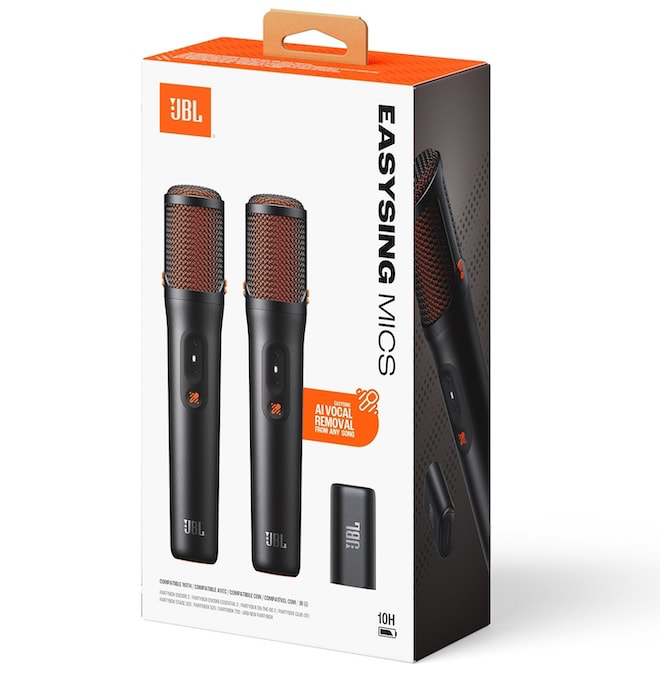
Expanding the EasySing ecosystem, JBL is also introducing the EasySing Mics and the EasySing Mic Mini. These AI-powered microphones integrate real-time vocal separation and enhancement into a compact, performance-ready design.

Built for flexibility, they offer users greater control over vocals with improved clarity and processing, making them a natural extension of the PartyBox experience for karaoke sessions, parties, and casual performances.

Advertisement

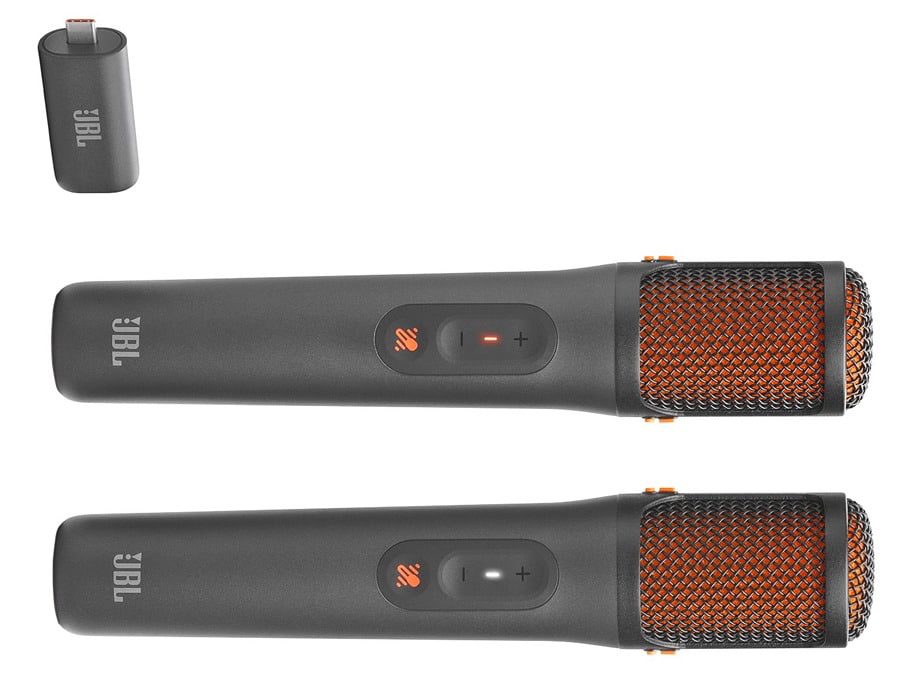
The JBL EasySing Mics provide real-time, AI-powered vocal removal from any track while maintaining clear, balanced audio. Users can adjust the level of original vocals to 25%, 50%, or fully removed, while JBL’s EasySing algorithm enhances live vocals with Voice Boost for improved high-frequency clarity, along with natural reverb, echo, and noise suppression.

Advertisement. Scroll to continue reading.

The JBL EasySing Mic Mini takes a more compact approach, offering a pocket-sized solution for singing and content creation. It includes Voice Boost for high-pitch support and AI-based noise suppression to reduce background interference, making it suitable for a wider range of environments.

Setup is intentionally simple. There are no apps or complicated pairing steps—just plug the included USB-C dongle into a compatible JBL speaker and start using the microphones immediately. It’s a straightforward, wireless approach that keeps the focus on performance rather than setup.

Advertisement

Portability is also a priority. A compact carrying bag makes it easy to store in a pocket or small bag, while the microphone design includes a ring handle for a secure grip and a magnetic clip for hands-free use.

Each set includes two microphones, offering up to 10 hours of battery life on average and a 30-meter wireless range for duets and group performances. A USB-C dongle is also provided for seamless plug-and-play. EQ customization is provided by the JBL One App

JBL EasySing Mics are compatible with JBL PartyBox On-the-Go 2, JBL PartyBox Encore 2, JBL PartyBox Encore Essential 2, JBL PartyBox Club 120, JBL PartyBox Stage 320, JBL PartyBox 520, and JBL PartyBox 720

JBL EasySing Mic Mini is compatible with JBL Go 5, JBL Grip, JBL Flip 7, JBL Charge 6, JBL Xtreme 5, JBL Boombox 4, and all JBL PartyBox models through Aux. (Aux cable not included.)

Advertisement

JBL EasySing Mic Specifications

jbl-easysing-mics-pair
JBL Model  EasySing Mic
Product Type Wireless Microphone
Price (comes as a pair) $199
Dynamic Range 98 dBA @ 1 kHz
Signal -to -Noise  59 dBA
THD  (Total Harmonic Distortion) < 1% @ 94 dB SPL, 100 Hz – 10 kHz
Microphone Head  16 mm ECM
Transmitting Power < 10 dBm
Carrier frequency  2404 – 2478 MHz
Encryption  AES – 128
Frequency / Channel selection  Adaptive channel selection
Frequency response: 50 Hz – 15 kHz 50 Hz – 15 kHz
Battery Specifications  Microphone rechargeable battery: 240 mAh, 3.7 V Li-ion polymer battery 

Microphone battery charge time: < 3.5 hours in off mode

Playtime: Up to 10 hours

Dimensions (WHD) Microphone: 45.5 x 224.5 x 42.7 mm / 1.79” x 8.84” x 1.68”

Dongle: 24 x 45.4 x 15.6 mm / 0.95” x 1.79” x 0.61”

Advertisement
Weight Microphone: 195 g / 0.43 lbs

Dongle 12 g / 0.026 lbs

What’s in the Box 2 x Microphone
1 x AI Dongle 
2 x Microphone Holder 
1 x USB to USB-C Adaptor 
1 x QSG (Quick Start Guide)
1 x Safety Sheet
jbl-partybox-on-the-go-2-plus-top
jbl-partybox-on-the-go-2-plus-back

The Bottom Line 

JBL knows exactly where this category is heading and isn’t standing still. The PartyBox On-The-Go 2 Plus leans hard into AI-driven karaoke with EasySing, combining real-time vocal removal, onboard vocal processing, and Auracast support into a portable speaker that’s built as much for participation as it is for playback. That’s the hook—this isn’t just background music anymore, it’s the main event. The addition of dedicated EasySing microphones pushes JBL further into a more complete ecosystem that feels purpose-built for social listening and performance.

What’s missing? This isn’t an audiophile product and doesn’t pretend to be. You won’t find high-resolution streaming features, advanced codec support, or the kind of system integration that serious hi-fi buyers expect. And if you don’t care about karaoke or AI vocal tricks, the standard PartyBox On-The-Go 2 might make more sense—and cost less—since it sticks to the basics with a traditional wireless mic.

Who is this for? Anyone who wants to turn a backyard, beach day, or living room into a low-effort karaoke setup without messing around with apps, subscriptions, or complicated gear. If your idea of a good night involves a microphone, questionable song choices, and zero patience for setup, JBL just made your life easier.

Advertisement
jbl-partybox-on-the-go-2-plus-white

Price & Availability

  • JBL PartyBox On-The-Go 2 Plus comes with one EasySing Mic and is available for pre-sale for $419.95 on JBL.com with a sale date of April 12, 2026.
  • JBL PartyBox On-The-Go 2 (without EasySing Mic and AI) – $419 at Amazon
  • JBL EasySing Mics$199 at Amazon
  • JBL EasySing Mic Mini will be available for pre-sale beginning April 12, 2026, at JBL.com for $179.95 with an on-sale date of May 10, 2026.

Source link

Continue Reading

Tech

OLED monitor shipments jumped 92% in 2025, and Asus is leading the charge

Published

on


According to TrendForce’s latest data, shipments of OLED monitors saw massive growth in 2025. Manufacturers shipped a total of 2.7 million units, marking a 92% increase compared to the previous year. The consulting firm noted that the impressive momentum has been largely sustained by substantial promotional campaigns from major industry brands.
Read Entire Article
Source link

Continue Reading

Tech

Playful ‘Space Dice’ Kit Shows Off Clever Design

Published

on

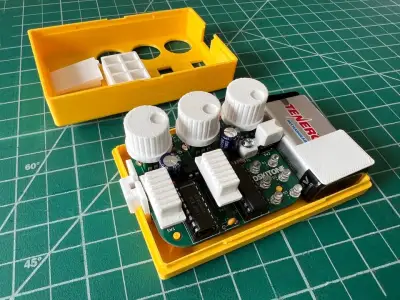
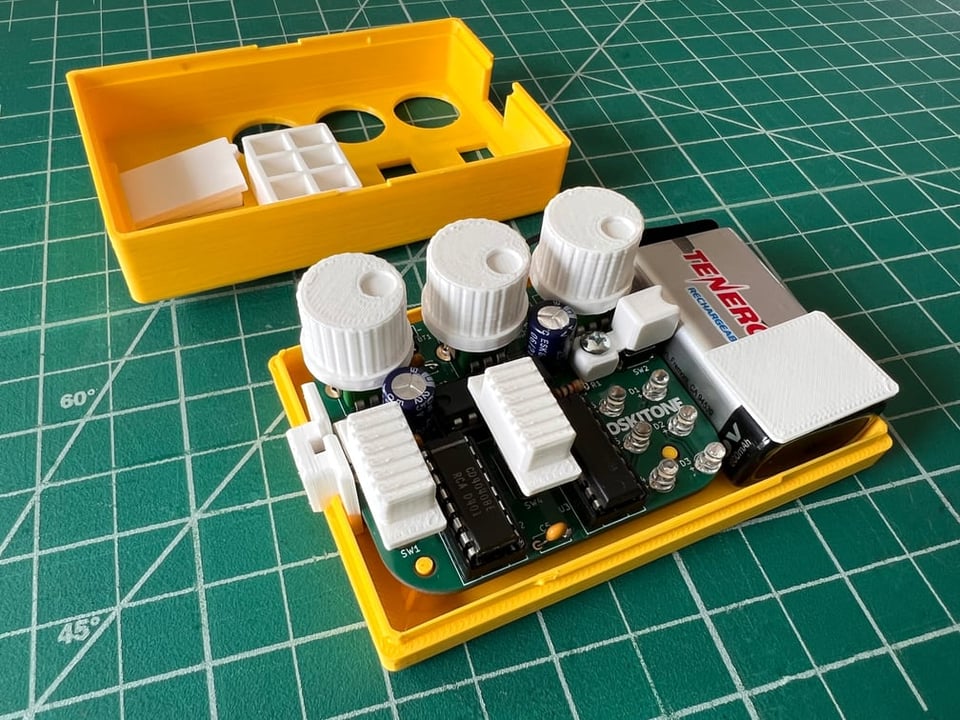
[Tommy] at Oskitone has been making hardware synth kits for years, and his designs are always worth checking out. His newest offering Space Dice is an educational kit that is a combination vintage sci-fi space laser sound generator, and six-sided die roller. What’s more, as a kit it represents an effort to be genuinely educational, rather than just using it as a meaningless marketing term.

There are several elements we find pretty interesting in Space Dice. One is the fact that, like most of [Tommy]’s designs, there isn’t a microcontroller in sight. Synthesizers based mostly on CMOS logic chips have been a mainstay of DIY electronics for years, as have “electronic dice” circuits. This device mashes both together in an accessible way that uses a minimum of components.

There are only three chips inside: a CD4093 quad NAND with Schmitt-trigger inputs used as a relaxation oscillator, a CD4040 binary counter used as a prescaler, and a CD4017 decade counter responsible for spinning a signal around six LEDs while sound is generated, to represent an electronic die. Sound emerges from a speaker on the backside of the PCB, which we’re delighted to see is driven not by a separate amplifier chip, but by unused gates on the CD4093 acting as a simple but effective square wave booster.

In addition, [Tommy] puts effort into minimizing part count and complexity, ensuring that physical assembly does not depend on separate fasteners or adhesives. We also like the way he uses a lever assembly to make the big activation button — mounted squarely above the 9 V battery — interface with a button on the PCB that is physically off to the side. The result is an enclosure that is compact and tidy.

We recommend checking out [Tommy]’s concise writeup on the design details of Space Dice for some great design insights, and take a look at the assembly guide to see for yourself the attention paid to making the process an educational one. We love the concept of presenting an evolving schematic diagram, which changes and fills out as each assembly step is performed and tested.

Advertisement

Watch it in action in a demo video, embedded just below. Space Dice is available for purchase but if you prefer to roll your own, all the design files and documentation are available online from the project’s GitHub repository.

Source link

Advertisement
Continue Reading

Tech

Soviet CDs And CD Players Existed, And They Were Strange

Published

on

Until the fall of the Soviet Union around 1990 you’d be forgiven as a proud Soviet citizen for thinking that the USSR’s technology was on par with the decadent West. After the Iron Curtain lifted it became however quite clear how outdated especially consumer electronics were in the USSR, with technologies like digital audio CDs and their players being one good point of comparison. In a recent video by a railways/retro tech YouTube channel we get a look at one of the earliest Soviet CD players.

A good overall summary of how CD technology slowly developed in the Soviet Union despite limitations can be found in this 2025 article by [Artur Netsvetaev]. Soviet technology was characterized mostly by glossy announcements and promises of ‘imminent’ serial production prior to a slow fading into obscurity. Soviet engineers had come up with the Luch-001 digital audio player in 1979, using glass discs. More prototypes followed, but with no means for mass-production and Soviet bureaucracy getting in the way, these efforts died during the 1980s.

During the 1980s CD players were produced in Soviet Estonia in small batches, using Philips internals to create the Estonia LP-010. Eventually sanctions on the USSR would strangle these efforts, however. Thus it wouldn’t be until 1991 that the Vega PKD-122 would become the first mass-produced CD player, with one example featured in this video.

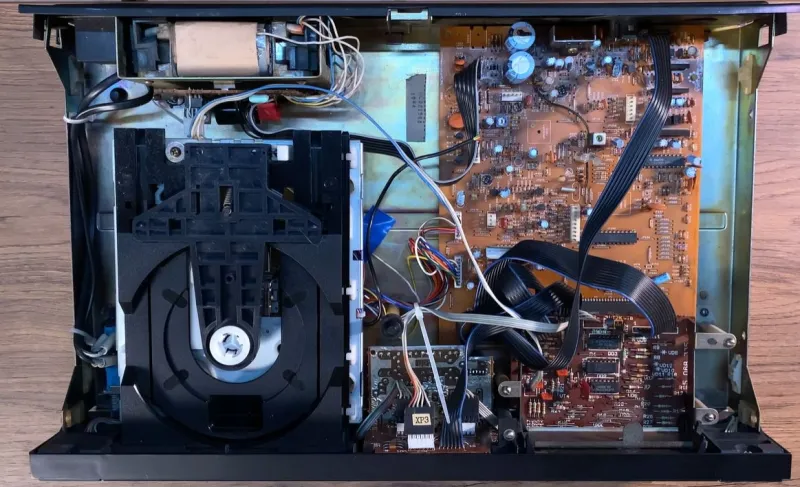
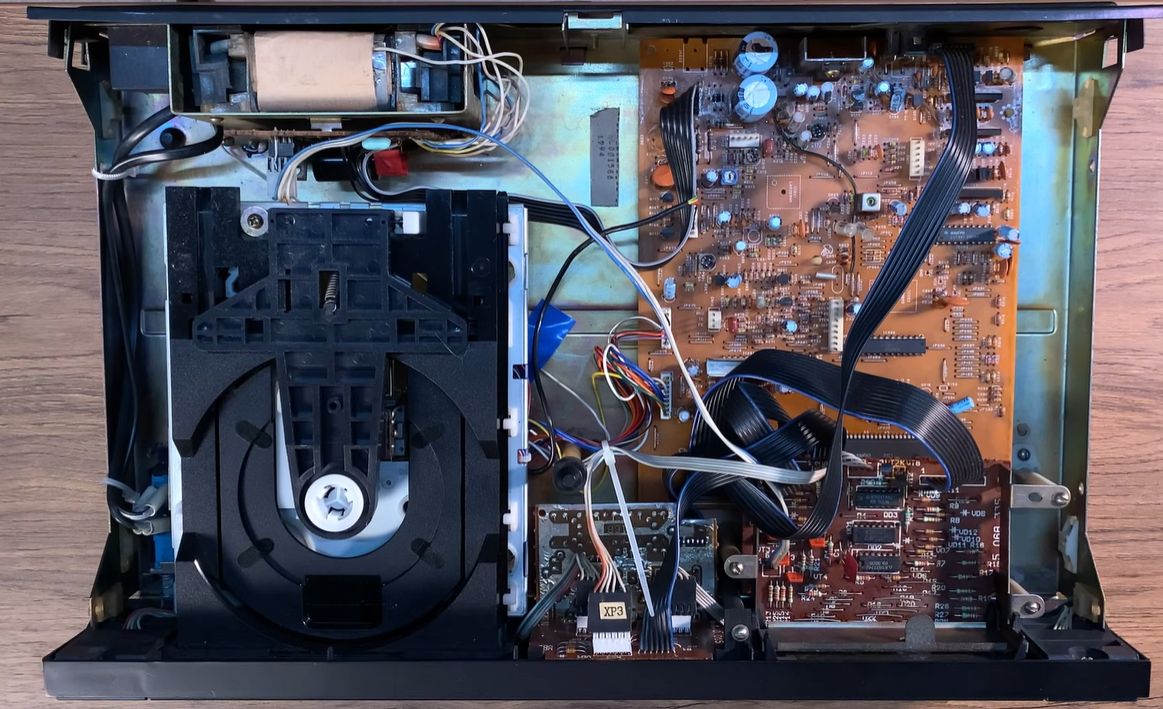
The video helpfully includes a teardown of the player after a rundown of its controls and playback demonstration, so that we can ogle its internals. This system uses mostly localized components, with imported components like the VF display and processors gradually getting replaced over time.  The DAC and optical-mechanical assembly would still be imported from Japan until 1995 when the factory went bankrupt.

Advertisement
Insides of the Vega 122S CD player. (Credit: Railways | Retro Tech | DIY, YouTube)

This difference between the imported and localized part is captured succinctly in the video with the comparison to Berlin in 1999, in that you can clearly see the difference between East and West. The CD mechanism is produced by Sanyo, with a Sanyo DAC IC on the mainboard. The power supply, display and logic board (using Soviet TTL ICs) are all Soviet-produced. A sticker inside the case identifies this unit as having been produced in 1994.

Amusingly, the front buttons are directly coupled into the mainboard without ESD protection, which means that in a Siberian winter with practically zero relative humidity inside you’d often fry the mainboard by merely using these buttons.

After this exploration the video goes on to explain how Soviet CD production began in the 1989, using imported technology and know-how. This factory was set up in Moscow, using outdated West-German CD pressing equipment and makes for a whole fascinating topic by itself.

Finally, the video explores the CD player’s manual and how to program the player, as well as how to obtain your own Soviet CD player. Interestingly, a former employee of the old factory has taken over the warehouse and set up a web shop selling new old stock as well as repaired units and replacement parts.

Advertisement

Source link

Continue Reading

Tech

Meta’s next AI glasses are reportedly designed with prescription lenses in mind

Published

on

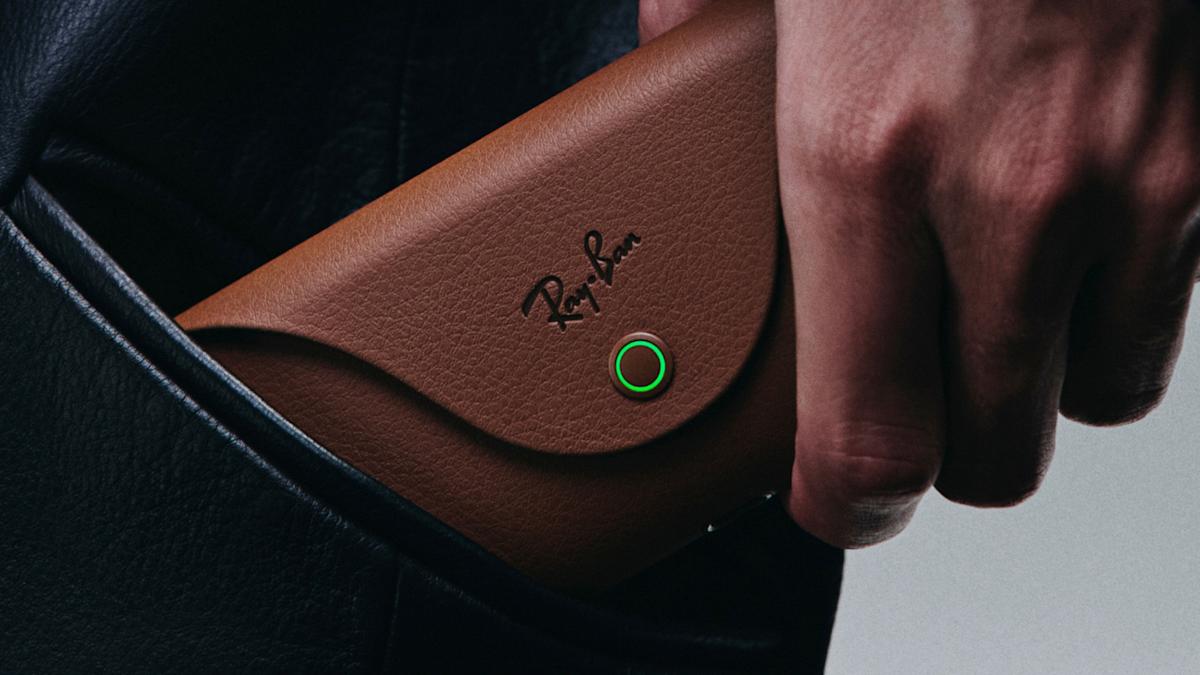
Two new models of Meta Ray-Ban AI glasses are on the way, and they’re going to be catered towards those who use prescription lenses, according to a Bloomberg report. While these are supposed to be announced next week, Bloomberg noted that these won’t be a “new generation” of Meta’s smart glasses.

You can already add prescription lenses to Meta Ray-Ban’s AI glasses, but the upcoming models will come in rectangular and rounded styles and will be sold through traditional prescription eyewear channels. Bloomberg didn’t specify how these new glasses will differ from existing options, but noted that it’s the first time Meta and Ray-Ban are releasing a pair of AI glasses specifically designed for this demographic.

The two models are likely the codenamed products Scriber and Blazer, which were first spotted by The Verge in filings with the Federal Communications Commission. The filings described the devices as production units, meaning Meta could be close to the actual product launch. Looking at the filings, it’s unlikely these upcoming prescription AI glasses will have a display like the Meta Ray-Ban Displays.

Meta CEO Mark Zuckerberg has hinted at AI glasses that are meant for prescription glasses wearers in a previous earnings call. As noted by Bloomberg, Zuckerberg previously said that “billions of people wear glasses or contacts for vision correction,” adding that, “it’s hard to imagine a world in several years where most glasses that people wear aren’t AI glasses.”

Advertisement

Source link

Continue Reading

Tech

Multicolor 5-Axis 3D Printing | Hackaday

Published

on

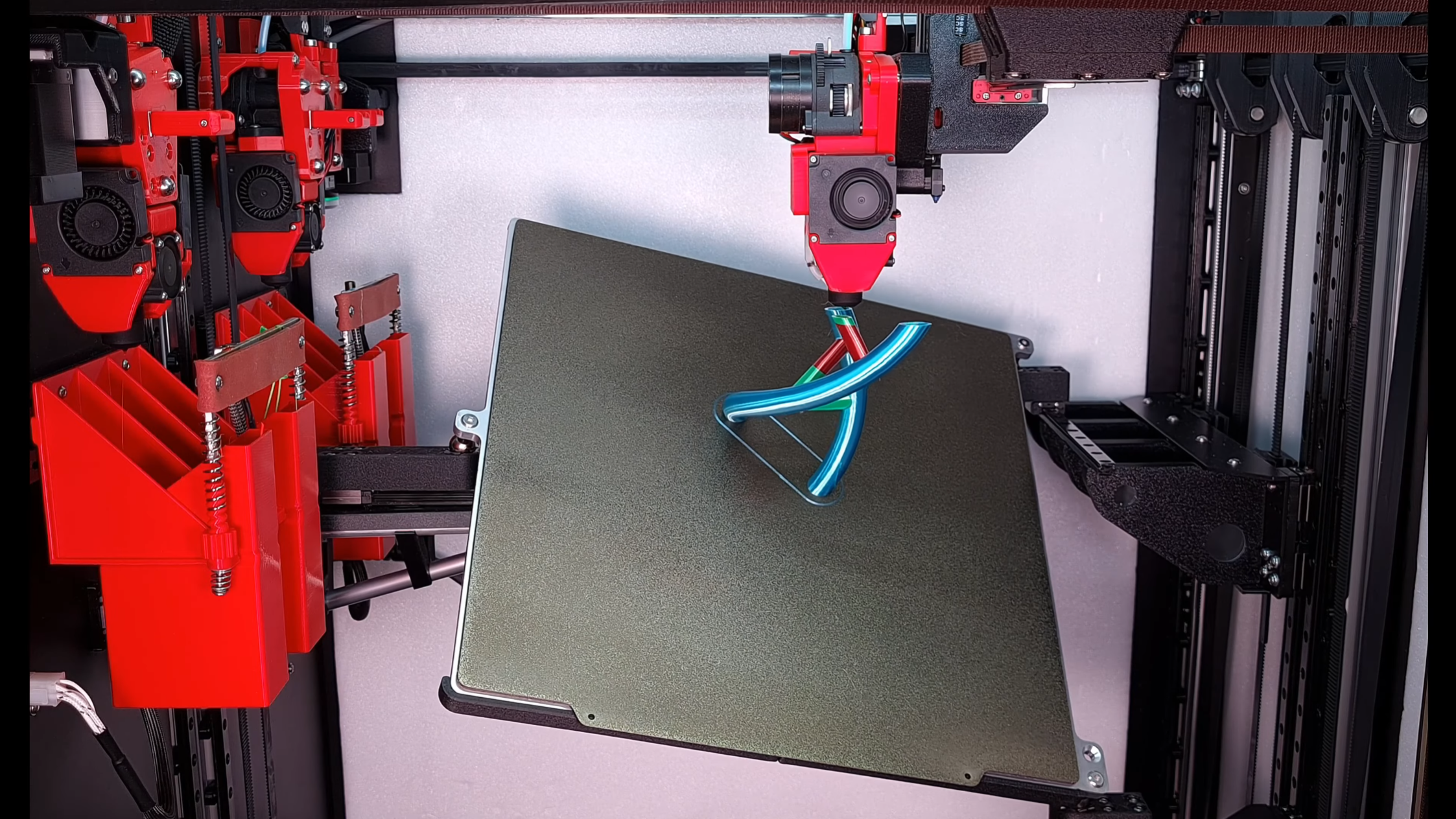
Usually, when we see non-planar 3D printers, they’re rather rudimentary prototypes, intended more as development frames than as workhorse machines. [multipoleguy]’s Archer five-axis printer, on the other hand, breaks this trend with automatic four-hotend toolchanging, a CoreXY motion system, and print results as good-looking as any Voron’s.

The print bed rests on three ball joints, two on one side and one in the center of the opposite side. Each joint can be raised and lowered on an independent rail, which allows the bed to be tilted on two axes. The dimensions of the extruders their motion system limit how much the bed can be angled when the extruder is close to the bed, but it can reach sharp angles further out.

The biggest difficulty with non-planar printing is developing a slicer; [multipoleguy] is working on a slicer (MaxiSlicer), but it’s still in development. It looks as though it’s already working rather well, to the point that [multipoleguy] has been optimizing purge settings for tool changes. It seems that when a toolhead is docked, the temperature inside the melt chamber rises above the normal temperature in use, which causes stringing. To compensate for this, the firmware runs a more extensive purge when a hotend’s been sitting for a longer time. The results for themselves: a full three-color double helix, involving 830 tool changes, could be printed with as little as six grams of purge waste.

As three-axis 3D printers become consumer products, hackers have kept looking for further improvements to make, which perhaps explains the number of non-planar printing projects appearing recently, including a few five-axis machines. Alternatively, some have experimented with non-planar print ironing.

Advertisement

Source link

Advertisement
Continue Reading

Tech

BGIS Grand Finals 2026 Standings After Day 2

Published

on

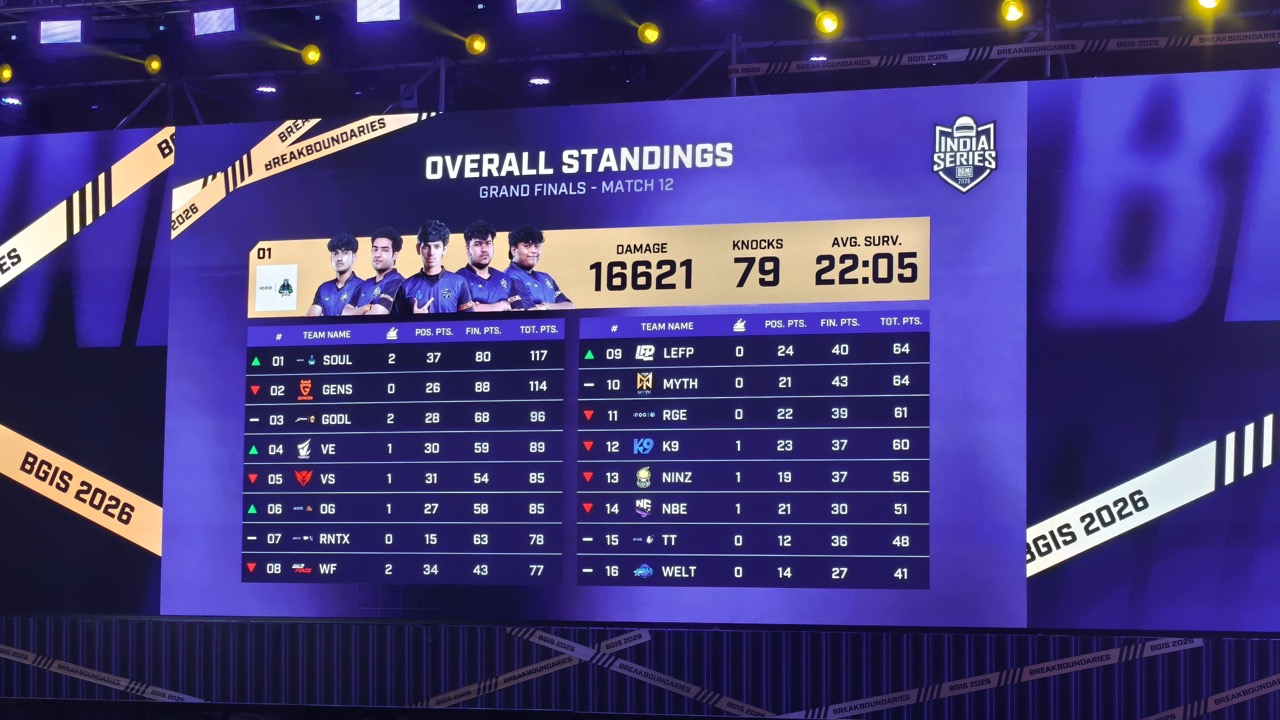
We said day two of the BGIS Grand Finals would be the day of comebacks. While we did see some amazing games from the likes of K9 and NINZ, nobody could challenge SOUL, who were undefeated from their top position. Several teams occupied the top three throughout the day, but ultimately, it was Soul, Genesis, and GodLike. The losers of today included the likes of Team Tamilas and WELT, who couldn’t get the hang of their game and strategy. Here’s what the standings look like after day two of BGIS Grand Finals.

BGIS 2026 Grand Finals Standings After Day 2

Team Name Wins Pos. Pts Fin. Pts Tot. Pts
SOUL 2 37 80 117
GENS 0 26 88 114
GODL 2 28 68 96
VE 1 30 59 89
VS 1 31 54 85
OG 1 27 58 85
RNTX 0 15 63 78
WF 2 34 43 77
LEFP 0 24 40 64
MYTH 0 21 43 64
RGE 0 22 39 61
K9 1 23 37 60
NINZ 1 19 37 56
NBE 1 21 30 51
TT 0 12 36 48
WELT 0 14 27 41

The final day of the BGIS Grand Finals awaits us tomorrow. The top three look pretty settled, but a few bad games, and we could have a new face at the top. If you missed today’s games, check out our highlights for both the first and second day.

Source link

Advertisement
Continue Reading

Trending

Copyright © 2025