Connect with us

Tech

FLASH Radiotherapy’s Bold Approach to Cancer Treatment

Published

on

Inside a cavernous hall at the Swiss-French border, the air hums with high voltage and possibility. From his perch on the wraparound observation deck, physicist Walter Wuensch surveys a multimillion-dollar array of accelerating cavities, klystrons, modulators, and pulse compressors—hardware being readied to drive a new generation of linear particle accelerators.

Wuensch has spent decades working with these machines to crack the deepest mysteries of the universe. Now he and his colleagues are aiming at a new target: cancer. Here at CERN (the European Organization for Nuclear Research) and other particle-physics labs, scientists and engineers are applying the tools of fundamental physics to develop a technique called FLASH radiotherapy that offers a radical and counterintuitive vision for treating the disease.

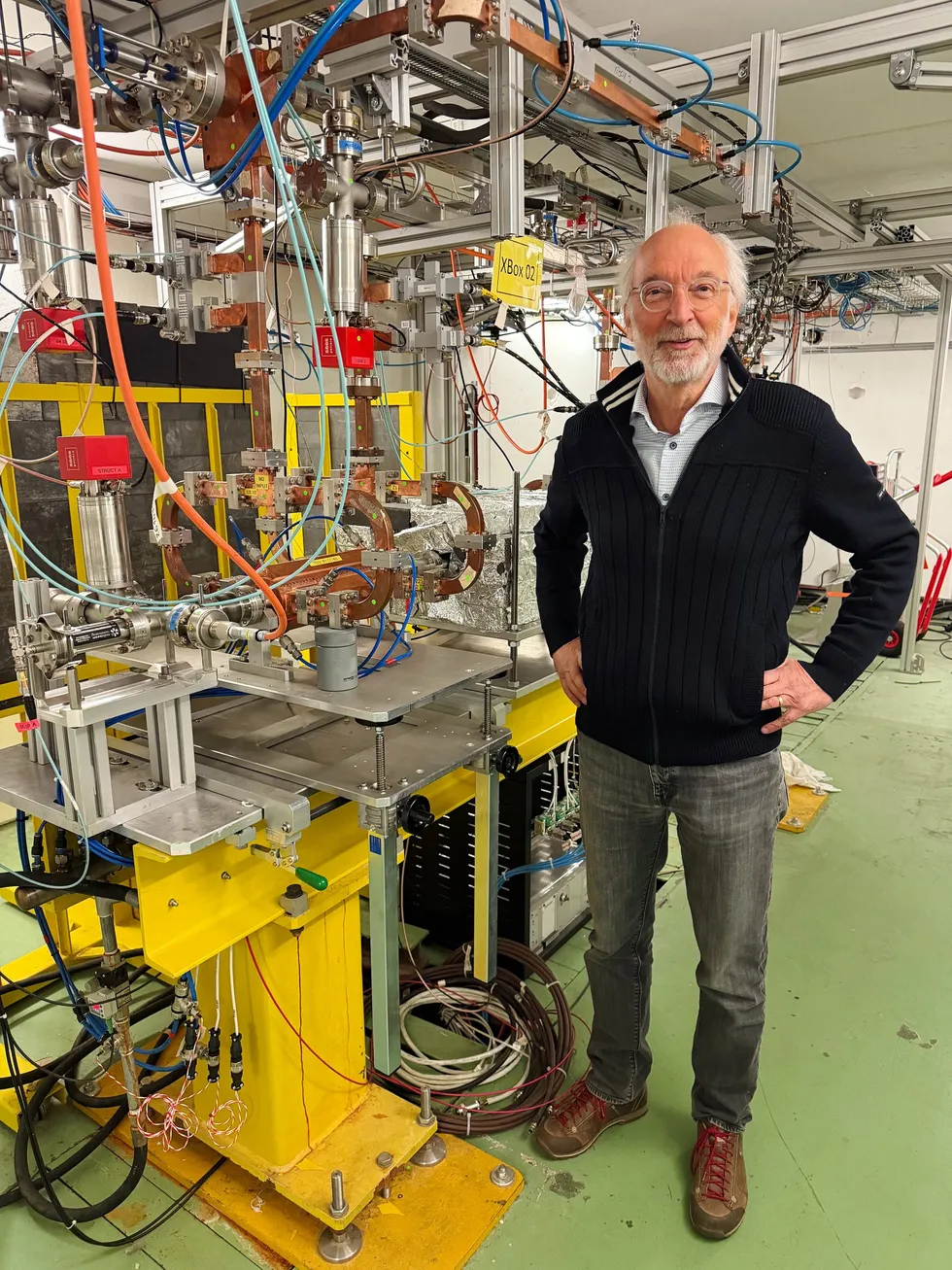
Photo of a white-haired man standing next to floor-to-ceiling experimental equipment with many tubes and wires. CERN researcher Walter Wuensch says the particle physics lab’s work on FLASH radiotherapy is “generating a lot of excitement.”CERN

Radiation therapy has been a cornerstone of cancer treatment since shortly after Wilhelm Conrad Röntgen discovered X-rays in 1895. Today, more than half of all cancer patients receive it as part of their care, typically in relatively low doses of X-rays delivered over dozens of sessions. Although this approach often kills the tumor, it also wreaks havoc on nearby healthy tissue. Even with modern precision targeting, the potential for collateral damage limits how much radiation doctors can safely deliver.

FLASH radiotherapy flips the conventional approach on its head, delivering a single dose of ultrahigh-power radiation in a burst that typically lasts less than one-tenth of a second. In study after study, this technique causes significantly less injury to normal tissue than conventional radiation does, without compromising its antitumor effect.

Advertisement

At CERN, which I visited last July, the approach is being tested and refined on accelerators that were never intended for medicine. If ongoing experiments here and around the world continue to bear out results, FLASH could transform radiotherapy—delivering stronger treatments, fewer side effects, and broader access to lifesaving care.

“It’s generating a lot of excitement,” says Wuensch, a researcher at CERN’s Linear Electron Accelerator for Research (CLEAR) facility. “We accelerator people are thinking, Oh, wow, here’s an application of our technology that has a societal impact which is more immediate than most high-energy physics.”

The Unlikely Birth of FLASH Therapy

The breakthrough that led to FLASH emerged from a line of experiments that began in the 1990s at Institut Curie in Orsay, near Paris. Researcher Vincent Favaudon was using a low-energy electron accelerator to study radiation chemistry. Targeting the accelerator at mouse lungs, Favaudon expected the radiation to produce scar tissue, or fibrosis. But when he exposed the lungs to ultrafast blasts of radiation, at doses a thousand times as high as what’s used in conventional radiation therapy, the expected fibrosis never appeared.

Puzzled, Favaudon turned to Marie-Catherine Vozenin, a radiation biologist at Curie who specialized in radiation-induced fibrosis. “When I looked at the slides, there was indeed no fibrosis, which was very, very surprising for this type of dose,” recalls Vozenin, who now works at Geneva University Hospitals, in Switzerland.

Advertisement

The pair expanded the experiments to include cancerous tumors. The results upended a long-held trade-off of radiotherapy: the idea that you can’t destroy a tumor without also damaging the host. “This differential effect is really what we want in radiation oncology, not damaging normal tissue but killing the tumors,” Vozenin says.

They repeated the protocol across different types of tissue and tumors. By 2014, they had gathered enough evidence to publish their findings in Science Translational Medicine. Their experiments confirmed that delivering an ultrahigh dose of 10 gray or more in less than a tenth of a second could eradicate tumors in mice while leaving surrounding healthy tissue virtually unharmed. For comparison, a typical chest X-ray delivers about 0.1 milligray, while a session of conventional radiation therapy might deliver a total of about 2 gray per day. (The authors called the effect “FLASH” because of the quick, high doses involved, but it’s not an acronym.)

Three sets of images comparing highly magnified tissue samples.

Although many cancer experts were skeptical about the FLASH effect on healthy tissue when it was first announced in 2014, numerous studies have since confirmed and expanded on those results. In a 2020 paper, a lung tissue sample taken 4 months after being exposed to conventional radiotherapy [center] shows many more dark spots indicating scarring than a sample exposed to FLASH [right]. The nonirradiated sample [left] is the control.

Advertisement

Vincent Favaudon/American Association for Cancer Research

Many cancer experts were skeptical. The FLASH effect seemed almost too good to be true. “It didn’t get a lot of traction at first,” recalls Billy Loo, a Stanford radiation oncologist specializing in lung cancer. “They described a phenomenon that ran counter to decades of established radiobiology dogma.”

But in the years since then, researchers have observed the effect across a wide range of tumor types and animals—beyond mice to zebra fish, fruit flies, and even a few human subjects, with the same protective effect in the brain, lungs, skin, muscle, heart, and bone.

Why this happens remains a mystery. “We have investigated a lot of hypotheses, and all of them have been wrong,” says Vozenin. Currently, the most plausible theory emerging from her team’s research points to metabolism: Healthy and cancerous cells may process reactive oxygen species—unstable oxygen-containing molecules generated during radiation—in very different ways.

Advertisement

Adapting Accelerators for FLASH

At the time of the first FLASH publication, Loo and his team at Stanford were also focused on dramatically speeding up radiation delivery. But Loo wasn’t chasing a radiobiological breakthrough. He was trying to solve a different problem: motion.

“The tumors that we treat are always moving targets,” he says. “That’s particularly true in the lung, where because of breathing motion, the tumors are constantly moving.”

To bring FLASH therapy out of the lab and into clinical use, researchers like Vozenin and Loo needed machines capable of delivering fast, high doses with pinpoint precision deep inside the body. Most early studies relied on low-energy electron beams like Favaudon’s 4.5-megaelectron-volt Kinetron—sufficient for surface tumors, but unable to reach more than a few centimeters into a human body. Treating deep-seated cancers in the lung, brain, or abdomen would require far higher particle energies.

Photo of floor-to-ceiling electromagnetic hardware with many tubes and pipes, some of which is copper-colored.

At CERN, researchers working on FLASH are developing this hardware to boost electrons to ultrahigh power within a short distance.

Advertisement

CERN

They also needed an alternative to conventional X-rays. In a clinical linac, X-ray photons are produced by dumping high-energy electrons into a bremsstrahlung target, which is made of a material with a high atomic number, like tungsten or copper. The target slows the electrons, converting their kinetic energy into X-ray photons. It’s an inherently inefficient process that wastes most of the beam power as heat and makes it extremely difficult to reach the ultrahigh dose rates required for FLASH. High-energy electrons, by contrast, can be switched on and off within milliseconds. And because they have a charge and can be steered by magnets, electrons can be precisely guided to reach tumors deep within the body. (Researchers are also investigating protons and carbon ions; see the sidebar, “What’s the Best Particle for FLASH Therapy?”)

Loo turned to the SLAC National Accelerator Laboratory in Menlo Park, Calif., where physicist Sami Gamal-Eldin Tantawi was redefining how electromagnetic waves move through linear accelerators. Tantawi’s findings allowed scientists to precisely control how energy is delivered to particles—paving the way for compact, efficient, and finely tunable machines. It was exactly the kind of technology FLASH therapy would need to target tumors deep inside the body.

Advertisement

Meanwhile, Vozenin and other European researchers turned to CERN, best known for its 27-kilometer Large Hadron Collider (LHC) and the 2012 discovery of the Higgs boson, the “God particle” that gives other particles their mass.

CERN is also home to a range of smaller linear accelerators—including CLEAR, where Wuensch and his team are adapting high-energy physics tools for medicine.

Unlike the LHC, which loops particles around a massive ring to build up energy before smashing them together, linear accelerators like CLEAR send particles along a straight, one-time path. That setup allows for greater precision and compactness, making it ideal for applications like FLASH.

Advertisement

At the heart of the CLEAR facility, Wuensch points out the 200-MeV linear accelerator with its 20-meter beamline. This is “a playground of creativity,” he says, for the physicists and engineers who arrive from all over the world to run experiments.

The process begins when a laser pulse hits a photocathode, releasing a burst of electrons that form the initial beam. These electrons travel through a series of precisely machined copper cavities, where high-frequency microwaves push them forward. The electrons then move through a network of magnets, monitors, and focusing elements that shape and steer them toward the experimental target with submillimeter precision.

Instead of a continuous stream, the electron beam is divided into nanosecond-long bunches—billions of electrons riding the radio-frequency field like surfers. Inside the accelerator’s cavities, the field flips polarity 12 billion times per second, so timing is everything: Only electrons that arrive perfectly in phase with the accelerating wave will gain energy. That process repeats through a chain of cavities, each giving the bunches another push, until the beam reaches its final energy of 200 MeV.

Close-up photo of an etched copper disc being held under a microscope by a gloved hand.

Physicist Marçà Boronat inspects one of the high-precision components used to accelerate the electrons for FLASH radiotherapy.

Advertisement

CERN

Much of this architecture draws directly from the Compact Linear Collider study, a decades-long CERN project aimed at building a next-generation collider. The proposed CLIC machine would stretch 11 kilometers and collide electrons and positrons at 380 gigaelectron volts. To do that in a linear configuration—without the multiple passes around a ring like the LHC—CERN engineers have had to push for extremely high acceleration gradients to boost the electrons to high energies over relatively short distances—up to 100 megavolts per meter.

Wuensch leads me to a large experimental hall housing prototype structures from the CLIC effort, and points out the microwave devices that now help drive FLASH research. Though the future of CLIC as a collider remains uncertain, its infrastructure is already yielding dividends: smaller, high-gradient accelerators that may one day be as suited for curing cancer as they are for smashing particles.

Advertisement

The power behind the high gradients comes from CERN’s Xboxes, the X-band RF systems that dominate the experimental hall. Each Xbox houses a klystron, modulator, pulse compressor, and waveguide network to generate and shape the microwave pulses. The pulse compressors store energy in resonant cavities and then release it in a microsecond burst, producing peaks of up to 200 megawatts; if it were continuous, that’s enough to power at least 40,000 homes. The Xboxes let researchers fine-tune the power, timing, and pulse shape.

According to Wuensch, many of the recent accelerator developments were enabled by advances in computer simulation and high-precision three-dimensional machining. These tools allow the team to iterate quickly, designing new accelerator components and improving beam control with each generation.

Still, real-world challenges remain. The power demands are formidable, as are the space requirements; for all the talk of its “compact” design, the original CLIC was meant to span kilometers. Obviously, a hospital needs something that’s actually compact.

Advertisement

“A big challenge of the project,” says Wuensch, “is to transform this kind of technology and these kinds of components into something that you can imagine installing in a hospital, and it will run every day reliably.”

To that end, CERN researchers have teamed up with the Lausanne University Hospital (known by its French acronym, CHUV) and the French medical technology company Theryq to design a hospital facility capable of treating large and deep-seated tumors with the very short time scales needed for FLASH and scaled down to fit in a clinical setting.

Theryq’s Approach to FLASH

Theryq’s research center and factory are located in southern France, near the base of Montagne Sainte-Victoire, a jagged spine of limestone that Paul Cézanne painted dozens of times, capturing its shifting light and form.

“The solution that we are trying to develop here is something which is extremely versatile,” says Ludovic Le Meunier, CEO of the expanding company. “The ultimate goal is to be able to treat any solid tumor anywhere in the body, which is about 90 percent of the cancer these days.”

Advertisement

Futuristic scientific equipment setup, featuring streamlined machinery and intricate components. Theryq’s FLASHDEEP system, under development with CERN and the company’s clinical partners, has a 13.5-meter-long, 140-MeV linear accelerator. That’s strong enough to treat tumors at depths of up to about 20 centimeters in the body. The patient will remain in a supported standing position during the split-second irradiation.THERYQ

Theryq’s push to bring FLASH radiotherapy from the lab to clinic has followed a three-pronged rollout, with each device engineered for a specific depth and clinical use. The first machine, FLASHKNiFE, was unveiled in 2020. Designed for superficial tumors and intraoperative use, the system delivers electron beams at 6 or 9 MeV. A prototype installed that same year at CHUV is conducting a phase-two trial for patients with localized skin cancer.

More recently, Theryq launched FLASHLAB, a compact, 7-MeV platform for radiobiology research.

The company’s most ambitious system, FLASHDEEP, is still under development. The 13.5-meter-long electron source will deliver very high-energy electrons of as much as 140 MeV up to 20 centimeters inside the body in less than 100 milliseconds. An integrated CT scanner, built into a patient-positioning system developed by Leo Cancer Care, captures images that stream directly into the treatment-planning software, enabling precise calculation of the radiation dose. “Before we actually trigger the beam or the treatment, we make stereo images to verify at the very last second that the tumor is exactly where it should be,” says Theryq technical manager Philippe Liger.

FLASH Therapy Moves to Animal Tests

While CERN’s CLEAR accelerator has been instrumental in characterizing FLASH parameters, researchers seeking to study FLASH in living organisms must look elsewhere: CERN doesn’t allow animal experiments on-site. That’s one reason why a growing number of scientists are turning to PITZ, the Photo Injector Test Facility in Zeuthen, a leafy lakeside suburb of Berlin.

Advertisement

PITZ is part of Germany’s national accelerator lab and is responsible for developing the electron source for the European X-ray Free-Electron Laser. Now PITZ is emerging as a hub for FLASH research, with an unusually tunable accelerator and a dedicated biomedical lab to ensure controlled conditions for preclinical studies.

A photo showing a row of experimental electronic equipment on racks

A photo of a closeup of a gloved hand holding a sample of a purple liquid above a piece of equipment. At Germany’s Photo Injector Test Facility in Zeuthen (PITZ), the electron-beam accelerator [top] is used to irradiate biological targets in early-stage animal tests of FLASH radiotherapy [bottom].Top: Frieder Mueller; Bottom: MWFK

“The biggest advantage of our facility is that we can do a very stepwise, very defined and systematic study of dose rates,” says Anna Grebinyk, a biochemist who heads the new biomedical lab, “and systematically optimize the FLASH effect to see where it gets the best properties.”

The experiments begin with zebra-fish embryos, prized for early-stage studies because they’re transparent and develop rapidly. After the embryos, researchers test the most promising parameters in mice. To do that, the PITZ team uses a small-animal radiation research platform, complete with CT imaging and a robotic positioning system adapted from CERN’s CLEAR facility.

What sets PITZ apart is the flexibility of its beamline. The 30-meter accelerator system steers electrons with micrometer precision, producing electron bunches with exceptional brightness and emittance—a metric of beam quality. “We can dial in any distribution of bunches we want,” says Frank Stephan, group leader at PITZ. “That gives us tremendous control over time structure.”

Advertisement

Timing matters. At PITZ, the laser-struck photocathode generates electron bunches that are accelerated immediately, at up to 60 million volts per meter. A fast electromagnetic kicker system acts as a high-speed gatekeeper, selectively deflecting individual electron bunches from a high-repetition beam and steering them according to researchers’ needs. This precise, bunch-by-bunch control is essential for fine-tuning beam properties for FLASH experiments and other radiation therapy studies.

“The idea is to make the complete treatment within one millisecond,” says Stephan. “But of course, you have to [trust] that within this millisecond, everything works fine. There is not a chance to stop [during] this millisecond. It has to work.”

Regulating the dose remains one of the biggest technical hurdles in FLASH. The ionization chambers used in standard radiotherapy can’t respond accurately when dose rates spike hundreds of times higher in a matter of microseconds. So researchers are developing new detector systems to precisely measure these bursts and keep pace with the extreme speed of FLASH delivery.

FLASH as a Research Tool

Beyond its therapeutic potential, FLASH may also open new windows to illuminate cancer biology. “What is really, really superinteresting, in my opinion,” says Vozenin, “is that we can use FLASH as a tool to understand the difference between normal tissue and tumors. There must be something we’re not aware of that really distinguishes the two—and FLASH can help us find it.” Identifying those differences, she says, could lead to entirely new interventions, not just with radiation, but also with drugs.

Advertisement

Vozenin’s team is currently testing a hypothesis involving long-lived proteins present in healthy tissue but absent in tumors. If those proteins prove to be key, she says, “we’re going to find a way to manipulate them—and perhaps reverse the phenomenon, even [turn] a tumor back into a normal tissue.”

Proponents of FLASH believe it could help close the cancer care gap worldwide; in low-income countries, only about 10 percent of patients have access to radiotherapy, and in middle-income countries, only about 60 percent of patients do, according to the International Atomic Energy Agency. Because FLASH treatment can often be delivered in a single brief session, it could spare patients from traveling long distances for weeks of treatment and allow clinics to treat many more people.

High-income countries stand to benefit as well. Fewer sessions mean lower costs, less strain on radiotherapy facilities, and fewer side effects and disruptions for patients.

The big question now is, How long will it take? Researchers I spoke with estimate that FLASH could become a routine clinical option in about 10 years—after the completion of remaining preclinical studies and multiphase human trials, and as machines become more compact, affordable, and efficient. Much of the momentum comes from a growing field of startups competing to build devices, but the broader scientific community remains remarkably open and collaborative.

Advertisement

“Everyone has a relative who knows about cancer because of their own experience,” says Stephan. “My mother died of it. In the end, we want to do something good for mankind. That’s why people work together.”

This article appears in the March 2026 print issue.

From Your Site Articles

Related Articles Around the Web

Advertisement

Source link

Continue Reading
Click to comment

Leave a Reply

Your email address will not be published. Required fields are marked *

Tech

Humanity Heating Planet Faster Than Ever Before, Study Finds

Published

on

An anonymous reader The Guardian: Humanity is heating the planet faster than ever before, a study has found. Climate breakdown is occurring more rapidly with the heating rate almost doubling, according to research that excludes the effect of natural factors behind the latest scorching temperatures. It found global heating accelerated from a steady rate of less than 0.2C per decade between 1970 and 2015 to about 0.35C per decade over the past 10 years. The rate is higher than scientists have seen since they started systematically taking the Earth’s temperature in 1880.

“If the warming rate of the past 10 years continues, it would lead to a long-term exceedance of the 1.5C (2.7F) limit of the Paris agreement before 2030,” said Stefan Rahmstorf, a scientist at the Potsdam Institute for Climate Impact Research and co-author of the study. […] The researchers applied a noise-reduction method to filter out the estimated effect of nonhuman factors in five major datasets that scientists have compiled to gauge the Earth’s temperature. In each of them, they found an acceleration in global heating emerged in 2013 or 2014. The findings have been published in the journal Geophysical Research Letters.

Source link

Continue Reading

Tech

X is testing a new ad format that connects posts with products

Published

on

X is testing a new ad format that inserts a recommendation directly underneath a post that references the company or its products. The initial test, spotted by an X user in Europe, displayed a suggestion to “Get Starlink” beneath a post from a user that said Starlink’s satellite service works great in Portugal. The link, when clicked, directed users to Starlink’s website.

X head of product Nikita Bier confirmed the test, responding, “Trying to make an ad product that isn’t an ad.”

The Starlink ad is not visible to all users at this time, but the placeholder where the ad sits is.

If you visit X user @levelsio’s post from March 6 (screenshotted below in case of deletion), you’ll see an outlined box beneath the text of his post. This box currently showcases a random X post, unless you’re in the market where the ad test is live.

In places where the ad displays, several commenters noticed the new addition, with one asking, “lmao, did you add this Starlink button?”

Advertisement

In the thread, Bier also responded to a suggestion that X should allow affiliate links in this ad slot by saying, “No, then people will lie. I want to trust recommendations on here.”

Image Credits:Screenshot from X

X could not be immediately reached for comment. TechCrunch will update the article if the company responds.

The test follows news earlier this week that the company is rolling out “Paid Partnership” labels for creators. The labels can be applied to posts to comply with regulations around social media advertising, instead of requiring creators to use a hashtag like “ad” or “paid partnership.”

If creators’ sponsored posts were to be combined with an embedded link to an advertiser like the one being tested, X could potentially attract more marketers to the platform. That could boost creators’ use of the app, allowing it to better compete against larger social networks favored by creators, like Instagram, YouTube, and TikTok.

X has been chasing creator content for some time — even before it was called “X” and before it was owned by Elon Musk. Yet the app has never quite found its footing in this space. So far, the company has rolled out a number of creator products, including payouts for viral content, ad-revenue sharingcreator subscriptions, and more. 

Advertisement

The company this week also revamped its Creator Subscriptions offering with a number of new features, including the ability to monetize individual threads.

In addition, X announced Friday that the integrated chatbot Grok is now capable of reading X’s long-form content, known as Articles. This feature, too, is underutilized, as creators who publish lengthy written text tend to prefer doing so through their own websites or newsletters.

Source link

Advertisement
Continue Reading

Tech

Haier’s new Couture Care Collection will stop you from going to the dry cleaners

Published

on

Haier has introduced the Couture Care Collection, a two-product premium fabric care range comprising a stacked Laundry Centre and a wardrobe-style Clothes Drying Closet.

It’s a little boujee, but the collection is focused on offering complete fabric care for your clothes, rather than just traditional wash and dry functionality.

That’s because the Couture Care Collection 11 Laundry Centre combines washing and drying in a space-saving stacked format, with AI-powered Smart Link technology automatically syncing wash and dry cycles based on load type and fabric composition. The I-Refresh Pro steam function handles lightly worn garments without running a full wash cycle, while an Ultra Fresh Air system keeps laundry fresh for up to 12 hours after the cycle ends.

The Ultra Reverse Drum and Flexy Air technology apparently reduce tangling and creasing during the drying phase, which honestly sounds like a lifesaver given how crinkled my clothes look when I remove them from dryer at home – although that serves me right for not looking at the best tumble dryers before buying.

Advertisement

Most interestingly of all though, is the Clothes Drying Closet, which looks like a wardrobe, but can dry delicate fabrics shoes, and accessories. If you’re used to running back and forth to the dry cleaners every week, this might be the home gadget you’ve been looking for.

Advertisement

Quick refresh cycles run from around ten minutes for lightly worn clothing, while a combination of steam, UV, and plasma technology sanitises up to 99.99% of bacteria.

Both products connect to Haier’s hOn app for remote control, cycle customisation, and notifications, with pricing and availability for the Couture Care Collection expected to be confirmed closer to the product’s retail launch.

Advertisement

Source link

Continue Reading

Tech

MacBook Neo proves Apple can build a $599 laptop without cheapening the Mac

Published

on

Apple’s industrial design chief says the MacBook Neo was created to bring the Mac into a much lower price tier without sacrificing the materials and design language associated with Apple laptops.

Open laptop on a table displaying colorful app windows, with a light keyboard and trackpad, and another closed laptop in the background on a softly lit surface
MacBook Neo

Apple vice president of industrial design Molly Anderson said in a rare March 6 solo interview that the MacBook Neo retains its MacBook identity despite its $599 starting price. Apple introduced the MacBook Neo on March 4 as its most affordable Mac laptop.
The MacBook Neo uses the A18 Pro processor instead of the Apple Silicon M-series chips found in other Macs. Apple is targeting students and first-time Mac buyers who might otherwise choose inexpensive Windows laptops or Chromebooks.
Continue Reading on AppleInsider | Discuss on our Forums

Source link

Continue Reading

Tech

How An Old Automatic Stoker Was Hacked Onto A Modern Lancashire Boiler

Published

on

Usage of an automatic stoker. (Source: Claymills Pumping Station, YouTube)

Hacks are of all ages, with the Victorian-era Claymills Pumping Station being no exception. When its old Lancashire boilers from the 19th century were  finally replaced with modern 1930s boilers, the 1920s-era automatic stokers were bodged onto the new boilers with a rather ill-fitting adapter plate, as there was no standard Lancashire boiler design. Nearly a hundred years later it was up to the volunteers at this Victorian-era pumping station to inspect and refurbish this solution, before fitting it back onto the boiler.

Lancashire boilers have two flue channels in which the coal is burned, which used to be done purely by hand. The automatic stokers are belt-driven devices that continuously add fresh fuel and massively lighten the workload. The 1920s stokers are still in place at this pumping station and a feature that they would love to retain.

Thus, after previously pressure-testing this #1 boiler to well beyond its operating pressure, the refurbished adapter plate was mounted back on with some percussive persuasion of the ‘very large beam’ variety.

Before the stokers could be mounted again, however, the boiler inspector had to give his OK to put the brickwork around the boiler back in place which helps to insulate it, among other functions. Once this is completed the boiler can finally see a fire again since it was last used in the 1970s. Whether these vintage stokers will work flawlessly will remain a surprise until then, but it’ll be a treat to see them operate.

Advertisement

Source link

Advertisement
Continue Reading

Tech

Robinhood’s startup fund stumbles in NYSE debut

Published

on

Retail investors are famously locked out of the startup world. Robinhood is attempting to change that by allowing the general public to invest in a portfolio of what it calls “some of the most exciting private companies operating today.”

To do this, the company that pioneered the commission-free brokerage model has secured access to eight startups—including Databricks, Stripe, Mercor, and Oura—grouping them into a vehicle called Robinhood Ventures Fund I. The fund, which also includes Ramp, Airwallex, Revolut, and Boom, set out last month with an ambitious $1 billion target, but demand for this novel way of investing in private companies was lower than expected.

On Thursday, Robinhood announced the fund had raised $658.4 million — which could reach $705.7 million if underwriters exercise their full allotment. The shares, priced at $25 in the offering, began trading on Friday and closed the day at $21, a 16% decline.

RVI’s reception on Wall Street stands in stark contrast to another attempt to give individual investors exposure to buzzy startups. When Destiny Tech100 — a publicly traded, closed-end fund holding stakes in 100 venture-backed companies including SpaceX, OpenAI, and Discord — direct-listed on the NYSE in March 2024, its shares surged from a reference price of $4.84 to an opening trade of $8.25, eventually closing its first day at $9.00.

Advertisement

Destiny Tech100 has kept climbing since its public debut. The fund closed trading on Friday at $26.61, a 33% premium to its net asset value of $19.97, meaning its shares trade well above the actual value of its underlying holdings.

So what explains why retail investors aren’t nearly as excited about Robinhood’s fund as they are about Destiny Tech 100? The most likely explanation is RVI’s lack of exposure to the companies widely expected to go public at enormous valuations: OpenAI, Anthropic, and SpaceX.

Robinhood is looking to address this. RVI intends to add more startups to the fund, eventually aiming to hold what Robinhood Ventures President Sarah Pinto described to TechCrunch as “15 to 20 of the best late-stage growth companies out there.”  The company’s CFO, Shiv Verma, told Axios Pro on Friday that Robinhood is eyeing exposure to OpenAI.

Techcrunch event

Advertisement

San Francisco, CA
|
October 13-15, 2026

But securing access to these high-profile companies is far from straightforward. Robinhood is aiming to get directly onto their cap tables directly through primary capital raises or secondary share sales — and that’s difficult even for a firm with deep roots in Silicon Valley.

Advertisement

A cap table — the official record of who owns equity in a company — is closely guarded at most high-profile startups, and winning a spot on one requires either being invited by the company or purchasing shares from existing investors with the company’s blessing.

“It’s very difficult to get into any of these companies, and the investment rounds are very expensive,” acknowledged Pinto.

That is just one of the reasons democratizing private markets is easier said than done, and why the companies most retail investors actually want to own remain, for now, out of reach.

Source link

Advertisement
Continue Reading

Tech

There’s a sneaky way to watch Outlander 2026 for free

Published

on

Outlander season 8 is here! It marks the closing chapter of Claire (Caitriona Balfe) and Jamie’s (Sam Heughan) torrid love story – at least on the small screen. You can watch Outlander free in the UK and US but fans abroad needn’t miss out…

Source link

Continue Reading

Tech

Anthropic launches Claude Marketplace, giving enterprises access to Claude-powered tools from Replit, GitLab, Harvey and more

Published

on

San Francisco startup Anthropic continues to ship new AI products and services at a blistering pace, despite a messy ongoing dispute with the U.S. Department of War.

Today, the company announced Claude Marketplace, a new offering that lets enterprises with an existing Anthropic spend commitment apply part of it toward tools and applications powered by Anthropic’s Claude models but made and offered by external partners including GitLab, Harvey, Lovable, Replit, Rogo and Snowflake.

According to Anthropic’s Claude Marketplace FAQ, the program is designed to simplify procurement and consolidate AI spend. Anthropic says the Marketplace is now in limited preview and that enterprises interested in using it should reach out to their Anthropic account team to get started.

For customers interested in the Marketplace, Anthropic says purchases made through it “count against a portion of your existing Anthropic commitment,” and that the company will manage invoicing for partner spend — meaning enterprises can use part of their existing Anthropic commitment to buy Claude-powered partner solutions without separately handling partner invoicing.

Advertisement

In effect, Anthropic is positioning Claude Marketplace as a more centralized way for enterprises to procure certain Claude-powered partner tools.

Yet, the whole point of Anthropic’s Claude Code and Claude Cowork applications for many users was that they could shift enterprise spend and time away from current third-party software-as-a-service (Saas) apps and instead, they could “vibe code” new solutions or bespoke, AI-powered workflows. This idea is so pervasive that prior Claude integrations have on several recent occasions caused a major selloff in SaaS stocks after investors thought Claude could threaten the underlying companies and applications.

Claude Marketplace seems to be pushing against that idea, suggesting current SaaS apps are still valuable and perhaps even more useful and appealing to enterprises with Claude integrated into them.

The launch raises a broader question about how enterprises will choose to use Claude: directly through Anthropic’s own products and APIs, or through third-party applications that embed Claude for more specialized workflows.

Advertisement

Tool integration

Model and chat platforms have always sought to offer integrations, aiming to cut the time users spend building their app versions. 

OpenAI added third-party apps into ChatGPT and launched a new App Directory in December 2025. This brought in offerings from companies such as Canva, Expedia and Figma that users can invoke by using “@” mentions while prompting on the chatbot.

However, three months in, it’s unclear exactly how many people use ChatGPT Apps, particularly in enterprises — will Claude’s Marketplace be able achieve more success here, given rising enterprise adoption of Claude and Anthropic products?

ChatGPT’s focus in its integrated apps was on retail and individual consumer-focused tasks rather than the enterprise more broadly, but the company has also tried to appeal to that market with new plugins for ChatGPT released alongside its new GPT-5.4 this week.

Advertisement

Other AI tool marketplaces have also cropped up. Lightning AI launched an AI Hub last year following similar moves from AWS and Hugging Face. Many AI marketplaces, such as Salesforce’s, focus on surfacing AI agents that may already have the capabilities customers need. 

How does Anthropic’s solution stand out from these? Asked for comment a spokesperson responded:

“Claude is a model — it reasons, writes, analyzes, and codes. But Harvey isn’t just Claude with a legal prompt. It’s a purpose-built platform built for how legal teams actually work — with the domain expertise, workflow integrations, compliance infrastructure, and institutional knowledge that enterprises require. Same with Rogo for finance, Snowflake for enterprise data, or GitLab for software development. These partners have spent years building the product layer on top of Claude that makes it useful for specific industries and workflows.

That’s actually the point. Thousands of businesses use Claude to power their products — and the best ones have built something Claude alone can’t replicate. Claude Marketplace isn’t Anthropic trying to replace those products. It’s Anthropic investing in them — making it easier for enterprises to access the best Claude-powered tools without managing a separate procurement process for each one. Claude is the intelligence layer. Our partners are the product.”

Advertisement

Native vs app

Enterprise users adapted their Claude or ChatGPT platforms to recognize preferences, connect to their data sources and retain context. So much of how people use enterprise AI these days focuses on customizability, on making the system work for their needs.

Platforms like OpenClaw also allowed people to set up autonomous agents that can have full access to their computers to complete tasks and execute workflows. In other words, Claude and other platforms can already do much of the work that these new third-party Marketplace tools enable — provided they have the right context and data. 

However, third-party tools and integrations allow enterprise users to avoid doing the work themselves and instead invoke an existing tool to handle it. For those whose businesses are built around specific, tool-based workflows, the Marketplace may be exactly the right AI integration for them. In addition, there’s also a good chance that enterprises already paying for Claude may now take advantage of the new Marketplace to explore third-party tools and services they wouldn’t have otherwise.

While it’s still unclear what Claude Marketplace would look like in action, it’s possible that, with these tools, enterprises could use Claude as an orchestrator, where the platform acts as a command center that taps the right tool and accesses the right context without constantly prompting. 

Advertisement

Observers noted that Claude Marketplace offers enterprises a way to “pre-approve” apps, bypassing the often long and cautious approval process. 

Some people noted that Anthropic’s move tracks with how many businesses will want to work directly with the platforms without requiring users to move to their separate offerings. 

Anthropic’s biggest challenge with Claude Marketplace, however, is adoption. Many of the partners for its launch already have enterprise customers who deploy their tools through an API or already connect via MCP or other protocols for context.

Some users may have already vibe-coded apps that tap into these integrations. It’s now a matter of enterprise users showing they want to use these new tools within their Claude workflows.

Advertisement

Source link

Continue Reading

Tech

Hackaday Podcast Episode 360: Cool Rubber Bands, Science-y Stuff, And The Whys Of Office Supplies

Published

on

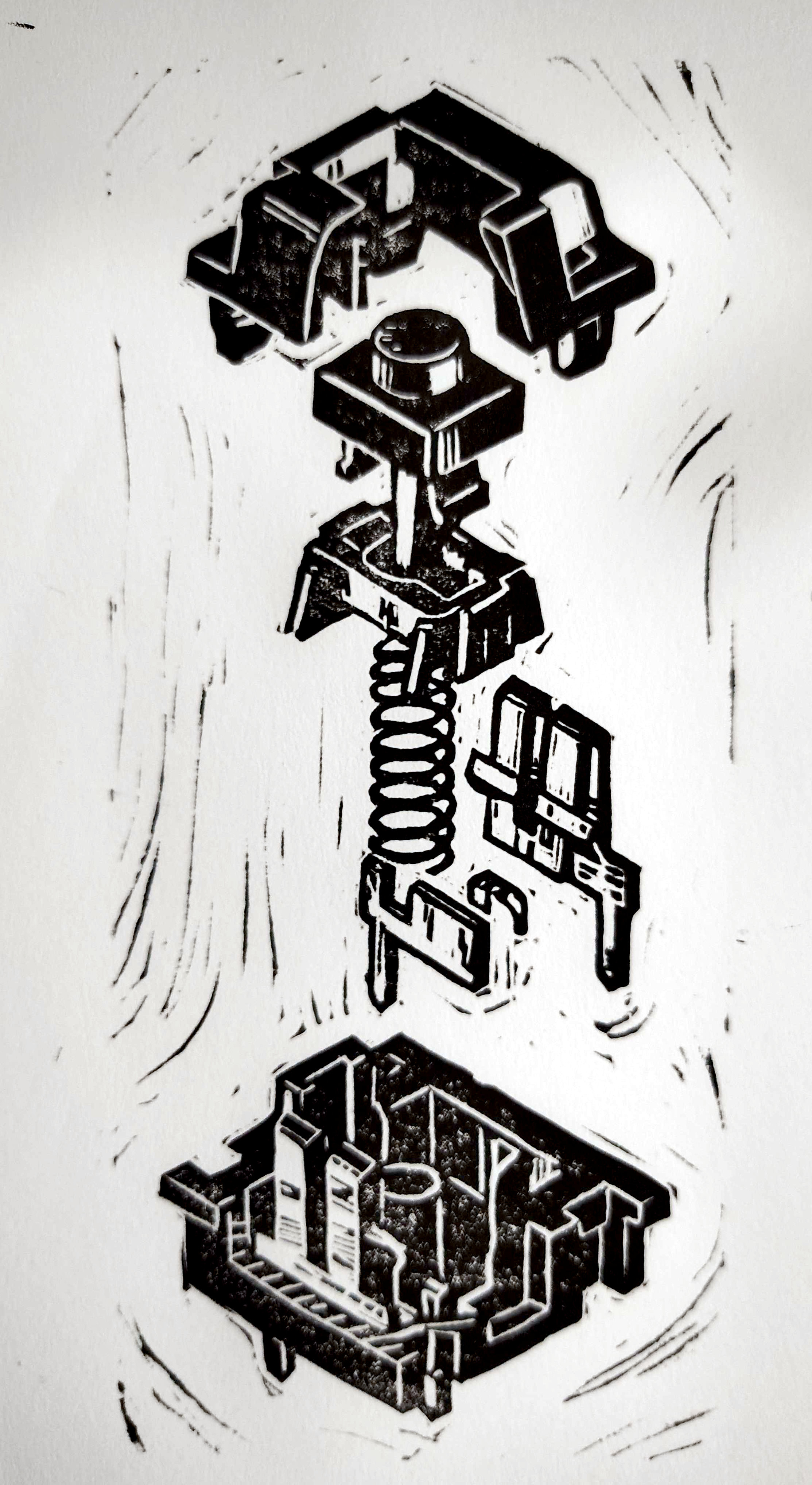
An early print of the linoleum block that Kristina started carving during the podcast. (It’s the original Cherry MX patent drawing, re-imagined for block printing.)

This week, Hackaday’s Elliot Williams and Kristina Panos met up over assorted beverages to bring you the latest news, mystery sound results show, and of course, a big bunch of hacks from the previous seven days or so.

In the news, we’ve launched a brand-new contest! Yes, the Green-Powered Challenge is underway, and we need your entry to truly make it a contest. You have until April 24th to enter, so show us what you can do with power you scrounge up from the environment around you!

On What’s That Sound, Kristina was leaning toward some kind of distant typing sounds, but [Konrad] knew it was our own Tom Nardi’s steam heat radiator pinging away.

After that, it’s on to the hacks and such, beginning with an exploration of all the gross security vulnerabilities in a cheap WiFi extender, and we take a look inside a little black and white pay television like you’d find in a Greyhound station in the 80s and 90s.

We also discuss the idea of mixing custom spray paint colors on the fly, a pen clip that never bends out of shape, and running video through a guitar effects pedal. Finally, we discuss climate engineering with disintegrating satellites, and the curse of everything device.

Advertisement

Check out the links below if you want to follow along, and as always, tell us what you think about this episode in the comments!

Download in DRM-free MP3 and savor at your leisure.

Episode 360 Show Notes:

News:

What’s that Sound?

  • Congrats to [Konrad] who knew this was Tom Nardi’s radiator!

Interesting Hacks of the Week:

Quick Hacks:

  • Elliot’s Picks:
  • Kristina’s Picks:

Can’t-Miss Articles:

Source link

Advertisement
Continue Reading

Tech

AirPods Pro 3 long-term review: Apple's latest earbuds are great with one asterisk

Published

on

It’s been roughly half a year since Apple released the AirPods Pro 3 to the world, and I’m revisiting them to see how they’ve held up after months of near-daily use.

Hand holding a pair of white wireless earbuds with black details against a soft gray background, showing them closely as if presenting or examining them
AirPods Pro 3 long-term review: Holding the newest AirPods Pro

In my original review of Apple’s latest earbuds, I largely praised them for improving audio quality, ANC, as well as adding new features. Now that the initial excitement has subsided, let’s examine the changes that have stood out.
I went from the AirPods Pro 2 to the AirPods Pro 3. This wasn’t a major jump by any means, but I felt it was worth it, especially since the battery life on my years-old pair had deteriorated, and I was able to pass them down to my partner.
Continue Reading on AppleInsider | Discuss on our Forums

Source link

Continue Reading

Trending

Copyright © 2025