



Connect with us
DAPA Banner

Tech

Former Google VP to lead Apple's AI product marketing

Published

on

Apple has snatched up Lilian Rincon, a nearly decade-long Google veteran, as it continues to retool its Apple Intelligence team.

Colorful, intertwined ribbon design forms an abstract star shape on a black background, glowing with gradients of orange, red, pink, blue, and purple.
Apple Intelligence continues to undergo changes

Before working at Apple, Rincon served as Vice President of Product Management at Google since 2024. However, before that she held various product management roles in the company since 2017.
According to 9to5Mac, Rincon will lead product marketing and product management for its AI platforms, including Apple Intelligence and Siri. In the role, she’ll report directly to Greg Joswiak, Apple’s senior vice president of worldwide marketing.
Continue Reading on AppleInsider | Discuss on our Forums

Source link

Continue Reading
Click to comment

You must be logged in to post a comment Login

Leave a Reply

Tech

Wesley Treat Laser-Welded a Giant Aluminum Head of Himself

Published

on

Laser-Welded Head Aluminum
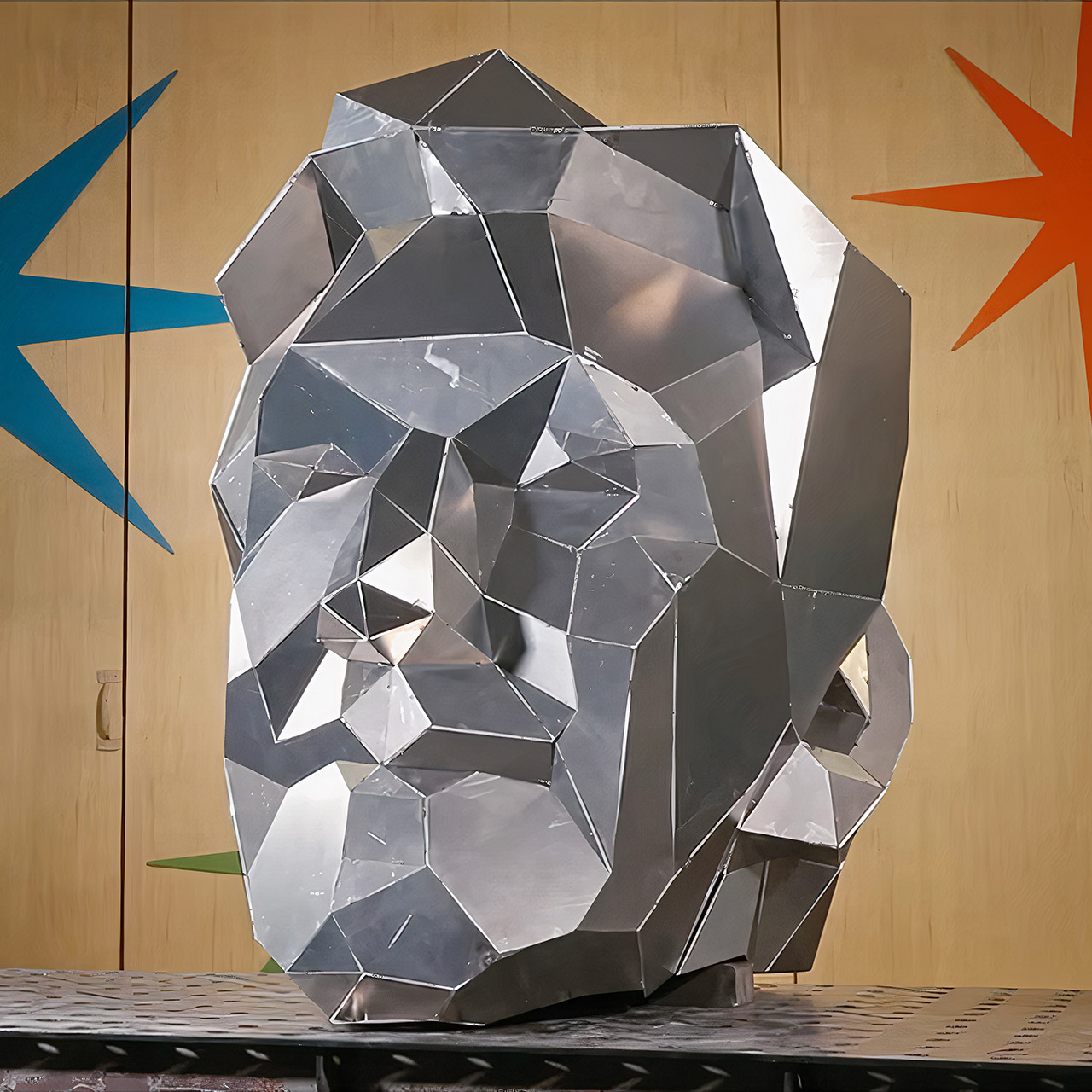
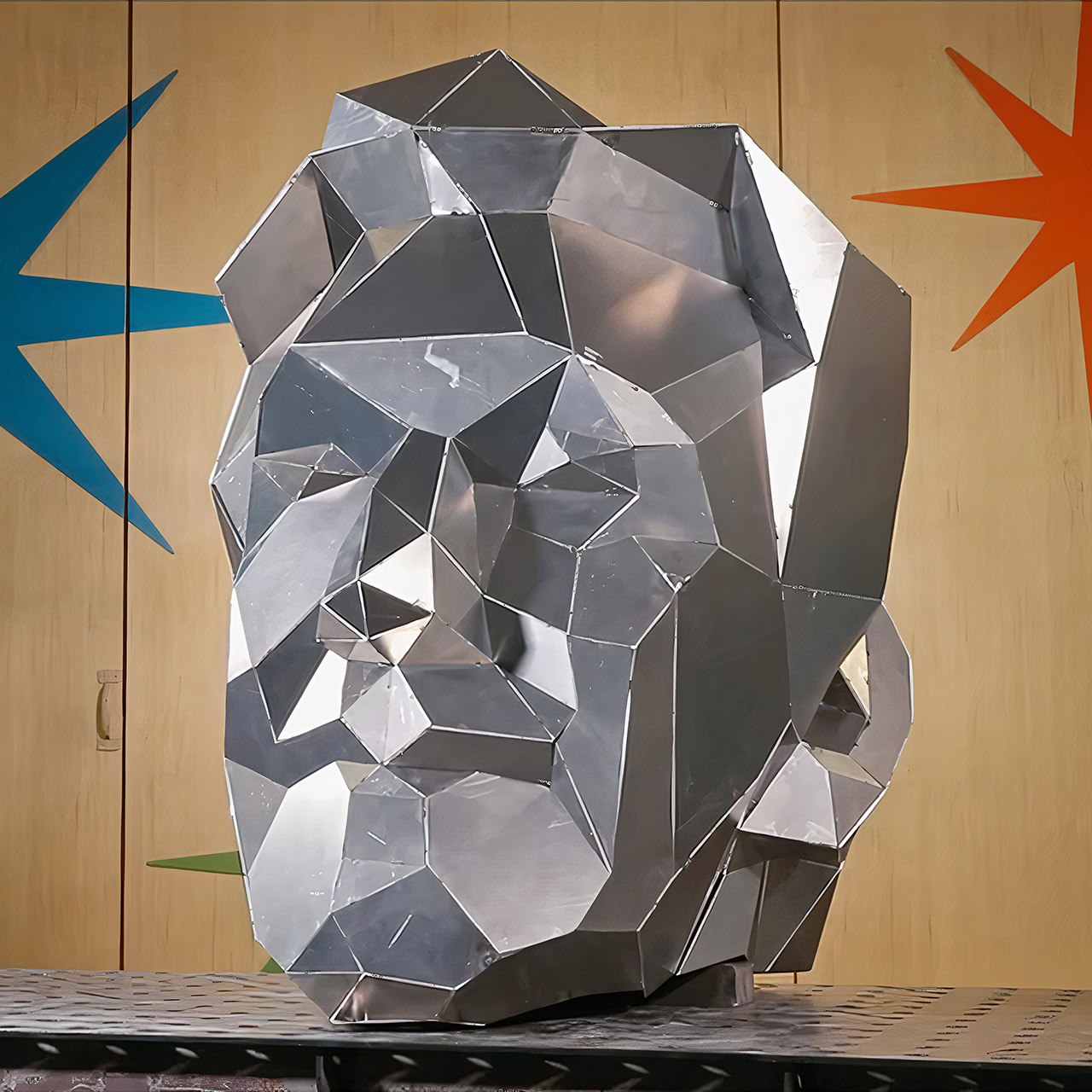
Wesley Treat had his face scanned as part of a collaborative 3D model library project with other makers, and when he saw his own scan sitting in the archive he decided it deserved a more permanent form. The result is a strangely fascinating aluminum portrait, roughly life sized and built from dozens of flat welded panels, that now lives in his workshop and stops people in their tracks the moment they walk past it.


Treat works with aluminum regularly for sign making but had little welding experience with it going in. His xTool MetalFab handles both cutting and welding through a single handheld tool, and after a few practice runs on steel to get a feel for the machine he switched to aluminum and immediately noticed the difference. Aluminum conducts heat aggressively and will melt through without warning if the settings are off, so he dialed in shorter pulses and learned to feed in small amounts of filler wire to build each joint without punching holes through the material. Once the welds were looking consistent off camera, he moved on to the actual parts.

Sale


FLASHFORGE AD5X Multi-Color 3D Printer, CoreXY 600mm/s High-Speed, 1-Click Auto Leveling, 300°C Direct…
  • Vivid Multi-Color Printing: Bring your creations to life with vibrant, multi-color prints. This printer supports up to 4 colors simultaneously, giving…
  • 1-Click Auto Leveling: Enjoy smooth, uninterrupted prints with the advanced 1-Click Auto Leveling feature that automatically calibrates your print bed…
  • Ultra-Fast 12X Printing Speed: The AD5X features a Core XY structure with speeds up to 600mm/s and acceleration of 20,000mm/s². Its stable design…

Laser-Welded Head Aluminum
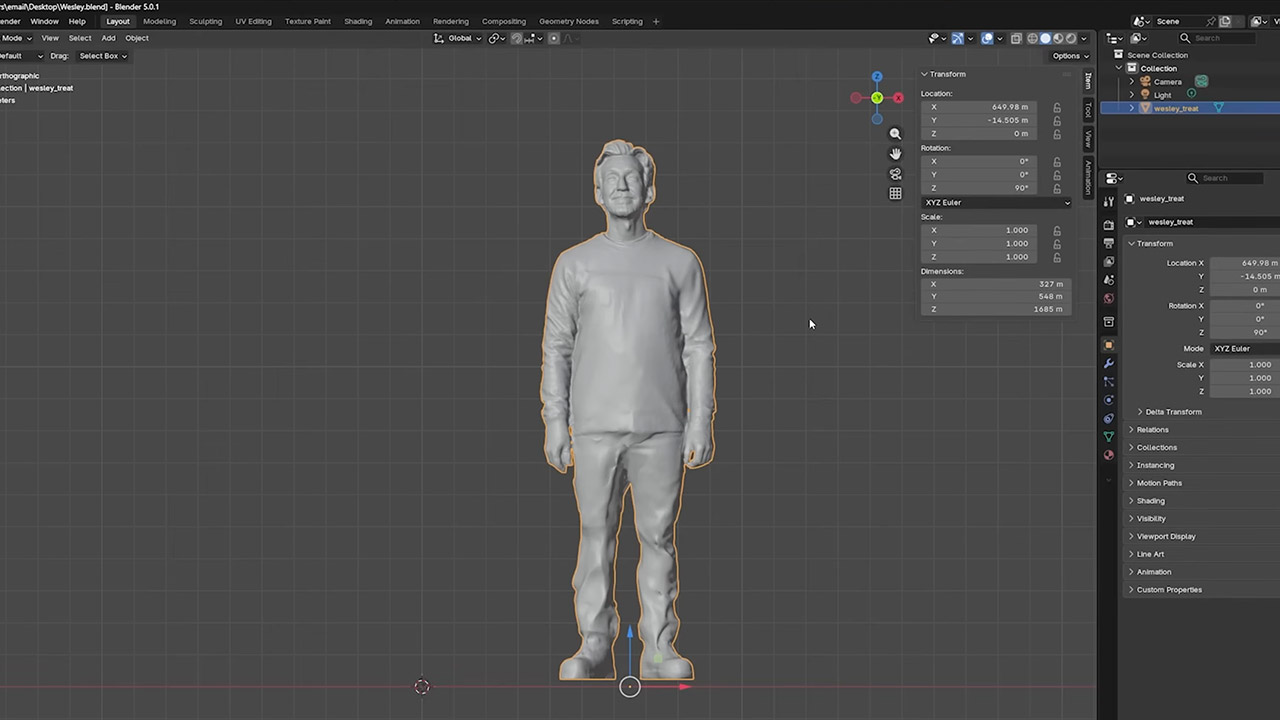
The process started in Blender, where he reduced the polygon count on his scan until the model had that low resolution video game quality while still reading clearly as his face. He trimmed the body below the neck, tidied up the nose, and broke the hair into smaller sections to make the welding stages more manageable. Once the shape felt right he sent the file to an online unfolding tool called PaperMaker, which flattened the entire head into a series of flat 2D panels, complete with tabs and numbered edges to guide assembly.

Laser-Welded Head Aluminum
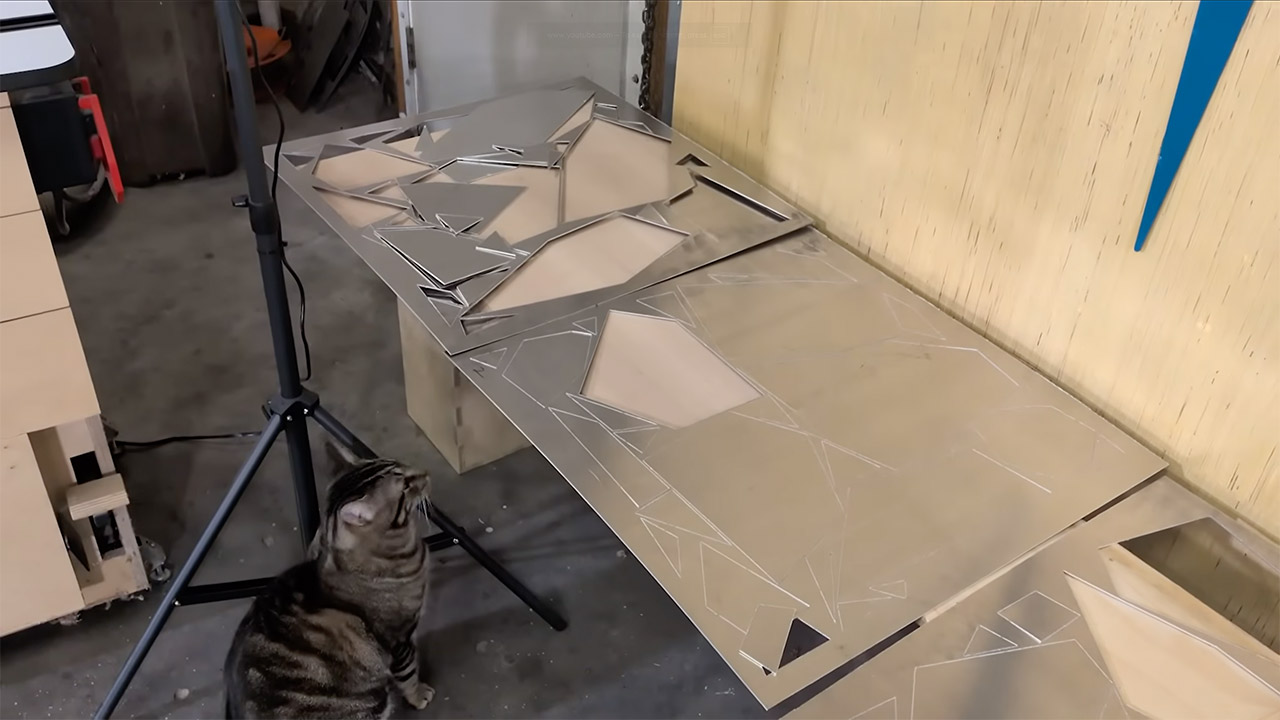
Sheets of 0.063 inch metal were placed on the CNC bed next, and the machine cut the outlines cleanly while etching reference numbers right into each piece to keep everything organized. The end result was a stack of flat metal pieces that resembled a puzzle waiting to be assembled. Wesley arranged them all on the workbench and worked from the back of the head forward, tacking each panel into place with quick welds on the inside when possible to keep the outer surface clean.

Laser-Welded Head Aluminum
Fitting everything together proved to be the most difficult part of the build. How so? Some edges needed a quick sanding, while others required some filing to sit flush. Once he found the right angle and travel speed, the laser welder handled the thin aluminum well, with localized heat closing gaps that were clean without warping the surrounding material. The two halves came together with the final seam hidden neatly beneath the hairline, and when the last weld cooled he stepped back to find a remarkably accurate metal version of his own face staring back at him.
[Source]

Advertisement

Source link

Continue Reading

Tech

Daily Deal: The 2026 Microsoft Office Pro Courses Bundle

Published

on

from the good-deals-on-cool-stuff dept

The 2026 Microsoft Office Pro Bundle has 8 courses to help you master essential Office skills. Courses cover Access, PowerPoint, Word, Excel, and more. It’s on sale for $21.25 using the code MARCH15 at checkout.

Note: The Techdirt Deals Store is powered and curated by StackCommerce. A portion of all sales from Techdirt Deals helps support Techdirt. The products featured do not reflect endorsements by our editorial team.

Filed Under: daily deal

Source link

Advertisement
Continue Reading

Tech

SEGA Music To MODfile, (Semi)Automatically

Published

on

One thing SEGA’s MegaDrive/Genisis and the Commodore Amiga had in common was–aside from the Motorola 68000 processor– being known for excellent music in games. As [reassembler] continues his quest to de-assemble Sonic: The Hedgehog and re-assemble the code to run on Amiga, getting the music right is a key challenge. Rather than pull MIDI info or recreate the sound by ear, [reassembler] has written a program called Sonic2MOD to automatically take the assembly file music from the MegaDrive catridge and turn it into an Amiga-style MODfile. He’s also made a video about it that you’ll find embedded below.

Of course how music gets made differs widly on the two systems. Amiga, famously has Paula, a custom ASIC designed for sampling, allowing you to play four eight-bit voices. The Sega, of course, has that glorious FM-synthesis chip from Yamaha synthesizing five channels of CD-quality sound and one channel of sample. It’s not as well known, but the Sega also has a bonus TI-compatible programmable sound chip (PSG) that can handle 3 square-wave tone channels and one noise channel. That’s ten total channels to the Amiga’s four, and CD-quality to 8-bit voices. Knowing all that, we were very curious how close to SEGA’s original music [reassembler] could get on the Amiga.

Before he could show us, [reassembler] needed to decode the SMPS files used on Sonic: The Hedgehog and many other MegaDrive games. Presumably he could have gotten a MIDI file online somewhere– there are oodles– but the goal was to reverse engineer Sonic from its cartridge for the Amiga, not download a lot of resources from the web. SMPS is a sort of programing language for sound, telling the Yamaha and PSG chips what to do.

In some ways, it’s not unlike the Amiga’s MOD format, which programmatically specifies how to play the sampled voices also stored in the file. Translating from one to another is a matter of reading the SMPS files, extracting the timing, volume, vibrato, et cetera, and translate that into a form the MOD file can use. Then [reassembler] needed to generate samples, which was an added hiccup because the Amiga can only handle 3 octaves vs the seven of the SEGA’s FM synthesizer. He’s able to solve this simply by generating multiple samples to span the Yamaha chip’s range, though, again, at only 8-bit fidelity. It doesn’t sound half bad.

Advertisement

What about the four-channel limit? That’s where a bit of artistry comes in; the automated tool produces MOD files with more voices, which MOD trackers can handle at increased computational load. Computational load you don’t need when trying to play a game. Scaling down the soundtrack to the Amiga’s limits is something [reassembler] already has practice with from his famous OutRun port, though, so we’re sure he’ll get it done.

All of this effort just to match the Mega Drive makes us appreciate what a capable little computer the Sega console was; why, you can even check your stocks with it! We’ve already featured [reassembler]’s Sonic port once before, but this music tool was interesting enough we couldn’t help ourselves coming back to it. The ability to play MOD files were pretty impressive when the Amiga came out, but nowadays all you need is a ten-cent microcontroller.


Advertisement

Source link

Continue Reading

Tech

Making A Nichrome Wirewound Power Resistor

Published

on

Although not really a cost-effective or a required skill unless you have some very specific needs not met by off-the-shelf power resistor options, making your own own wirewound power resistor is definitely educational, as well as a fascinating look at a common part that few people spare a thought on. Cue [TheElectronBench]’s video tutorial on how to make one of these components from scratch.

The resistance value is determined by the length of nichrome wire, which is an alloy of nickel and chromium (NiCr) with a resistivity of around 1.12 µΩ/m. It’s also extremely durable when heated, as it forms a protective outer layer of chromium oxide. This makes it suitable for very high power levels, but also requires the rest of the power resistor assembly to be able to take a similar punishment.

For the inner tube of this DIY power resistor a tube of alumina ceramic was used, around which the nichrome wire is wound. This resistor targets 15 Ohm at a maximum load of 50 Watt, this means a current of about 1.83 A is expected at 27.4 V. The used nichrome wire has a measured resistance of 10.4 Ohm, ergo 1.44 meter has to be cut and wound.

This entire assembly is then embedded in refractory cement (fireproof cement), as this will keep the wire in place, while also able to take the intense temperature cycling during operation. As a bonus this will prevent toasting the surrounding environment too much, never mind lighting things on fire as the nichrome wire heats up.

As explained in the video, this is hardly the only way to create such a power resistor, with multiple types of alternative alloys available, different cores to wind around and various options to embed the assembly. The demonstrated method is however one that should give solid results and be well within the capabilities and budget of a hobbyist.

Advertisement

An important point with nichrome is that you cannot really solder to it, so you’ll need something along the lines of a mechanical (crimping) connection. There are also different winding methods that can affect the inductance of the resistor, since this type of resistor is by its design also a coil. This is however not covered in the video as for most applications it’s not an issue.

Overall, this video tutorial would seem to be a solid introduction to nichrome power resistors, including coverage of many issues you may encounter along the way. Feel free to sound off in the comment section with your own experiences with power resistors, especially if you made them as well.

Source link

Advertisement
Continue Reading

Tech

Tech Moves: Smartsheet adds to C-suite; Armoire gets ML lead; past Microsoft director launches startup

Published

on

New Smartsheet executives, top row from left: Robson Grieve and Toyan Espeut. Bottom row: Pratima Arora and Kelsi McDonald Harris. (LinkedIn Photos)

Enterprise software giant Smartsheet on Thursday announced four C-suite changes — two hires and two promotions. The Bellevue, Wash., company, which is best known for helping businesses organize and track work, has undergone two rounds of layoffs in the past six months and appointed Rajeev Singh as CEO in October.

“I came to Smartsheet because I believed in the opportunity. We are assembling an incredible team ready to seize that opportunity,” Singh said a LinkedIn post sharing the changes.

The moves continue a pattern of Singh recruiting from his past, as all four have prior ties to the CEO.

  • Robson Grieve joins as chief marketing officer, coming from San Francisco-based software company Motive. Grieve previously worked in the Seattle area at Concur Technologies, where he overlapped with Singh, who was Concur’s co-founder, president and chief operating officer.
  • Toyan Espeut is Smartsheet’s new chief customer officer. Espeut spent more than 11 years at Apptio, a Seattle-area enterprise software firm, where she most recently served as executive vice president of sales for the Americas and previously held the title of chief customer officer. Singh is a past Apptio board member.

  • Pratima Arora is now chief product and technology officer, adding technology to her purview after less than a year as Smartsheet’s CPO. Her past roles include leadership positions for companies including Chainalysis, Atlassian, Salesforce and Concur.
  • Kelsi McDonald Harris has been promoted to chief business officer, after serving as senior VP of business operations and Singh’s chief of staff. Her prior role was chief people officer at Accolade, a company Singh previously led.
Morgan Cundiff. (LinkedIn Photo)

Armoire named Morgan Cundiff as head of product and machine learning for the Seattle-based fashion rental startup.

Cundiff joins from LTK, a shopping app and platform where online creators share product and lifestyle picks that help people decide what to buy. She was at the startup for nearly four years, building and scaling LTK’s data science and machine learning capabilities. She previously worked at the e-commerce tech company ShopRunner, which was acquired by FedEx.

Armoire is ranked No. 40 on the GeekWire 200, an index of the Pacific Northwest’s top startups.

Advertisement
Javier Páramo. (Photo courtesy of Páramo)

— Longtime tech leader and entrepreneur Javier Páramo has launched AIQLinea, a Redmond, Wash.-based startup helping companies navigate the rapid adoption of new AI technologies.

“We help enterprise leaders turn fragmented AI experimentation into clarity, aligned strategy, governed execution, and decision-ready roadmaps,” Páramo said on LinkedIn.

Páramo spent nearly two decades at Microsoft, departing in 2010 as senior director of worldwide field strategy, where he focused on education products. He later served as executive director of information services strategy at the Providence healthcare system before founding AIQLinea.

Advertisement

Barry Padgett, former CEO of the Seattle-based consumer data startup Amperity, has been promoted to president and chief operations officer of SentinelOne. Padgett joined the Mountain View, Calif., cybersecurity platform one year ago as chief growth officer.

And to continue connecting the Concur dots, Padgett was also with the enterprise software company, working there for more than 20 years and leaving in 2016. Two years prior, SAP acquired Concur, which is now SAP Concur.

Jake Silsby. (LinkedIn Photo)

Jake Silsby has joined Seattle’s Tin Can as head of industrial design. The startup is selling landline-style, Wi-Fi-enabled telephone for kids and in December raised $12 million from investors. Silsby was previously an industrial design manager for the business consulting company tms and has worked for Rad Power Bikes and Starbucks.

“I had the opportunity to freelance with the team on their flagship phone, and I’m looking forward to helping shape what’s next for this small but mighty brand,” Silsby said on LinkedIn.

Since launching its flagship product earlier this year, Tin Can quickly went “viral,” sold out its first two production runs and built a near-six-figure waitlist.

Advertisement

Washington Roundtable, a business advocacy organization, appointed two new board members:

  • Dr. Christopher Longhurst, who was named CEO of Seattle Children’s in January
  • Dominic Carr, executive VP and chief communications and corporate affairs officer at Starbucks and a longtime past leader at Microsoft
Ian Haydon. (LinkedIn Photo)

Ian Haydon is leaving his role as director of communications and AI policy for the University of Washington Institute for Protein Design. Haydon joined IPD in 2012 as a graduate student in the lab of David Baker, who would later win the Nobel Prize.

In a LinkedIn post announcing his departure, Haydon called his job “an honor.”

“The protein design methods that I learned as a grad student became obsolete once new deep learning tools emerged,” he added. “Watching the field reinvent itself — and seeing seemingly distant ideas become doable and then done — has been astonishing.” Haydon did not disclose his next move.

Jonathan Hunt has left Microsoft as a corporate VP in AI business solutions to join Anthropic as global head of commercial operations and strategy. He is based in the San Francisco Bay Area and past employers include Databricks and Salesforce.

Advertisement

Cotiviti, the parent company of Bellevue, Wash.-based health software company Edifecs, named Ric Sinclair as CEO. The Utah-based healthcare giant acquired Edifecs last year.

Pacific Northwest National Laboratory computational scientist and biological physicist Margaret Cheung was named a fellow of the American Association for the Advancement of Science (AAAS), the world’s largest multidisciplinary scientific society.

Source link

Advertisement
Continue Reading

Tech

ICYMI: the week’s 7 biggest tech stories from the landmark social media addiction trial to more Netflix price hikes

Published

on

This week, we saw major decisions that could rock the tech world, as social media was called addictive in a landmark trial, and the US banned foreign Wi-Fi routers.

To catch up on this, as well as the latest reviews and other essential tech news stories, scroll down for our full ICYMI recap of the week.

Source link

Advertisement
Continue Reading

Tech

New German battery recycling plant salvages lithium and graphite

Published

on

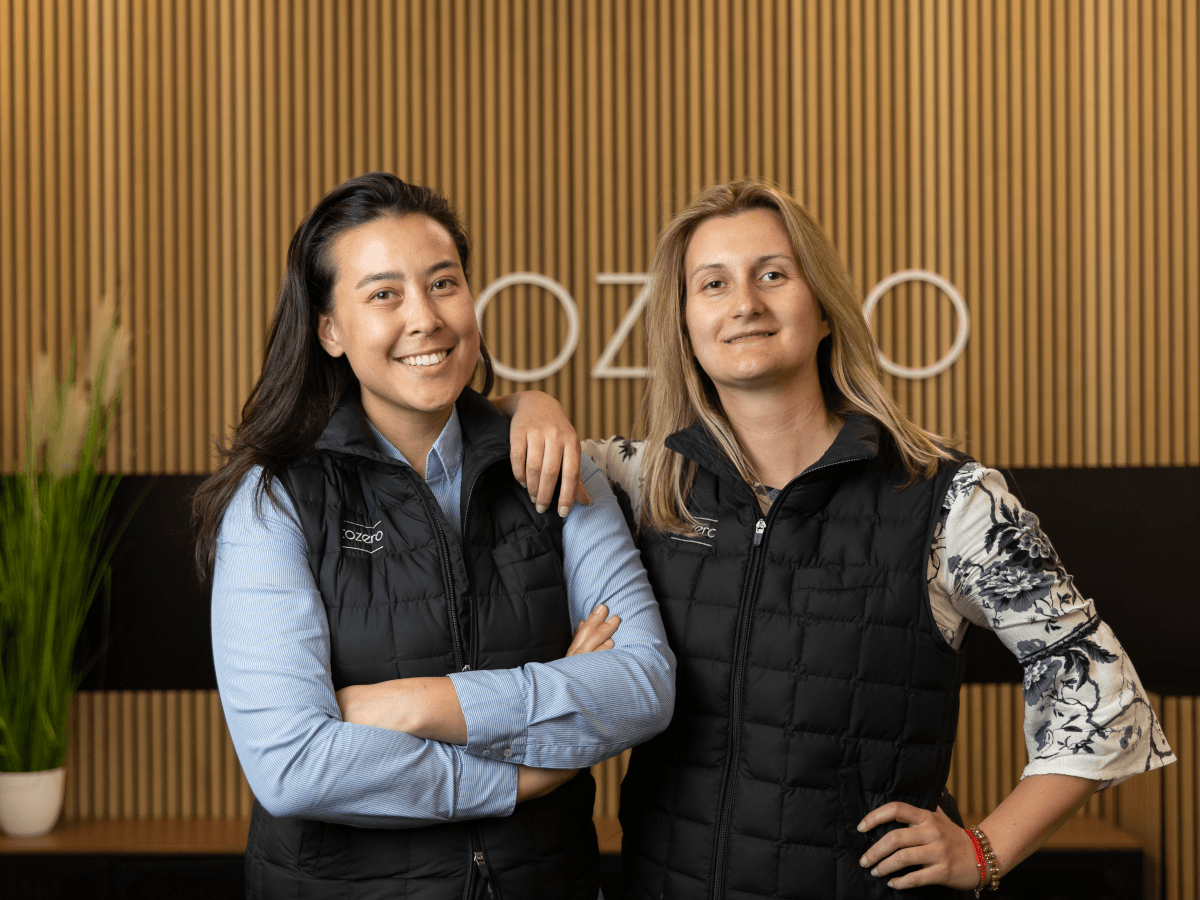
Tozero’s plant outside Munich was set up in six months and is capable of producing 100 tonnes of high-purity lithium carbonate from old batteries each year.

German battery and raw materials recycling start-up Tozero has opened a new industrial plant for the production of domestic lithium and graphite, which it claims as a European first.

The new facility in Munich is capable of processing 1,500 tonnes of waste per year by turning end-of-life lithium ion batteries into domestic supplies of lithium, graphite and nickel-cobalt blends at an industrial scale.

Such materials are considered critical for use in electric vehicle, grid-scale storage and industrial electrification, but Tozero said that Europe and the US are currently massively reliant on materials imported from China.

Advertisement

It said its technology can give Europe “a domestic source of critical materials” for use by companies across construction, ceramics and lubricants, with further materials and industries to follow.

“Europe doesn’t yet have the critical raw materials it needs to build and scale its own energy transition and battery industry,” said Sarah Fleischer, co-founder and CEO of Tozero.

“Our technology, now scaled 10,000 times, changes this by enabling us to recycle end-of-life batteries and extract these materials at industrial scale for the first time.”

The plant at the Gendorf chemical park, outside Munich, was set up in six months and is capable of producing 100 tonnes of high-purity lithium carbonate from old batteries – which Tozero equated to “saving 6,000 electric vehicles’ worth of batteries from landfill” – each year.

Advertisement

The company said the Gendorf plant will now form the blueprint for a full-scale commercial facility, planned for 2030 and capable of processing 45,000 tonnes of battery waste per year.

“In just under four years, Tozero has gone from lab-scale experiments to industrial operations and we’re consistently proving that recycling isn’t just a pilot project – it can be delivered at a level capable of giving Europe a homegrown, circular supply of critical materials its future runs on,” Fleischer added.

The Munich-based company was founded in 2022 by Fleischer – a serial entrepreneur and mechanical engineer – and Dr Ksenija Milicevic Neumann, an expert in metallurgy.

Tozero claims a “proprietary, acid-free hydrometallurgy process” allows battery recycling to happen “in a single, superior cycle”, ensuring recovered materials are pure enough to feed directly back into manufacturing and creating a circular European supply chain.

Advertisement

It has completed pilots with companies such as BMW and works with partners in 10 European countries.

Last month, R3 Robotics – founded in Luxembourg but based in Karlsruhe, Germany – raised €20m to scale its automated disassembly of electric vehicles for preservation and recycling of valuable materials such as lithium batteries.

Updated, 2.15pm, 27 March 2026: This article was amended with updated figures for annual waste treatment capacity, Sarah Fleischer’s quoted scaling ratio of Tozero’s technology, and output equivalence of electric vehicle battery salvage numbers. 

Don’t miss out on the knowledge you need to succeed. Sign up for the Daily Brief, Silicon Republic’s digest of need-to-know sci-tech news. 

Advertisement

Source link

Continue Reading

Tech

Netflix Raises Prices Again After Warner Bros Deal Fallout: Subscribers Foot the Bill Yet Again

Published

on

Netflix just raised prices across every subscription tier in the U.S., and at this point, nobody should be surprised, but that doesn’t make it any easier to swallow. The ad-supported plan climbs to $8.99, the standard tier jumps to $19.99, and the premium plan now hits $26.99 per month, with extra member fees rising alongside them. Netflix says the increases support its push into new formats like video podcasts and live sports, which sounds ambitious until you realize your monthly bill is quietly funding the experiment.

What makes this one harder to ignore is the timing. Netflix walked away from the Warner Bros. Discovery and Paramount drama with nearly $3 billion for its trouble, and now subscribers are being asked to chip in even more. At the same time, the company is pouring close to $900 million into a massive new studio complex at Fort Monmouth, less than two miles from my front door on the Jersey Shore, and is set to open within the next two years. Growth is clearly the priority. Whether customers feel like willing participants or just the revenue stream is another story.

Netflix’s financials make the latest price hike feel less like survival and more like strategy.

The company pulled in $12.1 billion in revenue for Q4, edging past expectations and capping off a year where revenue climbed to roughly $45 billion with more than 325 million subscribers globally. Growth isn’t the issue here; Netflix is still printing money, fueled by higher subscription prices, a rapidly expanding ad business, and massive engagement driven by tentpole content. 

Advertisement

Advertising is quickly becoming the quiet co-star. Netflix’s ad tier continues to scale, with projections pointing to ad revenue doubling again to around $3 billion in 2026, which helps explain why the “cheaper” plan just got more expensive. 

Netflix Stranger Things Complete Series July 2026

And then there’s content—the real engine behind all of this. The final season of Stranger Things delivered a major bump in viewership and engagement, helping drive that strong quarter. But Netflix isn’t done squeezing that lemon. The company has already announced a massive (and not cheap) complete series box set, with internal expectations reportedly targeting over one million units sold. In other words, even as the show ends, it’s still being monetized like a Marvel franchise with a Hawkins zip code.

So when Netflix tells you price increases are about “investment,” they’re not wrong. They’re just not hurting either. Between rising margins, a booming ad business, physical media cash-ins, and a content machine that keeps feeding itself, this is a company operating from a position of strength and not desperation.

Which brings us back to the bill. The numbers say Netflix is thriving. The price hike says they’d like to thrive a little more with your help.

Advertisement

Warner Bros Drama Ends, Netflix Cashes the Check and Raises Your Bill?

Netflix thought it had Warner Bros. Discovery locked up late last year with an $82.7 billion deal focused on studios and streaming assets, marking a major shift from its long-standing “build, don’t buy” strategy. But that deal barely had time to breathe before Paramount, backed by Skydance and the Ellison war chest, crashed the party with a series of increasingly aggressive all-cash offers for the entire company. 

What followed wasn’t a negotiation, it was a corporate knife fight. Paramount kept raising the stakes, eventually landing at roughly $31 per share (about $110 billion total), a bid Warner’s board ultimately deemed “superior” thanks to its all-cash structure and clearer regulatory path. Netflix had a short window to respond and walked away, deciding the numbers no longer made sense. 

And just like that, Netflix went from presumed winner to spectator with a $2.8 billion breakup fee as a consolation prize. 

Advertisement. Scroll to continue reading.
Advertisement

New 2026 Netflix Pricing

Effective March 27, 2026 Standard with Ads Standard Plan Premium Plan
Price per month $8.99 (Up from $7.99) $19.99 (Up from $17.99) $26.99 (Up from $24.99)
Max Resolution Full HD (1080p) Full HD (1080p) 4K UHD (2160p)
HDR/Dolby Vision Yes – When available
Dolby Atmos/Netflix Spatial Audio Yes – When available
Number of Screens you can watch at the same time. 2 2 4
Number of phones/tablets you can store Netflix downloads on 2 2 6
Unlimited Movies, Shows, and Games No – A lock icon will appear on unavailable titles. Yes Yes
Watch on TV, Laptop, Phone/Tablet Yes Yes Yes
Extra Members Option Add 1 extra member for:
$7.99/month with ads, or
$9.99 / month without ads
($1 more than before)
Add up to 2 extra members for:
$7.99/month each with ads, or
$9.99/month each without ads
($1 more than before)
netflix-logo-transparent

The Bottom Line

Netflix can frame this however it wants; investment, growth, evolving content strategy, but the math isn’t complicated. The company is profitable, growing, and sitting on billions from a deal it didn’t even complete, while simultaneously funding a massive studio buildout and expanding into new formats like sports and podcasts. None of that comes cheap, and none of it is being funded out of goodwill.

This is how it gets paid for: higher subscription prices, rising add-on fees, and a steadily more expensive “entry-level” tier that isn’t really entry-level anymore. Existing subscribers absorb the increase immediately, new subscribers enter at a higher baseline, and the ad tier quietly becomes more lucrative on both sides of the equation.

Netflix isn’t alone in doing this, but it’s doing it from a position of strength, not necessity. And that’s the distinction that matters. The service is still delivering value for millions of people, but the direction is clear: more content, more expansion, more revenue per user.

Who pays? You do. And unlike that Warner Bros. deal, there’s no option to walk away with a check.

Source link

Advertisement
Continue Reading

Tech

These famous tech leaders are all college dropouts – except one. Who actually completed their degree?

Published

on

They all quit college to build empires… except one.

Read Entire Article
Source link

Continue Reading

Tech

I used Gemini’s new AI memory importing feature, and now it knows as much about me as ChatGPT

Published

on

Switching between AI assistants has always had one deeply irritating flaw. No matter how polished the interface or how clever the answers, every new chatbot relationship begins with a bureaucratic ritual. You have to explain yourself all over again. Your preferences, your habits, your projects, your weirdly specific recurring requests, all of it has to be painstakingly reintroduced like you are onboarding a very enthusiastic intern with no notes.

Google clearly knows this is annoying, because Gemini has enhanced its memory features to make that process much less tedious. Gemini will help you bring over all the information another AI chatbot has accumulated about you in a couple of simple steps. That means it will import everything ChatGPT, Claude, or other platforms know about you and your preferences, so Gemini can feel more familiar with how you’d like it to behave. The company is pitching it as a smoother path for people who are curious about trying Gemini without losing the personalized feel they have already built up elsewhere.

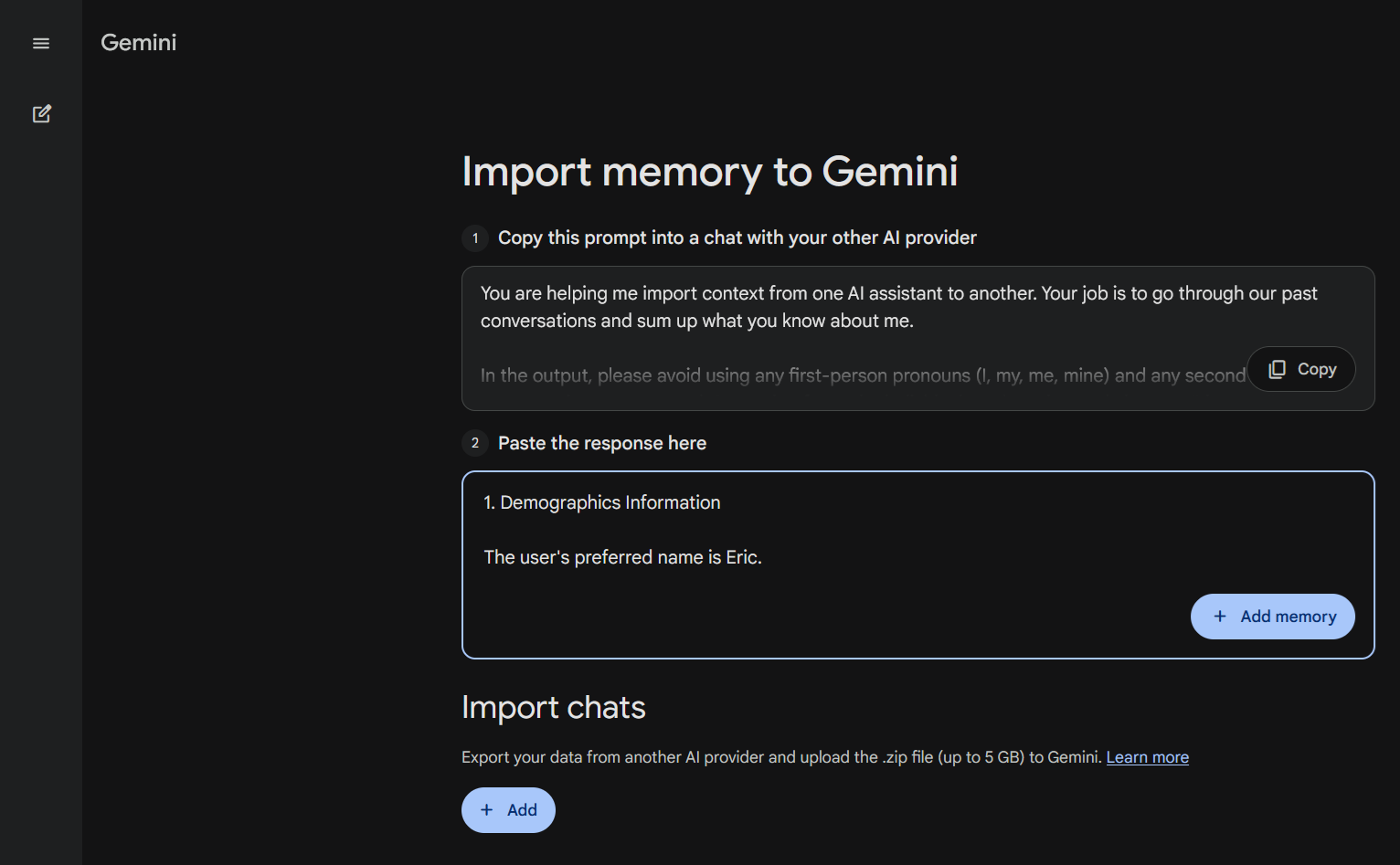
Gemini Memory Import

(Image credit: Future)

I have used ChatGPT long enough that it has accumulated plenty of information about me, so I decided to see what Gemini could learn from it through the process. I clicked on the “Import memory to Gemini” button in the settings menu, and was offered the option of either uploading my conversations with an AI chatbot in a zip folder or using a provided prompt to gather the information.

Article continues below

Advertisement

Source link

Continue Reading

Trending

Copyright © 2025