Connect with us

Tech

Freenet Creator Ian Clarke Shares Progress on Its New Decentralized Network

Published

on

Ian Clarke (aka ancient Slashdot reader Sanity), designer of the peer-to-peer communication platform Freenet, is back with an update on the project’s progress following the launch of its P2P network in March. He writes: Earlier this year, Slashdot covered the launch of the completely redesigned Freenet. I recently gave a talk about what we’ve been building since then. Unlike traditional web applications, apps on Freenet have no central server or database; instead application state is distributed across the network. These now include decentralized group chat, publishing, search, and fully decentralized Git hosting. The talk also gets into some of Freenet’s internals, including how we use machine learning for network routing.

Read more of this story at Slashdot.

Source link

Advertisement
Continue Reading
Click to comment

You must be logged in to post a comment Login

Leave a Reply

Tech

Government Workers Can Officially Waste Time Scrolling TikTok Again

Published

on

The app was banned from government devices in 2022.

Trump administration officials are now free to post and endlessly scroll TikTok, a new memo from the Office of Management and Budget (OMB) says. The memo is the latest move from the federal government formally undoing a 2022 law that banned the app from most government-issued devices,

The OMB memo cites an earlier opinion from the Justice Department. The DoJ said the 2022 law no longer applies because the current version of TikTok has American owners and relies on a different recommendation algorithm than the app that operated under ByteDance. “TikTok may be used on government devices,” the OMB memo confirms.

The memo ends what’s among the last vestiges of the TikTok bans. The app was banned from most federal government devices in 2022 amid rising concerns about its parent company’s ties to China. Government officials under then-President Joe Biden, including FBI Director Chris Wray, said the app posed a national security threat, though the exact nature of the risk was the subject of intense debate.

Advertisement

Intelligence officials never publicly disclosed specifics about the threat posed by TikTok, but lawmakers cited the app’s data collection practices, and raised questions about whether the app’s recommendation algorithm could be subject to influence from the Chinese government.

The app briefly went dark in the US last year after President Biden passed a law requiring ByteDance to sell the app to American owners or face a ban. The app came back online as Trump took office, and a deal to spin off the US version of the app was finalized earlier this year. The US version of the app is now controlled by an entity called TikTok USDS Joint Venture, which is controlled by a group of investors that includes Oracle, Silver Lake and others. ByteDance maintains a 19.9 percent stake in the company.

Some federal agencies have already begun posting on TikTok from official accounts. The Department of Transportation, Treasury Department and Health and Human Services all started new accounts last month after the Justice Department opinion. The White House opened an official account last year.

Advertisement

Source link

Advertisement
Continue Reading

Tech

Chrome adopts what may be the best protection yet against account takeovers

Published

on

DBSCs are an antidote to session cookie theft. Once a website sets a session cookie, the visiting browser must send a form of the cookie that’s signed with the key stored in the silicon. Properties in the TPM or secure enclave isolate the key in a way that prevents it from being extracted. Apple explains the process here.

“The attacker can’t steal the private key from the device because the TPM / Secure Enclave will not release it. That is the core protection here,” Scott Helme, a researcher and founder of Report URI who blogged about the new protections on Tuesday, told Ars. “The attacker can steal the cookie, but they can’t answer a DBSC challenge by signing it with the private key, which is still safe on your device.”

For the moment, DBSCs are supported only in Chrome version 147 for Windows and 150 for macOS. Even then, DBSCs are turned on only for a limited set of users. Presumably, Google is testing the feature before making it generally available. Chrome users on Windows and macOS can check whether it’s running in their browser by opening developer tools, clicking on the application tab across the top, and scrolling down. When a user is logged into a site that supports DBSCs, “device bound sessions” will appear if the protection is turned on.

It’s unclear when, or if, other Chromium-based browsers will implement DBSCs, but it’s likely they will be coming.

Advertisement

DBSCs are the latest form of authentication that eliminates the reliance on a shared secret, which, as the world has known for years, is painfully easy for attackers to steal. Under this new model, web servers store the visitor’s public key. The servers then send an authentication challenge incorporating the session cookie. Unless the resulting answer, known as an authentication assertion, is signed by the private key stored safely in the TPM or secure enclave, the assertion is rejected. Passkeys—which you can read about in this post published earlier on Tuesday—work the same way.

Source link

Advertisement
Continue Reading

Tech

IEEE Summit Supports Bhutan’s Digital Transformation

Published

on

In collaboration with the Kingdom of Bhutan government, IEEE recently introduced its Engineering Education, Research, and Innovation Summit.

Held on 9 and 10 June in Paro, in the eastern Himalayas, the event was designed to help Bhutan navigate its digital transformation by focusing on the critical intersection of digital transformation, engineering education, and sustainable development.

The summit brought together global academic leaders, technology experts, and Bhutanese government officials to discuss how modern engineering curricula can evolve from theory-centric models into application- and skills-based frameworks. Discussions focused on how to build high-value research capabilities in the country, integrate artificial intelligence into higher education, and address foundational infrastructure challenges to ensure equitable, nationwide digital readiness.

“IEEE is proud to collaborate as a catalyst for progress in higher education as AI shifts the technology landscape and Bhutan prepares for its next era of innovation and resilience,” Mary Ellen Randall, 2026 IEEE president and CEO, said at the event. “Our goal is to support local universities and students as they develop trusted, future-ready technology that honors the nation’s commitment to sustainability and human well-being.”

Advertisement

The event featured an address by Bhutanese Princess Chimi Yangzom Wangchuck, who emphasized the importance of aligning technological innovation with the nation’s philosophy of gross national happiness (GNH), which prioritizes well-being, sustainability, and ethics.

“The question before us is not whether technology will shape the future; it certainly will,” the princess said. “The more pressing question is whether we can shape technology according to our values.”

A blueprint for Bhutan’s future

The summit helped establish a collaborative blueprint for a high-value knowledge economy in Bhutan through several key focus areas:

  • Workforce readiness: designing industry-driven curriculum modernization and cocreating skills programs to equip graduates with practical, technical competencies.
  • AI and research infrastructure: strengthening open science, trusted regional datasets, and global citation impact to prepare universities for AI-enabled learning environments.
  • Values-driven innovation: merging GNH principles with technological advancement and helping ensure new engineering practices support climate-resilient infrastructure and green innovation.
  • Institutional connectivity: using digital transformation to bridge technical capability gaps between urban and rural institutions; linking classrooms to a global research network.
  • Promoting sustainability: convening stakeholders to exchange ideas on green innovation, climate-resilient infrastructure, and engineering education.

Expanding digital access

To help promote the effort, IEEE offered Bhutanese universities, government institutions, and industries a six-month complimentary trial of two key technical resources:

From Your Site Articles

Related Articles Around the Web

Advertisement

Source link

Continue Reading

Tech

Do Wireless Headphones Need 24-Bit/192kHz Lossless Audio? Major Brands Disagree

Published

on

Wireless headphones have never sounded better. Focal, Bowers & Wilkins, DALI, Sony, Sennheiser and HiFiMAN have all released products that demonstrate how far the category has progressed through better drivers, amplification, DSP, ANC and increasingly sophisticated wireless technology. We have reviewed enough of them to know that the days when buying wireless meant accepting mediocre sound are disappearing rather quickly.

What comes next is considerably less obvious. Some of the biggest names in premium headphones are not convinced that fully scalable, lossless 24-bit/192kHz wireless playback should be the industry’s next major priority, while others believe reaching that level of performance matters quite a bit.

That disagreement becomes especially interesting when two of the brands now live under the same corporate roof.

Bowers & Wilkins joined HARMAN following its acquisition of Sound United in September 2025. HARMAN, which already owns Mark Levinson, is itself wholly owned by Samsung Electronics. Yet Bowers & Wilkins and Mark Levinson have distinctly different views about how aggressively the industry should pursue 24-bit/192kHz lossless wireless playback.

Advertisement

Apparently, even inside Samsung’s rather enormous audio family, there is no consensus about what premium wireless headphones need next.

Do Consumers Actually Care?

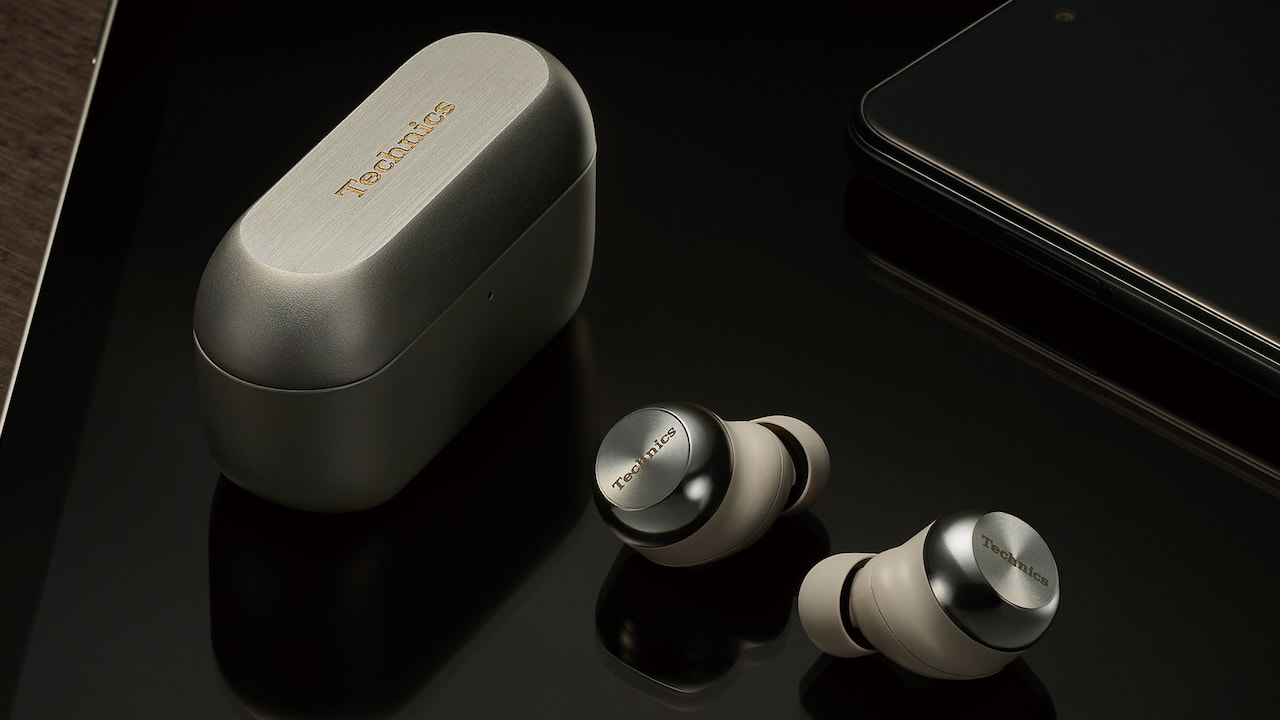
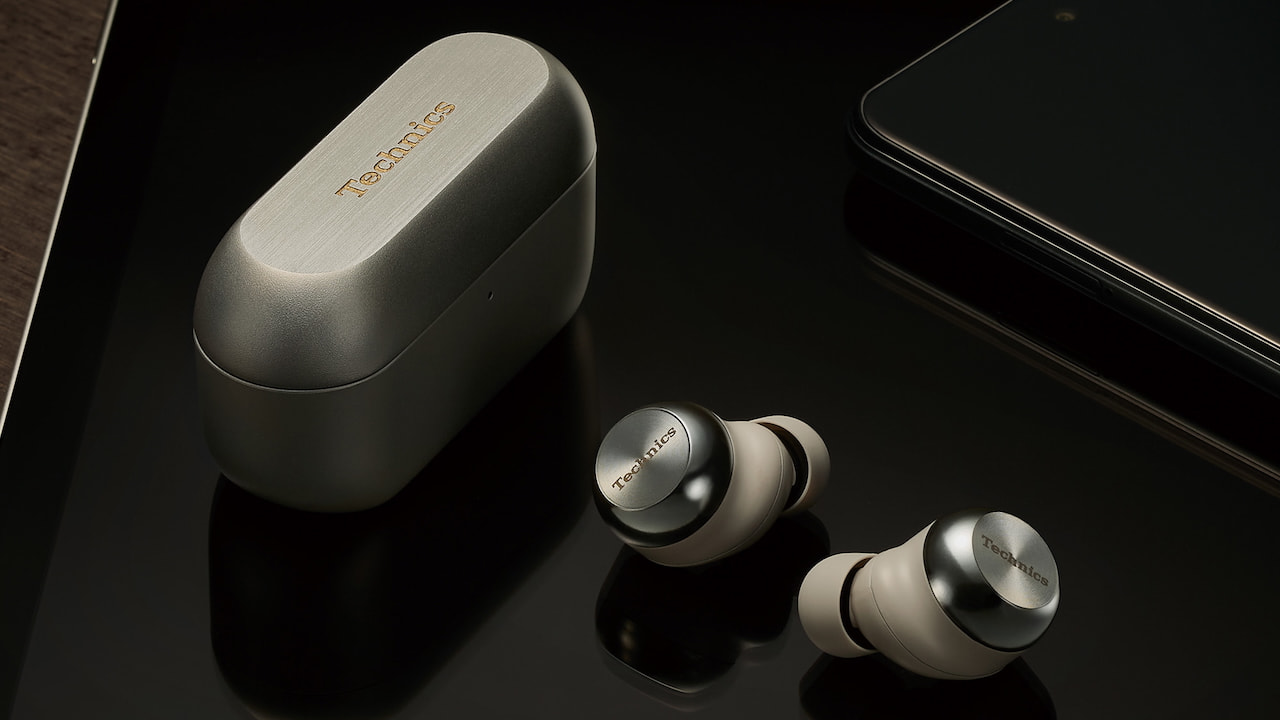
Technics EAH-AZ100 Wireless Earbuds with Case in Champagne

What Hi-Fi? recently asked executives from Sennheiser, Bowers & Wilkins, Technics and Mark Levinson about the slow arrival of scalable 24-bit/192kHz lossless wireless audio, and the responses reveal a genuine philosophical split.

Sennheiser believes the broad majority of consumers are already satisfied with the combination of sound quality and convenience available from existing Bluetooth technologies. Bowers & Wilkins knows that some owners use USB connections to obtain higher-resolution playback, but also recognizes the obvious problem: plugging a cable into wireless headphones rather defeats part of the reason someone bought them. Technics points toward comfort, ANC, connectivity and battery life as priorities that matter more to many mainstream consumers.

Those companies have a point. A great wireless headphone is the sum of its drivers, tuning, amplification, DSP, ANC implementation, ergonomics and connectivity. Slapping “24-bit/192kHz” onto the carton will not transform mediocre drivers or poor tuning into something worth listening to.

It might, however, improve an already excellent headphone if the rest of the playback chain can actually deliver it.

Advertisement

And there sits the problem.

Welcome to Compatibility Hell

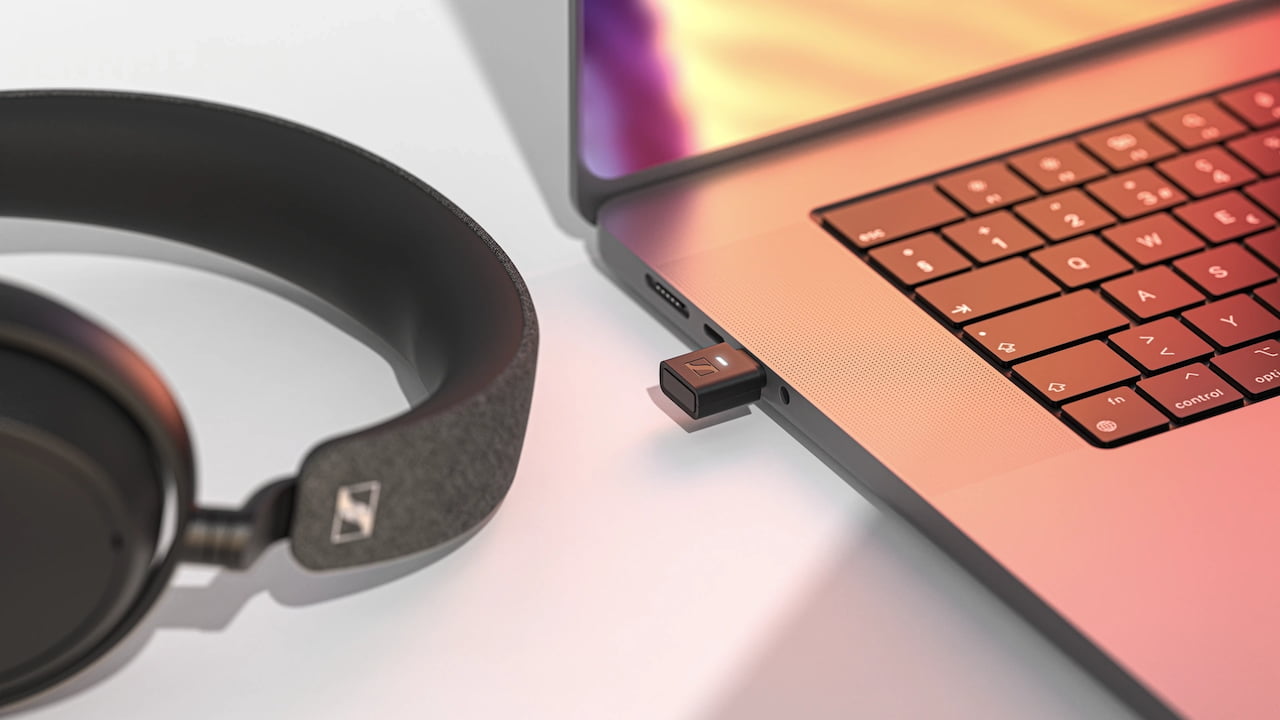
Sennheiser BTD-700 Bluetooth LE USB-C wireless audio adapter in laptop

The technology needed to push wireless audio further already exists. Qualcomm’s XPAN can dynamically move between Bluetooth and Wi-Fi and supports lossless streaming up to 24-bit/192kHz over Wi-Fi, scaling according to bandwidth and connection conditions.

Advertisement. Scroll to continue reading.

HiFiMAN has already taken the Wi-Fi approach with headphones including the HE1000 WiFi. Our testing demonstrated that high-performance wireless playback can sound superb, but also exposed the compromises involved: we achieved roughly five hours of battery life over Wi-Fi versus about 12 hours over Bluetooth.

Sennheiser has attacked the compatibility problem differently with the HDB 630. Its included BTD 700 USB-C transmitter gives users across Android, iOS and computers easier access to aptX Adaptive and higher-resolution wireless playback when their source device cannot provide it natively. It works extremely well, but the fact that the solution involves plugging another transmitter into your supposedly wireless source tells you almost everything about the state of the market.

Advertisement

Nothing says wireless freedom quite like wondering which USB-C dongle you left in the other laptop bag.

And Then There Is Apple

Apple AirPods 4, AirPods 4 with ANC, AirPods Pro 2, AirPods Max with USB-C charging (2024 models)
Apple AirPods family

The situation gets even more confusing depending on which smartphone you own. Android has supported technologies such as Sony LDAC at the operating-system level for years, although codec availability and implementation still vary by manufacturer, chipset and device.

Apple takes a different approach. Apple Music offers Lossless and Hi-Res Lossless playback, but Apple explicitly states that Bluetooth connections are not lossless. Even its own wireless headphones rely on AAC over conventional Bluetooth; lossless playback on compatible AirPods Max models requires a USB-C cable.

Think about that for a moment. An iPhone owner can subscribe to a streaming service offering high-resolution lossless music, spend $500, $800 or $1,500 on premium wireless headphones and still have the smartphone sitting in the middle of the chain determining what can actually reach them wirelessly.

You can solve some of this with an external USB-C transmitter, which brings us back to the dongle drawer.

Advertisement

This is why the hesitation from Sennheiser, Bowers & Wilkins and Technics deserves more consideration than it might initially receive. Building headphones capable of 24-bit/192kHz lossless playback is only part of the job. The phone, operating system, wireless protocol and headphones all need to cooperate without destroying battery life or requiring consumers to study codec compatibility charts before boarding a flight.

Mark Levinson Wants More

Mark Levinson takes the more traditional high-end audio position. HARMAN Luxury Audio’s Matt Dever says reaching lossless 24-bit/192kHz performance in an active wireless headphone is an important goal, and the company is examining technologies including XPAN, Airia, LDAC and LHDC as it looks for ways to get there.

That puts Mark Levinson in a noticeably different place from its new corporate sibling Bowers & Wilkins, but neither position is necessarily wrong. B&W is asking whether 24/192 wireless meaningfully improves the ownership experience enough today to justify additional expense and complexity. Mark Levinson is arguing that premium audio companies should continue moving the performance ceiling higher because that is rather the point of high-end audio.

What Does This Mean for Consumers?

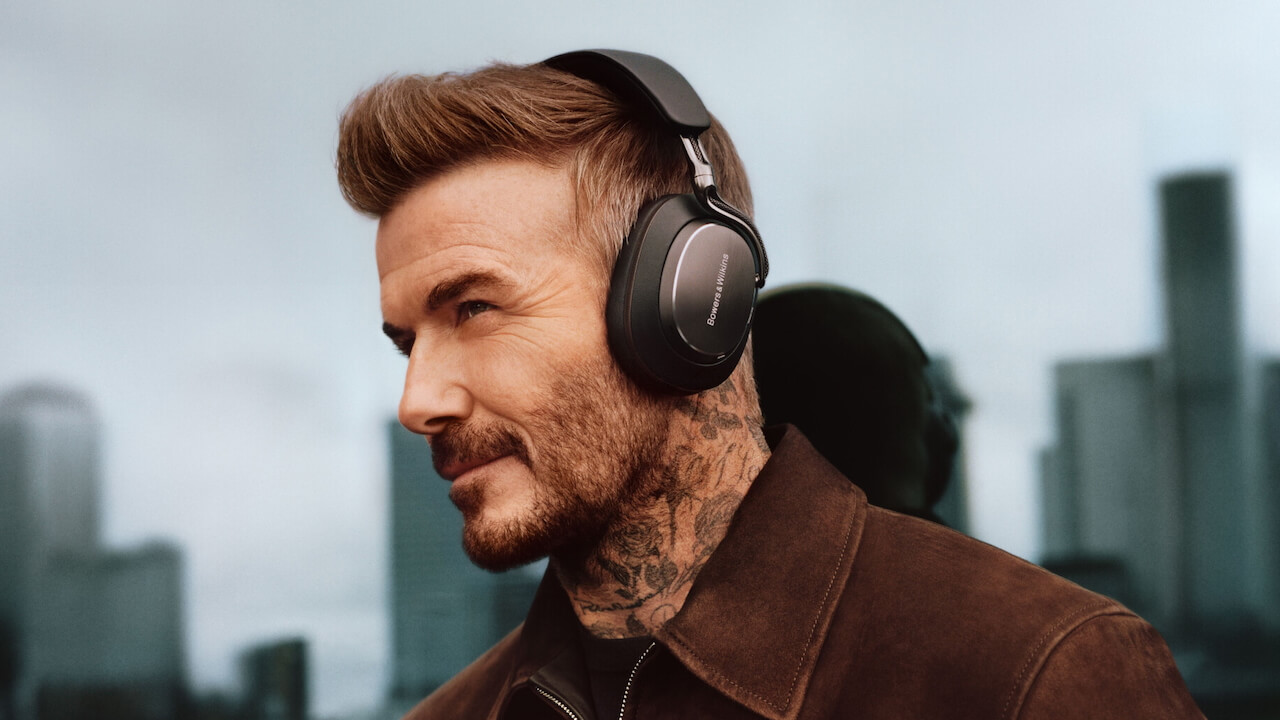
David Beckham wearing black Bowers & Wilkins Px8 S2 wireless headphones

Nobody should postpone buying an excellent pair of wireless headphones because they cannot transmit 24-bit/192kHz losslessly through the air. The best wireless headphones available today already demonstrate that outstanding sound quality involves far more than a resolution number.

Manufacturers should keep pushing, however. Consumers spending increasingly large sums on premium wireless headphones have every right to expect continued improvements in sound quality, connectivity, battery life and transmission technology rather than being told today’s performance is permanently good enough.

Advertisement
Advertisement. Scroll to continue reading.

Sennheiser, Bowers & Wilkins and Technics believe convenience and compatibility deserve priority. Mark Levinson believes the high end should keep chasing maximum wireless fidelity. Apple and Android complicate the entire discussion by offering very different paths from the smartphone to the headphones.

Perhaps the real breakthrough will not be 24-bit/192kHz itself.

It will be the day you can connect an iPhone or Android phone to a premium pair of wireless headphones and get the best sound quality available without knowing what AAC, LDAC, aptX Adaptive, XPAN or any other acronym means.

Advertisement

Until then, the industry can argue about the numbers. Consumers just want the damn thing to work.

Source link

Advertisement
Continue Reading

Tech

Sonos Ace “Ultra” Headphones Surface in FCC Filing: Will They Finally Work Like Sonos?

Published

on

Sonos Ace Headphones Lifestyle in Black
Sonos appears to be preparing new Ace Ultra headphones with Wi-Fi. Can Sonos finally make headphones that fully integrate with its ecosystem?

Source link

Continue Reading

Tech

Anthropic’s Claude Will Add Watermarks to AI-Generated Text and Files

Published

on

You might soon be able to know for sure if something came from a human being or from Claude. Anthropic said this week that text and files generated by its family of AI models will be watermarked to let consumers know. The change will allow the company to comply with EU regulations governing the transparency of AI use.

The EU’s Code of Practice on Transparency of AI-generated Content requires companies that provide and deploy AI systems to inform customers when they are interacting with AI and to include watermarks on AI content. Consumers also must know when they’re exposed to deepfakes and emotion-recognition and biometric-categorization tools.

Watermarking — an authentication process that originated in Italy in the 13th century — is entirely different for AI content. The AI system can automatically embed markers in text indicating that the content originated from AI and not a human. Examples could be different spacing between words and numbers, word sequencing and other invisible signals that remain with the text even if the person copies and pastes it across different platforms. Readers can’t see these markers, but computer systems can.

CNET AI Atlas badge; click to see more

In its announcement this week, Anthropic said Claude models launched on or after Aug. 2 would include watermarking. That includes content created by Claude through the API, Claude, Claude Code, Claude Cowork and Claude Tag. Watermarking will apply to all Claude-generated content wherever the AI system is offered, not just the EU.

Anthropic said it would share details on detecting the watermarks in the future.

Advertisement

A representative for Anthropic didn’t immediately respond to a request for comment and clarification.

What will be watermarked

Claude will include watermarks in text and files — including .svg, .png, or .jpg — that it generates. With text, the watermarks will be signals embedded into letters and words that will be invisible to readers but visible to machine systems. Even if the text is copied and pasted from text editors such as Windows Notepad or MacOS’s TextEdit, the watermarks will remain. The marks also might not be eliminated through human editing, either.

“Watermarking will be applied at the model level, which means it will be present no matter which Claude product or surface the text comes from,” the company said.

Read more: I Used Every AI Cheating App and Detector and Came to One Conclusion

Advertisement

Image files created by Claude will have signed provenance metadata, including information about where the image came from, who created it and if it has been modified. If someone tries to tamper with it — for example, trying to hide that it was generated by AI — the cryptographic signature will break and thus will show the reader that it was tampered with.

AI transparency is a growing trend. Substack partnered with Pangram to let readers know how much, if any, a post was generated by AI. Suno recently announced changes to help listeners know if a song was created by AI. If LinkedIn customers suspect AI slop, they can let LinkedIn know. Spotify’s new feature, AI Persona, allows listeners and creators to know which music was created with AI.

It’s not foolproof

Anthropic included a caveat in its announcement. The presence of watermarking doesn’t necessarily mean the content or image was created by Claude, nor does the absence of watermarking mean Claude wasn’t involved, either.

For example, let’s say someone wants to repurpose an essay from another writer. They punch the essay into Claude and ask the AI to reword it. The output will have watermarking, but the content’s facts and details came from a writer, not AI. People often use Claude for proofreading, translating and summarizing, the company said.

Advertisement

Someone might also take content from Claude and edit it and combine it with other text. Even if only a small portion of the final draft is from Claude, there could be a watermark, perhaps undermining the legitimacy of the document for the reader.

Read more: Students Cheating With AI Caused This Ivy League School to Upend a 133-Year-Old Tradition

Anthropic said content generated or processed by Claude might not have a watermark, for various reasons. It could be that the amount of AI-generated content is too small, or perhaps the content has been “heavily edited, paraphrased, translated or mixed into other writing.”

It’s also possible that a Claude-generated image doesn’t have a watermark either. For example, if someone takes a screenshot of the image and re-saves it as a different file, it won’t have the metadata.

Advertisement

Although Anthropic is trying to comply with EU rules, AI detection has been significantly less than reliable, according to some reports. For example, content from non-native English speakers is often falsely flagged as AI-generated.

Source link

Advertisement
Continue Reading

Tech

Is It Safe to Eat Lettuce Yet?

Published

on

For a while it seemed like the diarrhea-inducing parasite cyclospora was everywhere. Confirmed and suspected cases number more than 22,000 across 15 states, with 517 people requiring hospitalization. Two people in Michigan died. But now, with signs that the outbreak is slowing down, experts say lettuce is probably safe to eat again.

The reason? Most of the contaminated produce is no longer available.

Federal health authorities have linked the outbreak to iceberg lettuce sourced from central Mexico and distributed by Taylor Farms, including at Taco Bell restaurants. On July 17, Taylor Farms announced a recall of shredded iceberg lettuce and salad mixes with “best if used by” dates through August 3, advising consumers to immediately discard any of the affected products. Grocery stores and restaurants are responsible for removing recalled items.

“That product is off the market, so I think there’s absolutely lower risk for cyclospora in terms of eating lettuce,” says Kali Kniel, a professor of microbial food safety at the University of Delaware.

Advertisement

But that doesn’t mean consumers shouldn’t still be vigilant about what they’re eating. As of August 6, there are two additional clusters of cyclosporiasis that officials are investigating. While a source has not been identified, officials in North Carolina say the state is looking into parsley and cilantro. At the same time, an outbreak of salmonella tied to jalapeños has infected at least 345 people across 27 states. On Sunday, Taylor Fresh Foods, the parent company of Taylor Farms, issued a recall of jalapeños and products containing jalapeños, including salsa and guacamole.

Total cases of cyclosporiasis could continue ticking up for weeks because of the lag time between when a person is exposed and when symptoms emerge, as well as delays related to seeking care, getting tested, and linking cases to contaminated products. On average, people exposed to cyclospora start to feel sick seven days after exposure, but symptoms can take up to 14 days to appear. Given the seven-day average incubation period and the recall in mid-July, most exposures likely happened in June and the first half of July.

Of course, there’s a chance that some people were exposed to the parasite after the recall occurred if they unintentionally ate a contaminated product they had at home. But now that those “best by” dates have passed, the original affected salad products should be long gone from refrigerators.

In Michigan, which was hit hardest by the outbreak, the state has reported more than 12,000 cases since June. Typically, Michigan sees 40 to 50 cases of cyclosporiasis annually. However, new cases have been on a downward trajectory since late July. On August 6, the state’s health department said Michigan residents no longer need to avoid bagged salad mixes and may resume their usual food handling practices as new cyclosporiasis case reports and diarrhea-related emergency department visits are on the decline.

Advertisement

“As we are seeing fewer cases reported than previous weeks and fewer people reporting the onset of new symptoms, we have growing confidence that the outbreak is declining,” Laina Stebbins, a spokesperson for the Michigan Department of Health and Human Services, tells WIRED.

The state health department first identified lettuce and salad greens as a potential source of the outbreak on July 13 and advised consumers to purchase whole heads of lettuce rather than bagged products and to discard outer leaves and thoroughly wash inner leaves before eating. The cyclospora parasite clings to surfaces and crevices of raw produce and is resistant to common food sanitizers, making it tricky to get rid of.

Source link

Advertisement
Continue Reading

Tech

Intel raises $20bn in first share sale since 1971

Published

on

Surging investor demand pushed the chipmaker to upsize the offering by a third.

Intel has raised $20bn in its first share sale since 1971, as the chipmaker moves to fund a major expansion into artificial intelligence manufacturing.

Priced at $95 per share on Monday, the deal was upsized by a third from an initial $15bn after drawing more than $100bn in demand, according to Bloomberg – a sign of how strongly investors continue to back companies in the AI supply chain.

The move is a shift in direction for a company that spent $82bn buying back its own stock in the 2010s. Under CEO Lip-Bu Tan, who has prioritised financial discipline since taking over, Intel’s shares are up by around 164pc in 2026 after a torrid few years.

Advertisement

Proceeds will fund Intel’s capital expenditure programme, which the company recently raised to $20bn for 2026, driven by surging demand for central processing units as AI agents proliferate.

Intel is also building out its contract manufacturing business, with the goal of competing with Taiwan’s TSMC, after securing Tesla as a customer for its 14A manufacturing process.

Last month, the company announced a €5bn investment to upgrade and expand its Leixlip campus in Kildare, Ireland and committed to keeping the country at the centre of its manufacturing network.

Since establishing a presence in Ireland in the late 1980s, Intel has invested more than €30bn into its operations here. The Leixlip campus serves as one of the company’s most advanced manufacturing facilities, according to Intel, which currently employs around 4,900 people in Ireland.

Advertisement

The share sale is part of a run of large equity raises linked to AI spending. Alphabet is raising up to $85bn across several instruments, while Oracle has a $20bn at-the-market sale underway. Intel’s offering was led by JPMorgan, Goldman Sachs, Morgan Stanley and Citigroup.

Don’t miss out on the knowledge you need to succeed. Sign up for the Daily Brief, Silicon Republic’s digest of need-to-know sci-tech news.

Source link

Advertisement
Continue Reading

Tech

How Metro by T-Mobile is making wireless plans simpler, smarter, and more affordable

Published

on

Finding a mobile plan used to be simple. Today, it’s easy to be drawn in by a low advertised monthly price, only to discover additional costs once it’s time to check out. Activation fees, taxes, device payments, and fluctuating monthly bills can quickly turn what looked like a bargain into a much more expensive commitment.

That shift in consumer expectations has changed how people shop for wireless services. Instead of chasing the lowest number on a billboard, more customers are looking for something equally important: transparency. They want to know exactly what they’ll pay each month, what they’re getting in return, and whether they’ll have to compromise on network quality to save money.

This is where Metro by T-Mobile is trying to stand apart. Rather than focusing solely on discounts, the carrier is emphasizing straightforward pricing, flexible plans, and access to the strength of T-Mobile’s network, giving customers value that extends beyond the monthly bill.

The True Cost of a Wireless Plan

For many consumers, the advertised monthly price is only one part of the equation. Hidden fees and unexpected charges can significantly increase the actual cost of ownership over time.

Advertisement

Whether it’s activation fees, taxes that appear only at checkout, or promotional pricing that changes after a few months, these surprises can make it difficult to budget accurately. That’s especially frustrating for customers who simply want dependable wireless service without constantly reviewing their monthly statements.

Metro by T-Mobile takes a different approach by putting key details upfront. The carrier highlights offers with taxes and fees already included, no activation fees on eligible promotions, and pricing designed to remain predictable. That means customers know what they’re signing up for before making the switch, helping remove much of the uncertainty traditionally associated with changing carriers.

Reliable Connectivity Matters Just as Much as Price

Affordability is important, but it means little if the network can’t keep up with everyday life. Streaming videos, joining video calls, navigating unfamiliar cities, or simply staying connected with family all depend on consistent network performance.

That’s why Metro by T-Mobile places significant emphasis on the network behind its plans. The carrier runs on T-Mobile, America’s Best Network*, helping address one of the biggest concerns shoppers often have when considering prepaid wireless service. Instead of asking customers to choose between affordability and dependable connectivity, Metro by T-Mobile aims to offer both.

Advertisement

For many consumers, that combination changes the conversation. Choosing a prepaid carrier no longer has to mean sacrificing the experience they expect from a national wireless network.

*Based on analysis by Ookla® of Speedtest Intelligence® 1H 2026 data. Metro may be slower than T-Mobile during congestion. Get full terms.

A Free Samsung Galaxy A37 5G Makes Switching Even Easier

For shoppers planning to upgrade their smartphone, Metro by T-Mobile is pairing its transparent pricing with an attractive device offer.

Eligible customers who bring their number and join Metro with a qualifying $40 plan can get the Samsung Galaxy A37 5G at no cost. The promotion is positioned as putting more than $450+ in value back into customers’ pockets while also including taxes and fees in the monthly price and eliminating activation fees. Since the service runs on T-Mobile’s network, customers also benefit from nationwide connectivity alongside the savings.

Advertisement

For someone already considering a new Android smartphone, this combination helps reduce one of the biggest expenses associated with switching carriers – the upfront cost of a new device.

Love Your Current Phone? Keep It.

Not everyone wants a brand-new smartphone. Many users are perfectly happy with the device already in their pocket and simply want a better wireless plan.

Metro by T-Mobile addresses that need through its Bring Your Own Device (BYOD) option. Customers can keep their existing compatible phone while signing up for one line of Unlimited 5G service for just $25 per month online. The plan also includes taxes and fees, comes with no activation fees, and is backed by a five-year price guarantee, * making it easier to know what to expect month after month.

*5-Yr Guarantee covers on-network talk, text & data.

Advertisement

The flexibility is important. Instead of encouraging customers to replace a phone that still works perfectly well, Metro by T-Mobile allows them to reduce their monthly wireless costs while continuing to use a device they’re already comfortable with.

Apple Users Have an Option Too

The savings aren’t limited to Android users. Customers who prefer Apple’s ecosystem can also take advantage of Metro by T-Mobile’s iPhone promotion. Eligible customers who bring their number and ID while signing up for the $50 AutoPay plan can receive the iPhone 16e at no cost. The promotion also includes a $100 virtual prepaid card after the third month and no activation fees, making it another example of Metro by T-Mobile pairing device savings with straightforward pricing.

By offering both Android and iPhone promotions, Metro by T-Mobile gives customers the flexibility to choose the smartphone ecosystem they already prefer rather than asking them to compromise.

More Than a Promotional Price

While attractive device offers certainly grab attention, Metro by T-Mobile’s broader message is about long-term value.

Advertisement

Many wireless shoppers are increasingly looking beyond introductory discounts. They want predictable monthly bills, fewer unexpected charges, and confidence that their service will continue performing when they need it most.

By combining transparent pricing with the reach of T-Mobile’s network, Metro by T-Mobile positions itself as an option that focuses on the complete ownership experience instead of simply advertising the lowest possible monthly rate. The emphasis on no activation fees, taxes and fees included on qualifying plans, and long-term pricing certainty helps reinforce that approach.

The Bottom Line

Shopping for a wireless plan today is about much more than finding the lowest monthly price. Consumers increasingly want clarity, flexibility, reliable coverage, and offers that genuinely reduce the total cost of switching.

Metro by T-Mobile brings those elements together through transparent pricing, meaningful device promotions, and access to T-Mobile’s network. Whether someone is looking for a free Samsung Galaxy A37 5G, wants to keep their current phone with an affordable Unlimited 5G plan, or is interested in switching to an iPhone 16e, the carrier offers multiple paths to savings without losing sight of what matters most – knowing what you’ll pay and staying connected on a network backed by T-Mobile.

Advertisement

Source link

Continue Reading

Tech

Capturing the ‘primal energy of Wolverine’ in a new look, Sony is going all-in on Marvel’s Wolverine with a new PS5 collection that includes covers, a DualSense, and a limited-edition console

Published

on

It wouldn’t be a PlayStation exclusive without some matching hardware, right?

It’s an approach we’ve seen the gaming giant take before, and personally, I’ve always had a soft spot for the various Spider-Man-themed PS5 editions. Those consoles understood that a limited-edition PlayStation doesn’t necessarily need to reinvent the hardware itself. Rather, the right colors and a design that makes the console feel like part of the game.

Source link

Advertisement
Continue Reading

Trending

Copyright © 2025