Tech
Future Motion Turns a Onewheel XR Classic Into a Self-Balancing Track Cart

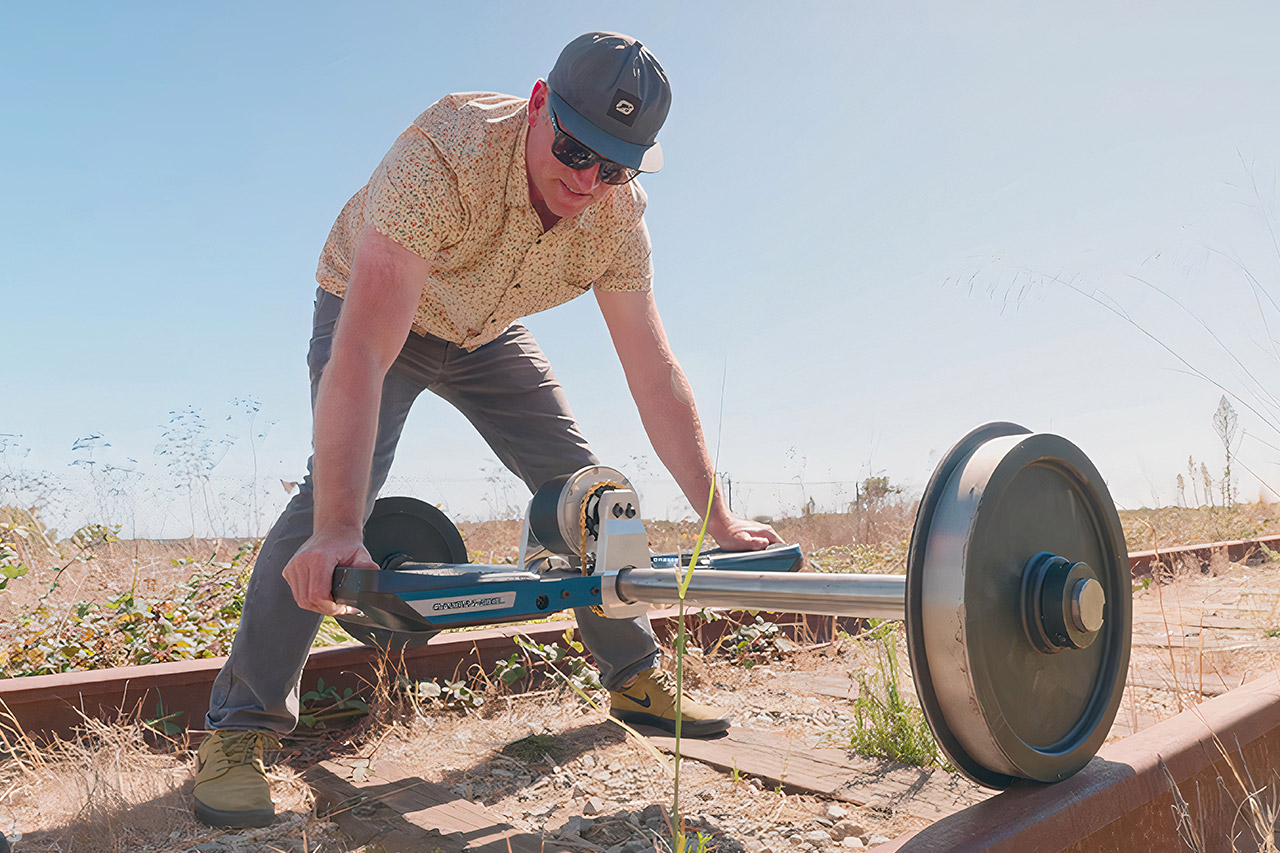
Future Motion’s Santa Cruz shop looks out on the Pacific. About thirty feet from the door sits a stretch of abandoned railroad Kyle Doerksen had been staring at for years. In September 2026 he pulled a bone-stock XR Classic off the shelf and decided that line was going to carry a Onewheel.


The plan was simple: insert a railroad axle through the hole that ordinarily houses the hub motor. First, lift the motor out of the way. Teach a gearless direct-drive engine to pull a chain rather than spinning a hub while keeping the self-balancing board’s brain intact, allowing the rider to maneuver by leaning. They cut up the stock frame and added some CNC mounts in the middle so the motor could sit on top of the deck instead of taking up the former wheel space. Then they slapped some massive steel rail wheels from eBay, weighing over 70 pounds, onto an axle that now serves as the original center line. The first test run consisted of just the axle and wheels on the tracks, with no motor or board, to ensure that the gage was accurate. When the steel slid easily over the steel, it was very much a green signal.


INMOTION E20 Electric Unicycle with Dual Tires for Easier Self-Balancing
- Safe & Reliable: Certified to ANSI/CAN/UL 2272
- Unlike traditional electric unicycles, which typically have one wheel and one tire, the INMOTION E20 features a single wheel with dual tires. This…
- The E20 is designed for simplicity and stability. Our proprietary dynamic self-balancing algorithm maintains both front and rear balance…
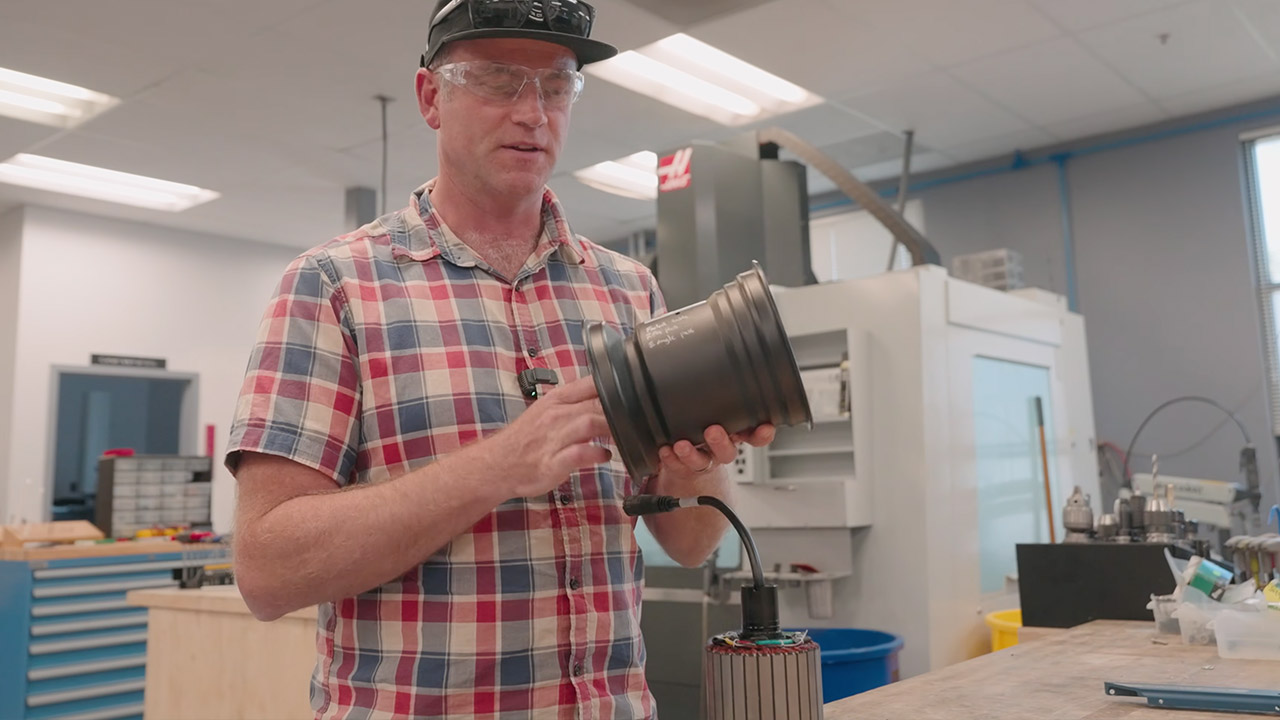
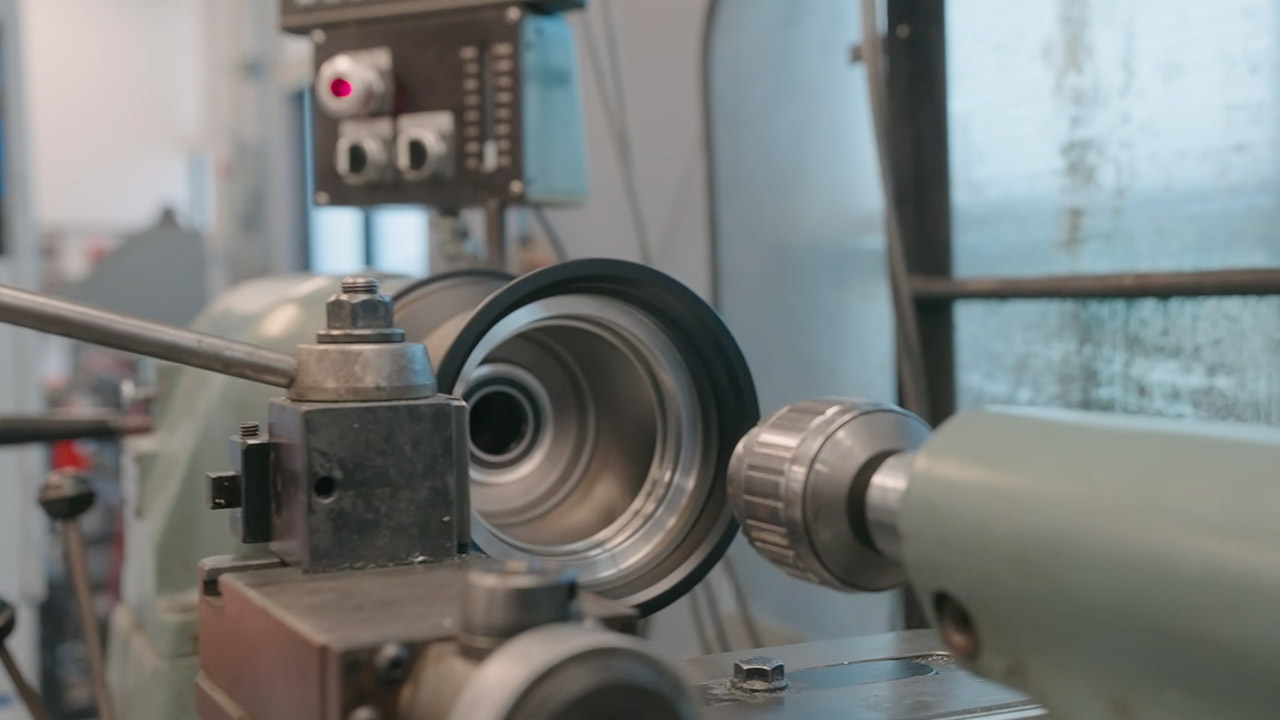
Kyle disassembled the hub and turned the housing on a lathe until the flanges were tiny enough for a chain sprocket to fit. He needed a custom end cover to go onto the motor for a bike sprocket. The chain then drops from the sprocket to the train axle. Bearing carriers began as 3D printouts, but they had to be sanded down to clear some wire, and after the fit was correct, they were simply cut out of aluminum.

The same sensors that keep a standard Onewheel upright continue to power the self-balancing feature. Lean forward, and the controller nudges the hub in that direction, but now it rotates a sprocket rather than a wheel. Rails lock the item left to right, but the rider may still alter the pitch with their ankles and toes. The result is a good guided cart that nevertheless responds to the rider.
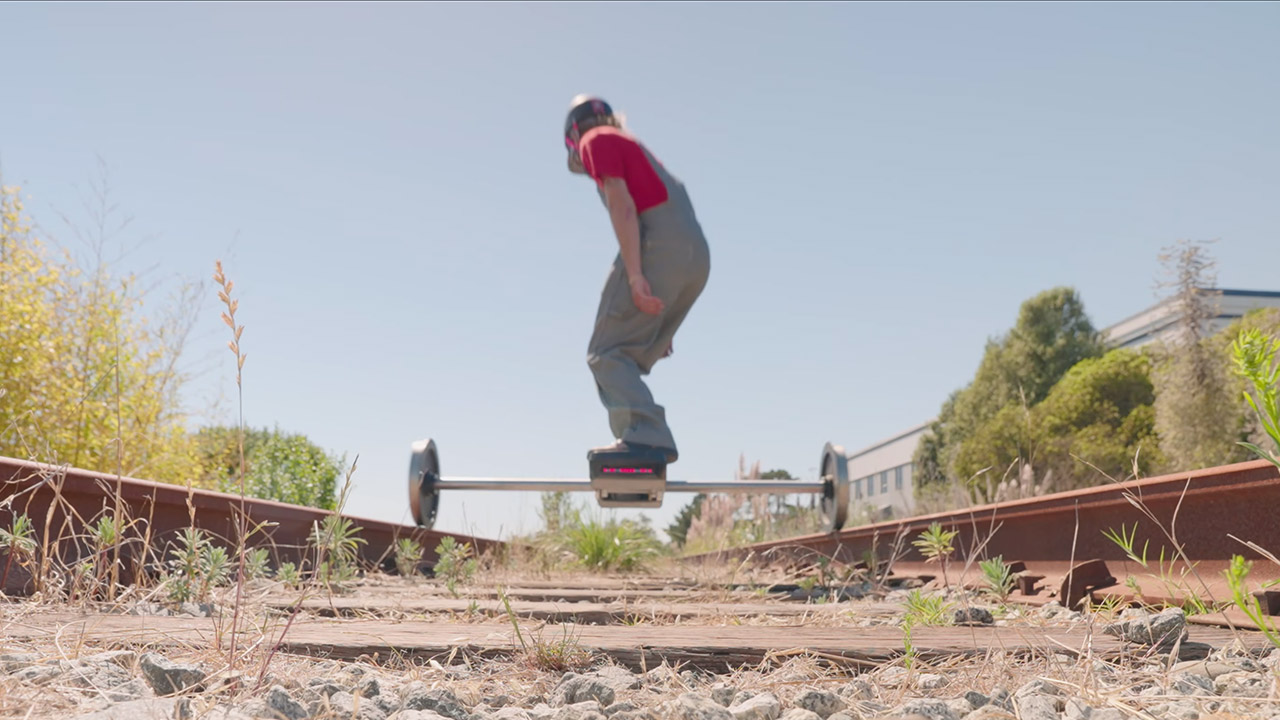
The first time they moved the thing and turned the cart on, it was noisy, but eventually everything settled down. Kyle thought the motion was incredibly smooth, “like butter.” The crew claimed it looked like flying and was so smooth it hurt their minds. So they started chanting “all aboard” for a cause. Future Motion isn’t selling a conversion kit, though; instead, he’s talking about riding out to Capitola or Davenport and how there are a plethora of self-balancing rail cars just waiting to be created. For the time being, the Rail Board consists of a converted XRC, a couple of heavy eBay wheels, a length of chain, and a quiet small section of track outside the office, complete with a rider.
[Source]
You must be logged in to post a comment Login