Connect with us
DAPA Banner

Tech

Google app just launched on Windows, and it wants to pull a Spotlight trick from Macs

Published

on

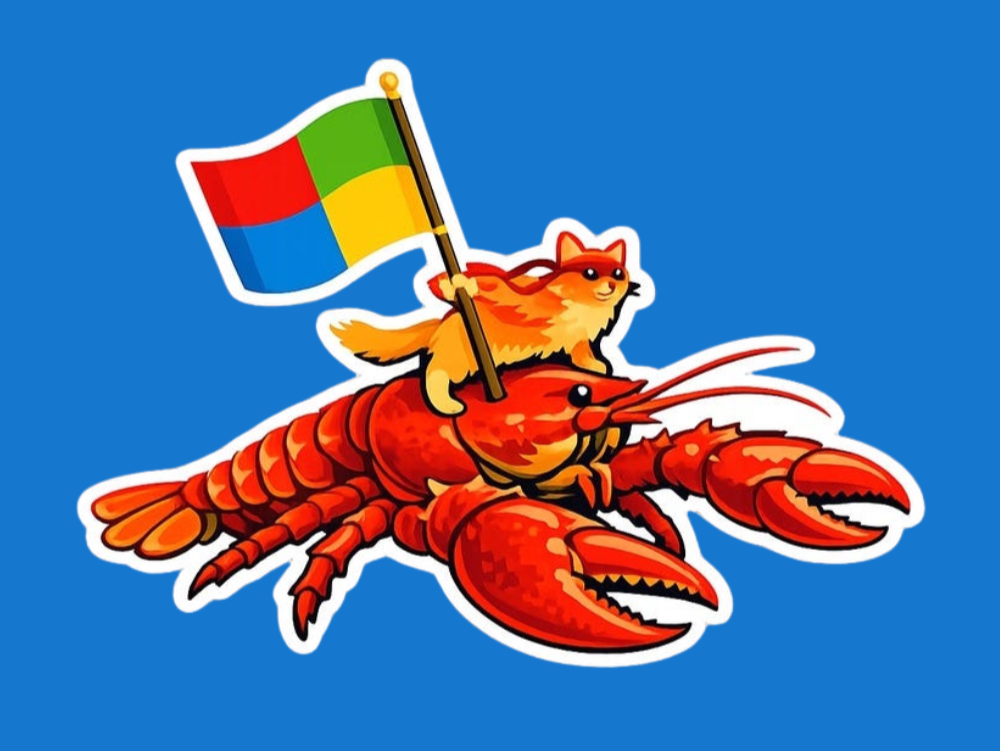
Google has planted its flag on Windows territory. The Google app for desktop is now globally available in English for Windows users, graduating from its experimental phase on Search Labs

The browser tab we reflexively open to use Google every five minutes now has a faster, more efficient replacement sitting on the desktop. 

What Does The App Actually Do?

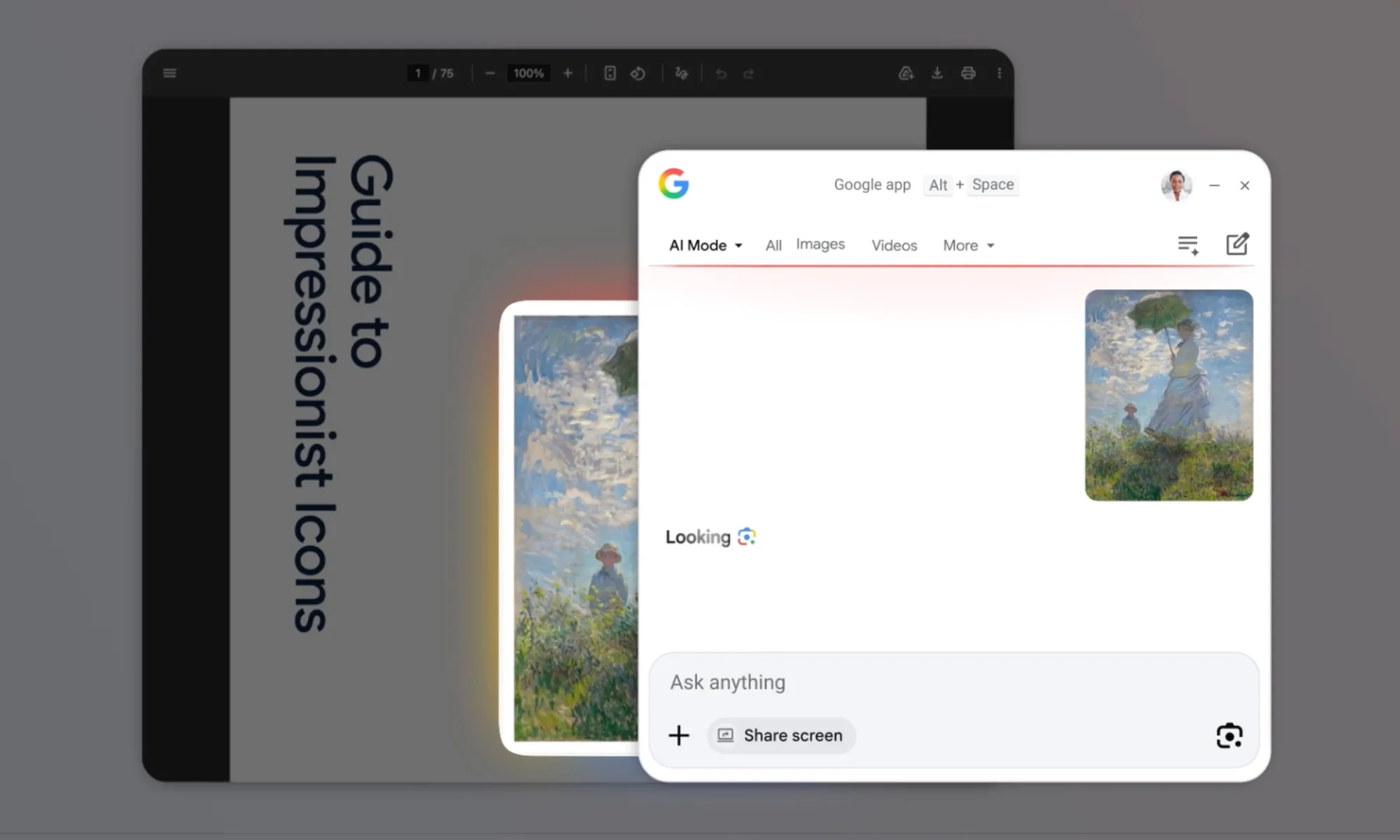
The centerpiece, mind you, is a keyboard shortcut: Alt + Space. It summons a floating search bar over whatever is on the screen, similar to how Cmd + Space summons the Spotlight search on Macs.

Once you summon the search bar, you can search across local computer files, installed apps, Google Drive documents, and the internet in general, all from one place. 

If I were a Windows user (which I was until about three years ago), I would have installed the Google app for the Spotlight-like search experience alone, but my Mac’s Spotlight has been working fine for the same amount of time.

Advertisement

What else can it do?

Quite a bit, actually. Google Lens, the company’s native image-based search tool, is built directly into the new Google app for Windows. It lets users click and search for anything that’s visible on their screen. 

From translating on-screen text to solving a maths problem, you can do such things without copying anything. The app also supports screen sharing within a search session, so users can keep a document or webpage open while asking follow-up questions. 

Of course, the new Google apps come with AI Mode embedded. So, answers go beyond blue links, responses are conversational, contextual, and connected to the internet with accurate information, along with appropriate citations. 

Google’s global Windows app rollout signals something bigger than convenience; it’s a direct challenge to Microsoft’s dominance over your desktop search experience. Copilot is already embedded in Windows, so Google’s presence is also making itself felt. In the future, we might get to see a dedicated Gemini app for Windows. 

Advertisement

Source link

Continue Reading
Click to comment

You must be logged in to post a comment Login

Leave a Reply

Tech

Bull and Equal1 to advance next gen of hybrid quantum tech in Europe

Published

on

The partnership will bring together Bull’s supercomputing infrastructure and Equal1’s ‘breakthrough’ silicon-spin quantum computers.

Bull, a Paris-based high-performance computing (HPC), artificial intelligence and quantum technology company, is to partner with Dublin start-up Equal1, a silicon-powered quantum computing technology provider. 

Equal1 and Bull stated that their deal will “advance the next generation of hybrid quantum-classical technologies with European solutions”, at a time when quantum computing is beginning to transition from promise to practical reality.

The pair said the partnership will combine Bull’s supercomputing infrastructure and quantum emulation expertise with Equal1’s breakthrough silicon-spin quantum computers, as agreed in a memorandum of understanding. 

Advertisement

The collaboration will focus on three core pillars – technical integration, joint research and development to advance innovation, and a focus on sovereign European projects whereby both companies will collaborate on EU-led quantum initiatives amid the global quantum race.

Commenting on the announcement, Bruno Lecointe, the senior vice-president and global head of HPC, AI and quantum at Bull, said: “The convergence of high-performance computing and quantum technologies is redefining how we address the world’s most complex challenges. 

“10 years after launching the first quantum emulator of the market, innovation has always been part of Bull’s DNA and we remain committed to designing hybrid architectures that help translate emerging technologies into operational capability.

“By integrating Equal1’s silicon-spin quantum servers into our Qaptiva ecosystem, we are enabling a seamless bridge between HPC, quantum emulation and quantum execution. This alliance ensures our customers can leverage quantum-centric supercomputing to achieve real-world outcomes with unprecedented efficiency and performance.”

Advertisement

Jason Lynch, the CEO of Equal1, added: “By building quantum processors on standard silicon, we are turning quantum from bespoke laboratory hardware into deployable infrastructure. This collaboration with Bull is a vital step in bridging the gap between breakthrough hardware innovation and industrial workloads. 

“Together, we are positioning our joint solutions as the standard for high-performance computing, enabling seamless integration into existing data centres and driving a more sustainable digital future.”

Earlier this year, Equal1 announced it had raised $60m in a funding round led by Ireland Strategic Investment Fund, with participation from Atlantic Bridge, the European Innovation Council Fund, Matterwave Ventures, Enterprise Ireland, Elkstone and TNO Ventures.

At the time, Equal1 said that the investment would enable deployment to HPC centres – including to the European Space Agency’s Phi-lab in Italy – advance the roadmap towards “millions” of on-chip qubits, scale manufacturing and grow its team.

Advertisement

Last week, the Dublin-based start-up said it would partner with Californian quantum infrastructure software maker Q-Ctrl for the deployment of rack-mounted quantum computers in enterprise data centres.

Don’t miss out on the knowledge you need to succeed. Sign up for the Daily Brief, Silicon Republic’s digest of need-to-know sci-tech news.

Source link

Advertisement
Continue Reading

Tech

Apple Store closures make sense to Apple, but not to the community

Published

on

Apple sometimes closes retail stores. The company always has private and public reasons why, but the communities and workers that are impacted don’t care much about what they are.

Modern Apple retail store interior with bright lighting, glass front, wooden tables displaying iPhones, iPads, and laptops, accessory shelves along gray walls, and large product posters on both sides
Apple Trumbull – Image Credit: Apple

On April 9, it was revealed that Apple was preparing to close three of its stores in the United States in June. The group consists of Apple North County in Escondido, California, Apple Towson Town Center in Towson, Maryland, and Apple Trumbull in Trumbull, Connecticut.
After the initial shock of the closures, people are still expressing their feelings about the store closures. However, as usual, nothing is straightforward in the court of public opinion.
Continue Reading on AppleInsider | Discuss on our Forums

Source link

Continue Reading

Tech

By Our Calculations, You’ll Love The Flapulator

Published

on

Oh sure, you’ve got calculators. There’s that phone program of course, and the one that comes with your OS, and the TI-86 and possibly RPN numbers you’ve had since high school.

But what you don’t have is a Flapulator, at least not until you build one. Possibly the be-all, end-all of physical calculating devices, the Flapulator does its calculating live on a split-flap display. It’s kind of slow and the accuracy is questionable, but the tactility is oh, so good.

This baby boasts a 6-digit display, where the decimal point and negative sign each require one digit. Inside is a Raspberry Pi Pico, which can calculate for around 4 hours on a full charge. But the coolest part (aside from the split-flap display, naturally) has got to be the 24-key, hand-wired mechanical keyboard. There’s also a couple of LEDs that light up to keep track of the current mathematical operation.

Advertisement

The story behind this one is kind of interesting. [Applepie1928] found out that one of their favorite mathematician-comedian-pi-lovers who is known for signing calculators was coming to town. With four weeks to whip something up, this was, amazingly, the result. Check it out in  action after the break.

Need something that’s a whole other kind of fancy? Here’s an open-source graphing calculator.

Advertisement

Source link

Continue Reading

Tech

Intel and Google lock in massive Xeon deal as AI workloads reshape cloud infrastructure across global hyperscale data centers

Published

on


  • Intel and Google signed a multi-year deal to keep Xeon in cloud infrastructure
  • Google Cloud instances C4 and N4 already run on Xeon 6 processors
  • Intel and Google are co-developing custom IPUs for networking and storage

Intel and Google have announced a multi-year collaboration that will keep Intel Xeon processors at the heart of Google Cloud infrastructure for the foreseeable future.

The agreement spans multiple generations of Xeon chips and includes systems used for AI workloads, inference tasks, and general-purpose computing across Google’s global data centers.

Source link

Continue Reading

Tech

Crypto-exchange Kraken extorted by hackers after insider breach

Published

on

Crypto-exchange Kraken extorted by hackers after insider breach

The Kraken cryptocurrency exchange announced that a cybercrime group is trying to extort the company by threatening to release videos showing internal systems that host client data.

The company’s Chief Security Officer, Nick Percoco, stated that the incident did not put client funds at risk and involved an insider threat, with two instances of improper access to limited customer data by support employees.

Kraken says that it will not pay or negotiate with the threat actor.

Wiz

“We are currently being extorted by a criminal group threatening to release videos of our internal systems with client data shown if we do not comply with their demands,” stated Percoco.

“It’s important to start with the most important points: our systems were never breached; funds were never at risk; we will not pay these criminals; we will not ever negotiate with bad actors.”

Advertisement

Tweet

Kraken is a U.S.-based cryptocurrency exchange that enables millions of users across 190 countries to buy, sell, and trade digital assets such as Bitcoin, Ethereum, and 200 others.

It is considered one of the largest and most established exchanges, with a daily trading volume of hundreds of millions of U.S. dollars.

Following a “tip from a trusted source” in February 2025 about cybercriminals circulating a video demonstrating access to its client support systems, Kraken initiated an investigation and uncovered a support employee recruited by the threat actor.

More recently, Kraken received a tip about another, more recent video showing insider access to its systems.

Advertisement

In both cases, the company reacted quickly by revoking the employee’s access, launching investigations, and strengthening controls. Where user exposure was identified, Kraken notified affected users directly.

According to Percoco, the incident affects only about 2,000 accounts, which represents 0.02% of Kraken’s user base. For this small subset, the exposed information reportedly only concerns client support data.

Kraken stated that its investigation has gathered enough evidence to legally prosecute all involved individuals attempting to blackmail them, and the company is closely working with federal law enforcement across multiple jurisdictions towards this goal.

Insider threats and malicious recruitment are a broader problem impacting multiple industries, and especially the cryptocurrency sector.

Advertisement

In mid-2025, it was revealed that another major American cryptocurrency exchange, Coinbase, suffered a data breach after hackers bribed employees of an India-based customer support agency to disclose to them private client support information.

In that case, the incident impacted 70,000 customers, with Coinbase estimating the total financial damages to be $400 million.

Automated pentesting proves the path exists. BAS proves whether your controls stop it. Most teams run one without the other.

This whitepaper maps six validation surfaces, shows where coverage ends, and provides practitioners with three diagnostic questions for any tool evaluation.

Source link

Advertisement
Continue Reading

Tech

Google’s new Windows app is yet another way to access Gemini

Published

on

Google has introduced a new app for Windows desktops and, unsurprisingly, it puts AI front at center. If you aren’t a big fan of Google’s Gemini chatbot, then skip on past this download. For those of you who are heavy Gemini users, though, this could mean a simpler and more integrated experience on Windows machines.

Once installed, you can pull up the app’s search bar with the Alt + Space shortcut. Queries typed into this open-ended search box can hunt down information from the web like typical Google search, where AI Mode will be enabled for an extra layer of artificial intelligence for follow-up questions or a deeper dive down a rabbit hole. But the app isn’t limited to web search. It can delve into your computer’s files, other installed apps or Google Drive files to retrieve information. Screen sharing is also built into the app, which enables using Google Lens to conduct AI-powered searches on content displayed on your monitor.

The app is rolling out globally today in English. Interestingly, this hasn’t been gated to the most recent Windows 11, but it does require a machine running at least Windows 10.

Source link

Advertisement
Continue Reading

Tech

Seattle startup Ambassador acquires ad platform Humming, eyes more deals amid AI shakeout

Published

on

Ambassador leaders, from left: COO Mark Steffler, CEO Geoff McDonald, and Chief Strategy Officer John Larson. (Ambassador Photos)

Seattle customer engagement startup Ambassador has acquired the operating assets of Tacoma-based programmatic ad platform Humming, part of a roll-up strategy that anticipates a larger shakeout among startups as major AI platforms expand their capabilities.

The deal will bring Humming’s technology for automatically buying and placing digital ads into Ambassador’s platform, which uses AI to manage and act on customer referrals, loyalty programs, surveys, and other feedback. Ambassador said the addition will improve its attribution capabilities, connecting ad spending to purchases, leads, and other customer actions.

It’s the latest in a series of acquisitions for the 22-person Seattle company, which has raised about $11 million. 

The AI shakeout: Ambassador CEO Geoff McDonald said he sees more opportunities for deals in the future as AI startups that essentially built wrappers around large language models struggle to hold onto customers as Anthropic, OpenAI and others add similar capabilities.

The companies that will succeed, in McDonald’s view, are the ones sitting on years of proprietary customer data that can’t be quickly reproduced, what he calls the context layer.

Advertisement

Ambassador has been accumulating that data since well before the current AI wave, bolstered by its 2021 acquisition of a referral marketing platform from an Apollo Global Management subsidiary. It has since rebuilt the platform around AI.

Customers of relatively nascent AI startups are increasingly saying, “Oh, well, Claude just came out with this tool. I’m just going to build it internally,” McDonald said, referring to Anthropic’s popular AI assistant. “And I think that’s where we differentiate.”

Latest acquisition: The Humming deal, structured as an asset purchase, closed last week. Financial terms were not disclosed. Humming, founded in 2018, built a platform for buying and managing ad campaigns across websites, apps, and streaming services. 

Based in Tacoma, the company was co-founded by Bill Herling and Jill Nealey-Moore, a psychology professor at the University of Puget Sound, and raised more than $5 million, according to Herling’s LinkedIn profile. 

Advertisement

The company had more than 30 employees at its peak. Herling stepped down as CEO in 2023 and has since launched a new ad tech startup called Atrium, focused on TV advertising. He is not joining Ambassador, and Humming’s standalone product will be discontinued.

Ambassador expects to integrate Humming’s technology into its platform within 60 days, an accelerated timeline that McDonald attributed to Ambassador’s use of AI in its own engineering process. Chief Operating Officer Mark Steffler said the team has been shipping new features to customers every two weeks, crediting the company’s use of AI coding tools.

Business model: Ambassador has also shifted its approach away from traditional software subscriptions toward what McDonald calls “Results as a Service,” or RaaS — charging customers based on consumption credits tied to outcomes rather than flat fees for seats or contacts.

The model is designed so that customers pay more when the platform delivers more value, and less when it doesn’t. McDonald said he plans to apply the same pricing approach to Humming’s programmatic ad capabilities, which he described as a first for the space.

Advertisement

Zipwhip connection: Ambassador’s chief strategy officer and co-founder is John Larson, who co-founded Seattle-based business texting startup Zipwhip, which Twilio acquired for $850 million in 2021. He spent three years at Twilio after the deal before joining Ambassador full-time in mid-2024.

He was part of a $7 million funding round in December that included other former Zipwhip execs, calling the company the biggest personal investment of his career.

M&A: Larson said this week that he believes the current environment will produce more acquisition targets. While the “graveyard” of failed AI startups may not be as dire as headlines suggest, many companies with solid teams and technology simply can’t raise money, he said.

Before Humming, the company acquired Predictive Solutions, a Seattle customer data platform, and ChalkLabs, a Spokane-based semantic search startup, before buying the Ambassador referral marketing platform from Intrado, a subsidiary of Apollo Global Management, in 2021. 

Advertisement

McDonald, who previously co-founded Seattle startup Element Data, a decision intelligence platform, launched the company as i2H in 2019. The holding company began doing business under the Ambassador name after completing the acquisition from the Apollo Global subsidiary.

Customers: Ambassador says it works with more than 200 companies, listing customers including Visible by Verizon, Canadian bank CIBC, and HR software company Rippling on its website. Its customers are primarily in telecom, financial services, and B2B software.

Financials: The privately held company is approaching cash-flow neutral, McDonald said, distinguishing it from many startups that are burning through their funding as they grow. 

Source link

Advertisement
Continue Reading

Tech

The Batman Part II: Release date, cast, plot, and everything we know so far

Published

on

The Batman: Part II is now set for an October 1, 2027 release, following multiple delays that pushed the sequel well beyond its original 2025 window. The extended timeline reflects a longer development cycle for director Matt Reeves’ follow-up, with the script only recently completed and production now expected to begin in spring 2026.

The sequel continues Reeves’ grounded take on Gotham, which began with The Batman in 2022. That film earned over $770 million globally and established a more detective-driven version of Bruce Wayne, set within what Reeves has described as an “epic crime saga.” Part II is expected to build directly on that foundation, exploring the aftermath of Gotham’s collapse and Bruce’s evolving role within it.

The delays have been tied to both industry-wide disruptions and Reeves’ deliberate approach to the script. DC Studios co-head James Gunn has confirmed that a completed draft is now in place, allowing the project to move forward after a prolonged development phase. With production finally on the horizon, the sequel is shifting from uncertainty to execution.

Robert Pattinson will return as Bruce Wayne/Batman and there are details with regards to the other cast as well. In a recent interview to French reality show C à vous, Pattinson shared that  “The new script is so, so good, I’m very excited about it.” However, that is not all there is to update about this much-talked about film and thus, here is a complete rumor roundup.

Advertisement

When is The Batman Part II releasing?

Robert Pattinson in The Batman.
Warner Bros. Pictures

The Batman: Part II has seen several release date changes. The Batman Part II was initially supposed to premiere on October 3, 2025. Unfortunately, nothing is guaranteed in the world of filmmaking.

The Batman Part II‘s release date was pushed by nearly a year to October 2, 2026. The film was then delayed again by almost another year. The Batman Part II is now scheduled to premiere on October 1, 2027. Oof.

Yes, the world will have to wait even longer to see Pattinson suit up again, marking a five-year span between the original film and the sequel. The delays stem from a combination of factors. The writers’ and actors’ strikes slowed development across Hollywood, while Reeves took additional time to finalize the script. Given the scale and expectations surrounding the sequel, the extended timeline appears to be a deliberate choice rather than a production setback.

The result is a five-year gap between the first film and its sequel — longer than typical superhero franchise timelines, but not unusual for director-driven projects of this scope.

What’s the plot of The Batman Part II?

The cast of The Batman.
Warner Bros. Pictures

Plot details remain tightly under wraps, but the sequel is expected to continue directly from the events of The Batman.

The first film ended with Gotham flooded and its institutions exposed as deeply corrupt. Bruce Wayne, having begun his transformation from a symbol of vengeance into a figure of hope, now faces a city in deeper chaos. Crime is likely to rise in the power vacuum left behind, setting the stage for a more complex and unstable Gotham.

Advertisement

My money is on Batman facing Thomas Elliot, a.k.a. Hush. Once a childhood friend of Bruce Wayne, this villain is famous for teaming up with the Riddler in the comics, as well as recruiting multiple other villains to battle and torment Batman with his knowledge of the hero’s true identity. At one point, Batman was even forced to fight a brainwashed Superman because of Hush.

The Batman did have the Riddler reveal that Bruce’s father inadvertently caused the death of a reporter named Edward Elliot. Given his surname, Edward may very well be Hush’s father. Combined with online rumors, it seems likely that the sequel will feature Hush as the main villain, seeking vengeance against Bruce for his father’s role in Edward’s murder.

Reeves also revealed that Bruce Wayne is going to have trouble being the hero Gotham needs.

“This was a time of great turmoil in the city, it’s literally the week after what happened,” he explained to Digital Spy. “Much of the city is in desperation, so police can’t get everywhere, there’s crime everywhere, it’s a very, very dangerous time. [Batman’s] out there trying to grapple with the aftermath of everything that happened, which to some degree he blames himself for.”

Advertisement

Even in the recent interactions, Reeves has indicated that the sequel will explore that instability, focusing on how both Batman and Bruce Wayne evolve in response to the city’s changing conditions.

Who is in the cast of The Batman Part II?

Robert Pattinson in The Batman.
Warner Bros. Pictures

When Warner Bros. announced The Batman Part II in April 2022, only Pattinson was confirmed to return as Bruce Wayne/Batman. This seemed pretty obvious, given he plays the franchise’s lead character. Regardless, we’re almost 100% sure these core cast members will return: Jeffrey Wright as James Gordon and Andy Serkis as Alfred Pennyworth.

Reeves confirmed to SFX magazine that Colin Farrell’s character, Oz Cobb/The Penguin, will be part of the movie. Farrell also starred in HBO Max’s spinoff series, The Penguin, which chronicled Cobb’s rise to the top of Gotham’s criminal underworld.

Farrell already shared his expectations for the sequel and what his contract with the franchise entails. “I signed up for three Batman films, but I didn’t know if I’d be in the second film,” he told The Hollywood Reporter. “Matt Reeves is a brilliant writer and an extraordinary filmmaker, and what I’m most excited-slash-nervous about in the second film is not what Oz does – or what predicaments he finds himself in, or what moments of success he gets to experience – but what his voice is.”

“I was told I have five or six scenes. I don’t have any hopes or any expectations. I’m really an open book, and that’s the way I get excited by shit or not,” he continued. “I think sometimes actors, if they have a career that has a certain length of time, they sometimes get to make too many decisions. Which isn’t to say I won’t push back or argue or fight in Oz’s corner – I do believe I know him better than anyone now.”

Advertisement

Source link

Advertisement
Continue Reading

Tech

Malware campaign lures users with fake Windows Update website

Published

on


Malwarebytes recently uncovered a new malicious campaign targeting the Windows Update service. Focused on French-speaking users, the campaign uses layered obfuscation techniques to deliver multiple malicious payloads built with legitimate tools. The malware’s primary goal is to steal passwords and other sensitive user data.
Read Entire Article
Source link

Continue Reading

Tech

AI-powered hiring startup Humanly acquires Anthill to boost employee engagement

Published

on

(Image via Humanly)

Bellevue, Wash.-based Humanly, a startup that makes AI-powered interviewing tools for employers, announced it has acquired Anthill, a platform that uses AI to help companies connect with and support frontline employees.

It’s the latest acquisition for Humanly, which scooped up three recruiting technology companies last year — Sprockets, Qualifi, and HourWork. 

Humanly said Tuesday that the Anthill acquisition adds “post-hire engagement capabilities” to its offerings, which include helping organizations attract, screen, and interview job candidates.

Humanly will continue operating the Anthill platform as it explores how to integrate its capabilities into the broader Humanly platform. Terms of the deal were not disclosed.

Founded in 2018, Humanly is led by CEO Prem Kumar. The startup, ranked No. 152 on the GeekWire 200, just announced a $25 million Series B funding round last week, and has raised $52 million to date.

Advertisement

Founded in 2020 by Muriel Clauson Closs, Young-Jae Kim, and Laura Silvester, Chicago-based Anthill built technology designed to help frontline managers and distributed teams stay connected through messaging, feedback, and operational support. Anthill raised approximately $10 million in funding.

Source link

Continue Reading

Trending

Copyright © 2025