Grand Theft Auto fans will have to wait until later this month for a deep dive into the next game in the series, which will premiere on Netflix before hitting YouTube later that day (though probably much sooner on unofficial channels). But despite Rockstar Games’ efforts to keep a tight lid on Grand Theft Auto VI leaks — especially after the 2022 incident — some legitimate-looking gameplay footage is now out there.
The publisher has reportedly been hitting people who are sharing two minute-long gameplay clips and a screenshot of the Florida-inspired map with DMCA takedown notices. While we can’t share the materials here or tell you where to find them, you’re a citizen of the internet. You may just stumble upon them yourself. What we can do, however, is describe what we’ve seen.
Let’s start with the map of Leonida, which looks like a distorted, compact version of south Florida. As with GTA V, it features a large city (Rockstar’s version of Miami this time). That’s on the east of Leonida, with lots of greenspace in the west and the north. There are many, many large and small islands dotted across the map, with a group that looks like the Florida keys in the south. There are a bunch of markers on the screenshot as well. Most are nondescript, but others include a home icon, a balaclava-covered face, cars and (gulp) an alligator.
One clip shows Jason, one of the game’s dual protagonists, at a waterside home. There’s gym equipment on the balcony, which brings to mind the workouts from GTA San Andreas. Jason hops over the ledge and runs by a jetski before picking up a basketball and making a few shots. After he scores with his first attempt, he gets a focus stat boost, which suggests GTA VI will lean into RPG mechanics.
Advertisement
There isn’t much else to speak of in terms of the HUD in this clip. There are two dollar values in the top right of the screen that match the font from previous games. What seems to be a focus bar appears in the top left when Jason has the basketball in hand.
For what it’s worth, the building looks identical to one that appears in an official screenshot of GTA VI. It’s labeled as Jason’s safehouse on the game’s website.
Rockstar Games
The second clip has more action. It opens with Jason looking like he’s about to drive over a bridge toward an area called The Keys before making a U-turn and causing relatively mild carnage.
After colliding with a delivery truck, he and the driver get in a fight. Jason kills the guy with a wrench (each swing of which depletes an energy bar) the latter was holding. This earns Jason a two-star wanted level. A devil icon with a minus sign appears on the right of the screen, as well as on a portrait of Jason that pops up. This indicates there’s an honor/karma system, like in the Red Dead Redemption series.
As Jason returns to his vehicle, “loadout” and “storage” prompts briefly appear, suggesting that you can change your weapons and store items (say, a wrench) in your car. After he gets back in the driver’s seat, an icon pops up with the car’s name and a gas meter, so it looks like you’ll have to fuel up your vehicles this time. The clip — which also features a GTA V-esque minimap — ends just as Jason approaches an air ambulance.
Advertisement
It’s worth treating the clips and map with some skepticism, since they may not be entirely legitimate. It’s also unclear how old they are and what may have changed in the meantime, though Rockstar’s servers were breached earlier this year. They’re at least plausible looks at GTA VI.
The materials are watermarked with URLs that claim to offer fans more details alongside a “fighting for gamers’ rights” message. The alleged leaker claimed to have released the footage and screenshot to protest Rockstar’s decision to only include a code in the box of the game’s physical edition, rather than a disc. They’re threatening further action against Rockstar and other publishers over purported anti-consumer practices like digital pre-orders, “fake single-player DLC” and failing to maintain access to single-player games.
Grand Theft Auto VI will hit PS5 and Xbox Series X/S on November 19. An extended look at the game will stream first on Netflix on August 27.
An anonymous reader quotes a report from The Guardian: The release of a new album by Taylor Swift might be a cause for celebration among her fans, but such events have also been linked to a more sombre phenomenon: an increase in fatal car crashes. The team behind a new study say it sheds light on the impact of distracted driving. Writing in the journal Jama Network Open, [Vishal Patel, first author of the study based at Harvard Medical School] and colleagues report how they focused on the release of 10 major albums, launched between 2017 and 2022, selected for having the highest number of Spotify streams over a single day. […] The team found streaming volume for the top 200 songs in the US was 43% higher on the date of major album releases compared with the days surrounding the releases — although such data does not reveal whether the music was being streamed in a car.
[…] The researchers used data from a population-based registry of fatal US motor vehicle crashes to look at the number of traffic fatalities on the dates these albums were released, as well as for the 10 days either side. After taking into account the day of the week upon which the album was released, as well as federal holidays, and time of year, the researchers found the number of US traffic fatalities showed a relative increase of 15.1% on the date of major album releases, compared with similar days either side. “This is equivalent to approximately 182 fatalities in the US attributable to the release days of the 10 included albums,” the team writes.
Patel said the release of a new album could distract drivers because accessing music is a search task, not a single button press. “You unlock the phone, open the app, find the release, read down a tracklist, tap the right song. That’s several seconds of looking at a screen,” he said, adding unfamiliar music also demands more attention, while research has suggested listening to new, high-energy music measurably degrades driving performance. The researchers add the rise in traffic fatalities was greater among certain groups — such as younger drivers, male drivers, people who were driving alone, and people driving cars with a built-in infotainment platform. The authors say the results suggest that “online music streaming through smartphones may significantly contribute to distracted driving and traffic fatalities.”
What is it about retrocomputing? For some people, it’s nostalgia. For others, it’s the appeal of simplicity. For still others, it’s the chance to save old machines from the graveyard. Whatever your motivation, there’s no denying that we’ve seen a metric ton of retrocomputer projects here at Hackaday. And we’d like to see more!
Now’s the chance to put your retrocomputer project up for all to see. Open up a Hackaday.io project that features your retrocomputer project, and we’ll pick our three favorites for a $150 gift certificate courtesy of this contest’s sponsor, DigiKey. You have until Tuesday, October 27th. So get hacking!
Advertisement
Honorable Mention Categories
Old Iron: Are you saving an old C64 from the scrapyard? Restringing the core memory of a PDP-8? Or working on even more esoteric ancient devices? If you’re restoring or running the old hardware itself, it’s an “Old Iron” project.
Modern Retro: Computing power is plentiful, but the nice interfaces of past computer made them a joy, or a terror, to use. This honorable mention category is for emulations, work-alikes, and all the other retrocomputers that are TRS-80 on the outside, but modern electronics on the inside.
Retro-Modern: You love your classic machine, but you also love reading Hackaday on the Internet Of The Future™, so you built a web-modem to bring the old beast into the modern era. This category is for keeping old hardware relevant.
Coding Like It’s 1999: Retrocomputers don’t run without software, and it’s a continual source of amazement to us how programmers today can get more out of old machines than we could back in the day. Think of the demoscene, for instance. But it doesn’t have to be showy either. If you’re writing new code for old boxes, it fits in here.
Link shorteners have been a staple of the online world for over two decades now, but they’ve got some issues– for one thing, it’s totally non-transparent where the link actually goes, leaving you open to all sorts of shenanigans, of which RickRolling is probably the best case. For two, your traffic is going through an external service who may have their own nefarious intent. [PortalRunner] had an idea: don’t shorten the link, but compress it.
You see, a traditional URL shortener like tinyurl just generates a random code and associates that with your original link in its database. That’s fine, but you’re relying on a third party database. The alternative is to take the URL, encode it in some way, and apply some compression algorithm to the data. If the encoding and compression are open-source– which [Portal ]’s absolutely are— then you can check yourself before following the link, and/or self-host the whole thing for piece of mind. As a bonus [Portal]’s Ha.mr– that’s pronounced Hammer– also gives you a QR code optimized for easy scanning. QR codes have a specific alphanumeric character set built in, and it isn’t the full UTF-8– if you naively use random text, you’re in byte mode, which needs a lot more QR real estate. Or inverting that, the fewer bits it has to store, the easier a qr code is to scan at the same size. The text version of the compressed links can use UTF-8– including emoticons– but they don’t have to.
The whole project has a “why isn’t everyone doing it this way” vibe about it. We’d probably want to self-host this if we were using it seriously– [Portal] put this together on a lark and makes no promises it will be online forever–but again, this is open source, so we can. [Portal] is using normal compression algorithms here, but if you really want to squeeze text, use a neural net.
Whether you like it or not, ChatGPT is already everywhere. People use it to research complicated topics, clean up their writing, learn new skills, plan their lives, and, in my case, ask an embarrassing number of questions I could have figured out myself. Teenagers are no exception. In fact, OpenAI says nearly nine in 10 teens who use ChatGPT turn to it to learn, find information, develop skills, or get things done during a typical week. So rather than pretending students aren’t going to use AI, OpenAI is taking a different approach: give them a version built specifically for them. The company has announced ChatGPT for Teens, a new experience for users between 13 and 17 that’s designed around learning, healthier usage habits, and significantly stronger safety protections.
ChatGPT wants to teach, not just hand over the answer
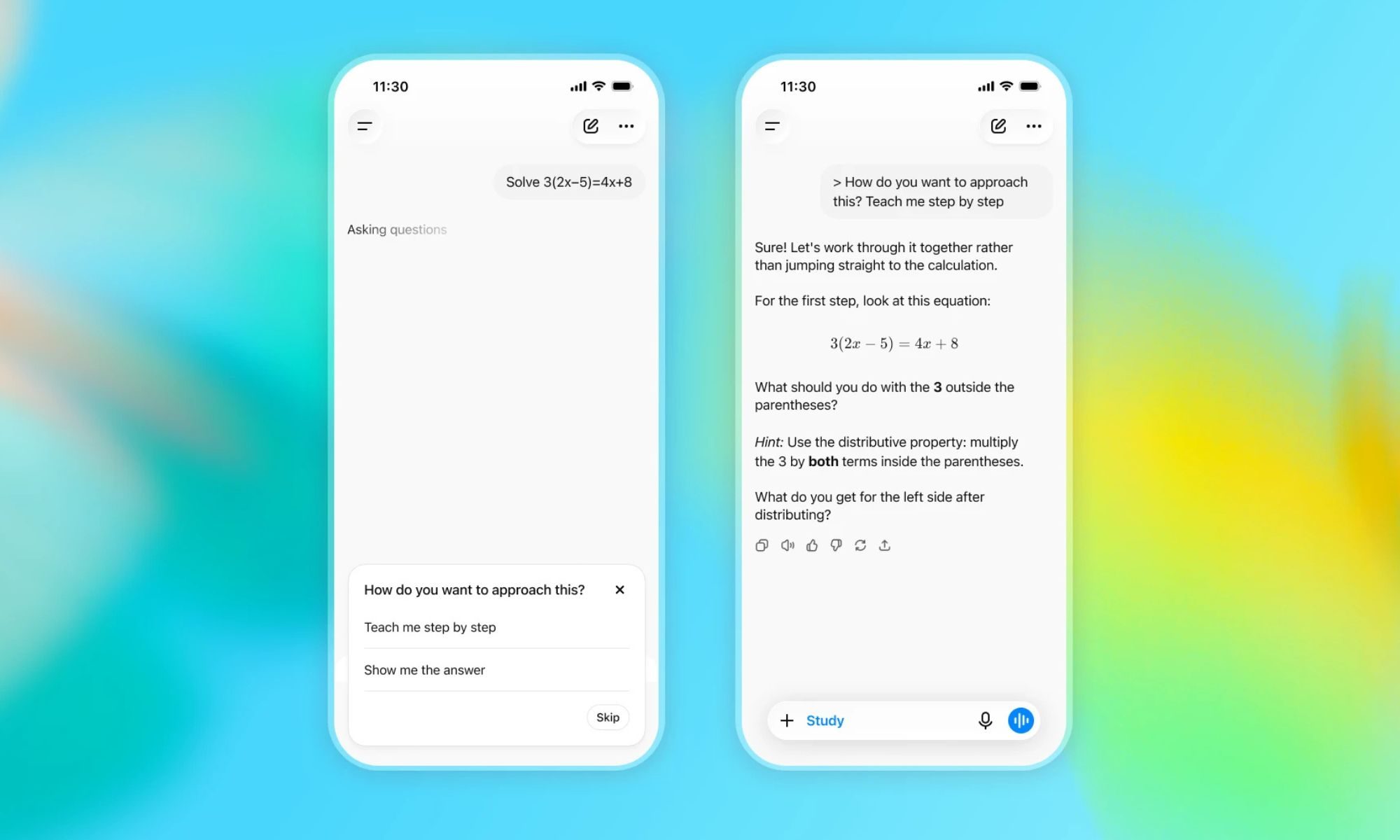
What interests me most is how OpenAI is approaching homework. Imagine you’re preparing for an exam and calculus has suddenly decided to ruin your evening. Instead of asking ChatGPT for the answer and copying it into your notebook, the teen experience is designed to walk you through the problem, explain the concept you don’t understand, and then help check whether you’ve actually understood it. That’s a much healthier role for AI in education. ChatGPT for Teens brings together features such as Study Mode, quizzes, learning visualizations, homework reminders, and dedicated study hours. The idea is to make ChatGPT more like an always-available study companion.
OpenAI
OpenAI is pushing that idea outside ChatGPT, too. The company has announced a partnership with CodeAI to give students and teachers resources for developing AI literacy. Instead of simply teaching students how to prompt a chatbot, the initiative is meant to help them understand how AI works, question what it produces, direct it effectively, and eventually use it to build things themselves. That distinction matters. Today’s teenagers aren’t going to enter a world where AI suddenly disappears after graduation. Learning when to trust it, when to challenge it, and when not to use it could be just as important as learning how to use it in the first place.
Helpful? Absolutely. Human? Let’s not get carried away
Of course, once you put a powerful AI chatbot in front of teenagers, safety becomes a much bigger part of the conversation. OpenAI is putting stricter guardrails around accounts for users under 18, particularly when it comes to sensitive topics such as graphic violence, dangerous activities, unhealthy dieting, extreme beauty standards, and sexual or romantic roleplay. Another equally important part is that it is also setting boundaries around how ChatGPT interacts with teens on a more personal level. The chatbot shouldn’t encourage emotional dependence, pretend it has real feelings, or make users believe there’s a human-like consciousness behind those responses. It might sound like a small detail, but think about how natural these conversations have become. When an AI can talk back instantly, remember the context of a conversation, and respond at 2 AM when nobody else is awake, it can be easy to forget that you’re still talking to software.
OpenAI
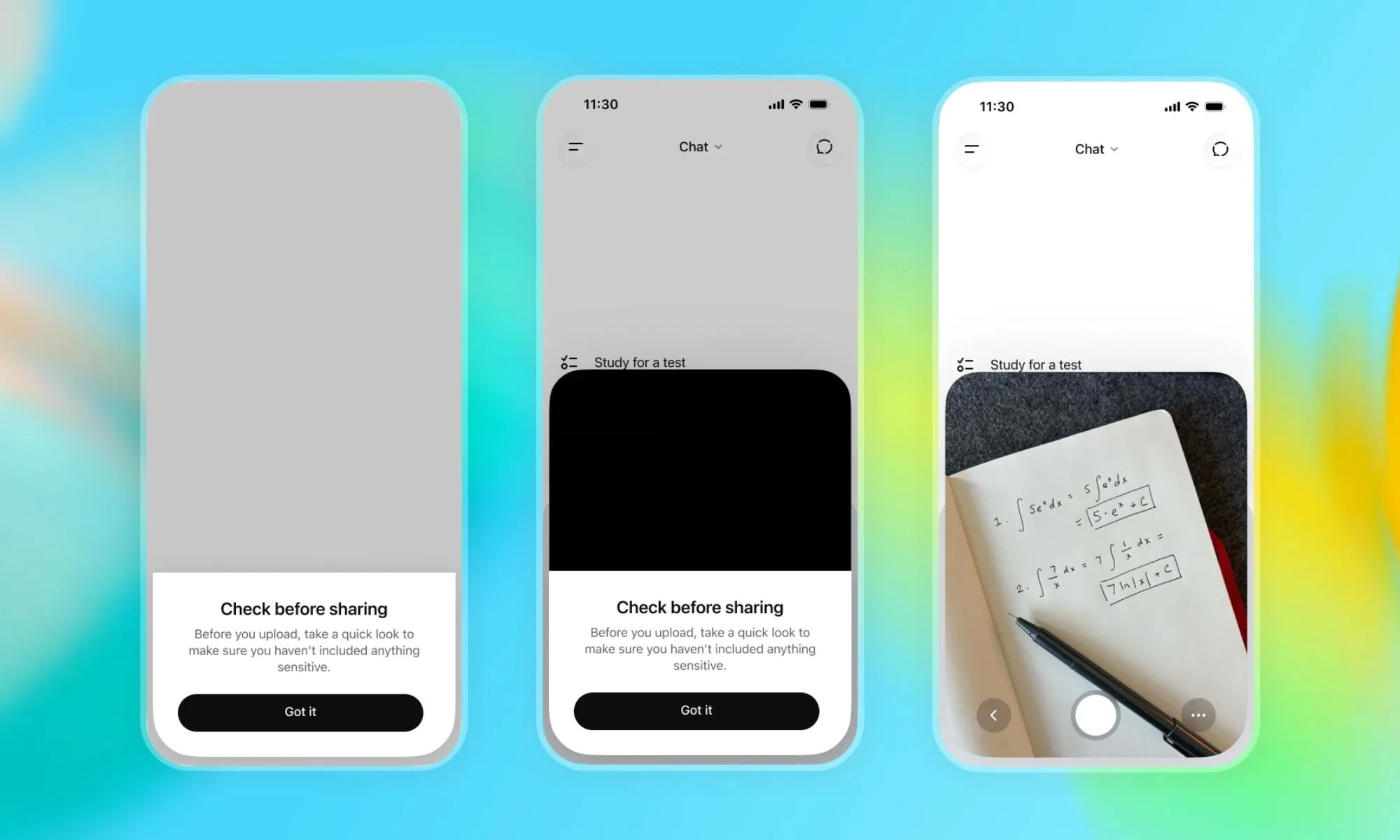
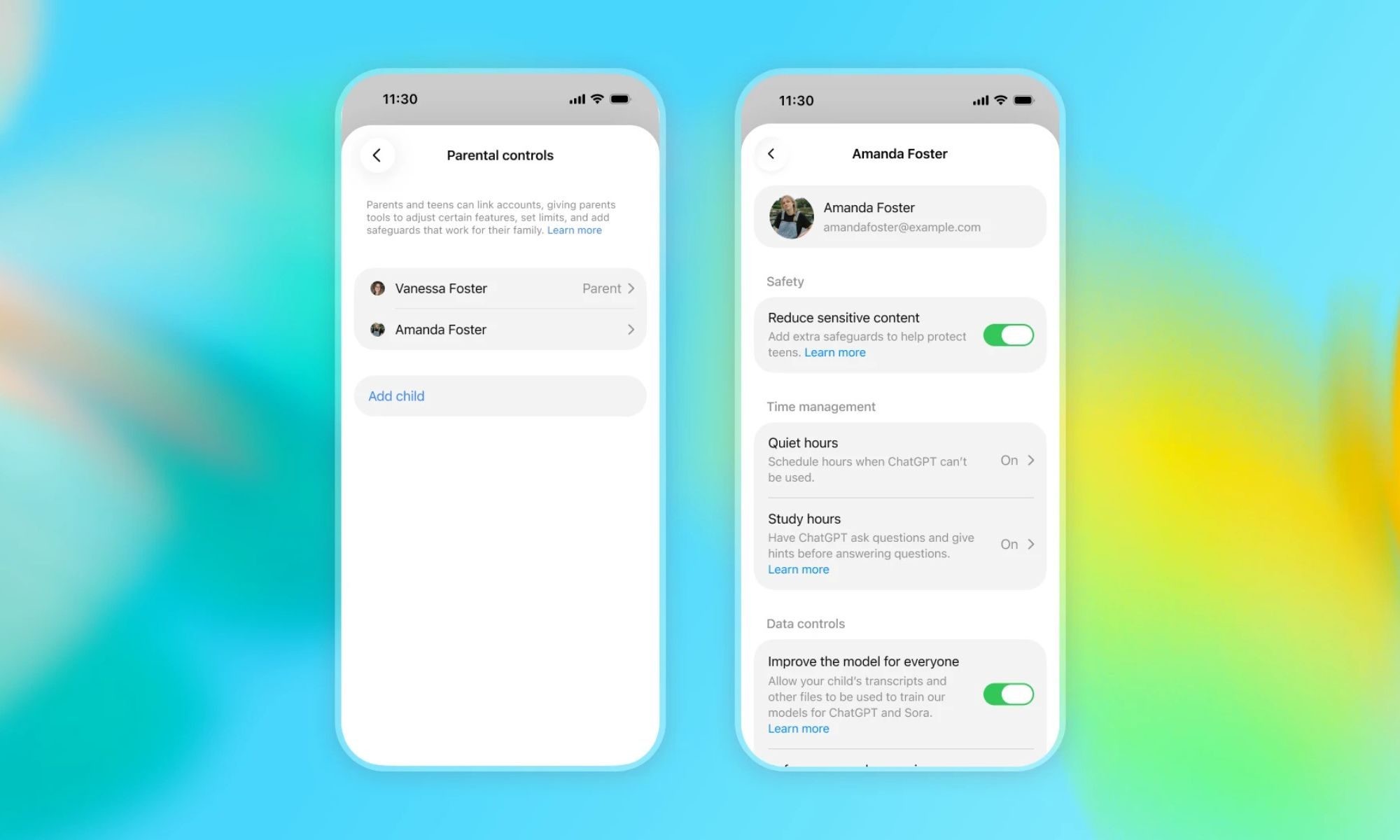
The company is adding a few smaller reminders to reinforce that distinction. Teens will be warned before uploading potentially private or sensitive images, while a dedicated onboarding experience will explain the learning and safety tools available to them. There are also break reminders encouraging teens to put ChatGPT down occasionally. They can still make the experience feel more personal by changing things like the accent color or voice, but ChatGPT is still supposed to make it clear that it’s AI. Parents get some controls as well. With linked accounts, they can manage certain settings and set Quiet Hours. In a limited number of higher-risk situations, they may also receive safety notifications intended to help them step in when offline support could be useful.
I’m cautiously optimistic, with a very big asterisk
While this feels like a step in the right direction, OpenAI still has plenty of work to do, especially when teenagers are using ChatGPT. We’ve already seen serious concerns around AI-generated deepfakes, people turning to chatbots during moments of emotional distress, and conversations that probably need a trusted person on the other end rather than an AI model.
Advertisement
OpenAI
That also leaves me wondering how comfortable parents will actually feel with all of this. Will these safeguards be enough for them to trust ChatGPT with their teenagers? I’m not entirely convinced yet. Still, AI is quickly becoming part of how younger people learn, communicate, and create. Keeping them completely away from it probably isn’t realistic anymore. Helping teens understand how to use AI responsibly while knowing when to put it down and turn to a real person instead may ultimately be the more important lesson.
Smart glasses have become a recurring accessory amid the immigration crackdown.
Karissa Bell for Engadget
Immigrations and Customs Enforcement (ICE) has reportedly told employees that they are not permitted to wear Meta glasses while they work. A memo sent to staff said that “the use of Meta Glasses or similar devices could unintentionally capture, record, or transmit sensitive information, potentially compromising privacy and legal protections,” The New York Timesreported.
The policy apparently covers all employees of the agency, not just agents in the field. A Department of Homeland Security spokesperson told The NYT that workers have “always” been barred from using “personally owned body-worn cameras.” While the memo may be more of a clarification of an existing policy, the fact that ICE sent such a memo underscores how Meta’s smart glasses have become increasingly visible amid the broader immigration crackdown in the US.
ICE and Customs and Border Patrol (CBP) agents have repeatedly been spotted wearing Meta’s smart glasses over the last several months. In one case, reported by404 Media, a CBP agent was spotted recording with his glasses despite the policy. In another instance, a member of Border Patrol wore a pair to an immigration raid. There have been similar sightings in at least six states, according to an investigation conducted byThe Independent.
Advertisement
But while DHS is now advising staff to not use smart glasses while they work, the agency is reportedly interested in pursuing an official version of the technology. Budget documents reported by independent journalist Ken Klippenstein indicate ICE is hoping to equip its officers with bespoke smart glasses that have “biometric identification capabilities” by next year.
While Meta hasn’t publicly weighed in on whether its product is well-suited to law enforcement, an association with ICE isn’t likely to win over any new fans. The company is facing an intensifying backlash against the product. An unreleased facial recognition created by Meta has increased fears about how the device could potentially be used for surveillance. The glasses’ supposedly privacy-protecting LED has also proved to be easy to bypass.
Google is promising a better modem with the Pixel 11 series. The company claims its new MediaTek-made hardware is both faster and more power-efficient than the modems used in previous generations.
The switch is a notable one for Google’s Tensor chips, as earlier Pixel phones were criticised for modem performance. Previous generations of Tensor relied heavily on Samsung’s Exynos-based technology; however, the Pixel 11 marks a key change as the Tensor G6 moves to a MediaTek modem.
This partnership seemingly aims to bridge the gap with formidable rivals like Qualcomm’s Snapdragon, which has long set the gold standard in the Android space for connectivity. For Google, finally securing a dependable, uncompromising cellular experience is crucial if the Pixel line is to truly compete at the premium end.
Google has confirmed on the Google Store that the new modem is “reliable, faster, and more power efficient.” The company’s claims come with an important caveat, though. They’re based on pre-production devices tested in lab-controlled conditions. So while the figures sound promising, we’ll need to see how the Pixel 11 performs in everyday use before calling this a genuine upgrade.
Advertisement
That’s potentially good news for more than just connection speeds. Modem efficiency can have a direct impact on battery life. Additionally, better network performance could help avoid some of the performance and heat issues that have affected earlier Pixel generations.
Advertisement
For now, though, Google’s claims remain just that. The real test will come once the Pixel 11 range gets into more hands. Then we can see whether the MediaTek modem actually delivers better speeds, reliability and battery efficiency away from controlled testing.
Pixel 11 pre-orders are now open, so it shouldn’t be too long before we have a better idea of whether Google’s modem gamble has paid off.
If you’ve spent any time down the gaming PC rabbit hole, you’ll have hit this fork in the road already: do you build the thing yourself, or do you let someone else do it for you? It’s one of those debates that never quite dies down and is always a matter of preference – some folks prefer to have the control of building their own system, configuring every element, while others want the experts to take the strain to make sure everything works as it should the first time the PC boots.
While this age-old debate hasn’t really shifted, what has changed, though, is the gaming PC market itself. Component choice has exploded, and folks have more choice now than ever before, making it perhaps easier than ever before to build or spec out a custom gaming PC for themselves. You no longer necessarily have to choose between “fully custom” and “convenient” — but to understand why that matters, it helps to look at both routes properly first.
The case for building your own PC
There’s a certain satisfaction in building a PC from scratch. You get to pick every component yourself and learn how it all fits together, not to mention the genuine sense of achievement when you hit the power button for the first time and everything boots. For PC enthusiasts and hobbyists, that process is half the fun, myself included.
However, it’s worth being honest about what it actually demands. Building a PC requires a decent grasp of compatibility, or how everything fits together. Motherboard sockets, RAM speeds, PSU wattage, case airflow, cooler clearance and more are all worth being mindful of. Getting any of that wrong can mean a system that underperforms, or worse, doesn’t work at all. Then there’s the time: sourcing parts, waiting on deliveries, the build itself, and the inevitable troubleshooting when something doesn’t quite play ball.
Advertisement
Cable management, in particular, is a skill in its own right, and a messy build isn’t just an eyesore. Poor airflow from bad cable routing can quietly hurt your thermals and performance over time.
For first-time buyers or anyone switching over from console to a PC for the first time, that’s a lot to take on before you’ve even played a game. And if something does go wrong down the line, you’re generally on your own to diagnose it, since self-built systems don’t come with the kind of unified warranty support you’d get from a manufacturer or someone doing it on your behalf.
Advertisement
The case for buying a pre-built PC
It’s precisely here where pre-built systems earn their reputation. Buying from a specialist manufacturer such as CyberpowerPC means every component has already been tested for compatibility, the cable management is handled by people who do it for a living, and the whole system has been through quality assurance before it ever reaches your door to make sure everything will work as it should.
Warranty support is the other big one. A proper prebuilt gaming PC comes backed by a manufacturer who’ll stand behind the hardware, which matters enormously if a component fails outside of what you could diagnose yourself. For parents buying a system for a teenager, or for anyone who just wants a machine that works reliably from day one, that peace of mind is worth a lot.
Advertisement
The trade-off historically has been choice. Prebuilt used to mean picking from a handful of fixed configurations, often with compromises somewhere in the spec sheet. Manufacturers used to have a reputation for using no-name components where it mattered to keep costs down, although it’s become less common these days. That’s the bit of the market that’s changed the most.
The best of both worlds: configure your own with professional help
There is a third way, which is perhaps the best of both worlds – speccing out a custom PC from a reputable builder such as CyberPowerPC UK. Rather than forcing a choice between full customisation and professional reliability, CyberPowerPC UK’s custom gaming PC configurator lets you build a system to your exact spec — choosing from the latest NVIDIA GeForce RTX graphics cards, AMD Ryzen processors, and Intel Core processors to suit your needs and specific games you’re playing – and then hands the actual build over to people who do it for a living.
Advertisement
You get the tailored spec of a self-build, without taking on the risk of compatibility mistakes, botched cable runs, or a PSU that’s not quite up to the job. Every system is assembled, tested and quality-checked before it ships, and you’re covered by proper warranty and after-sales support if anything needs attention later. If you’d rather skip the configurator entirely, the prebuilt gaming PCs page has ready-to-go options for anyone who just wants a great system without the decision fatigue.
It’s a genuinely useful middle ground for a lot of the people currently weighing this decision up — first-time PC buyers who want guidance rather than a blank canvas, console gamers making the jump who don’t want to go the whole hog right out of the gate, and upgraders replacing an ageing system who don’t want to relearn PC building from scratch. Enthusiasts benefit too, since a configurator this deep still lets you get properly specific about the build without doing the assembly yourself.
Advertisement
It’s also worth noting that the PCs on offer from CyberpowerPC don’t just have to be for gaming. The systems are also built with streaming and content creation in mind as well, so if you’re planning to start streaming your sessions or editing footage on the side, the hardware you choose through the configurator can be specced to handle it.
Likewise, because these are proper, professionally built towers rather than more sealed-off options, there’s genuine headroom to upgrade down the line. Swap in a new GPU in a couple of years, add more storage or whatever it turns out you might need later down the line.
If you want a hand working out what’s right for you, CyberPowerPC UK’s team offers expert advice throughout the configuration process, and the support page is there for anything that comes up after your system arrives.
Advertisement
So, do you build or buy?
This is what it all comes down to. If you love the process of speccing out a custom unit, putting it together yourself and troubleshooting anything that crops up, the self-build route is rewarding.
Advertisement
However, there is something to be said for letting someone else take the majority of the strain, especially anyone buying their first gaming PC, switching from console, or upgrading without the time to relearn PC hardware from scratch. A configurable prebuilt system offers the best of both worlds: a machine built exactly to your spec, assembled and tested by people who know what they’re doing, and backed by warranty support if anything goes wrong.
Back in May, we reported that Apple was testing future AirPods equipped with low-resolution cameras designed to give Siri and Apple Intelligence some idea of what the person wearing them was actually looking at.
At the time, Apple had confirmed nothing. Three months later, Cupertino appears to have done some of the leaking itself.
A demonstration video discovered inside the macOS Tahoe 26.7 Release Candidate shows what appear to be unreleased camera-equipped AirPods being used with Apple’s Visual Intelligence system. In the short clip, a man looks at a book and asks Siri to save what he is seeing for later. The AirPods resemble AirPods Pro 3, although the stems appear somewhat larger. Apple has still not formally announced the product, its name, price or release date.
That last part remains important.
Advertisement
But this is no longer just somebody claiming that a supplier in Asia saw an interesting prototype.
These Cameras Are Not for Vacation Photos
The cameras are not expected to turn AirPods into tiny GoPros.
Previous reporting described them as low-resolution sensors intended to give Apple’s AI systems visual context, which is exactly what the leaked demonstration appears to show. Instead of pulling out an iPhone, pointing its camera at a book and invoking Visual Intelligence, the AirPods could potentially see the object already in front of you and let Siri act on that information.
Apple has already expanded Visual Intelligence on the iPhone to recognize, search, summarize and act on visual information, while the new Siri AI architecture announced at WWDC 2026 includes multimodal image understanding. Camera-equipped AirPods would move some of that interaction away from the screen in your hand.
Advertisement
And that is where this becomes considerably more interesting than another AirPods upgrade.
When Do Headphones Stop Being Headphones?
AirPods Pro 3 already combine music playback, ANC, hearing assistance, heart-rate sensing, Live Translation and fitness tracking. Adding visual awareness would push the product even further away from being merely a pair of wireless earbuds.
Advertisement. Scroll to continue reading.
You could potentially look at a sign and ask Siri what it says, identify an object, remember a book or product for later, receive contextual navigation information or use the system to better understand your surroundings without holding up a phone.
Advertisement
There are obvious accessibility possibilities as well. Apple is already using Apple Intelligence to provide richer descriptions and natural-language navigation through VoiceOver and Magnifier. Giving a wearable device visual context could eventually make some of those capabilities far more immediate for visually impaired users. Apple has not announced those specific applications for camera-equipped AirPods, so that remains potential rather than a promised feature.
Consumers Should Also Ask Who Is Looking
There is, of course, another side to this.
People can generally recognize Meta Ray-Ban smart glasses and understand that a camera may be pointed at them. Tiny sensors embedded inside AirPods could be much harder to notice.
Apple would therefore need to explain what the cameras record, whether visual information is stored, where processing occurs, what reaches Apple’s servers and how bystanders know when the sensors are active. None of those questions has been answered because Apple has not officially announced the product.
Advertisement
That conversation will matter just as much as battery life or sound quality.
AirPods Pro 3 (current model without cameras)
The Bottom Line
The leaked video suggests Apple’s camera-equipped AirPods are not about improving music playback at all. They are about giving Siri eyes.
For consumers, that could make AirPods more useful for accessibility, navigation, translation and everyday information without constantly reaching for an iPhone. It also moves Apple directly toward the same wearable-AI territory occupied by camera-equipped smart glasses, only through a product millions of people already wear without thinking twice about it.
Apple still has to convince us that putting cameras in our ears solves more problems than it creates.
But the bigger change is already becoming clear: the next important AirPods feature may have almost nothing to do with how they sound.
Garmin watches are some of the best fitness trackers you can get, but they aren’t exactly cheap—many of my favorite ones cost $500 or more. Thankfully, you can usually find a good Garmin watch deal with enough patience and a keen eye. Right now, some of my favorite models, including the Garmin Fenix 8, Garmin Vivoactive 5, and Garmin Forerunner 165, are over 20 percent off. If you’ve been thinking about trying out Garmin (or upgrading from an older model), now is a good time to buy.
This is the fitness tracker that lives on my wrist, and considering I’ve tested dozens, that’s a big accomplishment. It’s the brand’s flagship watch, meaning it has all of the brand’s hardware and software bells and whistles—think built-in flashlight, speaker, and microphone, plus offline maps, diving profiles, and advanced running stats.
I love the Fenix 8 because it’s one of the only Garmin watches with premium features like offline navigation and a built-in two-tone flashlight that comes in multiple size options, including a small-ish 43 millimeters. Most other Garmin watches with these features (Garmin Forerunner 970, Garmin Enduro 3) come in one size (read: big) and dwarf my wrists.
Advertisement
Garmin Vivoactive 5 for $190 ($110 off)
The Vivoactive 5 is a great first Garmin watch, and it’s 37 percent off right now. It’s an older model (it launched in 2023), but you still have many of the brand’s best fitness and health features available, including in-depth fitness metrics, Body Battery (basically your energy score throughout the day), sleep coaching, and stress tracking. It’s also small, lightweight, and a little sleeker than some of the brand’s more outdoor-centric watches.
Garmin Instinct 3 AMOLED for $300 ($150 off)
While it isn’t matching its lowest price ever (that was $250 during Prime Day), 33 percent off is still an excellent discount for the Instinct 3. And compared to Garmin’s other outdoor watches (the Fenix 8 and Enduro 3), it’s a steal. It’s a chunky, durable, retro-looking watch with crucial adventure features like a touchscreen plus five-button control scheme, built-in white and red flashlight, and accurate dual-band GPS.
Garmin Forerunner 265 for $350 ($100 off)
The Forerunner 265 is an oldie but a goodie—it launched in 2023 and still strikes a great balance between advanced running features and price, undercutting the newer Forerunner 570 and Forerunner 970 by hundreds of dollars. It has advanced running metrics and, crucially, dual-band GPS, meaning more accurate pace and route details compared to more entry-level Garmin watches. It also comes in two sizes, 43 millimeters and 47 millimeters, so you can pick the one best suited to your wrist size.
Over in our Insider Chat, someone recently pointed out a tiered “REAL Rating” five-tier scale designed to replace the fairly blunt and misleading question of “did you use AI on that?” with something a bit more nuanced. As someone who believes the discussion about AI could use a lot more nuance, I’m all for the premise. I ran my own usage through their wizard and came out with a “one” — the tier for automation. While this is technically accurate, it also tells you very little about how I actually use AI.
Which is why I thought it made sense to revisit the public discussion regarding my AI usage.
But going through that thought process reminded me that it’s been a little while since I last spoke about how I’m using these tools here, and given that some readers want more transparency, I thought I’d update you on the latest. I’ve written about it at length a few times before, starting in April of 2024, when I described how I used a tool called Lex to help me edit articles. The key was always that I’d write the articles myself, and then I had trained Lex on my own writing style to ask it how it might improve the article. Sometimes it would give good advice that would make me rewrite, and sometimes… it would give bad advice that I would skip or ignore. But all in all it was a useful forcing function.
In June of 2025, I wrote about how I had built a personal task management tool, using a vibe coding tool called Lovable, which I was using to keep track of various tasks, including what I wanted to write about each day. At the beginning of this year, mostly out of curiosity, I explored whether or not you could, with a ton of scaffolding and detailed instructions and effort, get AI tools to write a passable Techdirt article, and concluded no, you absolutely could not. Every attempt was still a weak facsimile of a Techdirt article with iffy language and clichéd phrases.
Advertisement
In the time since then I’ve run that test for myself a few times, and even as the models have improved, in my experience, my initial analysis stands. It cannot write Techdirt-style articles well, and even if I wanted to use it that way, the rewriting, changing, and fact-checking would take way more time than just… writing it myself. So, yes, I continue to write my own articles.
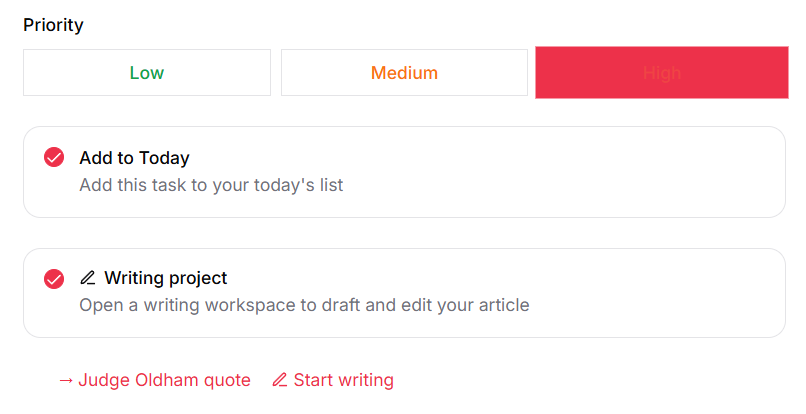
What’s changed in the last couple of years is that I’ve moved away from Lex (which has not received many updates in the past year or so as the team behind it appears to have moved on to other projects), and I ended up building my own editing tool, which is built directly into the task management tool I mentioned last year (which is now self-hosted and entirely within my control). The benefit now is that I can turn any task immediately into a writing project with a single click:
That was the task that turned into this article about Judge Andrew Oldham’s bizarrely out of context quote on mail-in ballots. From there I can go into the writing project which has a bunch of useful features. Within each writing project I can add sources, which turn out to be really useful during edits. I can upload PDFs, URLs, or just add text myself (and actually, as I was finishing up this article, I had it build a new feature that will automatically add all the sources I link to in a story, so the editor checks them even if I don’t add them manually, which is another example of realizing a potentially useful feature and having it created on the spot). I can also have the tool go out and research if there are other sources I should add, though I haven’t yet found that to be that useful as compared to just searching myself.
The tool is specifically trained on my writing, and has a detailed style guide regarding my voice and style, as well as a detailed system prompt of what I am looking for in editorial help vs. what I’m not looking for (e.g., yes, challenge my assumptions and facts, but no do not think you need to rewrite what I’ve written).
After I’ve written the full piece, there’s a button to open up the “AI review” tool (which lets me use any underlying LLM engine I choose, including local ones), which will give me a critical review and make general suggestions about what works and what doesn’t. I do switch up models from time to time to see how they work, but generally will default to either Claude Opus 5 or Sonnet 5. I am also using Gemma 4 locally and am increasingly trying to use that. It’s good on straightforward pieces, but less so once the argument gets more complicated. I’m hopeful that the next generation of local models will be more reliable.
For example here’s part of the initial review of my first draft on the Oldham ruling:
Advertisement
The only specific line edits tend to be suggestions on typos or confusing sections, such as here where it suggested a way to clean up and tighten a poorly drafted sentence in my initial draft:
You can also see that “Discuss” button in there, which I will frequently use to debate or discuss certain suggested edits if I think the suggestions miss the mark or are unnecessary. Or I’ll just reject them if I totally disagree.
Usually at that point I’ll do a more thorough rewrite based on my own reread of the article with an eye towards what it called out as problematic. For what it’s worth, this is where the inclusion of original sources is often quite helpful, because the AI will press me on things if its review felt that I’m not being completely fair and honest regarding the source material. Sometimes it calls me out for missing stuff and suggest I dig deeper (it’s not always correct, but often is, and pushes me to reread things even more carefully). Here’s one example, where the AI editor tool told me to go back and review the original documents more closely:
It also catches me when I start rambling, which often happens on a first draft when I’m trying to figure out the best way to nail down a certain point:
Again, I don’t always follow its suggestions, but it does make me revisit and look at rewriting sections to make them clearer and tighter.
Separately, I have a built in set of “sub-agents” that will check certain things, including suggesting better headlines (this is very hit or miss, but usually at least helps me think of something better than either my initial attempt or its suggestions) and one sub-agent whose whole job is to poke holes in the arguments in the piece (this one is fun, but annoying, as it’s basically trolling myself, but in a way that helps me make the arguments stronger):
You may notice that the features I appreciate the most here are the ones that in some sense make my life harder, by telling me to work harder, check my sources, and question my arguments. Considering how often we hear about the problem with these tools being how much smoke they blow up the asses of users, it’s certainly possible to set them up to deliberately challenge and provoke you. The parts I find most useful are the parts built to disagree, because it helps make my work stronger by stress testing it before it goes out in the world.
Anyway, once the piece is then written and edited, it’s a two-click process to import the final version into Techdirt’s WordPress system and hand it off to someone else on the team for a human review before it goes into the queue to get posted.
Compared to how I described the process two years ago, the actual writing process hasn’t changed — which is kind of the whole point. The human part (the thing that is central to what I do) doesn’t get automated away. What’s changed is the structure around it. I have total control over the tool now, it’s better trained and designed to help me write better.
Advertisement
There are a few other more experimental features, including one where after I’ve added all my sources to the writing project, I’ll also write a short paragraph (or two or three) about my focus on the article, and the system will ask me some questions based on the sources and how I want to frame the article. This is sometimes useful in testing some of my assumptions before diving into the writing. This has been most helpful when I’m a bit undecided on what the central backbone of a piece really should be. In the past I would just start writing, realize I went down the wrong path, and then start again. Using the “editorial interview” feature has helped me a few times to think deeper about which way I want to take the article before I get to the actual writing.
I also built in a tool to also write a potential outline of the article based on that “interview,” but I’ve only tried to use that a couple times, and neither time did I follow the outline, so I’ll likely just get rid of that feature. Once again, the benefit of having total control over the tool. For all the (reasonable! understandable!) complaints of big tech companies “shoving AI into everything,” with this tool, I decide what goes where, and if something doesn’t work, I can just remove it.
I’ve also built in a bunch of other features that are simply useful for organizing my day and focus. The same tool creates a morning and afternoon briefing based on my tasks, my email, my calendar, and a growing knowledge base about me and my work. It also texts me news stories it finds that might be interesting for Techdirt (based on search criteria I have provided), which I can turn into tasks/writing projects with one response. Just last week I received my Pebble Index 01 ring that I had mentioned last year, and one of the first things I did with it is hack it so that I can speak into it to create tasks. It can also research things and leave the notes in the task tool (and text me back quick facts if I need them).
In short, as I’ve suggested repeatedly, the power of AI tools is in empowering individuals to be able to accomplish what they want to do, rather than replacing humans or doing the fundamental work. Building very personalized tools that I can constantly update and tweak to meet my needs has made me less and less interested in using software that other people built for me. It’s shockingly empowering to look at a feature that doesn’t quite work the way you want, and to be able to just tell your tools “hey, make this work differently” and have it work properly.
Advertisement
As I mentioned up top, using the wizard on that REAL Ratings site, I came out with a score of “one,” noting that I used AI for automation. You could argue that it maybe should be somewhere between one and two, depending on how much you consider the “brainstorming” part of what the editor feature is doing. But I’d argue this is a long way from the assumption many have of “if you use AI you’re using it for slop.”
Either way, I’m still not writing articles with these tools, and I don’t plan to start. The assumption that any use of AI means you’ve handed your brain over to it misses the part I actually find interesting: building your own tools, on your own terms, and telling them what to do rather than the other way around.


















-Reviewer-Photo-SOURCE-Adrienne-So.png)

-Reviewer-Photo-SOURCE-Adrienne-So.jpg)







































You must be logged in to post a comment Login