Security teams log 54% of successful attacks and alert on just 14%. The rest move through your environment unseen.
The Picus whitepaper shows how breach and attack simulation tests your SIEM and EDR rules so threats stop slipping by detection.




The Head Mare hacktivist group has been exploiting vulnerabilities in unpatched TrueConf video conferencing servers to replace client installers with malicious versions that deliver backdoors.
The exploited vulnerabilities allowed the attacker to execute arbitrary code with the highest level of privileges and deploy the PhantomCore and PhantomGraph backdoors.
TrueConf is a video conferencing tool widely used in Russia, especially in the enterprise and government sectors, as a secure, on-premise alternative to Western tools such as Zoom and Microsoft Teams.

Researchers at cybersecurity company Kaspersky discovered the attack in July. They found that Head Mare hackers used TCP port 4307, which is open by default, to connect to the target TrueConf server without authentication.
They leveraged a vulnerability internally tracked by Kaspersky as KLCERT-26-057 to execute a malicious script within TrueConf’s isolated environment, and KLCERT-26-058 to escape the sandbox and run commands on the underlying operating system.
The attacker then increased their privileges to NT AUTHORITY\SYSTEM, and replaced the ‘\public\js\locale.php’ file with a web shell that gave them persistent remote access to the compromised server.
Kaspersky reports that Head Mare uses a web shell to collect sensitive information from the victim’s environment, access the TrueConf database, and replace the legitimate TrueConf Client installer hosted on the server with a malicious version that contains the PhantomCore backdoor.
When members of the organization connect to the local TrueConf server, they receive a trojanized, non-digitally signed client installer as an update.
“Even if your organization does not use the TrueConf server, employees of the organization can connect to compromised counterparty TrueConf servers to participate in online meetings and download infected installation packages,” Kaspersky warns.
Additionally, Head Mare deploys PhantomGraph, a separate backdoor consisting of two DLL files (SysExcSvc.dll and SysReadSvc.dll) that accept commands via a Microsoft OneDrive account, execute them, and return the results.
Observed attacker activity through PhantomGraph included dumping the memory of the Local Security Authority Subsystem Service (LSASS) process to exfiltrate credentials.
The malware also runs commands for reconnaissance activity, such as hostname and whoami, and starts a reverse SSH tunnel.
Kaspersky says it is currently observing multiple active Head Mare campaigns targeting Russian organizations in various sectors: instrumentation, electronics, transportation, energy, IT, and software development.
According to the researchers, the threat actor is using several initial access methods that include phishing, exploiting public-facing web servers, and access via contractors.
The two flaws Kaspersky saw leveraged in attacks affect TrueConf Server 5.3.x before 5.3.9, 5.4.x before 5.4.9, 5.5.x before 5.5.5, and older versions.
The vendor fixed them in versions 5.3.9, 5.4.9, and 5.5.5, released on June 18.
In April 2026, CheckPoint Research reported that hackers were targeting a zero-day arbitrary file execution flaw in TrueConf, tracked as CVE-2026-3502, compromising users via trojanized client updates.
CheckPoint named the campaign ‘Operation True Chaos,’ and tentatively attributed it to Chinese threat actors behind the Havoc implant, which was used in these attacks.

Security teams log 54% of successful attacks and alert on just 14%. The rest move through your environment unseen.
The Picus whitepaper shows how breach and attack simulation tests your SIEM and EDR rules so threats stop slipping by detection.


AI and ML
Agent Plugins 1.0 defines a write-once-run-anywhere container for passing tools and skills across different agent platforms
The AI giants have joined forces to ask the world’s developers to all please write their agentic skills and tools into the same format. In return, coders will be able to move these superpowers easily from one platform to another (such as when they get laid off). It’s designed to be write once, run everywhere.
Vercel posted the initial draft of the Agent Plugins spec on Thursday, with input from Amazon, Cursor, Microsoft, and OpenAI, which all pledged fidelity (and engineers) to the project. It was quickly embraced by the Linux Foundation’s Agentic AI Foundation (AAIF), though it will operate as an independent entity.
Agent Plugins 1.0 packages an AI agent’s skills and tools in a single directory structure. It builds on the AAIF-stewarded MCP protocol and the open Agent Skills standard originally created by Anthropic in 2025.
Agent Skills holds the instructions for how the agent should perform a specific task. MCP provides the connectivity to outside databases, APIs, shell scripts, and other external resources. Together, the trio makes AI capabilities modular so that they are, in theory, write-once-run-anywhere.
It is still up to the agent clients, or platforms, to provide a user interface, establish security boundaries and create marketplaces where the plugins can be shared. Thus far, VS Code, Cursor, GitHub Copilot, ChatGPT, Codex, and Kiro all support the standard.
Agent Plugins follows the Next.js practice of using the host computer’s directory format as the structure for defining components.
The spec prescribes creating a top-level directory for each plug-in, with a small manifest and schema. The manifest provides the name, version and schema of the plugin in JSON format. Skills are filed in the skills sub-directory, and the MCP server configuration is stored as an mcp.json file.
Those are the essential elements, though the plugin authors can also use the namespace directory to store additional extensions. This format “keeps the shared format predictable without requiring it to absorb every client-specific experiment happening across agent products,” noted the AAIF in a blog post.
Bundling the skills with the MCP configuration makes the package portable, allowing it to be copied and used across any supporting agent client.
Agent developers around the globe are adding all manner of experimental hooks, rules and extensions into their skills. Nonetheless, the keepers of the spec deliberately kept the scope “narrow” for this 1.0 release, in AAIF’s words. The best ones may be considered for future versions of the spec, though the team is not making any promises. Until then, developers can add all these extensions to the namespace and hope for the best, portability-wise.
Going forward, Agent Plugins will be managed under an open governance model, with an independent technical oversight committee calling the shots, considering input from the public. Currently, engineers from Amazon, Cursor, Microsoft, OpenAI, and Vercel are on the core development team. The spec is licensed under the Creative Commons Attribution 4.0 International License (CC-BY-4.0).
There are other efforts underway to tame the wild frontier of agent development. Google folded its own Agent2Agent (A2A) agentic communications protocol effort into AAIF. Google is also building out a specification for finding tools on the web, called Agentic Resource Discovery.
AAIF has a similar “complementary” project to Agent Plugins, Skills Over MCP, which shares skills by bundling them into the MCP server itself. Essentially, this approach is akin to shipping “the manual with the product,” wrote AAIF Vice President Angie Jones.
Should MCPs be festooned with skills? Or should each set of skills come with an attached MCP? Let the best approach win! ®
A single adapter could be all you need.
With the 25th anniversary of the GameCube rapidly approaching, it’s never been a better time to revisit Nintendo’s sixth generation console. Sure, it might have been less popular than the PlayStation 2, but the GameCube had some incredible games that still hold up today, including The Legend of Zelda: The Wind Waker and Metroid Prime. Some releases, like Resident Evil 4, were even better on the GameCube than on PS2.
The one issue with revisiting the GameCube is that it was designed to work with analog CRT TVs, not modern LCD and OLED TVs. In 2026, most TVs don’t have analog inputs anymore. Thankfully, the console is still modern enough that you can connect it to a newer television without too much work. In this guide, I’ll explain how you do exactly that.
First, some bad news. Not all GameCubes were created equally. Between the time Nintendo first released the console in Japan on September 14, 2001 and eventually discontinued it in early 2007, the company made one major revision to the hardware to cut costs. Unfortunately, if you own that later model, it’s harder to connect your GameCube to a modern TV.
Ideally, what you want is a DOL-001 model GameCube. If you own a DOL-101 variant, things are more complicated. This is because the latter is missing a Digital AV Out connection. In the US and other NTSC regions, this port was originally designed to allow the GameCube to output a 480p signal over a set of component video cables Nintendo sold separately. In 2026, a handful of companies make adapters that use that same port to allow the GameCube to output video over HDMI to a modern TV.
Finding out whether you own a DOL-001 GameCube is easy. If the back of the console has two audio-video ports, with one labeled Digital AV Out, you’re in luck. Another way to check is to flip the console over and read the label on the bottom. If it says DOL-001 toward the top, you have the correct model.
With the right variant, playing GameCube games on an LCD or OLED TV is as simple as buying an adapter and connecting the two devices over HDMI. While you can find plenty of cheap HDMI adapters online, I recommend spending a bit more to buy the Retro-Bit Prism HD Adapter. Retro-Bit makes great stuff, and its GameCube adapter is no exception. Most GameCube HDMI adapters rely on open-source software called GC Video. The Retro-Bit comes with a USB-C port to make updating that software easy; no need to take apart the device.
Another option is the Carby from Insurrection Industries or, for a more affordable alternative, consider Bitfunx’s offering. Just note, depending on the dongle you buy, you may also need to get a separate HDMI cable if don’t have a spare.
Once you have an adapter, all you need to do is plug it into your GameCube’s Digital AV Out port, and then connect an HDMI cable from the adapter to you TV. All three of the models recommended above come with a remote that allows you to bring up GC Video’s on-screen menu to adjust settings like output resolution.
Now this is where things get a bit more complicated. To get the best image quality from your GameCube, you’ll want to consult this webpage to find out if you own any games that support 480p output. If you find one that does, pop it your console first and hold down the B button on your controller as the game boots up. You will see a dialogue that asks “Enable progressive scan display?” Select Yes. Provided the game supports this feature, progressive scan will give you the best possible image quality from the old console. Some games also support native widescreen output. Typically, you can enable this from the settings menu of a compatible game.
If your GameCube doesn’t have a Digital AV Out, your best bet is a device like RetroTINK-2X Mini that can convert the analog signal from your console to a digital one. You can take the composite cables that came with your GameCube and connect them to RetroTINK-2X Mini, and then connect an HDMI cable from that device to your TV. RetroTINK also sells devices that can upscale the signal from GameCube, but those are quite expensive and only worth it if you have a collection of retro consoles.
If all of the above sounds like a hassle, emulation can provide another path to play your favorite GameCube games on a modern TV. If you own a Switch 2, Nintendo offers a selection of emulated GameCube games through its Nintendo Switch Online service. You’ll need to pay for the $50 per year Expansion Pack tier to access the Switch 2’s GameCube library.
Despite its limited selection of games, the Switch 2 is a great way to experience some of the GameCube’s best games. The console outputs the games at 900p, meaning they’ll look sharper on modern TV. What’s more, games that include multiplayer, such as F-Zero GX, offer online play, with support for up to four players, and there’s even support for controller remapping.
As of August 2026, there are nine GameCube games available through Nintendo Switch Online, with two more on the way. See the full list below:
If you already own a collection of old GameCube games, another option is to emulate your library by connecting a PC or laptop to a TV. The Dolphin emulator has been around for more than two decades. It’s free, extremely stable and has additional features that can improve the experience of playing older games like resolution scaling and custom save states. You don’t need a powerful machine to run Dolphin: Virtually every Windows or Mac machine made in the past decade can run any game, but advanced graphical options can require a little more horsepower.


The company has secured a deal to provide Anthropic with computing capacity for six years, according to a Bloomberg report.
Volta Infra, a new AI infrastructure start-up, has emerged from stealth with a valuation of $2.4bn after completing a seed funding round and Series A round led by Azora, Andreessen Horowitz, Altimeter and Nvidia.
The rounds also saw participation from strategic investors including the family office of Michael Dell and Matter Venture Partners.
Volta, founded earlier this year by Ricard Boada and Sofia Gumuzio, aims to help top AI labs and start-ups access key infrastructure. The company develops, finances, builds and operates AI factories by integrating “institutional capital, powered land, data centres, compute, software and operations under a single platform”.
The months-old start-up raised $300m in venture funding, according to Bloomberg, and also announced a deal with asset company Azora to provide $5bn of financing for the “next generation of AI factories” developed by Volta.
“Compute has become a new infrastructure asset class, with AI models and applications as the verticals built on top,” said Boada. “Every technology revolution has run on a physical layer beneath it.
“We founded Volta because compute should be financed, developed, and commercialised with the principles and scale of infrastructure.”
The start-up also announced that it has secured a $10bn strategic partnership with an unnamed AI lab to develop an AI factory in Norway alongside Bitdeer, a Bitcoin miner that operates data centres.
The project – the first within Volta’s broader development pipeline – will comprise a 133MW deployment powered by Nvidia Vera Rubin systems.
As well as the site in Norway, Volta plans to build US sites in Texas and Wyoming, Boada told Bloomberg. The start-up aims to deploy multiple gigawatts of capacity by 2030.
Bloomberg reported that the unnamed AI lab involved in the $10bn Norway site deal is actually AI giant Anthropic, with the publication citing anonymous sources familiar with the matter. As part of the deal, Anthropic will reportedly have access to Volta’s computing capacity at the site for six years.
Anthropic has recently been making a series of deals to boost its access to vital AI infrastructure and compute.
Just a couple of weeks ago, the company announced a partnership with AMD for 2GW of its latest-generation chips in a bid to boost AI capacity and meet growing demands. The Wall Street Journal reported that the deal between the companies is worth “tens of billions of dollars”.
Anthropic has also made similar deals with Broadcom and Amazon.
Don’t miss out on the knowledge you need to succeed. Sign up for the Daily Brief, Silicon Republic’s digest of need-to-know sci-tech news.

In brief: Flock’s AI-powered license plate readers, which have drawn public scrutiny over surveillance and privacy concerns, are traditionally stationary. However, public records indicate that the company is exploring ways to make its cameras more mobile, including through partnerships with delivery and rideshare companies.
A presentation from Flock, obtained by 404 Media, describes abandoned plans to install the company’s automatic license plate readers on 350,000 vehicles operated by Uber, Lyft, and other delivery companies in Georgia. The plan could have significantly expanded the surveillance capabilities of the already controversial AI-powered cameras.
ALPRs from companies such as Flock and Axon are ostensibly designed to record the license plates of passing vehicles and store the data in a searchable cloud database. Authorities have used the cameras, which currently operate in about 6,000 communities across the US, to track the movements of vehicles suspected of being involved in serious crimes.
However, incidents involving misread plates and police officers using ALPRs to stalk people have contributed to a nationwide backlash. Many communities, including Los Angeles, have since deactivated the cameras. ALPRs are usually installed on traffic lights or roadside poles, but a recently uncovered document outlines a proposed partnership between Flock and dashcam provider Nexar.

The presentation highlights the hundreds of thousands of dashcams in Uber and Lyft rideshare vehicles in Georgia, as well as cameras operated by local businesses and homeowners associations, as potential ALPR platforms. While Flock and Nexar ultimately did not ink the deal, it would have allowed Flock to catalog every vehicle that passed those equipped with cameras. Whether the drivers would have been aware of the surveillance remains unclear.
Authorities have utilized mobile camera networks before. Last year, robotaxi company Waymo admitted that it complies with police warrants for footage from its 360-degree cameras, but only after carefully reviewing the requests. Axon and Motorola also provide ALPRs designed for installation on moving vehicles.
The Flock-Nexar presentation was originally obtained through a public records request by Jason Hunyar, a Georgia-based blogger who reports on Flock’s activities in the state. Previous requests have uncovered records indicating that the company erased its supposedly immutable usage records after an officer observed a girl’s gymnastics room and sold data collected by its cameras.
In one post, Hunyar outlines Flock’s plans to install its cameras on robot dogs that could send data back to their Hangzhou-based manufacturer through pre-installed backdoors. Previous reports also revealed that a major Flock investor supports a company capable of intercepting and altering surveillance footage.

Ford on Thursday unveiled both the name and starting price of its upcoming electric truck. The Ford Fathom will start at just under $30,000, making it one of the most affordable electric pickup trucks coming to the US market.
While the automaker didn’t show off what it will look like, the Fathom will have a standard-range battery, five seats and Ford’s BlueCruise driver assistance, as well as Apple Maps integration. BlueCruise is Ford’s version of AutoPilot, providing a hands-free driving experience in designated areas called “Blue Zones” on certain highways.
The Fathom’s announcement follows Ford’s $5 billion investment last summer in EV production and the development of Ford’s Universal Electric Vehicle platform. The Ford Fathom is the first electric vehicle built on UEV.
According to Ford, the name Fathom and the truck’s design come from “a deep understanding of the person who would drive it. Their day. Their challenges. Their goals. Even their wallet.”
Although EV sales have continued to increase worldwide, that growth has begun to slow in recent years, especially in the US. According to the International Energy Agency, electric car sales in the US increased by 40% in 2023, but slowed to 10% growth in 2024. Worldwide, EV sales increased by 35% in 2023 before slowing to 24% in 2024, followed by 20% growth in 2025.
As electric vehicle growth slows, affordability may be the strongest component for attracting new buyers. When announcing Ford’s 2025 investment in EV production, Ford CEO Jim Farley acknowledged there’s risk, but said the company planned to create a “vehicle that can sustain itself” and still make strong profits, CNET previously reported.
“The team were just ultra focused on providing customers value in terms of what they are looking for and content that they want rather than stripping out stuff that they don’t,” Ford Model e General Manager Kay Hart told CNET. “Blue Cruise-capable vehicles with hands-free driving, digital car key, large touchscreen … the versatility of an open bed, the true adaptability, the value of this vehicle is what I think is the core message.”
The Ford Fathom will be available for preorder in early 2027 with a starting MSRP of $28,350. That price is just above the upcoming Slate pickup truck, which starts at $24,950 and is currently the most affordable electric pickup available for preorder.


It can be hard to find TVs this big for less than $600, something that makes this deal even better.
The Hisense 65-inch U6 Pro Mini-LED 4K TV has crashed to just $598.99 from a $1,099.99 list price, slicing more than $500 off and handing you a barely believable 45% saving on a set this good.
Save 45% on the Hisense 65-inch Mini-LED 4K TV, now at a low price
A 65-inch Mini-LED TV for under $600 is rare, but the Hisense U6 Pro has just crashed to $598.99 at Amazon, over $500 off its list price.

Half a grand is real money, and here it’s the gap between a decent mid-range set and a genuine home-cinema centrepiece, which is precisely what makes this one worth clearing the wall for.
The picture is where it earns every glance. Hi-QLED Mini-LED backlighting drives hundreds of precise dimming zones for inky blacks and highlights that genuinely leap off the screen, while Quantum Dot colour, Pantone-validated and up to 30% richer than an ordinary LED, makes every scene look lit from within.
Feed it a blockbuster or a games console and the native 144Hz panel keeps the fastest motion razor-sharp, with AMD FreeSync Premium Pro locking out the tearing and stutter that pull you out of a firefight. Where cheaper sets smear, this one stays crisp.
Every HDR format that matters is on board, from Dolby Vision IQ to HDR10+ Adaptive, so films land exactly as their makers graded them, and IMAX Enhanced certification pipes that big-screen scale and DTS-powered audio straight into your living room.

Sound punches well above a chassis this slim thanks to a built-in subwoofer and Dolby Atmos that let explosions rumble and dialogue stay clear without a soundbar in sight, while the Hi-View AI Engine quietly tunes picture and audio to whatever’s on and Fire TV with Alexa means less scrolling and more watching.
If you’ve been holding out for the right moment to turn any room into the one everyone wants to watch in, the Hisense U6 Pro at $598.99 with more than $500 off is about as clear a green light as a deal ever gives you.
SQUIRREL_PLAYLIST_10148964

The Washington Post shared surprising news this week about five top AI companies.
Microsoft, Google, Amazon, Meta and Oracle “are spending so much on developing AI and delivering it to customers that they’re expected to bleed cash in the coming year, according to a Washington Post analysis of data compiled by S&P Global Market Intelligence.”
Free cash flow, which measures the cash left over after paying expenses and AI infrastructure costs, is now expected to shrink to almost nothing for the five companies combined in 2026, and decline again to negative $125 billion the following year… AI spending by Amazon and Google pushed the companies to an ignominious milestone: They lost more cash in the past three months than any other large U.S. companies, according to S&P Global data. Investment analysts expect Elon Musk’s SpaceX to show even worse cash bleeding this week.


Read more of this story at Slashdot.

It seems as if streaming platforms are constantly changing their prices and plan types, and Disney Plus is no exception.
Not only does Disney Plus offer three different tiers to choose from, but the service also allows US customers to select different bundles to save money.
To help the Disney Plus price structure make a bit more sense, we explain the different plans available, the subscription costs and advise on how you can nab the popular service completely for free too.
We’ve also dissected Netflix’s price tiers too, to help you decide which plan is best suited for you and your budget.
| Standard with Ads | Standard | Premium | |
| US monthly | $11.99 | N/A | $18.99 |
| US annual | N/A | N/A | $189.99 |
| UK monthly | £5.99 | £9.99 | £14.99 |
| UK annual | N/A | £99.90 | £149.90 |
Standard with Ads is Disney Plus’ entry-level and most affordable plan which, as its name gives away, includes advert breaks. You can expect ad breaks before and during a stream. Otherwise, Standard with Ads offers up to 1080p resolution, supports 5.1 audio (both on compatible devices) and allows users to stream on two devices at once.
Only available in the UK, Standard offers almost the same features as the Standard with Ads plan, but without those pesky advert breaks. In addition to 1080p resolution, 5.1 audio support and the ability to stream on two devices at once, Standard allows you to download content on up to 10 supported devices too.
Premium is the most expensive Disney Plus plan, and naturally offers the most features. Like Standard, you can expect ad-free streaming and content downloads on up to 10 devices, however Premium allows four devices to stream at once, supports Dolby Atmos audio and 4K UHD and HDR video too. Just remember, you’ll need to make sure your devices are compatible.
Choosing between the three plans (or two in the US) depends mainly on your budget and your viewing preference. If you want the cheapest option, and don’t mind sitting through adverts, then the Standard with Ads plan is the easiest recommendation. On the other hand, if you want a more immersive viewing experience, have the kit to support it and don’t mind forking out, then Premium is a worthwhile investment.

If you’re based in the US, then you can choose to bundle Disney Plus with other streaming platforms, including Hulu, ESPN Plus, NFL Plus and HBO Max. The price will naturally vary depending on the bundle type:
Bundle
Monthly price
Disney Plus and Hulu (with ads)
$12.99
Disney Plus and Hulu Bundle Premium (ad-free)
$19.99
Disney Plus, Hulu and ESPN Select (all with ads)
$19.99
Disney Plus, Hulu and ESPN Select (only ESPN Select with ads)
$29.99
Disney Plus, Hulu and ESPN Unlimited Bundle (all with ads)
$35.99
Disney Plus, Hulu and ESPN Unlimited Bundle Premium (only ESPN Unlimited with ads)
$44.99
Disney Plus, Hulu and HBO Max Bundle (with ads)
$19.99
Disney+, Hulu and HBO Max Bundle (no ads)
$32.99
Disney Plus (with ads), Hulu (with ads), ESPN Unlimited (with ads) and NFL Plus Premium
$45.99
Disney Plus (no ads), Hulu (no ads), ESPN Unlimited (with ads) and NFL Plus Premium
$54.99
You have the option to add an extra member to your subscription plan, which allows a user access to Disney Plus – even if they aren’t in the same household.
In the UK, adding an extra member to a Disney Plus Standard with Ads plan will add an extra £4.99 a month to your subscription. For both the Standard and Premium plans, then you’ll need to pay an additional £5.99 a month.
Things get a bit confusing with the US, as there’s so many bundles to choose from. At the time of writing, those signed up to the following bundles are not able to add an extra member to their plan:
Otherwise, see the table below to see the bundles that can add an extra member to their plan, and how much that’ll cost:
Bundle type
Extra member monthly price
Disney Plus with Ads
$6.99
Disney Plus Premium
$9.99
Disney Plus and Hulu Bundle
$7.99
Disney Plus and Hulu Premium Bundle
$10.99
Disney Plus, Hulu and ESPN Select Bundle
$11.99
Disney Plus, Hulu and ESPN Premium Bundle
$14.99
Remember, these prices are on top of the subscription plan.
Disney Plus, Netflix and HBO Max all come with various subscription plans to choose from, so the monthly price will vary.
Of the three, HBO Max boasts the cheapest option available with its Basic with Ads plan that costs just £4.99 a month, while its Standard and Premium plans cost the same as Disney Plus’ own.
HBO also benefits from more plan options which gives households a bit more flexibility. Alongside Basic with Ads there’s:
Netflix, therefore, is the most expensive of the three. Its cheapest Standard with Ads is £5.99 a month, while Standard climbs to £12.99. This is rounded off by the Premium subscription, which will set you back a whopping £18.99 a month.


Keeping your outdoor equipment in good condition can involve all sorts of tasks, one of which might be replacing the head on a Stihl weed eater. Thankfully, it’s a fairly straightforward process. First, turn the weed eater off and cut the power by disconnecting the spark plug, removing the battery, or unplugging the unit, depending on the model. Then, put on some work gloves for safety before you begin.
Of course, you should first have the correct replacement head approved for your specific Stihl weed eater, as not every replacement head is compatible with every model. Using a head that doesn’t fit can affect safe operation and performance. Also, if you’re using the AutoCut C 25-2 or PolyCut C 20-3, you’ll need to lock the drive shaft with a stop pin before removing the old head and installing the new one.
From there, the process depends on the replacement head you’re using. The AutoCut C 25-2 and PolyCut C 20-3 heads thread onto the shaft before you tighten them. The AutoCut C 5-2 uses a different mounting design that requires installing and securing the tap head. Once the new head is attached, check that it’s on tightly before using the trimmer. If you have any questions or run into any issues while replacing the head, consult your owner’s manual.
Knowing when to replace the head on your Stihl weed eater depends on a few different factors. First, you should consider how often you actually use the tool. Homeowners who do yard work once a week may not need to replace the head as soon as a full-time landscaper would. The conditions you’re working in matter as well: thick grass, weeds, and other demanding jobs can cause the head to wear faster. A worn-out head may also lead to a common problem with Stihl weed eaters, where bumping the head doesn’t pull out fresh string.
If you don’t replace a worn or damaged head and continue to use it, whether it’s a Stihl or any other highly-rated weed eater, you could be creating a dangerous situation. A damaged cutting attachment could break apart as the weed eater is running, potentially causing serious injury. At the very least, your weed eater may not perform properly, causing you double the work later on. This is why Stihl recommends regularly inspecting the head before use and replacing any parts that are cracked, damaged, or worn out.
Even a new weed eater head requires a visual inspection before each use to catch any issues before they become too serious. You should perform regular maintenance as well, including keeping the head clean and monitoring for signs of damage during use. Your owner’s manual should provide cleaning and maintenance tips for your specific Stihl weed eater model.


Cloudflare launched Kitesurf, an agent-first browser on Workers. Uses 3-7x less CPU/memory than Chromium. Passes 215K+ WPT tests. Built in Rust/Wasm in 12 weeks. Free in beta via Browser Run. Will be open sourced.
Cloudflare built a browser from scratch for AI agents and launched it today as a free beta inside its Browser Run product. Kitesurf runs entirely on Cloudflare Workers, uses Rust compiled to WebAssembly, and strips out everything a human browser needs but an agent does not: tabs, extensions, themes, pixel-perfect rendering, and 60-fps scrolling. What remains is a lightweight engine optimised for the things agents actually care about, structured content extraction, screenshots, and isolation between sessions.
The performance numbers are the headline. On a 14-URL test corpus, Kitesurf used 3.1x less CPU for screenshots and 3.8x less for HTML extraction compared to Chromium. Memory consumption was 4.7x lower for screenshots and 7x lower for HTML extraction. Chromium is still faster on wall-clock time by about 1.7x because its JIT compiler outpaces a cold software renderer, but CPU and memory are what drive infrastructure bills. Lower resource usage means more concurrent agent sessions at lower cost.
The project went from first commit to public beta in 12 weeks. It passes more than 215,000 Web Platform Tests and adds hundreds more each week. Bots now generate most web traffic, with AI agent activity growing nearly 8,000% in the past year. That surge is exactly why Cloudflare decided a Chromium-based headless browser, built for humans and repurposed for machines, was no longer the right tool. Kitesurf treats every page load as untrusted input, every session as stateless, and every component as isolated, a security model that matches how agents actually operate.
The browser works with Puppeteer, Playwright, and any MCP client that speaks CDP. Cloudflare is simultaneously blocking AI crawlers that harvest content without paying, while building the infrastructure for agents that do pay. That is the dual bet: charge the bots that take, and give the bots that work a cheaper, purpose-built tool to work with. Cloudflare plans to open source Kitesurf once it is ready, and eventually let customers deploy their own instances on their own accounts.





Zack Polanski: an incitement to murder Nigel Farage?


Frugal Friday’s Workwear Report: Cap-Sleeve Pointelle Crewneck Sweater


Crypto PAC spending tops $2M in Michigan House race


DTCR: Deleveraging And A Hedge Fund Collapse Point To A Possible AI Bottom


ESET tracks rise in malicious AI skills and adaptable malware


Weekend Open Thread: Mattifying Sunscreen


XRP Ledger urges node upgrade after manifest flood


Jordan Coyle & Cordiamo take Laya Arena Stakes at RDS


Financial Crash Expert: The 90-Day Collapse Timeline They Are Desperately Hiding.


Can Astrology Help Find Gold and Silver Trends? A Financial Astrology Guide
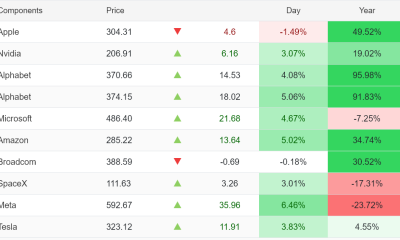

US Tech Stocks See Largest 5-Week Inflow in History: Can Nasdaq Break Its Downtrend?

US stocks: Dow closes at record on Mideast optimism; SpaceX, AMD drag Nasdaq

Tourist plane on sightseeing flight in Peru crashes into a field, killing all 13 people on board


Page Not Found | WIRED


Reform UK And Greens Sink To Lowest Favourability Ratings To Date

Bikini-clad Jennifer Aniston, 57, kisses hypnotist boyfriend Jim Curtis as they enjoy a romantic getaway aboard a luxury yacht in Spain


Nvidia Stock Climbs 2.5% as Chip Sector Rally Builds Ahead of AMD Earnings, Nvidia’s Own Report Looms


Trump says he is cancelling strikes on Iran subject to ‘rapidly’ making deal


Polymarket targets $20 billion valuation as competition heats up in prediction market sector


OpenAI, Anthropic AI agents targeted real people and systems in cyber tests



You must be logged in to post a comment Login