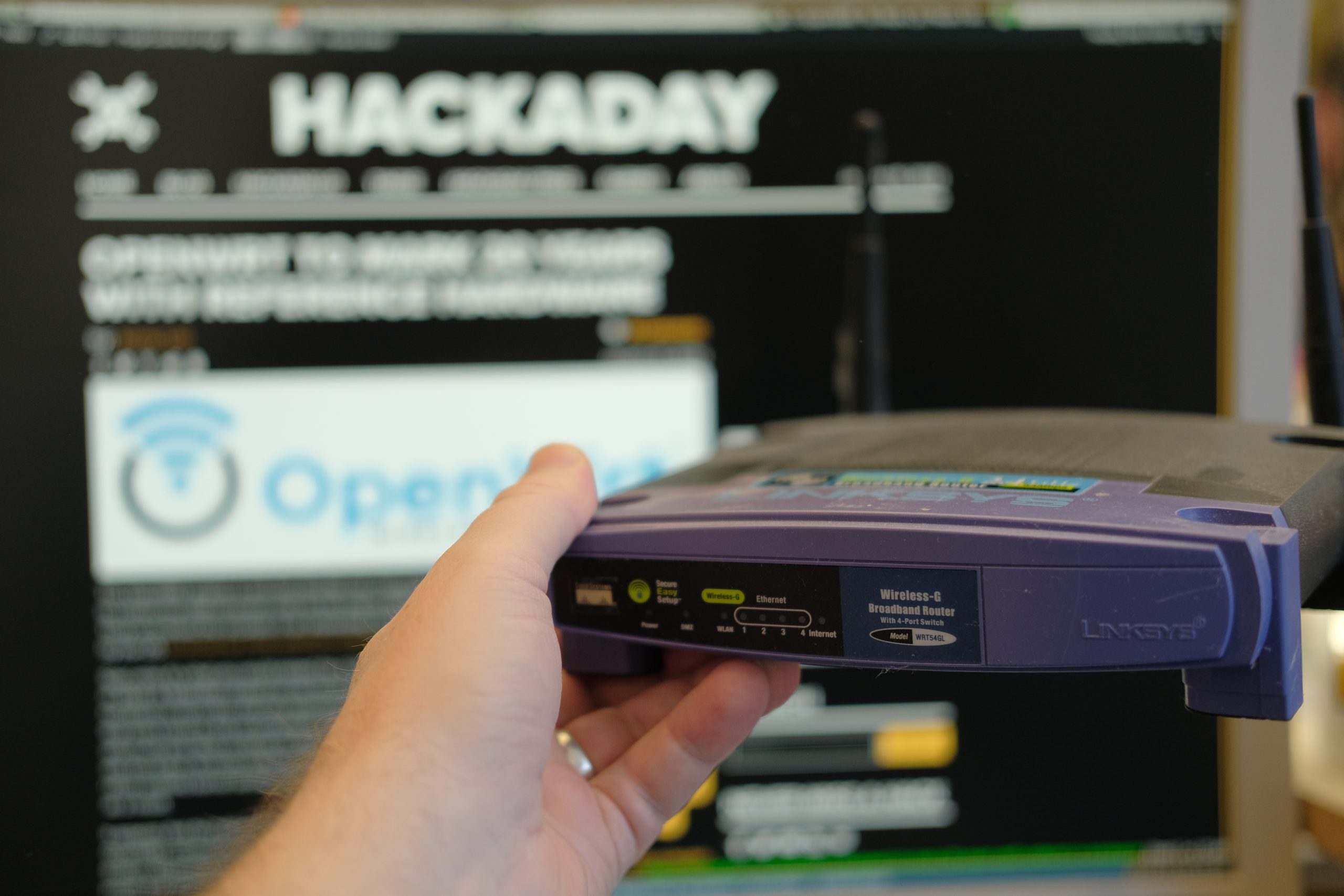
How long have we been hacking routers? To some of you who’ve been in the Hackaday audience for a while, the answer is “nearly forever”. In the early 2000s, they were one of the few consumer gadgets that had the trifecta of hackability: WiFi and networking built in, a user-friendly Linux operating system, and a few spare GPIOs that could control from the OS. Back when the Linksys WRT54GL was the king of the hill, we saw some pretty absurd hacks.
But the OS that this 18-year-old hack uses is still around: OpenWRT Linux. Although it still takes its name from the lovable purple router of old, it hasn’t supported that particular model in over a decade because of growing memory requirements. But it’s still the go-to distro for any modern router hacks, and it provides a lot more general-purpose Linux than you might expect on otherwise constrained platforms. As Tom pointed out in the podcast, if you see a used router for cheap, see if it’s supported by OpenWRT, and if it is, buy it.
While the project that got us thinking about routers again, Al’s recent networking hack, basically uses the router as a souped-up router, that’s by no means a given. OpenWRT is a real Linux OS, and can make use of most peripherals that your router find has available. Networking? Of course. USB? No problem. If you find a serial port and some GPIOs, you’re most of the way to a Linux SBC, although very likely a headless one.
Advertisement
There are a lot of hacks we see go in and out of style, and we see software projects come and go. But here we tip our hat to the router hacks, and to the plucky Linux OS that’s been ported to them all. Long may it keep old devices out of the landfill!
Featured image: My old baby, about a year or so before something in the radio modem finally gave up the ghost.
Tour de France 2026 continues today with Stage 19, the first of two successive summit finishes at the iconic Alpe d’Huez. Just the name conjors images of legendary Tour moments of years gone by, from Fausto Coppi’s incredible climb to victory back in 1952, to Tom Pidcock’s seat-of-your-pants descent 70 years later. So good that they included it twice in this year’s route, the riders will have to do it all again tomorrow (Via a different route) on the day before the finish.
Today’s stage is a 127.9km ride from Gap which includes 3,500m of elevation gain, starting with the Category Two Col Bayard, a 4.8km long climb with an average gradient of 7.2%. The riders get some respite with a short descent and a brief flat section, before taking on the Category One Col du Noyer (7.2km at 8.5%) which takes them to the summit. They will be far from finished, though, with 100km still to go which includes the Category Three Col d’Ornon (5.4km at 6.4%) before they tackle Alpe d’Huez with its familiar 21 hairpin bends.
Olympic road and time trial champion Remco Evenepoel has closed the gap on four-time TdF winner Tadej Pogacar to four minutes and 32 seconds, but with just three stages remaining it will take an almighty effort to prevent the Slovenian adding a fifth Yellow Jersey to his haul. That would take him level with legendary quartet Jacques Anquetil, Eddy Merckx, Bernard Hinault and Miguel Indurain, and you wouldn’t bet against him passing them in the years to come.
Advertisement
Here’s how to watch stage 19 of Tour de France 2026 from anywhere in the world. We’ve also listed the schedule, route and recent GC winners below.
Can you watch Stage 19 and 20 of Tour de France 2026 for free?
Yes. Tour de France 2026 is being shown on free-to-air SBS in Australia, with live streaming available through SBS on Demand.
Free highlights are available in the UK daily, courtesy of Channel 5 and 5.
Traveling abroad right now? You can use a VPN to watch Tour de France for free as if you were right at home.
Use a VPN to watch stage 19 and 20 of Tour de France 2026
A VPN is handy piece of software that can make your device appear as if it’s back in your home country, so you can unlock your usual service. The best VPN right now? We recommend NordVPN – it does everything and comes with up to 75% off.
Advertisement
How to watch stage 19 and 20 of Tour de France 2026 in the US
Like every stage of the Tour de France 2026, Stage 19 and 20 are being shown live on Peacock in the US.
The Peacock price starts at $10.99/month or $109.99/year for a plan that carries live sports. However, you can access Peacock virtually for free with a Walmart Plus 30-day trial for $1.
Stage 20 will also be available to watch live on NBC, which is available through Sling – specifically the Blue plan, which starts at $45.99/month. It includes NBC, ABC and Fox in select locations, plus FS1, USA Network, FX and more.
Advertisement
Alternatively, NBC is also carried by Fubo, YouTube TV and Hulu + Live TV, each of which offers a free trial to new users.
If you’re traveling outside of the US, you can make use of NordVPN to catch the action.
How to watch stage 19 and 20 of Tour de France 2026
(Image credit: Other)
In the UK, TNT Sports has the exclusive rights to show Tour de France 2026 and will have live coverage of Stage 19 and 20.
Advertisement
You can add TNT Sports to your Sky, Virgin Media or EE TV package, or get an HBO Max plan that includes TNT Sports. Prices start at £25.99/month if you commit to a year.
Alternatively, you can catch the best of the action on free-to-air Channel 5, which will broadcast its daily Tour de France highlights show at 7pm BST. Streaming is available via the 5 platform.
If you’re out of the UK but still want to tune in, explore the VPN route set out above, which will help you access your accounts from anywhere.
Advertisement
How to watch stage 19 and 20 of Tour de France 2026 in Australia
(Image credit: free)
Free-to-air SBS is showing Tour de France 2026 in its entirety in Australia, with live streaming available via SBS on Demand, so that is the place to go to watch Stage 19 and 20.
Just create an account, using a valid Australia postcode (e.g. 2042).
Not in Australia right now? You can use a VPN like NordVPN to watch all the action as if you were back home.
Advertisement
How to watch stage 19 and 20 of Tour de France 2026 in Canada
(Image credit: Other)
Cycling fans in Canada wanting to watch Stage 19 and 20 should head to FloBikes, which is showing every stage of the 2026 Tour de France.
A subscription costs CA$49.99/month or CA$216/year.
Visiting Canada from Australia? Use NordVPN to watch free-to-air TdF coverage.
Advertisement
Tour de France 2026 Q&A
Stage 19 Profile
(Image credit: Getty Images)
Stage 20 Profile
(Image credit: Tour de France)
What are the Tour de France 2026 Stage 19 & 20 start times?
Tour de France 2026 schedule
(All times BST)
Advertisement
Friday, July 24, 1pm Stage 19 – Gap – Alpe d’Huez | 128km
We test and review VPN services in the context of legal recreational uses. For example: 1. Accessing a service from another country (subject to the terms and conditions of that service). 2. Protecting your online security and strengthening your online privacy when abroad. We do not support or condone the illegal or malicious use of VPN services. Consuming pirated content that is paid-for is neither endorsed nor approved by Future Publishing.
“The Norwegian certification agency DNV has certified the commercial wave-driven power generator Corpower C4 for regular use,” writes Longtime Slashdot reader Qbertino. “German news site heise.de has a detailed write-up. See a CGI video of the power station and its internals, as well as the company’s website [at their respective links].” From the report (translated to English): According to the manufacturer Corpower Ocean, it is the first DNV prototype certificate for a wave energy converter. The certificate confirms that Corpower’s technology meets DNV’s requirements for structural strength, reliability, and safety, Corpower Ocean announced. The certification process began in the design phase and lasted seven years. DNV oversaw the process from concept development through design, manufacturing, and assembly, to dry-running tests and subsequent operation.
This is an important step, said Patrik Moller, CEO and one of the founders of Corpower Ocean. With the certification, wave energy is no longer just a promising technology, but a proven and financially viable one. This opens up new opportunities for project financing, insurance, and investments in commercial applications. The Corpower C4 wave power plant looks like a normal buoy: It consists of a 19-meter-long floating body with a diameter of 9 meters and a weight of approximately 11 tons. The system is anchored to the seabed. A mechanism inside the buoy converts its up-and-down movements in the waves into a rotary motion. This, in turn, drives a generator that produces electricity. The report notes that the company is “planning the first two industrial-scale wave energy farms off the coasts of Portugal and Scotland,” which are scheduled to begin operating sometime between 2027 and 2029.
At Samsung’s Galaxy Unpacked event, the phone-maker announced three new folding phones, including its first-ever Ultra foldable phone. The Galaxy Z Fold 8 Ultra is the true successor of last year’s Fold 7, while the Fold 8 enters with an all-new wide-fold design.
These devices are still priced high enough to put them out of reach for many, but they pack subtle design improvements that might make a big impact in daily life. I love the new anti-reflective coating, easier-to-unfold design and battery upgrades, but the Galaxy Z Fold 7 remains a powerful and capable device – especially if you can get it at a rare discount.
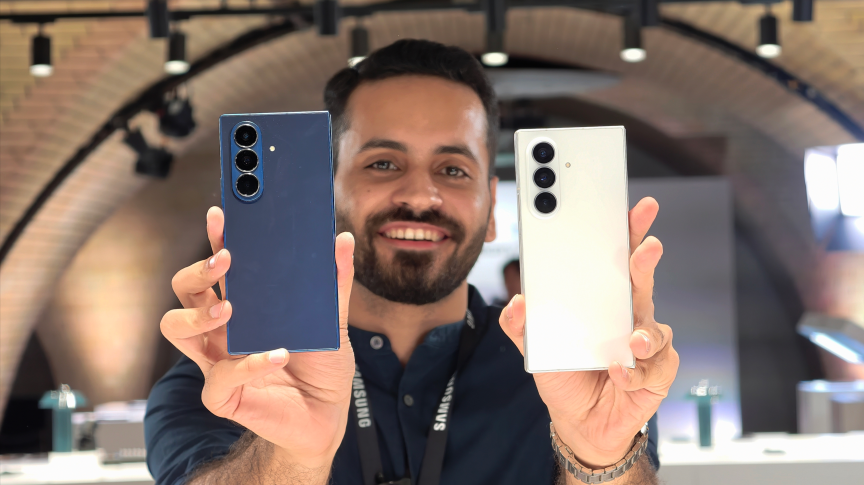
The two book-style foldables differ mainly in experiential upgrades rather than spec bumps. It might be hard to get an idea of what’s exactly new. That’s why I put them side by side during my hands-on to find out.
The Galaxy Z Fold 8 Ultra succeeds the Galaxy Z Fold 7 with a thinner design when folded.Prakhar Khanna/CNET
Design and display
The Samsung Galaxy Z Fold 8 Ultra is roughly the same size as the already thin-and-light Fold 7. It weighs the same but is a millimeter slimmer when unfolded. Both phones are comfortable to hold, but the new model is easier to open.
Samsung has made the Ultra’s sides slightly slimmer so its bezels don’t run all the way to the corners. This gives you a slight gap between the sides to make it easier to unfold. In comparison, the Fold 7 has flat sides with zero gap when the phone is folded shut, making it more difficult to unfold.
Advertisement
Both phones have a 6.5-inch AMOLED cover screen and an 8-inch AMOLED folding display with a 120Hz variable refresh rate. The Galaxy Z Fold 8 Ultra’s inner screen is brighter at 3,000 nits (versus 2,600 nits on the Fold 7). It also has a matte finish, along with my long-requested feature: an anti-reflective coating for better legibility in harsh lighting conditions and outdoors.
Side by side of the Galaxy Z Fold 8 (left) and the Z Fold 7.Prakhar Khanna/CNET
I held both phones indoors in direct light, and the difference was noticeable. My Fold 7 was more susceptible to glare and harder to see under direct light when compared to the new model.
Samsung has also improved the crease situation. It is minimal and can’t be seen unless you’re specifically looking for it. The phone-maker has added a new display structure that combines titanium-alloy film with an enhanced titanium plate to strengthen the display and balance the “hinge mechanics, display tension and magnetic force to make unfolding feel smoother, lighter and more natural,” says Samsung.
While closed, the Galaxy Z Fold 8 Ultra and the Galaxy Z Fold 7 use their 6.5-inch displays. Prakhar Khanna/CNET
Both foldables are IP48 rated for dust and water resistance. So, they aren’t truly dust-tight like the Google Pixel 10 Pro Fold and Honor Magic V6, but they can survive being dunked in water for at least 30 minutes (the “8” in IP48). But they won’t protect against dust particles smaller than 1mm (the “4” in that rating).
The Galaxy Z Fold 8 Ultra uses an 8-inch screen when unfolded.Prakhar Khanna/CNET
Performance and battery
The Galaxy Z Fold 8 Ultra is powered by the Qualcomm Snapdragon 8 Elite Gen 5 for Galaxy chip, as compared with the Fold 7’s Snapdragon 8 Elite processor. Both phones come in three storage variants: 256GB, 512GB and 1TB, with the top-end model getting 16GB of RAM (the 256GB and 512GB models are again paired with 12GB of RAM).
Samsung says it has created more space in the internals for better heat dissipation, so you can theoretically expect better thermal management.
As for the battery, this is the first time Samsung is using the silicon-carbon anode technology. It has allowed the phone-maker to upgrade the cell capacity from 4,400 mAh to 5,000 mAh on the new model. The Ultra also supports faster wired charging at 45 watts (the Fold 7 offered 25 watts).
Advertisement
On paper, it is still behind Chinese rivals like Oppo and Honor, which include over 6,000-mAh batteries in their respective folding phones, but I’m hoping this spec bump will help me get through a day with ease.
Both phones have Qi wireless charging, but no inbuilt magnets. You’ll have to buy a separate magnetic case to add compatibility with Qi2 wireless chargers and other magnetic accessories.
The Galaxy Z Fold 8 Ultra and Z Fold 7 both include a 200-megapixel wide camera.Prakhar Khanna/CNET
Camera, software and AI
The Galaxy Z Fold 8 Ultra’s camera array is mostly unchanged from last year’s model, with one exception: the ultrawide sensor. You get a 200-megapixel main camera and a 10-megapixel telephoto sensor with 3x optical zoom on both phones. However, the 12-megapixel ultrawide camera has been upgraded to a 50-megapixel sensor. You can expect higher-quality images, but I’ll wait for CNET’s tests to identify the real differences.
Both foldables shoot video in 8K at 30 frames per second, but the Fold might appeal to more creatives. The new model adds support for the APV codec and adds a Cine LUT to give cinematic color and tone control directly from your phone. This adds greater flexibility for editing and production workflows for professional creators.
The Galaxy Z Fold 7 launched with Android 16 onboard last year, and the Fold 8 Ultra is coming with Android 17 (with One UI 9 on top). You get a similar software experience on both phones, and the Z Fold 7 will get the update to Android 17 with One UI 9.
Advertisement
Now Nudge opens the Calendar in split screen after you tap on its pop-up button.Prakhar Khanna/CNET
The two devices support the full suite of Samsung’s Galaxy AI features alongside Gemini access. There’s AI Select for on-screen search support, an object eraser tool in the Gallery app and contextual AI features like Now Nudge for first-party apps. The latter displays contextual actions based on on-screen information. Like, if you’re having a chat in the Messages app, and they send you an invite with the date, time and address, Samsung’s Now Nudge feature will show a pop-up to add it to Calendar.
The phone-maker also demoed a new agentic AI feature at my demo, which wasn’t very impressive. Ideally, the new Gemini feature would help book a hotel just by looking at an on-screen photo of the Eiffel Tower, but in its current state, it was unreliable. But since the Z Fold 8 Ultra gets seven years of software updates and the Z Fold 7 has six more years to go, there’s plenty of time for both phones to continue to improve on these features.
To see more differences between the Galaxy Z Fold 8 Ultra and the Z Fold 7, check out the specs chart below.
Samsung Galaxy Z Fold 8 Ultra vs. Z Fold 7: Specs and prices
Prakhar Khanna is a Writer at CNET with bylines in ZDNET, Forbes, and other major outlets. A digital nomad at heart, he thrives in chaos–mixing deadlines with travel, often writing stories on planes, trains, and cafe tables while hunting down the best pizza spots wherever he lands. His backpack usually carries one phone too many, and his playlists are stacked with 2000s Bollywood. Find him across social media @ParkyPrakhar.
Contact: parkydoesstuff(at)gmail(dot)com
See full bio
Recent coverage of Flock Safety, the fast‑growing US surveillance technology company, reveals how opposition to automated license plate readers is playing out at the local level.
These cancellations are in large part driven by public concern around a system designed to enable mass surveillance, which is susceptible to serious abuses, including biased policing and privacy violations.
To track such surveillance, journalists and researchers are increasingly turning to a free tool called the Atlas of Surveillance, a collaboration between the renowned digital privacy group Electronic Frontier Foundation and the University of Nevada, Reno. The site has become a go‑to source for mapping police technology — which also includes drones, facial-recognition cameras and body cameras — with a searchable database that’s often more dependable than alternatives.
Advertisement
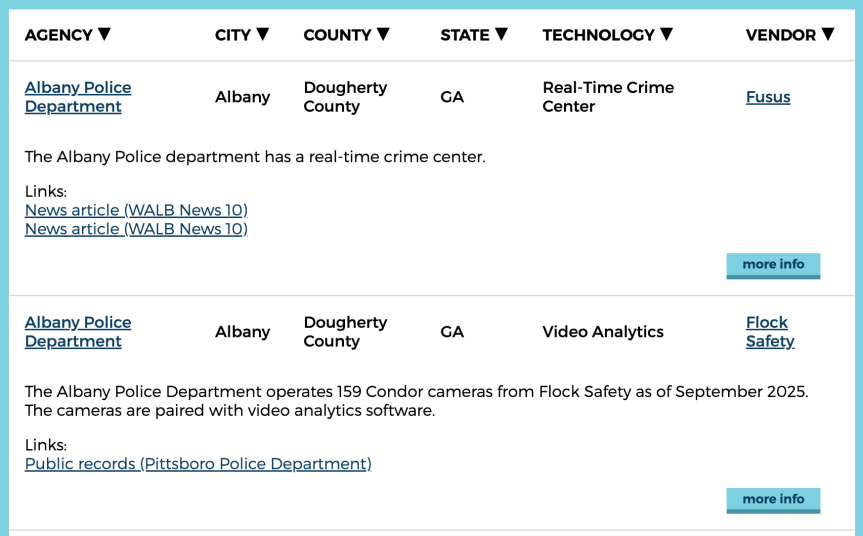
With the Atlas of Surveillance tool, you enter a city, county, state, law enforcement agency or vendor in the US and select which technology you’re interested in tracking. You’ll get a list of details based on your search, including links to public records or news articles.
“We frequently run into situations where local councilpeople don’t even know that a certain tool is in use,” said Beryl Lipton, Electronic Frontier Foundation senior investigative researcher. “Learning about a technology we have logged in the Atlas of Surveillance is meant to help people have conversations [about] whether that tool is appropriate for local use, start asking questions, and advocate for standards around how their police can or can’t use this equipment.”
Surveilling surveillance
While other tools for tracking Flock cameras and similar surveillance systems exist, I prefer the EFF’s approach, which uses reliable crowdsourced data from specific volunteers, including University of Nevada students and staff, as well as experienced researchers. These volunteers use a variety of information, including government documents, press releases, news stories and confirmed social media posts, to create lists of exactly which surveillance technologies local police or sheriff departments are using, as well as when they were adopted.
Deflock, another popular crowdsourced app for reporting Flock camera locations, has an open-source design that leaves it vulnerable to false reports from people who only think they’re seeing a surveillance device. Self-reports are also becoming less reliable as surveillance cameras are being hidden in speed signsand cacti.
Advertisement
The Atlas provides sources for its information and includes records dating back years.EFF
I tried the Atlas tool with several location searches, including Albany, Georgia, where five police officers were fired and arrested in July on charges of misusing the city’s Flock system. Sure enough, I could see exactly when Albany began its Flock program, among other details about the technology it uses.
“While we may know that a police department has a tool, we may not know that they don’t have a governing policy or what is in the policy they have, like how long the data is retained,” Lipton told me.
Lipton recommends that users pair the Atlas tool with the EFF’s Street-Level Surveillance hub, which offers deeper documentation, including details on third‑party vendors that collaborate with law enforcement.
The Atlas database isn’t perfect, and the volunteers can do only so much. In my own searches, I found that my home city offered accurate listings for traffic cameras, but didn’t mention the period when it adopted Flock automated license plate readers last year, before removing them after public complaint. I’ve seen similar patterns in other cities with comparable histories, suggesting the database may emphasize active programs or exclude portions of older records.
Resources like the Atlas of Surveillance give residents a clearer view of the technologies their police departments use, information that can otherwise be difficult to obtain. As I’ve covered before, some cities will carefully omit the name “Flock” when announcing new surveillance or monitoring programs, even if they are using the brand’s drones or ALPR cameras.
Advertisement
If you’d like to volunteer for the Atlas of Surveillance, you can select the Collaborate option to submit a datapoint for consideration.
Tyler Lacoma
Editor / Home Security and Smart Home
Tyler has worked on, lived with and tested all types of smart home and security technology for over a dozen years, explaining the latest features, privacy tricks, and top recommendations.
With degrees in Business Management, Literature and Technical Writing, Tyler takes every opportunity to play with the latest AI technology, push smart devices to their limits and occasionally throw cameras off his roof, all to find the best devices to trust in your life. He always checks with the renters (and pets) in his life to see what smart products can work for everyone, in every living situation.
Living in beautiful Bend, Oregon gives Tyler plenty of opportunities to test the latest tech in every kind of weather and temperature. But when not at work, he can be found hiking the trails, trying out a new food recipe for his loved ones, keeping up on his favorite reading, or gaming with good friends.
See full bio
L-R: Mantra CEO John Patrick Mullin, Docugami CEO Jean Paoli, and Inveniam CEO Patrick O’Meara. The companies are partnering to make DGML a standard for AI, with Docugami turning documents into data, Inveniam verifying it on a blockchain, and Mantra providing the chain.
Jean Paoli has spent his career making documents readable by machines — first as a co-creator of XML, then helping build the file formats behind Microsoft Office. Now his Kirkland, Wash.-based startup, Docugami, is open-sourcing the technology at the heart of its business, betting it can become a standard way to turn documents into data that people and AI agents can trust.
The company is releasing its technology, called DGML (short for Document Graph Markup Language), under Apache 2.0, a widely used open-source license, so other developers and companies can adopt it.
The idea is to turn it into a shared standard that no single company owns, much as XML became a common foundation across the tech industry.
The move reflects a shift in where the value is created in AI. Docugami until now has made its money selling software that turns unstructured documents into usable data. It’s betting now that there’s more value in proving that data is trustworthy instead.
How it works: Docugami is teaming up with Inveniam, a Detroit company whose software helps big investors keep tabs on the mountains of paperwork behind real estate and other hard-to-value assets. Inveniam will record a kind of digital fingerprint of each piece of DGML data on NVNM Chain, its blockchain built with Mantra, a crypto firm that Inveniam is acquiring.
Advertisement
That means, for example, that a single fact buried in a 200-page lease — such as the rental rate, a renewal option, or a default clause — can be verified on its own, without exposing the whole document. An investor, auditor, or AI agent can trace it to the page it came from.
To work with documents, AI systems usually convert them into a simpler format first. DGML enters a growing field of contenders in that regard, competing with the popular Markdown format and DocLang, a new open standard for AI-ready documents backed by IBM, Nvidia and Red Hat.
The business model: This is a big move for a company of Docugami’s size, taking the 30-person startup in a new direction. Paoli is handing the industry the technology his team spent years building, and pinning the company’s future on a larger idea.
The plan is to make money not from the format itself but from the value of the trusted data. Once a company converts its leases or loans into DGML and anchors the key numbers on the blockchain, investors, lenders and auditors can pay to draw on that verified data.
Advertisement
Docugami will share in the revenue through its partnership with Inveniam. The company also stands to collect a small fee each time a piece of data is recorded on the chain.
The company is giving away the DGML format and a working version of the software, but not everything. Paoli said the company is keeping some of its own technology private, including AI models it has fine-tuned to read documents, and could sell those or other tools to enterprises.
“The business model of everybody is changing. And if you know any company where it’s not true, you need to tell me, because I haven’t met them yet,” Paoli said in an interview.
Docugami has raised about $13 million to date, including a $10 million seed round in 2020 that drew the first investment in Grammarly’s history.
Advertisement
The partnership: Paoli met Patrick O’Meara, Inveniam’s CEO, a few months ago, through a former Microsoft colleague who had become one of O’Meara’s advisers. They quickly realized they had been working toward the same idea from different directions.
Inveniam, founded in 2017, helps big investors keep track of assets that are hard to value, like office towers, private loans and infrastructure. It monitors the documents behind those assets and flags changes as they happen, and its clients include some of the world’s largest sovereign wealth funds, according to O’Meara.
What it lacked was a consistent way to break those documents into verifiable pieces. That is what Docugami provides.
“We’re not putting the data itself on-chain, just a fingerprint of the document. Change one bit, one byte, one pixel, and the hash won’t match,” O’Meara said.
Paoli said the project uses the underlying blockchain, not the token.
“Crypto as an industry has gone through a lot of changes in the last 18 to 24 months, and it’s growing up in a lot of ways. This is a real use case with fundamental value, not just pure speculation,” Mantra’s Mullin said in an interview.
The result is a division of labor: Docugami turns documents into data, Inveniam verifies it and brings the customers, and Mantra provides the chain where the proof is recorded.
Advertisement
The DGML specification, sample documents and reference code are at dgml.io and on GitHub.
Editor’s note: This story was updated after publication to correct the name of a competing document format, DocLang, and to note that Inveniam’s blockchain is called NVNM Chain.
Scientists have been trying to figure out how kids pick up language so fast for decades, and a new study out of the Okinawa Institute of Science and Technology (OIST) might have cracked part of the puzzle: curiosity.
Researchers built a virtual robot with a brain-inspired neural network and set it loose in a simulated 3D world full of shapes, colors, and simple commands like “push left magenta dumbbell.”
Some robots were rewarded only for completing tasks correctly. Others got an extra reward for curiosity, essentially getting a little internal high whenever they encountered something that challenged their existing understanding of the world.
How does curiosity help a robot learn language?
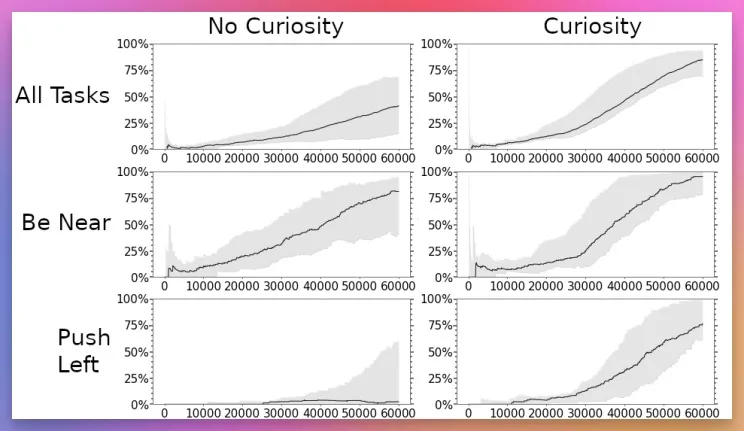
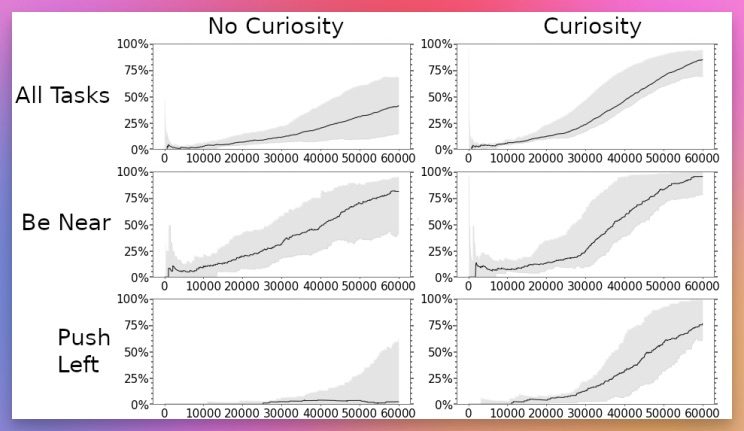
The curious robots didn’t just edge out their indifferent counterparts; they blew past them. According to the study, published in Science Advances, curious robots reached a genuine understanding of language in about half the time.
Advertisement
Okinawa Institute of Science and Technology
Study author Theodore Tinker compared it to trying white chocolate for the first time even though you already love dark chocolate. You take the risk anyway, and you walk away knowing more about chocolate in general.
Things got even more interesting halfway through training. The curious robots started knocking things over and experimenting with actions nobody asked for, basically playing. Nobody programmed that behavior in. It just showed up on its own.
Do robots really make the same mistakes as toddlers?
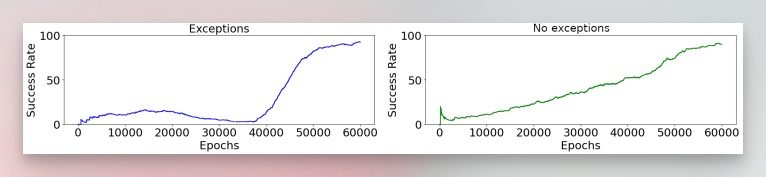
The robots also mimicked a well-known quirk in how children learn language. Kids often get certain verb forms right at first, then start applying grammar rules too broadly and make mistakes on verbs they’d previously used correctly, before eventually sorting out the exceptions and correcting themselves. The robots followed the same U-shaped dip in performance.
Advertisement
Okinawa Institute of Science and Technology
It’s also a nice contrast to how today’s chatbots learn. Large language models like ChatGPT train on massive datasets and spit out the statistically likely next word. This robot’s brain works more like ours, prioritizing accuracy while trying to keep its beliefs intact, only updating them when something surprises it enough to be worth the trouble.
None of this means robots understand language the way we do. But it does suggest that curiosity paired with a wide variety of experiences might be a big part of how toddlers crack the language code with so little to go on.
AMD will invest up to $5B in Anthropic and deploy 2GW of MI450 GPUs. Claude will accelerate ROCm development. First GW ships H1 2027. Anthropic already uses MI355X GPUs.
AMD and Anthropic announced a strategic partnership on Tuesday that commits AMD to invest up to $5 billion in Anthropic and deploy up to 2 gigawatts of AMD Instinct MI450 Series GPUs in Helios rackscale solutions to run Claude. Deployment of the first gigawatt begins in the first half of 2027. Anthropic is already using AMD’s MI355X GPUs and will now scale to MI455X accelerators paired with EPYC “Venice” CPUs and Pensando networking.
The engineering collaboration may matter more than the hardware. AMD and Anthropic will use Claude to optimise workloads for AMD Instinct GPUs and accelerate ROCm software development. AMD will also adopt Claude broadly across its engineering and product development teams. ROCm is AMD’s answer to Nvidia’s CUDA, and its software gap has been the primary reason AI developers default to Nvidia hardware even when AMD’s specs are competitive. If Claude can materially improve ROCm’s developer experience, AMD addresses the problem that has held it back for years, using its customer’s AI to fix its own software.
Anthropic’s compute strategy is now genuinely multi-vendor. Anthropic signed its biggest compute deal with Google and Broadcom, and has separate arrangements with Amazon (Trainium chips, 5GW), CoreWeave (Nvidia GPUs), and SpaceX (Colossus data centres). Adding 2GW of AMD Helios gives Anthropic what Tom Brown, its chief compute officer, called the ability to “map the right workloads to the right hardware.” Diversifying away from any single chip vendor reduces dependency risk at a time when compute is the binding constraint on frontier model development.
Advertisement
For AMD, the $5 billion equity investment mirrors Nvidia’s playbook. Nvidia invested $2 billion in Nebius and has taken stakes in multiple AI infrastructure companies to lock in hardware demand. AMD is doing the same: investing in a customer to guarantee that its chips, not Nvidia’s, run a meaningful share of the world’s most capable AI models. Lisa Su called it “a major platform for the next generation of AI infrastructure.” Whether Helios can compete with Nvidia’s NVL72 at production scale is the question the first gigawatt will answer.
Travis Kalanick is back, and Uber is helping to fund him. The founder Uber forced out in 2017 has raised $1.7 billion for Atoms, an industrial-AI and robotics company he has built in near-total stealth for years.
Andreessen Horowitz led the round. Its co-founder Ben Horowitz is joining the board. And among the investors sits Uber, the company Kalanick started in 2009 and left under a cloud.
That exit still shadows the story. Uber pushed Kalanick out as chief executive in 2017 after complaints of sexual harassment, discrimination and a toxic workplace. Nine years on, his old company is writing him a cheque. Kalanick, never one for understatement, calls the round “unfinished business”.
The equity comes with serious debt. Alongside a16z, Bain Capital, Fifth Wall and others, Atoms lined up credit facilities from JPMorgan, Goldman Sachs, Bank of America, Wells Fargo and Barclays. The company did not disclose a valuation. That is the kind of firepower needed to build heavy machines, not apps.
Advertisement
Bits to atoms
Kalanick’s pitch is a single idea he has chased for 16 years: turning the physical world into something software can run. In his framing, manufacturing is the processor, real estate is the storage, and transport is the network. Uber digitised transport for the masses.
CloudKitchens, his ghost-kitchen venture, did the same for food. Atoms is meant to do it for whole industrial sectors. He calls the result an “atoms-based computer.”
The target is the unglamorous heart of the economy: mining, construction, heavy transport and food. His term for the toolkit is Industrial AI, a mix of software, sensors, robotics and models aimed at automating entire sectors. He calls the wider shift the “Age of Atoms.”
Not a humanoid in sight
Here Kalanick parts ways with much of the field. While rivals pour billions into general-purpose humanoid robots, Atoms builds specialised machines for specific jobs. Horowitz argues that purpose-built hardware copes with brutal industrial environments far better than a humanoid could. It is a pointed bet against the hottest trend in physical AI.
Advertisement
Atoms is split into three parts, according to reports. Atoms Food folds in CloudKitchens and its cooking and delivery software. Atoms Mining puts autonomous machines to work at extraction sites, built on Atoms’ acquisition of Pronto, a startup run by former Uber and Google engineer Anthony Levandowski.
Atoms Transport is what Kalanick calls a “wheelbase for robots.”
Levandowski’s presence adds intrigue. He sat at the centre of a self-driving trade-secrets case involving Google and Uber, and later received a presidential pardon. Kalanick has also flirted with buying the US arm of China’s Pony AI, with Uber’s help, though those talks ended earlier this year.
Comeback, with caveats
The mood around the deal is euphoric. One a16z partner called it the largest cheque the firm has ever written. Another investor predicted Atoms would be worth a trillion dollars within a decade. Horowitz put it more simply: “Travis is back.”
Advertisement
Some scepticism is warranted. Atoms has revealed a grand vision and a very large bank balance, but little in the way of deployed industrial robots at scale. The valuation is a mystery, the claims are sweeping, and Kalanick’s Uber record is not easily forgotten. Yet the bet is coherent.
He turned the movement of people into a software business once. Now, with $1.7 billion and his old adversary alongside him, he wants to do the same to the machines that grow, dig and haul the physical world.
Mobileye founder and CEO Amnon Shashua plans to step down from the top leadership post after nearly three decades, just as the company pushes into robotaxis and humanoid robots.
Shashua will remain CEO until Mobileye hires a replacement, according to a regulatory filing Thursday.
Mobileye got its start making computer vision chips based on Shashua’s academic research at Hebrew University in Israel, and grew into a major supplier of the chips that power automotive safety and driver-assistance features. It had the largest IPO in Israel’s history, was acquired in 2017 by Intel for $15.3 billion, then spun back out as a publicly traded company in 2022, though Intel remains its largest shareholder.
Under Shashua, Mobileye also moved beyond selling chips to automakers and began building its own systems that handle autonomous driving, which it now supplies to Volkswagen and its MOIA subsidiary.
Advertisement
In January, the company acquired Shashua’s humanoid robotics startup Mentee Robotics for $900 million, which Shashua called part of “Mobileye 3.0,” the next phase of the business focused on robotics and automotive AI.
Mobileye also said in June it would expand beyond its supplier status to launch its own robotaxi service in a U.S. city in 2027.
Microsoft is putting $60 million behind the U.S. Department of Energy’s Genesis Mission, a push to use artificial intelligence to speed up scientific research across the government’s 17 national labs.
The company’s investment is split into two pieces: $40 million in Azure cloud computing and AI credits over three years, and $20 million for engineering and deployment help to get DOE researchers actually using the tools, Microsoft said in a blog post Wednesday.
Microsoft is also launching a new internal group called SPARK — Scientific Partnership Advancing Research & Knowledge — to serve as the single point of contact between the company and DOE on Genesis Mission work. It’s meant to combine Microsoft’s program management, engineering, security and research teams into one coordinated effort, instead of leaving individual labs to navigate Microsoft on their own.
President Trump created the Genesis Mission through an executive order in November 2025, directing DOE to build a unified computing and data platform — since named the American Science and Security Platform — that connects the national labs’ supercomputers, AI tools and scientific datasets.
The order likened the effort’s urgency and ambition to the Manhattan Project, and the White House said it’s expanded into a whole-of-government initiative involving more than 15 federal agencies, backed by more than $5 billion in commitments.
Advertisement
Microsoft named four initial projects taking shape under the partnership, including work with Pacific Northwest National Laboratory in Richland, Wash., to speed up the discovery of new energy storage materials — cutting analysis that used to take years down to weeks — and autonomous lab work with Lawrence Livermore National Laboratory aimed at detecting biological threats earlier.
“We move faster together,” Chris Barry, president of Microsoft’s U.S. Public Sector business, wrote in the blog post announcing the commitment, framing the investment as both a “national security imperative” and economic opportunity for the U.S.
Microsoft isn’t the only Seattle-area cloud giant courting the Genesis Mission. Amazon Web Services was recognized by DOE as a Genesis Mission supporter in December, highlighting its work with Idaho National Laboratory on AI tools for nuclear reactor design, and the company launched its own Genesis Accelerator Initiative in February, offering up to $50 million in cloud credits for DOE-related research over three years.
Google also announced Wednesday that it was committing $40 million of AI tokens and cloud credits for researchers in support of the Genesis Mission.
























































You must be logged in to post a comment Login