




Connect with us
DAPA Banner

Tech

Help us figure out macOS Tahoe 26.3 external drive mounting issues

Published

on

Some Mac users are discovering they can’t use their external drives with macOS Tahoe 26.3 and it seems Apple knows something’s wrong. Let us know what works for you, and what doesn’t.

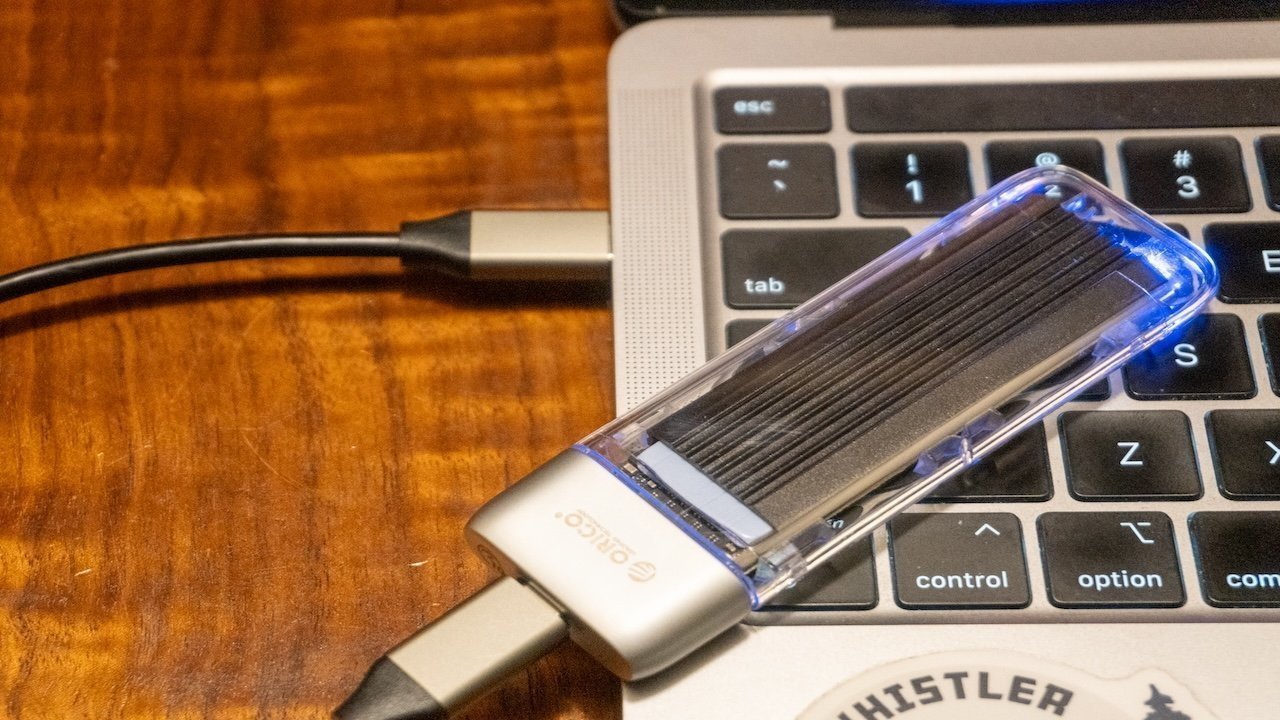
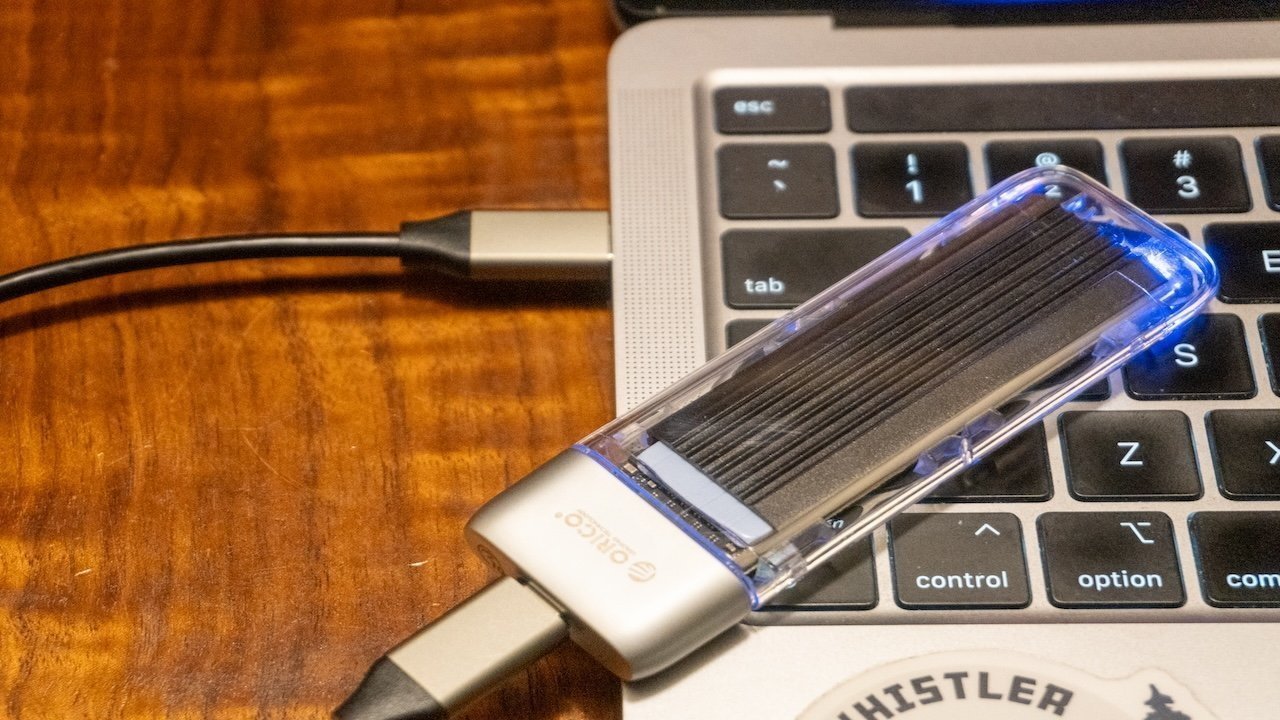
An external drive connected to a Mac.

Apple released the update to macOS Tahoe 26.3 on February 11, with the update adding more machine learning performance for M5 users as well as other smaller changes. It seems that one undocumented alteration may have caused problems for some users.
A number of users have taken to online support forums and social media to try and get help with an external drive issue in macOS Tahoe 26.3. Affected users are finding that external drives are not mounting properly, despite previously working fine.
Continue Reading on AppleInsider | Discuss on our Forums

Source link

Continue Reading
Click to comment

You must be logged in to post a comment Login

Leave a Reply

Tech

Matty Benedetto 3D Prints a Carry On Suitcase Loaded With Every Airport Convenience

Published

on

3D-Printed Suitcase
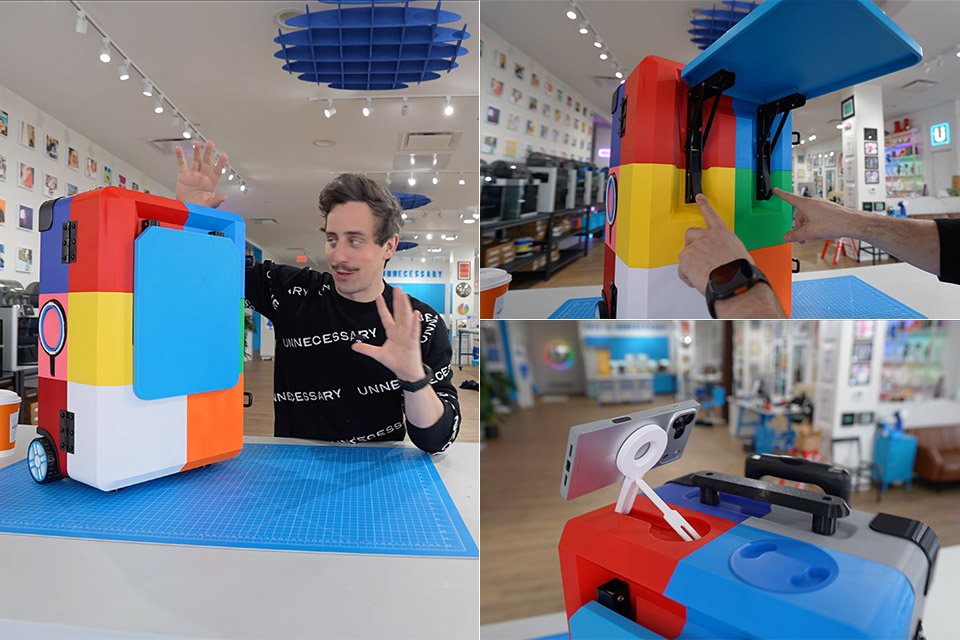
Product designer Matty Benedetto discovered some clips of passengers stranded in airport security lines and clogged airport terminals. He determined that his next trip needed to be less of a nightmare, so he set out to design a carry-on suitcase that would make the entire experience a little less stressful. More specifically, he decided to create one from scratch using his 3D printers.


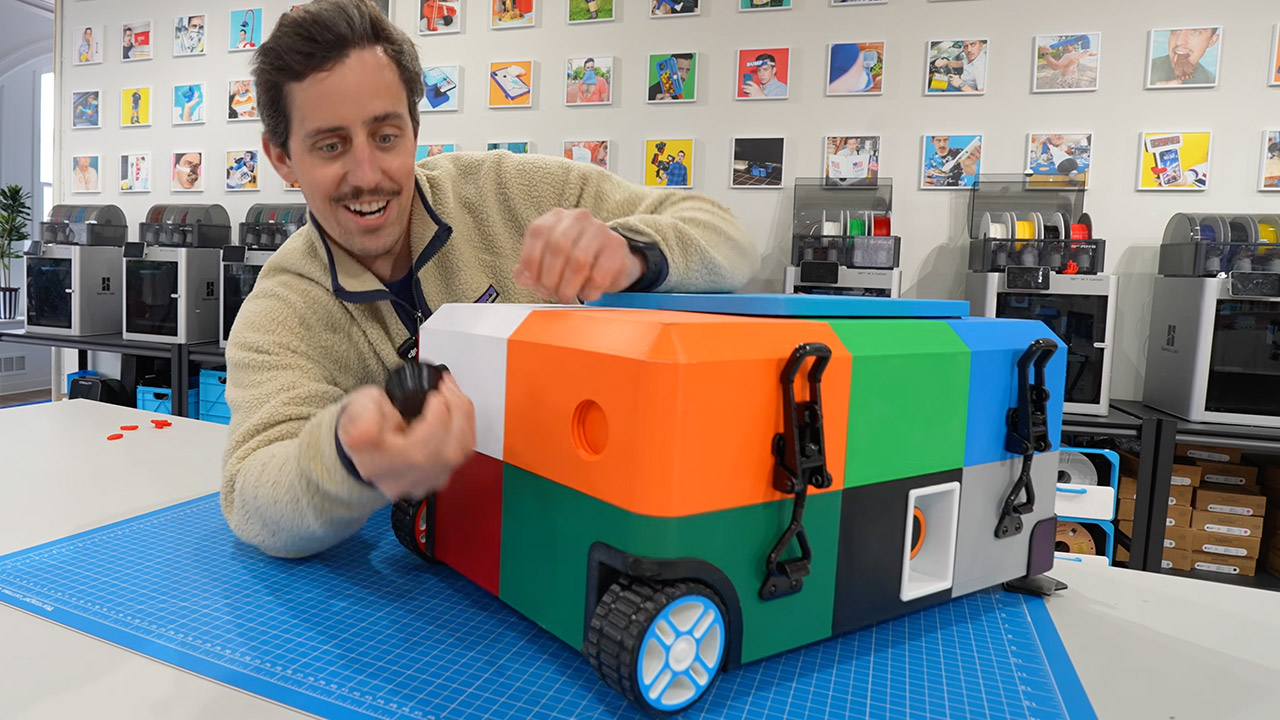
He tailored the dimensions of his carry-on to normal sizes so that it would pass through security inspections without a second thought. Then he divided the bag’s main body into two parts with overlapping edges to provide strength, and printed a few test copies with some colorful leftover filament to check how the pieces fit together. Putting it all together was like snapping a load of large plastic bricks into place, except he added metal hinges for the lid and a telescoping handle constructed from off-the-shelf components. During a print halt, ball bearings were inserted into the wheels to ensure that they roll smoothly without the need for any additional equipment.

Sale


mixi Carry On Luggage with Cup Phone Holder and Charger Hard Shell Suitcases with Spinner Wheels, 20 Inch…
  • 【High-end Quality】The suitcase is made of THREE-LAYER Covestro PC which is extremely scratch-resistant, it goes through insanely strict producing…
  • 【One-Piece Side Opening Design】The design is different from the traditional way of opening and closing the suitcase in half, which is more…
  • 【Multifunctional Holder Design】Especially designed water cup holder, phone holder located in top of luggage and the handle hook. If you enjoy…

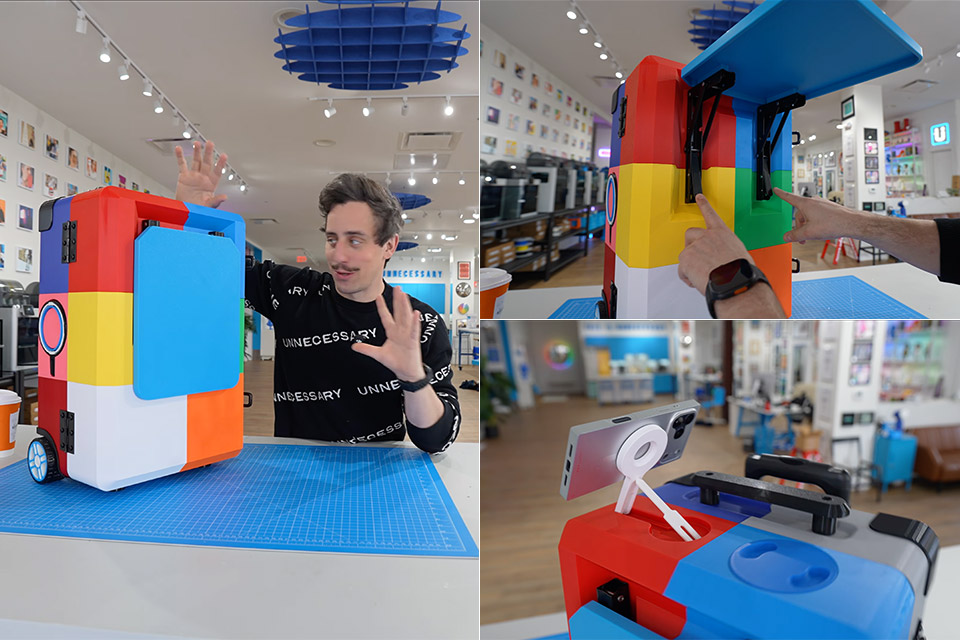
After determining the basic shape, he went on to the details that would make a long wait more bearable. A flat panel folds out from the front and includes a little latch to secure it in place, allowing you to prop up your laptop during a layover. A MagSafe mount appears next to it to hold your phone, allowing you to watch shows or check your messages without taking your hands off the wheel. When you’re stuck waiting for a delayed flight, it’s usually a good idea to have some food with you, so he included a little jar that twists open easily from the side, allowing you to access your goodies without having to unzip the main zipper.

Advertisement

3D-Printed Suitcase
On a long journey, coffee can pose a serious security issue, spilling all over the place and causing a huge mess. To avoid this kind of disaster, he created a cup holder with a sophisticated gimbal inside that maintains your drink level even when the bag tilts. On the outside, he incorporated a rotating dial that displays the flight number, weather prediction, destination details, and a few emergency contacts at a glance. And for further peace of mind, he designed the feet to detach so you can put an AirTag inside each one, which is entirely out of sight but provides some extra protection against losing your luggage.

3D-Printed Suitcase
The first major test was security, when his luggage breezed through the X-ray machine with no one blinking an eyelash about its printed design. Next, he had to get it into a regional flight, which proved difficult until he gave it a gentle nudge into the overhead bin, where it slipped in without incident. The smooth rolling was due to the ball bearings, and the entire setup weighed about the same as a conventional carry-on.

3D-Printed Suitcase
However, when he arrived at his destination, things became a little more problematic. There were hairline cracks all along the main seam, one of the wheels had broken free during the journey, the snacks in the jar had turned to crumbs, and a couple of the smaller attachments had vanished; not a bad outcome, all things considered.

Source link

Continue Reading

Tech

Thousands of consumer routers hacked by Russia’s military

Published

on

The Russian military is once again hacking home and small office routers in widespread operations that send unwitting users to sites that harvest passwords and credential tokens for use in espionage campaigns, researchers said Tuesday.

An estimated 18,000 to 40,000 consumer routers, mostly those made by MikroTik and TP-Link, located in 120 countries, were wrangled into infrastructure belonging to APT28, an advanced threat group that’s part of Russia’s military intelligence agency known as the GRU, researchers from Lumen Technologies’ Black Lotus Labs said. The threat group has operated for at least two decades and is behind dozens of high-profile hacks targeting governments worldwide. APT28 is also tracked under names including Pawn Storm, Sofacy Group, Sednit, Tsar Team, Forest Blizzard, and STRONTIUM.

Technical sophistication, tried-and-true techniques

A small number of routers were used as proxies to connect to a much larger number of other routers belonging to foreign ministries, law enforcement, and government agencies that APT28 wanted to spy on. The group then used its control of routers to change DNS lookups for select websites, including, Microsoft said, domains for the company’s 365 service.

“Known for blending cutting-edge tools such as the large language model (LLM) ‘LAMEHUG’ with proven, longstanding techniques, Forest Blizzard consistently evolves its tactics to stay ahead of defenders,” Black Lotus researchers wrote. “Their previous and current campaigns highlight both their technological sophistication and their willingness to revisit classic attack methods even after public exposure, underscoring the ongoing risk posed by this actor to organizations worldwide.”

Advertisement

To hijack the routers, the attackers exploited older models that hadn’t been patched against known security vulnerabilities. They then changed DNS settings for select domains and used the Dynamic Host Configuration Protocol to propagate them to router-connected workstations. When connected devices visited the selected domains, their connections were proxied through malicious servers before reaching their intended destination.

Source link

Advertisement
Continue Reading

Tech

New Artemis II images give fresh look at our lunar neighbour

Published

on

From ancient lunar lava to personal tributes, the new images released from the Artemis II space mission capture fresh perspectives of our celestial neighbour.

Yesterday (7 April), NASA released the first images of the moon captured by the Artemis II astronauts during their historic test flight.

The Artemis II mission took off last week (1 April) from the Kennedy Space Center in Florida, beginning an approximately 10-day mission for NASA astronauts Reid Wiseman, Victor Glover, Christina Koch and Canadian Space Agency astronaut Jeremy Hansen.

Yesterday’s images were taken on 6 April during the crew’s seven-hour pass over the lunar far side – the first crewed lunar flyby in more than 50 years – and provide a fresh look at Earth’s closest celestial neighbour.

Advertisement

From an eclipse to ancient lava, here is just a handful of some of the most interesting images captured by the Artemis II crew so far.

Near and far

A wide picture of the moon, showing a grey landscape filled with craters and a darker grey patch to the right of the moon.

A picture capturing two-thirds of the moon. Towards the bottom of the image, the Orientale basin can be seen. North-east of the Orientale, seen as a dark spot, is the Grimaldi crater. Image: NASA

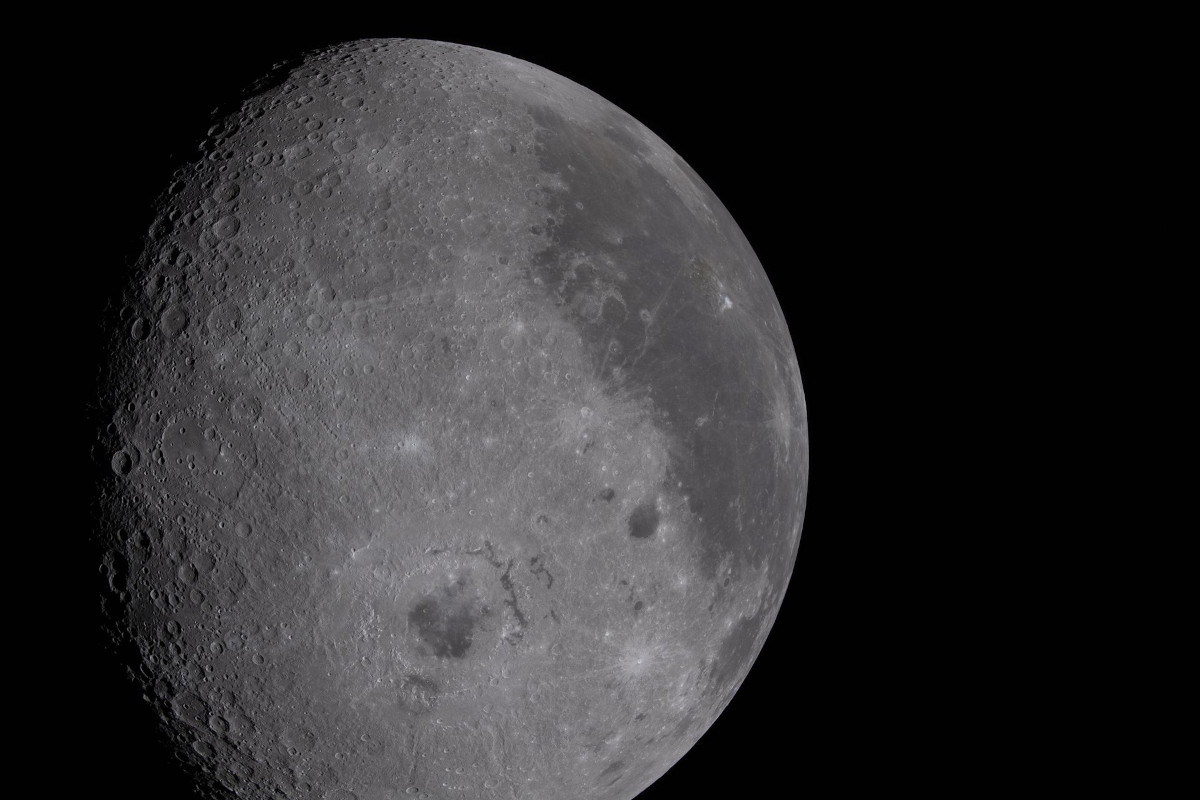
One of the crew’s most striking images captures two-thirds of the moon, showcasing the “intricate features of the near side”, according to NASA. The 600-mile-wide impact crater, the Orientale basin, lies along the transition between the near and far sides and can be seen at the bottom of the image.

The round black spot north-east of Orientale is the Grimaldi crater, known for its exceptionally “dark mare lava floor and heavily degraded rim”.

Advertisement

In-space eclipse

An image of the moon covering the face of the sun in space. A faint bright halo can be seen around a dark moon.

The moon fully eclipsing the sun, as taken by the Artemis II crew. Image: NASA

One of the most unique images taken by the Artemis II crew captures the moon fully eclipsing the sun. The corona of the sun forms a glowing halo around the moon, while light reflected off Earth forms a faint, glowing outline of the near side of the moon.

Nearly 54 minutes of totality – when the moon completely blocks the bright face of the sun – was observed by the crew.

Stars are also visible around the spectacle, which are typically too faint to see when imaging the moon, but are readily visible with the moon in darkness.

Advertisement

“This unique vantage point provides both a striking visual and a valuable opportunity for astronauts to document and describe the corona during humanity’s return to deep space,” according to NASA.

A different perspective

A picture taken of Earth in a crescent phase next to the grey darker side of the moon in space.

Earth in a crescent phase showing the cutoff between day and night on the planet, as seen from the Artemis II spacecraft as it conducted the lunar flyby. Image: NASA

Another image captured during the lunar flyby shows Earth split between daytime and nighttime.

Earth can be seen in a crescent phase, with sunlight coming from the right of the image. On the day side, swirling clouds are visible over the Australia and Oceania region.

Advertisement

Meanwhile, the lines of small indentations seen on the moon’s surface to the left of the image are secondary crater chains. These structures are formed by material ejected during a violent primary impact.

Ancient lava

A picture of the moon's surface with bright circles representing craters and dark patches representing ancient lava.

A close-up snapshot of the moon as the crew approached for the flyby. The Aristarchus crater is the bright white dot in the middle of a dark grey lava flow at the top of the image. Image: NASA

In one close-up shot of the moon’s surface, taken as the NASA Orion spacecraft approached for the lunar flyby, an interesting ancient remnant can be observed.

According to NASA, dark patches visible on the top third of the lunar disc represent ancient lava.

Advertisement

Meanwhile, the bright white dot in the middle of a dark grey lava flow at the top of the image is the Aristarchus crater, which measures at a depth of 2.7km – making it deeper than the Grand Canyon.

A personal tribute

A picture of the moon's surface displaying a number of craters and basins.

A picture of the Orientale basin, seen in the middle right of the image. The first crater named by the crew, called Integrity, lies just above the centre of the image. North of the Orientale at the top right corner of the image is the Glushko crater. To the north-west of that is the second crew-named crater, seen as a bright white spot, which the crew has called Carroll. Image: NASA

During the mission’s lunar flyby observation period, the Artemis II crew snapped an image showing the rings of the Orientale basin, one of the moon’s youngest and best-preserved large impact craters.

According to NASA, these concentric rings offer scientists a rare window into how massive impacts shape planetary surfaces, “helping refine models of crater formation and the moon’s geologic history”.

Advertisement

At the 10 o’clock position of the Orientale basin, two smaller craters are visible. The Artemis II astronauts submitted names for these two craters for approval by the International Astronomical Union: the first being Integrity, named after the crew’s spacecraft; and the second being Carroll, named after mission commander Reid Wiseman’s late wife.

“A number of years ago, we started this journey in our close-knit astronaut family and we lost a loved one,” said mission specialist Hansen to mission control at the time of the proposal. “And there is a feature in a really neat place on the moon, and it is on the near side/far side boundary. In fact, it’s just on the near side of that boundary, and so at certain times of the moon’s transit around Earth, we will be able to see this from Earth.

“And so we lost a loved one. Her name was Carroll, the spouse of Reid, the mother of Katie and Ellie. And if you want to find this one, you look at Glushko, and it’s just to the northwest of that, at the same latitude as Ohm, and it’s a bright spot on the moon. And we would like to call it Carroll.”

‘A human story’

Eight days into the Artemis II mission, and a number of remarkable moments have been observed in humanity’s latest major space voyage, including the crew surpassing the record for human spaceflight’s farthest distance at 248,655 miles from Earth.

Advertisement

But for many, the human side of the voyage – such as the crew’s sentimental proposal to name a crater – have stuck as dually important alongside the mission’s technical feats.

This rings true with award-winning Irish scientist Dr Niamh Shaw, who was present on the Kennedy Space Center’s media lawn for the historic launch.

“Space has always been a kind of compass in my life,” she told SiliconRepublic.com. “It has a way of stripping everything back, reminding me of what matters, of how small we are and how extraordinary it is that we are here at all.

“It keeps me grounded in my questions. In curiosity. In wonder. And also in responsibility. Because one of the things space teaches us, very clearly, is that there is no rescue mission coming for Earth. No one arriving to solve our problems.”

Advertisement

Shaw told us that what struck her just as much as the launch itself was “what happened afterwards”.

“The level of interest, the appetite for connection … People want to understand, to feel part of it, to ask questions,” she explained.

“I haven’t stopped: media calls, messages, Zooms with my Town Scientist families.

“And I found myself trying to share it in a way that made it personal for them – sending photos, describing moments, answering questions,” she added.

Advertisement

“Because I genuinely believe that’s where the real impact lies. Not just in the engineering achievement, extraordinary as it is. But in how it reaches people.

“In how it shifts perspective, even slightly. In how it reminds us that we are all part of something much bigger and that the story of space exploration is, ultimately, a human story.”

Don’t miss out on the knowledge you need to succeed. Sign up for the Daily Brief, Silicon Republic’s digest of need-to-know sci-tech news.

Advertisement

Source link

Continue Reading

Tech

Microsoft rolls out fix for broken Windows Start Menu search

Published

on

Windows 11

Microsoft has pushed a server-side fix for a known issue that broke the Windows Start Menu search feature on some Windows 11 23H2 devices.

In a Windows release health update (WI1273488) seen by BleepingComputer, Microsoft said these problems have affected only a small number of users since April 6 and are caused by a server-side Bing update aimed at improving search performance.

While the company says these problems are recent, there have been reports of similar issues surfacing online for months, including claims that the Start Menu displays blank search results that are still clickable.

Wiz

To address this known issue, Microsoft has pulled the buggy Bing update and expects the search issues to subside as the fix rolls out to affected customers.

“An investigation determined that the problem coincided with a server-side Bing update designed to improve search performance. To mitigate the issue, the server-side Bing update was rolled back, and reports of search failures are steadily decreasing,” Microsoft said.

Advertisement

“This issue will resolve automatically as the server-side fix is gradually rolled out to affected devices. To receive this fix, make sure the device is connected to the internet and that Web Search has not been disabled by Group Policy.”

More Windows Start Menu issues

This isn’t the first known Start Menu issue to impact Windows customers in recent years. In November, Microsoft shared a temporary workaround for another bug that was causing the Start Menu, File Explorer, and other key system components to crash when provisioning systems with cumulative updates released since July 2025, due to XAML packages not registering in time after installing the update.

On impacted systems, affected users experience a wide range of problems, including Start menu crashes and critical error messages, missing taskbars even when Explorer is running, crashes of the core ShellHost (Shell Infrastructure Host or Windows Shell Experience Host) system process, and Settings app silently failing to launch.

Microsoft is still working on developing a permanent fix, but hasn’t provided a timeline for when a solution will be available. Meanwhile, affected customers must manually register the missing XAML packages.

Advertisement

In May, Microsoft also silently fixed an issue that broke Start Menu jump lists for all apps on Windows 10 22H2 systems, and in June 2023, it addressed a bug that caused Windows Search and the Start Menu to become unresponsive.

Automated pentesting proves the path exists. BAS proves whether your controls stop it. Most teams run one without the other.

This whitepaper maps six validation surfaces, shows where coverage ends, and provides practitioners with three diagnostic questions for any tool evaluation.

Source link

Advertisement
Continue Reading

Tech

Ikea’s New Lineup of Smart Home Gear Is Quietly Changing the Game

Published

on

I’ve always been an Ikea fan. I lived in nine different apartments over 15 years before moving into my home, and every single one of those places had an abundance of Ikea furnishings. But the latest thing from Ikea that’s been catching my eye isn’t the new bold blue shade for the Billy bookcase, but the brand’s expanded and upgraded smart home gear.

Ikea announced last year that its new lineup of smart home gadgets would be entirely Matter-compatible. That’s a big deal, as the open source interoperability standard has Amazon, Apple, and Google signed up, meaning these devices will play well with Alexa, Siri, and Google’s nameless voice assistant. While some of this gear has been available for a little while, much of the lineup—like the newest light bulbs and smart plugs—is new. These are now some of the most affordable smart home gadgets available, and from my experience, they also some of the best when it comes to ease of setup and price.

Ikea is still using its Dirigera Hub ($110) that launched a few years ago, so if you’re already an Ikea smart home user, you won’t need a new hub to start using these gadgets. But new users should pick one up if they don’t have a Thread-enabled, Matter-compatible smart home hub in their home.

Here’s what gear I’ve tried from Ikea’s new smart home collection, and how it went.

Advertisement

The Kajplats Bulb

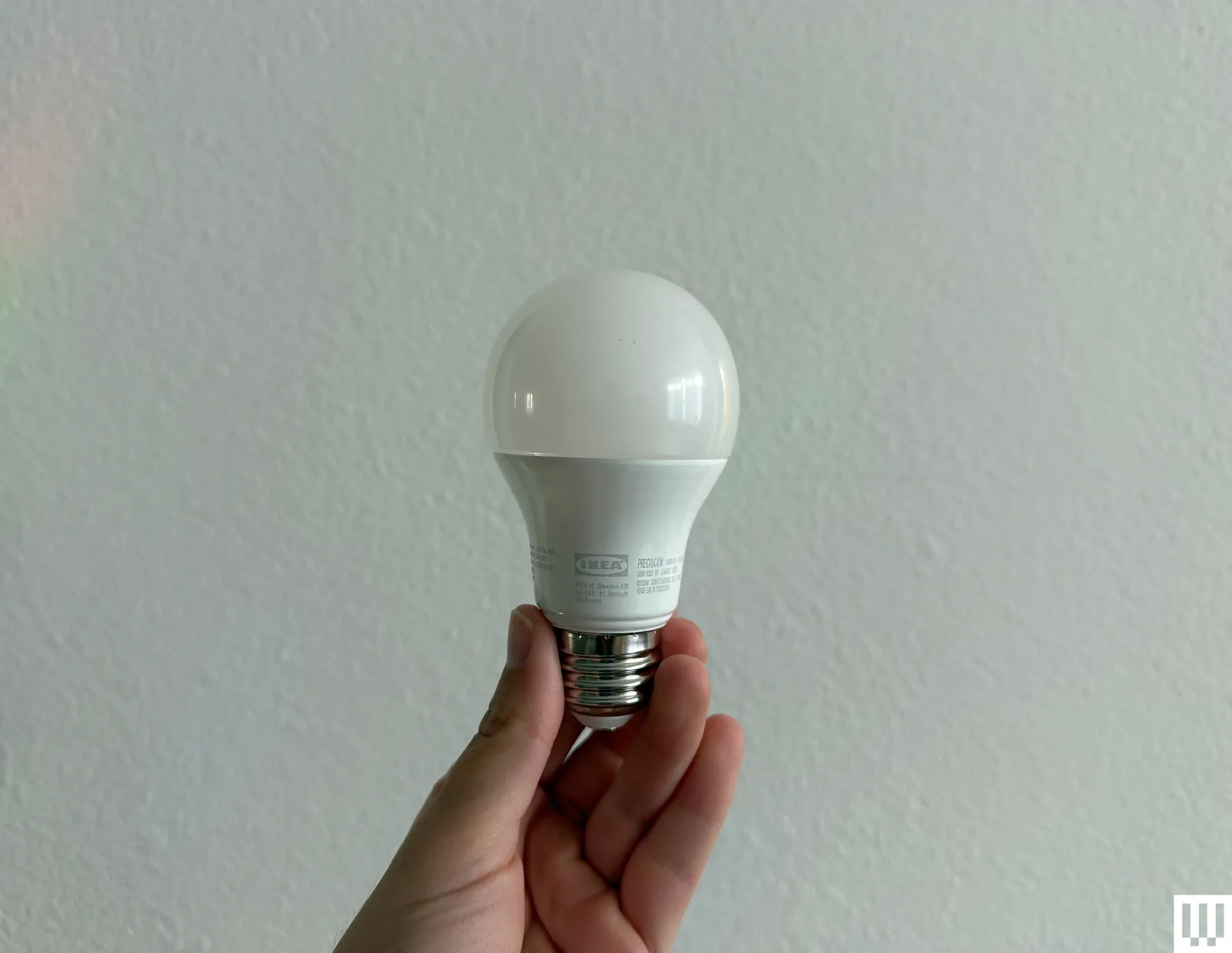
Image may contain Light Beverage Milk and Lightbulb

Photograph: Nena Farrell

One of Ikea’s key new products, just launched this April, is a new light bulb. Smart light bulbs are one of the most-used items in my home, and this is one of the most accessible and useful smart home products out there.

The Kajplats smart bulb has 11 variations, ranging from your classic E26 standard bulb to Edison-style dimmable bulbs. The bulbs are well-priced, ranging from just $6 for a 450 lumen white-only bulb for accent lights up to $13 for the 1,100 lumen color bulb. That puts it a little cheaper than my favored Cync smart bulb, but you’ll miss out on extras like music sync that more expensive bulbs offer but which I don’t find myself using very often.

The Kajplats bulb was easy to set up around my house, and because I’m an iPhone user, it also used Matter to sync to my Apple Home app as well as my Ikea app. I wish these came in more packs of bulbs rather than having to always buy them a la carte, but it’s a solid bulb for a good price. Just check the lumens before you check out to make sure you’re not accidentally buying the cheap, dim one when you need something bright enough to fill a room.

Source link

Advertisement
Continue Reading

Tech

Chrome finally gets vertical tabs, plus an improved Reading Mode

Published

on


Rolling out from April 7 on desktop Chrome (download here), the vertical tabs feature gives users the option to move the browser’s tab strip from the top of the window to a sidebar on the left.
Read Entire Article
Source link

Continue Reading

Tech

Are We Surrendering Our Thinking To Machines?

Published

on

“Once, men turned their thinking over to machines in the hope that this would set them free. But that only permitted other men with machines to enslave them.” — so said [Frank Herbert] in his magnum opus, Dune, or rather in the OC Bible that made up part of the book’s rich worldbuilding. A recent study demonstrating “cognitive surrender” in large language model (LLM) users, as reported in Ars Technica, is going to add more fuel to that Butlerian fire.

Cognitive surrender is, in short, exactly what [Herbert] was warning of: giving over your thinking to machines. In the study, people were asked a series of questions, and — except for the necessary “brain-only” control group — given access to a rigged LLM to help them answer. It was rigged in that it would give wrong answers 50% of the time, which while higher than most LLMs, only a difference in degree, not in kind. Hallucination is unavoidable; here it was just made controllably frequent for the sake of the study.

The hallucinations in the study were errors that the participants should have been able to see through, if they’d thought about the answers. Eighty percent of the time, they did not. That is to say: presented with an obviously wrong answer from the machine, only in 20% of cases did the participants bother to question it. The remainder were experiencing what the researchers dubbed “cognitive surrender”: they turned their thinking over to the machines. There’s a lot more meat to this than we can summarize here, of course, but the whole paper is available free for your perusal.

Giving over thinking to machines is nothing new, of course; it’s probably been a couple decades since the first person drove into a lake on faulty GPS directions, for example. One might even argue that since LLMs are correct much more than 50% of the time, it is statistically wise to listen to them. In that case, however, one might be encouraged to read Dune.

Advertisement

Thanks to [Monika] for the tip!

Source link

Advertisement
Continue Reading

Tech

Google Photos now saves you a precious second with a iPhone-like copy trick

Published

on

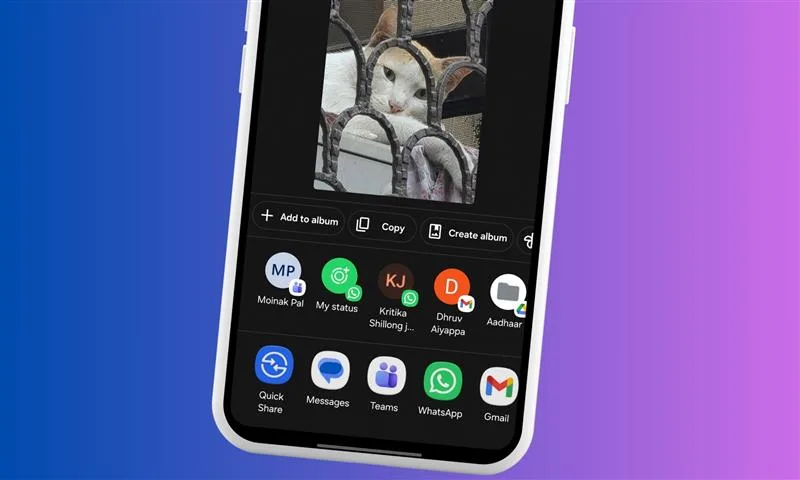
Google Photos has finally caught up with a feature that iOS has had for years. A new Copy button is now rolling out in the Google Photos share sheet. It lets you copy an image straight to the clipboard, without having to download it to your device first (via Android Authority). 

What exactly does the new Google Photos feature do?

Until now, sharing a photo from Google Photos wasn’t as straightforward. First, you had to store the picture locally on your phone, which meant waiting for it to download before you could actually send it anywhere. 

Now, you can argue that a second of waiting doesn’t sound like much. However, Google Photos users had to go through the same process every single time. That’s a second multiplied by the number of times you try to share a photo each day. 

The new Copy button, spotted across multiple devices running the latest Google Photos version (7.71.0.895417930), eliminates that friction. You can simply tap Share on any image, hit the new Copy button, and the photo lands on your phone’s clipboard, good for pasting into a messaging app, a notes app, or wherever you want it to be. 

Does the new Google Photos feature have a catch?

Unfortunately, yes, and I’d prefer you know it upfront rather than realizing it later. The copied image isn’t a pixel-perfect copy of the original one. To keep things quick and efficient, Google Photos copies a compressed version of the picture, with a slightly reduced resolution. 

So, for casual sharing, the new Copy button does perfectly fine. However, I wouldn’t suggest relying on the feature for professional use or printing something. You’re better off spending those few extra seconds and downloading the entire file. 

Advertisement

On the brighter side, the new Google Photos Copy button works for videos too. Furthermore, if you’re using Gboard, copied media appears in the keyboard’s clipboard, remaining there even after you’ve copied something else.  

Source link

Advertisement
Continue Reading

Tech

Handsome speaker/amp hybrids with excellent clarity

Published

on

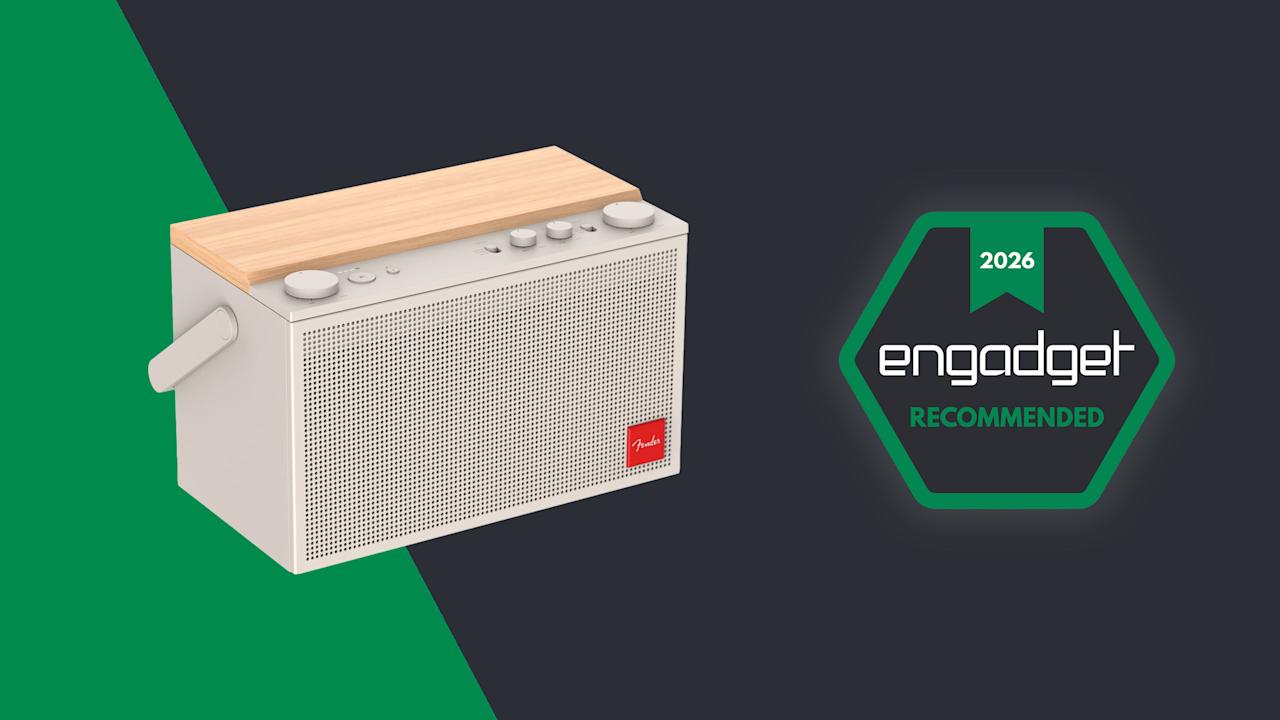
A new company needs to make a strong first impression. For Fender Audio, a new outfit owned by the legendary Fender Musical Instruments Corporation but operated by Riffsound, that introduction comes in the form of two speakers and a set of headphones. The Elie 6 ($300) and Elie 12 ($400) are portable Bluetooth speakers with sophisticated designs and unique features, offering similar functionality in two different sizes. These devices are essentially speaker/amplifier hybrids, since they both have ¼-inch/XLR combo inputs among their connections. Despite the unique mix of connectivity, the speakers still need to sound good and work well to compete with the many excellent portable options available today.

Image for the large product module

Fender Audio/Engadget

The Elie 12 is a large, powerful portable speaker with plenty of inputs, but weight and battery life could be deal breakers for some.

Pros
Advertisement
  • Excellent audio clarity
  • Four inputs
  • Refined design
Cons
  • IP rated but there’s exposed wood
  • Big and heavy
  • No app for customization
  • Battery life lags behind top competition
Image for the large product module

Fender Audio

The Elie 6 punches above its size in audio clarity and connectivity, but it’s heavy for such a small speaker and some competitors offer better battery life.

Pros
  • Excellent audio clarity
  • Four inputs
  • Refined design
Cons
  • IP rated but there’s exposed wood
  • Limited playback controls
  • No app for customization
  • Battery life lags behind top competition

The good: Design, inputs and overall clarity

The first time I saw the Elie 6 and Elie 12 in person, my eyes were immediately drawn to the design. These certainly don’t look like your typical Bluetooth speakers. That’s due in large part to the refined, almost retro look that’s consistent across both models. The Elie duo are products you won’t mind showing off, while many portable speakers are too flashy or brightly colored to be kept in a prominent place.

All of the onboard controls are clearly labeled physical buttons or dials, so you’re not left wondering how anything works. Around back, both the Elie 6 and Elie 12 have combo ¼-inch/XLR inputs (with 48V phantom power) as well as buttons for two wireless inputs and a 3.5mm line out. That combo jack means both speakers can double as amps, and the dual wireless connections allow you to sync microphones for karaoke sessions or hosting trivia night. This expanded functionality speaks to Fender’s history as a guitar icon, but it also gives the Elie speakers an upper hand over much of the competition at these sizes. Typically if you want these types of inputs, you’ll need to consider a much larger party box-style speaker to get them.

Advertisement

Before I move on from the controls and inputs, I need to mention the dedicated three-way mode switch for single, stereo and multi-speaker uses. This is so much easier than what’s on most portable speakers, which usually entails some weird dance with Bluetooth pairing or an app to sync multiple units together. Enlisting a physical switch so you know exactly where things stand is a much better and faster experience.

Some of the Elie 12's controls

Some of the Elie 12’s controls (Billy Steele for Engadget)

In terms of sound, the best thing the Elie 6 and Elie 12 speakers have going for them is their overall clarity. The crisp, clear quality gives these Fender Audio units an advantage over the competition at these sizes. Throughout a range of genres — including bluegrass, alt-rock and heavy metal — both the Elie 6 and Elie 12 handled the varied styles with ease. The Elie 12 has twice the speakers as the Elie 6 (two full range, two tweeters and two subwoofers) and double the power output at 120 watts. So, of course, there’s more volume and bassy oomph on the larger speaker.

Both the Elie 6 and Elie 12 have a wider soundstage than many speakers of similar sizes. You can really hear this on American Football’s debut album, where the guitars ring clear, interlaced with drums while the vocals float on top. All of the elements stand on their own, but are seamlessly blended throughout every track. The Elie 12 features more bass and volume, but the overall sound quality, and importantly, clarity, is pretty similar for both speakers. I did notice more instrumental separation on the larger model though, so the album is a bit more immersive there.

The not so great: Controls, no app and battery life

While I appreciate the physical controls on the Elie 6 and Elie 12, the playback options are limited, which means you’ll be reaching for your phone often. There’s only a play/pause button on both speakers, and no controls for skipping tracks. And no, you can’t skip forwards or backwards with a double or triple press on the play/pause button. Plus, only the Elie 12 has bass and treble dials, so there’s currently no option for adjusting the sound on the Elie 6.

Advertisement

That’s because Fender Audio is still working on an app for its speakers and headphones. The lack of customization was an issue for me on the Mix headphones, and it continues to be one here. Customers need access to features and settings on devices like this, even if a company decides to offer audio presets instead of a full EQ. Some type of visual interface would also help when you’re using a few of those inputs at once. A basic mult-channel mixer maybe? Hey, a boy can dream.

Going back to the controls, the volume dials on both speakers could use refining. First, a listenable volume doesn’t happen until halfway. Anything below that and that excellent clarity isn’t present, and you can’t really hear the content well at all. There’s plenty of power at 50 percent and above, so that’s not a concern, but the control needs to be recalibrated for more even increases. What’s more, adjustments are slightly delayed: when you turn the dial, it takes a second or two for the speaker to catch up. To me, it feels like that should be instantaneous.

The input panel on the Elie 6

The input panel on the Elie 6 (Billy Steele for Engadget)

When it’s time to venture outdoors, both the Elie 6 and Elie 12 are IP54 rated for dust and water splashes. However, both speakers have a wood panel on top, which certainly won’t withstand much moisture. As such, I find the IP ratings confusing, since it’s obvious the entirety of the designs aren’t up to that task. If you’re careful about water though, both speakers have enough volume for open-air use.

One other consideration for the Elie 6 and 12 is their weight. The smaller speaker weighs just over five pounds, while the larger model is a whopping 8.8 pounds. For comparison, the Sonos Play is just 2.87 pounds and JBL’s Xtreme 4 tips the scales at 4.63 pounds. This means the Elie 6 and 12 are portable options, but they aren’t the grab-and-go type of speakers some of the competition offers — especially when weight matters.

Advertisement

Battery life is one other area the Elie 6 and Elie 12 fall behind some of their competition. The smaller Elie 6 offers 15 hours of use while the larger Elie 12 should last up to 18 hours. That sounds like more than enough since it’s longer than a full day, right? Well, JBL Bluetooth speakers at comparable prices last 24 and 34 hours. The new Sonos Play is rated at 24 hours, and one of my personal favorites, the Bose SoundLink Max, lasts up to 20 hours.

Wrap-up

The Elie 6 (left) and Elie 12 (right)

The Elie 6 (left) and Elie 12 (right) (Billy Steele for Engadget)

There’s no doubt Fender Audio built two versatile, great-looking speakers here. Both the Elie 6 and Elie 12 are capable devices, and you don’t have to sacrifice much if you opt for the smaller of the two. The unique collection of inputs is typically only available on much larger speakers and the overall sound quality is well-suited for a range of genres.

Speakers like these really need an app though, especially when a company offers four inputs to juggle. I’m sure would-be customers would also like to dial in the EQ to their preferences, too. Sure, you can find longer battery life elsewhere, but the blend of design, sound and connectivity stands out at these prices. I’d call that a solid first impression.

Source link

Advertisement
Continue Reading

Tech

iPhone Fold screens will be made exclusively by Samsung because Apple has no choice

Published

on

A new report claims that Apple has had to agree to a three-year Samsung Display contract because no other firm can make the screens needed for the iPhone Fold.

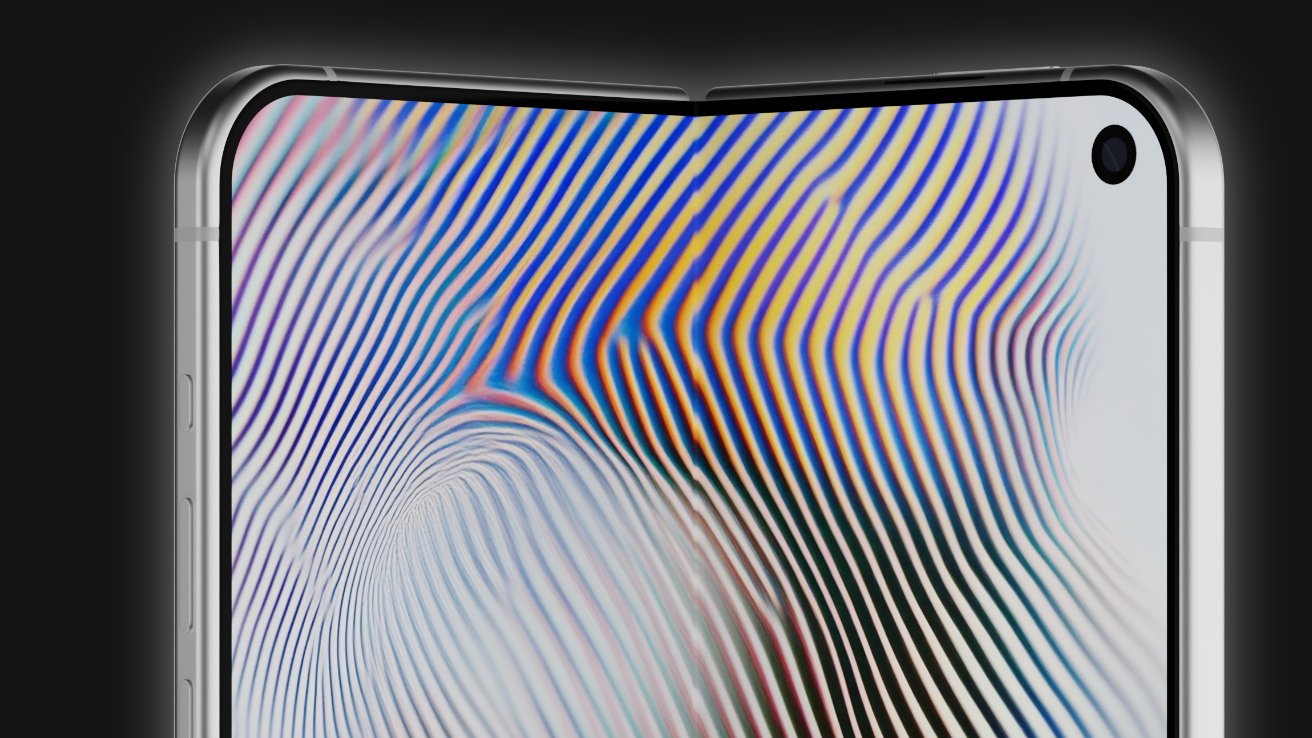
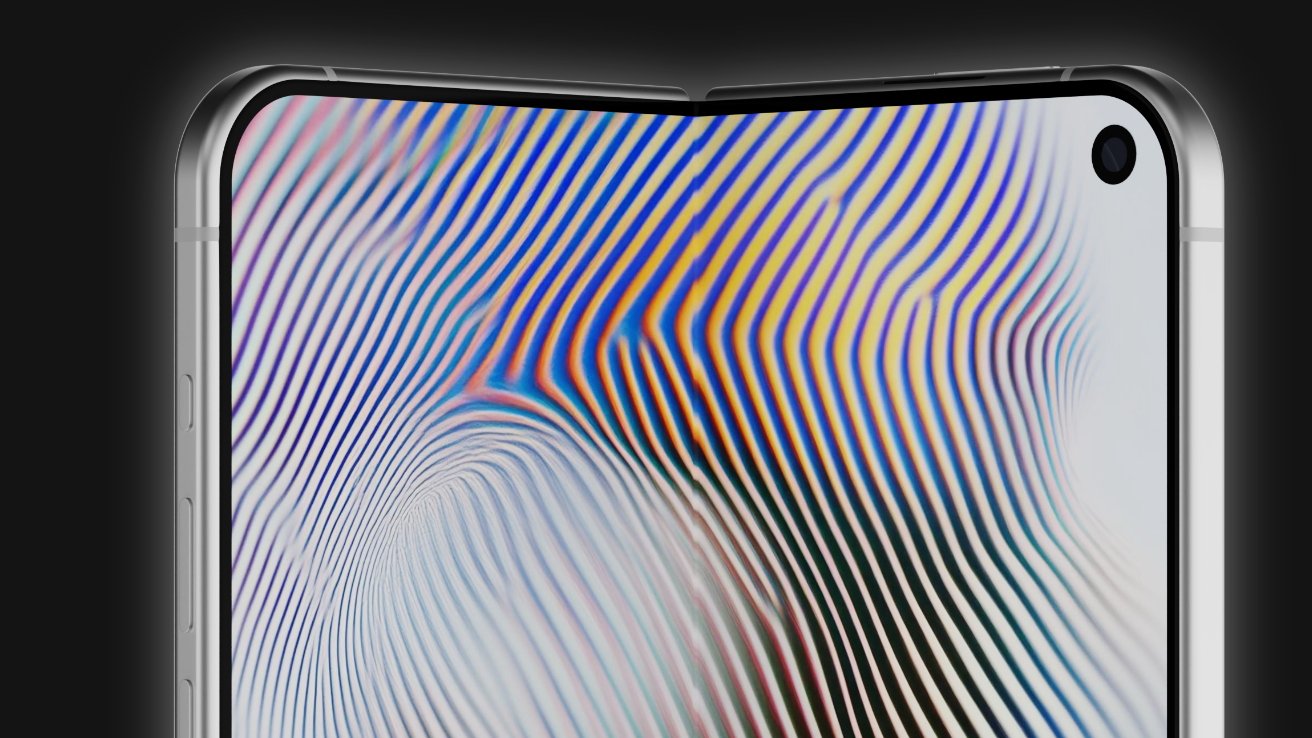
Close-up of a silver smartphone's upper screen showing colorful wavy stripes pattern, slim bezels, side buttons, and a small circular front camera cutout in the top right corner
Render of a possible iPhone Fold design – image credit: AppleInsider

Apple likes having multiple suppliers, both to avoid over-reliance on any one source, and to play them off against each other in order to lower prices. Now a year ago rumor about Samsung Display producing iPhone Fold screens is reportedly confirmed, and the deal favors the supplier.
According to The Elec, Samsung Display proposed a three-year exclusive deal to supply the foldable OLED panels for the iPhone Fold. Reportedly, at present BOE’s foldable panels as used by Huawei are considered inadequate, and Apple’s other main supplier, LG Display, doesn’t yet make folding screens for smartphones.
Continue Reading on AppleInsider | Discuss on our Forums

Source link

Continue Reading

Trending

Copyright © 2025