Tech
Here’s How Belkin’s New ConnectAir Wireless HDMI Display Adapter Works


We may receive a commission on purchases made from links.
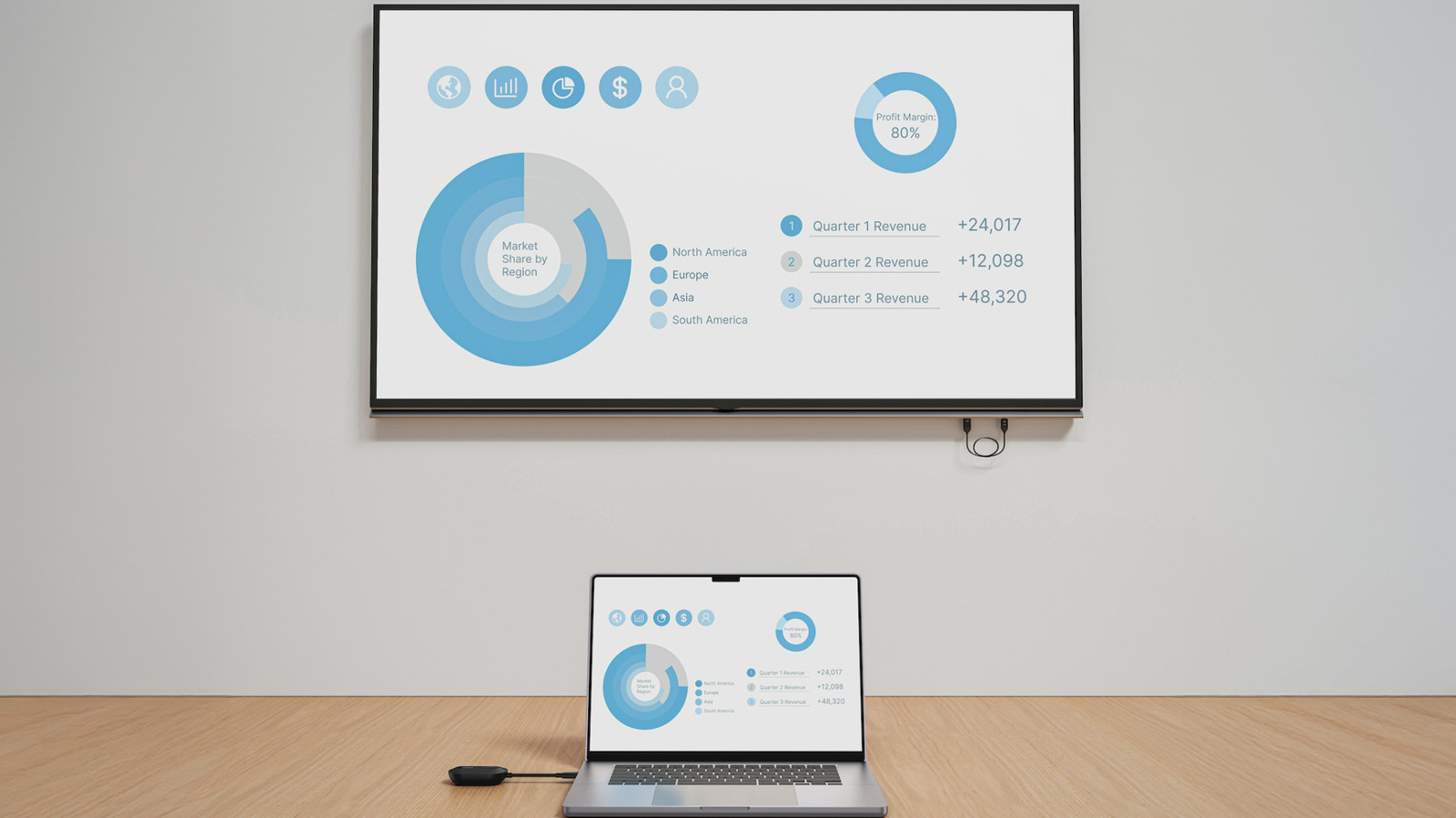
Fresh off its CES 2026 debut, Belkin’s new ConnectAir Wireless HDMI Display Adapter has officially hit shelves. This dongle might look like a discontinued Chromecast, but it’s not a streaming device. It can help make streaming easier for you, though. It’s designed to let you mirror a screen from a USB-C device to an HDMI display without the need for actual HDMI cables or wireless casting apps. Dubbed the model AVC024, it works without forcing you to download any software, connect over Wi-Fi, or pair with Bluetooth. Handy!
The device is made up of two main parts: an HDMI receiver that connects to a display and a USB-C transmitter that plugs into a compatible laptop, tablet, smartphone, or other USB-C-compatible device. Turn it on, and the devices establish a direct 5GHz wireless link to each other — no public networks required. Its $149.99 price point tells you how innovative the ConnectAir really is. (A proper HDMI cable won’t cost you nearly as much, unless you’re grabbing one of those expensive AudioQuest Dragons or something.)
What are the technical limits of the Belkin ConnectAir?
Belkin says the adapter supports 1080p resolution at 60Hz with latency typically under 80 milliseconds, which still means smooth video playback even if it’s not in 4k. (In fact, because the adapter supports HDCP 1.4, some 4k content requiring HDCP 2.2 might not even play). It has a wireless range of up to 131 feet in open environments, but you might experience a much shorter range in the office or other space where you’re trying to connect through walls.
As far as compatibility is concerned, the ConnectAir adapter works with any USB-C device that supports DisplayPort Alt Mode. Some examples would be Windows laptops, macOS and ChromeOS devices, tablets like the iPad Pro or iPad Air, and smartphones with Samsung DeX. That said, the USB-C adapter isn’t compatible with iPhones or other Lightning-based devices. However, it can work with docking stations, just so long as the USB-C port supports DisplayPort Alt Mode.
One single HDMI receiver can pair with up to eight transmitters, though only one device can stream at a time. You can also can switch between mirrored and extended display modes depending on their device’s capabilities. The receiver could technically be powered through a USB port on a television if it provides at least 2.3 watts. Otherwise, you’ll need a separate power adapter (not included).
You must be logged in to post a comment Login