The Department of Homeland Security (DHS) is reportedly developing smart glasses that could be used to collect intelligence on immigrants and US citizens, journalist Ken Klippenstein reported. The devices would help ICE agents identify “illegal aliens” from a distance by capturing video and comparing it to biometric data like facial recognition and walking gait, according to budget documents seen by Klippenstein. The DHS wants to deploy the “ICE Glasses” by September 2027.
“The project will deliver innovative hardware, such as operational prototypes of smart glasses, to equip agents with real-time access to information and biometric identification capabilities in the field,” the document states. The glasses could allow agents to compare observed subjects against existing biometric databases and identify them in real time during interactions.
Such devices could help make surveillance of US residents “ubiquitous,” according to the report. “It might be portrayed as seeking to identify illegal aliens on the streets, but the reality is that a push in this direction affects all Americans, particularly protestors,” a DHS lawyer speaking on the condition of anonymity told Klippenstein.
The deployment of such devices is worrying to civil liberty groups, particularly in light of recent law enforcement activities under the Trump administration. The FBI was reportedly directed by the Department of Justice to “compile a list of groups or entities” who demonstrate “anti-Americanism,” according to a previous Klippenstein investigation.
Advertisement
It’s not the first time smart glasses have come up in reports about the DHS. An investigation by The Independent last month found that ICE and Border Patrol agents in six states were using Meta’s AI smart glasses of their own accord, in possible violation of DHS rules. Congress has reportedly been notified of the DHS’s Ice Glasses project but has yet to comment publicly.
Every business seems to think that its customers want more AI. Yelp is the latest to add more artificial intelligence tools. The review site has upgraded its Yelp Assistant, an agentic AI chatbot, to work across all of Yelp’s categories. Yelp Assistant was initially launched in 2024 with a limited scope and then expanded in 2025.
With the latest update to its chatbot, Yelp Assistant can handle natural language queries for finding a specific local business. It can also be used to take some additional actions, such as making a restaurant reservation or ordering takeout. Yelp’s spring product updates introduced new third-party integrations with Vagaro, ZocDoc and Calendly. Yelp Assistant can also use these integrated services for booking appointments in related fields. The chatbot now has a dedicated Assistant tab in the iOS and Android apps, and it can also be accessed directly from business pages for certain fields, such as restaurants and retail shops. Support for all business types and a desktop version are planned for later in 2026.
Other AI features coming to Yelp include a personalized home page on mobile and extra photo discovery tools.
41-year-old Angelo Martino, a former employee of cybersecurity incident response company DigitalMint, has pleaded guilty to targeting U.S. companies in BlackCat (ALPHV) ransomware attacks in 2023.
Together with two other Sygnia and DigitalMint ransomware negotiators (33-year-old Ryan Clifford Goldberg and 28-year-old Kevin Tyler Martin), Martino was charged with conspiracy to interfere with interstate commerce by extortion, interference with interstate commerce by extortion, and intentional damage to protected computers.
Martino was initially identified only as “Co-Conspirator 1” in an October 2025 indictment, but was named in court documents unsealed in March. Martin and Goldberg also pleaded guilty to conspiracy to obstruct commerce by extortion and are facing up to 20 years in prison each.
According to court documents, while working as a negotiator for five victims, Martino shared confidential information about the victims’ negotiation positions and insurance policy limits with BlackCat ransomware operators, helping the cybercriminals extort the maximum possible amount.
Between April 2023 and April 2025, he was also involved in BlackCat ransomware attacks alongside accomplices Kevin Tyler Martin and Ryan Goldberg.
Advertisement
While operating as BlackCat affiliates, the three defendants demanded ransom payments and threatened victims to leak data stolen before encrypting their systems. Prosecutors added that the three accomplices paid the BlackCat administrators a 20% share of all ransoms proceeds for access to the ransomware and extortion portal.
Their victims included at least five U.S. organizations, among them a financial services firm that paid $25,660,000 and a nonprofit that paid a $26,793,000 ransom, as well as law firms, school districts, medical facilities, and other financial services companies.
DigitalMint CEO Jonathan Solomon told BleepingComputer that the company condemned the previous malicious conduct and noted that Martin and Martino were fired after their actions were discovered.
“We strongly condemn these former employees’ criminal behavior, which violated our values, ethical standards, and the law. When we learned about the conduct, we immediately terminated both individuals,” Solomon said.
Advertisement
The BlackCat ransomware operation has been linked by the FBI to more than 60 breaches between November 2021 and March 2022. In a separate advisory, the bureau added that the cybercrime gang collected at least $300 million in ransom payments from over 1,000 victims through September 2023.
AI chained four zero-days into one exploit that bypassed both renderer and OS sandboxes. A wave of new exploits is coming.
At the Autonomous Validation Summit (May 12 & 14), see how autonomous, context-rich validation finds what’s exploitable, proves controls hold, and closes the remediation loop.
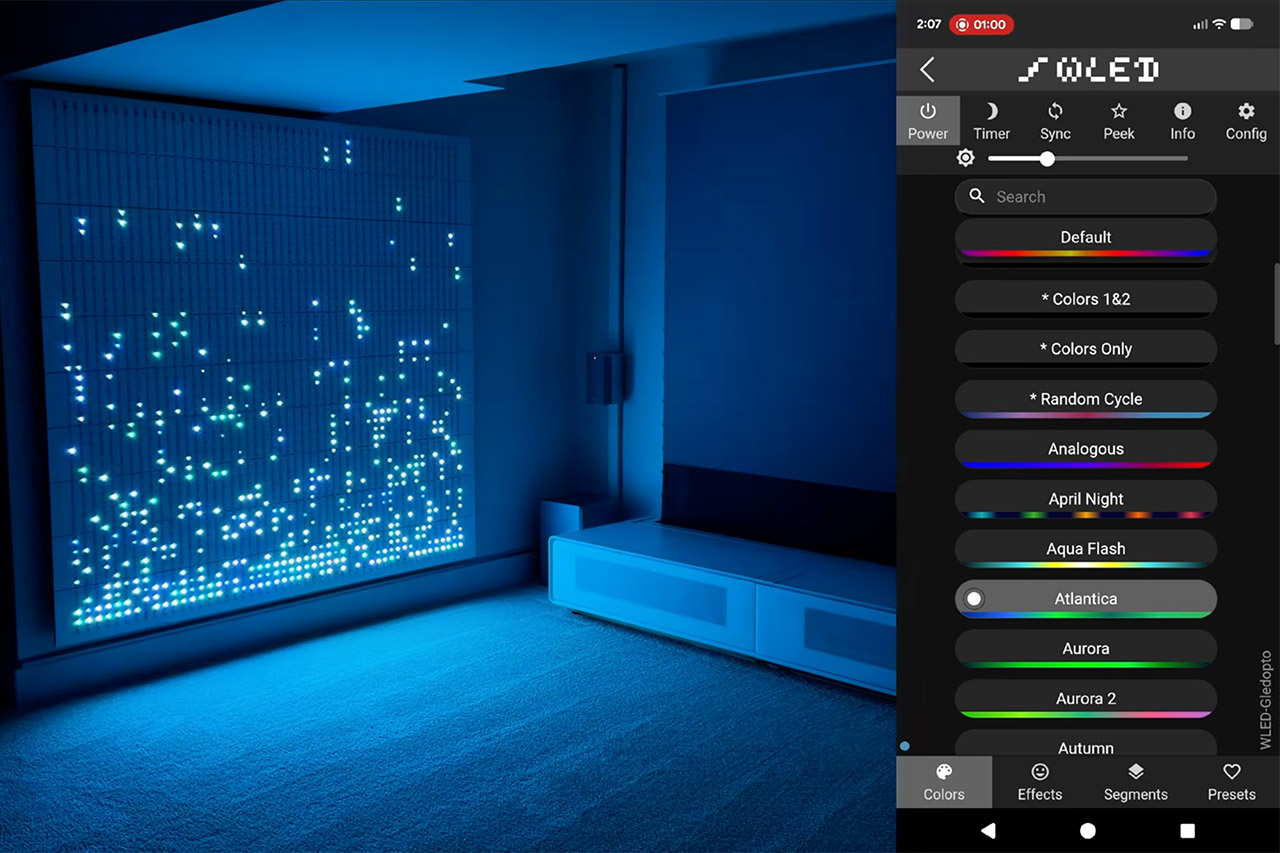
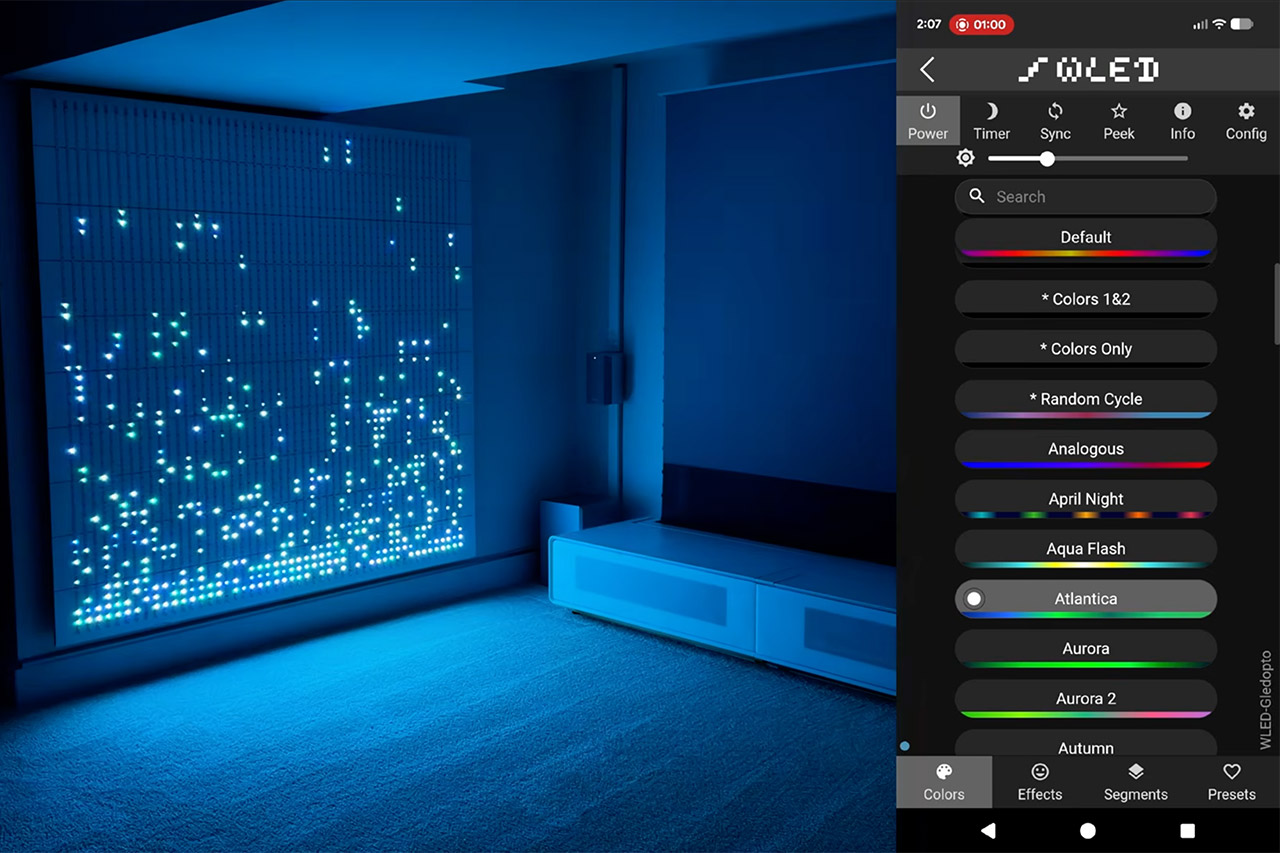
Rooms come alive as thousands of LEDs illuminate in perfect time over a large 50×50 panel. Chris Maher took on this task by converting regular light strips into that massive display without breaking the bank or requiring several controllers. His finished presentation plays well on a single 12-volt power supply and some pretty tiny gear, offering professional-looking animations, text, and patterns.
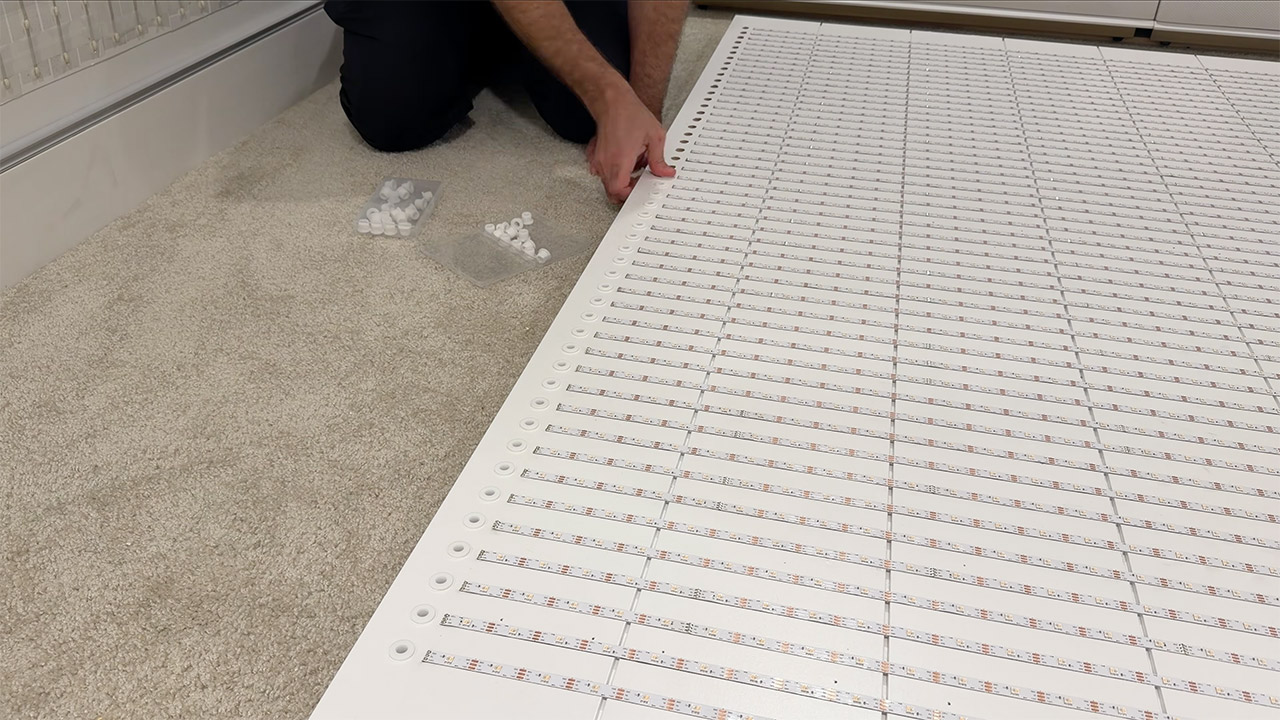
Chris purchased 18 5-meter rolls of 12-volt SK6812 strips, each with 30 LEDs per metre, so obtaining the necessary components was simple. He then sliced each roll into three 50 LED portions, for a total of 54 segments, plus a few spares for safety. To provide support, he built a simple wooden frame out of one-by-two boards and some board-and-batten panels. The rest of the kit consisted of a few short sections of 18-gauge silicone wire, lever-style connections, rubber grommets, and a Gledopto 4D-EXMU controller loaded with WLED firmware, as well as a standard 12-volt power supply.
Smoother, Silkier Animations: Featuring 960 ultra-dense RGBIC LEDs and a next-gen 20x-speed chip, the smart curtain lights support high-capacity…
Higher Creative Freedom: Unleash creativity with the led smart curtain lights, offering a 30-layer canvas for uploads, 1,000+ assets. Craft stunning…
Year-Round Lighting: The curtain fairy lights bring any occasion to life with 250+ preset modes, tailored for holidays, parties, and daily ambience…
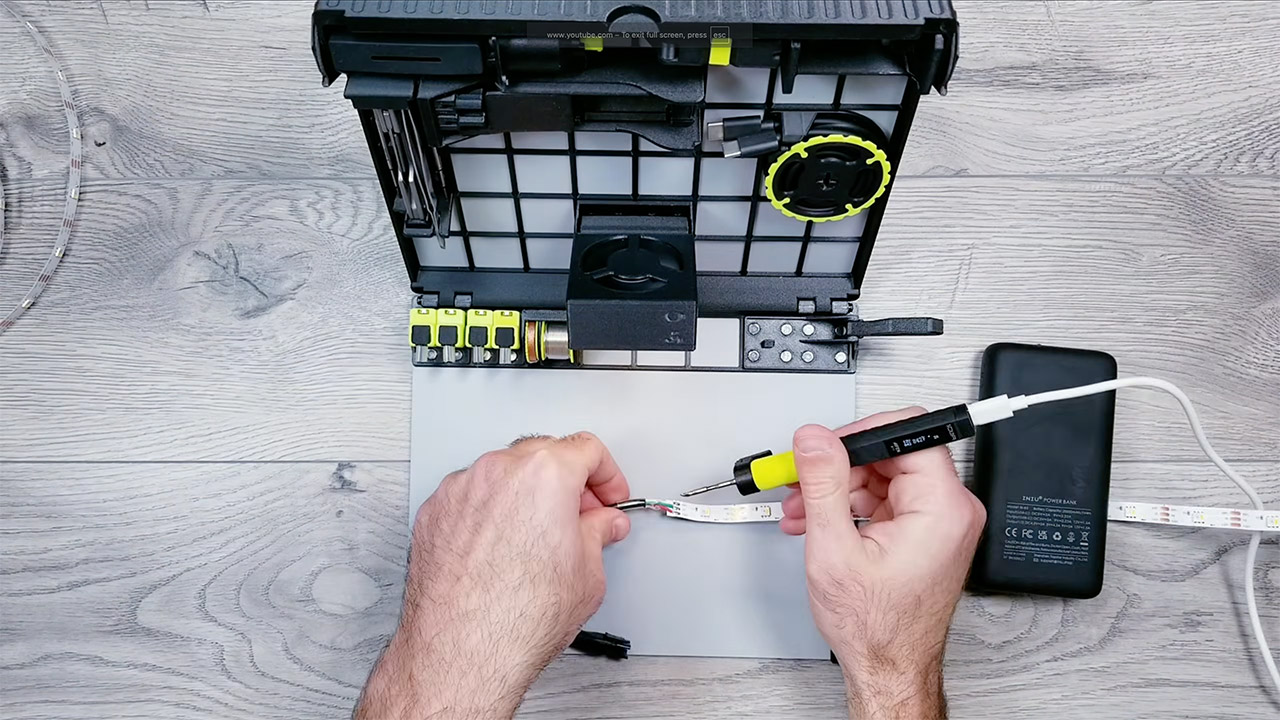
First, he had to get the strips ready to go, so he carefully removed the connections from the ends, soldered the exposed pads, stripped, tinned, and prepared all of the wires for connection. This preliminary work made the final assembly a lot simpler. Next came the frame, which he built by stacking and screwing the boards together to form a solid rectangle the same size as the finished grid. He added some board-and-batten panels to the front to provide a firm surface to screw the strips to. He painstakingly wrote out the places of each strip, ensuring that they were perfectly spaced from edge to edge. He then placed the strips down in a zig-zag pattern, alternating direction row by row, to form a single long continuous data channel.
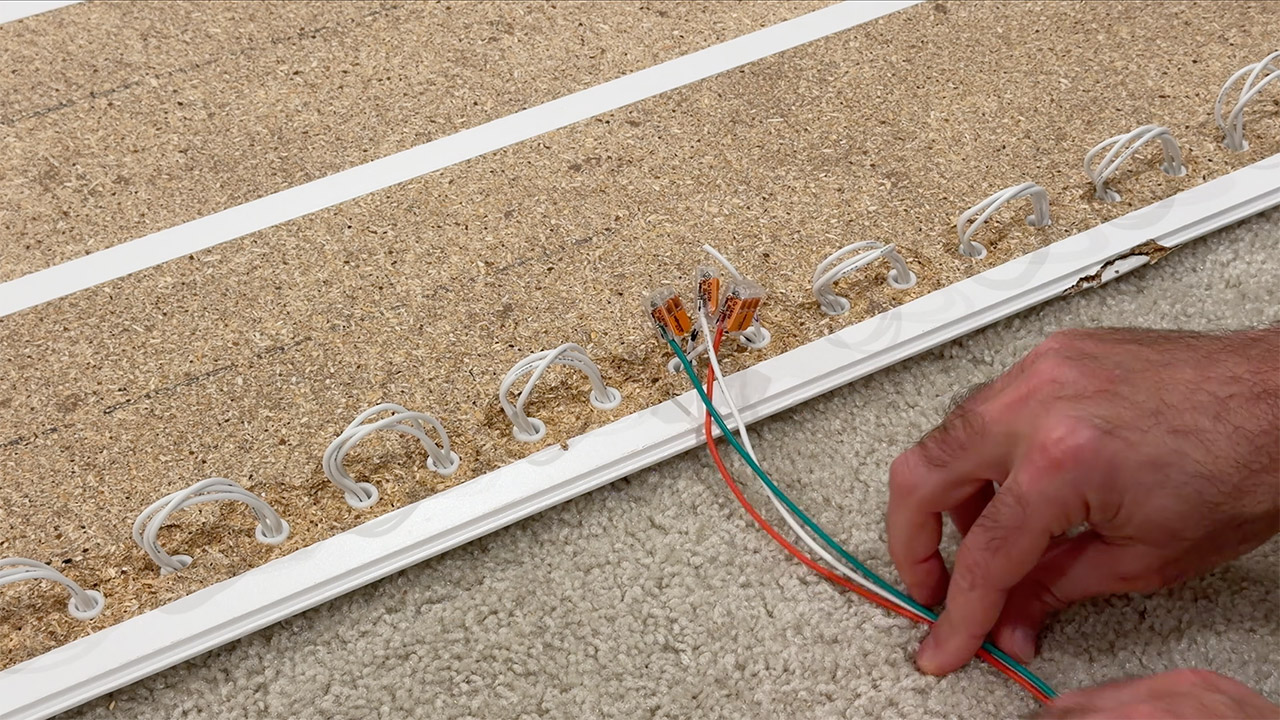
Holes were drilled above and below each strip, and rubber grommets were inserted to allow the wires to pass through to the back side while keeping the front of the display neat and free of connections. At several spots, lever-style connectors were utilized to connect the power and data lines, and separating the grid into four distinct data runs ensured that everything remained in sync.
The wiring was rather simple, as you just connect the voltage, ground, and data wires in that order. He utilized colored wire markers to keep track of which was which during assembly. The controller and power supply were fastened to the back with simple clips and wooden blocks. A French cleat system on the back makes it simple to mount the complete panel to a wall. Once he had everything configured inside the WLED interface, it was only a matter of selecting the SK6812 type, validating the 12-volt system, and specifying the 50×50 pattern with a vertical zig-zag orientation. Some brightness limitations were set to protect the power supply, and four data outputs were allocated to each block of LEDs. Once everything was saved, the display would respond promptly to requests for colors, effects, or scrolling messages. [Source]
Getting to try snippets of new games without having to spend extra money at your local rental store was awesome, and it was doubly cool for PC games, since rental outlets for such titles weren’t a thing. Some of my earliest PC gaming memories involved demo discs, and now thanks… Read Entire Article Source link
The Complete Arduino, Raspberry Pi, and ESP32 Bundle has 14 courses covering what you need to get started on building out your own smart home. After learning the basics, courses show you how to create a weather monitoring system, a smart home security system, a plant watering system, and more. Courses also cover getting familiar with Home Assistant, Tasmoto firmware, networking, and electrical systems. It’s on sale for $50.
Note: The Techdirt Deals Store is powered and curated by StackCommerce. A portion of all sales from Techdirt Deals helps support Techdirt. The products featured do not reflect endorsements by our editorial team.
Once a pioneer in videocards, S3’s legacy is today mostly found in details like texture compression as well as the strong presence of S3-branded videocards in the retro-computing world. There’s however a bit of a funny issue with some of these S3 cards in what is often called a ‘brightness bug’, but which as [Bits und Bolts] covers in a recent video was actually a hardware feature that we can once again blame composite video for.
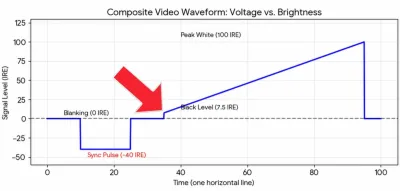
This issue appears with AGP cards like the Trio 3D, Trio64 and ViRGE, where the brightness on the output signal is set too high, easily seen with the washed out look on boot, where especially on CRTs you’d expect to see the nice deep black background. Using an S3 Trio 3D 2X card that was saved from the e-waste pile this so-called Pedestal Bit responsible is investigated and tweaked to show what difference it makes.
At the core is adjusting the black level to make scanline changes easier to detect for TVs, which is no longer relevant for CRTs, LCDs, etc., while adjusting the brightness for one videocard in a system can cause issues elsewhere, such as when using said card alongside a 3dfx Voodoo II card or with inconsistent brightness levels inside 3D games.
Advertisement
Fortunately S3 provided in-depth datasheets on their chips, including how to address the responsible bit. After demonstrating the principle, the BIOS is then patched to set this Pedestal Bit to the value of 0 on boot, solving the issue once and for all.
In mid-April, astronomy enthusiasts will be able to enjoy one of the classic celestial spectacles. The meteor shower known as the Lyrids will illuminate the sky, especially in the northern hemisphere, and anyone will be able to see it with the naked eye, weather permitting—if they know where to look.
The Lyrids began to appear as early as April 14, but their activity peaks between the night of April 21 and the early morning of April 22, according to NASA. During those hours, the shower will show 15 to 20 meteors per hour under dark skies.
The shower gets its name because the meteors appear to emerge from the constellation Lyra. Locating the radiant is simple if you use an astronomical mapping app: Just find Vega, the fifth brightest star in the sky, surpassed only by Sirius, Canopus, Alpha Centauri A, and Arcturus. Once you locate it, look around it; the luminous traces of the Lyrids will seem to be projected from that point due to a perspective effect. Keep in mind that it takes 20 to 30 minutes for the human eye to adjust to darkness.
The moon will be in early crescent phase during the peak, so its light will interfere very little. With a dark sky, meteors should stand out easily. The shower is usually visible from 10 pm to dawn, although early morning offers the best conditions. It is best to stay away from light pollution and, if possible, to observe from high ground. An outing to the mountains works well.
Advertisement
Each meteor shower has a different origin. In April, Earth crosses the cloud of fragments left by comet C/1861 G1 (Thatcher) in its orbit around the sun. This comet, discovered in 1861, takes about 415 years to complete its journey. The grains of ice and rock that it released centuries ago enter the atmosphere at high speed and produce the flashes we know as the Lyrids.
After the Lyrids, the calendar still holds several spectacles for those who follow the night sky. The Eta Aquarids will arrive in May with debris from Halley’s Comet. The Perseids will appear in August, the Orionids will return in October, and the year will close with the Leonids in November and the Geminids in December. The latter is considered the most intense and reliable shower on the calendar.
This story originally appeared on WIRED en Español and has been translated from Spanish.
It’s barely been a few days back since we discussed just how open to mistakes and abuse YouTube’s copyright takedown system is, when NVIDIA’s demo video for its controversial DLSS 5 tech got briefly pulled down because an Italian news channel did a piece featuring the footage which it copyrighted. The copyright bots took it from there and the actual source material for the news footage got booted.
While that is a great example of an obvious simple error resulting in copyright collateral damage, there have been plenty of examples of abuse resulting in this sort of thing, too. And if you want a great example of how this could all get much, much worse thanks to AI, you need look only at let’s play YouTuber Nubzombie getting two copyright copyright claims on his video of Silent Hill 2 gameplay for most absurd reasons. It seems multiple people have taken music from the game, originally by Akira Yamaoka, and layered some lazy AI-created voiceovers on top of it and then setup automatic copyright enforcement for those sounds.
Earlier last night, content creator Nubzombie uploaded a video titled A.I. IS RUINING YOUTUBE (and my life). In the video, Nubzombie states that their latest playthrough of the original version of Silent Hill 2 was hit with a copyright strike by someone called “Agro memos.” As you can see (or rather hear), in Nubzombie’s video, the track that the Agro memos strike is protecting is a clear copy of Akira Yamaoka’s track “Promise,” but with an AI-generated voice over top.
Then, in the space of a few hours, Nubzombie uploaded a second video. As they explain in that follow-up, as soon as their first video had finished uploading to YouTube, their Silent Hill 2 playthrough was hit with a second copyright strike. This time, it was from a different artist, named “詹姆斯.K,” but the copyright claimer this time isn’t even trying to hide the fact that their track is a ripoff of Akira Yamaoka’s “Promise”…because 詹姆斯.K’s track is literally called “Promise.”
This has always been the problem with YouTube’s automatic and bot-driven copyright enforcement mechanisms. There is very little that gets in the way of bad actors claiming copyright on all kinds of content actually produced by others, sometimes with this sort of languorous and brief additions to said content, and then slap copyright enforcement on it to issue automatic takedowns or demonetization claims. That YouTube has allowed this problem to fester for years and the timeline is now colliding with the prevalence of AI tools that make all of this even easier for the bad actors is inexcusable.
Advertisement
Though it gets a little bit stranger with that first copyright notice, since it appears Sony Music might be involved.
While I couldn’t find any information on the second “Promise” rip-off, I did find something odd regarding the former. Agro memos’ most recent tracks on YouTube, like this one, state in the descriptions that they were “Provided to YouTube by The Orchard Enterprises.”
Orchard Enterprises is a division of Sony Music Entertainment. Turns out Orchard’s got a bit of history of pulling this kind of stunt, dating all the way back to 2022. In this video, content creator EckhartsLadder details how he was repeatedly hit with copyright claims by Orchard Enterprises in 2024 because Orchard falsely claimed that the track “Resonance” by HOME, which EckhartsLadder used as their intro and outro song for all their videos, belonged to the Sony Music subsidiary.
Sony hasn’t responded to questions about all of this as of the time of this writing, but it damned well should. Best as I can tell, Sony doesn’t have any of the video game rights to the Silent Hill franchise, and this specific game was produced by Konami in 2001, and then a remake was released in 2024. It doesn’t seem to me that Sony should have anything to do with any of this.
But even if some division of Sony is a bad actor in all of this, the onus is on YouTube to fix its platform and protect its creators. This is long overdue.
Yes, that Prego — the pasta sauce people. The company has teamed up with StoryCorps, a nonprofit dedicated to preserving everyday American conversations, to release a physical recording device built specifically for the dinner table. It’s called the Connection Keeper, and the whole point of it is to capture the kind of conversations that happen when everyone puts their phones down and actually talks to each other.
What it is and how it works?
The Connection Keeper is a small puck-shaped device, apparently nodding to the round lids on Prego’s pasta sauce jars, that you place in the center of the table. Hit the button on top, and it starts recording. That’s more or less the entire interface. There’s no screen, no app, and no Wi-Fi setup needed for this. Just a button, a USB-C port, and a 16GB microSD card that can store up to eight hours of conversation.
It can also prompt your family with conversation starters if dinner has gone quiet and someone’s just pushing food around their plate.
Where do the recordings go?
Once you’re ready to do something with your recordings, you move them over to a StoryCorps portal via USB-C. StoryCorps keeps everything private by default, and Prego says the portal is encrypted with full privacy controls, though the specifics of how all that works haven’t been fully laid out yet. Recordings will be accessible and shareable starting May 4.
Advertisement
Prego
If you want to, you can also contribute your conversations to StoryCorps’ public archive, where anyone online can listen. That’s a meaningful thing to consider before uploading, especially if kids are involved, or anyone at the table didn’t know they were being recorded.
At $20, the price is quite reasonable for what it is. The catch is that Prego plans to produce fewer than 100 units, with sales opening on April 27. So if this sounds like something you’d actually use, you’ll want to move quickly once it goes on sale. It’s a weird product from an unexpected brand, but in a world where every device is fighting for your attention, something that quietly sits on the table and just listens feels almost radical.
A sweet idea, with a slightly complicated aftertaste
The Connection Keeper is a genuinely sweet idea on the surface. There’s something almost nostalgic about a screenless, button-press recorder sitting in the middle of the dinner table, quietly catching the jokes, the arguments, the stories your grandmother tells for the third time that you’ll one day wish you’d heard a fourth. But the moment you start thinking about what actually happens to those recordings, the warm feeling gets a little complicated.
Prego
Your dinner-table conversations are as personal as it gets. The things said over a bowl of pasta on a Tuesday night, the offhand comments, the vulnerable moments, the stuff nobody outside that room was ever supposed to hear. Handing any of that over to a portal, even one that claims to be encrypted and private, asks for a level of trust that Prego and StoryCorps haven’t fully earned yet, mostly because they haven’t fully explained themselves. What does “full privacy controls” actually mean in practice? Who has access to the servers? What happens to your recordings if StoryCorps shuts down or gets acquired? These aren’t paranoid questions. They’re reasonable ones that any company asking you to record your family should have ready answers for before the product goes on sale, not after. Until those details are out in the open, the Connection Keeper is a device with a lot of heart and not quite enough transparency to match it.
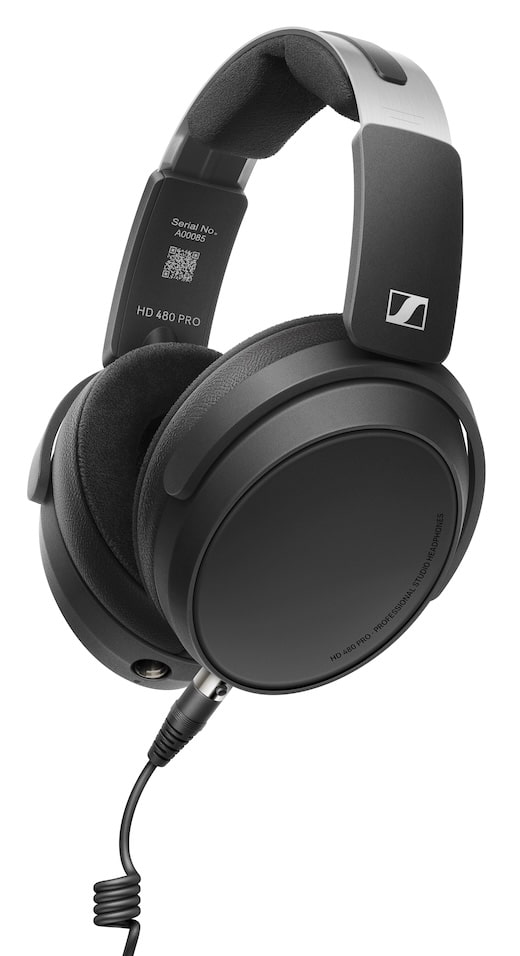
Sennheiser isn’t waiting around for its consumer business questions to get sorted out. In 2026, the brand is pushing forward where it still carries real weight, professional audio, with the launch of the $479 HD 480 PRO, a closed back studio headphone that builds on the open back HD 490 Pro introduced in 2024.
Positioned at the top of its 400 series closed back lineup, the HD 480 PRO is aimed squarely at working environments like tracking, monitoring, and live use where isolation actually matters. Sennheiser is framing it as its most versatile pro headphone to date, designed to handle recording and production duties while still being usable for critical mix decisions. Patents covering fit, comfort, and noise decoupling suggest this is more than a simple closed back variation.
More importantly, it’s a reminder that while the company’s consumer side direction remains uncertain, the pro division is still doing what it has always done, building tools that people in studios and on stages can rely on.
The HD 480 PRO is designed to address two common issues with closed back headphones: inconsistent bass accuracy and long term comfort. Sennheiser is aiming for controlled, reliable low end while keeping the fit comfortable enough for extended use in recording, tracking, and monitoring across studio, live, and mobile workflows.
Achieving accurate low-end performance in a closed-back design has always been a balancing act. Isolation helps with tracking, but it often comes at the expense of bass control and realism. That’s the gap Sennheiser is trying to close with the HD 480 PRO.
Advertisement
“With closed-back headphones, a good reproduction of the low-end is usually difficult to achieve. This is where the HD 480 PRO excels. Compared to other closed-back headphones, they are a lot tighter on the bass, their low-end is super-accurate and realistic,” notes Jimmy R. Landry, Category Market Manager, Music Industry at Sennheiser.
Who Is the Sennheiser HD 480 PRO For?
Whether used in the studio by producers, mixers, musicians, and recording engineers, or in live settings by FOH and monitor engineers, the HD 480 PRO is positioned as a flexible tool for monitoring, recording, and production, with the added claim that it can be used for mixing. Sennheiser is targeting users who need a consistent reference across different environments, including mobile use.
The tuning focuses on accuracy and a relatively neutral frequency response, with controlled low end intended to translate reliably across other systems, whether that’s home speakers, car audio, or PA setups.
“Knowing that you can rely on what you’re hearing is everything; that’s what you get with the HD 480 PRO.” Jim Kaufman, producer
Advertisement
“When I’m going to be mixing on headphones outside my studio, it’s imperative I have a pair that I trust. With the HD 480 PRO, to have this level of quality and accuracy in a closed-back headphone is amazing.” Will Brierre, mix engineer
“As producers, we have to receive the best sound to our ears that we can. Every detail is important. When you’re wearing the 480s, you’re immersed in the sound, completely undistracted by the outside world.” Young Chencs, artist and producer
Advertisement. Scroll to continue reading.
Drivers
The HD 480 PRO uses 38mm dynamic drivers with neodymium magnets, paired with lightweight voice coils intended to improve efficiency and overall responsiveness.
Advertisement
Comfort and Shielding
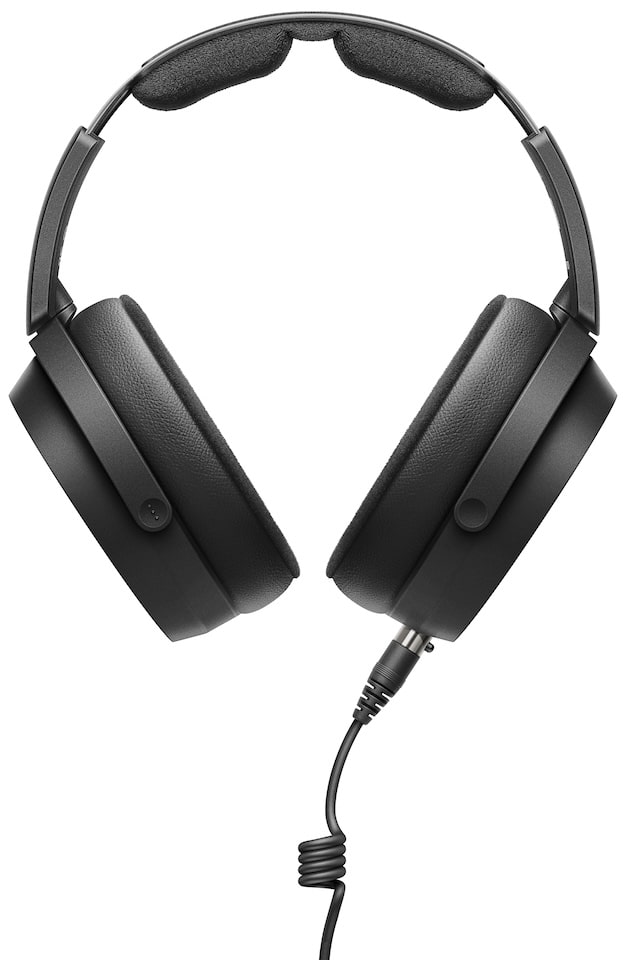
The HD 480 PRO uses a multi-stage passive isolation design to help reduce external noise and keep the focus on the signal. The ear pads include grooves to accommodate glasses, which helps maintain a more consistent seal, an important factor for stable bass and overall accuracy. Angled earcups position the drivers more precisely, with the goal of delivering a consistent listening experience.
“Comfort is of paramount importance when headphones are a work tool,” adds Gunnar Dirks, Senior Product Manager for professional headphones. “Engineers often spend hours on end in their sessions. They need a lightweight, ergonomically designed pair of headphones to keep focus and concentration up. The HD 480 PRO eliminates any pressure points and fit every head precisely and comfortably even if you’re wearing glasses.”
Connectivity
Like the open-back Sennheiser HD 490 PRO, the closed-back Sennheiser HD 480 PRO is a wired-only design. To add some flexibility, it includes input jacks on both earcups for detachable cables, allowing users to choose their preferred configuration or adapt to different studio setups. The earcups are also angled to position the drivers more precisely, with the goal of maintaining a consistent listening experience.
Vibration Attenuation System
A series of design features grouped under the term “Vibration Attenuation System” eliminates unwanted vibration, reflections, and distortion, preserving the clarity of the signal. Ultralight voice coils ensure authentic and dynamic reproduction.
Advertisement
Like its open-back counterpart, the HD 490 PRO, the HD 480 PRO benefits from several Sennheiser-patented features.
Special Axes Geometry: The mechanical design of the 480 enables the headphones to optimally adapt to the head and maintain an equal contact pressure no matter what the shape of the user’s head. The listening experience is consistent across users.
Comfort Zone for Glasses: The ear pads are designed to avoid excessive pressure on the temples, using a softer contact zone that helps maintain a proper seal while improving long-term comfort.
Blocking Cable-borne Noise: A coiled section near the earcup connector helps reduce cable-borne noise, limiting the transfer of mechanical vibrations from handling or contact with surfaces like a desk into the earcups.
Advertisement
Daily Professional Use
The detachable cable can be connected to either the left or right earcup, allowing for more flexibility depending on the setup and helping keep the cable out of the way during tasks like instrument tracking. The earcups are also braille-marked for easier identification. Designed by Sennheiser’s professional team, the HD 480 PRO is built with long-term use in mind and aimed at delivering consistent performance over time.
HD 490 PRO or HD 480 PRO?
The open-back HD 490 PRO and closed-back HD 480 PRO are at the top of the 400 series of purpose-built professional audio headphones. So which one is best for which application?
“Our developers have been working painstakingly to bring the sound of the closed HD 480 PRO as closely as possible to that of the open HD 490 PRO. Which model is the better choice for you really depends on how you work,” explains Gunnar Dirks. “The open HD 490 PRO will be ideal for mixing in quiet environments, while I would recommend the closed HD 480 PRO for applications where you need isolation, for example, when you’re tracking vocals in the room, when monitoring or using them as an FoH reference, or simply when you’re working in the same space as others.”
Advertisement. Scroll to continue reading.
Advertisement
Comparison
HD 480 PRO (2026)
HD 490 PRO (2024)
Product Type
Headphones
Headphones
Price
$479
$429 (MSRP)
Acoustic Principle
Closed Back
Open Back
Ear coupling
Circumaural
Circumaural
Transducer Principle
Dynamic
Dynamic
Transducer Diameter
38 mm
38 mm
Frequency Response
3 to 28,700 Hz (-10 dB)
5 Hz to 36, 100 Hz (-10 dB)
Sensitivity
107 dB SPL (at 1 kHz/1Vrms) 98 dB (at 1 kHz, 1 mW)
105 dB SPL (1 kHz/1 Vrms) 96 dB SPL (1 kHz/1 mW)
Max. SPL
130 dB (1 kHz, 5% THD)
128 dB SPL (1 kHz 5 % THD)
THD
<0.5% (at 1 kHz, 100 dB SPL)
<0.2 % (1 kHz, 100 dB SPL)
Impedance
130 ohms (1 kHz)
130 ohms (1 kHz)
Connection
Wired
Wired
Power rating
300 mW (100 h, noise as per IEC 60268)
300 mW (100 h, noise as per IEC 60268)
Temperature Range
0°C to +50°C for operation; -25°C to +70°C for storage
0°C to +50°C for operation; -25°C to +70°C for storage
Relative Humidity
10 to 80%, non-condensing for operation; 10 to 90% for storage
10 to 80% not condensing storage: 10 to 90%
Weight
272 g (w/o cable)
260 g (w/o cable)
Included Accessories
Coiled Cable (3m)
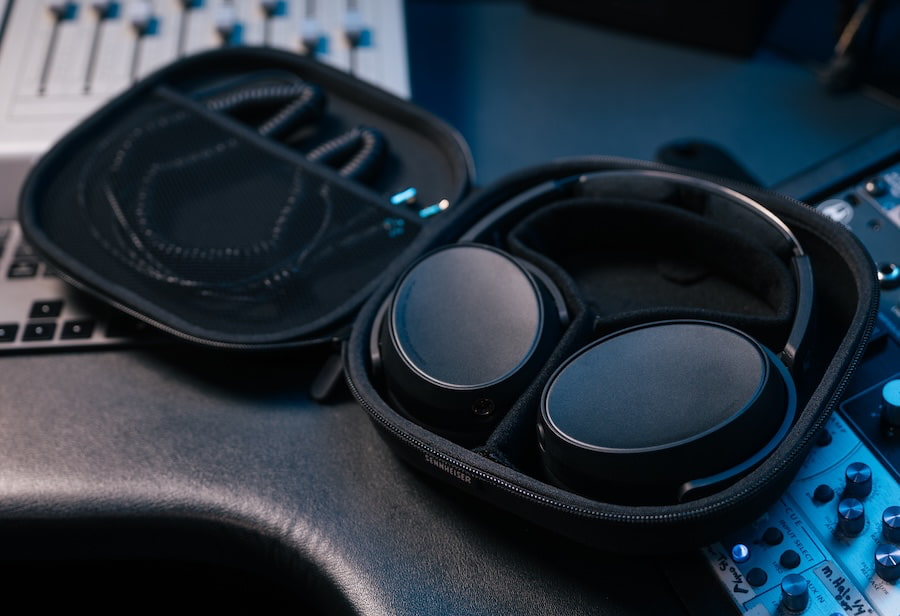
Headphone Bag
Quick Guide
Safety Guide
3.5 mm (⅛”) jack plug to 6.3 mm (¼”) adapter
Advertisement
1.8 m cable
Mixing ear pads
Producing ear pads
Quick Guide
Advertisement
Safety Guide
The Bottom Line
There’s some uncertainty around Sennheiser’s consumer business, but the professional side remains separate for now, which means products like the HD 480 PRO and HD 490 PRO are not directly affected.
The HD 480 PRO (and PRO Plus) stands out for its focus on flexibility within a closed-back design—dual-sided cable entry, attention to long-term comfort, and an effort to deliver more controlled low-end performance than is typical for this category. It’s clearly built as a working tool rather than a lifestyle product.
What’s missing is anything beyond wired connectivity and a broader feature set—there’s no DSP, no wireless option, and no attempt to blur the line into consumer use. That’s intentional, but it narrows the audience.
Competition is strong across multiple price points, including the Beyerdynamic DT 770 PRO X and Beyerdynamic DT 990 PRO X at the lower end, and models like the Final DX3000CL and Meze Audio Strada further up the ladder.
Advertisement
These are aimed at professionals and serious creators who need a consistent, reliable reference for tracking, monitoring, and potentially mixing, especially in environments where isolation matters. The decision ultimately comes down to fit and comfort as much as sound, which makes a hands-on demo less of a suggestion and more of a requirement.
Price & Availability
The Sennheiser HD 480 PRO retails at $479 USD (MSRP). These headphones come with recording earpads, a 9-foot coiled cable, and a carrying bag.
If you prefer, the HD 480 Pro Plus has the same features and accessories as the HD 480 Pro but includes a hard travel case for $519 at Amazon.
Alternatively the Sennheiser HD 490 Pro and Pro Plus open-back headphones are also available for $429 / $499 at Amazon.
Pro Tip: The Sennheiser HD Pro 480 PRO and 490 PRO are engineered in Germany and hand-assembled in Romania































































You must be logged in to post a comment Login