
In 1997, as the term “dotcom” came to describe a wave of internet start-ups, web portal king Yahoo! acquired a free web email service called RocketMail and launched Yahoo! Mail, a service to compete with Microsoft’s recently acquired Hotmail.
Seven years later, Google would launch Gmail with a gigabyte of free storage, a bold move at the time; Not to be outdone, Yahoo! responded by upping the free storage of its service to a terabyte.
However, that didn’t include any extra storage since the free service already offered more than many folks might need in a lifetime.
Users over the 20 GB quota must delete enough email to comply or pay Yahoo! – $2/month for 100 GB or $10/month to get the terabyte back. And the Plus offering now includes 200 GB of storage in addition to the other benefits for $5/month. Fail to either slim down or pay up results and you can’t send or receive any new emails.
But the volume and size of emails had increased greatly year to year, especially after HTML emails with rich graphics became standard. And while Yahoo!’s storage rates align with, say Google’s or Microsoft’s, those companies offer a richer range of online services across which to use that cloud storage for your subscription price

Mail pattern boldness
I could have just downloaded the entire mailbox to a local mail client, deleting them from the server. But in addition to encountering challenges using Yahoo!’s IMAP server, I would have detracted from the location independence that’s one of the benefits of webmail.
Yahoo! Mail offers filters to search for and delete emails. However, they can’t, for example, search for attachments over a certain size, and sometimes the interface limits you to deleting one screen of emails at a time, which is impractical for deleting tens of thousands of emails.
After all, for 20 years, Yahoo! Mail users were given a license to shovel everything into their account without a second thought. Now, it was full steam ahead in the other direction for an ill-equipped ship. Sometimes, I would find that deleted email simply wasn’t deleted, possibly just due to a delay in processing.
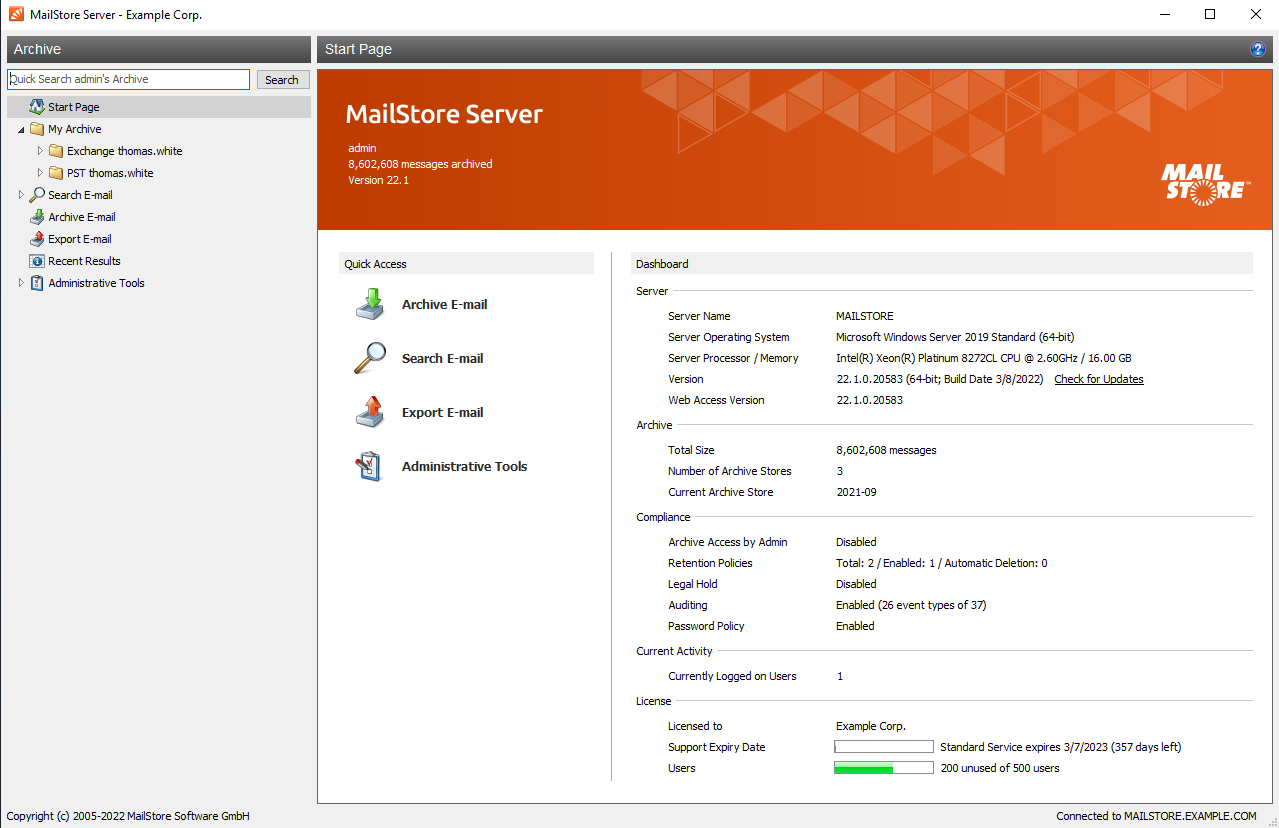
My escape route came in the form of a Windows and web app. First, to create an archive of the entire account, I used MailStore Home, a free version of an email archiving tool for Windows from OpenText, which also offers a server version for businesses and another flavor for service providers.
It can download tens of gigabytes of web email messages and save them as an Outlook .PST file or other mbox file. For Mac users, MacSonik Yahoo Mail Backup Tool ($49/year for the least expensive service tier) offers similar functionality.


Next, I used Clean Email to analyze the mailbox and filter older messages and those with large attachments. Keeping just the last three years’ worth of emails got me under the 20 GB mark, but I was ultimately able to get the mix of access and headroom I wanted at under 11 GB.
Clean Email offers a useful free tier for getting started. Upgrading within the website presents only its annual subscription plans, which start at about $30 per year. However it offers monthly pricing starting at $10 per month on its plans page. You can also sign up for plans that cover multiple email accounts and access the service via mobile app.
A clean break
Clean Email costs a bit more per year than just paying Yahoo! for the expanded storage, but the storage fee would likely repeat indefinitely whereas I will likely cancel Clean Email once I’ve sorted things out.
That said, the service includes worthwhile and well-implemented filtering, filing, forwarding, and automatic unsubscribing tools that tempt a longer subscription.
It’s worth noting that Yahoo! puts up a small barrier to using these tools by requiring you to register a one-time password for them to access your account. The process is counterintuitive and requires a trip to the account settings.
Other restrictions may be coming; The Clean Email website notes that Yahoo! has implemented new restrictions limiting access to 100,000 emails at a time for Yahoo! or AOL email (which is now just another brand of Yahoo! Mail (one you can use to send emails to “yourself” for free).
The world – particularly Yahoo!’s world – has changed a lot since Yahoo! Mail helped extend email access to millions of users, and Yahoo! is free to bring its mail storage pricing in line with competitors.
But doing so without reasonably convenient ways to comply with the quota makes the decision to upgrade at the threat of a cut-off feel less like an upsell and more like a shakedown.
For more top picks, we’ve reviewed the best email providers and the best email clients.