




Connect with us
DAPA Banner
DAPA Coin
DAPA
COIN PAYMENT ASSET
PRIVACY · BLOCKDAG · HOMOMORPHIC ENCRYPTION · RUST
ElGamal Encrypted MINE DAPA
🚫 GENESIS SOLD OUT
DAPAPAY COMING

Tech

How Beatbot’s AI-Powered Pool Robots Are Changing Pool Care This Prime Day

Published

on

Pool robots have become remarkably capable over the last few years. What started as simple cleaners designed to remove debris from the bottom of a pool has evolved into a new category of intelligent systems capable of navigating entire pools, adapting to changing conditions, and taking on multiple maintenance tasks at once. As expectations around smart home technology continue to rise, pool owners are increasingly looking for the same combination of automation, convenience, and reliability from their pool-care equipment.

Few brands have embraced that shift more aggressively than Beatbot. Available through the Beatbot website and Amazon storefront, the company has established itself as a leader in premium robotic pool care by combining advanced robotics, AI-powered vision systems, and intelligent navigation technologies into products designed to reduce the time and effort required to maintain a clean pool. This Prime Day, Beatbot’s lineup offers a closer look at how far automated pool care has progressed, from flagship systems capable of real-time decision-making to versatile robots designed to handle multiple aspects of maintenance in a single cleaning cycle.

Rather than focusing on a single product category, Beatbot has spent the last several years building a broader pool-care ecosystem powered by advanced robotics, intelligent navigation, and AI-driven automation. From flagship robotic cleaners capable of real-time decision-making to surface skimmers and more accessible cleaning solutions, the goal remains the same: reducing the time, effort, and guesswork traditionally associated with pool maintenance.

Inside Beatbot’s most advanced pool-care system

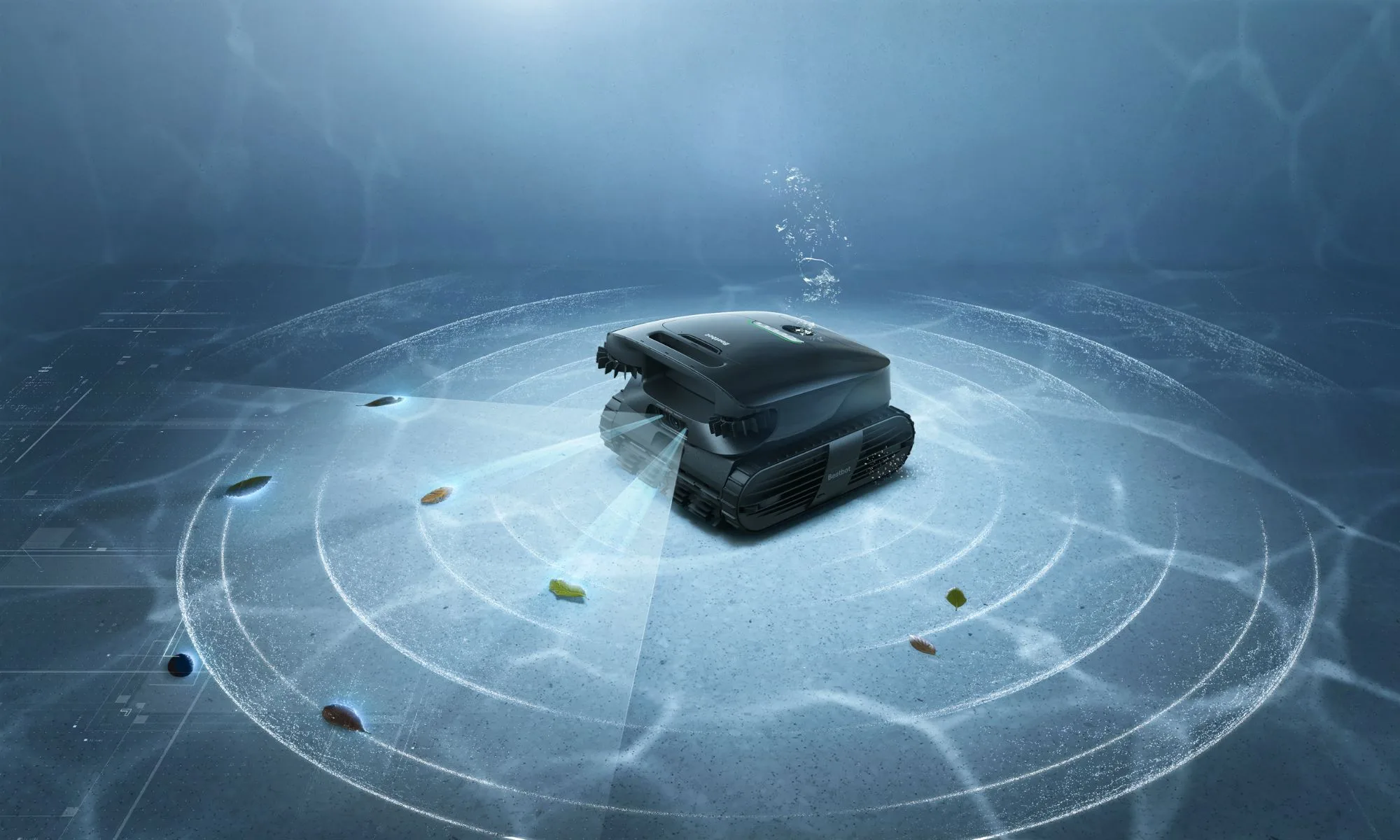
Beatbot’s vision for AI-powered pool care comes together most clearly in the AquaSense X. Combining an autonomous self-cleaning station with HybridSense™ AI Vision, CleverNav™ AI Path Planning, AI debris detection, intelligent obstacle avoidance, auto-recovery functionality, and night cleaning capabilities, it brings a deeper level of awareness and adaptability to the cleaning process.

The system continuously analyzes its surroundings, identifies obstacles and debris, and adjusts cleaning routes in real time to improve coverage across the entire pool. Instead of relying on fixed cleaning patterns, it adapts as conditions change, helping deliver a more thorough and efficient clean while reducing the need for user intervention.

Advertisement

The autonomous self-cleaning station further reinforces that hands-off approach. By minimizing routine maintenance after each cleaning cycle, it allows pool owners to spend less time managing their cleaner and more time enjoying their pool. For those looking for the most advanced option in Beatbot’s ecosystem, the AquaSense X combines intelligent navigation, adaptive cleaning, and automated maintenance in a single platform.

Prime Day price: $3,999 (regularly $4,250).

AquaSense 2 Ultra expands the idea of intelligent pool maintenance

While many robotic pool cleaners focus primarily on debris removal, the AquaSense 2 Ultra takes a broader view of pool maintenance. As the world’s first AI-powered 5-in-1 robotic pool cleaner, it combines floor cleaning, wall cleaning, waterline cleaning, surface skimming, and water clarification within a single system.

HybridSense™ AI Vision and CleverNav™ AI Path Planning help the AquaSense 2 Ultra navigate multiple cleaning zones while adapting to changing pool conditions. Combined with AI debris detection and intelligent obstacle avoidance, the system is built around what Beatbot calls full-pool intelligence, allowing it to tackle different maintenance tasks through a single platform.

Water clarification is what further separates the AquaSense 2 Ultra from traditional robotic cleaners. Beyond collecting debris, it actively contributes to cleaner, clearer water while reducing the need for additional maintenance tools. For pool owners looking for a more comprehensive approach to pool care, it brings cleaning, water care, and intelligent automation together in a single solution.

Advertisement

Prime Day price: $1,999 (regularly $3,150).

AquaSense 2 Pro brings comprehensive care into a single system

The AquaSense 2 Pro focuses on simplifying pool maintenance without sacrificing capability. Combining floor cleaning, wall scrubbing, waterline cleaning, surface skimming, and water clarification within a single platform, it is built for pool owners who want a more complete maintenance solution without juggling multiple tools.

Features such as the ClearWater™ Clarification System, Smart Water Surface Parking, and one-touch app retrieval help streamline day-to-day ownership, while Full Coverage Path Optimization supported by 22 sensors helps ensure efficient navigation and consistent cleaning performance across the pool. By continuously assessing its surroundings and adjusting cleaning routes as needed, the AquaSense 2 Pro is designed to deliver thorough coverage with minimal intervention.

The result is a system that brings together intelligent navigation, water care, and multi-zone cleaning in a way that feels practical rather than complicated. For pool owners looking for a balance between advanced automation and everyday usability, the AquaSense 2 Pro sits comfortably in the middle of Beatbot’s growing pool-care ecosystem.

Prime Day price: $1,699 (regularly $2,299)

Advertisement

The Sora Series brings smarter cleaning to more pools

Not every pool owner needs a flagship-level solution, which is where the Sora Series fits into Beatbot’s broader lineup.

The Sora 70 is the most capable model in the range, delivering 4-in-1 cleaning across the floor, walls, waterline, and surface. By incorporating dedicated surface cleaning alongside traditional robotic cleaning functions, it provides broader coverage than many mid-range alternatives. Features such as Smart Surface Parking, shallow-area accessibility, SonicSense™ AI Ultrasonic Obstacle Avoidance, and intelligent path planning help improve cleaning consistency while making retrieval easier once a cleaning cycle is complete.

SonicSense™ AI Ultrasonic Obstacle Avoidance and intelligent path planning help the Sora 70 navigate more efficiently while improving cleaning consistency across the pool. Together with its 4-in-1 cleaning capabilities, those technologies make it one of the most capable options in Beatbot’s mid-range lineup.

Prime Day price: $999 (regularly $1,499)

The Sora 30 focuses on delivering stronger day-to-day cleaning performance without the premium investment associated with flagship models. Its enhanced 3-in-1 cleaning capability covers floors, walls, and waterlines, providing broader coverage and greater versatility than many entry-level cordless cleaners. For buyers looking to step into Beatbot’s ecosystem, it offers an appealing balance of performance, convenience, and value.

Advertisement

While positioned as a more accessible option, the Sora 30 still benefits from the design philosophy that runs throughout Beatbot’s lineup: broader coverage, smarter operation, and less manual effort. For pool owners seeking dependable day-to-day maintenance, it offers a practical entry point into Beatbot’s intelligent pool-care ecosystem.

Prime Day price: $649 (regularly $999)

Prime Day is the perfect time to upgrade

Beatbot’s Prime Day offers extend well beyond the flagship models. Alongside deals on the AquaSense X, AquaSense 2 Ultra, AquaSense 2 Pro, Sora 70, and Sora 30, shoppers can also save across the company’s broader pool-care ecosystem. The Sora 10 drops from $699 to $449, while the AquaSense 2 is available for $799, down from its regular $1,298 price. Surface-cleaning solutions are also seeing significant discounts, with the iSkim available for $299 (normally $499) and the iSkim Ultra reduced from $999 to $549.

Available from July 8 through July 11, these promotions make it one of the best opportunities of the year to upgrade to Beatbot’s AI-powered pool-care ecosystem. Whether you’re looking for a flagship robotic cleaner, a comprehensive maintenance solution, or a dedicated surface-cleaning system, the lineup offers options across a range of pool sizes, maintenance needs, and budgets.

For pool owners ready to spend less time cleaning and more time enjoying their pool, Prime Day may be the ideal time to make the switch.

Advertisement

Source link

Continue Reading
Click to comment

You must be logged in to post a comment Login

Leave a Reply

Tech

Jean-Marie Reynaud AURALIS Loudspeaker: French Finesse With a Tuned Triangular Transmission Line

Published

on

Jean-Marie Reynaud has officially placed the AURALIS at the top of its loudspeaker range, and the new French flagship arrives with a clear message: musical scale does not have to come from a cabinet that looks as though it was designed to store military hardware.

Scheduled to launch in fall 2026 at €18,000 per pair, the AURALIS is the most ambitious loudspeaker yet from the Charente-based manufacturer. It combines a 2.5-way architecture, JMR’s proprietary tuned triangular transmission line, a large 120 mm AST tweeter, hand-wired crossovers, and a cabinet designed to deliver bass authority, tonal accuracy, image stability, and long-term listening satisfaction; this is not a speaker designed to impress for ten minutes in a dealer showroom before the listener starts looking for the exit.

I have some history with the brand, although not nearly as much as I would like.

Back in the 1990s in Toronto, a local hi-fi store in the East End carried Jean-Marie Reynaud loudspeakers, and I was able to spend time with most of the lineup. They were partnered with Audiomat electronics, another French brand with a very different approach to the usual North American power-and-machismo routine, along with some very serious Nottingham Analogue Studio turntables and Benz Micro cartridges.

Advertisement

The JMR speakers were never huge sounding in the conventional sense. They did not try to pin you against the back wall with bass fireworks or make every cymbal strike feel like it had been sharpened by a sommelier with anger-management issues. What they did exceptionally well was inner detail, clarity, tonal finesse, imaging, and treble that had air and delicacy without becoming etched or fatiguing.

They also looked different. Not weird for the sake of weird, which remains one of high-end audio’s more persistent crimes, but unmistakably French in the best possible way: thoughtful, elegant, slightly idiosyncratic, and very much their own thing.

Once I left Canada, JMR drifted off my radar. The brand was never as visible in the United States as Focal, Bowers & Wilkins, KEF, or Sonus faber, and that was probably America’s loss. But JMR is still here, still building loudspeakers in France, and AURALIS looks like the company’s most serious statement yet.

The French, for all of their gifts, have never been overly concerned with explaining themselves to everyone else. AURALIS feels very much in that spirit, and I would encourage U.S. and Canadian listeners to seek out a JMR dealer and hear these for themselves. This is a brand worth rediscovering.

Advertisement

A New Flagship Above the Orféo Grande

jmr-auralis-loudspeaker-top
Jean-Marie Reynaud AURALIS Loudspeaker

AURALIS now sits at the top of the JMR range, above the Orféo Grande, joining a lineup that includes the Lunna MKII, Euterpe Jubilé, Cantabile Jubilé, Abscisse Jubilé, Orféo Jubilé, Orféo Grande, and the compact Voce Grande.

The new floorstander measures 115 cm high, 30 cm wide, and 42 cm deep, or 45.3 x 11.8 x 16.5 inches. Each speaker weighs 45 kg, or 99.2 pounds. That is serious mass, but it is not one of those absurdly oversized high-end monuments that require reinforced flooring, a forklift, and a second mortgage before the first needle drop.

JMR recommends a listening room between 20 and 60 square meters, or roughly 215 to 645 square feet. The speakers should be positioned between 2 and 4 meters apart, or approximately 6.5 to 13 feet center-to-center, with a minimum listening distance of 3 meters, or just under 10 feet. JMR also recommends at least 80 cm, or 31.5 inches, of clearance behind the speakers.

Advertisement. Scroll to continue reading.

The front-firing port should make AURALIS more flexible than many rear-ported alternatives, but this is still a 99-pound French flagship with real bass energy. Trying to wedge a pair into a Manhattan one-bedroom beside a radiator, a dying ficus, and a framed photo of your ex-wife remains an act of cultural vandalism.

Advertisement

AURALIS Uses JMR’s Tuned Triangular Transmission Line

jmr-auralis-loudspeaker-rear-angle
Jean-Marie Reynaud AURALIS Loudspeaker (rear view)

At the heart of the AURALIS is JMR’s tuned triangular transmission line, a proprietary acoustic loading system that has become one of the company’s most recognizable design signatures.

The goal is not simply to produce more bass. JMR says the tuned triangular transmission line progressively harnesses the rear energy of the drivers to create low frequencies that are spacious, articulate, naturally controlled, and properly integrated with the rest of the spectrum.

That matters because impressive bass and convincing bass are not always the same thing. JMR is aiming for a low end that can follow the music rather than simply announcing its presence every time a bass drum enters the room.

The cabinet itself uses HDF panels ranging from 25 mm to 40 mm thick, or roughly 1.0 to 1.6 inches, depending on where reinforcement is required. JMR uses minimal internal acoustic damping to preserve dynamics, liveliness, and a sense of freedom, while applying viscoelastic compounds at strategic points to control unwanted vibration.

The upper tweeter pod is made from epoxy resin, chosen for its inertness and mechanical stability. It also gives AURALIS a more sculptural silhouette than the usual rectangular tower with a tweeter bolted on top as though someone remembered it five minutes before the design meeting ended.

Advertisement

AURALIS also uses a dedicated decoupled base with no direct mechanical coupling between the cabinet and the floor. Rather than relying on conventional spikes, JMR uses a polymer isolation element refined through listening tests, paired with Teflon pads.

2.5 Way Architecture With a Large AST Tweeter

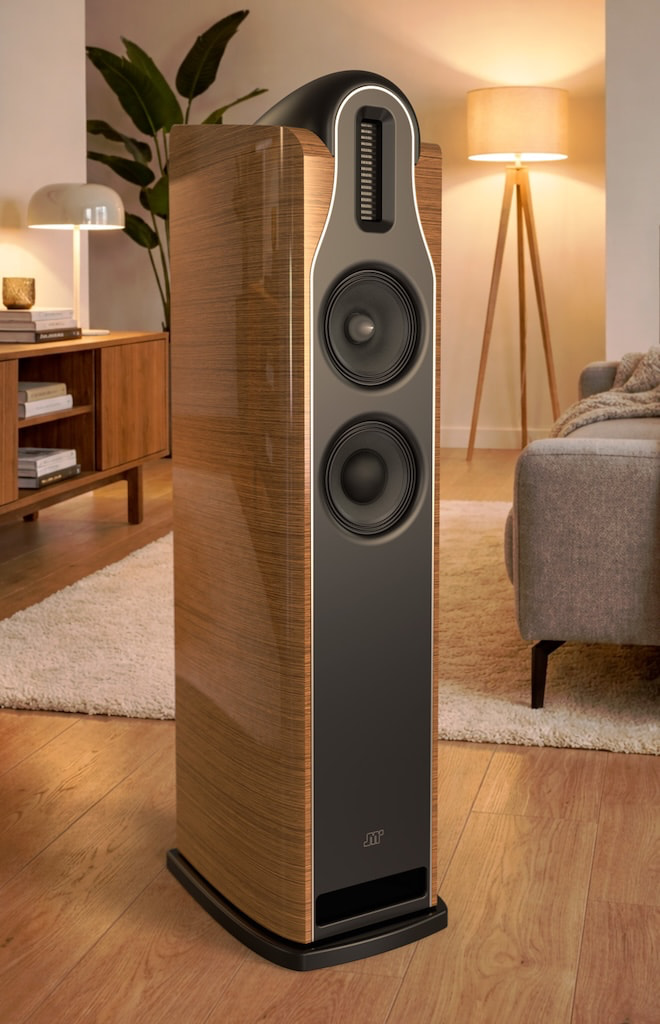
jmr-auralis-loudspeaker-lifestyle

The AURALIS is a 2.5-way loudspeaker built around two new midbass drivers and a 120 mm AST tweeter.

The two midbass drivers operate together up to 220 Hz, effectively increasing radiating surface area and giving the speaker more energy and ease through the bass region. The upper midbass driver continues higher before handing off to the AST tweeter at 1.8 kHz.

That is a notably low crossover point for a tweeter and one of the more important technical aspects of the design. JMR uses a symmetrical 12 dB-per-octave filter at 1.8 kHz to take advantage of the AST tweeter’s speed, low distortion, dynamic capability, and broad natural presentation through the upper midrange and treble.

This is exactly where a loudspeaker either becomes convincing or starts sounding like a collection of expensive parts arguing in public. Vocals, piano, strings, brass, guitar harmonics, and the emotional wreckage of every audiophile all live in this region. There are therapists in Westchester who have financed fishing boats off this crowd.

Advertisement

Hand-Wired Crossover With Serious Parts Selection

JMR has long treated crossover design as part of the loudspeaker’s voice rather than a generic component board hidden in the bottom of the cabinet. The AURALIS continues that philosophy with a fully hand-wired crossover built without a printed circuit board.

Advertisement. Scroll to continue reading.

The network uses a deliberately limited number of components to minimize losses, phase rotation, and audible distortion. The 2.5-way topology employs 6 dB and 12 dB-per-octave slopes, with the two midbass drivers working together to 220 Hz and the AST tweeter taking over at 1.8 kHz.

JMR specifies pure copper foil inductors wound on beechwood formers, ClarityCap PUR capacitors, and Path Audio resistors for tweeter attenuation.

Advertisement

The Path Audio resistors use a third grounding terminal and a copper tube intended to provide electromagnetic shielding, heat dissipation, and drainage of parasitic charges. That is the sort of detail that will either delight or irritate the people who believe every resistor sounds identical. Both sides will probably write 2,000 words about it online.

Specifications and Amplifier Matching

JMR rates the AURALIS at 89 dB/W/m sensitivity at 2.83V, with impedance compatible with amplifiers rated for 4 to 8 ohms. Minimum impedance is listed as 4.3 ohms.

The claimed frequency response is 30 Hz to 28 kHz within ±6 dB. Power handling is rated at 250 watts continuous and 400 watts peak, with recommended amplifier power between 40 and 300 watts. Claimed distortion is below 0.2 percent at an 85 dB listening level.

JMR says the AURALIS is compatible with both tube and solid-state amplification and that its impedance curve does not present particular setup challenges. That does not mean AURALIS should be paired with whatever integrated amplifier was rescued from the guest room after a remodel, a divorce, or an unfortunate encounter with a soundbar. Less will not be more here.

Advertisement

The Audiomat system I used to get to know JMR in the 1990s was already in the $20,000 range, including an integrated amplifier, CD transport, phono stage, and DAC. These speakers may not demand brute-force amplification, but they will reward a front end with real resolution, tonal color, and authority.

Woodscore XO Finish and Made in Charente Construction

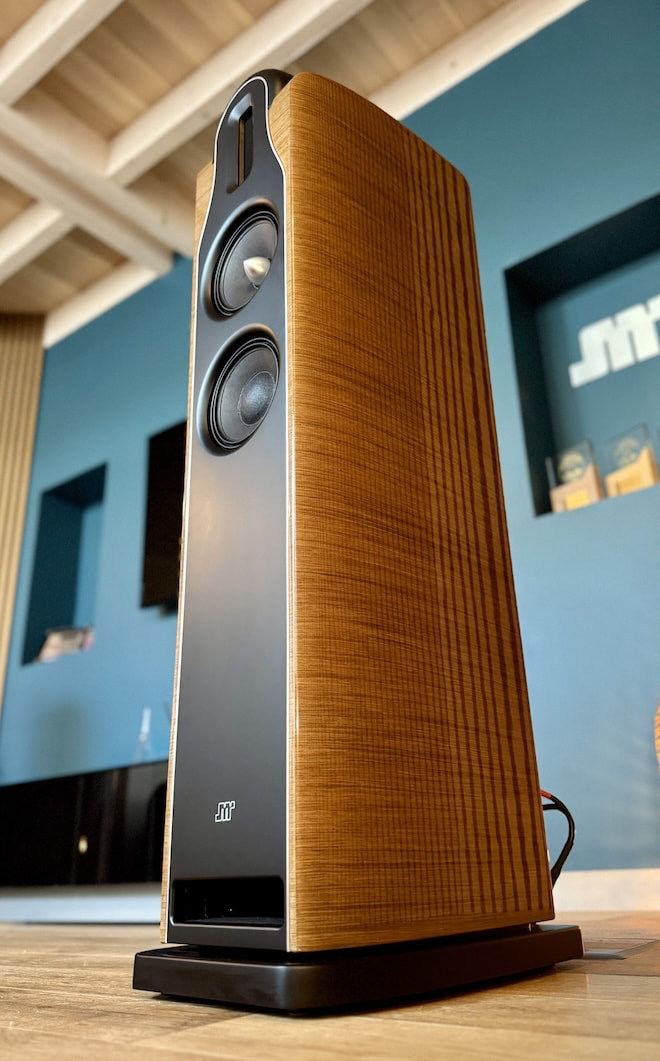
jmr-auralis-loudspeaker-lifestyle-low

Visually, AURALIS introduces JMR’s Woodscore XO finish, which combines a seven-layer high-gloss polished treatment with real walnut veneer in a cognac tone, a black front baffle, and a solid machined-aluminum trim piece on the front sub-baffle.

The Woodscore XO finish gives AURALIS an elegant, architectural presence without overwhelming the room. Designed, assembled, quality-controlled, and fine-tuned in Charente, the speaker reflects JMR’s own approach to cabinet construction, acoustic loading, crossover design, and final voicing.

Jean-Marie Reynaud AURALIS Specifications

  • Design: 2.5-way floorstanding loudspeaker
  • Crossover Slopes: 6 dB / 12 dB / 12 dB per octave
  • Impedance: Compatible with 4 to 8 ohm amplifiers; 4.3-ohm minimum
  • Frequency Response: 30 Hz to 28 kHz, ±6 dB
  • Sensitivity: 89 dB/W/m at 2.83V
  • Distortion: Less than 0.2% at 85 dB
  • Power Handling: 250 watts continuous
  • Peak Power Handling: 400 watts
  • Recommended Amplifier Power: 40 to 300 watts
  • Speaker Terminals: Single-wire binding posts with a dedicated crossover ground terminal
  • Dimensions: 115 × 42 × 30 cm, or 45.3 × 16.5 × 11.8 inches
    • Height: 115 cm / 45.3 inches
    • Depth: 42 cm / 16.5 inches
    • Width: 30 cm / 11.8 inches
  • Weight: 45 kg / 99.2 pounds per speaker
  • Recommended Listening Area: 20 to 60 m² / approximately 215 to 645 square feet

The Bottom Line

The Jean-Marie Reynaud AURALIS is not another expensive floorstander built to impress for 10 minutes with brute bass, a shiny cabinet, and enough aluminum to repair a small bridge. Its appeal is more specific: JMR’s tuned triangular transmission line, large AST tweeter, hand-wired crossover, front-firing port, and Charente-built cabinet are all aimed at tonal accuracy, bass articulation, coherence, and long-term musical satisfaction.

At €18,000 per pair in Europe, AURALIS enters a serious category that includes the Sonus faber Olympica Nova V, Focal Sopra N°2, Bowers & Wilkins 804 D4 and 803 D4, and Wilson Audio Sabrina V, depending on local pricing. JMR has not announced U.S. or Canadian pricing yet, so the final comparison will depend on where it lands in North America.

For listeners who value inner detail, natural timbre, and finesse over a loudspeaker that behaves like it is auditioning for a Marvel soundtrack, AURALIS looks like one of the more distinctive new arrivals in the high-end category.

Advertisement
Advertisement. Scroll to continue reading.

For more information: jm-reynaud.com

Source link

Advertisement
Continue Reading

Tech

A Mini IMAX Camera Just Became the Coolest Way to Hold Popcorn at The Odyssey Screenings

Published

on

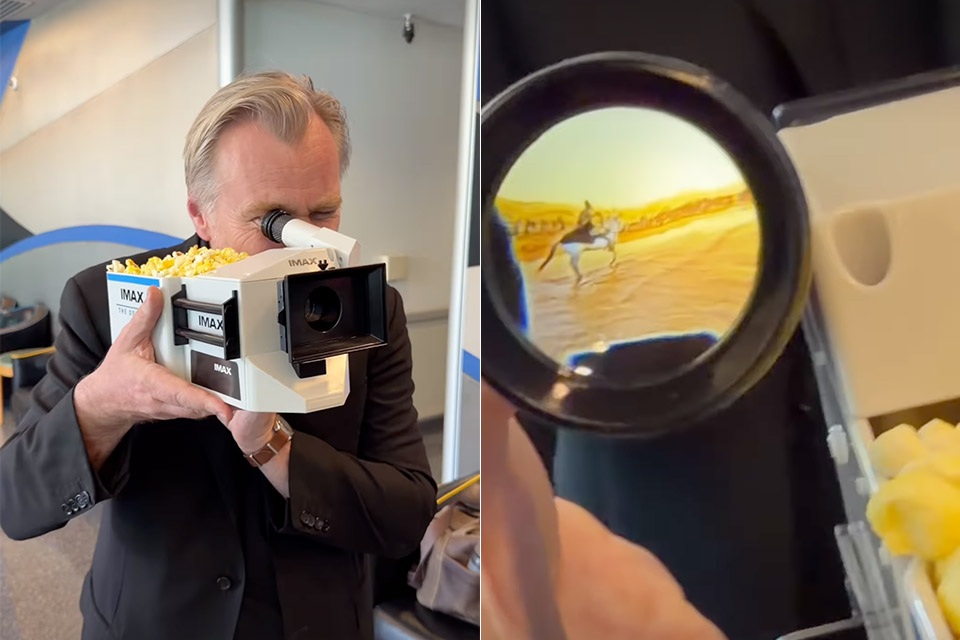
Mini IMAX Camera Popcorn Bucket The Odyssey
Christopher Nolan’s upcoming film has already sparked plenty of conversation, but one of the quickest sellouts tied to it did not involve tickets or posters. Instead, it was a limited-run popcorn container modeled directly after the large-format film camera Nolan has long praised as his go-to tool.


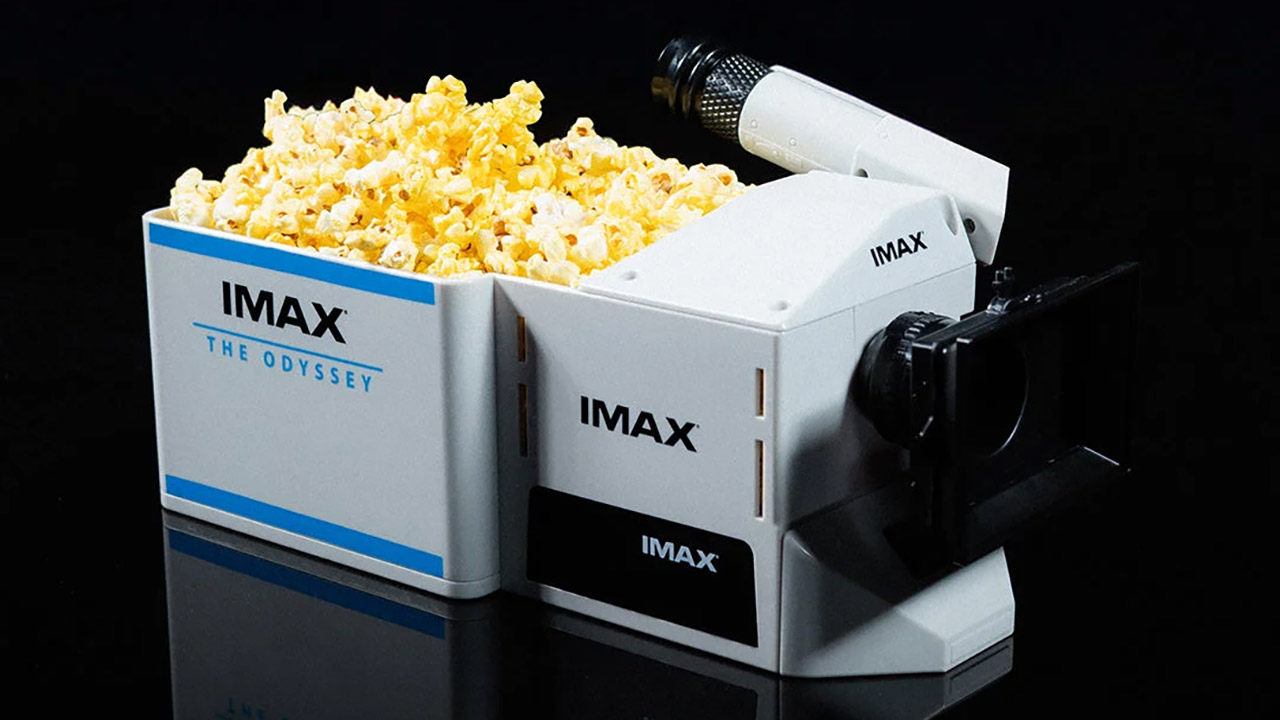
On June 18, the IMAX web store launched their limited edition item, which quickly sold out. This thing originally cost $50, but it’s currently available on resale sites for two or three times that price. What they came up with was far more than a conventional bucket with a logo on the side. Designers worked hard to build an object that resembles the real IMAX 15/65mm camera body that has been used behind the scenes in several of Nolan’s previous works, and it is now also the main camera in The Odyssey. The end result is somewhere between a cool keepsake and a rather functional prop.

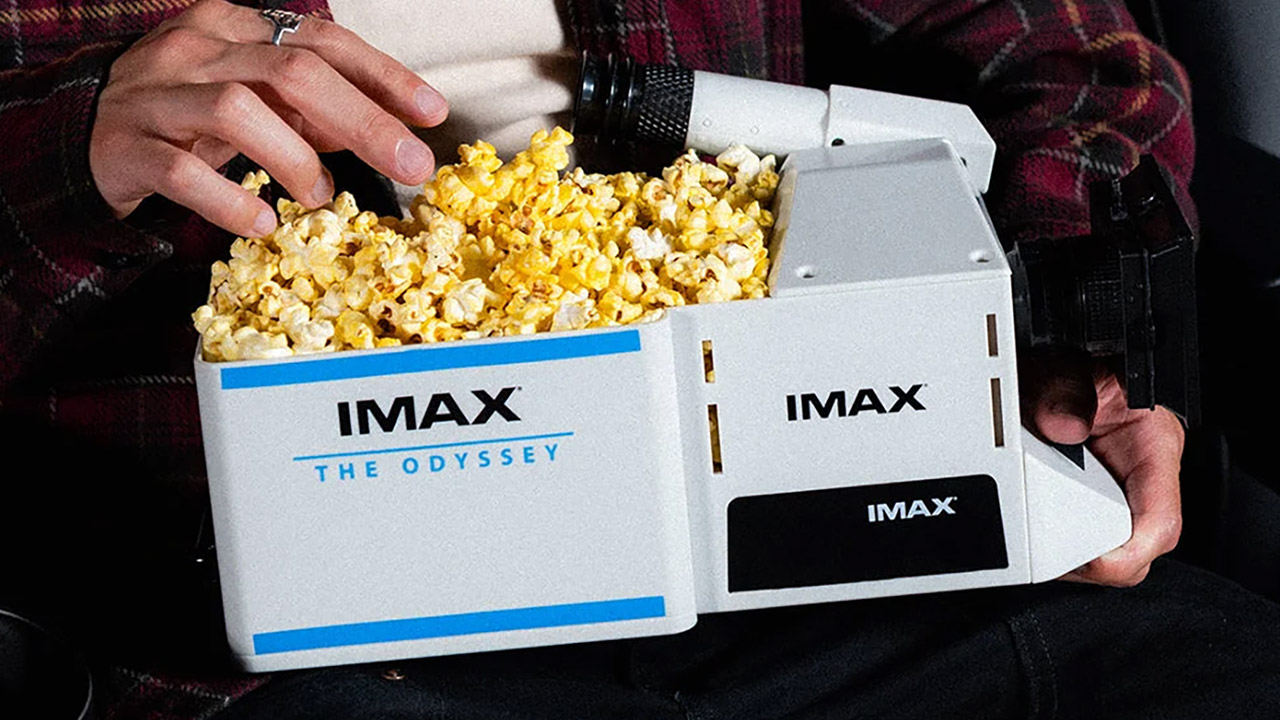
You have a large rectangular piece on the side that holds the popcorn and has clean “IMAX THE ODYSSEY” branding in blue and black on it. The camera body is then mounted on top, complete with lens barrel details, adjuster knobs, and a viewfinder, all of which are fairly accurate. Overall the object measures around 14 inches long, 6.25 inches wide and 5.3 inches tall, & the weight is around 1.26 pounds once you’ve removed the eyepiece.

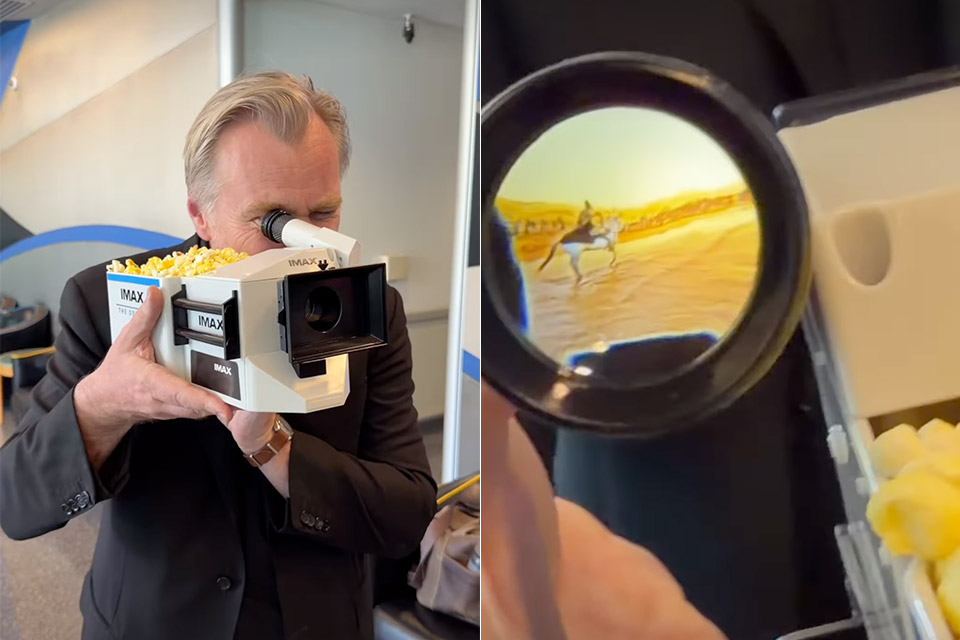
The materials are rather simple, consisting of injection-molded polymers such as acrylic, polypropylene, and ABS, so it’s durable enough to withstand a few trips to the theater while yet being light enough to carry without being a nuisance. They add a small LED light and an LR1130 battery. When you turn on the light and look through the viewfinder, you’ll see a still image from The Odyssey in the unique 1.43:1 enlarged aspect ratio that IMAX uses on their largest displays.

Mini IMAX Camera Popcorn Bucket The Odyssey
The fact that the light has transformed that simple bucket into something more than simply a bowl; even if the lights are turned off and the trailers are playing, a quick look through the eyepiece gives you a tiny little sampling of the film’s scale before the main feature begins. Early photos show Nolan himself handing over a device to cinematographer Hoyte van Hoytema and demonstrating the viewfinder during advertising events. It has a decent capacity for popcorn.

Mini IMAX Camera Popcorn Bucket The Odyssey
IMAX describes the project as a tribute to both their groundbreaking film technology and the art of large-format filmmaking. Nolan has been gushing about their camera system as the “gold standard” for years, and The Odyssey is only the latest chapter in that collaboration. This is essentially a pocket-sized salute to the same equipment that will eventually project the film in its proper format on the biggest screens.
[Source]

Advertisement

Source link

Continue Reading

Tech

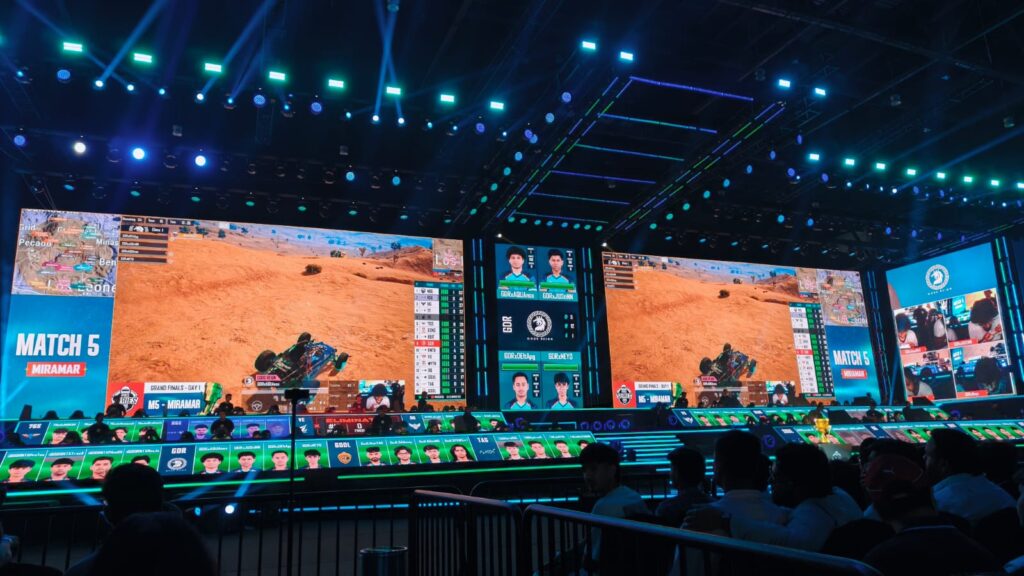
BMPS 2026 Grand Finals Day 1 Recap: Divine Gaming Tops the Standings

Published

on

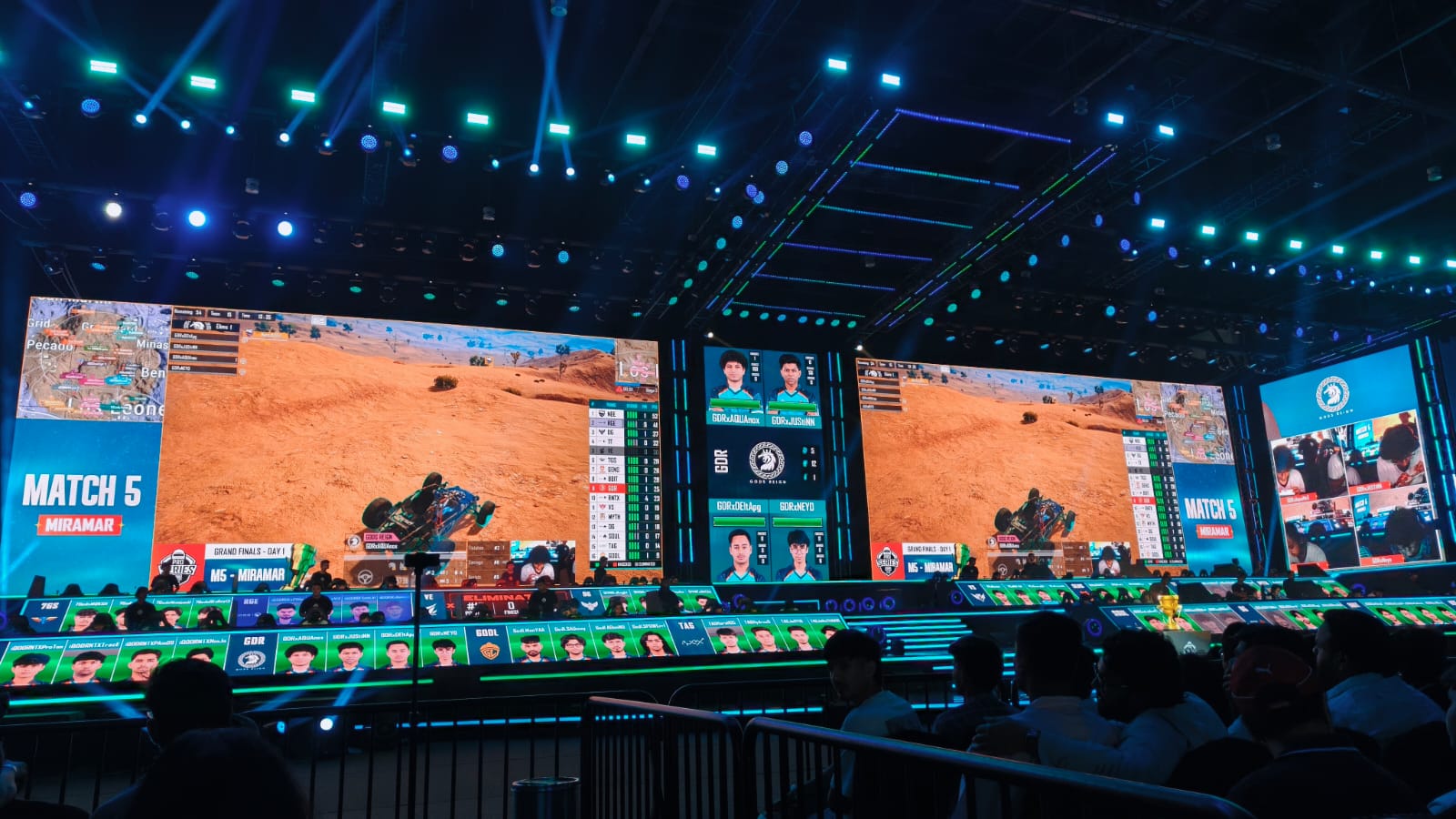
Day 1 of the BMPS 2026 Grand Finals is officially in the books, and what a day it was. From back-to-back chicken dinners by iQOO Reckoning Esports to Divine Gaming’s late surge to the top of the standings, the opening six matches had everything BGMI fans could ask for. While some fan favorites lived up to expectations, others will be heading into Day 2 with plenty of work left to do.

Reckoning Starts Strong With Back-to-Back Chicken Dinners

The opening match on Rondo immediately set the tone for the day. Team TAG endured a rough start after losing multiple players to Revenant XSpark and eventually became the first team eliminated from the Grand Finals. Meanwhile, iQOO SouL looked sharp early on, picking up multiple eliminations and showing signs of a strong opening. However, it was iQOO Reckoning Esports who stole the spotlight, closing out the match to secure the first chicken dinner of the Grand Finals.

The momentum continued into Match 2 on Erangel. While the early game remained relatively quiet, the action exploded during the final circles around Ferry Pier. Teams like GodLike, Divine Gaming, and Nebula Esports all looked dangerous throughout the match. The final battle came down to Nebula Esports, Genesis Esports, iQOO 8Bit, and Reckoning Esports. Despite Nebula’s strong positioning, 8Bit disrupted their plans, while Genesis Fury put together an impressive individual performance from a watchtower. In the end, Reckoning Esports emerged victorious again, securing back-to-back chicken dinners and establishing themselves as the early favorites.

Erangel Delivers Upsets and Surprises

The third match brought one of the biggest surprises of the day. After winning the first two games, Reckoning Esports became one of the earliest teams eliminated. Genesis and GodLike continued their strong performances throughout the mid-game, while teams like TAG and SouL once again struggled to convert opportunities into points. The final fight saw Gods Esports and iQOO Orangutan battle for the chicken dinner. Orangutan’s lone survivor attempted a clever smoke rotation to outplay the opposition, but the strategy fell short, allowing Gods Esports to claim the victory.

The fourth match finally delivered the military island zone that many fans had been waiting for. Unfortunately for iQOO 8Bit, their game ended before the first circle had even closed. The standout performer here was Nebula Esports. The team secured prime positioning near the center of the zone and successfully defended it against multiple challenges.

Advertisement

Vasista Esports tried to break through but were quickly shut down. As the match entered its closing stages, only Nebula, Orangutan, and Reckoning remained. With Nebula holding a full squad while their rivals were reduced to single players, the outcome felt inevitable. Nebula secured the chicken dinner and, more importantly, climbed into contention for the top spot overall.

Divine Gaming Turns Things Around in Miramar

If the first half belonged to Reckoning and Nebula, the Miramar matches belonged to Divine Gaming. The fifth match featured a relatively central circle, resulting in fewer risky rotations and more direct engagements. Vasista became the first team eliminated after losing a crucial fight against Revenant XSpark. GodLike once again showed flashes of brilliance, winning multiple engagements through well-timed grenades and coordinated pushes. However, they couldn’t sustain the momentum deep into the game. The final showdown came down to Genesis Esports and Divine Gaming. Despite Genesis holding the high ground, Divine managed to outplay them during a tense 3v3 battle and walked away with the chicken dinner.

The final match of the day saw another Miramar zone centered around the southwest side of El Azahar. Once again, TAG found themselves involved in multiple early-game fights, including a lengthy standoff with Gods Reign and Team Tamilas inside a church compound. While TAG picked up a few eliminations, they couldn’t capitalize on the momentum and were eventually eliminated while rotating into the safe zone. SouL’s struggles also continued. The team spent most of the match fighting from a disadvantaged position and eventually exited with just a single elimination. Genesis continued their impressive run by taking down both iQOO 8Bit and Orangutan in consecutive engagements. However, they were unable to convert that momentum into a chicken dinner.

The final battle featured Divine Gaming and Revenant XSpark. Unlike previous endgames, Divine entered the fight with all four players alive and full control of the circle. Revenant attempted to mount a challenge but simply couldn’t break through Divine’s setup. Divine Gaming secured the final chicken dinner of Day 1 and, with it, the overall lead in the standings.

If Day 1 was any indication, fans are in for another action-packed weekend of BGMI esports.

Advertisement

Source link

Continue Reading

Tech

Trump Surrenders To Iran On Virtually Every Point

Published

on

from the total-capitulation dept

If there’s one thing that Donald Trump has shown over the years, it’s that he will get his most sycophantic MAGA loyalists to insist there are perfectly obvious reasons why whatever he’s about to do is absolutely necessary… and then Trump will do the opposite, and all those hangers-on will magically change their story within minutes.

The excellent reporter Laura Jedeed has been tracking all of the excuses Trump and his team have been giving for why we absolutely had to go to war with Iran, and the very top one: eliminate their ballistic missile capability. Next: eliminate their nuclear program entirely. There was also some talk of “regime change.”

When Trump went to war with Iran, I watched every speech anyone in the administration gave and made a chart of every reason given for going to war”Eliminate ballistic capability” was the #1 reason given: more even than preventing Iran from getting a nuclear weapon

Laura Jedeed (@laurajedeed.bsky.social) 2026-06-17T21:21:49.542Z

Now that Trump has signed the surrender agreement at Versailles (the traditional place to sign a total surrender agreement), the scorecard looks like this: no eliminated missile program, no eliminated nuclear program, no regime change. Also: no actual deal.

Advertisement

What Trump signed is a one-page memorandum of understanding with a 60-day time limit. After that, another deal needs to happen — one that may or may not actually get signed. The thing being called a historic peace agreement is, in legal terms, a note on the back of a napkin that expires in two months.

With that established: here’s what he gave away to get it.

The US backed down on everything to get the Strait of Hormuz only partially opened, in a situation where Iran still seems likely to come out of this way stronger and way more powerful than before Trump started this illegal war. Remember, before this war, the Strait was open. So with this deal we only get partially back to where things were before the war, but with a huge draw down of US military stock, over a dozen dead US soldiers, and tons of unnecessary Iranian casualties, including a school full of young girls.

Iran retains their ballistic missiles and MAGA officials have to pretend that makes sense.

Advertisement

KAITLAN COLLINS: Are you okay with Iran having missiles?SEN. ROGER MARSHALL: I prefer that they not, but they have to defend themselvesCOLLINS: You think Iran needs to be able to defend itself?MARSHALL: I do, otherwise we turn this into a forever war

Aaron Rupar (@atrupar.com) 2026-06-18T01:41:27.805Z

And after months of screaming about how Iran could not retain any nuclear capabilities at all, Trump is now talking about how important it is for them to retain their nuclear capabilities.

Also, remember how the Trump world insisted that Obama’s JCPOA was one of the worst deals of all time?

That’s Donald Trump tweeting in 2015 about the JCPOA:

The deal with Iran will go down as one of the most incompetent ever made. The U.S. lost on virtually every point. We just don’t win anymore!

The “deal” Trump just made is a complete capitulation, a loss on every point, and way, way, way worse than what was in the JCPOA, which, in retrospect, was a genuinely good deal — carefully negotiated by actual experts — and briefly a real win for peace in the Middle East before Trump tore it up.

Advertisement

And remember how MAGA spent years misleadingly talking up all the money that the US supposedly “gave” Iran with the JCPOA? Or the deal Biden did to extend a Trump-era policy to unfreeze some of Iran’s frozen assets, which even Donald Trump Jr. falsely claimed was Biden “giving” Iran money?

There is now widespread reporting that this deal will unlock some $300 billion in investment for Tehran. To be precise: this isn’t the US writing a check — the deal creates the conditions for private capital to pour into the country. Trump has been pretty candid about his view on that:

“We don’t have to give them anything. But some people may want to invest. Like, what are you going to do to say ‘you can never ever invest in a country,’ I mean, it’s pretty tough.”

So: MAGA spent years insisting that financial flows to Iran — even unfreezing Iran’s own assets — would fund its military and get soldiers killed. Trump just opened Iran to hundreds of billions in new investment while leaving both the missiles and the nuclear program intact. The threat, apparently, only counts when a Democrat is president.

Obviously, ending this war is a good thing. But it never should have happened in the first place. Trump launched it without congressional authorization, in clear violation of the War Powers Act — and once it started, Congress should have stopped it cold.

The final accounting: Trump tore up the JCPOA, which he called “one of the most incompetent deals ever made.” He started an illegal war. He drew down US military stockpiles, lost over a dozen American soldiers, and killed Iranian civilians — including a school full of young girls. And he came away with a memorandum of understanding that expires in 60 days, leaving Iran with everything it had before the war started, plus full knowledge of exactly how hard Trump will push before he folds.

Advertisement

Trump’s own verdict on the JCPOA was: “The U.S. lost on virtually every point.” He was describing this deal.

Filed Under: donald trump, iran, iran deal, jcpoa

Source link

Advertisement
Continue Reading

Tech

How to watch Turkey vs Paraguay: Free Streams & TV Channels for World Cup 2026

Published

on

Two sides desperately needing a victory meet at the FIFA World Cup 2026 as Turkey face Paraguay, and you can live stream the game around the world for free.

Turkey are reeling from a shock 2-0 defeat by Australia in their opening Group D match, as the pre-tournament dark horses were left to rue some sloppy defensive play and a lack of cutting edge. Head coach Vincenzo Montella will look to rectify that against Paraguay in what already looks like a must-win game, with co-hosts USA still to come. It won’t be ideal for Montella that Turkey’s first two group matches are 1,500km apart, and the appropriately nicknamed Little Airplane will hope the journey from Vancouver to San Francisco does not take too much toll on his players. He also needs Real Madrid playmaker Arda Guler to step up.

Source link

Advertisement
Continue Reading

Tech

Daily Deal: The JavaScript DOM Game Developer Bundle

Published

on

from the good-deals-on-cool-stuff dept

The JavaScript DOM Game Developer Bundle has 8 courses to help you master coding fundamentals. Courses cover JavaScript DOM, Coding, HTML 5 Canvas, and more. You’ll learn how to create your own fun, interactive games. It’s on sale for $30.

Note: The Techdirt Deals Store is powered and curated by StackCommerce. A portion of all sales from Techdirt Deals helps support Techdirt. The products featured do not reflect endorsements by our editorial team.

Filed Under: daily deal

Source link

Advertisement
Continue Reading

Tech

BMPS 2026 Grand Finals Day 2 Schedule & Format

Published

on

Day 1 of the BMPS Grand Finals got us some really exciting action from teams we didn’t expect much from. Table toppers like Divine and Nebula have solidified their place, but day two of any BGMI tournament is always for comebacks, meaning we could see SouL and GodLike mounting a big challenge. After all, a ticket to the esports world cup in Paris is on the cards, in addition to the 4 cr prize pool. Here’s what the schedule looks like for day two.

BMPS 2026 Grand Finals Day 1 Schedule & Timing

The live broadcast will begin at 2:45 PM IST. Fans can catch the games like on Krafton’s YouTube channel in Hindi, English, and a few other regional languages. Or, if you want to support your team live, head over to the Jaipur Convention Center. Tickets are available on the District app. Maps for today will include:

  • Match 1 — Rondo
  • Match 2 — Erangel
  • Match 3 — Erangel
  • Match 4 — Erangel
  • Match 5 — Miramar
  • Match 6 — Miramar

A total of 18 matches will be played over the course of this weekend. And the format is pretty simple. Points are awarded for each finish, and also for how long a team survives. In the end, the team with the most total points (position + finish) will be the winners.

BMPS Grand Finals Qualified Teams

Rank Team WWCD Finish Points Position Points Total Points
1 DIVINE 2 54 31 85
2 NBE 1 36 17 53
3 GENS 0 35 17 52
4 iQOOORGE 2 20 27 47
5 iQOO8BIT 0 29 11 40
6 iQOORNTX 0 29 10 39
7 VASISTA 0 26 12 38
8 iQOOxTT 0 24 13 37
9 7GODS 1 21 15 36
10 GDR 0 22 7 29
11 iQOOxOG 0 15 11 26
12 iQOOSOUL 0 20 5 25
13 MYTH 0 18 6 24
14 TAG 0 21 2 23
15 VS 0 15 7 22
16 GODL 0 19 1 20

Source link

Advertisement
Continue Reading

Tech

Waymo hits the brakes after robotaxis keep missing the signs for freeway construction zones

Published

on

OFFBEAT

Nearly 4,000 vehicles recalled for driving past closure warnings and between cones marking shut lanes

Waymo is recalling nearly 4,000 robotaxis after its vehicles repeatedly failed to recognize freeway construction zones, in some cases driving past closure signs or between cones marking closed lanes.

A total of 3,871 vehicles equipped with Waymo’s fifth-generation Automated Driving System (ADS) are affected, and the interim workaround is to restrict freeway driving until a fix is available.

Advertisement

Six events were logged in Phoenix, Arizona, in April, during which vehicles drove past ramp-closure signs into pre-planned freeway construction zones. The response of Waymo’s Field Safety Committee was to implement freeway driving restrictions.

There were seven incidents in May in the San Francisco Bay Area, where vehicles drove between cones designating a lane closure. According to the Safety Recall Report, this was “due to the ADS inappropriately prioritizing the avoidance of other freeway hazards and/or failing to recognize the construction zone.”

The response was further freeway driving restrictions until the company could get to the bottom of the problem. On June 8, Waymo’s Safety Board decided to conduct a recall.

Vehicles not capable of driverless operation on freeways are not affected and have not been recalled.

Advertisement

The recall comes a month after Waymo disclosed that flooding could confuse its vehicles on high-speed roads, prompting another software fix.

Waymo’s vehicles operate in several US cities and have recently been sighted on the streets of London, albeit with a human ready to take control if needed.

Waymo has issued several vehicle recalls over the years. There was the 2023 truck collision and a prang involving a pole in 2024. Neither was particularly serious, but did little to bolster public confidence.

In January 2026, a Waymo vehicle struck a child near an elementary school. According to the US National Highway Traffic Safety Administration (NHTSA) [PDF], “the child ran across the street from behind a double-parked SUV towards the school and was struck by the Waymo AV. Waymo reported that the child sustained minor injuries.”

Advertisement

According to Waymo, its vehicles cover more than four million fully autonomous miles each week and have logged more than 170 million in total. The company says the Waymo ADS was involved in “92 percent fewer crashes that cause serious or fatal injuries than human drivers in the same driving conditions.” ®

Source link

Continue Reading

Tech

A modder is finally bringing seamless co-op to Dark Souls II, over a decade later

Published

on

TL;DR: More than a decade after its original release, Dark Souls II is set to receive a significant fan-made multiplayer update. A modder is currently working on a new “seamless” co-op mode that would theoretically allow the game to be played from start to finish in a single, soul-crushing session.

A well-known FromSoftware modder named “Yui” is working on a new seamless co-op mode for Dark Souls II. The mod is planned for release on the Scholar of the First Sin edition, which includes all previously released DLC and several enhancements to the base game. In a recent post, Yui said the project is taking longer than expected, as Dark Souls II has proven to be a challenging reverse-engineering effort.

Initially announced in 2025, the mod is now approaching the stability required for an “alpha” testing phase. Yui confirmed that it has become one of their most complex and ambitious projects to date, noting that Dark Souls II is a very different beast compared to other FromSoftware Soulslike titles.

A seamless co-op mod is designed to let players cooperate and complete a game without the traditional restrictions of official multiplayer modes implemented by FromSoftware. In theory, up to six players could progress through the entire game in a single co-op session, persisting through death and carrying world progression with them.

Advertisement

The mod will require the Scholar of the First Sin edition of Dark Souls II, which is a 64-bit upgrade of the original 32-bit base game. Yui previously worked on several mods for other FromSoftware titles, including Dark Souls, Dark Souls III, Sekiro, Elden Ring, and Elden Ring: Nightreign. These games are built on a broadly similar engine architecture, making it relatively easier to understand their systems after working on any one of them.

By contrast, Dark Souls II appears to use a separate branch of FromSoftware’s proprietary engine. As a result, Yui effectively had to reverse engineer the game from scratch, which explains why development of the co-op mod has taken considerably longer than expected.

The mod is not yet complete, but Yui released a short video to announce the upcoming project and demonstrate that it is technically feasible. The developer plans to provide a test build of the mod for free, while bug reporting and support will be limited to project supporters via Patreon.

Advertisement

Dark Souls II was released in 2014, further expanding the “Soulsborne” formula introduced in Demon’s Souls and Dark Souls. The game was a critical and commercial success, and FromSoftware went on developing even more punishingly hard action-RPG titles until Elden Ring: Nightreign came to be. Elden Ring was so successful that they are now making a movie out of the game.

Source link

Advertisement
Continue Reading

Tech

Every AI Agent Is an Identity. Most Organizations Don’t Treat Them That Way

Published

on

Agentic AI

For years, security teams built their programs around a simple premise of if you control the identities, you can control the risk. Employees authenticate through identity providers. Service accounts connect systems. API keys let workloads talk to cloud services and databases.

The actors have been very predictable. And as a result, the identity security and governance model have followed that predictability. Now, this premise is breaking.

AI agents entered the enterprise quietly, summarizing meetings, drafting emails, helping employees find information. Most security teams didn’t think hard about them at first. They looked like productivity tools, because that is exactly what they were.

Then, organizations started connecting them to critical business services such as Salesforce, Snowflake, GitHub, Jira, production databases, and cloud environments. Now, they retrieve information, trigger workflows, update records, write and deploy code, and take actions across multiple systems.

Advertisement

Sometimes on the behalf of a human, sometimes autonomously, and sometimes in ways where it’s genuinely unclear which.

This makes AI agents more than just tools. It makes them identities and most enterprises have no security and governance models for them.

The pattern is consistent across organizations. A new identity layer gets built on top of existing infrastructure with almost none of the controls that identity teams spent the last decade putting in place. An agent might be created by one team, used by another, connected to five different applications, and running on credentials that were provisioned for a completely different purpose.

It got broad access early because someone needed it to work and didn’t want to slow things down. The result is a sprawl of high-privilege, low-visibility actors that most security teams can’t inventory, let alone govern.

Advertisement

AI agents create, use, and rotate identities at machine speed, outpacing traditional IAM controls.

Token Security helps teams manage the full lifecycle of AI agent identities, reduce risk with remediation, and maintain governance and audit readiness without sacrificing speed.

Request a Tech Demo

According to a 2026 CSA survey commissioned by us here at Token Security, 82% of organizations discovered at least one AI agent created without the knowledge of security, IT, or governance teams in the past year, and 41% found this happening multiple times.

Here’s where the security conversation has gone sideways. Most of the attention on AI security has landed on model risk, such as prompt injection, jailbreaks, unsafe outputs. While these are all an important part of the agentic AI ecosystem, they don’t paint the complete picture enterprise security teams require. The most important piece they need must answer what can the agent actually access?

Advertisement

An agent that summarizes public documentation has limited blast radius. An agent connected to customer records, source code, financial systems, and admin-level cloud credentials is a different problem entirely.

A bad prompt, a compromised session, a malicious plugin, or a misconfigured integration can turn an overprivileged agent into a path for data exfiltration, destructive action, or lateral movement through systems that were never meant to be connected.

This is no longer theoretical, 65% of organizations experienced a security incident involving an AI agent in the past year, with 61% reporting exposure or mishandling of sensitive data as a result (source).

Getting control starts with visibility. Security teams need AI agent discovery and inventory that extends beyond just names and platforms to answer questions that actually matter.

Advertisement

Who owns this agent? Who can invoke it? What systems is it connected to? What credentials does it use? What can it read, write, delete, or execute in each target application?

This is harder than it sounds, because the surface isn’t obvious. A security team might know a sales assistant exists in an AI platform without knowing it runs on a Snowflake service account with admin privileges. They might know a coding agent is installed on developer endpoints without knowing which secrets, repositories, and CI/CD pipelines it can reach.

The agent itself is only part of the picture. Everything the agent’s identities can touch is the actual exposure surface.

The second piece is purpose. Security and governance can’t be purely permission-based with AI agents. It has to account for the agent’s intent. A sales prep agent only needs read access to CRM records. It doesn’t need to delete database tables.

Advertisement

A finance workflow agent should only read invoices. It shouldn’t be able to create new privileged users. When you understand what an agent is supposed to do, you can evaluate whether its permissions match that scope. And, in practice today, they rarely do and that gap is where the real risk lives and it only widens over time through least privilege policy drift.

Once intent is understood, enforcement becomes possible. Permissions can be trimmed to match the agent’s actual purpose, overprivileged service accounts remediated, unused credentials rotated or removed, and risky connections caught before they turn into incidents.

The part that trips up most teams is that none of this is a one-time exercise. An access review or an audit may feel like progress, but they just provide a point-in-time checkbox and a false sense of security. The reason is that agents change, instructions update, user bases shift, and integrations expand.

An agent that started as a narrow internal tool can quietly end up connected to systems it was never designed to touch, not because anyone made a bad decision, but because nobody was watching when the scope crept.

Advertisement

That’s why governance needs to be continuous to catch agents that start accessing applications outside their normal pattern, use unexpected credentials, or take actions that don’t fit their stated purpose.

The enterprises that succeed with AI will not be the ones that block agents entirely. They will be the ones that make agents governable and promote secure AI innovation. This means treating them as first-class identities with owners, access, behavior, risk, and lifecycle controls.

AI agents are becoming privileged insiders. Security and identity programs must now catch up before those insiders become invisible attack paths.

We’d love to show you how we’re tackling this at Token Security, book a demo to chat with our technical team so you can scale without sacrificing safety.

Advertisement

Sponsored and written by Token Security.

Source link

Advertisement
Continue Reading

Trending

Copyright © 2025