Connect with us
DAPA Banner
DAPA Coin
DAPA
COIN PAYMENT ASSET
PRIVACY · BLOCKDAG · HOMOMORPHIC ENCRYPTION · RUST
ElGamal Encrypted MINE DAPA
🚫 GENESIS SOLD OUT
DAPAPAY COMING

Tech

How LEDs Are Making Light Pollution Worse

Published

on

In the chill of a London spring night, under overcast skies, iconic Trafalgar Square opens around me. Admiral Nelson rises on his pedestal, the National Gallery rests behind, the church of St Martin-in-the-Fields sits nearby. From the 13th century, the site served as the Royal Mews for hawks and then horses. By 1844, it was a public space at the heart of one of the biggest cities in the world.

Despite the square’s presence through that grand sweep of history, it’s not why I’m here. My interest is far more specific: I want to find out what happens to spaces like this when artificial light, specifically from light-emitting diodes (LEDs), intrudes. My companion tonight is Simon Thorp, a local lighting designer, who crouches in the shadows near Nelson’s spire, light meter in hand. “Two lux,” he reports, “and it’s very comfortable here.” Two lux is 10 to 20 times the illuminance of a full moon. We can see each other clearly, and a nearby sign assures us that closed-circuit television (CCTV) is in operation for safety’s sake.

A light designer uses a luxmeter to measure the light intensity emitted by a street lamp.

Light designer Simon Thorp uses a luxmeter to measure the intensity of light emitted by a street lamp in St. James’s Park, London.

Advertisement

Luigi Avantaggiato

Trafalgar Square captures the relationship between lighting and darkness that exists in almost every city, suburb, small town, and village around the world. The lighting here is a mishmash of old technologies and new, of shadow and glare, the ornamental gas lamps fronting the National Gallery all but washed out by the LEDs inside modern versions of traditional “brass and glass” fixtures a few meters away—21st-century technology housed in 19th-century designs.

The ugly truth of artificial lighting today is that in parts of London, as in many cities around the world, lighting levels are excessive, with unshielded illumination blasting in all directions. And the irony is that too much light invites danger: It creates shadows, impedes our vision, and gives the illusion, without the reality, of safety. Thorp notes that modern CCTV cameras are “pretty great” even at low-light levels, while harsh light makes it hard for both human eyes and digital sensors to see.

Advertisement

“The more bad light we add, the more bad light we think we need,” says Thorp. “We can’t see because of the light we’ve added. And it makes areas that were perfectly okay seem darker.”

Among the costs of this excess, the most alarming may be its toll on human health (and that of other animals) by disrupting circadian rhythms, impeding the production of melatonin, and contributing to sleep disorders that are tied to every major modern disease. New research shows that increased exposure to blue light from LEDs is having “substantial biological impacts” such as suppression of the sleep hormone melatonin and an increased risk for obesity, certain cancers, and type 2 diabetes.

A panoramic view from the Eiffel Tower looks down on the illuminated Champ de Mars gardens [center] leading toward the École Militaire, with the tall silhouette of the Tour Montparnasse visible on the Paris skyline.

Luigi Avantaggiato

Advertisement

I have come to London and Paris—which led the way in the expansion of public street lighting in the 19th century—because they embody both the current enormity of the problem as well as a future certain to be lit by trillions of chips: controllable, tunable, and energy-efficient LEDs.

Living with artificial light at night

The standard justification for nighttime illumination is public safety. Lighting experts’ term for the phenomenon is “artificial light at night.” While people won’t often admit it, the desire for light at night seems to stem from a primal fear of the dark. Darkness is where the bad guys hide. And if dark is bad and light is good, then more light can only be better.

This assumption has guided our use of nighttime light for hundreds of years. And yet, high-lumen output doesn’t necessarily correlate to a reduction in crime, research has found. In other words, if we relied on the data as much as we do our primal anxieties and paused those anxieties long enough to learn how light and darkness interact, our nights would almost certainly be lighted differently—especially now that we have the extraordinary technology that is the light-emitting diode.

A 19th-century gas lamp [white square] manufactured by William Sugg & Co. next to a pedestrian path in Trafalgar Square, along with the architectural floodlighting on the neoclassical facade of the National Gallery, showcase the interplay between modern and historic lighting systems.

Advertisement

Luigi Avantaggiato

The first visible red light-emitting diode was invented by Nick Holonyak in 1962, but LED lighting technology took several decades to develop, before exploding in recent years. Just a decade ago, LED streetlamps were rare. By 2019, more than half of U.S. streetlights were LEDs, and that number is predicted to top 90 percent by 2030. Similar uptake has occurred around the world, even in developing countries, where inexpensive Chinese-made LED fixtures are increasingly common.

This rapid global migration to LEDs represents a shift in the fundamental physics of how we illuminate our world. From oil lamps and candles to gas lamps, early examples of artificial light at night relied on a burning wick, an incredibly inefficient way to create light. An incandescent bulb is effectively a heater that happens to produce light as a by-product, so it squanders nearly all of its energy as heat.

By contrast, LEDs use semiconductors to convert electricity into light. Through this process of electroluminescence, LEDs use up to 90 percent less energy than incandescent bulbs do, which has enabled municipalities to realize an immediate energy savings of 50 percent or more. This fact alone has fueled the technology’s worldwide adoption.

Advertisement

But LEDs aren’t just more efficient and less expensive. The use of solid-state technology gives the lights an extraordinary life-span, often measured in decades rather than years. This significantly lowers the maintenance costs, as city workers spend far fewer hours replacing broken or burned-out lights. Even more striking, by manipulating the properties of the semiconductor material, engineers can dictate the precise color and intensity of the output, something that gives LEDs incredible versatility. For a lighting designer like Thorp, LEDs offer countless possibilities.

Digital control for smarter lighting

Wandering from Trafalgar Square along the edge of St. James’s Park, Thorp and I find ourselves near Westminster Bridge, one of nine city bridges that in 2021 were part of the Illuminated River project, meant to make the Thames more beautiful at night. Each bridge now features a new LED lighting scheme that moves and changes color and intensity to create a coordinated work of art. But Thorp is frustrated that the project did nothing to correct the often glary lighting on the riverbanks. “Why don’t you pay the money to correct all of this bad lighting instead of adding new lighting?” he says. LED technology, he points out, has the potential to fix that problem.

The Illuminated River artwork for Blackfriars Bridge uses a color scheme that closely complements the red pillar supports that remain from the original Blackfriars Railway Bridge.

Luigi Avantaggiato

Advertisement

In fact, this may be the most meaningful potential of LEDs: the ability for a community to control when, where, at what levels, and in which colors its lights shine. A public space like Trafalgar Square could be lit more brightly during rush hour, then dimmed as the night progresses, the lights not only connected to one another but to the surrounding streetlights and commercial lights. Anywhere in the world, LED streetlights could be programmed to rise and fall in brightness depending on the time of night or time of year. They could even be turned off during bird migrations, to reduce the number of birds that are disoriented by the lights and ultimately killed in collisions with reflective and illuminated windows.

Up to now, LED public lighting has largely not been part of any comprehensive plan to curtail and control nighttime illumination. Most LED installations have simply replaced older, inefficient “dumb” electric lighting with newer “dumb” LEDs and thus made light pollution worse. The main reason? Because LED lighting is cheaper, we tend to use more of it—a literally shining example of the Jevons paradox. Even as awareness of light pollution grows, we aren’t yet taking advantage of LED technology’s full potential.

The good news is that we could start tonight. At DarkSky International, the world’s foremost organization fighting light pollution, CEO and executive director Ruskin Hartley tells me the organization has five principles for responsible outdoor lighting: It should be useful, targeted, low level, controlled, and warm-colored. “They’re enabled because of the capabilities of LEDs,” Hartley says.

The technology to control LEDs will be part of the solution. In the olden days of the analog era, a streetlight was either on or off. To change a lighting schedule, you had to physically rewire a circuit. Today, the Digital Addressable Lighting Interface (DALI) protocol turns each luminaire into part of a network, with its own digital address and a driver that reports to a central server. With DALI, the lighting is managed through software rather than physical switches.

Advertisement

Unfortunately, most LED streetlights have been deployed without this technology because it costs more. But Paul Drosihn, general manager of the DALI Alliance, says that using such controls makes the LEDs much easier to maintain. Before the new digital protocol, it took an average of nearly three visits to identify, diagnose, and repair a defective luminaire. “Now it’s one,” Drosihn says. “Saving the cost of sending two guys on a cherry picker to replace those [lights] is immeasurable. What I just described to you is pretty much all the utilities need to know.”

The intricate cast-iron understructure of Westminster Bridge glows in vibrant green and teal light as part of the Illuminated River public art project, a color palette selected to echo the green benches of the nearby House of Commons.

Luigi Avantaggiato

What’s more, DALI allows the tuning of the lights’ spectrum so that they become warmer and less disruptive as the night progresses. Digitally connected, full-spectrum luminaires allow cities to transform the nocturnal experience—saving money, increasing health and safety, and creating a warmer and more appealing atmosphere at night.

Advertisement

This digital intelligence is equally transformative for the “bleed lighting” that spills from building interiors, Drosihn says. “You don’t think of night lighting as coming from inside buildings, but it does,” he says. “Particularly in the States, you drive through any major city and all the lights are on, on every floor of every high-rise, even if no one is home.”

Already, the use of digital controls for interior lighting has become commonplace in some European cities, Drosihn says. By integrating DALI with occupancy sensors and building-management systems that monitor HVAC, electrical systems, and security networks, a skyscraper can become a dynamic participant in the urban environment—dropping a floor’s interior lights to zero the moment the last person leaves. As a result, electronic controls combined with LEDs can act like a dimmer switch for a city’s entire skyline.

White light blights the night

With all the possibilities from LED technology, why are our nights too often lit with harsh and clinical light, casting glare and creating shadows, disrupting human and ecological health, erasing the stars from our skies? The answer starts with the color of LEDs. At first glance, an LED streetlight looks like a collection of small white bulbs, but it’s not. To produce a light we perceive as white, most manufacturers coat a blue semiconductor core with a yellow phosphor material that absorbs a portion of that high-energy blue light. The problem is that this “white” light is still heavily blue, which is exactly the color no species has evolved to expect at night.

Three lanterns glow white in the night.

A historic three-lantern cast-iron street lamp along the pedestrian walkway of Westminster Bridge casts a glow against the night sky.

Advertisement

Luigi Avantaggiato

And because blue light is the second most energetic part of the visible spectrum (violet is the most), it doesn’t just illuminate our streets and invade our homes. Blue light also scatters in the atmosphere more easily than any other color, which helps to create the hazy, illuminated fog known as sky glow over every city of any size.

“Cooler” colored LEDs in the 4,000- to 6,500-kelvin range offer the most lumens at the lowest cost, so most early adopters installed these blue-rich white lights. The good news is that LED technology has continued to advance, and a growing number of communities are choosing warmer-colored streetlights that have less blue. (Phoenix, for example, converted 100,000 streetlamps to 2,700 K LEDs in 2020.) And, of course, light pollution isn’t just a result of LEDs. Older lighting technology also adds to the glare—bright white metal-halide lights, especially—and cities are loath to replace something that isn’t yet broken.

Advertisement

But our main failure isn’t a technical one. It’s that we have yet to revise our thinking about lighting at night. We use LED technology just as we did the old sources of light. As a result, we have largely offset the gains that were promised in terms of reducing energy consumption and carbon emissions by making light pollution worse, and have so far let an incredible opportunity go unrealized.

Can the City of Light do it right?

Across the Channel in Paris, the failure to realize the potential of LEDs feels even more palpable. Unlike London, which suffered heavily from German bombs, the lovely 19th-century Paris that Baron Haussmann created largely escaped destruction in World War II. To nearly 50 million annual tourists, the beautiful uniformity of the architecture is instantly recognizable. But the City of Light’s nocturnal atmosphere is also part of the draw, and extensive attention has been given to relighting its buildings and monuments. When I wander into the Cour Carrée in the Louvre, for example, I’m stunned by rows of amber LEDs that together create a warm glow along the palace facades. When I see the Eiffel Tower, first from a distance walking along the Seine and then up close, I find myself staring as I would at a campfire, the structure’s metalwork amber-lit with more than 336 high-pressure sodium bulbs.

The Eiffel Tower glows with warm golden illumination at night.

The Eiffel Tower’s signature golden illumination was inaugurated in 1985. The 336 high-pressure sodium projectors are installed directly inside the monument’s structure.

Advertisement

Luigi Avantaggiato; Lighting designer for the golden lights of the Eiffel Tower: Pierre Bideau

Still, the city’s night lighting is far from perfect. With millions of residents, thousands of stores and restaurants, and 300,000 streetlights, the city overall is among the world’s brightest. Even at the base of the Tower, bright white LED lamps illuminate the African émigrés selling cheap berets and Tour de France trinkets. And the city has been replacing its old sodium streetlights with new LEDs, swapping the warm yellow tones for which the city has long been known for bright white lamps no one wants to look at.

Street vendors display souvenirs at the foot of the Eiffel Tower. Their merchandise is lit by harsh white LED systems, which starkly contrast with the warm golden sodium-vapor light illuminating the tower above.

Luigi Avantaggiato

Advertisement

Nonetheless, the potential is here. In 2019, France introduced a nationwide law to reduce levels of light pollution, setting rules about both public lighting (preventing light from being projected above the horizontal) and private lighting such as stores, which are required to turn off their exterior and shop window lights after 1 a.m. In addition, an increasing number of French communities dim or turn off municipal lights after midnight to save energy and reduce carbon emissions. Although light pollution worldwide continues to increase by nearly 10 percent per year, France has managed to reduce its overall level. Chloé Beaudet, a researcher at Université Paris-Saclay, documented local light-reduction measures and found people generally agreed with the notion of dimming or turning off the lights, mainly for energy savings and ecological concerns.

A researcher stands on the Pont de l'Archev\u00each\u00e9 (Archbishop's Bridge) observing the Notre-Dame cathedral at night.

Researcher Chloé Beaudet looks toward the Notre-Dame cathedral from the nearby Pont de l’Archevêché (Archbishop’s Bridge).

Luigi Avantaggiato

Advertisement

“What I find is that people living in urban areas, they accept this kind of policy,” she tells me. “They’re like, okay, I don’t really use public space at night as a pedestrian, so what’s the point of having lights on?” For her, a key takeaway is that one lighting level does not fit all areas. “I think there is really a need for policy that is differentiated according to the neighborhood.”

The west facade of the Notre-Dame cathedral glows at night following restoration, with warm white architectural LED lighting illuminating the three monumental portals, rose window, and twin towers.

The west facade of the Notre-Dame cathedral glows at night following its restoration, with architectural LED lighting illuminating the three monumental portals, rose window, and twin towers in a warm white light that preserves the medieval limestone details.

Luigi Avantaggiato

Advertisement

In another positive development, the country has been minimizing artificial light to create ecological corridors designed to protect nocturnal species such as birds, bats, and insects. These corridors are connected and dark, mitigating the disruption to the 30 percent of vertebrates and more than 60 percent of invertebrates that are nocturnal. Even for city dwellers, this trame noire (“dark infrastructure”) helps to raise awareness of why controlling light pollution is important for life on Earth. Nationwide laws to control light pollution, the ability to light different parts of a city differently, dark corridors to protect biodiversity—these are exactly the kind of changes made possible with LEDs.

The iconic I.M. Pei Pyramid glows softly at the center of the Cour Napoléon at the Louvre Museum, its warm LED illumination flowing through the geometric glass-and-metal structure with a symmetrical framing of the surrounding historic pavilions against the night sky.

Luigi Avantaggiato

That’s not all. Almost until 1920, astronomers at the Paris Observatory were still gazing at the Milky Way. That’s impossible nowadays, but it could happen again. Despite the bright white LED streetlights now lining so many Paris streets, networks of LEDs using controls could lower lighting levels enough each night, so that the Milky Way could once again be visible over the French capital. And in the process, Paris could become the City of Light in ways that would set an example for other parts of the world.

Advertisement

New lighting demands new thinking

“I think we should aspire to have cities that see the stars,” Simon Thorp says when I mention this view of Paris. “You just need everything to be coordinated.”

Nearing the end of our London walk, having turned from the river and back up toward the Strand, Thorp brings me down narrow Carting Lane behind the Savoy Hotel, to where a gas fixture tops a thick lamppost, an original from 1870. A small plaque reads, “The last remaining sewer gas destructor lamp in the city of Westminster.” Thorp explains that the thick pole hides a tube that allowed methane from the sewers to get burned off at the mantle. “An early example of renewable energy,” he jokes.

The fire-orange flame is pleasing to the eye. But even here, on a narrow lane with no vehicle traffic, in a touristy area of the city, the flame is overwhelmed by a nearby, unshielded LED security light. Thorp shakes his head. “It’s stunning that someone could put in a light like that and think, ‘Great, nice job.’”

Two tourists observe the faint flame of the historic Webb Patent Sewer Gas Lamp on Carting Lane, with bright white LED lighting from modern fixtures nearby.

Tourists gaze at the Webb Patent Sewer Gas Lamp, London’s last remaining Victorian sewer-ventilating street light, which illuminates the rain-slicked pavement of Carting Lane just off the Strand. Invented in the late 19th century by Joseph Webb to burn off methane from the subterranean network, the lamp operates 24 hours a day.

Advertisement

Luigi Avantaggiato

Here is the crux of contemporary artificial lighting at night. We know how to light well, and LEDs give us the ability to do so. But while our technology is 21st century, too often our thinking about light and darkness, safety and security, is stuck in the past. We could be doing so much more with this technology than we are. We could relight our nights in ways that would not only reduce energy and maintenance costs but also bring a slew of benefits, including healthier nights for humans, safer skies for nocturnal creatures, and a restoration of the stars.

In 2026, the tale of these two cities and their artificial light at night is that of a brilliant technology that we’ve engineered but haven’t yet learned to master. In short, we have yet to change the way we think about artificial light at night and to use it more thoughtfully and carefully—as we might, as one hopes we will.

Advertisement

From Your Site Articles

Related Articles Around the Web

Source link

Advertisement
Continue Reading
Click to comment

You must be logged in to post a comment Login

Leave a Reply

Tech

Jimothy keeps on giving: Amazon and others match winning bid for raccoon art, to benefit food bank

Published

on

A painting of Jimothy, the viral raccoon, by Seattle artist Ryan Henry Ward. (@henry_beyond_museums via Instagram)

Jimothy isn’t just a viral internet sensation — he’s a cause for good.

A painting of the beloved raccoon by Seattle artist Ryan Henry Ward attracted a winning bid of $6,543.21 in an informal Instagram auction this weekend, with all proceeds directed to the Ballard Food Bank.

The winning bidder for the 24-by-24-inch painting was identified by Ward as Angela Galdabini, who posted a picture of the painting hanging on her wall.

Now the auction gift is going viral in its own way, attracting a matching donation from Amazon, which encouraged other Seattle-area companies to follow suit. According to the tech giant on Monday, T-Mobile, Alaska Air and Brooks have all gotten on board.

Advertisement

@media (max-width: 600px) {
aside.callout { float:none !important; max-width:100% !important; margin-left:0 !important; margin-right:0 !important; }
aside.callout .callout-img { display:none !important; }
}

“When we saw a local artist giving back to the Ballard Food Bank, inspired by a little raccoon that’s brought so much joy, we wanted to help,” Kara Hurst, Amazon’s chief sustainability officer, said in a statement. “Amazon is proud to match the winning bid, and we’re calling on other Seattle-based companies to join us.”

Jimothy seemed destined to be captured by Ward, a prolific muralist whose colorful, whimsical work is seen across the Seattle region on buildings, fences, garage doors and elsewhere. His art frequently features a variety of animals and other characters, including Sasquatch.

Ward called Jimothy “the hero we needed” in his Instagram post on Saturday, and said he was giving to Ballard Food Bank because the organization helped him through some of his hardest times.

The viral Jimothy sensation took off last week when the raccoon was spotted in Ballard and a video attracted millions of views on Instagram. The craze spread around the world and other videos have emerged online, sparking immense curiosity and adoration, and a flood of memes, artwork, food, crafts, poetry, songs and more. 

Advertisement

Source link

Continue Reading

Tech

Halo’s Ringworld Showcased in New Campaign Evolved Versus the 2001 Original Graphics Comparison

Published

on

Halo Campaign Evolved vs Original Graphics Comparison
In 2001 a green-armored soldier woke up on a mysterious ring and changed everything for console shooters. Twenty-five years later Halo Studios has torn that entire campaign down to the studs and rebuilt it in Unreal Engine 5. Campaign Evolved is not a simple polish pass. Every corridor, every beach, every Forerunner structure has been constructed again from scratch. Side-by-side footage now circulating makes the gap impossible to ignore.


When you walk into the Cryo Bay of the Pillar of Autumn, the first thing you notice is the difference. The earliest chambers were basic boxes with flat panels and a gentle, even glow. In the new version, the same space is turned into a thick tangle of machinery, cables that appear to be hanging free, frost clinging to every surface, and crew members bustling about with purpose, and the light no longer simply sorta… fills the room like it used to. No, it bounces off polished metal, catches on frost, and creates these lovely soft shadows that appear to change and move every time you turn a corner.

As players step outside onto the Silent Cartographer beach, the difference becomes even more apparent. The original shoreline was a rather uninteresting expanse of sand and rock, with a limited outlook. However, Campaign Evolved takes the same shoreline and transforms it into an actual place. The waves are now smashing in with considerable volume, and rather than being flat smooth sheets of grass and scrub, they are pushing up through the sand in small groups. And way out in the horizon, you can see the distant rocks with their evident fissures and weathering. The ring continues to curve overhead, but the sky and atmosphere now adjust to time of day and weather in ways that the 2001 engine could never have predicted.

Halo Campaign Evolved vs Original Graphics Comparison
The most significant transition in materials can be seen in forerunner architecture. Early Halo structures were basically large slabs of concrete with simple geometric designs on them. The new buildings have the same immense scale and harsh shape, but each surface has fine grooves, slight discoloration, and reflective edges that catch the light in a completely different way depending on whatever angle you look at them from. Because the team has been able to push the level of detail without sacrificing performance, distant walls remain sharp rather than blurring, and the lumen lighting inside those same halls is a game changer, filling the space with soft bounced light and proper reflections that move with you as you move.

Halo Campaign Evolved vs Original Graphics Comparison
Character models and vehicles are making the same transition. Elites used to move around with these rigid, limited joints and basic armor plates. Every plate now has a genuine thickness, every joint has adequate articulation, and the energy shields respond with clearer visual input. The Warthog has gained some weight and is now more stable on the ground. The tires leave actual tracks, and as it goes, it creates actual heavy clouds of sand and dust that linger in the air for a while. Even little items like ammo crates and computer terminals now have readable lettering on them, and you can see all these wear marks that are worth looking closely at.

Halo Campaign Evolved vs Original Graphics Comparison
Campaign Evolved will be released on July 28 for the Xbox Series X|S, PlayStation 5, and PC. Early footage shows that the technological leap is enormous, since the geometry is denser, the materials respond to light properly, and the surroundings can bear careful examination. The original game was groundbreaking for its time, but this upgraded edition simply brings the same plot and locations to life in a way that modern hardware can now handle.
[Source]

Source link

Advertisement
Continue Reading

Tech

Detection Of A Four-Carbon Sugar In Interstellar Space

Published

on

Although life tends to find a way, something first has to kickstart said lifeforms. Exactly how the first biological cells formed on Earth – and potentially on other worlds – remains an enduring mystery. Some theories point to the early Earth’s surface conditions as a viable laboratory for the self-assembly of the first viable membranes, RNA, DNA and associated molecular machinery, while seeding of the Earth’s primitive atmosphere by sugars and other precursors from asteroids and kin is required in other theories.

Recently [Izaskun Jiménez-Serra] et al. added to this debate with the reported detection of four-carbon sugars in the form of erythrulose in the interstellar medium. Using the 40 meter radio telescope at Yebes and the 30 meter radio telescope at Granada the signatures of this sugar was detected in a molecular cloud near the center of the Milky Way.

These sugars likely form on these interstellar dust grains from more basic two-carbon aldehydes and alcohols, with them providing conceivably a source of energy for early metabolic processes of developing lifeforms. This specific type of sugar is highly prevalent in Earth’s fruits, and thus its prevalence in interstellar space is at the very least an interesting coincidence, if not another puzzle piece in the overarching question of abiogenesis.

Advertisement

Source link

Advertisement
Continue Reading

Tech

Hackers Are Exploiting Recently Patched WordPress Bugs, Putting Millions of Websites at Risk

Published

on

An anonymous reader quotes a report from TechCrunch: Hackers are breaking into websites that run vulnerable versions of the popular blogging software WordPress, according to several cybersecurity firms. One estimate puts the number of vulnerable WordPress websites at tens of millions as of Monday. Last week, WordPress patched two critical security flaws, urging people who run its software on their websites to update it “immediately.” The vulnerabilities are so severe that WordPress enabled forced updates where possible. Since then, cybersecurity companies Patchstack, Hexastrike, and WatchTowr have all warned that hackers are exploiting the vulnerabilities in the wild, meaning they are taking over websites that are still running susceptible versions of WordPress.

It’s unclear how many WordPress-powered websites on the internet are at risk, but it’s possible to make some educated guesses. The vulnerable versions of WordPress are 6.9.0 through 6.9.4, and 7.0.0 to 7.0.1. According to WordPress’ official stats, there are more than 400 million websites that run those flawed versions, although these statistics likely don’t reflect websites that have recently been patched. Cybersecurity consultant Daniel Card, who told TechCrunch that he looked at a sample of around 3,500 WordPress websites, estimates that less than 15% are vulnerable. Applying Card’s projection across the total population of WordPress websites on the internet, the total figure would still be around 90 million. […] One of the critical WordPress bugs was found and reported by Adam Kues of cybersecurity firm Searchlight Cyber, which dubbed it WP2Shell. Paired with the other bug, hackers can take full remote control of vulnerable websites.

Source link

Continue Reading

Tech

Amazon’s Adaptive Display For Fire TVs Is Officially Rolling Out Today

Published

on

The accessibility feature was teased back in April.

Adaptive Display is rolling out to the Fire TV Stick HD today. Amazon alerted us that this accessibility feature, which it mentioned during its April preview event, is now available for the latest model of its streaming dongle.

The Adaptive Display setting resizes both text and UI elements on screen for optimal readability, while keeping any images or key art proportionally scaled. Multiple sizing options are available so a user can get the best experience for their eyes and brain. Adaptive Display seemed like one of the more notable improvements for this latest Fire TV model, which also boasts a more streamlined form factor and some additional Alexa+ integrations. 

Amazon showed off its overhaul of the entire Fire TV UI during CES 206, followed soon after by a rollout in February. Adaptive Display should be able to help more viewers take full advantage of that revamped experience. 

Advertisement

Source link

Advertisement
Continue Reading

Tech

Volvo is rolling out Apple Music to over 2 million cars with a simple OTA update

Published

on

The line between your smartphone and your car continues to blur. Volvo has announced that it is rolling out an over-the-air software update that brings Apple Music directly to the infotainment systems of more than 2 million vehicles worldwide. Instead of relying on Apple CarPlay or plugging in an iPhone, eligible drivers will be able to stream music natively from their car’s built-in system, making Apple Music another integrated feature of Volvo’s software experience.

The update is arriving for a wide range of Volvo models, including the EX90, ES90, XC90, S90, V90, XC60, S60, V60, XC40, EX40 and EC40, covering model year 2020 onwards. Availability, however, may vary depending on the vehicle.

At first glance, adding another music streaming app may not sound particularly significant. But it highlights how modern cars are increasingly being treated like connected computing platforms, where new features arrive through software updates rather than requiring new hardware.

Apple Music becomes a built-in part of the driving experience

The biggest advantage of native Apple Music support is convenience. Drivers no longer need to connect an iPhone through Apple CarPlay or Bluetooth just to access their playlists. Once signed in, they can browse Apple’s catalogue of more than 100 million songs directly from the vehicle’s infotainment display, creating a more seamless experience during everyday commutes and long road trips.

Advertisement

To celebrate the rollout, Volvo is also offering promotional access to Apple’s streaming service. Customers who are new to Apple Music can receive up to three months free, while eligible returning subscribers who have been away from the service for at least one month can claim two months free. The offer remains available until July 6, 2027.

Some of Volvo’s premium electric vehicles also receive an audio upgrade. The EX60, EX90 and ES90 will support Spatial Audio with Dolby Atmos when equipped with the optional Bowers & Wilkins sound system, allowing compatible Apple Music tracks to be played in immersive surround sound. Volvo also says the newly launched EX60 will ship with Apple Music pre-installed when deliveries begin later this year.

Cars are becoming software platforms, not just vehicles

This announcement is about far more than music streaming. Over-the-air updates have fundamentally changed how automakers deliver new features. What once required a dealership visit can now arrive overnight through a software download. Tesla popularized this approach years ago, and traditional manufacturers have steadily followed by treating vehicles more like smartphones that continue evolving after purchase.

For Apple, the partnership extends the reach of its services business beyond phones, tablets and computers. For Volvo, it strengthens its growing reputation as a software-first automaker, particularly as it continues building vehicles around Google’s Android Automotive platform.

Consumers also stand to benefit. Native apps reduce dependence on smartphones, simplify the driving experience, and make infotainment systems feel less like accessories and more like an integrated part of the vehicle.

As software becomes one of the biggest differentiators in the automotive industry, partnerships like this are likely to become increasingly common. The next major upgrade to your car may not involve a more powerful engine or a larger battery. It may simply arrive while your car is parked overnight.

Advertisement

Source link

Continue Reading

Tech

Turtle Beach Command Series KB7 review: a nifty screen-equipped gaming keyboard

Published

on

Why you can trust TechRadar


We spend hours testing every product or service we review, so you can be sure you’re buying the best. Find out more about how we test.

Turtle Beach Command Series KB7: one-minute review

Want a high-performing gaming keyboard with an integrated touchscreen for streaming and seamless customization? Then the Turtle Beach Command Series KB7 could be exactly what you’re looking for.

I replaced my usual mechanical keyboard with this TKL model for a few days, and instantly found it to be a joy to use. The low-profile Hall effect switches supply precise, responsive, and buttery smooth typing, with a muted sound that’s great for focusing in-game or for general day-to-day productivity. It’s less ‘clicky’ and snappy than some may like, but the lowkey sound and feel was ideal for me.

Advertisement

Source link

Continue Reading

Tech

XGIMI Improves Lifestyle Projector Performance with Elfin Flip 4K and 1080p Laser Models

Published

on

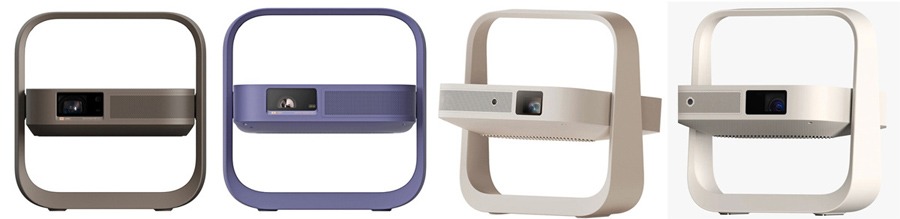
XGIMI has expanded its Elfin Flip portable projector lineup to four models with the introduction of the Elfin Flip 4K and Elfin Flip Laser, joining the existing Elfin Flip and Elfin Flip Plus. The two additions move the series beyond entry-level LED projection, offering buyers a choice between a 1080p triple-laser projector and a more advanced 4K model.

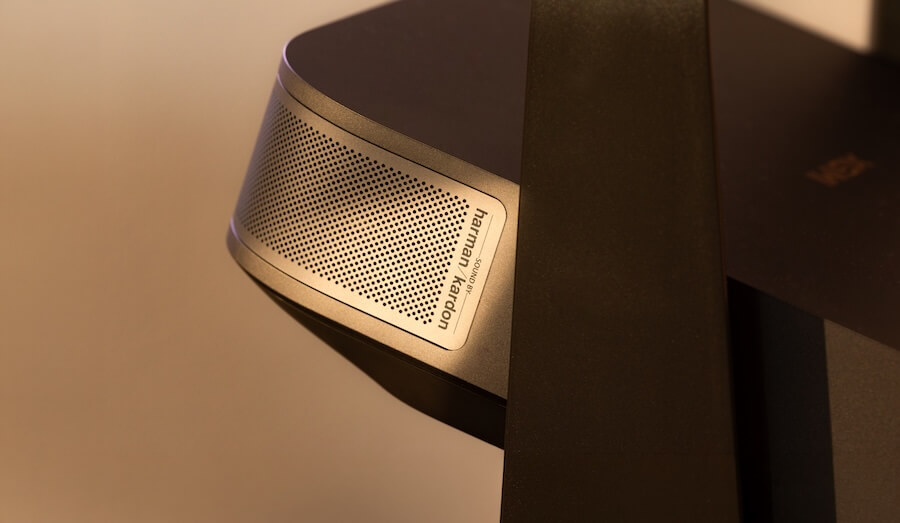
Both new projectors use RGB triple-laser light engines rated at 1,600 ISO lumens and include a single 7-watt Harman Kardon speaker with Dolby Audio. That represents a substantial step up from the Elfin Flip Plus, which uses an LED light source rated at 500 ISO lumens and relies on two 3-watt speakers. This is considerably more than another model number and a mildly revised shade of beige.

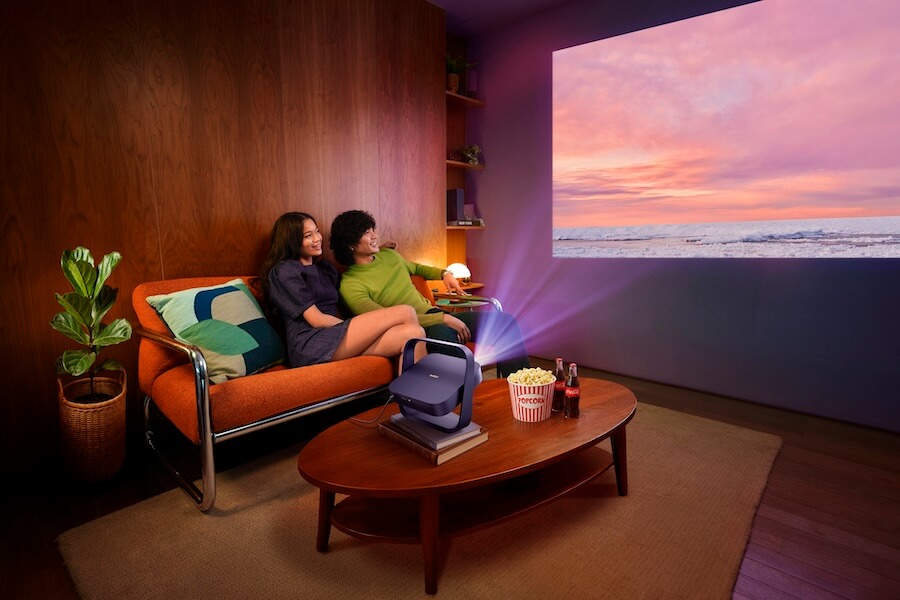
XGIMI has packaged those upgrades inside the familiar book-sized Elfin Flip design, retaining the integrated stand and carry-handle concept that makes the projectors easy to move between rooms and aim at a wall or ceiling. The expanded range now stretches from affordable 1080p streaming to brighter 4K laser projection without requiring owners to drag a black plastic shoebox around the house.

Related Reading: XGIMI Unveils New MoGo 3 Pro, Elfin Flip, AURA 2, HORIZON S Series Projectors For 2024

Advertisement

Elfin Flip 4K

xgimi-elfin-4k-projector-lifestyle

The Elfin Flip 4K sits at the top of the lineup with 4K display resolution via pixel shifting, an RGB triple-laser engine delivering up to 1,600 ISO lumens of brightness, a 20,000:1 dynamic contrast ratio, 110% coverage of the BT.2020 color gamut, and ΔE<1 color accuracy—specifications that rival those of dedicated home theater installations. Its optical zoom and 0.98–1.3:1 throw ratio enable precise screen sizing without requiring users to reposition the projector.

Weighing just 1.55 kg and measuring 9.64 inches wide, it delivers a large-screen viewing experience with zero visual compromise.

The Elfin Flip 4K’s flip-to-start operation and slim profile reinforce its portability: pick it up, place it, and the picture is ready. XGIMI’s Intelligent Screen Adaptation technology handles the rest automatically through Uninterrupted Auto Keystone, Auto Focus, Intelligent Screen Alignment, Intelligent Obstacle Avoidance, Wall Color Adaptation, and Intelligent Eye Protection.

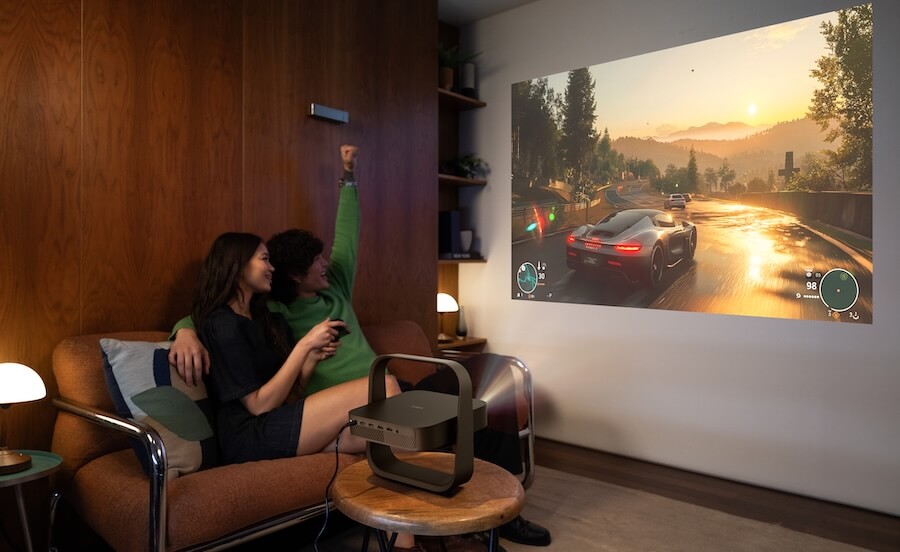
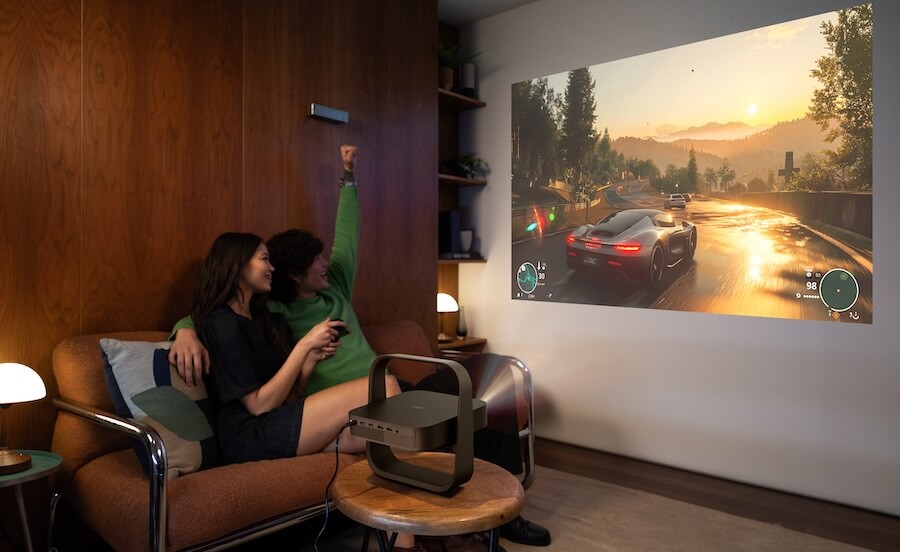
Gaming Support: For the first time in the Elfin series, the Flip 4K supports console-level gaming performance, with input lag as low as 1 ms at 1080p/120 Hz. It also supports VRR and ALLM, along with Black Equalizer, Virtual Crosshair, and a dedicated Gaming Picture Mode.

The Flip Laser

xgimi-elfin-laser-projector-lifestyle

The Elfin Flip Laser sits immediately below the Flip 4K in the lineup. It uses the same RGB triple-laser light engine, carries the same 1,600 ISO-lumen brightness rating, and includes the same Harman Kardon speaker system and smart features.

The primary differences are its 1080p display resolution, lower 10,000:1 dynamic contrast ratio, and lack of the Flip 4K’s advanced gaming features.

Advertisement

Audio & Smart Features

xgimi-elfin-4k-projector-sound

The Elfin Flip 4K and Elfin Flip Laser each include a 7-watt Harman Kardon speaker with Dolby Audio support, designed to deliver room-filling sound without requiring external audio equipment. Our suggestion: get a soundbar.

Advertisement. Scroll to continue reading.

With Google TV, users also have direct access to Netflix, Hulu, Amazon Prime Video, and thousands of additional streaming apps, making the Elfin Flip Series a complete all-in-one home entertainment solution.

Pro Tip: The previously released Elfin Flip Plus and Elfin Flip remain the more affordable entry points in the lineup, but both use LED light sources rather than RGB triple-laser engines. Their speaker systems also offer less power and do not benefit from Harman Kardon tuning. Automatic setup features may vary by model.

XGIMI Elfin Flip Series Comparison

xgimi-elfin-series-projectors
XGIMI Model Elfin Flip 4K  Elfin Flip Laser Elfin Flip Plus Elfin Flip
Product Type  Portable Lifestyle Projector Portable Lifestyle Projector Portable Lifestyle Projector Portable Lifestyle Projector
Price $999 $799 $379 $299
Light Source RGB Triple Laser RGB Triple Laser LED LED
Display Technique DLP DLP DLP DLP 
Display Chip 0.39” DMD 0.23″ DMD 0.23″ DMD .23” DMD)
3D Viewing Option No No No No
HDR Support HDR10, HLG HDR10, HLG HDR10 HDR10
Gaming Support / Latency Game Mode, VRR on, AK off
1ms at 1080P@120Hz
Game Mode, VRR on, AK off
20ms at 1080P@60Hz
1080P/60Hz, Game Mode ≤ 20ms (AK off)
1080P/60Hz, Game Mode ≤ 56ms (AK on)
None
MEMC Yes Yes No No
Brightness (ISO Lumens) 1600  1600  500  400
Resolution 3840 x 2160 pixels (via Pixel Shifting) 1920 x 1080 pixels 1920 x 1080 pixels 1920 x 1080 pixels
Color Gamut BT.2020 110% BT.2020 110% Rec.709 121% Rec.709 113%
Contrast Ratio 20,000:1 (DBLE ON) 10,000:1 (Dynamic Contrast) 4000:1 (EBL ON) Not Provided
Lens High Light Transmission Coated Lens High Light Transmission Coated Lens High Light Transmission Coated Lens High Light Transmission Coated Lens
Eye Protection Yes Yes Yes
Auto Keystone Correction Uninterrupted Auto Keystone Uninterrupted Auto Keystone Uninterrupted Auto Keystone Auto Keystone
Focus Auto Focus Auto Focus Auto Focus Auto Focus
Intelligent Screen Alignment Yes Yes Yes
Intelligent Obstacle Avoidance Yes Yes
Intelligent Wall Color Adaptation Yes
Optical Zoom Yes
Digital Zoom Yes Yes Yes Yes
Throw Ratio 0.98-1.3:1 1.2:1 1.2:1 1.2:1
Aspect Ratio 16:9 16:9 16:9 16:9
Projection Method Front, Rear, Front Ceiling, Rear Ceiling Front, Rear, Front Ceiling, Rear Ceiling Front, Rear, Front Ceiling, Rear Ceiling Front, Rear, Front Ceiling, Rear Ceiling
Image Size 40” – 200” 40” – 200” 40” – 200” 80 – 150 inches
CPU MT9660 MT9660 MT9630 MT9660
GPU Mali-G52 Mali-G52 Mali-G52 Not Indicated
RAM 2GB 2GB 2GB 2GB
Storage 64GB 64GB 32GB 16GB
System Google TV Google TV Google TV XGIMI OS
Fast Boot Yes (STR) Yes (STR) Yes (STR) Yes (STR)
Mirroring Display Google Cast / DLNA Google Cast / DLNA Google Cast / DLNA MiraCast/DLNA
Speaker System 1 x 7W Harman/Kardon 1 x 7W Harman/Kardon 2 x 3W 2 x 3W
DTS-Virtual:X
DTS-HD
Dolby Audio Yes Yes Yes Yes
Dolby Digital (DD) Yes Yes Yes Yes
Dolby Digital Plus (DD+) Yes Yes Yes Yes
WiFi WiFi 6 Dual-band 2.4/5GHz, 802.11a/b/g/n/ac/ax  WiFi 5 Dual-band 2.4/5GHz, 802.11 a/b/g/n/ac  WiFi 5 Dual-band 2.4/5GHz, 802.11 a/b/g/n/ac  WiFi 5 Dual-band 2.4/5GHz, 802.11 a/b/g/n/ac 
Bluetooth Ver 5.2 Ver 5.1 Ver 5.1 Ver 5.1
Input Ports 120W DC IN x 1

HDMI x 2 (HDMI1 support eARC)

Advertisement

USB 2.0 x 2

120W DC IN x 1

HDMI x 1 (supports eARC)

USB 2.0 x 2

Advertisement
120W DC IN x 1

HDMI x 1 (ARC)

USB 2.0 x 1

DC x 1
Advertisement

HDMI x 1

USB x 1

Output Ports Audio x 1
Noise Level ≤28dB@1m ≤28dB@1m ≤28dB@1m ≤28dB@1m
Power Dissipation ≤120W ≤120W ≤120W <65W
Power AC100-240V, 50/60Hz AC100-240V, 50/60Hz AC100-240V, 50/60Hz AC100-240V, 50/60Hz, 19V/3.42A
Product Size (HWD) 254 x 245 x 78 mm 

10 x 9.65 x 3.07 in

Advertisement
254 x 245 x 78 mm

10 x 9.65 x 3.07 in

235 x 226 x 71 mm 

 9.3 x 8.9 x 2.8 In

Advertisement
235 x 218 x 64 mm

9.25 x 8.6 x 2.5 in

Product Weight 1.55 kg 
3 lbs 7 oz
1.38 kg
3 lbs 1 oz
1.1 kg 
2.4 lbs
1.18 kg 
2 lbs 10 oz
xgimi-elfin-4k-projector
XGIMI Elfin 4K Projector
xgimi-elfin-laser-projector
XGIMI Elfin Laser (1080p) Projector

The Bottom Line 

XGIMI offers projectors for everything from casual streaming to dedicated home theaters, but the Elfin Flip Series occupies an increasingly popular middle ground: compact lifestyle projectors that can move between rooms without looking like surplus equipment from a high-school audiovisual department. The Elfin Flip 4K is the standout, combining pixel-shifted 4K resolution, an RGB triple-laser light engine, 1,600 ISO lumens, optical zoom, Google TV, automatic setup, and serious gaming support inside a slim, book-sized design for $999. That combination of portability, optical zoom, wide color coverage, and 1080p/120 Hz gaming performance is what makes it genuinely different.

The Elfin Flip 4K is best suited to apartment dwellers, renters, gamers, and families who want a large image in a bedroom, living room, or temporary media space without permanently mounting a projector. The Elfin Flip Laser offers the same 1,600 ISO-lumen brightness and RGB triple-laser color performance for $799, but drops to 1080p, reduces dynamic contrast, and eliminates the 4K model’s optical zoom and advanced gaming features. Unless the Laser is substantially discounted, spending another $200 for the Flip 4K is not a difficult decision.

There are compromises. Neither laser model includes a built-in battery, so “portable” means easy to carry from room to room rather than movie night in the middle of a field without access to an extension cord. HDR support is limited to HDR10 and HLG, with no Dolby Vision, and 1,600 ISO lumens still does not turn either model into a replacement for a television in a brightly illuminated room. The single 7-watt Harman Kardon speaker may be adequate for casual viewing, but claims of room-filling sound should be approached with the same caution normally reserved for airport sushi. Both models support HDMI eARC, so budget for at least a soundbar if dialogue clarity, bass, and convincing movie sound matter.

Advertisement

The Elfin Flip Plus remains the value option at $379, offering 1080p resolution, Google TV, automatic setup, and 500 ISO lumens. The standard Elfin Flip is also priced at $379 or less, although its lower 400 ISO-lumen output makes the Plus the more sensible purchase whenever the two are selling for the same amount. Casual viewers working with a dark room and tighter budget should start there; buyers seeking the best combination of brightness, resolution, flexibility, and gaming performance should move directly to the Elfin Flip 4K.

xgimi-elfin-4k-projector-carry
XGIMI Elfin Flip 4K

Price & Availability

Source link

Advertisement
Continue Reading

Tech

Longtime Web-Weirdness Site Fark Faces Ad Pinch

Published

on

sandbagger writes: Fark.com is ancient in internet terms. It’s not social media. It’s not quite a news site. It’s a holdover from the dot-com era and is invisible to Google, which makes its community great but has necessitated begging. “[W]e won’t survive this year without more TF subscribers,” wrote founder Drew Curtis in a post on Bluesky. “Spread the word.”

For the unfamiliar, Fark is one of the web’s OG community news sites that features a wonderfully weird mix of user-submitted links, absurd headlines, Photoshop contests and comment-section mayhem. It has also been featured numerous times on Slashdot over the decades, from a 2007 review of founder Drew Curtis’ book and a 2010 story about his skepticism of “the wisdom of crowds” to a full Slashdot interview with Curtis in 2015. For longtime readers of both sites, Fark feels like an old neighbor from an earlier, stranger and arguably more fun era of the internet.

Source link

Continue Reading

Tech

The FDA Says It Didn’t Apologize to Supplier Linked to Diarrhea Outbreak, Actually

Published

on

In the middle of a diarrhea shitstorm, the Food and Drug Administration and lettuce supplier Taylor Farms appear to be facing off in a passive aggressive battle of technicalities.

On July 17, the California-based company issued a voluntary recall on iceberg lettuce sourced from Central Mexico. The recall came after people across at least five states were sickened with cyclosporiasis, a parasitic infection that causes explosive diarrhea.

The next day, the FDA said that it had detected the parasite in a sample of Taylor Farms lettuce that wasn’t part of the initial recall. The day after that, the company and the FDA said that the result was actually a false positive.

“Today, the FDA apologized to us,” Taylor Farms then posted on its X account on July 19.

Advertisement

The FDA did not quite agree with that interpretation, however. On July 20, an agency official told reporters that it did not offer the company an “official apology.” Instead, the official said, “mostly we were providing factual information” about how difficult it is to test for and trace the sources of cyclospora outbreaks.

The agency emphasized that the recall—which spans 27 states, and includes certain lettuce sold to Taco Bell and Walmart—still stands. “To clarify, this false-positive lab sample DOES NOT change the basis for FDA’s ongoing outbreak investigation or the overwhelming epidemiological data supporting the current voluntary recall by Taylor Farms,” it posted on X.

In its July 19 post, Taylor Farms also wrote that the FDA “has not identified a single positive product test result for Cyclospora.” While true, this elides the difficulties involved in accurately testing for the parasite.

Many foodborne illness investigators determine the source of outbreaks without ever testing products. Instead, investigators use epidemiological evidence, such as interviewing people who have tested positive, to determine commonalities.

Advertisement

Taylor Farms has reportedly taken issue with how the FDA and CDC has conducted their weeks-long investigation into the source of the outbreak. A spokesperson told The New York Times that, last week, the company met with White House and FDA officials to discuss what it called “shortfalls” in the government organizations’ response processes. The Times reported that Taylor Farms executives attempted to cast doubt on the FDA and the Centers for Disease Control and Prevention’s conclusions in the meeting, which took place on July 16, the day before Taylor Farms issued its recall.

Taylor Farms did not respond to WIRED’s requests for comment.

Since May, thousands of people have been sickened with cyclosporasis, as health officials have struggled to pinpoint the source of the outbreak. Authorities in Michigan say that they have counted 6,148 cases in that state alone, though experts previously told WIRED that the number of cases nationwide is likely higher than what’s been reported.

Source link

Advertisement
Continue Reading

Trending

Copyright © 2025