Connect with us
DAPA Banner

Tech

How NinjaOne became a $5B challenger in unified IT operations

Published

on

Sal Sferlazza has a habit of building companies that get acquired. Before NinjaOne, the serial founder sold four startups in succession: a gaming studio to NCSoft, a data-protection firm to SonicWall, a network management company to Quest Software, and a file-sync service to eFolder. Each one solved a narrow IT problem. Each one got swallowed by a larger platform. By the time Sferlazza and his long-time co-founder Chris Matarese started NinjaRMM in 2013 (later rebranded to NinjaOne), the pair had learned something about the IT tools market: point solutions are a trap, for buyers and sellers alike.

That insight now underpins a company valued at $5 billion, with more than $500 million in annual recurring revenue, 35,000 customers, and a growth rate that makes most enterprise software vendors look glacial. In the first three months of 2026 alone, NinjaOne landed in the Leader quadrant of Gartner’s Magic Quadrant for Endpoint Management Tools (on its first appearance), signed a multi-year partnership with Audi’s debut Formula 1 team, launched two entirely new product lines, and reported that healthcare organisations are adopting its platform at a pace that nearly doubled its sector-specific revenue. For a company that spent its first several years in relative obscurity, the acceleration is striking. In a year that has already produced a fresh wave of European unicorns across cybersecurity, defence tech, and cloud optimisation, NinjaOne’s $5 billion valuation no longer looks like an outlier. It looks like part of a pattern.

The consolidation thesis

To understand NinjaOne’s trajectory, you first have to understand the mess it is cleaning up. The average mid-market IT department in 2026 runs somewhere between six and 12 separate tools to manage endpoints, deploy patches, track assets, back up data, provide remote support, and monitor network health. Each tool has its own console, its own alert logic, its own pricing model, and its own idea of what an “endpoint” is. The result is what the industry euphemistically calls “tool sprawl,” and what IT administrators more accurately describe as a daily exercise in context-switching and alert fatigue.

This fragmentation is not an accident. For two decades, the dominant philosophy in IT management was “best of breed”: pick the sharpest tool for each job, and stitch them together with integrations, scripts, and middleware. It worked tolerably well when a typical corporate fleet consisted of desktop PCs on a single network. It works considerably less well when that fleet includes laptops, tablets, phones, IoT sensors, cloud workloads, and medical devices scattered across dozens of locations, half of which have staff who never come into an office.

Advertisement

The shift in CIO spending patterns has been building since 2023, but 2026 is the year it turned into concrete purchasing decisions. Research from Futurum Group found that early executive intent to consolidate platforms has now translated into budget line items. Paessler, the network monitoring firm, published analysis calling 2026 “the year of monitoring consolidation.” And the vendors themselves are responding: Fortinet expanded into unified security operations, ServiceNow pushed deeper into cross-functional IT orchestration, and a generation of smaller players began marketing themselves as platforms rather than products. As TNW’s 2025 tech recap noted, the AI infrastructure build-out is forcing CIOs to rethink not just their security posture but the entire operational stack underneath it.

Advertisement

A platform built from scratch, not stitched together

NinjaOne’s pitch is that it was designed as a unified platform from the ground up, not assembled through a series of acquisitions bolted onto a legacy codebase. The distinction matters. Kaseya, which holds roughly 25.9 per cent of the remote monitoring and management market, has grown largely through acquisition: it bought Datto for $6.2 billion in 2022, absorbed Unitrends, IT Glue, and a string of other products, each with its own architecture. ConnectWise, at 25.4 per cent, has followed a similar playbook. The result, according to IT administrators who use these platforms daily, is inconsistent interfaces, duplicated functionality, and the persistent feeling that different parts of the product were built by different companies. Because they were.

NinjaOne took the slower route. Rather than acquiring its way to feature parity, the company built each capability natively on a single cloud-native, multi-tenant architecture. Endpoint management, patch management, remote access, backup, mobile device management, and (as of early 2026) IT asset management and vulnerability management all run on the same platform, share the same data model, and appear in the same console. The trade-off was time: NinjaOne spent years as a narrower product while its competitors could tick more boxes on procurement checklists. The payoff is that when an IT administrator deploys a patch through NinjaOne, the platform already knows which devices are affected, what their current vulnerability status is, whether they are under warranty, and what their backup state looks like. No integration required.

That architectural bet is now paying off in measurable ways. NinjaOne’s customer base grew more than 60 per cent over the past year. It holds a 96 per cent “willingness to recommend” score in Gartner’s Peer Insights Voice of the Customer report, the highest among all vendors evaluated. And when Gartner placed NinjaOne in the Leader quadrant of its 2026 Magic Quadrant for Endpoint Management Tools, it did so on the company’s first-ever inclusion. Appearing in a Gartner Magic Quadrant for the first time and landing directly in the Leader position is uncommon enough that it tends to get noticed by the procurement teams who treat these reports as shortlists. In the cybersecurity space, Belgian startup Aikido recently reached unicorn status on a similar trajectory of rapid analyst recognition and customer adoption. The pattern suggests that buyers are increasingly willing to back newer vendors if the product-market fit is demonstrably strong.

From server rooms to operating theatres

One of the more revealing signals in NinjaOne’s recent trajectory is where its growth is coming from. In March 2026, the company reported that nearly 1,000 healthcare organisations had adopted the platform over the previous year, driving roughly 70 per cent year-over-year growth in healthcare-specific recurring revenue. This is not a sector that switches IT platforms casually.

Advertisement

Healthcare IT teams operate under constraints that most industries do not face. Regulatory mandates (HIPAA in the US, NIS2 in Europe) impose strict requirements on device management and data protection. Downtime tolerance is effectively zero: if a diagnostic workstation goes offline during a procedure, the consequences are clinical, not merely inconvenient. Staff are distributed across hospitals, clinics, and remote care facilities. And the device fleet is unusually heterogeneous, mixing standard laptops with specialised medical equipment, legacy systems that cannot be easily updated, and an expanding layer of connected devices.

The appeal of a unified platform in this context is not abstract. A healthcare IT team using NinjaOne can patch a workstation, verify its vulnerability status, confirm its backup is current, and remotely troubleshoot it from a single console, without switching between tools, correlating data manually, or waiting for a scheduled scan to complete. The company’s new vulnerability management capability, launched in March 2026, detects vulnerabilities in real time using existing device telemetry rather than periodic endpoint scans. For a hospital running thousands of devices across dozens of locations, the difference between continuous detection and weekly scanning is not a technical nicety. It is the difference between knowing about a critical vulnerability on Monday morning and discovering it the following Friday.

The AI layer: from reactive patching to autonomous operations

The two product launches NinjaOne announced in early 2026 share a common thread: they both lean heavily on artificial intelligence, but in ways that are more operational than aspirational. The IT asset management module, released in February, uses real-time data syncing to maintain a continuously updated inventory of hardware, software, warranties, and licences across an organisation’s entire estate. The practical benefit is that IT teams no longer need to run periodic audits or maintain parallel spreadsheets to know what they own, what condition it is in, and what is about to expire. The system knows, because it is drawing from the same telemetry that powers endpoint management.

The vulnerability management module, which followed in March, is more ambitious. Traditional vulnerability scanning works on a schedule: a tool scans endpoints at set intervals, generates a report, and hands it to a security team that then needs to figure out which findings are critical, which devices are affected, and how to remediate them. The gap between discovery and remediation is measured in days or weeks. NinjaOne’s approach skips the scanning step entirely. Because the platform already has continuous telemetry from every managed endpoint, it can assess vulnerability exposure in real time, server-side, without any additional agent load on the device. The company tested this in beta across more than 500,000 endpoints before the general release.

Advertisement

What makes this more than a feature announcement is how it connects to NinjaOne’s existing autonomous patching engine. When the vulnerability module identifies an exposure, it can trigger the patching system to prioritise and deploy the relevant fix automatically, using AI to assess patch confidence, test for conflicts, and determine deployment timing. The result is a closed loop: detect, prioritise, remediate, verify. For IT teams that currently manage this workflow across three or four separate tools and a ticketing queue, collapsing it into a single automated pipeline represents a meaningful reduction in both risk exposure and manual work.

The F1 play and the brand gap

If NinjaOne has a weakness relative to its larger competitors, it is brand recognition outside the IT administration community. Kaseya sponsors large industry events and has an outsized marketing presence. ConnectWise runs its own annual conference. NinjaOne, until recently, was the tool that IT professionals recommended to each other in forums and subreddits, but that CFOs and CIOs had rarely heard of.

The Audi Revolut F1 partnership, announced in January 2026, is a deliberate attempt to change that. NinjaOne is the official endpoint management, mobile device management, and SaaS backup partner for Audi’s debut Formula 1 team, which enters the FIA World Championship in March 2026. The company’s platform will manage endpoints and systems across factory and trackside operations globally, a use case that demands the same real-time visibility and zero-downtime resilience that NinjaOne pitches to its enterprise customers.

There is a pragmatic logic to the deal beyond brand exposure. Formula 1 is one of the most data-intensive environments in sport, with each car generating hundreds of gigabytes of telemetry per race weekend. The IT infrastructure supporting a team operates under extreme time pressure, across multiple continents, with no margin for the kind of tool fragmentation that causes delays. As a proof-of-concept for unified IT operations in a high-stakes environment, it is hard to invent a better one. It also fits a broader trend of AI-driven operational efficiency reshaping how organisations think about the ratio between human oversight and automated execution.

Advertisement

What comes next

NinjaOne’s CEO told CNBC that the company expects to sustain 60 to 70 per cent revenue growth through 2026 and plans to launch five to six additional products over the next year. The cadence is notable. Most enterprise software companies at NinjaOne’s scale slow their release velocity as they grow, layering on process and caution. NinjaOne shipped two major products (ITAM and vulnerability management) in the space of five weeks. Whether that pace is sustainable as the engineering team scales is an open question, but the company’s cloud-native architecture, which was designed for rapid iteration across a shared codebase, at least makes the mechanics easier than it would be for a vendor managing a portfolio of acquired products on different technology stacks.

The company is also increasingly vocal about where it thinks AI belongs in IT operations. Rather than treating AI as a standalone feature or a marketing talking point, NinjaOne has embedded it into existing workflows: AI-driven vulnerability assessment, AI-powered patch confidence scoring, automated deployment decisions. The philosophy, as articulated by the company’s engineering leadership, is that AI should reduce the number of decisions an IT administrator has to make, not create new ones. In a market where many vendors are racing to add “AI-powered” labels to existing features, NinjaOne’s approach of baking intelligence into the operational loop rather than bolting it onto the dashboard is a meaningful differentiator, at least in principle. The proof will be in whether the autonomous patching engine can maintain its accuracy and reliability as the number of managed endpoints scales into the millions.

For European organisations, the timing of NinjaOne’s expansion is relevant. The NIS2 Directive, which came into force in October 2024, significantly broadened the scope of cybersecurity obligations across the EU, requiring affected organisations to implement risk management measures that include vulnerability handling, patch management, and supply chain security. Compliance demands the kind of continuous visibility and automated remediation that a unified platform provides more naturally than a collection of point solutions. NinjaOne has not yet disclosed European-specific customer numbers, but the regulatory pressure is likely to accelerate adoption in the region.

The competitive question is whether NinjaOne can continue growing at this pace as it moves upmarket. Its traditional strength has been the mid-market and managed service providers (MSPs), the IT firms that manage technology for small and medium businesses. The healthcare push, the F1 partnership, the Gartner recognition, and the expansion into asset management and vulnerability management all suggest a deliberate move toward larger enterprises. That is a different sales motion, with longer procurement cycles, more complex compliance requirements, and entrenched incumbents who are not inclined to cede territory without a fight.

Advertisement

The incumbents are not standing still, either. Kaseya has been aggressively integrating its acquisitions under a common platform umbrella and cutting prices to defend market share. ConnectWise has invested in its Asio platform to modernise its architecture. Microsoft Intune, which comes bundled with many enterprise licencing agreements, continues to expand its endpoint management capabilities. And a newer crop of competitors, including Kandji (focused on Apple device management) and Drata (compliance automation), are carving out niches that could eventually overlap with NinjaOne’s territory. The market for unified IT operations is consolidating, but it is also getting more crowded at the edges.

There is also the broader question of what “unified IT operations” actually means as the definition of an endpoint continues to expand. Today it is laptops, servers, and phones. Tomorrow it will include AI workloads, edge compute nodes, autonomous devices, and infrastructure that has not been invented yet. The vendors that win this market will be the ones whose platforms can absorb new endpoint categories without losing the simplicity that made them attractive in the first place. NinjaOne’s architecture was built with that kind of extensibility in mind. Whether it can deliver on that promise at enterprise scale, while maintaining the speed and simplicity that earned it a 96 per cent recommendation rate, is the test that lies ahead. As the regulatory landscape tightens (the EU AI Act’s most substantive obligations take effect in August 2026) and the definition of what needs to be managed keeps expanding, the companies that have bet on platform unification rather than point-solution accumulation are about to find out whether that bet pays off at scale.

Source link

Advertisement
Continue Reading
Click to comment

You must be logged in to post a comment Login

Leave a Reply

Tech

The Rapper, The Canadian Academics, And The Secret Behind The Earworm

Published

on

There are many events so far in 2026 that could reasonably have been predicted, but perhaps one which couldn’t is a Hackaday scribe in Europe unexpectedly finding herself with a constant earworm from Afroman. The rapper, who most of us know only from his year 2000 hit single about getting high, made the news after an inept police raid on his house, and in turn a court case over his musical denunciations of the authorities.

It’s fair to say they picked on the wrong guy, but in thinking about why, the answer is in the earworm. He has the unique skill of making a song irritatingly catchy, which led us to the question of how a catchy song works. As luck would have it a team from the University of Waterloo have recently released a paper in which they explain  it all in terms of maths, giving the rest of us a formula where the likes of Afroman are presumably born with it.

We won’t pretend that Hackaday’s mathematical expertise stretches beyond that needed for engineering, but for the more advanced numberphiles among us the university’s write-up goes into some detail about their use of group theory to study the patterns and symmetry in a given piece of music. It’s a new approach that joins other more famous guides to musical success, so perhaps if you couple it with the stuff your music teacher failed to tell you in school, you could be on your way to the top of the charts. Meanwhile here at Hackaday we’ll stick to more conventional inspiration.

Advertisement

Header: Chris Gilmore, CC BY-SA 2.0.

Source link

Advertisement
Continue Reading

Tech

Man admits to locking thousands of Windows devices in extortion plot

Published

on

Hacker

A former core infrastructure engineer has pleaded guilty to locking Windows admins out of 254 servers as part of a failed extortion plot targeting his employer, an industrial company headquartered in Somerset County, New Jersey.

According to court documents, 57-year-old Daniel Rhyne from Kansas City, Missouri, remotely accessed the company’s network without authorization using an administrator account between November 9 and November 25.

Throughout this time, he allegedly scheduled tasks on the company’s Windows domain controller to delete network admin accounts and to change the passwords for 13 domain admin accounts and 301 domain user accounts to “TheFr0zenCrew!”.

The prosecutors also accused Rhyne of scheduling tasks to change the passwords for two local admin accounts, which would affect 3,284 workstations, and for two more local admin accounts, which would impact 254 servers on his employer’s network. He also scheduled some tasks to shut down random servers and workstations on the network over multiple days in December 2023.

Advertisement

Subsequently, on November 25, Rhyne emailed a number of his coworkers a ransom email titled “Your Network Has Been Penetrated,” saying that all IT administrators had been locked out of their accounts and that server backups had been deleted to make data recovery impossible.

Additionally, the emails threatened to shut down 40 random servers daily over the next ten days unless the company paid a ransom of 20 bitcoin (worth roughly $750,000 at the time).

“On or about November 25, 2023, at approximately 4:00 p.m. EST, network administrators employed at Victim-1 began receiving password reset notifications for a Victim-1 domain administrator account, as well as hundreds of Victim-1 user accounts,” the criminal complaint reads.

“Shortly thereafter, the Victim-1 network administrators discovered that all other Victim-1 domain administrator accounts were deleted, thereby denying domain administrator access to Victim-1’s computer networks.”

Advertisement

Forensic investigators found that on November 22, Rhyne used a hidden virtual machine and his account to search the web for information on clearing Windows logs, changing domain user passwords, and deleting domain accounts as he planned his extortion plot.

One week earlier, Rhyne made similar web searches on his laptop, including “command line to remotely change local administrator password” and “command line to change local administrator password.”

Rhyne was arrested in Missouri on Tuesday, August 27, and released after his initial appearance in federal court. The hacking and extortion charges to which he pleaded guilty carry a maximum penalty of 15 years in prison.

Earlier this month, a North Carolina data analyst contractor was found guilty of extorting his employer, Brightly Software (a Software-as-a-Service company previously known as SchoolDude), for $2.5 million.

Advertisement

Automated pentesting proves the path exists. BAS proves whether your controls stop it. Most teams run one without the other.

This whitepaper maps six validation surfaces, shows where coverage ends, and provides practitioners with three diagnostic questions for any tool evaluation.

Source link

Continue Reading

Tech

What impact might Medtronic’s new lab have on Galway’s medtech ecosystem?

Published

on

Ronan Rogers and Ruth Callanan discuss innovation in the west of Ireland and the evolution of Ireland’s STEM careers.

Ireland’s medtech sector is moving beyond traditional biomedical engineering, according to Ronan Rogers, the senior R&D director for cardiac ablation solutions at Medtronic. He explained the region has built “real depth”, not just in medtech, but across key areas such as pharmaceutical science, advanced analytics and digital technology. Areas that are now “increasingly converging”.

“That diversity of opportunity is a huge strength for Ireland,” he told SiliconRepublic.com. “It allows people from different professional backgrounds to find meaningful, high‑impact careers in healthcare, while helping Ireland move further up the value chain as a centre for complex, globally relevant innovation.”

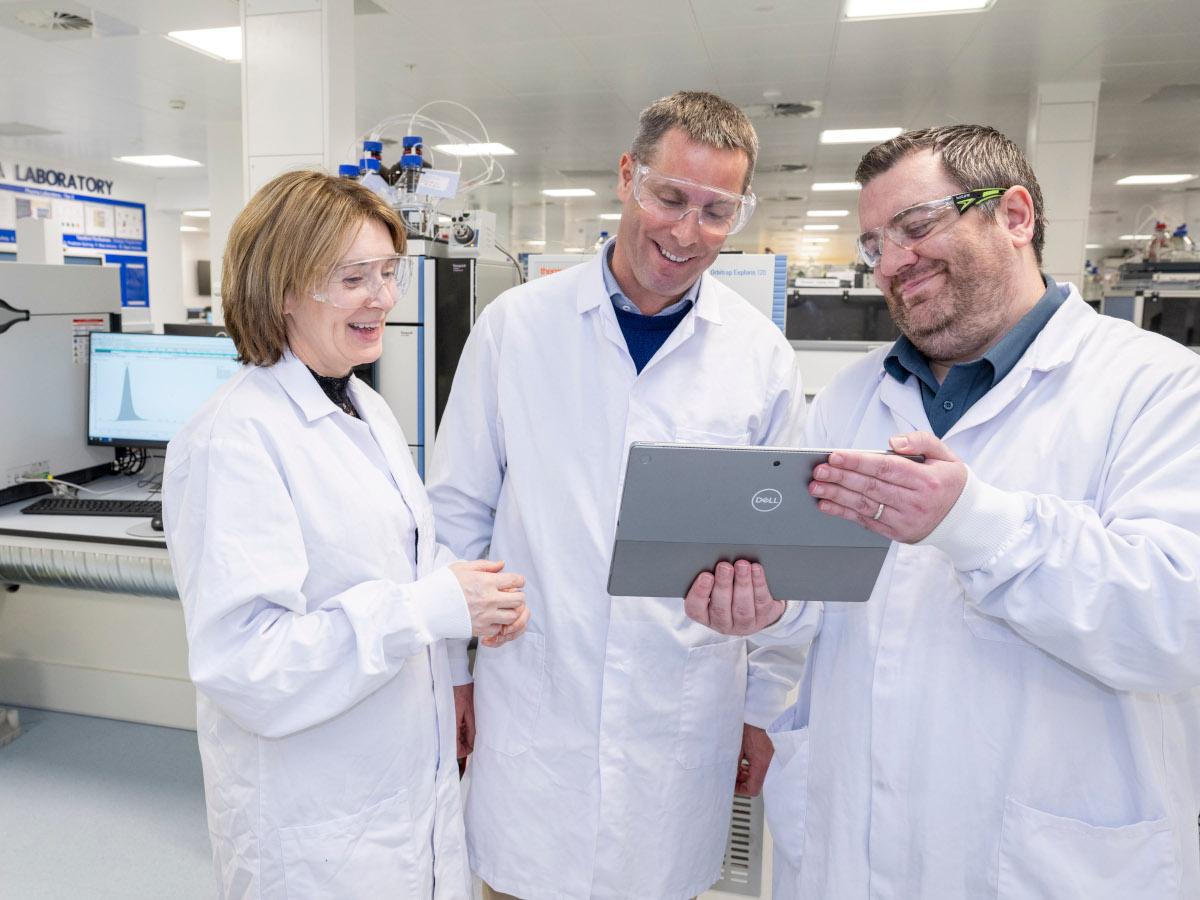
Having recently expanded its Galway-based pharmaceutical laboratory, the Medtronic facility now serves as a west of Ireland hub for high-tech innovation and the evolving needs of the global healthcare space. Rogers is of the opinion that this is reflective of the convergence of the country’s medtech divisions.

Advertisement

Noting that the primary purpose of the lab “is to integrate pharmaceutical, engineering and analytical expertise under one roof to address the complex challenges of combination products, [that is] where a medical device and a medicine work together”.

“We see that convergence very clearly in this laboratory and there is a wide range of career paths in our industry, whether that’s a pharmacist drawn to the faster innovation cycles and applied science of medtech, or a software developer who wants to use their skills to solve real healthcare challenges and code with a deeper sense of purpose.”

What opportunities exist?

With the expansion comes the opportunity for students and professionals to consider a new role, either as part of Medtronic or within Galway’s thriving life science and medtech spaces.  

“Galway offers a unique innovation ecosystem where infrastructure, academic partnerships and a significant medtech footprint all provide a strong foundation for sustaining Ireland’s leadership in the life sciences sector,” said Ruth Callanan, Medtronic’s director of site quality. 

Advertisement

With the investment focused on significantly expanding R&D capability and technical depth within a critical space in the Irish medtech sector, Medtronic has increased lab space by almost a half and introduced analytical technologies that didn’t exist there before.

Callanan said: “This creates the conditions for future high‑value work as programmes grow. It strengthens Galway’s ability to attract and retain highly specialised talent, pharmaceutical scientists, chemical and materials engineers and it allows work that was previously outsourced internationally to be done here in Ireland.

“Over time, as demand and activity scale, we do expect this capability to support additional specialist roles, phased in over the coming years. Importantly, it reinforces Ireland’s position at the forefront of advanced medtech R&D and reflects a broader industry trend toward self-sufficiency in high-tech analytical testing.”

Step into the future

She explained the new lab will enable experts to integrate processes as the facility will be responsible for the entire life cycle of product development, from early phase R&D through to post-market oversight.

Advertisement

She added: “The laboratory utilises advanced LCMS [liquid chromatography-mass spectrometry] and GCMS [gas chromatography-mass spectrometry] technologies, which act as ‘molecular microscopes’. This allows our scientists to identify unknown compounds or impurities at extremely precise levels.”

According to Rogers, the new lab has a role to play in what he believes to be the reshaping of how STEM careers in Ireland are perceived and pursued, with Callanan noting this creates for students and professionals opportunities to engage with careers that bridge the gap between various scientific disciplines. 

“A laboratory of this size and complexity requires students and professionals with a wide range of skills and experience across multiple disciplines,” she said. 

“Just as importantly,” added Rogers, “we’re sending a clear signal to pharmacists, chemists and analytical scientists that medtech offers deep, intellectually challenging career paths that go well beyond traditional manufacturing or even classical biomedical engineering.”

Advertisement

Don’t miss out on the knowledge you need to succeed. Sign up for the Daily Brief, Silicon Republic’s digest of need-to-know sci-tech news.

Source link

Advertisement
Continue Reading

Tech

Colorado’s New Speed Camera System Makes Waze Nearly Useless

Published

on

Colorado is rolling out an average-speed camera system that tracks vehicles across multiple points instead of catching them at a single camera, making it much harder for drivers to dodge tickets with apps like Waze and Radarbot. Motor1 reports: The state’s new automated vehicle identification systems (AVIS) use several cameras to calculate your average speed between them, and if it is 10 miles per hour or more over the limit, you get a ticket. No longer will you be able to slow down as you approach a camera and speed back up after passing it, not that you should be speeding on public roads in the first place.

Colorado began deploying this new camera system after legislators changed the law in 2023, allowing AVIS for law enforcement use. The systems, installed on various roads and highways throughout the state, first began issuing warnings, but police began issuing tickets late last year.

The most recent section of road to fall under surveillance is a stretch of I-25 north of Denver, which brought the state’s growing panopticon to our attention. It began issuing tickets on April 2. The Colorado Department of Transportation installed the cameras along a construction zone. The fine is $75 and zero points for exceeding the speed limit, and the police issue it to the vehicle’s owner, regardless of who is driving.

Source link

Advertisement
Continue Reading

Tech

Oracle cuts 491 jobs in Washington state as it embraces AI-led engineering

Published

on

Oracle’s Cloud Experience Center in downtown Seattle. (GeekWire File Photo / Todd Bishop)

Oracle is laying off 491 employees in Washington state, according to a filing Tuesday from the state Employment Security Department.

The cuts impact workers at two Seattle offices as well as remote employees and take effect June 1. The cloud and database giant stated in its WARN letter that the offices will not be closing.

Earlier this month, Bloomberg and others reported that Oracle was planning to cut thousands of jobs across the company as it tries to fund the high-cost deployment of new data centers. The reductions are also the result of AI-driven efficiencies within the organization, according to comments by Mike Sicilia, Oracle’s co-chief executive, in an earnings call March 10.

“The use of AI coding tools inside Oracle is enabling smaller engineering teams to deliver more complete solutions to our customers more quickly,” Sicilia said, according to the publication CIO.

Oracle declined to comment on the newest job cuts.

Advertisement

The Washington layoffs affect more than 230 software developers across multiple seniority levels and an additional 48 employees with the title of software development. The cuts include workers in senior director and vice president roles, as well as managers, product developers, product managers, program managers, site reliability developers, technical analysts, user experience developers and others.

The layoffs are the latest in a series of Oracle reductions. In August the company laid off 161 workers, followed by 101 employees in October. By last fall, Oracle had approximately 3,800 employees in the Seattle area, according to LinkedIn.

Oracle has grown its presence in the region over the past decade, tapping into the area’s engineering talent pool as it battled Amazon and Microsoft in the cloud. In recent years, the company has established partnerships with both Seattle-area giants.

Now all three, plus other tech companies, have been undergoing multiple rounds of job reductions, with recent Meta cuts impacting 168 Washington workers and T-Mobile confirming new layoffs last Friday.

Advertisement

Related:

Source link

Continue Reading

Tech

GeekWire Awards: Sustainable Innovation finalists tackle energy, fashion and farming

Published

on

Climate change is battering the earth with record-setting high temperatures, more powerful storms and devastating wildfires. A slate of cutting-edge sustainability companies are fighting back with technologies that aim to curb carbon emissions and help humanity navigate a change world.

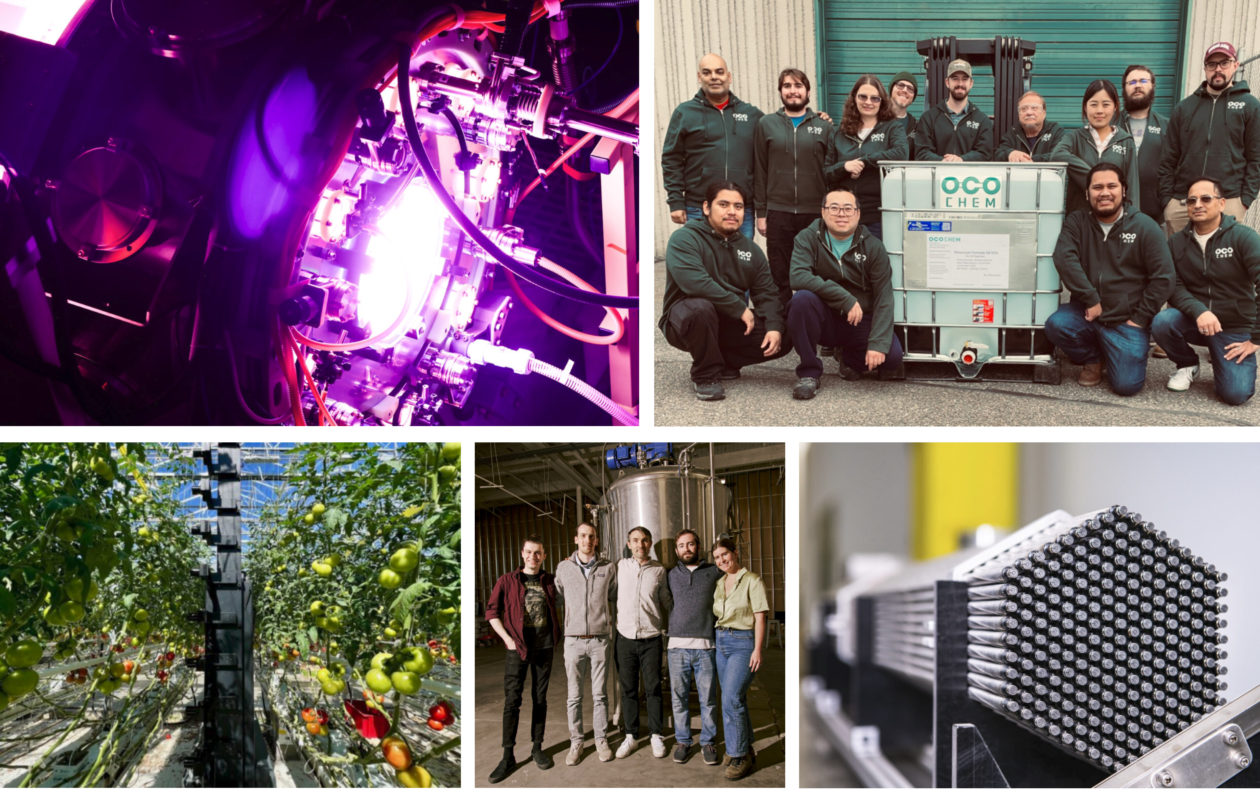
This award, presented by Amazon, recognizes the Pacific Northwest’s leaders in this space. The Sustainable Innovation Award finalists this year are Helion, IUNU, OCOChem, Ravel and TerraPower.

Now in its 18th year, the GeekWire Awards is the premier event recognizing the top leaders, companies and breakthroughs in Pacific Northwest tech, bringing together hundreds of people to celebrate innovation and the entrepreneurial spirit. It takes place May 7 at the Showbox SoDo in Seattle.

Carbon Robotics, an ag-tech company building weed-killing machines that use artificial intelligence and computer vision to recognize and zap unwanted plants, won the category last year.

Continue reading for information on this year’s finalists, which were chosen by a panel of independent judges from community nominations. You can help pick the winner: Cast your ballot here or in the embedded form at the bottom of this story. Voting runs through April 16.

Advertisement

Helion Energy has spent 13 years working to replicate the physics that power the sun and stars — pursuing nearly limitless clean energy for the grid. The Everett, Wash.-based company is currently developing its seventh-generation prototype while simultaneously building what it hopes will be the world’s first commercial fusion plant, in Eastern Washington.

Backers include OpenAI CEO Sam Altman, and Microsoft has signed a deal to purchase power from that first facility. Helion has raised more than $1 billion toward its goal — though whether it can deliver remains an unanswered question.

The Seattle ag tech startup IUNU wants to bring computer vision and AI to the commercial greenhouse — deploying autonomous rail-mounted cameras and canopy-level sensors that can spot early signs of disease, track plant growth, and tell growers exactly what to do about it.

Pronounced “you-knew,” IUNU was founded in 2013 by CEO Adam Greenberg, the son of a botanist and co-founder of a clean water startup called Pure Blue Technologies. The company has deployed its technology across six countries, has additional offices in Canada and Netherlands, and has raised $60 million.

Advertisement

Unwanted carbon dioxide has a higher purpose thanks to OCOchem. The Richland, Wash., startup is taking water and captured industrial CO2 and turning them into chemicals that can be converted into clean-burning hydrogen fuel, used in aviation deicers, or fed to microorganisms that biosynthesize proteins.

The company has raised $11.2 million from investors plus additional grant dollars, and has multiple pilot projects underway as it scales up production. Todd Brix launched OCOchem in 2017 after a nearly two-decade career at Microsoft.

Seattle’s Ravel has developed a proprietary, planet friendly technology that unwinds the components of fabric blends through a process it calls “purification recycling.” Ravel’s target is elastane, which is known as spandex or Lycra and added to essentially every category of apparel.

The startup recovers the elastane, turning it into cost-competitive, recycled plastic pellets that serve as the raw material for making polyester fabrics. Ravel launched in 2019 and last year announced a pre-seed funding round.

Advertisement

In March, TerraPower became the first next-generation nuclear company in the U.S. to receive federal construction approval — a milestone for the Bill Gates-backed startup, which is engineering smaller, modular reactors designed to be assembled from factory-built components. Each reactor generates 345 megawatts and pairs with a molten salt energy storage system that can supply additional power.

The Bellevue, Wash., company broke ground on a demonstration plant in Kemmerer, Wyo., in 2024 and aims to start splitting atoms there by the end of 2030. TerraPower has raised $1.66 billion from investors and secured a $2 billion federal grant.

Astound Business Solutions is the presenting sponsor of the 2026 GeekWire Awards. Thanks also to gold sponsors Amazon Sustainability, BairdBECU, JLLFirst Tech and Wilson Sonsini, and silver sponsors Prime Team Partners.

The event will feature a VIP reception, sit-down dinner and fun entertainment mixed in. Tickets go fast. A limited number of half-table and full-table sponsorships available. Contact events@geekwire.com to reserve a spot for your team today.

Advertisement

(function(t,e,s,n){var o,a,c;t.SMCX=t.SMCX||[],e.getElementById(n)||(o=e.getElementsByTagName(s),a=o[o.length-1],c=e.createElement(s),c.type=”text/javascript”,c.async=!0,c.id=n,c.src=”https://widget.surveymonkey.com/collect/website/js/tRaiETqnLgj758hTBazgd5M58tggxeII7bOlSeQcq8A_2FgMSV6oauwlPEL4WBj_2Fnb.js”,a.parentNode.insertBefore(c,a))})(window,document,”script”,”smcx-sdk”); Create your own user feedback survey

Source link

Continue Reading

Tech

This $8 Harbor Freight Gadget Should Be The First Thing You Pack For Hotel Stays

Published

on


Although many of us associate hotels with cushy business trips or relaxing holiday getaways, frequent travelers will know that it does come with its own set of issues. While some minor annoyances, like not being able to stream your content, can be solved by bringing a fire TV stick, other problems, such as bed bugs, are harder to solve.

Despite being around for millions of years, bed bug infestations are still a recurring problem, even for expensive hotel chains. And, as anyone who has to deal with them can tell you, you may need to hire professional help if they ever reach your home. Because of this, it’s best to follow the standard bed bug prevention protocol, such as using suitcase stands and inspecting the room with tools like UV flashlights. If you’re looking for one such tool that is affordable, Harbor Freight sells a UV flashlight for under $8 that might be perfect for your next business trip. 

Harbor Freight has been known to sell well-rated flashlights, with most of them under the Braun label. Priced at $7.99, the Braun UV Leak Detector LED Flashlight can generate 395 nM UV light and is the cheapest UV flashlight on offer at Harbor Freight as of March 2026. Apart from helping you spot pests, UV flashlights can also be used to detect all kinds of stains, leaks, and even counterfeit currency, which could all be valuable uses when you’re on the road or at home. Here’s what else you should know.

Advertisement

The Braun UV flashlight is rated highly by those who have bought it

Running on three AAA batteries, Harbor Freight says this flashlight has a 5.5-hour total run time, so it can be convenient when traveling to locations with no sockets or portable chargers. For an improved grip, this flashlight has both a knurled body as well as a ridged collar. It has a 10-foot range, but this model can’t be used as as normal flashlight and it doesn’t have the standard white light. 

Advertisement

As of this writing, the Braun UV Leak Detector does not have a significant number of reviews, so it’s hard to say what customers think of it. For what it’s worth, however, the four buyers who have left reviews all rated it 5 stars, with one reviewer saying it was “not super bright but gets the job done.” If you want a tool that has both UV and white lights, Braun sells a more compact UV flashlight that can also double as a normal flashlight. For $24.99, the Braun 400 Lumen Rechargeable Penlight with UV Light is highly rated and can run an extra half hour more than the $8 UV model. Of course, these extra features are going to cost you.


Advertisement

Source link

Continue Reading

Tech

Livestream FA Cup Soccer: Watch Man City vs. Liverpool From Anywhere

Published

on

When to watch Man City vs. Liverpool

  • Saturday at 7:45 a.m. ET (4:45 a.m. PT)

Where to watch Man City vs. Liverpool

  • Man City vs. Liverpool will air in the US on ESPN and ESPN Plus, and is also available via ESPN Select or ESPN Unlimited.

The pick of this weekend’s FA Cup quarterfinals sees Man City host Liverpool in a blockbuster cup clash at the Etihad Stadium. 

Advertisement

Man City’s goal with this last-eight faceoff is to move a step closer to claiming the prize following last month’s Carabao Cup triumph over Arsenal. City’s route to the quarterfinals has seen it beat Exeter and Salford before easing past Premier League Newcastle 3-1 at St. James’ Park in the previous round.

Liverpool, meanwhile, comes into this cup tie looking to get back to winning following their Premier League defeat to Brighton before the international break. With the Reds out of the EPL title race and also eliminated from the Champions League, this tournament provides their final opportunity to claim the silver cup this season, as well as ease the mounting pressure on manager Arne Slot amid what has so far been a disappointing campaign. 

Manchester City takes on Liverpool at the Etihad Stadium on Saturday. Kickoff is set for 12:45 p.m. BST local time in the UK, which is 7:45 a.m. ET or 4:45 a.m. PT in the US and Canada, and 10:45 p.m. AEDT in Australia.

Advertisement
Manchester City manager Pep Guardiola celebrated, with both hands lifted above his head, smiling.

Pep Guardiola’s Manchester City have won each of their last 17 home fixtures in the FA Cup. 

Adam Davy/ PA Images / Getty Images

Livestream Man City vs. Liverpool in the US

Every match from this point in the tournament will be available to stream live on ESPN Plus, which is accessible via the network’s ESPN Select or ESPN Unlimited streaming packages. ESPN Select carries ESPN Plus and is the cheaper option at $13 per month.

ESPN’s streaming platforms have been shaken up in recent months. The sports network now offers two tiers with its new direct-to-consumer setup: ESPN Select and ESPN Unlimited. ESPN Select is essentially what ESPN Plus used to be, with the same content available to subscribers, including FA Cup soccer, for $13 per month. If you want full access to ESPN’s networks and services, such as ESPN, ESPN2, ESPN3, ESPNews and ESPN Deportes, as well as all of ESPN Select’s content, then ESPN Unlimited is the way to go. It costs $30 per month.

Livestream Man City vs. Liverpool in the UK

TNT Sports and the BBC are sharing duties for the FA Cup this season, with this Sunday afternoon game set to be shown on TNT Sports 1.

Advertisement

TNT Sports

You can access TNT Sports via Sky Q, Virgin Media and EE TV as part of a TV package.

Alternatively,TNT Sports has a new streaming home with the launch of HBO Max in the UK. It costs £31 either way and comes in a package that includes Discovery Plus’ library of documentary content.

A bundle including HBO Max’s entertainment plan alongside TNT Sports currently costs £31 per month. 

Advertisement

Livestream Man City vs. Liverpool in Canada

Canadian soccer fans looking to watch this FA Cup fixture can watch all the action live via Sportsnet.

Sportsnet

Sportsnet is available via most cable operators, but cord-cutters can subscribe to the standalone streaming service Sportsnet Plus instead, with prices starting at CA$30 per month or CA$250 per year for the standard plan.

Advertisement

Livestream Man City vs. Liverpool in Australia

Football fans in Australia can watch FA Cup matches live on the streaming service Stan Sport.

Stan

Stan Sport will set you back AU$20 a month, on top of a Stan subscription, which starts at AU$12. It is worth noting the streaming service is offering a seven-day free trial. On top of select FA Cup matches, a subscription gives you access to Premier League, Champions League and Europa League action, along with international rugby and Formula E.

Advertisement

Source link

Continue Reading

Tech

Today’s NYT Mini Crossword Answers for April 4

Published

on

Looking for the most recent Mini Crossword answer? Click here for today’s Mini Crossword hints, as well as our daily answers and hints for The New York Times Wordle, Strands, Connections and Connections: Sports Edition puzzles.


Need some help with today’s Mini Crossword? When you solve it, the puzzle makes a colorful shape and spells out a very California phrase. Read on for all the answers. And if you could use some hints and guidance for daily solving, check out our Mini Crossword tips.

If you’re looking for today’s Wordle, Connections, Connections: Sports Edition and Strands answers, you can visit CNET’s NYT puzzle hints page.

Advertisement

Read more: Tips and Tricks for Solving The New York Times Mini Crossword

Let’s get to those Mini Crossword clues and answers.

completed-nyt-mini-crossword-puzzle-for-april-4-2026.png

The completed NYT Mini Crossword puzzle for April 4, 2026.

Advertisement

NYT/Screenshot by CNET

Mini across clues and answers

1A clue: Like this lyric: “My heart is yours to fill or burst / To break or bury or wear as jewelry”
Answer: EMO

4A clue: Scrooge’s cry before “humbug”
Answer: BAH

7A clue: “___ appetit!”
Answer: BON

Advertisement

8A clue: “Te ___” (“I love you,” in Spanish)
Answer: AMO

9A clue: Use camouflage
Answer: BLENDIN

11A clue: Big name in fluorescent paint
Answer: DAYGLO

12A clue: Transmission setting for a steep hill, maybe
Answer: LOWGEAR

Advertisement

13A clue: Egg cells
Answer: OVA

14A clue: GPS suggestion: Abbr.
Answer: RTE

15A clue: Like many Grindr users
Answer: GAY

16A clue: Go on dates with
Answer: SEE

Advertisement

Mini down clues and answers

1D clue: Recede, as the tide
Answer: EBB

2D clue: Country between Ukraine and Romania
Answer: MOLDOVA

3D clue: Message in Connections when you almost get the category, but not quite
Answer: ONEAWAY

4D clue: Mammals whose name is a synonym of “pesters”
Answer: BADGERS

Advertisement

5D clue: “Sorry, has the meeting started already?”
Answer: AMILATE

6D clue: Award recipient
Answer: HONOREE

10D clue: The N.F.L.’s Giants, on scoreboards
Answer: NYG

12D clue: Makeshift seat at a campfire
Answer: LOG

Advertisement

Source link

Continue Reading

Tech

Mercedes brings steer-by-wire to production cars, and it’s a big shift

Published

on

Mercedes-Benz is about to change something fundamental about how cars feel to drive, and it’s not just another software update. The company is bringing steer-by-wire tech to a production vehicle for the first time, starting with the refreshed EQS, and it’s a pretty big departure from how steering has worked for over a century.

And yes, this is the same kind of tech that’s been used in aircraft for years, and was even showcased on the Mercedes-Benz Vision Iconic. Now, it’s finally making its way into a luxury sedan.

What does “steer-by-wire” actually mean here?

In simple terms, Mercedes is removing the physical connection between the steering wheel and the front wheels. Instead of a mechanical linkage, your inputs are sent electronically to actuators that turn the wheels.

That might sound a bit unnerving at first, but Mercedes says it has built in multiple redundancies, sensors, and control systems to ensure safety. In fact, the company has already tested the setup for over a million kilometers before bringing it to production. There are also some real advantages here. Because everything is software-controlled, the steering ratio can change dynamically depending on speed, making parking easier while keeping things stable at highway speeds.

And then there’s the design twist. Since there’s no need for a traditional steering column, Mercedes is pairing this system with a yoke-style steering wheel. It’s flatter, more futuristic, and designed to improve visibility of the instrument cluster.

Why this could be a turning point for cars

With steer-by-wire, carmakers get far more flexibility in how steering behaves, how interiors are designed, and even how future autonomous features are integrated. It also opens the door to a more “software-defined” driving experience. Things like steering feel, responsiveness, and feedback can be tuned digitally, rather than being locked in by hardware.

Of course, there’s still a trust factor to overcome. Removing a direct mechanical link between driver and wheels is a bold move, and not everyone will be comfortable with it right away. But if Mercedes gets the balance right, this could end up being one of those changes that feels strange at first… and completely normal a few years down the line.

Advertisement

Source link

Continue Reading

Trending

Copyright © 2025