Tech
How One Taiwanese Company Made the Famicom Live Up to Its Name with the Bit79 Home Computer

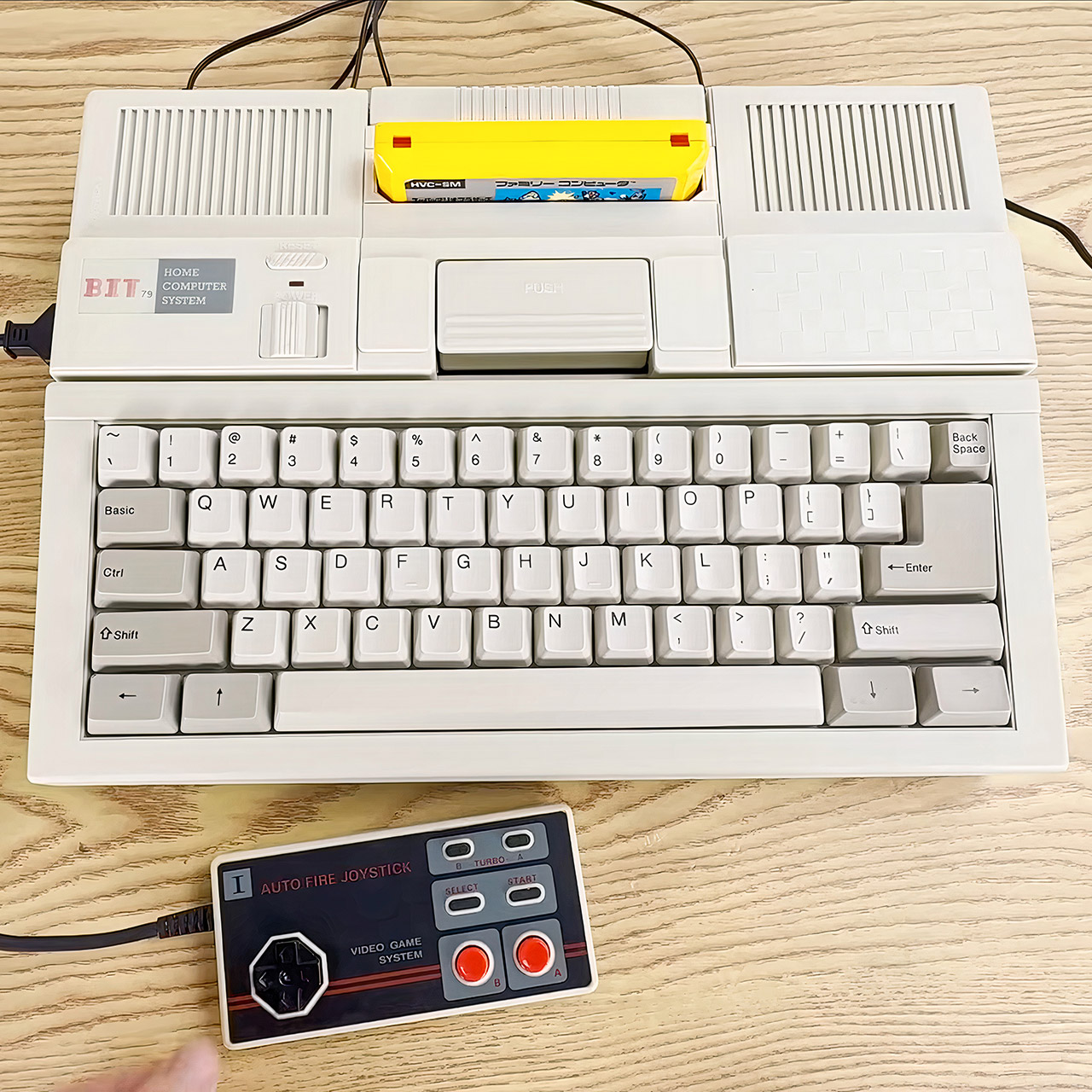
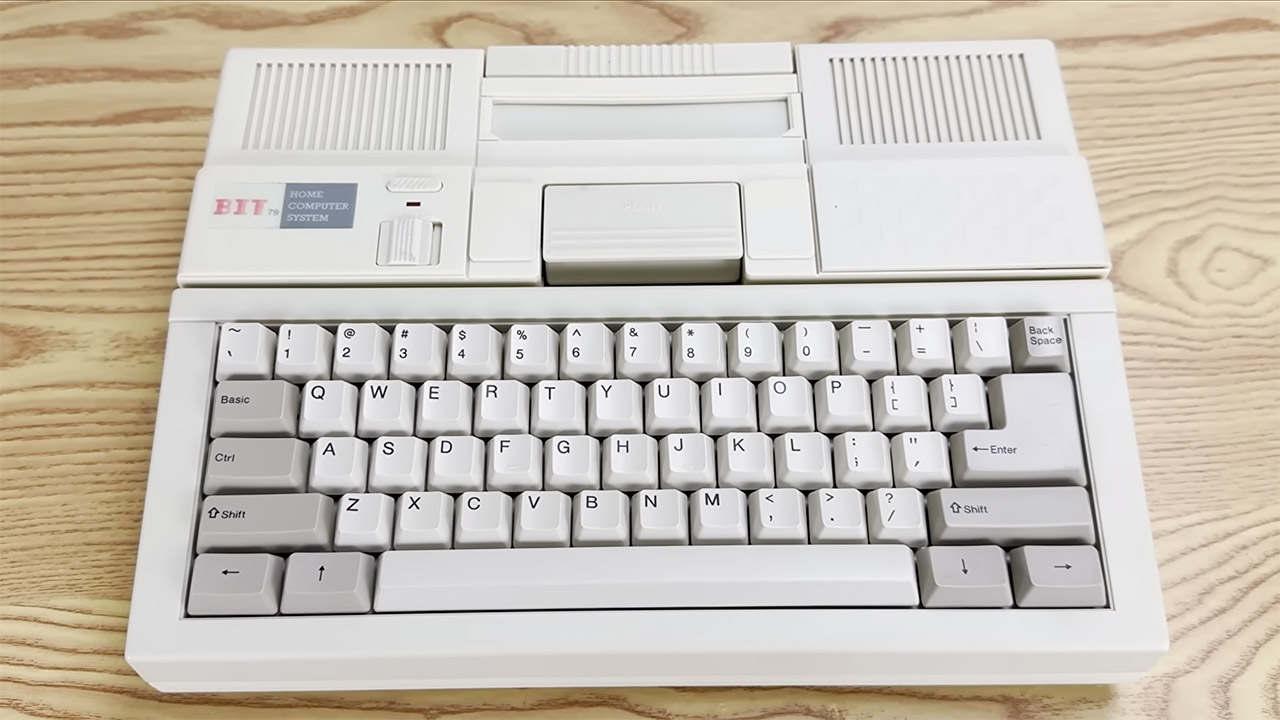
Bit Corporation released the Bit79 in 1989 as a machine that looked ready for serious work. The beige wedge-shaped case held a full keyboard across the front, a cartridge slot sat on top, and vents ran along the sides. Power and reset switches sat near the left edge. A person could sit down, flip the power on, and face a choice between typing programs or playing games.


By the late 1980s, Taiwan had established itself as a hub for Famicom clones. Around 1987, companies there reverse-engineered Nintendo’s unique chips, and Bit Corporation had previously created pirate cartridges as well as clones for the Atari 2600 and ColecoVision. The Bit79 marked their progression beyond ordinary game players. They included a keyboard and built-in software, allowing the system to act as a basic home computer while staying completely compatible with Famicom cartridges.
The Bit79’s hardware included chips from United Microelectronics Corporation, another Taiwanese company. A UA6527P, essentially a 6502-compatible processor, handled CPU responsibilities and ran at approximately 1.66 MHz. A UA6538 graphics chip handled the image processing, which was not particularly difficult. The work RAM was 8 kilobytes, four times that of a normal Famicom, which helped give the Bit79 some breathing room.
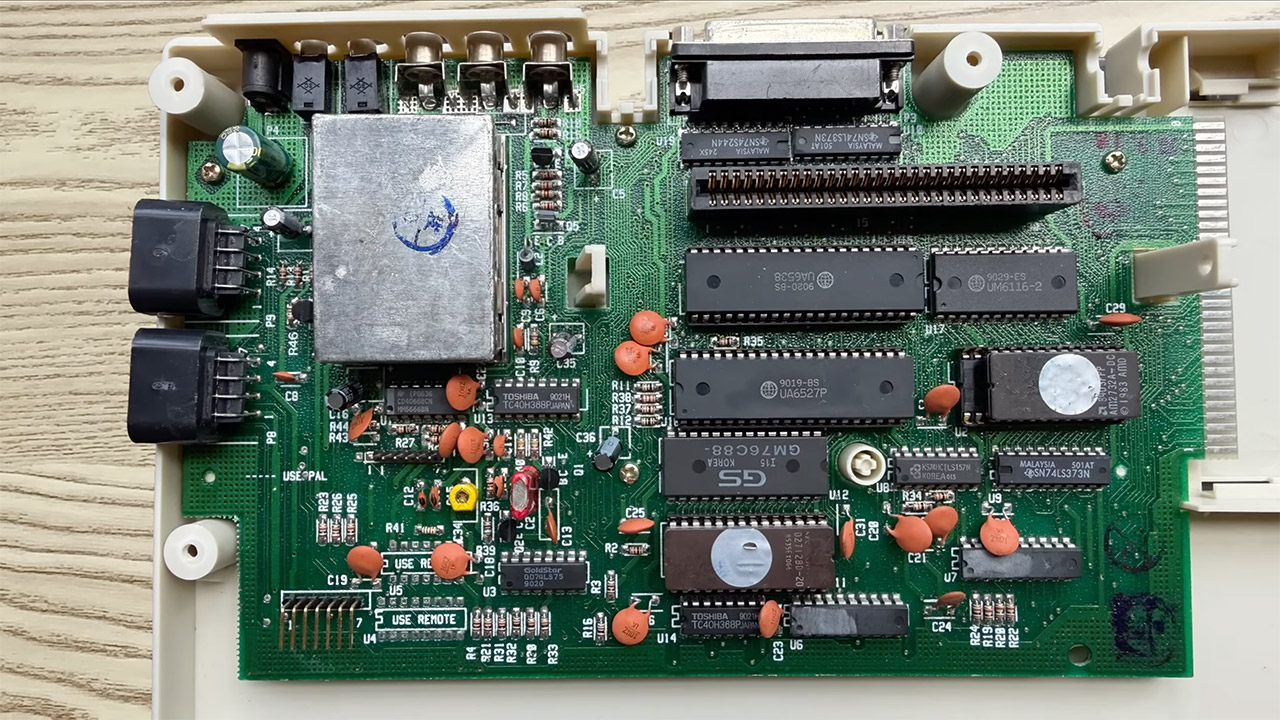
The language built into the machine was stored on a 16-kilobyte ROM, and not Nintendo’s own Family BASIC. They were utilizing an Applesoft BASIC implementation. The BASIC prompt appeared as a greater-than sign, and the interpreter could handle both integer and floating-point math, however the amount of calculation commands provided was adequate, not exceptional. Graphics commands existed, but they lacked the level of control that a specialist Famicom BASIC extension would provide, as you couldn’t easily control sprites or interact with the picture processing unit. Still, a person might be able to write a few simple programs, save them to cassette tape using the rear ports, and then load them back in.

When you turned it on, you’d get a simple boot menu, where you could push 1 to load the BASIC environment or 2 to go to cartridge mode and read whatever game was in the slot. There was also a reset button that allowed you to resume your current activity without having to shut down and restart. The keyboard included 58 keys, including some unique shift and basic keys that could input common commands with a single press. It was strong enough for its period, with a layout that felt identical to a regular typewriter.
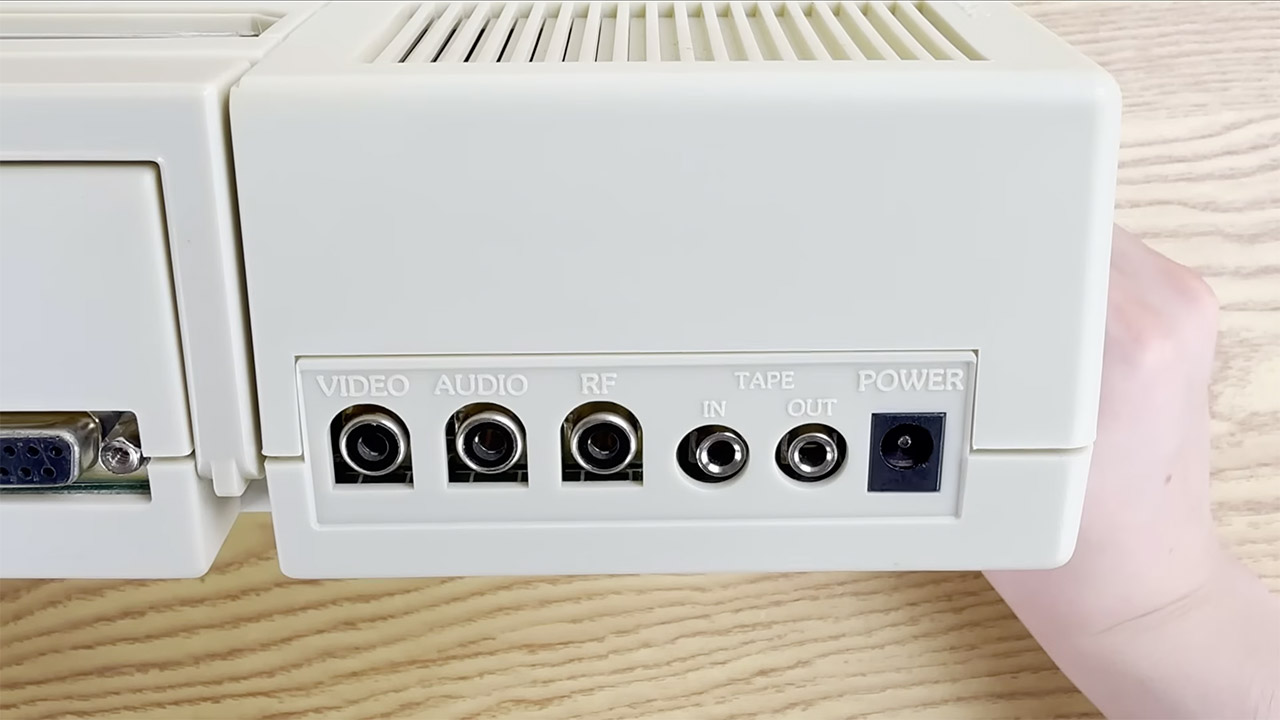
In the back, there’s a DB25 parallel port for printers and tape input/output jacks for programming. An expansion edge connector was waiting for you to insert some new add-ons, but Bit Corporation never released any official upgrades, despite early claims of a 64-kilobyte memory update. Two controller ports on the front accepted conventional Famicom pads, so games played exactly like they would on a real Famicom.
Bit Corporation marketed the Bit79 as a versatile all-rounder for households that already owned or desired Famicom games. A family can load a cartridge for entertainment in the evening, then switch to BASIC for simple programming or mathematics the next day. With the increased RAM and the ability to connect a printer, it was a cut above most other Famicom clones at the time, which were still primarily focused on games.
Unfortunately, sales were limited because the machine cost more than most basic game consoles, and faster personal computers were on the horizon. Bit Corporation eventually failed in 1992 owing to a variety of legal obstacles and a changing industry. Although the concept of a keyboard-equipped Famicom clone with built-in programming tools was already gaining traction, the Bit79 failed to meet commercial expectations. However, a few years later, Chinese manufacturers began producing “educational computers” that essentially merged game hardware with learning software, the same general concept as the Bit79, but with a few differences.
You must be logged in to post a comment Login