


Connect with us
DAPA Banner
DAPA Coin
DAPA
COIN PAYMENT ASSET
PRIVACY · BLOCKDAG · HOMOMORPHIC ENCRYPTION · RUST
ElGamal Encrypted MINE DAPA
🚫 GENESIS SOLD OUT
DAPAPAY COMING

Tech

How One Taiwanese Company Made the Famicom Live Up to Its Name with the Bit79 Home Computer

Published

on

Bit79 Home Computer Famiclone Famicom
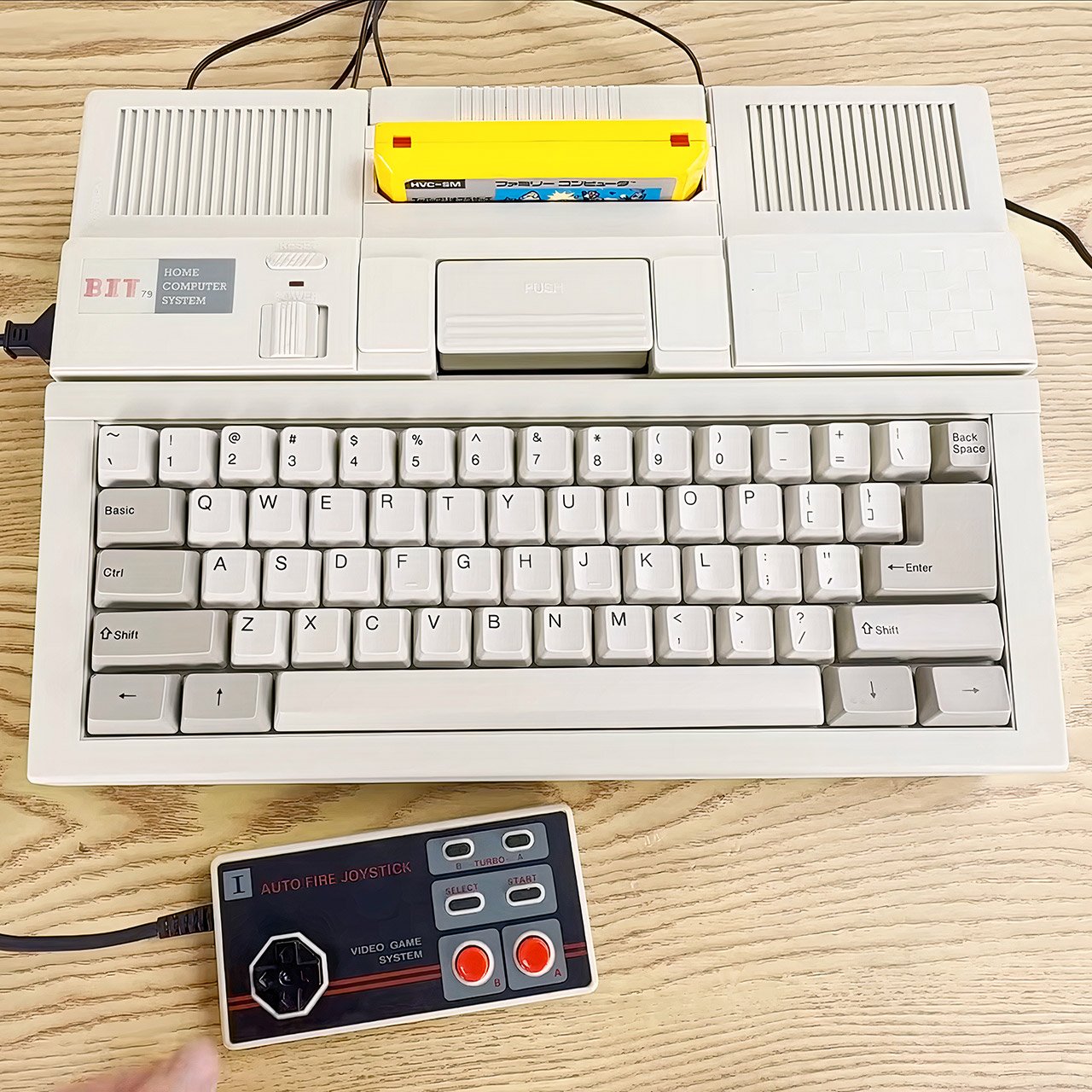
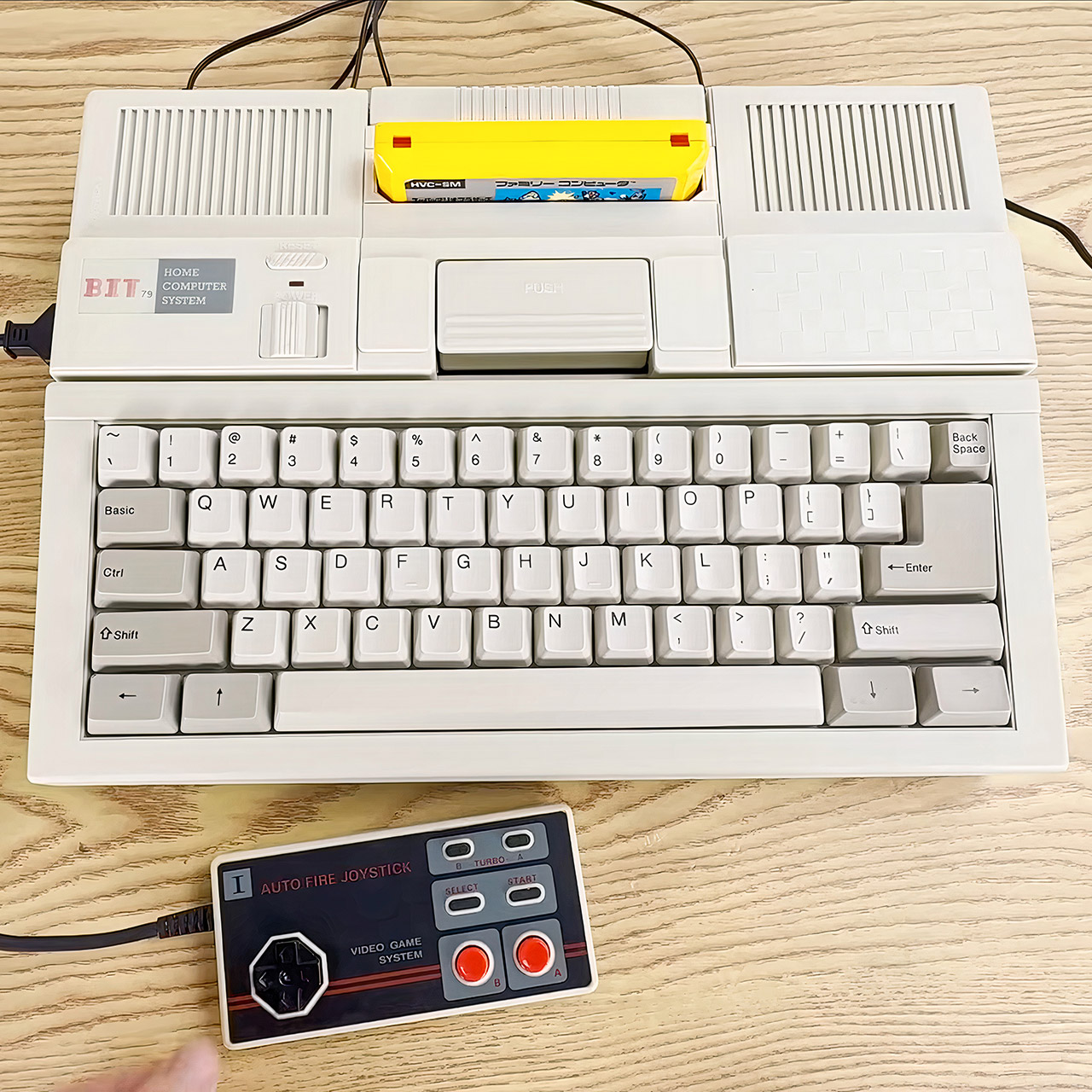
Bit Corporation released the Bit79 in 1989 as a machine that looked ready for serious work. The beige wedge-shaped case held a full keyboard across the front, a cartridge slot sat on top, and vents ran along the sides. Power and reset switches sat near the left edge. A person could sit down, flip the power on, and face a choice between typing programs or playing games.


By the late 1980s, Taiwan had established itself as a hub for Famicom clones. Around 1987, companies there reverse-engineered Nintendo’s unique chips, and Bit Corporation had previously created pirate cartridges as well as clones for the Atari 2600 and ColecoVision. The Bit79 marked their progression beyond ordinary game players. They included a keyboard and built-in software, allowing the system to act as a basic home computer while staying completely compatible with Famicom cartridges.

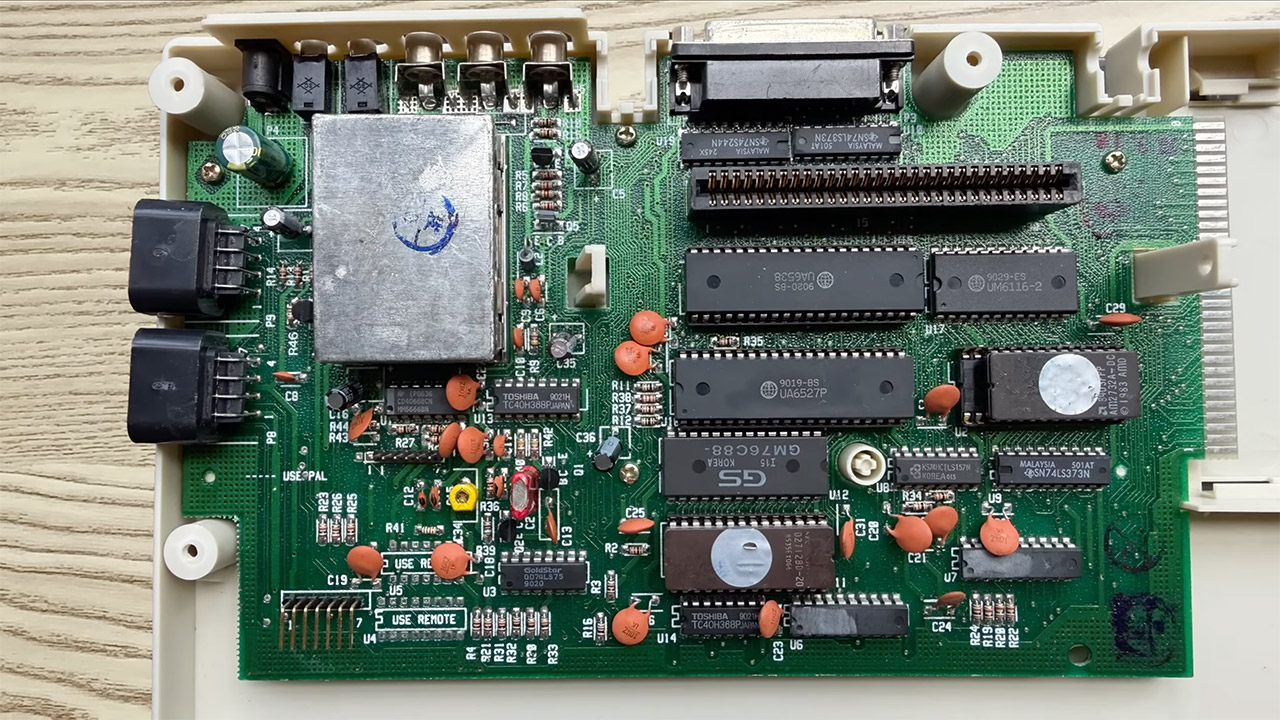
The Bit79’s hardware included chips from United Microelectronics Corporation, another Taiwanese company. A UA6527P, essentially a 6502-compatible processor, handled CPU responsibilities and ran at approximately 1.66 MHz. A UA6538 graphics chip handled the image processing, which was not particularly difficult. The work RAM was 8 kilobytes, four times that of a normal Famicom, which helped give the Bit79 some breathing room.

Bit79 Home Computer Famiclone Famicom
The language built into the machine was stored on a 16-kilobyte ROM, and not Nintendo’s own Family BASIC. They were utilizing an Applesoft BASIC implementation. The BASIC prompt appeared as a greater-than sign, and the interpreter could handle both integer and floating-point math, however the amount of calculation commands provided was adequate, not exceptional. Graphics commands existed, but they lacked the level of control that a specialist Famicom BASIC extension would provide, as you couldn’t easily control sprites or interact with the picture processing unit. Still, a person might be able to write a few simple programs, save them to cassette tape using the rear ports, and then load them back in.

When you turned it on, you’d get a simple boot menu, where you could push 1 to load the BASIC environment or 2 to go to cartridge mode and read whatever game was in the slot. There was also a reset button that allowed you to resume your current activity without having to shut down and restart. The keyboard included 58 keys, including some unique shift and basic keys that could input common commands with a single press. It was strong enough for its period, with a layout that felt identical to a regular typewriter.

Bit79 Home Computer Famiclone Famicom
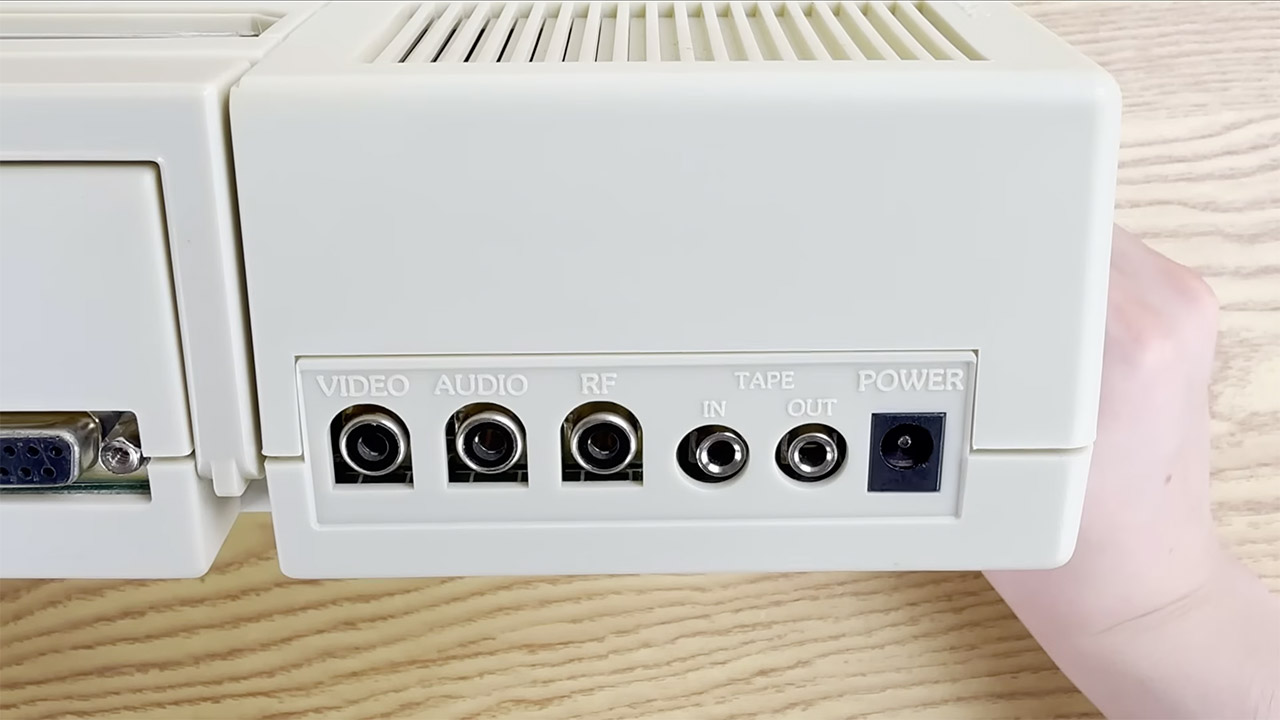
In the back, there’s a DB25 parallel port for printers and tape input/output jacks for programming. An expansion edge connector was waiting for you to insert some new add-ons, but Bit Corporation never released any official upgrades, despite early claims of a 64-kilobyte memory update. Two controller ports on the front accepted conventional Famicom pads, so games played exactly like they would on a real Famicom.

Bit Corporation marketed the Bit79 as a versatile all-rounder for households that already owned or desired Famicom games. A family can load a cartridge for entertainment in the evening, then switch to BASIC for simple programming or mathematics the next day. With the increased RAM and the ability to connect a printer, it was a cut above most other Famicom clones at the time, which were still primarily focused on games.

Advertisement

Bit79 Home Computer Famiclone Famicom
Unfortunately, sales were limited because the machine cost more than most basic game consoles, and faster personal computers were on the horizon. Bit Corporation eventually failed in 1992 owing to a variety of legal obstacles and a changing industry. Although the concept of a keyboard-equipped Famicom clone with built-in programming tools was already gaining traction, the Bit79 failed to meet commercial expectations. However, a few years later, Chinese manufacturers began producing “educational computers” that essentially merged game hardware with learning software, the same general concept as the Bit79, but with a few differences.

Source link

Continue Reading
Click to comment

You must be logged in to post a comment Login

Leave a Reply

Tech

Bullish JP Morgan bumps AAPL price target to $345

Published

on

JP Morgan increased the price target for Apple’s stock to $345, insisting that the RAM-driven hardware cost increases won’t impact long-term revenue gains.

Late in June, Apple finally gave in and raised the price of many products, in the face of the global memory crisis. In the view of JP Morgan, it’s not that big an issue for the company.

In a note to investors seen by AppleInsider on Tuesday, JP Morgan has increased its price target for Apple to $345. This is an increase of $20 from January, when it last raised the stock target price to $325.

The firm acknowledges the hefty price increases are going to be a short-term issue, with investors trying to judge how badly consumers will take the news. But even so, the news isn’t enough to dampen JP Morgan’s spirits.

Advertisement

Elastic pricing

In its reasoning, JP Morgan first says that the historical data for sales volumes covering iPhone, Mac, and iPad show a “limited relationship” to pricing across multiple years. Essentially, consumers are going to buy Apple products anyway, and pricing doesn’t seem to matter too much.

Mac sales are probably the most insulated in JP Morgan’s view, with more price point options and AI-led demand working in its favor.

The iPhone also benefits from limited elasticity on the premium end. Those with larger budgets are less affected by price changes, it seems.

That said, the budget end of iPhone and iPad sales is more significantly affected by price. However, even they are considered “modest revenue headwinds” when combined with premium model sales.

Advertisement

While it will be some time before anyone knows how Apple will weather the memory pricing storm, we will get an early indication from Apple’s Q3 results, released on July 30.

Since the price hikes, AAPL stock has been doing very well for itself. Following the price hike news on June 25, the company’s stock fell to $275.15. It closed on July 6 at $312.66.

Source link

Advertisement
Continue Reading

Tech

An agent in the empty chair: Amazon vets launch Primitive Labs, using AI to model customer behavior

Published

on

Primitive Labs co-founders, from left: CTO Jean Farmer, CEO Rohit Talluri and COO Gabriel Fong. (Primitive Labs Photo)

Rohit Talluri learned the tradition at Amazon: always keep an empty chair in the room to represent the customer — a reminder of the people who will ultimately use whatever gets built.

Now, with AI coding tools creating software faster than ever, Talluri and his co-founders, fellow Amazon veterans Jean Farmer and Gabriel Fong, recognize that the customer can be easily forgotten in the process. So they’re creating a seat at the table for AI agents.

That’s the idea behind Primitive Labs. The startup is building what it calls behavioral intelligence: systems that observe, reason and act as customers would across software platforms and devices, helping product teams learn how people will react to a new feature, design or marketing decision before it ships.

Traditional user research and focus groups can take weeks or months, so teams under pressure to ship quickly are tempted to skip them. Primitive Labs is automating that research with agents that simulate human behavior, aiming to make it a routine step in building software.

“It’s bringing humans back to the center of a world that’s created by AI,” Talluri said. “That is the goal here.”

Advertisement

The mission, according to the startup’s launch post, is to “make human behavior a first-class primitive of software development.” That’s the inspiration for Primitive Labs’ name. The idea is to build products that people will understand, trust and keep using — not the average user, but specific types of users in specific contexts.

Founding team: Talluri, the Primitive Labs CEO, is joined by co-founders Farmer, CTO; and Fong, COO.

Fong and Talluri have worked together since 2020. At AWS in Seattle, Fong held product marketing and enterprise account roles, then led sales and marketing at the cloud consultancy DoiT International.

At Primitive Labs, his role runs broader than sales and marketing, spanning product direction, customer development and operations. Talluri describes him as highly technical and a hands-on contributor to the company’s core product work.

Advertisement

Farmer and Talluri worked together at AWS on large-scale machine-learning infrastructure, including the SageMaker HyperPod training service, before both moved into Amazon’s AGI organization.

Farmer worked on the Amazon Nova models’ ability to use software tools — designing how the models call tools and take actions, and building the systems to test and measure how well the resulting agents perform. That work included benchmarks for the Model Context Protocol (MCP), the emerging standard for connecting AI models to outside tools and data.

Roots in AI autonomy: Talluri joined the AGI Autonomy Lab, the group Amazon assembled around talent it hired from Adept, a San Francisco startup building AI agents that operate software on their own.

Amazon had brought on Adept’s CEO, David Luan, a former OpenAI executive, along with other co-founders in 2024, and licensed the startup’s technology, putting Luan in charge of the lab. Talluri worked there on computer-use agents and helped launch Nova Act, Amazon’s agentic computer-use model.

Advertisement

Talluri said he initially came close to leaving Amazon in 2025 to start a company, before leaders there steered him toward the Autonomy Lab to work under Luan (who has since left Amazon).

Funding: Primitive Labs has raised a pre-seed round, led by a16z Speedrun and joined by several small, newer venture funds and a group of angel investors. The company isn’t disclosing the funding amount.

Its launch post lists backers including Olive Tree Capital, Cloverfield Fund and Unexpected Investments (from former TechCrunch editor Josh Constine), plus angels such as Luan, Harsh Patel and Artur Kiulian, and others with backgrounds at OpenAI, Amazon, Google DeepMind, Databricks, Nvidia and Meta.

Primitive Labs will join a16z Speedrun’s cohort starting this month, and expects to raise its next round around the end of the program, in September or October.

Advertisement

Headquarters: The company is based in San Francisco, where it’s working part-time out of a16z’s Speedrun space, with plans to get its own office after making its first hires.

Talluri, a University of Washington graduate who read GeekWire as a student and dreamed of launching a startup of his own, said the choice came down to San Francisco’s talent density and the pace of AI research there, plus the Speedrun program being there.

Primitive Labs posted its first job listings last week — for founding engineers, researchers and an intern, in San Francisco or New York.

Product status: The company is pre-revenue and working with a small group of early customers who are testing its product and helping shape it, including private previews with what Talluri described as Fortune 500 and Fortune 50 consumer-technology and e-commerce brands.

Advertisement

The company plans to launch its products in general availability later this year.

How it works: The agents work across devices including computers and phones, focused for now on digital products and customer journeys. The company says it has also explored using them to gauge reactions to physical products, such as brand and packaging.

The underlying research draws on computational cognitive science, continual learning and custom memory systems modeled on how people store information — work Talluri said the company plans to publish and partly open-source in the coming months.

While other startups are working on agent-based simulation and automated testing of user interfaces, what sets Primitive Labs apart, Talluri said, is the focus on human alignment. That means building agents that faithfully represent a specific product’s users, and making that a standard layer of how software gets built. He described the key measure as behavioral fidelity, or how closely an agent’s choices track human decisions.

Advertisement

Asked whether the startup will keep a chair empty when it gets an office, in the Amazon tradition, Talluri didn’t hesitate. “100%,” he said. And yes, he said, they’ll be envisioning an agent sitting there.

Source link

Continue Reading

Tech

What are people getting wrong about the modern-day job hunt?

Published

on

Leda Stawnychko of Mount Royal University and Mehnaz Rafi of the University of Calgary discuss what is true and false about searching for a job in 2026.

Job searching has never been more accessible – or more confusing. Platforms like LinkedIn, Indeed and employer career pages let candidates submit applications with just a few clicks. What happens after they click ‘submit’, however, has become fertile ground for misinformation.

Social media is filled with ‘career influencers, resume writers, recruiters and companies promising insider knowledge of how hiring really works. Much of this advice focuses on misinformed claims about applicant-tracking systems (ATS) and artificial intelligence.

These services profit from jobseekers’ uncertainty and convincing people they need specialised services, tools and products to ‘beat’ the ATS and secure interviews.

Advertisement

The result is that many job seekers spend time and money following advice that has no basis in evidence. Here are four common myths about the job application process and what the research actually says.

Myth 1: 75pc of resumes are rejected

Perhaps the most widely repeated claim online is that 75pc of resumes are automatically rejected by an ATS before a human recruiter ever sees them.

The statistic originated from a 2012 sales pitch by Preptel, a resume optimisation company that went out of business the following year. No methodology was ever published, yet the figure has spread widely.

In reality, an ATS is software that helps employers manage applications, and its capabilities vary widely. Some systems function as digital filing cabinets, simply storing and organising applications.

Advertisement

Others automatically screen for basic requirements, such as mandatory eligibility questions. At the most sophisticated end, systems use AI to rank applicants, recommend candidates and analyse asynchronous video interviews.

The advanced AI-powered tools are typically found in large organisations, including many Fortune 500 companies, which receive enormous volumes of applications. In Canada, most employers do not use AI in hiring, and small businesseswhich employ more than 60pc of the workforce – are especially unlikely to rely on ATS.

Small businesses typically lack both the application volumes that make ATS worthwhile and the procurement infrastructure to adopt and maintain them.

For most Canadian jobseekers, the better strategy is to focus on clearly communicating how their skills and experience match the role, and on building relationships within their profession.

Advertisement

Myth 2: AI can write a winning resume

A common message from career influencers is that AI can generate a tailored resume or cover letter that dramatically improves your chances of getting hired. While AI can help candidates prepare application materials more efficiently, it is not a shortcut to a stronger application.

As more candidates rely on the same tools and prompts, applications increasingly sound similar and recruiters take notice.

Far from providing a competitive advantage, AI-generated applications may have the opposite effect. 74 pc of hiring managers report identifying them, and 80pc view them unfavourably.

The best approach is to use AI to augment your own voice. That means using it to refine and sharpen your draft, not replace its substance.

Advertisement

Research on Canadian hiring suggests candidates secure more interviews when their applications contain more detail, clarity and structure. Since today’s recruiters review a myriad of applications that look and sound the same, they tend to respond to the ones that stand out by communicating qualifications in an authentic voice.

Myth 3: Use ‘ATS-friendly’ resume templates

Resume writers and career influencers claim that using an ‘ATS-friendly’ template is essential for ‘beating’ the ATS. Some even sell templates that promise to ‘optimise your resume to secure interviews.

In reality, there is no universal ATS-friendly resume because the software employers use varies widely from one company to another. Additionally, modern ATS can extract information from common resume layouts, including columns or tables.

Their main limitation is that they are designed to process text, not images, graphics or icons. That means a clean, readable resume should be the actual target, not a template bought online.

Advertisement

If ATS doesn’t automatically reject resumes the way the influencer economy claims, then optimising for a system that largely doesn’t work that way is solving the wrong problem. The real audience for your resume is a person, not an algorithm.

The better approach is to write for both systems and people. Use clear headings, relevant keywords and concrete examples that show how your experience matches the role.

Myth 4: More applications, more interviews

Another myth is that, with the right prompts, the job search can be fully automated, allowing candidates to submit hundreds of applications with little effort. More applications should lead to more interviews, the logic goes.

In practice, this approach often comes at the expense of thoughtful job-seeking, such as identifying positions and employers that genuinely match your skills and interests, and crafting applications that reflect that fit.

Advertisement

AI is most effective when it enhances, rather than replaces, a candidate’s work, helping to avoid what has become known as ‘workslop’ – a term for generic, AI-generated content.

Candidates are best served by using AI for brainstorming and polishing while ensuring the final version accurately and authentically reflects your experiences, accomplishments and voice.

The fundamentals haven’t changed

Today’s labour market may look different, but the fundamentals of a successful job search haven’t changed much. In that sense, the best thing job seekers can do may be to ignore most of what they’re being sold.

The strongest applications are those that clearly connect a candidate’s experiences to the role, provide concrete evidence of their abilities and communicate in an authentic voice.

Advertisement

Technology may help employers manage applications, but hiring decisions are ultimately made by people. That makes professional networks, trusted referrals, strong communication and leadership skills more valuable than ever.

Put the time you’d spend on template optimisation into one good conversation with someone in your field. The research suggests it’ll go further.


The ConversationBy Leda Stawnychko and Mehnaz Rafi 

Leda Stawnychko is an associate professor of strategy and organisational theory at Mount Royal University. She also holds adjunct academic appointments at the University of Calgary’s Haskayne School of Business and the Cumming School of Medicine. With more than two decades of leadership experience across international public, private and nonprofit sectors, she is dedicated to cultivating effective, adaptive and transformative leaders.

Advertisement

Mehnaz Rafi is a PhD candidate and sessional professor in the Haskayne School of Business at the University of Calgary. Before pursuing her PhD in organisational behaviour, she received her MSc in management from the Smith School of Business at Queen’s University. She is passionate about leveraging her decade of research experience in quantitative, qualitative and mixed-method designs to create meaningful impact in the world. 

Don’t miss out on the knowledge you need to succeed. Sign up for the Daily Brief, Silicon Republic’s digest of need-to-know sci-tech news.


Advertisement

Source link

Continue Reading

Tech

Nothing’s Phone 4B Is Cheaper Than the Phone 4A, With a Bigger Battery

Published

on

Phones from British tech startup Nothing have never failed to impress us with unique designs that set them apart amid the otherwise mundane landscape of similar-looking Android devices. The design of the Phone 4B, which Nothing announced on Tuesday alongside the Nothing Ear 3A, isn’t quite as distinctive as the company’s other handsets, but at first glance, there’s still plenty to recommend it.

Let’s start with the battery. In our review of the Phone 4A, which the company unveiled back in March, one of our few criticisms of the device was that the battery life could be better. The Phone 4B actually comes with the biggest ever battery of any Nothing phone, at 5,200 mAh, even though this model is significantly cheaper than the Phone 4A.

It’s still unlikely to rival the best phones on the market for battery life — Apple’s latest iPhones and the OnePlus 15 in our independent testing — but we’re talking about a budget phone here. But it’s great to see Nothing acknowledging that battery life is one area in need of improvement and taking action relatively quickly.

Advertisement

Nothing’s design language has always hinged on its deployment of transparent elements, and the Phone 4B, while largely opaque, nods to this with a transparent camera bump on the top rear side of the phone. Under this bump is a refined version of its light-up Glyph bar — a row of individually controlled mini-LEDs that provide notifications, charging progress, recording indicators and personalized alerts.

It’s touches like this that continue to set Nothing apart from its rivals — especially at the budget end of the phone spectrum. There’s no cost-cutting on the processor either, with a Snapdragon 6 Gen 4 chip inside. That’s one model removed from the processor inside the 4A, but Nothing says the Phone 4B comes close to its older sibling in performance.

Again, like the Phone 4A, the 4B offers a 50-megapixel main camera and an 8-megapixel ultrawide camera, but doesn’t have the 4A’s telephoto camera with optical zoom. Small compromises like this throughout have allowed the Nothing to keep the price low, which for many people in search of an affordable but fun phone, will be compromises worth making. 

The Nothing Phone 4B will be available in black, white and blue starting at £299 ($400), with drops happening in the company’s stores from July 11, before going on sale online on July 17.

Advertisement

Source link

Continue Reading

Tech

A ‘painful’ reset for Xbox: 3,200 job cuts, studio spinoffs, and a vow to return to growth in 2027

Published

on

(Microsoft Image)

Xbox CEO Asha Sharma laid out a wide-ranging plan to overhaul Microsoft’s gaming division Monday, calling it the most significant restructuring in Xbox history and disclosing that the business has been losing 64 cents on every dollar invested in its game studios.

As detailed in a memo to employees, the changes include roughly 3,200 job cuts through the fiscal year — about 20% of the Xbox workforce — the spinoff of four game studios, a new COO, and a plan to flatten management from as many as 14 layers to no more than five.

“We will return to growth in 2027,” Sharma wrote. “History is full of companies that mistake longevity for inevitability. We will not be one of them.” 

@media (max-width: 600px) {
aside.callout { float:none !important; max-width:100% !important; margin-left:0 !important; margin-right:0 !important; }
aside.callout .callout-img { display:none !important; }
}

Sharma, a startup veteran and former Microsoft AI leader, was named Xbox CEO in February

“I know this is painful,” she wrote. “These changes will directly affect people who have poured their creativity into building XBOX. Many joined us through acquisitions, while others were recruited here, or sought us out because they loved this industry and loved XBOX. Today’s decisions do not reflect their talent or dedication.”

Advertisement

But she also reiterated what she said in a memo last month: Xbox’s business is not healthy, operating at margins 3-10x lower than industry peers after years of heavy spending that failed to produce the expected growth. 

About 1,600 of the Xbox job cuts take effect Monday as part of a broader round of 4,800 layoffs across Microsoft. The remaining Xbox reductions will come in the months ahead. Sharma acknowledged that a year-long restructuring “creates additional challenges” but said “it is not possible to make all the necessary changes in a single day.” 

Sharma said the cuts reach across Activision, Bethesda/ZeniMax, Blizzard, King, Mojang, and Xbox Game Studios, though no publicly announced games are being cancelled.

Several game studios will be spun out as standalone ventures, removing the costs from Microsoft’s books while giving the studios a chance to survive on their own.

Advertisement
  • Compulsion Games (South of Midnight) and Double Fine Productions (Psychonauts) will return to their management teams as independent studios, keeping their intellectual property and current projects. 
  • Ninja Theory (Hellblade) and Undead Labs (State of Decay) will shift to new owners with funding to complete their current games. 
  • In France, Arkane (Dishonored, Deathloop) is beginning a legally required consultation with its employee works council to determine its future. 

Sharma will also take on direct oversight of game studios Mojang (Minecraft) and King (Candy Crush), Xbox’s two largest studios by monthly active players. 

In addition, she is establishing a new chief operating officer role with end-to-end financial responsibility across content, hardware, platform, and services. Helen Chiang, a nearly two-decade Xbox veteran who led Mojang and the Minecraft franchise, has been promoted to the role. Dave McCarthy, a 17-year Xbox veteran who helped build the platform, is retiring. 

Across the division, Sharma wrote in the memo, Xbox will cut vendor spending by 50% and reduce management layers from as many as 14 to no more than five.

The overhaul follows a 25-year period in which Microsoft largely subsidized Xbox as a strategic bet on the living room. Microsoft CEO Satya Nadella has said that era is over, noting that YouTube creators make more money from Xbox games than Microsoft does.

Source link

Advertisement
Continue Reading

Tech

Hisense UR9 RGB MiniLED: An Affordable TV in Its Class

Published

on

RGB Mini-LED TVs have officially arrived, and Hisense’s UR9 was the first to hit the market, followed by Sony’s Bravia 7 Mark II and TCL’s RM9L. I wouldn’t blame you if you weren’t jazzed to learn what the new display technology means, particularly if you were just getting used to terms like OLED, QLED, and art TV. Thankfully, understanding why the Hisense UR9 RGB MiniLED is a step up in picture quality compared to its competitors is more about the experience it provides than knowing the technical terms.

Even so, the general function of mini RGB tech is not so difficult to understand: Traditional LED and QLED televisions achieve their bright and colorful images by shining white or blue LEDs through an LCD panel. The newer mini RGB works by emitting red, green, and blue lights, resulting in better color accuracy, excellent contrast and brightness, and finer control over color zones. LG and Samsung use new tech called micro RGB, claiming it to be more advanced than mini RGB thanks to smaller LEDs, although both achieve roughly the same result.

The UR9 is the flagship in Hisense’s lineup, but it isn’t priced that way at just $2,000 for the 65-inch model I tested. What you get with the UR9 is an improved picture quality compared to the brand’s other models, which are typically priced lower than sets from big names like Samsung, Sony, and LG. I’ve tested countless Hisense entry-level models over the years, including a few that had poor contrast and brightness, putting them more in line with TCL, Roku, and Amazon Fire TV bargain models that cost around $800.

Advertisement

Not the case with this gaming monster, with its unusual-but-welcome 180-Hz refresh rate (330-Hz variable) when you link a high-end computer to the DisplayPort connection on the side. Overall, I was impressed by the picture quality at this price point, even if the UR9 can’t quite compete with the latest (but pricey) Samsung and LG models that use micro RGB tech.

Standard Setup for a Unique Television

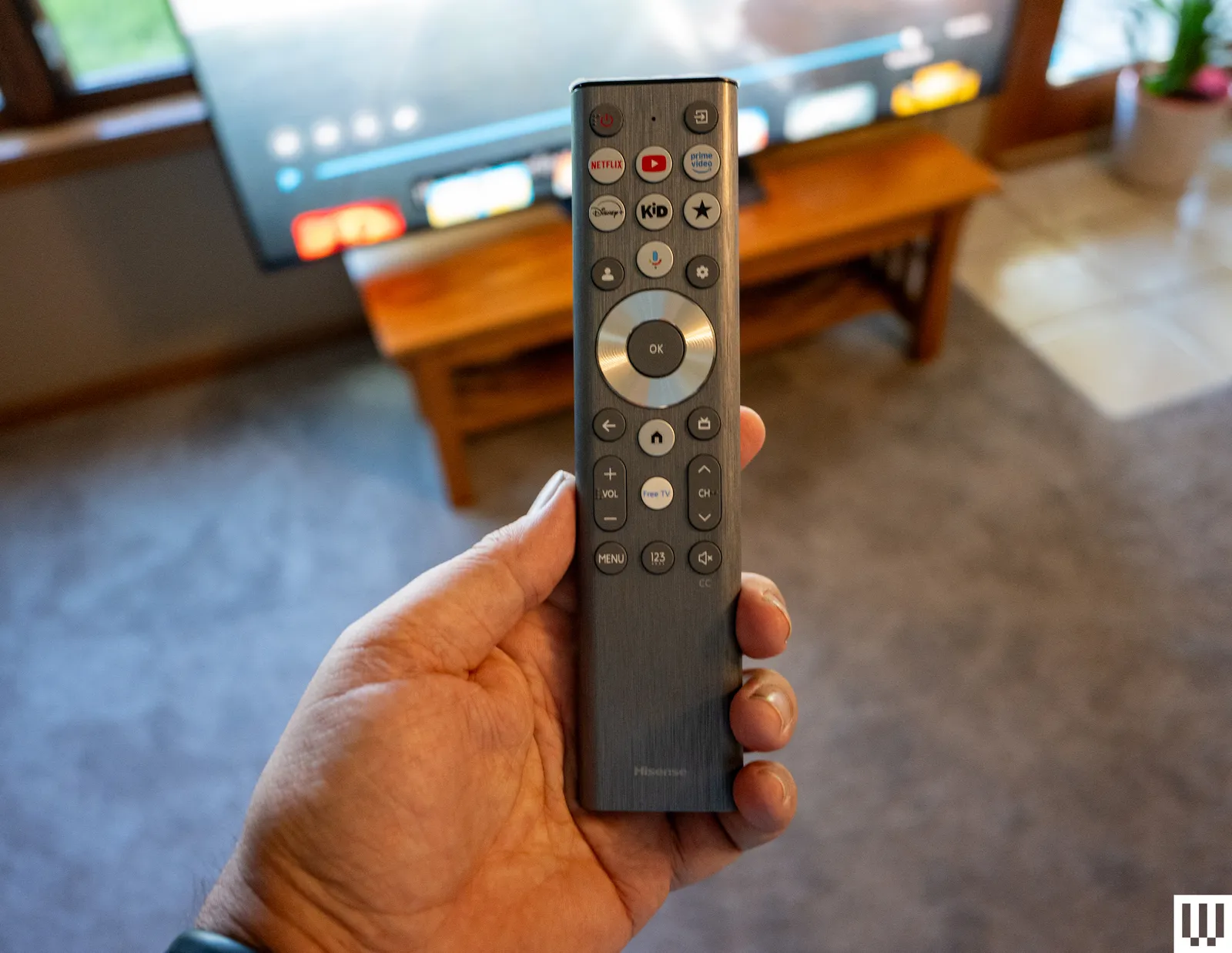
Image may contain Electronics and Remote Control

Photograph: John Brandon

The all-black, notably thin (only 1.8 inches!) UR9 comes with a stand that’s much easier to assemble than the Sony Bravia 7 Mark II RGB TV. Once in position on my stand, setting up the Google TV operating system was simple, save for dealing with a known bug with the Google Home app’s QR code that required manually entering my Gmail address and password. The UR9 uses Wi-Fi 6E, which is faster than Wi-Fi 6.

Source link

Advertisement
Continue Reading

Tech

Alleged pro-Russia hacktivist arrested in Palencia

Published

on

SECURITY

Palencia man suspected of links to CARR, Z-Pentest, and NoName057(16), plus helping a Ukrainian hacker flee to Russia

Spanish police have arrested a man they believe is affiliated with at least two pro-Russia hacktivist groups linked to attacks on critical national infrastructure (CNI).

Arrested in March at his home in Palencia, central Spain, the man is suspected of having close ties to CyberArmy of Russia Reborn (CARR) and Z-Pentest, and may have carried out attacks on behalf of NoName057(16).

Advertisement

All three hacktivist groups were named by the UK’s NCSC earlier this year as part of an advisory warning about the dangers these groups pose to Western CNI.

The cyber arm of GCHQ, the UK’s signals intelligence agency, said organizations should not underestimate pro-Russia hacktivist groups, despite them being known largely for relatively low-impact DDoS attacks.

Jonathon Ellison, NCSC director of national resilience, said at the time: “We continue to see Russian-aligned hacktivist groups targeting UK organizations, and although denial-of-service attacks may be technically simple, their impact can be significant.

“By overwhelming important websites and online systems, these attacks can prevent people from accessing the essential services they depend on every day.”

Advertisement

A month earlier, US officials said CARR was working with, or receiving instructions from, Russian military intelligence (GRU).

Policía Nacional first announced the detention of the unidentified man on Monday, although the arrest was made months ago following an FBI tip-off.

In August 2025, the feds alerted Spanish police to the man’s alleged involvement in trying helping a Ukrainian hacker, a member of CARR, flee to Russia via Poland and Belarus

He was said to have provided “logistical and support cover” to facilitate the Ukrainian’s escape.

Advertisement

After the Palencia man’s arrest, officers found evidence suggesting he was in close contact with other members of these pro-Russia hacktivist “terrorist groups.” Police said he assisted in “coordinating actions and providing support” for the different outfits’ activities, including those of NoName057(16).

NoName057(16) has been active since at least 2022, and is known for targeting public and private organizations, NATO countries, and those whose interests do not align with Russia’s.

Police also seized computer equipment from the man’s residence and cryptocurrency storage devices, freezing a wallet suspected of containing proceeds of cybercrime.

The FBI’s Cyber Division said in a statement: “Last December, the FBI announced Operation Red Circus, our ongoing effort to disrupt Russian state-sponsored cyber threats to the United States and our interests abroad. As part of that announcement, the FBI and partners released a joint Cybersecurity Advisory on pro-Russia hacktivist groups conducting opportunistic attacks against critical infrastructure, including the water, agriculture, and energy sectors. 

Advertisement

“A mission priority of Operation Red Circus is targeting and arresting individuals for their roles in hacktivist groups such as Cyber Army of Russia Reborn to mitigate planned, malicious cyber-campaigns.

Years of pursuit

Authorities have been hunting pro-Russia hacktivists, particularly CARR members, for years. CARR has been active since at least 2022, when it began with low-level attacks in Ukraine shortly after Russia’s invasion.

The US named Yuliya Vladimirovna Pankratova as CARR’s leader and Denis Olegovich Degtyarenko as its primary hacker in 2024. The pair were sanctioned after CARR was tied to attacks on US and European water facilities earlier that year that specifically targeted human-machine interfaces at water supply, hydroelectric, wastewater, and energy facilities.

CARR also gained access to the SCADA system of a US energy company, which allowed them to control alarms and pumps connected to tanks.

Advertisement

Mandiant previously attributed these attacks to Sandworm, a cyber unit inside Russia’s GRU. However, the sanctions pointed to a hacktivist element and added further color to the relationship between Russia’s military and cybercrime community.

Separately, pro-Russia Ukrainian hacktivist Victoria Eduardovna Dubranova, 33, was extradited to the US late last year after being charged with offenses related to attacks carried out by CARR and NoName057(16).

Dubranova was linked to attacks on water facilities and a Los Angeles meat processing facility in November 2024, which spoiled thousands of pounds of meat and triggered an on-site ammonia leak. ®

Source link

Advertisement
Continue Reading

Tech

OPPO Enco Air 5 Review: The Budget Earbuds Most People Should Buy

Published

on

OPPO’s Enco earbud series has time and again delivered some of the best value devices, and for good reason. Take last month’s Enco Air 5 Pro as an example. They combined well-balanced audio and strong ANC capabilities into a package that cost ₹4,999. While we still think they are great value, I’d also admit that spending that much isn’t feasible for many budget-conscious buyers. Keeping that in mind, OPPO has just announced the non-Pro version, the Enco Air 5. It follows the same recipe as its bigger brother, with 52dB of ANC and a 54-hour battery life, but trims the price down to just ₹3,099.

So, when OPPO called asking if I’d like to test the Enco Air 5, I said yes, of course. For some context, I have been using the buds for almost a month, during which I’ve taken them to countless gym sessions, gone on evening walks while listening to my favorite music, and even taken them with me to cover an esports tournament in Jaipur. If you can’t be bothered to read the full review, then yes, they are worth the price. Here’s why.

OPPO Enco Air 5 Review

Hisan Kidwai

Advertisement

Summary

Everything about the Enco Air 5 feels well balanced. The design is understated yet premium, the comfort is good enough for hours of use, and the companion app is packed with genuinely useful features. The sound tuning gives every part of a track room to breathe without letting one frequency overpower another. Even the ANC does a commendable job of cutting out everyday noise.

Advertisement

Design & Comfort

Design of the enco air 5

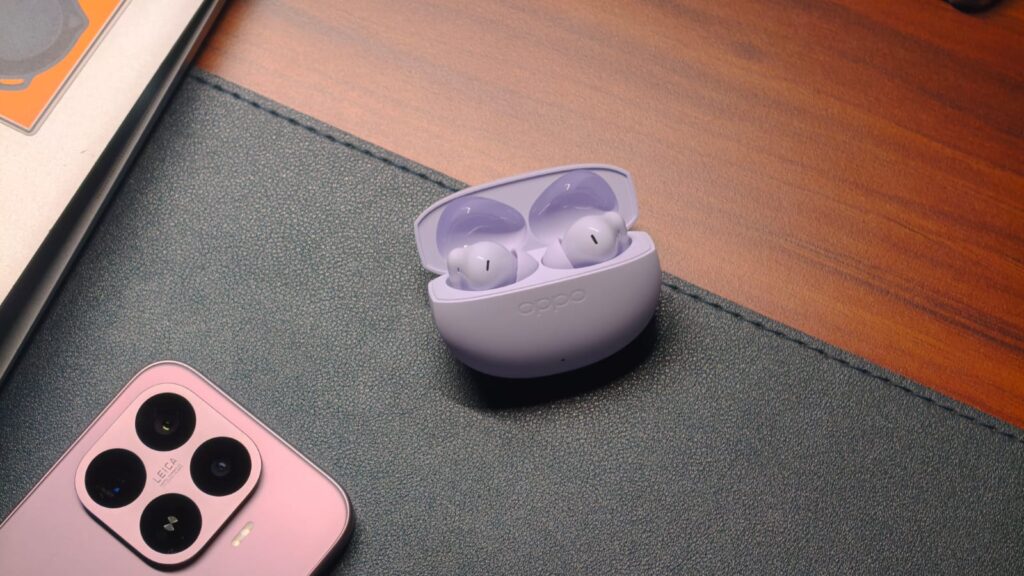
What does it take to design a great pair of earbuds? To some brands, it’s about a fun design that stands out amongst others, even if that comes at the cost of comfort. I could name a dozen such earbuds, but the truth is, the ones I keep using after reviews are those that don’t stand out. I don’t care whether you have a brand-new design or a new LED light strip. An earbud needs to be sophisticated yet stylish enough not to look cheap. And no other brand does that better than OPPO. The new Enco Air 5 are no exception. They feature the same oval-shaped case that I have come to love.

While the dimensions are almost identical to the 5 Pro, the finish is indeed different. I got the Lavender Purple variant, which I’d say looks quite good. It adds a pop of color in an otherwise bland earbud world. Even though it’s very difficult to put the feel of the finish into words, I’ll try anyway. The finish reminds me of those large chalky medicine tablets. The matte finish is a little rougher than the 5 Pro, and it held up quite well in my regular use. I didn’t see any smudges, nor was there any damage to the case when I dropped it at the airport while taking out my boarding pass. The case can be opened with one hand, and there’s also a satisfying click every time you close the lid. There’s also a physical pairing button, which is always appreciated.

A person holding the earbud

As for the earbuds themselves, they are shiny this time around, so a bit more difficult to keep clean. Comfort is a tricky thing to answer, since everyone’s ears are different. My ears are small, so bigger earbuds like the Noise Master Buds 2 were difficult to manage. Fortunately, the Enco Air 5 were not the same. They fit perfectly inside my ear canals, without causing any discomfort. For my 6 AM flight, I put them on before leaving home, and after 4 hours of travel, they were still sitting comfortably.

Still, if the regular medium-sized tips are not to your taste, there are several bundled inside the box. So, experiment to find the best fit. The earbuds are also IP55 rated, and survived my gym sessions in the brutal Indian summers just fine.

Sound Quality & ANC

Different earbuds

The Enco Air 5 earbuds come with a 12mm dynamic driver featuring a titanium-coated PET diaphragm, AAC and SBC codecs, and Bluetooth 6.1. During my testing, I used the Ultimate Sound preset, but if that’s not your jam, there are Thundering Bass and Pure Vocals, along with a full equalizer, which we will talk about soon enough.

On tracks such as “After Hours,” “The Pina Colada Song,” and “Runaway,” the earbuds sounded very well balanced. The sound tuning is fantastic: the highs don’t feel sharp, the mids/vocals sound very clear, and the lows are there. Don’t get me wrong, you won’t get the rumble of a big headphone, but the Enco Air 5 in the bass boost mode packs a punch. Despite the lack of high-res audio support, I found the instrument separation decent and the soundstage wide enough, though not quite as expansive as on the more expensive Enco Air 5 Pro.

If you’d like your instruments placed all around the room, like at a concert, OPPO has its Live Audio feature. It’s not my favorite thing in the world to experience music with, but it works very well to place different elements perfectly around you. I believe the best way to appreciate this is with a movie, and I watched the first episode of Silo season 3 with these connected to my MacBook. The latency was pretty minimal, and the audio was super clean. Even the call quality has been upgraded compared to the previous generation.

Advertisement
Enco Air 5 on a table with the buds out

On the topic of ANC, I was headed to Jaipur to attend a BGMI esports event. If you’ve seen such events, then you’d know they can get loud—really loud. And what better place to test the ANC capabilities of the Enco Air 5? I’ll be straight: you won’t cancel every noise there is, but that doesn’t mean the ANC is bad. In the event, the earbuds suppressed about 80% of the crowd noises, which was great news. On the flight, most of the jet engine rumble was canceled, without any music on. If you do have music running, it’s very easy to cut off the world for a moment of peace.

OPPO claims about 13 hours of battery life on a single charge for the earbuds without ANC on and about 6.5 hours with ANC. I can confirm those numbers are accurate, since I got roughly 5.5 hours with ANC turned on at all times. The case provides a couple of extra charges, so the total output should be around 24-25 hours, depending on your use case. Still, battery life is great overall.


Controls & Companion App

While many people ignore them, controls are a major factor when choosing earbuds. This is because poor controls can be frustrating. Very fortunately, that’s not the case with the Enco Air 5 earbuds. They keep things simple and functional. You get the basics like double-tap to play/pause the music, triple-tap to skip forward/rewind, and tap and hold to turn on ANC.

All of these can be customized to your liking using the HeyMelody app on Android and iOS, or just the Bluetooth settings page if you have an OPPO/OnePlus device. The app has always been great, and you also get Spotify Tap. It connects to your Spotify app and plays a song based on your listening habits whenever you tap your earbuds. I’m an Apple Music user, so I couldn’t test it much, but from what I’ve heard, it’s a great addition. Beyond that, there’s Sound Space, a collection of sounds that help you concentrate better or get work done among the annoying people who watch reels at high volume. Finally, there’s a full 10-band equalizer that lets you tune the sound output precisely to your liking.

Verdict

A person holding the Enco air 5

At ₹3,099, the OPPO Enco Air 5 are another pair of super-easy-to-recommend earbuds. There are no headline features, but everything about the Enco Air 5 feels well balanced. The design is understated yet premium, the comfort is good enough for hours of use, and the companion app is packed with genuinely useful features. The sound tuning gives every part of a track room to breathe without letting one frequency overpower another. Even the ANC does a commendable job of cutting out everyday noise.

Source link

Advertisement
Continue Reading

Tech

This DIY Belt-Fed Potato Cannon Turns Single Shots Into a Stream of Spuds

Published

on

DIY Belt-Fed Potato Cannon
Current Concept, a maker who tackles ambitious mechanical builds, decided the classic potato cannon needed an upgrade. Single-shot models require constant reloading by hand. His version adds a belt that carries multiple potatoes forward one at a time, paired with sliding seals and a stepper-driven feeder. The result edges closer to the automatic fire many enthusiasts dream about, even if real-world limits keep it from true full-auto speed right now.


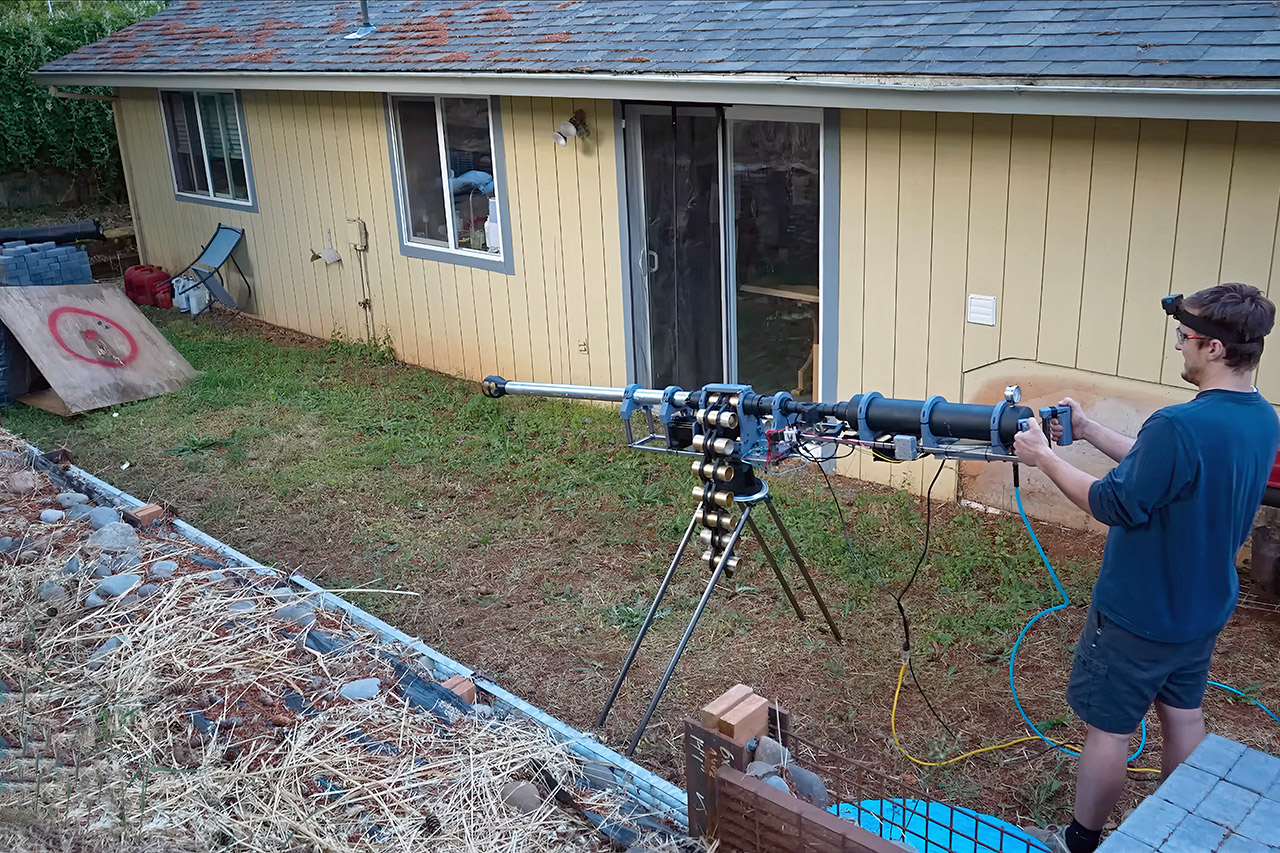
A long, sleek silver barrel spreads out in front of you, and you can’t help but stare. Behind it lies an ominous-looking black pressure chamber, missing just a sinister scowl. The brass-colored belt, which runs between those two parts, is loaded with one potato each tube. It’s all connected to a bipod for optimum stability, giving the entire thing a solid feel. Someone passing by might mistake it for a serious piece of equipment put up in the backyard.

Sale


Bambu Lab A1 mini 3D Printer + LED Lamp Kit, Set Up in 20 Mins, High Speed & Precision, Full-Auto…
  • A1 mini + LED Lamp Kit for Creative Light Projects: Bring your ideas to life with the included LED Lamp Kit. Simply print compatible lamp models and…
  • The Perfect 3D Printer for Beginners: A1 mini 3D Printer is designed to make 3D printing easy from day one with automatic calibration, simple setup…
  • Experience the Bambu Lab Ecosystem: Access MakerWorld’s huge library of ready-to-print models, manage prints through the Bambu Handy app, and enjoy…

The project began with an old air cannon that Current Concept already had. He simply slapped on a new pressure chamber that appears more traditional for a cannon, and then assembled the entire thing onto a steel frame that he purchased as a pre-cut kit from eBay. The frame had been held together with a powerful adhesive. The belt itself was an anomaly he discovered in the back of his closet, with each potato simply sitting within its own tube casing, ready for the firing sequence to begin.

Advertisement

DIY Belt-Fed Potato Cannon
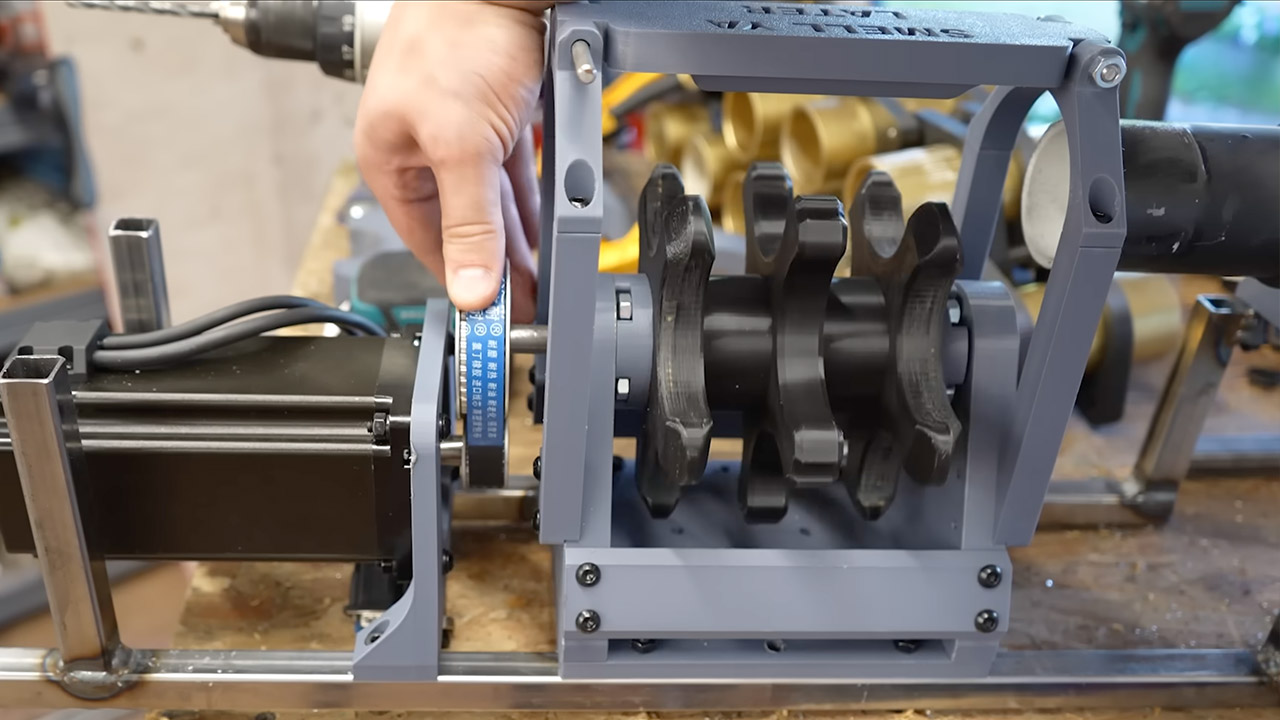
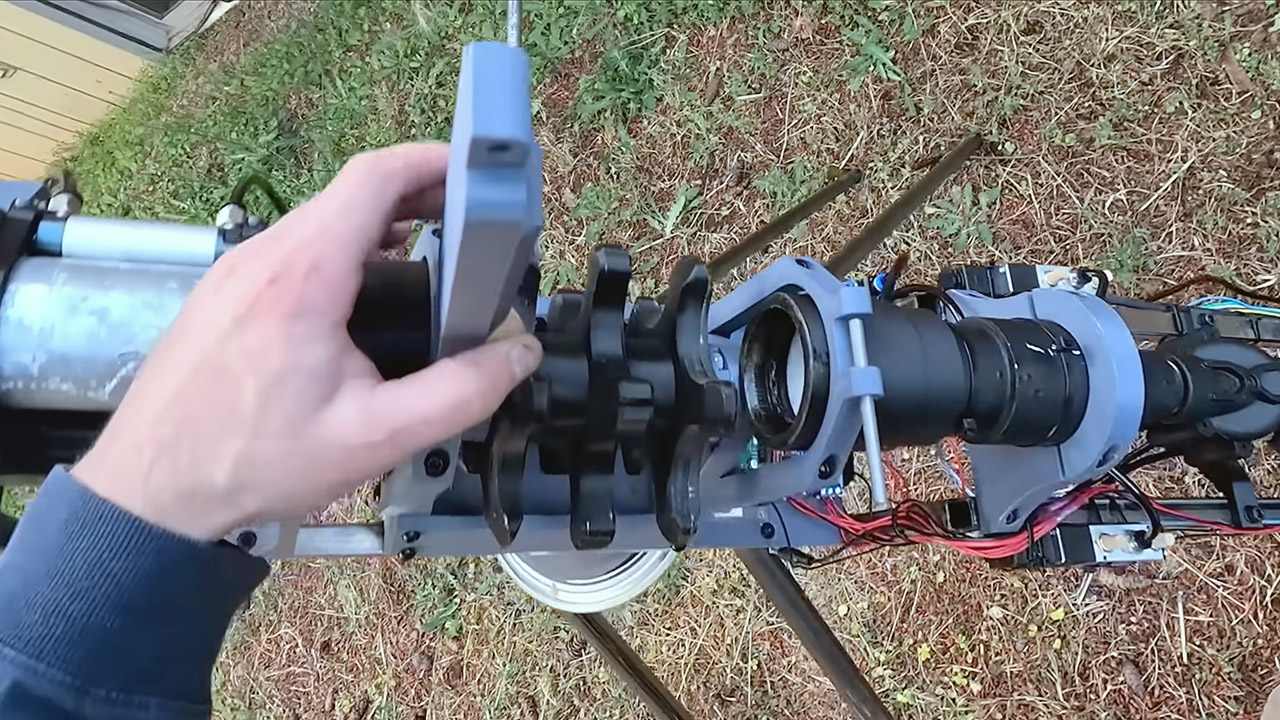
A 3D-printed indexer that resembles a nice little wheel powers the entire feeding mechanism. This is rotated around by a powerful stepper motor. You can count the motor steps and then use a custom-made key to ensure everything is lined up correctly. Initially, the indexer used a simpler star-shaped feeder that was prone to alignment errors. So a more detailed 3D model was constructed, and things began to operate smoothly, with the belt sliding in and out without snags.

DIY Belt-Fed Potato Cannon
Current Concept’s largest engineering problem was most likely sealing the device under pressure. At 60 to 80 pounds per square inch, any space between the chamber and barrel allows air to escape. However, Current Concept developed a solution in 3D-printed sliding coverings that are moved by pneumatic pistons. When a potato rotates into position, the pistons simply push the covers shut over the casing to form a temporary seal. The air then shoots through the chamber and out of the barrel, ejecting the potato. The covers then retract, the belt moves on to the next casing, and the process continues indefinitely.

DIY Belt-Fed Potato Cannon
Because the onboard reservoir can only contain compressed air for one shot, it is powered by an external compressor. This means that the launcher can only fire around once every six seconds while the chamber repressurizes. The mechanical components could cycle much faster, but the air supply is slowing things down, causing the rocket to function in semi-automatic mode for the time being.
[Source]

Source link

Continue Reading

Tech

Why The NES Put Out A Wobbly Picture

Published

on

The NTSC television standard is a masterpiece of mid-century engineering, to pack a color image into the transmission bandwidth of a monochrome one, and to do so while maintaining backward compatibility with earlier monochrome TV sets. In terms of its timings and choice of sync and carrier frequencies it’s elegantly thought out for maximum quality on a 1950s round-CRT color TV set.

The trouble is, that while the standards are exacting, the receivers are quite forgiving, and will display adequately even with substantially off-spec video. [Nicole Express] is here with an in-depth examination of a time when that was pushed just a little bit too far, explaining why the Nintendo Entertainment System (NES) displayed wobbly color images.

We’re treated to a run-through of the NTSC standard itself, and a look at how some of the other consoles and home computers of that era either had similar problems, or managed to avoid them. The key lies in the exacting timing required to achieve perfect interlacing, and the NES’s use of a single crystal to provide all the clocks. The dot clock on adjacent frames was almost right, but not quite, leading to a side-to-side wobble that while barely perceptible, was exacerbated by some graphics. It’s a fascinating read.

We’ve looked at composite video in detail in the past.

Advertisement

NES image: JCD1981NL, CC BY 3.0.

Source link

Advertisement
Continue Reading

Trending

Copyright © 2025