For some of us, there was a time — however long ago — when we would actually answer a call without knowing who was on the other end. For those of a certain age, answering the phone when it rang was just what you did, a behavior that stemmed from spending time around a landline — a now “ancient” technology, according to the kids. Thanks to the internet and the stunning transformation of cellphones that would eventually give us the smartphones that sit in our pockets today, the way we communicate has drastically changed.
According to a recent YouGov poll, 42% of people don’t answer calls from numbers they don’t recognize, while only 5% claim to answer calls regardless of the number that’s calling. The reasoning for unanswered phone calls is a bit of a nuanced topic, with different age groups having different preferences on what they consider to be the norm. However, one common thread among them is the growing problem of spam.
Advertisement
Spam communications are no longer just limited to calls, but increasingly moving to text messages, as Consumer Reports found that scam text messages have increased by 50%. The FCC has been battling robocalls and spam texts in a number of ways, and network carriers have also introduced their own tools in an effort to stem the tide of unwanted calls and texts. For T-Mobile customers, the company has Scam Shield with both free and premium benefits, and a report spam feature — here’s what you should know.
Advertisement
T-Mobile customers can forward spam messages to 7726
Piotr Swat/Shutterstock
T-Mobile, as well as most major carriers, allow customers to forward suspected spam messages to 7726 — which spells “spam” on most keypads. According to T-Mobile’s support documentation, “We automatically forward the message to the Security Center for analysis. The Security Center is a global system, run by a vendor on our behalf, that helps protect mobile phone subscribers from spam, fraud, and malware.”
T-Mobile also notes that its Security Center is linked to a global database to track and cross reference potential spam messages, and that those messages may be shared with government agencies in an effort to combat spam and fraud. Carriers also use this information to calibrate spam filters and improve other tools, which could include training machine learning, as carriers are relying more on AI to identify potential scam and fraud activity.
Scam Shield is T-Mobile’s flagship service for blocking fraudulent calls and robocalls. T-Mobile uses its own network data and machine learning in an attempt to identify and block spam, which includes spoofing, robo-dialers, and anything else that the network deems as “Scam Likely.” T-Mobile’s Scam Shield has been brought in under the company’s T-Life app, and costs $4/line to activate if you want all the benefits. Depending on your service plan, Scam Shield may be included in the price. Many of Scam Shield’s basic features are free to customers, including Scam ID, Scam Block, Caller ID, and Scam Reporting, and Callback Protection. Scam Shield primarily relies on the STIR/SHAKEN caller ID protocol, which has proven to be a major milestone for spam prevention.
The Scam Shield Premium features include the ability to block categories of callers (like telemarketers), a reverse number look up, and a voicemail-to-text service. Customer satisfaction with the service is mixed: some report a reduction in unwanted calls or texts, while others claim little has changed. Many seem to find the app itself unintuitive, with certain features buried in the user interface. Some people have also reported false positives, causing them to miss legitimate calls they needed to take. The overall sentiment seems to suggest that it’s better to stick what whatever plan T-Mobile provides for free rather than upgrading to a paid plan.
The planets Neptune and Uranus may be better described as “magma-ocean giants” rather than “ice giants,” according to a team of researchers from the University of California. Gizmodo reports:
While the Voyager flyby confirmed the planets’ classification as ice giants… [a]s the least explored planets in the solar system, the two planets have never been thoroughly investigated. Therefore, scientists aren’t sure where the planets originally formed in the early solar system or the reason for their wildly chaotic magnetic fields. A long-standing hypothesis suggests that both worlds have a hydrogen/helium atmosphere that covers a vast mantle of ices, made primarily of water, ammonia, and methane, with a rocky core. The new study, however, notes that the three-layer model of an ice giant’s interior structure is not the only way to explain the properties of the two planets.
The researchers also point out that objects found in the Kuiper Belt, which are thought to preserve evidence of the material in the outer Solar System where Uranus and Neptune formed, are primarily composed of rock rather than ice. For the recent study, the researchers simulated different models for the interior processes and composition of Uranus and Neptune. The model that best fits Uranus’s and Neptune’s different properties suggests the two planets have a well-mixed magma ocean with dissolved hydrogen at the bottom and a hydrogen-dominated envelope at the top. The model suggests that at high pressures, hydrogen gas can dissolve into magma, forming a well-mixed fluid. This mixing might help explain Uranus’s and Neptune’s density, which has traditionally been interpreted as evidence for an ice-rich interior. The article notes that the theory “could also help scientists understand the interior structure of sub-Neptune planets in the Milky Way, which have thus far remained a mystery.”
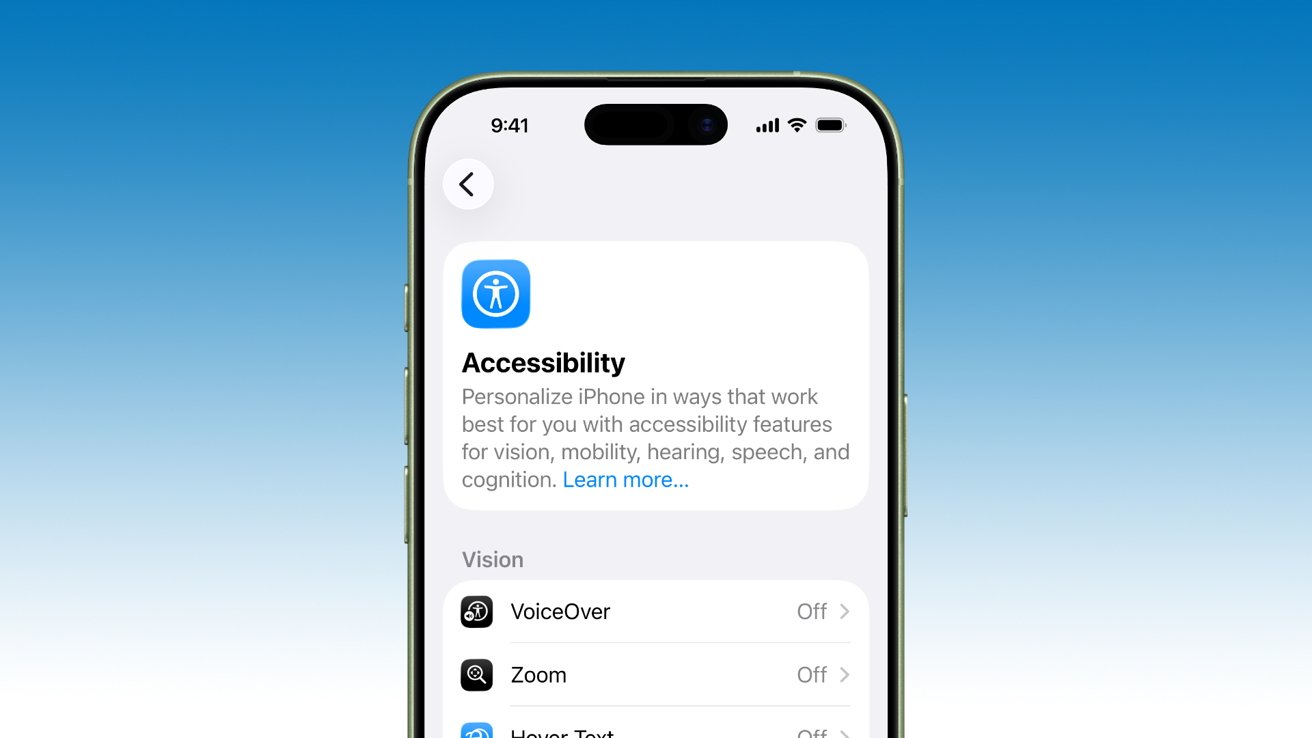
Apple’s accessibility settings are often overlooked, but many of them double as practical workflow tools that can speed up everyday tasks across iPhone.
iPhone accessibility features that can improve your workflow
When it first launched in 2007, the iPhone became an immediate target for criticism. Its touch-based interface was seen as exclusive of users with no or low vision. However, when 2009 rolled around, Apple was ready to start adding in features that were geared towards low-and no-vision users. This included VoiceOver, Zoom, and color inversion. Continue Reading on AppleInsider | Discuss on our Forums
The first proper holiday stretch of summer is here: Canada Day on July 1, America’s 250th birthday on July 4, and a few glorious days in which flags, fireworks, traffic, and questionable potato salad that took 3 days to assemble will compete for public attention. Before the inflatable eagle goes up and someone declares a gas grill “close enough,” this Editor’s Round-Up begins with Ofra Haza, whose connection to Yemeni musical tradition remains as powerful as ever, and Songs of Our Mothers from Kefaya and Afghan Hazara singer Elaha Soroor.
Released in 2019, the Bella Union album reworks folk songs traditionally performed by Afghan women into something vivid, defiant, and far more essential than another AI-generated summer playlist.
At the multiplex, horror has been having a rather good June while some much costlier studio ideas contemplate their own shallow graves. Toy Story 5 is leading the month, but Obsession, Scary Movie, and Backrooms have all landed near the top of the domestic chart, proving once again that a sharp premise, actual suspense, and an audience willing to be scared can still accomplish what nine-figure franchise maintenance cannot.
With Canada preparing for July 1 and the U.S. marking 250 years of independence on July 4, the soundtrack is ready, the movies are weirdly scary, and there is only one sensible next move: get the backyard braai going before somebody serves a sad burger directly from the package.
Ofra Haza, Elaha Soroor, and Middle Eastern Music That Makes Your Holiday Food Taste Rather Bland
Ofra Haza was one of Israel’s great popular singers: a Tel Aviv-born daughter of Yemeni Jewish immigrants who took the musical language of her family and community to a global audience without sanding off its character. Growing up in the working-class Hatikva neighborhood, she began singing young, became a major Israeli star, and then broke internationally with Yemenite Songs and “Im Nin’alu,” her electrified interpretation of poetry by the 17th-century Yemeni rabbi Shalom Shabazi.
She was not simply a crossover success. Haza helped place Mizrahi and Yemenite Jewish music at the center of the conversation, where it belonged, while proving that ancient melodies and modern pop could meet without either becoming a museum piece.
Advertisement
Haza was already part of my musical world as I began my teen years: elegant, dramatic, spiritually charged, and nothing like the mostly Anglo pop culture surrounding me in Toronto. As an Ashkenazi kid, I did not yet understand how much of that sound would eventually feel like home.
Nearly 21 years in the Sephardic and Syrian Jewish world later, I hear Haza differently: not as an exoticized “world music” detour, but as an artist carrying language, faith, memory, and family across generations. In Deal, NJ, a last name like White does not earn automatic kibbeh, yebra, or lachmagine privileges. White by name, perhaps, but not by musical taste or what ends up on my plate. Haza died far too young in 2000, at 42, from AIDS-related complications; the loss still feels enormous because there was nobody else quite like her.
Elaha Soroor
The move from Ofra Haza to Songs of Our Mothers is not a neat geographical handoff so much as a reminder that women’s voices, tradition, and resistance do not require a marketing department to be powerful. And credit where it is due: John DeVore turned me on to this one. The founder of DeVORE Fidelity builds his exceptional loudspeakers by hand in the Brooklyn Navy Yard, and he has the equally important qualification of having extraordinarily good taste in music. Not every speaker designer’s playlist survives the first side of an LP.
Released by Bella Union in 2019, Songs of Our Mothers pairs London collective Kefaya, founded by guitarist Giuliano Modarelli and keyboardist Al MacSween, with Elaha Soroor, the Afghan Hazara singer who was born in Iran to Afghan refugee parents and later fled Afghanistan after threats connected to her music and public profile. Soroor chose a collection of folk songs traditionally sung by Afghan women; Kefaya surrounds her voice with an adventurous but never cluttered mix of spiritual jazz, dub, Indian classical music, and electronica.
Advertisement
The result is not “world music” wallpaper for people who own one tasteful rug. These are songs of joy, grief, sensuality, survival, and defiance, carried forward by a singer who understands exactly what it costs for a woman’s voice to be heard. Soroor is commanding throughout, while Kefaya gives the material shape and propulsion without turning it into a fusion-food-court mess. Songs of Our Mothers belongs on the shortlist of records that reward serious listening, preferably through great speakers made in a former shipyard by someone who clearly knows the difference between music and noise.
Advertisement. Scroll to continue reading.
When Will Hollywood Learn Its Lesson?
Hollywood keeps insisting that audiences only leave the couch for giant franchises and nine-figure spectacle. Then three comparatively modest horror titles show up with actual hooks, creators who understand their audiences, and budgets that do not require the GDP of a small European nation to recoup. Curry Barker’s Obsession was made for roughly $750,000, though Focus Features reportedly paid $15 million to acquire it, and has reached about $370.1 million worldwide. Kane Parsons’ Backrooms cost around $10 million and has grossed roughly $330.1 million worldwide.
The Wayans brothers’ Scary Movie revival, hardly micro-budget but still a relative bargain at $30 million, has earned about $215.3 million worldwide. Together, those three films represent roughly $40.75 million in production spending and $915.5 million in global ticket sales. That is not a trend. That is a brick through the executive-suite window.
Advertisement
The comparison is especially brutal. Disney’s The Mandalorian and Grogu has taken in about $322 million worldwide against a reported $165 million production budget. Spielberg’s Disclosure Day stands at roughly $193.7 million worldwide from a reported $115 million production budget, with reports also placing its marketing spend near $80 million and its theatrical break-even point around $300 million.
To be exact, Obsession has beaten both films worldwide; Backrooms has also moved past The Mandalorian and Grogu; and Scary Movie has overtaken Disclosure Day but remains behind the Star Wars release.
So no, each film did not individually bury both Disney and Spielberg. Collectively, however, they have made the argument for smaller, audience-savvy genre filmmaking with the subtlety of a knife through a conference-table budget presentation. I am exactly the sort of glutton for punishment who watches all of this stuff, and even I came away from The Mandalorian and Grogu thinking the helmet should have stayed on.
As for Spielberg’s Disclosure Day, audiences appear to have made their own disclosure: enough already. This is the same filmmaker who gave us Jaws, Close Encounters of the Third Kind, Raiders of the Lost Ark, Schindler’s List, and Jurassic Park. Not every swing clears the fence, but this one barely made it out of the dugout.
Advertisement
The reason for this success is not complicated. Obsession and Backrooms arrived with built-in online communities, creators who already knew how younger audiences discover and discuss horror, and concepts that could be understood in a trailer without requiring six prior movies, a Disney+ subscription, and a family tree diagram. Horror also remains one of the few genres that creates a genuine communal reason to go to theaters: people want to jump, laugh, scream, and then argue about the ending with strangers in the lobby.
The lesson is not that every studio should chase liminal yellow hallways, possessed girlfriends, or another masked killer with a reboot clause. It is that original ideas, modest costs, and filmmakers who understand their audience can outperform expensive brand maintenance. Hollywood will almost certainly forget this by Tuesday.
A Braai, Not a Barbecue
A braai is, at its most basic, a South African barbecue. But in practice, it is usually more than throwing meat on a grill: it is a slower social ritual built around wood or coals, family and friends. Think boerewors, lamb chops, sosaties, pap, chakalaka, braaibroodjies, and enough opinion about fire management to make an audiophile cable forum seem emotionally stable.
Yes, Americans barbecue. We own grills, we burn burgers, we argue about brisket, and some of us even deploy propane with the grim confidence of people who think convenience is a personality. But a braai is not primarily about feeding people quickly. It is about the ritual around the coals: the host, the pace, the conversation, the shared labor, and the understanding that nobody should be rushing the fire.
Call it a barbecue if you must, but do not be surprised when a South African regards your gas grill the way I regard cable manufacturers who boast online that their “products” are best appreciated by high-net-worth men chasing a more holographic soundstage: like biltong displayed in a velvet case, something perfectly good made needlessly precious for people who confuse price with taste.
Advertisement
The odd thing is that I grew up around South Africans and nobody ever mentioned braais. Not once. I learned about them much later in life, when I had enough sense to understand that food traditions are rarely just about food. They are geography, family, memory, politics, hospitality, and occasionally a very serious argument over whether somebody has touched the meat before the braaimaster was ready.
Advertisement. Scroll to continue reading.
I had hoped to experience a proper one in Cape Town. That is not happening now, which is a genuine pity. There are worse things to miss, obviously, but few with the same combination of smoke, generosity, and the strong possibility that someone will insist you have another lamb chop.
Before you attempt your first proper braai, buy Sharon Lurie’s A Taste of South Africa with the Kosher Butcher’s Wife. It was a gift, I use it often, and it is magnificent: a smart, generous collection that brings South African classics and Jewish cooking together. There are braai recipes, biltong, ribs, roosterkoek, and proper meat dishes, and enough flavor to expose the limits of most July 4th menus.
Consider it required reading before you appoint yourself braaimaster, start giving orders around an open flame, and discover that Table Mountain is not the only thing in South Africa that will make you look small.
Valve’s new Steam Machine has already caused plenty of sticker shock. So it’s no surprise that a flood of cheaper alternatives is hitting the online market. Valve is currently charging over $1,000 for its tiny-living-room SteamOS PC, and of course, people are trying to offer the same feel for less money,
One listing from China is a great example, but it looks a little too suspicious. According to VideoCardz, a Steam Machine-style mini PC listing shared on Reddit claims to offer a compact SteamOS system with a 2TB SSD, AMD Ryzen 5 5500 processor, Radeon RX 6750 GRE 10GB graphics, 16GB of DDR5 memory, and a price of 4,680 RMB, or roughly $688. This sounds incredible… if it were true.
Why this listing makes no sense
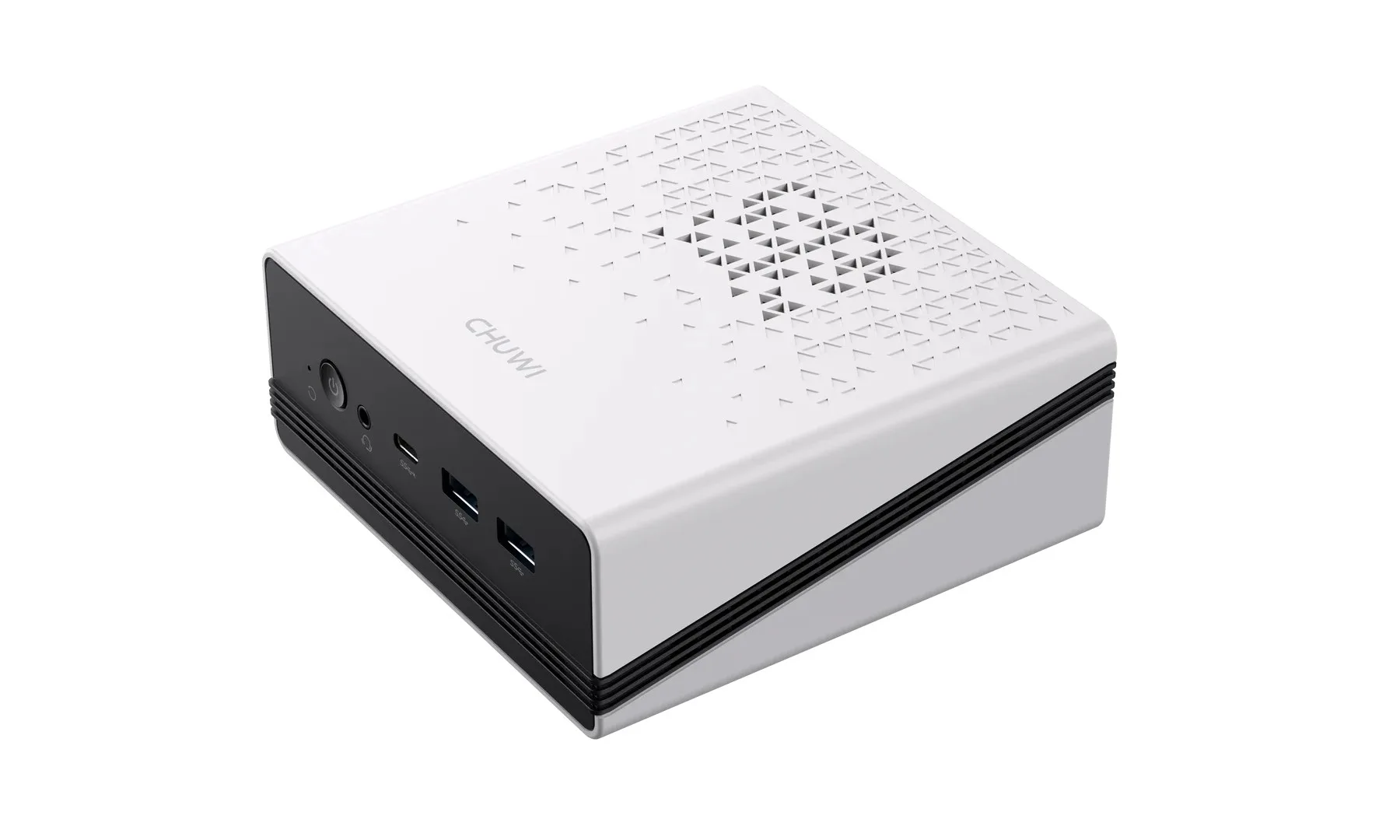
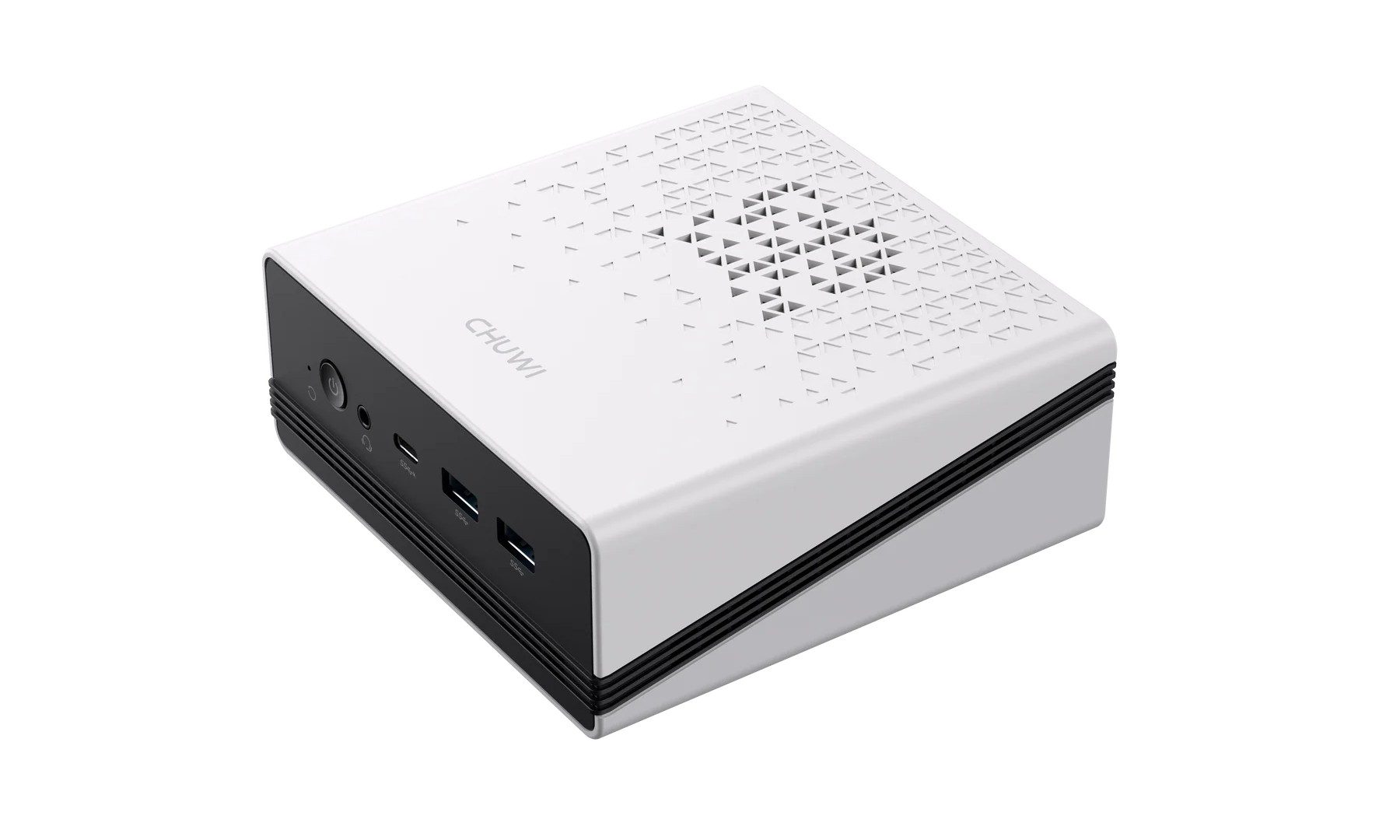
The first red flag is the claimed platform. The Ryzen 5500 is an AM4 desktop, which does not support DDR5 memory. However, the listing shows this processor with DDR5 memory. Then there is the GPU. The Radeon RX 6750 GRE is a desktop-grade discrete GPU, and not a tiny mobile chip that can fit inside a mini PC chassis. VideoCardz also notes that the listing image appears similar to CHUWI’s UBox, which uses mobile APU hardware and does not have room for a desktop graphics card.
How the pricing is suspicious too
Chuwi UBOX (for reference)Chuwi
Even if you believe the specs at face value, a quick check of the Chinese component pricing found that the parts alone get too close to the listed system price. Adding the GPU, SSD, RAM, Ryzen CPU, and motherboard, the pricing came to around 4,375 RMB, which is about $645. This does not even include the case itself, the power supply, the cooling components, or the controller shown in the promotional image.
Keep in mind that not every SteamOS-style mini PC is a scam, and the hardware combination could exist in a normal small form-factor system. The problem is that some of these components don’t add up, and the pricing is too low.
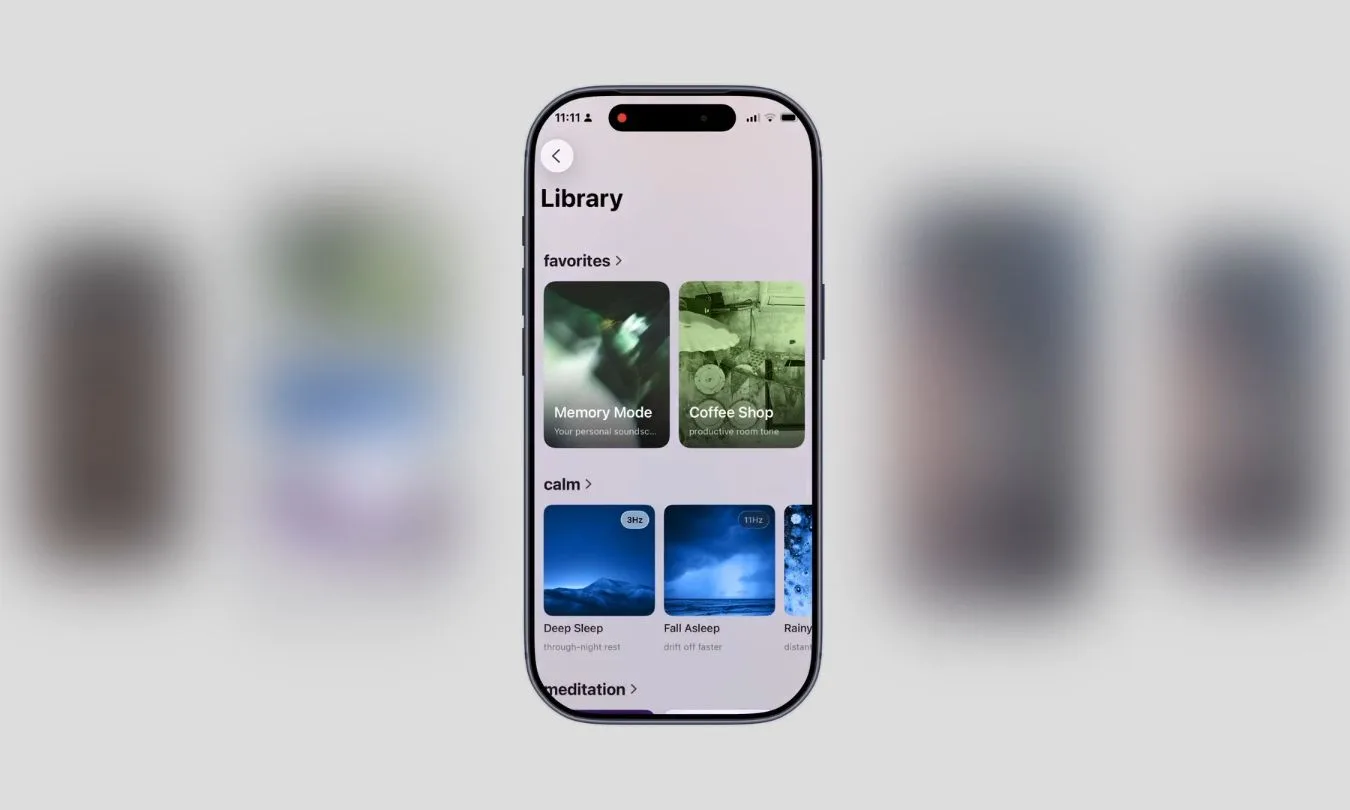
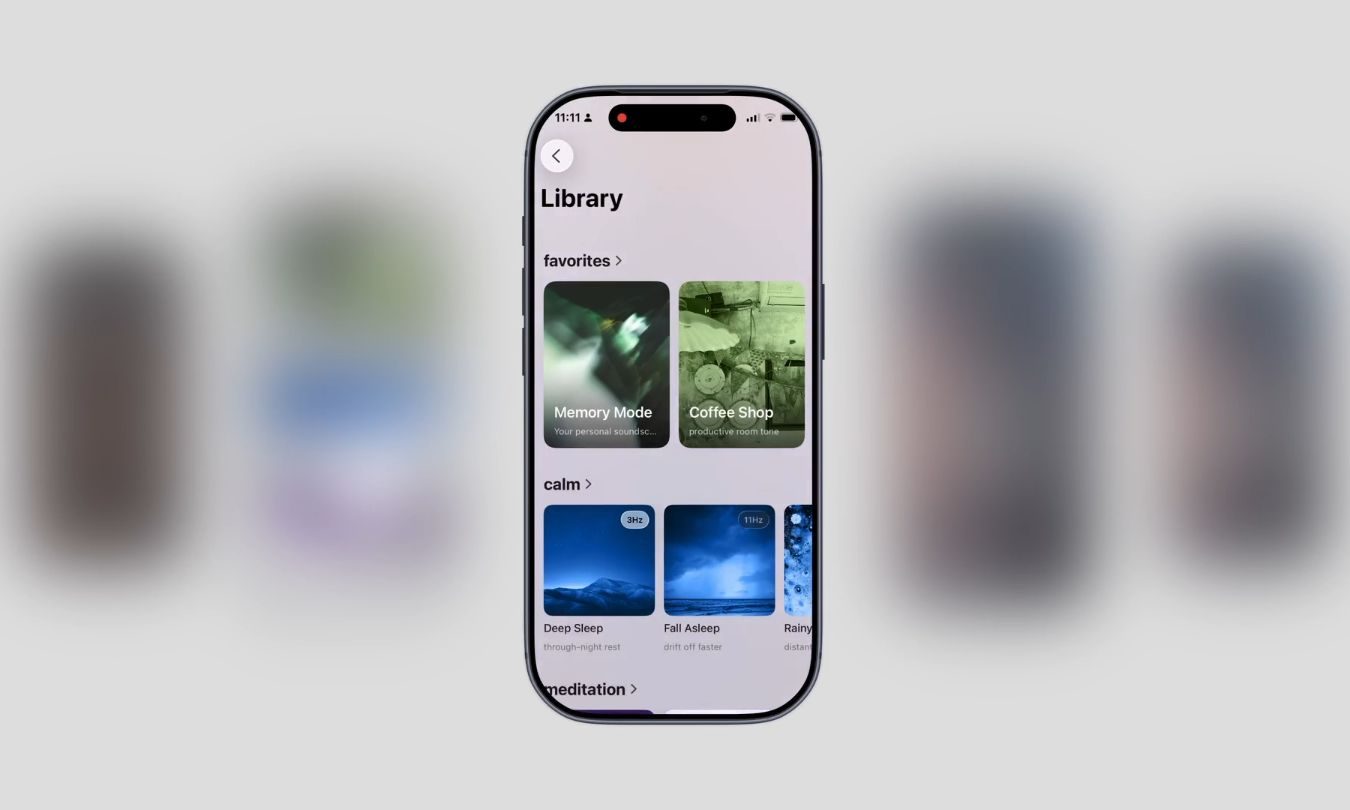
Oasis version 2.2 gives the free soundscape app a more useful place in daily routines. The iPhone update adds ready-made soundscapes, new audio options, and quicker ways to return to a setup when you’re trying to focus, fall asleep, meditate, or cool down.
The biggest change is a new library of 16 presets built around calm, meditation, focus, and energy. Oasis also adds more than 10 sounds, a mini player, session memory, background mixed audio, interface updates, bug fixes, performance improvements, and accessibility tweaks.
It’s still free, and the App Store listing says the developer doesn’t collect data from the app. For a calm app, that privacy detail helps. Nobody wants another account, dashboard, or data trail standing between them and a few quieter minutes.
What makes this update useful
Presets should make Oasis faster to use when you don’t want to tune every layer yourself. You can open the app, pick a mood, and start from a finished soundscape instead of building one sound at a time.
Advertisement
Oasis
The mini player gives the app a lighter feel during longer sessions. You won’t need to keep digging through the full interface just to manage what’s playing, and session memory helps bring back the setup you were already using.
Background mixed audio is the most flexible upgrade. Oasis can sit under music or podcasts, so you don’t have to choose between an ambient layer and something you’re already listening to.
How does Oasis build atmosphere
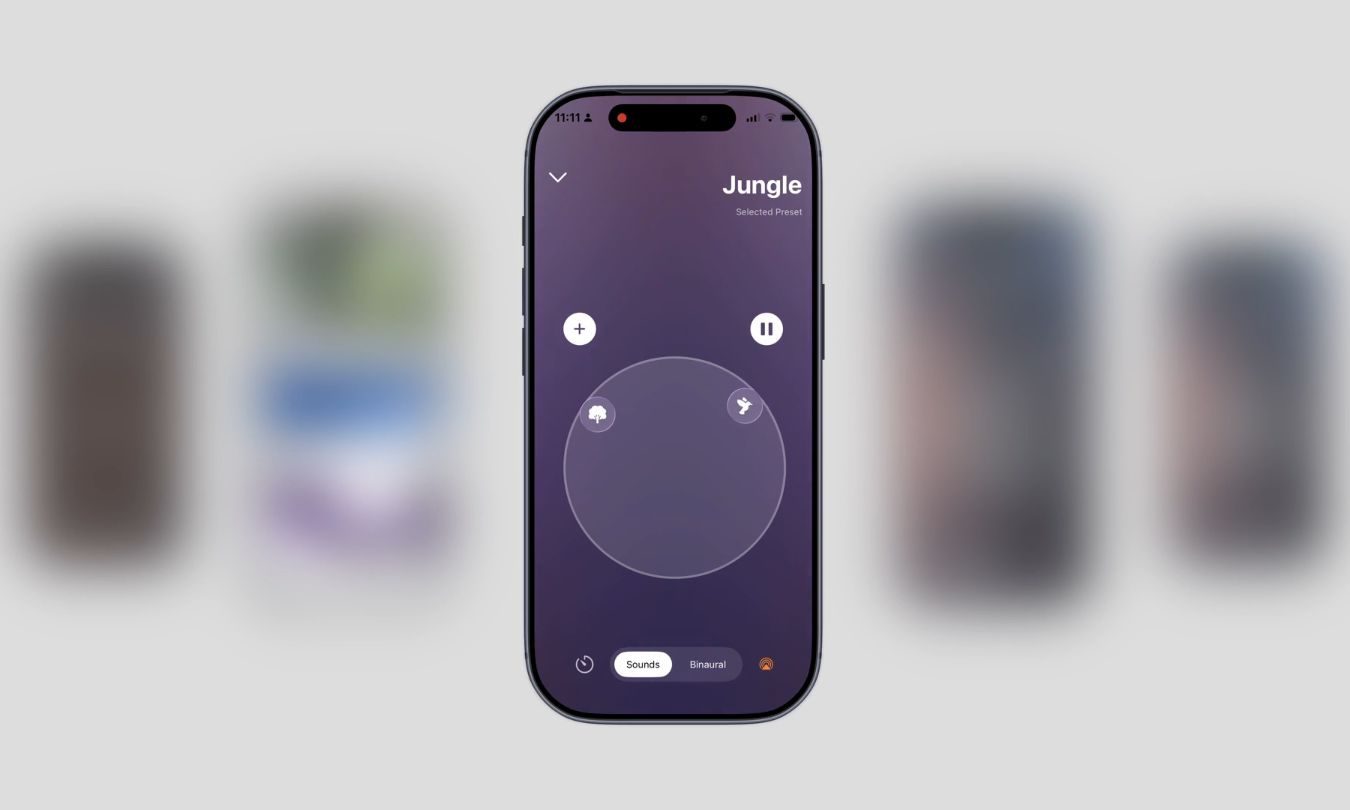
Oasis is built around spatial sound placement, letting users arrange nature sounds in a 3D audio environment. That gives it a more tactile feel than a standard loop player, especially when you’re stacking different sounds together.
The App Store listing also mentions binaural tones, which gives users another way to shape a focus or meditation bed. A sleep setup can lean heavier and softer, while a work session can stay lighter and less intrusive.
Oasis
Where does Oasis still have limits
Oasis has a focused job. It’s an audio environment builder, not a larger wellness platform with coaching, lessons, or a broad content library, based on the supplied information.
Availability also needs a careful caveat, since the App Store page provided confirms the Austria listing. For now, Oasis version 2.2 looks easiest to recommend as a low-friction first step. Start with the presets, then adjust individual sounds once one feels close.
NeuroBell hopes to nab US clearance for its AI neonatal monitor Luna this year.
Cork medtech NeuroBell has raised $5.5m in a round led by Elkstone to support the US push for its AI neonatal brain monitor. Not-for-profit Parkview Health, Furthr, Atlantic Bridge, Medtech Syndicate and Enterprise Ireland (EI) supported the raise.
He founded the University College Cork spin-out in 2023 alongside Dr Alison O’Shea and Colm Murphy, following nearly a decade of academic research into newborn brain health and AI-powered diagnostics.
Advertisement
NeuroBell’s AI monitor ‘Luna’ is capable of detecting seizures in newborns, a condition that generally produces no visible symptoms for ICU staff to catch. A lack of detection and treatment heightens risk for long-term brain damage in infants.
The pocket-sized, wireless electroencephalogram (EEG) enables bedside seizure detection with AI-assisted analysis and remote reviewing capabilities. The new raise will help NeuroBell work towards clearing Luna for use in the US in the coming months, the start-up said.
“Luna exists to put clinical-grade brain monitoring in the hands of every NICU [neonatal intensive care units] team, wherever they are. This investment gives us the resources to scale that vision to patients in the US and across Europe,” CEO O’Sullivan said.
NeuroBell recently established an US office in Fort Wayne, Indiana. It said that the investment from Parkview – a US community-based health system operating 15 hospitals with more than 17,500 staff – reinforces an existing partnership between the two.
Advertisement
“We are committed to bringing innovations to the bedside that help us detect and respond to conditions like seizures as early as possible,” said Parkview Health paediatric neurologist Dr Atiya Khan.
“NeuroBell’s technology represents a meaningful step forward in improving how we care for our most vulnerable patients.”
Don’t miss out on the knowledge you need to succeed. Sign up for the Daily Brief, Silicon Republic’s digest of need-to-know sci-tech news.
One September night in 2025, the luminous face of Baby Jesus appeared in the sky over the Vatican—clearly, verifiably, witnessed by tens of thousands. It was some two millennia after the Book of Revelation prophesied, in John’s apocalyptic vision, that “he is coming with the clouds, and every eye will see him.” Soon, the image transfigured into the late Pope Francis. In a spectacle at once holy and cyberpunk, the papal face blazing across the Roman sky was pixelated—composed not of divine light, but of drones.
Accompanying the apparition wasn’t a seraphic choir but two earthbound mortals, hundreds of feet below, singing “Amazing Grace”: the Italian tenor Andrea Bocelli and, bejeweled in gold chains and cross pendants, the face-tattooed American Teddy Swims. Later to appear above the basilica was a pointillistic rendering of a colossal Pietà, which soon reassembled into the two outstretched fingers of Michelangelo’s famous fresco. Some members of the crowd packed into St. Peter’s Square for “Grace for the World”—the first concert ever held on this holy ground—wept.
The “Grace for the World” show at the Vatican on September 13, 2025.
PHOTOGRAPH: Grzegorz Galazka/Getty Images
The drone show in the Vatican sky was produced by Nova Sky Stories, a company owned by Kimbal Musk, younger brother of Elon (who, in a sense, owns the rest of the sky with his rockets and satellites). One recent afternoon in San Francisco, Kimbal recounted that night to me. “In a world where all the religious people are fighting each other, it was really a powerful message,” he said. Kimbal is the folksier Musk, with his signature cowboy hat and air of a small-town mayor. He found it surreal to be in a WhatsApp thread where Vatican officials and representatives for Pharrell debated artistic direction.
Advertisement
You could say that the unlikely crossover between drones and the papacy has its origins, as these things do, at Burning Man. In 2021, when the event was canceled due to the pandemic, Kimbal convinced longtime burners to join him in Black Rock Desert for an unofficial gathering that became known as the Free Burn. Typically, Burning Man ends with the torching of a massive human-shaped effigy—the eponymous Man—but that year, the US Bureau of Land Management forbade desert-goers from lighting anything on fire.
Present at the Free Burn was Ralph Nauta, a Dutch artist who works with light and technology. Kimbal asked if he could perform a fireless spectacle for the final night, and Nauta obliged. A crowd gathered on the playa as Nauta released a swarm of drones that floated over the earth for a few minutes before snapping into the dotted contour of the Man. The crowd gasped, then roared. The figure slowly raised its arms, turned flame-red, and vanished. “Everyone, including me, we were just in tears, absolute tears,” Kimbal said. “It was one of the most emotionally powerful moments of my life.”
A year later, Kimbal founded Nova Sky Stories; investors in the company’s latest $50 million round included the Hollywood mogul Jeffrey Katzenberg, who joined the board after witnessing a drone show in 2022 at—where else?—Burning Man. A drone show has transformative properties, Kimbal said: “The cynic in you goes away. It’s like a mainline to the spiritual center.” He told me that Pope Leo, who watched the Vatican show from a nearby apartment, passed him a note afterward. “His words,” Kimbal said, “were that I made Michelangelo proud.”
BT and Verizon new joint venture could target $4 billion in annual revenue
The companies are targeting 3,000 global enterprises across 180+ countries
AI and cloud are the two primary selling points for this new joint venture
BT and Verizon have come together to form a 50:50 joint venture looking to serve around 3,000 multinational customers across more than 180 countries.
The official announcement details the creation of a new “scaled international connectivity platform” designed for a cloud-first, AI-first world.
Martijn Blanken has been appointed as CEO of the new joint venture, the name of which currently remains unconfirmed.
Latest Videos From
BT and Verizon target multinational enterprises in new JV
By combining their respective expertise, the two hope to provide enterprise customers more resilient global networking, more secure connectivity and infrastructure designed specifically for local laws, regulations and data sovereignty demands.
Advertisement
“Customers will benefit from new, secure and resilient connectivity platforms, which are designed for the age of AI and sovereign where it matters,” BT CEO Allison Kirkby noted.
“Our international customers require secure, flexible connectivity that works seamlessly across borders and cloud environments,” Verizon CEO Dan Schulman added.
The announcement also implies that, by spinning off a new JV for global enterprises, it would allow the two companies to improve focus on their domestic markets.
Advertisement
Sign up to the TechRadar Pro newsletter to get all the top news, opinion, features and guidance your business needs to succeed!
BT boasted about its “resilient communication and network services,” and Verizon said it would bring secure connectivity via its enterprise wireline arm.
Though it’s unclear which type of enterprises the JV will be targeting, it will likely bid on contracts for some of the biggest enterprises given the target of around 3,000 customers. Private enterprise networks, cloud connectivity, cybersecurity and cross-border connectivity will form the basis of the company.
According to the firms, the join venture could target around $4 billion in combined annual revenue.
KRA Consultancy Ltd fined £300K over fake bailiff threats in ‘calculated’ scheme that caused ‘real fear and distress’
“Am I confident on the data set? As long as I’m doing the cases, I don’t really give a f*** if it’s old as long as it’s making money.”
According to the UK’s Information Commissioner’s Office (ICO), this was part of a message sent by the director of a company fined for targeting financially vulnerable people with unlawful texts, including fake bailiff messages.
Advertisement
The message, sent by KRA Consultancy Ltd (KRA) director Khuram Rezvan Ahmad, appeared in the watchdog’s monetary penalty notice, which said the firm did not check “the loan decline data was accurate” or whether the recipients had consented to receive marketing messages.
The regulator fined KRA £300,000 last week, saying it had targeted people who were already in financial difficulty and had been turned down for loans. The watchdog described the operation as a “calculated, unlawful scheme,” saying the fake bailiff messages had left recipients fearing that bailiffs were coming to their homes to remove their family’s belongings.
The ICO said KRA sent fabricated bailiff threats in the hope of scaring recipients so much that they would then engage with the company’s debt services. The fake messages were sent using the sender ID “DEMAND.”
It read: “We have attempted on numerous occasions to contact you without any success. This matter has escalated further and an Enforcement agent will attend ****** within 48 hours to remove your goods as per Court Order. If you are on any legal/debt plan you will need proof readily available.”
Advertisement
The ICO also claimed the company deliberately tried to evade detection. It alleged that Ahmad had contacted a telecoms provider based in China and sought assurances from the telco that the mass text messages would be “completely untraceable.”
KRA promoted debt “solutions” to people, sending 5,575,715 unsolicited direct marketing texts between April 2022 and May 2025, the watchdog said.
The campaign generated more than 60,000 complaints to the ICO and Mobile UK’s 7726 spam-reporting service.
The company was not registered with the Financial Conduct Authority, despite directing people towards debt solutions, the ICO added.
Advertisement
In internal WhatsApp messages uncovered during its investigation, the ICO said Ahmad used the term “coaching” as a euphemism for the threats.
“Get through as much as and pitch whatever. Don’t worry about forcing anything back because the coaching will take care of that tomorrow morning.”
During the ICO‘s investigation, search warrants were executed at KRA’s offices and Ahmad’s home. The watchdog said KRA resumed its unlawful marketing activity following the searches, leading to 161 new complaints.
Andy Curry, head of investigations at the ICO, said:
Advertisement
“People in financial difficulty deserve support, not exploitation. KRA deliberately sought these people out – knowing they might be especially susceptible to this kind of high-pressure marketing – and bombarded them with illegal texts. When that wasn’t enough, it sent fake threats telling people bailiffs were coming to their homes to remove their belongings. This was a calculated, unlawful scheme, and it caused real fear and distress to people who were already struggling with debt.
“KRA showed complete disregard for the law throughout our investigation and this £300,000 fine – one of the largest for nuisance marketing in recent years – reflects that. It should leave no doubt that we will pursue any company that thinks it can evade the law and prey on the public.”
Alongside the Monetary Penalty, the ICO also issued KRA with an Enforcement Notice, ordering the company to stop sending marketing messages without consent within 30 days. ®
The prediction market platform said the incident took place on Thursday morning and affected a “small number of users.” Read Entire Article Source link





























































You must be logged in to post a comment Login