

On stage at Davos in the Swiss Alps earlier this year, Bill Gates, before an audience of the global do-gooding elite, announced a $50 million partnership between his foundation and an unlikely new ally, OpenAI, aimed at improving healthcare in Rwanda.
Tech
How to get notified when a website changes in iOS 27


iOS 27 is now available to install on iPhone 11 and newer, and includes plenty of new features. One that’s particularly caught our eye is found within Safari.
With iOS 27, you can now receive notifications whenever a specific webpage changes within the Safari app. That means you can be notified if a product you’ve had your eye on for ages finally comes back in stock, or if an artist updates touring dates on their website.
It’s easy to set up and could save you from missing out. Follow our steps below to learn how to get notified when a website changes in iOS 27.
Want more about iOS 27? We’ve rounded up 14 tips and tricks of the new update, and explained how to adjust the transparency of Liquid Glass too. Or, if your phone won’t support the update, visit our round-up of the best iPhones to find your next purchase.
What you’ll need:
- An iPhone running iOS 27
- Safari app
The short version
- Open Safari
- Visit the website page you want to track
- Tap the page Settings
- Select Notify Me
- Describe what you’d like Safari to look for and when
- Tap Next
- Allow Notifications
-
Step 1.
Open Safari

Open the Safari app on your iPhone. Remember to make sure you have iOS 27 installed on your device.
-
Step 2.
Visit the website page you want to track

Find the exact page of the website you’d like to be notified about. For example, it could be for a product that’s out of stock or for a show you want to get tickets for. In our instance, we’re tracking the best smart rings page to be notified of new entries.
-
Step 3.
Tap settings

At the bottom of the screen, to the left of the address bar, you’ll see three horizontal lines. Tapping this will open up Safari’s Settings.
-
Step 4.
Select Notify Me

Tap Notify Me.
-
Step 5.
Describe what you’d like Safari to look for and when

Here you’ll need to tell Safari what it is you want to be notified of. So, if you want to be told when a product comes back in stock, then simply type this.
You can then tell Safari how often you’d like it to check the website. You can choose either hourly, daily, weekly or monthly, and adjust the time, plus the day of the week (for weekly searches), or the exact date (for monthly searches).
-
Step 6.
Tap the blue tick

Once you’re happy with your instruction, tap the blue tick button. Just note that you might need to wait for a few moments before the blue tick appears at the top right corner, but it will. If it doesn’t, then try again.
-
Step 7.
Allow Notifications

You may be prompted to allow notifications from Safari. Tap Allow.
Troubleshooting
Can I cancel a Safari notification?
Yes you can cancel a Safari notification and get it to stop tracking a website. To do this, simply visit the webpage again, open up Safari’s Settings and tap Notify Me. From here, you’ll find your existing notification, and the ability to delete it.
Continue Reading

Just a month earlier, the Gates Foundation had released a harrowing report about widespread global health cuts and collapsing foreign aid infrastructure, documenting a rise in child deaths for the first time this century. But at Davos, even as the US hemorrhaged funding for vaccines, maternal healthcare, and HIV treatment, the Microsoft co-founder struck an optimistic tone.
“Using innovation, using AI,” Gates told Reuters, “I think we can get back on track.”
As it turns out, the partnership was just an opening salvo for what’s become a wholesale embrace of AI by the world’s largest global health philanthropy. A $200 million partnership with Anthropic came just a few months later. And then, this Tuesday, the Gates Foundation announced a plan to dole out a jaw-dropping $1 billion over the next two years for scaling up AI interventions across healthcare, education, and agriculture around the world.
The sense that AI will soon change everything, and mostly for the worse, has perhaps never felt so pressing and alarming as it does right now. But this hefty new commitment is premised on the idea that AI could eventually make our lives much better too. In a country like America, AI requires massive investments and buildout — in the grid, in power, in technology, in water. In many parts of Africa, already infrastructure-poor, the foundation is effectively betting that AI can compensate for some of the infrastructure that isn’t in place or that has been lost — and offer a new layer that can help in education, in delivering healthcare, and more.
The Gates Foundation’s new commitments include projects to improve how farmers analyze their crops, how doctors diagnose patients, and how students learn. Some have already proven to be quite effective, according to the foundation, with one tool improving the accuracy of medical diagnoses by 16 percent across several Kenyan clinics. “In poorer countries with enormous health worker shortages and lack of health systems infrastructure,” Gates wrote on his blog earlier this year, “AI can be a game-changer in expanding access to quality care.”
Last year’s foreign aid cuts were unfathomably destructive for some of the world’s poorest countries, shuttering thousands of clinics and perhaps hundreds of thousands of classrooms in places where critical workers and supplies were already stretched thin. No, AI cannot deliver a baby, administer a vaccine, or manage a classroom — not yet, at least — but it can, the Gates Foundation hopes, help ease the burden and augment the quality of care for nurses and teachers now tasked with serving far more people than any one person should.
“This is the most transformative technology of our lifetime,” Mark Suzman, CEO of the Gates Foundation, told me, and while there are “very real risks and challenges” surrounding AI, it also presents genuine opportunities to tangibly improve many people’s lives.
It is a tantalizing premise: we can’t afford to build clinics, hire teachers, or lay new power lines, but perhaps AI could create the digital infrastructure needed to help billions of people do more with what they have — or rather, with what’s left. The question is, can the right layer of innovation help bolster a buckling system, even as the physical and logistical infrastructure surrounding it crumbles?
Is AI really what global health needs right now?
Most Americans have yet to see AI improve their lives in meaningful ways, much less those living in poverty or in countries where only a sliver of the population has ever used ChatGPT.
But those numbers in the developing world are slowly changing, a shift enabled in part by other global health funders convinced that as foreign aid dries up, AI could soon help the world do more with less. The Trump administration itself is on board with this thinking, so long as it benefits American tech companies. Last year, the State Department announced a $150 million partnership with the drone company Zipline to transport medical supplies in several countries.

To Zipline’s credit, an NPR reporter in Rwanda last month found that the company’s drones were already saving lives in places with poor road infrastructure, where driving to the nearest hospital can take hours on winding hills, but where drones can deliver crucial blood transfusions within minutes.
And yet, for Rwandans to benefit fully from these high-tech deliveries, they need staffed clinics to visit. As a result of foreign aid cuts, some of those literal landing spots are now on the verge of closing in some of the nation’s most vulnerable rural corridors. “Without the underlying infrastructure, like roads, energy and power and unless there is accessibility, rural and otherwise,” Enoh Ebong, president of the global development department at the Center for Strategic and International Studies, told NPR, “then all of these solutions will stop short.”
But just as medical delivery drones still need a clinic to fly to, most of these interventions require some layer of physical infrastructure — roads, schools, power, and quite obviously, broadband — to function. Satellite imagery shows that some rural communities in sub-Saharan Africa quite literally went dark in the aftermath of USAID cuts. It will be much harder for their kids to prompt an AI math tutor, or for a local farmer to download a weather app.
“We’re seeing this very much as a both/and,” Suzman told me, calling more traditional funding for education and healthcare “the bedrock for long-term economic growth,” which AI is meant to supplement, not replace. But, in practice, foreign aid cuts have left serious cracks across much of that bedrock, which could make it harder for state-of-the-art solutions to function as intended.
It is obviously not incumbent on the Gates Foundation to pay for all of this alone – nor would it even be feasible for them to do so. And for the record, plenty of the foundation’s other grant programs are not AI-related at all. But this tension does speak to a broader question that may be felt most acutely in a context like global health, but ultimately one that touches us all: Do we spend our scarce resources on the digital infrastructure of the future at the peril of our needs right now? Could you justify buying the new $1,999 folding iPhone if you can barely afford to buy groceries?
The answer is not actually always an easy one. It is not for us to say, for example, that just because a community lacks reliable running water, its people should be excluded from the benefits (and encumbrances) of the smartphone, especially if that smartphone can connect them to health advice they could never access otherwise, or guidance that could help them survive a drought.
In some parts of the world, digital forms of banking arrived long before local brick-and-mortar branches did, instantaneously connecting countless people to a cheap and secure way to save and send their cash to family and friends in need. It is certainly possible that AI, or at least the kind of applications the Gates Foundation funds, could one day have a similarly transformative effect on how people access personalized levels of care, education, and other services in places without the resources to do so otherwise.
That is the hope, but it is also hard right now to believe uncritically in a technology that, as Gates himself blogged just last month, “will either be the greatest equalizer ever invented, or the worst source of injustice,” ushering in “one of the most turbulent times in human history.”
In an interview with the New York Times soon after, he seemed convinced that AI will likely do more harm than good. “I don’t like bringing bad news to people, and I don’t like saying that innovation may be a net negative,” he said. “But that’s where we are.”
Now he wants billions of people around the world to use it? Yes, Suzman said, because if not, then inevitably the best parts of AI — the potential for exponentially better cancer treatments, for example — will go only “to those who can pay for it,” while the worst parts of it will fall, as they so often do, on those who benefit the least. “These decisions are being made now,” he said, “and the decisions being made now will then probably shape the following two decades.” Here’s hoping they’re good ones.
Tech
From school nuggets to insect kibble: How the next generation of faux meats aims to win over skeptics
geekwire.com/positivecharge (publish that page or it 404s).
============================================================ –>
.pc-sub-wrap{container-type:inline-size;}
.pc-sub{background:#0f3d33;border-radius:6px;padding:12px 16px;margin:14px 0;font-family:Helvetica,Arial,sans-serif;font-size:14px;line-height:1.5;color:#fff;}
.pc-sub strong{color:#a3e635;}
.pc-sub a{color:#fff;text-decoration:none;white-space:nowrap;}
/* collapse when the strip’s own width is tight */
@container (max-width:620px){
.pc-sub{font-size:13px;padding:10px 12px;white-space:nowrap;overflow-x:auto;-webkit-overflow-scrolling:touch;}
.pc-sub .pc-full{display:none;}
}
/* fallback for browsers without container-query support */
@media (max-width:560px){
.pc-sub{font-size:13px;padding:10px 12px;white-space:nowrap;overflow-x:auto;-webkit-overflow-scrolling:touch;}
.pc-sub .pc-full{display:none;}
}
Subscribe to Positive Charge:
Apple Podcasts,
Spotify,
Amazon Music,
All Episodes
More than 40 years ago, the first commercial veggie burger made its debut in London markets as packets of dehydrated ingredients that were mixed with water and shaped into patties. Today’s alternative proteins are unrecognizable in comparison, featuring cell-cultivated meats grown in brewery-style stainless steel tanks, fake sushi and faux burgers that “bleed.”
The sector saw a surge in the early 2020s to become a $1 billion market, but enthusiasm has wilted of late. Beyond Meat, for example, has seen its stock plummet following its 2019 IPO, and only 11% of U.S. households purchased faux meat last year.
Yet repeat purchases remain strong, global demand is rising, and academic research as well as entrepreneurial R&D are advancing the field.
“Any new emerging technology always goes through challenges in scaling, economics, [and] consumer acceptance,” said Rohan Shirwaiker, director of the Bezos Center for Sustainable Protein at North Carolina State University. “The trajectory, I think, is in the right direction.”
Alternative proteins fall into three categories, and they can be combined in some products:
Plant-based: Made from ingredients including soy, beans, peas, lentils and wheat.
Fermentation-produced: Uses organisms such as fungi, bacteria, yeast and algae to act as ingredients themselves or as tiny factories producing compounds including proteins found in milk or eggs, or specific fats.
Cell-cultivated meats: Derived from animal cells and grown in nutrient-rich broth, then coaxed into fat or muscle tissue.
Consumers buy alternative proteins because of environmental concerns around climate impacts and the land and water footprint of livestock; health worries about cholesterol and saturated fats; and ethical objections to factory farming. And experts say that as the global population grows, there won’t be enough beef, chicken and fish to meet protein needs.
But there are significant hurdles to adoption. The faux meats are generally more expensive. People are unsure about the technologies used to make the foods. Consumers need to adapt to different flavors and textures and have worries that the alternatives are “ultra-processed” foods.
Nuggets for schools

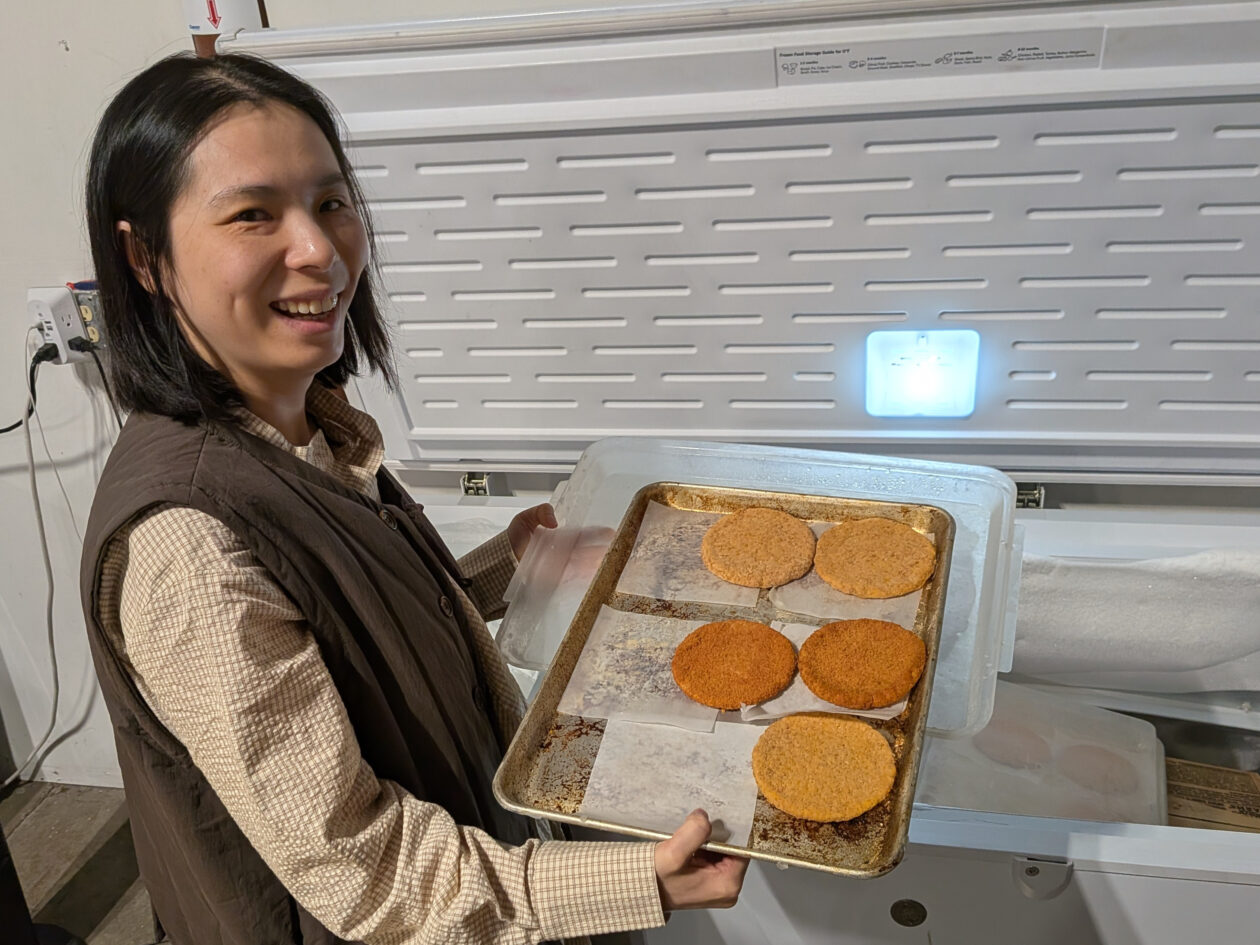
Rebellyous Foods, a startup churning out faux chicken nuggets for 6 million U.S. school kids, runs its R&D operations out of an office park south of Seattle.
“We want people to feel good about what they eat, and so our products have a relatively short ingredient list,” said Christie Lagally Bradburn, founder and CEO of Rebellyous. That includes soy protein, yeast-based flavoring and salt, oil and water, and a binder called methyl cellulose found in products such as bread and salad dressing.
Despite being derived from plants, the Rebellyous kickin’ nuggets have a meat-like texture absent the gristle and mystery bits. The flavor, Lagally Bradburn said, is often compared to Campbell’s chicken noodle soup. The brand also has spicier options targeting food service at hospitals and correctional facilities.
Lagally Bradburn’s background is in designing manufacturing equipment, including roles at Boeing creating tools to build airplanes faster, better and cheaper. An ethical vegan, she wanted to apply that skill set to replacing meat, and in 2017 she launched Rebellyous to do it. Her goal: an automated, continuously operating system for producing affordable and tasty fake chicken products.
The company developed its Mock 3 system, capable of producing more than 5,000 pounds of faux chicken per hour. The device was installed in a facility north of Seattle, but the operators recently shuttered the site on short notice. So Rebellyous is working with its long-term partner in New Mexico which uses a conventional manufacturing system.
The hope is to find a new home for the Mock 3 while also developing its Mock 4, a smaller, cheaper, simpler device.
“Our goal is to run a financially sound company, to be there for the schools,” Lagally Bradburn said, as well as play a role in addressing climate change, human health and animal welfare issues.
Cricket kibble

While Rebellyous targets human food service, other startups are focused on four-legged consumers. About a decade ago, Anne Carlson was planning a career change when her daughter shared that she didn’t want children due to climate worries.
“I realized that I couldn’t just do a normal job after that,” she said. “Building a better future for her was everything.”
Carlson, a pet-industry veteran, noted UCLA research showing U.S. pets account for 25% to 30% of the environmental impact of domestic meat consumption. That led her to pursue insects as alternative proteins for pets, starting with crickets, then adding black soldier fly larvae.
In 2020, her company, called Jiminy’s, became the first in the country to be approved by the FDA and an association that regulates animal food standards to sell cricket-based dog foods.
“It’s less land, less water and almost no greenhouse gases,” Carlson said of the bug proteins. One acre of land used to raise 265 pounds of chicken protein will provide 60,000 pounds of cricket protein.
Jiminy’s sells kibble, treats and dental chews that provide essential amino acids and show benefits for dogs with allergies and digestion issues. The products typically cost more than animal-based foods, but are cheaper than prescription diets.
The San Francisco Bay Area startup still has to win over owners who are squeamish about insects — but they needn’t be, Carlson said.
“People think that when they open the bag, it’s going to be a bag full of bugs. It is absolutely not that,” she said. The product looks and smells like typical dog food, so “it’s not scary at all.”
Path to profitability

One area of growing concern centers on ultra-processed foods and whether alternative proteins fall under that category.
Shirwaiker, director of the Bezos Center, notes that while some products contain high sodium or fat, processing itself can be beneficial by removing harmful elements, improving texture and preserving nutrition.
“If we are using processing to get the right texture, something that consumers will like without sacrificing the nutrition, I don’t think that’s a bad thing at all,” he said. “So it’s really a matter of perspective and trying to separate process from nutrition in some way.”
Rebellyous and Jiminy’s leaders said they clearly disclose ingredients and keep them simple to put those fears to rest. The biggest hurdle, both said, was bringing down costs while supply-chain prices keep rising.
Even so, the startups are on the verge of profitability, their CEOs said. Carlson said Jiminy’s operates in the black some months and is growing faster than the pet industry overall. Because Rebellyous primarily serves schools, it’s profitable during much of the year, but business slows in the summer, Lagally Bradburn said.
Both founders remain optimistic about the long-term horizon.
“Sometimes when you’re in it, it can be hard to see the forest for the trees,” Lagally Bradburn said. “But the truth is that overall, the world is becoming more sustainable.”
Sources and references
Interviews:
- Rohan Shirwaiker, distinguished professor and director of the Bezos Center for Sustainable Protein at North Carolina State University
- Christie Lagally Bradburn, founder and CEO of Rebellyous Foods
- Anne Carlson, founder and CEO of Jiminy’s
Additional sources:
- “The History of the Veggie Burger,” Smithsonian Magazine, March 19, 2014
- Analyzing plant-based meat & seafood sales, Good Food Institute, 2025 data
- “An Extension Guide to Alternative Proteins,” Bezos Center for Sustainable Protein at NC State
- “Environmental Impacts of Food Production,” Our World in Data
- “This plant-based chicken startup is bucking alt-protein trends with a new production milestone,” GeekWire, Jan. 5, 2026
- “The truth about cats’ and dogs’ environmental impact,” UCLA, Aug. 2, 2017
Lisa’s favorite protein nut balls:
- 1 C old-fashioned oats
- 1 C peanut butter, other nut butter, or combo
- ⅓ C honey
- ⅓ C chopped, roasted nuts (peanuts, almonds, pecans, etc.)
- ⅓ C semi-sweet or bittersweet chocolate (chips or chopped)
- 2 Tbs protein powder
- 1 tsp vanilla extract
- ¼ tsp cinnamon
- ½ tsp salt
- ⅓ C shredded coconut (optional)
- 2 Tbs chia seeds (optional)
- Combine all ingredients in a large bowl and mix well.
- Form into balls measuring about 2 Tbs, arrange on a pie tin or plate, chill.

At CES 2026, Hisense unveiled the S6 FollowMe, which is company’s response to the growing lifestyle TV category that includes Samsung’s MovingStyle and LG’s StanbyME 2 portable TVs. All are going after users who want screens that follow their daily routines, not dictate them.
Whether it’s streaming, video calls, recipe browsing, casual web use, or light smart-home control, the S6 FollowMe, along with its competitors, is positioned less as a TV replacement and more as a mobile digital hub that fits into real homes without demanding a redesign.
However, since its CES debut, there is a new wrinkle to the story. Hisense has made the strategic move to rename the S6 FollowMe as the RoamView, with the model number 32S6S.
Hisense RoamView vs. LG StanbyME 2 vs. Samsung MovingStyle: What They Have in Common
These TVs, or more accurately smart displays, are built around the idea that screens should adapt to how people use them rather than lock users into one room or one position. Instead of being anchored to a wall or cabinet, these displays are designed to move throughout the home, shifting between entertainment, light productivity, and casual interaction depending on where and how they are being used.

The RoamView
The RoamView features a 32-inch 4K UHD touchscreen mounted on a wheeled stand that supports tilt, rotation, height adjustment, and easy movement around the house.
The display can shift from floor height to table height using the included pedestal base or easel stand, making it practical to use from a couch, desk, kitchen counter, or dining table without forcing awkward viewing angles.

Since the RoamView is designed to be moved around as needed, it incorporates a rechargeable battery with a 10-hour use life. Also, it features an anti-glare, low-reflection screen to accommodate different lighting conditions. Built-in Wi-Fi 6 support provides the bandwidth needed for stable streaming, browsing, and smart-home interaction. The RoamView also provides access to Google Gemini AI Assistant.
Stacking Up Against Samsung and LG
Although the Hisense RoamView, LG StanbyME 2, and Samsung MovingStyle have a lot in common, each offers its own take on this growing TV and smart display category. For a deeper look at all three options, check out our previous article on the Hisense S6 when it was previously announced at CES 2026.
Price & Availability
The Hisense RoamView (model 32S6S) is available for $1,199.99 at Best Buy and Amazon.
Related Reading:


Caviar returned to its favorite Apple relic and sealed a scrap of Steve Jobs’ black turtleneck inside the company’s first foldable phone. Only nine iPhone Duo Jobs Editions will leave the workshop. Each one costs at least $15,990, close to eight times the $1,999 starting price of a regular 256GB Duo.
Apple unveiled the Duo on September 9. When closed, the 5.4-inch outer Super Retina XDR screen conducts ordinary chores. When the 7.6-inch inner display is opened, it becomes the largest screen Apple has ever used on an iPhone. Grade 5 titanium, a precision hinge designed to disguise the crease, two 48-megapixel cameras, the A20 Pro CPU, and Touch ID in the side button remain exactly as Apple designed them. Caviar avoids making contact with the hardware.
Sale

Samsung Galaxy Z Fold8 Unlocked Android Smartphone, 256GB Graphite
- CREATED FOR YOUR CONTENT: Any way you turn it, the new Galaxy Z Fold8 gives you a fuller viewing experience. Designed with your content in mind, this…
- WORLD’S LIGHTEST FOLD¹: Galaxy Z Fold8 is the newest foldable phone for content on the go. Unfolded, it fits movies and books for an immersive…
- THE BRIGHTEST DISPLAY ON A GALAXY PHONE: Our brightest smartphone display² provides you with a comfortable view, whether you’re inside or outside…
Caviar’s treatment includes a raised three-dimensional Apple logo with a verified remnant of the turtleneck Jobs wore during NeXT demonstrations. A PVD-coated titanium central panel rests beneath polished titanium, with guilloché engraving on the upper part and frame. Jobs’ signature is inscribed in the metal. Each unit is accompanied with a multi-level certificate.

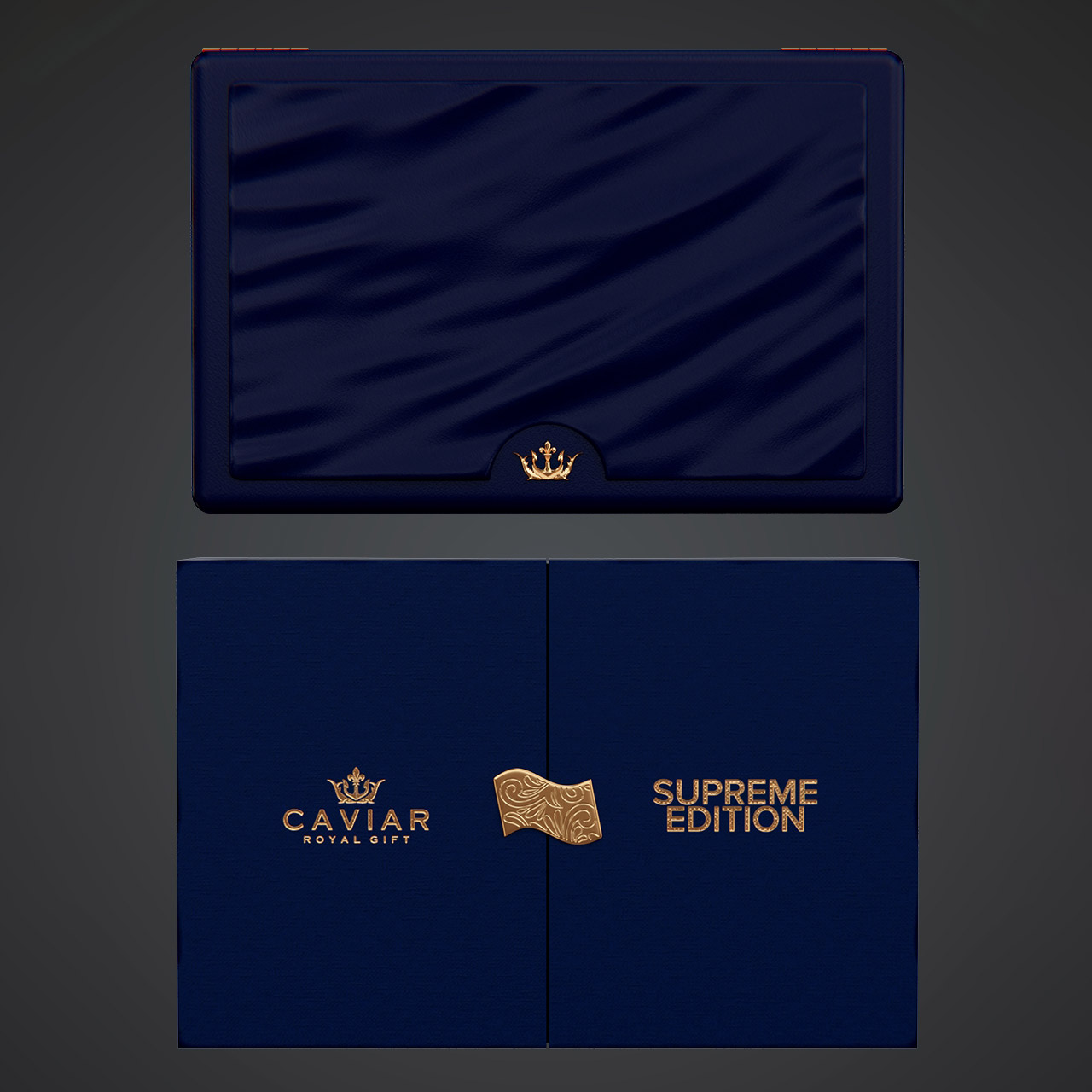
Packaging follows the same collector logic. A locked outer case plated with 24-karat gold houses a wood-and-leather Blue Wave box, a gold-plated Caviar coin, and the standard signature key. Production begins after payment and typically ships within a few business days.
Caviar used the same strategy on the iPhone 17 Pro earlier this year, inserting a near identical scrap of fabric in nine phones that sold for just over $9,600 and immediately sold out. Instead, this version uses Apple’s newest and most expensive form factor. Other Caviar Duo customized use crocodile leather and gold, but the Jobs Edition features a genuine piece of the company’s creator.

Most VPN apps protect only the device they’re installed on, leaving smart TVs, game consoles, and security cameras completely unshielded.
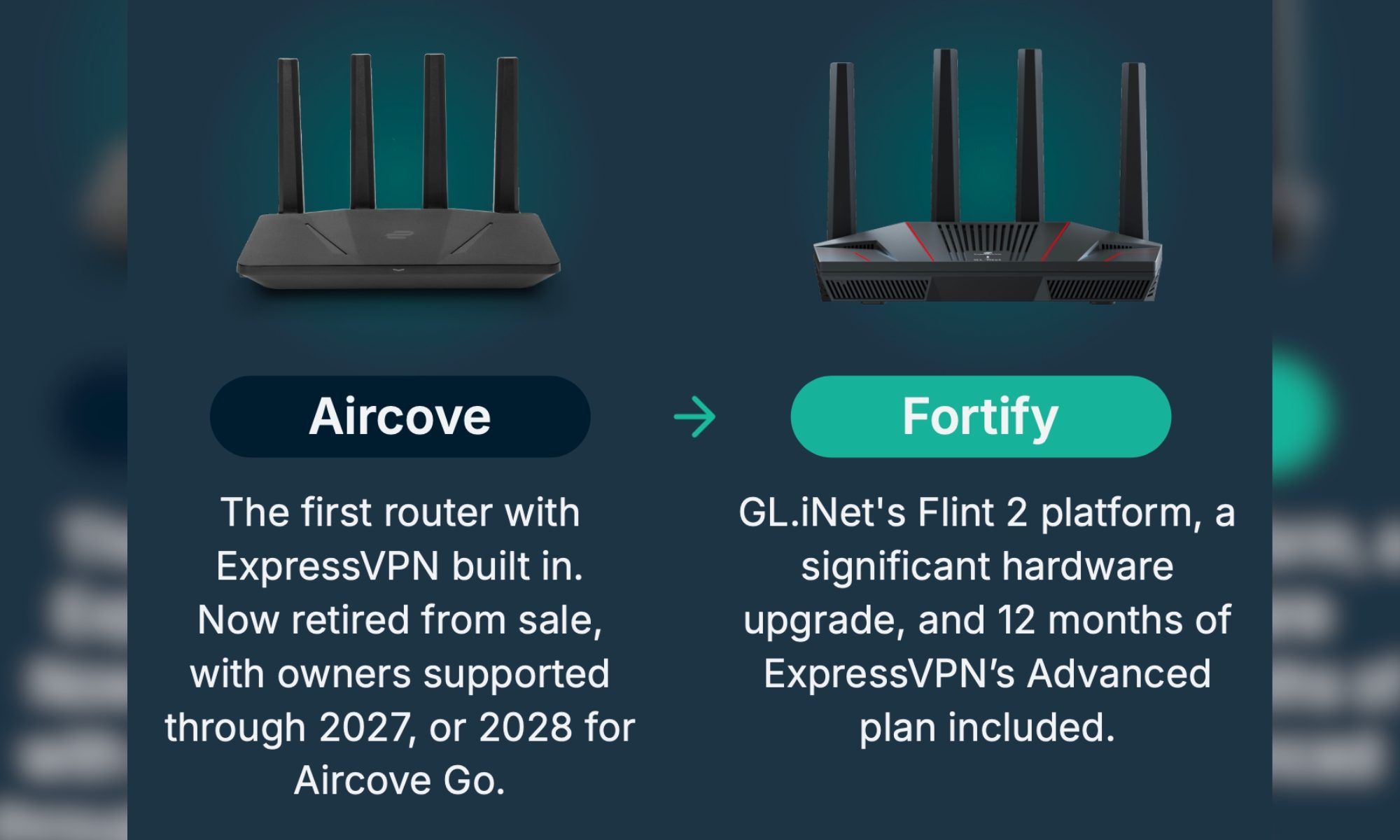
ExpressVPN’s solution has long been network-level encryption via its dedicated routers, but its latest release shifts gears entirely. The newly announced Fortify router replaces the aging Aircove lineup with a substantial hardware upgrade.

So what exactly changed with Fortify?
Built in partnership with GL.iNet on its Flint 2 platform, Fortify swaps Aircove’s dated Wi-Fi 5-era hardware for Wi-Fi 6 AX6000 with 4×4 MU-MIMO. That also brings a generational jump in overall VPN throughput.
WireGuard speeds now reach up to 900Mbps, nearly triple Aircove’s 330Mbps ceiling. A quad-core processor and genuine Multi-Gig ports back the speedy, protected connection and keep up with modern fiber connections. The new router has six ports total: two 2.5 Gbps Multi-Gigabit Ethernet ports and four 1 Gbps Gigabit LAN ports.
Whether it’s a multi-device smart home setup, a remote working setup, a small business that’s operating out of a house and its garage, or a multi-cabin office setup that spans across the floor, the Fortify router can not only handle multiple devices at once, but also keep the entire network safe and encrypted.
What happens to Aircove?
Aircove and Aircove Go are both being pulled from sale. However, existing owners will still get security updates through 2027 and 2028, respectively. To help with the upgrade, the company is also offering a 20% discount toward Fortify.
Every Fortify purchase also bundles a full year of ExpressVPN’s Advanced plan (around $120 in value), plus a password manager, email privacy tool, and a few days of travel eSIM data. Fortify launches September 16th at $199.99, first through GL.iNet’s own site. Amazon availability will follow shortly after.
Aircove
Fortify
Wi-Fi standard
AX1800, 2×2 MU-MIMO
AX6000, 4×4 MU-MIMO
VPN speed (WireGuard)
Up to 330 Mbps
Up to 900 Mbps
Ethernet ports
Standard Gigabit
Two 2.5 Gbps + four 1 Gbps
Device capacity
Limited
Up to 86 devices, 1,500 sq ft
The real story is partnering with GL.iNet rather than building hardware in-house. It lets ExpressVPN focus on the VPN and privacy software it’s known for, while outsourcing router engineering to a company with a proven platform in the Flint 2.

South Korean memory chip giant SK Hynix is in discussions with Intel to manufacture RAM chips in the U.S. for the first time, Reuters reported, citing anonymous sources.
The companies have reportedly discussed various options, one of which would have SK Hynix leasing space at Intel’s planned factory in Ohio to manufacture the chips. The chipmakers are also said to be considering a joint venture that could include cloud-service providers.
SK told TechCrunch on Wednesday that nothing has been finalized yet. “SK Hynix is exploring various options to strengthen its global competitiveness, but no specific plans or arrangements have been finalized at this time,” the Korean semiconductor company said in a statement. “No decisions have been made regarding the two scenarios mentioned in the article.”
The Korean chip giant, which has benefited massively from skyrocketing demand for high-bandwidth memory RAM chips used in data centers for AI applications, is already building a $3.8 billion advanced packaging and research facility for AI chips in West Lafayette, Indiana, with mass production expected to begin in 2029. The factory will use DRAM wafers made in South Korea and package them into HBM chips.
It remains unclear what types of memory chips the company would produce in Ohio if the deal goes through.
As a global chip shortage worsens, the Trump administration is seeking to expand production on American soil. The White House said in January that it could impose broader tariffs on semiconductor imports while offering tariff relief to companies investing in domestic manufacturing.
SK Group Chairman Chey Tae-won signaled support for U.S. chip production in July, saying the company should build factories in the U.S., if feasible, alongside those in South Korea’s Honam region. That month, the chipmaker listed its American depository receipts on the Nasdaq, broadening its access to American investors.
The potential deal with Intel could face scrutiny at home. Seoul holds that the decision would be up to SK Hynix, but any plan involving strategically important chip technology could trigger a government review under a law designed to prevent sensitive technology from being transferred overseas, according to Reuters.
Intel and SK Hynix have done business before: In 2020, Intel sold its NAND flash-memory business to SK Hynix for $9 billion.
Intel did not immediately respond to TechCrunch’s request for comment outside regular business hours.
When you purchase through links in our articles, we may earn a small commission. This doesn’t affect our editorial independence.
In Huntsville, Alabama, home to one of the nation’s largest cybersecurity hubs, educators and industry professionals are rethinking what cybersecurity education can look like.
Rather than separating classroom instruction from workplace experience, they are co-designing learning environments where students build cyber ranges, develop industry-informed capstone projects and secure internships that connect learning directly to future careers.
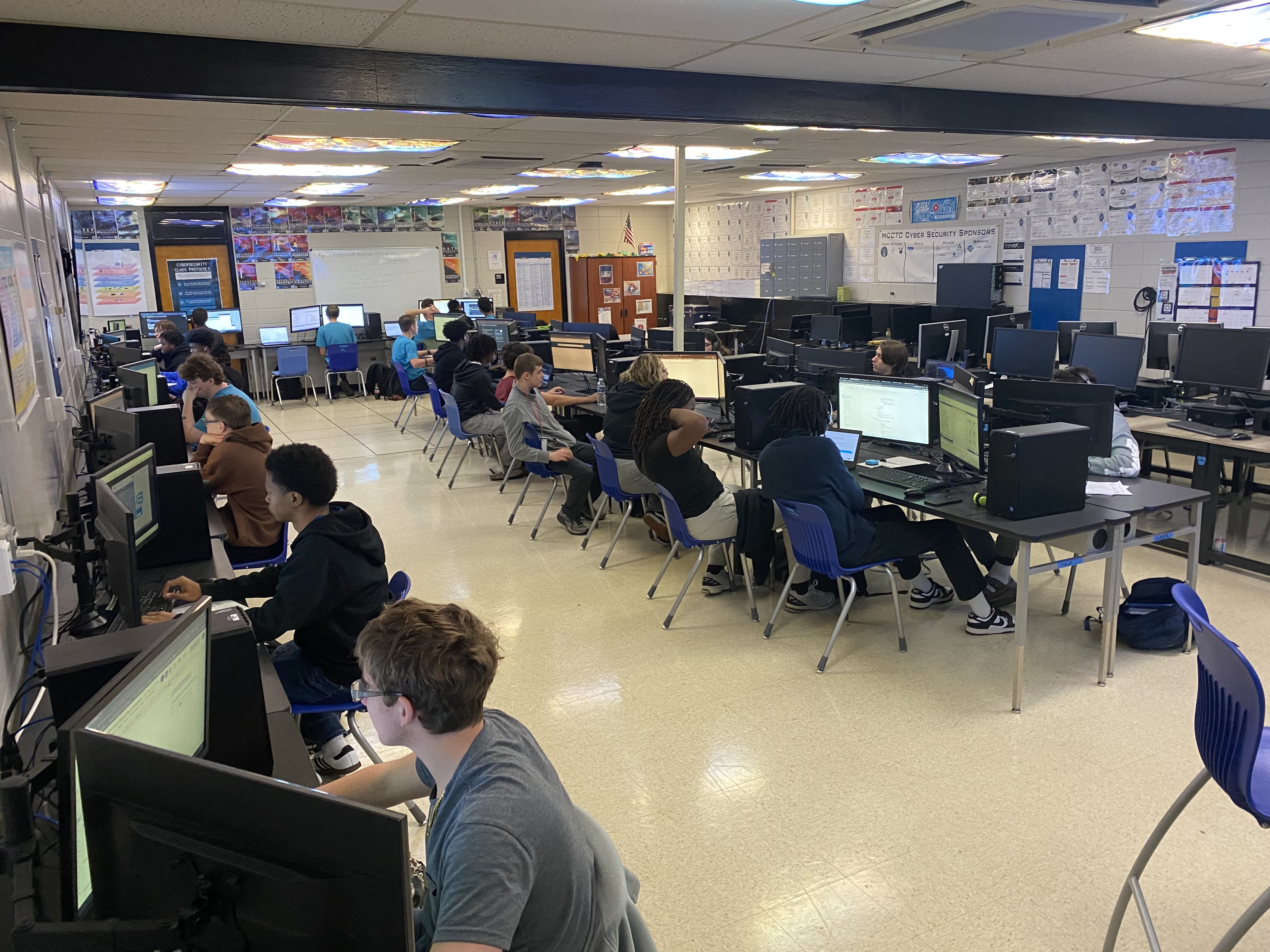
At the Madison County Schools Career Technical Center, cybersecurity instructor Kala Jo Grice-Dobbins is showing what that looks like in practice. Working alongside industry professionals, she is creating a classroom where students learn not only technical skills, but also how cybersecurity professionals think, collaborate and solve problems.
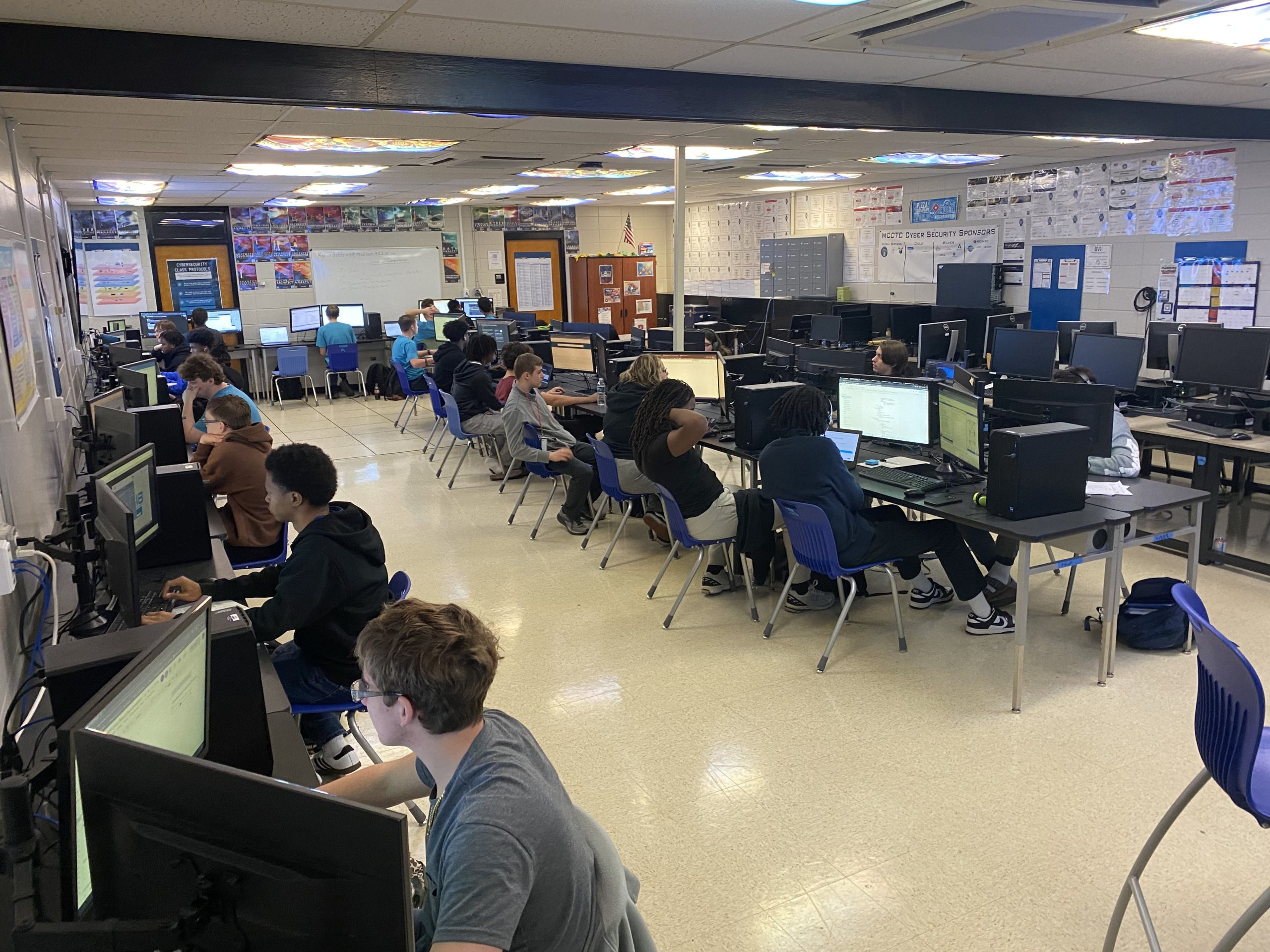
The students of Kala Jo Grice-Dobbins, cybersecurity instructor at Madison County Schools Career Technical Center, participating in the national CyberPatriot competition.
Expanding What is Possible in the Classroom
The Alabama Technology Education and Career Pathways Accelerator, created by the STEM Foundation with district pathway implementation support from Digital Promise, helps districts ensure technology pathways lead to an industry credential of value by connecting educators with industry partners, work-based learning opportunities and resources aligned with workforce needs. For Grice-Dobbins, participating in the Accelerator became an opportunity to deepen those partnerships and rethink how students experience cybersecurity in the classroom.
Working alongside industry mentors, Grice-Dobbins built a classroom that looks and feels more like the environments students will encounter after graduation. Students work in a private cyber range across Windows and Linux environments, troubleshoot unfamiliar problems and prepare for senior capstone projects modeled after real cybersecurity work.
“Cybersecurity isn’t about memorizing answers,” Grice-Dobbins explained. “It’s about learning how to think through problems.”
Beyond the school year, Grice-Dobbins collaborates with industry partners and students to continue improving the program based on industry needs and learner goals.
During her four years teaching cybersecurity in Madison County, Grice-Dobbins’ students have secured internships with regional defense contractors and accepted positions that require security clearances. Eight students have completed internships through the program, creating a growing network of alums whose success after graduation is showing younger students what is possible.
Industry Brings the Workplace Into the Classroom
For industry professionals, this collaboration is an opportunity to share expertise, shape authentic learning experiences and mentor students at a deeper level.
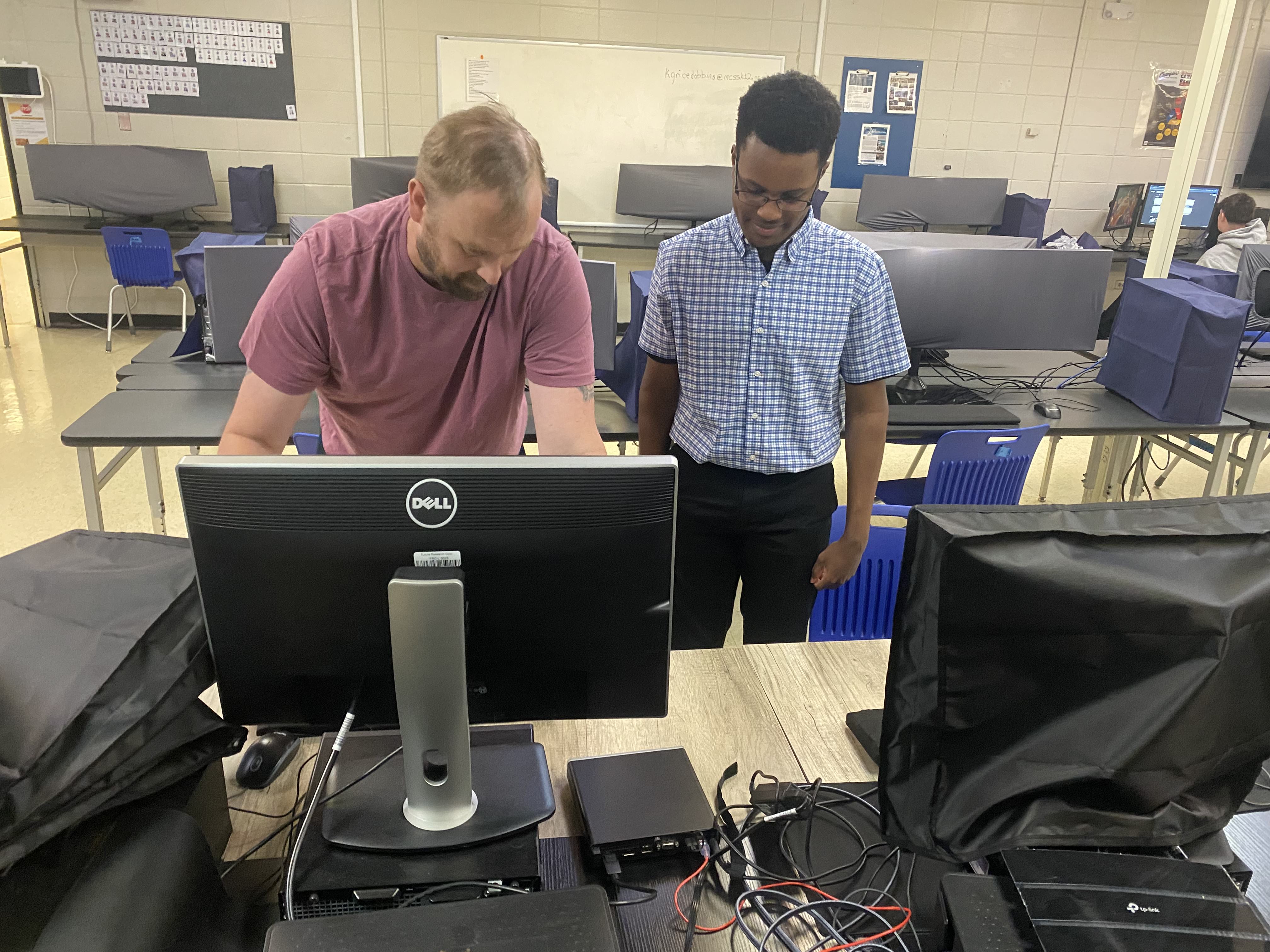
David Hoover, a customer success manager at Canvas and an active member of Cyber Huntsville, helped design a government-style restricted network that gives students experience working in environments similar to those used by public-sector employers. He also advises senior capstone projects, helping students experience how cybersecurity teams solve problems, collaborate and communicate in professional settings.
Industry partner David Hoover, a Customer Success Manager at Canvas and an active member of Cyber Huntsville, gives a student a demonstration of how to create a private testing and learning environment in Linux.
Dr. Ian Clark, a technology leader at Science Applications International Corporation and cybersecurity mentor, has seen the long-term value of these collaborations throughout his career. Dr. Clark believes a simple shift has fundamentally changed how students learn: “There is no workbook.”
Rather than visiting the classroom for a single presentation, Hoover and Dr. Clark are involved throughout the learning process. They help shape projects, advise students as they work through challenges and provide feedback informed by current industry practice.
That sustained engagement gives students access to technical expertise and to professional expectations, communication styles and problem-solving approaches that are difficult to replicate through curriculum alone.
Seeing a Future in Cybersecurity
Jaxton first discovered cybersecurity during a freshman visit to the Madison County Career Technical Center. His father had sparked his interest in computers, and he immediately knew he wanted to join the program.
Over the next three years, that curiosity became a career path. Through industry-recognized certifications, increasingly complex projects and his senior capstone, Jaxton developed the technical skills and confidence to pursue cybersecurity after graduation. Along the way, he learned to think critically, leverage emerging technology to create solutions and work alongside industry mentors.
Experiences like internships, capstone projects and mentorship do more than build technical skills. They help students begin to imagine themselves as part of the profession. Rather than viewing cybersecurity as an abstract career, students understand where they fit, what they contribute and what opportunities are available after graduation.
Today, Jaxton plans to continue studying cybersecurity after graduation. More importantly, he no longer sees the field as something other people do. He sees himself in it.
Looking Ahead
The work taking shape through Alabama’s Technology Education and Career Pathways Accelerator demonstrates what’s possible when educators and industry professionals co-design learning together. As classrooms evolve alongside one of the nation’s fastest-changing industries, students gain more than technical knowledge. They gain confidence, professional connections and a clearer vision of where they belong.
For school systems looking to strengthen career-connected learning, the lesson extends beyond cybersecurity. When educators, employers and students collaborate to shape authentic learning experiences, classrooms become places where young people go beyond preparing for future careers and begin participating in the work those careers involve.
Tech
Man who faced three felonies for destroying a fake Flock camera has charges reduced to misdemeanors

In context: Remember the recent bizarre case of a man charged with three felonies for destroying a Flock surveillance camera, despite it being a fake decoy? It seems Florida police have had an attack of common sense and reduced the charges to misdemeanors.
It was reported in late August that Evan Meyer, 24, was being charged with counts of criminal mischief causing more than $1,000 in damage, grand theft involving property valued between $750 and $5,000, and damaging or taking a computer, electronic device, or related equipment. All felonies.
Meyer believed he was destroying a Flock camera, a crime that has become increasingly common as anger toward the company intensifies. But in reality, he was destroying a 3D-printed decoy.
To say those charges seemed excessive is an understatement. For a start, a real Flock camera costs only around $800, not including installation fees, so a 3D-printed shell is obviously going to be valued much lower.
However, 404Media reports that Meyer’s charges were drastically reduced in a filing by an assistant state attorney this week. The felonies have been reduced to two second-degree misdemeanor charges.

The filing reveals that the damage to the camera, which he allegedly inflicted with garden shears after knocking it off a pole, came to $200 or less. He has also been charged with petty theft involving property worth less than $750.
The sting operation was prompted by several of Oviedo’s cameras disappearing. The police department’s solution was to 3D-print the shells, attach them to poles around the city, and then get officers to monitor the poles for multiple nights.
Lessening the severity of the charges isn’t too surprising when even the mayor, who was unaware of the decoy operation before the arrest, admitted that they were controversial.
There’s little doubt that most people have supported Meyer, as Flock has been behind a slew of negative headlines this year.
Those reports have included officers allegedly using Flock cameras to stalk former partners, police justifying database searches with entries such as “LMAO” and “idk”, and the company reinstalling cameras without permission after a California city canceled its contract and removed them.
With cities dropping Flock at a record pace, its reputation has become so toxic that police have even asked rival Axon to redesign its cameras so people stop mistaking them for Flock’s. And let’s not forget that it’s not just license plate readers that are the problem: camera-equipped police drones are the company’s fastest-growing business.
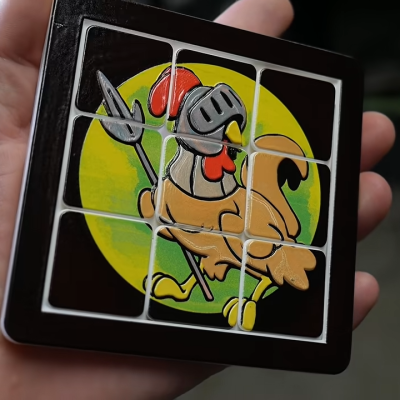
[Angus] of [Maker’s Muse] shows off both a parametric, print-in-place sliding puzzle design he created, and the results of UV printing full-color designs on the same. The results look beautiful, and there was a whole lot of trial and error involved in the process.
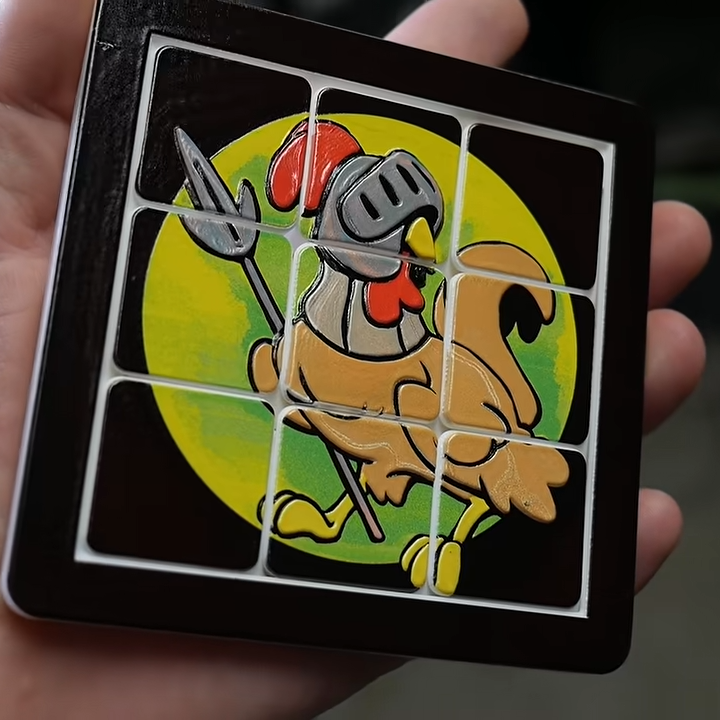
Creating a good print-in-place sliding puzzle depends a lot on tolerances. Today’s 3D printers are much more capable in this regard than they were ten or so years ago, but getting the right feel to the pieces was still a long learning process. It’s not at all easy to get all the different characteristics in the right balance. On one hand, if the pieces are too tight they won’t slide easily. But if they are too loose, the puzzle can bind because the pieces have too much play. It may also flex enough to pop apart. And of course, the shape of the pieces and their mating surfaces are constrained to angles and shapes that 3D print reliably. [Angus] persevered and succeeded, and shows off everything from cute 3 x 3 units to a massive scaled-up 11 x 11 puzzle, printed on his Prusa XL.
Getting the color onto the print is the work of a desktop UV ink printer, the same model our own Tom Nardi had a hands-on look at last year. [Angus] shows how printing a single color image onto the puzzle is pretty easy and looks great, but what’s even better is a textured relief image with some real tactile depth to it. Expect a lot more work to do for that, because thick layers of ink gum the puzzle up with overspray unless one avoids printing over the gaps in the tiles.
Watch both the puzzles and the color printing in action in his video, embedded just below.

Battery life has been stellar on the Pro models over the last few years, and that remains true here. The Pro Max is the more notable of the two because it packs a denser battery. With average use (around 5 hours of screen-on time), I hovered around 50 percent by the end of the day, and easily made it through day two on a single charge. I spent a little less time with the smaller Pro, but so far it has also comfortably gotten me through a day with around 40 percent left by bedtime. Safe to say, most people will very much enjoy the battery life, but the update doesn’t feel drastic.
Next, there’s the processor: the A20 Pro chip. I hardly run into problems with Apple’s flagship silicon, and that hasn’t changed. The phones run every app fluidly, and my benchmark tests show a surprisingly sizable leap over the A19 Pro in the 17 series.
It runs Control—a AAA game from 2019 ported to iOS earlier this year—decently well. However, aggressive upscaling makes the graphics look grainy, and character movements can feel a little sluggish. (I maxed out the graphics settings.) It’s certainly not perfect, but I still can’t believe I’m playing such a demanding title on an iPhone.

More impressive is Apple’s thermal management on these phones. The company has expanded the vapor chamber’s surface area by three times—the phone’s cooling technology that helps spread heat around—meaning the entire phone felt toasty after close to an hour of gameplay in Control, with no uncomfortable localized hot spots. This larger vapor chamber also lets you game longer before phone’s thermal throttling kicks in and slows everything down.
The iPhone 18 Pro models come with iOS 27 out of the box, which features the all-new Siri AI. Yes, Siri AI is infinitely more capable than any version of Siri that Apple has offered before. It still doesn’t quite have the spark or versatility of other AI assistants, but you might be fine with that. If you throw Siri AI a question, there’s a good chance it can actually give you a satisfactory answer now. Remember that Siri AI and other Apple Intelligence features aren’t exclusive to the latest models, though you do need an iPhone 15 Pro or newer to access them.

Business56 seconds ago
Housing ‘not only determinant’ in Coalition migration policy

Crypto World2 minutes ago
Payward plans U.S. debut for Hyperliquid perpetual futures via Bitnomial

Sports4 minutes ago
McLaughlin: SEC Football Outshining Big Ten in 2026?



-

 Fashion5 days ago
Weekend Open Thread – Corporette.com
-

 Business7 days ago
Micron Stock Climbs Above $1,031 as AI Memory Crunch and a $50 Billion Outlook Fuel the Rally
-

 Tech3 days ago
The Latest Weird Thing to Play Doom Is the Mapped-Out Brain of a Fruit Fly
-

 Business7 days ago
AMD Stock Climbs After Management Lifts 2027 Data Center Outlook Toward $70 Billion in AI Sales
-

 Business5 days ago
10 Most-Streamed Songs On Spotify In 2026 So Far, Led By Ella Langley’s Dominant Run On The Charts This Year
-

 Crypto World5 days ago
XAG/USD: Silver’s Short-Term Rally Meets Its Moment of Truth
-

 Crypto World6 days ago
2 Chip Stocks Broke Out This Week. Neither Was Nvidia
-

 Tech6 days ago
Battery life is the only iPhone 18 Pro and iPhone Duo upgrade I care about. Apple didn’t disappoint
-

 Crypto World7 days ago
Pi Network ships Protocol 27 on a network with 14 million users and zero DeFi
-

 Crypto World6 days ago
OKX launches 10x OpenAI, Anthropic X-Perps in Europe
-

 Crypto World5 days ago
Diesel Tops $6 a Gallon for the First Time as 28 States Set Records
-

 Tech7 days ago
Apple Watch Ultra 4 vs Watch Ultra 3: Should you really spend another $799?
-

 News Videos5 days ago
Facing Financial Fears
-

 Crypto World7 days ago
Bitcoin price risks $70K if $78K neckline breaks
-
 Business6 days ago
Western Digital Slips 2.7% as AI Storage Rally Cools After Record Cash and Guidance
-

 Entertainment7 days ago
Case Sees Major Update As Jury Deliberations Begin
-

 Business3 days ago
Rivals Sam Altman and Elon Musk Rally Behind Dario Amodei’s Call for a Slowdown in AI Development
-
Crypto World7 days ago
Ripple Price Prediction: What to Expect for XRP as a Major Macro Week Approaches
-

 Crypto World2 days ago
Elon Musk Drops a Bombshell: Grok 5 Could Be the AGI Breakthrough
-
Crypto World6 days ago
Ethereum Price Analysis: Consolidation at $2.5K Tests Momentum as On-Chain Activity Surges
You must be logged in to post a comment Login