Connect with us

Tech

Iceland Foods Finally Surrenders In Trademark Fight With Iceland, The Country

Published

on

from the who’s-the-moron-in-a-hurry-here dept

The ten year war over Iceland is over and Iceland has come out the victor.

If you don’t know what I’m talking about, be prepared to listen to a whole bunch of stupid. In 2016, we wrote about Iceland Foods, a UK grocer, which had somehow convinced the EU to give it a trademark for “Iceland” and which then went about bullying other companies and opposing trademarks for any that included the name of that country. One of the entities that Iceland Foods found itself in a trademark opposition with was Iceland, as in the country, when it attempted to trademark “Inspired by Iceland.” The Icelandic government didn’t take too kindly to that appropriation of its own name and petitioned to cancel the Iceland Foods trademark, which is exactly what happened. Rather than put an end to this absurdity, Iceland Foods appealed that decision, lost, then appealed it again, lost again, appealed a third time, only to lose there as well.

From there, Iceland Foods had but one final option for appealing all of these perfectly sane rulings, which would be to take this before the Court of Justice of the EU. And, while that would obviously be crazy, everything I’d seen to date led me to believe the grocer would do just that.

But sanity seems to finally be on the menu, I guess. Iceland Foods has publicly announced that it is ending the fight and surrendering.

Advertisement

Executive chairman Richard Walker revealed the supermarket would drop the legal dispute, which centres on the right to use the phrase Iceland in the EU, following its third legal loss in July 2025.

Iceland had one fourth and final route of appeal, via the Court of Justice of the European Union, but Walker told the Financial Times it would instead use the “couple of hundred grand” it would save in legal fees to give a “rapprochement discount” to Icelandic shoppers.

Yeah, that’s how this should have been approached from the jump, folks. And this actually goes back even further, where this broad, geographic trademark by a private entity consisting of the name of a sovereign nation never should have been granted a trademark to begin with.

But that’s all over now. Iceland Foods’ trademark is invalidated. Iceland once more is free from being bullied over its own name, as would be other companies from the island nation. Iceland Foods can keep on operating as it always has, sans the ability to bully others with this ridiculous mark. Walker himself said as much, in a very frustrating manner.

“We lost for a third time. We’re going to throw in the towel,” Walker told the FT. “It’s actually fine — we don’t have to change our name.”

Exactly. You never had to. That was never in question. The only question is whether you got to keep your laughable trademark and bully others over it.

Advertisement

Instead, the grocer wasted everyone’s time, and who knows how much of its own money, trying to wage this silly war.

Filed Under: cjeu, iceland, iceland iceland iceland, trademark, uk

Companies: iceland foods

Source link

Advertisement
Continue Reading
Click to comment

Leave a Reply

Your email address will not be published. Required fields are marked *

Tech

Remotely Unlocking An Encrypted Hard Disk

Published

on

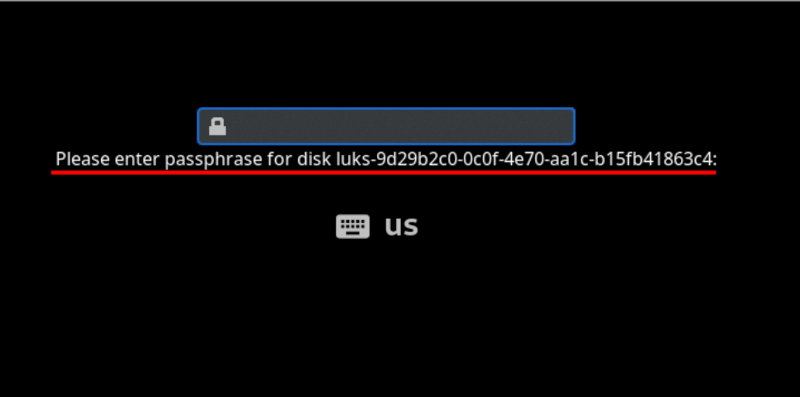
Can you remotely unlock an encrypted hard disk? [Jyn] needed to unlock their home server after it rebooted even if they weren’t home. Normally, they used Tailscale to remote in, but you can’t use tailscale to connect to the machine before the hard drive decrypts, right? Well, you can, sort of, and [Jyn] explains how.

The entertaining post points out something you probably knew, but never thought much about. When your Linux box boots, it starts a very tiny compressed Linux in RAM. On [Jyn’s] machine using Arch, this is the initramfs.

That’s not news, but because it is an actual limited Linux system (including systemd), you can add tools to it. In this case, adding dropbear (an ssh server) and Tailscale to the limited boot-time Linux.

Advertisement

Doing this in the most straightforward way presents several issues related to security. However, using a few configuration items, you can limit it to showing the unlock screen and nothing else.

The only limitation is that the setup, as written, will only work with an Ethernet interface. WiFi should be possible, but getting the wireless network up in this environment would likely be challenging.

You could probably set this up with WireGuard or even an ssh tunnel if you were adventurous.

Advertisement

Source link

Continue Reading

Tech

Feds take notice of iOS vulnerabilities exploited under mysterious circumstances

Published

on

Coruna is also notable for its use by three distinct hacking groups. Google first detected its use in February of last year in an operation conducted by a “customer of a surveillance vendor.” The vulnerability exploited, tracked as CVE-2025-23222, had been patched 13 months earlier. In July 2025, a “suspected Russian espionage group” exploited CVE-2023-43000 in attacks planted on websites that were frequented by Ukrainian targets. Last December, when it was used by a “financially motivated threat actor from China,” Google was able to retrieve the complete exploit kit.

“How this proliferation occurred is unclear, but suggests an active market for ‘second hand’ zero-day exploits,” Google wrote. “Beyond these identified exploits, multiple threat actors have now acquired advanced exploitation techniques that can be re-used and modified with newly identified vulnerabilities.”

Google researchers went on to write:

We retrieved all the obfuscated exploits, including ending payloads. Upon further analysis, we noticed an instance where the actor deployed the debug version of the exploit kit, leaving in the clear all of the exploits, including their internal code names. That’s when we learned that the exploit kit was likely named Coruna internally. In total, we collected a few hundred samples covering a total of five full iOS exploit chains. The exploit kit is able to target various iPhone models running iOS version 13.0 (released in September 2019) up to version 17.2.1 (released in December 2023).

The 23 exploits, along with the code names and other information, are:

Advertisement
Type Codename Targeted versions (inclusive) Fixed versions CVE
WebContent R/W buffout 13 → 15.1.1 15.2 CVE-2021-30952
WebContent R/W jacurutu 15.2 → 15.5 15.6 CVE-2022-48503
WebContent R/W bluebird 15.6 → 16.1.2 16.2 No CVE
WebContent R/W terrorbird 16.2 → 16.5.1 16.6 CVE-2023-43000
WebContent R/W cassowary 16.6 → 17.2.1 16.7.5, 17.3 CVE-2024-23222
WebContent PAC bypass breezy 13 → 14.x ? No CVE
WebContent PAC bypass breezy15 15 → 16.2 ? No CVE
WebContent PAC bypass seedbell 16.3 → 16.5.1 ? No CVE
WebContent PAC bypass seedbell_16_6 16.6 → 16.7.12 ? No CVE
WebContent PAC bypass seedbell_17 17 → 17.2.1 ? No CVE
WebContent sandbox escape IronLoader 16.0 → 16.3.116.4.0 (<= A12) 15.7.8, 16.5 CVE-2023-32409
WebContent sandbox escape NeuronLoader 16.4.0 → 16.6.1 (A13-A16) 17.0 No CVE
PE Neutron 13.X 14.2 CVE-2020-27932
PE (infoleak) Dynamo 13.X 14.2 CVE-2020-27950
PE Pendulum 14 → 14.4.x 14.7 No CVE
PE Photon 14.5 → 15.7.6 15.7.7, 16.5.1 CVE-2023-32434
PE Parallax 16.4 → 16.7 17.0 CVE-2023-41974
PE Gruber 15.2 → 17.2.1 16.7.6, 17.3 No CVE
PPL Bypass Quark 13.X 14.5 No CVE
PPL Bypass Gallium 14.x 15.7.8, 16.6 CVE-2023-38606
PPL Bypass Carbone 15.0 → 16.7.6 17.0 No CVE
PPL Bypass Sparrow 17.0 → 17.3 16.7.6, 17.4 CVE-2024-23225
PPL Bypass Rocket 17.1 → 17.4 16.7.8, 17.5 CVE-2024-23296

CISA is adding only three of the CVEs to its catalog. They are:

  • CVE-2021-30952 Apple Multiple Products Integer Overflow or Wraparound Vulnerability
  • CVE-2023-41974 Apple iOS and iPadOS Use-After-Free Vulnerability
  • CVE-2023-43000 Apple Multiple products Use-After-Free Vulnerability

CISA is directing agencies to “apply mitigations per vendor instructions, follow applicable… guidance for cloud services, or discontinue use of the product if mitigations are unavailable.” The agency went on to warn: “These types of vulnerabilities are frequent attack vectors for malicious cyber actors and pose significant risks to the federal enterprise.”

Source link

Advertisement
Continue Reading

Tech

Fixing An Onkyo Receiver With Multiple Faults

Published

on

Modern-day receivers are miracles of digital audio and video processing, but compared to their more analog brethren, they can come with a host of new and fascinating faults. The Onkyo TX-SA806 and SR806 receivers were released back in 2008, with [Tony359] recently getting the latter variant in for repair. Described as having weird digital distortion on the audio outputs, this particular issue got fixed by recapping the PCB with all the digital processing in the first video on this receiver, but this left the second issue unaddressed of a persistent hum, which is the topic of the second video on this repair.

Capacitor C5662 in the Onkyo TX-SR608 receiver with a slight bulge. (Credit: Tony359, YouTube)
Capacitor C5662 in the Onkyo TX-SR608 receiver with a slight bulge.

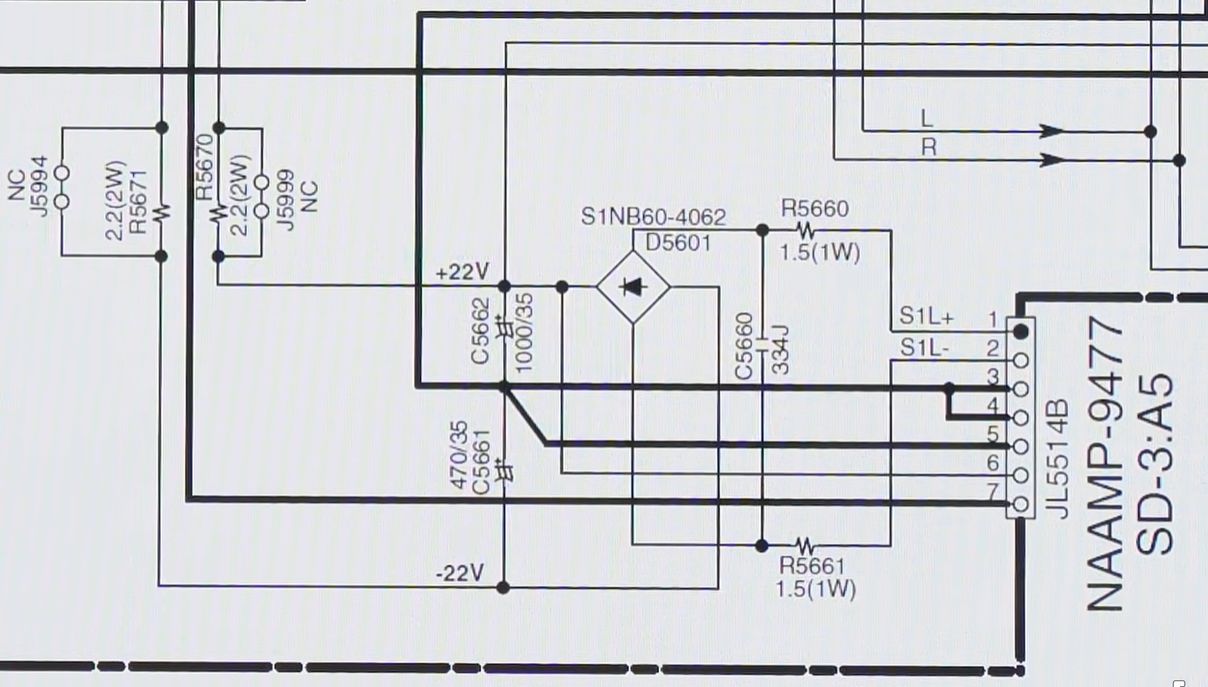
With the easy fix of recapping of the digital board already tried, next was a deep-dive into the receiver’s schematics to figure out where this low-frequency hum was coming from. With it sounding very much like mains frequency hum bleeding through, this was the starting point. Presumably somewhere on the power rails the normal filtering had broken down, so all rails had to be identified and checked for this interference.

With ripple on the 10V and 12V rails as well as the others seemingly in order, it wasn’t clear where the 100 Hz hum was coming from, but people on the BadCaps forum offered some help. After some back and forth it was deduced that the problem was the +15 VA rail, with heavy ripple on it due to a dead capacitor on the +22 V rail that comes straight from a transformer.

For some reason Onkyo’s engineer and/or bean counters had decided that installing an 85°C electrolytic capacitor on the opposite PCB side of a bridge rectifier was a genius idea, which turned out to be not quite the case. With the capacitor eventually giving up on life, the mains hum was allowed to freely pass onto the analog voltage rail and from there into the outputs.

22V rail of the Onkyo TX-SR608 receiver. (Credit: Tony359, YouTube)
22 V rail of the Onkyo TX-SR608 receiver.

Of course, getting to the target C5662 capacitor was anything but easy, as these modern receivers are tightly packed sandwiches of PCBs, requiring basically a full disassembly. Upon getting to C5662 it was clear that the capacitor was bad, being visibly bulged. Despite being a quality Japanese Nichicon capacitor, such an abusive environment was simply too much. With more similarly poorly spec’ed capacitors at risk of the same fate, these were all replaced with 105°C rated electrolytics.

Perhaps unsurprisingly this fixed the mains hum on the outputs, returning this receiver back to full functionality. In some ways it’s good to know that even with these modern receivers the most typical fault is still due to electrolytic capacitors.

Advertisement

Source link

Advertisement
Continue Reading

Tech

Bill Gates’ TerraPower gets approval to build new nuclear reactor

Published

on

The Nuclear Regulatory Commission (NRC) gave TerraPower the go-ahead this week to build a new nuclear reactor in the shadow of an aging coal power plant in Wyoming.

TerraPower’s permit is the first to be issued by the NRC in nearly a decade. The startup — founded by Bill Gates in 2015 and backed by Nvidia — has been designing its Natrium reactor with GE Vernova Hitachi. The final power plant will generate 345 megawatts, which is about two-thirds smaller than modern full-size reactors, but multiple times larger than many small modular reactor designs favored by other startups.

Natrium differs from other reactors not just in scale, but also in the details of its design. Where most nuclear reactors built in the last 50 years have been cooled by water, Natrium is cooled by molten sodium, which TerraPower says should be safer. This is the first time a commercial reactor that is not cooled by regular water has been approved by the NRC in more than 40 years.

The reactor will operate with an excess of molten sodium, which will be stored in large, insulated tanks. This allows atoms to keep splitting when demand is low, with the hot sodium saving that energy, which can be used to fill in any lulls in wind and solar output. Since nuclear power plants operate best near full capacity, storing excess energy as heat should help lower generating costs.

Advertisement

The NRC’s approval is notable because TerraPower followed the long-established permitting process, giving it permission to build on private property. The Department of Energy recently loosened its safety rules, but those regulations only apply to land owned by the agency.

TerraPower is one of nearly half a dozen nuclear startups backed by tech companies or their founders. As electricity demand from data centers grows, the Trump administration has come under pressure to boost generating capacity, including by building new nuclear reactors.

Investors have taken note of the two trends, and in recent months, they’ve showered nuclear startups with well over $1 billion in capital. TerraPower alone has raised a total of $1.7 billion, including a $650 million round that closed in June, according to PitchBook.

Techcrunch event

Advertisement

San Francisco, CA
|
October 13-15, 2026

Despite the momentum, nuclear power still faces an uphill battle. To date, nuclear has been one of the most expensive forms of new generating capacity. Part of that is due to cost overruns at massive power plants, but it also reflects the tremendous strides that solar, wind, and batteries have made in bringing costs down over the years. 

Advertisement

Nuclear startups are hoping to leverage mass manufacturing to rein in capital expenditures, but the theory has yet to be proven. And while manufacturing can help cut costs, it often takes at least a decade for the savings to materialize.

Source link

Continue Reading

Tech

OSHA probing fatality at Rivian warehouse

Published

on

The Occupational Safety and Health Administration has opened an investigation into the death of a worker at a Rivian warehouse in Illinois this week, the federal agency told TechCrunch on Friday. The agency said the probe could take up to six months.

The man, identified by local authorities as 61-year-old Kevin Lancaster, reportedly died from “blunt traumatic compressional injuries” after getting pinned between a tractor trailer and a loading dock at the facility, which is located just a few miles from Rivian’s factory.

Lancaster was reportedly trapped in that spot for around 20 minutes on Thursday before firefighters were able to get to him, according to one local news report. Emergency crews responded to a call at 1:40 p.m. local time, and Lancaster was pronounced dead at a local medical center at 2:33 p.m. local time. The Normal Police Department and the McLean County Coroner are still investigating Lancaster’s death, according to the report.

“Safety at our facilities is our top priority. Unfortunately yesterday afternoon, a contractor passed away after an incident at our warehouse,” Rivian said in a statement to TechCrunch. “Our sympathy and thoughts are with their family and friends. We are working with the Normal Police Department on its investigation.”

Advertisement

The safety of Rivian’s factory in Normal, Illinois, became a source of scrutiny in 2024 after a Bloomberg News report detailed 16 “serious” violations levied on the company across that year and the one prior.

Automotive factories are notoriously dangerous, though, and Rivian has received just one violation at the Illinois manufacturing plant since that report was published. OSHA even told Bloomberg at the time that Rivian “has improved their safety and health team and are very cooperative with the OSHA process.”

Rivian assembles its flagship R1 pickup truck, R1 SUV, and commercial electric van, known as the EDV, at its 4.3-million-square-foot factory in Normal. The company is expanding the space by another 1.1 million square feet to make room for its next EV, the R2. Once complete, the factory will have capacity to assemble 215,000 vehicles.

Techcrunch event

Advertisement

San Francisco, CA
|
October 13-15, 2026

This story has been updated with a comment from Rivian.

Advertisement

Source link

Continue Reading

Tech

Mansfield vs Arsenal Live Streams: Watch FA Cup 5th Round Tie 2025/26 Online

Published

on

Watch Mansfield vs Arsenal live streams as the League One club look to add to their list of 2025/26 FA Cup upsets by eliminating the Premier League leaders and reaching the quarterfinals for the first time since 1969.

Source link

Continue Reading

Tech

Life EV officially owns Rad Power Bikes now

Published

on

Life Electric Vehicles Holdings, also known as Life EV, officially owns the intellectual property, inventory, and certain operating assets of Rad Power Bikes. Life EV acquired Rad Power for $13.2 million.

Rad Power Bikes, a buzzy electric bike company that raised nearly $330 million in venture capital, filed for Chapter 11 bankruptcy protection in December. The company had struggled for months prior to its bankruptcy filing, and had warned employees it might have to shut down without new capital.

Life EV intends to keep the company intact and said it will continue retail operations under the Rad Power Bikes brand in the United States. It also plans to expand the retail footprint in select key markets. Life EV also pledged to support existing customers who might be wondering what would become of their bike warranties or even gift cards.

The Florida-based Life EV has built its business by acquiring, developing, and scaling electric bicycle and micro-mobility brands. While Rad Power is perhaps its highest-profile purchase, the company also holds an equity interest in LEV Manufacturing, Inc., which acquired the Serial 1 premium electric bicycle brand originally developed and spun off from Harley-Davidson.

Advertisement

In a statement, Life EV said the acquisition fits into its broader strategy of expansion across North America.

Source link

Continue Reading

Tech

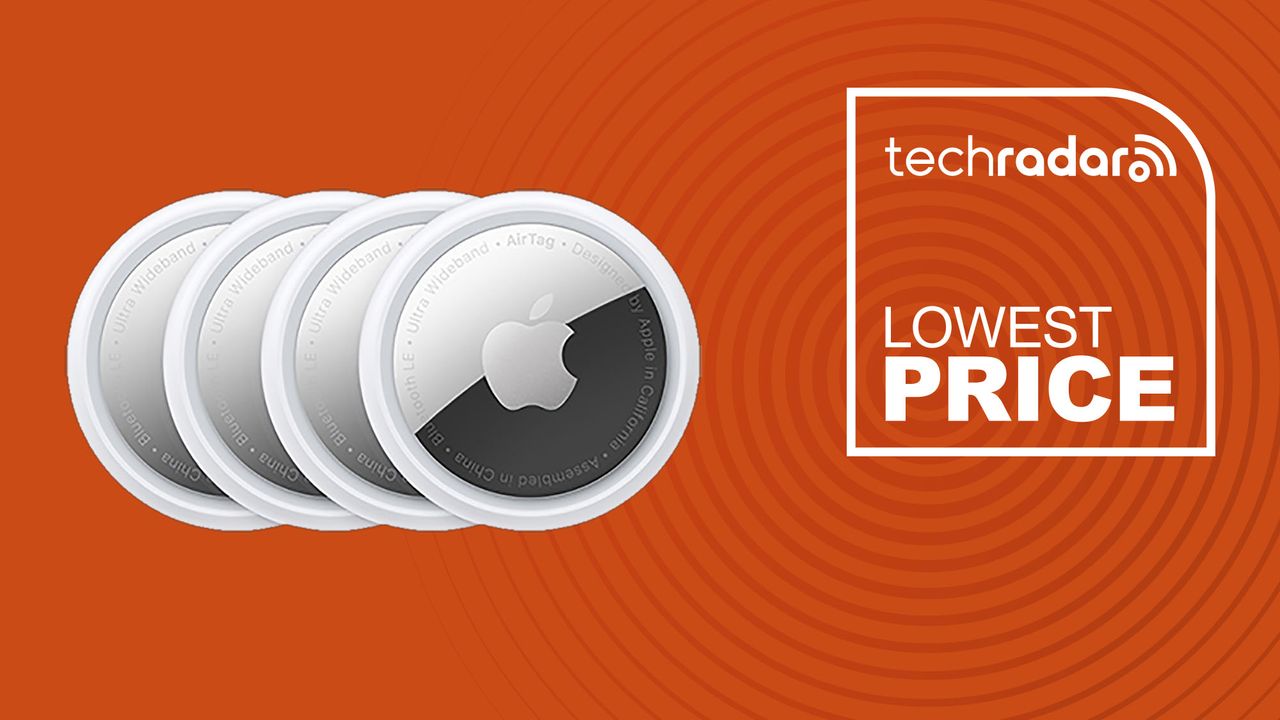
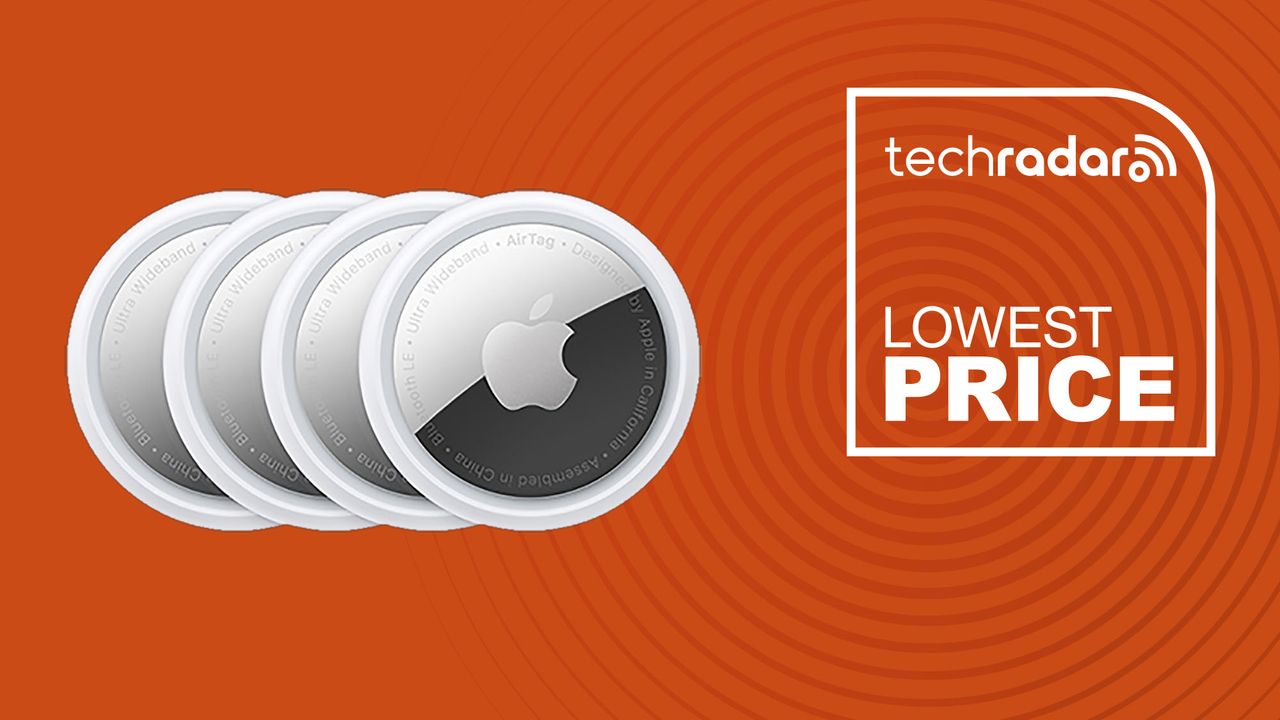
A four-pack of ‘invaluable and easy-to-use’ Apple AirTags just dropped to a record-low price

Published

on

My family and I are forever misplacing our possessions. This came to a head last year, and we invested in a set of Bluetooth trackers. It’s been an absolute game-changer. If you also need help and own an Apple device, then you can grab an Apple AirTag Four Pack at John Lewis for £59 (was £99).

This is a record-low price, which makes the trackers significantly more affordable than usual. With a four-pack of their biggest competitors, Tile Mate, costing £69, there’s nothing better or cheaper right now for Apple users.

Apple AirTag review. We rated the compact trackers an impressive four stars out of five and praised their accuracy and user-friendly feature set. I’m especially a fan of the warmer/colder feature that helps you find lost items.

From a design perspective, the AirTags are compact, lightweight, and IP67 water and dust-resistant. That means you can use them without fear of damage. If you want to attach them to your possessions, then you’ll need to purchase additional cases, which does increase the overall cost.

As you’d expect, these trackers only work with Apple devices. Connecting them to your account is as simple as activating the AirTag on the Find My app. It’ll then appear next to your other Apple products, such as your phone, tablet, earbuds, and more.

Advertisement

Are you a Samsung user? Check out the Samsung Galaxy SmartTag2 Tile, with a four-pack of those costing £57.39. Or if you need something that works across all of Android and iOS, then the Tile Mate, Tile Slim, and Tile Sticker products are worth a look.

Source link

Continue Reading

Tech

Kids Online Safety Act Advances to House Amid Concerns Over Free Speech and Civil Rights

Published

on

The bipartisan Kids Online Safety Act, designed to protect minors from age-inappropriate online content, will head to the House floor for a vote. But critics say that the bill could also be used to curb civil rights.

The Kids Online Safety Act was first introduced to the Senate in 2022 under President Joe Biden. It would require online platforms to offer settings that control how minors use the sites and also limit the collection of their personal data. 

However, opponents of the bill say that the definition of “harmful content” could extend to legitimate sites, including those concerning mental health and transgender rights. The American Civil Liberties Union warns that the legislation could affect the First Amendment’s protections of free speech.

Advertisement

“The overbroad language in KOSA and similar legislation risks censoring everything from jokes and hyperbole to useful information about sex ed and suicide prevention,” said the ACLU’s Jenna Leventoff, senior policy counsel.

The bill also directs federal agencies to study the feasibility of “creating a device- or operating system–level age verification system,” but it doesn’t require platforms to implement such a system.

The House Energy and Commerce Committee met on Thursday and advanced the legislation to the full House for consideration. However, lawmakers still need to set a specific calendar date for that floor vote.

The proposed legislation follows a global trend toward restricting the kinds of online material children have access to. Last year, the UK introduced its Online Safety Act, which requires platforms that host adult content or other age-inappropriate material to implement robust age-verification checks to prevent minors from accessing it.

Advertisement

On March 28, Indonesia will bar children under 16 from accessing social media, following a similar ban in Australia

Source link

Advertisement
Continue Reading

Tech

Google PM open-sources Always On Memory Agent, ditching vector databases for LLM-driven persistent memory

Published

on

Google senior AI product manager Shubham Saboo has turned one of the thorniest problems in agent design into an open-source engineering exercise: persistent memory.

This week, he published an open-source “Always On Memory Agent” on the official Google Cloud Platform Github page under a permissive MIT License, allowing for commercial usage.

It was built with Google’s Agent Development Kit, or ADK introduced last Spring in 2025, and Gemini 3.1 Flash-Lite, a low-cost model Google introduced on March 3, 2026 as its fastest and most cost-efficient Gemini 3 series model.

The project serves as a practical reference implementation for something many AI teams want but few have productionized cleanly: an agent system that can ingest information continuously, consolidate it in the background, and retrieve it later without relying on a conventional vector database.

Advertisement

For enterprise developers, the release matters less as a product launch than as a signal about where agent infrastructure is headed.

The repo packages a view of long-running autonomy that is increasingly attractive for support systems, research assistants, internal copilots and workflow automation. It also brings governance questions into sharper focus as soon as memory stops being session-bound.

What the repo appears to do — and what it does not clearly claim

The repo also appears to use a multi-agent internal architecture, with specialist components handling ingestion, consolidation and querying.

But the supplied materials do not clearly establish a broader claim that this is a shared memory framework for multiple independent agents.

Advertisement

That distinction matters. ADK as a framework supports multi-agent systems, but this specific repo is best described as an always-on memory agent, or memory layer, built with specialist subagents and persistent storage.

Even at this narrower level, it addresses a core infrastructure problem many teams are actively working through.

The architecture favors simplicity over a traditional retrieval stack

According to the repository, the agent runs continuously, ingests files or API input, stores structured memories in SQLite, and performs scheduled memory consolidation every 30 minutes by default.

A local HTTP API and Streamlit dashboard are included, and the system supports text, image, audio, video and PDF ingestion. The repo frames the design with an intentionally provocative claim: “No vector database. No embeddings. Just an LLM that reads, thinks, and writes structured memory.”

Advertisement

That design choice is likely to draw attention from developers managing cost and operational complexity. Traditional retrieval stacks often require separate embedding pipelines, vector storage, indexing logic and synchronization work.

Saboo’s example instead leans on the model to organize and update memory directly. In practice, that can simplify prototypes and reduce infrastructure sprawl, especially for smaller or medium-memory agents. It also shifts the performance question from vector search overhead to model latency, memory compaction logic and long-run behavioral stability.

Flash-Lite gives the always-on model some economic logic

That is where Gemini 3.1 Flash-Lite enters the story.

Google says the model is built for high-volume developer workloads at scale and priced at $0.25 per 1 million input tokens and $1.50 per 1 million output tokens.

Advertisement

The company also says Flash-Lite is 2.5 times faster than Gemini 2.5 Flash in time to first token and delivers a 45% increase in output speed while maintaining similar or better quality.

On Google’s published benchmarks, the model posts an Elo score of 1432 on Arena.ai, 86.9% on GPQA Diamond and 76.8% on MMMU Pro. Google positions those characteristics as a fit for high-frequency tasks such as translation, moderation, UI generation and simulation.

Those numbers help explain why Flash-Lite is paired with a background-memory agent. A 24/7 service that periodically re-reads, consolidates and serves memory needs predictable latency and low enough inference cost to avoid making “always on” prohibitively expensive.

Google’s ADK documentation reinforces the broader story. The framework is presented as model-agnostic and deployment-agnostic, with support for workflow agents, multi-agent systems, tools, evaluation and deployment targets including Cloud Run and Vertex AI Agent Engine. That combination makes the memory agent feel less like a one-off demo and more like a reference point for a broader agent runtime strategy.

Advertisement

The enterprise debate is about governance, not just capability

Public reaction shows why enterprise adoption of persistent memory will not hinge on speed or token pricing alone.

Several responses on X highlighted exactly the concerns enterprise architects are likely to raise. Franck Abe called Google ADK and 24/7 memory consolidation “brilliant leaps for continuous agent autonomy,” but warned that an agent “dreaming” and cross-pollinating memories in the background without deterministic boundaries becomes “a compliance nightmare.”

ELED made a related point, arguing that the main cost of always-on agents is not tokens but “drift and loops.”

Those critiques go directly to the operational burden of persistent systems: who can write memory, what gets merged, how retention works, when memories are deleted, and how teams audit what the agent learned over time?

Advertisement

Another reaction, from Iffy, challenged the repo’s “no embeddings” framing, arguing that the system still has to chunk, index and retrieve structured memory, and that it may work well for small-context agents but break down once memory stores become much larger.

That criticism is technically important. Removing a vector database does not remove retrieval design; it changes where the complexity lives.

For developers, the tradeoff is less about ideology than fit. A lighter stack may be attractive for low-cost, bounded-memory agents, while larger-scale deployments may still demand stricter retrieval controls, more explicit indexing strategies and stronger lifecycle tooling.

ADK broadens the story beyond a single demo

Other commenters focused on developer workflow. One asked for the ADK repo and documentation and wanted to know whether the runtime is serverless or long-running, and whether tool-calling and evaluation hooks are available out of the box.

Advertisement

Based on the supplied materials, the answer is effectively both: the memory-agent example itself is structured like a long-running service, while ADK more broadly supports multiple deployment patterns and includes tools and evaluation capabilities.

The always-on memory agent is interesting on its own, but the larger message is that Saboo is trying to make agents feel like deployable software systems rather than isolated prompts. In that framing, memory becomes part of the runtime layer, not just an add-on feature.

What Saboo has shown — and what he has not

What Saboo has not shown yet is just as important as what he’s published.

The provided materials do not include a direct Flash-Lite versus Anthropic Claude Haiku benchmark for agent loops in production use.

Advertisement

They also do not lay out enterprise-grade compliance controls specific to this memory agent, such as: deterministic policy boundaries, retention guarantees, segregation rules or formal audit workflows.

And while the repo appears to use multiple specialist agents internally, the materials do not clearly prove a larger claim about persistent memory shared across multiple independent agents.

For now, the repo reads as a compelling engineering template rather than a complete enterprise memory platform.

Why this matters now

Still, the release lands at the right time. Enterprise AI teams are moving beyond single-turn assistants and into systems expected to remember preferences, preserve project context and operate across longer horizons.

Advertisement

Saboo’s open-source memory agent offers a concrete starting point for that next layer of infrastructure, and Flash-Lite gives the economics some credibility.

But the strongest takeaway from the reaction around the launch is that continuous memory will be judged on governance as much as capability.

That is the real enterprise question behind Saboo’s demo: not whether an agent can remember, but whether it can remember in ways that stay bounded, inspectable and safe enough to trust in production.

Source link

Advertisement
Continue Reading

Trending

Copyright © 2025