Connect with us
DAPA Banner
DAPA Coin
DAPA
COIN PAYMENT ASSET
PRIVACY · BLOCKDAG · HOMOMORPHIC ENCRYPTION · RUST
ElGamal Encrypted MINE DAPA
🚫 GENESIS SOLD OUT
DAPAPAY COMING

Tech

IEEE Remembers Computer Scientist Peter G. Neumann

Published

on

The computing community recently lost one of its enduring voices: IEEE Fellow Peter G. Neumann. The renowned computer scientist and respected risk analyst died on 17 May at the age of 93.

For almost 70 years, Neumann shaped the computing field through his pioneering work on risks, system dependability, security, and fault tolerance with rare intellectual depth and unwavering ethical clarity.

Five of those decades were spent as a principal scientist at SRI International in Menlo Park, Calif., where he worked until his death. A detailed narrative of his work, life, and mentoring is available on his SRI web page, where he chronicled his journey.

He possessed a rare ability to identify systemic vulnerabilities long before they became widely recognized. He cautioned that interconnected systems, if poorly designed or insufficiently scrutinized, could fail and become targets for exploitation. He insisted innovation always must be accompanied by responsibility, reliability, and a clear understanding of the risks involved.

Advertisement

With the widespread adoption of computing, information technology, artificial intelligence, and autonomous systems, Neumann’s insights have become more relevant.

Neumann was born on 21 September 1932 in New York City. After graduating from high school, he pursued a degree in mathematics at Harvard, where he had a conversation that shaped his approach to research, according to the Association for Computing Machinery (ACM). In November 1952 he had a two-hour breakfast meeting with Albert Einstein, at which they discussed the importance of simplicity in design.

Neumann was among the first generation of Harvard students to program computers and, remarkably for that era, enjoyed exclusive access to the computing systems.

After earning his bachelor’s degree in 1954, he continued his education at Harvard, earning a master’s degree in 1955. In 1958 he moved to Germany to become a doctoral student at the Technical University of Darmstadt as part of the Fulbright program, which provides funding for U.S. citizens to study or teach abroad. He earned his doctorate in 1960.

Advertisement

After returning to the United States, he joined Bell Labs in Murray Hill, N.J., where he worked on error-correcting codes and survivable communications. He also pursued a second Ph.D. in applied mathematics and science at Harvard, achieving that goal in 1961.

Four years later, he was assigned to work on Multics, which became an influential operating system that shaped modern secure computing architectures. Multics was a mainframe time-sharing system designed to serve the diverse needs of multiple users simultaneously. Neumann designed its filing system, which featured hierarchical directories, access control lists, and dynamically paged virtual memory segments. He also played a key role in the design of its input/output system.

In 1970 he left Bell Labs to join SRI.

Technical contributions at SRI

Neumann made several seminal and foundational technical contributions while at SRI, including the following:

Advertisement
  • Provably Secure Operating System. The PSOS project he worked on advanced formal methods in operating systems and computer security. The project demonstrated that security could be designed within the initial plan rather than retrofitted.
  • Election integrity and voting systems. He outlined vulnerabilities in electronic systems and advocated for transparency, verifiability, and public accountability.
  • Systems-level risk thinking. He broadened the concept of computer security to encompass human factors, governance, policy failures, social consequences, organizational negligence, and misuse of automation. His system-level perspective now fuels debates on AI governance and digital trust.
  • Intrusion-detection systems. With his colleague Dorothy E. Denning, a security expert, he helped develop an intrusion-detection expert system (IDES), laying the groundwork for modern cyberdefenses.
  • CHERI. He promoted hardware-assisted secure computing: technology that now influences next-generation processors. The Capability Hardware-Enhanced RISC Instructions (CHERI) architecture project, which Neumann led, is now being commercialized by an international, nonprofit alliance.

His contributions are united by a simple but profound principle: Security should be foundational, not incidental. Neumann argued that security must be embedded into system architecture from the start—not patched after deployment.

ACM’s Risks Forum

Neumann’s other enduring contribution was the creation and stewardship of the ACM Risks Forum, formally known as the Forum on Risks to the Public in Computers and Related Systems. For decades, it was one of the most respected online arenas for critical reflection on computing failures, vulnerabilities, security breaches, unintended consequences, and emerging technological threats. He transformed the forum into a scholarly archive of cautionary lessons in computing failures and risks.

In 1985 he started documenting how technological systems fail when complexity exceeds understanding and when society places blind trust in automation. He then moderated the community for 41 years, leaving his position in April, weeks before his passing.

In 1995 he published Computer-Related Risks, a book that serves as a case-driven guide to how computer systems fail and why. It is still relevant in an era defined by AI, growing cyberthreats, and our deep digital dependence.

Intellectual rigor with grace and humility

Neumann viewed computing not as an abstract technical pursuit but as a profoundly human enterprise carrying societal responsibilities. He was thoughtfully skeptical, questioned assumptions, and challenged complacency. His observations often anticipated challenges years before they became mainstream concerns.

Advertisement

He exemplified high scholarship ideals and was intellectually honest and ethically steadfast. He had been a frequent critic of lax attitudes the industry has maintained toward both computer security and individual digital privacy. He warned against the industry’s tendency to repeat mistakes.

Neumann’s signature contribution was not technical but a stance. He insisted, against industry custom, that recurring computer failures were not unfortunate accidents but rather were predictable consequences of how systems were built and sold.

He was fundamentally an optimist about what can be done with research and was a pessimist about corporations.

Security is not merely a technical patch, he said, but is a systemic property requiring sound design, governance, and human judgment. He consistently warned that uncontrolled complexity is itself a source of risk.

Advertisement

His signature contribution was not technical but a stance. He insisted, against industry custom, that recurring computer failures were not unfortunate accidents but rather were predictable consequences of how systems were built and sold.

Honors and recognitions

Neumann was honored with a number of honors including the Electronic Privacy Information Center’s 2018 Lifetime Achievement Award, the Computing Research Association’s 2013 Distinguished Service Award, and ACM’s 2005 Special Interest Group on Security, Audit, and Control Outstanding Contributions Award.

In addition to being an IEEE Fellow, he was a Fellow of ACM, the American Association for the Advancement of Science, and SRI. In 2012 he was inducted into the Cyber Security Hall of Fame.

An enduring legacy

Neumann’s greatest legacy is not necessarily his inventions but his way of thinking. His longtime interest was the risk ecology of computing—the business, technological, social, political, and personal risks that computing has created, along with its tremendous benefits in each of those spheres. He left us a timely lesson: Innovation must be accompanied by responsibility, foresight, and care.

Advertisement

Neumann was “one of the last of the old guard and a pointer to the future,” observed IEEE Life Fellow Whitfield Diffie, who helped invent public key cryptography. Highlighting both the significance and enduring relevance of Neumann’s work, a tribute by blogger Phoenix AMTD aptly said: “He spent 70 years cataloging how computers fail. We spent 70 years not listening. Maybe now we will.”

Let’s honor Peter G. Neumann not merely by remembering his advice but by following it.

From Your Site Articles

Related Articles Around the Web

Advertisement

Source link

Continue Reading
Click to comment

You must be logged in to post a comment Login

Leave a Reply

Tech

Now, even Russia’s most elite hackers are using Clickfix to infect devices

Published

on

One of the Russian government’s most elite hacking groups has adopted an attack, known as Clickfix, to compromise devices belonging to sensitive organizations in Ukraine, the latter country’s CERT center is warning.

Clickfix has emerged as an effective attack technique that attackers, primarily financially motivated criminals, began using in the last year or so. Websites under the control of the attackers display a CAPTCHA that requires the visitor to copy a jumble of text and paste it into the terminal. The text contains scripts that, once entered, perform malicious actions, typically by installing malware or exfiltrating sensitive data. Ukraine’s CERT said Wednesday that Sandworm, an advanced hacking unit inside the GRU, Russia’s military intelligence arm, is now using the technique.

“GhettoVibe,” “ScoutCurl,” and many more

The Clickfix attacks began in the spring and have continued through the summer. The campaign has resulted in the network compromise of at least one organization when a connected device was found to be infected by FreakyPoll, the name of one of Sandworm’s custom malware packages. Ukrainian authorities discovered 10 compromised websites that displayed a PowerShell command as part of a fake CAPTCHA that said it had to be passed to ensure a real human was behind the visiting device’s keyboard.

Once the user entered the script, it could install malicious Visual Basic scripts and other malicious wares that went on to install a variety of Sandworm malware. Typically, the first malware to run was a reconnaissance program that gathered information from the infected device. Machines deemed important would then receive follow-on malware that backdoored the system.

Advertisement

“The command, as an example, could be intended to load and save a VBS file in the Startup directory,” a translated version of Tuesday’s advisory stated. “One of the variants of such a program was called GHETTOVIBE. At the next stage, in order to determine the importance of the cyberattack object, the SCOUTCURL software tool can be loaded onto the attacked computer, which is a PowerShell script that performs basic reconnaissance by collecting and exfiltrating information about the computer: basic characteristics, programs, files, Internet browser data, etc.”

Source link

Advertisement
Continue Reading

Tech

Roblox Adds Hindi Language Support in India

Published

on

Roblox has officially added support for the Hindi language to its platform, thus becoming even more user-friendly for millions of players in India. The newly added language option is now available to all Roblox users on the website, in the Creator Hub, and in Roblox Studio. With this update, the platform should become even more accessible to millions of Hindi-speaking people.

Enable Hindi on Roblox

  1. Open the Roblox app.
  2. Click on Settings from the menu.
  3. Select Account Info.
  4. Choose the Language option.
  5. Click Hindi and save your changes.

Roblox supports Hindi translations for game names, descriptions, in-game text, and game products. This helps creators create content for the Hindi-speaking community on Roblox. Commenting on the announcement, Sunil Rao said Roblox sees India as an important market for future growth. He noted that the company will continue expanding its localization efforts. “Roblox thrives on connection, and language shouldn’t be a barrier to creativity.”

Hindi SEO Support Makes Roblox Content Easier to Find

Hindi SEO support is another recent addition made by Roblox. This update makes indexing Hindi content on the site through search engines easier. It will help users locate Roblox content using Hindi queries.

Roblox has confirmed that more Hindi features will arrive in future updates. The company will be adding a feature called Hindi Chat Translator to its game. This feature will help communicate with people from other regions who speak other languages. It will make conversations easier for both parties during game time and other activities. The company sees this as another step toward building a more inclusive user experience.

Source link

Advertisement
Continue Reading

Tech

One Clever Mod Turns a 1995 Virtual Boy Controller Into a Wireless Nintendo Switch 2 Gamepad

Published

on

Nintendo Switch Virtual Boy Wireless Controller Mod RetroOnyx
Nintendo brought Virtual Boy games to Switch and Switch 2 owners through its online service earlier this year. The collection lets players experience the red-tinted stereoscopic titles without digging out the original bulky headset. Yet something important stayed missing from the official offering. The service provides no dedicated controller, and standard Switch pads force awkward compromises that dull the precision the old hardware once delivered.


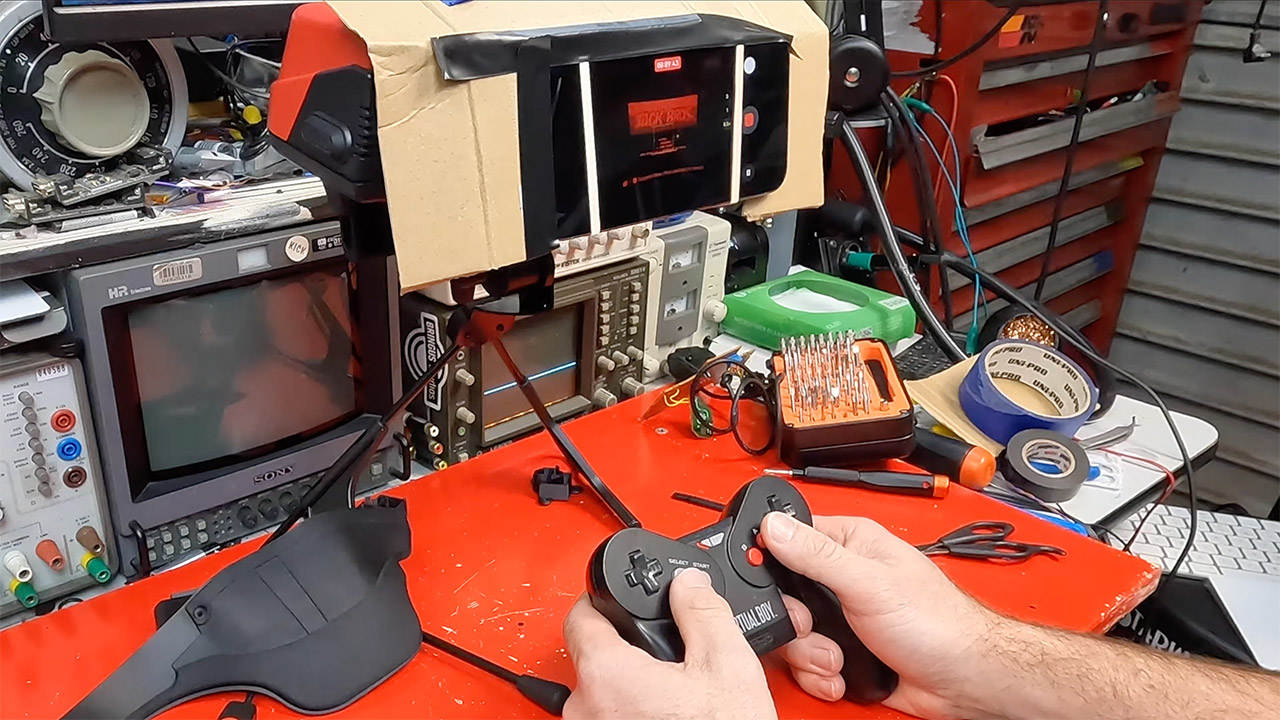
The original Virtual Boy controller is one of Nintendo’s most eye-catching designs from the 1990s, and there are still quite a few floating around. Anyone who has used the peripheral on its stand will recognize the two large grips protruding from the body. One directional pad is on the left, while another is on the right. The red A and B buttons cluster next to the right pad, while the grey Start and Select buttons hang around near the left one. Plus, the rounded L and R triggers are quite distinct. Some games used to use a dual-pad layout to create the illusion of depth in what was otherwise a beautiful 2D environment, but when you translate all of that to a current analog stick or single pad, you end up with dead zones or jittery responses that really mess up the vibe.


Nintendo Switch 2: Choose Your Game Bundle
  • Kick off the fun with a Nintendo Switch 2 system, your choice of a select digital game, and a savings* of up to $29.99!
  • Includes choice of either the Mario Kart World, Donkey Kong Bananza, or Pokémon Pokopia digital game download
  • One system, three play modes: TV, Tabletop, and Handheld


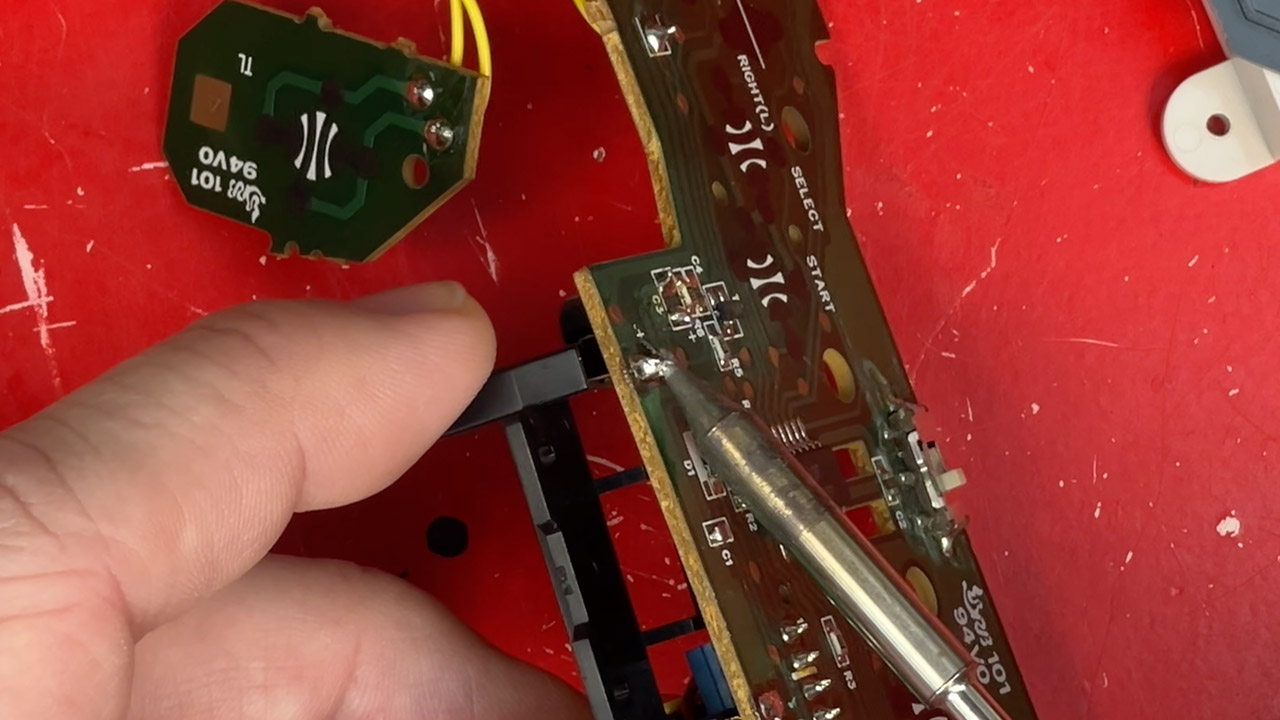
RetroOnyx’s new circuit board is game-changing. This board can be inserted directly into an original Virtual Boy controller and replaces almost everything inside it. The ESP32 microcontroller is at the heart of it all, handling all wireless communications and button translation. What about the remaining original hardware? Nothing gets affected. The controller case itself has not been touched; there are no permanent cuts or new holes. It is entirely possible to revert this thing to its original state.

Nintendo Switch Virtual Boy Wireless Controller Mod RetroOnyx
Installing this new board only involves a few simple tools and some soldering. Screw the shell open, remove the old board after you’ve added some new solder points to the battery terminals, and that’s all. The new board is installed with the power switch matched up with the existing slider and a small 3D printed plug that sends a light pipe into the old cable exit hole. Nothing really complicated. After that, reassembly takes only a few minutes if you’ve positioned the board correctly, and the result? Every physical button and pad remains in its factory position and spacing.

Nintendo Switch Virtual Boy Wireless Controller Mod RetroOnyx
On a Switch or Switch 2, the upgraded controller appears as a normal Pro Controller. Pairing is a typical Bluetooth procedure; just follow the usual steps. A simple button push at power-on allows you to select the operating mode; the default is Virtual Boy on Nintendo Switch online, but you may hold the button for a second to switch to PC use or some experimental mappings that resemble vintage SNES or N64 layouts. Once you’ve paired everything up, the left directional pad appears as the left pad on the Switch side, while the right directional pad appears as the right analog stick. Face buttons swap over in a fairly straightforward manner to preserve muscle memory, and L and R triggers simply map to their modern counterparts as is.

Nintendo Switch Virtual Boy Wireless Controller Mod RetroOnyx
Additional button combinations will enable a host of features that the Switch is actually anticipating. Holding specific buttons on the controller will access the home menu, increase the volume, modify the brightness on the emulated display, initiate a rewind (if supported), or even start a capture. The ESP32 handles all of these commands on its own, with no additional software required on the console, and best of all, the latency is low enough that the games feel extremely responsive. Most gamers agree that after you get past the first few minutes of adjusting, the entire experience feels very natural.

Nintendo Switch Virtual Boy Wireless Controller Mod RetroOnyx
The same hardware breathes new life into the original Virtual Boy system, but this time wirelessly. All you need is a separate BlueRetro adapter that fits into the console’s controller port and pairs with the improved controller. As a result, depending on which of the two receivers is nearby, one controller can now serve as hardware for both the original 1995 system and the current Nintendo products. However, if Nintendo decides to enable haptic rumble on the Virtual Boy collection, subsequent updates may include haptic modules inside the grips.

Nintendo Switch Virtual Boy Wireless Controller Mod RetroOnyx
RetroOnyx sells the board as a kit for $99, but you must provide your own donor controller and battery pack. They’ll occasionally have assembled versions available if they can find secondhand controllers. This project is actually pretty cool, because it fills a gap that Nintendo left open when they released all those games without any accompanying hardware, and it demonstrates how far a well-designed replacement board can extend the life of a really cool, but otherwise largely forgotten peripheral that would otherwise collect dust on a shelf.

Advertisement

Source link

Continue Reading

Tech

Roblox launches an AI-powered game-creation feature in its mobile app

Published

on

Roblox announced Thursday a new feature called “Build,” allowing users to design games from their mobile devices using AI. 

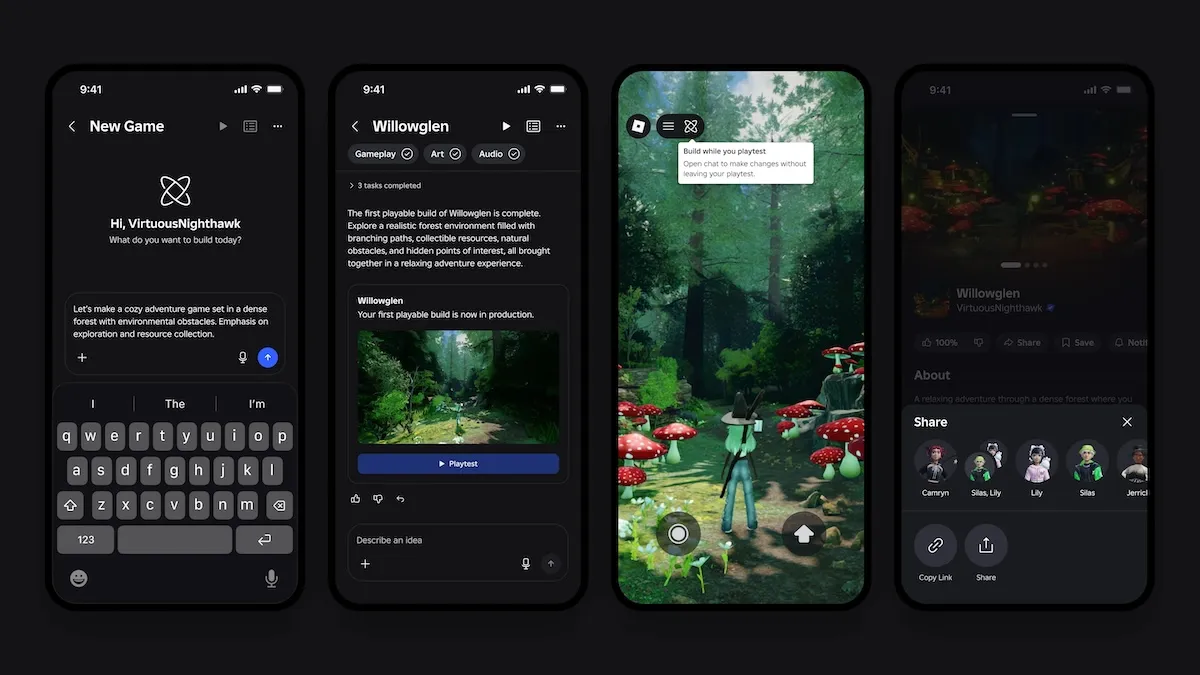
The Build feature lets anyone turn simple text prompts into a basic game without any programming experience. For example, if a user types, “Let’s make a cozy adventure game set in a dense forest,” the new feature will generate an initial version of the game, which users can then modify and share with friends.

“Powered by a broad set of AI models, including both open-source and proprietary Roblox models, Build handles gameplay mechanics, environment, characters, visual style, sound, and more,” the company wrote in its blog post.

Companies like Google, Microsoft, and Tencent have built similar tools. However, AI-powered game generation has raised concerns among developers and players, with critics arguing that reducing the barriers to game development via text prompts could lead to an influx of low-quality and repetitive games. This may also increase competition on the platform, as creators are required to compete not only with other developers but also with AI-generated content that can be produced far more quickly. 

Advertisement

These concerns are reflected in this year’s Game Developers Conference State of the Game Industry survey, which found that 52% of game industry professionals believe generative AI is having a negative impact on the industry.

To address this, Roblox plans to rank these AI-generated games based on player retention, similar to the system used for other games on the platform. If a game is not played, it won’t be featured as prominently.

“Our discovery systems are designed to highlight games with long-term retention, which doesn’t include AI slop. The quality of games on the homepage isn’t changing: If no one plays it — no one can find it. The goal across these new tools is to continue to accelerate creation across all experience levels,” the company added.

The Build feature will enter public alpha testing on July 28, available to users in New Zealand aged nine and older who have verified their age. Users aged 16 and up will have the opportunity to publish their creations to a global audience. There will be a free, basic version available along with paid options.

Advertisement

Beyond the Build feature, Roblox is also working on developing AI agents that will assist creators in playtesting and providing analytics. These features are anticipated to roll out in the upcoming months.

The new feature highlights Roblox’s ongoing investment in AI, including an AI foundation model for generating 3D game assets and an AI chatbot for supporting developers through the game-building process. Additionally, Roblox is developing a “new scene-generation model” capable of creating entire editable and playable 3D scenes from a single text prompt.

Additionally, the announcement comes shortly after Roblox disclosed plans to discontinue “Roblox Connect,” the avatar-based video-calling feature introduced in 2023.

When you purchase through links in our articles, we may earn a small commission. This doesn’t affect our editorial independence.

Advertisement

Source link

Continue Reading

Tech

Moonshot unveils Kimi K3, largest open-weight AI model yet

Published

on

Moonshot announced a $2bn raise at $12bn valuation in May.

China is showcasing its AI prowess despite efforts by Washington, as Moonshot AI’s new Kimi K3 boasts a performance close to OpenAI and Anthropic’s latest models.

At 2.8trn parametres, Kimi K3 is the largest open-weight AI model available in the market today. The multimodal model is designed for frontier intelligence across long-horizon coding, knowledge work and reasoning.

Across benchmarks, K3 only trails behind OpenAI’s newest GPT-5.6 Sol and Anthropic’s Fable 5, while outperforming them in some coding and general agent tasks. The company said that K3 performed “competitively” with Fable 5 and “substantially outperformed” Opus-4.8, GPT-5.6 Sol and GPT-5.5.

Advertisement

K3 is also the cheapest of the three, at around $0.94 per Artificial Analysis intelligence index task and $15 per million output tokens, while GPT-5.6 Sol max costs around $1.04 and Claude Fable 5 makes a significant leap to around $2.75 per task.

Although cheaper than the American juggernauts, Moonshot’s new model marks a major leap in price compared to its Chinese contemporaries. DeepSeek’s V4 Pro costs around $0.04 per index task according to Artificial Analysis rankings, while MiniMax’s M3 costs around $0.12 for the same.

Moonshot unveiled its new model just months after announcing a $2bn raise from Chinese food delivery company Meituan’s VC arm Long-Z Investments, alongside Shuimu Capital, China Mobile and CPE Yuanfeng. The May round valued the start-up at around $20bn.

The launch marks the latest in escalating tensions between US and China over AI leadership. US curbs on semiconductor exports to China over recent years has pushed China to focus on its own chip capabilities, with Moonshot AI president Yutong Zhang telling the audience at the World Economic Forum earlier this year: “We knew we didn’t have the luxury to simply scale up compute…That forced us to focus on fundamental research and efficiency.”

Advertisement

The US is taking a more restrictive approach to sharing advanced home-grown AI models by only allowing approved bodies to access GPT-5.6, Fable and Mythos – much to OpenAI’s disappointment.

Lawmakers from the country, meanwhile, are also urging the Trump administration to ban US companies from buying memory chips from Chinese semiconductor developers.

Don’t miss out on the knowledge you need to succeed. Sign up for the Daily Brief, Silicon Republic’s digest of need-to-know sci-tech news.

Advertisement

Source link

Continue Reading

Tech

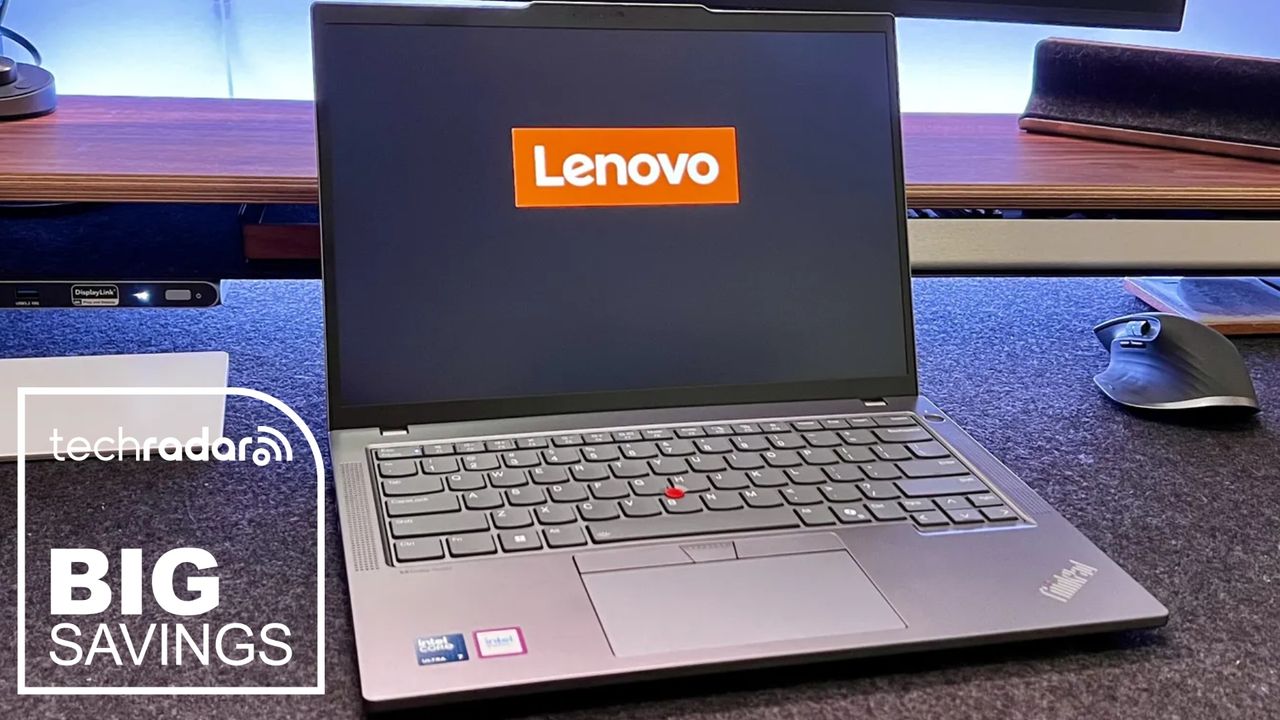
Hidden Lenovo deal hack saves $400 on my top business ThinkPad

Published

on

I’ve uncovered a pretty cool way to save almost $400 off a ThinkPad by combining two separate promo codes.

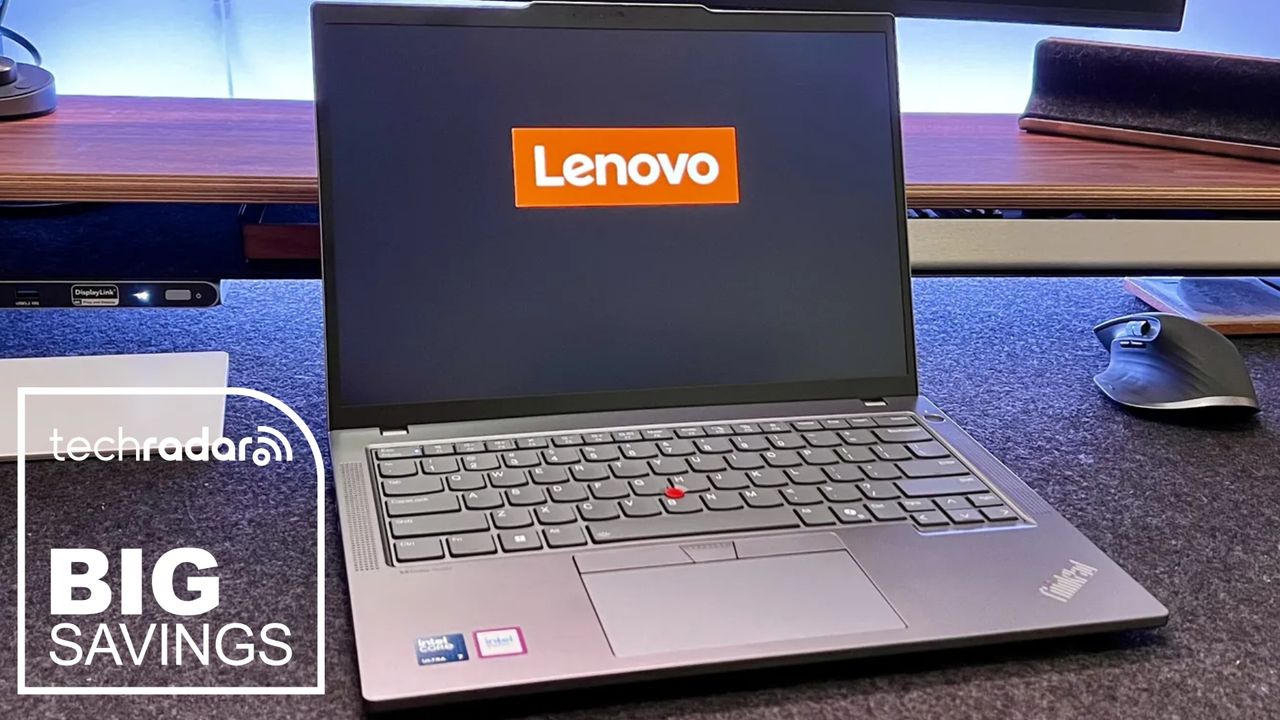
Right now, you can get the Lenovo ThinkPad T14 Gen 7 AMD for $1,324.39 (was $1719) at Lenovo. The laptop is already discounted down to $1,471.55. But then, enter coupon code THINKWEEKEND, which saves you $77.45, and code LENOVO10DEAL to save an extra $147.16. That’s almost $400 off one of our top-rated business laptops.

I don’t know how long this loophole will last though, so use them while you can. Better still, you can run this coupon combo across a range of other laptops and desktops, too.

Advertisement

Today’s top Lenovo ThinkPad deal

Business laptops can sometimes blur together, but Lenovo‘s ThinkPad range has always stood out for me, earning its reputation by focusing on reliability, security, and practical features that make everyday work easier.

Powered by AMD‘s Ryzen 5 PRO 230 processor, the ThinkPad T14 has more than enough performance for office work, web browsing, video meetings, spreadsheets, and multitasking.

You get 16GB of DDR5 memory and a 512GB PCIe Gen4 SSD, as well as a fingerprint reader for fast sign-ins, a 5MP RGB and IR webcam, a physical privacy shutter, and Windows 11 Pro, making it well suited to business tasks.

Advertisement

The 14-inch WUXGA IPS display has a 1920 x 1200 resolution with an anti-glare finish and 400 nits of brightness, making it easier to work in bright offices or while traveling on a train or plane.

A backlit keyboard, integrated Radeon 760M graphics, Wi-Fi 7, and Bluetooth 5.4 round out modern specifications that mean the laptop should continue to be perfectly fine for many years.

Although Lenovo markets the ThinkPad T14 primarily toward professionals and small businesses, it also makes plenty of sense for students and anyone wanting a durable, lightweight laptop that puts productivity ahead of flashy, but entirely unnecessary, extras.

If you need a dependable laptop that can handle almost anything you throw at it, these combined discounts make the ThinkPad T14 Gen 7 AMD an easy recommendation.

Advertisement

For more top-performers, see our guide to the best business laptop. And for more savings, see our round-up of the best business laptop deals around right now.

Also consider: More ThinkPad deals

Source link

Advertisement
Continue Reading

Tech

a STEM degree makes you 10x better with AI

Published

on

AI is reshaping tech careers. But it will not kill off the value of a STEM degree, according to Google DeepMind chief Demis Hassabis.

He made the comments at a London business conference, in a video published on Wednesday. Knowing the fundamentals of software gives you an edge with AI, he told the audience, Business Insider reported.

“You absolutely needed to lean into STEM and computer science,” Hassabis said. He framed AI as the next programming language, after machine code, C and Python. The future, he suggested, may be plain English.

Fundamentals still matter

Even so, the basics do not go away. “You’re still going to need to know about architecting things and best software engineering practices,” he said.

Advertisement

“Those people who understand the deep technical, they’ll be able to use these tools 10 times more effectively than people who don’t have that technical knowledge,” Hassabis added.

Advertisement

He also made a case for the humanities. “The time is now for the humanities like philosophy, economics,” he said. “I think we really need them in the world we’re about to enter.”

A wider pushback on vibe coding

Hassabis is one of several tech leaders pushing back on the idea that vibe coding makes coding degrees pointless.

Geoffrey Hinton, often called the godfather of AI, made a similar case to Business Insider in December. A mid-level programming job “is not going to be a career for much longer, because AI can do that,” he said. But he argued a computer science degree is worth far more than coding. It will stay useful “for quite a long time,” he said.

Affirm chief Max Levchin has said much the same. Computer science fundamentals separate good code from “garbage,” he argued on a podcast. Microsoft’s Brad Smith and others have offered similar reassurance to anxious graduates.

Advertisement

Source link

Continue Reading

Tech

Google Vids now lets you star in your own AI videos

Published

on

OpenAI’s Sora may have shut down, but Google apparently thinks there’s still interest in a tool that lets you star in your own AI videos. On Thursday, the tech giant announced an update to Google Vids that will allow you to create a custom digital avatar that looks and sounds like you based on a selfie and a voice recording you upload.

In addition, Google said it’s bringing its multi-modal AI model Gemini Omni to Vids, letting you create videos using a combination of a written prompt and reference images you upload. Omni then mixes those inputs together to create the AI video you want. It can also be used to do things like swap out the background or fix the lighting in a video recorded on your phone, or add effects.

Plus, Omni now supports step-by-step edits, meaning you can make changes to your video as you go instead of starting over from scratch.

Advertisement

The updates push Google Vids beyond its original role as an AI-assisted workplace presentation tool to become more of an all-in-one video creation platform. By making Vids a part of Google Workspace, the company is telegraphing its use as a business tool for things like company updates or training videos, but personalized avatars and conversational edits could put it in closer competition with other AI video startups and tools like HeyGen, Synthesia, Captions, D-ID, and others.

Google notes that the new AI avatars will be tied to the account holder’s likeness, tied to their Google account, and watermarked invisibly with SynthID. (I suppose that means no one will be using the tool to make bizarre AI videos of Google CEO Sundar Pichai, the way that OpenAI CEO Sam Altman had let users do with Sora when it was available!)

The company also says that access to personal avatars is limited to users in certain regions who are aged 18 or older.

Advertisement

When you purchase through links in our articles, we may earn a small commission. This doesn’t affect our editorial independence.

Source link

Continue Reading

Tech

Founders Fund hires former OpenAI exec Ryan Beiermeister (and not because of her ‘Mafia’ skills)

Published

on

Ryan Beiermeister has joined Founders Fund as a partner, she announced on Monday. Beiermeister is well-known in Silicon Valley for a number of reasons. For one, prior to this role, she spent about two years as VP of Product Policy at OpenAI as it became a household name, shortly after ChatGPT became the fastest-growing app in history.

That career choice ended abruptly in February when she was reportedly fired after objecting to a planned ChatGPT feature called “adult mode,” which was going to allow adults to use the chatbot for erotica. The Wall Street Journal reported that her firing involved an accusation by a male colleague of sexual discrimination, although Beiermeister called any allegation that she discriminated against anyone “absolutely false.” In March, OpenAI reportedly scrapped plans for adult mode.

More recently, Beiermeister has become well-known in Silicon Valley for her skillful strategy in a Founders Fund YouTube show called “Mafia.” The game involves discovering which players are secret Mafia killers before those players can “kill” the rest of the players.

Beiermeister played the game against OpenAI’s Sam Altman, Anduril’s Palmer Luckey, Figma’s Dylan Field, Flexport’s Ryan Petersen, Founders Fund’s Trae Stephens, and several others.

Advertisement

One of the most intense scenes in Episode One involved her and Altman each saying that if they were found dead, it would mean the other was the killer. Those who knew the history laughed.

Some commented on Twitter that maybe the whole Mafia game was really a job interview for her. The game, according to the firm’s chief marketing officer and the game’s MC, Mike Solana (who brought the game to the firm), is often played at Founders Fund retreats.

However, it wasn’t. “Though she is an excellent Mafia player, that wasn’t part of her interview process. She has been close with Trae Stephens since they worked together at Palantir and has been friendly with our team for years,” a Founders Fund spokesperson told TechCrunch.

Though the way Beiermeister played the game — coolly, making analytical observations and arguments about who might be Mafia — couldn’t have hurt her prospects.

Advertisement

Still, Beiermeister has known Trae Stephens for at least a decade. Prior to her role at OpenAI, and at Meta before that, she spent her formative years at Palantir, the big data company founded by the VC firm’s founder, Peter Thiel. Stephens also worked at Palantir in its early days.

Beiermeister says she’s most interested in backing the kinds of startups that Founders Fund is known to gravitate toward.

“The companies that will define the next twenty years are being built in the categories where product engineering is hardest and the stakes are highest — AI infrastructure and agentic systems, defense, energy, climate, biotech, the regulated frontier,” she wrote in a LinkedIn post. “To the founders in these domains, especially if you don’t fit the standard mold: I want to talk to you and my inbox is open.”

When you purchase through links in our articles, we may earn a small commission. This doesn’t affect our editorial independence.

Advertisement

Source link

Continue Reading

Tech

HP hit with massive 1.4 billion rupees fine for running ‘cartel’ of ink cartridges, toner, PCs in India

Published

on


  • HP India has been fined 1.42 billion rupees ($14.7 million) for two separate cases
  • Self-reporting ultimately landed it with lighter fines
  • Both cases relate to government tender manipulation between 2017 and 2020

India’s Competition Commission (CCI) has accused HP India and some related resellers of coordinating bids for Indian government contracts on the Government e-Marketplace.

According to the CCI, the company and certain partners manipulated government tenders by predetermined or communicated bid prices, submitting deliberately uncompetitive bids to create the appearance of competition and controlling discounts.

Source link

Continue Reading

Trending

Copyright © 2025