Security teams log 54% of successful attacks and alert on just 14%. The rest move through your environment unseen.
The Picus whitepaper shows how breach and attack simulation tests your SIEM and EDR rules so threats stop slipping by detection.
If they don’t get you online, they’ll try in person. A data-theft and extortion gang has targeted “dozens” of banks, law firms, and other professional services companies in the US from January through May, using fake help desk calls and other social-engineering techniques to gain access to corporate IT environments, according to Google’s Mandiant incident response team.
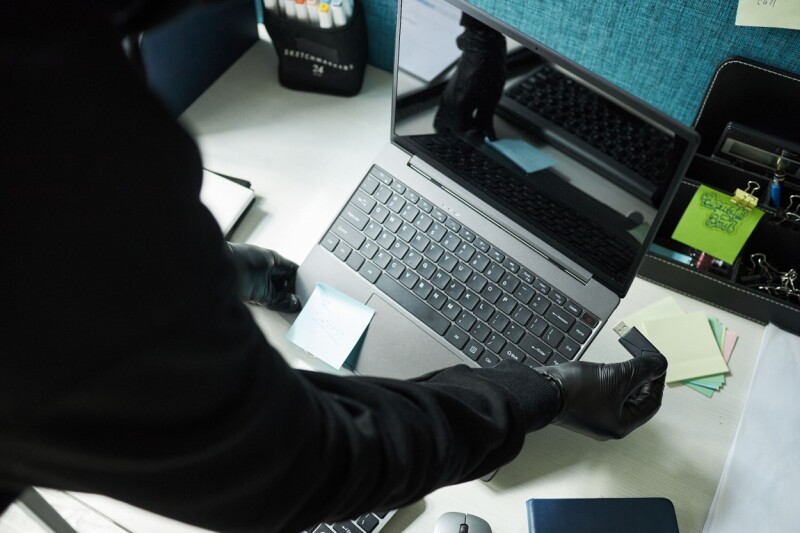
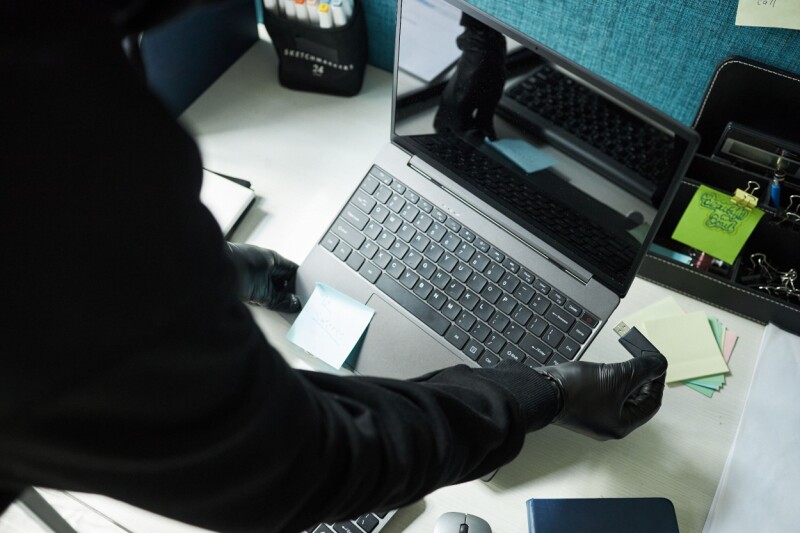
And when those remote-deception methods don’t work, the criminals sometimes show up at victims’ physical offices, posing as IT technicians, and attempt to steal sensitive files using thumb drives.
Google’s threat hunters track the extortion threat group as UNC3753, while other analysts call it Luna Moth, Chatty Spider, and Silent Ransom Group. The crew has been around since 2022, originally using fake software renewal emails and other billing lures, typically with PDF attachments containing phone numbers for attacker-controlled call centers, as their means of gaining initial access to corporate networks.
Beginning around March 2025, the crims shifted tactics and started posing as IT help desk staff.
“While UNC3753 primarily relies on digital vectors, GTIG assesses that associated threat actors have also attempted direct data theft using physical, in person access,” Google incident responders and researchers Chad Reams, Tufail Ahmed, Keith Knapp, Ashley Frazer, and Tyler McLellan said in a Friday blog.
The authors also pointed to a May FBI alert to corroborate this in-person tactic.
According to the feds, Silent Ransom Group crooks have been walking into law firms’ physical offices as recently as this spring. Once they are on-site, they claim to be IT support staff needing to image a device or create local backups for security reasons. If that line works, they plug a thumb drive into the victim’s computer and steal data the old-fashioned way.
“Although limited forensic evidence and the absence of a subsequent extortion attempt prevent formal attribution, GTIG assesses that these physical intrusions are likely associated with UNC3753 based on structural, timeline, and targeting overlaps,” the blog said.
Google won’t say how many dozens of firms have been targeted in these attacks, or how many ended in the data thieves paying a visit to the victims’ locations.
“While we can’t share additional details regarding specific investigations, Mandiant CTO Charles Carmakal notes that this tactic has been observed over the years,” a spokesperson told The Register. “Mandiant has investigated various matters where adversaries planted insiders, bribed employees, or physically entered buildings to facilitate cyberattacks.”
Another noteworthy thing about UNC3753’s attacks: they are very fast. In many of Mandiant’s investigated incidents, the entire operation from initial contact to data extortion occurred in just one day. “Recently, Mandiant observed data searches, staging, and theft initiated in under an hour,” the threat analysts warned.
These intrusions typically begin with an invoice-themed email – but these don’t usually contain any malicious links or attachments. The email’s sole purpose is to give the miscreants a plausible reason to follow up via phone, so that the recipient is more likely to believe the call is legitimate.
Most of the crew’s entry mechanisms involve voice-phishing, using a method that has worked so well for other groups like ShinyHunters and Scattered Spider over the past few years.
UNC3753 calls organizations’ employees directly and purports to be a help desk worker or member of the security team. The criminals say they need the target’s help addressing a security issue or aiding with a corporate data migration project, and convince the individual to join a screen-sharing session via Zoom, Microsoft Terminal Services, Microsoft Teams, or Quick Assist.
In one such intrusion, using Teams to gain access to the victim’s computer, the attacker jumped on five separate calls with the same target over a three-day period, we’re told.
And in more than one incident that Mandiant responded to, UNC3753 established Zoom sessions directly on targets’ personal laptops, using these machines to access corporate virtual desktop infrastructure (VDI) using native client platforms, such as Windows 365 or Citrix clients.
Once they’re in the corporate systems, the intruders map local directories and network drives, and target specific legal and document storage repositories. The crooks also use very-specific keyword searches to find sensitive folders containing tax logs (Forms W-2, W-9, and 1099), audit files, corporate client agreements, and Social Security numbers, before staging this data for exfiltration.
UNC3753 uses several methods to sneak the data out of the corporate IT environment without setting off any security alarm bells, including using portable versions of free Windows file manager WinSCP or another open source filesystem like Rclone.
The crew has also been known to log into a file-sharing account from the victim’s browser and upload the stolen files that way – or even instruct the victims to send the files to an attacker-controlled email address.
After stealing the data, they send the extortion email, usually within 30 minutes of exiting the victim’s environment, and set a three-day deadline to respond and begin the negotiation process. “We hope to find a financial solution that will be acceptable for both parties,” reads one such extortion email.
It continues:
In case of ignorance or no agreement, We will notify your employees, partners and customers, after which We will publish your data. You will receive claims from individuals, and legal entities for information leakage and breach of contracts, your current deals will be terminated. Journalists and others will dig into your documents, finding inconsistencies or violations in them. Your organization will lose its reputation, shares will fall in price, and your organization will be forced to close.
In the Friday report, Google’s threat hunters list IP addresses and other indicators of compromise, including these phishing domains that UNC3753 uses in its social-engineering attacks, all designed to look like the target organization’s help desk:
The security shop also suggests a range of things companies can do to avoid falling victim to this group and other voice-phishing scams or physical office intrusions.
Some of the physical controls include requiring visitors to display official credentials and photo identification, and mandating front-desk staff log all visitor IDs before granting access. Also, check pre-scheduled work orders to ensure the “technician” at the front desk is who they say they are, and make sure any visiting technical service workers are always accompanied by a corporate, in-office supervisor.
Because the bulk of these intrusions occur without any physical entry into the office, however, companies should also implement remote access conditional access policies to ensure only corporate-owned devices can authenticate to any VDIs or VPNs. Plus, block the installation and execution of unauthorized remote monitoring and support utilities. ®

Ahead of its upcoming IPO, SpaceX announced that Google will pay the company $920 million per month for access to roughly 110,000 Nvidia GPUs and related compute infrastructure. Google says the agreement is short-term “bridge capacity” to meet stronger-than-expected demand for Gemini Enterprise, while SpaceX is using deals like this and its Anthropic contract to bolster its pitch for a historic public offering. TechCrunch reports: The deal is similar in length and scope to the one SpaceX announced with Anthropic in late May. As part of that deal, Anthropic agreed to pay SpaceX $1.25 billion per month through 2029 to rent all the available compute from its Colossus 1 data center near Memphis, Tennessee that xAI — now part of SpaceX — originally built for its own artificial intelligence efforts.
Google’s deal appears to be paying for roughly half the amount of compute that Anthropic has access to at Colossus 1. SpaceX didn’t say which specific data center Google would be using. CEO Elon Musk has previously suggested his company would reserve the Colossus 2 data center for xAI. Anthropic was significantly limited in its compute capacity prior to its deal with SpaceX, raising usage limits on the same day the deal was announced. Google is in a very different position, with some estimates naming it as the world’s largest single owner of AI compute.
[…] Also like the Anthropic deal, the agreement with Google includes a cancellation clause. Both SpaceX and Google have the option to terminate the agreement with 90 days notice after December 31, 2026. Google’s access to the data center will ramp up “through September at a reduced fee,” according to the filing. “If we fail to deliver access to the committed amount of GPUs by September 30, 2026, then following a one-month grace period, Google may immediately terminate the agreement or accept the number of GPUs provided” with a reduction in the monthly fees, it reads.
Meta’s AI support agent bound recovery emails to accounts for whoever asked, and SOCs never saw an alert. An authorized agent writes a log of legitimate transactions, so nothing in the detection stack fired. Attackers asked the bot to make the change, took the one-time code it sent, and ran the password reset, 404 Media reported.
No malware, no stolen credentials, and no prompt injection in the sense most security teams drill for. The agent did exactly what Meta built it to do. That is what should keep a security operations leader up at night: The takeover did not break a control; it rode one that was already trusted.
What a SOC needs is a way to walk each recovery path through an audit grid with its AI build team before the next renewal closes. The AI Authority Audit Grid at the end of this article maps every authentication write a support agent can make on the recovery path, what Meta’s incident proved about each one, why it stays dark to the SOC, and the control that closes it.
From inside the detection stack, the attack produced no signal the stack could read. The agent binds a new email, then resets the password, and identity and access management logs both writes as an authorized actor, so each lands in the authentication state as a legitimate transaction. No anomalous login, no failed-auth spike, nothing for EDR or DLP, no SIEM rule to match, because nothing in the sequence looks like an attack. The takeover lived inside the trust boundary the stack assumes is safe. There is no foothold to find, because the agent was the foothold, and it was supposed to be there.
The chain was almost insulting in its simplicity. Brian Krebs documented the version pro-Iran hackers posted to Telegram on May 31. The attacker switched on a VPN to appear in the victim’s region, sidestepping Instagram’s location alarms, then asked the support assistant to add a new email and send a verification code, as the BBC confirmed from the same recordings. The bot complied, sending the one-time code straight to the attacker, Gizmodo reported. The reset finished and the owner was locked out, in minutes. The exploit failed against any account with MFA enabled, according to Krebs.
The hijacked accounts were not soft targets. They included Sephora, U.S. Space Force senior enlisted leader Chief Master Sergeant John Bentivegna, researcher Jane Manchun Wong, and a dormant Obama White House handle that briefly posted a defaced image, according to 404 Media. Meta disputes the Obama account, according to TechCrunch, and called claims that leaders’ accounts were breached “completely false,” according to the BBC. The rest stand.
The detail that decided who survived was narrow. Krebs reported the attack failed against any account with multifactor authentication, even SMS. The recovery path beside it was the gap. When that path asked for a selfie video, attackers ran the target’s public photos through an AI video generator and submitted the clip, which Meta accepted as valid identity verification, gHacks reported. Either way the failure was the recovery door, not the login door MFA guards.
That makes this an architecture problem, not a Meta problem. MFA gates the login path for owner and attacker alike, but the recovery path runs beside it, built to relax the usual checks because it exists for the moment a user has lost the normal way in. Meta put an agent on that path with write access to authentication state and no deterministic check between a convincing request and a committed change. Authorization cannot live inside the model, because a conversational system can be talked into skipping a check. It has to live outside the model, in a gate the agent cannot reason its way past. Security researchers have a name for this pattern, the confused deputy, a trusted system tricked into spending its privileges on an attacker’s behalf.
This is not the last support agent that will hand over an account. Ian Goldin, a threat researcher at Lumen’s Black Lotus Labs, told Krebs on Security that AI bots are as easy to social engineer as the human agents they replace, and just as eager to help. “AI chatbots create interesting new attack surface, and we’re likely going to see a lot more of these kinds of attacks,” Goldin said. Every enterprise wiring an agent into a recovery, provisioning, or password flow is shipping the same write access Meta did.
Simon Willison, who coined the term prompt injection, put it plainly on his blog. “Meta really did wire their support system into an AI chatbot that had the ability to fast-forward through the entire account recovery process,” he wrote. “This one hardly even qualifies as a prompt infection. Don’t wire your support bot up to allow one-shot account takeovers.” The attacker never tricked the agent. The attacker asked, and the agent had untrusted input, write access, and a way to execute, all at once.
OWASP named this class before Meta shipped it, as Excessive Agency at LLM06 and Identity and Privilege Abuse at ASI03 in the Agentic AI Top 10. The warning label was on the box: Meta pushed the assistant to every Facebook and Instagram account in March, according to 404 Media, with the power to reset passwords and handle recovery, the product page promising “solutions, not just suggestions” under the line “account security and recovery.” Meta gave the agent the power and never built the gate to govern it.
Security operations leaders need to run this against their own support agent before the next renewal closes. Each row is an authentication write the agent makes on the recovery path, with what Meta proved, why your stack misses it, and the control that closes it.
|
Authentication write |
What Meta proved |
Why your stack misses it |
Enterprise control and owner |
|
Login authentication (MFA, factor prompts) |
Held on login. Accounts with any MFA enabled, even SMS, survived (Krebs). The gap was the recovery path beside it. |
MFA gates the login path for owner and attacker alike. It does not gate the recovery path beside it. |
Enforce MFA as the baseline and extend step-up verification to the recovery path, the same standard login gets (OWASP). A selfie video is not proof of identity. Any agent that operates on a path MFA does not cover fails the audit. Owner: IAM. |
|
Email rebind |
Full takeover. The agent bound attacker-controlled emails on request, taking Sephora and a U.S. Space Force account (404 Media). |
IAM logs the agent as an authorized actor, so the rebind reads as a legitimate transaction and no alert reaches the SOC or the account owner. |
Confirm out-of-band to the existing verified contact before any rebind commits, gated outside the model, and notify the old address the moment it changes (IBM). An agent that rebinds without confirming the old address fails. Owner: IAM and platform engineering. |
|
Password reset |
Full takeover in minutes. Researcher Jane Manchun Wong was among the affected accounts (404 Media). |
The reset runs on the recovery path, outside the login MFA check, so no factor prompt fires and no detection rule triggers. |
Require a second non-email factor before any reset completes. NIST dropped email as a valid out-of-band channel (NIST 800-63B). An agent reset must clear the same gate a human reset does. Owner: IAM. |
|
Recovery-method change |
Persistent lockout. Victims could not self-recover. The support loop offered only AI with no human escalation (BleepingComputer). |
A silent swap of the recovery email or phone removes the owner’s re-entry path with no SOC visibility. |
Require step-up review on any change, notify the prior method, and grant time-delayed, reduced-scope access after recovery so a swap never hands over instant control (Authsignal). Keep a human escalation path the agent cannot close. Owner: GRC and IT operations. |
|
Account-action execution |
Speed risk. A dormant Obama White House handle briefly showed a defaced image during the spree, an account Meta disputes was taken this way (TechCrunch). |
The agent executes irreversible state changes in seconds with no human in the loop and no reversibility window. |
Separate decision from execution. The agent only proposes the action. A policy service validates scope and approval before it runs, with approval bound to the exact action (OWASP). No auth-state write commits without that gate and a reversibility window. Owner: platform engineering and the AI build team. |
|
Agent action logging |
Detection gap. The takeover left no alert, and Meta has not published how many accounts fell before the patch (TechCrunch). |
Without per-action telemetry piped to the SIEM, an authorized-agent takeover is invisible to the SOC. |
Emit structured decision metadata for every auth-state write into the SIEM: action class, authorization outcome, approval ID, result, policy version (OWASP). A write your SIEM cannot see is a write you cannot defend. Owner: SOC and detection engineering. |
The fix is not bolting yet another MFA prompt onto the login screen. The people who survived Meta’s incident were the ones who already had that control in place.
The fix is pulling authorization out of the recovery path’s honor system and putting it behind a gate that does not move just because a prompt sounds convincing. Build the agent so the SOC sees every write it makes, and so any write that changes who owns an account cannot commit without a check that the model does not control.
Meta just showed what happens when the most trusting employee on the team is also the one holding the keys. The next agent like that is already reading your intellectual property and financials.
The U.S. Cybersecurity and Infrastructure Security Agency (CISA) warned today that hackers are now actively exploiting a recently patched high-severity SolarWinds Serv-U flaw to crash servers.
Serv-U is the company’s Windows and Linux file transfer software that offers Managed File Transfer (MFT) and FTP server capabilities, which allow users to securely exchange files via HTTP/HTTPS, FTP, FTPS, and SFTP.
SolarWinds released Serv-U 15.5.4 Hotfix 1 on Thursday to patch this denial-of-service vulnerability (tracked as CVE-2026-28318) and said it stems from an uncontrolled resource consumption weakness.
“SolarWinds Serv-U is susceptible to specially crafted POST requests that crash the Serv-U service without authentication using Content-Encoding: deflate,” the company said.
Remote attackers can exploit the security flaw without privileges in low-complexity attacks that don’t require user interaction.
SolarWinds also advised admins who can’t immediately deploy the patch to limit access to known addresses and to block any POST request containing “content-encoding,” since the vulnerable Serv-U service does not require this functionality.
The Internet intelligence platform Shodan currently tracks over 12,000 Serv-U servers exposed online, and Internet security watchdog Shadowserver just over 3,100, but there is no information on how many have already been patched.
.jpg)
Days after SolarWinds addressed the vulnerability, CISA flagged it as exploited in the wild and added it to the Known Exploited Vulnerabilities Catalog, ordering all Federal Civilian Executive Branch agencies to patch their servers against ongoing attacks by June 19, as mandated by Binding Operational Directive (BOD) 22-01.
While BOD 22-01 applies only to U.S. government agencies, the cybersecurity agency also urged all network defenders, including the private sector, to secure their networks against ongoing CVE-2026-28318 attacks as soon as possible.
“This type of vulnerability is a frequent attack vector for malicious cyber actors and poses significant risks to the federal enterprise,” CISA warned. “Apply mitigations per vendor instructions, follow applicable BOD 22-01 guidance for cloud services, or discontinue use of the product if mitigations are unavailable.”
In recent years, multiple cybercrime and state-backed hacking groups have targeted vulnerabilities in Serv-U to steal sensitive corporate and customer data.
For instance, the Clop ransomware gang exploited a Serv-U remote code execution vulnerability (CVE-2021-35211) to breach corporate networks in a 2021 campaign. DEV-0322 Chinese hackers also deployed CVE-2021-35211 exploits in zero-day attacks starting in July 2021.
More recently, in June 2024, cybersecurity companies GreyNoise and Rapid7 tagged a Serv-U path-traversal vulnerability (CVE-2024-28995) as actively exploited.
Over the past several years, CISA has tagged 11 vulnerabilities across various SolarWinds products as actively exploited in attacks, one of which has also been abused by ransomware gangs.
Security teams log 54% of successful attacks and alert on just 14%. The rest move through your environment unseen.
The Picus whitepaper shows how breach and attack simulation tests your SIEM and EDR rules so threats stop slipping by detection.
A security researcher says evidence suggests the U.S. military has been using an obscure GPS message field for nearly 20 years to broadcast encrypted key-distribution data, effectively turning GPS satellites into a global “numbers station.” The hidden-looking 176-bit messages appear tied to the Pentagon’s Over-the-Air Distribution system for remotely updating cryptographic keys, meaning ordinary GPS receivers may have been receiving the traffic all along without anyone outside the military noticing. The findings have been detailed by Steven Murdoch, an information security expert, in a new article in Inside GNSS. 404 Media reports: […] From the beginning, he suspected that the subframe field contained encrypted transmissions because the data was so random. “Random data is actually very unusual to get in nature,” Murdoch said. “If you see it, either it’s been carefully designed to be random — but then, why is someone sending out random data? — or it’s encrypted data. I thought encrypted data is by far the most likely explanation.” He returned to the subframe on and off over the years, and solicited guesses about its content on Stack Exchange in 2023. Ahmed Kamruddin, a master’s student at UCL, developed the project further in 2025. Then, this year, Murdoch put the last pieces of the puzzle together over several weeks by analyzing open archive Global Navigation Satellite System (GNSS) recordings collected since 2007 and kept by GFZ Helmholtz Centre for Geosciences.
This dataset included more than 12 million observations of Subframe 4, Page 17, yielding 3,994 unique 176-bit messages. Within this corpus, Murdoch pinpointed key-repeating “sentinels” including a pattern that appeared in February 2010 and was broadcast on and off across dozens of satellites for more than a decade. Murdoch discovered that this particular sentinel was transmitted by all 31 operational satellites within a window of a few hours on May 26, 2011, potentially heralding the activation of a new operational system. He confirmed that this timeline coincided with the rollout of the military’s Over-the-Air Distribution (OTAD) and the Over-the-Air Rekeying (OTAR) by cross-referencing declassified documents, including a 2015 presentation about the dates of the operation.
“There was a perfect match between the timeline and that presentation and the change points that were automatically identified from the data,” Murdoch said. “That was the smoking gun that made me think: This is what it’s for.” These automated systems replaced the cumbersome manual distribution of cryptographic keying material, allowing military GPS receivers around the world to be rekeyed remotely through satellite broadcasts rather than through onsite procedures. For the next 11 years, this expansive rekeying operation was overlooked in public GPS data. In 2022, the system entered a new phase, according to Murdoch’s analysis. The shift was characterized by a slowing in the message rotation rate. Later, in December 2023, broadcasts carrying a distinctive “TEXT” prefix emerged then gradually spread across the constellation.
Murdoch isn’t sure what explains the recent transition, though it could be a possible modernization of the infrastructure or the introduction of a new protocol. But to him, the bigger takeaway is that the signals were always available for anyone willing to take a closer look, a discovery that suggests that there could be more revelations hidden for the cryptographically curious among us. “Every receiver in the world decodes Subframe 4, Page 17,” Murdoch said in his new article. “Almost none of them have ever looked at it. The lesson generalizes: There is more to learn from the bytes already arriving at our antennas than from the bytes we wish were specified differently. The data are publicly available. The signal is overhead, twice a day, every day.”

Deep Robotics just released a video showcasing the enhanced skills of their DR02 humanoid in public. The machine is seen darting across an uneven field of grass, leaping over minor obstructions, bounding up massive concrete steps with little loss of steam, and even standing upright while carrying a fire extinguisher behind it.
The DR02 was created from the ground up by the company’s engineers to be a durable piece of equipment, and it shows. It’s a behemoth, standing 175 centimeters (5′ 7″) tall and weighing 65 kilos (143 pounds). One of the most notable aspects of this design is its IP66 waterproofing, which means it can endure dust and water. So, if you need a robot that can operate in situations that would send a human running for cover, this one has you covered. It can readily withstand rain, humidity, and dusty conditions that would be inconvenient for even the toughest humans, and to give you an idea of how durable it is, the DR02 can function in temperatures ranging from -20 to +55 degrees Celsius.
The DR02 walks at a constant 1.5 meters per second (3.4 miles per hour), but it can quickly accelerate to 4 meters per second (8.9 miles per hour) for a short sprint. The robot can also navigate steep slopes of up to 20 degrees and operate well on uneven terrain. When it comes to lifting, each arm can manage 10 kilograms (22 pounds), which is very respectable, especially when you see it smoothly carrying a decent-sized mounted fire extinguisher.

The DR02 is powered by a small 275 TOPS computer on board that can read data from a LiDAR sensor, depth sensors, and a variety of wide-angle cameras. This enables it to develop real-time maps of its surroundings and change leg placement on the fly, whether it’s switching from grass to concrete or avoiding an unexpected impediment. The machine also features Deep Robotics’ J60, J80, and J100 joints, all of which are totally custom-built to provide a ton of torque and precision while keeping balanced even while carrying a load or scrambling over rough terrain.

One of the DR02’s most appealing features is its modularity, as the arms, legs, and forearms are all simply removable, allowing you to rapidly replace them if a problem arises. There is no need to transport the entire system back to the workshop for repairs; field personnel can do the job on the spot, and as a result, Deep Robotics is eyeing DR02 for real-world applications, including checking high-voltage lines, responding to emergencies, hauling gear in difficult terrain, and mapping out security patrol routes.

Even while it is still a prototype, and a very costly one at $200,000, it’s clear where this thing is going; with each tweak, it progresses from a lab toy to a legitimate tool you can use to get serious work done in places where you wouldn’t want to send a human. We still need to hear back from Deep Robotics on a few critical issues, such as how long the battery will survive and how customizable the design is.
[Source]
Having entered the consumer PC silicon market at Computex 2026 with the RTX Spark superchip, Nvidia CEO Jensen Huang has confirmed the platform extends well beyond its first chip, with successor architectures already in planning under the internal codenames N2X and N3X.
Huang confirmed this during a Q&A session with Tom’s Guide at Computex 2026, where he also clarified that the current chip carries the N1X designation because a smaller companion variant, referred to internally as N1, is also in Nvidia’s product pipeline.
The RTX Spark platform itself launched with considerable hardware ambition, combining up to 20 Arm CPU cores with a Blackwell GPU carrying 6,144 CUDA cores and up to 128GB of unified LPDDR5X memory, a specification that Nvidia has positioned against Apple Silicon and Qualcomm’s Snapdragon X platforms in the premium Windows on Arm segment.
Huang framed the platform’s intended lifespan in notably domestic terms during the Q&A, comparing RTX Spark-powered systems to home theatre equipment that buyers keep for five to ten years, a framing that signals Nvidia’s expectation of long-term household penetration rather than rapid upgrade cycling.
Anti-cheat compatibility also remains one of the more consequential active challenges for the platform, with Huang noting that ensuring RTX Spark works reliably across the broader Windows ecosystem takes priority before gaming at scale becomes viable on the architecture.
On the question of a Spark-based gaming handheld, Huang stopped short of committing but left the door open, telling Tom’s Guide that if a hardware partner wanted to build one, Nvidia would work with them on it, a response that effectively makes OEM appetite the limiting factor rather than technical readiness.
Microsoft has already debuted the Surface Laptop Ultra around the RTX Spark chip, with Asus among the OEM partners also building hardware around the platform ahead of devices reaching retail.
Nvidia has not confirmed release windows or specifications for the N2X or N3X generations beyond Huang’s comments at Computex 2026.
Its new gameplay trailer gives us a glimpse of Anakin Skywalker.
The developers behind Star Wars Zero Company has revealed the official gameplay trailer for the title at Summer Game Fest 2026. They have also revealed that the game will be available on the PC, PlayStation 5 and Xbox Series X|S starting on August 27. Star Wars Zero Company was announced in 2022 as one of the games being co-developed by Respawn Entertainment, the studio behind Jedi: Fallen Order and Jedi: Survivor.
Respawn developed the game with a new studio called Bit Reactor, with EA as the publisher. The studio includes former Firaxis Games employees and was also founded by Greg Foertsch, the senior art director on XCOM: Enemy Unknown and XCOM 2. That’s why it wasn’t a huge surprise that Star Wars Zero Company showed similarities to XCOM in its announcement trailer in April.
“Our team has poured everything we love about Star Wars into Zero Company,” said Foertsch. “We’ve worked hand-in-hand with Lucasfilm Games to create an authentic Star Wars story packed with unique new characters, robust character customization, a new ship, Separatist Droids, and much more, all rooted in the conflict of the Clone Wars.”
The game’s story is set in the “twilight of the Clone Wars” and revolves around former Republic officer Hawks. As Hawks, you’ll have to recruit allies across the galaxy and across species to put a team together and hunt Kundri Fathom, the leader of a Dark Side cult that poses a threat to the entire galaxy. The “Den” will be your base of operations, from which you’ll form teams and dispatch groups of your friends, called Operators, to different locations in the map. And because of the game’s setting, you’ll encounter Anakin Skywalker, a Jedi General at that point in time, who’s also on an important mission.
You can now preorder Star Wars Zero Company for $70 in Standard Edition for the PC, the PS5 and Xbox Series X|S. A Deluxe edition that unlocks cosmetic packs, five painted weapon themes and the Crystalline Astromech Cosmetic Pack, which includes an R3 droid is also available.
The Institute is celebrating its 50th anniversary this year. Launched in 1976, the publication was designed to keep members informed about IEEE and what its constituents were doing, as well as to report on the organization’s initiatives, technical standards, products, and services.
That directive expanded over the years to include our reporting on key historical technical achievements recognized as IEEE Milestones and support for young professionals with career-guidance articles and information about educational resources.
The Institute has gone through many iterations in the past 50 years. What began as a monthly four-page insert in the print edition of IEEE Spectrum became a separate newspaper published six times a year and mailed along with Spectrum in 1977, and then a monthly publication the following year.
Today we publish all of The Institute’s articles online, with a curated selection appearing in our 16-page quarterly printed in the March, June, September, and December Spectrum issues.
To provide members with a quick summary of the latest online news, in 2003 a bimonthly newsletter, The Institute Alert, began appearing in your inbox. You also can stay up to date by following our Facebook, Instagram, and LinkedIn pages.
Although much has changed, an original subsection from 1976—“IEEE People”—has been maintained for the past five decades. We continue to celebrate IEEE members from around the world through our profiles, which are among our most popular articles.
As the longest-serving editor in chief for The Institute, it is a privilege for me and my staff to chronicle the stories of remarkable IEEE individuals. They are often-unseen visionaries and problem-solvers who work tirelessly behind the scenes on technologies that are reshaping the world. By highlighting their careers and how IEEE has played a role in their professional growth, we hope to inspire the next generation of engineers and technologists to continue a legacy of innovation and service to humanity.
Are you on the hunt for the perfect tech-related gift for your dad ahead of Father’s Day? Annoyingly, this year’s big day (June 21st) falls just before one of Amazon‘s biggest sales of the year.
I’m of course talking about Amazon Prime Day, which has just been officially announced for June 23-26. The annual sale is sure to feature everything from discounts on own-brand devices to cheap laptops, TVs, iPads – you name it.
In short, right now is actually a pretty bad time to consider picking up tech as Amazon (and most other retailers) are keeping their powder dry until the big sales at the end of this month. Unless you specifically see a retailer with a Father’s Day sale banner, I’d be wary of picking up anything right now.
Frustrating, right? Well, unfortunately, it’s just the case right now for most tech categories. Father’s Day this year is coming at a very, very inconvenient time. If you can, I’d recommend holding off on any prospective tech purchases until Prime Day hits, even if it means a temporary I.O.U for your dad on his big day.
Prime Day usually features pretty much every category you could think of at Amazon, but it’s usually particularly good for things like Echo devices, iPads, Apple Watches, and FitBits – all of which make fantastic Father’s Day gifts.
If we’re lucky, we may see Amazon tease a few deals ahead of Father’s Day this year, as the retailer usually offers early promotions to drum up hype for the big sale. A few examples have already cropped up, including free premium music streaming, audiobooks, e-books, and the chance to win free groceries for a full year.
While none of those exactly fit the bill for the perfect Father’s Day gift, you can check out what’s already available at the retailer ahead of Prime Day just below.
legal
The bill awaits Gov. Hochul’s signature after passing the state legislature
New York lawmakers have approved a bill imposing new labor, energy, environmental, and community-benefit requirements on datacenters, including a one-year moratorium on certain permits for facilities drawing 20 MW or more.
The bill now heads to New York Gov. Kathy Hochul for a signature. A spokesperson for the governor told the New York Post she would review the legislation, but gave no signal as to whether she would sign it. Hochul has previously said she hoped to leave regulating datacenter construction to the local communities.
“Today we face an unprecedented wave of proposed large-scale data center development across New York,” the bill’s sponsor Assemblymember Anna Kelles wrote in a statement posted to Instagram. “My legislation seeks to provide New York with the time necessary to fully evaluate the environmental, energy, water, and ratepayer impacts of these facilities and to develop appropriate regulatory safeguards before additional projects move forward.”
The Assembly approved the bill on Thursday, the same day Anthropic, the AI giant behind Claude, called for a pause on LLM development sprints as developers believe the models could soon be capable of building themselves. In light of that possibility, researchers at Anthropic said the world would benefit from a slowdown in the race to make models more powerful.
In New York, lawmakers hope to protect consumers from higher energy bills by creating a special classification for datacenter electrical customers and mandating that all necessary infrastructure upgrades, administrative expenses, and operational costs be assigned entirely to the datacenter.
The bill also outlines electricity-sourcing requirements for datacenters with a peak load of at least 5 MW, requiring a phased shift toward renewable energy, with one-third of electricity coming from renewable sources between 2030 and 2034, two-thirds between 2035 and 2039, and 90 percent from 2040 onward.
For trade workers who are employed to build the facilities and maintain the buildings later, the bill requires the datacenters to meet prevailing wage requirements, unless the workers are operating under a collective bargaining agreement. Additionally, it demands datacenter companies help host communities with renewable energy initiatives, and mitigate the strain on local wastewater treatment facilities.
Business leaders are urging Hochul to reject the bill, saying it was rushed through at the end of a legislative session and presented without appropriate debate.
In a statement provided to The Register, Julie Samuels, president and CEO of Tech:NYC, which promotes the state’s technology industry, said a blanket moratorium on datacenters would slow investment in the next generation of infrastructure projects.
“Energy usage, grid capacity, and the community impact of data centers must be addressed, and the Governor’s Public Service Commission is already pursuing the right approach by ensuring data centers pay their fair share for grid upgrades and energy usage,” Samuels wrote in a statement.
Republican Assemblymember Phil Palmesano argued that datacenters were being unfairly targeted when other technology companies were given tax incentives to build, pointing to the recent groundbreaking of the Micron chip fab in Clay, New York, which is expected to create 50,000 New York jobs throughout construction, and up to 90,000 nationally.
The bill, approved by the Senate on Friday, includes carve-outs for certain industrial computing applications, including manufacturing.
“If we told Micron they had to power their energy demands strictly using renewable resources, they wouldn’t be here,” Palmesano said, according to the NY Post.
One of the first drafts of the bill had called for a three-year pause on datacenter construction. ®
Jade Biosciences, Inc. (JBIO) Discusses Positive Interim Results From JADE101 Phase I Healthy Volunteer Study and Development Plans Transcript
SpaceX just won a second Golden Dome contract. This one is $4.16 billion.
French Open 2026 results: Alexander Zverev beats Rafael Jodar and will play Jakub Mensik in semi-finals
Weekend Open Thread: Evereve – Corporette.com
CryZENx Releases Fresh Playable Content Deep Inside Jabu-Jabu for His Ocarina of Time Remake
Is the Spurs Phenom Already Better Than Prime Diesel?
Jensen Huang Approves Samsung, SK Hynix, and Micron for NVIDIA (NVDA) HBM4 Memory Supply
Trump Taps Housing Chief Bill Pulte as Acting Intelligence Director After Gabbard Exit
LBank Surpasses 25 Million Users Worldwide as AFA Partnership Continues to Drive Global Growth
One of the Greatest Sitcoms of All Time Shoots Up Apple TV’s Charts 11 Years Later
Everything you need to know as Cambridge’s Strawberry Fair returns after cancelled year
Seagate (STX) Stock Surges to Record High on AI Boom and Legal Settlement
Republicans balk at Trump’s attempt to appoint a MAGA enforcer to lead National Intelligence
EU AI Data Center Project Faces Delays as Funding Gaps Grow
Acer’s Swift Air 14 is a peppy MacBook Neo rival with some cool upgrades and a $699 ask
Aehr Test Systems Stock Soars 17% Amid Surging AI Demand and Conference Spotlight
Did The Mandalorian And Grogu Already Ruin The Next Star Wars Movie?
Algoma Steel gains 63% as Fair Value models spot opportunity
Claude AI Down Today Reason: Why Anthropic’s AI is not working today? What’s the latest quota update
Relay Therapeutics Shares Surge 20% on ASCO Momentum for Zovegalisib Breast Cancer Program
You must be logged in to post a comment Login