



Connect with us
DAPA Banner
DAPA Coin
DAPA
COIN PAYMENT ASSET
PRIVACY · BLOCKDAG · HOMOMORPHIC ENCRYPTION · RUST
ElGamal Encrypted MINE DAPA
🚫 GENESIS SOLD OUT
DAPAPAY COMING

Tech

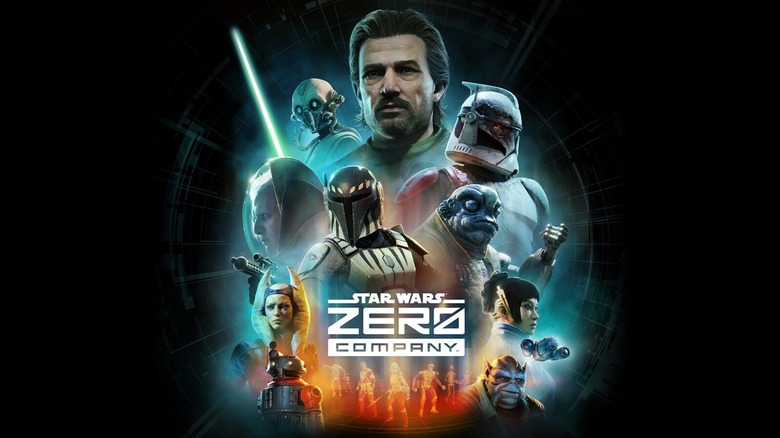
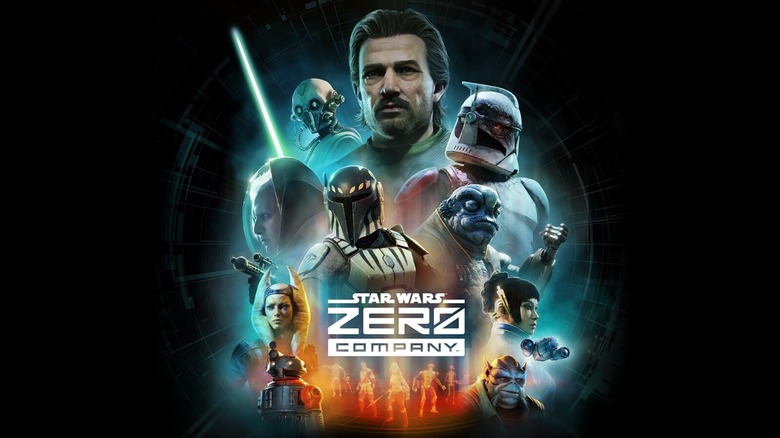
EA’s Star Wars Zero Company Drops August 27

Published

on

Its new gameplay trailer gives us a glimpse of Anakin Skywalker.

The developers behind Star Wars Zero Company has revealed the official gameplay trailer for the title at Summer Game Fest 2026. They have also revealed that the game will be available on the PC, PlayStation 5 and Xbox Series X|S starting on August 27. Star Wars Zero Company was announced in 2022 as one of the games being co-developed by Respawn Entertainment, the studio behind Jedi: Fallen Order and Jedi: Survivor

Respawn developed the game with a new studio called Bit Reactor, with EA as the publisher. The studio includes former Firaxis Games employees and was also founded by Greg Foertsch, the senior art director on XCOM: Enemy Unknown and XCOM 2. That’s why it wasn’t a huge surprise that Star Wars Zero Company showed similarities to XCOM in its announcement trailer in April. 

“Our team has poured everything we love about Star Wars into Zero Company,” said Foertsch. “We’ve worked hand-in-hand with Lucasfilm Games to create an authentic Star Wars story packed with unique new characters, robust character customization, a new ship, Separatist Droids, and much more, all rooted in the conflict of the Clone Wars.”

Advertisement

The game’s story is set in the “twilight of the Clone Wars” and revolves around former Republic officer Hawks. As Hawks, you’ll have to recruit allies across the galaxy and across species to put a team together and hunt Kundri Fathom, the leader of a Dark Side cult that poses a threat to the entire galaxy. The “Den” will be your base of operations, from which you’ll form teams and dispatch groups of your friends, called Operators, to different locations in the map. And because of the game’s setting, you’ll encounter Anakin Skywalker, a Jedi General at that point in time, who’s also on an important mission.

You can now preorder Star Wars Zero Company for $70 in Standard Edition for the PC, the PS5 and Xbox Series X|S. A Deluxe edition that unlocks cosmetic packs, five painted weapon themes and the Crystalline Astromech Cosmetic Pack, which includes an R3 droid is also available. 

Advertisement

Source link

Continue Reading
Click to comment

You must be logged in to post a comment Login

Leave a Reply

Tech

Do Metal Roofs Turn A Bird House Into An Oven?

Published

on

Birdhouses can be a great way to help out nesting birds in your area, but they can be a bit intensive to make. As part of a 500 birdhouse marathon, [Of Human and Nature] decided to test whether a metal roof would be safe or turn the birdhouse into an oven.

Most DIY birdhouses are made of wood to encourage cavity nesting species that would naturally find a hole in a tree to use the house. Unfortunately, an unprotected chunk of wood will deteriorate much faster than a whole tree full of holes might. A metal roof reduces the exposure to the elements, but does it make the box too hot?

[Of Human and Nature] heeded concerns from commenters and actually tested his hypothesis with a simple set of thermocouples, a heat lamp, and an assembled birdhouse. While the metal roof was held at 70˚C for four hours, the inside of the house stayed in the mid 20˚C range thanks to the separation between the roof and the actual box which allows air to flow between the two.

Advertisement

Maybe a metal roof could help you house your homing pigeons as well? If you want to spread the mesh with your birdhouse instead, how about a solar panel roof with a LoRa node?

Advertisement

Source link

Continue Reading

Tech

IBM is Getting Ready to Scale Quantum Computing

Published

on

IBM spent a decade “building, testing and improving” quantum computing, reports the Wall Street Journal.

“This year, the company is laying the groundwork to turn that technology into a fully-fledged, scalable business from an expensive science project.”

IBM said last month it plans to form a new independent subsidiary called Anderon, a foundry to produce the silicon wafers needed to make quantum-computing processors. The venture is seeded by a $1 billion investment from the Trump administration and another $1 billion of IBM’s own cash.
Anderon will give the company a new line of business in selling wafers to other quantum-computing companies. It will also provide a steady stream of wafers to continue developing its own quantum technology, positioning IBM to capture part of what the Boston Consulting Group projects will be a $90 billion to $170 billion market for quantum-computing providers by 2040…

The company also plans to spend an additional $9 billion over five years to advance the final stages of its quest to build a quantum-mechanics-powered computer capable and reliable enough for widespread use, a goal known as fault tolerance. That computer, named Starling, is being targeted for 2029. With Anderon, IBM is thinking beyond Starling, or even a more powerful quantum computer planned for 2033.

Advertisement

Source link

Continue Reading

Tech

Today’s NYT Connections: Sports Edition Hints, Answers for June 28 #643

Published

on

Looking for the most recent regular Connections answers? Click here for today’s Connections hints, as well as our daily answers and hints for The New York Times Mini Crossword, Wordle and Strands puzzles.


The World Cup is swinging into the knockout round, and today’s Connections: Sports Edition includes a World Cup category. If you’re struggling with the puzzle but still want to solve it, read on for hints and the answers.

Connections: Sports Edition is published by The Athletic, the subscription-based sports journalism site owned by The Times. It doesn’t appear in the NYT Games app, but it does in The Athletic’s own app. Or you can play it for free online.

Advertisement

Read more: NYT Connections: Sports Edition Puzzle Comes Out of Beta

Hints for today’s Connections: Sports Edition groups

Here are four hints for the groupings in today’s Connections: Sports Edition puzzle, ranked from the easiest yellow group to the tough (and sometimes bizarre) purple group.

Yellow group hint: Very cool!

Advertisement

Green group hint: Hoops data.

Blue group hint: Allez les Bleus!

Purple group hint: Where the dunking happens.

Answers for today’s Connections: Sports Edition groups

Yellow group: Style.

Advertisement

Green group: Basketball stats, abbreviated.

Blue group: Members of France’s World Cup squad.

Purple group: NBA arenas.

Read more: Wordle Cheat Sheet: Here Are the Most Popular Letters Used in English Words

Advertisement

What are today’s Connections: Sports Edition answers?

completed NYT Connections: Sports Edition puzzle for June 28, 2026

The completed NYT Connections: Sports Edition puzzle for June 28, 2026.

NYT/Screenshot by CNET

The yellow words in today’s Connections

The theme is style. The four answers are flair, panache, pizzazz and swagger.

The green words in today’s Connections

The theme is basketball stats, abbreviated. The four answers are FG, FT, PF and TO.

Advertisement

The blue words in today’s Connections

The theme is members of France’s World Cup squad. The four answers are Barcola, Gusto, Mbappé and Olise.

The purple words in today’s Connections

The theme is  NBA arenas. The four answers are Barclays, Kia, Moda and TD.

Source link

Advertisement
Continue Reading

Tech

This budget iPad alternative has a 144Hz display and a healthy Prime Day discount

Published

on

If you want a capable tablet, but an iPad isn’t for you (or your wallet) take a look at this,

The Xiaomi Pad 8 Pro is available for £324, down from £381.65 with £57.65 off for Prime Day.

Deal XIAOMI Pad 8 ProDeal XIAOMI Pad 8 Pro

The Xiaomi Pad 11.2‑inch has a genuinely strong saving right now, but with Prime Day ending today, it’s your last chance to snap it up

The Xiaomi Pad 11.2‑inch is sitting at a great price, though with Prime Day ending today, you’ll need to move quickly.

Advertisement

View Deal

The Snapdragon 8 Elite chip underneath is the same silicon powering flagship smartphones in 2025, and on a tablet, it translates into multitasking, gaming, and document work that never asks you to wait for the hardware to catch up.

Advertisement

That performance lands on a 3.2K display running at up to 144Hz with Dolby Vision support, 12-bit colour depth, and 345 PPI, so whether you’re editing a presentation or watching something on a long journey, the screen is doing full justice to whatever’s on it.

The 11.2-inch size sits in a body just 5.75mm thick and weighing 485 grams, which means the Xiaomi Pad 8 Pro fits into a bag without thinking about it and stays comfortable through sessions that would make a heavier tablet feel like work.

Advertisement

The Whatsapp LogoThe Whatsapp Logo

Get Updates Straight to Your WhatsApp

Advertisement

Join Now

Battery life is rated at up to 18 hours of continuous video streaming from the 9200mAh cell, and 67W HyperCharge brings it back quickly when you do run it down, so the charging cable rarely needs to be a fixture on your desk.

Advertisement

The quad speaker setup with Dolby Atmos support means audio holds up without headphones, which matters more on an 11-inch screen than it ever does on a phone, and HyperOS 3 ties the software experience together with system-wide AI features across apps.

Not sure whether a tablet or a phone upgrade makes more sense right now? Our best smartphones 2026 guide and best Android phones 2026 roundup lay out the strongest options across both, so you can make the call with the full picture in front of you.

The Xiaomi Pad 8 Pro is a top 11-inch contender for those who would like a Samsung Galaxy Tab S11 or iPad Pro, but can’t stomach their price tags. It costs less, while providing similar real-world results. Its screen isn’t class-leading, with lesser contrast than the best, but it only stands out because the bar is so very high in 2026.

Advertisement
  • Powerful processor

  • (Optional) Neat hinged keyboard case

  • Long battery life

  • Stylus and keyboard are pricey

  • Non-OLED screen with just OK colour depth

  • Heat regulation can cause app closures

SQUIRREL_PLAYLIST_10148964

Advertisement

Advertisement

Source link

Continue Reading

Tech

A Standalone YouTube Streaming Rig

Published

on

YouTube streaming typically involves a camera with an HDMI output, a USB3 HDMI digitiser, and a suitably beefy PC to run it all. It’s quite a process, and for [Coreymillia], more complex than it needs to be. He’s come up with something simpler, a dedicated self-contained streaming rig using a Raspberry Pi 4.

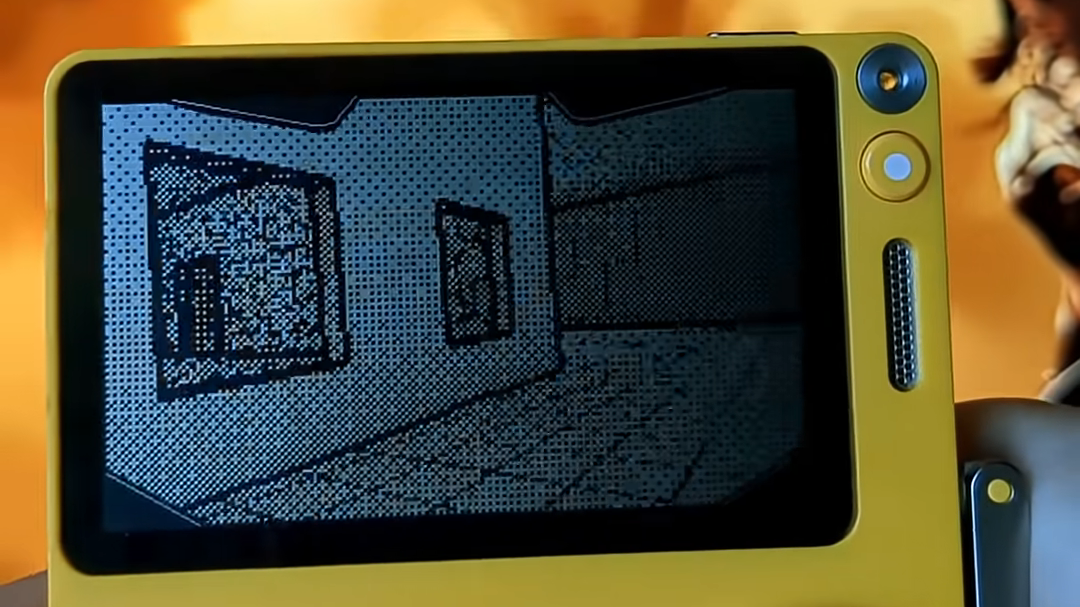
As you might expect it uses the Raspberry Pi HQ camera at the optical end, but it’s the software surrounding it that transforms it from a mere camera into a streaming rig. There’s a web based user interface, but perhaps more interesting are the companion dashboard peripherals. A Raspberry Pi or an ESP32 Cheap Yellow Display can both serve as a small in-view dashboard and controller.

We know from experience that a stream can be a difficult thing to get right even with high-end hardware, and we’re interested to see this standalone device allowing , we hope, an easier way to do it. If you’re a streamer we’re guessing you’ll be taking a closer look. Even so, this is surprisingly, not the simplest Raspberry Pi based streaming device we’ve seen.

Advertisement

Source link

Advertisement
Continue Reading

Tech

OpenAI's GPT-5.6 gets staggered release after Trump administration cites national security concerns

Published

on


Sol, the flagship model in the GPT-5.6 lineup, is built with a robust safety stack with guardrails against higher-risk activities, sensitive cyber requests, and repeated misuse. Terra is designed for balanced reasoning and agentic workloads, with OpenAI claiming that it offers similar performance to GPT-5.5 while being 2x cheaper. Luna…
Read Entire Article
Source link

Continue Reading

Tech

Apple asks Trump to allow RAM imports from banned supplier

Published

on

Apple has petitioned the Trump administration to allow it to buy Mac RAM chips from a blacklisted Chinese supplier, to ease the price pressure caused by the global memory crisis.

The tech industry is continuing to struggle with keeping the cost of manufacturing low due to the ongoing demand for memory chips. While Apple is also affected and now passing down the costs to consumers, it’s still trying to find ways around the problem.

According to six people speaking to the Financial Times, Apple has reached out to the Trump administration. It wants permission to buy memory chips from the Chinese memory supplier CXMT.

The problem is that CXMT is a memory chip maker that is on the Chinese Military Company Blacklist, or 1260H list. It is a list of firms that the Pentagon believes have links to the People’s Liberation Army, and therefore could undermine the national security of the U.S.

Advertisement

Apple has reportedly reached out to the Commerce Department over a month ago, as well as the administration and others in Washington to try and get the green light.

The naughty list

The existence of CXMT on the Chinese Military Company Blacklist doesn’t stop Apple from buying chips from it. However, the existence on the list has repercussions that would affect Apple.

The Defense Department is not able to make agreements with companies on the list, nor use any products and services from third parties that use their components. That would mean Apple would suddenly lose sales from that arm of the U.S. government.

That’s not the only problem that Apple faces, because it’s not the only list to be concerned about. In 2025, the Department of Commerce indicated that CXMT was one of a number of Chinese companies it wanted to put on to the “Entity List.”

Advertisement

At the time, the White House told the Commerce Department to hold off from adding them to the Entity List, which would’ve blocked all trade with the company completely. The administration was negotiating with China at the time to try to end the trade war.

CXMT is not on the Entity List, but that can still change. While Apple can get permission to buy from CXMT, there’s no guarantee that it could later be added to the Entity List, disrupting supplies once again.

For the moment, Apple would have to deal with a reputational risk of being associated with CXMT, but it can always get worse.

Lawmaker worries

Aside from getting permission to get the chips, Apple will also have to deal with a backlash from other U.S. lawmakers.

Advertisement

To the Republican chair of the House China Committee, John Moolenaar, it would be a “grave mistake” for Apple to make a deal. Doing so would help China succeed in dominating critical supply chains, making the U.S. tech industry more dependent on China.

Apple previously felt pressure in 2022 when it thought about sourcing memory chips from YMTC, specifically for iPhones to be sold in China. Marco Rubio, the top Republican on the Senate Intelligence Committee at the time, said Apple was “playing with fire.”

Rubio added that Apple would face extreme scrutiny from the U.S. government, even though they were for memory chips to be sold in iPhones elsewhere.

Apple does have a duty to its customers and a fiscal responsibility to its shareholders to make sales without wasting funds. Securing another memory supplier is a natural thing for it to do in this case, especially when the world is jointly facing the same memory pressures.

Advertisement

The obstacle here isn’t one of price, but in keeping the United States government on-side. Under the current political climate, that’s going to be a very tough sell, even with current CEO Tim Cook‘s years of relationship groundwork.

It may well be a political price that’s just too high. Something that consumers will pay for either way.

Source link

Advertisement
Continue Reading

Tech

Renewable Energy Just Hit 30% of America’s Electricity Generation

Published

on

America generated 10.06% more energy with renewables in the first four months of 2026 than it did in the same period the year before. That’s according to new figures from America’s Energy Information Administration, cited in this report from Electrek:

The growth was led by utility-scale solar (+21.3%), hydropower (+15.7%), small-scale solar
In April alone, wind and solar each produced more electricity than US coal plants, while the combination of solar and wind produced 57.0% more electricity than nuclear power.

The mix of all renewables, including biomass and geothermal, accounted for 30.0% of total US electrical generation during the first third of 2026 — up from 27.8% a year earlier… EIA reported that, in April, utility-scale solar capacity surpassed wind capacity for the first time (160,208.1 MW vs. 160,100.6 MW). Further, utility-scale battery energy storage capacity increased by 17,703.5 MW, or 58.1%. Nuclear added just 18.4 MW.

The combined capacity growth of all utility-scale renewable energy sources for the 12-month period (55,980.3 MW) is two-thirds more (i.e., 67.6%) than that added during the previous 12 months (33,392.0 MW).

“EIA projects no new nuclear generating capacity and a net decline of 5,200.5 MW in fossil fuel capacity.”

Advertisement

Source link

Continue Reading

Tech

Best Apple Watch Series 11, Ultra 3 Deals Still Live This Weekend

Published

on

Amazon’s Prime Day Apple Watch deals have been extended into the weekend, with the Series 11 discounted by $120 and the Ultra 3 slashed by $150.

Amazon’s Prime Day Apple Watch sale delivered the year’s lowest prices on several Series 11 and Ultra 3 models. And while Prime Day wrapped up on Friday, multiple offers have been extended into the weekend, including the Series 11 for $279 ($120 off) and the Ultra 3 for $649 ($150 off).

Buy Apple Watch S11 from $279

You can find a detailed breakdown of the lowest prices across dozens of styles in our Apple Watch Price Guide, with highlights from the weekend sale below.

Advertisement

42mm Apple Watch Series 11

  • 42mm Apple Watch Series 11 GPS (Aluminum Case, Sport Band): $279 ($120 off)
  • 42mm Apple Watch Series 11 GPS + Cellular (Aluminum Case, Sport Band): $379 ($120 off)
  • 42mm Apple Watch Series 11 GPS + Cellular (Titanium Case, Milanese Loop Band): $609 ($140 off)

46mm Apple Watch Series 11

  • 46mm Apple Watch Series 11 GPS (Aluminum Case, Sport Band): $309 ($120 off)
  • 46mm Apple Watch Series 11 GPS + Cellular (Aluminum Case, Sport Band): $399 ($130 off)
  • 46mm Apple Watch Series 11 GPS + Cellular (Titanium Case, Sport Band): $569.97 ($180 off)
  • 46mm Apple Watch Series 11 GPS + Cellular (Titanium Case, Milanese Loop Band): $639 ($160 off)

Apple Watch Ultra 3 $150 off

Source link

Continue Reading

Tech

SoftBank’s CEO isn’t the only one with questions about Elon Musk’s orbital data center hype

Published

on

Not everyone is buying Elon Musk’s vision for orbital data centers

Masayoshi Son, the founder and CEO of Softbank, argued at a recent shareholder meeting that building data centers in space won’t do much to cut costs and will take too long when “in the battle for AI, the next few years will be far more important than what might happen a decade or so from now.”

On the latest episode of TechCrunch’s Equity podcast, Kirsten Korosec, Sean O’Kane, and I discussed Son’s remarks as part of a broader discussion that included OpenAI’s plans for custom chips, chipmaker Groq’s new $650 million funding, and much more.

Kirsten noted that it’s “very ironic” that Son is playing the skeptic here, given SoftBank’s “long history of wild bets.”

Advertisement

Sean, meanwhile, said that when Musk talks about “making a constellation of satellites — satellites that need to be replaced every few years as well —  to make up an ‘orbital data center,’” he’s just “guaranteeing that much more business” for SpaceX.

Keep reading for a preview of our conversation, edited for length and clarity.

Sean O’Kane: Listen, neo-clouds are the new oil, and everybody who wants to make money is pivoting to a neo-cloud. I’m proud to announce that TechCrunch is now a neo-cloud, give us all your money.

I mean, this is the thing you do. It seems like there are so many players that are compute constrained, so anybody who has a shot at being able to lease out that compute is taking it, whether that’s Groq, a company that was semi-hollowed out by Nvidia, or Allbirds, which went into bankruptcy and and emerged from it as a new neo-cloud provider instead of selling shoes — Tim Fernholz did an interview with the new CEO of of that new effort that I would definitely recommend people go read. 

Advertisement

Or whether you’re SpaceX, where your idea was: I’m gonna build an AI platform that’s gonna have an addressable market the size of U.S. GDP, but before we get there, we’ll just rent out our compute.  And we saw this continue to happen with SpaceX, where it’s not as big as the deals that they’ve struck with Google or Anthropic, but they just signed another deal, [their] first post IPO deal, to rent out compute to another smaller player. They’re continuing down that road. 

You know, I can see this being a business for Groq in the near term. The question with all of these is how durable is it in the long term.

Anthony Ha: If we’re talking about SpaceX and their AI business and data center business, we also have to talk about these comments that Masayoshi Son, the CEO of SoftBank, made recently, where he basically said: What is the point of data centers in space? Which is a question we’ve asked on this show. 

And it speaks to, again, this sense in the industry of being really, really compute constrained — they need to build as many data centers as possible, [and] there’s all kinds of reasons why that is proving to be challenging here on Earth, so maybe space is the answer. But I think Son makes some pretty fair points about: All this stuff we’re talking about, even if it all works — and the costs are going to be very, very serious to make it work — this is not happening for years and years and years, so this is not a solution to any immediate problem, as far the current need for data centers goes.

Advertisement

Kirsten Korosec: I just want to point out that SoftBank has a long history of making wild bets. I think it says something when Son comes up and asks the question that a lot of people have asked. 

I mean, there are a lot of VCs and founders [who] have been swept up into the idea of orbital data centers and it seems like suddenly everyone’s on board. When just a couple of years ago, I think, if someone had mentioned that, it would get slapped down a little bit. So I do think it’s an important part of the process that someone who has a pretty high profile is asking that question. But it is very ironic to me that he is the one asking it, because if you look at his pitch deck, they’ve thrown a lot of money at some pretty bold ideas.

Sean: WeWork! Listen, we’re going to be saying this for a lot over the next couple years. The idea of putting these things in space is going to be an interesting engineering challenge and certainly an interesting economic challenge. 

Anthony, what you said is definitely right to a certain extent. Elon Musk is a person who hates red tape and you know, there are no NIMBYs in space so of course he’s going to try and do that. 

Advertisement

To me, it comes down to: The business as it stands now for SpaceX, especially its launch business, is just overwhelmingly reliant on Starlink. The reason that they are 80 or 90% of the launch market globally is not just because they’ve done all these things that are better than pretty much every other launch provider around the globe, it’s also because they have Starlink that is driving up that number. If you remove Starlink from the equation, they would be closer to — I don’t know, maybe 20% or 30% of the launch market, or 40%, but it certainly wouldn’t be 90%. 

And when you talk about making a constellation of satellites — satellites that need to be replaced every few years as well —  to make up an “orbital data center,” quote unquote, you’re just guaranteeing that much more business for your launch business. And I just can’t stop myself from coming back to that point.

Kirsten: I want to really quickly say that [SpaceX’s] other big business is renting out their compute, by the way. So back to the chip conversation. We’ve come full circle.

Anthony: One of the other themes that may run through this episode is this idea of talking your own book. This is not a new phenomenon. Executives at tech companies, or any other company, what they’re predicting for the future is ultimately the future that is going to be advantageous to their business. 

Advertisement

But I think it’s something that’s just always worth remembering when we’re having these conversations about big AI companies, because it is this moment of incredible uncertainty, and we’re all wondering: What does the job market look like in the future? What effect is this going to have on the environment? What are the skills I need to learn? 

All these AI CEOs or AI investors, they all have thoughts on that. And it’s not that they’re wrong or that they are being deliberately misleading, but in each case, there’s an asterisk to these predictions. In Musk’s case, he’s talking about something that would be very good for SpaceX’s business. In SoftBank’s case, they are very, very heavily invested in data center projects here on Earth. Sam Altman is the other notable figure who’s rolled his eyes a bit at the orbital data center idea — and again, he and Elon Musk obviously have a long and complicated history together.

All of which is to say that there’s just no objective, impartial observers here. It’s all these people with baggage and tremendous amounts of money at stake.

When you purchase through links in our articles, we may earn a small commission. This doesn’t affect our editorial independence.

Advertisement

Source link

Continue Reading

Trending

Copyright © 2025