Connect with us

Tech

iFi Audio Unleashes NEO Stream 3 and ZEN Stream 3 Music Streamers: What’s Different?

Published

on

The sub $1,000 network streaming market is no longer short on options. Between WiiM, Eversolo, Bluesound, and Cambridge Audio, buyers can choose from a wide range of compact streamers that handle modern services cleanly and integrate easily into existing systems. Most now cover the basics well. What separates them is how they integrate into real world systems, the flexibility they give users, and their performance in everyday listening.

That is where iFi Audio positions the $999 NEO Stream 3 and $399 ZEN Stream 3. Both are built around a modern streaming platform that supports Qobuz Connect, TIDAL Connect, Spotify Connect, and Apple AirPlay 2, allowing users to stream directly from native apps without workarounds or proprietary control layers. Setup is handled through a straightforward IoT process, and ongoing updates are managed through iFi’s Nexis platform rather than requiring users to chase firmware manually.

In practical terms, the NEO Stream 3 is designed for listeners who want a single box that can act as the digital front end of a system, handling streaming duties and conversion without external hardware. The ZEN Stream 3 takes a different approach, focusing on being a quiet and reliable network transport for systems that already have a DAC the owner likes and does not want to replace. Both models lean on improved power design and noise reduction to keep the signal path stable, an area where iFi has traditionally focused its engineering effort.

But is that enough to compete below $1,000? Let’s take a look at what both offer straight out of the box.

Advertisement

NEO Stream 3 and ZEN Stream 3 Share the Same Core Streaming and Noise Control Architecture

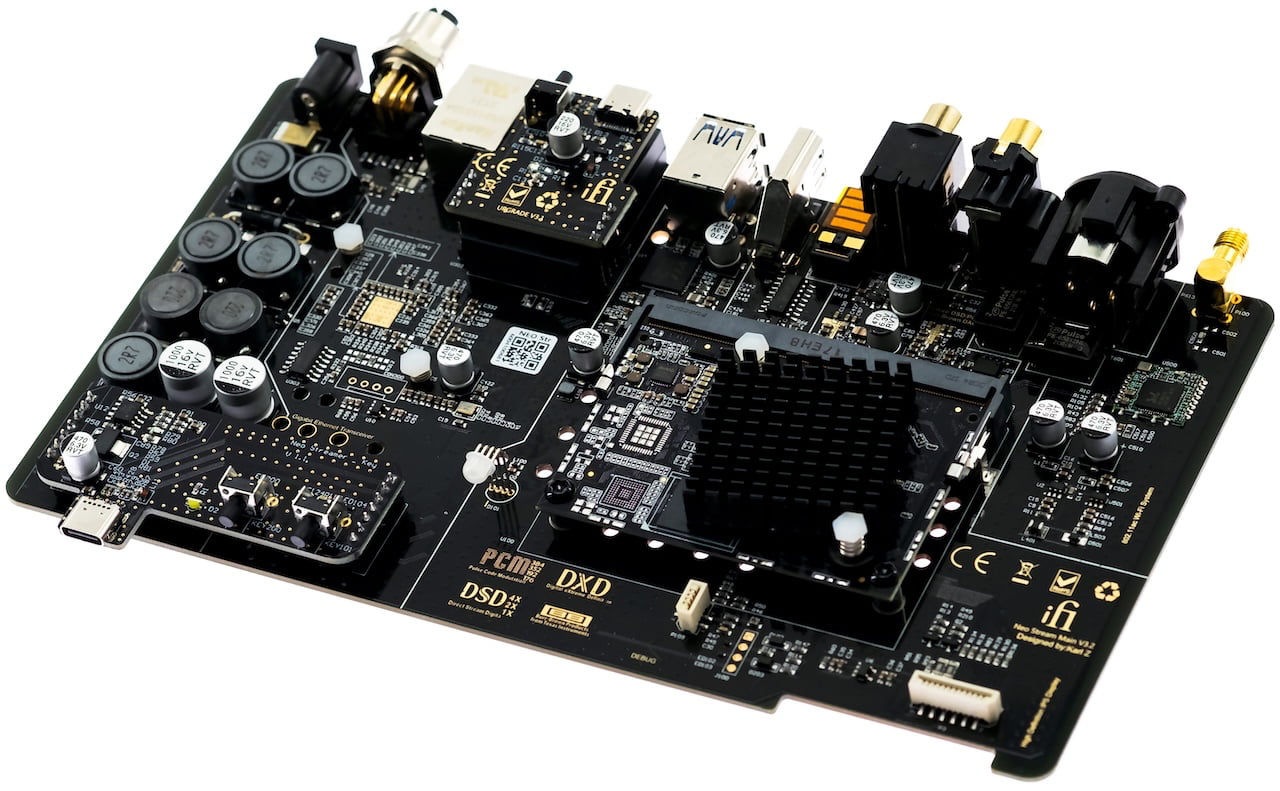
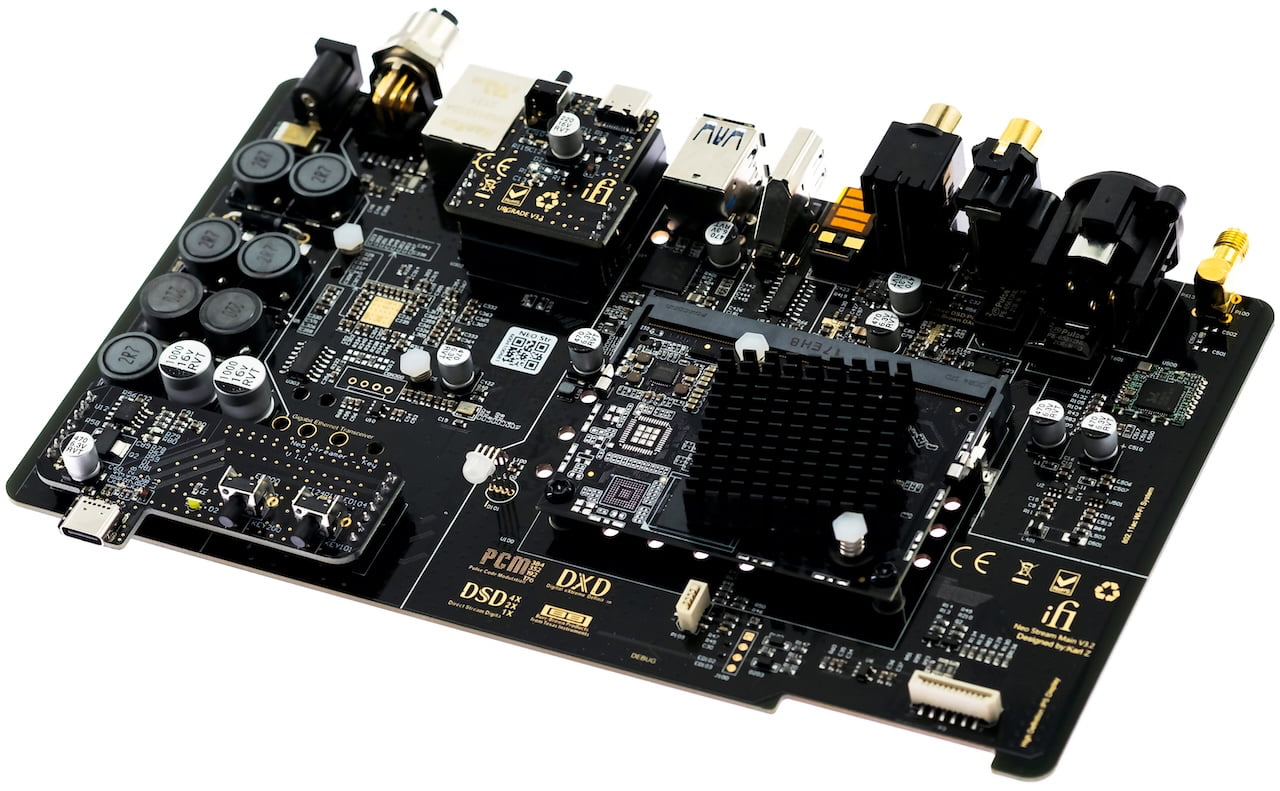
ifi-neo-stream-pcb

Both the NEO Stream 3 and ZEN Stream 3 are built on the same core streaming and noise-control platform, with differences that are deliberate rather than cosmetic. At a baseline level, both models receive refinements to their power supplies, including upgraded polymer capacitors for lower noise delivery and the continued use of ELNA Silmic II capacitors in the audio path. The goal here is consistency and stability, not tonal revoicing, with iFi focusing on cleaner power and predictable behavior in long-term use.

Setup and system management are also shared. Both streamers now include iFi’s updated IoT hardware, enabling faster initial configuration and smoother day-to-day operation.Firmware updates and system control are handled through either a browser based interface or the iFi Nexis app, streamlining setup and ongoing maintenance compared with earlier manual update processes. Exclusive Modes return on both units as well, allowing users to disable unused background processes during playback to minimize potential noise sources.

Noise mitigation remains a defining design priority across both products. Each includes iPurifier2 technology on the S/PDIF outputs and Active Noise Cancellation on the USB ports, specifically aimed at reducing interference from connected storage devices or computers when feeding an external DAC.

The NEO Stream 3 goes further by retaining the OptiBox optical isolation system from the original NEO Stream, which isolates the wired network connection and prevents network-borne electrical noise from entering the audio system. The ZEN Stream 3 does not include OptiBox as one its connectivity features.

On the software side, both units use the latest version of iFi’s ultra-resolution streaming engine. This platform supports Qobuz Connect, TIDAL Connect, Spotify Connect, and AirPlay 2, with improvements focused on stability, smoother web radio playback, and a cleaner interface with deeper configuration options. Control is handled through native apps rather than forcing users into a proprietary ecosystem. Support for Spotify Lossless, however, is still not finalised but we’re told it’s coming.

Advertisement

Where the two models clearly diverge is in system role. The NEO Stream 3 is designed as an all-in-one digital front end, combining network streaming with an integrated DAC capable of handling up to 768 kHz PCM and DSD512. It is intended for users looking to modernize an existing hi-fi system without adding external digital components. The ZEN Stream 3, by contrast, is a dedicated network transport. It supports up to 384 kHz PCM and DSD256 and is meant to slot into systems where a preferred external DAC is already in place.

Both models also incorporate K2 technology developed in collaboration with JVCKENWOOD. This processing is designed to restore harmonic information often lost during recording, mastering, or encoding. Two modes are available: K2, which preserves the original file resolution, and K2HD, which optionally upsamples PCM content to 192 kHz 24-bit. With this generation, K2 processing is no longer limited to internal DACs. Any external DAC connected to either streamer can benefit from K2 processing, while the NEO Stream 3 adds the ability to apply K2HD upsampling internally to PCM material below 192 kHz.

Advertisement. Scroll to continue reading.

NEO Stream 3

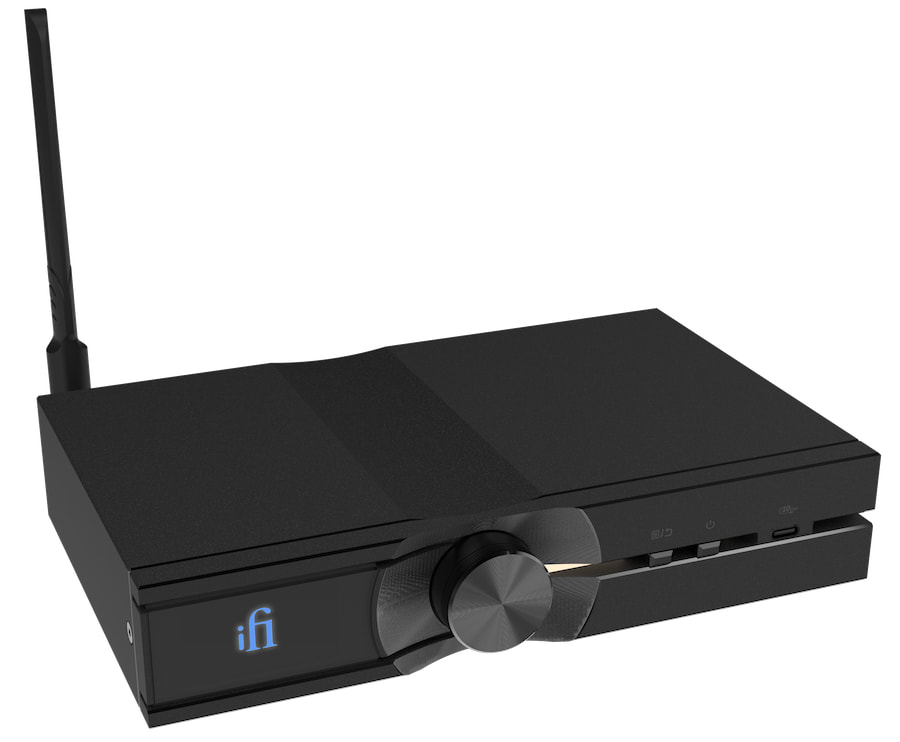
ifi-neo-stream-3-angle

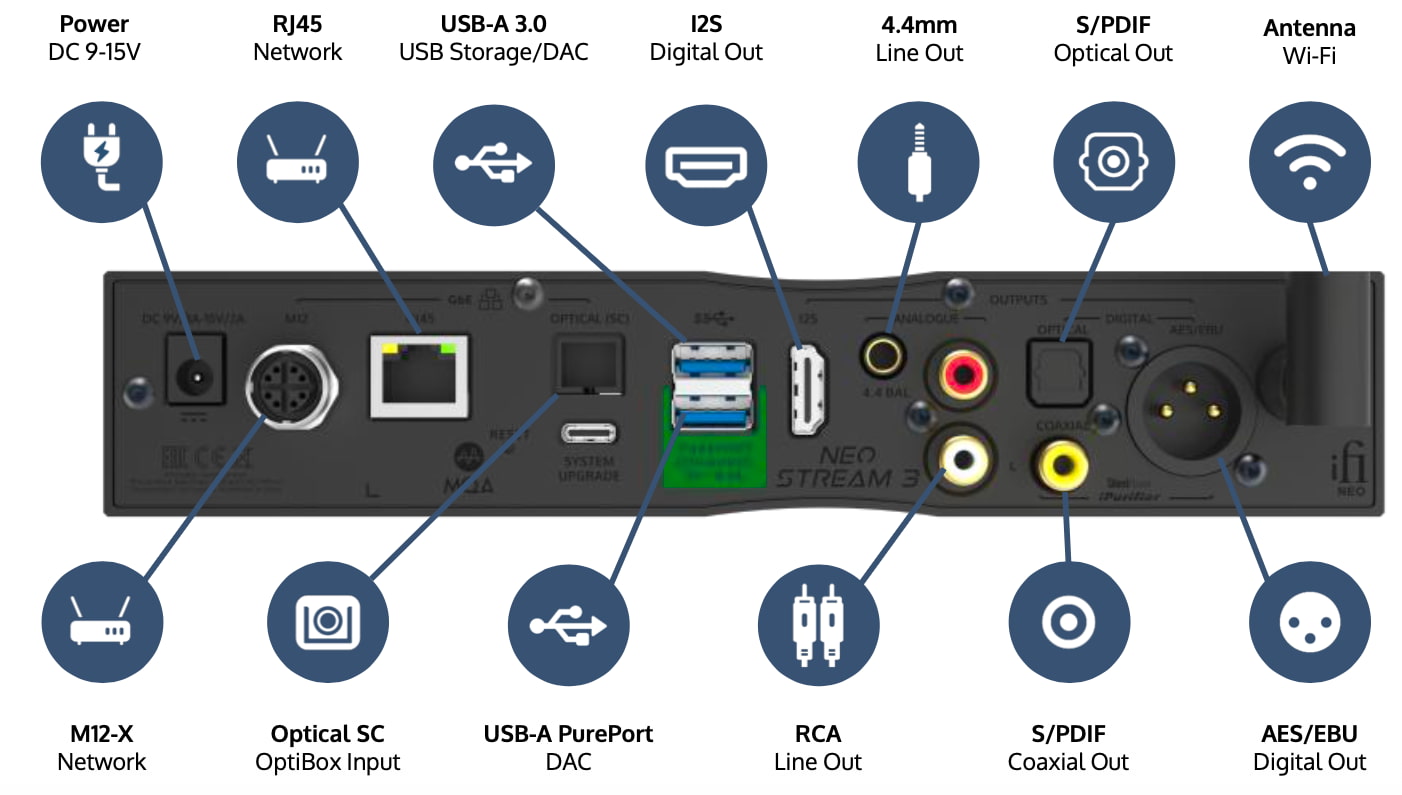
The NEO Stream 3 is a combined network streamer and DAC designed to function as a complete digital source component. It supports Wi-Fi and wired networking via RJ45 Ethernet as well as iFi’s M12-X optical network input. Digital inputs include USB-A for storage or DAC use and a front-mounted USB-C port. Digital outputs are comprehensive, with dual USB-A, S/PDIF optical, S/PDIF coaxial, AES/EBU, and I2S, allowing the unit to operate either as a DAC or as a dedicated digital transport. Analog outputs are provided via a balanced 4.4 mm connection and single-ended RCA.

Internally, the NEO Stream 3 uses a Burr-Brown DAC stage derived from the NEO iDSD 2 and supports high-resolution audio up to 768 kHz PCM and DSD512. Balanced output voltage is rated at 4 V RMS, with 2 V RMS available from the RCA outputs.

Advertisement
ifi-neo-stream-3-rear

Power is supplied via a DC input supporting 9 to 15 volts, with internal regulation using upgraded polymer capacitors and ELNA Silmic II capacitors. Power consumption is under 0.5 watts at idle and approximately 14 watts at maximum load.

Setup and ongoing updates are handled through a simple browser-based interface or the iFi Nexis app, made possible by the new IoT hardware, so there is no need to fuss with manual update routines. With a compact chassis measuring 214 x 151 x 41 mm (8.4 x 5.9 x 1.6 inches) and weighing just 1 kg (2.26 lbs), the NEO Stream 3 is easy to place on a desk or equipment shelf without demanding much space.

Comparison

NEO Stream 3  NEO Stream
Price  $999  $1299
Digital Inputs  Wi-Fi; Ethernet (RJ45, M12-X, Optical); 2xUSB-A; USB-C (front) Wi-Fi; Ethernet (RJ45, M12-X, Optical); 2xUSB-A; USB-C (front)
Digital Outputs  2x USB-A; S/PDIF Optical; S/PDIF Coaxial;AES/EBU; I2S 2x USB-A; S/PDIF Optical; S/PDIF Coaxial;AES/EBU; I2S
Analogue Outputs  4.4mm Balanced, SE RCA  4.4mm Balanced, SE RCA
Operating System  Volumio 3  Volumio 2
Bluetooth Setup  Yes  No
Controllable via Nexis  Yes  No
K2HD Technology  Yes  No
Upgraded Capacitors  Yes  No
Chassis Colour  Matte Black  No

Tip: There was never a NEO Stream 2 product.

ZEN Stream 3

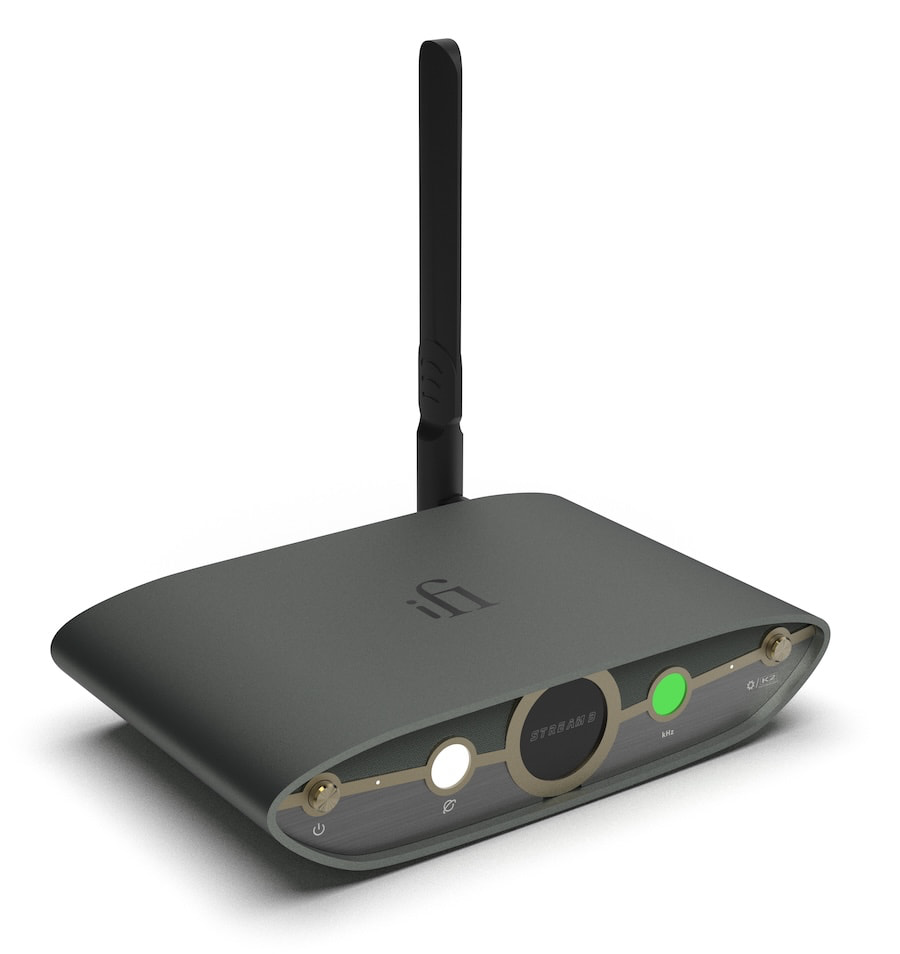
ifi-zen-stream-3-front-angle

The ZEN Stream 3 is designed as a dedicated network transport for systems where digital conversion is handled elsewhere. It focuses entirely on getting a clean, stable digital signal out to an external DAC rather than duplicating functionality already present in many higher-end systems. Networking is handled via Wi-Fi or RJ45 Ethernet, with two USB-A ports available for local storage or DAC output.

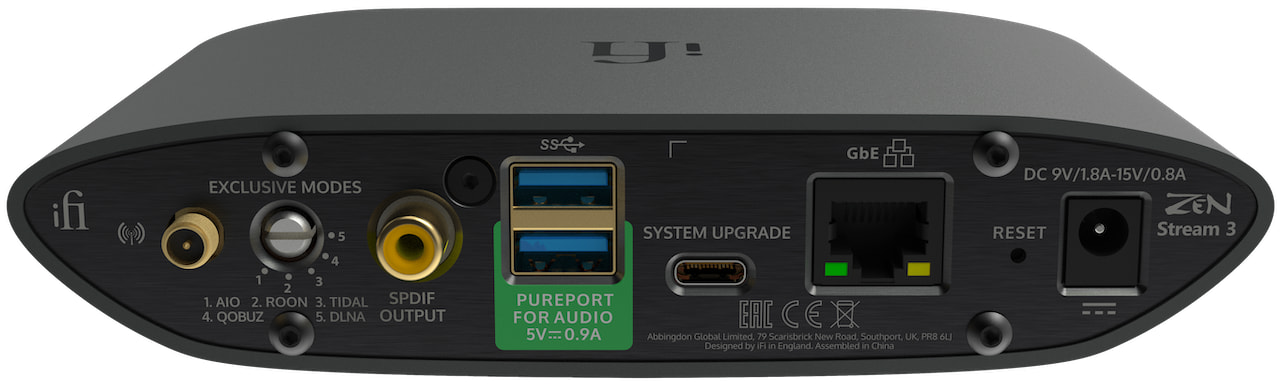
Digital output options include two USB-A outputs for DAC connection and a coaxial S/PDIF output, each incorporating iFi’s iPurifier and Active Noise Cancellation technologies to reduce electrical noise before the signal reaches the DAC. There are no analog outputs and no internal DAC, which keeps the signal path simple and aligned with its role as a transport.

Advertisement

High-resolution support extends up to 384 kHz PCM and DSD256, handled by the same next-generation streaming engine used in the NEO Stream 3. Streaming is managed directly through native apps with support for Qobuz Connect, TIDAL Connect, Spotify Connect, and AirPlay 2, avoiding reliance on proprietary control software. K2 processing is included to restore harmonic information lost during recording or encoding and is applied before the digital output, allowing connected DACs to benefit without altering their internal architecture.

ifi-zen-stream-3-rear

Power delivery has been revised with upgraded polymer capacitors and ELNA Silmic II capacitors to improve stability and reduce noise under load. Power is supplied via a DC input supporting 9 to 15 volts, with idle consumption under 6 watts and a maximum draw of approximately 10 watts. Firmware updates and system setup are handled through a rear USB-C service port, using either a browser-based interface or the iFi Nexis app, enabled by the updated IoT hardware platform.

Physically, the ZEN Stream 3 is compact and lightweight, measuring 158 x 100 x 35 mm (6.2 x 3.9 x 1.4 inches) and weighing 578 g (1.27 lbs). It is sized to sit easily on a desktop or equipment shelf alongside an external DAC, making it a practical drop-in upgrade for your existing system.

Comparison

ZEN Stream 3  ZEN Stream
Price  $399  $399
Inputs  Wi-Fi; Ethernet (RJ45); 2x USB-A  Wi-Fi; Ethernet (RJ45); 2x USB-A
Outputs  2x USB-A; S/PDIF Coaxial  2x USB-A; S/PDIF Coaxial
Operating System  Volumio 3  Volumio 2
Bluetooth Setup  Yes  No
Controllable via Nexis  Yes  No
K2 Technology  Yes  No
Upgraded Capacitors  Yes  No
Chassis Style  Updated to ZEN 3  Previous generation ZEN

Tip: There was never a ZEN Stream 2 product.

Advertisement

The Bottom Line

With competition this strong, iFi is not trying to win by simply piling on features. The strategy here is differentiation through system role, execution, and the details that tend to matter after the initial setup. That includes easy integration into existing systems, app-native control rather than closed ecosystems, and a design that stays below the psychological $1,000 threshold while still targeting more demanding listeners.

Advertisement. Scroll to continue reading.

That approach comes with tradeoffs. Brands like WiiM have shown that a comprehensive, frequently updated operating system can win over a large segment of the market, especially when paired with features such as room calibration and broad device compatibility. At this point, support for the major streaming platforms is largely table stakes across the category.

Where these products are ultimately judged is not on spec lists or feature counts, but on how smoothly they operate day to day, whether firmware updates are painless rather than disruptive, and how they actually sound once they are part of a real system. iFi is betting that its focus on noise control, power integrity, and flexible system roles will resonate. Whether that is enough to stand out in a crowded sub-$1,000 field will be up to listeners to decide.

Advertisement

Price & Availability

  • NEO Stream 3 – $999
  • ZEN Stream 3 – $399

For more information: ifi-audio.com

Source link

Continue Reading
Click to comment

Leave a Reply

Your email address will not be published. Required fields are marked *

Tech

Pokemon Go Had Players Capturing More Than They Realized

Published

on

Released in 2016, Pokemon Go quickly became a worldwide phenomenon. Even folks who weren’t traditionally interested in the monster-taming franchise were wandering around with their smartphones out, on the hunt for virtual creatures that would appear via augmented reality. Although the number of active users has dropped over the years, it’s estimated that more than 50 million users currently log in and play every month.

From a gameplay standpoint, Go is brilliant. Although the Pokemon that players seek out obviously aren’t real, searching for them closely approximates the in-game experience that the franchise has been known for since its introduction on the Game Boy back in 1996.

But now, instead of moving a character through a virtual landscape in search of the elusive “pocket monsters”, players find them dotted throughout the real world. To be successful, players need to leave their homes and travel to where the Pokemon are physically located — which often happens to be a high-traffic area or other point of interest.

As a game, it’s hard to imagine Pokemon Go being a bigger success. At the peak of its popularity, throngs of players were literally causing traffic jams as they roamed the streets in search of invisible creatures. But what players may not have realized as they scanned the world around them through the game was that they were helping developer Niantic build something even more valuable.

The Imaginary Gig Economy

The game has used augmented reality (AR) to bring the world of Pokemon to life since day one, but it wasn’t until the fall of 2020 that Niantic introduced AR Mapping. With this new feature, players could scan real-world locations and objects by walking around them while the software captured images from their smartphone’s camera. This was presented to the player as “Field Research”, and once completed, it would unlock various rewards in the game.

Advertisement

For those with a technical mindset, the implications of this are immediately obvious. Through the Research system, Niantic could direct Pokemon Go players anywhere they wished. Once the imagery from these Research scans were uploaded, they could be used to create detailed 3D models through the use of photogrammetry. The more players that perform Field Research on a particular location, the more accurate the results.

If Niantic wanted to create a 3D model of a statue in a park or the front of a building, they simply needed to assign it a Field Research task and the players would rush out to collect the data. Forget Google’s Street View — rather than sending a camera-laden car out once every year or so to grab new images, Niantic could sit back while millions of players uploaded high resolution pictures of the world around them in exchange for in-game trinkets that have no physical value.

No Such Thing as a Free Pokemon

In the tech world there’s a common saying: “If something is free, you’re the product.”

Advertisement

The idea being that if you’re using some service without paying for it, there’s an excellent chance that the company providing said service is somehow making money off of the situation. So for example when a user looks up a particular topic with a search engine, they can be presented with contextually appropriate advertisements. By selling this ad space to companies, the search engine provider generates a profit for each “free” search performed by its users. The personal relevancy offered by such bespoke advertisements can be more effective than traditional TV or print ads, which in turn means the search engine provider can charge a premium for them.

Just as in our hypothetical search engine example, Pokemon Go is offered up to players on Android and iOS free of charge. To date, it’s been downloaded by over a billion total users. To make the game financially viable, Niantic eventually needed to find a way to turn all those free downloads into a revenue stream.

The answer is Niantic Spatial. This spin-off company was announced in March of 2025, and offers a Visual Positioning System (VPS) created in part using the photogrammetry data collected by Pokemon Go. Through this service Niantic Spatial offers centimeter-scale positioning for millions of high-traffic locations all over the globe, even in areas where GPS may be inaccurate.

Earlier this week, Niantic Spatial announced they had entered into an agreement with Coco Robotics to provide VPS for their fleet of delivery robots. Images captured by the robot’s onboard cameras can be fed into the VPS to provide a more accurate position than is possible with GPS, even in the best of conditions. This is particularly important for a robot that not only needs to navigate an ever-changing urban landscape, but must arrive at a precise location to successfully complete its delivery.

Always Read the Fine Print

At this point, you may be thinking to yourself that this all seems a bit shady. Can Niantic really take the data that was provided to them by Pokemon Go players and spin that off into a commercial venture that monetizes it? Of course they can, because that’s precisely what players agreed to when they installed the game.

Advertisement

Section 5.2 of the Niantic Terms of Service, titled “Rights Granted by You – AR Content”, states that the company retains wide-ranging rights over anything that users upload through the AR functions of their products:

In short, not only can Niantic do anything they want with player submitted data, but they can pass that freedom on to other entities as they see fit. So while Coco Robotics didn’t even exist when the AR Mapping feature was added to Pokemon Go, all of the imagery that players captured since that time — plus any images that they continue to capture — is fair game.

In the end, it’s unlikely that many players will lose any sleep over the fact that they have unwittingly been collecting training data to help robots more effectively deliver pizzas. But it’s also not hard to imagine a scenario in which that data ends up getting licensed out for some purpose they aren’t comfortable with.

If that happens, their options may be limited. A reading of Niantic’s Privacy Policy would seem to indicate that uploaded AR imagery is anonymized during processing, and as such doesn’t need to be treated in the same way that personally identifiable information would be. As such, players have the right to opt-out of uploading additional data going forward, but can’t remove what’s already been pushed into the system.

Advertisement

Regardless of whether or not this situation impacts you directly, it’s an important cautionary tale in an interconnected world where more and more of what users do online is tracked, filtered, processed, and sold off to the highest bidder. Perhaps something to keep in mind before clicking “I Agree.”

Source link

Advertisement
Continue Reading

Tech

The MacBook Neo has its first price drop after just a few days

Published

on

Apple’s MacBook lineup usually holds its value well, so it is always interesting when a new entry like the MacBook Neo appears with a small early discount.

At the moment, the Apple MacBook Neo is available for £569.97 instead of its £599 launch price, making Apple’s latest MacBook slightly easier to justify for everyday computing.

Deal Apple MacBook Neo 13 inch Laptop IndigoDeal Apple MacBook Neo 13 inch Laptop Indigo

Apple’s new MacBook Neo is already seeing its first price drop just a week in

It hasn’t even been a full week since Apple unveiled the MacBook Neo, and yet the price has already started to dip.

View Deal

Advertisement

Positioned as an accessible entry point into Apple’s laptop ecosystem, this model focuses on everyday productivity while still benefiting from the efficiency and performance advantages of Apple silicon.

The Apple MacBook Neo runs on the A18 Pro chip, which is designed to handle common daily tasks such as web browsing, spreadsheets, media editing, and even light AI-assisted workloads.

For students and casual users, that means the laptop should feel responsive when juggling multiple apps, switching between browser tabs, or working through productivity software.

Advertisement

Advertisement

The Apple MacBook Neo features a 13-inch Liquid Retina display with a 2408 by 1506 resolution, which helps text appear sharp while still delivering bright and colourful images for everyday use.

The Whatsapp LogoThe Whatsapp Logo

Get Updates Straight to Your WhatsApp

Join Now

Inside, the device includes 8GB of unified memory and a 256GB SSD, providing enough headroom for common workflows such as document editing, light creative work, and general multitasking.

Battery life is also designed to support a full day of use, with Apple estimating up to sixteen hours depending on the workload.

Advertisement

Within Apple’s broader lineup, the MacBook Neo sits below the MacBook Air models, which typically offer larger displays, more powerful chips, and higher starting memory configurations.

If you prefer a compact yet more powerful machine, the MacBook Air 13-inch with the M5 chip offers stronger performance and more memory, while the MacBook Air 15-inch prioritises a larger screen for productivity, whereas the MacBook Neo focuses on affordability and everyday usability.

Advertisement

At this slightly reduced price, the Apple MacBook Neo becomes an even more attractive option for students or everyday users who want a capable Mac without stretching to the MacBook Air range.

Advertisement

SQUIRREL_PLAYLIST_10148964

Source link

Continue Reading

Tech

Goddard’s Leadership: From Innovation to Isolation

Published

on

There’s a moment in John Williams’s Star Wars overture when the brass surges upward. You don’t just hear it; you feel propulsion turning into pure possibility.

On 16 March 1926, in a snow-dusted field in Auburn, Mass., Robert Goddard created an earlier version of that same feeling. His first liquid-fueled rocket—a spindly, three meter tangle of pipes and tanks—lifted off, climbed about 12.5 meters, traveled roughly 56 meters downrange, and crashed into the frozen ground after 2.5 seconds. A few witnesses, Goddard’s helpers, shivered in the cold. The little machine defied common sense. It rose through the air with nothing to push against. Anyone who still insisted spaceflight was impossible now faced a question: Why had this contraption risen at all?

Six years earlier, The New York Times had ridiculed Goddard, declaring that rockets could never work in a vacuum and implying that he had somehow forgotten high-school physics. Nearly half a century later, as Apollo 11 sped moonward, the paper published a terse, almost comically understated correction. By then, Goddard had been dead for 24 years.

The Alpha Trap

Breakthroughs often demand qualities that facilitate early success but later become obstacles. When the world insists something is impossible, the pioneer needs an inner certainty strong enough to endure mockery and isolation. Later, though, that certainty can become a liability. Call this the “alpha trap”: The mindset and habits that once made creation possible can later block growth. This “alpha” has nothing to do with dominance or bravado. It means epistemic stubbornness, the fierce insistence on testing reality against a consensus that says the work isn’t merely hard, but impossible.

Advertisement

Such efforts often begin with a lone visionary. But most ideas eventually need a team. The first stage selects for people willing to stand entirely alone, and that’s when the trap starts to close.

The mockery scarred Goddard. It drove him inward, toward a small circle of confidants. Through the early 1930s, his rockets climbed higher each year. The Guggenheim family and Smithsonian Institution funded him, giving him the rarest resource in early innovation: time. By the mid-1930s, his designs were reaching more than a thousand meters.

But the work gradually changed. The impossible had become merely difficult—and difficult tasks demand teams, not loners. And yet Goddard acted as though he were still guarding a fragile, misunderstood dream. He resisted collaboration and despite conversations with the U.S. military never established a partnership, instead concentrating expertise in his own workshop. Elsewhere in the United States more freewheeling amateurs and academics partnered to develop early liquid-propelled and later solid-fuel rockets.

Meanwhile, on the Baltic coast at Peenemünde, hundreds of German engineers divided labor into synchronized streams of propulsion, guidance, structures, testing, and production. By 1942, they were flight-testing the V-2. Postwar analysts studying the wreckage saw many of Goddard’s ideas reflected there: liquid propellants, gyroscopic stabilization, exhaust vanes, fuel-cooled chambers, and fast turbopumps, all concepts he’d tested or patented in painstaking, protracted isolation.

Advertisement

Doctor’s Orders

The alpha trap had caught others before him. In 1846, physician Ignaz Semmelweis noticed that one maternity ward at Vienna General Hospital had far higher death rates than another. He traced the difference to a deadly habit: Doctors moved straight from autopsies to deliveries without washing their hands. When he required handwashing with chlorinated lime, deaths plummeted within months.

But the medical establishment resisted. Many refused to accept that physicians themselves could spread disease. Rejection embittered Semmelweis. He grew combative, antagonizing colleagues and publishing in ways that failed to persuade, and framing disagreement as a moral failure rather than as dialogue. Brilliant scientifically, he was disastrous socially. Isolation replaced alliance building, and alliance building was precisely what his discovery needed. In 1865, he died in an asylum, his ideas dismissed as delusions. Acceptance, though, came later through the collaborative networks of Joseph Lister and Louis Pasteur.

The same trait that lets an inventor defy consensus can also blind them to what they need next. When allies became essential, Semmelweis’s anger slowed adoption. When scale became essential, Goddard’s secrecy slowed diffusion. The stubbornness that shielded them early began to repel the help their work required. Goddard kept behaving as though the main problem was still disbelief, and not coordination.

Both men leave visionary and cautionary legacies. A NASA Center bears Goddard’s name despite his isolation; Semmelweis is remembered as the doctor who could have saved countless lives had he found a way to connect with his colleagues rather than combat them.

Advertisement

We love to celebrate the lone genius, yet we depend on teams to bring the flame of genius to the people. The alpha mindset can conquer the impossible and then become its own obstacle. Both men were right about their breakthroughs. But ideas born in solitude must eventually live among multitudes. A founder’s duty is to know when to shift from sole guardian to steward of something larger. That shift requires self-awareness: the discipline to ask whether isolation still serves the work or has become a hindrance.

Escaping the alpha trap means treating stubbornness as an instrument, not an identity. Stubbornness and its cousin, suspicion, are vital when you truly stand alone, but dangerous the moment potential allies appear. Goddard’s dream touched the stars, but it took teams of others to lift it there. And that orchestral surge in Star Wars? It swells from the ensemble, not a single bold trumpet.

From Your Site Articles

Related Articles Around the Web

Advertisement

Source link

Continue Reading

Tech

Grammarly wisely killed off feature that plagiarized top writers' voices

Published

on

Even the folks behind generative AI writing are embarrassed at how bad it is, but Grammarly ripping off the voices of well-known modern writers is indicative of a much larger problem.

Grammarly logo with a white lowercase g inside a teal speech bubble on the left and the word grammarly in bold white letters on a dark gray background
Grammarly turned people — both living and dead — into ghost editors

Apparently, Grammarly had a feature that encouraged users to rip off other well-known writers’ styles. TechCrunch has a great piece on it, in which you find out that Grammarly would offer “expert review” — sans experts.
It seems that, as you wrote, the tool would pop in and suggest revisions from the perspective of experts. Of course, the experts in question, like Platformer’s Casey Newton didn’t know this was happening.
Continue Reading on AppleInsider | Discuss on our Forums

Source link

Continue Reading

Tech

Are Wired Headphones Hot Again? Grado Signature S550 Launch at CanJam NYC 2026 Says Yes

Published

on

Thousands of people packed the ballroom of the New York Marriott Marquis in Times Square for CanJam NYC 2026, the largest headphone show in North America. From the moment the doors opened each morning last weekend, the listening tables were surrounded three and four deep with enthusiasts waiting to hear the latest gear. And yet, walking the show floor for even ten minutes revealed something that would have sounded ridiculous just a few years ago: wired headphones are becoming even more popular?

Which makes the debut of the Grado Signature S550 Open-back Headphones feel less like nostalgia and more like a statement about where serious listening is headed next.

grado-signature-s550-headphones-canjam-nyc-2026
Grado Signature S550 Open-back Headphones at CanJam NYC 2026

Some audiophiles and the Head-Fi crowd will undoubtedly scoff at the headline. To many of us who never abandoned cables in the first place, the idea that wired headphones are “back” is almost comical. We kept using them while the rest of the world drowned in a tidal wave of Bluetooth earbuds, ANC travel cans, and disposable wireless gadgets that needed charging every few hours.

But something interesting is happening outside the audiophile bubble.

Advertisement

Even the mainstream media is starting to notice. A feature published this week by BBC argued that the cable may actually have the advantage again, noting bluntly that “wired headphones offer better sound quality than Bluetooth” and avoid many of the compromises inherent in wireless audio transmission. 

That realization was impossible to ignore at CanJam NYC 2026. The crowds weren’t just clustered around wireless experiments or streaming gear. They were lining up to hear wired headphones and IEMs from companies like Grado, Audeze, HiFiMAN, Meze, Campfire Audio, and dozens of smaller builders pushing the limits of what a simple cable and a great driver can do.

And when the Grado table unveiled the Signature S550, the reaction from the crowd made one thing clear.

The cable never really died.

Advertisement

It just waited for people to remember what better sound actually feels like.

Grado Signature S550 Arrives as the Cable Refuses to Die

grado-labs-signature-s550-headphones-on-stand
Grado Signature S550 Open-back Headphones

Grado Labs continues to expand its Signature Series with the $995 Signature S550, an open-back dynamic headphone that sticks closely to the company’s long standing Brooklyn playbook while introducing a slightly more relaxed tonal balance. As the fourth model in the Signature line, the S550 carries forward the core Grado philosophy: low mass dynamic drivers, fast transient response, and a presentation that favors speed, clarity, and immediacy over studio safe politeness.

The shift this time comes down to voicing.

Advertisement. Scroll to continue reading.

Where some Grado models lean forward and a little impatient, the S550 pulls back just enough to add a touch more warmth and a smoother top end while preserving the punch and energy the brand is known for. Having already spent time with the Signature S950, which impressed with its control and refinement, the S550 feels like a slightly more forgiving interpretation of the same formula designed for longer listening sessions.

Advertisement

Under the hood sits Grado’s 50mm S2 dynamic driver, paired with an all wood open back enclosure. Instead of launching an entirely new driver platform, Grado focused on refining how the existing S2 interacts with the acoustic behavior of the wooden housing. The goal is simple and very Grado: preserve speed, detail, and openness while nudging the tonal balance toward a warmer and more approachable presentation.

The S550 also introduces Grado’s new detachable Silver cable, a welcome shift away from the brand’s historically stubborn fixed leads. Each earcup uses a 4 pin balanced mini XLR connector, allowing users to swap cables depending on their source. The included cable terminates in 3.5mm with a 6.3mm adapter, making it easy to pair with portable players, desktop DAC amps, and traditional headphone outputs.

Pad rolling is still very much part of the Grado experience. The S550 ships with new B cushions, but remains compatible with the company’s S, F, L, and G pads, each subtly reshaping soundstage width, bass weight, and treble energy.

Grado Labs Signature S550 Open-back Headphones Lifestyle Woman
Grado Signature S550

On paper, the numbers are solid. The S550 uses a 38 ohm driver with 112dB sensitivity, frequency response rated from 6 Hz to 44 kHz, total harmonic distortion under 0.2 percent at 100dB, and an impressively tight 0.005dB driver matching tolerance. Weight comes in at 335 grams without the cable, which keeps it manageable for a full size open back design.

Advertisement

This is not a headphone that demands a nuclear reactor for amplification. With its high sensitivity and moderate impedance, the S550 should play nicely with portable DAPs, desktop DAC amps, and even competent integrated amplifier headphone stages.

When I walked into CanJam NYC 2026 about twenty minutes before the show officially opened, Rich Grado spotted me immediately and waved me over.

“Sit down. Get comfortable. Don’t touch anything quite yet.”

Classic Brooklyn hospitality.

Advertisement
geshelli-archel3-j3-pro-canjam-nyc-2026
Geshelli Labs ARCHEL3 Pro Amp and J3 Pro DAC

The listening chain was courtesy of Geshelli Labs, and because I showed up early, I had a rare window with the S550 before the show floor turned into chaos.

Getting there early wasn’t exactly optional. NJ Transit’s ongoing “infrastructure improvements” — which is a polite way of saying the weekend trains run whenever they feel like it, forced me onto a much earlier ride from the Jersey Shore. For once, their mistakes worked in my favor.

Nu? Think Warm Bialy and Black Coffee, Not Extra Hot Pastrami

So how did the Signature S550 actually sound?

Advertisement. Scroll to continue reading.
Advertisement

Different. Immediately different from the S950.

Grado’s claim about a calmer voicing holds up. The S550 doesn’t jump forward the way some of the brand’s more aggressive models can. It’s still unmistakably Grado, but the edges are rounded just enough to make the presentation feel more relaxed and a little warmer. That said, I’m willing to wager the Geshelli Labs signal chain had a hand in that as well.

What I heard, I liked.

feliks-euforia-evo-canjam-nyc-2026
Feliks Audio Euforia Evo ($3,495 at Headphones.com)

Bass was tight and well controlled, never bloated. The open back design still allowed for surprisingly good passive isolation, which helped keep the focus on the music even as the room started filling up. Comfort was solid too. The headband felt supportive, and the weight distribution didn’t create any pressure hotspots during the session.

Advertisement

Vocals came through smooth and clean. Maybe even a little too smooth at times, though again that could easily be the system voicing. The top end had zero hardness, which is not always a given with Grado if the pairing isn’t right.

Where the S550 really clicked was with rock, electronic music, and jazz. Electric guitars had bite without turning sharp, electronic tracks had pace and structure, and jazz recordings carried that sense of space and flow that open back designs tend to handle well when the tuning is right.

My instinct says these will respond well to a brighter or more analytical amplifier and DAC, something that pushes a bit more illumination into the upper registers. That’s already on the list for when the review sample arrives, which should be happening soon.

One thing feels clear after hearing them.

Advertisement

Grado is firing on all cylinders right now.

And that’s exactly what needed to happen. The wired headphone category is more competitive than it’s been in years, with serious pressure coming from Audeze, Meze, HiFiMAN, and a growing number of boutique builders.

One more thing before the vinyl crowd starts emailing me.

Headphones aren’t the only thing Grado has cooking this quarter.

Advertisement
Advertisement. Scroll to continue reading.

If you’re the type who still flips records instead of swiping playlists, you might want to pay attention to what’s coming next. Brooklyn isn’t done yet.

Where to buy the Grado Signature S550: $995 at Crutchfield | Grado Labs

Advertisement

Source link

Continue Reading

Tech

Opinion: You couldn’t pay me to leave Washington state, and I’d pay more to stay

Published

on

Brian Fioca. (Photo courtesy of Brian Fioca)

Editor’s note: GeekWire publishes guest opinions to foster informed discussion and highlight a diversity of perspectives on issues shaping the tech and startup community. If you’re interested in submitting a guest column, email us at tips@geekwire.com. Submissions are reviewed by our editorial team for relevance and editorial standards.

At a meeting in San Francisco a few months ago, an icebreaker asked where we’d live if we could live anywhere in the world. I was the only one in the room whose answer was the same place I already call home. Over the years, opportunities have tried to entice me away, and I’ve turned down offers worth multiples of what I was earning to stay. I’m certain I’d have been in a position to be affected by a higher tax bracket sooner if I had followed them, but I’m equally certain it would not have made me happier. 

My relationship with Washington started when I fell in love with Seattle during a visit in 2004. Shortly after, I moved to Alaska, co-founded my first company, and when it was acquired by a Seattle startup in 2006, my dream of living here came true. That move changed my life. It landed me in a place that felt alive with lush beauty, non-ostentatious ambition, and a kind of defiantly clever creativity, all surrounded by pioneers building new things that mattered. In high school and college I had followed the story of Microsoft and the early engineers who helped create an entire technology ecosystem. At the same time I of course loved the music coming from the Seattle scene. Washington felt like a place where innovation could coexist with culture, where a generation of makers and artists fostered the foundations of the next. Twenty years of living here later, that still feels true.

I’ve done pretty well here. I’ve founded companies here and worked alongside venture capitalists at Madrona Venture Labs and Pioneer Square Labs and seen firsthand how startup ecosystems actually work. For years I hoped I might someday be able to invest myself, and now I can. I’m excited to keep participating in the same cycle of building that drew me here in the first place. But one of the things I love most about this region is that it’s never been just a tech ecosystem.

Some of the people I care most about in this community are artists, musicians, and creatives. They shape the culture and spirit of this place in ways no economic model can capture. As someone who has benefited enormously from working in technology and AI, I feel a real responsibility to support the broader community that makes this region vibrant. Honestly, it’s that community that has kept me from burning out during the hardest stretches of my career. 

Advertisement

That’s why my view on Washington’s proposed tax on very high incomes is simple: if I’ve found myself in the position of making that much in a year, I can afford to contribute a little more to the place that helped make that circumstance possible.

As someone who started my career in Georgia, a red state that does have personal income taxes, it’s always struck me as strangely backward that we don’t. People here have long pointed out that Washington’s tax system is among the most regressive in the country. In that context, and after observing the past 20 years of attempts at a fix, the proposed wealth tax feels like one of the few realistic ways to make the system more balanced.

Is the proposal perfect? Of course not. Washington’s laws and constitution make this kind of policy exceptionally hard to design. But as I once heard at a talk at Y Combinator in 2008, perfect is the enemy of good enough, and sometimes good enough is the enemy of at all. “Imperfect” is not a compelling argument for doing nothing forever.

I’m certainly not an expert on this topic. But I also don’t think my job is to pretend I know more about tax design than the people whose job is to work on it. We elect legislators to make difficult tradeoffs in public and represent the interests of the entire community. I take that process seriously and trust democratic representatives far more than I trust whatever pithy inflammatory argument happens to be boosted by algorithms on social media. Governing, like building companies, is iterative. We try things. We improve them. If something doesn’t work, we fix it or elect new people and try again. We act with agency. 

Advertisement

I keep hearing that taxes like this will drive founders and business away, that investors will leave, that Washington will stop being a place where ambitious or creative people build things. Whether or not you can scrounge up data to support that case, I’m at best skeptical. But for me at least, as someone who has actually started companies, that just feels obviously wrong. 

Founders don’t decide where to build by researching marginal tax rates. They build from their homes, in coffee shops or garages, where their supportive friends and collaborators live. They build where their community is. They build where their loved ones can live and where they can survive the grind of years of stressful and uncertain work. Building a company is too consuming and too personal to optimize around a hypothetical line item on a spreadsheet of imagined future outcomes.

One of the things I love most about Washington is that it doesn’t feel like a place that belongs to just one kind of person. It’s beautifully wild, culturally and environmentally diverse, and a little weird in the best ways. It has quirky cities and cozy neighborhoods, incredible scenery and nature, and a long tradition of people showing up to build things, have them literally burn down, and rebuild them one story up. In investor parlance this is our unfair advantage. People will keep moving here because of all of our natural assets. Some will start companies. Some will work at successful ones. Some will sell shovels. Some will strike gold.

What I care about for myself is that finding wealth here comes with a sense of reciprocity. If someone becomes extremely highly compensated in Washington and decides that a reasonable tax on their very high income means they no longer want to be part of this place, fine! That’s their choice. I’m certainly not leaving. Some have said “just donate.” I do. But anyone who has run a business knows that one-time lump sums are not the predictable source of funds required to plan a future and sustain an ecosystem. 

Advertisement

It’s worth saying that obviously supporting this proposal doesn’t mean I wouldn’t mind some changes. I’d especially like to see clearer connections between new revenue and the quality-of-life issues that determine whether Washington remains livable: housing, transportation, education, and the ability for people from many backgrounds and situations to stay rooted here. We should measure and adjust accordingly. 

Ultimately for me, it comes down to this: I feel lucky to be here. A thriving community pulled me into this region and gave me the chance to build new things, work alongside investors I respect, among wonderful and creative people I love, and eventually become someone who can pay it forward. I benefited from what earlier generations built here and I feel responsible to the next. This is just my personal perspective. I can’t speak for everyone affected by this policy proposal or even for those who hope that one day they might. But if my circumstances and lifestyle make it easy to afford to contribute more to the place that helped shape the best years of my life, I think I should. 

And if this proposed bug fix to a design flaw in our revenue collection code is enough to make someone give up on Washington, sell the boat, and move to Florida, cool. Personally, I’d be happy to invest in the next cohort of folks who love it here as much as I do and want to build a life in this magical place.

Related:

Advertisement

Source link

Continue Reading

Tech

California Is Cracking Down On Drivers With Plates From One Specific State

Published

on


Wealthy Californian luxury car owners looking to avoid taxes have taken advantage of a loophole that allows them to register their cars in other states, with Montana being a particularly popular place to seek registrations. In response, Californian authorities are launching a new crackdown on the loophole. The state’s Department of Tax and Fee Administration has announced that it is examining every sale made by a Californian dealership that resulted in a car being given Montana plates since 2023, both to LLCs and to private customers.

In a statement, the DMV director Steve Gordon said he would “encourage all Californians to do the right thing,” and CDTFA director Trista Gonzalez noted that the state relies on sales tax “to support our schools, roads, public safety, and essential services that all Californians depend on.” So far, the DMV has opened 81 criminal investigations into the practice, including a recent felony complaint against 14 defendants. That complaint included 57 counts, including perjury, filing false sales tax returns, and conspiracy to commit sales tax evasion.

As well as luxury cars, RVs have reportedly been purchased using the “Montana loophole.” The loophole involves buyers setting up LLCs in Montana, allowing them to title the car within the state. They then falsely claim that the car is being shipped from California to Montana, which does not have a statewide sales tax. According to the CDTFA, this practice currently means that California loses out on around $10 million in sales tax revenue every year.

Advertisement

Beverly Hills dealers are particularly fond of the Montana loophole

Dealers in certain parts of California have exploited the loophole particularly frequently, with the CDTFA reporting that Beverly Hills saw the highest number of new car registrations with Montana purchasers. Costa Mesa wasn’t far behind, while Van Nuys also saw a particularly high number of Montana registrations.

Montana isn’t the only state that shady dealers have allegedly used to swerve taxes either: Oregon, Delaware, New Hampshire, and Alaska have also reportedly been used for similar avoidance schemes, since they’re also among the cheapest places to register new cars. Investigators have said that they are also looking to recover unpaid taxes from buyers fraudulently registering their cars in these states.

Advertisement

While driving around California in a car with a Montana registration isn’t going to make you a police magnet, any Californian residents who recently bought a new car with Montana license plates should be concerned about the latest enforcement initiative. Owners caught evading taxes can be hit with significant fines, while dealers using the loophole can expect more lawsuits to be filed in the near future.


Advertisement

Source link

Continue Reading

Tech

Love autocomplete in your texts? Research says its quietly changing your thoughts

Published

on

We’ve all been there — thumbs mid-air, staring at a suggested word that somehow nailed what we were trying to say. So we tap it. Obviously. But a new study suggests those little taps might be doing more than saving us a few seconds.

Research out of Cornell Tech, published this week in Science Advances, found that AI-powered autocomplete suggestions don’t just change how you write — they nudge how you actually think. And you won’t even notice it happening.

What did the research actually find?

Researchers ran two large-scale experiments with over 2,500 participants, asking them to write short essays on spicy societal topics — think death penalty, fracking, GMOs, voting rights for felons.

Some participants got autocomplete suggestions secretly engineered to lean a certain direction, generated using a large language model from the GPT-3 and GPT-4 families. Others got nothing.

The result? People who wrote with the biased AI gradually warmed up to the AI’s positions. Not because they were convinced by arguments. Not because they read anything persuasive. Just because their phone kept finishing their thoughts for them.

Advertisement

Knowing the trick didn’t break the spell either

Now here’s the part that should make you put your phone down for a second. Researchers told some participants upfront the AI had a bias problem — a sort of “don’t say we didn’t warn you” disclaimer. Then they tried debriefing others afterward. In most misinformation studies, these approaches work like mental vaccines. This time, neither did a thing.

“Their attitudes about the issues still shifted,” said senior author Mor Naaman, who also noted autocomplete has exploded in scope — Gmail now offers to write entire emails on your behalf.

So next time your phone suggests you “totally support” something, maybe give that little blue word a second look. Your opinion might be one tap away from becoming someone else’s.

Source link

Advertisement
Continue Reading

Tech

Emotiva BasX TA2+ Stereo Receiver Debuts With 135W Power, 24-bit DAC, HDMI ARC, and FM Tuner

Published

on

Emotiva’s new BasX TA2+ stereo receiver arrives at an interesting moment for two channel audio. While traditional receivers have lost some of their momentum with consumers in the age of network amplifiers and streaming focused systems, there is still a clear demand for a single component that can anchor a living room setup and handle both music and television duties without complexity.

For listeners who want solid amplification, modern connectivity, and straightforward usability in one box, the receiver still makes sense. The BasX TA2+ is Emotiva’s latest attempt to deliver that balance.

Tennessee-based Emotiva has built its reputation since 2003 by focusing on performance, solid engineering, and long term reliability rather than boutique pricing or cosmetic excess. The company’s track record has been consistent: deliver real world sound quality and robust build at prices that remain accessible to serious listeners.

Emotiva’s first product entry for 2026 was the Differential Reference Design Series Stack, a four component system that includes a streamer, DAC, stereo preamp, and power amplifier designed to work together as a single ecosystem. The BasX TA2+ now follows as the company’s second product launch of the year, offering a more traditional but still modern solution for two channel systems.

Advertisement

Inside the Emotiva BasX TA2+: A Modern Stereo Receiver for Music and TV

emotiva-basx-ta2-plus-front-angle

As Emotiva describes it, the BasX TA2+ combines a preamp, DAC, FM tuner, and integrated amplifier into a single chassis. In simple terms, it’s a two channel stereo receiver on steroids.

The BasX TA2+ is aimed at listeners who want a flexible centerpiece for a high performance two channel or 2.1 system that can handle both music listening and TV duties without the need for multiple components.

It replaces the now discontinued BasX TA2 and is designed to serve as the heart of a modern stereo system. The TA2+ incorporates an analog preamp stage with outputs for external amplification if desired, an Analog Devices AD1955 DAC supporting up to 24-bit/192 kHz audio, and a high current Class A/B amplifier section. Expanded input connectivity rounds out the package, giving users the flexibility to connect multiple sources while delivering the kind of sonic performance normally associated with far more expensive integrated amplifiers.

Add a source and a capable pair of speakers such as Emotiva’s LB12 floorstanders with their vintage inspired swagger, and the BasX TA2+ becomes a straightforward path to a powerful and versatile stereo system.

emotiva-basx-ta2-plus-rear

What’s New?

The new generation BasX TA2+ builds on the flexibility of the original TA2 but adds several key upgrades aimed at modern systems:

Advertisement
  • Balanced XLR analog inputs and outputs
  • Balanced subwoofer output
  • HDMI ARC for easier integration with TVs and improved audio performance
  • USB C connectivity for current computers and many portable devices
  • Improved analog bass management for more precise 2.1 system integration
  • Quieter phono stage
  • Metal remote control

Compatibility carried over from the previous TA2 includes three pairs of unbalanced RCA stereo analog line level inputs (the original TA2 offered four), along with one pair of stereo phono inputs that can be switched between moving coil and moving magnet cartridges.

emotiva-basx-ta2-plus-remote

Digital connectivity also continues from the TA2, including one coaxial S/PDIF input, two optical Toslink inputs, built-in Bluetooth, and an FM radio tuner.

Advertisement. Scroll to continue reading.

The BasX TA2+ is the heart and soul of a high performance stereo system,” said Dan Laufman, President of Emotiva. “We designed it to be a simple, robust solution for anyone ready to improve their listening experience with the utmost flexibility, no matter what sources are connected. Typical of Emotiva, we accomplished this at a price that is a fraction of similar, significantly more expensive models.”

Comparison

Emotiva Model BasX TA2+ (2026) BasX TA2 (2023)
Product Type Preamp/DAC/Tuner with Integrated Amplifier  Preamp/DAC/Tuner with Integrated Amplifier 
Price $1,299 $1,099
Amplifier Type Class A/B Class A/B
Amplifier Performance 135 watts RMS / channel; into 8 Ohms, both channels driven, 20 Hz – 20 kHz, THD < 0.02%

250 watts RMS / channel; into 4 Ohms, both channels driven, at 1 kHz, THD < 1%

Minimum load impedance: 4 Ohms; Rated impedance: 8 Ohms

Advertisement

Frequency response: 20 Hz to 20 kHz +/- 0.15 dB; 5 Hz to 80 kHz +0 / -2.1 dB.

S/N ratio: 116 dB

Gain: 29 dB

135 watts RMS/channel; 8 Ohms; both channels driven; 20 Hz – 20 kHz; THD < 0.02%
Advertisement

200 watts RMS/channel; 4 Ohms; both channels driven; at 1 kHz; THD < 1%

Minimum load impedance: 4 Ohms. Rated impedance: 8 Ohms

Frequency response: 20 Hz to 20 kHz +/- 0.15 dB; 5 Hz to 80 kHz +0/-1.8 dB.

S/N ratio: 116 dB

Advertisement

Gain: 29 dB

Analog Inputs 3 pairs – Unbalanced (RCA) stereo analog line level inputs (Analog 1 through Analog 3).

1 pair – Balanced (XLR) stereo analog line level inputs (Bal).

1 pair – Stereo phono inputs (switchable; moving magnet or moving coil).

Advertisement

1 set – Home Theater Bypass inputs (front main channels plus subwoofer).

1 Tuner – FM (with external antenna input; 15 station presets).

4 pairs – Unbalanced (RCA)level inputs (Analog 1 through Analog 4).

1 pair – Stereo phono inputs (switchable; moving magnet or moving coil).

Advertisement

1 set – Home Theater Bypass inputs (front main channels plus subwoofer).

1 Tuner – FM (with external antenna input; 15 station presets).

Digital Inputs  1 – Digital coax (S/PDIF); stereo; 24-bit/192kHz

2 – Digital optical (Toslink); stereo; 24-bit/192kHz

Advertisement

1 – Digital USB (DAC input); stereo; 24-bit/192kHz

1 – Bluetooth receiver; Bluetooth 5, AptX, and AAC (antenna included).

1 – HDMI-ARC input; stereo (PCM 2.0)

1 – Digital coax (S/PDIF); 24-bit/192kHz
Advertisement

2 – Digital optical (Toslink); 24-bit/192kHz

1 – Digital USB (DAC input); 24-bit/192kHz

1 – Bluetooth receiver up to 96k (Bluetooth 5, with AptX, AptX HD, and AAC support, antenna included).

Preamp Outputs  1 pair – Unbalanced (RCA) stereo line level Preamp Outputs.
Advertisement

1 pair – Balanced (XLR) stereo line level Preamp Outputs.

Both outputs are fed by a switchable analog 12 dB/octave high-pass filter, whose cutoff frequency can be set to anywhere between 40 Hz and 200 Hz.

1 – Unbalanced (RCA) line level summed Subwoofer Output.

1 – Balanced (XLR) line level summed Subwoofer Output.

Advertisement

(Both outputs are fed by a switchable analog 12 dB/octave low-pass filter, whose cutoff frequency can be set to anywhere between 40 Hz and 200 Hz.)

1 – 1/8” (3.5mm) front panel stereo headphone output.

1 pair – Line level main outputs (can be configured to Full Range or Bass Managed; Bass Managed has a 12 dB/octave active analog high-pass filter with cutoff configurable between 40 Hz and 200 Hz.)

1 – Summed subwoofer output (can be configured to be Full Range or Bass Managed; Bass Managed has a 12 dB/octave active analog low-pass filter with cutoff configurable between 40 Hz and 200 Hz.)

Advertisement

1 – 1/8” (3.5mm) front panel stereo headphone output.

Speaker Outputs 1 pair – Audiophile-grade five-way binding posts which accept banana plugs, spade lugs, or bare wires.  1 pair – Speaker outputs (fed from the same audio signal as the line level main outputs – can be configured to be either Full Range or Bass Managed; Bass Managed has a 12 dB/octave active analog high-pass filter with cutoff configurable between 40 Hz and 200 Hz.)
Line Level Analog Performance Maximum output level (balanced and unbalanced outputs): 4 VRMS.

Frequency response: 20 Hz to 50 kHz +/- 0.25 dB.

THD+noise: < 0.005% (A-weighted).

Advertisement

IMD: < 0.004% (SMPTE).

S/N ratio: > 120 dB.

Maximum output level: 4 VRMS.

Frequency response: 5 Hz to 50 kHz +/- 0.04 dB.

Advertisement

THD+noise: < 0.001% (A-weighted).

IMD: < 0.004% (SMPTE).

S/N ratio: > 120 dB.

Crosstalk: < 90 dB.

Advertisement
Phono Input Analog Performance 20 Hz to 20 kHz; ref standard RIAA curve (MM and MC)

THD+noise: < 0.010% (moving magnet; A-weighted); < 0.04% (moving coil; A-weighted)

Gain (ref unity gain on main inputs; at 1 kHz): 44 dB (moving magnet); 55 dB (moving coil)

S/N ratio: > 78 dB (ref 5 mV; moving magnet); > 58 dB (ref 0.5 mV; moving coil)

Advertisement

Load Impedance: 47 kOhms (moving magnet); 47 Ohms or 100 Ohms (moving coil)
Crosstalk: < 88 dB

20 Hz to 20 kHz; ref standard RIAA curve (MM and MC)

THD+noise: < 0.015% (MM; A-weighted); < 0.06% (MC; A-weighted)

Gain (ref unity gain on main outputs at 1 kHz): 44 dB (MM); 55 dB (MC)

Advertisement

S/N ratio: > 78 dB (ref 5 mV; MM); > 58 dB (ref 0.5 mV; MC)

Load impedance: 47 kOhms (moving magnet); 47 Ohms or 100 Ohms (moving coil)

Digital Performance 20 Hz to 20 kHz +/- 0.1 dB (44k sample rate)

20 Hz to 80 kHz + 0 /- 1 dB (192k sample rate)

Advertisement

THD+noise: < 0.003% (A-weighted; all sample rates)

IMD: < 0.007% (SMPTE).

S/N ratio: > 110 dB.

5 Hz to 20 kHz +/- 0.15 dB (44k sample rate). 5 Hz to 80 kHz +/- 0.25 dB (192k sample rate)
Advertisement

THD+noise: < 0.003% (A-weighted; all sample rates)

IMD: < 0.007% (SMPTE).

S/N ratio: > 110 dB ref rated output

Controls Power: rocker switch; rear panel
Advertisement

Standby: front panel pushes button

Two front panel push-buttons: Input Select; menu operation

Front panel digital encoder knob: Volume, Tuning; menu operation.

Power: rocker switch; rear panel
Advertisement

Standby: one front panel pushbutton

Two front panel pushbuttons: Input Select; menu operation

One front panel knob: Volume, Tuning, and menu operation.

Indicators Display: high-visibility blue alphanumeric VFD display (dimmable).
Advertisement

LEDs – amber Standby LED; blue illuminated legend for

Display: high-visibility blue alphanumeric VFD display (dimmable).
Remote Control Compact, all-metal, full-function infrared remote control (which is powered by a single CR2025 button-cell battery). Compact full-function infrared remote control (AAA batteries required).
LEDs: amber Standby LED; blue illuminated legends for Input buttons and Headphone output.
Trigger Connections 12 VDC trigger output

Trigger Input: accepts inputs between 5V and 12V AC or DC

12 VDC trigger output
Advertisement

Trigger Input: accepts inputs between 5V and 12V AC or DC

Power  115 VAC or 230 VAC @ 50 / 60 Hz (automatically detected).

The BasX TA2+ has a linear main power supply that accepts either 115 VAC or 230 VAC.

Linear power supply that automatically detects and configures itself for either 115 VAC or 230 VAC 50/60 Hz operation.
Dimensions  17” wide x 3-3/8” high (without feet) x 15-1/2” deep (without connectors)
Advertisement

17” wide x 4” high (including feet) x 15-1/2” deep (without connectors)

17” wide x 3-3/8” high x 15-1/2” deep (unboxed; without feet; without connectors)

17” wide x 4” high x 15-1/2” deep (unboxed; with feet; without connectors).

Weight 25 lbs  25 lbs 
emotiva-basx-ta2-plus-internal

The Bottom Line

The Emotiva BasX TA2+ isn’t trying to be a streaming hub or a network amplifier. Instead, it doubles down on the classic stereo receiver formula and modernizes it with serious power, balanced connectivity, HDMI ARC, and a surprisingly capable MM and MC phono stage. With 135 watts per channel and both RCA and XLR inputs and outputs, it offers the kind of flexibility that many integrated amplifiers in this price range simply don’t.

What’s missing is just as important to understand. There’s no built in streaming, network control, or multiroom ecosystem, features that competitors from Onkyo, Integra, and Marantz often include at similar or even lower price points. If your system revolves around apps and wireless platforms, the TA2+ will feel a little old school.

Advertisement

But for listeners who prefer dedicated sources, turntables, and a powerful two channel centerpiece that can also integrate easily with a TV through HDMI ARC, the BasX TA2+ stands out. It’s a practical, high powered stereo receiver aimed squarely at music first listeners who want strong amplification, serious connectivity, and a straightforward path to a capable two channel or 2.1 system without spending several thousand dollars.

Price & Availability

The BasX TA2+ is available for $1,299 at Emotiva and worldwide through Authorized Distributors

Source link

Advertisement
Continue Reading

Tech

Expect to pay 16-inch MacBook Pro money for an iPhone Fold with 1TB storage

Published

on

As the expected iPhone Fold should now be in production, a leaker claims to have details of its storage options — and its top price.

Close-up of a sleek silver smartphone corner featuring two large black camera lenses and a small circular flash on a minimalist rectangular camera bump
Render of a possible iPhone Fold design — image credit: AppleInsider

Despite all of the rumors, there is still doubt that there will be an iPhone Fold in September 2026 because of how few solid leaks there have been. Now, though, leaker Instant Digital claims to have both storage capacities and prices.
In a post on the Chinese social media site Weibo, Instant Digital says that the configurations will be:
Rumor Score: 🤔 Possible
Continue Reading on AppleInsider | Discuss on our Forums

Source link

Continue Reading

Trending

Copyright © 2025