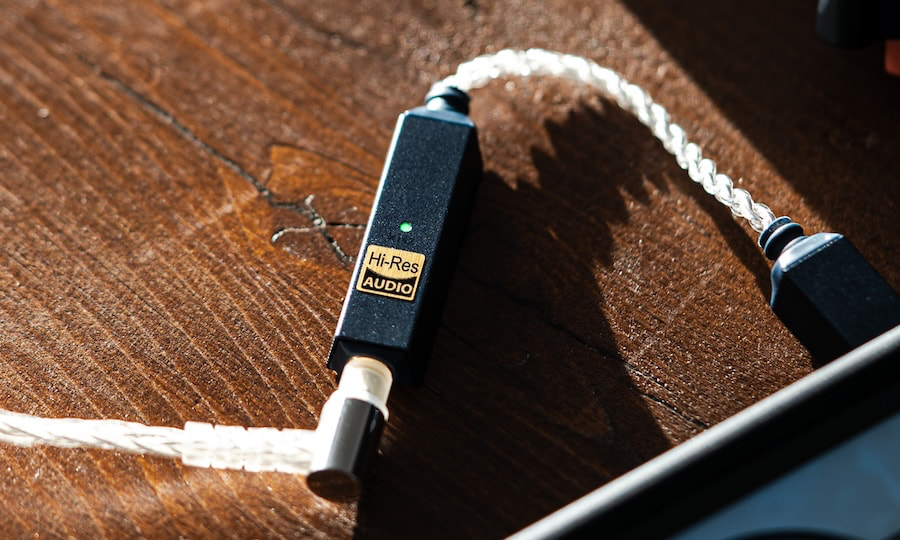
The portable USB dongle DAC market is no longer niche. It is overflowing with options and not in a good way. There are dozens of sub-$200 models promising better sound than your phone or laptop, and most of them look nearly identical on paper. More power. Smaller chassis. Higher sample rate support. Rinse and repeat. Differentiation in 2026 isn’t easy. That’s the reality facing the new iFi GO link 2.
When you strip away the marketing copy, what matters with any dongle DAC comes down to practical questions: How portable is it really? Does it deliver enough output for demanding headphones or just efficient IEMs? What Hi-Res formats are supported — and do you even need them? Does it drain your phone’s battery? Do you need Bluetooth with aptX Lossless or LDAC, or is a wired-only solution the smarter move?
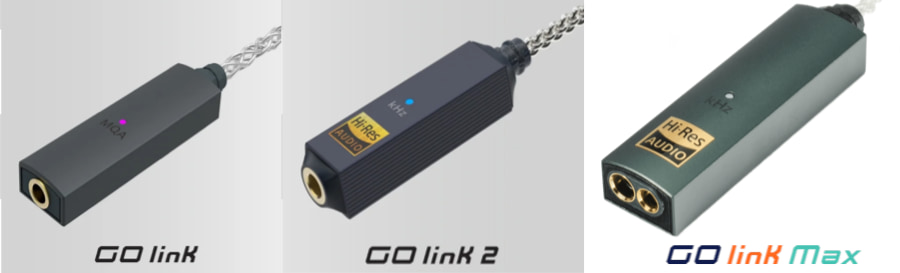
The iFi GO link 2 enters that conversation at $59, which replaces the previous iFi GO link (2023 model) that we quite liked from our testing for the same price. Although the $79 iFi GO link MAX (2025 model) adds a 4.4mm input, the GO link 2 is positioned as a wired, ultra-portable upgrade for listeners who want better sound from their smartphone, tablet or laptop without any bulk. In a segment this crowded, clarity of purpose matters. Most dongle DACs will outperform the internal audio circuitry in a smartphone or tablet, but being physically tethered to a small device that hangs off your charging port isn’t always the most elegant or practical solution.
iFi GO link 2 Key Features
The GO link 2 is built around an ESS Sabre DAC chipset with support for PCM up to 384kHz and native DSD256, ensuring compatibility with high-resolution downloads and major streaming platforms. It is a fully wired USB-C dongle DAC with no internal battery and no Bluetooth functionality. Power is drawn directly from the connected source device, whether that’s a smartphone, tablet, or laptop.
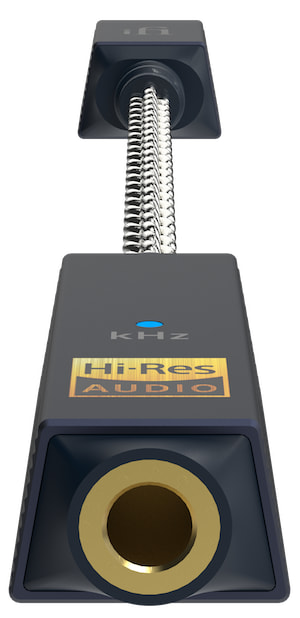
The iFi GO link 2 features a 3.5mm S-Balanced headphone output. Rated output is ≥1.59V/79mW into 32Ω and ≥2.0V/14mW into 300Ω, with an output impedance below 0.4Ω. That level of voltage and current is well suited to efficient IEMs and most portable headphones, while the low output impedance helps maintain stable frequency response with sensitive multi-driver earphones. iFi’s S-Balanced design applies balanced circuit principles to a single-ended 3.5mm output to reduce channel crosstalk, though it is not a true balanced configuration.
Advertisement
According to the published specifications, the GO link 2 offers a dynamic range of ≥125dBA, signal-to-noise ratio of ≥125dBA, THD+N of ≤0.0015% (at 1.27V into 32Ω), and a frequency response of 10Hz-80kHz (-0.5dB). These figures place it squarely within the competitive range for sub-$100 USB dongle DACs and suggest low distortion and wide bandwidth performance within its intended use case.
Power consumption is rated at approximately 0.2W with no signal and up to roughly 1W at maximum signal, meaning it will draw modest but noticeable battery power from a connected mobile device. Physically, the unit measures 137 x 12 x 7.6mm (5.4 x 0.47 x 0.31 inches) and weighs just 7.8g (0.30oz). Its compact dimensions and minimal weight make it one of the smallest DACs in its category, designed to remain unobtrusive when connected to a phone or laptop.
The GO link 2 is the first model in the series to support the iFi Nexis app, allowing over-the-air firmware updates and access to two selectable digital filters (Hybrid and Linear). App-based features, including firmware updates and filter selection, are currently exclusive to Android devices. There is no word yet on when it will be available for Apple OS or iOS.
100mW @ 32Ω; 2V @ 300Ω via 3.5mm 241mW @ 32Ω; 4V @ 300Ω via 4.4mm
SNR
≥125dBA (2.05V)
≥125dBA (2.05V)
≥125dBA via 3.5mm ≥130dBA via 4.4mm
THD+N
≤0.004% (1.27V @ 32Ω)
≤0.0015% (1.27V @ 32Ω)
≤0.0015% @ 32Ω 1.27V via 3.5mm ≤0.0016% @ 32Ω 2.4V via 4.4mm
Nexis App Support
–
Yes
–
iFi GO link 2
The Bottom Line
The iFi GO link 2 is a focused, wired-only USB dongle DAC for listeners who simply want better sound than their phone or laptop’s internal audio without adding bulk, batteries, or wireless complexity. It supports PCM up to 384kHz and DSD256, offers a low output impedance suitable for sensitive IEMs, and keeps power draw modest. Its S-Balanced 3.5mm output and Android app support for firmware updates and filter selection add some differentiation in a crowded sub-$100 category. What makes it stand out isn’t feature overload — it’s size, simplicity, and a clean wired signal path in an extremely lightweight form factor.
What it lacks is just as clear. There’s no Bluetooth, no LDAC or aptX Lossless, no balanced 4.4mm output, and limited power for demanding headphones. If you want wireless flexibility and broader codec support, the iFi GO Blu Air makes more sense. The GO link 2 is for wired-first listeners using efficient headphones or IEMs who value portability and straightforward Hi-Res decoding over extra features.
[Saturn moon] Titan has strangely few impact craters, Hyperion is tiny and misshapen, and Iapetus has a tilted orbit. What’s more, planets tend to wobble along their rotational axes as they spin, like an off-kilter spinning top in the moments before it topples over. Formally called precession, scientists have long thought that Saturn’s wobble rate should match Neptune’s because they’re probably gravitationally linked. However, data from NASA’s Cassini spacecraft, which studied the ringed planet from 2004 to 2017, revealed that Saturn’s precession rate is slightly speedier than Neptune’s.
In 2022, some researchers suggested that the destruction of a hypothetical moon, called Chrysalis, around 160 million years ago may have knocked Saturn out of sync and formed the pieces that became the planet’s rings. But this work implied that Chrysalis probably would’ve crashed into Titan, posing a major problem, study co-author Matija Äuk, an astronomer at the SETI Institute, tells New Scientist‘s Leah Crane. In that case, Chrysalis’ debris couldn’t have become the rings, he says.
So, Äuk and his colleagues used computer simulations to investigate what would happen if Chrysalis did smack into Titan. If that happened around 400 million years ago, they found, the crash would’ve wiped away Titan’s craters and made its orbit more elliptical. The altered path may have slowly pushed the trajectories of other moons, which then scraped against one another and left chunks of ice and rock that now make up Saturn’s rings. The timing seems to align with the rings’ estimated age of roughly 100 million years. Additionally, one piece of kicked-up debris may have formed the weird moon Hyperion, which may have subsequently tilted the orbit of the moon Iapetus, according to the analysis. The scenario could also resolve Saturn’s unexpected wobble, which is currently “a little bit too fast,” Äuk tells Jacopo Prisco at CNN. The study has been accepted for publication in the Planetary Science Journal, and is already available on the preprint server arXiv.
David Luan led the team responsible for Amazon’s Nova Act agentic technology. (Amazon Photo)
David Luan, who led Amazon’s San Francisco-based AGI Lab and oversaw one of its most important agentic AI initiatives, is leaving less than two years after joining the tech giant through an acqui-hire deal involving him and other leaders from AI startup Adept.
Luan announced his exit Tuesday in a LinkedIn post, saying he will leave at the end of the week “to cook up something new.”
“There’s incredible work to be done at Amazon and opportunities for me to take on more areas. But with AGI so close, I decided to spend 100% of my time on teaching AI systems brand new capabilities,” Luan wrote, adding later, “I have a bet for what’s next.”
With his departure, four of the five Adept co-founders who joined Amazon as part of the high-profile 2024 arrangement have left the company, a review of LinkedIn profiles shows.
Peter DeSantis, a 27-year Amazon veteran and senior vice president who oversees the company’s custom chips and quantum computing efforts, late last year took over the broader organization that includes the AGI team, which is responsible for Amazon’s Nova Act AI agent technologies. Luan wrote that the team “will be in great hands” with DeSantis.
Advertisement
Adept co-founder Kelsey Szot remains at the company on the AGI team, and Bryan Silverthorn, a director of applied science who also joined Amazon from Adept, continues to lead agent model training research on the AGI team, his Linkedin profile shows.
Amazon declined to comment beyond Luan’s post.
The arrangement between Amazon and Adept is one of several acqui-hire deals that have drawn scrutiny from the Federal Trade Commission in recent years amid concerns that tech giants are using the structures to absorb AI startups without triggering formal merger reviews.
Under the deal, Amazon hired Luan and other Adept leaders, and licensed the startup’s agent technology and AI models, while Adept continued operating independently with its remaining employees. The FTC reportedly examined the Amazon-Adept deal in 2024.
Advertisement
At Amazon, Luan served as vice president of Autonomy and led the AGI Lab, which was formally established in December 2024 as a small, focused research group. Its first major release was Nova Act, an AI model and developer toolkit for building agents that can perform tasks autonomously in web browsers, which Amazon unveiled in March 2025.
“We really think agents are the last missing piece on the path to general intelligence,” Luan told GeekWire in an interview ahead of the Nova Act launch.
In his departure post on Tuesday, Luan said Nova Act had been adopted by customers including Hertz, 1Password, and Amazon.com itself, and had reached the top of the REALBench agent research leaderboard. The model became generally available as an AWS service at Amazon’s re:Invent conference in December.
The other Adept co-founders who left Amazon scattered across the industry. Erich Elsen departed after four months and is now a principal research scientist at Databricks. Augustus Odena and Maxwell Nye both left after about a year and are now research scientists at Meta.
Advertisement
Before founding Adept in 2022, Luan ran research and engineering at OpenAI for three years and led Google’s large language model effort. In his departure post, he described his career as a series of early bets, including incubating the first GPTs at OpenAI, and going all-in on agents at Adept before others.
He said Adept’s technology and people “now drive computer-use efforts at every major lab.”
Amazon has separately invested up to $8 billion in Anthropic and offers third-party AI models alongside its Nova family through AWS, competing against cloud rivals Microsoft, Google, and others.
It’s often said that those with nothing to hide have nothing to fear, but we now live in a world where that attitude has a chance of upending your life. With hackers, identity thieves, rogue nation-states, data-hungry tech companies, and AI agents on the loose, information that would normally be innocuous can become a devastating weapon against you or your loved ones. Moreover, if an attacker steals company data you were responsible for, it could result in massive losses for your employer and the termination of your employment.
You’ve probably heard about some of the usual threats: suspicious emails that could be phishing attempts, pop-ups that claim your device is hacked, and so on. You’ve been told to change your passwords regularly and not to use the same one with multiple accounts. Many corporate workers have had details about these sorts of attacks and security reminders drilled into them through company training.
But cybersecurity is an infinitely deep rabbit hole, and there are many more things you can do to keep your data private and safe as you work. Half of the battle is knowledge. You can’t fight back unless you know what you’re up against. So, from locking down your accounts and devices to practicing good digital hygiene, here are five tips that will leave you better equipped to deal with digital threats, keeping your work private and personal data safe.
Advertisement
Use passkeys, not passwords, where possible
Ismagilov/Getty Images
Passwords have never been the best way to keep our digital lives secure, but we’ve been stuck with them out of necessity. They force us to choose between convenience and security. Do you use the same password for everything and risk having your entire digital life stolen when a single account is exposed, or do you set unique, complex passwords for each of your accounts and risk losing access when you inevitably forget one? Password managers have stepped in to fill that gap, remembering unique passwords so you don’t have to, but that just makes your password manager an attractive target for hackers.
One of the most basic steps anyone can take to improve their digital privacy and security is to use passkeys instead of passwords. Passkeys store an encrypted “key” on your device. When you sign into an account, you’ll be asked to use the PIN, password, or biometric scan you normally use to unlock the device itself. Instead of remembering a hundred passwords, your computer or phone’s unlock code becomes the only thing you need. This may seem less secure, but because passkeys are tied to your specific device, the website knows you aren’t some hacker on the other side of the world. The service checks your device, and your device confirms that it’s really you.
Advertisement
You can already use passkeys on many commonly used accounts, including Google, Microsoft, and more. Check in the security sections of each service’s settings to make the switch. You should also pick a passkey manager to store your passkeys. Common options include 1Password, Proton Pass, NordPass, and Google Password Manager.
Advertisement
Use a password on your phone, not fingerprint or face unlock
DenPhotos/Shutterstock
When setting up the lock screen on your smartphone, you will be presented with a few options. All devices offer a password or PIN, while Android phones offer a pattern lock and often a fingerprint sensor or camera-based face unlock, and iPhones offer the three-dimensional Face ID system. However, due to legal and technical factors, the only options security-conscious users should choose are a password, PIN, or pattern. Although you must take care not to reveal your password, it cannot be forcibly extracted from you.
In the United States, police and other law enforcement officers cannot warrantlessly breach your password. That’s because the Supreme Court has ruled that a password is private knowledge protected by the Fourth Amendment, meaning that you cannot be compelled to divulge it against your will. However, the law currently does not prevent a law enforcement officer from physically forcing you to unlock your phone or other devices by forcibly pressing your thumb to the fingerprint reader or putting you in a headlock to hold your face still while Face ID scans you.
Circuit courts have ruled in opposite directions, with a 9th Circuit judge finding in 2024 that forcing a defendant’s thumb to the phone’s fingerprint reader was no different than forcibly taking his fingerprints during booking. In 2025, the D.C. Circuit ruled the opposite, finding that a January 6th insurrectionist’s rights were violated when the FBI forced him to open his phone with biometrics. Until the Supreme Court weighs in, it’s a gray area. Either way, an individual officer may not know or care what the law says. For more information, see our explainer on why you should never give the police your phone without a warrant.
Advertisement
Be aware of your surroundings when dealing with sensitive information
Zoran Zeremski/Shutterstock
Many people worried about their digital privacy and security go to great technical lengths to lock down their devices from prying eyes, but neglect to consider threats in the physical world around them. The weak point in all digital security is the human element, and the most effective hackers are often not typing on a supercomputer from some basement. Instead, they’re using what are called social engineering attacks — in other words, chatting you up in an attempt to make you divulge the name of your first pet and the street you grew up on so they can reset your passwords, or asking you for your number so they can see you type your phone’s password.
Some attacks may not involve any interaction, but did you notice that the security camera in your favorite cafe is pointed right toward your laptop as you type in your banking credentials? What about the man seated next to you, whose wandering eyes may have taken note of the same? Of course, one easy solution for some accounts is to use passkeys in tandem with biometric authentication on your phone, eliminating the need to enter passwords. As we discussed above, biometric security can backfire if you’re ever in a tense situation with law enforcement, so it’s up to individuals to determine whether state or non-state actors are likely to present the larger threat to you.
It’s a bit crude, but a good rule of thumb when you’re unsure whether to handle sensitive information in a particular environment is to ask yourself whether you’d look at “not safe for work” content there. If the answer is no, it’s probably a good idea to wait until you’re in a more private setting.
Advertisement
Always update your devices to get the latest security patches
Max Miller/SlashGear
You should almost always install updates on your phone, laptop, PC, and other devices when prompted. Your devices are doing a lot of work on their own to protect you from threats. Major operating systems like Windows, macOS, Android, or iOS include multiple layers of defense that, in most cases, block the most severe threats without any work on your part. However, because of the complexity of our devices and OSes, there are always hidden vulnerabilities waiting to be discovered. In the worst case scenario, which is known as a zero-day exploit, a threat actor discovers them first and deploys them against defenseless users. In the best case, your OS vendor discovers them first and issues a security patch.
When you don’t update your phone or computer, you could lose a lot more than the five minutes it would have taken to install the latest software. Almost every system update to your devices contains at least a few security fixes, and if your OS vendor knows about those vulnerabilities, so do the bad guys. The sooner you update, the safer you’ll be. There are minor exceptions. In January, a series of bad updates wreaked havoc on Windows PCs, breaking important features and even causing boot cycle issues. Microsoft quickly released an out-of-band patch to rectify those issues, at which point responsible users finally updated. If an update is known to cause problems, you should hold off until they’re fixed.
Keep in mind that devices outside your phone and computer may need updates. Your smart TV, game console, smartwatch, wireless earbuds, and many other devices also receive occasional updates that should be applied as soon as possible.
Advertisement
Be cautious with Wi-Fi connections
ParinPix/Shutterstock
In “The Lord of the Rings,” the corrupted wizard Saruman uses a scrying orb called a palantir to communicate with the villain Sauron. Gandalf, unaware that his old friend has succumbed to evil, warns him against using the orb, saying, “We do not know who else may be watching.” This is a particularly good metaphor for Wi-Fi, a technology nearly everyone relies on day-to-day. One of the things people aren’t taught about Wi-Fi is that it’s a two-way window. If a network is compromised, a threat actor could see everything you do and steal your most private work and personal data.
Evil twin attacks are among the most common Wi-Fi attacks, and happen most often in public areas like coffee shops, airports, and hotels, where lots of people are connected to the Wi-Fi. An attacker makes a network they control with the same name as the real network. Users may not notice that there are two networks named “Coffee Shop Guest” and connect to the fake one. Another common attack is man-in-the-middle, where an attacker positions themselves between two parties who are communicating, such as a payment vendor and a shopping site. And because Wi-Fi sends data through the air, sniffing attacks — where an attacker uses a specialized sniffing tool to intercept data packets — are also common.
Advertisement
You can prevent some attacks by encrypting your data, most commonly through a VPN. Because a VPN encrypts your network traffic, a network attacker will only see scrambled data if they breach a Wi-Fi network you’re connected to. However, not all VPNs are created equal, and there are plenty of shady-looking services out there. Be sure to choose one of the best VPN services to ensure that your traffic is properly anonymized.
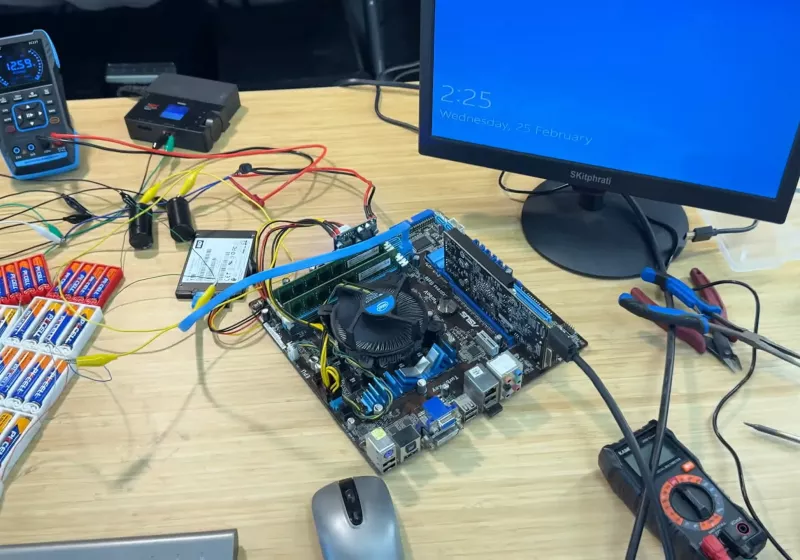
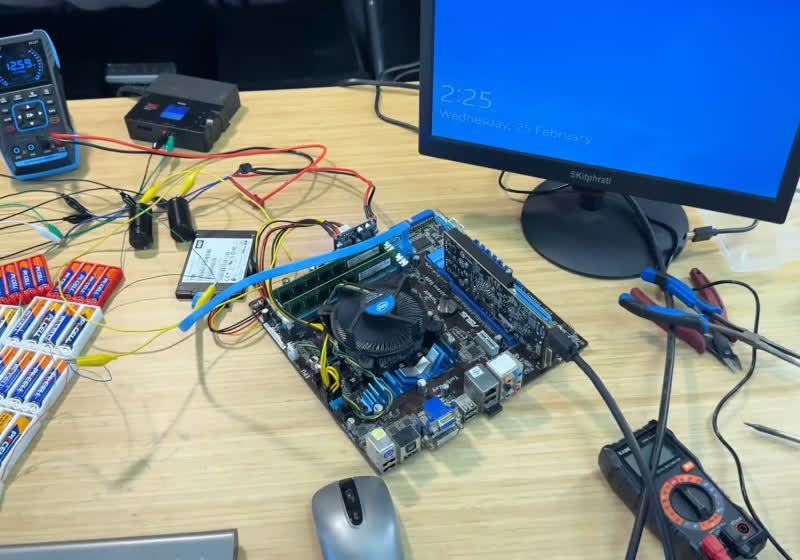
The system in question was modest by desktop standards: an entry-level Intel processor, two sticks of RAM, and a 2.5-inch SATA SSD running Windows 10. The hardware drew its power through a CX430 450-watt supply – until ScuffedBits swapped it for a custom ATX plug purchased online. The adapter allowed… Read Entire Article Source link
Microsoft Azure Local can now run fully disconnected without needing the cloud
European customers are increasingly demanding sovereign options
CISPE welcomes the changes, Civo warns of US CLOUD Act implications
Microsoft has announced three new updates to the company’s sovereign offerings, including improvements across Azure Local, Microsoft 365 Local and Foundry Local.
The additions come as US-EU trade tensions continue, with Europe pushing for more digitally sovereign options.
European customers are increasingly demanding local infrastructure, protection from potential US CLOUD Act data access and reduced dependency on hyperscalers.
Microsoft offers three new sovereign options for the likes of Europe
Though Microsoft’s Local additions don’t respond to the desire to step away from hyperscalers, they do tackle data and infrastructure sovereignty demands while offering already-familiar experiences for existing customers.
In a blog post, Microsoft Specialized Clouds President and CTO Douglas Phillips explained organizations can now use on-prem infrastructure with Azure’s governance and policy controls, all without cloud connectivity, in the form of the new Azure Local.
“Disconnected operations, management, policy and workload execution stay within the customer-operated environments,” he wrote.
Advertisement
Previously, Azure Local needed periodic cloud connectivity. Staying offline for too long reduced functionality, but with the latest update, it can now run fully disconnected, making it ideal for highly regulated industries including defence and critical national infrastructure.
Sign up to the TechRadar Pro newsletter to get all the top news, opinion, features and guidance your business needs to succeed!
CISPE, Europe’s body representing cloud infrastructure companies, welcomed the changes, promising to test Microsoft’s changes against its upcoming Sovereign Cloud Services Framework to see if they pass.
Microsoft doesn’t even stand out in the world of hyperscalers, with Google offering its own Google Cloud Airgapped solution and AWS selling its equivalent, the European Sovereign Cloud.
Advertisement
“Our approach helps customers to meet strict sovereign requirements in fully disconnected scenarios without compromising simplicity, while retaining flexibility where connectivity is possible,” Phillips concluded.
Bill Gates, pictured here in 2020, apologized to Gates Foundation staff over his past interactions with Jeffrey Epstein in an internal town hall on Tuesday, the Wall Street Journal reported. (GeekWire File Photo / Todd Bishop)
Bill Gates apologized to Gates Foundation staff on Tuesday for his past interactions with the late convicted sex offender Jeffrey Epstein, acknowledging in an internal town hall that the situation puts the foundation’s reputation at risk, according to a Wall Street Journal report.
Gates met with Epstein multiple times from 2011 to 2014, years after the financier had pleaded guilty to soliciting a minor for prostitution, and continued the meetings even after his then-wife Melinda French Gates raised concerns in 2013, according to the WSJ report.
He told staff it was “a huge mistake to spend time with Epstein” and to bring foundation executives into meetings with the sex offender, the newspaper reported.
In the town hall, Gates acknowledged two extramarital affairs (with a Russian bridge player and a Russian nuclear physicist) that Epstein later discovered through Gates’s former science adviser Boris Nikolic, the WSJ reported. Gates insisted he didn’t participate in or witness any of Epstein’s crimes, telling staff, “I did nothing illicit. I saw nothing illicit.”
Gates has not been accused of wrongdoing by any of Epstein’s victims.
Advertisement
During the town hall, he acknowledged the broader implications for the foundation.
“It definitely is the opposite of the values of the Foundation and the goals of the foundation,” he said, according to the recording reviewed by the newspaper. “And our work is very reputational sensitive. I mean, people can choose to work with us or not work with us.”
In a statement to GeekWire, a Gates Foundation spokesperson said the town hall was a regularly scheduled internal event that Gates holds twice a year.
“Bill answered questions submitted by foundation staff on a range of issues, including the release of the Epstein files, the foundation’s work in AI, and the future of global health,” the spokesperson said. “Bill spoke candidly, addressing several questions in detail, and took responsibility for his actions.”
Advertisement
Last week, Gates abruptly cancelled a planned keynote address at India’s AI Impact Summit hours before he was scheduled to speak, with the foundation saying at the time that the decision was made “to ensure the focus remains on the AI Summit’s key priorities.”
In a previous statement, the Gates Foundation said it was “aware of emails recently released by the U.S. Department of Justice” involving communication between Epstein and foundation staff, and that a small number of employees had interacted with Epstein based on his claims that he could “mobilize significant philanthropic resources for global health and development.”
It said no collaboration was pursued and no payments were ever made to Epstein.
Separately on Tuesday, the New York Times reported that Epstein built a network of connections across Microsoft over more than two decades, reaching deeper into the company than any other major tech firm.
Advertisement
The documents show Epstein receiving updates on Microsoft’s CEO search, offering advice to executives, and gaining access to confidential company business.
Among those named in the NYT report: former CTO Nathan Myhrvold, who vouched for Epstein to Gates; former Windows chief Steven Sinofsky, who shared confidential Microsoft information with Epstein and sought his advice on his exit package; and LinkedIn co-founder Reid Hoffman, a current Microsoft board member who visited Epstein’s island and continued communicating with him through 2018, according to the newspaper.
Microsoft communications chief Frank Shaw told the NYT that the company was “disappointed” by emails between Epstein and former employees “acting in their personal capacities.”
The Seattle Times has separately reported on deeper ties between Myhrvold and Epstein, including emails showing the two met regularly in Seattle and New York from 2010 through 2018, and correspondence that appeared to show Myhrvold visiting Epstein’s private island.
Advertisement
Myhrvold was also listed as a “friend” in Epstein’s 2003 birthday book and contributed a personal letter to the project, as GeekWire previously reported.
A spokesperson for Myhrvold said previously that he knew Epstein “from TED conferences and as a donor to basic scientific research” and “regrets that he ever met him.”
The Epstein revelations have had significant consequences elsewhere.
Hyatt Hotels executive chairman Tom Pritzker stepped down over his ties to Epstein, Goldman Sachs chief legal officer Kathy Ruemmler resigned, Norway’s former Prime Minister Thorbjørn Jagland has been charged with aggravated corruption, and former British ambassador Peter Mandelson was arrested in connection with the disclosures.
Advertisement
In addition to his role at the foundation, Gates continues to advise Microsoft and serve as chairman of Bellevue-based TerraPower. Hoffman remains on the Microsoft board. Myhrvold is CEO of Intellectual Ventures and vice chairman of the TerraPower board.
For 1 in 7 seniors, even eating can be a challenge due to dysphagia
There’s a quiet, often overlooked challenge facing a growing number of Singaporeans—one that strikes at the very core of everyday life: the ability to eat.
Many of us see food as something we can relish, from its colours and smells to its taste, and we often take it for granted.
Eating doesn’t just happen in hospitals. It happens at hawker centres, coffee shops, and family dinners. Yet most food spaces are built on a silent assumption: everyone can chew and swallow. That assumption works until it doesn’t.
Despite its prevalence, dysphagia has remained a silent problem in Singapore’s food culture until recently.
Early trials to address dysphagia
Hawkers from Alexandra Village Food Centre and ABC Brickworks Food Centre trained by Alexandra Hospital’s speech therapists./ Image Credit: Alexandra Hospital
Singapore has taken steps in recent years to address the problem.
The initiative was just the first part of a broader landscape of awareness and the standardisation of providing dysphagia-friendly options beyond hospitals.
Moreover, since 2023, organisations like St Luke’s Hospital started offering hands‑on workshops to equip healthcare and food preparation staff with the skills to prepare and test texture‑modified meals for individuals with dysphagia.
The Project Futurus’ soft-meal versions of the Singaporean laksa noodles and pandan and coconut layer cakes, and dim sum soft meals were served during the Sensory Restaurant on Wheels programme./ Image Credit: The Project Futurus
In 2024, aligned with national efforts such as EatSafe SG, the Singapore University of Social Sciences (SUSS) partnered with Hong Kong-based social enterprise Project Futurus to pilot the Sensory Restaurant on Wheels initiative, a sensory-led, immersive dim sum dining experience for over 90 seniors, 120 care sector stakeholders, and 60 volunteers.
Alongside three elderly care operators—Catholic Welfare Services’ St. Joseph’s Home, Methodist Welfare Services Bethany Nursing Home, and Salvation Army Peacehaven Nursing Home—SUSS and Project Futurus also introduced another initiative: the Captain Softmeal™ programme, teaching participants to prepare softmeal versions of familiar local dishes while retaining flavour and appearance.
Using Japanese softmeal enzyme techniques, local meals are safe to swallow and, most importantly, still enjoyable.
Advertisement
Mainstream adoption
Despite these efforts, there’s no doubt that mainstream eateries have traditionally offered few options for those with dysphagia who would like to dine out, limiting social participation and nutritional intake.
Early this year, Singapore took another step toward changing that.(Left): A curated menu of textured soft-meal dishes, including classic Chinese ones like mini longevity buns, barbecue pork with honey sauce and black sesame glutinous rice dumplings in ginger soup by Imperial Treasure at Great World; (Right): A soft meal kaya toast by 5 Senses Café & Restaurant./ Image Credit: SUSS/ @nOmies.co via Instagram
Building on its previous efforts, SUSS piloted dysphagia-friendly menus in mainstream restaurants such as Imperial Treasure and 5 Senses Café & Restaurant. Seniors enjoyed familiar dishes—Hokkien Mee, stewed beancurd with minced beef, kaya toast—over a two-day pop-up from 12–13 Jan 2026.
Dishes were thoughtfully reimagined as soft meals by chefs to be easier and safer to swallow without compromising taste, presentation, or dining experience. Following IDDSI guidelines, chefs adjusted softness, moisture, and cohesiveness so that food neither crumbles dangerously nor flows too quickly.
The impact goes beyond safety. When one person at the table struggles with swallowing, the social experience changes.
Advertisement
By modifying textures, the initiative allows seniors to dine out socially, with family and friends, while ensuring they receive adequate nutrition and enjoy their meals. This is a promising alternative to the usual porridge and oatmeal, and it preserves dignity and participation at the table.
This is why he believes that food is “more than nourishment,”— working on this pilot has allowed the 5 Senses team to better understand the needs of diners with swallowing difficulties. “It has shown us that we can tune our preparation and service processes—making dining out a more inclusive experience without altering the essence of it,” he added.
Soft-meal siu mai, chwee kueh, and pandan cake served to a resident at The Salvation Army Peacehaven Nursing Home./ Image Credit: The Salvation Army
The widespread adoption of dysphagia-friendly meals is easier said than done.
It is more than mashed ingredients—under IDDSI guidelines, food must hold its shape without crumbling, remain moist enough to swallow safely, and avoid breaking into unpredictable pieces.
It’s a lot of work for chefs—they would have to adjust cooking times, moisture levels, binding, and plating, all while preserving flavour and visual appeal. In addition, time needs to be spent training staff to understand and handle these new requirements.
Given that restaurants typically operate in a high-pressure environment, introducing new menu categories or specialised preparation can pose practical operational challenges. Hence, whether dysphagia-friendly dining can be maintained broadly outside pilot settings remains to be seen.
As Singapore heads toward 2030, the question is no longer whether dysphagia will affect someone we know, but whether our food culture, chefs, and dining spaces are ready when it does.
Read more stories we’ve written on Singaporean businesses here.
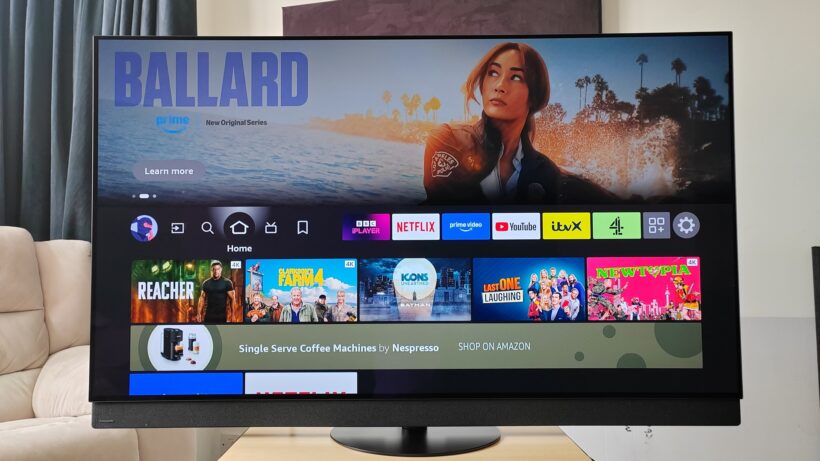
News arrived this week of new Panasonic TVs, announced at the company’s Experience Event held on the outskirts of Munich, but new TVs weren’t the main focus as a big change was taking place at the event.
While that doesn’t sound massive, it is rather sizeable. Much like the Sony and TCL partnership that was announced earlier in 2026, it’s another brand with a storied history in the home entertainment market that’s loosened its grip on its home cinema products and asked for help from others.
And I think I’m okay with it. Just about…
Advertisement
The fall of a giant or a Phoenix from the flames?
It would be worse, really, if Panasonic had announced that it was completely selling off its TV division. The writing was on the wall almost a year ago when there were signs that the TV division was not the profit centre that Panasonic had hoped it’d be.
Advertisement
The push back into America was initially a sign of confidence that the TV division could be resurgent, but a flag that looked distinctly white was being waved around and suitors seemingly asked to come and have a peek at what Panasonic had to offer.
Image Credit (Trusted Reviews)
That Panasonic still retains an element of control is, I think, a good thing. There are still unknowns about Skyworth. I don’t believe Trusted Reviews has ever reviewed a TV from them, so I couldn’t tell what they’re like.
While I’m familiar with the name, the impression I’ve had about the brand over the years is that it is about budget and quantity, and not necessarily beating others when it comes to quality. It remains to be seen whether it can step up in that regard, and as a result, I’m sceptical. But then that should be a challenge that Skyworth rises to.
Advertisement
It does offer Panasonic a production scale and possibly a marketing reach that, surprisingly for a company of Panasonic’s size, it could not achieve on its own. It’s not just ‘scale’ and ‘reach’ that Panasonic are after, but unlocking the mysteries of producing TVs at a lower price that its Chinese rivals have figured out.
Image Credit (Trusted Reviews) Peter Yu, Chuangwei RGB
Advertisement
I’m always worried when the word DNA is invoked, as it was a few times during Panasonic’s Plenary session, as it never really reassures.
DNA is the word you don’t want people to bring up, as it inevitably sparks questions about what a company’s DNA is and answers that wildly diverge based on what people think of the brand. What a company’s DNA is known is not necessarily what it was twenty years ago.
If Panasonic knew what its own DNA was, wouldn’t it know how to fix the problem and not seek a transfusion from another source? Does this deal represent the fall of a giant, or are we about to see a resurrection of one? I guess it depends on your perspective and what happens next.
Advertisement
Image Credit (Trusted Reviews)
So while I’m disappointed by the outcome, I’m not necessarily glum. Panasonic has made some cracking TVs – the Z90B is a recent favourite of mine –, but there’s no doubting that the sands of the TV industry have shifted, and it’s been slow to adapt.
For what it’s worth, I think the focus on premium OLED TVs was not the best move, or at least it focused on producing too many in a market segment that’s dominated by LG (and now, also, Samsung).
Advertisement
I think Sony came to this realisation a few years ago and put the brakes on its OLED output and shifted to Mini LED. Panasonic needed to embrace similar change, and its 2026 TV line-up now features several Mini LED TVs, a jump from the one that was available in 2025.
Image Credit (Trusted Reviews)
The benefit, much like Sony, is that Panasonic stays in the TV market. There’s been a fair amount of talk about the Sony/TCL deal and who has ‘control’ in that partnership, but I can’t see Sony relinquishing its hold on the tech that it created, especially as it’s a step up on what TCL has developed.
The same, I think, applies to this Panasonic/Skyworth partnership, though Skyworth isn’t the equal of TCL, and it’s here where the main worry lies. Skyworth is a “top-five global TV brand” and yet I can’t think of much about them beyond budget/value TVs.
Advertisement
Panasonic’s TVs stand for quality, and any drop in performance will affect the perception of the brand. Having been big names in the 90s, the Japanese TV brands have been usurped by Korea and now China. So while it’s great that the Panasonic name remains in the TV world, but if anything, the tough work of making Panasonic great again is just about to begin.
Matthew Perks has truly outdone himself with his new invention, a highly portable powerhouse surrounded by one of the world’s brightest LEDs. The device, known as the LED supernova, takes 1.5 kilowatts of power and converts it into a dangerously eye-searing 120,000 lumens, all in a compact box weighing only 25 kg and remaining (amazingly) portable.
Perks’ idea begins with a large LED array that can produce light so bright that it’s like staring directly into the face of a rushing car; standard car headlights simply can’t compete. The difficulty is that any standard power system would have destroyed the light source long ago, so Perks had to design and build a completely new cooling / power system from scratch. This beast is made up of six copper radiators, each with three fans, resulting in a hexagonal structure with an astonishing 18 fans tied together with rubber tubing.
Super Bright Large Flashlight Spotlight Main light& High lumens Flood work light side light with Red&blue light warning function: 1000000 lumens…
New Design Switch&Aerospace Aluminum Alloy Shell: Bigger size and softer material makes our new switch easier to press and gives us a comfortable hand…
Life-Time Guarantee &24-Hrs online after-sale service:Our BUYSIGHT rechargeable searchlights are tested to be up to the standard of 1000 cycles…
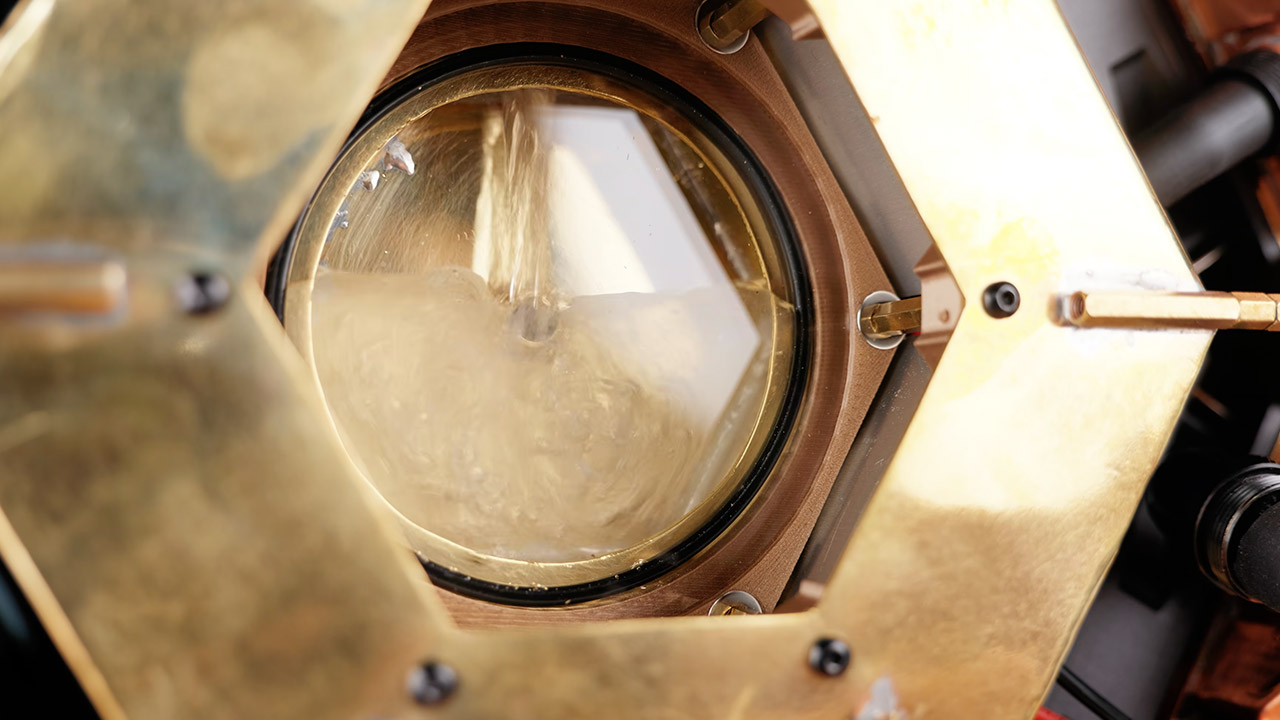
The action revolves around a handcrafted hexagon-shaped metal reservoir. This item is quite adaptable; its external casing serves as a mounting platform for voltage regulator boards, allowing for rapid heat dissipation via thermal pads. The pump draws liquid from a central chamber, and a glass window provides a good view of the flow. Perks has gone above and above to ensure that all of the joints are waterproof, that there is a bleed valve to release any air pockets, and that it does not leak when the pressure is applied.
Advertisement
The LED is connected to a massive copper water block via soldered pipes and brackets that also function as supports, much like creating a unique suspension system for the light source. The half sphere lens and Fresnel lens function well together, capturing stray photons and directing them into the spotlight as a tight beam. The external potentiometer allows you to change the brightness using a large brass gear, and the other dial (which controls temperature) isn’t far behind.
Power comes from a huge lithium-polymer battery pack capable of producing up to 5.3 kilowatts, similar to those used in high-draw RC applications. There is a built-in management system that monitors everything and prevents negative things from happening, such as shorts, over-discharging, and excessive current. The battery pack is housed in a very handsome polished brass enclosure that not only keeps things secure but also adds some serious beauty, and six different regulator boards split the load in a way that keeps the heat at bay, with each capable of managing a surprisingly high 250 watts.
An Arduino board ensures safety by monitoring coolant flow, temperature, and pump speed. Everything operates great until it reaches its limits, at which point the entire system shuts down, cutting power quickly to save that expensive LED from blowing out in the middle of a run. He was able to put it all together using only simple hand tools such as a jigsaw for cutting brass, a vise to bend it into shape, and some careful soldering to ensure it was securely fastened. There are also 3D printed templates available to assist you mark up sheet material correctly. He even added additional straps made of leather and copper piping with handles to make the 25 kg monster more movable.
The tests show the system functioning as smoothly as a well-oiled machine, full power or not; the coolant only reaches 32 degrees Celsius, the fans spin at a cool 74%, and the LED substrate remains nice and cool at 65 degrees, well below its danger zone. No matter what strain you put on the battery, it will run for 15 minutes without blinking. That leaves plenty of time for longer demonstrations. Let’s just say that the light is very spectacular; it can light a match from 20 feet away simply by emitting photons, eliminating the need for any infrared.
In a press release largely devoid of details as you’d expect given the topic, Apple has announced that the iPhone and iPad are the only consumer-grade devices that comply with NATO classified data safeguard guidance.
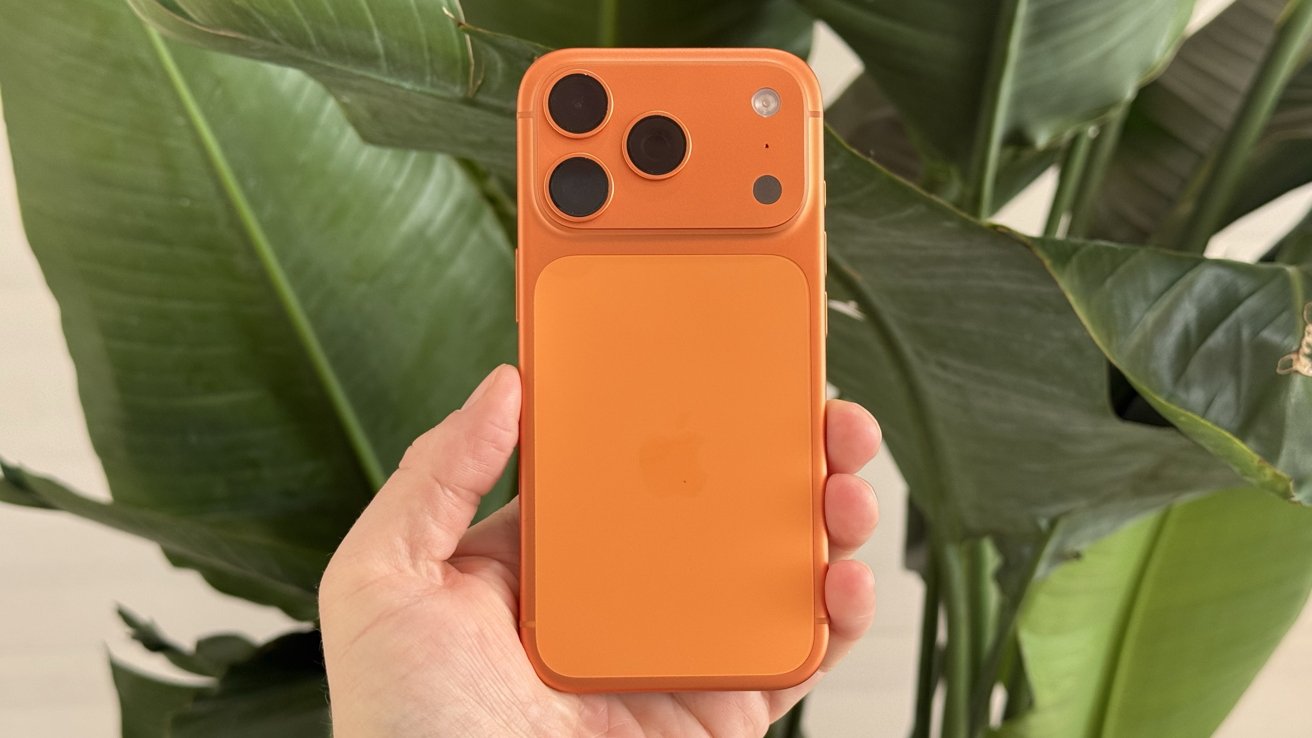
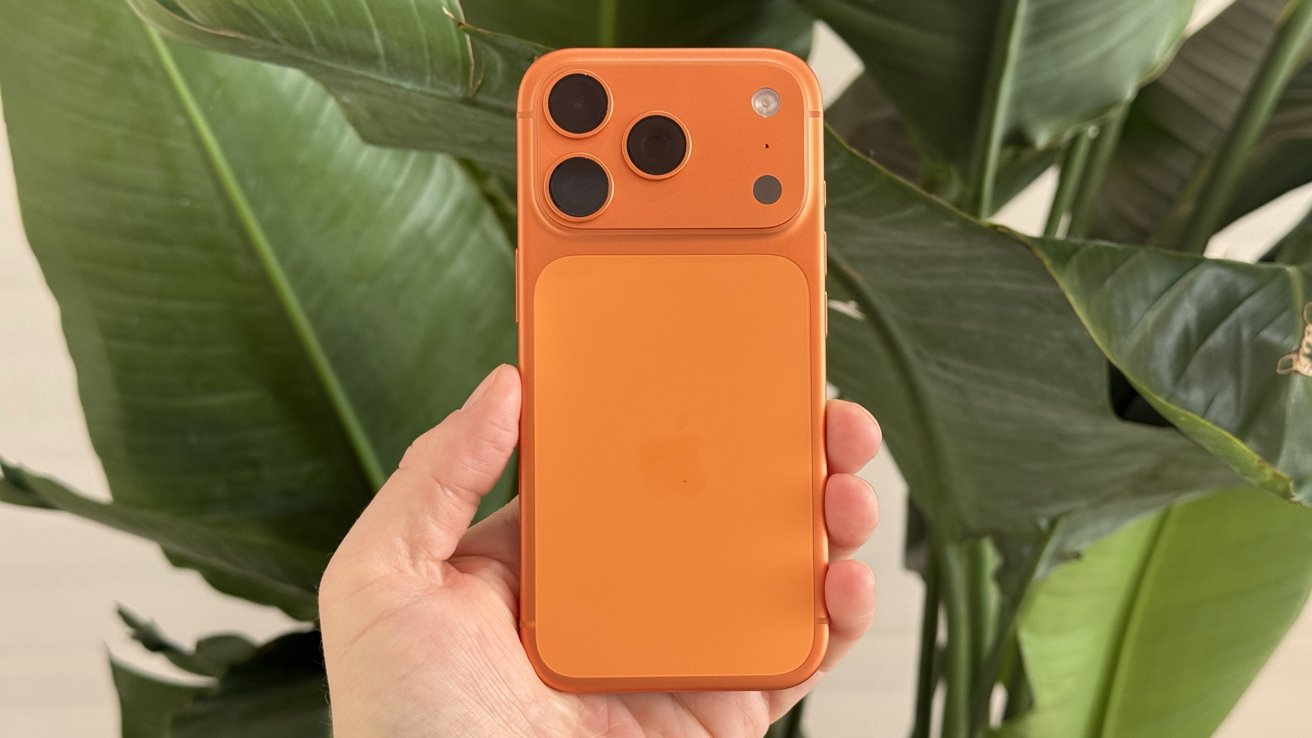
IPhone 17 Pro Max in Orange
The certification doesn’t allow the iPhone to either put in-motion or store at-rest any level of classified data. Specifically, the devices, properly managed, are allowed to handle classified information up to the NATO restricted level without requiring special software or settings. Apple says that on the whole, no other consumer mobile device has met this standard. Continue Reading on AppleInsider | Discuss on our Forums