


In 2022, a father and son in Florida received notifications from their Ring doorbell camera: Someone was at their door. The pair quickly jumped into action, scouring their apartment complex for a would-be intruder. The scene they happened upon was a woman checking her phone in her car. They fired seven shots at her as she drove away.
Tech
I’m still not convinced by Dolby Atmos Music


I’ve written my fair share of moans about Dolby technologies over the past year, and while I don’t want to be a negative ninny (look it up) all the time, prepare yourself for another groan.
Well, maybe not so much a moan, but more a pondering on the state of immersive audio in today’s market. If Dolby’s goal was to have its audio technologies in every nook and cranny, then it’s succeeded but I do wonder whether in some circumstances, we get the full expression of what Dolby Atmos Music can do.
What prompted this was a test of the Denon Home 400. By all accounts, this is an impressive wireless speaker, but one area that created some concern was its Dolby Atmos Music performance. I just don’t find it very convincing.
Dolby Atmos Music sounds great… in the right environment

I went to KEF Gallery in central London not too long ago to see the Germany vs Paraguay match in their private cinema (which looked and sounded great, by the way). Before the football started, we were presented with a few demos in Dolby Atmos with music and film. Elton John’s Rocketman got an airing, a track I’ve heard a few times in Dolby Atmos mastering studios, and it sounded blindingly good.
The spaciousness, detail, clarity, but also the positioning of instruments, voices and backing vocals for a track that’s well over 50 years old breathed new life into it. There was music in front, behind, above and to the sides – in terms of producing true immersion, this is Dolby Atmos at its best.
I’ve also heard Dolby Atmos mixes in cars, and cars make for a surprisingly good space to listen to music in. Like a smaller version of a music studio, you have speakers dotted all around you, so you do feel as if music is happening all around you, and you’re in a little bubble of sound.

The key with this is that you have speakers all around you. But when you have a speaker such as the Denon Home 400 or Sonos Era 300, you’re effectively trying to produce an immersive effect from a single source, and I’ve rarely, if ever, found it to be convincing.
Audio processing can do amazing things. With the Sonos Era 300, it can make it seem as if Dolby Atmos tracks sound much taller and wider than the speaker itself; but I also find this to be the case in specific rooms. In some rooms the Atmos effect sounds good, in others I find it slightly harder to hear what’s happening.
Hearing a preview of the Denon Home 400 before it was announced, I had my doubts about how well it could do immersive audio. Without Atmos, it can produce a soundstage that’s much wider and taller than the speaker itself; but throwing an Atmos track in the mix extends the width and height with the in-app controls, and I find Atmos tracks sound thinner and not as natural-sounding as hearing it in a car or a dedicated room.
This is not the fault of the speakers themselves. They’re having to try and do something similar with far few speakers. But this is not the only issue with Dolby Atmos mixes.
Not all Atmos tracks are equal

Part of what makes a good Dolby Atmos Music track is in the mastering. Where an engineer decides to place a certain instrument, position reverb, or vocals can make a track that was originally conceived of in mono or stereo and make it sound effortlessly immersive. There’s an artistry to making a good Dolby Atmos track.
But not all Dolby Atmos tracks could use of the extra information (objects) they have at their disposal.
Maybe they can’t because there simply isn’t much in the original stems of the track to do so. Perhaps it’s a failure of imagination to truly re-conceive a track and the mixer tries to be a little too traditional because they don’t want to stray too far from the source. You get tracks that sound bigger and wider but not much else. I could be listening to the track in stereo, and in some cases, I’d prefer to.
We now have access to a huge trove of immersive audio through the likes of Apple Music, Amazon Music and Tidal; though it’s interesting to note that not every music streaming system offers spatial audio. Deezer dropped Sony’s 360 Reality Audio in 2022. Qobuz is resolutely stereo, Spotify has never seemed too interested in it.
Spatial audio is a mixed bag of quality, with some tracks great and others middling. When everything sounds just so in stereo, immersive audio needs a better hit rate.
Maybe the focus should be elsewhere

I’m not advocating that immersive audio should disappear from every music library, but more so that it has its place, and that place is in environments that can truly do justice to it. Dolby’s march to put Atmos everywhere has led to compromises, and compromise is a thorn in the side of good quality.
Even middling Atmos tracks will sound good in the right environment, even if they don’t make the most of it, they’ve still been mixed in an immersive space to take advantage of what that environment offers. It’s when you scale it down to a wireless speaker that it becomes less impressive and more obviously compromised.
But perhaps, at least when it comes to standalone wireless speakers, the focus should be elsewhere. The Denon Home 400 is clever in that you can extend the width and height of tracks to create a bigger sound with stereo tracks, and the Bose Lifestyle Ultra Speaker also does the same, eschewing immersive audio to widen and make taller, stereo music.
So the Home 400 or Sonos Era 300 can keep their Atmos support as a key feature, but it’s best served within a Dolby Atmos system. On their own, maybe wireless speakers such as these should go for a compromised spatial audio performance, and instead take stereo or mono tracks and create an even bigger and more convincing soundstage, which in itself can be just as immersive.
Continue Reading
Tech
Canadian spy agency says it hacked drug traffickers, extremists and a ransomware gang last year

Offering a rare glimpse at the priorities of a top spy organization, Canada’s Communications Security Establishment said it conducted a handful of state-authorized hacks last year in order to disrupt the operations of drug traffickers, violent extremists, and a ransomware gang.
The disclosures in the Canadian intelligence agency’s annual report underscore some of the main national security threats that face Canada and its closest allies: ranging from the import of illegal drugs to cyberattacks. The spy agency, CSE, is tasked with collecting foreign intelligence, defending government systems, and disrupting online adversaries.
Published last week, the report says the CSE last year carried out three foreign “active cyber operations” — the term agency uses to describe its cyberattacks on overseas operations that threaten Canadian national security and public safety.
One of the operations, per the report, targeted cybercriminals outside of Canada who were brokering the sale of chemicals used to create the synthetic opioid, fentanyl. The CSE collected intelligence on the brokers, then conducted an operation that “disrupted and diminished their ability to operate,” the report said.
Another active operation involved the collection of signals intelligence — data produced from electronics and internet-connected devices — on an overseas extremist group that was spreading violent ideology and recruiting members, including in Canada.
The report said the agency analyzed the group’s organization, reach, and potential vulnerabilities to conduct an operation that “successfully undermined the group’s credibility and limited their ability to radicalize and recruit new members.”
Another operation involved disrupting a ransomware-as-a-service operation that let hackers rent access to a ransomware gang’s infrastructure to launch destructive extortion attacks. The CSE said its signals intelligence unit identified how the gang worked against the healthcare, transportation, and business sectors in Canada, then used an active cyber operation that “rendered the group’s infrastructure inoperable.” The operation also deleted much of the data on the gang’s servers.
The agency said it undertook concurrent “technical disruptions” against 10 of the most significant ransomware gangs targeting Canada to “make parts of their infrastructure unusable.”
The report did not say where the hackers, extremists or the ransomware gang were located, or the specifics of the operations that the CSE used to target them. It’s not uncommon for spy agencies to conduct cyberattacks against their adversaries, but such operations are seldom disclosed or detailed to protect the methods and techniques used.
Fort Meade, Maryland-based Cyber Command, which conducts cyber operations for the U.S. government, regularly carries out “hunt forward” operations that involve sending cyber teams to allied nations to secure their networks and disrupt cyber operations launched by adversaries. The number of U.S.-led hunt forward operations have risen from a few handful during 2018 to more than two dozen during 2025.
Canada’s CSE said it also carried out one defensive cyber operation during the year to target a phishing campaign aimed at Canadian federal government institutions and other important systems. The agency said it disrupted the group’s infrastructure and “degraded their ability” to target Canadians.
When you purchase through links in our articles, we may earn a small commission. This doesn’t affect our editorial independence.


If you’re not familiar with the ways renewable energy can transform your home, you may not know the differences between wind turbines and windmills. After all, they appear to be similar enough in construction, so it’s logical to believe they do the same thing. However, there are some important factors that separate the two structures.
A wind turbine is a modern machine that converts the kinetic energy of moving air into electricity. This is possible through the use of large blades that connect to an internal generator. The end result is electricity that can be directed to residential homes or to the power grid itself. A windmill is a much older device that uses the same wind-driven motion to power specific tasks like grinding grain or pumping water. Though they both use spinning blades powered by wind, they are built for different purposes.
Because of their different designs, both structures typically operate in varied locations as well. Traditional windmills are generally used near farms, ranches, and other places where they provide power for necessary work. Due to their size, wind turbines usually need more room, which is why they’re often constructed in rural areas or remote locations. They can even be utilized in water, where they do a lot more than just generate energy.
From mechanical windmills to modern electricity

Wind turbines evolved from early windmill technology because windmills were not designed for electrical power generation. They also were not designed for connection to wider power systems that would eventually provide energy across the U.S. But thanks to wind turbines, which can last longer than you may think, wind-driven motion could be converted into usable electricity. A windmill’s basic design of rotating blades was still used, but it was improved over time. The blades became thinner and more aerodynamic to capture wind energy more efficiently.
A wind turbine’s method to generate electricity begins with the blades. As wind flows over the blades, lift is created, causing the rotor to spin. This rotation is then transferred through the turbine’s shaft, sometimes with the help of a gearbox that increases rotating speed. The spinning shaft then drives a generator, which converts this mechanical motion into electrical energy. The electricity produced from this process can then be fed directly into the power grid.
Traditional windmills are still being used in rural areas for mechanical tasks like pumping water. But wind turbines have become a major part of a growing energy system. That’s because the total amount of renewable wind energy is enormous, especially when comparing that energy’s potential to electricity demand today. As wind turbine technology continues to improve, overall energy production potential continues to increase. According to the Center for Sustainable Systems, 11% of electricity used in the United States came from wind in 2024.
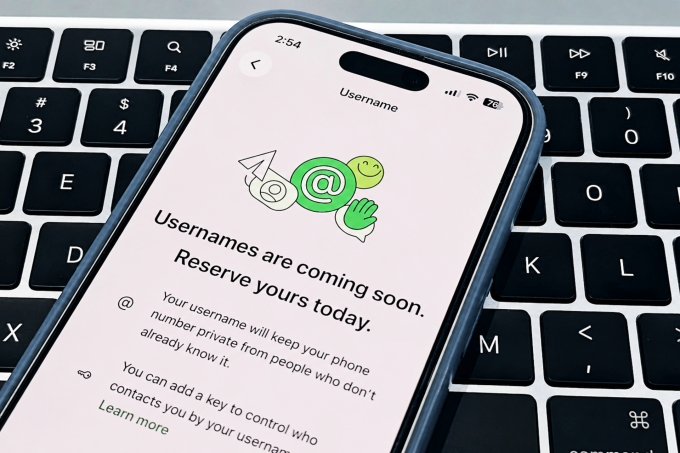
Meta-owned chat app WhatsApp started to roll out username reservations for its 3 billion users earlier in June. The username feature is not active, but you can claim your username and start using it whenever the feature becomes available this year.
With usernames, people will be able to share their WhatsApp contact without having to disclose their phone number. This could be useful for people who want others to contact them on WhatsApp, but don’t want to share their information or their phone number. For businesses, it might be easier to share a name than a phone number to their customers.

Here is how you can reserve your username:
- Go to Settings > Account and tap on the Username option under the “Your Account” section
- If you are setting up your username for the first time, you will get a “Create username” option, and then you can type in and choose your username.
- If the username you chose is not available, WhatsApp will suggest some variations if you tap the “suggest a username” option.
WhatsApp is reserving certain usernames of public figures and entities, so you won’t be able to reserve them for yourself. If you already have a Facebook or an Instagram username, you can log in through either of the services and reserve your handle as a username too.
Once you set the username, you can go to the same menu and change it by tapping on the “Edit” button on the top right-hand corner. Alternatively, you can also delete your username.
WhatsApp also allows for an extra layer of protection with a username key. You can limit people who contact you from “Everyone” to “People who know my key” from the username menu. This means that people who know your username will also type in a four-digit key before contacting you for the first time. Users can save the key or generate a new key at any time.
The username feature will go live in the coming weeks. Until then, WhatsApp is only allowing people to claim their usernames to avoid duplication.
When you purchase through links in our articles, we may earn a small commission. This doesn’t affect our editorial independence.

“A year ago, the message from many business leaders was that AI was going to wipe out jobs,” remembers the Wall Street Journal.But “For the past month or so, tech CEOs have been striking a more optimistic tone.”
In late May, OpenAI Chief Executive Sam Altman — who has long predicted that AI will lead to seismic shifts in the workforce — said during a conference, “We’ve been roughly right on technological predictions and pretty wrong on the social and economic implications.” Soon after, he told CNBC, “Our industry underestimated how much we’re going to be able to keep people at the center of everything.”
Anthropic CEO Dario Amodei, who warned in May 2025 that artificial intelligence could eliminate half of entry-level jobs, a year later highlighted more positive scenarios for AI-adopting businesses: “They can do the same thing with less resources, and that leads to things like layoffs, or they can do more with the same amount of resources. But that requires creativity….”
Is the sunnier outlook a move to win back customers and the public who are souring on AI’s world-upending promise? Or is the role of AI in the workplace now just better understood…?
Collectively, the narrative has shifted from worker-light doomsday scenarios caused by AI to a future in which workers keep their jobs — and get a productivity boost. The sentiment change isn’t limited to tech leaders: A survey by EY-Parthenon found that the percentage of CEOs who believe AI investments will result in significant reductions in head count fell from around 46% in January 2025 to just 20% this May.
“They may have noticed that the labor market is genuinely not changing (i.e., imploding) as rapidly as they expected,” said David Autor, a professor of economics at the Massachusetts Institute of Technology. “They may have realized it was simply bad business to say that your great new product will destroy the economy.”
The article notes Amazon founder Jeff Bezos “has a history of predicting that AI will create new jobs,” and in June said AI could even lead to a labor shortage. “When asked on CNBC in May about people being afraid of AI taking jobs, he said the reason they’re afraid is because ‘all these smart people keep saying that.’”
The article then adds that “Fewer people are saying it now.”

The woman, who survived, had never approached their door. The person who was captured on camera turned out to be a neighbor dropping off a package that had been mistakenly delivered to his home.
This is an extreme example of paranoia-fueled behavior spurred by home security systems, but it’s part of a larger trend. Footage of alleged porch pirates is regularly posted to community Facebook and Nextdoor groups, and any odd-seeming or erratic action can raise suspicion, especially if you’re a person of color.
This class of doorbell cameras, which includes Amazon-owned Ring, Google Nest Doorbell, and SimpliSafe, is marketed as a convenient means of seeing who’s at your door, a tool to catch burglars and trespassers and maybe even find your lost dog. In actuality, its uses are often more nefarious. Hundreds of local law enforcement and government agencies nationwide have joined Ring’s social app Neighbors, a platform where anyone, regardless of whether they own a Ring camera, can post a tip about crime or safety in their neighborhood, and where investigators can request footage from Ring users. And doorbell cameras are popular; 62 percent of respondents in a 2025 US News survey said they installed an outdoor security camera at home. Americans have turned their yards and porches into their own tiny surveillance states.

Laura Simonati for Vox
In addition to the obvious legal and privacy concerns, there is scant evidence that doorbell cameras actually reduce crime — but there is reason to believe they are having an impact on our neighborly relationships. Research has shown that knowing we’re being watched makes us subconsciously more aware of others, which, in turn, may make us paranoid. Another paper found “the awareness of being watched can intensify existing distrust, paranoia, and fear.” This suspicion colors how we perceive and interact with each other.
“Being a good neighbor does not mean spying on your neighbors,” Will Owen, the communications director of the Surveillance Technology Oversight Project, told Vox. “We do need to change our thinking around neighborhood surveillance and not buy into the big tech that is creating fear and distrust among neighbors.”
How cameras undermine trust
Even as more people outfit their homes with surveillance technology, ironically, Americans hold their neighbors in high regard. A recent report from the Survey Center on American Life found that 72 percent of Americans maintain some level of trust in their neighbors, a stark contrast to the just 30 percent of Americans who said they trusted others more broadly, according to last year’s World Happiness Report. These findings suggest people feel like they belong in their communities, even if they don’t regularly interact with their neighbors, Daniel Cox, the director of the Survey Center on American Life and a senior fellow at the American Enterprise Institute, told Vox.
So, if we generally believe the people who surround us can be trusted, then who exactly are the cameras for? “If you already trust your neighbors…you can infer that the camera is there to deter people from outside your neighborhood from stealing,” Peter Kim, a professor of management and organization at the USC Marshall School of Business and author of How Trust Works: The Science of How Relationships Are Built, Broken and Repaired, told Vox. But if you don’t have actual relationships with your neighbors, you may become suspicious of them, too. Suddenly, everyone is a potential suspect.
Americans tend to consider their homes as their own domain that they alone are responsible for protecting. Instead of relying on communal support (Can I give you a spare key in case I ever get locked out? Do you need me to water your plants while you’re out of town? You’d let me know if you saw someone stealing my package, right?) we lean into individualistic forms of protection like personal security cameras. What this signals to the wider community is that, absent a camera, people cannot be trusted to not steal each other’s packages. And, sure, the camera maybe deters a few people from petty theft, but at what cost? “It’s no longer about those [good] behaviors being the result of your neighbors being trustworthy. Instead the inference becomes, they’re doing this because of this monitoring system, this real disincentive that’s in place,” Kim said. “People can behave in a trustworthy manner, but ironically, you can have less trust in them because you believe that if it were not for that system, they wouldn’t behave in a trustworthy way.”
The cynicism actually leads to a cycle of bad behavior. When cameras are turned onto others, people readily admit to spying on their neighbors, watching back footage to overhear conversations, research found. (Two different participants in the study said they eavesdropped semi-regularly, even though they don’t typically talk to their neighbors in person.) What’s more, when we suspect others won’t abide by the standard neighborly social contract — don’t vandalize, don’t steal — we are less likely to abide by those unspoken rules, too, Kim said. “It becomes more of a, ‘I’m looking out for myself and to hell with all of you,’” Kim added.
How being surrounded by cameras makes us feel
In a 2022 study, participants were instructed to set up cameras and film themselves in various scenarios in their homes. Knowing they were being recorded, many participants reported feeling self-conscious, which impacted how they acted. They actually held back from showing affection to their partner, or from talking.
Other research has found that when people know they’re being watched, they’re able to detect human faces on a computer quicker than people who aren’t under surveillance. “It suggests that our brain might be in this hyper-alert state when we’re being surveilled to detect others in our environment and possibly threat in our environment,” Kiley Seymour, an associate professor of neuroscience and behavior at the University of Technology Sydney and the study’s lead author, told Vox. And participants weren’t even aware of how being on camera affected their response time. “They were like, ‘Oh no, we forgot the cameras were even there.’ … And, despite that, it’s really influencing how they respond to the stimuli that are put in front of them,” Seymour said.
In a neighborhood setting, constant surveillance could make us more sensitive to what our neighbors say, or we could perceive them as more threatening than they actually are, Seymour said. Being perpetually on the lookout for threats puts everyone on edge, ready for a fight.

Laura Simonati for Vox
Home security cameras are often marketed as a form of community connection, but they are ultimately used as a means of isolation and community policing — and the negative consequences disproportionately impact minorities, according to Neilly Tan, a PhD researcher studying human centered design and engineering at the University of Washington. One study from MIT’s Media Lab analyzed public posts from users in Los Angeles on Ring’s social app Neighbors and found that “users actively frame video subjects as criminal and suspicious, that the race of a neighborhood has a significant impact on posting rates, and…that Neighbors may be used as a racial gatekeeping tool, particularly by white neighborhoods that border non-white areas in Los Angeles.”
“This idea of whiteness is apparent with using this technology,” Tan said, adding that one study participant talked about how filming someone with a security camera reminded them of the “Karen” archetype.
To be a good neighbor, spy less and talk more
Trusting our neighbors and resisting the urge to give in to paranoia or spy on them requires vulnerability, Kim said. Letting our guards down, perhaps by ditching the cameras, fosters goodwill when we realize we haven’t been taken advantage of.
To do so, we need to invest time in getting to know our neighbors. In his research, Cox has found that Americans consider a “good” neighbor someone who minds their own business and doesn’t get involved in your life. But the value in being part of a community is knowing each other. “It requires us to be more comfortable with our neighbors getting involved in our affairs and us getting involved in theirs,” Cox said.
The only way to do that is through genuine conversation. Start by simply saying hello when you cross paths in the hallway or while walking the dog, then transition to small talk. (Some possible conversation topics: the weather, events in your town, recommendations for a plumber.) “Neighborly small talk collectively really matters in instilling trust and understanding of your community,” Cox said. “We under-appreciate how important regular, routinized social interactions are either in the workplace or in our neighborhoods.”
With time, you’ll become an established part of each other’s days — a familiar face you see around the neighborhood, someone to ask a favor of, someone to do a favor for. Someone who isn’t a threat or someone to spy on, but another person living their lives in proximity to yours.
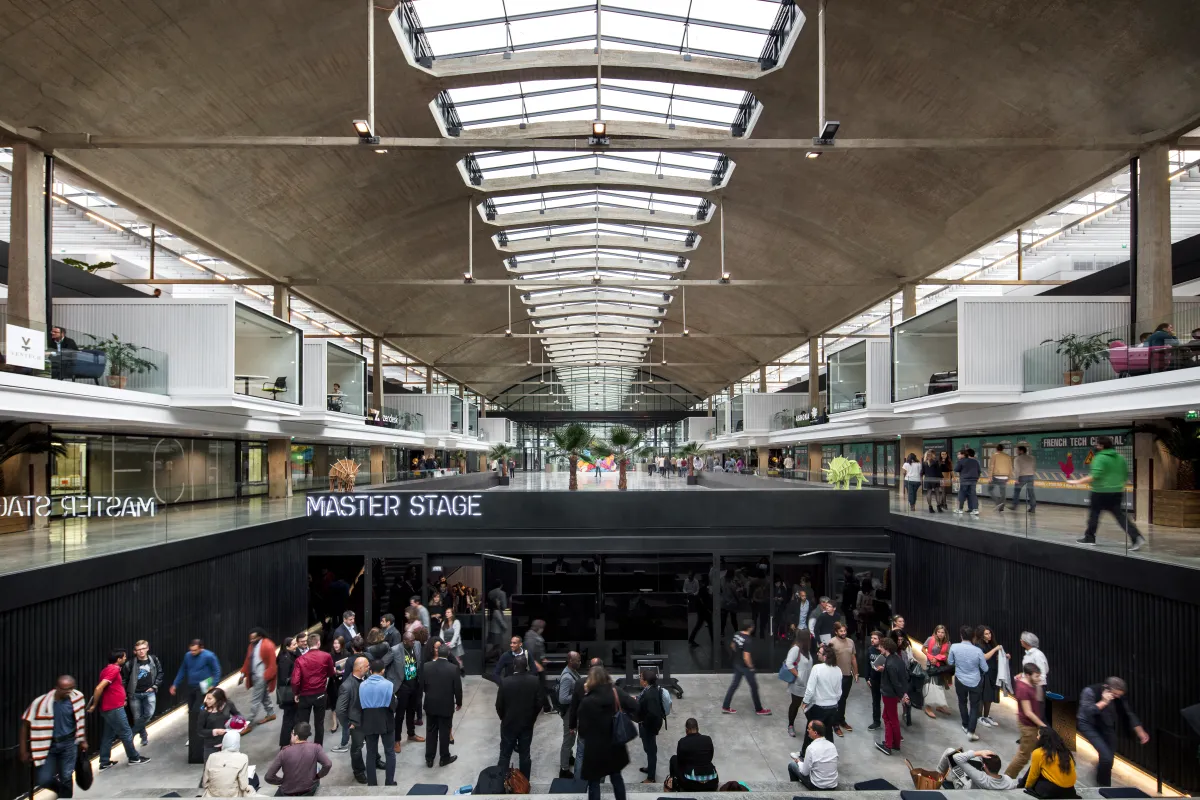
Station F, a Paris-based startup hub founded by French billionaire Xavier Niel, is gearing up for a new edition of its F/ai accelerator program in a bid to strengthen its positioning as a stepping stone for promising AI startups.
Launched in January of this year, F/ai’s planning to kick-start its second batch this September, aiming to help a handful of AI-focused startups move from early product to real revenue in a matter of weeks.
Spanning 538,000 square feet, Station F is often described as a co-working space, but its footprint extends beyond the physical space, its director Roxanne Varza told TechCrunch.
One example is Station F’s Future 40 annual selection, in which the team names the most promising teams among some 1,000 companies it welcomes each year. In 2024, TechCrunch observed that nearly all of that annual cohort incorporated AI into its core business.
Station F today has a front row seat to the rise of AI startups, leveraging its position as a cornerstone of “la French Tech.” The startup hub has also successfully leveraged its position to capture equity stakes in its Future 40 companies. “We have been investing [in these companies] since 2022,” Varza said.
Helped both by its size and Niel’s connections, Station F has become a frequent stop for officials seeking to connect with Europe’s tech scene, with no less than 11 presidential visits since President Macron’s inaugural tour in 2017. It has also welcomed AI big names like Sam Altman, and is now leveraging these ties for F/ai.
The first cohort of F/ai’s program was backed by a long list of significant tech companies — AMD, Anthropic, AWS, Clay, Google, G42, Hugging Face, Lovable, Meta, Microsoft, Mistral AI, OpenAI, OVHcloud, Snowflake, and Qualcomm — not to mention several VC funds.
The second cohort will add a few more big names, TechCrunch has learned: Eleven Labs, Nebius, Rippling, OpenRouter, HubSpot, and GitHub.
“The goal was to bring together all the major players and make it much easier for [AI] startups looking to launch in Europe to connect with them,” Varza said.
Two teams from the accelerator’s first batch have already gained international recognition: Alpic, which won the global grand finale of The Pitch, a competition organized by Deel; and Rippletide, which won the OpenAI Codex Hackathon.
While awards rarely hurt, especially when they bring funding, F/ai is focused on helping its cohort generate revenue, targeting €1 million (about $1.14 million) within six months. “We’d heard quite a bit of criticism about the slow pace of commercialization of European startups,” Varza said. “This brings them on par with what investors are seeing in the U.S.”
Investors seem to like what they’ve seen so far. The first cohort collectively raised $34 million in pre-seed funding, according to Station F. The teams’ track record may have also helped: 80% of these 20 AI startups were founded by repeat entrepreneurs, a third of whom hold PhDs.
The founder profile skews that way mostly because F/ai selects its cohort exclusively via recommendations from founders, partners, and investors — a process that could add to the cliquishness and elitism France’s tech scene is at times accused of.
But while teams can’t apply directly, they can get in touch with one of F/ai’s many partners, and perhaps soon with alumni, Varza said. She added that Station F has some 30 other programs startups can apply to.
Access appears to be a key focus for F/ai, which has in the past hosted the likes of Turing Award winner Yann LeCun for private chats. “Today, if the founders here want to speak to people at this level, they all seem to think they need to go to the U.S. and join a program there. We actually want to show that you can stay here and do it from here,” Varza said.
When you purchase through links in our articles, we may earn a small commission. This doesn’t affect our editorial independence.


Anthropic is embarking on a major expansion in Seattle, underscoring how artificial intelligence companies are emerging as one of the few bright spots in the region’s office market.
The maker of the Claude AI model recently finalized a lease at Dexter Yard North in Seattle’s South Lake Union neighborhood, capping months of speculation about the company’s expansion plans in the region.
Terms of the deal were not publicly disclosed, but CoStar News reports that the company leased 113,000 square feet of space across multiple floors in the north tower at 700 Dexter Avenue North. CoStar called it one of the largest office deals of the year so far in Seattle.
The expansion would significantly increase Anthropic’s footprint in Seattle, where the San Francisco-based company established an engineering office in 2024 as it recruited talent from the region’s deep pool of AI researchers and software engineers.
It would also place Anthropic next door to Amazon. The companies in April expanded their existing partnership: Amazon committed to invest up to $25 billion in Anthropic, which simultaneously made a $100 billion-plus spending commitment to AWS over 10 years.
The following month, Anthropic announced $65 billion in funding at a $965 billion valuation, thought to be the last venture round before an initial public offering later this year.
On Thursday, Anthropic released Claude Sonnet 5, which the company says “can make plans, use tools like browsers and terminals, and run autonomously at a level that, just a few months ago, required larger and more expensive models.”
Also this week, The U.S. Department of Commerce removed export controls on the company’s Claude Fable 5 and Mythos 5 models, part of an ongoing back-and-forth with the Trump administration.
Anthropic’s Seattle lease provides hope that demand from AI companies could help revive parts of Seattle’s office market after several years of elevated vacancy driven by remote work and tech industry cutbacks. Seattle’s office vacancy rate inched up to 28% during the first quarter, the highest in the region.
Other AI firms, including OpenAI and Databricks, have also expanded their Seattle-area office footprints in recent months. In those instances, the companies chose to grow in nearby Bellevue.
Dexter Yard, a two-building office and life sciences campus developed by BioMed Realty, opened in 2022 and was designed to accommodate both technology and biotech tenants. The north tower contains approximately 163,000 square feet of office and lab space.
Anthropic has a number of open engineering roles spread across Seattle, New York and San Francisco. The company says it expects all staff to be in one of their offices at least 25% of the time.
A spokesperson for Anthropic acknowledged the new lease, but did not respond to requests for additional comment.

Google was ordered to pay almost $2 billion this week to Pricerunner, reports Bloomberg:
The Patent and Market Court in Stockholm, which issued the judgment on Wednesday, dismissed most parts of the claim in which Pricerunner sought 80 billion Swedish kronor, or roughly $8.2 billion, in the wake of a European Union antitrust crackdown… The Swedish price-comparison website argued that Google has been abusing its dominant position as a search engine by favoring its own comparison shopping service over competing portals for more than a decade. Wednesday’s award compensates for lost revenue caused by Google’s preferential treatment of its own comparison-shopping service over independent price-comparison services, conduct that also drives up costs for consumers, [Pricerunner owner] Klarna said in a statement after the judgment…
A Google spokesperson said the company doesn’t agree with the court’s decision and will consider its legal options. [The ruling can be appealed.] Changes implemented in 2017 to Google’s platform are working and generating growth and jobs for hundreds of comparison shopping services operating more than 1500 websites across Europe, according to the statement.
The litigation is linked to a 2017 decision by the European Commission to fine Google €2.4 billion for illegally leveraging its search dominance to give its own shopping service an edge. The EU decision unleashed a wave of so-called follow-on suits, which were delayed for years as Google appealed the EU fine. Two years ago the EU’s top tribunal confirmed that the company did violate antitrust laws — meaning EU-based plaintiffs no longer have to prove that in court. A Berlin court last year ordered the tech giant to pay €573 million in damages to two German price-comparison websites, a ruling Google appealed. Similar cases are pending across Europe.

- Alibaba bans access to Claude Code, tells employees to use internal Qoder instead
- Anthropic was tracking markers to indicate which users were in China
- Anthropic accused Alibaba of major Claude model distillation effort
Alibaba has reportedly banned its employees from using Claude Code internally, beginning July 10 2026, classifying it as a high-risk tool that risks organizational security.
The change follows similar trends already observed among American tech giants, banning Chinese tools from internal use, but Alibaba cited genuine concerns that have been acknowledged by Claude-maker Anthropic.
The ban could also be seen as a push for Alibaba’s own alternative, with workers advised to use the company’s own Qoder AI assistant instead.
Latest Videos From

Alibaba bans Claude Code over security concerns
The controversy stems from developers reverse-engineering Claude Code, revealing it contained code to identify Chinese users. Checks for Chinese system time zones, proxy servers, AI lab infrastructure and network characteristics were all revealed.
Anthropic stated this experimental feature launched in March, and was designed to combat unauthorized resellers, prevent account abuse and protect its models from AI distillation.
However, the spyware was reportedly hidden using obfuscation and steganographic techniques, making them effectively invisible to users.
This isn’t the first time both companies have found themselves in a sticky situation – Anthropic recently accused Alibaba of conducting the largest known model distillation attack against Claude (via Reuters).
More broadly, Chinese companies have been increasingly referring to domestic AI tools like Qwen, DeepSeek, Moonshot and Ship amid growing geopolitical tensions.
While that trend has been largely mirrored in the US, in favor of the likes of OpenAI, Anthropic, Google Cloud and xAI, US firms have reportedly been exploring cheaper Chinese alternatives in the name of cost efficiency.
Alibaba and Anthropic haven’t publicly commented on this matter as yet.

Follow TechRadar on Google News and add us as a preferred source to get our expert news, reviews, and opinion in your feeds.


Washington Gov. Bob Ferguson last week announced an Economic Development Council to “identify practical actions that strengthen Washington’s economy, expand opportunity and help more Washingtonians succeed.”
To Ferguson’s credit, he may finally be recognizing that Washington’s business climate is deteriorating.
While he didn’t admit any responsibility for that decline, the number of companies and highly successful job creators that have said “Bye Bob” and taken jobs to other states — Starbucks and Janicki Industries to name two recent examples — cannot have escaped his attention.
Who’s who
The council’s composition gives us a glimpse into the governor’s economic mindset. Unfortunately, it isn’t forward-looking.
@media (max-width: 600px) {
aside.callout { float:none !important; max-width:100% !important; margin-left:0 !important; margin-right:0 !important; }
aside.callout .callout-img { display:none !important; }
}
There are more nonprofits and governmental agencies than businesses. Except for one small homebuilder, none of the participating companies were founded this century. Calling the council a “historic convening” is unintentionally apt.
There is zero representation from entrepreneurs, the startup ecosystem or anyone building the industries of the future. The mayor of Cleveland remains better plugged into our startup community than any politician in Washington.
The largest participants on the governor’s new council are notable for mass layoffs and shifting their workforces out of the state.
Amazon and Microsoft have each cut tens of thousands of jobs, as they become more capital-intensive and lean into AI-driven productivity. Boeing now has nearly two-thirds of its employees outside Washington state, and that shift continues.
Oblivious to AI
Also missing from the governor’s framing is the single biggest force shaping the economy today: AI.
He namechecks quantum computing, advanced manufacturing, and clean energy, but omits AI.
New jobs overwhelmingly come from young growth companies, and AI is driving new company formation.
Beyond startups, AI is going to dramatically reshape knowledge work and boost productivity in every single organization (including, hopefully, government).
It is impossible to talk about “the next chapter of economic prosperity for our state” without discussing the implications of AI.
The committee agenda
“The council will meet quarterly and submit advisory reports to the governor with its findings and recommendations.”
The first report, in its entirety, should say “STOP DRIVING BUSINESS AWAY.”
Starbucks, perhaps not surprisingly, was not invited to participate on the council, though Gov. Ferguson tells The Seattle Times he understands the coffee giant’s importance to the region and “has a direct line of communication with them.”
The governor suggests he “would be open to more aggressive financial incentives to attract out-of-state business,” but why not prioritize keeping companies that are already here?
The zero-sum view of job creation — that you must pay to lure companies from other states — reflects a profound ignorance of the magic of economic growth.
Just nurture an environment conducive to growth. Effective and efficient delivery of public services, predictable taxes, and sensible regulation. But that would require changes in how state government operates today.
In other words, grow what you’ve got.
Learning from Cleveland
I have argued that the software era is ending, and we need to find our next economic act in Washington state. Prosperity is precarious and can’t be taken for granted.
The governor was invited, through a representative, to join GeekWire’s recent visit to Cleveland but never responded. I still hope he can learn from Cleveland as part of his interest in economic development.
Cleveland’s experience after its industrial economy fractured painfully demonstrates the potential downside we face. More than a half century later, that city is still working extraordinarily hard to recover.
The mayor of Cleveland observed that when the Rust Belt started to rust: “We didn’t pivot fast enough, and the world left us behind.”
Today, every level of government in Ohio is laser-focused on jobs, economic growth and prosperity. Our state should be just as focused, especially as our economic tectonic plates shift.
It is a very positive milestone that our governor is seeking “the next chapter of economic prosperity for our state.”
But committees don’t drive economic growth. It starts with “first do no harm.”

NewsBeat24 seconds ago
Scots warned over popular holiday spots as thousands evacuated in Europe
Business1 minute ago
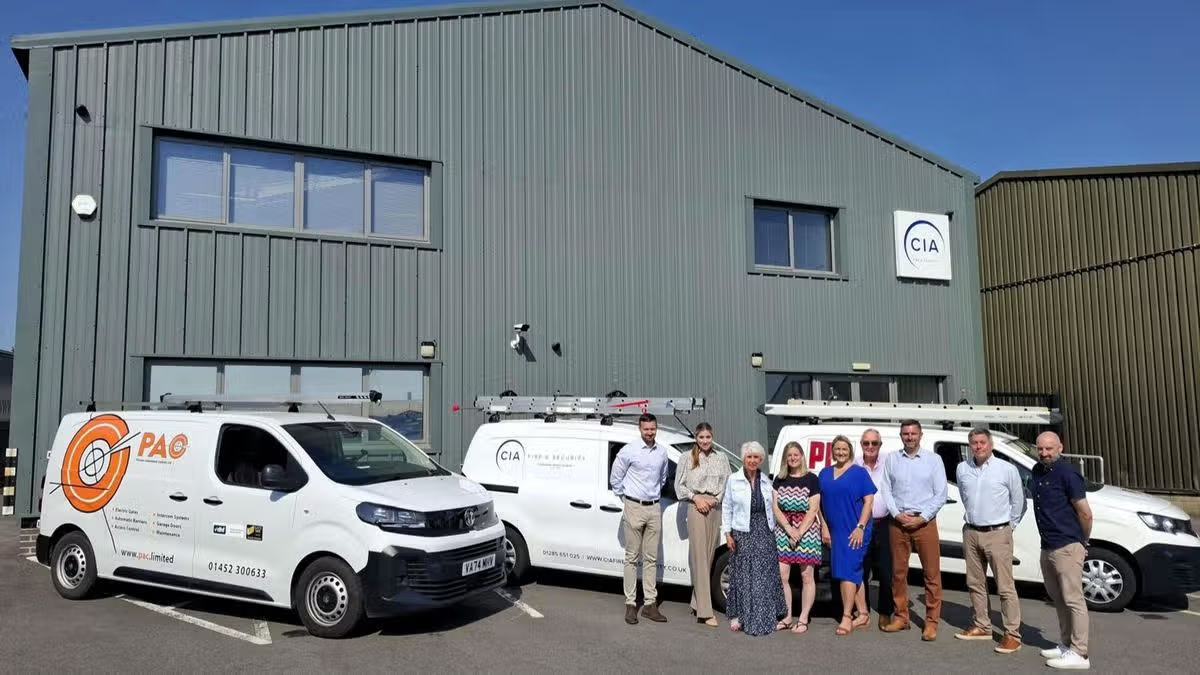
North and South deals for PE-backed fire and security business Ranger as it buys CIA and AKD

Crypto World3 minutes ago
SpaceX joins the Nasdaq 100, but history suggests caution


-

 Fashion3 days ago
Weekend Open Thread: High Hopes
-

 Politics3 days ago
The House | “Reframing the debate from a binary discussion of winners and losers”: Yuan Yang reviews ‘We Are Not Machines’
-

 Crypto World7 days ago
Strategy authorizes up to $1.25B in Bitcoin sales under new capital plan
-

 News Videos6 days ago
How to Build INSANE Live Financial Dashboards With Claude
-

 Tech7 days ago
Anonymous researcher drops 0-day ‘exploitarium’ repo
-

 Business6 days ago
Australia treasurer says alleged access of prime minister’s bank data ’incredibly concerning’
-
 NewsBeat1 day ago
Taylor Swift and Travis Kelce wedding staffer hilariously struggles to keep her cool while checking in megastars
-
 Crypto World5 days ago
Airdrop Registration Becomes Key Focus For Remittix As RTX Launch Updates Approach
-

 Sports5 days ago
Broncos roster: OL Ben Powers (No. 74) entering final year of contract
-
 Business7 days ago
The AI boom won’t burst all at once. It will pop in ‘rolling bubbles’: Macquarie
-

 Crypto World4 days ago
Binance stock trading tops $1B in first month after launch
-

 NewsBeat6 days ago
Presenter Caroline Flack’s brother Paul Flack dies aged 55
-

 Crypto World5 days ago
Alibaba-affiliate Ant Group enters the humanoid robot market with 12 deals
-
 NewsBeat4 days ago
New exhibition reflects five decades of movement between island of Ireland and GB
-

 Crypto World3 days ago
Standard Chartered Secures MiCA License as ESMA Adds 37 New Crypto Firms
-

 Crypto World1 day ago
South Africa proposes crypto tax guidance under existing rules
-

 Tech1 day ago
Lenovo laptops are now shipping with YMTC SSDs, a sign of Chinese NAND entering the mainstream
-

 Business5 days ago
Meta Platforms Stock Jumps 7% Today as Bloomberg Reports Company Plans to Enter the Cloud Business
-

 Business3 days ago
What a 10 Percent Drop Means for Buyers, Sellers and Renters
-

 Crypto World4 days ago
Binance Re-Enters Philippines As EU MiCA Rules Restrict Access
You must be logged in to post a comment Login