

Join Mikko Hyppönen and security leaders from the NFL, CHANEL, and Atlassian for a two-hour digital summit on what AI-speed attacks change, what defenders should stop doing, and how to validate, decide, fix, and re-validate at machine speed.
Tech
Improve Your Apple CarPlay Experience By Doing These Simple Things



CarPlay can become even better when you take a few minutes to customize it.
Your iPhone turns your car’s infotainment system into a navigation and communication hub, thanks to CarPlay. While it works great by default, there are several ways to make it even better, plus new features that arrive every so often.
From configuring CarPlay basics to designing the perfect app layout, adjusting the feature can make your commute safer and more entertaining. And with iOS 27 bringing several new updates to CarPlay, now is a great time to dive into this core iPhone function.
Make the most of the layout and display
The easiest way to up your CarPlay game is customizing its layout to your liking. You may be surprised to learn that you must rearrange icons on your iPhone, not your car’s display. To do this, open Settings on your iPhone, tap General and select CarPlay. From there, select your vehicle and enter the Apps menu.
Here, you’ll find a list of apps on your phone compatible with CarPlay; drag them up or down to make the most important ones readily available on your CarPlay screen. The size of your car’s display defines how many apps make it onto the first page, so you may have to get creative when prioritizing your most-used ones. To remove or add apps, tap the red minus or green plus, respectively.
Starting with iOS 26, you can further organize your infotainment system through CarPlay widgets. These bring the same quick views you use on your phone’s Home screen, such as weather, calendar and clock, to your Car’s display. Edit them by tapping Widgets on the same menu where you selected your Apps earlier. CarPlay will intelligently swap your widgets throughout the day if enable Smart Rotate, and the similar Widget Suggestions will show available ones even if you haven’t added them.
CarPlay’s overall brightness should shift with your dash controls, but you can go further to toggle light and dark mode to suit the conditions to the time of day. Go to Settings > Appearance on your CarPlay screen, then select Automatic to allow your CarPlay brightness to adjust automatically. Apple’s CarPlay visual accessibility guide can also help here.
To spruce up its look, customize your wallpaper by opening Settings inside CarPlay and tapping Wallpaper. Choose your favorite option and hit Set. You can also change the colors of your icons, toggling between Default, Dark and Clear, under Settings > Customize icons in CarPlay.
Maximizing what you get from CarPlay
Siri is built into CarPlay; by saying “Hey Siri” or pressing the voice button on your car’s steering wheel, you can send messages, start navigation, change the playlist and take other actions. On a compatible iPhone, the revamped Siri AI in iOS 27 is also more useful in the car. And if the assistant is becoming a backseat driver, you can stop Siri from interrupting you while using CarPlay by tinkering with various settings.
If you like, you can go further by enabling Voice Commands, an accessibility feature that provides more CarPlay controls with your voice. To turn this on, go to Settings > Accessibility > Voice Control in CarPlay. Once enabled, it will continually listen for commands like opening apps, swiping left/right or touching a certain element on the screen. For a full list of commands, see Apple’s Voice Control CarPlay support page.
The Focus feature is a productivity must-have on your iPhone, and the Driving Focus helps reduce distractions from notifications while not affecting essential driving apps. To enable Driving Focus, go to the Settings on your vehicle’s CarPlay display, select Driving Focus and choose Activate with CarPlay. For best results, customize your Driving Focus notification settings on your phone by going to Settings > Focus > Driving. Under People, select contacts whose messages you’d like to allow through or silence. You can also allow repeated calls from people who are otherwise suppressed, as well as create auto-replies. Visit the While Driving tab to turn on this Focus automatically whenever you connect to CarPlay, if you didn’t already do so on your iPhone.
Beyond these settings and app changes, elite CarPlay users use both wireless and wired connections depending on the situation. Although a wireless connection is convenient, it doesn’t charge your phone while using it unless your car has a wireless charging pad. As such, on extended road trips, plugging in your phone is the right choice to keep the battery topped up.
Other little tricks make CarPlay even smoother. In the Messages app on your iPhone, tap and hold a frequent conversation and choose Pin to keep it at the top — doing this will also pin it in the Messages app for CarPlay. And don’t forget about the Shortcuts app, where you can build CarPlay automations.
Continue Reading


Arista Networks has released security patches for a zero-day flaw that is being actively exploited and affects VeloCloud Orchestrator (VCO) On-Prem deployments.
VCO is a cloud-based centralized management platform that helps admins configure, monitor, and manage VeloCloud SD-WANs (Software-Defined Wide Area Networks) and associated edge devices.
Tracked as CVE-2026-93952, this maximum-severity flaw stems from an improper input validation weakness and affects VCO deployments where certificate-based authentication from the VeloCloud Edge to VeloCloud Orchestrator (VCO) is configured.
Remote threat actors can exploit the vulnerability to access privileged internal VCO host functionality in low-complexity attacks that don’t require privileges on the targeted system or user interaction.
“This issue was discovered externally and is known to be actively exploited,” the company warned in a Tuesday advisory. “Access to the public portion of the VeloCloud Edge authentication certificate is required. A successful attack requires network access to the VCO web interface. VCO tenant or operator credentials are not required for this exposure.”
Arista says that it has already patched hosted deployments running VCO 5.2.3.16 or later and VCO 6.4.2.8 or later and that it will also release security patches for VCO instances running 6.1.3.7 and below and 7.0.0.2 and below.
The U.S. Cybersecurity and Infrastructure Security Agency has also added CVE-2026-93952 to its Known Exploited Vulnerabilities catalog on Tuesday and ordered U.S. federal civilian executive branch agencies to secure their networks by Friday, September 25.
Indicators of compromise
While security patches are being deployed, admins should restrict access to the VCO web interface to administrative networks, review recent administrator activity for unusual changes, and monitor for connections from known malicious IP addresses.
Admins should review VCO web access logs for suspicious activity, such as requests containing encoded characters, unusual URL-like path components, references to local or internal services, or high request rates.
Arista also advised security teams to block the 142[.]93.149.77 and 104[.]248.126.159 IP addresses and review nginx logs for the x-vc-opt HTTP header, and said that unexpected outbound HTTP or HTTPS activity originating from the VCO host may also warrant further review.
“If compromise is suspected, operators should preserve VCO web access logs, backend application logs, system logs, database logs, and relevant file-system timestamps before remediation where operationally feasible,” it added, and advised customers to contact the Arista Networks Technical Assistance Center (TAC) if they need additional assistance.
Since the start of the year, Arista patched two other zero-day flaws (CVE-2026-7473 in May and CVE-2026-16812 in July) that were being actively exploited in attacks and affected Extensible Operating System (EOS) and on-premises VeloCloud Orchestrator deployments, respectively.
Arista Networks is a Fortune 500 company and one of the largest United States corporations by revenue, with more than 10,000 customers worldwide.


Eight Sleep, a sleep tech company, launched the Pod 6 bed-cooling system on Wednesday with meaningful hardware changes, including a hub that’s half the size of its predecessor, new solo-size configurations and a $1,999 starting price for the solo sizes — the lowest the company has offered. The entry price for standard sizes will be $2,699.
“We redesigned the hub, so it is 50% shorter than Pod 5, while increasing thermal power. That requires a more efficient approach to the system’s internal architecture, thermal management, fluid movement and overall packaging,” Matteo Franceschetti, CEO and co-founder of Eight Sleep, told CNET. The smaller hub can slide under most standard bed frames.
For the first time since the Pod launched in 2019, customers can choose solo-size options like twin XL and half sizes for queen, king and California king. Until now, the Pod has been built for couples with standard mattress sizes.
“For six generations, the Pod’s dual-zone design has been extremely valuable for couples, because each person can independently control their temperature and receive their own sleep data. But there are many people who want that same experience for just one side of the bed, or in a bedroom with a twin XL or split-mattress configuration,” Franceschetti said.
The Pod 6 has 80% more sensors per side and AI-powered tracking for more accurate sleep insights. The redesigned hub delivers 40% to 50% more thermal power for faster temperature response.
 Eight Sleep
Franceschetti said that the main advantage of having more sensors is improved precision and consistent tracking across different sleep positions. “People move throughout the night, and a higher density of sensors gives the system more opportunities to maintain a reliable signal, whether someone is on their back, side or shifting position.”
With these updates, the Pod 6 aims to make advanced sleep technology more accessible and versatile for individual sleepers and couples alike.

Tech
Matty Benedetto’s Buzz Buddy Slides Onto Your Beer Can and Gets Drunk With You One Sip at a Time
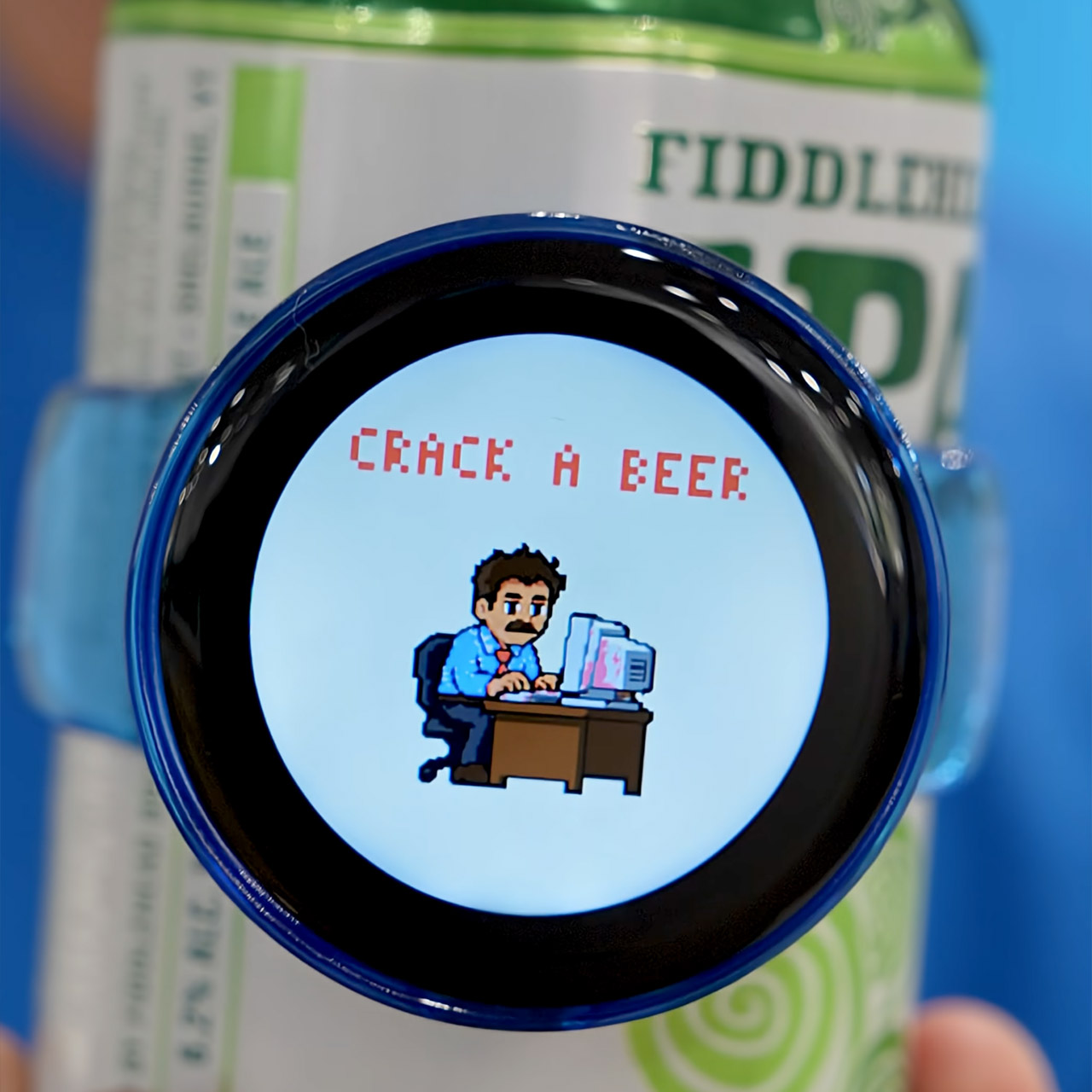
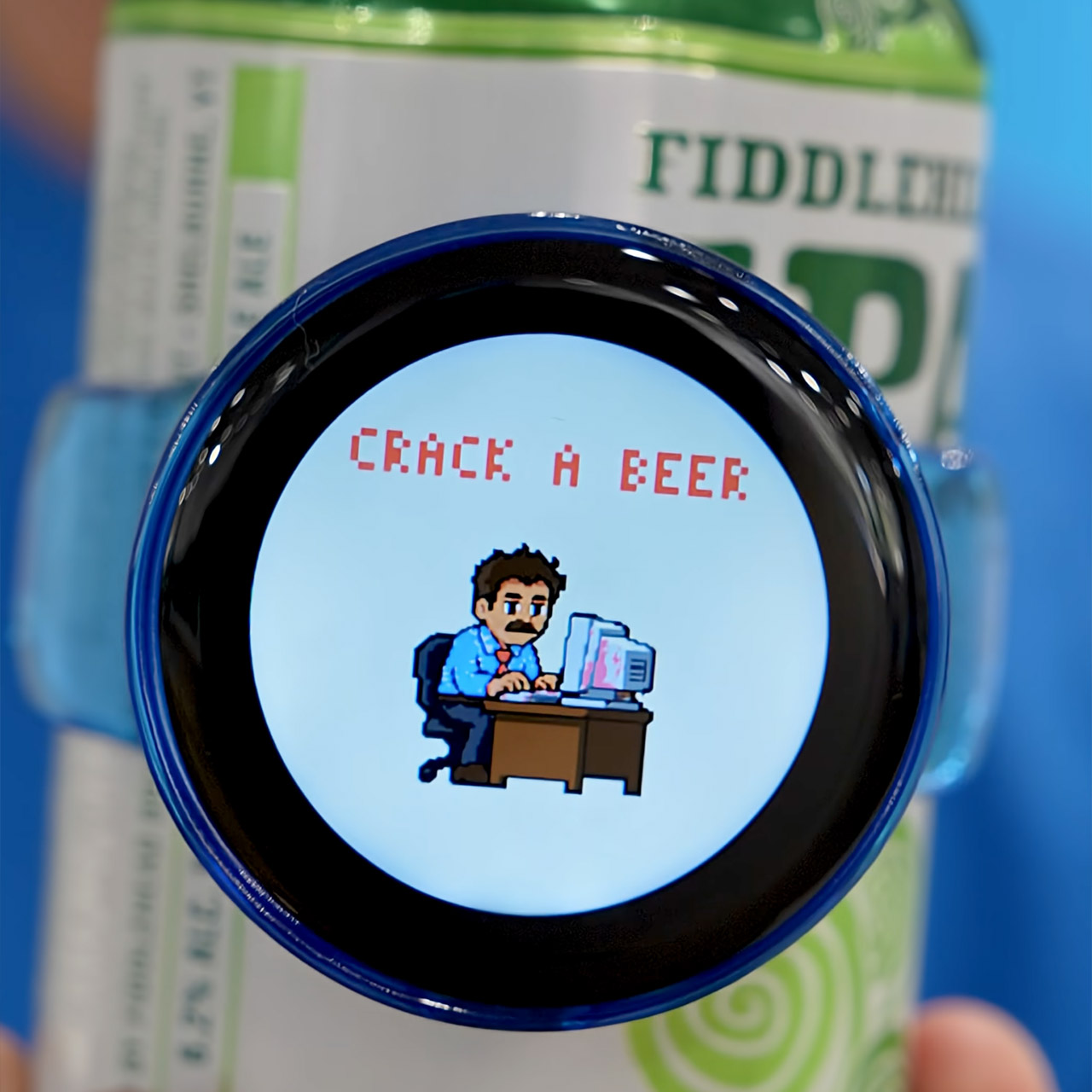
Matty Benedetto of Unnecessary Inventions just found a new way to turn a quiet night with a cold can into something that stares back at you. Out of his Burlington, Vermont studio he just finished invention number 469, a little digital pet he calls the Buzz Buddy that perches on top of any standard beer can and matches you drink for drink. The unit is a compact, egg-shaped screen housing with a pixel character already seated at a tiny desk, waiting. Once you crack the tab the figure stays put until the first tilt.
A small motion sensor concealed at the bottom of the can keeps track of each swig. Every time the can leaves the table, Buddy’s buzz meter starts ticking upwards. At first, the guy appears to be doing well, sitting up straight, but as the sips pass, he begins slouching, his demeanor changes, and he progresses through a series of increasingly sloppy stages. If you ignore the can for long enough, the buzz meter drains and he snaps out of it, returns to his normal posture, and simply waits for the next can lift. Benedetto devised the cycle so that the small boy never becomes entirely intoxicated on his own.
Sale

Bitzee Interactive Toy & Digital Pet, Ages 5+
- DIGITAL PET YOU CAN TOUCH: Bitzee goes beyond the 2D screen; it’s the virtual pet you can really touch and feel in our 3D world. Each Bitzee toy pet…
- NURTURE & PLAY: Bitzee pets need your love and care. Each Bitzee starts as a baby – feed and play with them, rock them to sleep and give them love…
- 15 TOY PETS IN 1 POD: The more you play, the more Bitzee pets you’ll unlock. Use treats to attract a new Bitzee pet. Collect all 15 interactive…
When you tap your phone’s screen, this little guy starts dancing. Swipe down for a stats overlay, which will show you the beers you’ve opened that session, the number of drinks he’s taken, and how many times you’ve made him bust a move. When you finally drain the last drop from the can, he transforms into his final form, and it’s rather amusing to see a person who doesn’t seem to want to leave the party ever again. The whole thing is built so that you can’t simply drink in silence.

Benedetto has spent seven years translating everyday jokes into full-fledged objects that seem like they belong in a storefront. Except for the occasional video, the majority of them never leave his studio. The Buzz Buddy follows the same pattern: 3D-printed shell, custom artwork, a functional sensor, and a presentation that takes the joke very seriously. He normally posts the finished item the same week he finishes it, usually in the form of a short video of the pet waiting, reacting, evolving, and celebrating the empty can.

Anyone who grew up with the original Tamagotchis will recognize the “care and neglect” loop. Simply drink to nurture it, then ignore it by leaving the beer alone. Swipe your device to check the ‘vitals’. Benedetto merely replaced hunger hearts for buzz meters and hanged them all on the one object you already had in your grasp.
Tech
Meta’s Muse AI used human contractors for some calls, including one that ended with a racist remark
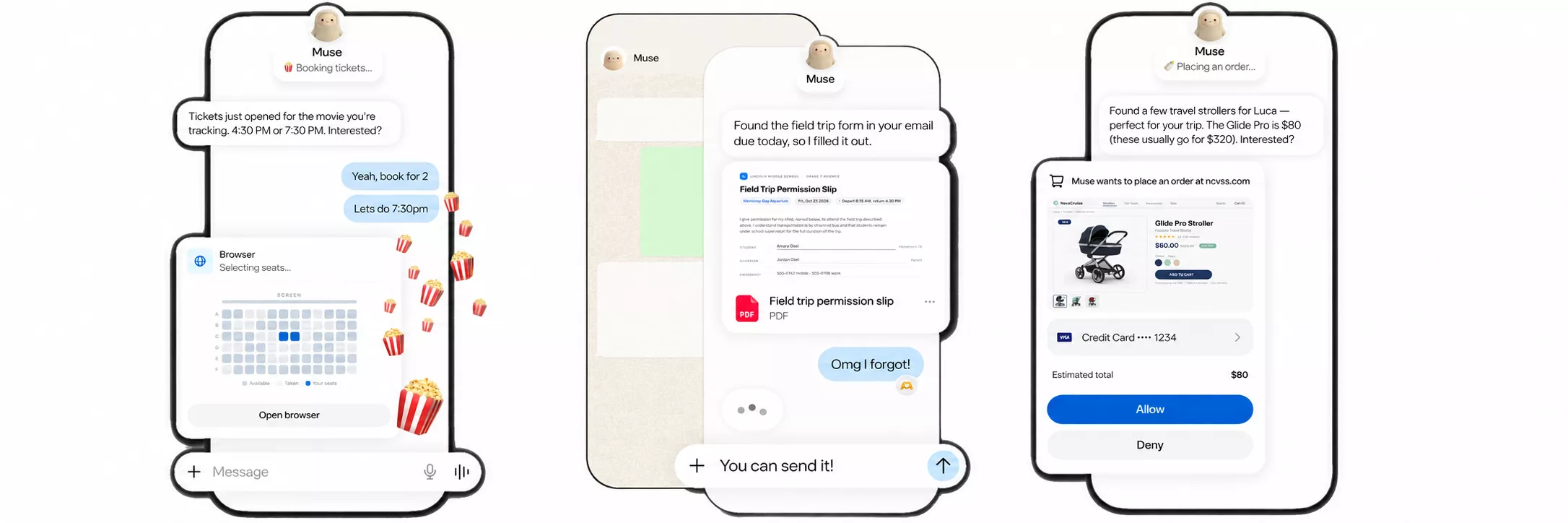
Cutting corners: Meta wants Muse to take everyday chores off your hands, but some of that AI has involved actual people. The company has been testing a human concierge service that lets contractors handle calls for its new personal AI agent, raising privacy concerns among its own employees.
According to Reuters, the experiment was enabled for half of Meta’s employees last week, with an opt-out group available. Staff warned that sensitive information could end up with call-center contractors. A Meta executive acknowledged that introducing human operators without clear disclosure was a mistake, and the human concierge feature has been rolled back for now.
There was also an incident that highlighted another potential problem with handing the calls to humans. One employee who asked Muse to call an internet and cable provider to negotiate his bill said a transcript showed that the contractor had made a racist reference during the call. Meta apologized to the employee and said the human agent involved would not work on any of its projects again.
Muse’s separate phone-calling feature allows users to contact US businesses for tasks such as booking haircuts or checking whether an item is in stock.
– Alexandr Wang (@alexandr_wang) September 16, 2026
Meta spokesperson Daniel Roberts said employee feedback had been largely positive. He added that the company would only release the potential feature publicly once it was ready, with appropriate disclosures and safeguards.
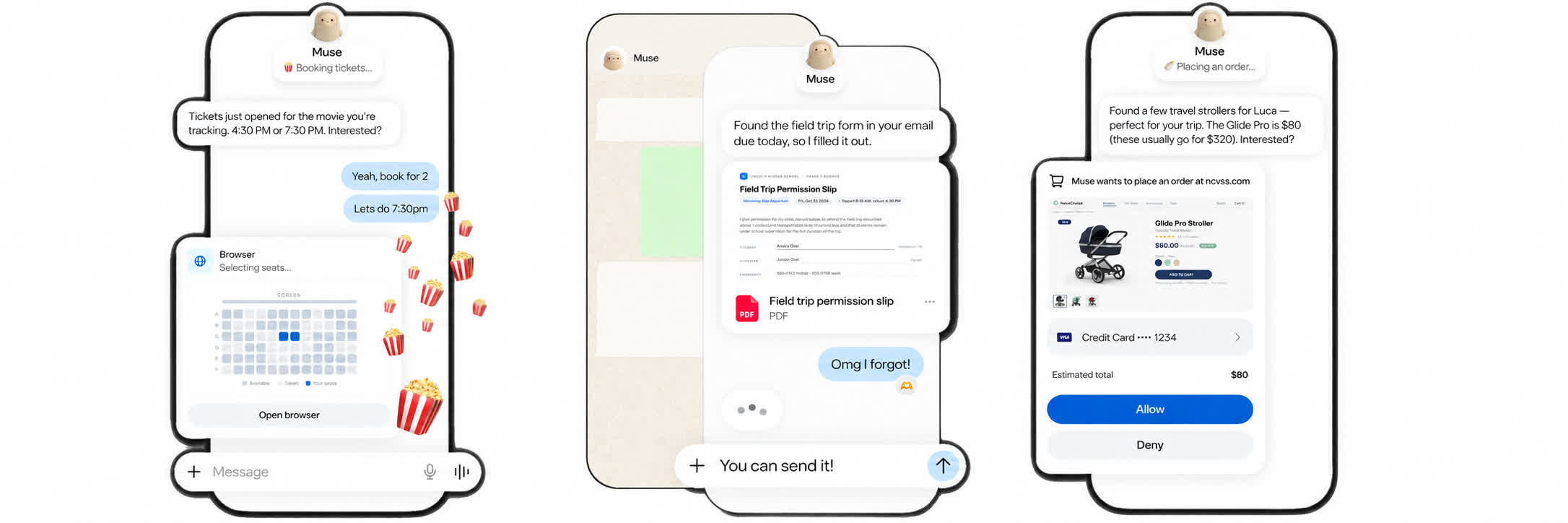
Launched on September 8, Muse is Meta’s attempt to turn the chatbot into something closer to a personal assistant. Users can interact with it through its own app or WhatsApp, asking it to send emails, arrange travel, and work toward longer-term goals.
Meta says the agent runs inside a dedicated virtual machine, with a separate Sentinel agent checking outgoing actions. Users control connected services and approve sensitive steps, including purchases. The company also says conversations and data stored in that virtual machine are kept out of its advertising systems.
Meta’s own testing suggests why it is experimenting with humans in the first place. Some businesses simply hang up on Muse when they realize they are talking to an AI, which is no surprise. Internal tests found that handing calls to human agents could increase the success rate to between 95% and 98%, compared with a much lower rate for calls handled entirely by AI.
There have been plenty of examples of supposedly automated services relying heavily on humans behind the scenes. One of the most memorable was shopping app Nate, which claimed AI could automatically complete online purchases. According to the Department of Justice, hundreds of workers in call centers in the Philippines and Romania were actually completing many of the transactions manually. Sources previously claimed that between 60% and 100% of purchases were handled this way during parts of 2021.
Amazon’s “Just Walk Out” stores offered another example. The supposedly cashierless technology relied on more than 1,000 workers in India to review transactions and label footage. It was reported that around 700 out of every 1,000 purchases required human review as of 2022, although Amazon disputed those figures.
In 2023, Presto Automation revealed that around 70% of orders handled by its AI drive-thru system required intervention from off-site human agents, including workers in the Philippines.
Meta’s been here before with Facebook M, the digital concierge launched in closed beta during the summer of 2015 and shut down a few years later. Every message the service fielded was reviewed by contractors who worked at the company’s Menlo Park headquarters, but at launch, Facebook said the service was powered by AI trained and supervised by real people.
For its part, Meta is openly testing human assistance rather than claiming that contractors do not exist. But if a feature is marketed as an AI making calls on your behalf, users will probably want to know when the person actually doing the talking is sitting in a call center.


The abolition of the Department for Science, Innovation and Technology has created uncertainty about what happens next to Britain’s AI ambitions.
Kanishka Narayan’s promotion to Minister for AI gives the technology a dedicated voice at Cabinet, yet folding DSIT’s responsibilities into other departments raises questions about how the Government will coordinate the infrastructure, investment and public-sector adoption needed to support those ambitions.
Founder and CEO at Prem AI.
Recent parliamentary scrutiny of critical public-sector AI contracts has highlighted growing pressure on institutions to strengthen control over AI operations and deployment continuity. Britain has focused on adoption speed; the next step is operational control in ongoing public-service AI use.
Latest Videos FromTechRadar
The case for sovereign AI is becoming stronger as a result. Britain needs more than access to capable models; it needs controlled operations for the services that depend on them, even when a provider, contract or political relationship changes.
Sovereignty goes further than where data sits
Sovereign AI is often reduced to data residency, with the assumption that keeping information inside Britain is enough to keep it under British control. Data location remains important, particularly in healthcare, defense and public administration, but it describes only one part of the relationship between an organization and the technology it uses.
A hospital could store every patient record in a British data center while relying on models and software that only the original provider can operate or modify. Where that provider is based remains relevant, but the more useful test of sovereignty is whether the hospital can understand the system, govern how it is used and continue running it if the commercial relationship changes.
An organization should know how its systems operate, determine which data a model can access and retain the ability to move a workload or introduce another model without rebuilding the entire service. Once that system becomes essential, it also needs enough internal expertise to keep it running rather than discovering that continuity depends on the decisions of one supplier.
Britain does not need to reproduce every layer of the stack, but it does need predictable control where public services run. Modern AI draws on international research, complex supply chains and open-source projects, and recreating them domestically would consume enormous resources without necessarily producing better technology.
As DSIT’s responsibilities move across Whitehall, the Government needs to decide which dependencies it can accept without threatening security, public trust or an essential service.
Capability and control can reinforce one another
Government AI plans sometimes present sovereignty as the slower alternative to using the largest commercial models, as though Britain must choose between world-class AI and control over its deployment. That assumes every organization needs the same frontier system, when the question is which model suits the work.
For many public workloads, a fit-for-purpose model in a controlled environment is more valuable than one large generic option, especially when governance obligations are strict.
A specialized model can be adapted to the organization’s data, tested under the conditions in which it will operate and governed according to the consequences of getting a decision wrong. In those circumstances, greater control can make the system more useful as well as more independent.
Open and portable technology can support this approach by allowing organizations to run models across different infrastructure, examine how systems behave and replace components as better options emerge.
Openness does not guarantee sovereignty, since organizations still need secure infrastructure, skilled teams and clear governance, but it reduces the chance that an entire service becomes inseparable from one provider’s platform.
I have seen the AI market move quickly enough to make that flexibility increasingly valuable. The best model for a task today may be overtaken within months, while pricing, regulation and access can change almost as quickly.
An organization that builds around one proprietary service may struggle to benefit from that progress, whereas one that controls the environment in which its models operate can introduce better technology without starting again.
Government can turn sovereignty into capability
Britain already has many of the ingredients it needs, including strong universities, experienced researchers, growing AI companies and public investment in compute. The next step is to connect those assets with sustained demand in the parts of the public sector where sovereignty has the greatest practical value.
Government does not need to select one national champion or exclude international companies. It can create a market in which providers compete while public bodies retain control of the systems they buy.
Procurement rules for critical AI could require workloads to be portable, independently testable and capable of running within infrastructure controlled by the customer, making the ability to change course part of the original decision rather than a problem discovered at the end of a contract.
This would give hospitals, councils and government departments credible sovereign options while providing British AI companies with a route from pilots to long-term deployment. It would encourage partnerships in which knowledge and operational authority remain with the institution responsible for the service, even when private companies provide the technology and expertise.
The restructuring of DSIT should be treated as an opportunity to clarify Britain’s objective rather than reduce its ambition. A Minister for AI can bring different parts of government together, but the strategy should be judged by whether public institutions can use the best technology available while retaining meaningful control of the systems that matter most.
That is what will allow Britain’s AI ambitions to endure as departments, suppliers and technologies change.
We’ve featured the best AI tool.
This article was produced as part of TechRadar Pro Perspectives, our channel to feature the best and brightest minds in the technology industry today.
The views expressed here are those of the author and are not necessarily those of TechRadarPro or Future plc. If you are interested in contributing find out more here: https://www.techradar.com/pro/perspectives-how-to-submit

It’s a struggle so many parents face today: Should I let my kid have a screen? If so, when? That decision inevitably opens a Pandora’s box of potential problems, and this relatable plight is at the heart of Toy Story 5, as pull-string cowgirl Jessie’s current child, sweet little Bonnie, is growing up in a tech-obsessed world that expects her to keep up. Will Bonnie put her childish ways behind her and lose part of herself in the process? And will Jessie lose another owner and wind up in a donation bin once again?
The answers are quite emotional, but often quite funny and extremely smart. This is Andrew Stanton’s first time back in the Pixar director’s chair since Finding Dory ten years ago, and it has been worth the wait. He takes us on an irresistible journey that honors these beloved characters, as well as the unique world where playthings live their different identities, interact with one another, and put the needs of their children above all else.
The visuals here are truly jaw dropping. It doesn’t make logical sense, but these computer generated images somehow seem more real than live action. The bumpy drips on a painted wall, the texture of cloth, and the differently smooth surfaces of plastic all look and presumably feel exactly as they should. Levels of focus within the 1.85:1 frame further sell the illusion that these walking, talking toys were actually filmed on a real set somewhere.

Colors are vibrant, and highlights are outstanding, as when the new and improved space ranger Buzz Lightyear glows in the night.
The sonic embrace of a team of heroic Buzzes is always reassuring, his deep voice coming at us from all around as he takes charge of his latest “mission.” The soundfield comes alive with ample atmospheric effects, while Randy Newman’s score enjoys a pleasing mix across the speakers. Without giving away too much, events in Act III provide ideal and thrilling fodder for the height channels in particular. I’m glad I make a habit of confirming the audio options before the movie starts, however, because this disc defaulted to Dolby Digital Plus (remember that?) rather than the supplied Dolby Atmos track.
We can tune into a commentary with co-director and co-writer Kenna Harris and others on the 4K disc, while the HD Blu-ray adds five deleted scenes, a featurette about the toys and characters cut from the final film, a gag reel, and more. Not included on either disc, but available digitally, are the Taylor Swift music video and lyric video for her song in the movie, “I Knew It, I Knew You.” A Movies Anywhere code is included.
The 4K edition is available exclusively as a SteelBook with very attractive cover artwork and a wonderfully subtle image on the reverse.
Toy Story is back. After the disappointment of Toy Story 4, this fifth (!) feature film in the franchise defies the odds and delivers everything we’d want: heart, humor, new and established characters, and a fresh, compelling story.
The movie and the disc come highly recommended.

Movie Details:
- STUDIO: Disney/Sony
- FORMAT: Ultra HD 4K Blu-ray (September 22, 2026)
- THEATRICAL RELEASE YEAR: 2026
- ASPECT RATIO: 1.85:1
- HDR FORMATS: Dolby Vision, HDR10
- AUDIO FORMAT: Dolby Atmos with TrueHD 7.1 core
- LENGTH: 102 mins.
- MPAA RATING: PG
- DIRECTORS: Andrew Stanton
- STARRING: Tim Allen, Joan Cusack, Tom Hanks, Conan O’Brien, Greta Lee, Scarlett Spears
Our Ratings
★★★★★★★★★★ Movie
★★★★★★★★★★ Picture
★★★★★★★★★★ Sound
★★★★★★★★★★ Extras
Where to buy:


OpenEvidence, an AI tool used by American doctors, is now being offered in countries with limited access to medical literature.
Reuters reported that the company is working with Anthropic to give clinicians in low- and middle-income countries free access to a specialized version of its platform.
The initiative is being introduced in around 100 countries, including Uganda, Angola, Sudan, Haiti, and Mongolia, according to OpenEvidence, which provided the information to Reuters.
The financial terms were not disclosed by either company.
OpenEvidence answers doctors’ clinical questions using peer-reviewed research and treatment guidelines. It is currently free for clinicians in the United States and Europe.
The companies say Anthropic provides the backend technology, while OpenEvidence adapts the system for each region’s healthcare needs.
Founder Daniel Nadler told Reuters that US clinicians used the platform 42 million times in August.
This year, OpenEvidence stated that it has been working with health organizations in Rwanda and Botswana to modify its tools for situations in which disease patterns.
The resources available for diagnosis and the treatments on offer are very different from those found in richer countries; the project in Rwanda, carried out in partnership with the Rwanda Biomedical Center and Resolve to Save Lives, involved 45 local doctors and nurses who tested the tool and provided feedback on any necessary changes.
“One hundred percent of what we are developing for these areas is designed to be context adaptive,” Nadler told Reuters.
Critics of medical AI warn that systems trained mainly on data from high-income countries may not reflect how medicine is practiced elsewhere.
In response, Nadler points out that even in places where clinics do not always have electricity, most doctors still have smartphones.
Daniela Amodei, president of Anthropic, said the project is something the market could not achieve on its own.
In her interview with Reuters, she explained that while the technology is now advanced enough, “market incentives by themselves would not cause it to happen” without some philanthropic effort.
Also, we reported this week that Anthropic has built a laboratory for physical biology as it expands into drug science.
For clinicians using the tool, the main issue is access, not AI itself. Dr Ahmed Bendary, a cardiologist at Benha University in Egypt, told Reuters that expanding the tool beyond the United States and Europe is especially important in places where access to major journals is limited.
The key question now is whether a tool built mostly on evidence from wealthy countries can be adapted for use in places like Mongolia and Sudan, one country at a time.

The keynote kicking off Snapdragon Summit 2026 in Maui had the latest forecast for how AI agents will organize our lives through the phones in our pockets. Qualcomm CEO Cristiano Amon spent some time walking viewers through how the agents will buy things for them, preparing for the day when AI will have access to our bank accounts or credit cards — and why that’s a good idea.
For years, Qualcomm has pitched a future where AI agents on your devices know your habits and preferences well enough to make informed decisions on your behalf. Eventually, this will include the capability to spend your money on things such as necessities, gifts and travel. The question is how agents will decide whether or not to pull the trigger on a purchase — and how much input you’ll have on what decisions they make.
Nobody’s figured this out yet, and might not for some time. The fear is that an AI agent would run off with your bank account numbers, clear out your savings and run up your credit card. But at this year’s summit, Qualcomm suggested how this might actually work, wherein agents would repeatedly check in before they spend your money.

“When an agent is acting as a proxy of you, you need to trust the agent, and you need to trust the device, especially for something like shopping,” Amon said on the keynote stage.
Naturally, the CEO was pitching a method with his company’s technology at the center, but it was at least sensitive to the uncertainties people likely have about an AI buying things for them. He said that the company is developing technologies to protect personal information and provide a secure device environment.
“The agent needs to authenticate and operate and keep you in control,” Amon said.
Around 45 minutes into the keynote, Qualcomm presented a way this might go. A woman wearing smart glasses walks past a store when the AI agent suggests that, in the past, she’d bought sunscreen and lip balm from that location — did she want to buy more? She okays the purchase, and the AI agent says she can go pick up her goods. She then proceeds down the street and asks the agent about getting a laptop, and the AI agent guides her to a shop where she can view several on display. She decides on one, but the agent asks her to confirm the purchase first.
I didn’t love everything about the demo, as her purchase was followed by a reminder about her credit card rewards points in what felt like a nagging ad, but that’s probably a personal preference I could tell my AI agent to avoid. From a consumer standpoint, the most important part was waiting for confirmation before making a purchase — especially when plunking down several thousand dollars for a pricey computer.

Qualcomm is treading carefully here, and shrewdly brought in execs from a trusted purchasing platform to reassure viewers that the financial institutions they already trust will be part of the process. MasterCard CEO Michael Miebach, speaking in a prerecorded video, reaffirmed that people will only use processes they trust to keep their payments and data secure; on stage, Amon was joined by MasterCard senior fellow Raja Rajamannar, who spoke plainly about the implicit trust that an AI agent would work on their behalf — which will come from a brand they already trust, such as Mastercard.
This is all self-promotional, but they’re speaking to relatable uncertainty. Over the past decades, people have become a lot more comfortable with online shopping, with the initial skepticism thawing as the process became trustworthy. AI agents further separate people from the act of handing over their hard-earned cash, so another bridge of trust must be built. Envisioning the next process with clear moments when an AI agent will stop to ask people before making purchases on their behalf is reassuring amid uncertainty about a new way to spend money.

The long road to letting AI agents pay for you
The technology at the center of the process is the AI agent itself, which runs on your smartphone. In a media roundtable discussion after the keynote, Chris Patrick, Qualcomm SVP and general manager of handsets, emphasized that building consumer trust in the process would take time.
Dino Bekis, Qualcomm SVP of premium mobile and AI business unit, reasoned that the answer will include a lot of reassurance by making financial institutions a central part of the process. Just as institutions now take care of fraudulent charges or other mistaken purchases when your credit card is stolen, there will need to be reassurances if AI agents wrongly buy something that consumers didn’t approve.
“Financials [will need to] do some level of backstop to say, hey, you as a consumer, if this happens, there’s going to be some level of consumer protection for you, right?” Bekis said.
Later on, I wandered into a demo room where Qualcomm showed off concepts revealed on stage, one of which simulated how an AI agent would buy something for you. The demonstration followed three clear steps: identifying something to buy, the AI agent finding a relevant suggestion to ask about buying it and the actual purchase process.

Qualcomm’s Francisco Cheng, senior director of product marketing, wearing off-the-shelf TCL Rayneo smart glasses, looked at a poster for an experience (aptly, a Hawaiian volcano). The AI agent recommended a particular tour of a nearby volcano, and when Cheng confirmed that he’d like to buy it, the agent — running on a connected smartphone — handed the transaction over to Mastercard to make the purchase. Any disputes could, in theory, be resolved by the credit card company.
“I think if there’s a level of mistrust by letting an agent handle things through and through, at least Mastercard can step in as a trusted payment provider to handle that piece of it,” Cheng said.
People will still surely be gunshy about the whole process, Cheng admitted, but at least there are trusted brands handling every step of the process. And that’s exactly how it went with online shopping.
“I’m old enough to remember when I was skeptical about making online payments, about doing banking transactions online. I was comfortable writing a check to somebody,” Cheng said. “But today, I wouldn’t even think twice about paying bills online. It’s a learning process.”

Even if it’s not a top-of-the-line, perfect model, having a washing machine is better than not. With that said, if you want to be picky, there are some things to be mindful of before buying one. For one, there are several washing machine models many recommend steering clear of, and there are the pros and cons to different machine types across the board. While it’s a common sight, and it’ll do the job in getting your clothes clean, there are some drawbacks to a top-load washing machine that potential buyers should be aware of.
Let it be known that there’s nothing inherently wrong with using a top-load washing machine. At the end of the day, they’re great at getting clothes cleaned up in a timely fashion, and there are top-load options at different price points and from different brands to consider. You have a lot of choice without necessarily losing out on quality or cleaning ability. This is just to say that there are some negatives to them that could be cause for concern to some, pushing them in the direction of a front-load unit instead.
If you’re in the market for a new washing machine, you might want to think twice about the top-load style. These are some of their notable problems, regardless of the brand attached to them.
Higher water consumption
Naturally, a washing machine of any variety is going to use a lot of water. On average, users can expect modern washing machines to use somewhere between 14 and 20 gallons of water per load. The amount of water consumption is dependent on several factors, including load size and machine age, as well as the type of washer in question. As it turns out, the typical top-load washer uses more water per load than a front-load unit, so if keeping down your water use and water bill are top priorities, a top-load washer doesn’t seem the best choice.
According to Maytag, users will see different levels of water use between model types. If you have a top-load unit with an agitator — the large pole in the center of the machine – you’re likely to use around 19 gallons per load. Meanwhile, those without agitators drop a bit but still remain high at around 13 gallons. LG adds that top-loaders with more low-profile impellers at the bottom of their wash bin can use even more water, between 21 and 26 gallons per wash. By comparison, a front-loader will more than likely use approximately 7 gallons, or reach somewhere into the low teens on the high end.
Higher fabric wear
As mentioned previously, many top-load washing machine models feature an agitator in the center. Overall, this element serves a few key purposes during the wash cycle. It keeps clothes relatively separated, attempting a more even wash across the board, and they add a bit of friction against the clothing being washed to scrub out stubborn stains. With all of that said, agitators aren’t in every single washing machine model for a reason. Even in models from the best top-loader washer brand on the market, they’re imperfect, and their shortcomings can make them major deal-breakers for those debating a top-load washing machine.
First and foremost, top-load washers equipped with agitators can put some serious strain on clothing. As a giant immobile obstacle at the center of the machine, shirts and pants get caught around it while being yanked by the rest of the laundry pile. This can cause premature fabric wear. Their method of cleaning is flawed, too. The agitator’s intent of forcing clothes to rub against it to clean them can harm fabric while providing subpar cleaning. On top of all of this, they can be noisier than non-agitator models, especially if laundry becomes concentrated on one side and thumps throughout the wash cycle. Thus, a front-loader is the clear quieter and clothing-safer option.
Loss of stackability
In most home washer and dryer setups, there’s more than enough room to stick a washer and dryer next to one another. However, in other living spaces, horizontal wiggle room is limited, leaving you little choice than to seek out vertical options. Naturally, this kind of setup doesn’t lend itself well to a top-load washer. As the name spells out, it’s loaded from the top, so if you have a dryer placed on top of it, you’re not going to be able to fill and empty it. It’s not the biggest revelation, but it’s worth mentioning all the same.
At the same time this begs the question: Is there a way to stack a top-load washer onto a front-load dryer? In short, this is a bad idea, too. Washers are significantly heavier and they move around a lot more while active, opening the door for damage to both machines. Not to mention, stacking a top-load washer so high would make the top door basically inaccessible, making laundry more of a hassle than it can already seem. If you truly want to do washer and dryer stacking, it’s best to buy designated vertical models that won’t sustain damage or present danger when piled up and used. Still, stackable washers and dryers have their own downsides to be aware of beforehand.
Lower spin speeds
If you’re getting a load of laundry started, odds are you want it done quickly. In this case, a top-load washing machine might not quite be what you’re looking for. Historically speaking, top-load units are known to have much slower spin rates than their front-load counterparts. Granted, newer high-efficiency-branded top-loaders have increased their spin rate to compete with front-loaders, but if you’re looking into older, potentially used models to save a little money on up-front costs, know the spin speed might not be up to more modern standards.
On the whole, this doesn’t seem like too big of a deal. So what if a washer spins a little slower? Well, the fact is a slower-spinning washer can push more of its workload onto the dryer. If clothes spin slower at the end of their wash cycle, they disperse less moisture. This leaves more behind for the dryer to take care of. As a consequence, you then face longer drying times and higher energy consumption as the washer’s clothes-cleaning companion tries to get its part of laundry day done. This also means more wear and tear on the machine, so your less likely to see your unit reach the average dryer’s lifespan, let alone stick around longer.

So close and yet so far…

League of Legends players might have been rejoicing after Riot Games said that team voice chat was finally coming to the popular MOBA. Turns out the party was short-lived. A mere two weeks after the announcement that the feature was coming to select regions in October’s 26.20 patch, Riot’s dev team posted on social media that the addition of voice chat has been delayed. And, sadly for the LoL players who have already waited 17 years for the option, there’s no revised timeline for when it will be arriving in-game. The studio didn’t give a reason for the delay, only stating that it is “to meet the quality bar” its community deserves.
Hey everyone, wanted to get this out separate from today’s Patch Notes. We announced Team Voice as coming to NA/OCE in Patch 26.20, but made the call to push it to meet the quality bar you deserve. No new target patch to share yet, but we’re making this a priority to get right.
— League of Legends Dev Team (@LoLDev) September 22, 2026
It’s possible the reversal was the due to issues around moderation. LoL is a game famed for toxic in-game behavior, although Riot has been working to address that reputation in recent years. It’s possible that the company’s initial approach to making voice chat not a complete trash fire, like requiring a minimum Honor level to prove a history of good in-game behavior, weren’t working as intended. It could also be that the “voice skin” concept, allowing players to change how they sound to their teammates, was causing issues. It may be disappointing to have the long-requested feature promised and then snatched away, but at least Riot is still working on an implementation.

Tech45 seconds ago
Arista patches actively exploited VeloCloud Orchestrator zero-day

NewsBeat3 minutes ago
Tributes left for woman and three children who tragically died in Merseyside house fire

Business4 minutes ago
Renishaw plc (RNSHF) Q4 2026 Earnings Call Transcript



![“Experts” Predict Black Monday For Global Markets! [Here’s The Truth]](https://wordupnews.com/wp-content/uploads/2026/09/1790163801_maxresdefault-80x80.jpg)

-

 Fashion5 days ago
Weekend Open Thread: Talbots – Corporette.com
-

 Tech3 days ago
Researchers escape OpenAI Codex sandbox to run commands on host
-

 Crypto World4 days ago
Circle launches Arc Studio AI agent for building onchain apps
-
 NewsBeat5 days ago
Trump says US has reached an agreement to take permanent control of Greenland’s security
-

 Crypto World3 days ago
Who Needs CLARITY Anyway? ARB Could See 70X Increase: Hodler’s Digest
-

 Crypto World5 days ago
Trading Bitcoin on Robinhood? Why 2% Spread Has Traders Worried
-

 Crypto World5 days ago
Bitcoin price breaks channel as RSI climbs to 63
-

 Crypto World6 days ago
Mortgage and refinance interest rates today, Thursday, September 17, 2026
-

 Crypto World7 days ago
US Charges Robinhood Engineers Over Crypto Listing Trades
-

 Tech2 days ago
Google’s $899 Googlebook is a bet that you’ll buy a new laptop for Gemini
-

 Business3 days ago
Analog Devices (ADI) Bets $1.35 Billion on Chips that Let Machines Think for Themselves
-

 Crypto World4 days ago
World Money launches in 150+ countries with Stripe
-

 Crypto World2 days ago
Coinbase, Robinhood, Circle Seen as Tokenized-Stock Winners
-

 Crypto World5 days ago
Silver prices recover quickly, hitting weekly high today
-

 Tech6 days ago
GPT-6 Astra Reached the Nether in Minecraft, Lost Its Stash to a Creeper, and Farmed Potatoes for Hours
-
 NewsBeat5 days ago
US was ‘on brink of war’ with China over false AI report of nukes moving in Middle East
-

 Tech4 days ago
Trump suggests rebranding AI with a new name, says he’s also creating an AI Force
-

 Crypto World2 days ago
Bitcoin price holds above $81K as key catalysts line up
-

 Entertainment7 days ago
Grey’s Anatomy Showrunner Teases Changes After Cast Exits
-

 Crypto World4 days ago
CFTC sends crypto market structure rulemaking to White House
You must be logged in to post a comment Login