











Connect with us

Tech

Inside Temporal’s journey to a $12.55B valuation, and its bet on building a backbone for AI agents

Published

on

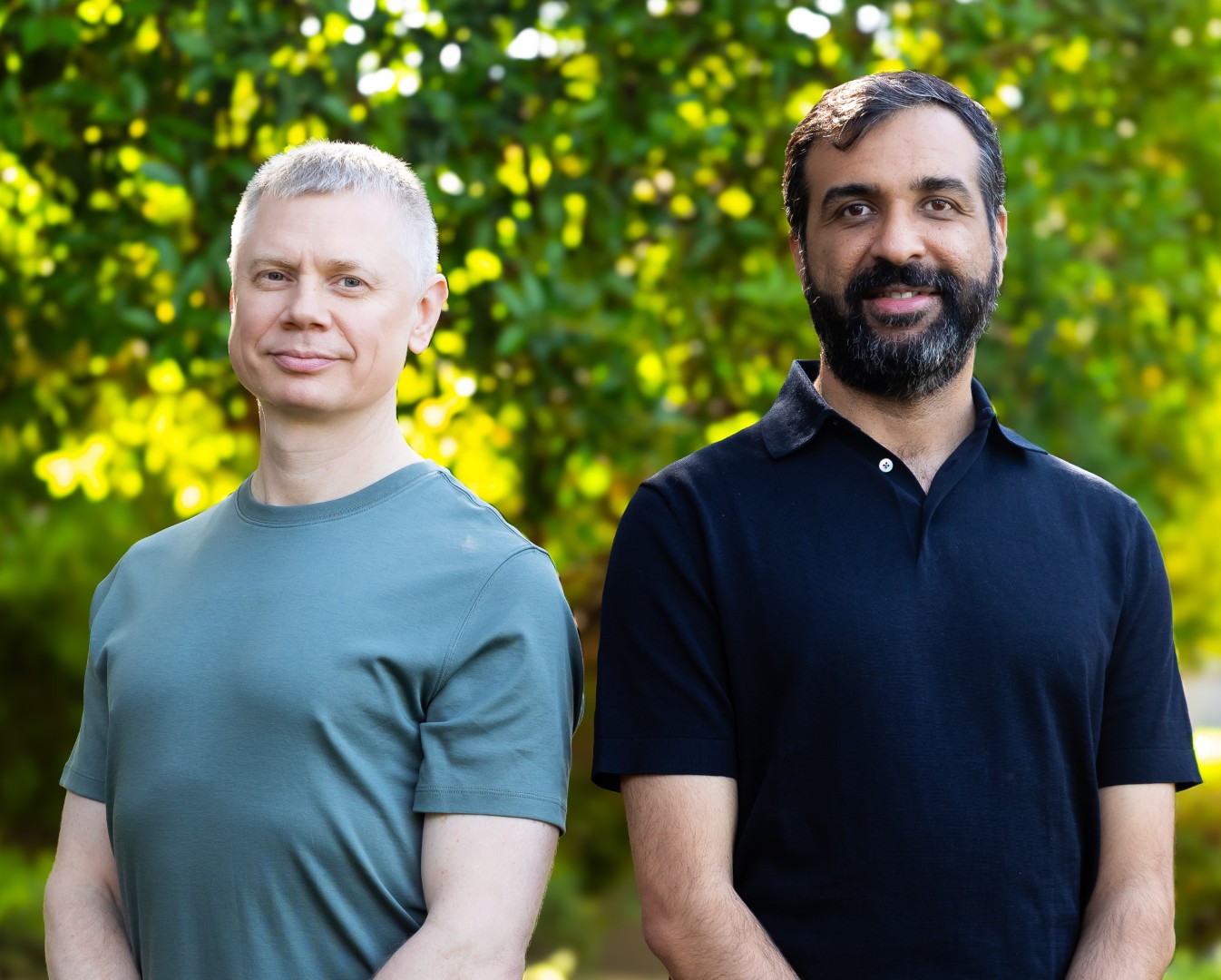
Temporal co-founders Maxim Fateev, CTO (left), and Samar Abbas, CEO. (Temporal Photo)

One of the hottest infrastructure companies in AI today is a startup established nearly seven years ago, tracing its roots to work its founders were doing before the cloud was a thing.

Temporal, based in Bellevue, Wash., announced this week that it raised $550 million at a $12.55 billion valuation, led by Lightspeed, more than doubling its $5 billion valuation in February. Its software is used by OpenAI, Nvidia, Netflix, Snap and JPMorgan Chase, among more than 4,300 paying customers, and its annualized revenue run rate recently passed $250 million.

It might seem like an overnight success, but it’s not, said Samar Abbas, Temporal’s co-founder and CEO, speaking along with co-founder and CTO Maxim Fateev in an interview with GeekWire this week. They first met at Amazon in 2010, where they worked on Simple Workflow Service, an AWS product for coordinating long-running tasks across distributed systems.

“We’ve been hacking away at this problem for 20-plus years now,” Abbas said.

The problem: software that runs in many steps across many machines breaks in the middle, and picking up where it left off is far harder than it sounds. Their answer, for which they coined the phrase “durable execution,” records each step as it completes, so a program survives a crash or a failed outside service, and finishes rather than starting over or leaving the work half-done.

Advertisement

“It’s core infrastructure. You really cannot go and build it very fast,” Fateev explained. “It took us years and years to get to the point where we knew what we were doing.”

Advertisement

It’s also especially well-suited for AI agents, which is why a company built for the cloud era is suddenly at the center of the AI boom. Agents can sometimes run for hours or days, calling models and outside tools that fail routinely. Keeping everything together regardless is Temporal’s role.

“Every Snap story is a Temporal workflow,” Abbas said. “Every time you place an order at a Taco Bell, all of the steps get orchestrated on top of our platform. Some of the most popular coding agents out there are using us as an outer harness. It’s a pretty exciting time for us, from that perspective.”

Pacific Northwest roots: Founded in October 2019, Temporal employs 570 people, roughly double from a year ago, with 89 in the Seattle area. The company is fully remote. Its Bellevue office, previously occupied by OpenAI, is used mainly for meetings rather than daily work.

But the founders describe the region as instrumental to the company’s success. Both have been in the Seattle area for more than 26 years, and they’ve built their entire professional careers here.

Advertisement
  • Abbas spent 11 years at Microsoft before joining the Simple Workflow Service team at AWS in 2010, then returned to Microsoft and wrote the open-source library that became Azure Durable Functions, leaving for Uber’s Seattle office in 2015.
  • Fateev built the messaging infrastructure behind Amazon’s Simple Queue Service starting in 2004, and later led the architecture of Simple Workflow Service, before going to Google and later reuniting with Abbas at Uber.

When GeekWire first wrote about Temporal in 2020, a year after Abbas and Fateev left Uber, it had 15 employees, $25.5 million in funding and no paying customers. Sequoia Capital led the $20 million Series A, with participation from Seattle’s Madrona and others. Bob Muglia, the former Snowflake CEO and longtime Microsoft executive, was an angel investor. Snap and Box were early users.

@media (max-width: 600px) {
aside.callout { float:none !important; max-width:100% !important; margin-left:0 !important; margin-right:0 !important; }
aside.callout .callout-img { display:none !important; }
}

Fast-forward to today, and the company has raised $1.2 billion in total funding. Temporal ranks No. 2 on the GeekWire 200, our list of the top Pacific Northwest startups, behind only Everett fusion energy company Helion, valued at $15.5 billion.

“The kind of talent that we have here in the Pacific Northwest is insane,” Abbas said, citing factors including the deep bench of cloud engineers from Microsoft and Amazon. With another platform shift now underway, he expects the same advantage to apply to AI infrastructure.

The larger question of AI safety: Temporal’s milestone comes amid a growing industry debate over the pace of AI development, and incidents in which AI agents have gone rogue, escaping the systems meant to contain them, including the latest examples from OpenAI this week.

Advertisement

Abbas said he sees those failures as accountability problems more than model problems.

“As you dig into each and every one of the incidents that have happened in the last three months, it always comes down to no one really knowing what these AI agents did, step by step,” he said.

Part of Temporal’s pitch is that it can make those failures traceable. Temporal records every step as a program runs, leaving a log of exactly what an agent did, in what order, and where it stopped. Abbas said that also creates a place to intervene, inspecting or blocking an action before it executes.

“We can put the agent in a much, much tighter jail,” Fateev said.

Advertisement

“I’m not going to sit here and tell you we solve AI safety,” Abbas added, calling that the job of the labs that create the models. But a company’s ability to know what its agents did, and to keep them from doing more than they should, is a specific challenge that Temporal can address.

“That’s truly an engineering problem,” Abbas said, “and it’s very solvable today.”

Customers and competition: Bloomberg reported in August that OpenAI is Temporal’s largest customer. Asked whether it’s too dependent on the ChatGPT maker, Abbas said no. The labs are moving fast and driving usage, he said, but the similar growth trends are starting to show up across the rest of the customer base. Abbas said 18 of the top 30 AI-native companies use Temporal.

The AI labs and cloud providers sell their own agent frameworks, and some are getting into the reliability work that Temporal does, which means its biggest customers could become competitors.

Advertisement

Fateev’s answer is that enterprises don’t want to be locked into one provider, one model or one vendor’s idea of how agents should work. Temporal is open source and takes no position on what a customer runs on top of it, which matters given seemingly constant changes in the tech stack.

The founders also see an opening in how AI systems connect to one another.

Agents increasingly have to call other systems, and each other, to get anything done. Fateev said the standard ways of wiring those connections (such as Model Context Protocol) assume the work finishes in seconds, and fall apart when a job runs for hours or days, or has to be unwound after something fails. Temporal is built for that kind of work, and can serve as an underlying foundation.

What’s next: Temporal plans to put a big chunk of the new funding into research and development, extending the “durable execution” technology at the core of the platform.

Advertisement

Today, the company tracks an application’s state from the outside, coordinating work that runs elsewhere. In the future, Abbas said, Temporal wants to provide the computing power, too, hosting the agents on its own platform rather than simply directing them on others.

Big business customers have been pushing for stronger security and auditing, another target for the spending. Temporal is also expanding a project called Nexus, which lets teams call each other’s workflows without giving up the guarantees that make the platform useful in the first place.

The company plans to expand internationally, where it does a small share of its business today, and to keep hiring after doubling its headcount over the past year. Abbas said the company’s growth defies the popular wisdom that AI companies don’t need significant human talent.

In the meantime, the founders remain very much engaged with the problem they’ve been trying to solve in one form or another for the past two decades. Temporal’s open-source Slack channel has about 25,000 members, and Abbas said Fateev is still in there mixing it up himself.

Advertisement

“You ask a question,” Abbas said, “I’m pretty sure Max will jump in within the first five minutes.”

Source link

Continue Reading
Click to comment

You must be logged in to post a comment Login

Leave a Reply

Tech

Monday-morning surprise: Valve Software suddenly launches its wireless VR headset Steam Frame for $1,059

Published

on

Valve’s Steam Frame virtual reality gaming headset. (Valve Photo)

In a sudden shadowdrop, Bellevue, Wash.-based Valve Software announced on Monday that it’s launched its new standalone virtual-reality headset the Steam Frame.

Initially revealed in Nov. 2025 as part of the same initiative that brought us the new Steam Machine, the Steam Frame is a new entry into the VR hardware space.

Valve’s previous VR device, 2019’s Index, was designed to be installed semi-permanently in a single room. The Frame, conversely, is a standalone wireless device that consists of a lightweight headset and two hand controllers, much in the same spirit as the Meta Quest 2.

As with Valve’s other recent hardware projects, the Frame is essentially a specialized PC running the custom SteamOS 3, a Linux-based operating system. The Frame runs off of a Snapdragon 8 Gen 3 processor, with 16GB RAM, a microSD card slot, and two 2160 x 2160 LCD screens, one per eye. Oddly, it does not ship with its own dedicated power supply, but can be recharged using the same kind of USB-C plug as the Steam Deck uses.

As with the rest of Valve’s hardware, the Frame is designed to run games from your Steam library, but doesn’t necessarily run every game that’s currently on Steam. Instead, the Frame has its own verification system similar to the Steam Deck’s, with over 100 games currently hand-tested to be compatible with the Steam Frame. Every Frame also comes with Valve’s 2020 game Half-Life: Alyx as a pack-in bonus.

Advertisement

As with the Steam Machine, Valve plans to offer the first batch of Frames with a lottery system. To minimize the impact of scalpers, Valve intends to leave signups open for both models of the Frame until Thursday morning, then randomize the list once and email customers to let them know if they’re getting a Frame or will end up on the waiting list.

The Frame, top left, was the final entry for now in Steam’s hardware lineup. (Valve Photo)

Maybe most importantly, however, the Steam Frame’s starting price is $1,059 for a model with a 256GB internal storage drive. Users who want or need more storage can upgrade to a model with a 1 TB drive for $1,299.

Much as how its low price tag was the biggest point in the Steam Deck’s favor back in 2022, the Frame’s high price tag is an albatross around its neck. Reviews note that it’s a uniquely comfortable device and makes it easier than ever to fire up games in VR, but selling it for over $1,000 means it’s unavoidably aimed at the most hardcore members of what was already a niche market.

This is the same problem Valve hit with the launch of the Steam Machine back in June, and it’s likely to be an issue for every hardware manufacturer in the market for the foreseeable future. With AI companies gobbling up most of the RAM and hard drives on Earth for data center construction, in an event that’s often nicknamed the “RAMageddon,” any consumers who look to build or buy a new PC or console can expect a bad case of sticker shock for the foreseeable future.

That having been said, the Frame does position Valve to pick up where other companies have left off. Meta was previously the market leader in the VR space (PC Gamer claimed recently that Meta still commands roughly 54% of the VR market), but has made distinct cutbacks in 2026 in favor of refocusing on AI research and wearable computing.

Meta invested heavily in recent years on the assumption that virtual reality was the next big thing, and while it made big strides in making VR accessible, it appears to be in the process of rethinking that bet. VR still has plenty of fans and advocates, but it has yet to live up to the hype factor that it had in the late 2010s. The AI arms race, to some extent, appears to have eaten its lunch.

Advertisement

On paper, Meta’s pullback could’ve left space for Valve to shoulder-check its way into the VR market, but then RAMageddon hit. This wasn’t a bad plan as recently as last year, but the current state of the hardware market makes the Steam Frame a tough lift.

Source link

Continue Reading

Tech

Universal and Sony sue Suno again, this time over 60,202 recordings

Published

on

“The magnitude of the alleged infringement is not a defense,” the court told Suno in August.

Universal and Sony have now sued the AI music company a second time. They filed the complaint in the District of Massachusetts on Friday, as case 1:26-cv-14275.

It asserts 60,202 sound recordings. The first case, filed in June 2024, is still running.

The filing names twelve label entities, led by UMG Recordings and Sony Music Entertainment. Warner is not among them.

Advertisement

The judge effectively told them to file it

The labels first tried to fold the new recordings into the existing case. They moved to amend the original complaint to add more than 61,000 further works.

A forensic analysis of Suno’s training data had turned those up.

Suno opposed that motion. On 18 August the court denied it without prejudice, mainly because amending would disturb the case schedule.

The court did not question the claims themselves. The labels are “of course entitled to pursue valid claims for copyright infringement”, it wrote.

Advertisement

It then pointed at the exit. Proceeding in “parallel cases” best balanced the labels’ interests with judicial economy, the court concluded.

The new complaint says the labels are doing exactly what the court contemplated.

What the labels say Suno already conceded

The complaint leans on Suno’s own answer in the first case. The labels say Suno acknowledged building its models “by showing the program tens of millions of instances of different kinds of recordings”.

Those recordings “presumably included recordings whose rights are owned by the Plaintiffs in this case”, Suno said, according to the filing.

Advertisement

What Suno would not do, the labels say, is name them. They commissioned the forensic analysis for that reason, and say it found millions of their works in the training corpus.

Suno has not yet responded to the new complaint, which reached the docket on Friday.

Three licensing deals are the labels’ sharpest weapon

Suno has spent the past year signing the very agreements the labels say it should have sought first. The complaint lists three.

Warner Music Group signed in November 2025, and the complaint calls it a “former plaintiff”. BMG followed on 12 August, from a company the labels note had “never sued Suno”.

Advertisement

Believe signed on 8 September to supply training data. Nine days later Suno launched v6 on licensed catalogue.

The labels draw the obvious inference. Three agreements in under a year “confirm that a functioning market exists for licensing sound recordings to train generative AI models”, the complaint says.

Suno has tried to frame the deals differently. Chief product officer Jack Brody has said the revenue share is “not in exchange for training” and that the deals are “not really about the data”.

The complaint quotes Mikey Shulman, Suno’s co-founder and chief executive, saying the company “will be licensing works”. It calls the deals “a functioning licensing market, whatever nomenclature Suno adopts for litigation purposes”.

Advertisement

Suno’s own terms ask for what it did not give

The filing turns Suno’s contract with its users against it. Since January 2024 its terms of service have required every user to grant Suno a “worldwide, non-exclusive, fully paid-up, sublicensable” and “irrevocable” licence over anything they upload.

That licence covers reproducing, storing, modifying and creating derivative works from user content. The labels say it shows Suno knew perfectly well that training on someone’s audio needs permission.

Demanding a licence upstream while taking commercial recordings for free, the complaint argues, makes the infringement “knowing and willful”. Willfulness is what unlocks the higher damages tier.

The artist-name switch

Suno once blocked users from prompting it with the names of specific recording artists. Shulman cited that policy as proof the models were built to generate “completely new outputs”.

Advertisement

The complaint says the block is gone. “This design feature turned out to be so fundamental that Suno simply switched it off,” it reads, and users can now prompt with artist names through prompt augmentation.

The complaint also quotes an early investor. “If we had deals with labels when this company got started, I probably wouldn’t have invested in it,” the investor told Rolling Stone.

Suno, the investor said, “needed to make this product without the constraints”.

What it could cost

There are three counts. Two are direct infringement, split between post-1972 recordings and pre-1972 ones protected under the Music Modernization Act.

Advertisement

The third is circumvention. The labels say Suno “stream ripped” audio from YouTube, employing code to access, extract, copy and download files in breach of YouTube’s own terms and of section 1201(a).

The labels ask for up to $150,000 per work for willful infringement, plus up to $2,500 for each act of circumvention. Across 60,202 recordings the statutory ceiling alone runs past $9bn.

They also want an injunction requiring Suno to stop circumventing YouTube’s measures and to stop infringing, and they have demanded a jury.

The flood is the market-harm argument

Fair use turns partly on market effect, and the labels have reached for numbers rather than adjectives.

Advertisement

Deezer reported in July that AI tracks passed half of all daily uploads for the first time, roughly 90,000 a day, up from about 39% six months earlier.

Suno has told investors its users generate a Spotify catalogue’s worth of output every two weeks. The complaint also cites The Velvet Sundown, an AI act that reached over a million monthly Spotify listeners in summer 2025 before listeners learned it was machine-made.

Shulman’s own words do a lot of work in the filing. The complaint quotes him saying it is “not really enjoyable to make music now” and that “increasingly taste is the only thing that matters in art and skill is going to matter a lot less”.

Suno is worth more than when it was first sued

The complaint sets out the company’s finances in detail. Its latest round raised more than $400m at a $5.4bn valuation, against $2.45bn in autumn 2025.

Advertisement

The labels say Suno makes hundreds of millions a year and projects $1bn in revenue by 2028. Its top subscription tier costs $24 a month.

People who had worked together at Kensho Technologies founded Suno in July 2023. The company works out of Cambridge, Massachusetts, and Microsoft integrated it into Copilot that December.

It is not the only front

Sony ran the same play against Suno’s closest rival in July, suing Udio a second time over 30,000 more songs.

Europe has already produced a ruling. A German court found Suno broke copyright in a case brought by the collecting society GEMA.

Advertisement

Shulman said in January 2025 that it seemed “silly to throw a bunch of venture dollars at lawyers instead of sitting down and talking about how you could work together”. The labels note he said it seven months after they sued.

Source link

Advertisement
Continue Reading

Tech

3 new Netflix TV series to binge this weekend if you love crime dramas

Published

on

September brought a good batch of new Netflix TV series, spanning across different genres and tones. This weekend we’ve got a crime family drama with all the sharp banter you’d expect from Guy Ritchie, a true crime retelling that brings a female killer to the spotlight this time, and a bleak Nordic thriller that turned into a surprise global hit within days. Each of these picks earns every bit of its buzz, so add them to your watchlist right away.

We also have guides to the best new movies to stream, the best movies on Netflix, the best movies on Hulu, the best free movies, and the best movies on Amazon Prime Video.

Monster: The Lizzie Borden Story (2026)

Genre: Biography, True Crime, Drama
IMDb rating: N/A
Rotten Tomatoes: N/A

Advertisement

The fourth installment in Ryan Murphy and Ian Brennan’s Monster anthology tackles the infamous 1892 murders of Andrew and Abby Borden, told through the eyes of their daughter Lizzie (Ella Beatty), the prime suspect who was ultimately acquitted. Trapped in a household built on control and cruelty, Lizzie and the family’s maid, Bridget Sullivan (Vicky Krieps), retreat into a shared fantasy that slowly starts blurring with reality.

Ella Beatty gives an utterly captivating performance as the unsettling yet deeply sympathetic lead. I was impressed by the eerie, claustrophobic setting that makes the family house feel like a prison for Lizzie. I also appreciate how the series leans hard into gender, class, and repression as the real culprit behind the violence, instead of treating the murders as just another grisly mystery to solve.

You can stream Monster: The Lizzie Borden Story on Netflix.

The Gentlemen (Season 1, 2024 – Season 2, 2026)

Genre: Action, Comedy, Crime
IMDb rating: 8/10
Rotten Tomatoes: 79%

Advertisement

An aristocratic British officer, Eddie Horniman (Theo James), unexpectedly inherits his family’s massive country estate only to discover a massive weed empire hiding underneath. He gets sucked into a chaotic underworld filled with eccentric gang leaders, posh criminals, and dodgy deals. It serves up Guy Ritchie’s signature brand of razor-sharp banter, snappy quick cuts, and violence.

I absolutely loved the electric, slick dynamic between Theo James and Kaya Scodelario in Season 1. Their cool, calculating swagger makes it a fun watch. Season 2 shows Eddie expanding his operation into Italy, and the stakes escalate right alongside the ambition. I’ll admit the early episodes had me worried the show had lost some of its charm, but by the time it reaches its final stretch, the show pulls everything back on track, enough to make me genuinely eager for season three.

You can stream The Gentlemen on Netflix.

Advertisement

Blood Sacrifice (2026)

Genre: Crime, Drama, Thriller
IMDb rating: 6.3/10
Rotten Tomatoes: 90%

Blood Sacrifice is a newly released five-episode miniseries that follows Detective Thomas Berg (Jakob Oftebro), who reluctantly teams up with his estranged ex-cop father Alfred (Peter Andersson) after two police officers are found murdered near Stockholm’s summer archipelago. As more officers turn up dead in the same brutal fashion, Thomas realizes the killer is copying a case the original suspect couldn’t have committed, since that man is already behind bars.

From George Kay, the creator of Lupin, strips away usual Hollywood polish in favor of slow, methodical procedural teamwork. It became Netflix’s most-watched non-English series within days of release, and it’s easy to see why. The father-son dynamic gives the investigation real emotional stakes beyond just chasing a killer, and the show delivers a bleak, grounded Nordic noir that keeps you guessing until the final stretch.

Advertisement

You can stream Blood Sacrifice on Netflix.

Source link

Advertisement
Continue Reading

Tech

Tesla Semi Production Comes Alive as Top Gear Tech Tours Nevada Then Rides the Finished Truck

Published

on

Top Gear Tesla Semi Test Drive Factory Tour
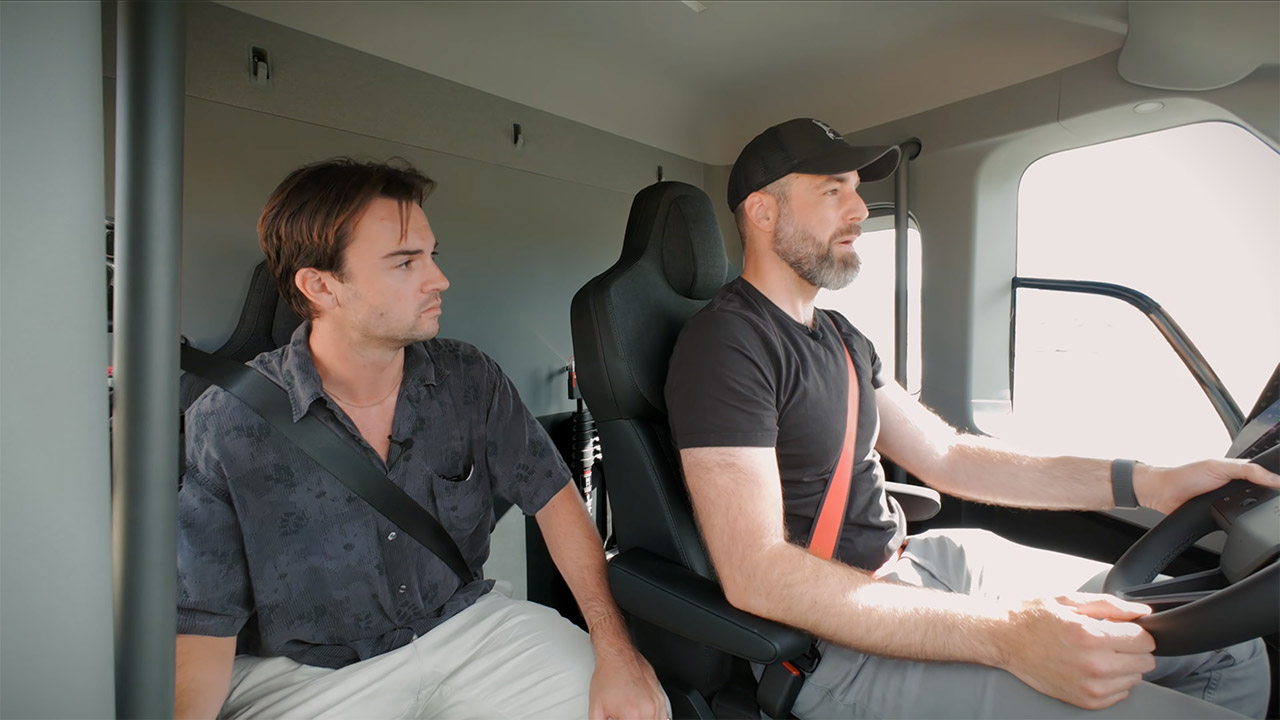
Jack Scarlett opened the first episode of Top Gear Tech by walking into a finished production Tesla Semi eight years after the 2017 reveal. A small pilot fleet reached customers in late 2022. Those trucks and later units have now logged about 17 million test miles that fed the version now leaving the line.


Sparks, Nevada is home to a massive 1.7 million square foot plant that cost $3.6 billion and is capable of constructing 50,000 trucks per year, or nearly 1,000 per week when it’s running at full speed. Tesla developed the entire truck and building from the ground up to maximize speed, dependability, and cost effectiveness, rather than welding together an existing diesel chassis. They chose to use a powder-coating process rather than a regular paint shop, as they already do with their Megapack energy products. Apparently, it saves capital costs and floor space, reduces pollutants, and still produces a good finish. The base color is white, although fleet owners can add their own custom colors later if desired. They also have a handy equipment that tightens all ten wheel lug nuts in one go, saving time and effort.

Top Gear Tesla Semi Test Drive Factory Tour
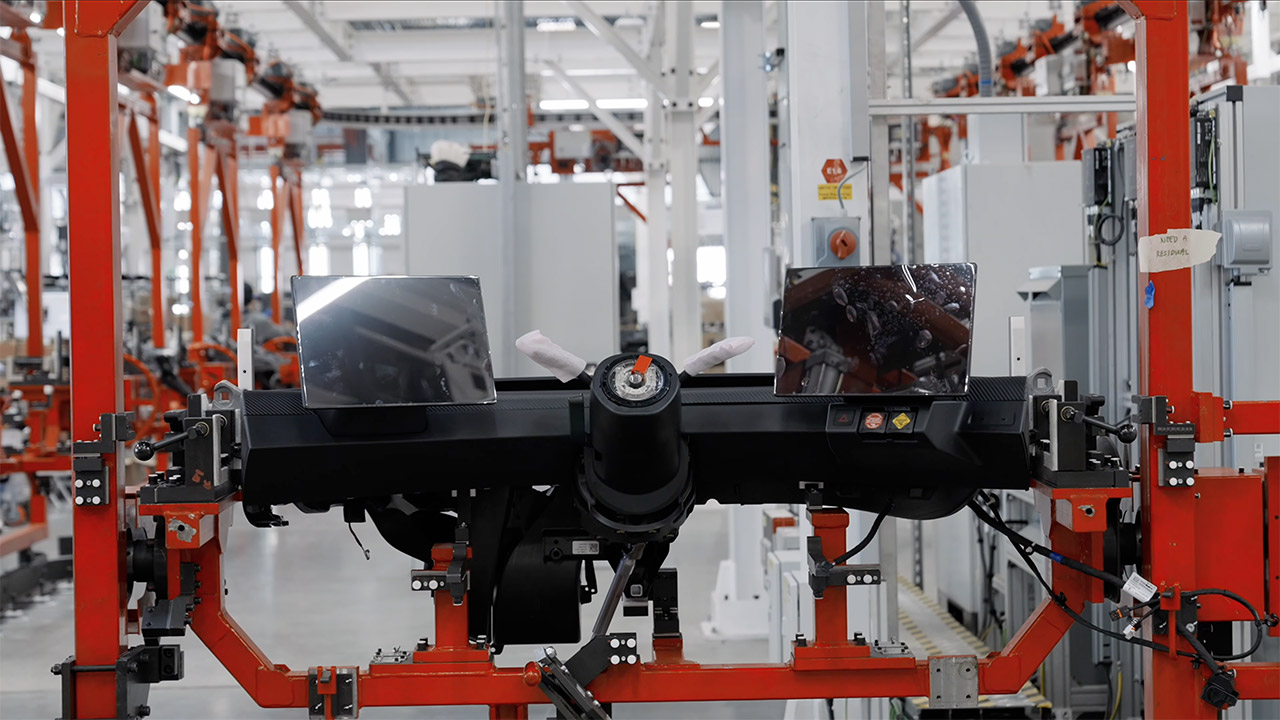
Another thing they did was leave the cabs open at the back so that large interior components such as the dashboard and seats could be installed from behind, rather than having to force them through the door. Plus, center seating allows them to use the same tooling for every market, which is a game changer. Inside, a six-foot-six individual can easily stand erect. Heated and cooled seats reduce the stress on the cabin temperature control system, and a creative new seatbelt design incorporates a bright infrared coating that reminds the driver to fasten up.

Top Gear Tesla Semi Test Drive Factory Tour
The sun visor is a large magnetic device that folds in half, and the windshield is enormous. In fact, it is so large that it eliminates the five-meter blind spot that is common on ordinary American long-nose trucks. The redesigned front fascia features the same Model Y light-bar design and is divided into three portions that can be replaced if damaged. They’ve also managed to increase aerodynamics by three percent over previous prototypes, and without a trailer, the drag number is even lower than that of a Bugatti Chiron.

Top Gear Tesla Semi Test Drive Factory Tour
Standard-range trucks are equipped with a 548 kWh battery pack made up of 4680 cells. Long-range variants add a third module, thereby doubling the capacity. They claim an efficiency of approximately 1.7 kWh per mile. In terms of range, they’re aiming at 325 or 500 miles, which is roughly equivalent to a regular day’s driving in the United States or Europe. A 30-minute pause can add roughly 60% charge, which is sufficient. They have three motors generating approximately 1,076 horsepower, with a high-torque axle that handles launch and climbs before decoupling and allowing a more efficient motor to take over while cruising along empty. That allows you to accelerate from 0 to 60 in roughly 12.5 seconds, or 24 seconds with a load, and on a three percent incline, the truck maintains a steady 65 mph, but a diesel frequently drops to 50.

Source link

Advertisement
Continue Reading

Tech

Apple Watch Series 12 has slightly larger bezels

Published

on

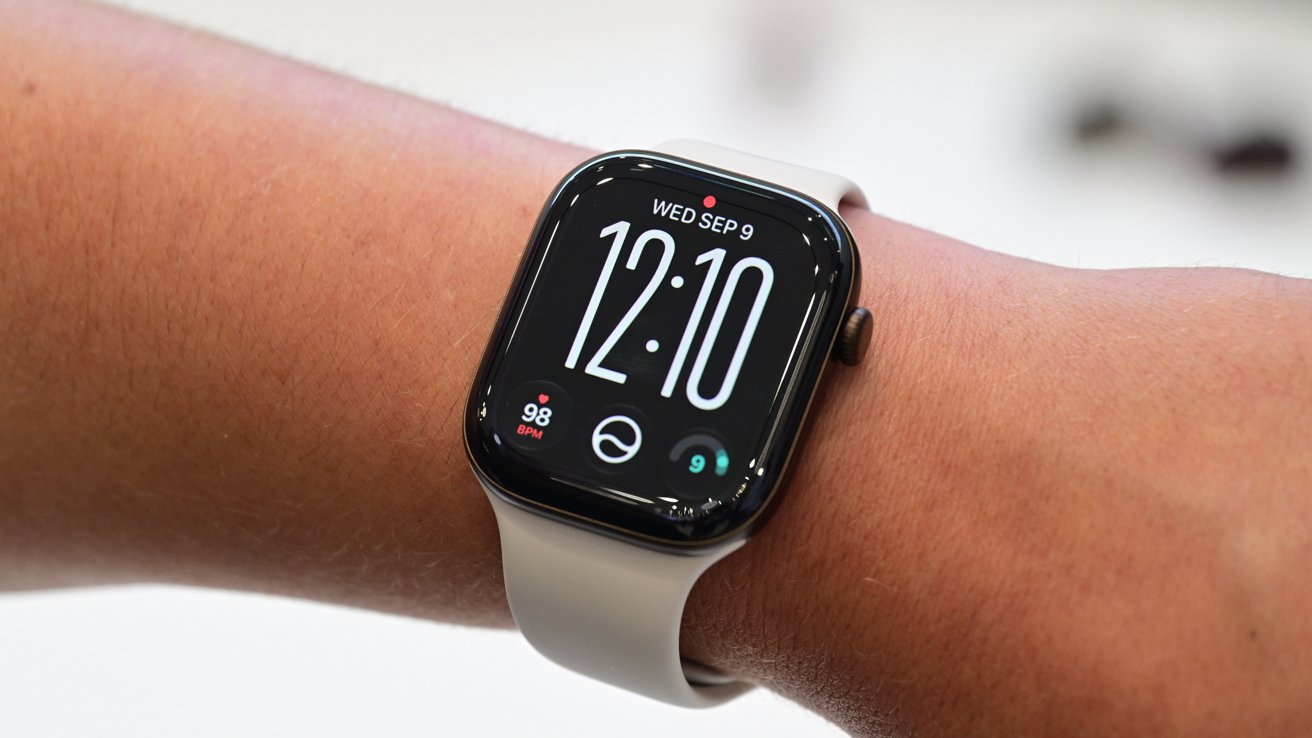
Customers upgrading from Apple Watch Series 11 to Apple Watch Series 12 are noticing some design changes, namely a larger bezel and a Digital Crown that sticks out a bit further.

The Apple Watch Series 12 has a new Health Sensing system, which replaced the rear sensor stack with a larger surface area. That seemed to be the only significant external design change, at least, until customers got their hands on them.

According to various posts on Reddit, customers are noticing a few minute differences between Apple Watch Series 12 and the previous Apple Watch Series 11. When looking at the display head on with a non-black background, the bezels are noticeably larger on the new model.

Plus, the Digital Crown appears to slightly protrude more, but this could also be due to how the case curves around the area.

Advertisement

The display change might be a surprise for some, but it is likely related to needing more internal space for the new health features. The case has increased by 1mm in one direction regardless of if you get aluminum or ceramic cases.

That slightly change in case size without a change to the active display area means larger bezels. The only way you’d ever notice the change is if you had the two models side-by-side to compare.

Some social media users speculate that this means Apple could release an Apple Watch 13 with a larger display in 2028, but it is anyone’s guess at this point.

Users have also noted that the new Apple Watch models don’t appear to support handwashing detection. Apple’s support page doesn’t list the new models on the compatibility page, though it could be that the page hasn’t been updated yet.

Advertisement

The Apple Watch Series 12 and Apple Watch Ultra 4 shipped to customers Friday and are available in stores. The focus for this release cycle is on health upgrades and Audio Intelligence.

Source link

Advertisement
Continue Reading

Tech

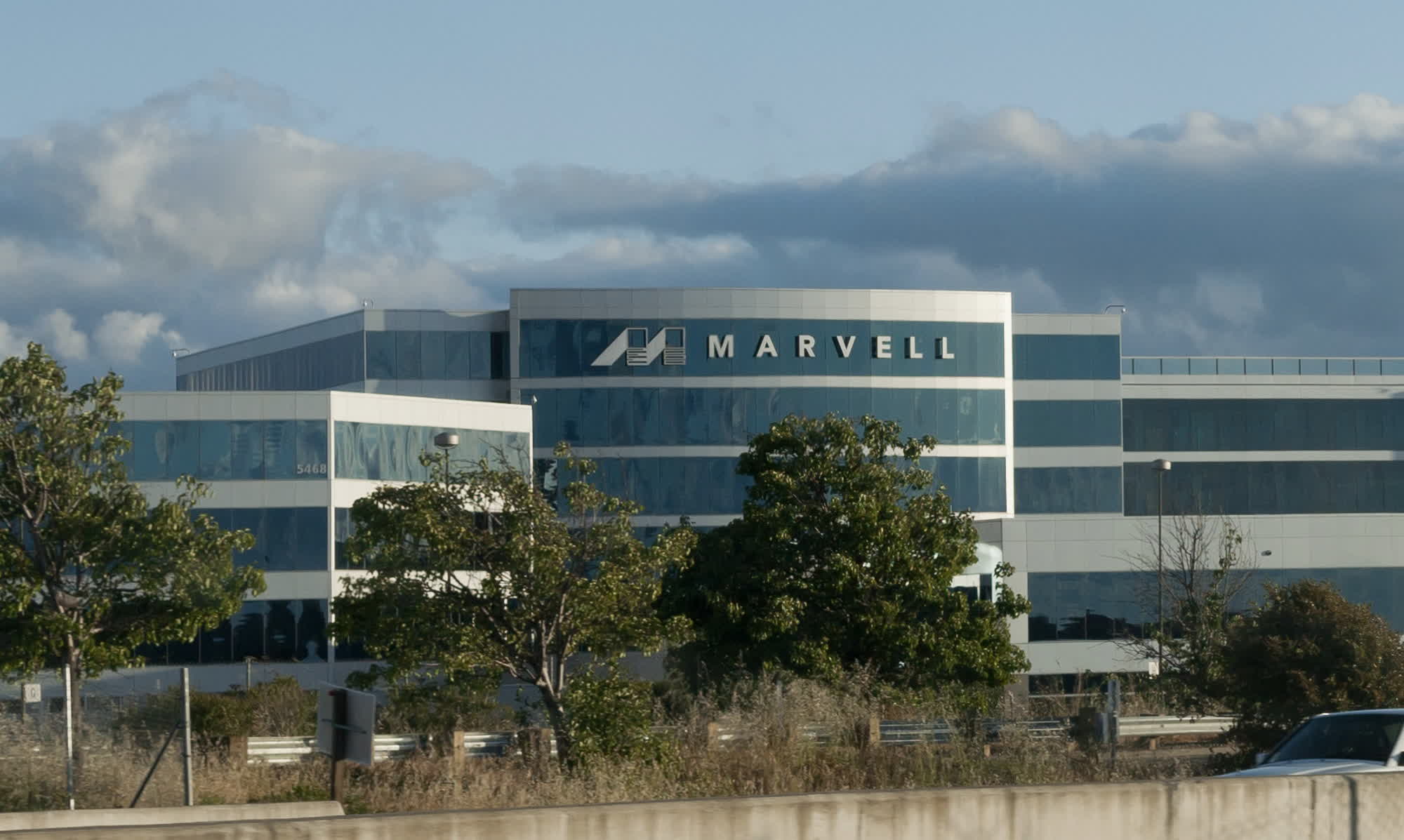
GlobalFoundries and Marvell are scaling up silicon photonics efforts as data centers outgrow copper wiring

Published

on

Lightning Fast: Modern and upcoming data center projects require massive amounts of AI accelerators, and produce similarly massive amounts of data. Traditional silicon-based networking is starting to choke on gigabytes, which is why major manufacturers are now focusing on more advanced technology solutions to move all those bits around.

GlobalFoundries and Marvell Technology have announced an expanded partnership in manufacturing novel connectivity solutions. The multi-year agreement centers on GlobalFoundries’ silicon germanium (SiGe) technology, with the company increasing production capacity at its Burlington, Vermont plant.

SiGe-based solutions are used in high-performance connectivity products, including pluggable optical transceivers, Near-Packaged Optics (NPO), and Co-packaged Optics (CPO). As GlobalFoundries highlights in its announcement, these silicon photonics solutions are becoming increasingly important for AI data centers and other massively packed data-crunching infrastructure.

Jensen Huang says Marvell could become the next trillion-dollar company, and this deal might show why

Advertisement

AI systems are growing in scale, which means they require faster accelerators exchanging data through high-speed interconnects. GlobalFoundries already offers a portfolio of SiGe, high-frequency connectivity solutions capable of reaching 200 Gbps per optical lane.

GF said it has manufactured advanced SiGe technology for over a decade, and keeps investing in the co-integration of SiGe, silicon photonics, and advanced packaging solutions for new optical connectivity architectures such as NPO and CPO.

While GlobalFoundries ramps up production, Marvell is looking ahead to its own business prospects. The fabless chip manufacturer has seen its valuation explode thanks to the AI boom, and is expected to play a major role in the future of AI data centers and AI growth at scale.

Nvidia has significantly invested in Marvell as part of a broader partnership that includes silicon photonics and next-gen data center collaboration, and Nvidia CEO Jensen Huang has said he expects Marvell to become the next trillion-dollar company on Wall Street.

Advertisement

According to Robb Johnson, Marvell’s VP of foundry technology, the industry is moving toward higher-bandwidth optical architectures for data centers’ connectivity fabric, and Marvell is aggressively ramping up investment to lead that transition. Thanks to the expanded cooperation with GlobalFoundries, the Santa Clara-based company will have access to all the SiGe chips and transceivers it needs. The two companies have been working together on optical networking technology for over a decade now.

In “traditional” data centers, optics have mostly been used to connect racks and other crucial computing resources across the plants. Cheaper copper-based interconnects are still tasked with moving data at shorter distances, but the technology is approaching its practical limit at 400 Gbps per lane.

Source link

Advertisement
Continue Reading

Tech

Disney Hires Ex-CEO Of AI Company It Accused Of Copyright Infringement

Published

on

Formerly head of Character.AI, Karandeep Anand is now Disney’s chief technology officer. 

Disney hasn’t been a big fan of the apparent copyright infringement that makes the AI industry possible, going as far as to threaten companies like Midjourney and Character.AI for using its intellectual property. The company is also apparently willing to let bygones be bygones — Disney has announced that it’s hiring Karandeep Anand, the former CEO of Character.AI, as its first chief technology officer.

“Karandeep brings a rare mix of experience across infrastructure, consumer technology and AI, and will be a vital addition to Disney’s senior leadership team as we further our three priorities: great storytelling as our North Star, technology in service of creativity, and operating as One Disney,” Disney CEO Josh D’Amaro said in a statement. “He also has real enthusiasm and respect for Disney, a clear sense of where technology and creativity meet and shares our belief that technology creates the most value when it helps people do their best work.”

Since becoming CEO in February, D’Amaro has leaned hard into Disney’s capabilities as a technology company, pitching the Disney+ streaming service and app as central to its future. Hiring Anand, and making him a direct report, is a further attempt to sell that idea. As CTO, Disney says Anand will oversee things like enterprise technology and the company’s data and AI platforms, and bring several of Character.AI’s technical staff along with him in the process. As part of his hiring, Variety writes that Disney is also promoting Adam Smith, the former chief product and technology officer for Disney Entertainment and ESPN, to a new role as Chairman of Direct-to-Consumer for Disney Entertainment.

Advertisement

Disney’s praise for Anand is surprisingly, given how differently it viewed the company he was leading less than a year ago. In September 2025, Disney sent a cease and desist letter to Character.AI, claiming the platform offered chatbots based on its characters and that they were bad for children. Character.AI had already been named in wrongful death lawsuits involving multiple underage users at the time, so Disney claim that the company’s products were “harmful and dangerous to children” carried some weight.

Of course, one could assume Disney was less worried about the negative effects of using generative AI and more concerned that it wasn’t cut in appropriately. The company did agree to license Disney characters to OpenAI for its failed Sora app only a few months later in December 2025. If the company truly believes AI is part of its future, Anand’s experience is much more important than any misgivings it had about Character.AI.

Advertisement

Source link

Continue Reading

Tech

The New Resident Evil Movie Captures The Survival Horror Magic Of The Games

Published

on

Despite touting the name “Resident Evil,” the movie adaptations of Capcom’s series have mostly ignored the best elements of survival horror games: the sense of dread as you creep into a new location; the desperation you feel when you’re running low on ammo and health items. The six Resident Evil movies starring Milla Jovovich were more interested in bombastic action. So leave it up to Zach Cregger, the director of Barbarian and Weapons, to crack the code of making a genuinely great adaptation: Just make it feel like the best games in the franchise.

And to be clear, I’m not talking about delivering fan service. There are a slew of terrible CG Resident Evil movies that exist to do just that, including the failed 2021 live action reboot, Welcome to Raccoon City. Cregger’s secret weapon is that he’s both an excellent horror filmmaker — someone who knows how to write interesting characters, build tension and deliver scares in unique ways. And he’s a fan of the franchise who understands the true magic of survival horror games.

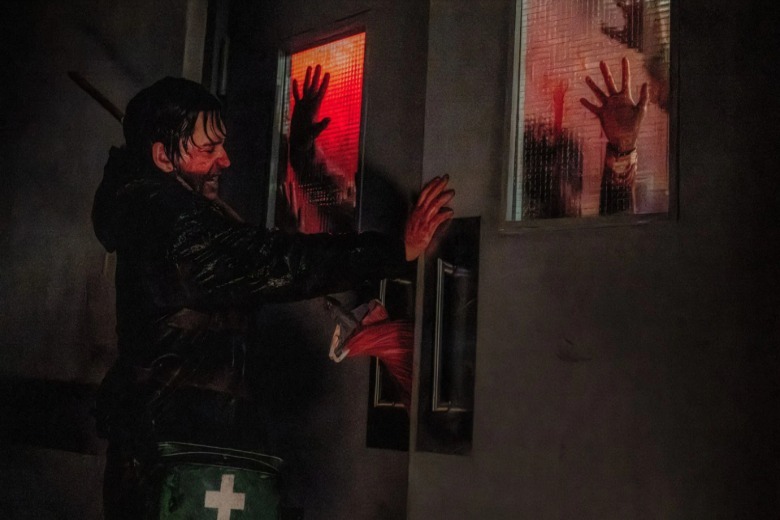
Resident Evil centers on Bryan (Austin Abrams), a medical courier tasked with making a last-minute run to a remote mountainside town. Of course, that’s Raccoon City. Along the way, he’s also dealing with the anxiety of potentially becoming a father after his girlfriend discovers she’s pregnant. He’s an everyman with deep flaws, the ideal protagonist for a Resident Evil story.

Advertisement

After an accident on a snowy road, we shift into a first-person view as Bryan creeps towards an injured woman, much like the camera slowly approaching the first zombie in the original Resident Evil. Once the victim reveals herself to be some sort of crazed monster (not a zombie), it almost feels as if we’re controlling Bryan over the shoulder as he tries to avoid her around an overturned police car. Of course, the film can never deliver the interactivity of the games, but Cregger’s camera gets close. Throughout the film, we’re often following Bryan from directly behind, or right over the shoulder, evoking the iconic camera angle of Resident Evil 4.

Bryan finds a conveniently placed pistol and manages to take down the crazed woman, but of course, that’s only the beginning. A mad dog chases him into a barn, where he encounters (and fails) a classic ladder puzzle. He finds an even more conveniently placed shotgun when he seeks refuge in an abandoned farm house, but it’s useless to him until he finds shells. (In one of the few overt callbacks, he encounters a room with a lone typewriter, like the classic Resident Evil save rooms.)

Anyone unfamiliar with the games would have no problem enjoying this film. But Cregger’s understanding of the series also makes it feel like a true survival horror game. We’re viewing every new room and dark corner from Bryan’s perspective, and the sense of dread is palpable. Even though it doesn’t take long for Bryan to snag a few guns, he’s also always aware of the precise amount of ammunition he’s holding. Much like the games, resource scarcity is a constant source of tension. He masterfully uses the first-person perspective several more times throughout the film, and at times the camera jerkily shifts in different directions, as if someone is quickly pushing a gamepad’s right stick for camera controls.

Cregger’s Resident Evil is a lesson in making a good video game adaptation. You can’t just slavishly recreate things the fans want to see – like the atrocious Super Mario Galaxy or the forgettable Uncharted – but you also shouldn’t completely reject the best elements of the games, like the terrible ’90s Super Mario Bros. film. A small amount of creativity and effort managed to make the Sonic and Minecraft movies watchable. With Nintendo spinning up a Legend of Zelda movie and Hollywood broadly eager to crib from video game source material, I hope more creatives take notes from this reboot.

Source link

Advertisement
Continue Reading

Tech

Watch Hawthorn vs Brisbane for FREE: Live streams & TV channels

Published

on

Hawthorn’s reward for trouncing the minor premiers is the matchup they’d been hoping to avoid – a date with back-to-back reigning premiers Brisbane, who pasted the Hawks by 67 points just last month. On a more positive note, Sam Mitchell’s men do at least have home advantage after a week off.

The reason it stings so much is that Hawthorn, who last reached the Grand Final back in 2015, have beaten both of the other preliminary finalists this season. Meanwhile, they’ve lost each of their past three meetings with the Lions.

Source link

Continue Reading

Tech

Flock Offers Employees Buyouts as Customers Flee

Published

on

Flock Safety announced a voluntary employee separation program on Friday, offering a “generous” severance package to those who want to leave amid growing backlash against the surveillance technology company, according to an internal email shared with WIRED.

Applications for Flock’s voluntary severance program opened Friday, and employees have until October 2 to decide whether to leave the company. Flock expects to grant buyouts to the majority of workers who apply, according to the email. People familiar with the program but not authorized to discuss it publicly say they believe that a significant number of the startup’s roughly 1,500 employees may try to depart.

Flock is making the severance offers as it continues to lose customers amid growing frustration across the US about its sprawling network of license plate readers, which have raised concerns about privacy and misuse. In the last month, WIRED has documented officers allegedly abusing Flock to track former romantic partners and colleagues, exposed how widely some agencies share access to the system, shown how little is known about the manufacturing of the devices, and revealed in new detail how much information Flock’s cameras collect based on data from a dismantled Flock device.

Founded in 2017, Flock raised money at a valuation of more than $8 billion in a funding round that closed in April. The company has had many of its contracts either not extended or dropped this year, which could leave it short of revenue goals, according to two of the people. A wave of vandalism targeting its cameras has unexpectedly increased expenses. Without buyouts, Flock almost certainly would have to lay off some staff, one of the people believes.

Advertisement

In an internal announcement, Flock said the separation program provides “greater agency” for its workers and “treats employees with transparency, respect, and choice.” It also described the package as the “most generous” ever offered by the company, roughly double its previous severance offers.

Flock did not immediately respond to requests for comment.

Some Flock employees have said they have received buyout offers in the range of tens of thousands of dollars, one of the people said. The package also gives employees several months of health care coverage and the ability to exercise stock options within two years after separation, a longer period than the company typically offers resigning employees, according to the email and people familiar with the offer.

Flock employees are expected to learn whether their applications were accepted on October 9, according to the email. Most accepted employees would leave the company by October 29, though in some cases Flock may ask employees to remain for another one to three months.

Advertisement

People familiar with Flock’s severance plan tell WIRED that some employees may take the offer amid speculation that the company, which has raised about $1.2 billion in venture capital, might resort to selling off parts or all of its business to stay afloat. “When you see enough of the vandalism” targeting Flock cameras this year, one of the people says, “you know the writing is the wall” that something has to change.

Flock CEO Garrett Langley said on the All-In podcast last month that “the biggest damage” caused by the backlash against the company had been “internal morale.”

“Because you go on to X or you go on to Reddit and you go, why are people so mad at us when we’ve been doing the same thing for nine years?” Langley said. “And why are they so mad at us for things we don’t do? And we just want people to be safe.”

Source link

Advertisement
Continue Reading

Trending

Copyright © 2025