
Tech
iPhone & China drive Apple strength as outlook stays unclear

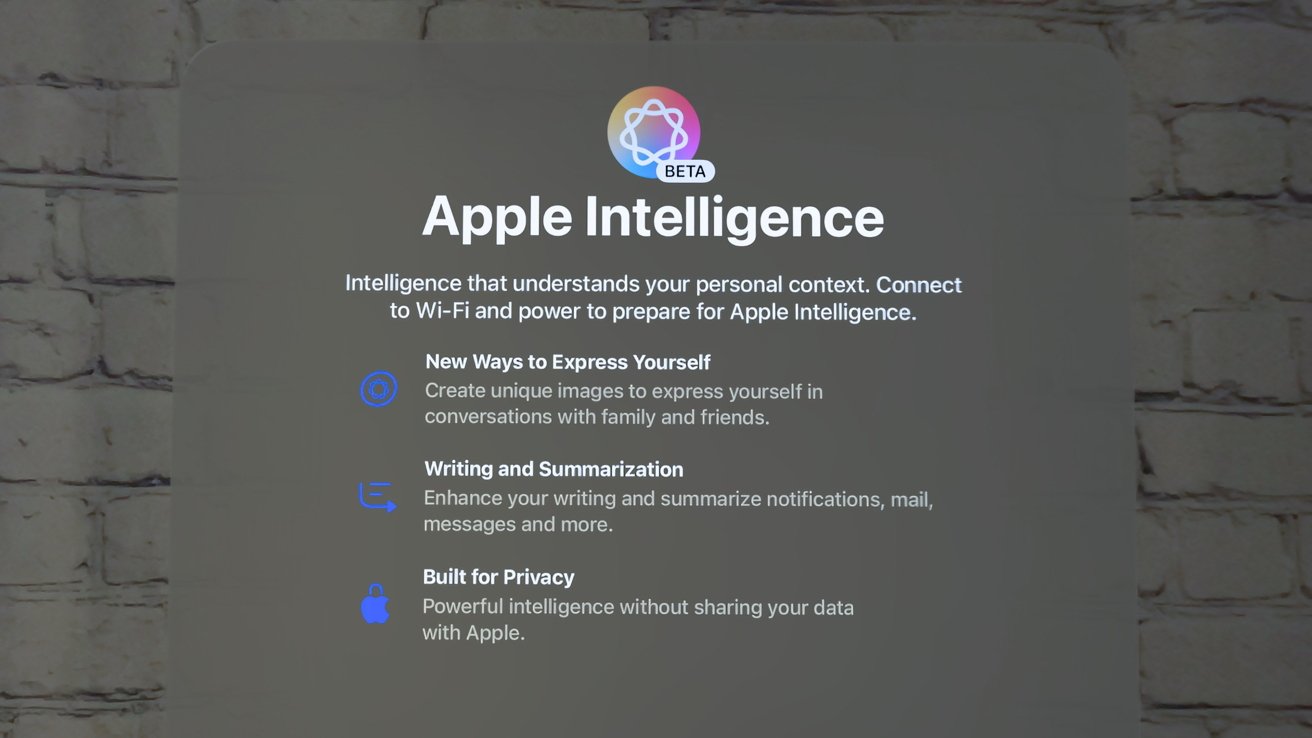
Apple delivered a strong March quarter on April 30 driven by iPhone demand, a rebound in China, and resilient margins, but analysts say the results still don’t answer what will drive the company’s next phase of growth.
The company’s fiscal second-quarter results, reported April 30, beat Wall Street expectations on revenue, profit, and guidance, with strong iPhone demand driving the upside. The quarter confirms solid execution but doesn’t change Apple’s long-term growth story.
Revenue reached about $111.2 billion with earnings per share of $2.01, beating estimates and continuing a pattern of outperformance. Upside came from iPhone demand, stronger performance in China, and resilient margins supported by Services.
Execution remains strong while investors still want a clearer path for growth tied to artificial intelligence and new products. The quarter answers near-term questions on demand and profitability and leaves the company’s long-term growth story unresolved.
Bank of America: Installed base supports future upgrade demand
Bank of America pointed to Apple’s installed base of more than 2.5 billion active devices as a key driver of future growth. Record upgrade activity in the quarter shows strong engagement, but only a portion of that base refreshes devices each year, reinforcing the cyclical nature of demand.
The firm said that scale creates a clear path for future growth if new features tied to Apple Intelligence and Siri drive upgrades. Apple’s ability to convert that large installed base into new device sales will remain central to sustaining growth beyond the current cycle.
Deepwater: iPhone cycle peaks as focus shifts to AI-driven demand
Deepwater’s Gene Munster said the quarter reflects an iPhone-driven upgrade cycle that has pushed growth sharply higher in recent quarters. iPhone revenue growth rose from low single digits to the mid-teens, with recent quarters nearing 20% growth.
The jump points to a surge in upgrades that defines a supercycle. Strong performance is now raising questions about how long the pace can last.
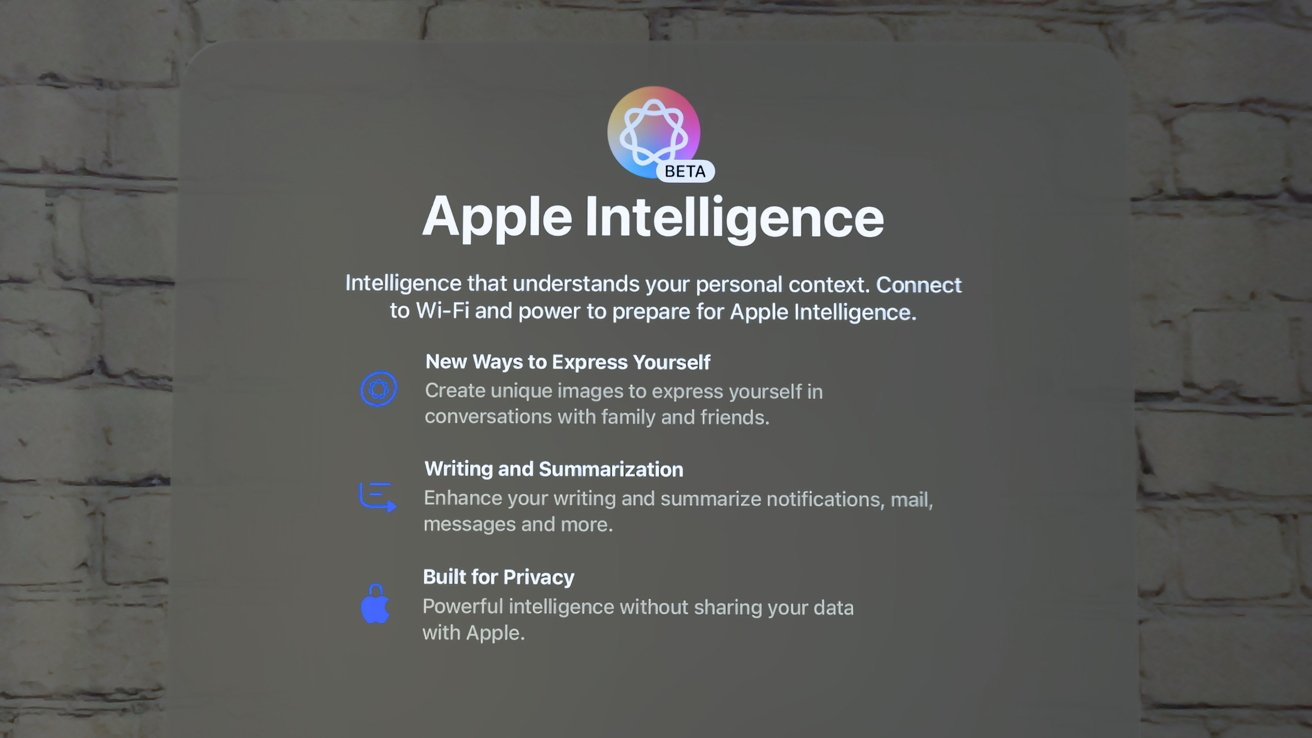
Scale creates a clear path for future growth if new features tied to Apple Intelligence and Siri drive upgrades
Wall Street estimates point to iPhone growth slowing to around 5% in 2027, a sharp drop from recent levels that suggests the current cycle may be nearing a peak. Attention is now shifting to whether new features tied to Apple Intelligence and Siri can sustain demand and drive the next round of upgrades.
Munster said a large portion of the installed base has yet to upgrade in this cycle, leaving room for further growth if new AI-driven capabilities prove compelling enough to accelerate replacement demand.
Evercore ISI: Broad-based growth drives upside
Evercore described the quarter as a solid beat driven by growth across both products and regions, with iPhone leading the way. Revenue rose 17% year over year, with iPhone sales around $57 billion, reflecting continued strength in premium devices and stronger performance in China.
China drove a major share of the quarter with about 28% growth, turning a recent headwind into a clear source of momentum. Gains across other international markets reinforce a broad-based performance rather than reliance on a single product.
Margins beat expectations, with gross margin reaching about 49.3% on a favorable product mix and stronger product profitability. Supply constraints tied to advanced components likely limited additional upside, and rising memory costs remain a factor heading into the June quarter.
Goldman Sachs: Supply constraints masked stronger demand
Goldman Sachs said Apple’s results likely understate underlying demand, with supply constraints limiting growth in key products such as iPhone. The firm estimates revenue could have been roughly 200 to 300 basis points higher without those limits, pointing to demand that exceeded available supply.
Limited component availability, rather than weak demand, capped how much of that growth showed up in reported results. The dynamic suggests Apple’s current momentum remains stronger than headline numbers indicate, even as supply continues to act as a near-term constraint.
Supply constraints have emerged as a key variable shaping near-term results, even as demand remains strong. How quickly Apple can secure additional component supply will determine how much of that underlying demand converts into reported growth in the coming quarters.
Investing.com took a more measured view, calling the results strong but not transformative. The quarter confirms that the current product cycle remains healthy, especially in iPhone and China, without signaling a change in the overall growth trajectory.
Services reached a record high and supported margins while strong hardware revenue kept the overall mix largely unchanged. Apple remains driven by hardware cycles, with Services acting as a stabilizing force rather than a standalone growth engine.
The firm also pointed to Apple’s capital allocation, including a new $100 billion share buyback, as evidence of continued financial strength. Questions remain about whether increased spending on AI and research will translate into a larger revenue opportunity over the next several years.
JPMorgan: Margin strength and supply discipline stand out
JPMorgan highlighted Apple’s ability to outperform on margins despite ongoing concerns about memory costs and component pricing. Gross margin again exceeded expectations, reflecting a combination of pricing power, premium product mix, and expansion in higher-margin Services revenue.
The firm also emphasized share gains across key product categories, driven by strong demand and effective supply chain management. Supply constraints limited some iPhone upside in the March quarter, but those pressures are expected to ease, pointing to potential demand recovery in the June period.
JPMorgan expects revenue to keep growing on strong product demand and Services. Increased spending on AI and operating expenses could weigh on earnings growth in the near term.
Needham: AI demand tightens supply and raises execution risk
Needham highlighted rising risks in Apple’s supply chain as AI-driven spending by Amazon, Google, and Meta tightens availability of key components. Competition for advanced nodes and memory is increasing as hyperscalers pay more to secure supply, putting pressure on Apple’s access and costs.
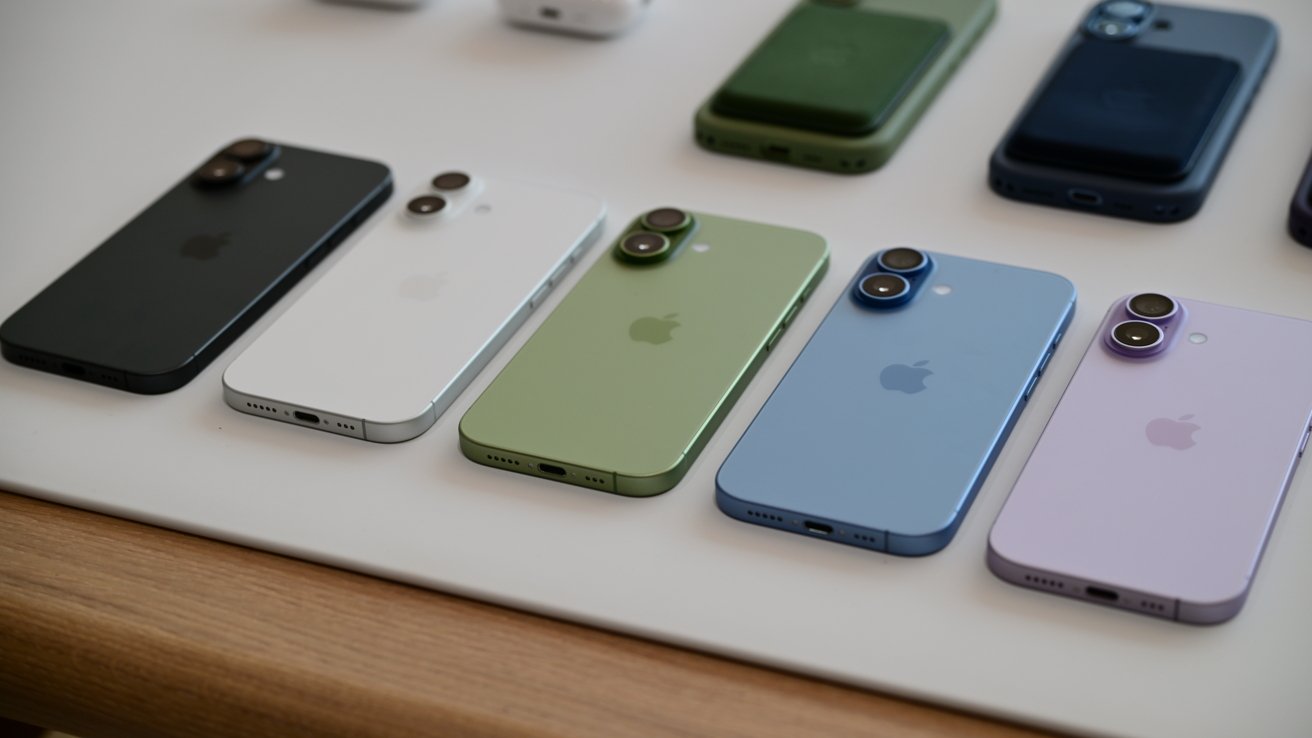
Apple’s iPhone 17 lineup has been popular
The firm said those dynamics could lead to higher component prices, delays, or slower growth if constraints persist. Supply limitations were already a key topic in the quarter, making Apple’s ability to manage availability and pricing a critical factor in sustaining current momentum.
Oppenheimer: AI investment is ahead of revenue impact
Oppenheimer said Apple’s push into artificial intelligence remains early, with investment ramping ahead of clear revenue contribution. Apple Intelligence and improvements to Siri have yet to drive a measurable change in upgrade behavior, leaving the current cycle primarily supported by hardware demand.
The firm pointed to upcoming software updates, including features expected at WWDC and through future OS releases, as a key test for whether AI can drive the next phase of growth. Apple’s ability to turn those features into must-have capabilities tied to newer devices will determine how quickly that investment translates into upgrade demand and revenue.
Wedbush: iPhone supercycle and guidance drive bullish outlook
Wedbush took the most bullish stance, pointing to what it described as an iPhone “supercycle” driving the quarter’s outperformance. Strong demand across geographies, particularly in China, supported double-digit growth in both iPhone and Services revenue.
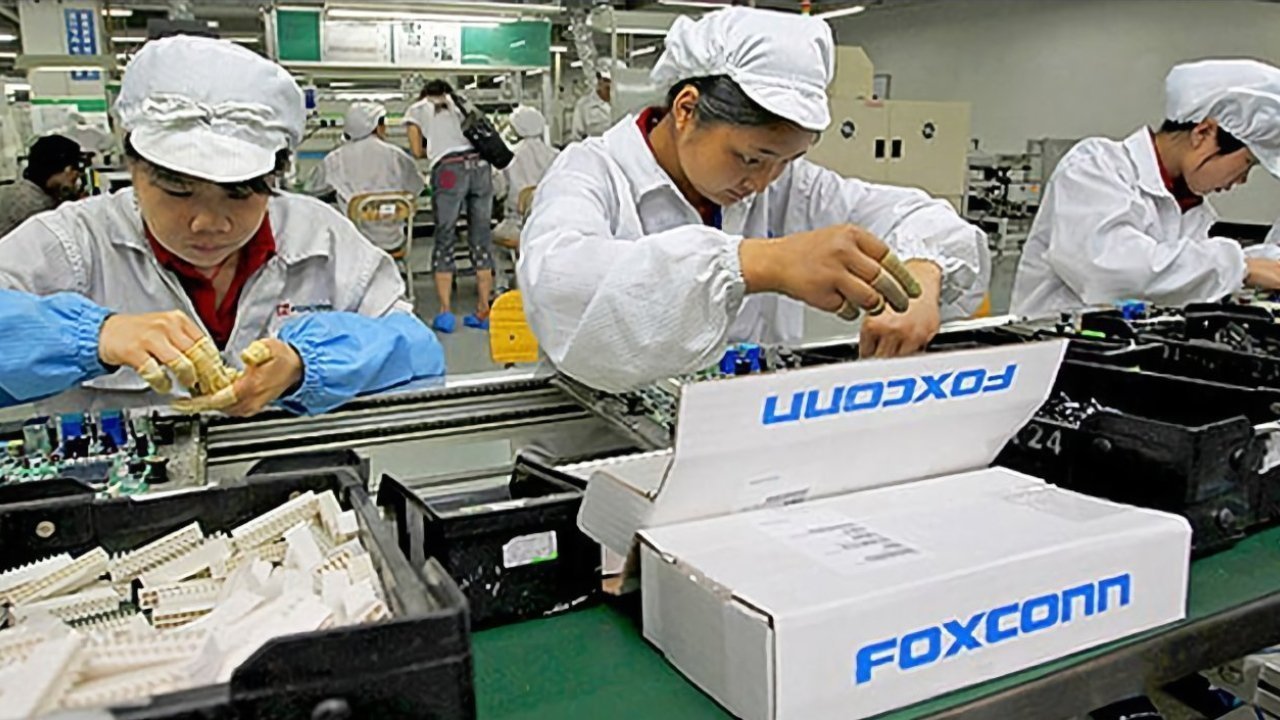
Competition for advanced nodes and memory is increasing as hyperscalers pay more to secure supply
Guidance for the June quarter was a key positive, with Apple forecasting revenue growth of 14% to 17%, well above consensus expectations. The outlook, combined with continued iPhone momentum, supports a strong setup heading into the next product cycle.
The firm also pointed to upcoming catalysts, including Apple’s WWDC developer conference and its evolving AI strategy, as potential drivers of further upside.
Apple’s quarter reinforces a pattern of strong product demand, improving international performance, and steady margins. Near-term momentum is intact, but the results stop short of a turning point, leaving the next phase of growth tied to how well AI and future products drive new revenue.
Rising memory costs are emerging as a near-term pressure point, driven by increased demand tied to AI workloads. Those costs could weigh on margins in the coming quarters even as revenue growth remains strong.
Leadership will shift from Tim Cook to John Ternus later in 2026, with Cook known for operational discipline and Services expansion and Ternus tied to hardware execution. The transition points to continuity in a product-led strategy rather than a sharp pivot.


Apple’s earnings call revealed a few things that make it easy to see what products we can and can’t expect between now and September. The “not coming” list is much longer than the “is probably coming” one.
The Mac is supply-constrained, the iPad isn’t being updated, and iPhones don’t release again until the fall. So, there’s not much left that could arrive in the intervening months.
The Mac mini, Mac Studio, and iMac are all awaiting their M5 upgrades, but Apple’s supply chain is already backed up quite a bit. You can’t purchase an M4 Mac mini if you wanted to.
Memory prices and scarce parts could mean a longer-than-usual wait for new Macs. It’s pretty safe to say based on Tim Cook’s remarks during earnings that there won’t be any through the summer.
The iPad is a gimme because Apple said one isn’t coming without directly saying so. During the earnings call, Apple made it clear that it would be a tough compare since the iPad with A16 was released a year ago.
So if you’re holding your breath for that new budget iPad with A19 and Apple Intelligence, you’ll be waiting a little while longer.
We’ve already got iPhone 17e, so there won’t be any new iPhones until September. Also, Apple Watch won’t get touched until then either.

iPhone, Apple Watch, and AirPods are done with updates for now
AirPods and AirPods Pro tend to be announced alongside iPhone too. AirPods Pro were just upgraded in September 2025, but if AirPods 5 are ready, those likely won’t be announced until the iPhone event.
Apple Vision Pro just got the M5 chip in October 2025 after about 20 months on the market, so that won’t be touched anytime soon. And no, that product line hasn’t been abandoned even if rumors attempted to say as much.
There is one product category Apple could touch upon due to its unpredictable release cycle.
Apple Home products are always possible
The Apple TV 4K is still rocking the A15 processor that first debuted in the iPhone 13 in 2021. It is still supported by Apple’s modern operating systems, but at nearly 5 years old, it’s time for an update.

It’s time for Apple to update the HomePods
Since Apple TV 4K is the brains of an Apple Home, it might make sense to make that product capable of Apple Intelligence. I know I’d appreciate the upgrade to my new smart home.
The HomePod and HomePod mini are both rocking Apple Watch processors — the S7 and S5 respectively. The S7 debuted in Apple Watch Series 7 in 2021, while the S5 was included in the Apple Watch Series 5 in 2019.
It might not be entirely relevant, but watchOS doesn’t even support the S5 chipset anymore. While HomePods run a version of tvOS, that does indicate exactly how old these chipsets are.
It might be time for Apple to do a basic chipset upgrade of the HomePod and HomePod mini. While they likely won’t support Apple Intelligence natively, it would do them good to have modern networking standards for use in Apple Home.
Those are the only Apple Home products Apple offers today, but there are some rumored products too.
Home Hub and cameras are unlikely
Apple is expected to debut what we’ve been calling the Home Hub tablet at some point in 2026. There are also Apple security cameras in the pipeline, or at least a doorbell, but that release window isn’t known.
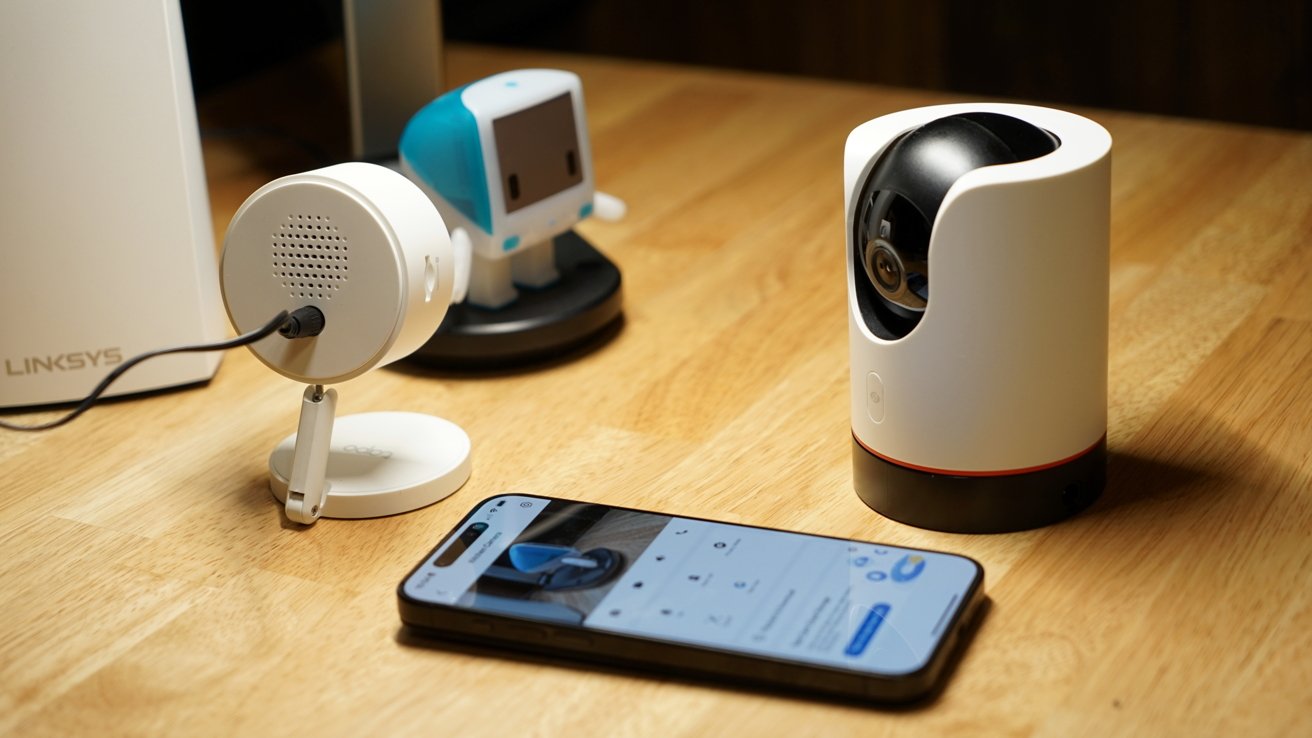
Apple security cameras, doorbell, and Home Hub are all waiting on AI
WWDC 2026 is expected to be filled with announcements regarding Apple Intelligence. One of the biggest announcements will be about Siri and its new Apple Foundation Model backend.
That Siri upgrade is what the Home Hub has been waiting for. However, while Apple could show off the Home Hub during WWDC to demonstrate AI advancements, it is unlikely to put it for sale until later.
Since the Home Hub product and Apple doorbell don’t have an Apple-equivalent, the company can safely pre-announce them at any point. I believe WWDC would be the best place to demonstrate the Home Hub, but the already-packed event may not have room for it.
Likely nothing until the fall
Since Apple has a bundle of smart home products waiting in the wings, it is safe to assume there might be an Apple Home-focused event in the future. So, even if Apple TV and the HomePods are ready to go, Apple might hold off on them for now.
If you’ve been keeping count, that means we should all have little to no expectations for hardware before the iPhone event in September. While many are likely waiting for their pet product to get an update, they’ll just have to make do with WWDC instead.
The OS 27 cycle will be an important one for Apple. It will be among the first things released to the public under the new CEO John Ternus.
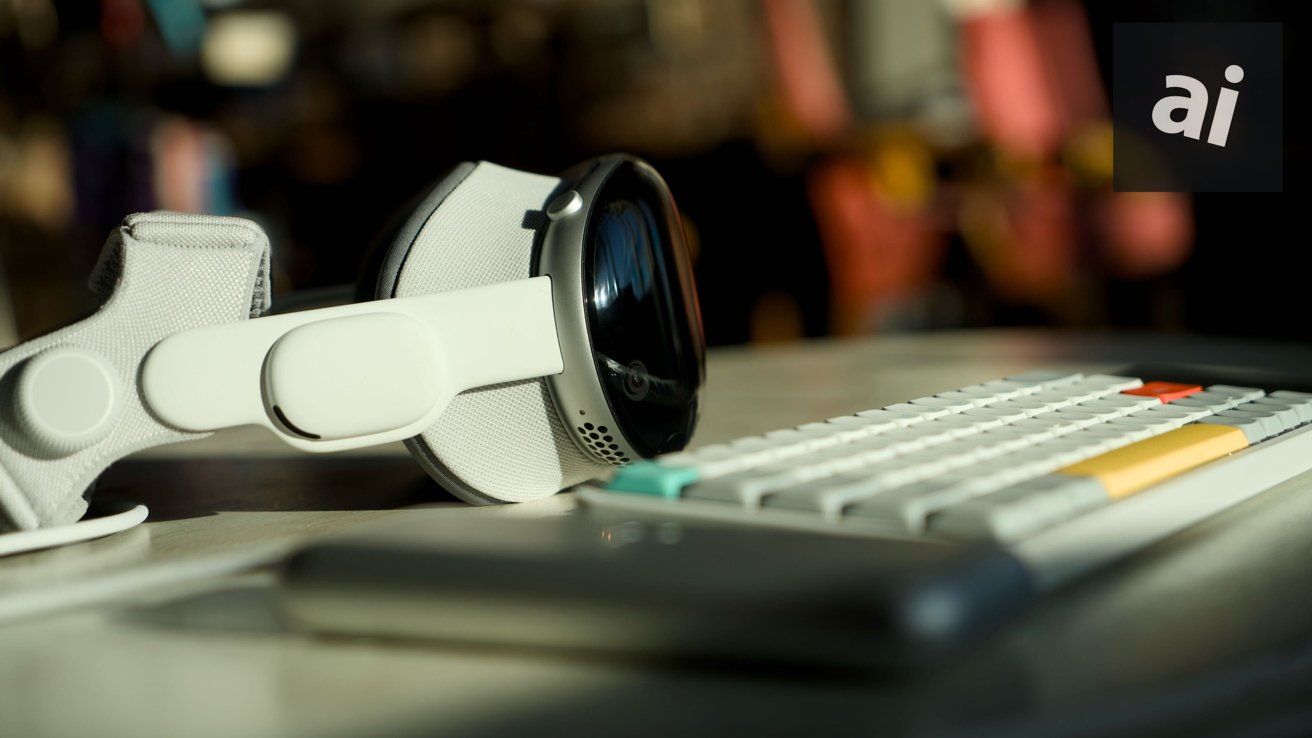
An odd rumor led to premature calls of Apple Vision Pro’s death, rumors of AI and Home Hubs abound, and Apple’s App Store troubles continue on the AppleInsider Podcast.
AppleInsider Managing Editor Mike Wuerthele joins host Wesley Hilliard as a guest this week to catch up on CEO transition news. It’s clear that the silly coverage surrounding the upcoming transition is already becoming exhausting.
The Apple vs Epic trial continues to be an ongoing event that seems to have no end. This time, Apple has to go to the Supreme Court and Circuit Courts at once.
Your hosts dive into the odd Apple Vision Pro rumor that said Apple had given up on the product. They discuss why this likely isn’t the case and how the Vision product line will continue forward.
There’s also a lot to discuss around incoming products like the Home Hub and security cameras. Wes asks Mike if Apple makes too many products.
The show concludes with a discussion around WWDC and Apple’s AI efforts.
BONUS: Subscribe via Patreon or Apple Podcasts to hear AppleInsider+, the extended edition. This week, Wes and Mike discuss their work at AppleInsider and some odds and ends surrounding that.
Links from the show:
More AppleInsider podcasts
Tune in to our Smart Home Insider podcast covering the latest news, products, apps and everything HomeKit related. Subscribe in Apple Podcasts, Overcast, or just search for HomeKit Insider wherever you get your podcasts.
Podcast artwork from Basic Apple Guy. Download the free wallpaper pack here.
Those interested in sponsoring the show can reach out to us at: [email protected].
Subscribe to AppleInsider on:
Keep up with everything Apple in the weekly AppleInsider Podcast. Just say, “Hey, Siri,” to your HomePod mini and ask for these podcasts, and our latest HomeKit Insider episode too. If you want an ad-free main AppleInsider Podcast experience, you can support the AppleInsider podcast by subscribing for $5 per month through Apple’s Podcasts app, or via Patreon if you prefer any other podcast player.


Resident Evil promises an all-new story that follows a medical courier called Bryan, who isn’t having a good night.
Read Entire Article
Source link

For years, California’s streets have hosted a quiet double standard: a human driver caught making an illegal U-turn got a ticket, but a driverless car doing the same thing got away with it, with perhaps a call to the manufacturer. That changes now.
The California DMV has announced what it calls the most important autonomous vehicle regulations in the United States. For the first time, self-driving cars can now be formally cited for breaking traffic laws (via Futurism).

What exactly can authorities do now?
Quite a lot, actually. Under the new rules, authorities can issue a “Notice of AV Noncompliance” directly to manufacturers whenever their autonomous vehicle (AV) commits a moving violation. All the notices add up as a formal paper trail that feeds into the DMV’s permit review process.
Beyond traffic citations, AV companies are bound to respond to first-responder calls within 30 seconds, provide access to manual override systems, and comply with emergency geofencing directives (clearing restricted zones within two minutes of being notified).
If self-driving carmakers fail to comply, they risk suspension of permits, fleet size restrictions, speed caps, and geographic operation limits, all of which could have a negative effect on the companies’ operations and revenue.

Does this affect self-driving trucks, too?
The same set of regulations also opens California roads to heavy-duty self-driving vehicles for the first time, with new permits now available for trucks weighing over 10,000 pounds. Aurora, which has been operating autonomous freight trucks in Texas, has welcomed the development.
What’s good is that AV companies have until summer 2026 to comply with the new communication, after which, the DMV’s enforcement kicks in. Given that the robotaxi services in America are scaling quickly, establishing a citation system tied directly to operating permits could keep things in check.
The regulations, in totality, were partly inspired by a September 2025 incident in San Bruno, where police were powerless in front of a Waymo that had allegedly made an illegal U-turn, and by repeated cases of robotaxis clogging emergency response routes across San Francisco.

NASA engineers have tested a next-generation lithium-plasma electric propulsion system that reached 120 kilowatts, a new U.S. record and about 25 times the power of the electric thrusters on NASA’s Psyche spacecraft. “Designing and building these thrusters over the last couple of years has been a long lead-up to this first test,” said James Polk, who is a senior research scientist at NASA Jet Propulsion Laboratory. “It’s a huge moment for us because we not only showed the thruster works, but we also hit the power levels we were targeting. And we know we have a good testbed to begin addressing the challenges to scaling up.” Universe Today reports: While 120 kilowatts is a new record, NASA estimates it a future human mission to Mars will require 2 to 4 megawatts of power consisting of several thrusters and requiring more than 23,000 hours (958 days/2.6 years) of operation. To accomplish this, the thrusters would have to withstand more than 2,800 degrees Celsius (5,000 degrees Fahrenheit), which the thrusters achieved during testing.
The reason for the extended operation is due to the estimated time of an entire human mission to Mars, which is estimated to be approximately 2.6 years. This is because the launch window to Mars only opens once every two years due to the orbital behaviors of both planets. While no mission has ever returned from the Red Planet, this same launch window works from Mars to Earth, too. When launched within this window, robotic spacecraft have traditionally taken approximately 6-7 months to reach Mars.
However, a human mission would require a much larger spacecraft to accommodate the astronauts, food, fuel, water, and other mission-essential items. For the approximate 2.6-year mission, this would entail approximately 6-9 months traveling to Mars, followed by approximately 18 months on the surface of Mars until the next launch window opens, then another approximate 6-9 months back to Earth. However, having much less fuel due to the electric propulsion system could potentially alter this timeframe.

Uber has a long-term ambition that goes well beyond shuttling passengers: the company eventually wants to outfit its human drivers’ cars with sensors to soak up real-world data for autonomous vehicle (AV) companies — and potentially other companies training AI models on physical-world scenarios.
Praveen Neppalli Naga, Uber’s chief technology officer, revealed the plan in an interview at TechCrunch’s StrictlyVC event in San Francisco on Thursday night, describing it as a natural extension of a nascent program the company announced in late January called AV Labs.
“That is the direction we want to go eventually,” Naga said of equipping human drivers’ vehicles. “But first we need to get the understanding of the sensor kits and how they all work. There are some regulations — we have to make sure every state has [clarity on] what sensors mean, and what sharing it means.”
For now, AV Labs relies on a small, dedicated fleet of sensor-equipped cars that Uber operates itself, separate from its driver network. But the ambition is clearly much larger. Uber has millions of drivers globally, and if even a fraction of those cars could be transformed into rolling data-collection platforms, the scale of what Uber could offer the AV industry would dwarf what any individual AV company could assemble on its own.
The insight driving the program, Naga said, is that the limiting factor for AV development is no longer the underlying technology. “The bottleneck is data,” he said. “[Companies like Waymo] need to go around and collect the data, collect different scenarios. You may be able to say: in San Francisco, ‘At this school intersection, I want some data at this time of day so I can train my models.’ The problem for all these companies is access to that data, because they don’t have the capital to deploy the cars and go collect all this information.”
Becoming the data layer for the entire AV ecosystem is a pretty smart play, particularly considering Uber years ago abandoned its own ambitions to build self-driving cars (a move that co-founder Travis Kalanick has publicly lamented as a big mistake). Indeed, many industry observers have wondered if, without its own self-driving cars, Uber might one day be rendered irrelevant as AVs increasingly spring up around the globe.
The company currently has partnerships with 25 AV companies — including Wayve, which operates in London — and is building what Naga described as an “AV cloud”: a library of labeled sensor data that partner companies can query and use to train their models. Partners, which Uber plans to more aggressively invest in directly, can also use the system to run their trained models in “shadow mode” against real Uber trips, simulating how an AV would have performed without actually putting one on the road.
Techcrunch event
San Francisco, CA
|
October 13-15, 2026
“Our goal is not to make money out of this data,” Naga said. “We want to democratize it.”
Given the obvious commercial value of what Uber is building, that positioning may not last long. The company has already made equity investments in numerous AV players, and its ability to offer proprietary training data at scale could give it significant leverage over a sector that right now depends on Uber’s ride marketplace to reach customers.
When you purchase through links in our articles, we may earn a small commission. This doesn’t affect our editorial independence.
Tech
Roblox Reality is like DLSS 5 for Roblox, except it invents photorealistic details the game never had


Roblox Reality combines the popular game creation platform’s real-time graphics engine with an AI-powered video generator to dramatically increase the visual quality of user creations. The hybrid architecture does not yet run in real time, but Roblox aims to launch the first iteration in late 2026 or early 2027.
Read Entire Article
Source link
Tech
xAI launches Grok 4.3 at an aggressively low price and a new, fast, powerful voice cloning suite
While Elon Musk faces off against his former colleague and OpenAI co-founder Sam Altman in court, Musk’s rival firm xAI, founded to take on OpenAI, isn’t slowing down on launching competitive new products and services.
Last night, xAI shipped a new, proprietary base large language model (LLM), Grok 4.3, and a new voice cloning suite on the web.
The new products arrive after months of tumult from xAI that saw all of Musk’s 10 original co-founders of the lab and dozens more researchers exit the firm and Grok was eclipsed on performance by many new competing LLMs from the likes of OpenAI, Anthropic, Google, and Chinese firms DeepSeek, Moonshot (Kimi), Alibaba (Qwen), z.ai, and others.
While Grok 4.3 does mark a significant leap in performance on third-party benchmarks over its direct predecessor Grok 4.2, according to the independent AI model evaluation firm Artificial Analysis, it still remains below the state-of-the-art set by OpenAI and Anthropic’s latest models.
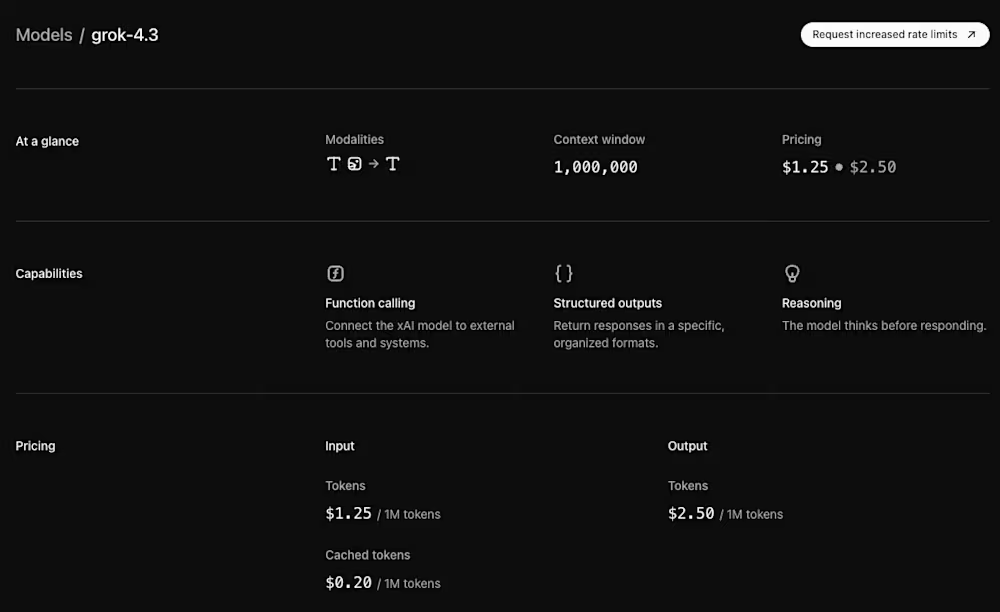
But the marquee feature of the Grok brand has — other than Musk’s stated opposition to “wokeness” and its more freewheeling personality and image generation policy — increasingly been its low price point when accessed by developers and users via the xAI application programming interface (API), a trend only furthered by Grok 4.3, which costs $1.25 per million input tokens and $2.50 per million output tokens (up to 200,000 input tokens, at which point costs double, a common pricing strategy of leading AI labs) compared to its direct predecessor Grok 4.2’s initial API pricing of $2/$6 per million input/output tokens.

According to xAI’s release notes, Grok 4.3 began beta testing in April for subscribers to xAI’s SuperGrok ($30 monthly) plan, and those of its sibling social network, X, through its Premium+ plan ($40 monthly with 50% for first two months). Now it’s available to all through the xAI API and through partner OpenRouter.
Reasoning baked-in and agentic tool-use capabilities
At the core of Grok 4.3 is a fundamental shift in how the model processes information. Unlike previous iterations where “chain-of-thought” or reasoning could often be toggled or configured by effort levels, Grok 4.3 is built with reasoning as an active, permanent state.
This means the model is designed to “think” before it speaks for every query, a strategy intended to maximize factual accuracy and the handling of complex, multi-step instructions.
The model’s memory is equally expansive, featuring a 1 million-token context window. To put this in perspective, a million tokens is roughly equivalent to several thick novels or the entire codebase of a mid-sized application.
This allows Grok 4.3 to maintain coherence over massive datasets, though xAI has implemented a “Higher context pricing” structure for requests that exceed the 200,000-token threshold.
This tiering suggests that while the “long-term memory” is available, the computational cost of managing that much information remains a significant overhead.Technically, the model accepts both text and image inputs, outputting text.
It is specifically optimized for agentic workflows—scenarios where an AI is not just answering a question but acting as an autonomous agent to complete a task.
For the first time, Grok has access to the same tools and environments a human professional would use. Evidence of this shift is visible in early user interactions:
-
Spreadsheet Engineering: In one instance, the model spent 6 minutes and 22 seconds in a “thought” phase to build a comprehensive OSRS Sailing Combat DPS analyzer. The resulting
.xlsxfile wasn’t a simple table but a multi-sheet dashboard including a “Reference_Data” set and a complex “DPS_Calculator” with formulaic auto-calculations. -
Professional Documentation: Grok now generates formatted PDFs, such as 12-page reports on SpaceX products. These documents incorporate branding, logos, hero images, and structured tables, moving well beyond the markdown blocks of previous iterations.
-
Visual Presentations: The model can design 9-slide PowerPoint decks, utilizing a “Sandwich Structure” (dark titles/conclusions with light content) and integrating data-driven decision matrices and humor.
However, its knowledge of the world is not infinite; the release notes list a knowledge cut-off date of December 2025. Yet, thanks to built-in web search, Grok can reference and use up-to-date information.
In fact, Grok 4.3 arrives with an enhanced ecosystem of tools designed to make it a functional digital employee. The xAI platform now offers a robust set of server-side tools that the model can invoke autonomously based on the complexity of the query.
-
Web and X Search: These tools allow Grok to bypass its knowledge cutoff by browsing the live internet or searching X (formerly Twitter) posts, user profiles, and threads.
-
Code Execution: The model can run Python code in a sandboxed environment to solve mathematical problems or process data.
-
File and Collections Search: A built-in Retrieval-Augmented Generation (RAG) system allows users to query uploaded document collections or search through specific file attachments.
xAI’s Custom Voices let you clone your voice at high quality in a minute or two
Beyond text, xAI has introduced Custom Voices, a sophisticated voice-cloning API and web-based voice cloning creation suite.
This product allows developers to clone a voice from a reference audio clip as short as 120 seconds. Once cloned, the “voice ID” can be used across xAI’s Text-to-Speech (TTS) and Voice Agent APIs.
xAI’s documentation emphasizes that this is not merely about timbre; the model is designed to pick up delivery patterns.
If a user records a reference clip in a “customer support” style, the resulting AI voice will mimic that helpful, professional inflection.
Despite the creative potential, xAI has placed strict geographic limits on this feature, making it available only in the United States, with a notable exception for Illinois due to regional biometric and privacy regulations.
While the console playground is open for general use, programmatic access via the POST /v1/custom-voices endpoint is currently gated to teams on an Enterprise plan.
I tried it myself and after moving through the requisite voice sampling screens on the web — the tool asks you to read aloud several passages of unrelated dialog — I indeed had a copy of my voice that sounded eerily identical to mine and accurately pronounced new words the same way I would when reading allowed from a new script it was given.
You can delete your custom voices in one click on xAI’s Custom Voices web application and create up to 30 new ones at a time.
In terms of licensing, the Custom Voices feature is strictly “scoped to your team” and is never made available to other users, ensuring a private, commercial license for corporate assets.
Access to the new Voice Agent API (grok-voice-think-fast-1.0) is billed at a flat rate of $3.00 per hour ($0.05 per minute) for speech-to-speech interactions. This is on the low-medium end of costs for other competing voice agents, according to my research:
|
Service |
Price per 1k Characters |
Estimated Cost per Minute |
Estimated Cost per Hour |
|
OpenAI TTS (Standard) |
$0.015 |
~$0.015 |
~$0.90 |
|
OpenAI TTS (HD) |
$0.030 |
~$0.030 |
~$1.80 |
|
Grok Voice Agent |
$0.05 |
$3.00 |
|
|
ElevenLabs (Starter) |
~$0.30 |
~$0.30 |
~$18.00 |
|
ElevenLabs (Pro) |
~$0.18 |
~$0.18 |
~$10.80 |
|
Play.ht |
~$0.20 |
~$0.20 |
~$12.00 |
|
Azure/Google Cloud |
$0.016 – $0.024 |
~$0.02 |
~$1.00 – $1.50 |
Complementing this is the standalone Text-to-Speech (TTS) service, which offers five distinct voices (Eve, Ara, Rex, Sal, and Leo) and is priced at $4.20 per 1 million characters.
For transcription needs, the Speech-to-Text (STT) API provides real-time streaming at $0.20 per hour, while batch processing is available at a discounted rate of $0.10 per hour.
To ensure security for client-side applications, xAI utilizes Ephemeral Tokens, allowing for secure WebSocket connections without exposing primary API keys.
Once created, these voices are private to the user’s team and can be used across all voice APIs by referencing a unique 8-character alphanumeric voice_id.
For highly regulated sectors, xAI maintains production-ready standards, including SOC 2 Type II auditing, HIPAA eligibility for healthcare workloads, and GDPR compliance.
Aggressively low API pricing as a differentiator
The most aggressive aspect of the Grok 4.3 announcement is its pricing structure. Bindu Reddy, CEO of enterprise assistant startup Abacus AI noted on X that the model is “as smart as Sonnet 4.6 and 5x cheaper and faster”.
The standard API rates are set at $1.25 per million input tokens and $2.50 per million output tokens. This reflects a significant reduction in cost compared to its predecessor, Grok 4.20, with Artificial Analysis reporting an approximately 40% lower input price and 60% lower output price.
According to our calculations at VentureBeat, that places Grok-4.3 firmly in the lowest cost half of all major foundation models, far closer to Chinese open source offerings than its U.S. proprietary rivals:
|
Model |
Input |
Output |
Total Cost |
Source |
|
MiMo-V2.5 Flash |
$0.10 |
$0.30 |
$0.40 |
|
|
Grok 4.1 Fast |
$0.20 |
$0.50 |
$0.70 |
|
|
MiniMax M2.7 |
$0.30 |
$1.20 |
$1.50 |
|
|
MiMo-V2.5 |
$0.40 |
$2.00 |
$2.40 |
|
|
Gemini 3 Flash |
$0.50 |
$3.00 |
$3.50 |
|
|
Kimi-K2.5 |
$0.60 |
$3.00 |
$3.60 |
|
|
Grok 4.3 |
$1.25 |
$2.50 |
$3.75 |
|
|
GLM-5 |
$1.00 |
$3.20 |
$4.20 |
|
|
GLM-5-Turbo |
$1.20 |
$4.00 |
$5.20 |
|
|
DeepSeek V4 Pro |
$1.74 |
$3.48 |
$5.22 |
|
|
GLM-5.1 |
$1.40 |
$4.40 |
$5.80 |
|
|
Claude Haiku 4.5 |
$1.00 |
$5.00 |
$6.00 |
|
|
Qwen3-Max |
$1.20 |
$6.00 |
$7.20 |
|
|
Gemini 3 Pro |
$2.00 |
$12.00 |
$14.00 |
|
|
GPT-5.4 |
$2.50 |
$15.00 |
$17.50 |
|
|
Claude Opus 4.7 |
$5.00 |
$25.00 |
$30.00 |
|
|
GPT-5.5 |
$5.00 |
$30.00 |
$35.00 |
However, the “reasoning” nature of the model introduces a new billing category: Reasoning tokens.
These are tokens generated during the model’s internal thinking process and are billed at the same rate as standard completion tokens. Effectively, users pay for the AI to “think” before it provides the final answer. xAI has also introduced several unique fee structures:
-
Prompt Caching: Repeated prompts are significantly cheaper, at $0.20 per million tokens, incentivizing developers to reuse context.
-
Tool Invocations: While token usage for tools is billed at standard rates, the act of invoking a tool carries a flat fee—$5.00 per 1,000 calls for Web Search or Code Execution, and $10.00 for File Attachments.
-
Usage Guideline Violation Fee: In a move that may set a new industry precedent, xAI charges a $0.05 fee for requests that are blocked by their safety filters before generation even begins.
The model itself remains accessible via a standard commercial API, with xAI recommending that all developers migrate to grok-4.3 as their “most intelligent and fastest model”.
Third-party benchmark evaluations and analysis
The reception of Grok 4.3 has been polarized, depending largely on the specific use case. Professional benchmarkers and developers have highlighted a “stark gap” between the model’s domain-specific strengths and its general reasoning consistency.
According to independent AI evaluation firm Vals AI, Grok 4.3 has taken the top spot on several specialized indices. It currently ranks #1 on CaseLaw v2 (79.3% accuracy) and #1 on CorpFin.
This 25-point jump in legal reasoning over Grok 4.20 suggests that the “always-on reasoning” architecture is particularly well-suited for the dense, logical structures of law and finance.
Artificial Analysis corroborated this performance, noting a massive improvement in agentic tasks, scoring an Elo of 1500 on the GDPval-AA benchmark, surpassing competitors like Gemini 3.1 Pro and GPT-5.4 mini.
Conversely, users focused on general-purpose agents and coding have highlighted deficiencies.
AI automated brick-and-mortar retail company Andon Labs reported that Grok 4.3 is a “big regression” on the Vending-Bench 2, which measures an AI’s ability to take consistent actions in a simulation.
They colorfully described the model as having “narcolepsy problems,” preferring to remain inactive for multiple simulation days rather than taking the required actions.
The sentiment was echoed by Vals AI, which noted that while the model improved in some coding areas, it remains weak on general coding tasks and “struggles with difficult math problems,” scoring only 11% on ProofBench.
Should your enterprise use Grok 4.3?
The launch of Grok 4.3 represents a calculated bet by xAI that the market wants specialized brilliance and extreme cost efficiency over a perfectly balanced generalist.
By achieving a score of 53 on the Artificial Analysis Intelligence Index while remaining on the “Pareto frontier” of cost-per-intelligence, xAI is positioning itself as the “value” leader for enterprise applications in legal and financial tech.
The “always-on reasoning” is a double-edged sword. While it provides the depth needed to navigate complex case law, the community reports of “narcolepsy” suggest that a model that is always “thinking” may occasionally think itself into a state of paralysis, or at least a state of excessive caution that inhibits agentic action.
In addition, prior Grok model scandals including an X chatbot version referring to itself as “MechaHitler” and posting antisemitic content, sexualized deepfake imagery generation and investigations, and references to racial conflicts and right-wing dog whistle framing of social issues — which appear to mirror many of founder Musk’s own positions, to the point that the model was at one point, checking Musk’s own X account before responding in its X implementation — nearly certain to give some enterprises pause when considering adoption. It’s unclear whether any of those issues remain with Grok 4.3, but one user did note that Grok’s system prompt appears to instruct it “you do not assign broad positive/negative utility functions to groups of people.”
For developers, the decision to adopt Grok 4.3 will likely come down to the nature of their data. For those needing to process a million tokens of legal documents at a fraction of the cost of Claude 4.6 or GPT-5.5, Grok 4.3 is a clear front-runner.
For those building high-frequency autonomous agents or complex math solvers, the “narcolepsy” and coding regressions suggest that xAI’s latest model may still need a few more “tuning passes”.
As OpenRouter noted on X upon making the model live, the “large jump in agentic performance” at a lower price point is an undeniable milestone. Whether that performance can be sustained across all domains remains the primary question for the summer of 2026.
A VPN, or virtual private network, is an important tool for privacy and security. It works by hiding your IP address from public view, helping you access content that might be region-restricted or censored. Many VPNs, like Windscribe, also offer additional features, such as ad blocking.
But it may never have occurred to you to give your AI agent VPN access, too.
If you use OpenClaw, ChatGPT or one of the many other LLMs with access to the internet, your autonomous AI agent can now take advantage of the same privacy and security features.
Gen Digital’s VPN for AI agents, from the company behind big names like Norton and Avast, will now let you route your autonomous AI agent through its VPN for Agents. It’s available through the Gen Agent Trust Hub and powered by Norton VPN.
“Using a VPN with an LLM can provide several advantages, such as keeping your identity private. Your internet provider won’t be able to see your AI agent’s activity, or that you’re using an AI agent,” said Moe Long, CNET senior editor.
“You can also unblock regional content in an LLM. Running your VPN through an AI agent may let you avoid traffic throttling or blocked access. Gen’s VPN for AI Agents works with multiple AI agents, doesn’t require any downloads or client setup, and has multiple tunnel tech that lets you run several agents simultaneously through a VPN.”
A VPN offers improved security and privacy for your internet activities, preventing an ISP and other actors from tracking you.
Long said more people are turning to AI agents, but those agents often access the internet without additional protection, meaning your IP address is associated with all their activities. That means not only does your ISP see your activities via the AI agent, but the agent also can’t access regional content or bypass throttling or restricted access.
Windscribe recently debuted OpenClaw agent support, and Gen Digital now has a VPN that supports multiple LLMs, including OpenClaw and ChatGPT.
Atila Tomaschek, CNET senior writer, said that Windscribe expresses it in its blog post, where the company notes: “If your agent gets a little too enthusiastic and triggers a security challenge or lands on a blocklist, it’s your digital reputation on the line, and potentially your entire home network that takes the hit.”
OpenClaw is one of the major AI agents that will be able to take advantage of VPN services.
“Perhaps most importantly, your ISP can’t distinguish between your own internet traffic and that of your autonomous AI agent,” said Tomaschek. “But with this integration, as well as with Windscribe’s, the VPN encrypts the agent’s traffic as well, so basically you’re protected from whatever your agent might autonomously get up to on the internet.”
A representative for Gen Digital did not immediately respond to a request for comment.


Women have long been left out of the datasets and decisions shaping everything from car safety to medical diagnoses. Industry leaders warn a rushed approach to artificial intelligence risks repeating those patterns.
That was a central message at this week’s Women in Tech Regatta in Seattle, where speakers urged earlier and broader participation in AI development as adoption accelerates.
“Exclusion compounds over time and becomes much harder to detect,” Anya Edelstein, learning experiences manager at Seattle-based Highspot, said during an AI leadership panel on Wednesday. “If your perspective isn’t taken into account in the room when those decisions are initially made, it’s harder to make a change later down the road.”
Over the past few years, researchers have sought to mitigate the failures of machine-learning models trained on biased or skewed datasets, including misdiagnosis of kidney failure in women. In the meantime, women worldwide are about 20% less likely than men to engage with AI tools, furthering the training disparity.
In the tech field, at least, the AI gender gap seems to be closing. It’s a noteworthy shift as companies race toward automation at scale, and concerns about misinformation and data security swirl around Anthropic and OpenAI going public.
Women are leading AI strategy – with caution
Most women in senior roles (80%) are driving AI strategy in the workplace, where they prioritize responsible adoption over speed, according to a poll of more than 1,700 industry leaders published earlier this month by Chief, a women-focused leadership network.
This is often in contrast to company pressures to deploy AI tools and strategies at an increasingly rapid pace, said Maria Martin, product management director at Nordstrom.
“There’s less runway between a decision getting made, and a decision scaling,” Martin said at the panel Wednesday. “It’s important to get ahead and get involved early.”
In the group of women Chief surveyed, 71% were first at their companies to flag AI risks.
“If we’re not intentionally creating interventions every step along the way,” said Edelstein, “bias has an opportunity to creep in.”
Getting women into the room
The problem with bringing qualified women into AI leadership and decision-making spaces may start with hiring. At least two-thirds of recruiters use AI to screen candidates, a process shown to reproduce race and gender bias, often intersectionally.

In 2024, researchers at the University of Washington found that AI resume screeners choose masculine names over feminine 89% of the time, and white-associated names over Black-associated names 85% of the time. A year later, UW found that hiring managers mirror their AI model’s biases.
Women and people of color face pressures to assimilate and code-switch – like using a race-and gender-neutral name on a resume – before they even enter the office. Once they’re hired, it’s about finding the right people for support, said Cynthia Tee, a longtime engineering leader and computer scientist.
Tee suggests more industry leaders can implement a sponsorship model, which requires greater intention, tangible risk and cost compared to typical allyship in the workplace.
“Keep insisting on promoting people who deserve it,” Tee said during a panel about navigating workplace dynamics. “Keep bringing more diverse people through your hiring pipelines. Keep bringing up people whose voices are not heard.”
The AI conversation is for everyone
There can be a confidence barrier to understanding or using AI, partially due to the industry’s “black box” design. Nandita Krishnan, a data scientist at Adobe who builds apps on the side, suggests setting time aside every week to read up on the latest news and experiment with automating daily tasks.
“If you’re vibe coding, do it in a manner that makes the software still secure,” she said at the panel with Edelstein and Martin. “When you’re building out AI systems, it’s very prone to hallucinate. Add something to ground the LLMs, and give your agent this fact or database of knowledge to make sure it does not derail.”
Participation in AI decision-making isn’t limited to technical expertise. Edelstein suggests establishing values around AI – including education, healthcare and the environment – and finding industry leaders or companies who align to engage with.
Many workers are learning AI out of fear of being left behind, she added, but curiosity leads to better outcomes.
“If we can shift a lot of the perceptions around AI,” she said, “that is the first step to bringing more people into the conversation.”

Local elections 2026: Nigel Farage leads Reform troops in Battle for Essex as Tories defend ‘last stronghold’

LeBron James Leads Lakers to Game 6 Victory Over Rockets

No new Macs or iPads before September

Manchester United reach agreement with Casemiro over contract clause amid transfer speculation

US brings back mandatory military draft registration

Steven Gerrard disagrees with Gary Neville over ‘shock’ Chelsea and Arsenal claim | Football

LIVE: Ripple Leads Massive Tokenization Move with BlackRock – Game Changer for XRP Holders!

JUST CONFIRMED!!! XRP HOLDERS TRUMP ALL IN for CRYPTO

Live Trading – Crypto , Gold and US OIL with Trump | 1 May 2026 | Crypto Trading Live
-

 Tech5 days ago
Register Renaming | Hackaday
-
 Crypto World7 days ago
Hyperliquid $HYPE Rally Builds Momentum as AI Sector Enters Prove-It Phase
-

 Politics4 days ago
Drax board avoid their own AGM, accused of greenwashing & environmental racism
-

 Tech5 days ago
Why Blue Badges Disappeared From Toyota Hybrids
-

 Tech5 days ago
Images of Samsung’s rumored smart glasses have leaked
-
 Sports6 days ago
IPL 2026: Ruturaj Gaikwad registers slowest fifty of the season, enters all-time unwanted list | Cricket News
-
 Tech13 hours ago
Trump’s 25% EU auto tariff breaches Turnberry Agreement that also covers semiconductors and digital trade
-

 NewsBeat6 days ago
LK Bennett closes all stores after entering administration
-

 Fashion3 days ago
Kylie Jenner’s KHY Enters a New Era with ‘Born in LA’
-
 Entertainment7 days ago
Mariah Carey Slams Deposition Claims In Brother’s Lawsuit
-

 Business3 days ago
Most Commercial Energy Audits Miss the Real Losses
-

 Crypto World4 days ago
CFTC’s AI will review U.S. crypto registration applications, chairman tells CoinDesk
-

 Business5 days ago
(VIDEO) Charlize Theron Climbs Times Square Billboard to Promote New Netflix Thriller ‘Apex’
-

 Business3 days ago
Barclay Brothers Avoid Bankruptcy: HSBC Drops High Court Petitions After IVA Deal
-
 Sports13 hours ago
Paul Scholes issues Marcus Rashford reality check as agreement emerges over Man United star
-

 Tech6 days ago
Microsoft to roll out Entra passkeys on Windows in late April
-

 Tech6 days ago
OpenAI’s Sam Altman apologizes for not reporting ChatGPT account of Tumbler Ridge suspect to police
-
 Business2 days ago
Tesla Officially Registers Elon Musk’s Stock: What Investors Need to Know
-

 Tech6 days ago
OpenAI CEO apologizes to Tumbler Ridge community
-

 Tech4 days ago
Get Ready for More Brain-Scanning Consumer Gadgets
You must be logged in to post a comment Login