Connect with us

Tech

Is The Leatherman Raptor Worth The Price? Here’s What First Responders Say

Published

on


We may receive a commission on purchases made from links.

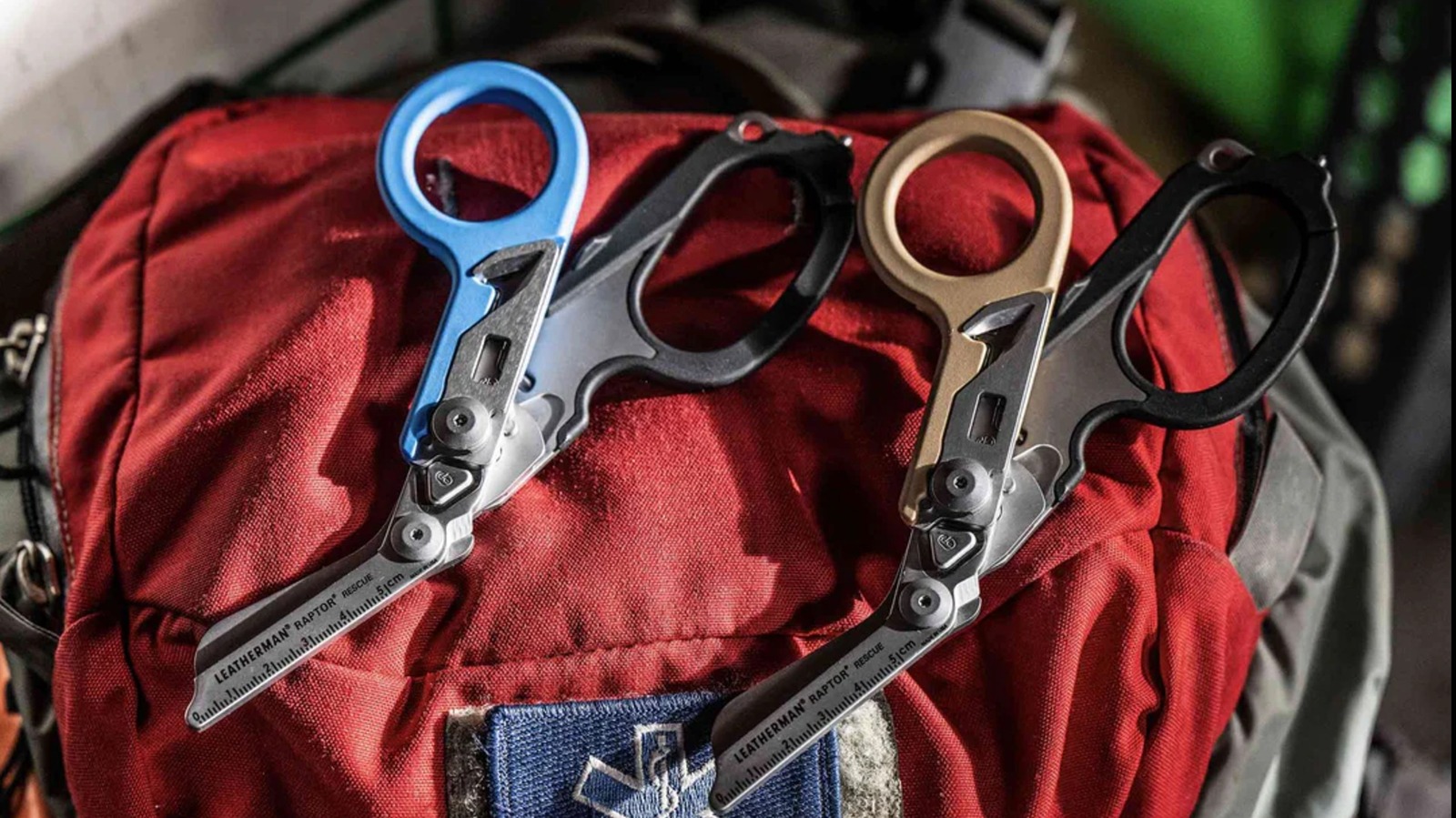
A proudly American brand with many of its products hailing from Oregon, Leatherman has made a name for itself for its dozens of reliable multitool offerings in its portfolio. Whether you want a companion for your outdoor camping trips, everyday adventures, or even for professional use, there’s bound to be one for you. If there’s one group of people who need an easy to grab tool for all kinds of unexpected situations, it’s first responders. First responders are often confronted obstacles that can get in the way of them giving necessary, immediate care. While their workplace may provide some tools, many people still want something that they know will always work exactly when they need them to, like the Leatherman Raptor Rescue.

Advertisement

It retails for $79.95 on the On the Leatherman website and Amazon,with two sheath types: molle holster and utility holster. Both holsters come in seven colors, plus options for limited edition options, such as rainbow and rose gold. Leatherman covers it under its 25-year warranty. While it has a lot fewer features than other popular Leatherman multi-tools, it has tools designed specifically for first responders. Here’s what you need to know about it and what emergency professionals had to say about it.

Advertisement

What you need to know about the Leatherman Raptor

The Leatherman Raptor has five tools with its premium scissors being one of the most commonly praised features. You can tighten or loosen the sheers for improved cutting performance, especially if you encounter tougher materials. For people who work in the field, like paramedics or police, the glass breaker and strap cutter can be useful for pulling people out of cars. There’s also an oxygen tank wrench and ring cutter, but Leatherman notes that it’s made for gold and silver rings rather than stronger materials like titanium. This means you’ll need to use something else if you plan to cut those made of harder metals.

Weighing 5.8 oz (or like half a deck of cards), it can be folded and made for on-the-go use. When it’s closed, it’s just five inches in length and opens up to eight inches. It’s a little under two inches wide and 0.67 inches thick. The silver-colored shear, which is made of 420 stainless steel, is 1.9 inches long. It also has a bead blast finish and a lock with handles in different colors. But take note, since pivoting issues are the most common problems with Leatherman multi-tools you will need to regularly clean it with soap and water, plus top off with PTFE-based lubricants to maintain smooth movement. Lastly, you’ll also need to sharpen the shears regularly.

Advertisement

What do first responders have to say about the Leatherman Raptor

On the Leatherman website, the Raptor Rescue has been rated 4.8 stars on average from more than 2000 reviewers, where most people (89%) have rated it 5 stars. On Amazon, it shares the same 4.8-star rating from 600+ people, plus it’s an Overall Pick product. One person, who gifted it to his trauma nurse partner, said that they liked it so much that after using it for about a decade, he bought a second pair. A Reddit user wrote that they had a pair for seven years, and they cut through everything from leather boots to cable tire chains. Another person in the Paramedics subreddit praised it as a good investment and that it functioned well for seatbelts, barbed wire, and clothes.

However, not everyone is satisfied with its performance with its price being the primary point of contention. An EMS professional shared that the hears fail to cut even the simplest thing, and they often had to borrow someone else’s. On the Firefighting subreddit, one Reddit user thought it’s still more cost-effective to just buy cheaper options and replace them regularly with several first responders echoing his comment. In particular, one person on the r/ParamedicsAU thread said that they rust easily and don’t recommend them because they’re too high maintenance.

Advertisement


Source link

Advertisement
Continue Reading
Click to comment

You must be logged in to post a comment Login

Leave a Reply

Tech

Nat King Cole’s After Midnight Complete Sessions Gets the Tone Poet Treatment

Published

on

There are enough Nat King Cole reissues in circulation to fill several record shelves, so another one needs a better reason to exist than an anniversary sticker and 180 grams of vinyl.

Blue Note Records has a considerably stronger case with After Midnight: The Complete Sessions, a new 2LP mono Tone Poet Audiophile Vinyl Series edition arriving November 13, 2026 for $54.98. The expanded release includes all 18 performances from Cole’s four 1956 Capitol sessions, rather than simply reproducing the original 12-track LP.

Joe Harley produced the new edition, Kevin Gray mastered it at Cohearent Audio from the original analog phono reels, and RTI is pressing the records on 180-gram vinyl. The set also includes a deluxe tip-on gatefold jacket and booklet with archival photographs and a new essay by Nat King Cole biographer Will Friedwald.

That is a rather more convincing reason to revisit an album than turquoise vinyl.

Advertisement

Why Does After Midnight Matter?

By 1956, Nat King Cole had become one of America’s biggest vocal stars, and Capitol was increasingly surrounding him with orchestras and polished arrangements. After Midnight pulled things back toward his jazz roots.

Cole worked with guitarist John Collins, bassist Charlie Harris and drummer Lee Young, with guest appearances across the four sessions by trumpeter Harry “Sweets” Edison, alto saxophonist Willie Smith, valve trombonist Juan Tizol and violinist Stuff Smith.

nat-king-cole-after-midnight-booklet-open

The smaller ensemble matters because Cole was an exceptional jazz pianist long before recordings such as “Unforgettable” transformed him into a mainstream vocal star. After Midnight lets both sides of his musical personality coexist.

Cole still sings, but the piano is not furniture.

Advertisement

The performances of “Sweet Lorraine,” “It’s Only a Paper Moon,” “Caravan,” “Route 66” and “When I Grow Too Old To Dream” are intimate, loose and filled with enough musical interaction to remind listeners that Cole could sit down with elite jazz musicians and more than hold his own.

What Is Different About the Tone Poet Edition?

The original album contained 12 tracks. The forthcoming edition expands that to 18 performances, adding “I Was A Little Too Lonely,” “You Can Depend on Me,” “What Is There To Say,” “Two Loves Have I,” “Candy” and an alternate take of “You’re Looking At Me.”

That makes the “Complete Sessions” label meaningful.

Advertisement. Scroll to continue reading.
Advertisement

The mastering chain is equally important. Blue Note’s Tone Poet series uses all-analog mastering from original analog sources when available, and Kevin Gray has mastered this edition directly from the original analog phono reels.

Collectors should also note that After Midnight has received excellent audiophile treatment before, including the Analogue Productions 45 RPM edition mastered by Steve Hoffman and Kevin Gray.

nat-king-cole-after-midnight-cover-art

Why Is This One Worth Buying?

Because the music deserves it.

After Midnight offers a different perspective on Nat King Cole than the orchestral recordings that made him one of the most recognizable voices of his generation. The arrangements leave room for his piano playing, the guest musicians bring genuine personality to each session, and the repertoire remains remarkably accessible even for listeners who do not own 400 jazz records and argue about matrix numbers before breakfast.

For anyone who does not already own a strong pressing, this looks like one of the more compelling jazz reissues coming this fall.

Advertisement

The expensive jacket is merely a bonus.

Pressing Details

  • Price: $54.98
  • Release Date: November 13, 2026
  • Format: 2LP, 180-gram mono vinyl
  • Label: Capitol Records / Blue Note Tone Poet Audiophile Vinyl Series
  • Producer: Joe Harley
  • Mastering: Kevin Gray at Cohearent Audio
  • Pressing: RTI

Where to buy:

Source link

Continue Reading

Tech

Customer-Losing Flock Now Offers Buyouts to Avoid Laying Off Employees

Published

on

Mashable writes:

Flock Safety offered employees voluntary buyouts on Friday, WIRED reported… Without the buyouts, those familiar with the situation suspect the company would have to lay off some of its 1,500 employees.

WIRED writes that people familiar with the program “say they believe that a significant number of the startup’s roughly 1,500 employees may try to depart.”

Flock is making the severance offers as it continues to lose customers… The company has had many of its contracts either not extended or dropped this year, which could leave it short of revenue goals, according to two of the people. A wave of vandalism targeting its cameras has unexpectedly increased expenses. Without buyouts, Flock almost certainly would have to lay off some staff, one of the people believes… People familiar with Flock’s severance plan tell WIRED that some employees may take the offer amid speculation that the company, which has raised about $1.2 billion in venture capital, might resort to selling off parts or all of its business to stay afloat… One advocacy group identified 93 city and county governments that cut ties with Flock in August alone. Overall in 2026, roughly three times as many local governments have dropped Flock compared to the previous five years.

Advertisement

Flock has recently been building products that extend the company beyond its core license plate reader offering. WIRED reported last month that the company has developed AI-powered investigative software to identify drivers, find potential associates based on patterns of movement, and search across police records and other data. A separate WIRED analysis of Flock’s software found tools designed to continuously search camera feeds for people matching written descriptions. WIRED’s analysis of Flock’s code also found potential integrations with drones and other surveillance systems.

Flock’s financial scrambles might explain an incident in Syracuse, New York. The nonprofit news site
Central Current discovered the city’s contract said its license plate data wouldn’t be shared outside the police department, reports Mashable:

But the department had granted access to other agencies, which police said was an accident. Over roughly a year, searches by officers around the country reached Syracuse’s data nearly 4.4 million times. And that wasn’t the only surprise in the paperwork. Central Current also found that Flock could keep using Syracuse data after the contract ended. When the city approved cameras from Axon to replace Flock’s, Flock said Syracuse couldn’t simply end its agreement early. It warned that the city might have to pay for both systems; so even as officials moved to replace the cameras, they faced questions about what Flock could do with the data and what the city might still owe.

Meanwhile, the Texas Department of Transportation “has stopped issuing permits allowing Flock cameras and other automated license plate readers to be installed along state roads…” reports the Texas Tribune. “There were an estimated 13,000 Flock cameras across Texas in August, but hundreds of the devices have been shut down after [governor] Abbott’s funding freeze.”

Advertisement

And in August Florida’s Republican Governor “ordered his state’s transportation department to remove the cameras from state roads, saying he didn’t want ‘a surveillance state.’”

Read more of this story at Slashdot.

Source link

Advertisement
Continue Reading

Tech

Teardown And Repair Of A Insoma Water Timer

Published

on

Water timers are nifty devices that can water the lawn at set times or keep that vegetable garden from turning into a dustbowl. When [electronupdate] timer refused to output water on any of its three outlets, he did the right thing. Instead of angrily checking the warranty on the sodding thing, he tore it apart to attempt a repair.

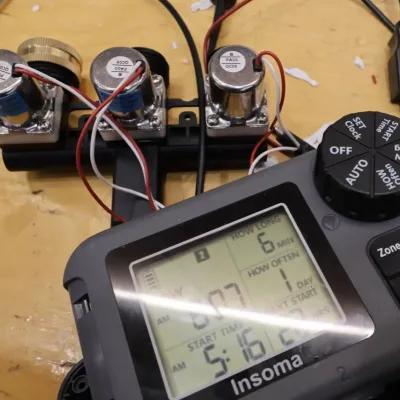
As expected, the design of these devices is quite straightforward. Three solenoids control whether an outlet is open or closed. A control board also handles the user controls and display.

There was no obvious sign of damage, and the PCB was potted in a white substance that should have kept out any moisture. A quick check with a battery revealed that the three solenoids also worked just fine, so the cause likely was somewhere on the — potted — PCB.

These solenoids are rated for 6VDC and take about 20 ms to act, but on an oscilloscope capture it was plain to see that the board was only putting out around 2V. This wasn’t enough to drive the solenoid, raising the question of what had gone wrong on the controller board and setting the stage for some fun epoxy potting compound scraping.

Advertisement

A good bit of elbow grease revealed the control ICs, the H-bridges that drive the solenoids, and the rest of the circuitry, including a power boost circuit with a big electrolytic capacitor. The latter had a bit of suspicious liquid near its base, which turned out to be the culprit. Perhaps the most annoying thing here is that this electrolytic capacitor had the temerity to fail after only four months of use, but at least it was an easy enough fix.

If we had been in there, we might have been tempted to avoid many future battery changes. Impractical, but we wonder if anyone ever built a water timer with a water clock?

Advertisement

Source link

Continue Reading

Tech

SOUNDBOKS Rider Is a 118dB Bluetooth Party Speaker You Can Actually Carry

Published

on

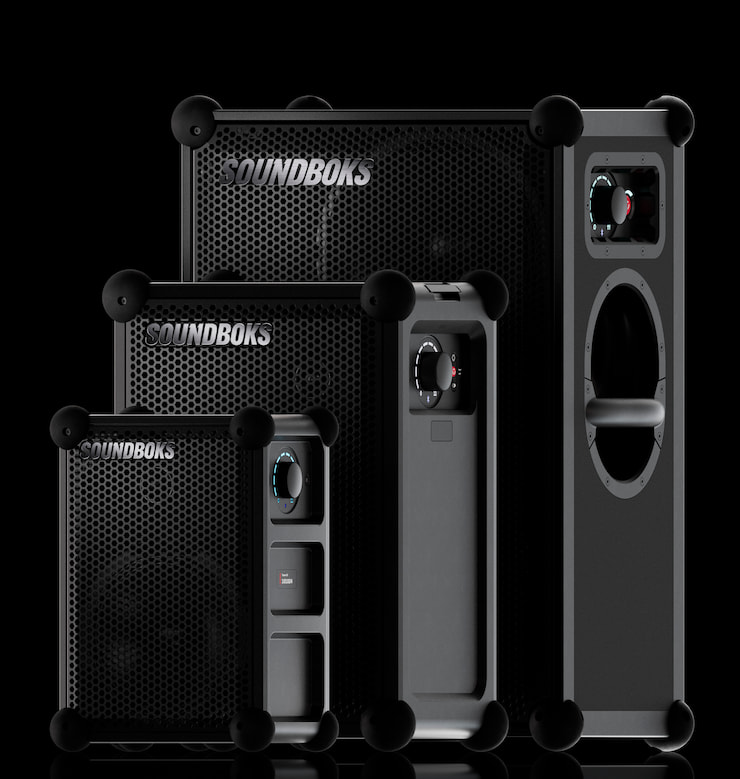
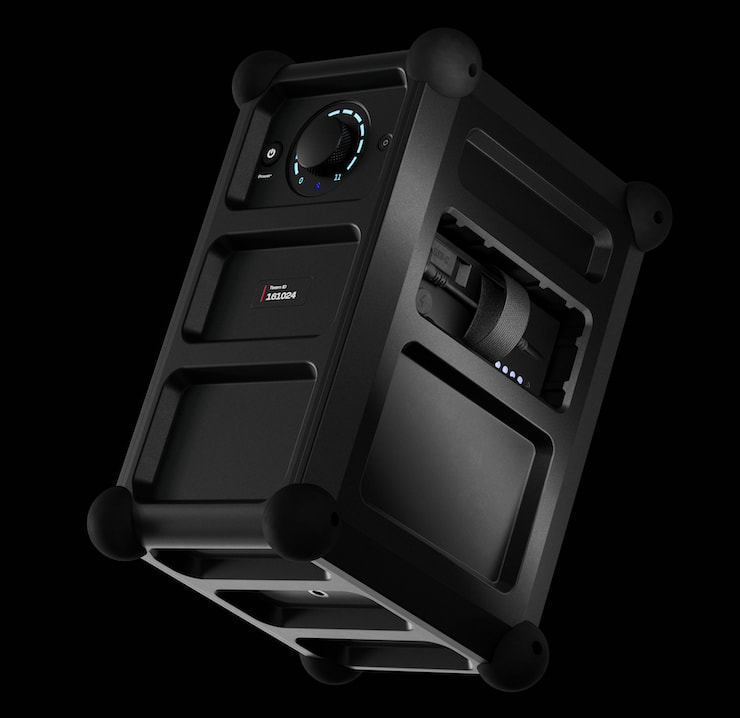
Following the success of the Mix Bluetooth Party Speaker, Danish audio brand SOUNDBOKS has introduced the Rider, which retains some of the Mix’s key features in a smaller, more portable design.

The Rider delivers the same maximum amplifier output as the Mix at up to 72 watts, along with a claimed maximum SPL of 118 dB, up to 35 hours of battery life, and an IP66 rating for protection against dust and water. Its more compact, strap-friendly design is intended to make it easier to carry between locations without giving up the output expected from a larger party speaker.

That is really the problem SOUNDBOKS is trying to solve with the Rider. Many compact Bluetooth speakers are easy to throw into a bag, but their size can limit bass extension and maximum volume when the gathering moves beyond a few people. Traditional party speakers can provide substantially more output, but their larger cabinets and heavier construction make portability more complicated.

The Rider is positioned between those two categories, offering much of the output and durability associated with a party speaker in a form factor designed to be considerably easier to carry.

Advertisement
soundboks-rider-party-speaker-carry

Typically, speakers make you trade volume for convenience. We built Rider so you’d never have to choose again,” said Jesper Santon Thomsen, CEO of SOUNDBOKS“Wherever the moment happens, your sound shows up in full. It’s the smallest speaker we’ve ever made, yet it’s still loud enough to turn an ordinary afternoon into the story everyone tells later. Why plan harder when you can be freer?”  

SOUNDBOKS Rider Key Features

Compact and Lightweight: Measuring 13.8 x 9.4 x 7.9 inches and weighing 6.5 kilograms (14.3 pounds), the SOUNDBOKS Rider is the smallest and lightest Bluetooth party speaker in the company’s lineup. That more compact footprint is intended to make the Rider easier to carry without giving up the output expected from a larger party speaker.

Durable Design: Rounded ball corners and an impact-resistant PC/ABS cabinet are designed to withstand bumps, transport, and typical outdoor use without requiring overly careful handling. The Rider also carries an IP66 rating for water and dust resistance, along with a steel grille and SOUNDBOKS’ signature shock-resistant ball corners for additional protection.

Room-Filling Sound: The Rider uses two Texas Instruments Class D amplifiers to drive an 8-inch woofer and 1.2-inch tweeter, with a claimed maximum output of 118 dB SPL. The speaker has a specified frequency range of 40 Hz to 20 kHz and incorporates SOUNDBOKS Adaptive Bass Enhancer DSP to manage low-frequency performance. And because this is SOUNDBOKS, the volume control naturally goes all the way to 11.

Advertisement

Companion App and Control Panel: The SOUNDBOKS APP provides control over EQ adjustments, sound profiles, and speaker locking, allowing users to manage settings from a mobile device (smartphone, tablet). The Rider also provides a control panel with a volume knob and auxiliary input. 

Up to 35-Hour Swappable Battery: Battery life is rated at up to 35 hours at mid-volume and approximately 8 hours at maximum output. The removable battery can be swapped out when depleted, while additional battery packs are available separately for extended use. The battery can be recharged via USB-C, with SOUNDBOKS claiming a full recharge in approximately two hours when using its optional charger.

Handle and Strap: The SOUNDBOKS Rider includes an integrated carry handle and is compatible with the optional Strap 2.0. Combined with its 14.3-pound weight and compact dimensions, those options make the Rider considerably easier to carry than a traditional party speaker.

Advertisement. Scroll to continue reading.
Advertisement

Comparison

soundboks-party-speaker-family
Soundboks Model Soundboks Rider Soundboks Mix Soundboks 4
Product Type Bluetooth Party Speaker Bluetooth Party Speaker Bluetooth Party Speaker
Price $599 $799 $1,199
Amplification  2 x Texas Instruments 72W/20W RMS Class-D amplifiers in PBTL (Parallel Bridge-Tied Load) mode 2 x Texas Instruments 72W RMS Class-D amplifiers in PBTL (Parallel Bridge-Tied Load) mode 3 x 72W RMS Class-D amplifiers
Merus Audio eximo amp switching
Driver Units 1 x 8″ Woofer

1 x 1.2″ Tweeter

1 x 10” Woofer

1 x 1.2” Dome tweeter

2 x 10” 96 dB (1W/1m) woofers
Advertisement

1 x 1” 104 dB (1W/1m) compression driver tweeter

Pulse Reflex Port No – Sealed Design Yes Yes
Max SPL  118dB 121 dB 126 dB
Effective frequency range 40 Hz – 20 kHz 40 Hz – 20 kHz 40 Hz – 20 kHz
Soundboks Adaptive Bass Enhancer DSP Yes Yes Yes
Wireless Connectivity Bluetooth 4.2 Bluetooth 4.2
TeamUP connection (SKAA) for up to 5 SKAA-enabled speakers
Bluetooth 5.0
TeamUP connection (SKAA) for up to 5 SKAA-enabled speakers
Wired Connectivity 1 × 3.5mm TRS stereo input 1 × 3.5mm TRS stereo input 2 × Combo (XLR and/or 6.3mm TRS) balanced inputs

1 × 3.5mm TRS stereo input

1 × 3.5mm TRS stereo output

Advertisement
App Sound Settings Volume adjustment

Sound Profiles optimized for different spaces and occasions

Custom EQ

True stereo roles (left/right/mono)

Advertisement
Volume adjustment

Sound Profiles optimized for different spaces and occasions

Custom EQ

True stereo roles (left/right/mono)

Advertisement
Volume adjustment

Sound Profiles optimized for different spaces and occasions

Custom EQ

True stereo roles (left/right/mono)

Advertisement
Advanced Controls Not Indicated Advanced TeamUp controls and settings

TeamUp Joined Volume Control

SKAA Pro Mode for reduced latency

Advanced TeamUp controls and settings
Advertisement

TeamUp Joined Volume Control

SKAA Pro Mode for reduced latency

EQ and Gain control for the two ProPanel inputs (XLR and/or 6.3mm TRS)

EQ and Gain presets for ProPanel inputs: Line-in, Mic, Guitar

Advertisement
Connection & Access Remotely disconnect or power off

Auto-connect for Bluetooth audio

Security PIN code for app and audio connection 

Remotely disconnect or power off
Advertisement

Auto-connect for Bluetooth audio

Security PIN code for app and audio connection 

Mark as lost or stolen

Remotely disconnect or power off
Advertisement

Auto-connect for Bluetooth audio

Security PIN code for app and audio connection 

Mark as lost or stolen

Output (USB-C) 10W USB PD, 5v 2A 10W USB PD, 5v 2A 10W USB PD, 5v 2A
IP Rating IP66 IP65-rated electronics coating IP65-rated electronics coating
UI Panel Volume control knob with LED indicators
Advertisement

Power On/Off button

Bluetooth LED indicator

Volume control knob with LED indicators

TeamUP button with LED indicators

Advertisement

Power On/Off button

Bluetooth LED indicator

Volume control knob with LED indicators

TeamUP button with LED indicators

Advertisement

Power On/Off button

Bluetooth LED indicator

Wireless Link Not Indicated SKAA TeamUP SKAA TeamUP
Battery Life 35 hours at mid-volume

8 hours at full volume

Advertisement
40 hours at mid-volume

8 hours at full volume

2 hours full recharge with The Charger

40 hours at mid-volume
Advertisement

6 hours at full volume

2 hours full recharge with The Charger

Battery Cell Type 12.8V, 7.8Ah Lithium Iron Phosphate (LiFePO4)
99.84 Wh or 7.8 Ah capacity
12.8V, 7.8Ah Lithium Iron Phosphate (LiFePO4)
99.84 Wh or 7.8 Ah capacity
12.8V, 7.8Ah Lithium Iron Phosphate (LiFePO4)
99.84 Wh or 7.8 Ah capacity
Charging Conditions Charge condition: 0°C to 45°C

Discharge condition: -15°C to 55°C

Advertisement
Charge condition: 0°C to 45°C

Discharge condition: -15°C to 55°C

Charge condition: 0°C to 45°C

Discharge condition: -15°C to 55°C

Advertisement
Product Design Reinforced ABS casing – IPX6

5-step LED battery-life indicator

Heavy-duty DC connector

Dirt cover over the USB connector

Advertisement

Carry strap (optional)

Battery charge LED indication

Short-circuit protection
Overheat protection

Reinforced ABS casing – IPX6
Advertisement

5-step LED battery-life indicator

Heavy-duty DC connector

Dirt cover over the USB connector

Carry strap (optional)

Advertisement

Battery charge LED indication

Short-circuit protection

Overheat protection

Reinforced ABS casing – IPX6
Advertisement

5-step LED battery-life indicator

Heavy-duty DC connector

Dirt cover over the USB connector

Carry strap (optional)

Advertisement

Battery charge LED indication

Short-circuit protection

Overheat protection

Materials ABS and polycarbonate cabinet
Advertisement

Silicone ball corners

Detachable steel grill (and logo)

ABS and polycarbonate cabinet

Silicone ball corners

Advertisement

Built-in reinforced top hat

Detachable steel grill

Poplar cabinet
Powder-coated aluminum frame

Powder-coated steel handles

Advertisement

Silicone ball corners

SMP 
temperature-flex adhesive

Built-in reinforced top hat

Snap-on removable powder-coated steel grill

Advertisement
Carry Handle Yes Yes Yes – 2 Carry Handles
Mount for Add-On
Carrying Strap Yes Yes No
Dimensions (HWD) 35 x 24 x 20 cm
13.8 x 9.4 x 7.9 inches
48 x 34 x 27 cm
18.9 x 13.4 x 10.6 inches
65 x 43 x 33 cam
25.6 x 17 x 13 inches
Weight 6.5 kg / 14.3 lbs 9.7 kg / 21.4 lbs 16.1 kg / 35.5 lbs
What’s in the box Soundboks Rider

Rechargeable Swappable Battery

Manual

Soundboks Mix
Advertisement

Rechargeable Swappable Battery

Manual

Soundboks 4

The Battery

Advertisement

Manual

Grill Removal Tool

Firmware & Warranty Firmware updates via the app for sound and performance upgrades Firmware updates via the app for sound and performance upgrades Firmware updates via the app for sound and performance upgrades
soundboks-rider-party-speaker-low-angle

The Bottom Line 

SOUNDBOKS is not trying to win the feature-count war with the Rider. Its strongest argument is the combination of a claimed 118 dB maximum output, a 14.3-pound cabinet, IP66 durability, and a swappable battery rated for up to 35 hours at mid-volume. At $599, it is the entry-level model in the current SOUNDBOKS lineup, but there is nothing particularly entry-level about the price.

That portability comes with some meaningful compromises. Unlike the SOUNDBOKS Mix and SOUNDBOKS 4, the Rider does not support SKAA-powered TeamUp for linking multiple speakers. There is also no Pro Panel, dedicated microphone or guitar input, included microphone, or built-in light show. The optional Strap 2.0 and SOUNDBOKS fast charger also cost extra. What you do get is a 3.5mm auxiliary input, app-based EQ and sound profiles, and the same removable battery concept used by the larger models.

Competition at this price is substantial. The $549.95 JBL Boombox 4 weighs just 12.8 pounds and adds IP68 protection, Auracast, and a user-replaceable battery, while the $419.95 JBL PartyBox On-The-Go 2 Plus weighs roughly the same as the Rider and adds a wireless microphone, karaoke features, a light show, and Auracast support. The $649 Sony ULT Tower 7 offers considerably more party-oriented functionality, although at roughly 50 pounds it belongs in a very different portability class.

Advertisement

We have also covered the $349 Tronsmart Halo 300, $499.99 TCL TP300K, and $399.99 Hisense Party Thunder Pro, all of which underscore just how crowded this category has become.

The Rider therefore makes the most sense for someone who wants a genuinely portable, rugged speaker that can get very loud without hauling around 30 to 50 pounds of hardware. Buyers looking for karaoke, synchronized lighting, microphone and instrument connectivity, or expandable multi-speaker systems will find more features elsewhere. SOUNDBOKS is betting that some people would rather carry 14 pounds of speaker than a rolling karaoke machine with its own light show. That might be the Rider’s most compelling feature.

soundboks-rider-party-speaker-shoulder-strap-back

Price & Availability

Source link

Advertisement
Continue Reading

Tech

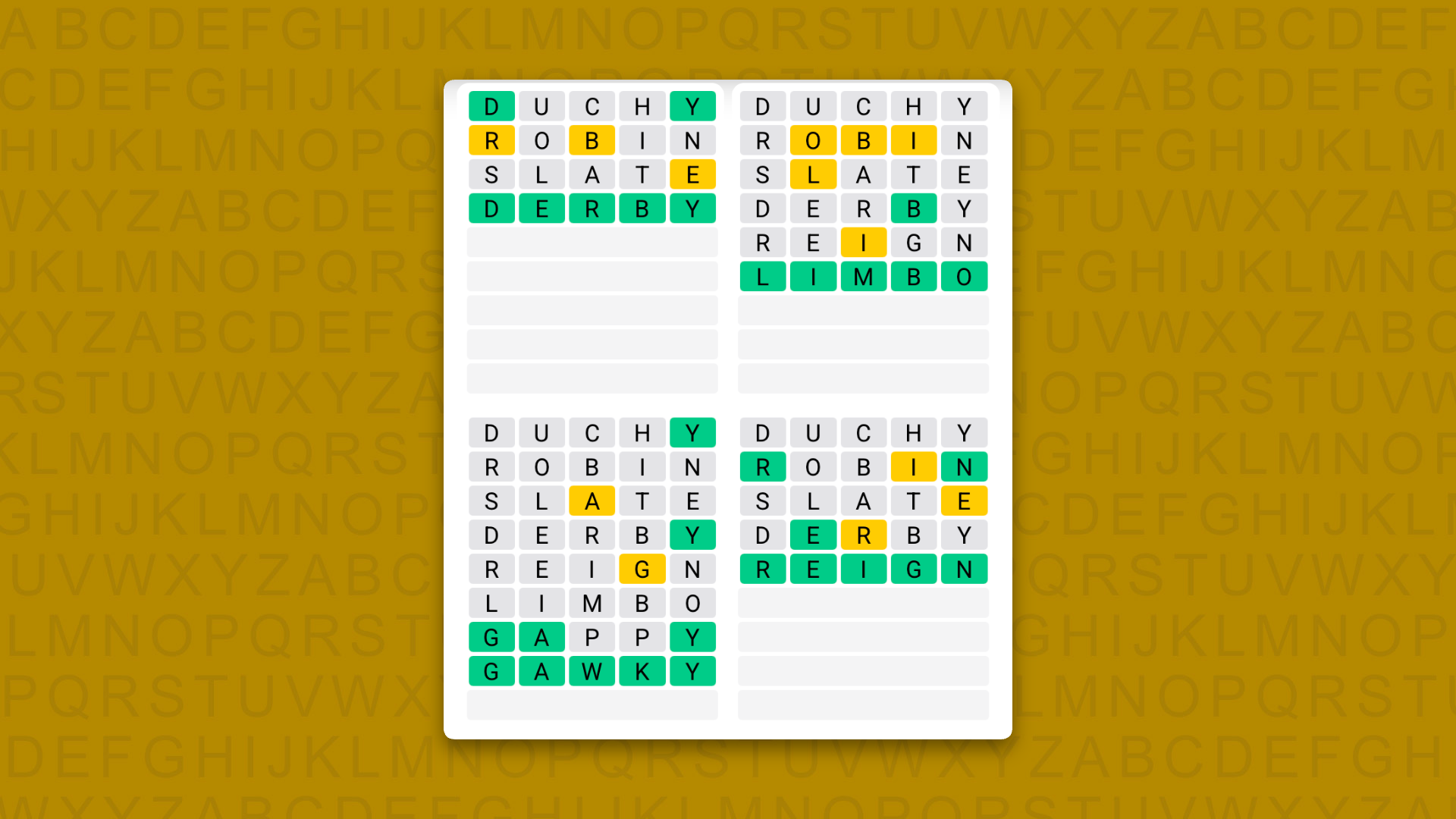
Quordle hints and answers for Sunday, September 20 (game #1700)

Published

on

Looking for a different day?

A new Quordle puzzle appears at midnight each day for your time zone – which means that some people are always playing ‘today’s game’ while others are playing ‘yesterday’s’. If you’re looking for Saturday’s puzzle instead then click here: Quordle hints and answers for Saturday, September 19 (game #1699).

Quordle was one of the original Wordle alternatives and is still going strong now more than 1,500 games later. It offers a genuine challenge, though, so read on if you need some Quordle hints today — or scroll down further for the answers.

Enjoy playing word games? You can also check out my NYT Connections today and NYT Strands today pages for hints and answers for those puzzles, while Marc’s Wordle today column covers the original viral word game.

Advertisement

Source link

Continue Reading

Tech

5 Tractor Supply Garage Finds Under $20 To Upgrade Your Setup

Published

on


Sometimes, even if you don’t need anything in particular, it’s fun to visit your local hardware store like Tractor Supply just to see what’s available. If you have a little bit of cash burning a hole in your pocket, you may be surprised at how many smaller purchases you can puzzle into a budget. If you look carefully, you can find products for less than $20, or even under $10.

Of course, you shouldn’t just buy random implements because they’re cheap; you should grab stuff you actually need. Say, for example, you enjoy working in or near your home garage, whether on automotive projects, DIY pursuits, or assorted small repairs. If you browse around your local Tractor Supply, you may be surprised by how many garage-handy products you can find for less than $20 a pop, including work gloves, wheel chocks, toolboxes, and flashlights. You can find just about everything you need to give your setup a small yet tangible upgrade without spending more than your car cost in the process.

Advertisement

Wells Lamont HydraHyde Insulated Work Gloves

Work gloves are a must-have piece of safety equipment for home mechanics and garage enthusiasts. There’s no shortage of projects and work in the garage where you could get your fingers caught and scraped, so proper hand protection is king. Good work gloves are easy to find, but if you want to go the extra mile, something that also keeps you warm in winter is nice. For such purposes, the Wells Lamont HydraHyde Insulated Work Gloves are an option, and they’re available at Tractor Supply for $19.99.

These gloves, according to their store page, are made of leather that’s undergone a special tanning process that increases its breathability and water resistance. They’re made of 100% split leather cowhide and are designed to stay dry, soft, and breathable all day, plus warm thanks to a layer of 100-gram 3M Thinsulate insulation. They also feature a slip-on elastic wrist cuff for a secure fit and a reinforced leather palm patch for strong grip.

Advertisement

Camco RV Wheel Chocks with Rope

If you have a larger vehicle in or near your garage, like an RV or something comparable, such as a trailer, it’s important to keep those large loads securely chocked while you’re working on them. If anything suddenly starts rolling while you’re working, you could be in serious danger. To keep large vehicles and loads safely secured in place, try employing a Camco RV Wheel Chock, available for $11.99 apiece at Tractor Supply.

Advertisement

These thick wheel chocks are made of hard plastic with baked-in UV protection to keep them from getting brittle and melty in harsh sunlight. They’re designed to keep removable RV trailers in place while you’re removing them from or hitching them to a vehicle so they don’t accidentally roll away or bump into anything. They can safely hold tires up to 26 inches in diameter and have built-in ropes you can use to safely pull them out without having to put your hand right under a tire. Note that these chocks are intended only for consumer-grade vehicles and trailers, not commercial-grade truck trailers.

Advertisement

Wrap-It MagSnap Magnetic Snap Wristband

If you’re fixing or disassembling something in your garage, you’re probably going to end up with a bunch of small components and fasteners scattered all over your work table. If you just leave those things sitting loose, there’s a risk they could roll off and get lost in a dark corner, or otherwise get trapped behind large objects. To reduce that risk, it’s best to keep small metal components firmly in place, and nothing holds them better than a magnet. This is the perfect use case for the Wrap-It MagSnap Magnetic Snap Wristband, available at Tractor Supply for $16.99.

This wristband is jokingly likened to the slap bracelets that were popular with kids in the ’80s and ’90s. It’s a mesh wristband that wraps and snaps firmly around your wrist and, thanks to the 15 magnets hidden within its lining, holds tight to any small metal bits you stick to it. It’s designed to hold a variety of components, such as screws, nuts, bolts, and washers; if you have anything that isn’t magnetic, there’s a pocket on the end of the wristband for other odds and ends.

Advertisement

JobSmart 2-Drawer Mini Tool Box

Something any garage mechanic could use is another place to store a few more tools and components. Of course, once you start buying large tool cabinets and the like, you swiftly run out of space for additional storage. In those situations, the best course of action is to opt for smaller boxes that you can stack on a table or within another cabinet. For small-scale storage, Tractor Supply offers the JobSmart 2-Drawer Mini Tool Box, available for $19.99.

This little tool box features two full-extension sliding drawers, plus a top storage compartment, to store frequently used small implements like screwdrivers, wrenches, and assorted fasteners. It’s made of powder-coated steel for general-purpose resilience, and the sliding drawers have magnetic locking mechanisms to help keep them firmly closed when not in use. As an added perk, it comes in several colors, including red, blue, black, and pink.

Advertisement

COAST RL5 Headlamp

Working on projects in a garage doesn’t always mean you get to work at a well-lit table. For example, if you’re working on the underside of your car, it’s probably going to be pretty dark down there, and you can’t very well hold a flashlight with both hands occupied with tools. For that reason, it pays to have a good hands-free lighting solution in your garage repertoire, like the COAST RL5 Headlamp, available at Tractor Supply for $19.99.

This headlamp comes with dual-beam light settings, letting you switch between flood, spot, or combined beams at low, medium, and high settings, generating a maximum of 550 lumens for comprehensive illumination in most situations. It also has red and green light modes if you’re trying to preserve your night vision while working in the dark. Its body has an IP54 rating for protection against water and dust, so errant drops or caked-on dust are less of a concern, while its silicone-lined strap helps it sit comfortably on your head. It draws power from three AAA batteries, which can last approximately 9 hours of continuous use, though it can also be upgraded with a COAST-branded rechargeable battery.

Advertisement


Source link

Advertisement
Continue Reading

Tech

Tired of Cluttered Productivity Apps? This One’s Just a Text Document

Published

on

I’ve spent decades testing, reviewing, and (most importantly) using different to-do list applications. It’s a career, yes, but it’s also a bit of an obsession.

And I think we can all admit that most of these apps are way too complicated. A to-do list is just a list. Humans have been making lists for thousands of years, long before computers existed. Paper works well, but so does a stone slate if that’s what you’ve got handy.

It’s possible that you, a modern human, absolutely need a to-do list application with bells and whistles—due dates, recurring tasks, sharing features, and maybe even an AI integration. But there’s a good chance all you need is the digital equivalent of a piece of paper: A simple list of things that need to get done.

And that’s what Tasks.txt, a totally free Mac app, offers. From Ukrainian programmer Yevhen Kharkivskyi, this tool is based on the todo.txt system developed by Gina Trapani. It’s a complete alternative to a to-do list app that is based on a single text file.

Advertisement

The important thing here, though, is that it offers more than just a text file. This is a well-executed app. Open Tasks.txt and you’ll see a simple list broken down into three categories: Done, Next, and Backlog.

Image may contain Page and Text

Screenshot: Justin Pot

The general idea is to use “Next” for the tasks you want to accomplish today and “Backlog” for the things you want to do later. The “Done” section is populated as you check things off, then cleared out at the beginning of every day.

It’s possible to use this application using only the keyboard, which I love. Open the window and you can just start typing tasks—your cursor is already active in the text box at the bottom. Hit Enter and your task will be added either to Backlog or Next, depending on what you choose in the drop-down menu to the right of your text box. Press the Tab key to switch from the text box to your task list. You can use the arrows to change which task is currently selected. Pressing the Enter key adds a note below the name of a task, and Cmd+Enter marks a task complete. You can also move tasks up and down the list using Cmd+Up/Down.

There are no unnecessary controls or interface elements in your way. You can open this application, decide what you need to do, then get to it. And you aren’t stuck using keyboard shortcuts—using the mouse is just as intuitive, if that’s what you prefer.

Advertisement

Source link

Continue Reading

Tech

Petlibro’s new AI-powered feeder is a game changer for multi-cat homes

Published

on

Smart feeders have become one of the most crowded categories in pet tech, with companies racing to add AI cameras and health tracking to devices that used to just dispense food on a schedule. I enjoyed testing Petlibro’s wet food dispenser a couple of years ago, so this time I wanted to try something from the company’s newest automatic feeder lineup: the Granary 2 series, designed specifically for dry food.

I was not disappointed. Building on the brand’s Granary line, the Granary 2 series lineup is designed to give cat parents a clearer picture of what their pets are actually eating, from how much food they consume to how long they spend eating and whether their habits change over time. 

The series includes four models, priced from $129.99 to $249.99. The Granary 2 is the entry-level option, offering app-controlled feeding, precise portioning, and intake tracking. The $189.99 Granary 2 Vision, which is the one I tested, adds an AI-powered camera capable of recognizing up to 10 cats and tracking each pet’s individual eating habits. 

The $199.99 Vision Duo is aimed at multi-pet households, with two separate dispensing chutes and bowls so each pet can receive its own portion, and the company says that its most expensive model, the Granary 2 X ($249.99), uses AI recognition to provide individualized portioning for pets with specific dietary needs.

Advertisement
Image Credits:Petlibro

The biggest upgrade across the Granary 2 series is its built-in scale. The feeder can measure food in the tray, allowing it to track not only how much food was dispensed but also how much remains in the bowl. That gives it a better way to estimate how much your pet actually ate. While a traditional automatic feeder can tell you that it released a meal at 7 p.m., it can’t necessarily tell you whether your cat ate it, how much it ate, or how long it took to finish. 

The Granary 2 tracks intake, eating duration, feeding frequency, as well as favorite eating times and eating speed. Over time, the companion app builds a picture of your pet’s normal eating patterns, with daily, weekly, monthly and yearly views, which could make it easier to notice subtle changes in appetite or routine that might otherwise go unnoticed. For pet parents who closely monitor weight, portion sizes, or eating behavior, this could be the feature that makes the Granary 2 worth considering. 

Image Credits:Petlibro

The Granary 2 offers two primary feeding modes: Smart Refill Mode and Scheduled Mode. 

Smart Refill Mode keeps the bowl supplied with smaller, fresh portions throughout the day while automatically stopping once the daily food limit you’ve set has been reached. This could be particularly useful for cats that prefer to graze rather than eat one or two larger meals. 

Scheduled Mode offers more traditional control, allowing you to set specific feeding times and portion sizes. There’s also a manual feeding button for those times when you want to dispense food outside of the normal schedule.

The version I tested adds another neat layer, with an AI-powered camera that can recognize which pet is eating and automatically associate the meal with the correct profile, which is especially useful in a multi-pet household. If one cat is on a special diet, needs to manage their weight, or has different nutritional requirements from the others, being able to track individual meals is super helpful. It will only open the feeder when the correct pet is recognized by the camera.

Advertisement

The 1080p camera also includes night vision, allowing you to check in on your cat while you’re away and see what’s happening around the feeder. There’s two-way audio as well, so you can communicate with your pet remotely. And if you’re the type of pet parent who likes to call your cat to dinner, you can record a short message that plays directly from the feeder.

Additionally, the feeder can send instant app alerts for issues such as low battery power, low food levels, and if food jams in the feeder. Those notifications provide some added reassurance when you’re away from home, since you don’t have to wonder whether the feeder is still working properly or whether a problem has prevented your pet from getting its meal. It also has a built-in rechargeable backup battery for when there’s a power outage. 

Image Credits:Petlibro

It’s important to note, however, that some of the Granary 2’s more advanced features are tied to Petlibro’s subscription services. Certain health tracking and monitoring features require a Petlibro Care subscription (starting at $59.99 per year), while cloud recording and playback on camera-equipped models require paying for a Video Cloud plan ($119.99 per year).

Overall, I do think this is one of the best feeders I’ve tested, but if you’re looking for a more affordable option, the closest comparison is Pawsync’s $79.99 feeder. It uses a built-in scale to ensure accurate portions, along with settings designed to help prevent both underfeeding and overfeeding.

When you purchase through links in our articles, we may earn a small commission. This doesn’t affect our editorial independence.

Advertisement

Source link

Continue Reading

Tech

Laser Your Way Into Debug Mode On The RP2350

Published

on

The RP2350 is actually a pretty secure chip, all things considered. It has secure boot, ARMv8’s TrustZone to split secure and non-secure execution, and you can permanently disable debug — the Pi Foundation even included glitch detection, meaning the traditional ‘zap the chip until it obeys’ technique is blocked. That’s why the [Ledger Donjon] security team went full Bond Villain and strapped everyone’s favourite fruit-flavoured microcontroller to a table with a slowly-approaching laser beam.

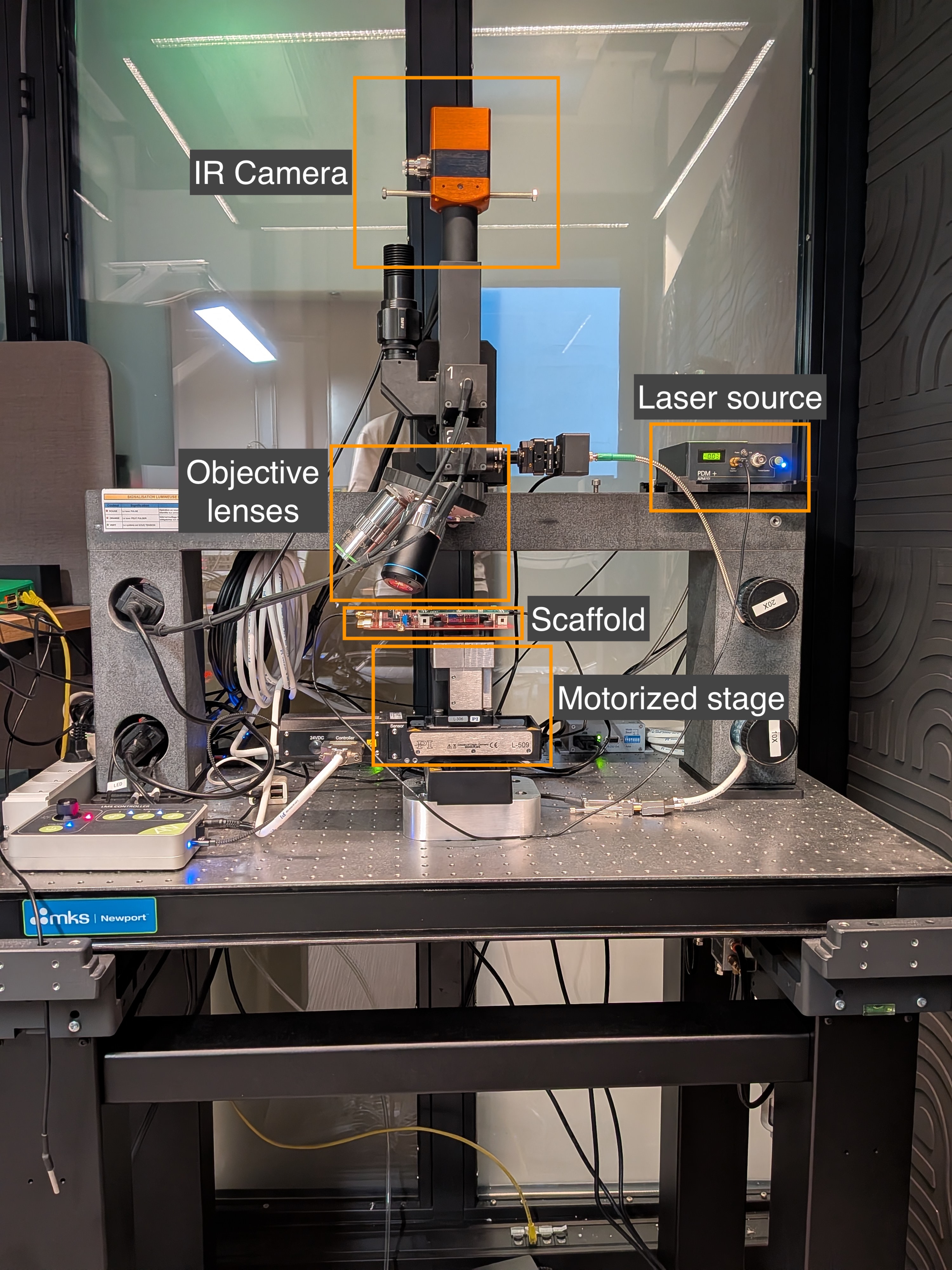
The bench setup to do all this is pretty impressive– and came with an impressive 250,000 USD price tag.

Okay — movie clichés aside, the laser was in fact very carefully focused on target before they turned it on. That target was the register that enables the 2350’s debug features. Said register was located by decapsulating the chip and examining the die with photon-emission electron microscopy; the actual attack was carried out on a chip that had been decapped on the back side, with IR shining through the silicon wafer. There was probably more than a little trial-and-error to figure out exactly where on the die adjacent to the register to zap with the laser to flip those bits. But flip they did, restoring the debugger’s access to the secure execution zone. Then, after resetting the chip, [Ledger]’s team read the 128-bit secret the Pi Foundation hid in memory as part of the 2350 hacking challenge.

It’s long been accepted that once the black hats — or white hats, for that matter — have their hands on your hardware, they’re going to find a way in. The effort it takes to break into a simple microcontroller here is actually kind of impressive. We’ve talked about laser fault injection before; ironically, we’ve also featured Pi Pico-powered glitching attacks — the kind that this chip’s glitch detection thwarts.

Advertisement

Source link

Continue Reading

Tech

The US Navy just told us what’s on its tech wish list for the next several years

Published

on

Justin Fanelli, the Department of Navy’s chief technology officer, has spent the last three and a half years trying to make the U.S. Navy easier to do business with. When we first talked to him last year, he described a shift away from what he called “your granddaddy’s government” — a “spaghetti chart” of entry points for startups — into something closer to a funnel, where companies that show strong results get pulled into the Navy’s technology base as enterprise services.

This week, we caught up with him again on a video call, and this time, he wasn’t just looking again to further streamline the procurement process, he was sprinting, literally, to catch a flight he’d just been ordered onto with no destination shared.

“You have an hour and 15 minutes to get on a plane,” Fanelli said, recounting what he’d just been told, speaking into his phone as he walked, the sun shining behind him. “I’m like, ‘Where?’ Oh my God! And they were like, ‘We’ll figure [the logistics], we’ll tell you as you get there.’ And I’m like, ‘For more than overnight?’ And they were like, ‘Yes.’” As he was walking to his car, he was still unsure what he’d packed for or where he was headed. “I will figure that out in the next 20 minutes,” he said, sounding excited about the adventure ahead.

Fanelli reached out because the “demand signal” he sent to investors last year had only grown, and it was making an impact, he said. When the Navy first published its longer-term technology priorities, investors told him it changed how they thought about the Navy’s buying plans, which is part of why he’s doing it again — sharing a fresh list of what the Navy wants to buy in the next several years, this time vetted by a handful of (unnamed) venture investors before release.

Advertisement

How much money the Navy actually puts to work each year depends on what counts as spending, Fanelli said. “We spend in the $150 billion range every year,” he said, though he was careful to separate that number — total Navy purchasing — from something narrower, like direct equity investment. 

Indeed, while most of that spending still flows through traditional channels, Fanelli said the Navy is trying to inch further toward what he calls co-investment — putting money behind companies alongside private capital rather than writing a check to an established prime contractor. Taking an equity stake, he said, is the most aggressive version of that and remains rare. More often, co-investment means the Navy waits for companies to mature a product on their own before buying it, rather than funding early research itself.

The stage of company the Navy buys from has shifted, too. “We mostly buy Series D through F type companies,” Fanelli said, adding that the Navy used to fund its own early-stage research to cover the seed-through-Series-B gap. It’s trying to hand that job to commercial investors instead, which is part of why the priorities document exists at all. “The cost of that, or the responsibility, is for us, if we’re not going to do it ourselves, to cast a cleaner signal,” he said.

As for recent purchases, Fanelli — a former Air Force cadet whose career has spanned roles across defense, intelligence, DARPA, and open source initiatives — rattled off a handful. A contract worth $562 million was awarded this month for the MQ-25 Stingray, an autonomous refueling drone that extends the range of manned fighter jets flying off carriers.

Advertisement

The Navy has also been buying edge compute hardware from Armada, described loosely as shipping containers packed with servers meant for ship or remote deployment. It brought in Gecko Robotics to handle inspection work that used to be done manually and dangerously; Fanelli said the move drew little pushback because almost nobody wanted that job in the first place. Domino Data Lab is now running the Navy’s machine learning pipeline.

And in a case Fanelli seemed to particularly enjoy sharing, the Navy swapped a defense contractor’s years-delayed shipboard camera system for commercial cameras paired with software from Applied Intuition, cutting roughly four years off the timeline and expanding to more ships than expected.

Given the Strait of Hormuz has been a flashpoint this year — tanker strikes, a seized vessel, ceasefires that have broken down over shipping-route disputes — it seemed worth asking whether any of that commercial technology is showing up there now. Fanelli was cautious. “I often don’t know what’s classified and unclassified because I’m normally talking to people with clearances,” he said, adding that he’d have to check. (We’ll let you know if he gets back to us.)

Interestingly, not many people sign off on a purchase like that, according to Fanelli. Buying decisions run through what he called a source selection committee, a small group rather than the sprawling review process outsiders might picture. He described the goal as keeping the process merit-based rather than adding layers of approval.

Advertisement

He didn’t get into why technologies typically fail once they’re inside the Navy — he’d arrived at his car and needed to figure out next steps for travel. But when we talked last year, Fanelli explained that the most common reason promising technologies fail isn’t technical, but rather budgetary. The Navy runs on long planning cycles, and a new tool only sticks around if it replaces or “turns off” something the Navy is already paying for.

Either way, before we parted ways, Fanelli shared an updated internal list of the technology areas the Navy is prioritizing, jointly issued by his office and the Portfolio Acquisition Executive for Mission Systems. It breaks down into five broad categories, for those of you either developing or funding defense tech.

The first is applied AI, covering machine learning and increasingly agentic software meant to turn raw data into decisions — sensor fusion, targeting support, autonomous behavior, and cyber operations built on software rather than hardware. 

Quantum information science comes second, focused less on owning quantum hardware and more on applying quantum or quantum-adjacent techniques to navigation, secure communication, and cryptography. 

Advertisement

Advanced networking is third, aimed at moving data securely across environments where connections are degraded or intermittent, whether that’s a ship at sea or a coalition partner’s network. 

Fourth is electromagnetic spectrum operations, technology that senses and manages the spectrum itself, built to adapt in contested conditions rather than rely on fixed configurations. 

The fifth category, digital engineering and interoperability, covers the plumbing: open APIs, model-based systems engineering, and zero-trust architecture meant to let different Navy systems talk to each other without custom integration work every time.

None is a funding commitment, the memo notes, and none of it ranks individual programs. It also adds as a reminder that its priorities “will change based on emergent, near-term, and long-term needs.” In short, don’t take it as gospel. Instead, it’s meant to be read the way Fanelli talked about last year’s list — as a roadmap that companies and investors can plan around, so that decisions made now about where to put money have somewhere to go inside the Navy in a couple of years.

Advertisement

When you purchase through links in our articles, we may earn a small commission. This doesn’t affect our editorial independence.

Source link

Continue Reading

Trending

Copyright © 2025