Microsoft’s gaming division is reverting to the Xbox name after operating as “Microsoft Gaming” since 2022. (Microsoft Photo)
Microsoft is changing the way it measures success in its Xbox business, focusing on daily active players rather than longer periods of time — a tighter measure that reflects the way the biggest social media platforms have evolved to gauge engagement and retention of users.
Xbox will also reevaluate its approach to game exclusivity, the timing of releases across platforms, and the use of AI, while looking for opportunities for strategic acquisitions.
And yes, it’s the Xbox business again, not “Microsoft Gaming,” the broader name the company adopted for the division internally around the time of its giant Activision Blizzard acquisition.
Those are some of the highlights from a memo that Xbox CEO Asha Sharma and Chief Content Officer Matt Booty sent to employees Thursday, laying out a strategic vision for the division about two months into their tenure in the roles.
The memo, titled “We Are Xbox,” opens with a blunt admission that players are frustrated, and frames Xbox as a challenger with work to do.
Advertisement
“From the beginning, Xbox was built by people willing to try things that others wouldn’t,” they write. “We placed a consumer bet inside an enterprise company because we believed gaming would define the living room, and we were at risk of missing it.”
Asha Sharma and Matt Booty, the new leadership team for Microsoft Gaming. (Microsoft Photo)
The memo comes amid financial pressure on the gaming business. Revenue fell 9% in the most recent holiday quarter to $5.96 billion, with Xbox content and services coming in below internal projections. Hardware sales dropped 32%.
Earlier this week, Sharma made her first major move, cutting the price of Game Pass Ultimate from $29.99 to $22.99 a month while removing new Call of Duty games from the day-one lineup — unwinding a bundle that had driven a 50% price hike last October.
Sony’s PlayStation remains comfortably ahead in the current console generation, and Nintendo’s Switch 2 has had a strong launch.
The memo references Microsoft’s own next-generation console, Project Helix, which it unveiled at GDC in March, saying the machine will “lead in performance and play your console and PC games.” Alpha hardware is expected to go to developers in 2027.
Advertisement
Sharma took over as CEO of Microsoft Gaming in February, replacing Phil Spencer, who retired after 38 years at the company. She had been running Microsoft’s CoreAI product organization and previously served as chief operating officer at Instacart and as a vice president at Meta.
That social media background may help explain the shift to daily active players as the internal “north star,” a metric that defined how Facebook and Instagram measured their own success.
Microsoft has said its gaming ecosystem has more than 500 million monthly active users across platforms and devices. It’s not clear if Microsoft will shift to daily users in its public reporting.
The memo closes with 10 operating principles for the division, including “earn every player,” “protect our art,” “stay rebellious,” and “clarity is kindness.” They conclude, “We’re here to do the most creative and courageous work of our lives, and that’s what we’ll do together.”
Advertisement
Microsoft reports earnings for the March quarter next week, including Xbox results.
Oppo has announced its flagship camera smartphone, the Find X9 Ultra, but how does it compare to Apple’s iPhone 17 Pro Max?
Although we haven’t specifically reviewed the Max model, we have reviewed the iPhone 17 Pro so we’ll draw on our experiences there whenever applicable.
Read on to see what’s the difference between the Oppo Find X9 Ultra and the iPhone 17 Pro Max, and to decide which handset will suit you best.
The Oppo Find X9 Ultra is the first of Oppo’s Ultra models to see a global launch. However, at the time of writing, we don’t have the exact pricing or release date for the UK.
Advertisement
In comparison, the iPhone 17 Pro Max is readily available to buy now and has a starting price of £1199/$1199. Considering the Oppo Find X9 Pro has a similar starting price of £1099, we expect this means the more premium Ultra will be more expensive than the iPhone 17 Pro Max – however that’s speculation at this point.
SQUIRREL_PLAYLIST_10207953
Advertisement
Snapdragon 8 Elite Gen 5 vs A19 Pro
One of the biggest differences between the Find X9 Ultra and iPhone 17 Pro Max is with their respective chips. While the Find X9 Ultra runs on Qualcomm’s flagship Snapdragon 8 Elite Gen 5, the iPhone 17 Pro Max is powered by Apple’s own A19 Pro chip.
The iPhone 17 Pro also runs on Apple’s A19 Pro chip, and we found the handset offers brilliant performance across both day-to-day use and in our benchmark tests too. We also concluded the iPhone 17 Pro copes well with games too, although if that’s a necessity for your handset then you’ll be better off checking our best gaming phones guide instead.
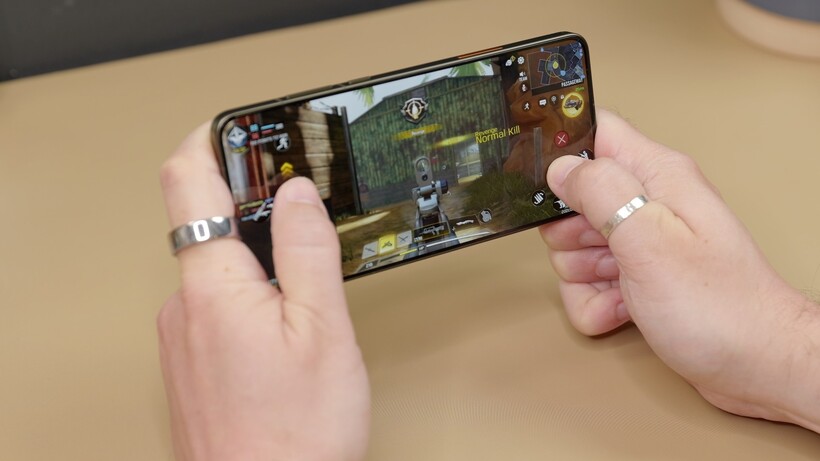
Gaming on Find X9 Ultra. Image Credit (Trusted Reviews)
Unsurprisingly, we found that the Oppo Find X9 Pro also offers a brilliant performance too. In fact, we especially found that the handset does a great job with ray-traced gaming too – something worth keeping in mind if you’d prefer not to opt for a gaming-specific handset. Not only that, but Snapdragon 8 Elite Gen 5 ensures everything runs smoothly and quickly too.
Advertisement
Oppo Find X9 Ultra has five rear cameras
Arguably the reason to choose the Oppo Find X9 Ultra is due to its mighty camera set-up. Created in collaboration with Hasselblad, the aptly titled Hasselblad Master Camera System is made up of five rear lenses, including dual Hasselblad 200MP main and 3x telephoto lens. In fact, the latter boasts the largest sensor of its kind and can be fitted with the 300mm Explorer Teleconverter that delivers a 300m focal length and 13x optical zoom too.
Advertisement
There are also two 50MP cameras which are flanked by a True Color Camera for natural colour rendition too.
In addition, the Find X9 Ultra is fitted with Oppo’s “most advanced cinematic capabilities to date”, and can not only deliver 4K60fps Dolby Vision HDR recording, but also captures 4K120fps via the Dual Hasselblad 200MP cameras too.
Oppo Find X9 Ultra
iPhone 17 Pro
Advertisement
Overall, we were blown away by the Find X9 Ultra’s photography capabilities, and concluded that its vibrant capture and multiple lenses “easily challenges Apple” for the best camera phone crown.
That’s not to say the iPhone 17 Pro Max is a slouch by any means, with its trio of rear lenses able to cope well with most lighting conditions and provide a brilliant detailed finish. While we haven’t reviewed the Pro Max, the iPhone 17 Pro has the same lenses on board and boasts the best zoom lens we’ve seen on an Apple flagship.
Advertisement
Advertisement
Oppo Find X9 Ultra supports faster charging
Like many of the best Android phones, the Find X9 Ultra supports exceptionally fast charging speeds – but only when paired with a compatible charger. So, while the iPhone 17 Pro Max supports 40W wired speeds and 25W MagSafe, the Find X9 Ultra boasts significantly faster numbers.
In fact, the Find X9 Ultra supports a whopping 100W SuperVOOC wired and 50W AirVOOC speeds. However, just keep in mind that you will need to purchase adapters separately to benefit from those speeds.
Oppo Find X9 Ultra in hand. Image Credit (Trusted Reviews)
Oppo Find X9 Ultra has an IP66, IP68 and IP69 ratings
Durability is important when it comes to buying a phone and, fortunately, the Find X9 Ultra isn’t taking any chances. Not only does it sport the same IP68 rating as the iPhone 17 Pro Max, which means its dust-tight and can survive water submersion, but it also benefits from an IP66 and IP69 rating too. That means the handset can withstand high pressure and high temperature water jets too.
However, do keep in mind that the iPhone 17 Pro Max’s IP68 rating realistically offers more than enough protection for everyday use. Just think about how often your phone will really be subjected to water jets.
Advertisement
Advertisement
Oppo Find X9 Ultra has a 144Hz display
The 6.9-inch iPhone 17 Pro Max is fitted with Apple’s ProMotion technology, which means the panel has a LTPO-enabled 1-120Hz refresh rate that helps make animations, scrolling and gaming feel smooth. In comparison, the slightly smaller 6.82-inch Find X9 Ultra boasts up to a 144Hz refresh rate.
Oppo Find X9 Ultra
iPhone 17 Pro
Advertisement
Otherwise, the Find X9 Ultra is equipped with an AMOLED, QHD+ display that we found to be “impossible to fault”. Similarly, the iPhone 17 Pro Max is equipped with a Super Retina XDR (OLED), HDR display.
Early Verdict
Deciding between the Oppo Find X9 Ultra and iPhone 17 Pro Max will mainly boil down to two factors: whether you’re cemented in either the Android or iOS ecosystem and whether you want an especially versatile camera phone. While the iPhone 17 Pro Max is undoubtedly a versatile camera phone, the five rear lenses of the Find X9 Ultra and the optional teleconverter undoubtedly offer more flexibility.
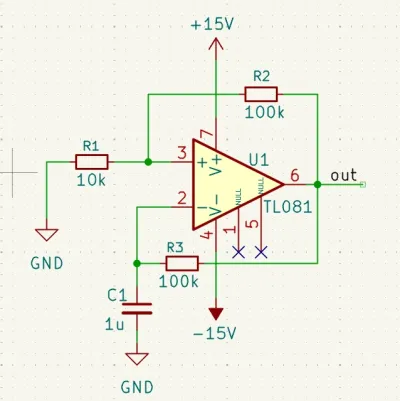
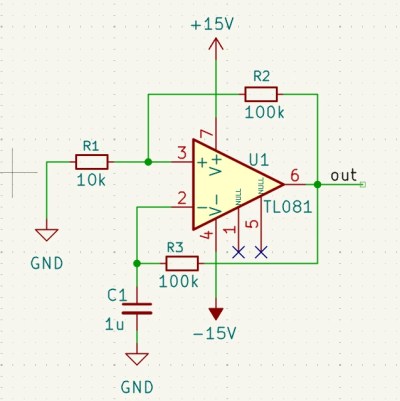
Some people learning the noble art of electronics find the jump from simpler tools like Fritzing to more complex ones, such as KiCAD, a little daunting, especially since they need to learn at least two tools. Fritzing is great for visualising your breadboard layout, but what if you want to start from a proper schematic, make a prototype on a breadboard and then design a custom PCB? Well, with the Kicad-breadboard plugin for (you guessed it!) KiCAD, you can now do all of this in the same tool.
A simple dual-rail oscillator schematic corresponding to the featured image above
Originally designed to support EE students at the University of Antwerp, the tool presents you with a virtual breadboard with configurable size and style, along with a list of components and tools that can be placed. A few clicks and parts can be placed on the virtual breadboard with ease. Adding wires is the next logical step to make those connections that operate in the horizontal dimension. Finally, assigning power supplies and probe connections completes the process. It’s a simple enough tool to draw stuff, but drawing a layout is no use if you can’t verify it’s correctness. This is where this plugin shines: it can perform an ERC (check) between the schematic and the breadboard and flag up what you missed. Add to this that you can also perform an ERC at the schematic level, before even thinking about layout, and it’s pretty hard to make an error. Now, you can transfer this directly to a real breadboard, or even a veroboard, for more permanence once you have confidence in correctness. This will definitely save time correcting errors and help keep the magic smoke safely contained within those mysterious black rectangles.
As it stands, the tools are limited to a few select ICs, which, much to this scribe’s disappointment, did not include the venerable 555 timer; however, it would be possible to work around that with some imagination at the schematic level. The ability to drop in and document power supply, function generator, and oscilloscope probing points is nice, enabling one to close the loop on documenting a layout to make it truly transferable to physical reality.
We cover electronics prototyping with breadboards a lot because they’re accessible. Here’s a super simple computer on a breadboard. We also like seeing them integrated as tools, like here. Finally, why stick with the tired old common breadboard shapes when you could make your own?
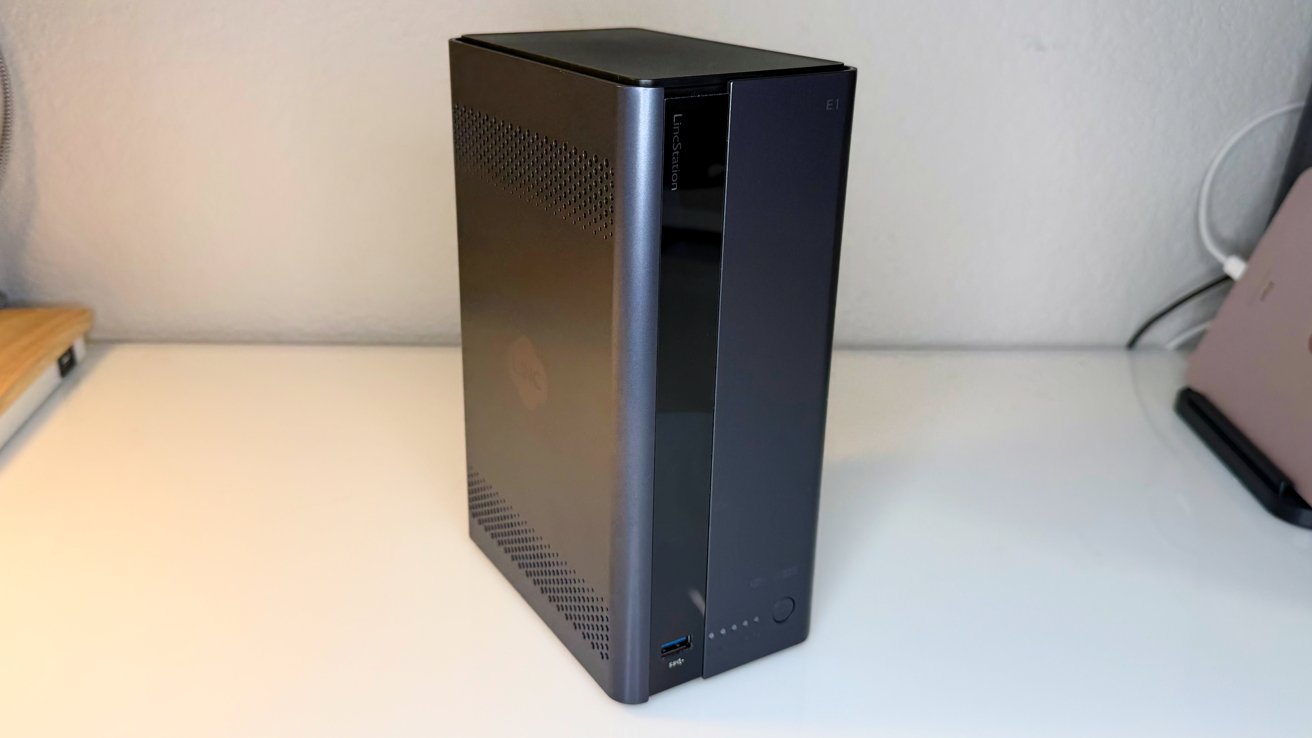
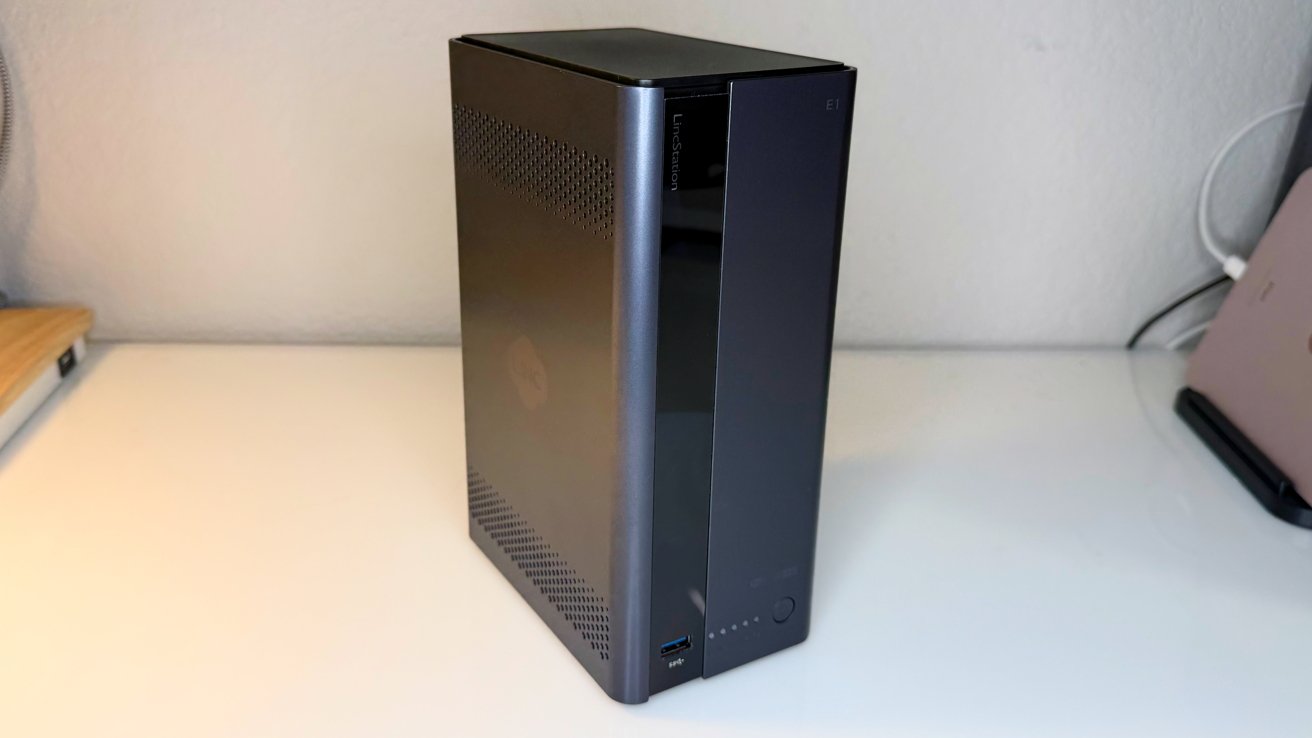
The LincPlus LincStation E1 is a compact NAS that promises speed, capacity, and some smart features. Prosumers and above should skip this one, but for everyday users, it’s a pretty decent package.
LincPlus LincStation E1
A typical network-attached storage (NAS) device is, as the name implies, a bunch of drives in a purpose-made computer, optimized to serve files. There’s a big range that falls under that umbrella though, with many models able to provide services that rival a rack-mounted server. When it comes to making a NAS for a typical computer user rather than those with greater needs, things tighten up a bit. We’ve been fond of LincStation’s approach to that market. Continue Reading on AppleInsider | Discuss on our Forums
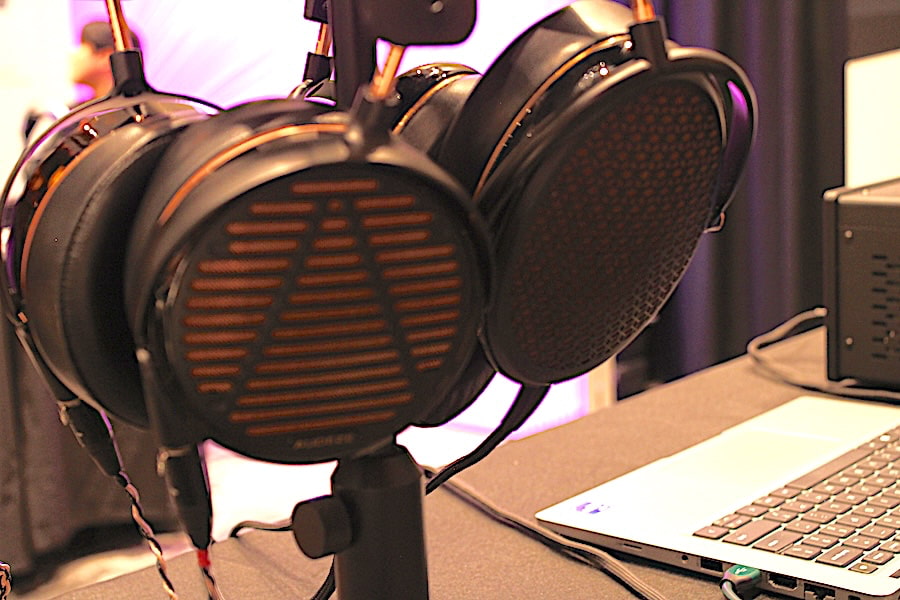
Audeze doesn’t need to reinvent itself every year to stay relevant, but it rarely stands still. At AXPONA 2026 in Chicago, the California headphone maker drew steady traffic in the Ear Gear section with a lineup that spans both audiophile and gaming use, anchored by its expanding use of SLAM technology across multiple models.
The booth stayed busy for a reason. Audeze is not chasing trends. It is refining its own approach, and listeners showed up to hear how that translates across a broader range of headphones rather than a single headline product.
At the top of the range, Audeze CRBN2 and Audeze LCD-5s were both on hand and available for extended listening. We’ve already given both models Editors’ Choice Awards, and neither required much debate to get there. They take different paths to a similar destination.
Audeze LCD-5s (left) and CRBN2 (right) at AXPONA 2026
The CRBN2 leans into a more forward presentation with added energy through the upper mids and lower treble, which gives it a sense of immediacy and openness that works well with detail-heavy material. The LCD-5s pulls things back slightly through the midrange, sounding more relaxed and a bit more natural over longer sessions without losing resolution.
Advertisement
Both now incorporate Audeze’s SLAM technology, which increases airflow and adds low-end weight without stepping on the rest of the frequency range. That matters. Electrostatic and planar designs have long carried a reputation for being light in the bass, and this feels like a direct response to that criticism. The added presence down low brings better balance without turning either headphone into something it isn’t.
I asked Karlee Little about a possible trade-up program for existing LCD-5 owners. The answer was polite but clear. Demand for current production is already high, and keeping up with orders is the priority. If anything like that happens, it won’t be anytime soon.
Custom Maxwell 2 Builds?
Audeze Maxwell 2
The Audeze Maxwell 2 was being demonstrated with both gaming systems and standard audio setups, and it rarely sat idle. The mix of listeners and gamers cycling through made it clear that Audeze understands where the volume is in today’s market.
I’ve had a pair on my desk for a few weeks, and the updates are not subtle. It builds on what was already one of the more compelling options at its price point with refinements that make it easier to recommend beyond just gaming use.
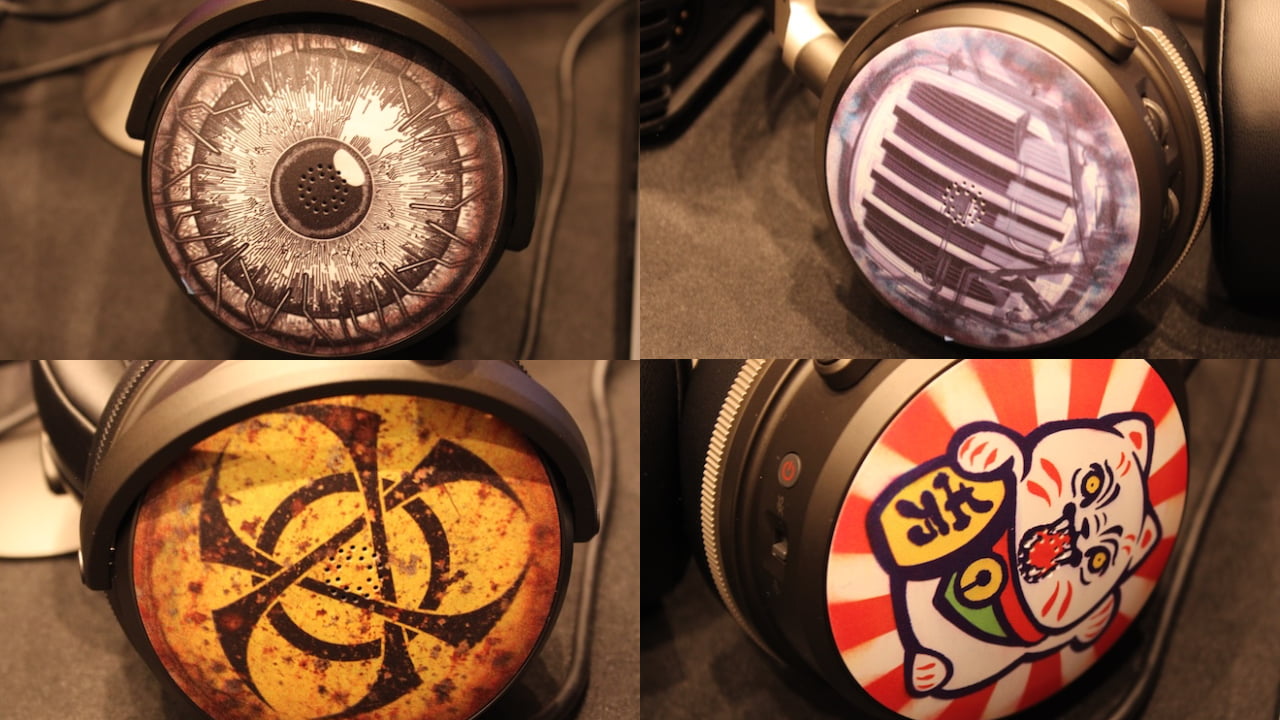
Audeze was also using the show to gather feedback on its new interchangeable faceplate concept, the reSkin program. Four gaming-inspired designs were on display, with more potentially on the way depending on response. Attendees were actively voting on which designs should come first, which is a smart way to avoid guessing wrong.
Advertisement
Audeze Maxwell 2 Headphones with interchangeable faceplates
For context, Editor in-Chief Ian White and Editor at-Large Chris Boylan were shown early sample cup covers at CanJam NYC 2026, but Audeze asked us to hold off on sharing details until the program was finalized. What we saw in Chicago looks more like a controlled rollout than an experiment.
A full custom upload option where users submit their own graphics would make this far more interesting. Whether Audeze wants to deal with that level of complexity is another question. For now, the four designs on display are the starting point.
Advertisement. Scroll to continue reading.
LCD-S20 Brings SLAM to the Studio
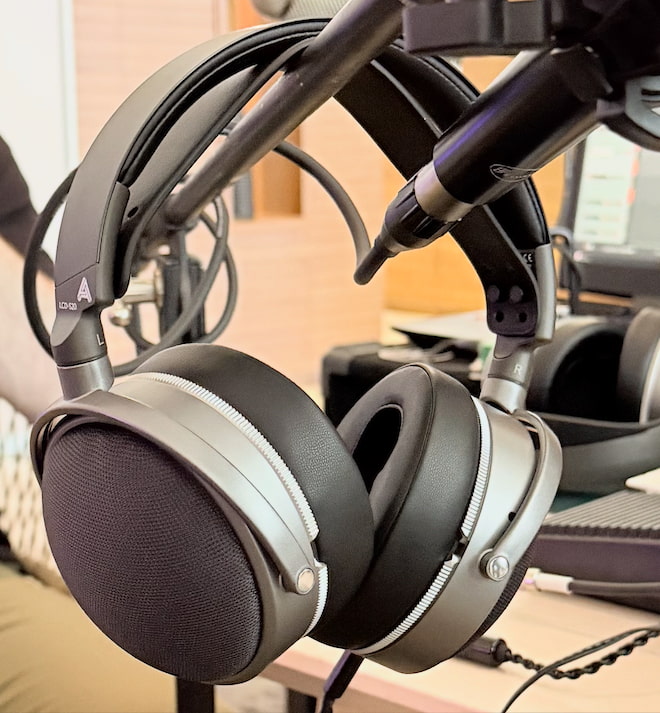
The fourth model incorporating SLAM is the Audeze LCD-S20, a closed-back design that Audeze had pulling double duty at AXPONA 2026. We were loaned four pairs for use at the podcast booth, and they were also available for demo on the show floor.
Advertisement
Audeze LCD-S20
In a space that was anything but quiet, the LCD-S20 proved its value quickly. Isolation was the standout. Even with a steady wall of background noise, voices came through cleanly without needing to crank levels or fight the environment. Our producer kept pushing us to get closer to the mic to cut through the noise, but the headphones were already doing most of that work.
This model slots into Audeze’s studio lineup alongside the Manny Marroquin series and LCD-X variants, offering a closed-back alternative at roughly the same price point as the open-back MM-100. That alone makes it worth paying attention to. There aren’t many options in this range that aim for a reference tuning while also addressing real-world recording conditions.
Build quality is another strong point. The LCD-S20 feels durable without becoming a burden during long sessions. There was even some joking about dropping a pair off a third-floor balcony, which the rep didn’t exactly discourage. We didn’t test that theory, but the reaction said enough. Audeze seems confident these will hold up under normal use, and then some.
The Bottom Line
Audeze doesn’t operate on a fixed script, and that’s part of the appeal. One minute it’s solving niche problems like medical applications, the next it’s refining products aimed at gamers and studio users.
Based on what was shown and discussed at AXPONA 2026, SLAM looks less like a feature and more like a direction. It’s already spreading across multiple models, and there are few obvious scenarios where added airflow and improved low-end balance would be a drawback.
Advertisement
Beyond that, the roadmap is exactly what you’d expect from Audeze. It depends on what users ask for and what the engineering team decides is worth chasing. So far, that combination has produced a wide range of headphones that don’t all sound the same and don’t all chase the same audience. That’s not an accident.
Sony knew exactly what it was buying when it acquired Audeze, and from what we’ve seen up close, there’s no sign they intend to interfere with that momentum. As long as models like the Maxwell 2 and its collaborative offshoots keep moving in serious volume, Audeze has the room to keep pushing headphone design forward. That’s where things get interesting.
The Department of Justice announced Thursday that it arrested Gannon Ken Van Dyke, an enlisted member of the US Army’s special forces, for allegedly using “classified, nonpublic” information about the capture of Venezuelan president Nicolás Maduro to notch more than $400,000 in profits on Polymarket trades. A grand jury indicted him on five counts, including multiple violations of the Commodity Exchange Act.
Van Dyke is the first person to be charged with insider trading on a prediction market in the United States. Lawmakers have been voicing concerns for months about the high likelihood that politicians and public servants could use nonpublic information to profit from trades on leading industry platforms like Polymarket and Kalshi, which have exploded in popularity over the past year.
The arrest comes just weeks after Department of Justice prosecutors met with Polymarket about potential insider tradition violations. In February, Israeli authorities arrested two citizens, an Army reservist and a civilian, for allegedly leaking classified information by making wagers on Polymarket related to military operations. Kalshi, Polymarket’s primary rival in the United States, recently fined three politicians for breaking its insider trading rules, but it did not flag the violations for further enforcement to the Commodity Futures Trading Commission (CFTC), the federal agency that oversees prediction markets.
After Van Dyke’s arrest was made public, Polymarket posted a statement to social media noting that it had “identified a user trading on classified government information” and “referred the matter to the DOJ & cooperated with their investigation.” The company declined to comment further.
Advertisement
According to court documents, Van Dyke has been an active duty US soldier since September 2008 and rose to the level of master sergeant in 2023. At the time of the alleged trading activity, he was stationed at Fort Bragg in Fayetteville, North Carolina and assigned to the Army’s Special Operations Command Western Hemisphere Operations.
“I have been crystal clear that anyone who engages in fraud, manipulation, or insider trading in any of our markets will face the full force of the law,” CFTC Chairman Michael Selig said in a statement. “The defendant was entrusted with confidential information about US operations and yet took action that endangered US national security and put the lives of American service members in harm’s way.”
The complaint alleges that Van Dyke was involved in the planning and execution of Maduro’s arrest and that he was aware that he wasn’t authorized to share nonpublic information about US military operations. The complaint says that Van Dyke signed a nondisclosure agreement that forbade him from revealing sensitive or classified government information “by writing, word, conduct, or otherwise.” The complaint also alleges Van Dyke saved a screenshot to his Google account “displaying the results of an artificial intelligence query” outlining how the US Special Forces maintains many classified files including “operational details that are not available to the public.”
On December 26, Van Dyke allegedly opened an account on Polymarket and took out around $35,000 from his bank account before transferring it to a cryptocurrency exchange.
Advertisement
The following day, Van Dyke allegedly made his first Venezuela-related trade on Polymarket, putting a little less than $100 on a “YES” contract that US forces would be in Venezuela by January 31, 2026. Prosecutors accuse him of ultimately making 13 Venezuela-related transactions on the platform in total, seven of those—totalling hundreds of thousands of shares—on a “YES” contract for “Maduro out by … January 31, 2026.” In other words, Van Dyke allegedly stood to make an enormous profit if the Venezuelan leader wound up out of power by the end of the month.
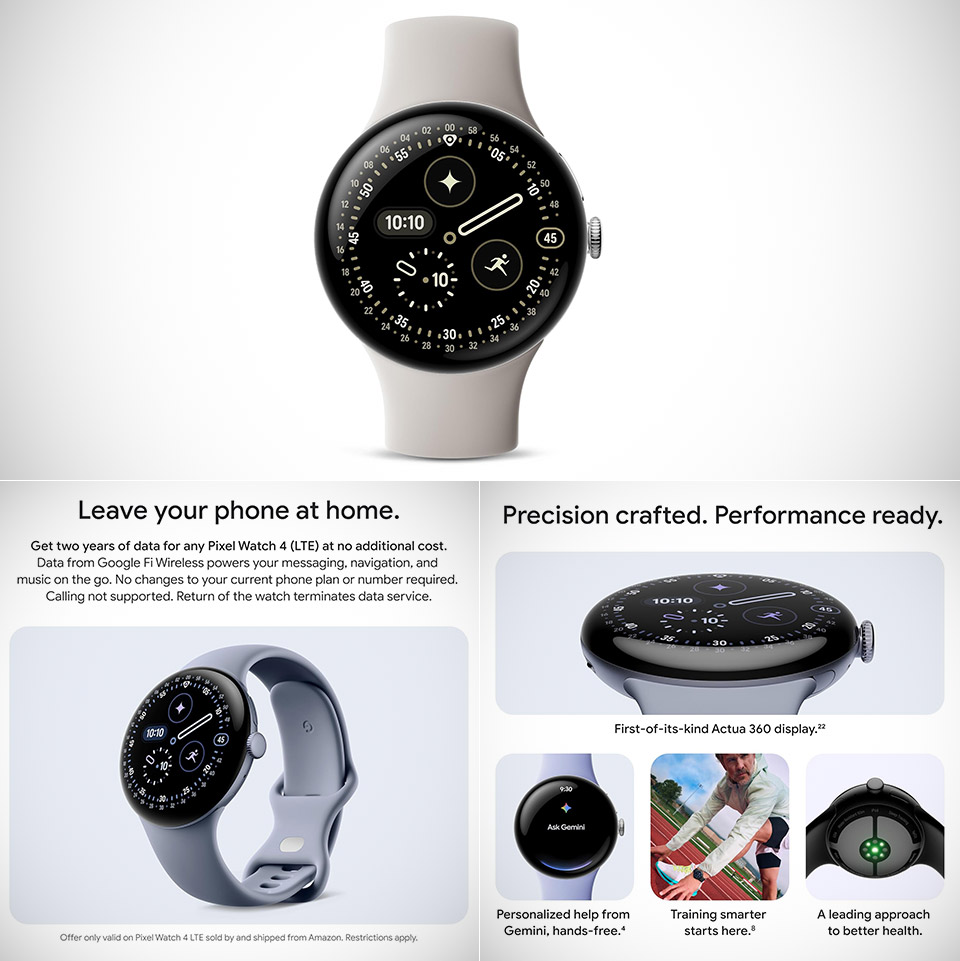
Google adds a few innovative features to the Pixel Watch 4 LTE, priced at $390 (was $450), that will significantly improve your everyday routine. When you put that aluminum case on your wrist, you’ll be impressed at how comfortable it feels, because the weight just balances out. Fast charging is also a lifesaver; half a charge in 15 minutes keeps your routines running smoothly even if you’re constantly on the go.
The display has actually grown larger, while the bezels around it have shrunk, allowing you to see even more details at a glance. The watch face curls up slightly under the glass, and it looks sharp regardless of where the light is coming from. It’s also rather bright, reaching up to 3,000 nits. Plus, the colors appear natural, and the text does not get blurry even when viewed in low light conditions.
Get 2yrs of data and texting included when you buy Pixel Watch 4 LTE[23]; Google Fi powers your messaging, navigation, and music on the go; offer only…
See it all and do the most with the Actua 360 domed display; it’s 10% larger and 50% brighter than Pixel Watch 3, and as durable as ever with…
The Google Pixel Watch 4 has Gemini built in[4]; just ask questions and your ultra capable AI assistant will deliver quick responses for personalized…
As far as battery life, you should be able to go all day and into the evening without having to stop and charge. The GPS is also much more accurate now, thanks to dual-frequency support, which allows it to carefully track your course even when you’re near buildings or trees. That means lap counts in the pool are much more accurate today, and you can finally stop guessing how fast you’re going. There is also a wide selection of activity kinds to measure, including various activities and even your heart rate. Sleep tracking is also quite handy, with clear summaries and recovery advice provided each morning to help you plan your day.
Advertisement
The watch’s UI is very quick to respond to taps and swipes, and with Gemini, you can ask it for information like the weather or directions directly from your wrist. It’s also much easier to receive alerts when they arrive, because the vibrations are strong enough to draw your attention and you don’t have to constantly examine the watch. Calls are much clearer, and on any Android phone, particularly a Pixel, you will receive notifications in real time.
This variant also supports LTE, so you can get online even if you don’t have your phone with you. This includes two years of free data and messaging with Google Fi. You can receive messages, maps, and even music directly to your wrist, eliminating the need to grab for your phone, and with all of the sensors on board, it can measure your heart rate and blood oxygen levels quite reliably. Satellite contact comes in handy during an emergency, allowing you to broadcast your location to someone.
X is making one of its biggest structural changes in years, and it’s not subtle. A core feature is getting shut down, but in its place, the platform is doubling down on AI-driven feeds and real-time chats.
Why is X shutting down Communities?
X has confirmed that it is closing its Communities feature, which originally launched as a way for users to gather around shared interests, similar to forums or subreddits. The reason is pretty blunt: low usage and high maintenance.
Today we’re announcing two product changes for organizing communities on X:
1. XChat now supports joinable links for groupchats. Create a public link & share direct to Timeline. With support for 350 members per chat (and growing), Groupchat Links are the fastest way to bring… pic.twitter.com/GNcRB99Opc
Despite the idea sounding great on paper, Communities were used by less than 0.4% of users, while also becoming a hotspot for spam, scams, and moderation headaches. 
In other words, it was a feature that demanded a lot of effort without delivering enough value. So X is cutting it loose.
What is replacing Communities on X?
Instead of Communities, X is splitting that experience into two very different directions: custom timelines powered by AI and expanded group chats.
Ladies and gentlemen, today we’re launching one of our biggest changes to 𝕏
Introducing Custom Timelines
Advertisement
This feature allows you to pin a specific topic to your home tab. With support for over 75 topics, you can dive deep into your favorite niche on X.
On one side, there are Custom Timelines, which let users pin topic-based feeds directly to their home screen. These feeds are powered by Grok, X’s AI system, which actually reads posts and categorizes them instead of relying on hashtags or keywords.
Advertisement
Unsplash
On the other side, X is pushing heavily into group chats via XChat. These chats now support joinable public links, making it easier to bring people into conversations instantly. Group sizes are also expanding, with limits expected to grow well beyond the current few hundred users.
What does this shift actually mean for users?
This is less about removing Communities and more about redefining them. Instead of fixed groups, users will now follow topics through AI-driven feeds or jump into real-time conversations via group chats, shifting away from slower, forum-style interactions.
It also signals a bigger strategy shift. X is betting on AI and messaging as the future, simplifying the experience while moving toward faster, more dynamic ways of connecting.
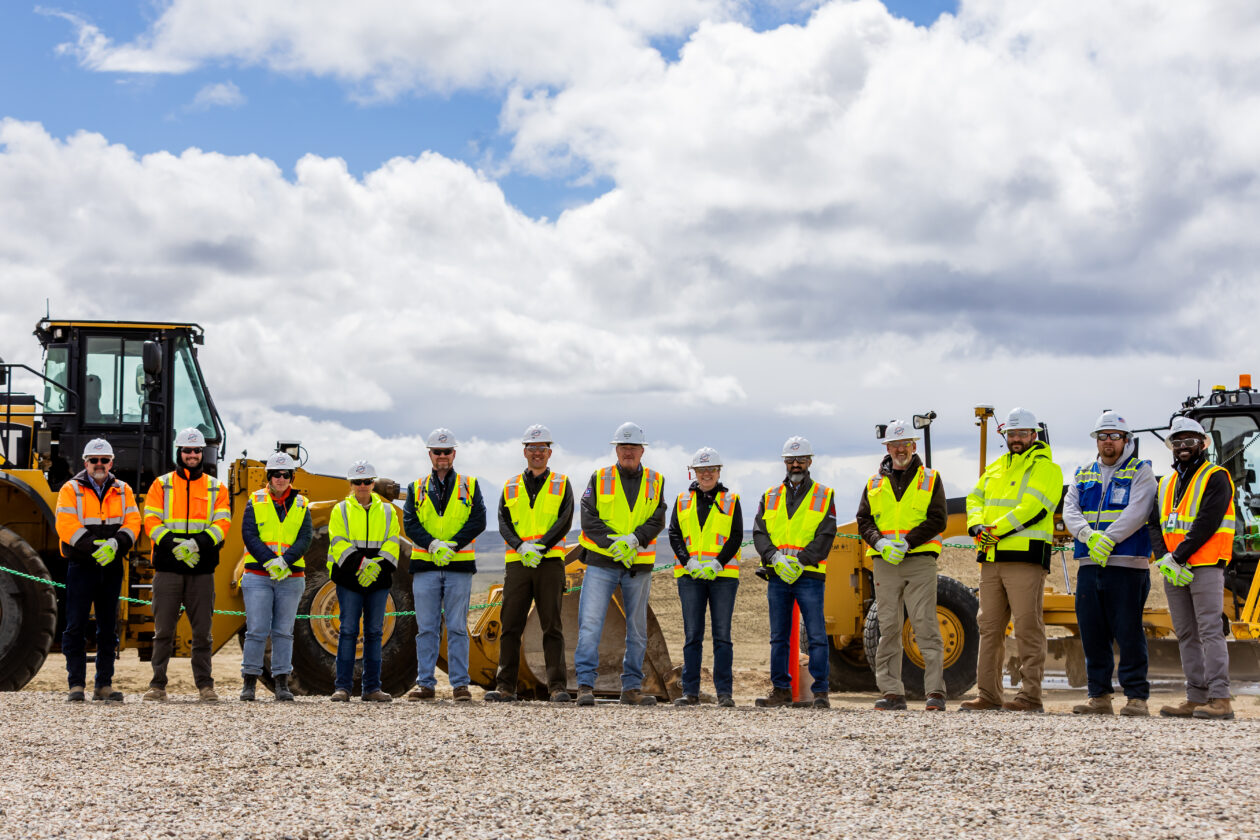
TerraPower is celebrating the start of construction on its nuclear plant in Kemmerer, Wyo. (TerraPower Photo)
TerraPower announced Thursday that it has started construction on its Natrium plant, making it the first company in the U.S. to break ground on an advanced nuclear power facility.
“This is the moment our industry has been working toward for a generation. We’re not just breaking new ground on a first-of-a-kind nuclear plant in Wyoming; we’re building the next generation of America’s energy infrastructure,” said Chris Levesque, CEO of TerraPower, in a statement.
The Bellevue, Wash.-based company began building its demonstration plant in Kemmerer, Wyo., in 2024, starting with construction of non-nuclear features. Last month, TerraPower received unanimous approval from the Nuclear Regulatory Commission (NRC) to proceed with the nuclear components.
The facility includes a 345-megawatt, sodium-cooled fast reactor paired with a system that holds excess heat inside of molten salt. Tapping the thermal salt battery can boost the plant’s power output to 500 megawatts for more than five hours. By comparison, Seattle uses around 2,000 megawatts during extreme weather events.
TerraPower aims to have the reactor splitting atoms by the end of 2030. Roughly 1,600 workers will be hired during construction, with approximately 250 full-time staff employed once the facility is operational.
Advertisement
The Wyoming plant was estimated in 2021 to cost about $4 billion; no updated figures have been provided. Levesque previously told GeekWire that private investments from Bill Gates and others as well as $2 billion federal grant mean “we’re building that project without burdening the ratepayers.”
The milestone comes as America’s nuclear sector has surged back to life after decades of stagnation, driven by tech giants scrambling to power data centers nationwide and rising energy demands across commercial, residential and industrial sectors.
Founded 20 years ago, TerraPower plans to build hundreds of its reactors, which are smaller and less costly than conventional facilities. Using prefabricated components, the company believes it can compress construction timelines to just three years — a fraction of the time required for traditional plants. The most recently completed conventional nuclear facility in the U.S. — the Plant Vogtle site in Georgia — took more than a decade to build.
TerraPower is already signing customers. In January, the company reached a deal with Meta to build up to eight Natrium reactors in the U.S. with the first two targeted to come online by 2032. If the full order is fulfilled, the additional reactors will be operating by 2035. The company also has memorandums of understanding with government agencies in Utah and Kansas to explore potential sites in those states.
Advertisement
“The start of construction on TerraPower’s Natrium plant in Kemmerer marks a major milestone not just for Wyoming, but for the future of American energy,” said Wyoming Gov. Mark Gordon. “I want to thank everyone at TerraPower for their work getting to this day.”
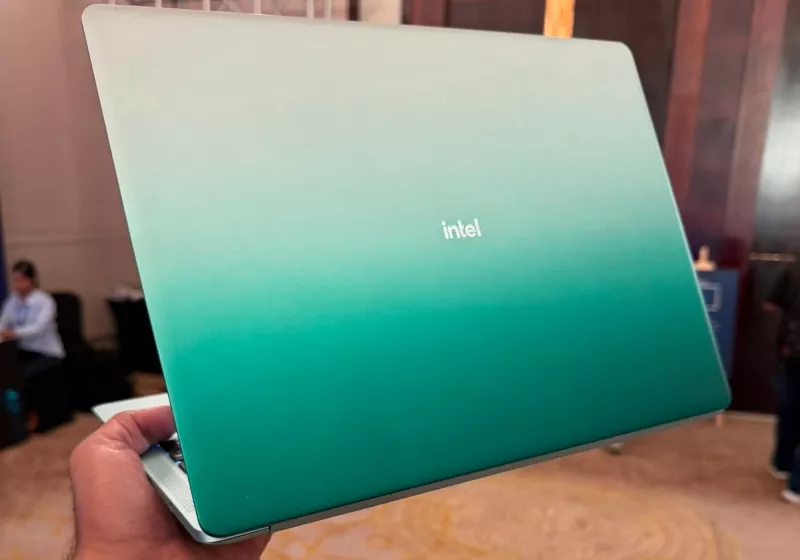
The laptop is powered by a six-core CPU in a 2P+4LPE configuration, featuring two Cougar Cove P-cores and four Darkmont LPE cores. The SoC also includes two Xe graphics cores and a dedicated 17 TOPS NPU. Intel did not specify the exact CPU model, but it is believed to be… Read Entire Article Source link
For several weeks, a growing chorus of developers and AI power users claimed that Anthropic’s flagship models were losing their edge. Users across GitHub, X, and Reddit reported a phenomenon they described as “AI shrinkflation”—a perceived degradation where Claude seemed less capable of sustained reasoning, more prone to hallucinations, and increasingly wasteful with tokens.
Critics pointed to a measurable shift in behavior, alleging that the model had moved from a “research-first” approach to a lazier, “edit-first” style that could no longer be trusted for complex engineering.
While the company initially pushed back against claims of “nerfing” the model to manage demand, the mounting evidence from high-profile users and third-party benchmarks created a significant trust gap.
Today, Anthropic addressed these concerns directly, publishing a technical post-mortem that identified three separate product-layer changes responsible for the reported quality issues.
Advertisement
“We take reports about degradation very seriously,” reads Anthropic’s blog post on the matter. “We never intentionally degrade our models, and we were able to immediately confirm that our API and inference layer were unaffected.”
Anthropic claims it has resolved the issues by reverting the reasoning effort change and the verbosity prompt, while fixing the caching bug in version v2.1.116.
Her findings suggested that Claude’s reasoning depth had fallen sharply, leading to reasoning loops and a tendency to choose the “simplest fix” rather than the correct one.
Advertisement
This anecdotal frustration was seemingly validated by third-party benchmarks. BridgeMind reported that Claude Opus 4.6’s accuracy had dropped from 83.3% to 68.3% in their tests, causing its ranking to plummet from No. 2 to No. 10.
Although some researchers argued these specific benchmark comparisons were flawed due to inconsistent testing scopes, the narrative that Claude had become “dumber” became a viral talking point. Users also reported that usage limits were draining faster than expected, leading to suspicions that Anthropic was intentionally throttling performance to manage surging demand.
The causes
In its post-morem bog post, Anthropic clarified that while the underlying model weights had not regressed, three specific changes to the “harness” surrounding the models had inadvertently hampered their performance:
Default Reasoning Effort: On March 4, Anthropic changed the default reasoning effort from high to medium for Claude Code to address UI latency issues. This change was intended to prevent the interface from appearing “frozen” while the model thought, but it resulted in a noticeable drop in intelligence for complex tasks.
A Caching Logic Bug: Shipped on March 26, a caching optimization meant to prune old “thinking” from idle sessions contained a critical bug. Instead of clearing the thinking history once after an hour of inactivity, it cleared it on every subsequent turn, causing the model to lose its “short-term memory” and become repetitive or forgetful.
System Prompt Verbosity Limits: On April 16, Anthropic added instructions to the system prompt to keep text between tool calls under 25 words and final responses under 100 words. This attempt to reduce verbosity in Opus 4.7 backfired, causing a 3% drop in coding quality evaluations.
Impact and future safeguards
The quality issues extended beyond the Claude Code CLI, affecting the Claude Agent SDK and Claude Cowork, though the Claude API was not impacted.
Advertisement
Anthropic admitted that these changes made the model appear to have “less intelligence,” which they acknowledged was not the experience users should expect.
To regain user trust and prevent future regressions, Anthropic is implementing several operational changes:
Internal Dogfooding: A larger share of internal staff will be required to use the exact public builds of Claude Code to ensure they experience the product as users do.
Enhanced Evaluation Suites: The company will now run a broader suite of per-model evaluations and “ablations” for every system prompt change to isolate the impact of specific instructions.
Tighter Controls: New tooling has been built to make prompt changes easier to audit, and model-specific changes will be strictly gated to their intended targets.
Subscriber Compensation: To account for the token waste and performance friction caused by these bugs, Anthropic has reset usage limits for all subscribers as of April 23.
The company intends to use its new @ClaudeDevs account on X and GitHub threads to provide deeper reasoning behind future product decisions and maintain a more transparent dialogue with its developer base.























































You must be logged in to post a comment Login