Tech
James Bruton Twisted 18 Elastic Bands Into a Cart That Pushes Him Nearly 10 Meters

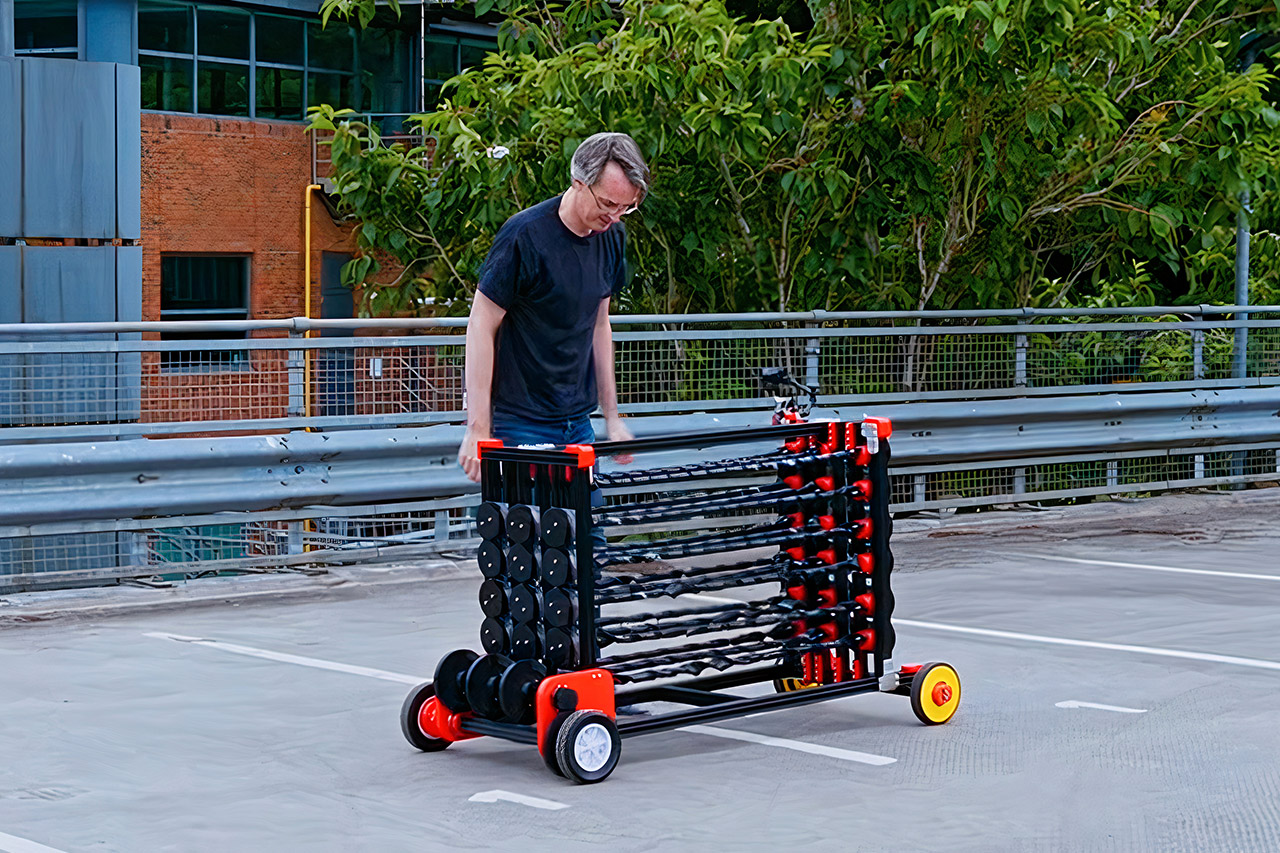
James Bruton has fabricated many rideable machines over the years. This one began with a simple question: could ordinary elastic bands, the thick variety offered for exercising, store enough energy to propel a full-size cart carrying a person? The solution emerged after weeks of testing, gear ratios, special plates, and meticulous winding. The final contraption rolled approximately ten meters using nothing but twisted resistance bands.


He started with a 50-millimeter resistance band suspended from a sturdy frame made of high-grade aluminum extrusion. One end was held in place, while the other was attached to a shaft that rotated on bearings from inexpensive lazy Susans. Bruton wound the band by repeatedly twisting it in his palm until it was completely knotted up. When he let go, the unwinding band turned the shaft around. Early versions, without wheels or gearing, could only travel approximately 2 meters, even with a 2-to-1 bevel gear set. Despite having excellent connection sites, the band consistently snapped or became slack in the middle.


Segway Ninebot Gokart Pro 2 – High-Speed Electric Go Kart for Ages 14+, Drift & Race with Speeds Up to…
- Extreme Speed: Race at a thrilling 26.7 mph in Race Mode, delivering an electrifying go-karting experience that leaves you exhilarated and hungry for…
- Versatile Riding Modes: Personalize your ride with ECO, Sport, Race, and Manual Modes, providing a diverse range of speed and control options to suit…
- Long-lasting Adventure: Extend your fun with a typical range of 15.5 miles, ensuring hours of non-stop excitement and enjoyment on the track without…
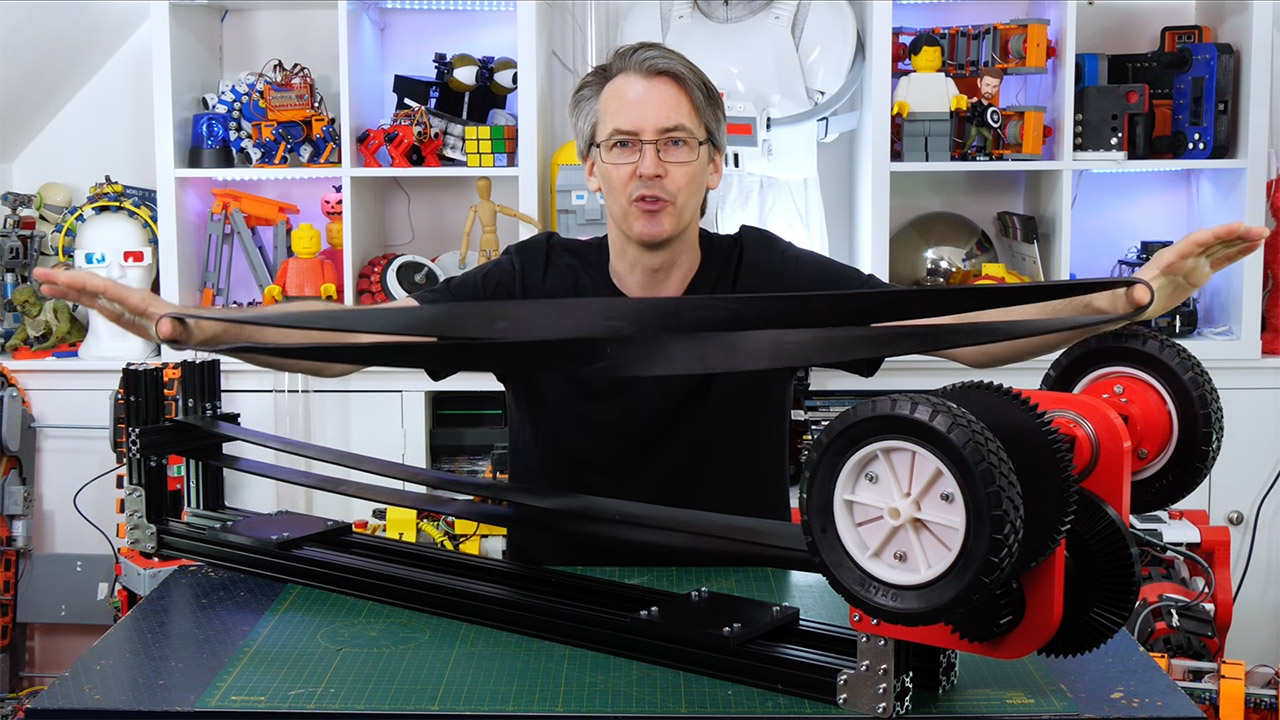
Clearly, they needed to boost torque, so he added another stage of gearing, resulting in a 6-to-1 reduction. The extra leverage allowed him to coil the band up a little further without it breaking, resulting in around 2.8 meters of travel this time. That was a nice sign, but it was clear that a single band could never carry anyone very far. Attempting to use a longer band produced its own set of problems, as the longer it became, the less efficient it became, and the twist became uneven, causing the band to bounce around rather than generate nice crisp torque.

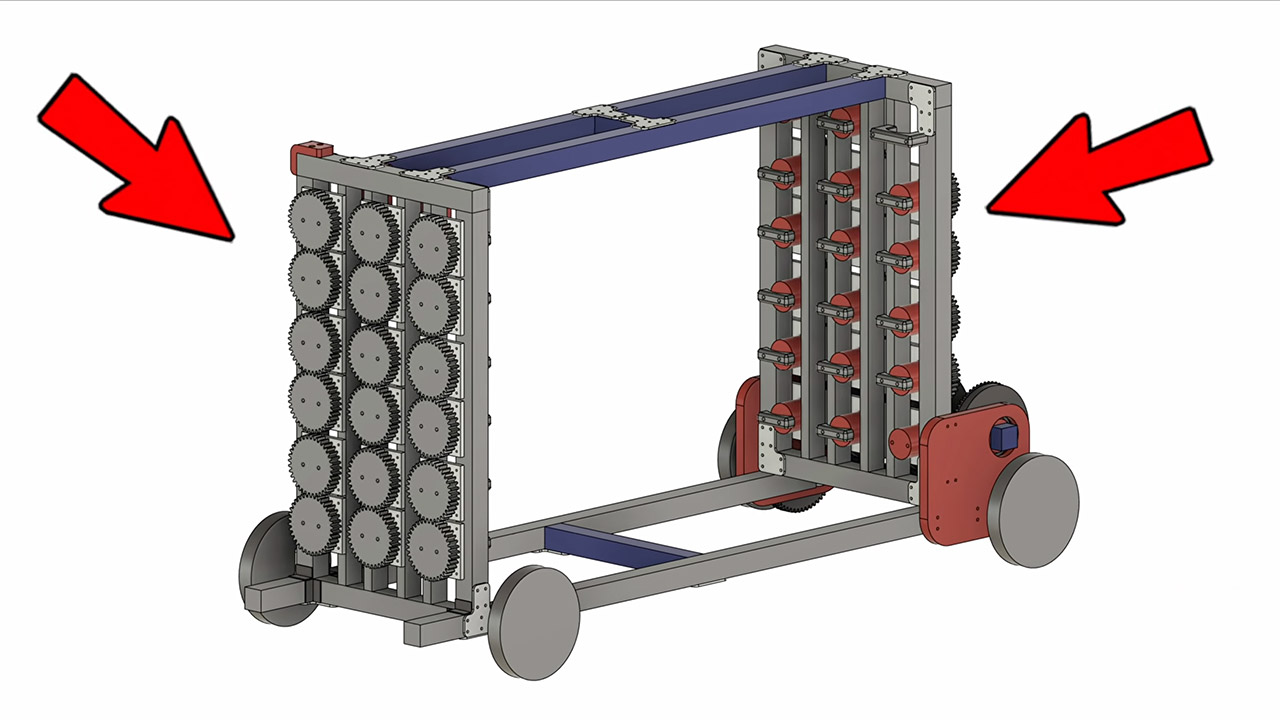
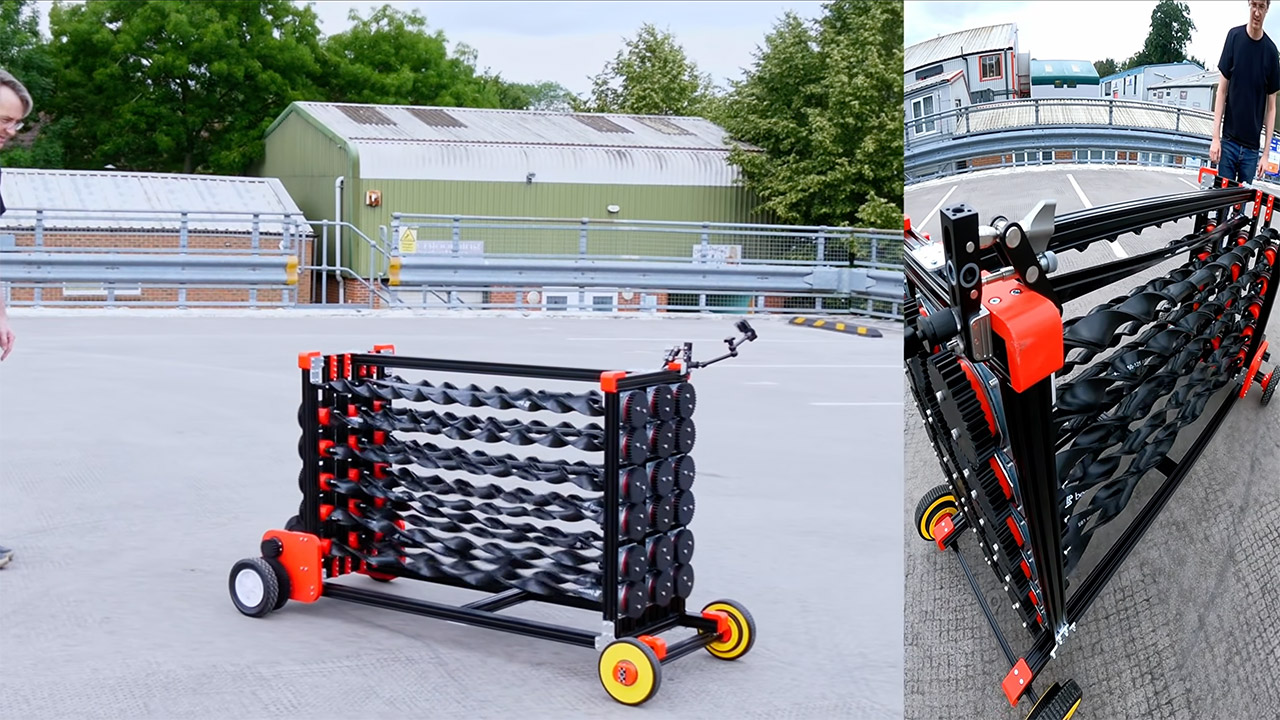
The aim was to use a series of shorter bands that worked together to increase the energy without making the whole thing overly large. Bruton devised the concept of routing the bands through additional gears, allowing them to flow back and forth inside the frame like a folded ribbon. Three columns of bands, each with six bands, totaled 18. Bevel gears at either end allow the columns to transfer their torque to a single common axle. Some unique aluminum plates were carved out using a CNC router to combine the extrusion into a beautiful solid box. A couple of vertical rails at either end ran six lazy Susan bearings each, allowing the winding shafts to spin freely.
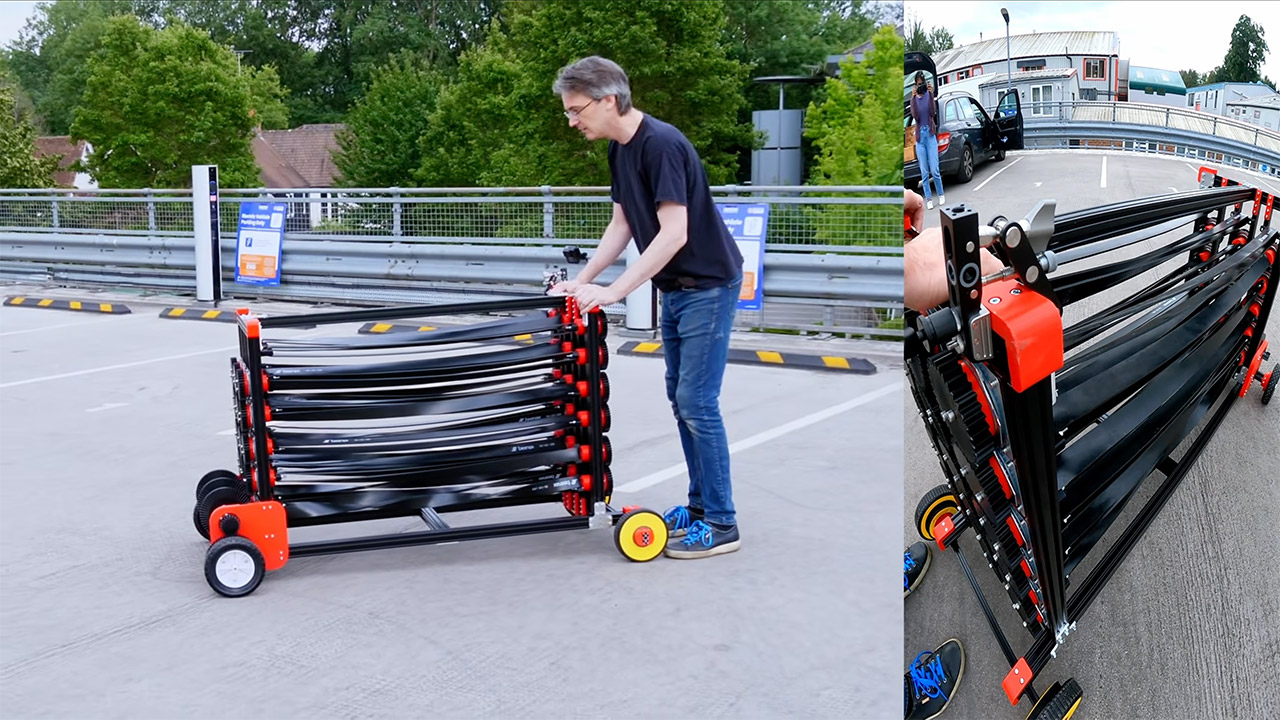
Testing is now moved outside, where Bruton winds the bands by driving the cart in reverse, allowing the wheels and gears to accomplish the hard twisting rather than raw effort. He’s taking it carefully at this point, aiming for a clean run of around 9.88 meters. That is the maximum distance the cart can travel before the front wheels lift up and prevent it from moving any farther. If he winds it up a little more, a little more “aggressive,” it adds a little more distance because of the velocity, but it also causes a problem where some of the bands are twisted a lot more than the others due to small little changes in friction in the gear box. Bands that are wound up later in the sequence frequently underperform.
Bruton is already brainstorming about where to go next. If he winds the bands one at a time instead of all at once, he may be able to extend the power delivery and smooth out the acceleration. Alternatively, a clutch system might be an excellent option, as each stage can only begin working after the one before it has almost completely run out of gas. So far, the build has demonstrated that the main concept is viable at human scale.
You must be logged in to post a comment Login