Tech
Klipsch Flexus Core 200 Soundbar System Review: Perfect for the Price

The Klipsch Flexus Core 200 ($549) is about as sensible as soundbars get. If you’re wondering what I mean by that, the Core 200 offers up all the essentials; Dolby Atmos processing, up-firing speakers for height effects, and HDMI eARC connectivity in a reasonably compact and powerful package. And by stripping out the things that not everyone needs in a soundbar – specifically, extra HDMI ports and built-in Wi-Fi for streaming music, Klipsch managed to hit an affordable price point with the Flexus Core 200. They don’t call it Core for nothing.
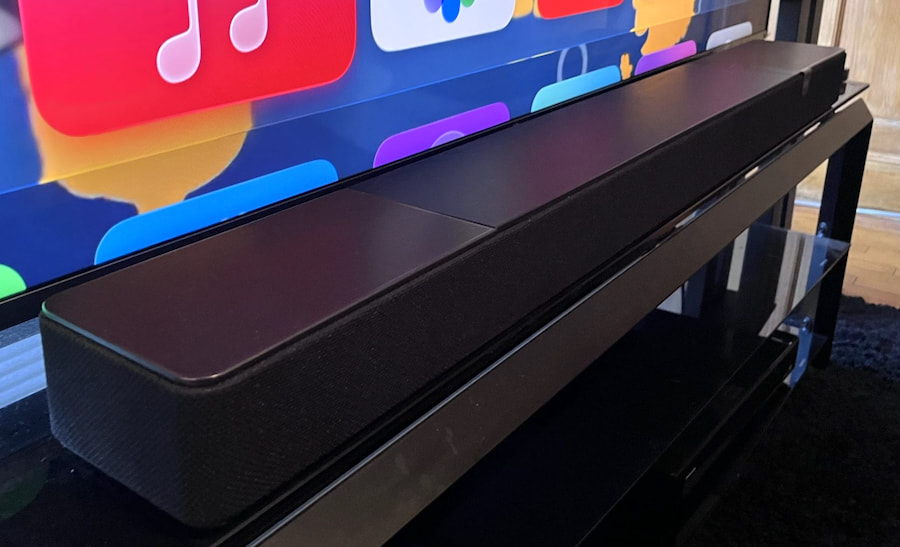

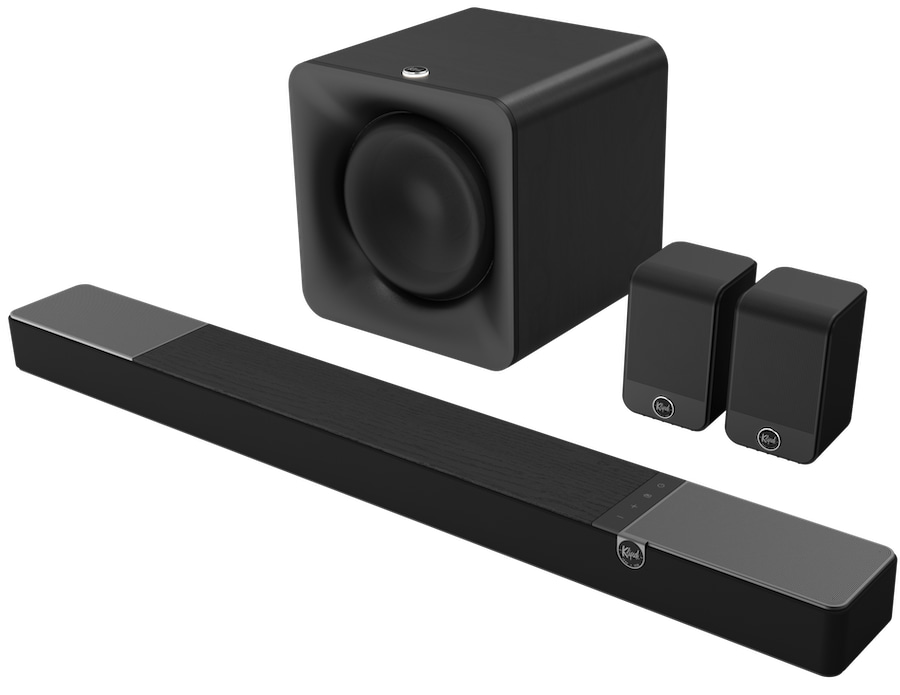
Sandwiched between the 2.1-channel Core 100 ($349) and 5.1.2-channel Core 300 ($1,199) in the Flexus soundbar lineup, the Core 200 walks the line between basic TV sound enhancement and full-on Atmos immersion. It can also be scaled up to a 5.1.2- or even a 5.1.4-channel configuration by adding an optional Klipsch wireless subwoofer and surround speakers. For this review, I paired it with the Flexus SUB 100 subwoofer ($349 each) and Flexus SURR 100 rear speakers ($249/pair). Total system price: $1,175.
What Is It?
The Klipsch Flexus Core 200 is a 3.1.2-channel powered soundbar that decodes Dolby Atmos and legacy Dolby Digital and PCM formats. DTS:X is not supported, an omission some may find disappointing now that support for that format has been added to movies on the Disney+ streaming service.
As I mentioned above, there’s no Wi-Fi onboard for music listening via TIDAL Connect, Spotify Connect and other services, though Bluetooth is on-board for basic streaming of music, internet radio and podcasts. Bluetooth is also used by the Klipsch Connect setup app and for wireless hookup between the soundbar, subwoofer and rear speakers.

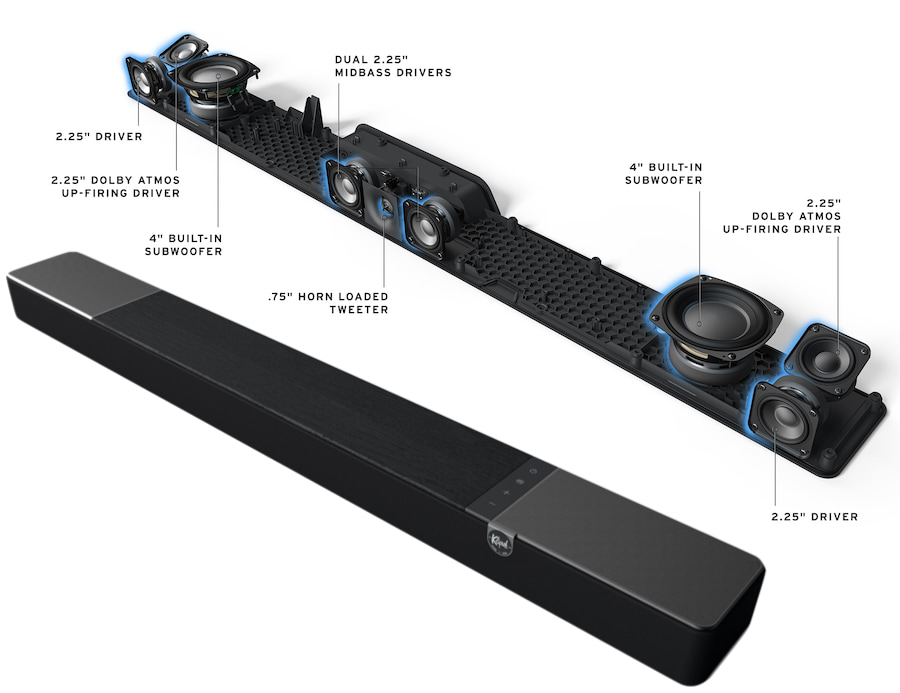
At 44 inches (111.8 cm) wide, 3 inches (7.8cm) high, and 5 inches (12.6cm) deep, the Core 200 mates well visually with 55- or 65-inch TVs, though its somewhat chonky 3-inch height means you may need a TV with an adjustable stand to provide sufficient screen clearance. The soundbar’s attractive cabinet is made of plastic, wood, and metal, and there are black and walnut finish options.
Being a Klipsch soundbar, there’s going to be a horn somewhere, and in this case it’s the center speaker’s 0.75-inch horn-loaded tweeter, which is flanked by two 2.25-inch aluminum cone drivers. The same 2.25-inch drivers are also used for the left and right speakers and up-firing elevation speakers, while a pair of 4-inch paper cone woofers bring the bass. Onboard power for the Onkyo-designed amplifier section is specified at 185 watts (RMS) and frequency response at 43Hz-20kHz.
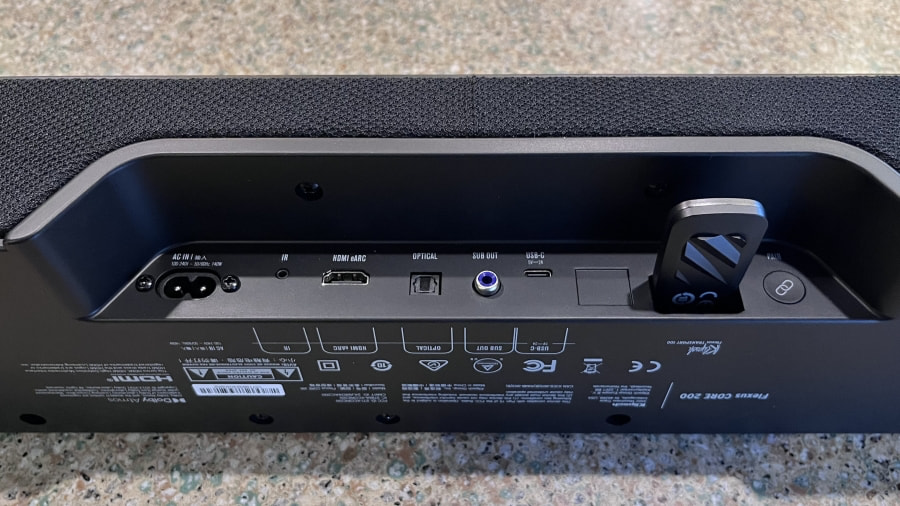

Along with the Core 200’s HDMI eARC port, there’s an optical digital input, an RCA output for a hardwired subwoofer connection, a USB-C port (service only) and a USB Type-A port to plug in the wireless dongle that connects the SUB 100 subwoofer and SURR 100 rear speakers.
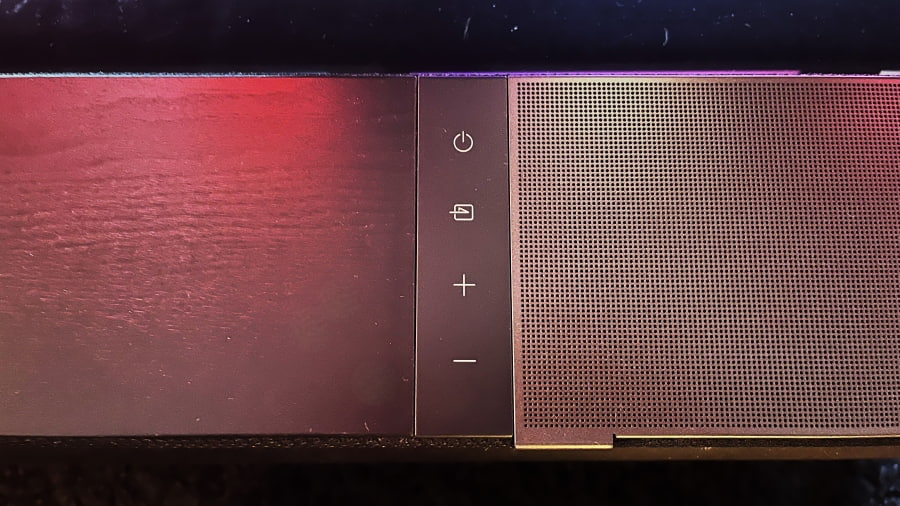
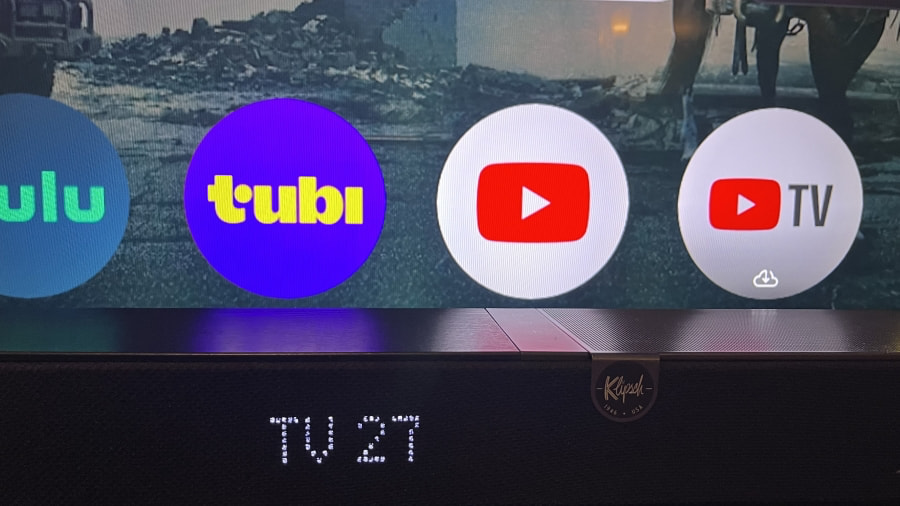
Controls located on the Core 200’s top surface let you toggle power on and off, switch inputs and adjust the volume level. A large alphanumeric LED display located on the front provides visual feedback when making adjustments using the Klipsch Connect app or the included remote control – a useful and very welcome feature that’s not always provided on soundbars, including ones priced significantly higher than the Core 200.
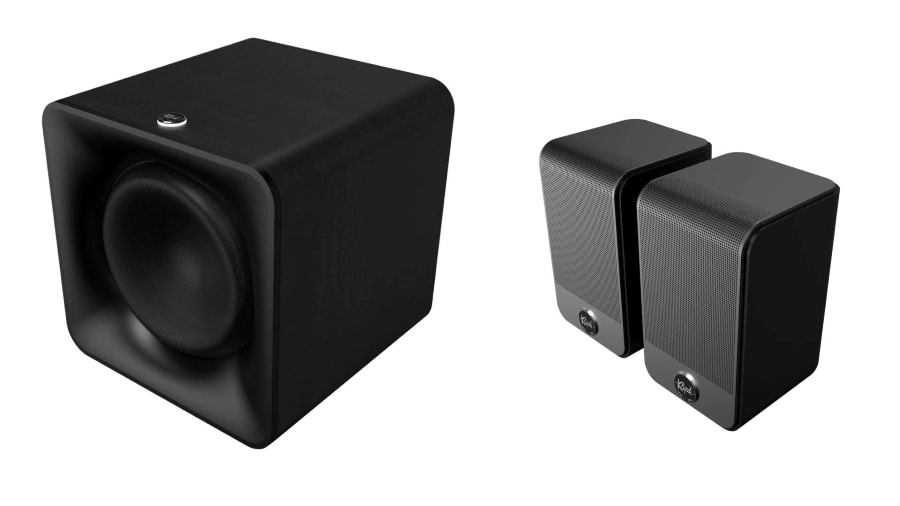
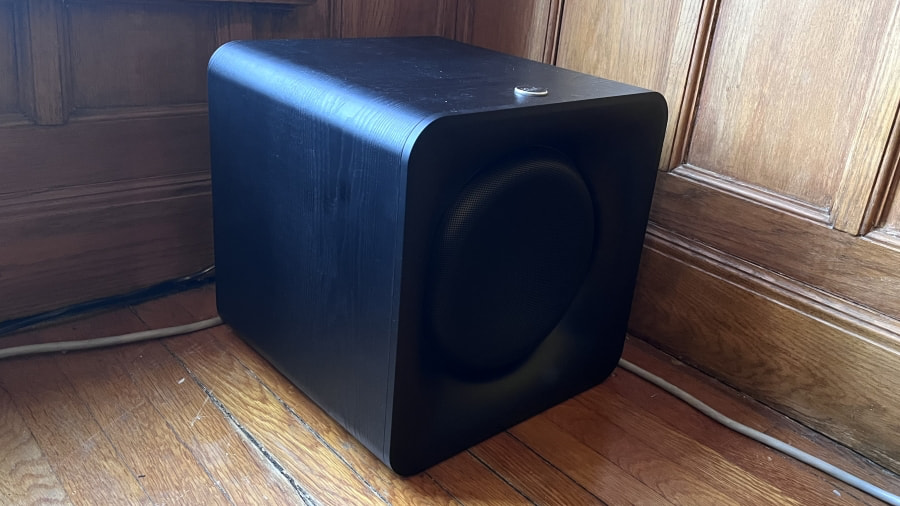
The Klipsch Flexus SUB 100 I used for my test packs a 10-inch paper cone woofer powered by an 80-watt (RMS) class D amplifier in a sealed enclosure. It comes with the Flexus Transport USB transmitter used for the soundbar’s wireless connection, and it also has an RCA input for a hardwired hookup. At 13.25 inches (33.7cm) wide x 13.3 inches (33.8cm) high x 13.75 inches (35cm) deep, it’s a relatively compact cube and makes for a good visual match with the Core 200 soundbar.
The Klipsch Flexus SURR 100 speakers I used for rear channels are tiny, almost toy-like at 4.25 inches (10.8cm) wide x 6.75 inches (17.1cm) high x 4.25 inches (10.8cm) deep. Each speaker uses a 3-inch paper cone driver powered by 25 watts (RMS) and the package also comes with the Flexus Transport USB transmitter. Klipsch offers a beefier rear speaker option in the Flexus SURR 200 ($499/pair), a model that adds a 2.25-inch up-firing driver to the 3-inch front-facing one to convey Dolby Atmos height effects.
Setup and Use
I found setting up the Core 200 with Klipsch’s optional subwoofer and rear speakers to be super easy compared to other soundbar-based wireless surround systems I’ve tested. If you’re using just the Core 200, all that’s needed is to run a cable from your TV’s HDMI eARC/ARC port to the soundbar’s HDMI port. Connect it to power and you’re done – even the Klipsch Connect app is optional and not needed for setup.
If, like me, you’re extending the system with a wireless sub and speakers, you’ll need to insert one of the included USB transmitters into the soundbar’s USB type-A port and then press the Connect button located on the rear panel of both the subwoofer and rear speakers. An audio tone confirms that a wireless connection has been made and an LED indicator light, also located on the back, changes from a pulsing to a solid white.
For my setup, I had the Core 200 placed on a stand beneath a 75-inch TV in my 9 x 12 x 16 (H x W x D) foot viewing room, the SUB 100 in the front right corner, and the Surround 100s on stands to the right and left and slightly behind my sofa.
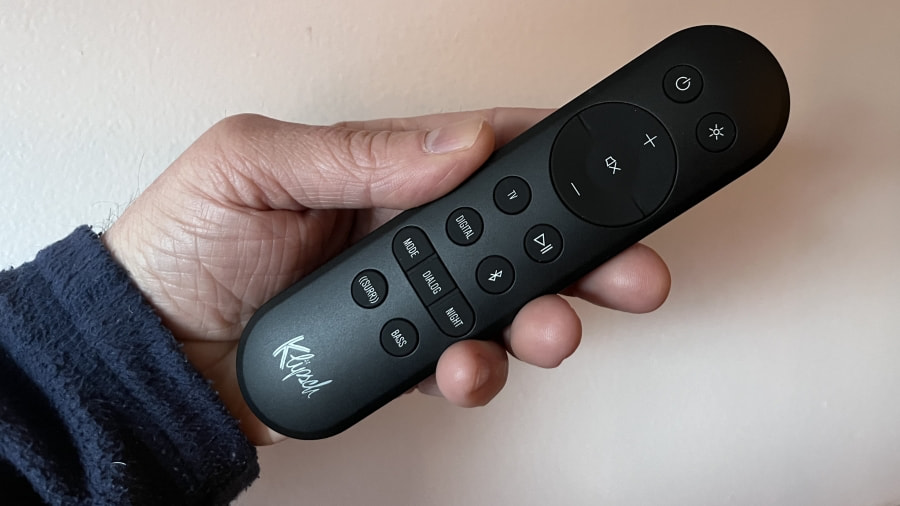
Klipsch’s remote control provides access to most adjustments for tuning the soundbar for your viewing environment or whatever content you’re listening to or watching. There are buttons to select the Sound (Movie or Music) and Night (volume levelling) modes, and to configure Dialog level (1-3 or Off) plus front height, back left and right, and subwoofer level. All of these adjustments are indicated on the Core 200’s big, beautiful front LED display, and you can also adjust the display’s brightness using the remote.
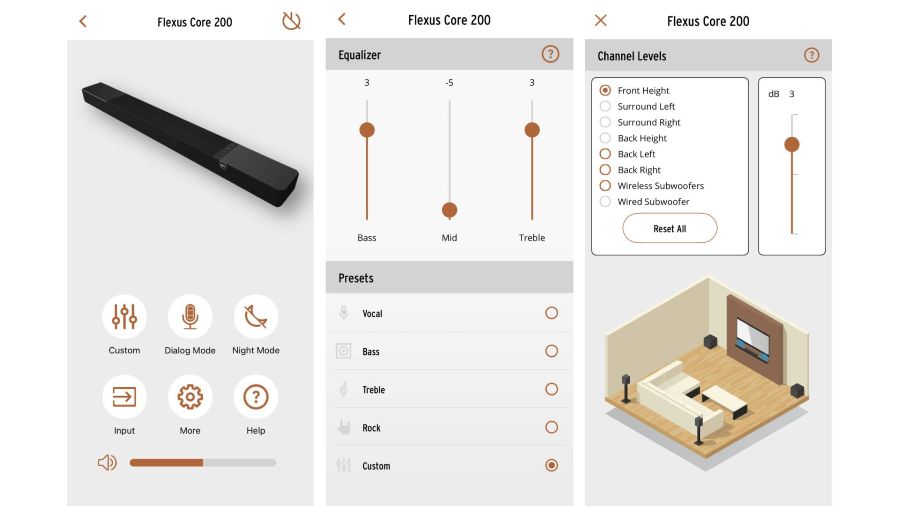
The Klipsch Connect app features all the same adjustments, but further provides a three-band EQ with multiple presets plus a Custom setting. EQ may get scoffed at by audio purists, but I find it to be highly necessary for soundbars, where you regularly need to make adjustments for the differences in TV and movie soundtracks, as well as for any music you listen to.
Movie Performance
I started out my evaluation with the Klipsch soundbar alone before adding the subwoofer and rear speakers to the mix. The Core 200 had a nicely balanced presentation overall, with full bass and clear, natural-sounding dialogue. Atmos effects were also pronounced, especially with the soundbar’s height adjustments edged up toward maximum level.
These qualities served F1 well when I streamed it on Apple TV via my Apple TV 4K. In the movie’s opening scene, Sonny Hayes (Brad Pitt) races at Daytona to the strains of Led Zeppelin’s “Whole Lotta Love.” The roar of the car engines was vivid and clean, and I could easily hear a shifting level of spaciousness to the commentator’s voice as the action cut between interior and exterior shots. John Paul Jones’ bass came across as muscular and deep, with a level of dynamic power that was impressive for a standalone soundbar.
Watching F1 revealed the Core 200’s ability to cast a tall and wide soundstage, especially when a fireworks display lit up the night sky during the race, but the presentation was mainly locked to the front of the room. This was evident when I watched the scene from the Dune: Part II 4K Blu-ray where Paul Atreides (Timothée Chalamet) hitches a ride on a giant sandworm – as worm and rider plowed through the desert landscape, the spray of sand was cast high and wide, but I didn’t feel overly immersed in the action.
It was the same deal when I watched the scene from the Twisters 4K Blu-ray where the doomed young meteorologists flee a monster tornado only to get sucked up one by one into the deadly funnel. The sound of the storm was powerful and dramatic, but I didn’t feel like I was in the eye of the storm. Dialogue in this complex and chaotic sequence also tended to get obscured, but a few hits of the Dialog button on the remote successfully boosted it to the point where I could hear it.
Movies with SUB & SURR
Watching the same clips with the SUB 100 and SURR 100 speakers added to the mix elevated the Core 200’s game to the point where I’d deem them indispensable. It’s not that Klipsch’s soundbar isn’t effective on its own; for the price, I’d even say it’s an overachiever. But adding those optional extras brought about a surprisingly effective increase in both dynamic range and surround immersion. I was actually caught off guard by it.
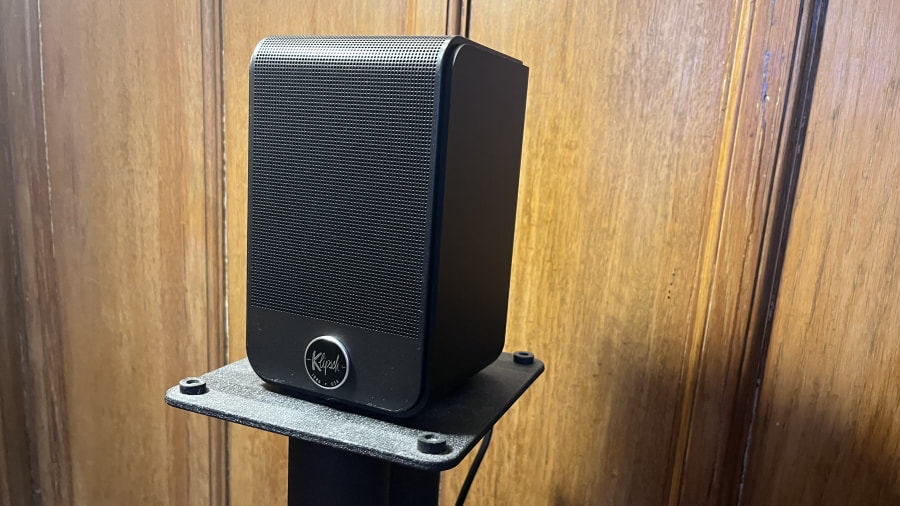
Giving F1 another spin, the SUB 100 created a deep foundation of bass that added dimension to engine sounds and emphasis to John Bonham’s kick drum. The little SURR 100 speakers lit up as the cars circled the track, providing a strong sense of being positioned in the driver’s seat.
The Dune: Part II worm rodeo scene also benefited greatly from the speaker additions, with the sand now seeming to spray to the back of the room. Twisters, too, took on a new dimension: the trajectory of wind sounds now seeped from the front to the rear speakers, creating a much more vivid sense of being caught inside the storm.
Music Performance
For music, I decided to leave the full 5.1.2 configuration intact since I was mostly listening to Dolby Atmos music tracks on Apple Music (played via the Apple TV 4K). Also, the Core 200 automatically upconverts stereo tracks in both Music and Movie mode, so everything I listened to ended up being in surround sound format anyway.
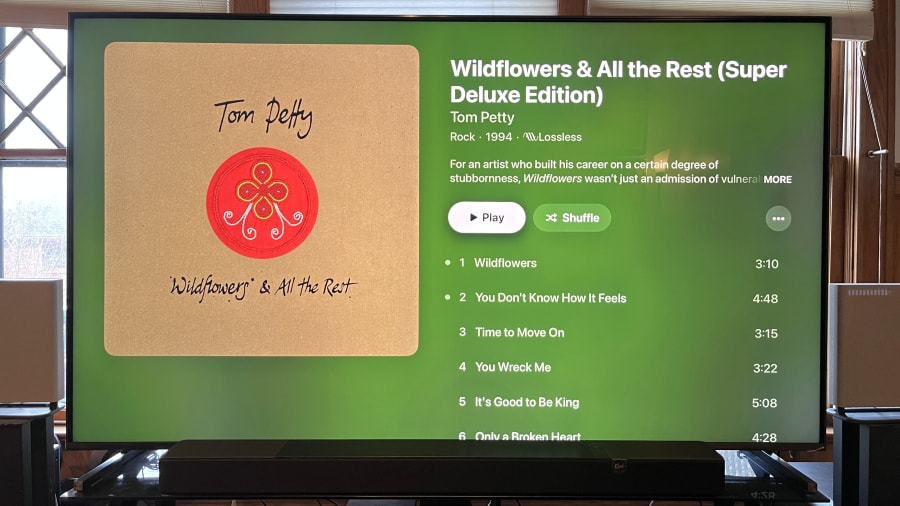
I’m a fan of Ryan Ulyate’s Atmos mix of Tom Petty’s Wildflowers, which manages to subtly expand the stereo original while maintaining a rock-solid presentation of vocals and instruments. Heard on the Flexus Core 200 system, Petty’s voice on “It’s Good to be King” had the same dry, natural quality I’m used to hearing on higher-end setups, The piano maintained its clean, well rounded tone and the Atmos mix spread subtly towards the rear of the room in a way that added warmth to the sound.
Beck’s “She’s Gone,” also in Atmos, further confirmed my impression of the Core 200’s neutral, and mostly transparent, handling of music. Beck’s vocals sounded natural, with just a slight touch of reverb, and the acoustic guitar and harmonica had a crisp, clean tone. The bass guitar had a similar level of depth and punch as on “Whole Lotta Love” when I watched F1, but it gained a deeper, more authoritative foundation with the addition of the SUB 100 subwoofer.
To see how far I could flex that sub, I next played Deadmau5’s “Imaginary Friend” in stereo via the Apple TV 4K’s TIDAL app. For a compact sub with a 10-inch driver, the SUB 100 did an impressive job pressurizing the room and fleshing out the electronic beats. I could literally feel the bass hit in my chest. Upconverted for surround, the track gained a compelling sense of spaciousness, and the addition of a height dimension via the soundbar’s up-firing speakers gave it a nice wall of sound effect.
Shifting back to Atmos, I dug out my Pink Floyd Wish You Were Here (50th Anniversary) Blu-ray, which features a fantastic Dolby Atmos mix by the band’s longtime producer and engineer, James Guthrie. I had been a bit underwhelmed by the Core 200’s Atmos presentation of this disc when I had listened to it without the SUB 100 and SURR 100 speakers, but hearing “Welcome to the Machine” on the full system was a very different experience. The up-front vocals and guitar had a full, monolithic quality, floating well above the physical confines of the soundbar, while the synths stretched out well into the room and around my head. To me, “Welcome to the Machine” is about as good as Atmos music gets, and the Klipsch system did it justice.

The Bottom Line
If I haven’t already made this clear enough, the Klipsch Flexus Core 200 soundbar’s performance takes a big leap forward when augmented by the Flexus SUB 100 subwoofer and Flexus SURR 100 rear speakers. That’s not to knock the Core 200, which performs very well for a 3.1.2-channel soundbar, especially one priced at $549. I’m sure many folks would be more than satisfied with its standalone sound, and also with its ease of setup and use.
Are there crucial features missing from the Core 200? Aside from DTS:X support, it would be nice to have built-in Wi-Fi for streaming, so you could use your phone to cue up music without having to rely on lossy Bluetooth for playback. Wi-Fi is a feature found on the Sonos Beam Gen 2 ($499), which lets you stream lossless music from a wide range of apps, and also brings support for AirPlay 2. In my case it was easy enough to use my Apple TV 4K for lossless and Dolby Atmos music streaming, but not everyone will want to deal with an external streamer.
Even without Wi-Fi for music streaming, the Klipsch Flexus Core 200 is a great value. I was very impressed with its performance for the price, and at $1,175 for the full package with subwoofer and rear speakers, it’s a very affordable way to dive into Dolby Atmos surround sound. I’ve regularly found that companies with a long history making speakers also do a great job with soundbars, and the Klipsch Flexus Core 200 system proves that to still be the case.
Pros:
- Dynamic sound with clear dialogue
- Powerful bass and good immersion with optional subwoofer and rear speakers added
- Full-featured remote control
- Dialog boost and EQ adjustments
- Simple setup
- Large, alphanumeric LED display
- Great value
Cons:
- No built-in Wi-Fi for music streaming
- No DTS:X or DTS support
- Standalone Core 200 soundbar has limited immersive effect
- Only one HDMI port
- No room correction