


Connect with us

Tech

Klipsch Flexus Core 200 Soundbar System Review: Perfect for the Price

Published

on

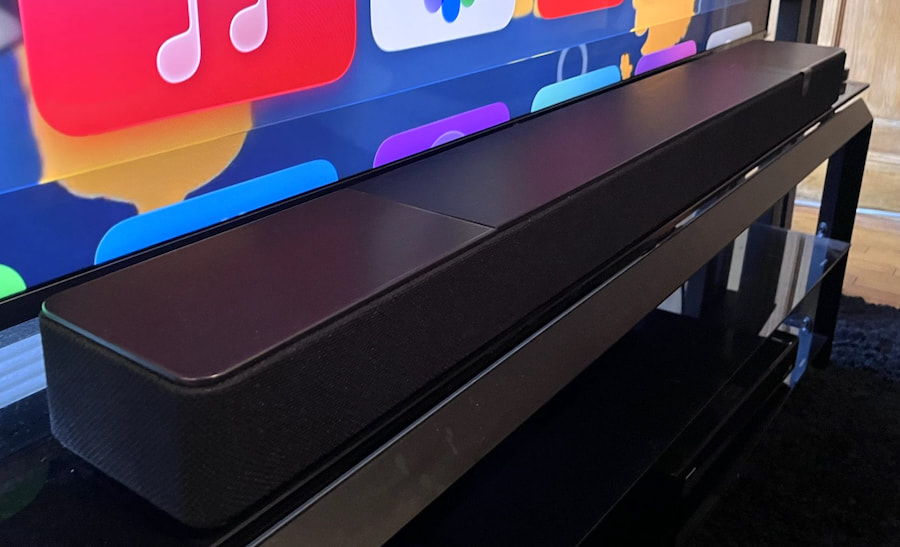
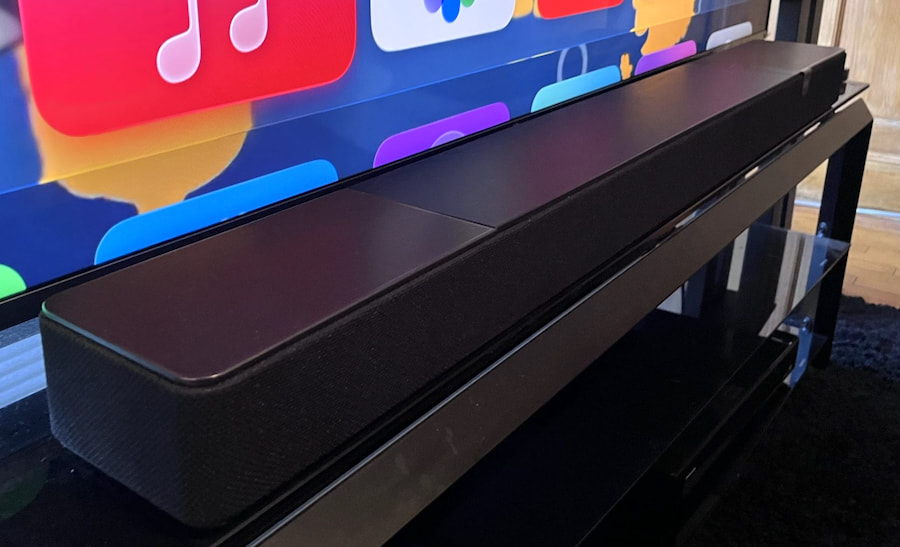
The Klipsch Flexus Core 200 ($549) is about as sensible as soundbars get. If you’re wondering what I mean by that, the Core 200 offers up all the essentials; Dolby Atmos processing, up-firing speakers for height effects, and HDMI eARC connectivity in a reasonably compact and powerful package. And by stripping out the things that not everyone needs in a soundbar – specifically, extra HDMI ports and built-in Wi-Fi for streaming music, Klipsch managed to hit an affordable price point with the Flexus Core 200. They don’t call it Core for nothing.

klipsch-flexus-core-200-soundbar-angle

Sandwiched between the 2.1-channel Core 100 ($349) and 5.1.2-channel Core 300 ($1,199) in the Flexus soundbar lineup, the Core 200 walks the line between basic TV sound enhancement and full-on Atmos immersion. It can also be scaled up to a 5.1.2- or even a 5.1.4-channel configuration by adding an optional Klipsch wireless subwoofer and surround speakers. For this review, I paired it with the Flexus SUB 100 subwoofer ($349 each) and Flexus SURR 100 rear speakers ($249/pair). Total system price: $1,175.

What Is It?

The Klipsch Flexus Core 200 is a 3.1.2-channel powered soundbar that decodes Dolby Atmos and legacy Dolby Digital and PCM formats. DTS:X is not supported, an omission some may find disappointing now that support for that format has been added to movies on the Disney+ streaming service.

As I mentioned above, there’s no Wi-Fi onboard for music listening via TIDAL Connect, Spotify Connect and other services, though Bluetooth is on-board for basic streaming of music, internet radio and podcasts. Bluetooth is also used by the Klipsch Connect setup app and for wireless hookup between the soundbar, subwoofer and rear speakers.

Advertisement
klipsch-flexus-core-200-soundbar-drivers
The 44-inch-wide Flexus Core 200 soundbar is a good fit for 55-inch and larger TVs.

At 44 inches (111.8 cm) wide, 3 inches (7.8cm) high, and 5 inches (12.6cm) deep, the Core 200 mates well visually with 55- or 65-inch TVs, though its somewhat chonky 3-inch height means you may need a TV with an adjustable stand to provide sufficient screen clearance. The soundbar’s attractive cabinet is made of plastic, wood, and metal, and there are black and walnut finish options.

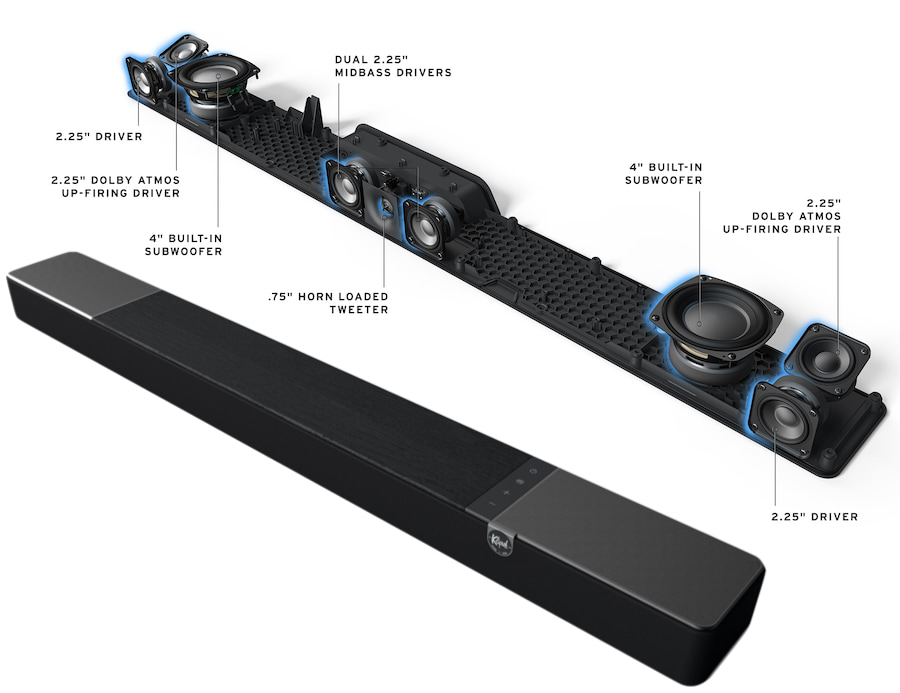
Being a Klipsch soundbar, there’s going to be a horn somewhere, and in this case it’s the center speaker’s 0.75-inch horn-loaded tweeter, which is flanked by two 2.25-inch aluminum cone drivers. The same 2.25-inch drivers are also used for the left and right speakers and up-firing elevation speakers, while a pair of 4-inch paper cone woofers bring the bass. Onboard power for the Onkyo-designed amplifier section is specified at 185 watts (RMS) and frequency response at 43Hz-20kHz.

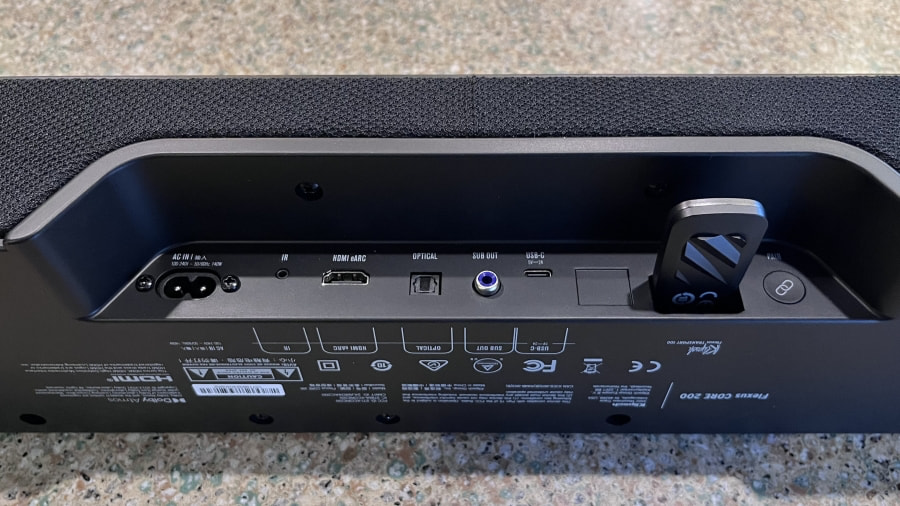
klipsch-flexus-core-200-ports
The Flexus Transport USB transmitter (at right) is included with Klipsch’s Flexus SUB subwoofers and Flexus Surr rear speakers.

Along with the Core 200’s HDMI eARC port, there’s an optical digital input, an RCA output for a hardwired subwoofer connection, a USB-C port (service only) and a USB Type-A port to plug in the wireless dongle that connects the SUB 100 subwoofer and SURR 100 rear speakers.

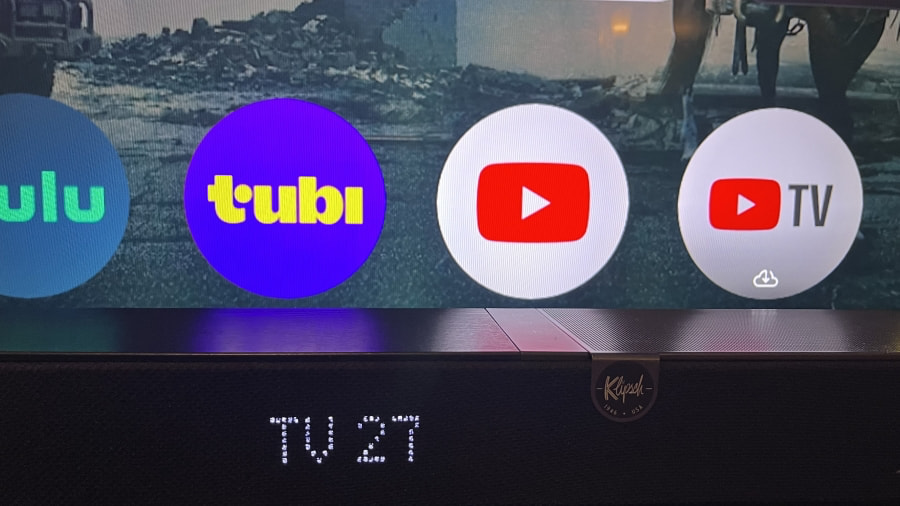
Controls located on the Core 200’s top surface let you toggle power on and off, switch inputs and adjust the volume level. A large alphanumeric LED display located on the front provides visual feedback when making adjustments using the Klipsch Connect app or the included remote control – a useful and very welcome feature that’s not always provided on soundbars, including ones priced significantly higher than the Core 200.

Advertisement
klipsch-flexus-core-200-controls
Basic touch-sensitive controls are located on the Core 200 soundbar’s top surface.

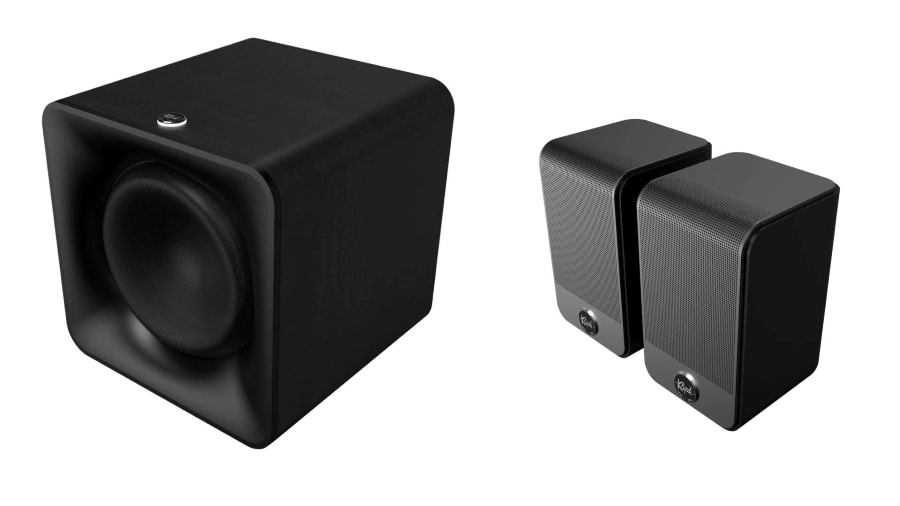
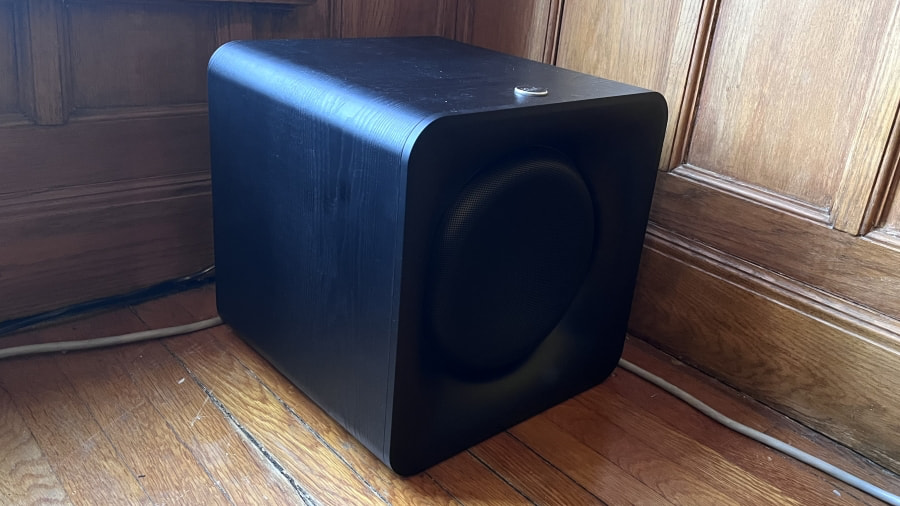
The Klipsch Flexus SUB 100 I used for my test packs a 10-inch paper cone woofer powered by an 80-watt (RMS) class D amplifier in a sealed enclosure. It comes with the Flexus Transport USB transmitter used for the soundbar’s wireless connection, and it also has an RCA input for a hardwired hookup. At 13.25 inches (33.7cm) wide x 13.3 inches (33.8cm) high  x 13.75 inches (35cm) deep, it’s a relatively compact cube and makes for a good visual match with the Core 200 soundbar.

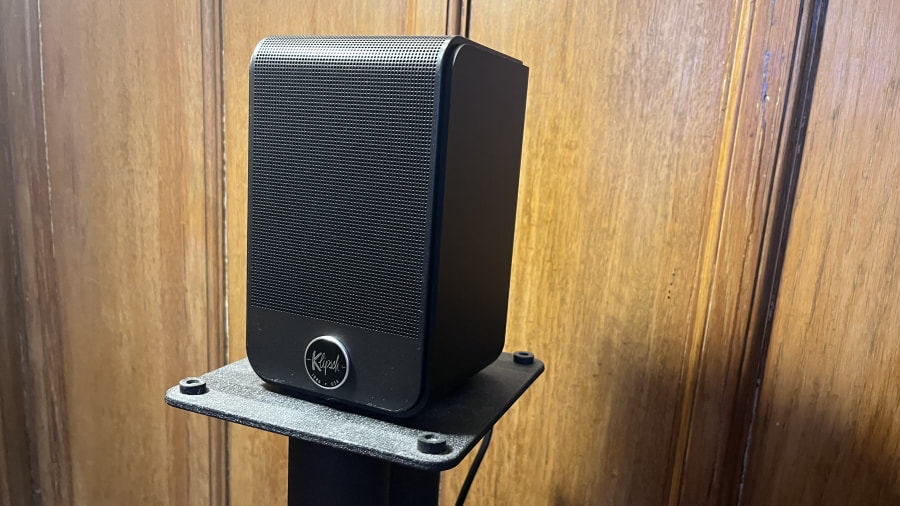
The Klipsch Flexus SURR 100 speakers I used for rear channels are tiny, almost toy-like at 4.25 inches (10.8cm) wide x 6.75 inches (17.1cm) high x 4.25 inches (10.8cm) deep. Each speaker uses a 3-inch paper cone driver powered by 25 watts (RMS) and the package also comes with the Flexus Transport USB transmitter. Klipsch offers a beefier rear speaker option in the Flexus SURR 200 ($499/pair), a model that adds a 2.25-inch up-firing driver to the 3-inch front-facing one to convey Dolby Atmos height effects.

Klipsch Flexus SUB 100 Subwoofer and SURR 100 Wireless Rear Speakers
Klipsch Flexus SUB 100 Subwoofer (left) and SURR 100 Wireless Rear Speakers (right)

Setup and Use

I found setting up the Core 200 with Klipsch’s optional subwoofer and rear speakers to be super easy compared to other soundbar-based wireless surround systems I’ve tested. If you’re using just the Core 200, all that’s needed is to run a cable from your TV’s HDMI eARC/ARC port to the soundbar’s HDMI port. Connect it to power and you’re done – even the Klipsch Connect app is optional and not needed for setup.

Advertisement. Scroll to continue reading.
Advertisement

If, like me, you’re extending the system with a wireless sub and speakers, you’ll need to insert one of the included USB transmitters into the soundbar’s USB type-A port and then press the Connect button located on the rear panel of both the subwoofer and rear speakers. An audio tone confirms that a wireless connection has been made and an LED indicator light, also located on the back, changes from a pulsing to a solid white.

For my setup, I had the Core 200 placed on a stand beneath a 75-inch TV in my 9 x 12 x 16 (H x W x D) foot viewing room, the SUB 100 in the front right corner, and the Surround 100s on stands to the right and left and slightly behind my sofa.

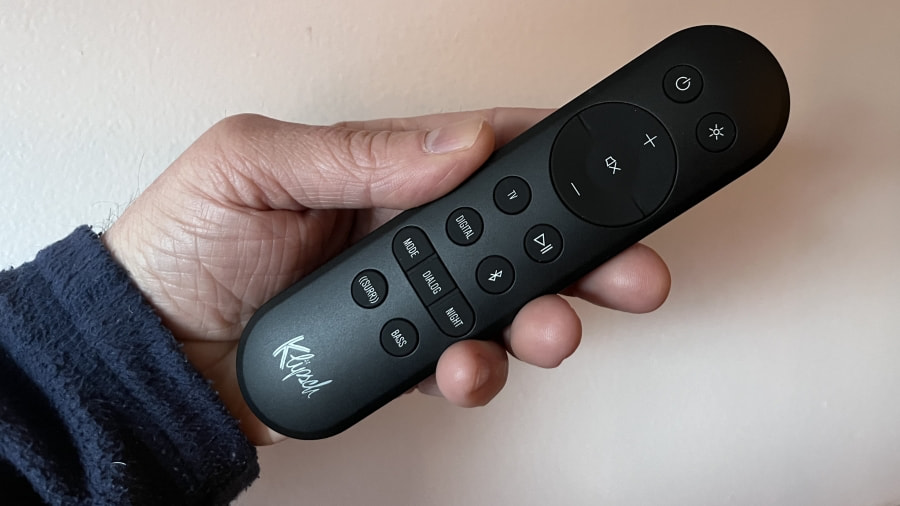
klipsch-flexus-core-200-remote
The Core 200 soundbar’s full-featured remote control.

Klipsch’s remote control provides access to most adjustments for tuning the soundbar for your viewing environment or whatever content you’re listening to or watching. There are buttons to select the Sound (Movie or Music) and Night (volume levelling) modes, and to configure Dialog level (1-3 or Off) plus front height, back left and right, and subwoofer level. All of these adjustments are  indicated on the Core 200’s big, beautiful front LED display, and you can also adjust the display’s brightness using the remote.

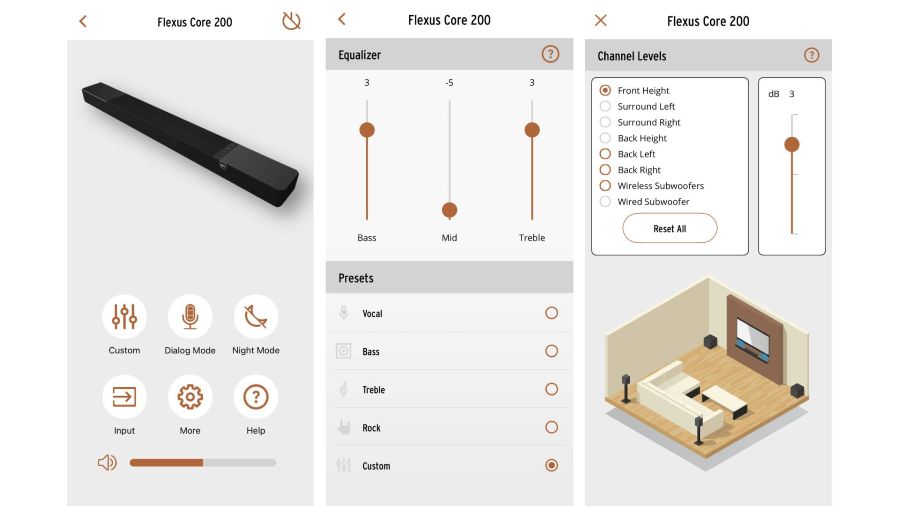
The Klipsch Connect app features all the same adjustments, but further provides a three-band EQ with multiple presets plus a Custom setting. EQ may get scoffed at by audio purists, but I find it to be highly necessary for soundbars, where you regularly need to make adjustments for the differences in TV and movie soundtracks, as well as for any music you listen to.

Advertisement
klipsch-flexus-core-200-display
The Core 200’s large alphanumeric LED display provides easy to read visual feedback.

Movie Performance

I started out my evaluation with the Klipsch soundbar alone before adding the subwoofer and rear speakers to the mix. The Core 200 had a nicely balanced presentation overall, with full bass and clear, natural-sounding dialogue. Atmos effects were also pronounced, especially with the soundbar’s height adjustments edged up toward maximum level.

These qualities served F1 well when I streamed it on Apple TV via my Apple TV 4K. In the movie’s opening scene, Sonny Hayes (Brad Pitt) races at Daytona to the strains of Led Zeppelin’s “Whole Lotta Love.” The roar of the car engines was vivid and clean, and I could easily hear a shifting level of spaciousness to the commentator’s voice as the action cut between interior and exterior shots. John Paul Jones’ bass came across as muscular and deep, with a level of dynamic power that was impressive for a standalone soundbar.

klipsch-connect-app-screenshots
The Klipsch Control app duplicates all the remote control functions and adds EQ adjustments (center).

Watching F1 revealed the Core 200’s ability to cast a tall and wide soundstage, especially when a fireworks display lit up the night sky during the race, but the presentation was mainly locked to the front of the room. This was evident when I watched the scene from the Dune: Part II 4K Blu-ray where Paul Atreides (Timothée Chalamet) hitches a ride on a giant sandworm – as worm and rider plowed through the desert landscape, the spray of sand was cast high and wide, but I didn’t feel overly immersed in the action.

It was the same deal when I watched the scene from the Twisters 4K Blu-ray where the doomed young meteorologists flee a monster tornado only to get sucked up one by one into the deadly funnel. The sound of the storm was powerful and dramatic, but I didn’t feel like I was in the eye of the storm. Dialogue in this complex and chaotic sequence also tended to get obscured, but a few hits of the Dialog button on the remote successfully boosted it to the point where I could hear it.

Movies with SUB & SURR

Watching the same clips with the SUB 100 and SURR 100 speakers added to the mix elevated the Core 200’s game to the point where I’d deem them indispensable. It’s not that Klipsch’s soundbar isn’t effective on its own; for the price, I’d even say it’s an overachiever. But adding those optional extras brought about a surprisingly effective increase in both dynamic range and surround immersion. I was actually caught off guard by it.

Advertisement
klipsch-surr-100-speaker
The Klipsch Flexus SURR 100 proved surprisingly potent for compact rear speakers.

Giving F1 another spin, the SUB 100 created a deep foundation of bass that added dimension to engine sounds and emphasis to John Bonham’s kick drum. The little SURR 100 speakers lit up as the cars circled the track, providing a strong sense of being positioned in the driver’s seat.

The Dune: Part II worm rodeo scene also benefited greatly from the speaker additions, with the sand now seeming to spray to the back of the room. Twisters, too, took on a new dimension: the trajectory of wind sounds now seeped from the front to the rear speakers, creating a much more vivid sense of being caught inside the storm.

Music Performance

For music, I decided to leave the full 5.1.2 configuration intact since I was mostly listening to Dolby Atmos music tracks on Apple Music (played via the Apple TV 4K). Also, the Core 200 automatically upconverts stereo tracks in both Music and Movie mode, so everything I listened to ended up being in surround sound format anyway.

klipsch-flexus-core-200-music
With the Core 200 soundbar’s streaming options limited to Bluetooth, you’ll need to rely on an external streamer for lossless music listening.

I’m a fan of Ryan Ulyate’s Atmos mix of Tom Petty’s Wildflowers, which manages to subtly expand the stereo original while maintaining a rock-solid presentation of vocals and instruments. Heard on the Flexus Core 200 system, Petty’s voice on “It’s Good to be King” had the same dry, natural quality I’m used to hearing on higher-end setups, The piano maintained its clean, well rounded tone and the Atmos mix spread subtly towards the rear of the room in a way that added warmth to the sound.

Advertisement
Advertisement. Scroll to continue reading.

Beck’s “She’s Gone,” also in Atmos, further confirmed my impression of the Core 200’s neutral, and mostly transparent, handling of music. Beck’s vocals sounded natural, with just a slight touch of reverb, and the acoustic guitar and harmonica had a crisp, clean tone. The bass guitar had a similar level of depth and punch as on “Whole Lotta Love” when I watched F1, but it gained a deeper, more authoritative foundation with the addition of the SUB 100 subwoofer.

To see how far I could flex that sub, I next played Deadmau5’s “Imaginary Friend” in stereo via the Apple TV 4K’s TIDAL app. For a compact sub with a 10-inch driver, the SUB 100 did an impressive job pressurizing the room and fleshing out the electronic beats. I could literally feel the bass hit in my chest. Upconverted for surround, the track gained a compelling sense of spaciousness, and the addition of a height dimension via the soundbar’s up-firing speakers gave it a nice wall of sound effect.

klipsch-sub-100-subwoofer
The Klipsch Flexus SUB 100 delivered impressive bass power for a compact sealed subwoofer with a 10-inch driver.

Shifting back to Atmos, I dug out my Pink Floyd Wish You Were Here (50th Anniversary) Blu-ray, which features a fantastic Dolby Atmos mix by the band’s longtime producer and engineer, James Guthrie. I had been a bit underwhelmed by the Core 200’s Atmos presentation of this disc when I had listened to it without the SUB 100 and SURR 100 speakers, but hearing “Welcome to the Machine” on the full system was a very different experience. The up-front vocals and guitar had a full, monolithic quality, floating well above the physical confines of the soundbar, while the synths stretched out well into the room and around my head. To me, “Welcome to the Machine” is about as good as Atmos music gets, and the Klipsch system did it justice.

Advertisement
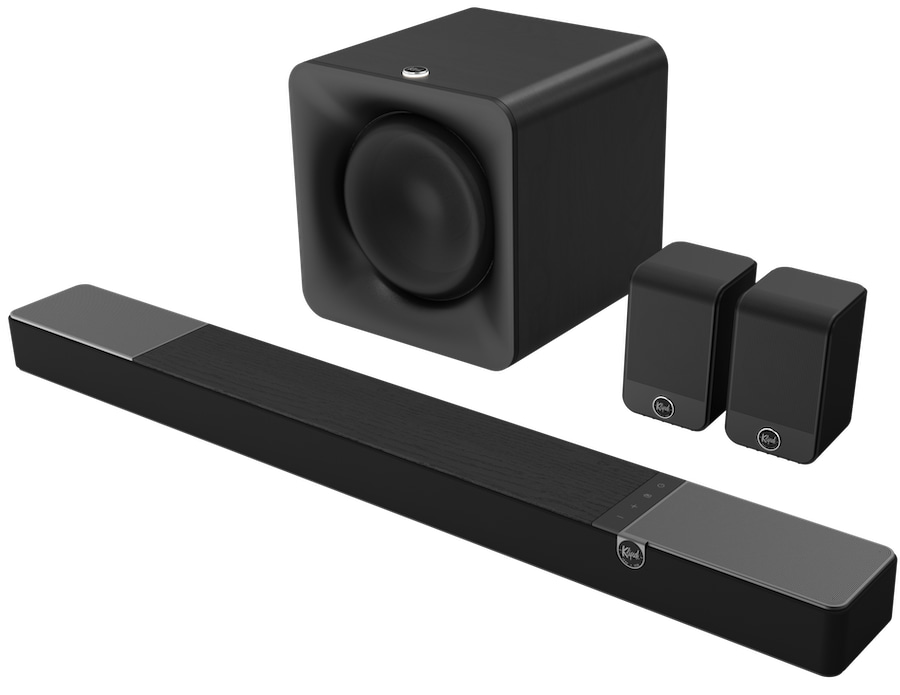
Klipsch Flexus Core 200 Soundbar with SUB 100 Subwoofer and SURR 100 Wireless Rear Speakers
Klipsch Flexus Core 200 Soundbar System with SUB 100 Subwoofer and SURR 100 Wireless Rear Speakers for 5.1.2 Dolby Atmos

The Bottom Line

If I haven’t already made this clear enough, the Klipsch Flexus Core 200 soundbar’s performance takes a big leap forward when augmented by the Flexus SUB 100 subwoofer and Flexus SURR 100 rear speakers. That’s not to knock the Core 200, which performs very well for a 3.1.2-channel soundbar, especially one priced at $549. I’m sure many folks would be more than satisfied with its standalone sound, and also with its ease of setup and use.

Are there crucial features missing from the Core 200? Aside from DTS:X support, it would be nice to have built-in Wi-Fi for streaming, so you could use your phone to cue up music without having to rely on lossy Bluetooth for playback. Wi-Fi is a feature found on the Sonos Beam Gen 2 ($499), which lets you stream lossless music from a wide range of apps, and also brings support for AirPlay 2. In my case it was easy enough to use my Apple TV 4K for lossless  and Dolby Atmos music streaming, but not everyone will want to deal with an external streamer.

Even without Wi-Fi for music streaming, the Klipsch Flexus Core 200 is a great value. I was very impressed with its performance for the price, and at $1,175 for the full package with subwoofer and rear speakers, it’s a very affordable way to dive into Dolby Atmos surround sound. I’ve regularly found that companies with a long history making speakers also do a great job with soundbars, and the Klipsch Flexus Core 200 system proves that to still be the case.

Pros:

  • Dynamic sound with clear dialogue
  • Powerful bass and good immersion with optional subwoofer and rear speakers added
  • Full-featured remote control
  • Dialog boost and EQ adjustments
  • Simple setup
  • Large, alphanumeric LED display
  • Great value

Cons:

  • No built-in Wi-Fi for music streaming
  • No DTS:X or DTS support
  • Standalone Core 200 soundbar has limited immersive effect
  • Only one HDMI port
  • No room correction

Where to buy:

Source link

Advertisement
Continue Reading
Click to comment

Leave a Reply

Your email address will not be published. Required fields are marked *

Tech

Gartner says sub-$500 entry level PCs could disappear by 2028 as memory prices surge

Published

on


Writing in a press statement, Gartner warns that soaring memory costs are projected to cause a 10.4% worldwide decline in PC shipments while smartphone shipments are expected to drop by 8.4% in 2026.
Read Entire Article
Source link

Continue Reading

Tech

As sites attempt to block AI crawlers, is the ‘open web’ closing?

Published

on

Tai Neilson, a senior lecturer at Macquarie University explores how data has become a ‘hot commodity’ for companies training AI systems.

When the World Wide Web went live in the early 1990s, its founders hoped it would be a space for anyone to share information and collaborate. But today, the free and open web is shrinking.

The Internet Archive has been recording the history of the internet and making it available to the public through its Wayback Machine since 1996. Now, some of the world’s biggest news outlets are blocking the archive’s access to their pages.

Major publishers – including The Guardian, The New York Times, the Financial Times, and USA Today – have confirmed they’re ending the Internet Archive’s access to their content.

Advertisement

While publishers say they support the archive’s preservation mission, they argue unrestricted access creates unintended consequences, exposing journalism to AI crawlers and members of the public trying to skirt their paywalls.

Yet, publishers don’t simply want to lock out AI crawlers. Rather, they want to sell their content to data-hungry tech companies. Their back catalogues of news, books and other media have become a hot commodity as data to train AI systems.

Robot readers

Generative AI systems such as ChatGPT, Copilot and Gemini require access to large archives of content (such as media content, books, art and academic research) for training and to answer user prompts.

Publishers claim technology companies have accessed a lot of this content for free and without the consent of copyright owners. Some began taking tech companies to court, claiming they had stolen their intellectual property. High-profile examples include The New York Times’ case against ChatGPT’s parent company OpenAI and News Corp’s lawsuit against Perplexity AI.

Advertisement

Old news, new money

In response, some tech companies have struck deals to pay for access to publishers’ content. NewsCorp’s contract with OpenAI is reportedly worth more than $250m over five years.

Similar deals have been struck between academic publishers and tech companies. Publishing houses such as Taylor & Francis and Elsevier have come under scrutiny in the past for locking publicly funded research behind commercial paywalls.

Now, Taylor & Francis has signed a $10m nonexclusive deal with Microsoft granting the company access to over 3,000 journals.

Publishers are also using technology to stop unwanted AI bots accessing their content, including the crawlers used by the Internet Archive to record internet history. News publishers have referred to the Internet Archive as a “back door” to their catalogues, allowing unscrupulous tech companies to continue scraping their content.

Advertisement

The cost of making news free

The Wayback Machine has also been used by members of the public to avoid newspaper paywalls. Understandably, media outlets want readers to pay for news.

News is a business, and its advertising revenue model has come under increasing pressure from the same tech companies using news content for AI training and retrieval. But this comes at the expense of public access to credible information.

When newspapers first started moving their content online and making it free to the public in the late 1990s, they contributed to the ethos of sharing and collaboration on the early web.

In hindsight, however, one commentator called free access the “original sin” of online news. The public became accustomed to getting their digital editions for free, and as online business models shifted, many mid- and small-sized news companies struggled to fund their operations.

Advertisement

The opposite approach – placing all commercial news behind paywalls – has its own problems. As news publishers move to subscription-only models, people have to juggle multiple expensive subscriptions or limit their news appetite. Otherwise, they’re left with whatever news remains online for free or is served up by social media algorithms. The result is a more closed, commercial internet.

This isn’t the first time that the Internet Archive has been in the crosshairs of publishers, as the organisation was previously sued and found to be in breach of copyright through its Open Library project.

The past and future of the internet

The Wayback Machine has served as a public record of the web for more than three decades, used by researchers, educators, journalists and amateur internet historians.

Blocking its access to international newspapers of note will leave significant holes in the public record of the internet.

Advertisement

Today, you can use the Wayback Machine to see The New York Times’ front page from June 1997: the first time the Internet Archive crawled the newspaper’s website. In another 30 years, internet researchers and curious members of the public won’t have access to today’s front page, even if the Internet Archive is still around.

Today’s websites become tomorrow’s historical records. Without the preservation efforts of not-for-profit organisations like The Internet Archive, we risk losing vital records.

Despite the actions of commercial publishers and emerging challenges of AI, not-for-profit organisations such as the Internet Archive and Wikipedia aim to keep the dream of an open, collaborative and transparent internet alive.

The Conversation

By Tai Neilson

Advertisement

Tai Neilson is a senior lecturer in media at Macquarie University. His areas of expertise include the political economy of digital media and critical cultural theory. He is the author of Journalism and Digital Labor and a co-editor of the book Research Methods for the Digital Humanities.Tai has published work on journalism and digital media in Digital Journalism, Journalism, Media International Australia, Journalism and Media, Triple-C, Fast Capitalism, and the Global Media Journal.

Don’t miss out on the knowledge you need to succeed. Sign up for the Daily Brief, Silicon Republic’s digest of need-to-know sci-tech news.


Source link

Advertisement
Continue Reading

Tech

Anthropic confirms Claude is down in a worldwide outage

Published

on

Claude AI

Claude appears to be having a major outage right now, with elevated errors reported across all platforms.

The incident was flagged on March 2, 2026, and it’s impacting users broadly rather than being limited to one app or region.

According to the latest status update, the team is still investigating the issue.

The first “Investigating” notice went out at 11:49 UTC, and a follow-up update at 12:06 UTC said the investigation is ongoing.

Advertisement

For now, that likely means you may see failed requests, timeouts, or inconsistent responses when trying to use Claude on web, mobile, or API.

There’s no ETA mentioned yet, but the status suggests it’s actively being worked on

Malware is getting smarter. The Red Report 2026 reveals how new threats use math to detect sandboxes and hide in plain sight.

Download our analysis of 1.1 million malicious samples to uncover the top 10 techniques and see if your security stack is blinded.

Source link

Advertisement
Continue Reading

Tech

Brutal truths of running a gym in S’pore

Published

on

Thinking of opening a gym? Don’t expect quick money.

Running a gym in Singapore is not cheap.

When Vulcan Post spoke to Ryan Cheal, Group Chief Operating Officer of Inspire Brands Asia—the exclusive regional master franchisee of Anytime Fitness (AF)—in Jan 2026, he shared that it takes up to US$450,000 to become a franchisee of an AF gym here.

Despite the high startup costs, more gyms have been popping up across the island. As of Oct 15, 2025, Singapore had 505 gyms—a 3.05% increase since 2023. With rising fitness trends like HYROX, it’s no surprise that both individuals and operators are trying to ride the wave.

But hopping on trends doesn’t always guarantee success. The industry has also seen its share of closures, including Ritual, which abruptly shut all four of its Singapore outlets in 2024, and high-profile names like UFC Gym.

Advertisement

These examples show that even well-known brands can struggle to sustain operations in a competitive market. Even with sufficient startup capital, keeping a gym running—attracting members, covering monthly expenses, and managing unexpected costs—requires careful planning and a strong financial runway.

So what does it really cost to open and operate a gym in Singapore?

To find out, we dug into industry data and spoke with two operators: Unstoppable Fitness, a homegrown bodybuilding gym, and Snap Fitness, a US-born fitness chain with 10 outlets in Singapore (and one more at West Mall slated to open in Apr).

Opening doors is just step one

Based on industry estimates online, the startup capital required to open a gym can range between S$150,000 and over S$800,000, depending on size, location, equipment needs, and franchise fees.

Advertisement

Broadly speaking, here’s how it breaks down:

Category Startup Investment Range Typical Size (sqft.) Focus Key Calculations/Factors
1. Boutique/ Specialist Studio S$150,000 – S$350,000 1,200 – 2,500 Personal training, Yoga, Pilates, or specialised strength. Renovation: ~S$100,000 (S$60–S$80/sqft. for high-aesthetic). Equipment: ~S$30,000 – S$80,000 (targeted).
Rental Deposit: ~S$45,000.
2. Mid-sized Commercial Gym S$350,000 – S$650,000 2,500 – 5,000 General population “neighbourhood” gyms (e.g., non-franchise 24/7). Renovation: ~S$200,000 (S$50/sqft., including showers/ HVAC).
Equipment: ~S$150,000 (full circuit). 
Rental Deposit: ~S$100,000+.
3. Franchise Gym S$400,000 – S$800,000+ 3,500 – 6,000 Global brands like Anytime Fitness. Initial Franchise Fee: S$40,000 – S$90,000.
Total Initial Investment: S$410,000 to S$650,000 (single outlet). 
Working Capital: Higher buffer required.

When we spoke to operators at Unstoppable Fitness and Snap Fitness, their startup costs largely lined up with these estimates.

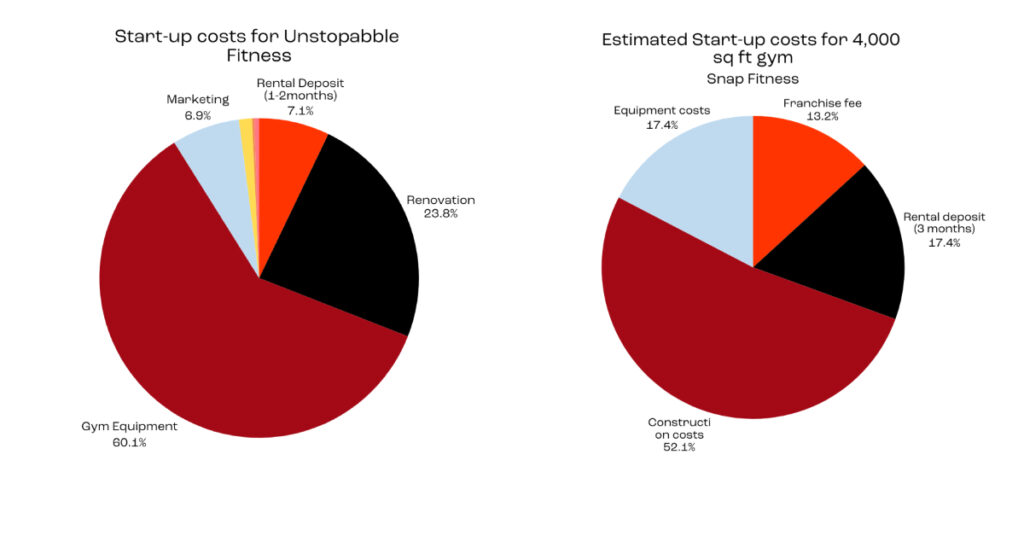
Luke Yeo, 33, founder of Unstoppable Fitness, spent nearly S$400,000 to launch his 3,875 sqft. facility. On the other hand, Snap Fitness master franchisee Noah Oberman shared that it costs around S$600,000 to open a 4,000 sqft gym franchise. “Most gyms we’ve opened are anywhere between S$600,000 and over S$1 million,” he added.

Gym equipment is one of the highest upfront costs for the two businesses, with Unstoppable Fitness spending more than half of its startup capital on machines and weights, while Snap Fitness’ equipment expenses can roughly match the rental deposit.

Advertisement

On top of that, miscellaneous inventory—from water dispensers to towels—can add thousands more, quickly increasing the total initial outlay before a single member walks through the door.

how much to start a gym in singapore startup costs unstoppable fitness snap fitness singaporehow much to start a gym in singapore startup costs unstoppable fitness snap fitness singapore
Cost breakdowns from Unstoppable Fitness and Snap Fitness.

These figures only cover the cost of opening a gym. To sustain and keep it running, owners needs to have additional capital—to market the business, grow membership, and maintain a buffer for unexpected expenses or changing client needs.

For Snap Fitness, monthly operating costs can reach at least S$55,000. Luke, on the other hand, shared that his monthly expenses hit around S$25,300, meaning he would need roughly another S$300,000 in reserves to stay adequately funded for a year.

  • monthly running costs for unstoppable fitnessmonthly running costs for unstoppable fitness
  • monthly running costs for snap fitness singaporemonthly running costs for snap fitness singapore

Luke added that bills continue regardless of early traction or revenue earned, emphasising the need for sufficient runway in the first year.

“Cash burns fast. Without strong reserves, you won’t fail slowly—you’ll shut down quickly,” he said. “Most gyms don’t close because the owner lacks passion or knowledge. They close because they run out of money before they earn trust,” he explained.

Not the highest ROI business

Gyms aren’t a quick-profit business. It can take years before you start seeing a real return on your investment.

Advertisement

“As gyms are not the highest ROI business, you are likely to break even only in year 2.5 or more,” said Noah.

Industry Initial Capital Intensity Operational Break-Even Full ROI (Payback Period) Primary Revenue Driver
Gyms & Fitness High (Equipment/ Renovation) 4 – 18 Months 2 – 3 Years Monthly recurring subscriptions
F&B (Restaurants) Medium to High (Kitchen/ Interior) 6 – 12 Months 2 – 5 Years Daily individual transactions
Retail (Physical) Medium (Inventory/Fit-out) 12 – 24 Months 3 – 5 Years Seasonal product sales
SaaS/Tech Startups Low to Medium (R&D/Staff) 18 – 36 Months 3 – 7+ Years Scalable user licenses
The average number of years for businesses to break even, according to industry estimates.

When Vulcan Post compared this to other industries, the break-even period for gyms is actually shorter than in sectors like F&B or retail.

However, startup costs are higher for gyms, and the figures we found are based on established franchises such as Anytime Fitness, which benefit from brand recognition and pre-existing systems. Some even claim that AF gyms can break even within six months or even before they open

That said, these are outliers. Here’s a closer look at what it takes for different gym models to reach break-even:

Advertisement
Gym Model Typical Size (sq. ft.) Members Needed to Break-Even Each Month Monthly Fee (Avg) Time to Full ROI (Payback)
Boutique Studio 1,200 – 2,500 150 – 350 S$150 – S$350 18 – 24 Months
Mid-Sized Gym 2,500 – 5,000 400 – 700 S$90 – S$160 2 – 3 Years
Franchise Gym 3,500 – 6,000 800 – 1,000+ S$90 – S$130 2 – 3 Years
The average number of members for a gym to break even by gym size and monthly fees, based on industry estimates.

Based on its S$24,828 monthly costs and its lowest-tier annual plan (S$119/month), Unstoppable Fitness would need at least 277 members to break even each month.

Snap Fitness will need over 561 members to cover their monthly operating costs. It’s worth noting that more funds are needed to run a franchise gym than an independent gym, hence the difference in the number of members needed to break even. 

No one “owes you a chance”

As newer and smaller players, both Unstoppable Fitness and Snap Fitness have to find a way to stand out in a crowded market against established brands, as they face a higher risk of failure. 

snap fitness singapore West Mall renders snap fitness singapore West Mall renders
Mockups of Snap Fitness’s newest gym in West Mall, which is slated to open in Apr 2026. According to Noah, this location would be the biggest in Western Singapore, having taken over the space where used to be, and would include space for a pilates studio./ Image credits: Snap Fitness Singapore

“The real problem? Opening your doors and having no customers at all,” Luke candidly shared. “No one owes you a chance. If you’re new, unknown, and lack social proof, people simply won’t walk in.” 

As such, both operators not only have to spend more on marketing, but also focus their efforts on building strong communities within the brand that can tide them through the high and low seasons, through activities such as supporting members at competitions or celebrating physical transformations. 

Advertisement
gym goers at unstoppable fitness singaporegym goers at unstoppable fitness singapore
Gym-goers at Unstoppable Fitness./ Image Credit: Unstoppable Fitness

Independent gyms like Unstoppable Fitness often reinvest earnings into upgrades in their equipment and amenities. These might sound simple, but they help customers feel more comfortable in the space as they work out. 

“People can leave for cheaper gyms, but they rarely leave a place that feels like home,” added Luke. 

Hard-selling packages no longer work, and long-term, no-refund memberships can leave customers burnt when gyms shut down. Noah also emphasised that gyms need to maintain transparency with their customers, as they are also effective in increasing referrals. 

He added that many health and fitness businesses make the mistake of building around a single trend, so when the hype dies down, the brand goes with it. Building evergreen offerings beyond trends is key to long-term survival, and adjusting them to meet demand adds to their versatility. 

“There’s a fine balance between hopping on trends and diluting the brand by changing too much, versus staying to the core of what the brand is supposed to do and service. But generally, we try to keep an open mind and see what the market really wants and try our best to accommodate that.” 

Advertisement

Only those with strong foundations are likely to survive

Overall, opening a gym remains viable in Singapore, given the strong demand for health and fitness in the country. However, as the market becomes more saturated and competition for the lifestyle dollar intensifies, gyms can’t be seen as a way to get a quick buck. 

Aspiring owners must carefully assess whether they have the financial runway to sustain at least two years, offer competitive prices, and ensure that their services provide enough value for their members to increase loyalty. 

As Singapore’s fitness scene matures, newer players can’t win in scale: they have to differentiate themselves through other means to attract members and at least break even. Nevertheless, Noah and Luke remain optimistic.  

“I would agree that the first mover advantage is definitely real, and some of the longstanding gyms will be very hard to displace. But I do think there’s still plenty of opportunity in the market,” Noah encouraged. 

Advertisement

“We can’t compete with big box gyms on size. We win on service, elite equipment, and culture,” added Luke. 

  • Read more about the gyms featured below:
  • Read more stories we’ve written on Singaporean businesses here.

Featured Image Credit: Unstoppable Fitness/ Snap Fitness

Source link

Advertisement
Continue Reading

Tech

How Long Do CR2032 Batteries Last In A Key Fob?

Published

on


If you’re old enough to remember when cars had simple key ignition switches and not start buttons, you may find modern key fobs frustrating. With your key in hand, the only dead battery that could leave you stranded was the one in your vehicle. Modern key fobs, which do a lot more than unlock your vehicle, can also leave you stranded. Inside that little device is a button cell battery, often a CR2032 type. If that battery dies, you may be left standing in your garage, frustrated and late for work.

Key fobs have evolved from a simple way to lock and unlock your car. Many offer other functions, allowing you to open the trunk or back gate, lower your windows, and remotely start the car. Modern key fobs also talk to your car’s security system, transmitting a code that disables the immobilizer system and allows your car to start. So what happens if the battery in your key fob dies?

Luckily, key fobs typically drain batteries very slowly, and a CR2032 battery should last several years, perhaps up to five. Its life will partly depend on how often you use the fob, exposure to extreme temperatures, or a damaged or malfunctioning fob. Your key fob may require a bit more maintenance and care than a simple car key, but it also offers convenience that’s hard to beat.

Advertisement

When and how to replace a key fob battery

If you’ve owned your car long enough that the new car smell has worn off and or you bought your car pre-loved, you may worry that your fob may soon need a new battery. Luckily, there are several ways to tell. The first is the easiest, and doesn’t even require that you pay much attention. Some car apps, including KiaConnect and the Toyota app, will alert you if the battery is getting low, though be aware that this feature is not universal and may require a paid subscription. Similarly, however, you may receive a notification on your vehicle’s dashboard that your fob battery needs to be replaced.

You may also notice that the range of the key fob has decreased and your vehicle won’t unlock or lock unless you’re standing very close. Sometimes the fob loses sensitivity, and the buttons may be unresponsive or working intermittently. These are all signs of a dying battery. 

Advertisement

Once you know the fob needs attention, check your vehicle’s manual if you’re unsure how to get it open to swap the old battery for a fresh one. If you’re out and about and the fob suddenly dies, don’t panic. Most cars will still start if you simply press the fob up against the ignition button, and some automakers even hide a physical key inside the fob that you can use to gain access to your vehicle or start the engine. CR2032 batteries are readily available, and if you’re worried, keep one on hand in case your fob dies unexpectedly.


Advertisement

Source link

Continue Reading

Tech

Steam's hardware survey just flipped: new top GPU, Windows 11 crashes, Chinese takes the lead

Published

on


Valve said last week that it fixed an issue where VRAM on some graphics cards was not reported correctly in the Steam survey.
Read Entire Article
Source link

Continue Reading

Tech

This Android XR Feature Convinced Me Smart Glasses Aren’t So Pointless After All

Published

on

One of my biggest gripes when navigating a new area is that I’m too busy following directions on my phone to really take in my surroundings. But after trying on Google’s Android XR glasses, I’ve seen a promising solution. 

At Mobile World Congress in Barcelona, I got a demo of Google’s wearable prototype frames and was more impressed than I expected to be. I’m not big on wearables; I’m good with plain-old glasses and jewelry that can’t ping me with notifications throughout the day. But I decided to give the Android XR glasses a try as I explored a strip of the MWC conference hall dubbed Android Avenue. 

With a thick black frame and clear lenses, the Android XR prototype glasses look rather unassuming — especially because the display in the right lens is barely perceptible. Once I put them on, I long-pressed the right side temple to trigger Gemini and ask questions about objects around me. Then my skepticism slowly began to dissolve.

Advertisement

The feature that sold me was the Google Maps demo. I looked at a photo of Barcelona stadium Camp Nou and asked Gemini to “navigate here.” White text appeared in the center of the lens, showing me how far I’d need to go before turning right. And when I looked down, I could see a visualization of the route, like you’ll find in the Maps app on a mobile device, so I could just follow the highlighted path. That would solve my dilemma of wanting to know where I’m going while also trying to take in the view. 

I also looked at a vinyl cover for Barcelona, the album by Freddie Mercury and Montserrat Caballé, and asked Gemini to play a song from it. The audio quality was impressively comparable to what I’d hear with headphones — but without the feeling of something in or on my ears, which I appreciated. 

And lastly, I got a demo of live translation through the glasses. The Google employee showing me the prototype spoke in Spanish and then Farsi, and an overlay of text appeared as I looked through the glasses at him and my surroundings. Perhaps the coolest part is I also heard the English translation spoken aloud in his (AI-generated) voice. 

Google has also tapped this AI tech for its Pixel 10 phones, so if you’re on a phone call with someone speaking a different language, you’ll get real-time translation with a simulation of their voice. Google Translate also got an AI update last year that surfaces audio and text translations in the app as two people chat. Glasses feel like a good fit for this use case, too, since you don’t have to pull out your phone and look down at a screen when talking to someone. If the other person doesn’t have Android XR glasses, though, they’ll need to glance at their phone to see a translation of what you’re saying. 

Advertisement
A woman in a pink headscarf wears Google's Android XR prototype

A subtle display in the right lens shows projections of directions and other information.

Patrick Holland/CNET

I walked away from the demo finding I’d softened to the idea of potentially owning smart glasses of my own someday. I’m not completely sold, as I’m not sure I need more tech in my life, but there are certainly instances in which it could come in handy to see a subtle overlay of answers from an AI assistant like Gemini. And because Android XR glasses look more like standard specs than the doomed Google Glass, I could probably pull them off without looking too pretentious. CNET’s Patrick Holland had a similar conversion moment when he tried the Android XR glasses at Google I/O last year.

As CNET’s Scott Stein has noted, smart glasses “aim to be what you want to wear, ideally every day and all day long. They could well become constant companions like your earbuds, smartwatch, fitness band and wellness ring, and as indispensable as your phone.”

Advertisement

I’ll probably have to wait a bit longer before making that call for myself. Google hasn’t shared any specifics on a launch date for glasses with Android XR, though it has said that Warby Parker and Gentle Monster will be the first eyeglass brands to carry the AI-powered glasses. 

Source link

Advertisement
Continue Reading

Tech

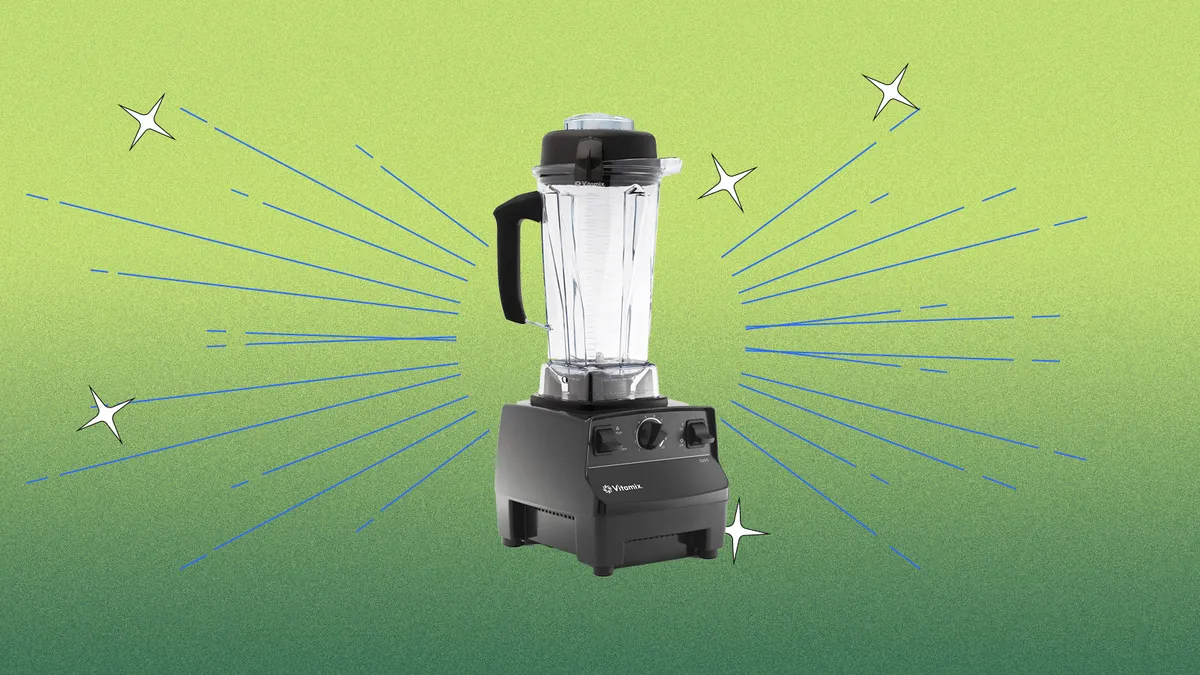
Is a Vitamix Worth It? I Asked Several Experts to Weigh In

Published

on

The first time I got my hands on a Vitamix blender, I was in culinary school. While I sincerely believed I had been making some nice soups and purees with my immersion blender or conventional smoothie model, the Vitamix made that all seem like child’s play after one go.

Gone was the minuscule, vegetal particulate matter that otherwise defined my early attempts at a velvety butternut squash soup. A truly emulsified, homogeneous mixture was apparently only available with a professional device, a truth I would acknowledge time and time again, no matter which Vitamix model I encountered in various restaurant kitchens.

Professional devices come with professional price tags, however, and I never enjoyed the exceptional outcome available from a Vitamix in the privacy of my own home. But small kitchen appliances have come a long way in the last decade, and with high-functioning brands like Ninja in the mix, it begs the question: Is a Vitamix worth it?

Advertisement

What makes a Vitamix blender better?

Vitamix

Vitamix blenders have high-powered motors, but other brands offer similar pop for less money.

Vitamix

One of the primary attributes that sets Vitamix apart from many other blenders is its high-speed motor. If you’ve also had the privilege of ever using one, you will know well that the speed of its highest setting puts most other blenders squarely in the rearview mirror. Its power feels like something that could reasonably be put to use for supersonic travel.

Unlike a food processor and some standard blenders, which contain sharp blades that vivisect their contents into smaller and smaller bits, a Vitamix also relies on stainless steel, dull-edged blades that basically pulverize your food when combined with its ultra-rapid rotation and the gravitational pull of the vortex it creates. This is what creates its unparalleled smoothness, since nothing inside the jug is actually getting chopped to bits.

Advertisement

Vitamix vs. Ninja Twisti

Ninja Twisti blender

The Ninja Twisti next to a full-sized blender with 64-ounce blending jar.

David Watsky/CNET

In our most recent lineup of the best blenders, the Ninja Twisti model was neck-and-neck with the entry-level Vitamix Explorian for top honors. Here’s a side-by-side look at how they compare in terms of features, power and price.

Price

Advertisement

$370

$140

Power

1400 watts

Advertisement

1600 watts

Blades

Laser-cut, stainless steel

Hybrid-edge stainless steel

Advertisement

Jug

48-oz, BPA-free plastic

34-oz, BPA-free plastic

Settings

Advertisement

10 variable speeds plus pulse

5 speeds plus additional pre-set functions

Dishwasher safe

Yes

Advertisement

Yes

Self-cleaning

Yes

Not mentioned

Advertisement

Weight

10.5 lbs

7.2 lbs

Warranty

Advertisement

5-year full

1-year limited

One thing that stands out here is that, while the Ninja model has more available power, its lighter base may make blending less stable at top speed, especially with harder items such as nuts. The jug is smaller, which is fine for smoothies, but may make blending soups more cumbersome, assinceyou’ll likely need to do it in several batches. The warranty also pales in comparison to Vitamix. Does that warranty justify the Vitamix price, though, at nearly 2.5 times what you can pay to take home the Ninja?

Is a Vitamix worth it? Experts weigh in

Advertisement
Vitamix lid canister

Vitamix uses heavier, high-grade plastic that gives it a premium feel.

David Watsky/CNET

I asked several chefs and kitchen experts to share their thoughts on whether a Vitamix is worth it. Similar to the results of the same experience with Le Creuset — the (expensive) standard-bearer for Dutch ovens — brand loyalty is real, though everyone I queried brought up valid considerations about functionality, longevity, warranty, origin and whether or not you’re going to actually use the thing often enough to justify it.

First, “ask yourself, ‘how often do I use a blender?’” suggests Joanne Gallagher, co-founder and recipe developer at Inspired Taste. “Consider what you actually cook in a week. If a blender lives on your counter and gets consistent use, the investment is worth it,” she says. “If you make a smoothie every day, love to make your own nut butter, or blend hot soups straight from the pot, a Vitamix could be your best friend.”

Perhaps you believe you would do all of this more regularly if only you had a world-class appliance that inspired you to do so. “I end up cooking and trying new things the more confident I feel in the kitchen,” Gallagher says, and the right appliance can help. “When you know you’ll get the perfect tomato soup, for example, you’re likely to branch out and try new recipes and cooking methods,” she says. There is merit in that thinking, of course, but it’s a potentially expensive gamble if you don’t those sorts of things on a regular basis already.

Vitamix

Vitamix blenders start at around $300 and go up — way up — from there.

Advertisement

Vitamix

As for the quality of output, “in the past, I struggled with cheap blenders that left smoothies chunky and couldn’t handle hard spices like cinnamon when making homemade mole sauce,” says Jessica Randhawa, founder and head chef at The Forked Spoon. “I now own two Vitamix blenders, one in each of my test kitchens,” she says. “One is an entry-level model, which is an amazing blender and does everything a blender should do perfectly every time.

Vitamix control knob

Vitamix controls aren’t overly complicated, something we appreciate.

David Watsky/CNET

The other is one of Vitamix’s newer, top-of-the-line models with food processor attachments, which allowed me to get rid of my old food processor in that kitchen.” The latter point here is a worthwhile consideration. If a Vitamix can do the work of two appliances, the price tag starts to feel a little less like a reach.

Advertisement

Not every chef believes that it is worth it if you’re not really using it all the time. “For most home cooks, I don’t think a Vitamix is truly worth the price,” says Rena Awada, head chef and owner of Healthy Fitness Meals. “Unless you’re making soups, nut butters, etc., daily, or running a small food business, the speed and smoothness it offers rarely justify the cost.”

Chef Molly Pisula of Vanilla Bean Cuisine offers up a workaround. “The price point is high, but refurbished blenders are available, and even sold directly on the Vitamix website,” she says. (“Reconditioned” in Vitamix-speak.) “And Amazon often runs a great Black Friday sale on Vitamix blenders.”

Advertisement

If you do take the gamble on the cost of a new model, though, Randhawa points out some serious upside: “I love that Vitamix is made in the USA,” she says, “and comes with a warranty better than most cars.”

My own Vitamix alternative experiment: Chefman Obliterator

White Chefman blender

This $75 blender can match a Vitamix. How well it holds up over time is another question.

Pamela Vachon/CNET

I recently came into possession of a Chefman Obliterator, which has specs very similar to the Vitamix Explorian model, including a self-cleaning mode and speed dial that goes up to 5. (Each speed setting is subdivided by 5 hashmarks, making for effectively 25 speed settings.) Its price is listed at $75 on Amazon, putting it squarely in the budget blender camp. Despite not wanting to give up the moral of the story too soon, without taking you through my process: Run, don’t walk to pick up this blender at that price.

Advertisement

I freely admit that I was initially drawn to the Obliterator on hyperbole alone. “Obliterate” is a serious claim that feels like the blender should also come with a wand and a book of spells. Turns out, those props aren’t even necessary.

White Chefman blender

Chefman’s $75 blender offers similar power to the Vitamix models we’ve tested, albeit with a less premium build.

Pamel Vachon/CNET

Since butternut squash soup is apparently my personal benchmark for evaluating the success of a given blender, butternut squash soup was made. Into the Obliterator’s generous chamber went the chunky, “country style” pre-puree concoction, and then out came something that could reasonably be called obliterated, but in a good way. It was as smooth and ungranular as that which could have been served at any high-end restaurant, and pretty much obliterated the fantasy that I might someday actually spring for a Vitamix.

Advertisement

Source link

Continue Reading

Tech

Boeing F-47 Possibly Teased in New Video of Pratt & Whitney’s XA-103 Engine

Published

on

Boeing F-47 XA-103 Engine
A new video from Pratt & Whitney has reignited controversy over the Boeing F-47, which is slated to be the 6th Generation fighter that would eventually replace the F-22 Raptor. Halfway through a short animation focusing on engine progress, an animated fighter jet arrives in flight, its two engines burning brightly as it slashes through a picture-perfect blue skies. Observers quickly identified the image as a possible portrayal of the F-47 itself, powered by Pratt & Whitney’s XA-103 engine, which is now under development.


The F-47 was developed as part of the US Air Force’s Next Generation Air Dominance program, which aimed to create a long-range air supremacy fighter. Boeing received the contract to manufacture the F-47 in 2025, a beast capable of commanding swarms of autonomous drones while also delivering missiles over long distances. The Air Force planned only for a minimum of 185 of these aircraft. Right now, development has moved on to the engineering and manufacturing phases, with the first prototype scheduled to fly in 2028. The first tech demonstrators have been flying in secret since roughly 2020.


DJI Neo 2 (Drone Only), Lightweight & Foldable 4K Drone With Camera, Palm Takeoff & Landing, Gesture…
  • Lightweight & Portable Design – Weighing just 151g [9] and C0 certified, this compact drone features full-coverage propeller guards for safer…
  • Palm Takeoff & Landing [1], Gesture Control [2] – Enjoy easy palm takeoff and landing, plus intuitive gesture controls for hands-free operation and…
  • Smooth & Reliable Tracking – ActiveTrack [3] keeps your subject in focus, while Apple Watch lets you view live feed, check flight status, or use voice…

Pratt & Whitney’s Next Generation Adaptive Propulsion program was responsible for developing the XA-103 engine. This XA-103 engine is one of those ingenious adaptive-cycle engines that can alter modes to balance thrust and fuel burn dependent on mission needs. The results are amazing; it produces around 10% more thrust than the F-35 while increasing range by roughly 25%. This increased power will assist sustain all of the new sensors, and who knows, perhaps even directed energy weaponry. Meanwhile, the innovative thermal management system keeps the internal systems cool while also reducing the heat signature, which is an important feature in the aircraft’s stealth capabilities, particularly when operating in the Pacific theatre.


The video demonstrates an all-digital approach to engine design. Now, digital twins allow engineers to mimic engine performance, optimize components, and get a head start on testing without having to manufacture every part in person. Pratt & Whitney recently completed both preliminary and comprehensive design assessments. They are currently planning prototype ground tests for the late 2020s, as General Electric competes in the same propulsion contest with its own XA102 concept.

Advertisement

Notably, the F-47 rendering has characteristics such as a tailless shape to limit radar visibility, blended wing surfaces with less sharp edges, forward canards for control, and a high-placed cockpit for improved pilot awareness. The thrust-vectoring nozzles resemble those used on the F-22, which aid in fast maneuvers at high speeds. Last but not least, a dorsal refueling point indicates that long operations away from bases are a high priority.

Boeing F-47 XA-103 Engine
Top speed remains about Mach 2, with a combat radius of more than 1,000 nautical miles. Stealth is also impressive, outperforming the F-22 and F-35 combined. The aircraft is plainly meant to first penetrate defensive airspace and coordinate unmanned wingmen before engaging in close-range combat.
[Source]

Source link

Advertisement
Continue Reading

Tech

The agentic future: Why AI’s greatest power is amplifying human potential

Published

on

As artificial intelligence becomes integral to global business operations, we must retire the tired ‘AI vs. human jobs’ debate.

The real opportunity lies in augmented intelligence, a human-centric approach at the core of the emerging ‘Agentic Future.’ Rather than ceding control to machines, augmented intelligence positions AI as a force multiplier for human capability.

Kalyan Kumar

Chief Product Officer at HCLSoftware.

Source link

Advertisement
Continue Reading

Trending

Copyright © 2025