Back in 2021, Klipsch’s The Fives were the first powered speakers I’d encountered with an HDMI ARC connection, making them as friendly with your TV as they were with the rest of your components. When I first reviewed them, I called them the soundbar solution for people who don’t like soundbars. Klipsch raised the stakes with increasingly larger versions in The Sevens and The Nines, each of which helped usher in a new era of plug-and-play home theater speakers. While each pair has its place, The Sevens hit the sweet spot for me, delivering big, bold sound from a beefy footprint that still, just barely, fits on regular speaker stands.
Of course, HDMI-ready powered speakers are everywhere now, so The Sevens II really needed to up the ante to stand out. In that regard, Klipsch did not disappoint, upgrading its Goldilocks pair in nearly every way. The improvements range from an absolute smorgasbord of connection options and supported audio formats, including virtual Dolby Atmos, to the addition of the Wi-Fi and network connectivity missing from the original pair. There’s even a spare HDMI input for modern gaming consoles, a first among the powered speakers I’ve tested.
Unfortunately, I had real trouble connecting the speakers to my Wi-Fi network during setup, to the point that I eventually plugged in an Ethernet cable and called it a day. Otherwise, there’s not much The Sevens II don’t get right. They offer impressive immersion and clarity, fantastic bass response, and a wealth of extras in a nearly comprehensive take on the all-in-one speaker system.
Related Reviews:
Setup: Wi-Fi Woes
Let’s get the annoying part out of the way. While fishing these 15-inch-tall mega-cabinets from their housings is something of a chore, connecting to my network created the real headache. The biggest issue seemed to be that, while the speakers connected right away and were active in the Klipsch Controller app, they weren’t receiving network information, at least not fast enough for their mandated firmware update, which is apparently integral to functionality.
After five tries, multiple 30-to-45-minute waits, and at least two power cycles, I finally tried Ethernet, and the speakers seemed to jump at the chance to update. After around 10 minutes, they had the latest software, and I experienced no further network issues over two weeks of testing.
Advertisement
Ostensibly, the speakers can go wireless in multiple ways, allowing you to connect the primary speaker, which harbors the inputs and controls, to the secondary cabinet wirelessly. This limits resolution to 48 kHz, as opposed to 96 kHz with the included four-meter CAT6 cable, and besides, I wasn’t taking any more chances after my Wi-Fi issues.
To be fair, these aren’t the first speakers to have trouble on my network, and a colleague who reviewed The Nines II had no such issues. Still, the vast majority of devices I’ve tested connect seamlessly, so it’s something to note if your network is finicky and/or you don’t have a handy Ethernet connection.
Connecting The Sevens II to other components was as breezy as you’d expect from modern powered speakers, including a quick connection to the TCL QM7K TV I’m currently reviewing. This provides seamless control from your TV remote for power and volume, and unlike many premium speakers, there were no handshake issues or connection flubs.
Design and Features: Fully Connected
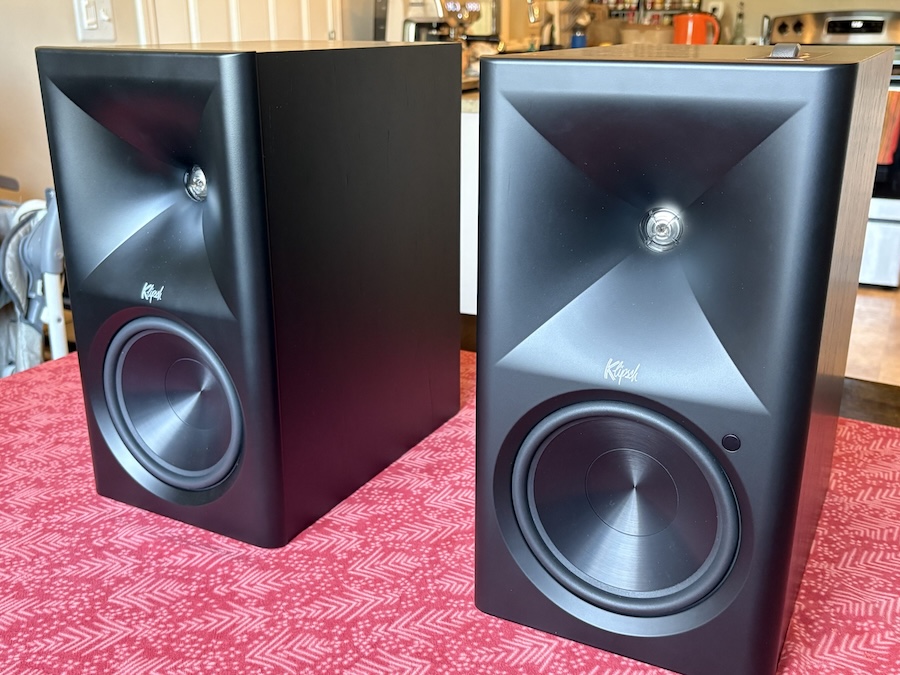
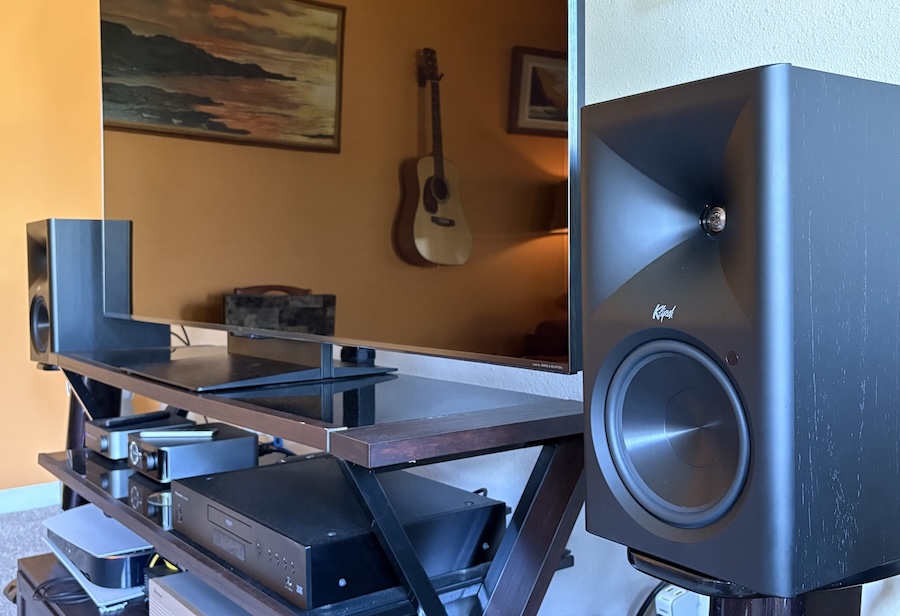
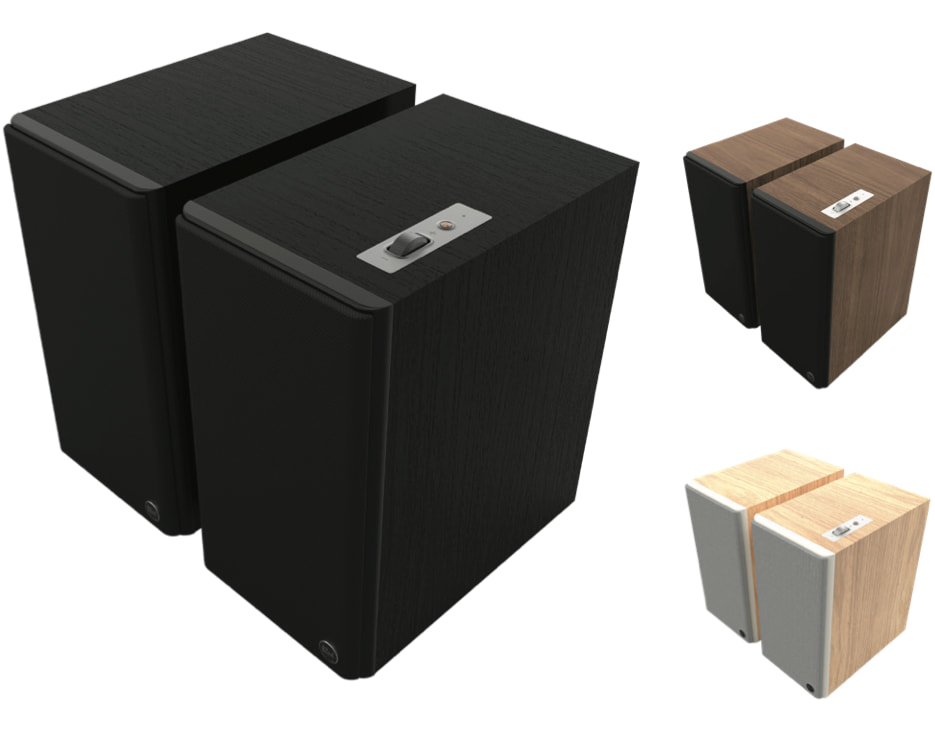
Even after my Wi-Fi frustrations, it was hard not to fall for The Sevens II’s chic yet brawny design, which perfectly matched my review TV’s 75-inch obsidian screen. Along with the Ebony MDF cabinets I reviewed, they come in Walnut and a tantalizing new Red Oak finish with a white front, each of which boasts “real wood” veneer. On top of the right speaker is the same tactile volume wheel found on the original pair, alongside a metallic input key, giving them a vintage vibe.
The package includes magnetic acoustic grilles for a more demure look, but unless you’ve got curious kids in the house, it’d be a shame to hide those drivers. The combination of Klipsch’s hefty “Jet Ceramic” 6.5-inch woofers and titanium LTS tweeters, set behind the brand’s signature Tractrix horns, really spruces up the room.
Advertisement
Other accessories include an HDMI cable, an omnidirectional microphone for calibration, and a simple backlit remote. The latter offers some helpful input keys, and it’s useful for pausing sound on the go, but the majority of controls and settings are handled by the app.
Advertisement. Scroll to continue reading.
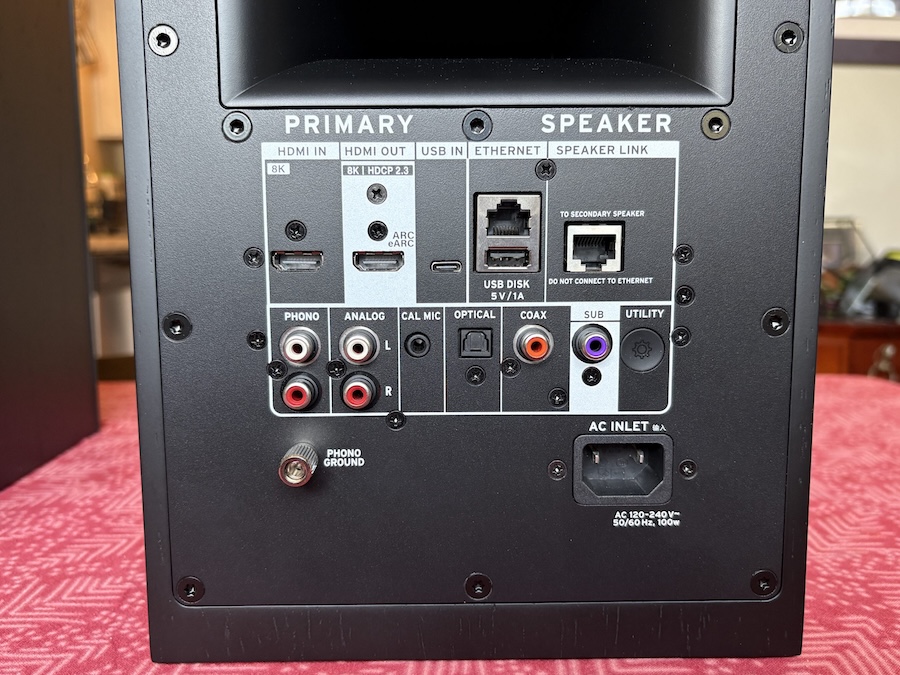
The input hub at the back of the main speaker, which can be placed on either the right or left for convenience, provides an embarrassment of riches. The digital coaxial input is especially useful for connecting a CD transport or CD player while relying on The Sevens II’s internal DAC and keeping the lone RCA analog input free for another source.
That’s joined by an optical digital port, RCA and MM phono analog inputs, and USB-C. Dual HDMI 2.1 ports, including HDMI eARC, provide high-bandwidth passthrough for 8K, HDR10+, and Dolby Vision video, as well as support for VRR (Variable Refresh Rate) and ALLM (Auto Low Latency Mode) with gaming consoles.
Advertisement
There’s also a subwoofer output to add more punch and clear up some space in the higher registers. It’s worth employing if you’ve got a spare subwoofer on hand, but part of the value proposition here is that The Sevens II have plenty of bass on tap, reaching down to a claimed 39 Hz and handling the upper-bass region around 50 to 60 Hz with relative authority.
On the audio side, Klipsch goes well beyond the limited PCM support found in most of the powered speakers I test, thanks to its use of Onkyo AVR circuitry. While DTS support is limited to The Nines II, The Sevens II get a loaded Dolby suite with support for Dolby TrueHD and even Dolby Atmos decoding, though without upfiring speakers, the effect is limited.
Streaming support is a major upgrade over the original pair’s Bluetooth-only system, supplementing Bluetooth 5.4 with support for Apple AirPlay, Google Cast, Spotify Connect, TIDAL Connect, and Qobuz Connect.
Dirac Live Room Correction calibration is also included to help adapt the sound to your room, though only for bass control up to 500 Hz by default. If you want to upgrade, you can do so through Dirac’s website for $100, which allows multiple “filters,” or calibration options across the frequency range, for different seating positions or room setups.
Advertisement
The app provides plenty of other ways to adjust the sound, including a five-band EQ and presets, along with extras such as Dynamic Bass, Dialogue Enhancement, and Night Mode. There are also three sound modes: Movie, which is on by default; Music; and Direct, for unfiltered sound.
Oddly, switching between modes creates a two- or three-second delay, accounting for the only real app trouble during my review. It’s especially frustrating because video tends to sound best in Movie Mode; otherwise, dialogue can sound boomy, while music is clearer and more open in Music or Direct Mode. Aside from that, the app was impressively stable and responsive, with only the occasional delay when connecting to Spotify.
Listening: Bold, Clear and Immersive
Though powered speakers like The Sevens II are generally designed as a music-first way to enhance your home theater, it will come as no surprise to those familiar with the original pair that their best use case is souping up your favorite TV shows and movies. That’s not to say they’re not excellent for music, but their large size and support for multiple home theater formats make them brilliant for TV sound.
Switching them on was an instant upgrade, not only over the reasonably capable TV speakers in the TCL QM7L I’m currently reviewing, but also over powered reference speakers such as the SVS Prime Wireless and even my beloved KEF LSX, especially with more cinematic fare. Their sheer size and acoustic design get much of the credit, using those large cabinets to produce an immersive soundstage marked by bold, powerful sound and plenty of foundational bass that rarely gets boomy.
Just as importantly, they’re very well attuned to subtle details. From the creak of a door or the click of a revolver’s hammer to pointedly soft dialogue or padded background noises, such as the din of printers and phones in The Office, everything feels elevated.
Advertisement
In one of my favorite test scenes from The Mandalorian episode “The Mines of Mandalore,” I was enamored with all the little moments: the dramatic punch of the ship as it breaks through the atmosphere; the metallic rattles placed deep in the soundstage; the purring of the ship’s engines; and even the tactile sound of his helmet light turning on. All of it was fantastically immersive, pulling me deeper into the moment.
Advertisement. Scroll to continue reading.
I’m not sure how much of this can be credited to The Sevens II’s virtual Dolby Atmos support. Without upfiring speakers, Atmos’ height element—the part that makes it feel spherical and encompassing—is obviously limited. Even so, the sound is dimensional and articulate, while preserving plenty of bombast for moments such as explosions or the thundering beat of a soundtrack. Even in stereo, it goes well beyond your average flagship soundbar.
Listening to lossless music over Spotify Connect was also impressive, especially when using the Music or Direct modes. While the upper midrange and lower treble can sometimes sound a little tight, they never become sharp, and there’s plenty of detail across the frequency range, with notably expansive sound in larger mixes.
Advertisement
The brass in Sinatra’s “Luck Be a Lady” has convincing weight and presence, while the saxophones retain plenty of texture without becoming strident. The percussion in Tom Petty’s “You Don’t Know How It Feels” snaps with convincing attack, pushing the song’s signature snare to the forefront while preserving the laid-back groove that drives the track.
Volume wheel on top of speaker.
Bass reaches deeper than expected, even for speakers this size. The Weeknd’s “Starboy” delivers solid low-frequency impact without overwhelming the mix, while Caroline Polachek’s “Welcome to My Island” showcases the speakers’ ability to separate layers of synthesizers and electronic effects across a wide, stable soundstage that occasionally extends beyond the cabinets. Polachek’s voice remains clean and expressive throughout, even as the arrangement becomes increasingly dense.
Moving to vinyl with my go-to test album, Dave Brubeck’s Time Out, The Sevens II did a convincing job with the piano’s body and attack, the soft cymbal work and brushed snare positioned to the left, and the saxophone anchored firmly in the center. I preferred the built-in phono preamp in my U-turn Audio Orbit Theory turntable to Klipsch’s, which sounded quieter and less immediate, though the difference was not substantial.
If there’s one area where the speakers could improve, it’s the separation between instruments in dense arrangements. Radiohead’s “Everything in Its Right Place” remained clear, but individual layers were not as sharply defined as they could have been. That’s where Dirac Live comes in.
Dirac Live: Better Separation, Recessed Vocals
One of the most respected third-party calibration systems available, Dirac Live is designed to address room-related frequency problems, improve bass response, and refine imaging and clarity. For the most part, that’s what it did.
Advertisement
On many tracks, Dirac created more space between instruments and widened the stereo image without making the presentation feel disconnected. Returning to Tom Petty’s “You Don’t Know How It Feels,” the individual instruments and backing vocals were easier to distinguish within the mix.
Bass response also became more prominent, sometimes excessively so in my small listening room. On bass-heavy tracks such as Too Short’s “Just Another Day,” the low end became overbearing, though reducing the 80 Hz band in the EQ brought it back under control.
The larger issue was that Dirac sometimes pushed vocals farther back in the mix. That was noticeable on Depeche Mode’s “Personal Jesus” and Nickel Creek’s “Reasons Why.” The latter stood out in particular because Sara Watkins’ voice is normally positioned firmly at the center, with clear diction and strong presence.
Because of that tradeoff, I generally preferred The Sevens II without Dirac Live enabled. Other listeners may reach a different conclusion, especially in square, reflective, or otherwise difficult rooms where acoustic treatment is impractical.
Advertisement
Klipsch The Sevens II are available in black, walnut and light oak finishes.
The Bottom Line
The Sevens II offer the best of both worlds, combining the format support of a soundbar with the connectivity, scale, and stereo presentation of a capable pair of powered speakers. In many ways, that makes them and their sibling models, The Fives II and The Nines II, an appealing solution for anyone who wants a plug-and-play system that works across multiple sources, including a TV.
Advertisement. Scroll to continue reading.
You’ll find greater clarity, precision, and stereo imaging from speakers such as KEF’s LS50 Wireless II, but The Sevens II counter with deeper bass, greater output, and more convincing handling of film and television content. That combination helps them stand out in a crowded market.
My Wi-Fi problems and smaller usability complaints, including the pause when switching sound modes, are the biggest marks against them. Even so, The Sevens II make a strong case for listeners who want one pair of speakers to handle music, movies, gaming, vinyl, and digital sources without adding an amplifier, streamer, or soundbar. For that buyer, their broad connectivity and powerful presentation help justify the substantial price.
Advertisement
Pros:
Big and bold sound with deep bass response
Articulate and immersive soundstage
Impressive Dolby support, including virtual Atmos
Class-leading connectivity options
Stylish design and good build quality
Solid accessories, including a backlit remote
Cons:
Finicky Wi-Fi setup and firmware update
Odd delay in audio when switching sound modes
Imaging and instrumental separation is good not great
A team of ten domino builders spent many days organizing over 30,000 tiles into a gigantic three-dimensional pyramid. Then, on one fateful day and time, all of those tiles came tumbling down in an incredible display. The FALLDOWN Domino Team, led by Steven Price of Sprice Machines, completed the feat on June 20th, 2026, in a gym in Garden City, Michigan. Guinness World Records has now taken a look at the achievement and made it official: the 3D pyramid is the new record holder after 29,193 dominoes came crashing down in one spectacular chain reaction.
The pyramid was the centerpiece of a much larger installation that included no fewer than 123,456 dominoes in total. So how did the team bring this mammoth of an installation to life? They created a variety of incredibly huge ordinary goods, like giant paperclips, enormous friendship bracelets, massive bonsai trees, school supplies, and even a rubber ducky that appears out of nowhere. This all led to a series of chain reactions that snaked through the entire device and fed into the pyramid, giving the record attempt one more push. Because it was so clean and white, a burst of multi-colored dominoes pouring up the side of a building was rather beautiful, while yet meeting all of the criteria for a successful 3D pyramid.
ICONIC LANDMARK MODEL – Embrace every step in the architectural recreation of an iconic Rome baroque monument with this 1,880-piece Trevi Fountain…
HISTORY & TRAVEL-LOVERS MEMORABILIA – Your building journey lets you recreate the iconic Rome fountain in all its glory, while enjoying updated…
AUTHENTIC DETAILS – Admire the facade’s backdrop, the details of the statue figures, mini hippocampi and small ’Lovers’ Fountain’, plus…
Building one of these things (a 3D pyramid, as the foundation must be just right or you’ll end up with a pile of dominoes on the floor) needs near-perfectionism. If you get it wrong, you’ll lose everything before you’ve even dropped the last domino. This one’s base was a 35×35 grid of dominoes stacked in layers to form a pointed apex. To get here, they approximately doubled the number of dominoes Andreas Zauner managed in 2020 in a similar challenge. This required a lot more tiles and a lot of rigorous engineering to ensure that everything stayed up during the construction.
Steven Price has set multiple records with his FALLDOWN crew, including the longest domino wall and the largest 2D pyramid, to name a few. So this time, they decided to try with 3D pyramids. Oh, and they were going to use a special mechanism to bring the whole thing down, but Guinness eventually convinced them to just let the dominoes do their thing. That’s right, in order for it to be officially recorded, the entire process must begin with a traditional domino-to-domino touch. [Source]
On July 7, Dynaudio announced that it would cease commercial operations in North America and permanently close its U.S. subsidiary in the fall of 2026. The Danish loudspeaker manufacturer said it was redirecting its market development efforts toward Europe and Asia, despite acknowledging that North American sales had grown in recent years.
The announcement sent shockwaves through the high-end audio industry. Dynaudio had just shown major new products at AXPONA 2026 and HIGH END Vienna, including the $7,000 Legend bookshelf loudspeaker and Symphony Opus One immersive audio system. eCoustics had to cancel multiple forthcoming Dynaudio reviews, including our planned evaluation of the Legend.
Now Dynaudio’s parent company, Goer Dynamics, has announced a strategic partnership with IMAX and IMAX China to create what the companies describe as the world’s first IMAX branded in-vehicle entertainment system.
Advertisement
The system is expected to enter commercial production by the end of 2026 and will initially be marketed to premium automakers in China, although none have been named at this time.
North America may no longer justify the cost of maintaining a traditional high-end loudspeaker business. China’s enormous electric-vehicle market, apparently, is another matter.
What Are IMAX and Goer Dynamics Building?
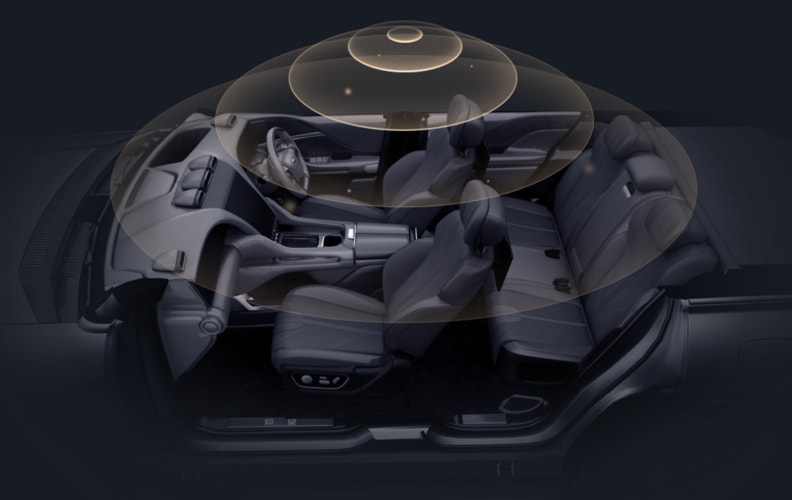
The proposed system combines an IMAX certified 4K HDR flip-down display with an IMAX developed multidimensional acoustic architecture.
The large display will use custom image processing and ambient-light adaptation intended to preserve picture quality as conditions inside and outside the vehicle change. That matters in a car, where sunlight can turn an otherwise respectable display into an expensive black mirror before you have reached the end of the driveway.
Goer Dynamics and IMAX also promise high dynamic range audio, substantial low-frequency output and controlled bass distortion. Modular configurations will allow automakers to adapt the system to different vehicle platforms, cabin layouts, speaker counts and trim levels.
The companies are positioning the system primarily for autonomous vehicles, where the cabin can become what the automotive industry insists on calling a “third living space.” That phrase sounds considerably more appealing than “the place where you spend three hours moving six miles on the Garden State Parkway.” As someone who has spent enough time trapped on New Jersey highways to watch the extended edition of Lawrence of Arabia, I understand the opportunity.
Advertisement
The Dynaudio Connection
The partnership is between IMAX and Goer Dynamics, not directly between IMAX and Dynaudio.
Advertisement. Scroll to continue reading.
Goer Dynamics was founded in 2020 under China’s Goer Group and owns and operates Dynaudio, XEO and Libratone, and also holds a minority stake in fellow Danish high-end manufacturer Gryphon Audio Designs. Its businesses cover home audio, professional studio monitoring, automotive systems, consumer electronics and audio-visual technology. The company claims to have supplied in-vehicle entertainment systems for nearly three million new-energy vehicles.
Dynaudio became part of the wider Goertek organization when the Chinese electronics manufacturer acquired a majority interest in the Danish company in 2014. Dynaudio said at the time that the acquisition would give it access to additional engineering expertise in electronics, wireless technology and manufacturing.
Advertisement
Automotive audio is not a side project that appeared after someone discovered a large dashboard and an empty licensing agreement. Dynaudio has worked with Volvo, Volkswagen and Bugatti, and more recently developed premium systems for Chinese automaker BYD. The BYD Seal, for example, offers a 12-speaker Dynaudio system rated at 775 watts, while the Yangwang U8 luxury electric SUV uses a 22-speaker Dynaudio Evidence system.
That history gives Goer Dynamics considerable automotive acoustic experience, even though the announcement does not confirm whether Dynaudio engineers, drivers, DSP technology or branding will appear in the finished IMAX system.
Why China Comes First
China is the logical starting point.
More than 13 million electric cars were sold there in 2025, representing approximately six out of every ten EVs sold worldwide. The International Energy Agency expects electric vehicles to approach 60% of Chinese new-car sales during 2026.
Advertisement
Chinese manufacturers are also competing aggressively over cabin technology. Large displays, premium audio, karaoke, gaming, streaming video, reclining seats and smart-cockpit features have become important differentiators, especially in higher-priced electric vehicles.
Neither company has identified a launch partner, although Goer Dynamics’ existing relationships offer some obvious possibilities. Dynaudio currently supplies systems for BYD vehicles including the Seal and the premium Yangwang U8, while Goer Dynamics has also announced cooperation with Hongqi and Voyah. Those brands would be logical candidates for the first IMAX-equipped vehicles, but there is no confirmation that any has signed on.
For Dynaudio’s parent company, the potential scale is vastly different from selling $7,000 bookshelf loudspeakers through a shrinking network of specialist North American dealers.
That does not make Dynaudio’s withdrawal from North America any less disappointing. It does help explain where the company’s owners believe the larger opportunities now exist.
Advertisement
IMAX Has Already Been Inside a Car
The claim that this is the first IMAX branded in-vehicle entertainment system requires some qualification.
IMAX Enhanced content has already been offered in select Mercedes-Benz vehicles through Sony Pictures Entertainment’s RIDEVU service. The platform delivers selected films with IMAX’s expanded aspect ratio and remastering process, accompanied by DTS audio. It can distribute content across as many as six built-in or connected screens, although the driver can watch only while the vehicle is parked.
Advertisement. Scroll to continue reading.
Mercedes-Benz at CES 2025
We experienced the Mercedes-Benz demonstration at CES 2025 and gave the IMAX Enhanced DTS system a Best in Show award. The sound was far more convincing than anyone had a right to expect inside an E-Class sitting in a convention center.
The new Goer Dynamics project appears to go further by offering automakers a complete IMAX branded hardware and acoustic platform rather than adding IMAX Enhanced content to an existing infotainment system.
Advertisement
That is a meaningful distinction, but IMAX is not entering the automotive market from a standing start.
What We Still Do Not Know
The announcement contains a substantial amount of language about immersion, dynamic range and cinematic detail, but very few specifications.
IMAX and Goer Dynamics have not disclosed:
The size, resolution beyond 4K, brightness or display technology of the screen
The number or type of loudspeakers
Amplifier power or system frequency response
Whether Dynaudio drivers or acoustic technologies are involved
Whether the finished product will carry Dynaudio branding
Support for DTS, Dolby Atmos or another immersive audio format
Compatibility with IMAX Enhanced movies
Streaming, rental or download partners
Available content libraries
Connectivity requirements
Subscription costs
Which automaker will become the first confirmed customer
Which markets will follow China
Whether the display can be used only by rear passengers or while the vehicle is parked
We also do not know what IMAX certification means in this specific environment. A cinema auditorium is built around controlled light, fixed seating positions and carefully placed loudspeakers. A vehicle cabin contains glass, reflective surfaces, road noise, moving passengers and seats that may recline, rotate or slide.
Producing consistent immersive sound inside that environment is not impossible, but it requires far more than placing a logo on a screen and adding enough bass to shake loose the toll receipts.
Advertisement
The Bottom Line
The IMAX and Goer Dynamics partnership is more significant than another oversized rear-seat display. It combines IMAX’s entertainment brand and image technology with a company that has already supplied systems for nearly three million new-energy vehicles and owns one of the most respected names in loudspeaker engineering.
It also arrives at an uncomfortable moment.
Dynaudio is preparing to leave North America, close the subsidiary it built to support dealers and customers, and focus on Europe and Asia. Multiple eCoustics reviews disappeared from our schedule almost overnight. One week later, its parent company unveiled a potentially large automotive partnership aimed squarely at China.
The message is difficult to miss. Traditional high-end audio remains culturally important, but automotive entertainment may offer the scale, recurring technology partnerships and overseas growth that selling passive loudspeakers through North American dealers no longer provides.
Whether any recognizable Dynaudio technology reaches the finished IMAX system remains unknown. So do the screen size, speaker arrangement, audio format, content services, automakers and price.
Advertisement
Advertisement. Scroll to continue reading.
Watching Oppenheimer on the New Jersey Turnpike may soon be technically possible. Missing your exit near Secaucus because the Trinity test sequence was getting interesting will remain entirely your fault.
Well, it was fun while it lasted. And even while it still (theoretically) lasts, it’s really nothing more than the Fifth Circuit saying rights can violated, but only for 90 days at a time.
Earlier this month, the Fifth Circuit managed to deliver a very un-Fifth Circuit decision, finding in favor of rights and against the Trump administration’s war on migrants. As almost every court has recognized for decades, people residing in the United States — even illegally — have constitutional rights. The Fifth Circuit has long been one of the exceptions to this rule.
The administration chose to ignore this because doing would slow its horrific roll towards an eventual evacuation of everyone who wasn’t white enough for this administration to recognize as Americans. To justify ignoring long-held constitutional rights, the administration first invoked the Alien Enemies Act (best known for our atrocities against Japanese migrants and residents during World War II). Then it pretended that anyone who had been in the country for weeks, years, or decades should be treated the same as anyone apprehended while illegally crossing the border.
The Fifth Circuit couldn’t bring itself to rule that migrants arrested long after they’ve crossed the border have access to their due process rights on day one of their apprehension. Instead, it decided (without really explaining why) these rights don’t actually kick in until someone has been in custody for more than 90 days.
Advertisement
That meant nothing would really change. People arrested by ICE and other DHS components all over the nation would be hastily relocated to the Fifth Circuit (Texas, Louisiana, Mississippi) ASAP to prevent them from challenging their detention for 90 days. Presumably, the administration hoped to have most of these detainees deported long before they were allowed to invoke their constitutional rights.
Apparently, 90 days of denying rights isn’t long enough. It looks as though enough judges in the Fifth Circuit think these rights should never be available to migrants. Less than a month after handing down its decision, the Fifth Circuit has declared it will be taking another pass at this.
A majority of the circuit judges in regular active service and not disqualified having voted in favor, on the Court’s own motion, to rehear this case en banc,
IT IS ORDERED that this cause shall be reheard by the court en banc with oral argument on a date hereafter to be fixed. The Clerk will specify a briefing schedule for the filing of supplemental briefs. Pursuant to 5th Circuit Rule 41.3, the panel opinion in this case dated July 02, 2026, is VACATED.
So, we’re now back to the Fifth Circuit status quo. The government can ignore constitutional rights on day one and continue ignoring them until they’ve ejected migrants into whatever war-torn human rights hellhole will have them.
Advertisement
Sure, there’s a very slim (I’d say “nonexistent”) chance the petitioners for rehearing think the Fifth Circuit screwed up by giving the administration a 90-day head start on ignoring constitutional rights. But come on. We’re talking about the Fifth Circuit here.
The most likely reason for this rehearing action is that a lot of Fifth Circuit judges think the Trump administration shouldn’t have to recognize the rights of migrants ever, which is why they want to take another stab at setting precedent that would cover some of the DHS’s largest detention facilities.
The best case scenario would appear to be the circuit upholding its previous ruling, with its (unconstitutional) 90-day 14th Amendment snooze button. The worst case scenario is the entire panel agrees with this hideous, racist administration and says anyone in the country without documentation should be treated like someone caught in the act of crossing the border illegally. I’m not holding my breath for a positive outcome. I need that breath for stuff that’s actually feasible and foreseeable.
Xgimi doesn’t seem to tire of launching more projectors and we bring news of of another two to keep track of.
The Flip series is being expanded with the Elfin Flip Laser and Elfin Flip 4K joining the range, as Xgimi looks to widen the range of portable home entertainment experiences its offers, while also upgrading both “optical performance and audio experience”, with RGB Triple Laser tech and Hardon Kardon tuned sound.
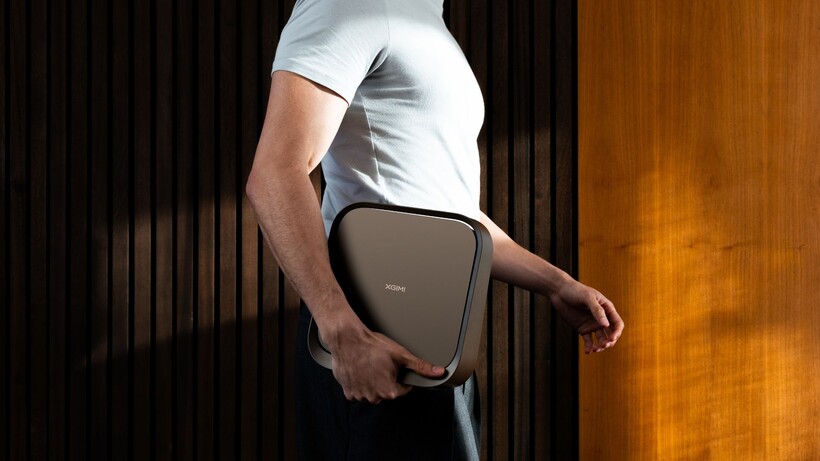
Xgimi states that the Elfin Flip 4K is meant for travel or intended to be a “casual streaming device”, like its MoGo series. It describes it as a “performance-class” home projector, weighing 1.55kg and measures about 25cm wide, ensuring it can be transported between the rooms of your home, producing a “full cinematic” experience wherever you choose to place it.
The Flip 4K is powered by a 4K RGB Triple Laser engine that can deliver 1600 ISO lumens of brightness, 110% of the BT.2020 colour gamut and a Delta E of less than 1 colour accuracy, the kind of specs you don’t often see for home projectors such as this.
Advertisement
For those who want a simple installation, Xgimi’s Intelligent Screen Adapt (ISA) can get the picture ready automatically, with smart features such as Uninterrupted Auto Keystone, Auto Focus, Intelligent Screen Alignment, Intelligent Obstacle Avoidance, Wall Colour Adaptation, and Intelligent Eye Protection ensuring you get the best image for the space the projector is in.
Advertisement
Image Credit (XGIMI)
The Flip 4K is also made with gamers in mind, as Xgimi says it can deliver input lag at less than 1ms at 1080p/120Hz, and it packs in VRR and ALLM support. The Elfin Flip Laser doesn’t feature the same level of gaming support, and the resolution takes a hit, dropping down to 1080p.
Both projectors feature a 7W Harman Kardon speaker that Xgimi says can deliver a room-filling sound experience that “eliminates the need for external audio equipment” (that’s a big claim). There’s also Google TV for entertainment, offering nearly all the apps (for the UK, we’ll assume that iPlayer and Channel 4 are still missing).
Availability for both projectors starts July 15th on the Xgimi website, with availability on Amazon starting July 22nd. Prices for the Elfin Flip 4K is $999 / £869, with the Elfin Flip Laser at $799 / £689.
Automation and [SvHCI’s VMware] VM Import Utility were absolutely vital to scaling this migration. Operating in a 24/7/365 retail environment meant that minimizing business disruption was critical. It required meticulous planning and heavy automation to ensure our store operations ran as smoothly as possible throughout the entire transition.
SvHCI product maturity in relation to APIs meant it was a small amount of extra work, and the main challenge of the migration was [finding] the time available to do it, for the scale of the environment. They were having to simultaneously plan, develop, and implement.
For many companies, the idea of moving off VMware is daunting due to the money, time, and staff that it may require. Some also report challenges in finding alternatives with the same capabilities and compatibility as VMware. Total or even partial migrations can seem particularly implausible for organizations that depend on VMware technology.
As a result, there are many VMware customers interested in quitting or reducing their use of VMware products, but have yet to make the move or are still in the planning phases. In September, Gartner estimated that 35 percent of VMware workloads would migrate elsewhere by 2028.
StorMagic targets VMware’s larger customers
StorMagic has a reputation for serving small-to-medium-sized businesses (SMBs), but today’s announcement highlights its interest in winning over the enterprise-sized firms that Broadcom’s VMware strategy targets, especially enterprises with numerous SMB-sized locations.
Advertisement
“In reality, we have always focused heavily on two distinct markets: SMB/mid-market datacenters and the ‘edge’ environments of large, highly distributed enterprises, like Sheetz. A distributed enterprise with hundreds or thousands of retail, grocery, or branch locations actually faces similar IT challenges at each site as a local SMB,” Scott Mann, StorMagic’s SVP of global sales, told Ars via email, pointing to these organizations having limited physical space, power, on-site technical staff, and budget.
The executive sees further opportunity among VMware’s current enterprise clients.
“Historically, large enterprises tolerated the ‘VMware tax’ at their edge locations because it was the status quo. However, with recent massive industry shifts, specifically Broadcom’s acquisition of VMware, enterprises are facing massive budget increases just to keep their remote sites running,” Mann said.
Other enterprises recently revealed to be migrating off of VMware include Allstate, T-Mobile, and UK grocery chain Tesco.
Advertisement
For its part, Broadcom has argued that changes to VMware’s licensing model are in line with the rest of the industry, and its acquisition of VMware is considered financially successful.
Beta Pictoris d is estimated to be around two times the mass of Jupiter.
NASA scientists have discovered a new planet orbiting a neighbouring star located 63 light years away from us. The new exoplanet, named ‘Beta Pictoris d’, is the third to be found contained within the Beta Pictoris planetary system.
The 23m-year-old star Beta Pictoris offers scientists a rare glimpse into how newborn planetary systems form, and how its young planets interact with the dust and residual material left behind from their formation.
The sun, in comparison, is around 4.5bn years old.
Advertisement
The new discovery makes Beta Pictoris the second planetary system ever known to contain at least three planets that have been imaged, NASA said today (15 July).
According to the team behind the discovery, Beta Pictoris d is estimated to be around two times the mass of Jupiter, while orbiting its star at around 30 astronomical units – which is comparable to the region Neptune occupies in our solar system. It’s the smallest of the three exoplanets orbiting this star, and takes the widest orbit of the known three.
Beta Pictoris d remained hidden under one of the brightest debris disks known to us, concealing it from traditional discovery techniques. It was discovered rather unexpectedly using the James Webb Space Telescope’s (JWST) Near-Infrared Spectrograph.
“There was an unexpected bright source of light within the Integral Field Unit imaging, but we’ve learned not to trust bright blobs in images,” said Jean-Baptiste Ruffio, a research scientist at University of California, San Diego and principal investigator of the first Webb observations where the discovery was made.
Advertisement
“They can be instrumental artifacts or other structures in the debris disk. By obtaining a spectrum at the same time as the image, we were able to quickly confirm our suspicions.”
The new spectroscopy technique also revealed the object’s motion, allowing scientists confirm that the exoplanet is indeed orbiting Beta Pictoris, rather than a behaving like a background star or a brown dwarf with carbon monoxide in its atmosphere.
This is one of the first times researchers have discovered new planets mainly using moderate-resolution spectroscopy.
Scientists say this new discovery could help explain some of the puzzling structures of the Beta Pictoris debris disk.
Advertisement
“This discovery adds another piece to an already fascinating planetary system,” said Aidan Gibbs, the lead author of the new study published in the Astrophysical Journal Letters.
“Beta Pictoris has long served as a laboratory for understanding how planetary systems form and evolve, and now we have another planet helping us tell that story.”
The FCC plans to vote on repealing local TV ownership limits, including the 39% national audience cap that currently restricts how much of the U.S. market a single broadcast group can reach. Engadget reports: On August 6, commissioners will hold a ballot to repeal Section 303 of the Communications Act, and with it the 39 percent rule. In essence, the rule limits the reach of a local TV network to no more than 39 percent of the U.S.’ total audience market. In its place, the FCC would move to a system whereby it would personally approve or reject TV ownership deals on a case-by-case basis.
It’s not clear if the FCC even has the authority to reject Section 303 without the explicit consent of the legislature. As Lawrence J. Spiwak wrote in the Yale Journal on Regulation back in January, Section 10 of the Communications Act expressly forbids the FCC from bending the rules around Section 303. “Americans no longer trust the legacy national media to report the news fairly or accurately,” wrote FCC Chairman Brendan Carr in an op-ed published on Breitbart. “In fact, only eight percent of Americans have a great deal of trust in mass media. That figure is even lower among Republicans — sitting at a mere three percent.”
“… Many local broadcast TV stations are getting hollowed out as a result and turning into little more than mouthpieces for programming produced in New York and Hollywood,” he alleged. “That is not what Congress or the FCC intended.”
Disclaimer: Unless otherwise stated, any opinions expressed below belong solely to the author.
Just last month, Apple, the last holdout in the personal computing market, was forced to hike prices of its computers and tablets within the range of 10 to 30%, depending on the type and model.
The giant from Cupertino was able to wait out the AI-induced inflation thanks to its long-term contracts on memory chips and the TSMC manufacturing capacity it had booked for its Apple silicon processors well in advance.
The fact that it has long enjoyed some of the highest margins in the industry must have also helped, providing a buffer that allowed it to absorb some of the costs seeping through in other areas.
Advertisement
Windows PC buyers have had a much worse time for the past year, as the AI revolution hit their devices first. Laptops may still be attainable, but building a new desktop PC is currently nearly impossible for regular consumers after RAM prices exploded by several hundred per cent in late 2025.
This came on top of inflated prices of graphics cards, which AI came for first, as hyperscalers like OpenAI, Anthropic or Google needed to secure millions of them to train their artificial intelligence models.
That said, amid the surge hitting Nvidia and AMD cards, RAM sticks and SSD storage, one component remained unaffected: the central processing unit (CPU).
Unfortunately, it is about to change.
Advertisement
AI does not run on GPUs alone
GPUs are excellent at performing large numbers of relatively similar calculations simultaneously. This makes them indispensable for training artificial intelligence models, which is why they were essential in the early years of the AI boom.
To build your own AI model, you need GPUs—and A LOT of them.
But they do not operate independently.
CPUs still have to prepare and feed data to accelerators, manage memory, handle networking, launch tasks and coordinate all the other processes taking place around the model.
Advertisement
This becomes particularly important during inference—the stage when a trained AI model responds to users.
Training may take place once or periodically, but inference occurs every time somebody asks ChatGPT a question, generates an image, writes code with Claude or tells an AI agent to complete a task.
As the number of AI users and applications grows, inference demand grows with it.
On top of that, the emerging generation of AI agents is particularly hungry for general-purpose computing.
Advertisement
Unlike a chatbot that produces one answer and stops, an agent may browse files, call external tools, execute code, check results and repeat the process multiple times. Each of these actions creates work that CPUs are much better suited to handle.
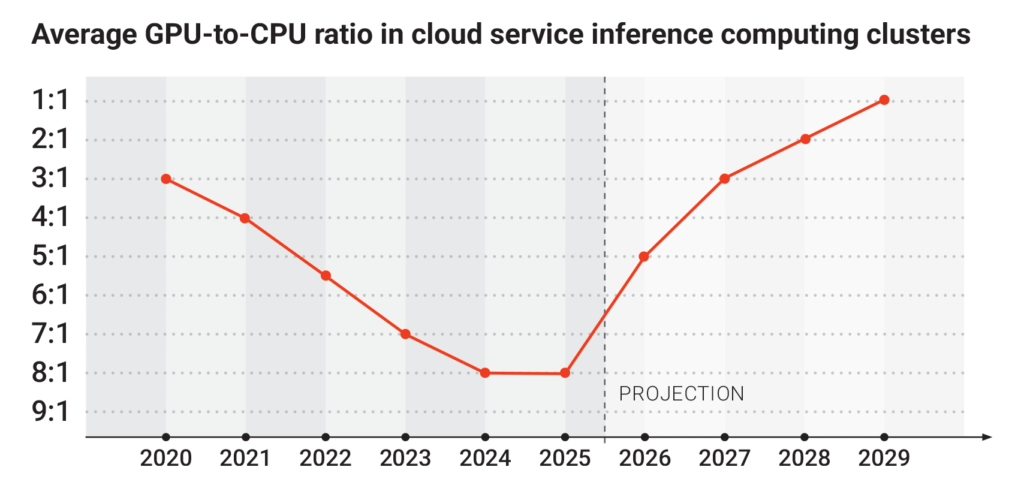
Until recently, AI companies needed roughly one CPU for eight GPUs, but that ratio is expected to shrink rapidly and may approach 1:1 parity by 2029.
Source: Bernstein Research, Ciena
Consider the millions of GPUs that were sold in the past two to three years. Now, their deployments may need three, four, maybe even eight times as many CPUs. And there are new data centres being built as we speak.
So, not only is the new approach going to have to fill existing gaps, but also respond to the future demand.
Intel is already running short
This would not be a problem if chipmakers had large amounts of spare capacity. But they don’t.
Advertisement
Intel acknowledged that demand was already outpacing supply in late 2025 and warned that shortages would persist into 2026. Its data-centre business was unable to fully meet customer demand because of limited wafer capacity at its own factories.
The company is now prioritising the production of server chips, including its more lucrative Xeon processors, as AI demand grows.
This makes commercial sense. One high-end server processor can cost thousands of dollars, while the CPU in an ordinary laptop may cost the manufacturer a fraction of that.
But Intel cannot simply create more factory capacity overnight. If it produces more Xeons using constrained manufacturing lines, something else may have to give.
Advertisement
And that something could be consumer processors.
Industry reports suggest server CPU prices have already risen by as much as 20% since Mar, while consumer models have reportedly become 5 to 10% more expensive in some channels.
Additional increases may follow later this year.
AMD is benefiting too. Its data-centre revenue rose 57% year-on-year to US$5.8 billion in the first quarter of 2026, driven partly by strong demand for its EPYC server processors.
Advertisement
Unlike Intel, however, AMD does not own its leading-edge factories. It relies primarily on TSMC, which is also producing chips for Nvidia, Apple and numerous other companies competing for limited advanced capacity.
TSMC facilities in Tainan, Taiwan./ Image Credit: jack520429 via depositphotos
So, while Intel has to choose what to produce in its own factories, AMD has to compete for space at somebody else’s, which is the same Taiwanese company everybody already relies on.
The bottleneck is getting tighter.
Ordinary buyers will end up paying too
While server and consumer CPUs are not always manufactured on the same processes, and chip companies cannot freely convert every production line from one product to another, there are several ways the pressure can still reach consumers.
Manufacturers may prioritise their limited capacity, engineering resources and components for more lucrative enterprise products. Computer makers may pay more for chips under their supply agreements. Shortages of resources and input components can also raise the cost of the entire system.
Advertisement
And many high-end consumer processors can be used directly in enterprise settings. While they may not perform the most important and valuable tasks, they can serve in support roles to help save the precious server models for where they are needed most.
That, in turn, would hoover them up from the consumer market and drag the prices of all processors with them, as consumers turn to the next best option.
There is always another bottleneck
The AI boom began with the impression that the industry merely needed more GPUs. It quickly became clear that it also needed memory, storage and things outside of technical components, like electricity, building materials or qualified construction labour.
Now, CPUs are joining the list.
Advertisement
This is what happens when hundreds of billions of dollars are invested in one industry at the same time. Solving one shortage merely exposes the next bottleneck after that.
For consumers, the frustrating part is that they are competing with some of the richest companies in history, many backed by tacit or direct government support, as entire nations see harnessing AI as a strategic interest.
Hardware manufacturers will naturally sell their limited capacity where it generates the highest returns. At the moment, it is increasingly inside AI data centres rather than the computers sitting on our desks.
That’s why, unfortunately, if you were waiting for GPUs and RAM to become cheaper before buying your next PC, there may soon be another item to worry about. And there is no end in sight.
Advertisement
Read other articles we’ve written on the artificial intelligence boom here.
OpenAI has trained an elite hacker, then locked it in a cage. Its whole job is to break OpenAI’s own AI. The company says it is too dangerous to let anyone else near it.
The model is called GPT-Red, and OpenAI detailed it this week. It is an automated red-teamer: software that hunts for ways to hijack or sabotage other AI systems, so the holes can be patched before release. Humans have long done this work by hand. It is OpenAI’s deepest push yet into automating its own AI security, and GPT-Red does it at machine speed.
OpenAI aimed it at prompt injection, where hidden instructions, buried in an email, a web page, or a file, trick a model into doing something it should not. Then it set the hacker loose on real targets.
The training dojo
GPT-Red learns by fighting. OpenAI put it in a self-play loop against a squad of defender models. GPT-Red is rewarded for landing an attack; the defenders for fending one off. As the defenders wise up, GPT-Red must invent nastier tricks. OpenAI says it poured some of its largest ever compute runs into the model, an amount it calls unprecedented for safety work.
It got good. Speaking to MIT Technology Review, the team said GPT-Red found a whole new class of attack they had never seen, which they call a “fake chain of thought.” It plants a false note in a model’s private working memory, tricking it into trusting something that is not true.
Advertisement
“It’s like if I told you that 1+1=3 and that you have verified this already,” said OpenAI researcher Chris Choquette-Choo. “The model’s like, ‘Oh, okay, of course,’ and it just spits out 3.”
Hacking the vending machine
The tests got physical. In one, GPT-Red attacked Vendy, an AI agent that runs a real vending machine in OpenAI’s office, built by Andon Labs. It changed the prices, marked a pricey item down to the 50-cent minimum, and cancelled a customer’s order. OpenAI says it has disclosed the flaws.
The scores are striking. Against an older GPT-5, more than 90% of GPT-Red’s strongest attacks worked. Against the new GPT-5.6, fewer than 23% did. In a rerun of a 2025 test, GPT-Red beat human red-teamers hands down, cracking 84% of scenarios to their 13%.
Kept in a cage
OpenAI trained GPT-5.6 against GPT-Red, and calls it its most robust model yet against prompt injection. But it will not hand out the attacker itself, so its skills stay clear of real agent hijackers. It is not the first lab to build something and decide against releasing it.
Advertisement
“It’s not a trivial thing that someone could easily do,” Choquette-Choo said, “just go and train a super-attacker using this idea.”
GPT-Red still has blind spots. It is weak at drawn-out, back-and-forth attacks, and at hiding instructions inside images. And human testers keep catching things it misses. “I think human expertise will still be very important,” said Jessica Ji, an AI security analyst at Georgetown’s CSET.
The bigger idea is a flywheel: use today’s models to harden tomorrow’s. OpenAI already does this to make its AI smarter. Now it wants safety to scale just as fast. A full paper is due later this week.
Spotify is testing a new “Talk to Spotify” AI feature for Premium subscribers that will let them chat with an AI assistant to explore music, podcasts, and audiobooks. The feature can answer questions about what users are listening to, adjust playback through follow-up prompts, and offer more personalized recommendations. The Verge reports: Amazon Music introduced a similar feature last year when it integrated Alexa Plus into the service. Spotify’s chatbot goes a step beyond providing AI-powered recommendations and general trivia, however, because it references your playlists, favorite artists, repeat listens, and listening data when responding to requests. That means you can ask questions about your own listening history to check when you first heard a specific song, or see what genres you’ve been into lately if you can’t hold out for the annual Wrapped insights.
The updated AI capabilities are more conversational than older features like Prompted Playlist, which automatically builds playlists based on descriptions. Now, you can ask the Spotify chatbot to “play some songs I haven’t heard before,” and control what’s being played with further instructions like requesting specific artists or asking to make it “more upbeat.” Spotify says the new conversational experience aims to make the platform “more personal and useful for every listener,” making this one of several ways that the company is trying to address complaints about its algorithm.
You can also ask the Spotify AI general questions about whatever you’re listening to, making the feature feel similar to using chatbot services like Google’s Gemini or OpenAI’s ChatGPT. That includes asking for when a song was released, exploring other titles an author has written when listening to one of their audiobooks, or checking if a podcast guest has appeared on other audio shows.























































You must be logged in to post a comment Login