Prominent solo investor Lachy Groom has backed a Bengaluru startup attempting an ambitious feat: keeping an aircraft in the sky for more than a year by harvesting energy from ocean winds.
Alteon, founded by 20-year-old Samay Sanghvi, announced Tuesday that it raised $2.5 million in a pre-seed round led by Groom, with participation from Together Fund, to develop autonomous aircraft inspired by dynamic soaring, a technique albatrosses use to extract energy from the wind. Groom decided he wanted to invest within the first 30 minutes of their first meeting, Sanghvi told TechCrunch.
Conventional aircraft need to carry the fuel or battery power required for a flight. Alteon is trying to break that limitation by designing its small, fixed-wing autonomous aircraft that can extract energy from wind shear above the ocean through dynamic soaring — a maneuver in which an aircraft repeatedly moves between layers of air traveling at different speeds.
“Once you build airplanes that can stay in the air for more than a year, there are millions of things you can do with them,” Sanghvi told TechCrunch. Alteon plans to initially use the aircraft for maritime surveillance, giving governments real-time visibility into activity in their waters.
Advertisement
The initial plan is to build an aircraft with around a three-meter-wingspan that will fly close to the ocean’s surface, climb, and turn through faster-moving air, and repeat the cycle to gain energy from the wind. Eventually, Alteon plans to use its propellers as turbines to convert some of that energy into electricity and recharge its onboard batteries, Sanghvi said.
Alteon Founder Samay SanghviImage Credits:Alteon
However, the startup has not yet demonstrated that its aircraft can actually sustain flight using energy harvested through dynamic soaring. It did complete a recent of its test of its autonomous flight system over the Bay of Bengal in which the aircraft autonomously completed seven O-shaped cycles at more than 62 miles per hour, flying within one meter of the water’s surface.
Alteon’s next major milestone will be what Sanghvi calls “energy-neutral dynamic soaring.” This would allow the aircraft to fly continuously with its propulsion switched off, extracting enough energy from the wind to remain aloft.
Dr. Gabriel Bousquet, a Silicon Valley-based aerospace and robotics engineer who researched dynamic soaring during his PhD at MIT, called Alteon’s low-altitude flight over water a “promising first result.” But he noted that the harder challenge will be proving that the aircraft can reliably extract enough energy from real-world winds to sustain flight for extended periods.
Flying low enough to harvest that energy safely is particularly difficult, Bousquet told TechCrunch, as the aircraft would have to contend with turbulence, waves, spray, rain, and changing light conditions while continuously sensing and reacting to a moving ocean surface.
Advertisement
Dr. Bharath Swaminathan, who earned his PhD from IIT Madras studying the stability of dynamic soaring, said the underlying physics is well established and called Alteon’s effort commendable. Keeping an aircraft airborne for several days using dynamic soaring would itself be “a very big step, and a big achievement,” he told TechCrunch.
Swaminathan, however, added that while large-scale wind conditions may be predictable, local wind shear and turbulence can vary substantially, complicating an aircraft’s ability to continuously extract energy from the wind. Some of those challenges, he suggested, may only emerge through real-world flight testing.
Groom acknowledged the technical risk behind the bet. “Ambitious problems are always going to come with risks,” he told TechCrunch. “For me, it came down to believing Samay and the Alteon team are the ones to figure them out.”
Sanghvi began working on what would become Alteon straight out of high school in 2023, learning to build aircraft by making — and crashing — radio-controlled models before developing early prototypes. He formally founded Alteon in 2025 and received early backing from Emergent Ventures and 1517.
Advertisement
Alteon now has a team of 20 in Bengaluru and operates from a 10,000-square-foot facility. The startup is building four to five aircraft a week for testing and has conducted more than 200 test flights in the past 30 days, Sanghvi said.
When you purchase through links in our articles, we may earn a small commission. This doesn’t affect our editorial independence.
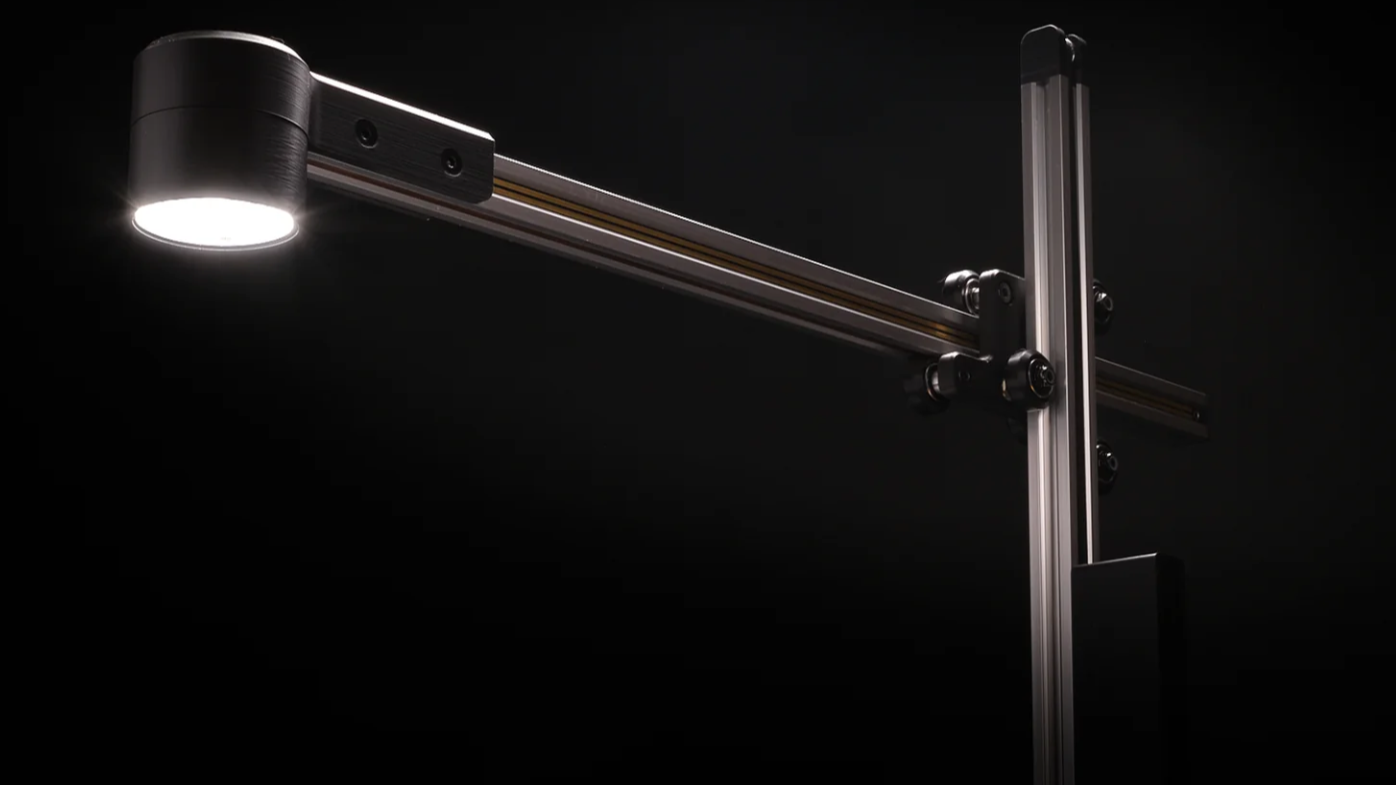
A few years ago Dyson released a desk lamp that could slide up and down, in and out, balancing itself at every position. [Steven Bennett] saw that lamp and wanted to make his own. From this passion, the Open Task Light was born.
We covered the prototype of the Open Task Light back in 2023, and the project is a superb example of iteration. In his 15-part video series on the lamp, you can watch him take on each new aspect of the light, improving the mechanisms, electronics, and production. All those small changes add up to this beautifully finished product.
The first thing you’ll notice about the lamp is how little there is to notice: just a pair of extruded aluminum rails with a lamp head on one end and some rollers in the middle. Look a little closer at the rail and you’ll find a PCB running its length, feeding the lamp through pogo pins and leaving no exposed wires. The lamp uses a heat pipe to dump the LED’s heat, again hidden inside the aluminum extrusion. An ESP32 talks to a dedicated LED driver that runs a Cree high-CRI LED. The base comes in several variations for freestanding use or clamping to a table, and it rides on bearings so it can rotate as freely as the lamp’s other axes of movement.
Advertisement
The original lamp this was inspired by carries a hefty price tag, and while the 50-plus-part BOM on this one adds up, it still comes in at well under half the price of its inspiration. The best part: the Open Task Light is open. You can make it your own, head over to [Steven Bennett]’s GitHub to check out the parts. He has also published a well-documented guide on assembling the Open Task Light.
Given the incredible work [Steven] has put into his lamp, we can’t wait to see his next passion project.
Amazon runs a second-price auction for its search ads, a system in which the winning advertiser is supposed to pay one cent more than the next-highest bid.
The Federal Trade Commission now alleges that Amazon charged advertisers their full winning bid roughly 80% of the time instead.
The agency and 22 states sued Amazon on Monday, in a case first reported by the Wall Street Journal. The complaint covers seven years of advertising activity involving more than one million brands and sellers.
The reason second-price auctions became common in digital advertising is that they are supposed to make honest bidding the rational choice.
Advertisement
If an advertiser knows it will pay only slightly more than the next-highest bidder, there is little reason to deliberately bid below what the ad is worth to the business.
That makes the difference between the auction Amazon describes and the one the FTC says it actually ran particularly important. A second-price auction is not just a label for a particular type of bidding system.
It tells advertisers how their bids will translate into the prices they ultimately pay, and the FTC’s argument is that Amazon advertised one set of rules while applying another.
The agency says Amazon “covertly and substantially increased the prices that more than one million brands and sellers were required to pay” and estimates that the practice generated tens of billions of dollars in additional revenue.
Advertisement
Amazon is disputing that interpretation rather than accepting the FTC’s description of how advertisers behaved. The company says advertisers set and adjust their bids based on the results they get from advertising, rather than relying on descriptions of the underlying auction mechanics.
In Amazon’s view, that means sophisticated advertisers were making decisions based on performance rather than on the precise way the auction was supposed to work.
There is a problem with that defence, because advertisers can optimise around performance only if the system translating their bids into prices behaves consistently.
If the auction rules differ from what advertisers are told, the fact that they measure outcomes does not make those rules irrelevant; it can make their optimisation less predictable.
Advertisement
Amazon is also pointing to the savings its auction system has generated for advertisers. The company says that taking ad relevance into account saved advertisers more than $8 billion between 2021 and 2025, suggesting that the system should be judged on the prices and results advertisers actually receive rather than on the FTC’s description of a particular bidding mechanism.
The scale of Amazon’s advertising business helps explain why the allegations are potentially so expensive. Its advertising operation generated $68.6 billion in 2025, making Amazon the world’s third-largest digital advertising platform behind Google and Meta.
A large share of that business comes from sellers that have relatively few alternatives. For a merchant that depends on Amazon for distribution and customer access, refusing to buy sponsored listings can be a difficult choice, which is what turns an argument about auction mechanics into a broader question about market power.
Advertising has also become one of the most important sources of profit supporting Amazon’s wider retail operation. Retail margins are relatively thin, while AWS operates as a separate business, leaving advertising as a significant contributor to the company’s overall profitability.
Advertisement
The involvement of 22 state attorneys general could make the financial consequences much larger.
State consumer-protection laws can allow penalties to be calculated on a per-violation or per-day basis, and the complaint covers seven years of conduct involving more than a million advertisers.
TNW reported in June, citing Bloomberg, that a complaint had already been drafted and that the involvement of the states was the element that could push potential penalties into the billions. That complaint has now been filed.
Amazon is already dealing with other major regulatory cases. The company agreed to pay $2.5 billion to settle deceptive-practices claims over Prime enrolment in autumn 2025, while a separate antitrust case filed in 2023 is scheduled to go to trial in early 2027.
Advertisement
The advertising case is narrower than that antitrust proceeding, but it could present a different kind of problem for Amazon. The central question is relatively concrete: whether the auction operated in the way the company told advertisers it did.
That is less dependent on competing economic theories than a broader argument about market power, and the FTC says it has evidence covering seven years.
European advertisers will also have a reason to follow the case even though it was filed in the US. The evidence produced during discovery could reveal more about how Amazon’s advertising auctions actually work, and the underlying system is not confined to the American market.
The timing is particularly awkward for Amazon because the company is now defending the auction case while preparing for a broader antitrust trial.
Advertisement
Both proceedings touch on the same underlying question about the company’s relationship with sellers: how much freedom do businesses that depend on Amazon really have to walk away from its ecosystem?
Nothing has been established in court yet. For now, there is a complaint, a set of allegations and figures that Amazon disputes, and a $68.6 billion advertising business whose auction system is suddenly under scrutiny because the rules advertisers were told to trust may not have been the rules being applied.
On his last day as CEO of Apple, Tim Cook has sent a memo to every employee thanking them for what the company has achieved. Here’s what he said.
Tim Cook had his going away party back on August 24, 2026, and in truth he’s been steadily stepping back from his CEO role since at least April when his successor was announced. But now in his last hours leading the company, Cook has sent a heartfelt and optimistic memo to all staff.
Team,
Today is my last day as CEO of Apple. This is a moment I always knew would come one day, and yet it is still hard to believe it has arrived and I am writing these words. I love this company and the team behind it, and I couldn’t let this day pass without sending a note to you, to tell you how grateful I am for the outpouring of affection you’ve sent my way, for the way you’ve shown up each and every day, and most of all, for the privilege of a lifetime serving as your leader.
The truth is, whatever there is to say about my success, I know it is all because of you. You have brought out the best in me. In all my life, I have never seen or been with such an extraordinary team of people before, and every day I get to see more examples of that.
Advertisement
There is something truly special about Apple. I am most proud of what an annual report could never capture. This place is proof that culture triumphs over everything. We share a belief that what we build matters, and that we have both the opportunity and the responsibility to leave the world better than we found it. That purpose is part of what makes this place extraordinary. Apple helps nurture it, but I believe it lived within each of you long before you arrived here.
It is what brought you to this company and what continues to drive the work you do every day. Together, we have created something far greater than any one of us could have imagined or accomplished alone. And that’s the secret to our success. We bring out the best in each other. We lift each other up. We have made it possible to leave our “dent in the universe,” as Steve once described it, because of who we are and what we believe, because of what we value and how we see the world. How fortunate we are. How fortunate I am.
As you know, I am not leaving Apple. But I am stepping away from a role that I have loved deeply. I will miss this work in ways I can only begin to imagine, even as I remain completely at peace with my decision. I will miss leading you and being with you for every step, even as I take enormous comfort in handing the helm to someone as brilliant and wonderful and capable as John. Few people understand what it takes to build products that change the world the way John does and I could not be more excited for his leadership.
I hope you know how much I appreciate you and what an honor it has been to be your CEO. Most of all, I hope you will continue to be proud to be part of this remarkable place we call Apple and always give it your very best. When we bring our whole selves to this work, with care for one another and for the people we serve, there is no limit to the profound difference we can make.
Advertisement
I look forward to seeing you in my new role at Apple Park and around the world.
Cook is right, of course, that he isn’t leaving Apple. He is instead becoming a Chief Executive of the company, which is a role that might be defined as being whatever John Ternus needs it to be.
Certainly we can expect that it will continue to be Tim Cook who deals with Trump, for instance. It may also continue to be him who announces when Apple is donating to disaster relief.
Nonetheless, Cook’s era is now over and Ternus’s has begun. They were both the right people at the right time.
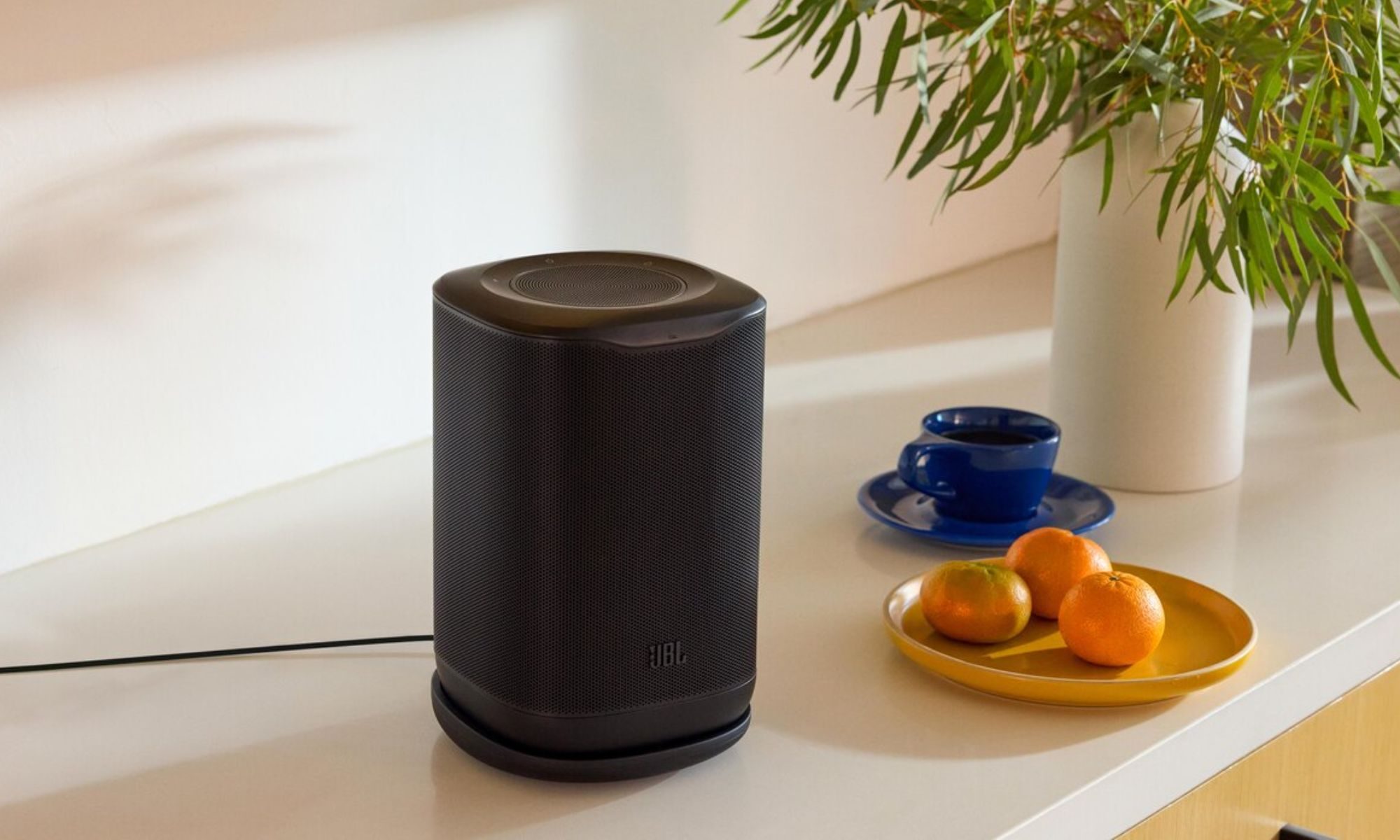
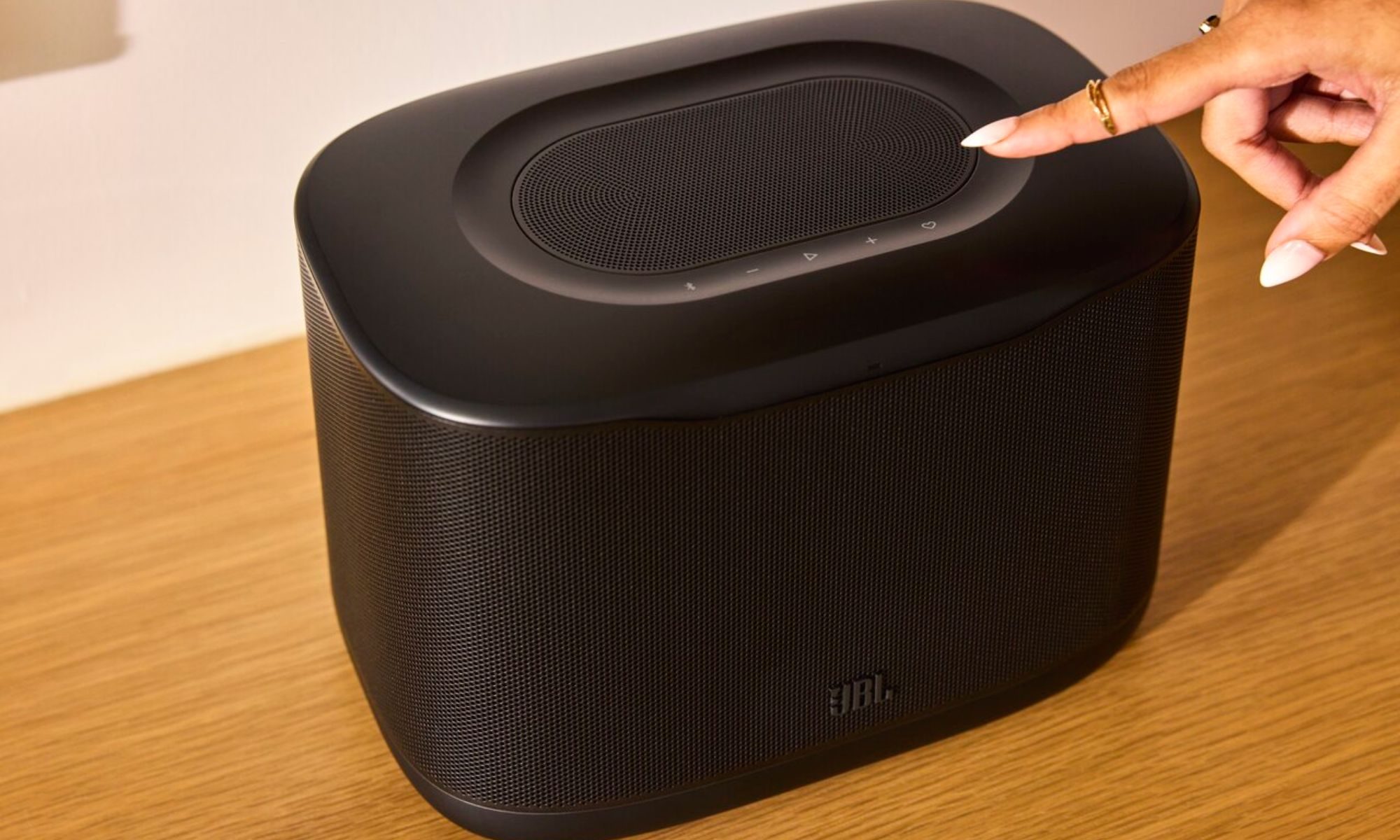
JBL is taking a shot at the whole-home wireless audio market with the introduction of its new JBL Cove speaker lineup. Known largely for its portable Bluetooth speakers and massive PartyBox models, the audio giant is now branching out with a modular, Wi-Fi-connected system designed to bring high-quality audio to every corner of the house.
A trio of Wi-Fi speakers built for every room
The JBL Cove lineup debuts with three models designed to scale based on room size and portability needs. Every speaker in the series operates over Wi-Fi, supports high-resolution streaming, and works with the unified JBL One app for seamless grouping and room management.
JBL Cove M1JBL
The JBL Cove M1 serves as the entry point for the system. It’s a compact speaker that packs three tweeters, one woofer, and JBL’s AI Sound Boost technology to keep distortion to a minimum even at higher volumes. The Cove P1 is a more versatile pick that brings portability with a battery-powered design. It offers up to 14 hours of playback on a single charge and adds native support for Dolby Atmos playback, making it ideal for moving room-to-room or taking to the patio.
JBL Cove P1JBL
The JBL Cove X1 sits at the top of the range and is engineered to fill larger open spaces. It packs four tweeters, dual woofers, and Dolby Atmos support, and delivers the biggest acoustic footprint in the new lineup. All three models work standalone and can be grouped for a multi-room setup. The Cove lineup also features self-tuning to optimize acoustics based on room placement, and they can double as wireless rear surround speakers when paired with JBL MK2 series soundbars.
JBL Cove X1JBL
On the smart home front, JBL has confirmed that the Cove lineup will receive support for built-in voice controls powered by Amazon’s Alexa+ assistant via an over-the-air update in the US later this year.
Pricing and availability
JBL has positioned the Cove system aggressively against established market players, offering all three models at competitive prices. The Cove M1 comes at $230, the Cove P1 jumps to $400, and the top-of-the-line Cove X1 is priced at $450. All models will be available in black and white color options starting September 13 in the US.
If you are currently mapping out a multi-room audio setup or deciding which brand fits your living space, take a look at our breakdown of the best wireless speakers to see how JBL’s Cove lineup stacks up against the competition.
If you were planning to get the streaming device, you may want to head to Amazon right now.
Google
We may receive a commission on purchases made from links.
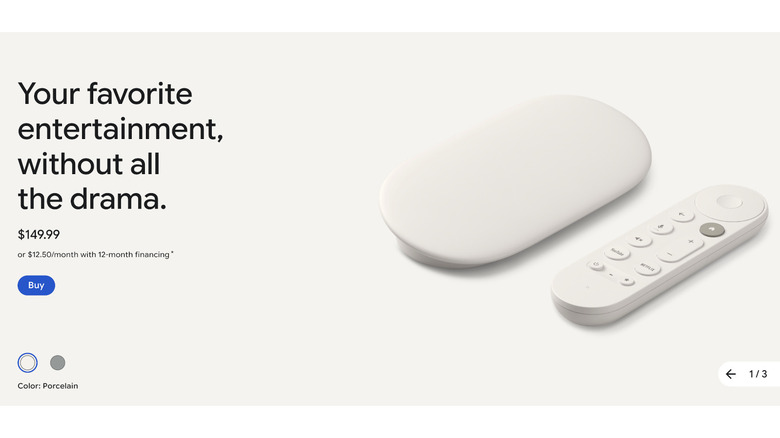
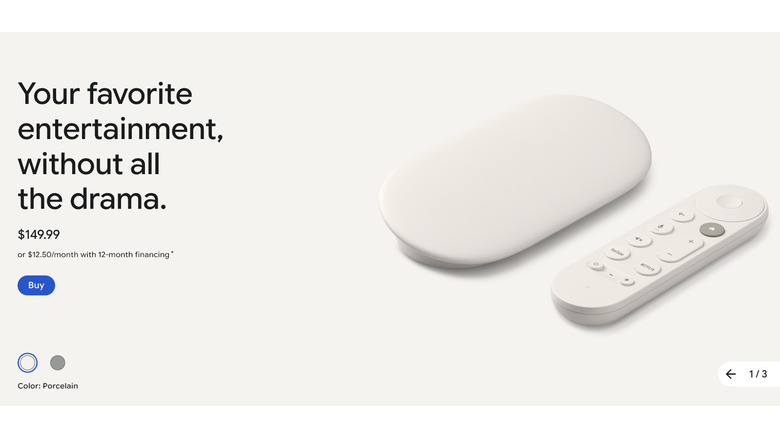
Google is now selling its TV Streamer for $150 on its online store and on retailers like Best Buy. As 9to5Google has noticed, the company has quietly raised the price of the streaming device by 50 percent.
The Google TV Streamer replaced the Chromecast in 2024 and was sold for $100 at launch, which already cost twice as much as the 4K Chromecast at the time. It’s Engadget’s best all-in-one streaming device for 2026. We found it faster than Chromecast models and praised if for having 32GB in storage, 4GB in memory and support for 4K at 60 fps, HDR, HDR10, HDR10+ and Dolby Vision. It also supports Dolby Digital and Dolby Atmos, as well as spatial audio on the Pixel Buds Pro.
Advertisement
Seeing as Google didn’t announce the price hike, it also didn’t reveal the reason behind it. Like other price increases across devices recently, however, it could be an effect of rising RAM prices. AI companies have been buying up most of the world’s RAM supplies, leaving manufacturers with little hardware capacity for other customers and devices.
Of course, we could only speculate unless Google reveals the real reason behind the device’s price hike. You can still get the Google TV Streamer for $100 from Amazon as of this writing, though the website e-commerce website will likely adjust its pricing soon.
Proposed redundancies are expected to take place between 7 and 21 October.
PayPal is laying off 164 of its Ireland-based workers in a now familiar Big Tech move to “simplify” company operations for long-term growth.
The layoffs represent 11.9pc of PayPal’s total full-time Irish workforce of 1,380 and includes both remote workers and on-site employees.
PayPal told Sinn Féin TD Ruairí Ó Murchú that the job cuts are part of a strategy announced earlier this year that aims to improve company operations by removing duplication and putting in place clearer reporting lines.
Advertisement
News of the redundancies was revealed yesterday (31 August) after 29 senior members of the staff, three team leaders and one manager were told they were being made redundant. The company later said that a further 131 employees, across a range of departments, would be laid off as well.
The Department of Enterprise said it received a collective redundancy notification from PayPal on 28 August, a legal requirement if a big business is considering laying off 30 or more employees. The proposed redundancies are expected to take place between 7 and 21 October, the fintech told Ó Murchú.
PayPal’s shares have dropped dramatically over recent years as a result of the turbulent times at the company, but picked up after promising reports of a takeover by Stripe, which took its market capitalisation to $52.5bn just days ago, up from roughly $43bn in February, before dropping down to around $45bn today (1 September).
Small loudspeakers have become considerably better at delivering convincing bass, but physics remains undefeated. DALI thinks the answer does not have to involve adding a large black box to the corner of the room.
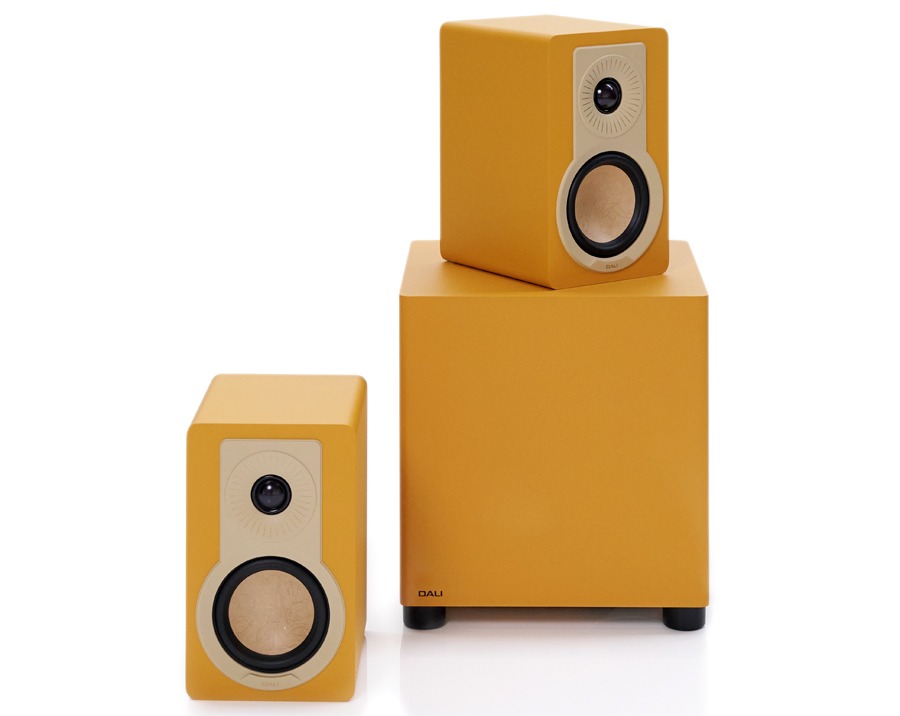
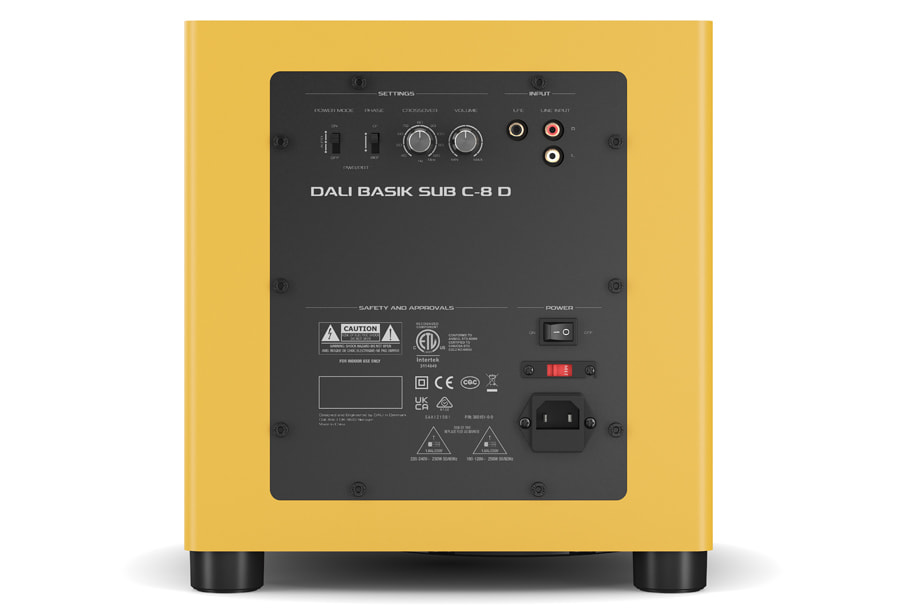
The Danish loudspeaker manufacturer has introduced the DALI BASIK SUB, a compact active subwoofer designed to add greater low-frequency extension, scale, and impact to smaller music and home theater systems. Developed as a natural partner for compact bookshelf loudspeakers including the DALI KUPID and SONIK 1, the BASIK SUB combines an in-house designed 8-inch down-firing long-stroke woofer with Class D amplification, flexible system integration, and five finish options.
DALI is also entering an increasingly competitive part of the subwoofer market. SVS, KEF, Bluesound, REL, and others have been putting considerable engineering effort into extracting deeper and cleaner bass from smaller enclosures, giving apartment dwellers, desktop listeners, and owners of compact two-channel systems far more options than they had even a few years ago.
The BASIK SUB therefore has to do more than simply make a pair of small DALI loudspeakers sound larger. Its compact dimensions, down-firing driver, and unusually broad choice of colors suggest DALI is also targeting listeners who want meaningful bass extension without allowing the subwoofer to become the largest and least attractive piece of furniture in the room.
Advertisement
“We’ve seen a rise in popularity of bookshelf speakers with our own award-winning KUPID and SONIK 1 speakers over the last year. This has been fueled by small, affordable streaming amplifiers and turntables which allow consumers to create a custom hi-fi system for the price of a smartphone. BASIK SUB is designed as a natural enhancement for these systems as almost all affordable streaming amplifiers and speakers feature dedicated subwoofer output and bass management features, making it possible to get the full scale and bandwidth from a compact and interior-friendly package,” says Krestian Pedersen, Head of Product Management at DALI.
8-Inch Woofer and 220 Watts of Class D Power
The BASIK SUB was developed in-house around an 8-inch down-firing, long-stroke woofer with a paper-pulp cone designed to combine low mass with rigidity for detailed low-frequency reproduction. An oversized ferrite magnet and high-flux motor system provide greater driver control, while a long, vented voice coil helps dissipate heat and reduce compression at higher listening levels. The down-firing configuration is also designed to promote more even bass distribution while providing greater flexibility with room placement.
The woofer is powered by an efficient Class D amplifier rated at 170 watts RMS and up to 220 watts peak. A switch-mode power supply helps reduce power consumption and heat generation, while a built-in dual-stage limiter is designed to protect against overload without unnecessarily compromising the signal. Gain, crossover, and phase controls provide the necessary adjustment for integrating the BASIK SUB with a wide range of stereo and home theater systems.
Compact Cabinet With Five Finish Options
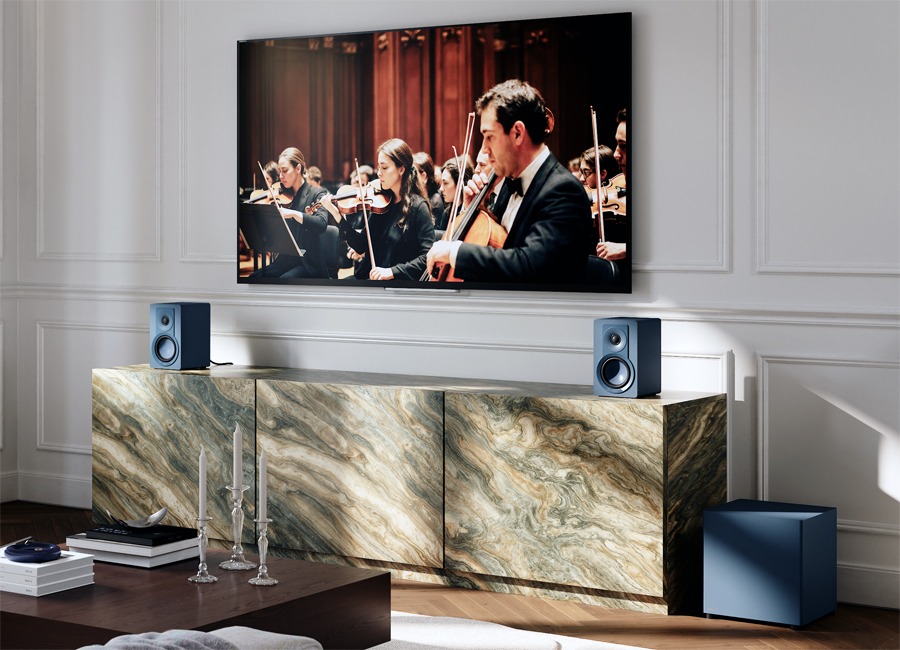
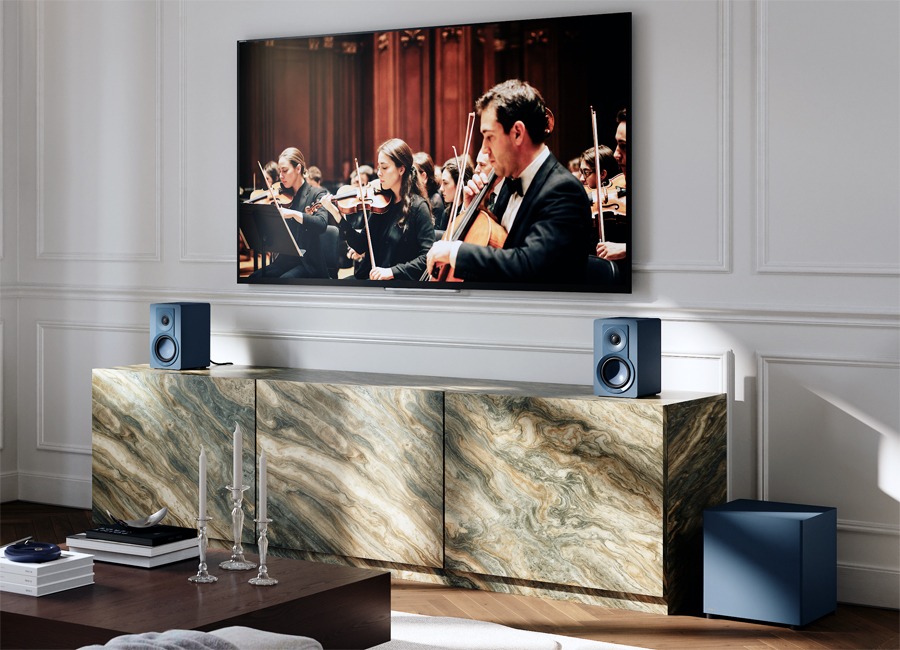
The BASIK SUB uses a compact MDF enclosure available in Solid Black, Solid White, Caramel White, Golden Yellow, and Chilly Blue, allowing it to coordinate visually with DALI’s KUPID and SONIK compact loudspeakers.
Advertisement
The MDF construction provides a rigid, acoustically stable foundation for the driver, while four decoupled feet elevate the cabinet by 25 mm. This helps reduce unwanted vibration and provides the necessary clearance for the down-firing woofer.
Its compact footprint makes the BASIK SUB easier to accommodate in smaller living spaces, with placement options alongside a wall or in a corner. It is designed for both two-channel music systems and more modest multi-channel home theater setups where a larger subwoofer may be impractical.
DALI says the BASIK SUB has been engineered according to the company’s established sound-design principles, with an emphasis on clean, low-distortion bass and accurate timing.
Advertisement. Scroll to continue reading.
Advertisement
Flexible Bass Management and System Integration
The BASIK SUB provides an adjustable crossover that allows it to be matched to different loudspeaker sizes and room acoustics when the connected amplifier does not provide its own bass management or dedicated subwoofer controls.
A continuously adjustable 0-180° phase control helps align the subwoofer’s low-frequency output with the main loudspeakers, while an independent volume control allows for final level adjustments.
Stereo LINE L/R inputs accommodate conventional two-channel hi-fi systems, while a dedicated mono LFE input provides straightforward connectivity with AV receivers, home theater systems, and streaming amplifiers equipped with a subwoofer output.
DALI BASIK SUB Specifications
DALI Model
BASIK SUB
Product Type
Compact Powered Subwoofer
Price (each)
$800 (£429 / €500)
Driver
1 x 8-inch down-firing, long-stroke driver
Diaphragm
High-quality paper pulp
Motor system
Oversized ferrite magnet with high-flux motor
Voice coil
Long, vented voice coil
Enclosure
Bass reflex
Cabinet Construction
MDF
Amplifier
Class-D
Amplifier Power Output
170 W RMS
Amplifier Peak Power Output
220 W
Crossover (adjustable)
40–120 Hz
Phase adjustment
0–180°
Level Control
Adjustable Volume
Inputs
LINE L/R and mono LFE
Power Modes
ON / AUTO / OFF
Auto Power Standby
Approximately 20 minutes after signal inactivity
Standby Power Consumption
0.4 W
Power Protection
Built-in dual-stage limiter
Feet
Four decoupled feet
Cabinet Elevation
25 mm
Finishes
Solid Black, Solid White, Caramel White, Golden Yellow and Chilly Blue
Dimensions: (HWD)
319 x 295 x 310 mm 12.56 x 11.61 x 12.20 inches
Weight
9.75 kg, 21.49 lbs
The Bottom Line
The DALI BASIK SUB is not trying to be the subwoofer that rattles the dishes three rooms away. With an 8-inch down-firing woofer, 170 watts of RMS power, and a published low-frequency response down to 40 Hz, its priorities appear to be integration, musical balance, compact dimensions, and ease of placement.
Advertisement
That makes the BASIK SUB best suited to smaller two-channel systems built around bookshelf loudspeakers, particularly DALI’s own KUPID and SONIK 1, as well as compact streaming amplifiers with proper bass management. It should also make sense in apartments, bedrooms, offices, and modest home theater systems where extending the bottom end is more important than reproducing subterranean movie effects.
The competition at $800 is not exactly asleep. The REL T/5x ($799) also uses an 8-inch down-firing driver and is strongly focused on music systems, while the KEF Kube 8 MIE ($699.99) offers an 8-inch driver, 300-watt Class D amplifier, DSP, and deeper published bass extension for less money.
What makes the BASIK SUB different is its emphasis on design as much as performance. Five color options, compact dimensions, and finishes intended to coordinate with DALI’s smaller loudspeakers make it considerably less anonymous than the black and white boxes that dominate the category.
Whether that is enough to justify $800 will depend on how well it performs, especially with competitors offering deeper published extension at the same price or less. But for listeners assembling a compact 2.1-channel system who want better bass without turning the room into a subwoofer showroom, the BASIK SUB has a clear purpose.
Advertisement
And if Chilly Blue or Golden Yellow finally solves the spousal acceptance problem, DALI may have accomplished something decades of subwoofer engineering could not.
Price & Availability
The DALI BASIK is available through Authorized DALI Dealers for $800 in the U.S. and at £429 and €500 across Europe.
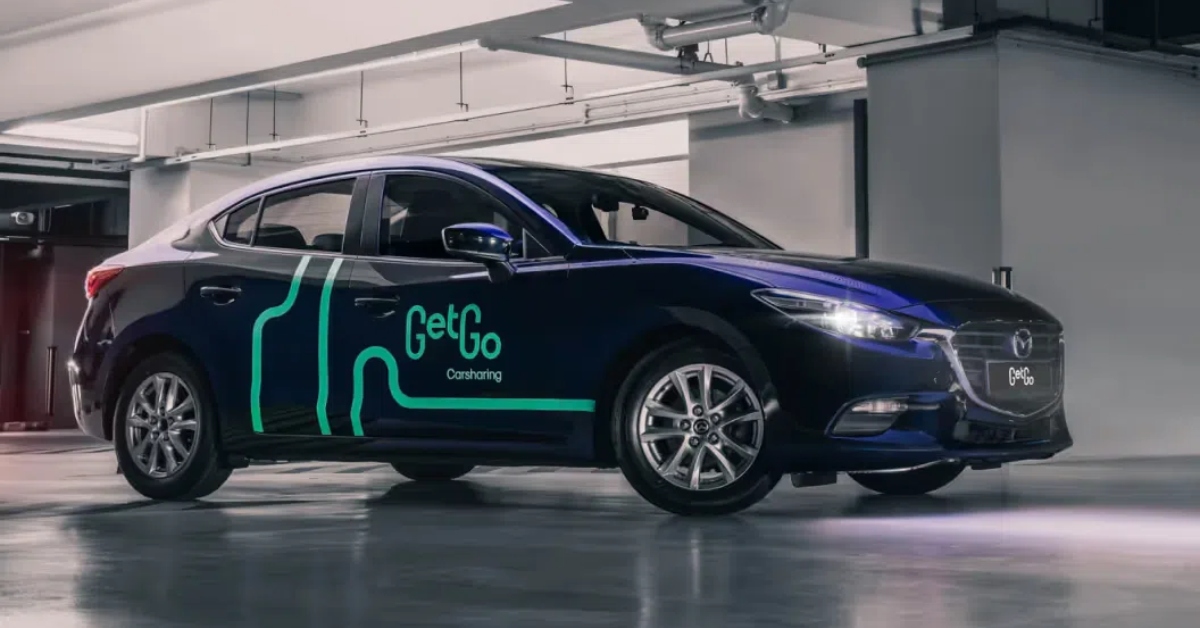
Singapore car-sharing platform GetGo announced today (Sept 1) that it has launched a new feature that lets users rent its vehicles for cross-border trips to Malaysia.
Unlike traditional car rental services, which often require a deposit and vehicle collection and return at designated rental locations, GetGo said users can book a vehicle through its app and pick it up from their nearest carpark.
There are also no mileage charges for driving in Peninsular Malaysia, regardless of the distance travelled. Instead, users will pay a cross-border surcharge that is capped based on the vehicle category and travel day.
GetGo said the total surcharge will be shown in the app before users confirm their booking.
Advertisement
“[This gives] users… visibility of what they will pay before confirming their booking in the GetGo app,” GetGo said.
For additional coverage, users can opt for collision damage waiver (CDW) or enhanced CDW plans for their cross-border trips.
They can also add a pre-registered co-driver to the booking, allowing two insured drivers to share the driving under the same insurance coverage.
The launch comes ahead of the Johor Bahru-Singapore Rapid Transit System (RTS) Link, which is expected to begin operations in January 2027.
Advertisement
GetGo currently operates more than 3,000 vehicles across over 1,700 locations in Singapore.
Read other articles we’ve written on Singaporean businesses here.
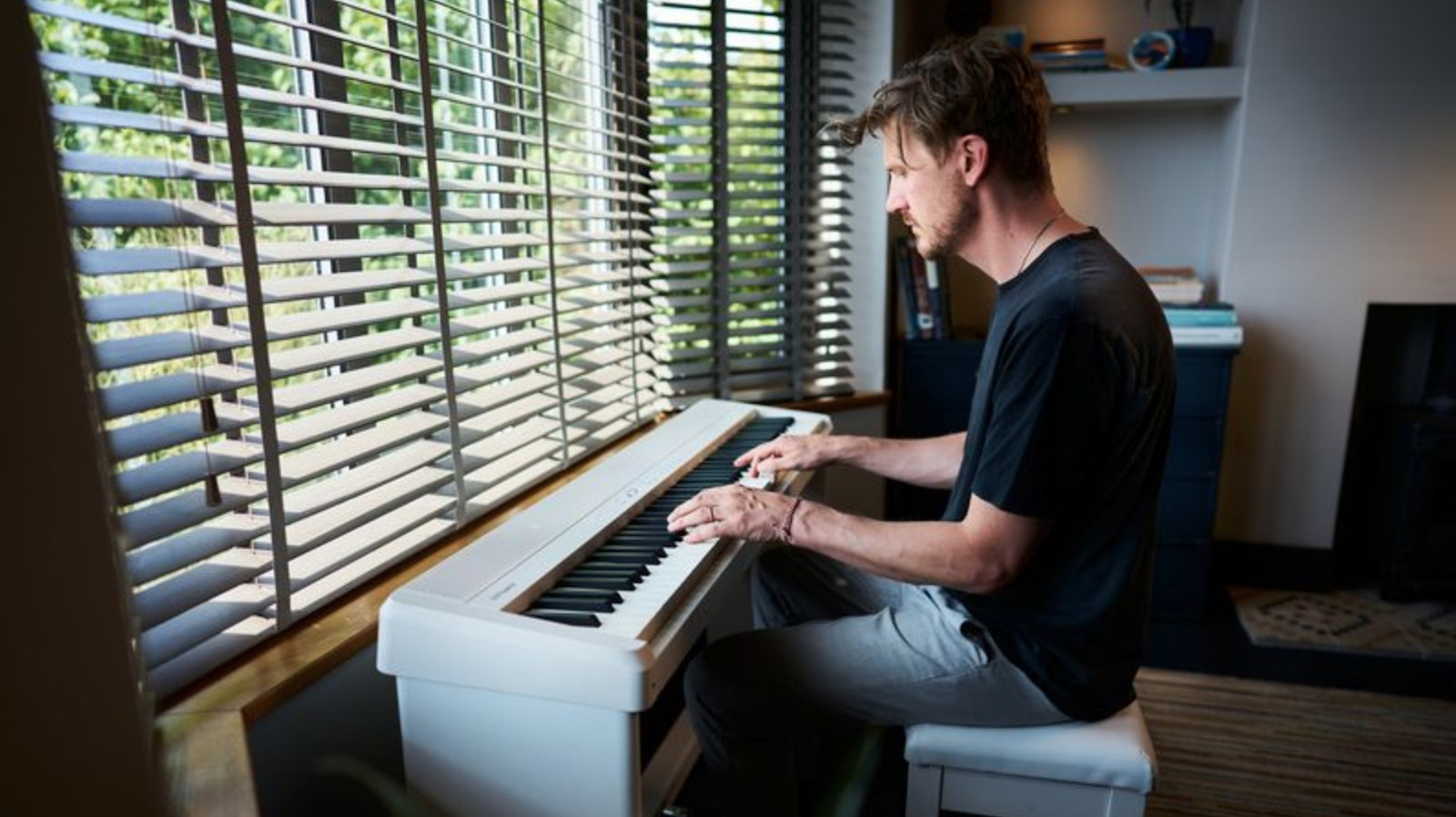
Roland just unveiled the FP-40 digital piano, which has built-in Wi-Fi. It’s not uncommon to see pianos that connect via Bluetooth, but Wi-Fi is incredibly rare. I’ve seen some instruments that allow for the inclusion of Wi-Fi adapters, but this one goes a step further. It simply connects to a home network, like any other gadget.
The primary use case here is for teaching apps and related software. Pianos with Bluetooth, like the well-regarded Casio PX-S7000, connect to proprietary teaching apps, but Wi-Fi is much faster and should offer a more seamless experience.
To that end, Roland is also releasing a new teaching app called Piano Sphere, which offers “guidance, real-time feedback and a rich library of popular songs and high-quality courses.” Users will need a smartphone or tablet to control many aspects of the app, but the piano will do some stuff all on its own. For instance, it automatically records playing history so users can review what they’ve been practicing. It also notices when a player is struggling and flashes a button to offer assistance.
Advertisement
Once paired with a mobile device, the app offers a nice visual interface in line with Casio’s Music Space. However, using Wi-Fi in place of Bluetooth should reduce lag when practicing.
There’s another benefit to going the Wi-Fi route. Both the app and piano software will update automatically. Roland promises that “new services, feature enhancements and ecosystem integrations that enrich the user’s piano experience over time.”
The piano itself also sounds pretty nifty. It features the company’s proprietary Piano Reality Sound Engine, which “captures the depth, detail and tonal character of an acoustic piano.” It includes fully weighted hammer action keys with a triple-sensor system that provides “exceptional responsiveness and natural expression.” This kind of thing is good for learners and helps eliminate the gap between digital and traditional pianos.
Advertisement
There’s a new speaker system that enhances depth in the low register, which should let people hear what they’re playing in a more natural way. The piano also includes a Bluetooth receiver, which is great for streaming music from an external source to play along with.
The Roland FP-40 is available in both black and white. It costs $750, which is thousands of dollars less than the company’s flagship models. It’s available to purchase right now.
Virtzilla finding more ways to pull data out of DRAM to enable ‘densification’ and dodge the RAMpocalypse
VMware is working to find new roles for its memory tiering technology, in the expectation that memory and hardware prices will remain high for years and users will therefore look for ways to put off server purchases.
Advertisement
Memory tiering moves data out of DRAM and onto another storage medium that’s fast enough that CPUs can still access info at speeds that don’t slow application performance. VMware’s implementation works by looking for “cold pages” in DRAM – chunks of memory containing data that a CPU hasn’t touched and/or won’t need for a while.
When a CPU can’t find any capacity in DRAM, it can pause operations until memory becomes available. That leaves CPUs and expensive DRAM idling wastefully when they could be churning through work.
To stop the waste, memory tiering looks for cold pages in DRAM and moves them to another storage medium – for VMware that means fast and resilient NVMe drives.
The virtualization pioneer introduced memory tiering last year in version 9 of Cloud Foundation, its bundle of products that allow users to assemble and operate a private cloud.
Advertisement
In this year’s VCF 9.1 update, VMware tweaked it to improve performance when running databases – always a key workload – and added dashboards that show users the extent of tiering activity, plus more management tools.
VMware delivered memory tiering just as the AI boom saw the price of DRAM and solid state storage skyrocket. DRAM now often costs several times more than the servers it lives in.
At the VMware Explore conference on Monday, staff technical marketing architect Dave Morera said VMware plans to support more VM types with the tech.
“We have a two-to-three year roadmap,” he said in a conference session. Some of the items on that roadmap will emerge in the VCF 9.2 release that VMware will likely debut around May 2027.
Advertisement
Morera said VMware’s memory tiering currently supports about 75 percent of workloads and wants to push that number higher by supporting Microsoft’s Radius cloud-native application platform and so-called “monster VMs” that VMware allows to run up to 960 vCPUs and 16TB of memory across several physical hosts.
One of VMware’s crown jewels is vMotion, the tech that moves VMs from one cluster to another with almost no downtime. Memory tiering currently supports vMotion, but Morera said he wants to improve performance by solving some unidentified physics problems.
Memory tiering is built into VMware’s ESX hypervisor. Using it requires NVMe drives capable of at least 100,000 writes per second, and 7,300 TB of writes across their lifetime. Another metric commonly applied to NVMe is Drive Writes Per Day (DWPD) – the number of times it is possible to completely overwrite a drive in a single day, without the device dying before its warranty expires. VMware recommends drives with a DWPD of at least three.
It’s possible to use memory tiering in a 1:4 ratio – 1 GB of DRAM and 4 GB of NVMe. VMware recommends a 1:1 ratio and claims that it can lead to applications consuming 30 percent fewer CPU cycles, and 40 percent lower cost of ownership by allowing users to “densify” their infrastructure into fewer servers. The Broadcom business unit also argues that adopting memory tiering can improve a server’s performance and therefore extend its working life, making it possible to defer hardware purchases.
Advertisement
Company execs argue that’s a win given the long lead times for servers, the high cost of DRAM, and the likelihood that server vendors will need to change quoted prices due to market fluctuations.
Of course VMware would say that, because it wants more people to implement VCF. Yet it seems VMware customers and prospects are very interested in memory tiering, as the two sessions on the topic that The Register to gather info for this story filled 500-seat conference rooms. ®

























































You must be logged in to post a comment Login