Tech
LAiV Crescendo VERSE Review: Chapter and Verse on This All-in-One DAC, Preamp, and Headphone Amplifier

LAiV is a relatively new name, founded in Singapore in 2023, but the brand has moved quickly with a growing lineup of design forward, higher end components. The LAiV Crescendo VERSE marks a shift in strategy, arriving as a compact all-in-one DAC, preamplifier, and headphone amplifier priced at $849 and aimed squarely at a far more competitive segment of the market. That puts it head to head with established players like FiiO, Shanling, Topping, Schiit Audio, Eversolo, and TEAC, brands that have spent years refining affordable desktop systems that do not feel compromised.
The question is not whether LAiV can design something that looks the part. It already has. The real issue is whether the Crescendo VERSE can deliver the performance, features, and reliability expected at this price in a category where excuses do not last very long.
Technology & Specifications
The DAC section of the Crescendo VERSE is built around an R2R ladder topology, a design approach often associated with a more natural tonal balance and a less processed presentation. In simple terms, it relies on a network of precision resistors arranged in a ladder configuration, switching between R and 2R values to convert digital data into an analog voltage signal.
On paper, R2R designs do not usually win the measurement game against delta-sigma DACs, but LAiV has clearly made an effort to keep the numbers respectable. The Crescendo VERSE posts 0.008% THD+N, signal to noise ratio above 110 dB, and less than 30 µVrms of noise from the balanced headphone output. That level of performance is supported by tightly matched resistors with tolerances below 0.05 percent, which is not something every manufacturer bothers to implement at this price.
In terms of format support, the DAC handles up to 768 kHz PCM and DSD256, with native 1-bit DSD processing that avoids unnecessary conversion. The tradeoff is that switching between sample rates or encoding types can introduce occasional pops between tracks. If that becomes distracting, switching to Multibit mode for PCM playback eliminates the issue and allows for smoother transitions without interrupting the listening experience.

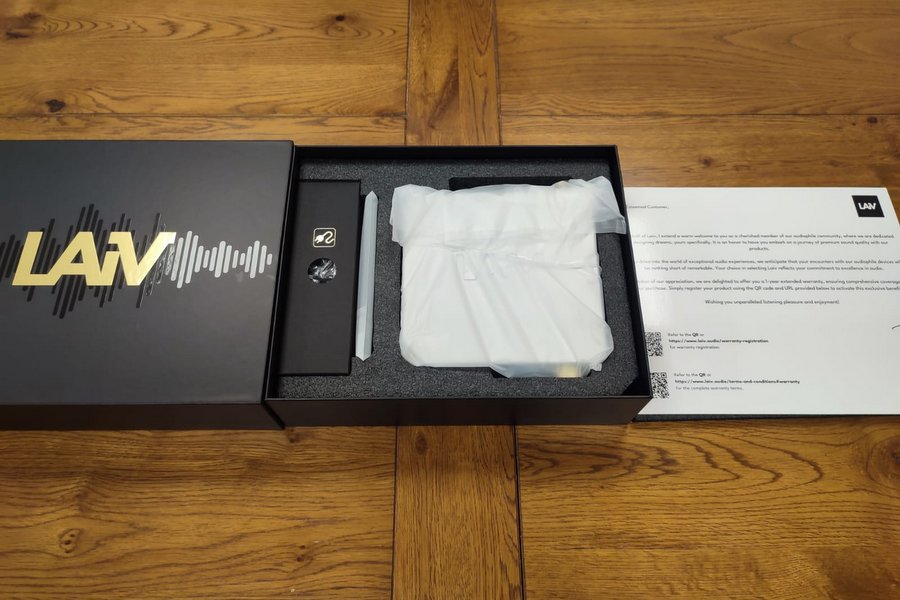
The Crescendo VERSE also includes an integrated sampling rate converter, allowing PCM files to be upsampled by 1x, 2x, 4x, 8x, or even 16x. DSD can likewise be resampled to DSD64, 128, 256, and 512 when operating in native DSD mode, giving users a fair amount of flexibility depending on how they prefer their digital processing handled.
Beyond the DAC section, LAiV has built this as a true all-in-one unit, incorporating a headphone amplifier alongside a discrete, output buffered preamplifier for use with power amplifiers or active speakers. Switching between modes and functions is handled via the included remote or the front panel controls. Operation is generally smooth, although the 20 by 7 dot matrix display limits how much information can be shown at once, which makes menu navigation less intuitive than it should be.
On the amplification side, the headphone stage delivers up to 1.1 watts and 11 Vrms in high gain. That is not class leading on paper, but it is sufficient for the vast majority of headphones. Medium and low gain settings are also available, making it flexible enough for more sensitive headphones and IEMs without introducing unnecessary noise.
It is not a power focused design, and that feels intentional. More power does not automatically translate into better sound quality. What matters is how it performs where it counts, which we will get into in the listening section. But first, let’s take a closer look at the build quality.

Design & Build
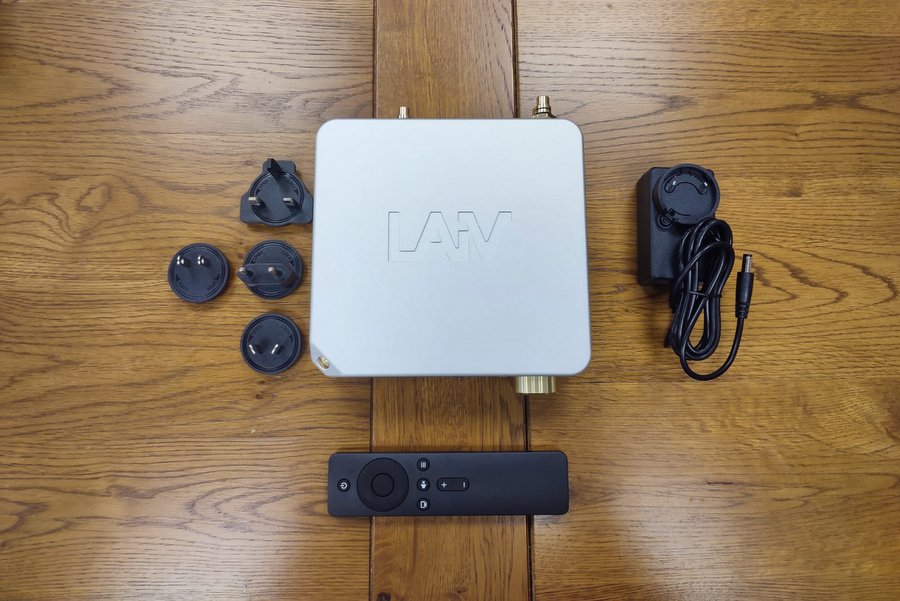
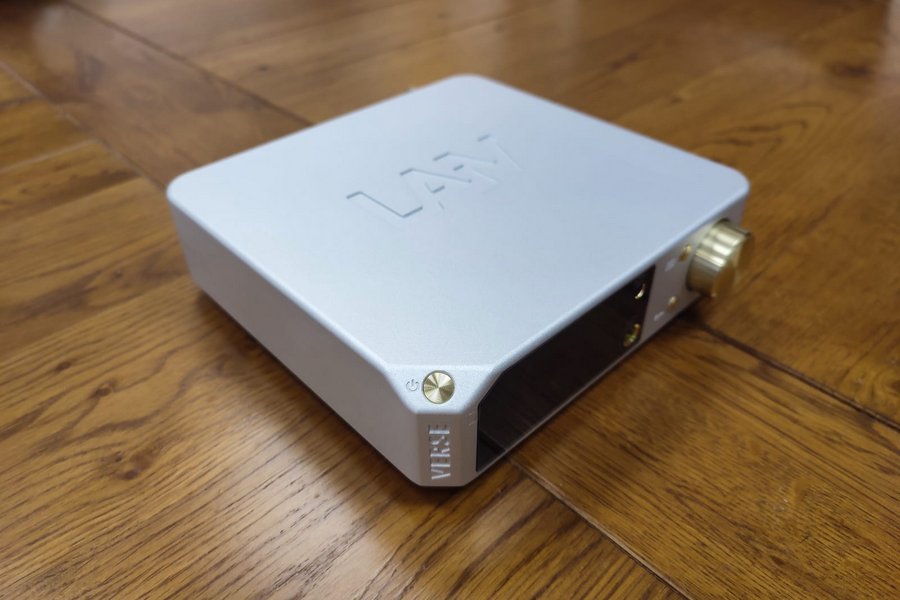
The LAiV Crescendo VERSE leans heavily into premium territory when it comes to build quality and materials. The chassis is machined from anodised aluminium, and the front LED display sits behind a sheet of tempered glass that adds a bit of polish without feeling overdone.
There are two finishes available: ebony black with gold accents, or sterling silver with gold buttons and knobs. The latter is what we have in for review, and it looks exactly like what LAiV is going for—angular, slightly industrial, but with enough refinement to avoid looking like lab equipment. It feels intentional rather than flashy.
Its compact footprint helps. Measuring 188 x 168 x 50 mm (7.4 x 6.6 x 2.0 inches), the Crescendo VERSE does not dominate a desk, which makes it a far easier fit in smaller setups or cleaner, more minimalist spaces. Not everyone wants a full-width component staring them down while they work.
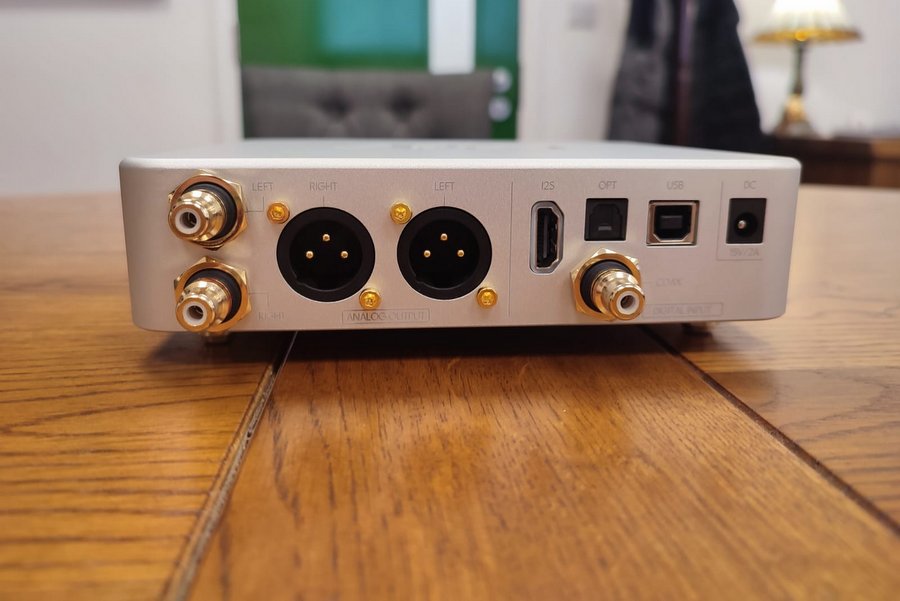
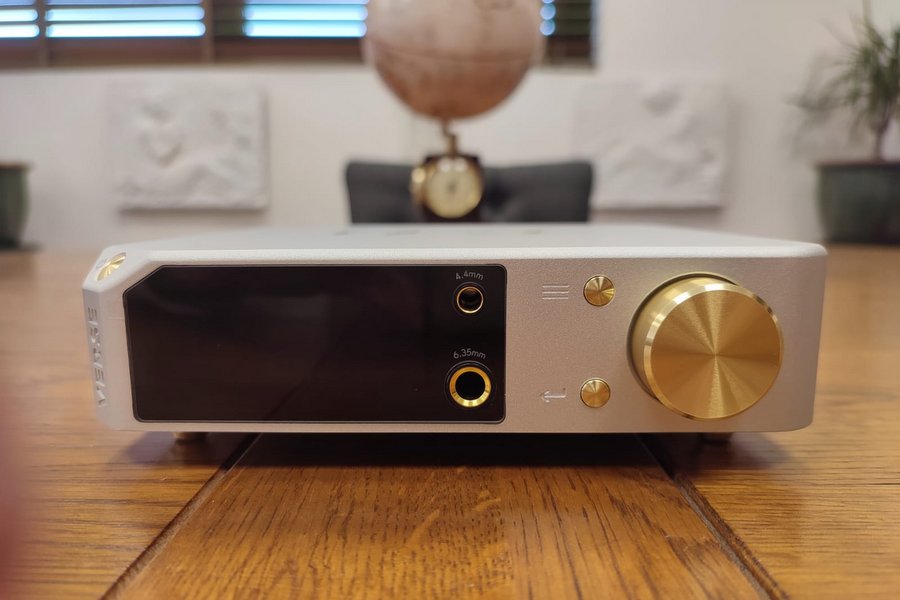
Despite the smaller size, connectivity is not an afterthought. Up front, you get both a 6.35 mm (quarter inch) and 4.4 mm balanced headphone output. Around the back, there is a full set of RCA and XLR outputs, along with four digital inputs: USB, coaxial, optical, and I2S. Power is handled via an external supply, which makes sense given the size. There was no realistic way to keep the unit this compact and fit everything internally without compromise.
Back on the front panel, volume is controlled via an analog knob with a smooth, well-damped feel that avoids being overly loose or stiff. The included remote works as expected, although LAiV skips the small courtesy of including AAA batteries. Not a deal breaker, but it is the kind of detail you notice when everything else is this well executed.
Listening & Headphone Synergy
The LAiV Crescendo VERSE was used both as a complete DAC and headphone amplifier and as a standalone DAC paired with several external headphone amplifiers. Source material ranged from Spotify streams to high resolution FLAC files, with listening done across a wide selection of headphones, including low impedance planar magnetics, high impedance dynamic drivers, and everything in between.
After several weeks of use, one thing became clear. Despite its R2R architecture, the Crescendo VERSE does not lean as warm as some might expect. Compared to other implementations, such as the FiiO K13 R2R, which noticeably softens the treble on something like the Beyerdynamic DT880 Edition 600 Ohm, the LAiV takes a more balanced approach. It does not round off the top end to the same degree, which will likely come as a surprise to those expecting a traditionally rich and forgiving R2R presentation.
What it does deliver is a sense of fullness and flow that feels cohesive rather than exaggerated. There is a natural ease to the way it presents music, with instruments and vocals coming across as grounded and unforced. It avoids sounding clinical without tipping too far into coloration, which is not always an easy balance to strike. R2R designs are often praised for this kind of presentation, and while not every implementation gets it right, the Crescendo VERSE makes a convincing case for why the topology still has a following.
Starting at the low end, the Crescendo VERSE reaches deep and maintains good control, even if it stops short of being the most hard-hitting or visceral option under $1,000. What stands out more is texture. Bass notes have shape and definition, giving lines a sense of weight without turning them into a blunt instrument. On Jadu Heart’s “Woman,” the low, guttural guitar work comes through with a satisfying sense of density and presence rather than sheer slam.
That same sense of body carries into the midrange, where the Crescendo VERSE does its best work. Vocals, both male and female, are presented with a natural sense of scale and focus that draws attention without feeling pushed forward. On “Alaska” by Portair, Drew Southwell’s breathy delivery cuts through cleanly, but there is still enough weight behind it to avoid sounding thin. It manages to stay clear and articulate without tipping into harshness, which is not always a given at this price.
Treble is handled with restraint, but in a way that feels intentional rather than rolled off. There is enough energy to resolve detail and maintain separation, but peaks are kept in check, especially with more aggressive headphones. The result is a presentation that leans relaxed and listenable over long sessions, without losing the finer details that give recordings their sense of air and nuance. Just keep the volume in check, unless fatigue is part of the plan.
As an example, I sometimes find the HiFiMAN HE1000 Unveiled a bit too forward in the treble with certain tracks, including L’Impératrice’s “La lune.” Through the Crescendo VERSE, that edge was dialed back just enough to make the synths easier to live with, without stripping away their detail or energy.
In terms of pairing, the Crescendo VERSE handled most headphones without complaint, from low impedance planars to high impedance dynamic designs. Where it begins to show its limits is with more demanding planar magnetics. Headphones like the HiFiMAN HE6se V2 need more current than the internal amplifier can comfortably provide. Paired with an external amplifier like the Aune S17 Pro, however, the Crescendo VERSE steps into a different role and performs exceptionally well. The Class A design of the S17 Pro complements the DAC’s more organic presentation, resulting in a combination that feels both controlled and musically engaging.
Imaging and soundstage are clear strengths. The Crescendo VERSE presents a well organized, layered soundstage where instruments and vocals are placed with precision rather than smeared across the field. There is a convincing sense of separation between elements, which helps complex recordings retain their structure. On TOOL’s “Chocolate Chip Trip,” a track that can quickly turn into a mess on lesser gear, individual sounds remain distinct and easy to follow, with each layer occupying its own space without collapsing into the next.
The Bottom Line
The LAiV Crescendo VERSE gets a lot right for a first attempt at an all in one in this price range. Build quality is excellent, the design feels considered rather than decorative, and the feature set covers just about everything most users will need, from flexible digital inputs to balanced outputs and a capable preamp stage. The R2R DAC implementation is the real differentiator. It delivers a sound that is full, controlled, and natural without leaning too warm or soft, which helps it stand apart from both typical delta sigma designs and more colored R2R alternatives.
It is not without limitations. The internal headphone amplifier is good, but not class leading in terms of raw power, and demanding planar headphones will still benefit from an external amp. The interface, while functional, could be more intuitive, and native DSD playback comes with minor usability quirks. None of these are deal breakers, but they are worth noting in a category where the competition is deep and well established.
What makes the Crescendo VERSE compelling is how complete it feels. It is not trying to win on specs alone or overwhelm with features. Instead, it offers a refined, well integrated solution that prioritizes sound quality and usability in equal measure.
This is for listeners who want a compact, well built desktop hub that can anchor a serious headphone or small speaker system without turning their desk into a rack system. If you value a more natural presentation and do not need extreme power on tap, the Crescendo VERSE makes a strong case for itself in a crowded field.
Pros:
- Excellent build quality with anodised aluminium chassis and premium finish options
- Compact footprint that fits easily into desktop and minimalist setups
- R2R DAC delivers a natural, cohesive, and non-fatiguing sound
- Strong imaging and layering with a well-defined soundstage
- Flexible connectivity including USB, coaxial, optical, I2S, RCA, and XLR
- Integrated preamplifier adds real system versatility
- Good gain range for a wide variety of headphones and IEMs
Cons:
- Headphone amplifier lacks the power for more demanding planar magnetics
- Menu system and display are not the most intuitive to navigate
- Native DSD playback can introduce occasional pops between tracks
- No internal power supply, relies on an external brick
- Competitive segment with strong alternatives from established brands
You must be logged in to post a comment Login