Connect with us
DAPA Banner

Tech

LAiV Crescendo VERSE Review: Chapter and Verse on This All-in-One DAC, Preamp, and Headphone Amplifier

Published

on

LAiV is a relatively new name, founded in Singapore in 2023, but the brand has moved quickly with a growing lineup of design forward, higher end components. The LAiV Crescendo VERSE marks a shift in strategy, arriving as a compact all-in-one DAC, preamplifier, and headphone amplifier priced at $849 and aimed squarely at a far more competitive segment of the market. That puts it head to head with established players like FiiO, Shanling, Topping, Schiit Audio, Eversolo, and TEAC, brands that have spent years refining affordable desktop systems that do not feel compromised.

The question is not whether LAiV can design something that looks the part. It already has. The real issue is whether the Crescendo VERSE can deliver the performance, features, and reliability expected at this price in a category where excuses do not last very long.

Technology & Specifications

The DAC section of the Crescendo VERSE is built around an R2R ladder topology, a design approach often associated with a more natural tonal balance and a less processed presentation. In simple terms, it relies on a network of precision resistors arranged in a ladder configuration, switching between R and 2R values to convert digital data into an analog voltage signal.

On paper, R2R designs do not usually win the measurement game against delta-sigma DACs, but LAiV has clearly made an effort to keep the numbers respectable. The Crescendo VERSE posts 0.008% THD+N, signal to noise ratio above 110 dB, and less than 30 µVrms of noise from the balanced headphone output. That level of performance is supported by tightly matched resistors with tolerances below 0.05 percent, which is not something every manufacturer bothers to implement at this price.

Advertisement

In terms of format support, the DAC handles up to 768 kHz PCM and DSD256, with native 1-bit DSD processing that avoids unnecessary conversion. The tradeoff is that switching between sample rates or encoding types can introduce occasional pops between tracks. If that becomes distracting, switching to Multibit mode for PCM playback eliminates the issue and allows for smoother transitions without interrupting the listening experience.

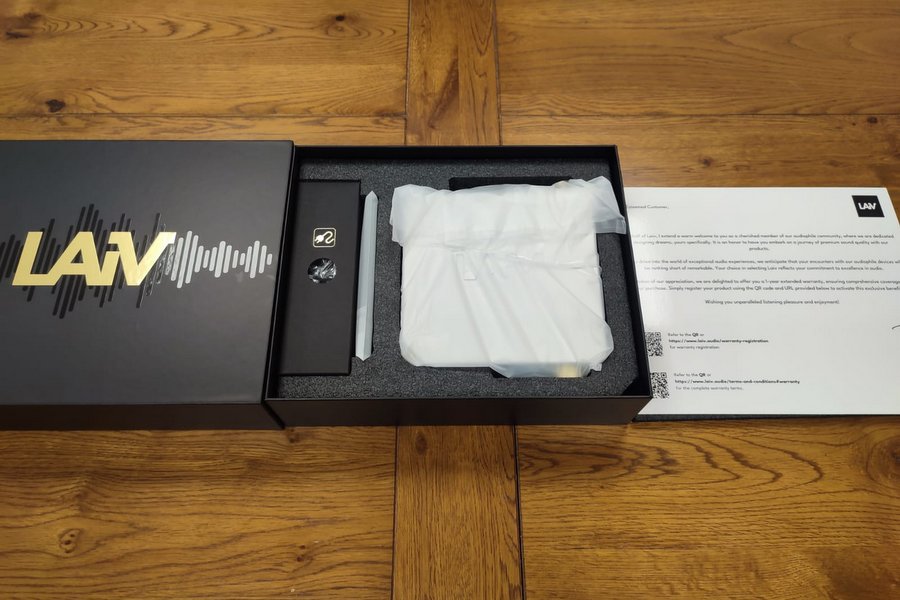
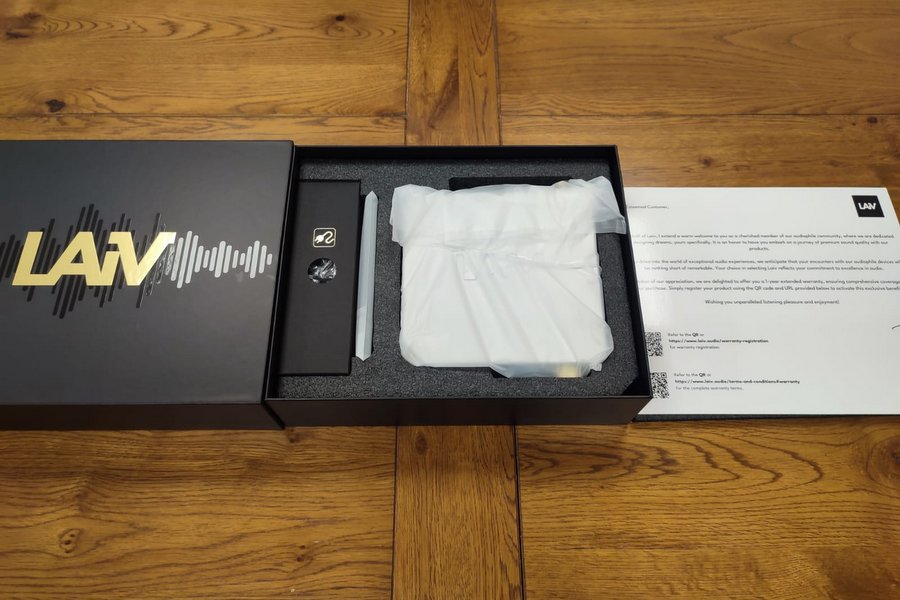
verse8

The Crescendo VERSE also includes an integrated sampling rate converter, allowing PCM files to be upsampled by 1x, 2x, 4x, 8x, or even 16x. DSD can likewise be resampled to DSD64, 128, 256, and 512 when operating in native DSD mode, giving users a fair amount of flexibility depending on how they prefer their digital processing handled.

Beyond the DAC section, LAiV has built this as a true all-in-one unit, incorporating a headphone amplifier alongside a discrete, output buffered preamplifier for use with power amplifiers or active speakers. Switching between modes and functions is handled via the included remote or the front panel controls. Operation is generally smooth, although the 20 by 7 dot matrix display limits how much information can be shown at once, which makes menu navigation less intuitive than it should be.

On the amplification side, the headphone stage delivers up to 1.1 watts and 11 Vrms in high gain. That is not class leading on paper, but it is sufficient for the vast majority of headphones. Medium and low gain settings are also available, making it flexible enough for more sensitive headphones and IEMs without introducing unnecessary noise.

It is not a power focused design, and that feels intentional. More power does not automatically translate into better sound quality. What matters is how it performs where it counts, which we will get into in the listening section. But first, let’s take a closer look at the build quality.

Advertisement
verse7

Design & Build

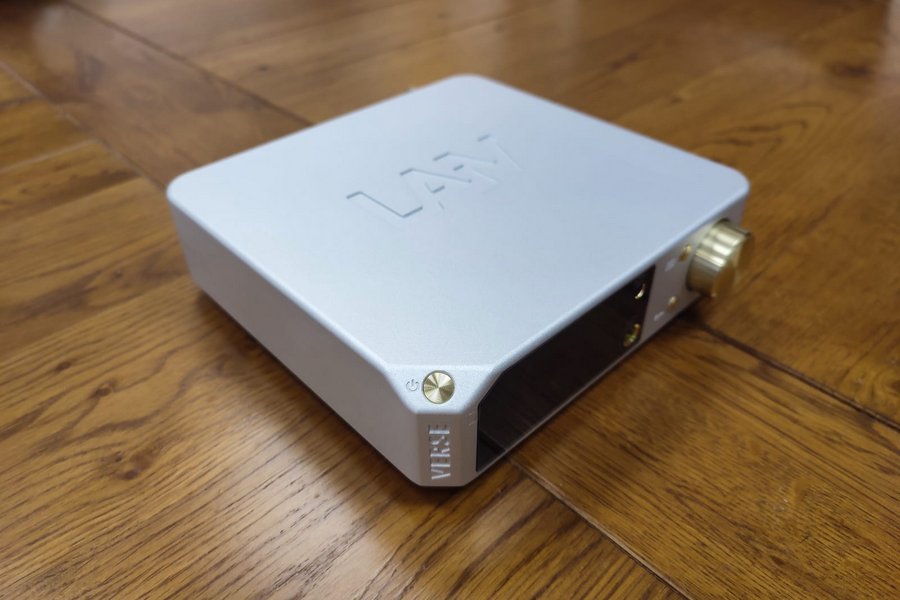
The LAiV Crescendo VERSE leans heavily into premium territory when it comes to build quality and materials. The chassis is machined from anodised aluminium, and the front LED display sits behind a sheet of tempered glass that adds a bit of polish without feeling overdone.

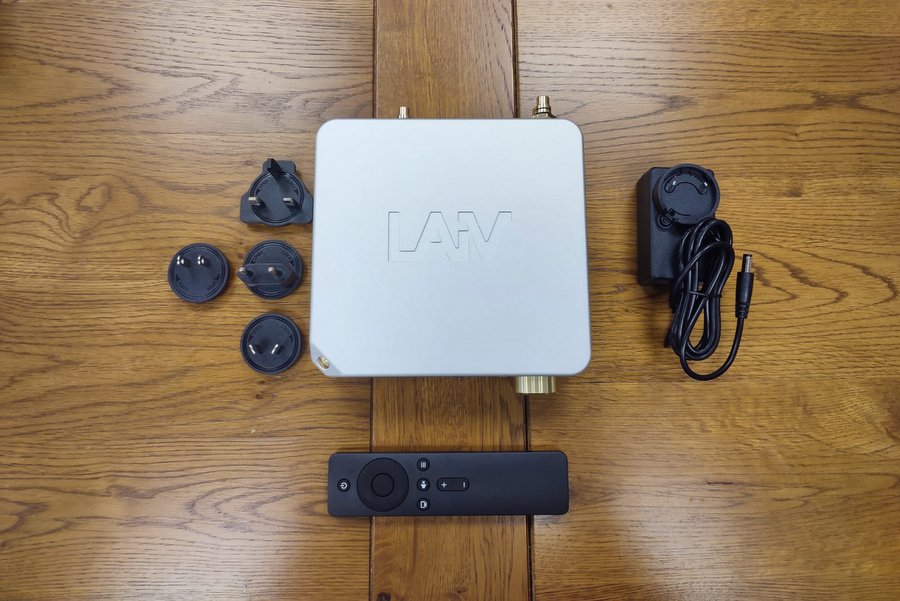
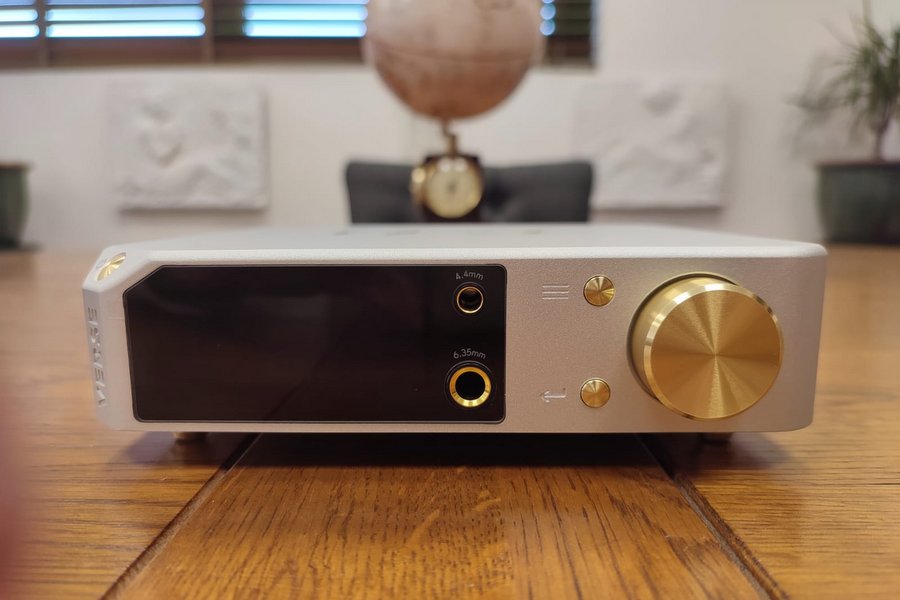
There are two finishes available: ebony black with gold accents, or sterling silver with gold buttons and knobs. The latter is what we have in for review, and it looks exactly like what LAiV is going for—angular, slightly industrial, but with enough refinement to avoid looking like lab equipment. It feels intentional rather than flashy.

Advertisement. Scroll to continue reading.

Its compact footprint helps. Measuring 188 x 168 x 50 mm (7.4 x 6.6 x 2.0 inches), the Crescendo VERSE does not dominate a desk, which makes it a far easier fit in smaller setups or cleaner, more minimalist spaces. Not everyone wants a full-width component staring them down while they work.

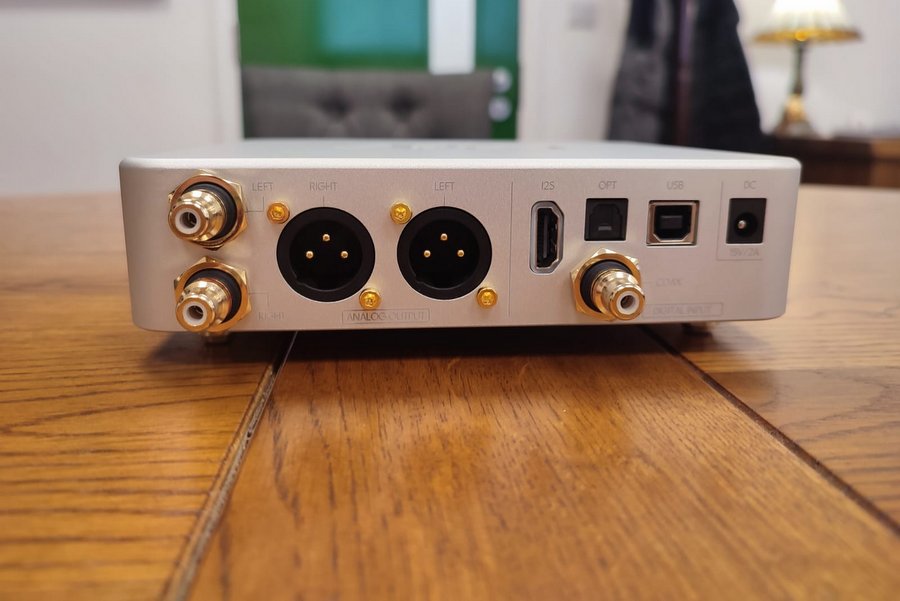
Despite the smaller size, connectivity is not an afterthought. Up front, you get both a 6.35 mm (quarter inch) and 4.4 mm balanced headphone output. Around the back, there is a full set of RCA and XLR outputs, along with four digital inputs: USB, coaxial, optical, and I2S. Power is handled via an external supply, which makes sense given the size. There was no realistic way to keep the unit this compact and fit everything internally without compromise.

Advertisement

Back on the front panel, volume is controlled via an analog knob with a smooth, well-damped feel that avoids being overly loose or stiff. The included remote works as expected, although LAiV skips the small courtesy of including AAA batteries. Not a deal breaker, but it is the kind of detail you notice when everything else is this well executed.

verse2

Listening & Headphone Synergy

The LAiV Crescendo VERSE was used both as a complete DAC and headphone amplifier and as a standalone DAC paired with several external headphone amplifiers. Source material ranged from Spotify streams to high resolution FLAC files, with listening done across a wide selection of headphones, including low impedance planar magnetics, high impedance dynamic drivers, and everything in between.

After several weeks of use, one thing became clear. Despite its R2R architecture, the Crescendo VERSE does not lean as warm as some might expect. Compared to other implementations, such as the FiiO K13 R2R, which noticeably softens the treble on something like the Beyerdynamic DT880 Edition 600 Ohm, the LAiV takes a more balanced approach. It does not round off the top end to the same degree, which will likely come as a surprise to those expecting a traditionally rich and forgiving R2R presentation.

What it does deliver is a sense of fullness and flow that feels cohesive rather than exaggerated. There is a natural ease to the way it presents music, with instruments and vocals coming across as grounded and unforced. It avoids sounding clinical without tipping too far into coloration, which is not always an easy balance to strike. R2R designs are often praised for this kind of presentation, and while not every implementation gets it right, the Crescendo VERSE makes a convincing case for why the topology still has a following.

verse5

Starting at the low end, the Crescendo VERSE reaches deep and maintains good control, even if it stops short of being the most hard-hitting or visceral option under $1,000. What stands out more is texture. Bass notes have shape and definition, giving lines a sense of weight without turning them into a blunt instrument. On Jadu Heart’s “Woman,” the low, guttural guitar work comes through with a satisfying sense of density and presence rather than sheer slam.

That same sense of body carries into the midrange, where the Crescendo VERSE does its best work. Vocals, both male and female, are presented with a natural sense of scale and focus that draws attention without feeling pushed forward. On “Alaska” by Portair, Drew Southwell’s breathy delivery cuts through cleanly, but there is still enough weight behind it to avoid sounding thin. It manages to stay clear and articulate without tipping into harshness, which is not always a given at this price.

Advertisement

Treble is handled with restraint, but in a way that feels intentional rather than rolled off. There is enough energy to resolve detail and maintain separation, but peaks are kept in check, especially with more aggressive headphones. The result is a presentation that leans relaxed and listenable over long sessions, without losing the finer details that give recordings their sense of air and nuance. Just keep the volume in check, unless fatigue is part of the plan.

As an example, I sometimes find the HiFiMAN HE1000 Unveiled a bit too forward in the treble with certain tracks, including L’Impératrice’s “La lune.” Through the Crescendo VERSE, that edge was dialed back just enough to make the synths easier to live with, without stripping away their detail or energy.

In terms of pairing, the Crescendo VERSE handled most headphones without complaint, from low impedance planars to high impedance dynamic designs. Where it begins to show its limits is with more demanding planar magnetics. Headphones like the HiFiMAN HE6se V2 need more current than the internal amplifier can comfortably provide. Paired with an external amplifier like the Aune S17 Pro, however, the Crescendo VERSE steps into a different role and performs exceptionally well. The Class A design of the S17 Pro complements the DAC’s more organic presentation, resulting in a combination that feels both controlled and musically engaging.

Imaging and soundstage are clear strengths. The Crescendo VERSE presents a well organized, layered soundstage where instruments and vocals are placed with precision rather than smeared across the field. There is a convincing sense of separation between elements, which helps complex recordings retain their structure. On TOOL’s “Chocolate Chip Trip,” a track that can quickly turn into a mess on lesser gear, individual sounds remain distinct and easy to follow, with each layer occupying its own space without collapsing into the next.

Advertisement
Advertisement. Scroll to continue reading.

The Bottom Line

The LAiV Crescendo VERSE gets a lot right for a first attempt at an all in one in this price range. Build quality is excellent, the design feels considered rather than decorative, and the feature set covers just about everything most users will need, from flexible digital inputs to balanced outputs and a capable preamp stage. The R2R DAC implementation is the real differentiator. It delivers a sound that is full, controlled, and natural without leaning too warm or soft, which helps it stand apart from both typical delta sigma designs and more colored R2R alternatives.

It is not without limitations. The internal headphone amplifier is good, but not class leading in terms of raw power, and demanding planar headphones will still benefit from an external amp. The interface, while functional, could be more intuitive, and native DSD playback comes with minor usability quirks. None of these are deal breakers, but they are worth noting in a category where the competition is deep and well established.

verse4

What makes the Crescendo VERSE compelling is how complete it feels. It is not trying to win on specs alone or overwhelm with features. Instead, it offers a refined, well integrated solution that prioritizes sound quality and usability in equal measure.

This is for listeners who want a compact, well built desktop hub that can anchor a serious headphone or small speaker system without turning their desk into a rack system. If you value a more natural presentation and do not need extreme power on tap, the Crescendo VERSE makes a strong case for itself in a crowded field.

Advertisement

Pros:

  • Excellent build quality with anodised aluminium chassis and premium finish options
  • Compact footprint that fits easily into desktop and minimalist setups
  • R2R DAC delivers a natural, cohesive, and non-fatiguing sound
  • Strong imaging and layering with a well-defined soundstage
  • Flexible connectivity including USB, coaxial, optical, I2S, RCA, and XLR
  • Integrated preamplifier adds real system versatility
  • Good gain range for a wide variety of headphones and IEMs

Cons:

  • Headphone amplifier lacks the power for more demanding planar magnetics
  • Menu system and display are not the most intuitive to navigate
  • Native DSD playback can introduce occasional pops between tracks
  • No internal power supply, relies on an external brick
  • Competitive segment with strong alternatives from established brands

Where to buy:

Source link

Continue Reading
Click to comment

You must be logged in to post a comment Login

Leave a Reply

Tech

Whatever you do, don’t buy this model of Samsung Galaxy A57

Published

on

The Samsung Galaxy A57 is a distinctly mid-range smartphone – and I don’t mean that as an insult. 

The Galaxy A57 separates itself from much of the mid-range competition with a particularly premium glass and aluminium build that’s both thinner and lighter this year, along with Samsung’s polished One UI 8.5 software, a smattering of new AI features and a much longer OS upgrade promise, making the £529 price tag for the entry-level 256GB model much easier to swallow.

However, it’s not exactly the perfect phone – the focus on a premium build has meant sacrifices in other areas. 

The 6.7-inch Super AMOLED screen, for example, has slimmer bezels, but they’re still not symmetrical like those on the cheaper Honor 400, while the camera setup leaves much to be desired. 

Advertisement

The 50MP main camera is fairly well-specced for the price, but the accompanying 12MP ultrawide and 5MP macro lenses have all but been outshone by the competition, particularly the Nothing Phone 4a Pro, which is both cheaper and boasts higher-res, more advanced lenses. Really, you’d expect to find those secondary lenses on something in the sub-£300 market from any other brand.

Advertisement

Samsung Galaxy A57 5GSamsung Galaxy A57 5G
Image Credit (Trusted Reviews)

It’s also not exactly a performance beast, featuring Samsung’s distinctly mid-range Exynos 1680 chipset and 8GB of RAM. It’s fine for day-to-day use in early testing, but it can’t hold a candle to the flagship-level A19 chipset in the iPhone 17e, nor to the Snapdragon 8 Elite in the Poco F8 Pro. 

But, again, at £529, you can kind of accept those shortcomings. It’s not a full-fat flagship, after all, and most mid-rangers have a particular ‘focus’, be it camera hardware, design or performance, where other areas take a hit to get to the price point.

However, that metric changes completely when you look at the 512GB/12GB model, which rather inexplicably, costs £699. 

Advertisement
Display on Samsung Galaxy A57Display on Samsung Galaxy A57
Image Credit (Trusted Reviews)

That’s £170 more, for 4GB more RAM and an additional 256GB of storage, the former of which you probably won’t notice all that often in everyday use. £699 isn’t mid-range – that’s premium,  almost flagship-level money, and the A57’s shortcomings are much harder to forgive at that price point. What I’m trying to say is, avoid that model at all costs.  

Advertisement

Much better options available at the price

For £699, there are plenty of more capable phones than the Galaxy A57 available to you – case in point, Samsung’s own Galaxy S25 FE. The phone comes in at £649, and while you don’t get the same 512GB of storage as the A57, you do get much more bang for your buck in other areas.

The phone has a 6.7-inch AMOLED screen with an LTPO-enabled 120Hz refresh rate and those all-important symmetrical bezels, along with better performance from the Exynos 2400 chipset and nice extras like wireless charging – all for £50 less than the A57.

It’s even harder to vouch for the Galaxy A57 once you look beyond Camp Samsung at the price point. That’ll net you a phone like the £649 OnePlus 15R with its bigger, faster 6.8-inch 165Hz AMOLED screen, a much more powerful Snapdragon 8 Gen 5 processor, a frankly massive 7400mAh battery and similarly rapid 80W charging.

Advertisement
OnePlus 15R in handOnePlus 15R in hand
Image Credit (Trusted Reviews)

There’s also the £699 Motorola Edge 70, and while it doesn’t offer much of an uptick in the performance department, it’s impressively thin and light at 6mm and 159g, making it one of the slimmest options on the market – and complete with a relatively big 4800mAh battery and a gorgeous 6.7-inch 120Hz AMOLED screen.

Motorola Edge 70 on a tableMotorola Edge 70 on a table
Image Credit (Trusted Reviews)

Advertisement

Xiaomi’s 15T Pro is another solid alternative, coming in at £649. It packs not only the flagship-level Dimensity 9400+ chipset but also a premium camera setup comprising a 50MP main with a large 1/1.3-inch sensor, a 50MP 5x periscope, and a 12MP ultrawide, along with a 6.8-inch 144Hz AMOLED display that’ll give some of the best around a run for its money. 

Xiaomi 15T ProXiaomi 15T Pro
Xiaomi 15T Pro Image Credit (Trusted Reviews)

In fact, you can even get proper flagship-level phones for the price. The Nothing Phone 3 cost £799 at release in late 2025, but at the time of writing, it’s available for just £559 at Amazon with 256GB of storage and 12GB of RAM – and you’re getting a much more capable phone than the Galaxy A57, with change to spare.

Nothing Phone 3 backNothing Phone 3 back
Image Credit (Trusted Reviews)

You’re getting oodles of power in the form of the Snapdragon 8s Gen 4, along with a proper high-end 6.6-inch screen with an LTPO-enabled 120Hz refresh rate and a peak brightness of 4500nits, a solid camera combination comprised of triple 50MP main, ultrawide and 3x periscope lenses, and to top it all off, Nothing’s stylish Nothing OS experience. 

And that’s not even mentioning the design, with the Phone 3 offering one of the most unique looks of any smartphone around right now. 

Advertisement

Frankly, the Galaxy A57 pales in comparison to any of these phones, and you’d be much better off with those than the overly expensive 512GB model. 

Advertisement

It’s likely down to the spiralling cost of RAM

But why is the 512GB Galaxy A57 so much more expensive than the 256GB model? While Samsung hasn’t confirmed it outright, I’d expect that it all comes down to the rapidly increasing cost of components, particularly storage and RAM. 

Since the price of RAM skyrocketed in the second half of 2025, driven mainly by AI data centres hoovering up as much RAM as possible, reports and leaks have suggested that mobile manufacturers would essentially pass that cost on to consumers. And that’s what’s starting to happen. It’s not the first phone we’ve seen with a notable price jump compared to its 2025 equivalent – though the other example is, once again, from Samsung. 

Samsung Galaxy S26 Ultra on a tableSamsung Galaxy S26 Ultra on a table
Image Credit (Trusted Reviews)

The Samsung Galaxy S26 has jumped to £879, an £80 increase on last year’s Galaxy S25, while the S26 Plus comes in at £1099, a £100 difference compared to the S25 Plus – and with very few upgrades to speak of. The only model that didn’t really see much of a price hike was the already-premium Galaxy S26 Ultra, which costs a similar £1,279 to last year’s S25 Ultra.

Advertisement

Samsung knows that the S26 Ultra would no doubt be the most popular in the range, so making it more expensive wasn’t really an option. Instead, the less popular models would cover much of that hit, especially for the larger storage options. The 512GB Galaxy S26, for example, costs £1049 – £170 more. 

Advertisement

It’s pretty much the same story here: Samsung has tried its best to keep the entry-level 256GB A57 model as affordable as possible and is trying to recoup additional cash from the 512GB/12GB model to offset any potential losses.

That makes sense for Samsung, but honestly, it makes zero sense for consumers to opt for it at such an inflated price – especially when more capable phones are available at the same price. 

Source link

Advertisement
Continue Reading

Tech

Apple might create an AI app store for Siri’s next avatar

Published

on

Apple’s AI strategy might be taking a very familiar turn, one that made the iPhone what it is today. As per Bloomberg’s recent report, Apple is working on a new “Extensions” system in iOS 27 that would allow third-party AI assistants to plug directly into Siri, including services like Google Gemini and Anthropic’s Claude.

More importantly, this won’t just be a hidden setting. Instead, Apple is reportedly planning a dedicated section inside the App Store for these AI integrations, effectively creating a marketplace for AI tools, very similar to how apps are distributed today.

What does this actually mean for Siri?

It’s a pretty massive shift. Instead of trying to build one perfect AI, Apple seems to be turning Siri into a hub or “router” for multiple AI models, letting users choose which assistant handles their queries. That means Siri could act as the front-end, while different AIs handle different tasks, one for writing, another for coding, another for research. It’s less “Siri vs ChatGPT” and more “Siri + everything.”

As things stand, Apple is reportedly pursuing a two-pronged strategy: building its own in-house AI (Apple Intelligence), while also opening the door to third-party services. This lets Apple stay competitive without relying on just one model. It also keeps users from jumping ship to Android.

There’s also a business angle here. By turning AI tools into something users can install via the App Store, Apple could take a cut of subscriptions, just like it does with apps today.

So… is Siri becoming the new App Store?

This could completely change how AI works on phones. Instead of relying on one assistant to do everything, Apple seems to be moving toward a modular setup where users can mix and match different AI tools based on what they need. And if this vision plays out, Siri won’t just be an assistant anymore, but a platform.

Advertisement

Source link

Continue Reading

Tech

iPhone hardware engineers allegedly get bonuses as Apple tries to prevent poaching

Published

on

Keen to stop other companies from poaching its engineers, Apple has reportedly approved substantial bonuses for its iPhone hardware engineers.

iPhone 17e pink held in hand in front of a planter filled with colorful flowers
Apple has allegedly approved new bonuses for its iPhone hardware team.

Talk of an AI brain drain at Apple continues even if it is difficult to determine exactly how individual departures affect the company. Over the years, Apple has lost various engineers to rival firms like OpenAI and Meta, with some even being lured in by a massive $200 million pay package.
Equally noteworthy is the departure of Abidur Chowdhury, the industrial designer behind the iPhone Air. He left Apple to become the design lead of an AI startup, which we later learned was known as Hawk AI.
Continue Reading on AppleInsider | Discuss on our Forums

Source link

Continue Reading

Tech

Shonen Knife Announces Expanded 2026 Tour Edition of “Our Best Place” With Bonus Tracks and New Dates

Published

on

In times like these, it’s refreshing to hear new music from a band that still delivers exactly what made them worth following in the first place. That’s the case with Our Best Place, the recent album from Japan’s long running all female power pop punk outfit, Shonen Knife.

shonen-knife-band-jumping

First released in 2023, the album earned strong praise from fans and critics alike. Now, ahead of a 2025 to 2026 U.S. tour with Toad the Wet Sprocket and Men at Work, the band is issuing an expanded edition featuring additional content and an alternate cover design.

“Our Best Place which was released in 2023 became a representative album of Shonen Knife,” says Naoko, founding member and lead vocalist. “It includes many of our punk pop songs. The 2025 vinyl version has fabulous embroidered artwork and will [be] a collector’s item for our fans! “Not only that, I hope this vinyl release will be a good opportunity for other people to know our music!”

shonen-knife-our-best-place-cover-art

While I can’t claim to have been following every step of the band’s career — I became a fan when I purchased their brilliant holiday 45 RPM single “Space Christmas” around the time of its release in the early 1990s (and I still have it and play it each year!) — every Shonen Knife album I’ve picked up randomly over the years has been great fun.

For those of you not familiar with Shonen Knife’s sound, this group effectively bridges the gap between The Ramones and The Ronettes via Osaka, Japan.

shonen-knife-our-best-place-cover-limited

A quick look at the track list reveals one of the running themes in Shonen Knife’s universe: food. “Spicy Veggie Curry” might be the best vegetarian punk rock song you didn’t know you needed. “Afternoon Tea” is not the Something Else by The Kinks cut, but you get the sense Ray Davies would appreciate the spirit. “The Story of Baumkuchen” dives into the German “tree cake” that found a second home in Japan, delivered with a quirky charm that oddly recalls Guided By Voices. And then there’s “Vamos Taquitos,” where acoustic strumming collides with a wall of fuzzy, overdriven electric guitars, and somehow it all works.

But its not all food puns here. “Just A Smile” is a great power pop cover tune, originally recorded by Scotland’s Pilot (of the hit “Magic” fame).

Advertisement
shonen-knife-band

Our Best Place now includes four additional songs: “Nice Day (‘60s Mix),” “The Story of Baumkuchen (Japanese Version),” “Girls Rock (2023 Japanese Version)” and “Green Tea (2025 Naoko Vocal Version).” 

The bonus 60’s mix of “Nice Day” is a hysterical concept which audiophiles of a certain vintage will appreciate as it places all vocals in one channel and the whole band backing track is in the other — ultra extreme early stereo! 

Our Best Place comes pressed on crystal clear vinyl that is well centered and happily very quiet. You can order the CD version with the original cover design for $19.99 at Amazon. It is also available at their Bandcamp page for about $15.95. 

shonen-knife-our-best-place-cd-cover

As far as getting your hands on the vinyl, as far as I can tell it is presently only available at their concerts but some online sources indicate it will be made available online later in the year after the tour. I have inquired with the band’s PR team and if/when we get additional information I’ll be sure to update this section accordingly. 

Advertisement. Scroll to continue reading.

That said, what are you waiting for? Go see Shonen Knife live and grab the album at the merch table while you’re there. Here’s their current tour itinerary. And yes… let’s knife.

Advertisement
shonen-knife-us-tour-dates-2026

Mark Smotroff is a deep music enthusiast / collector who has also worked in entertainment oriented marketing communications for decades supporting the likes of DTS, Sega and many others. He reviews vinyl for Analog Planet and has written for Audiophile Review, Sound+Vision, Mix, EQ, etc. You can learn more about him at LinkedIn.

Source link

Continue Reading

Tech

Hide My Email is great for battling surveillance capitalism, not the FBI

Published

on

Apple’s Hide My Email service lets users generate anonymous, randomized email addresses to help avoid spam, but it isn’t going to protect you from subpoenas — especially if you threaten the FBI directly.

The camera plateau of the iPhone 17 Pro Max in blue
Apple encryption and services can only protect you from so much

End-to-end encryption ensures that your data remains yours on-device and in transit. This applies to things like iMessage and Apple Health, especially when Advanced Data Protection is turned on.
However, that doesn’t mean Apple won’t comply with a subpoena when it is presented with one that fits the scope of the request. Hide My Email might help protect users from spam, but if you’re emailing threats to the FBI director’s girlfriend, there’s nothing to protect you.
Continue Reading on AppleInsider | Discuss on our Forums

Source link

Continue Reading

Tech

Avatar Legends: The Fighting Game comes out in July and it looks pretty slick

Published

on

Avatar fans, this one’s been a long time coming, and it finally has a release date. Announced in a new trailer at the Evo Awards on Saturday, Avatar Legends: The Fighting Game officially drops on July 2, 2026.

The game is coming to pretty much everything, including PS5, Xbox Series X/S, Switch (including Switch 2), and PC. It’ll launch with 12 playable characters, alongside multiple modes like Story, Arcade, Training, and full online multiplayer with ranked and casual play. As for what kind of game it is, think classic 2D fighter… but with bending.

Why does Avatar Legends look so promising?

Avatar Legends is a 1v1 fighting game built around elemental combat, letting players control fan-favorite characters from both Avatar: The Last Airbender and The Legend of Korra. It features hand-drawn 2D animation, which honestly looks straight out of the show, and a unique “Flow System” that focuses on movement, positioning, and expressive combat rather than just button mashing. There’s also a support character system, meaning fights aren’t just about your main pick. You can even tweak your playstyle with assist abilities and special moves.

However, the best part about this game is that it’s not just coasting on nostalgia. The devs are clearly targeting both casual players and fighting game enthusiasts, with features like rollback netcode and full cross-play, which are huge for competitive longevity. Add to that an original story mode and a planned roster expansion via DLC, and it feels like this could stick around for a while.

Advertisement

So… is this the Avatar game we’ve been waiting for?

Avatar Legends looks like it actually gets what makes the series click: fluid movement, expressive combat, and that signature bending chaos. Add in hand-drawn visuals, a solid 1v1 fighting system, and mechanics like the Flow System and support assists, and it’s shaping up to be more than just another licensed fighter.

And that’s the big deal here. This isn’t trying to reinvent the genre. Instead, it’s trying to belong in it, while staying true to Avatar’s identity. If everything clicks, this could easily become the go-to fighter for fans… and maybe even pull in players who’ve never watched the show.

Source link

Advertisement
Continue Reading

Tech

Best 360 Cameras (2026): DJI, Insta360, GoPro

Published

on

Top 5 360 Cameras Compared

Honorable Mentions

Two Insta360 cameras long rectangular black devices on a beachside rock.

Photograph: Scott Gilbertson

Insta360 X4 for $340: I’d recommend skipping this one unless you can get it on sale for under $300. The X4 Air is (usually) cheaper, smaller, and more capable, though the X4 does have a larger screen and the battery life is better (though again, the video quality is not as good as the X4 Air). If you can find a killer deal under $300, the X4 is worth nabbing. Otherwise though, stick with the X4 Air.

Advertisement

Qoocam 3 Ultra for $539: It’s not widely available, and we have not had a chance to try one, but Kandao’s Qoocam 3 Ultra is another 8K 360 camera that looks promising, at least on paper. The f/1.6 aperture is especially interesting, as most of the rest of these are in the f/2 and up range. We’ll update this guide when we’ve had a chance to test a Qoocam.

360 Cameras to Avoid

Insta360 One RS: Insta360’s interchangeable-lens action-camera/360-camera hybrid was a novel idea that just didn’t seem to catch on. Now it’s a bit dated. The video footage isn’t as good as the other cameras in this guide, but you can swap the lens and have an action camera in a moment, which is the major selling point. Ultimately I’d say skip this, get the X4 Air and if you want to use it like a GoPro, just shoot in single lens mode.

GoPro Max: You’ll still run across GoPro’s original Max sometimes, but again, there are better options.

Advertisement

Insta360 One X3: Insta360’s older X3 is not worth buying at this point.

Insta360 One RS 1 360 Edition: Although I still like and use this camera, it appears to have been discontinued, and there’s no replacement in sight. The X5 delivers better video quality in a lighter, less fragile body, but I will miss those 1-inch sensors that managed to pull a lot of detail, even if the footage did top out at 6K. These are still available used, but at outrageous prices. You’re better off with the X5.

Advertisement

Frequently Asked Questions

There are two reasons you’d want a 360-degree camera. The first is to shoot virtual reality content, where the final viewing is done on a 360 screen, e.g., VR headsets and the like. So far this is mostly the province of professionals who are shooting on very expensive 360 rigs not covered in this guide, though there is a growing body of amateur creators as well. If this is what you want to do, go for the highest-resolution camera you can get. Either of our top two picks will work.

For most of us though, the main appeal of a 360 camera is to shoot everything around you and then edit or reframe to the part of the scene we want to focus on, or panning and tracking objects within the 360 footage, but with the result being a typical, rectangular video that then gets exported to the web. The video resolution and image quality will never match what you get from a high-end DSLR, but the DSLR might not be pointed at the right place, at the right time. The 360 camera doesn’t have to be pointed anywhere, it just has to be on.

This is the best use case for the cameras on this page, which primarily produce HD (1080p) or better video—but not 4K—when reframed. I expect to see 12K-capable consumer-level 360 cameras in the next year or two (which is what you need to reframe to 4K), but for now, these are the best cameras you can buy.

Advertisement

Whether you’re shooting virtual tours or your kid’s birthday, the basic premise of a 360 camera is the same. The fisheye lens (usually two very wide-angle lenses combined) captures the entire scene around you, ideally editing out the selfie stick if you’re using one. Once you’ve captured your 360-degree view, you can then edit or reframe that content down to something ready to upload to YouTube, TikTok, and other video-sharing sites.

Why Is High Resolution Important in 360 Cameras?

Camera makers have been pushing ever-higher video resolution for so long it feel like a gimmick in many cases, but not with 360 cameras. Because the camera is capturing a huge field of view, the canvas if you will, is very large. To get a conventional video from that footage you have to crop which zooms in on the image, meaning your 8K 360 shot becomes just under 2.7K when you reframe that footage.

How Does “Reframing” Work?

Advertisement

Reframing is the process of taking the huge, 360-degree view of the world that your camera capture and zooming in on just a part of it to tell your story. This makes the 360 footage fit traditional movie formats (like 16:9), but as noted above it means cropping your footage, so the higher resolution you start with the better your reframed video will look.

If you’re shooting for VR headsets or other immersive tools, then you don’t have to reframe anything.

I’ve been shooting with 360 cameras since Insta360 released the X2 back in 2020. Early 360 cameras were fun, but the video they produced wasn’t high enough resolution to fit with footage from other cameras, limiting their usefulness. Thankfully we’ve come a long way in the last five years. The 360 camera market has grown and the footage these cameras produce is good enough to mix seamless with your action camera and even your high end mirrorless camera footage.

To test 360 cameras I’ve broken the process down into different shooting scenarios, especially scenes with different lighting conditions, to see how each performs. No camera is perfect, so which one is right for you depends on what you’re shooting. I’ve paid special attention to the ease of use of each camera (360 cameras can be confusing for beginners), along with what kind of helpful extras each offers, HDR modes, and support for accessories.

Advertisement

The final element of the picture is the editing workflow and tools available for each camera. Since most people are shooting for social media, the raw 360 footage has to be edited before you post it anywhere. All the cameras above have software for mobile, Windows and macOS.

Power up with unlimited access to WIRED. Get best-in-class reporting and exclusive subscriber content that’s too important to ignore. Subscribe Today.

Source link

Advertisement
Continue Reading

Tech

Stop holding out hope, Liquid Glass will be mandatory in iOS 27

Published

on

The Liquid Glass design that rolled out with iOS 26 isn’t going anywhere, according to a recount of an Apple Developer workshop.

Close-up of a modern smartphone screen showing blue app icons, the front camera pill-shaped cutout, time 4:20, SOS and WiFi indicators, on a textured gray fabric surface
Developers will be required to use Liquid Glass once Xcode 27 debuts.

With the debut of iOS 26 at WWDC 2025, Apple made significant alterations to the look and feel of the iPhone operating system. The fairly straightforward flat design, used from iOS 7 to iOS 18, was replaced with a more rounded, translucent aesthetic dubbed “Liquid Glass.”
Six months after launch, the new design language remains as divisive and controversial as ever, with developers in particular lacking adjustment options for Liquid Glass. Still, that doesn’t mean Liquid Glass will be abandoned anytime soon, and Apple has seemingly even said so outright.
Continue Reading on AppleInsider | Discuss on our Forums

Source link

Continue Reading

Tech

Save big with the INIU Spring Sale

Published

on

Spring is usually when plans start filling up again, from quick city breaks to longer outdoor trips, and it often highlights how quickly devices run out of power when you are away from a charger.

That is where INIU’s Spring Sale campaign becomes more compelling, with discounts applied across its portable charging range and the INIU Pocket Rocket P50 leading the offer, now reduced to £28.05 from £32.99 as its smallest and fastest everyday power solution.

A power bank built for moving around, not staying plugged in

The INIU Pocket Rocket P50 is designed around portability first, packing a 10,000mAh capacity into a compact form that is 45% more compact than standard models, making it small enough to slip into a pocket or lightweight travel bag.

Weighing around 160 grams, it is 63% lighter than the average power bank, which often feels bulky when you are already packing for a trip or commute, making it particularly useful for short trips, festivals, or long days out where extra weight quickly becomes noticeable alongside other essentials.

Advertisement

Charging performance is another key part of the appeal, with 45W fast charging allowing compatible devices to reach a significant percentage of battery in under half an hour.

In practical terms, the INIU Pocket Rocket P50 can fully charge your phone an average of two times. This gives you more time actually using them without worrying about conserving battery life, whether you are navigating, taking photos, or staying connected while travelling.

Advertisement

The INIU Pocket Rocket P50 is now under £30The INIU Pocket Rocket P50 is now under £30

The INIU Pocket Rocket P50 is now under £30

Advertisement

View Deal

Spring savings that go beyond a single product

The INIU Spring Sale campaign runs across both the official store and Amazon, covering a wide range of portable charging products rather than focusing on just one device.

Advertisement

Across the lineup, you can get up to 30% off, with additional tiered discounts applied automatically at checkout, including $5 off orders over $50, $10 off over $80, and $20 off over $100.

That structure makes it easier to pick up multiple essentials at once, whether you are adding extra cables, upgrading to higher-capacity power banks, or simply building a more reliable everyday carry setup.

The campaign also lines up closely with how people actually use these products, leaning into travel, outdoor plans, and day-to-day movement rather than desk-bound charging or fixed setups.

Timing plays a role here too, with the INIU Official Store promotion running from March 20 to April 20, 2026, while the Amazon deals are available for a shorter window from March 25 to March 31, 2026, giving you a clear window to take advantage of the savings.

Advertisement

Advertisement

Source link

Continue Reading

Tech

Why OpenAI really shut down Sora

Published

on

OpenAI’s decision last week to shut down Sora, its AI video-generation tool, just six months after releasing it to the public raised immediate suspicions. The app had invited users to upload their own faces — so was this some kind of elaborate data grab? According to a new WSJ investigation, the real explanation is considerably more boring: Sora was a money pit that nobody was using, and keeping it alive was costing OpenAI the AI race.

So what happened? After a splashy launch, Sora’s worldwide user count peaked at around a million and then collapsed to fewer than 500,000. Meanwhile, the app was burning through roughly a million dollars a day — not because people loved it, but because video generation is extraordinarily expensive to run. Every user who dropped themselves into a fantastical chase scene was drawing down a finite supply of AI chips.

While a whole team inside OpenAI was focused on making Sora work, Anthropic was quietly winning over the software engineers and enterprises that drive revenue. Claude Code, in particular, was eating OpenAI’s lunch.

So CEO Sam Altman made the call: kill Sora, free up compute, and refocus. If you want to understand just how sudden this was, consider what happened to Disney, per the WSJ: the entertainment giant had committed $1 billion to the partnership, yet found out Sora was being shut down less than an hour before the public. The deal died with it.

Advertisement

Source link

Continue Reading

Trending

Copyright © 2025