There have been a huge number of new products announced at the High-End audio show, with the world’s largest audio event now coming to end of its first stay in Vienna.
But it remains the same old High-End, showcasing the latest in extravagant hi-fi as well as more affordable kit looking to attract attention.
With plenty of brands launching new kit at the show, we’ve rounded up all the biggest and most important news from the event. Keeping reading for all the latest news from High-End Vienna 2026.
The SP4000T continues where the SP3000T left off and goes even further. It’s an industry-first by being the first digital audio player to have Raytheon Jan6418 MIL-Spec vintage vacuum tubes in a Quad configuration. We’re not sure what that means but it does sound fancy.
It also marks A&K’s first dual Wi-Fi antenna design, delivering faster and more stable wireless performance. That is something we can definitely get behind.
The new D5 range marks the fifth generation of Bowers’ 800 series, describing the new 800 Series Diamond as fusing “acoustic and mechanical excellence with elegant and meaningful design”. The design has been optimised with a new top plate, spine,and plinth, as well as revised drive unit, pods, tweeter body, trim rings and grilles.
The new 800 Series loudspeakers are due to go on sale in September of this year.
It’s active wireless speaker full to the brim with Yamaha’s proprietary tech that includes YPAO that adjusts the sound based on the acoustics of the room the speakers are in, the Synergistic Drive that minimises distortion in the audio signal, and drive units made from ZYLON and spruce wood to help reproduce vocals and instruments naturally.
At the forefront is the JT9 planar magnetic headphones with an open-backed design for desktop listening. The Level 1 is a a desktop amplifier with 300W of power at its disposal, as well as LDAC Bluetooth for streaming; while lastly, there’s the Class A headphone amplifier that’s designed for high-end headphones in mind.
Kanto
Image Credit (Kanto)
Announced back in April after it made its debut at AXPONA, Kanto is previewing its new Tuk Grand speakers at High-End Vienna.
The Tuk Grand sits at the top of Kanto’s latest range and features a larger cabinet than the previous model, with a 6-inch aluminium concave woofer to handle the lows and an Air Motion Transformer tweeter for treble. Peak power output is rated at 320W, and the Tuk Grand comes with Bluetooth connectivity with aptX HD and aptX Adaptive streaming.
Also on show will be redesigned, active speaker versions of Tuk, Yu6, and Yu4, alongside passive versions of the same speakers.
JBL
Image Credit (JBL)
Advertisement
JBL took the wraps off its most ambitious loudspeakers yet with the unveiling of its next-generation Summit Everest and Summit K2.
Advertisement
The Summit Everest sits at the top of the stack, carrying forward the legacy of four previous Everest generations. It uses a redesigned mid and high-frequency system built around JBL compression drivers and a large-format HDI horn.
Slightly lower in the range, the Summit K2 follows a similar design philosophy, useing JBL’s compression driver system and HDI horn design, paired with a 15-inch woofer and 10-inch mid-bass driver. This approach aims to deliver the same sense of scale and clarity as the Summit Everest, but in a smaller footprint.
KLH Audio
Image Credit (KLH Audio)
The Model 4 joins the Model 3 and Model 5 speakers from the American heritage loudspeaker brand, and makes its debut at High-End.
It’s a loudspeaker that combines attributes of the Model 3 and 5 into one speaker enclosure, utilising the smaller footprint of the Model 3 and sonic architecture of the Model 5 to create a speaker for rooms where there’s not as much space but high fidelity is still paramount when it comes to listening sessions.
Arcam has positioned both devices as a continuation of its current Radia Series, with a clear focus on modern system flexibility, refined engineering, and high-end performance.
The A50 Signature is the new flagship integrated amplifier, and the most advanced Class G model Arcam has released to date. The CD25 is the first Arcam CD player since the FMJ D33 DAC to use a dual-mono DAC architecture, with ESS Hyperstream 4 technology onboard to improve channel separation and deliver more controlled dynamics in standard CD playback.
iFi Audio
Image Credit (iFi Audio)
It wouldn’t be an High-End event without iFi Audio launching yet another product, and in Vienna it’ll be previewing the iDSD GR2, which replaces the five-star xDSD Gryphon.
Advertisement
The iDSD GR2 has been rebuilt from the ground up from the Gryphon, with iFi describing it as its most capable true-portable DAC/amp so far.
Advertisement
Upgrades include new DAC architecture, a fully balanced amplification stage, support for lossless Bluetooth audio, and a new colour OLED touchscreen interface for making adjustments to settings.
Also announced at the show was the Go Link 2 Max, a USB-C dongle that can transform “your phone, laptop, or PC into a powerful high-resolution audio source”.
Topping
Image Credit (Topping)
Topping is a brand you may not have heard of but it’s having an impact with hi-fi kit that offers more value than the price point suggests. The E50 II brings higher-end features to a more affordable price.
It’s a DAC rather than a headphone amplifier, supports hi-res audio up to 32-bit/768kHz and native DSD512, and Bluetooth support with LDAC and aptX Adaptive onboard. All that for just £199.
The anniversary edition of the Muse Y-50(G) Network Integrated Amplifier takes its visual cues from the Integra M-588, carrying Bordeaux walnut side panels, a Champagne gold aluminium front panel, and a ventilated top plate patterned on the Japanese San Kuzushi motif.
The Muse delivers 250 watts into 4-ohm speakers through an Axign Class D amplifier with MOS FET output. A 5.46-inch colour LCD displaying track information and analogue-style VU meters alongside support for AirPlay 2, Google Cast, Qobuz Connect, Spotify Connect, and TIDAL Connect.
The Creator Series features the GX-30ARC and GX-10DB powered monitors. Each uses Class D amplification with bi-amplification technology that powers the tweeter and woofer independently, with the GX-30ARC featuring Bluetooth 5.3, HDMI ARC, optical, RCA/Phono, Subwoofer Pre-Out, and USB-C connectivity for integration with desktop, gaming, and home theatre setups.
We had a sneak peak of this in its prototype form at Bristol Hi-Fi Show, and the finished product is functionally the same as we saw it earlier in the year. It transfers the porthole display from the WiiM Sound speaker with a 2.1-inch effort that is also a touch screen for adjust settings.
It’s a 3.0.2 configuration, and when partnered with the Sound/Sound Lite speakers and the WiiM Sub, can be used in a full 5.1.2 immersive home cinema set-up. Audio support includes both Dolby Atmos and DTS:X.
The entry point is the Link Mini, a small streamer designed to plug into existing speakers, radios, or hi-fi systems. The step up is the Link View, which introduces a 2.1-inch circular touchscreen paired with a rotary control dial.
Advertisement
Above the Link View is the Link Pro, with streaming support, DAB/DAB+ radio, internet radio and HDMI ARC. At the top of the range is the Link Pro Amp that can deliver up to 300W of Class-D power, combining streaming, amplification and radio features in a single unit.
Audio Technica
Image Credit (Audio Technica)
Audio-Technica has expanded its flagship cartridge line with the AT-MCD1. It’s a moving-coil design built around a one-piece CVD diamond cantilever and stylus construction.
The AT-MCD1 is priced at £9,999 and is available on to buy now.
For now, we’re concentrating on its two new speaker series in the Concert Legacy and Concert Element, an evolution of its Concert models from the 1990s.
Advertisement
Developed in Denmark, with the drivers co-designed with Scan-Speak and SEAS; the Concert Legacy zeroes in on performance, while the Concert Element focuses on design. Both series launch in August but you can preview them at High-End.
Cambridge Audio
Image Credit (Cambridge Audio)
Cambridge launched the Evo 300, a streaming amplifier “engineered for music lovers who want serious, high-end hi-fi performance and effortless power” All you need to do is add speakers to it.
With Evo 300 300W per channel from its Hypex NCOREx Class D amplification configured in a dual-mono layout, there’s an ESS Sabre ES9038Q2M with audio support up to 32-bit/768kHz PCM, along with DSD512.
Advertisement
Also announced by Cambridge is the availability of a black version of its Evo One wireless speaker.
Advertisement
Meze Audio
Image Credit (Meze Audio)
Meze Audio is known for its expensive wired headphones, but with the ARTA, it’s pushed the boat out even more in terms of price.
Rinaro has developed a new MZ5 HΩ planar magnetic driver that Meze claims is the highest-impedance planar magnetic headphone driver yet, operating at 225 ohms. Other specs include a frequency response of 3Hz to 115kHz, with distortion below 0.05%. Users can also replace every major part of the headphones to keep them lasting for as long as possible.
The price for the headphones is a stonking £6000 / $6000 / €6000.
Klipsch
Image Credit (Klipsch)
Advertisement
Klipsch has two new notable products to note at High End and both speak to its past.
It marks its 80th anniversary by bringing out the Limited Edition 80th Anniversary of the Klipschorn, a modern take on founder Paul W. Klipsch’s original 1946 loudspeaker design. Only 280 pairs will be made.
Advertisement
The second loudspeaker is the Rebellion, the brand’s first compact entry in the Heritage line and directly inspired by Paul W. Klipsch’s original 1958 H8 design. It is a two-way speaker built around a high-efficiency design that Klipsch says it delivers deep bass and crisp, low-distortion highs from a relatively compact cabinet.
The Moon 491, in typical Moon fashion, is a Swiss Army knife of hi-fi, taking in network player, preamplifier, DAC, phono stage and headphone amplifier” skills so it can act as the hub “of a high-performance audio system”.
Advertisement
The Moon 461 power amplifier can act as a partner for the 491 network player, pumping out 150W per channel for low distortion and stable performance across a “wide range” of loudspeaker loads. They’ll both be on sale in the UK from July onwards.
The R710 delivers a “clean power output” of up to 200W per channel, and it supports Spotify Connect, Qobuz Connect, Tidal Connect, AirPlay 2, Google Cast, Internet Radio and aptX HD Bluetooth.
The Talisman-R is a two-way, bass reflex design, retaining Ruark’s preference for natural driver materials with a 165mm low throw treated fibre NS+ woofer, plus a 27mm silk dome tweeter.
The R710 Music Console comes in a choice of Fused Walnut or Satin Charcoal Finishes with a suggested retail price of £2199 / €2699. The Talisman-R floostanding speakers are available in the same finishes with an SRP of £1499 / €1799.
Advertisement
Advertisement
DALI
Image Credit (DALI)
DALI is attending this year’s High-End with a preview of its interesting, upcoming all-in-one speaker system.
The Vega can be placed on a desktop of hung from a wall, with 10 drivers inside to produce sound, plus various streaming inputs and HDMI ARC for those who wish to connect to a TV. With plenty of style and grace, it’s an system that looks like it might give the Focal Hekla Muso some competition.
Clearaudio
Image Credit (Clearaudio)
Clearaudio unveiled its biggest product line-ups in recent years at High-End, introducing everything from customisable turntables and limited-edition collector models to a new phono stage, power supply and cartridge.
Developed in collaboration with 18-time Grammy-winning mix engineer Manny Marroquin, the MM-520 are at audio professionals for monitoring across different playback systems.
Advertisement
This latest update comes with Audeze’s SLAM technology, short for Symmetric Linear Acoustic Modulator, which it claims optimises the air pressure inside the earcups to improve low-frequency performance and spatial presentation without altering the neutral character of the sound.
The Osprey is a true wireless that brings Noble’s high-tech approach down to more affordable levels, with support for ANC, LDAC Bluetooth, and a hybrid driver design that cover the frequency range and deliver the precise and balanced sound that the brand is known for.
You won’t need to be at Vienna to sample them, though, as they’re on sale now.
Advertisement
Also featuring from Noble Audio is its FoKus Artemis over-ear headphones, which rather relying on a single full-range drive unit for sound, the Artemis combines three: a dynamic driver for bass, a balanced armature driver for midrange, and a planar magnetic driver for speed and detail.
Pricing is $899 / £799 / €949 with shipping expected to start in July 2026
The Cubitt 5 is an active stereo system with 240W of amplification, a built-in phono stage, and HDMI eARC to connect to a TV. There’s no Wi-Fi but there is Bluetooth 5 connectivity with AAC and aptX HD supported for streaming.
Advertisement
Sound is delivered through Fyne’s 5-inch IsoFlare point-source driver, a coaxial design that it says can radiate sound from a single point in space to produce a stereo image that’s consistent across a wide listening area.
The FyneFlute surround technology reduces colouration to improve midrange clarity, and there’s a front-firing bass port also allowing close-to-wall placement without reducing bass loss.
The Verto D3 is a tube-based digital-to-analogue converter, using a fully balanced dual-mono design and factoring in support for PCM files up to 768kHz and native DSD512 playback.
Advertisement
Advertisement
The Asterion V3 is a new tube phono preamplifier aimed at vinyl enthusiasts, and features support for both moving magnet and moving coil cartridges, with extensive adjustment options allowing users to tailor performance to different turntable setups.
[Hans Scharler] came into a neat find recently—the playfield from a 1970s Atari Superman game. It’s the sort of thing that’s too nice to throw away, but isn’t really enough to reassemble into a viable full machine without a great deal of effort. Thus, [Hans] went a different route—turning it into a beautiful piece of wall art.
The first step of the build was to collect missing parts; in particular, all the plastic inserts for the playfield that had been lost at some point. Everything was cleaned up and mounted, along with some modified flippers to complete the look. Custom pop bumpers were 3D printed to act as LED-lit light guides rather than as functional pinball components. [Hans] then set about dotting the board with plenty of WS2811 addressable LEDs in a bullet form factor. Everything was placed under the command of a WLED controller, and it’s synced up to [Hans’s] CheerLights MQTT server to boot. More build details are available on the Pinside post for those eager for a deeper dive.
If you’ve been patiently waiting for a discount on Apple’s latest earbuds or over-ear headphones, it’s finally here. For a limited time, both the AirPods Pro 3 and AirPods Max 2 are on sale, knocking up to $100 off their regular prices. Whether you want pocketable earbuds for everyday use, premium noise-canceling headphones, or seamless Apple integration, these are some of the best prices I’ve seen since launch. As always with Amazon deals, there’s no telling how long they’ll stick around, so I wouldn’t wait too long if you’ve been planning to upgrade.
The latest AirPods Pro 3 are Apple’s best AirPods yet. Upgrades include stronger noise canceling, a new acoustic architecture for deeper bass, and redesigned ear tips for a more secure fit. New tools include a built-in heart rate sensor for fitness tracking, live translation, and a camera remote to snap photos or videos on your iPhone. These earbuds are also the first AirPods to be IP57 rated against dust, sweat, and rain.
Advertisement
Right now, they are 20 percent off at Amazon, Target, and Walmart. There’s no telling how long this discount will last, so I’d grab a pair now if they’re on your wish list.
Apple AirPods Max 2 for $449 ($100 Off)
The AirPods Max 2 are arguably the most stylish pair of noise-canceling headphones on the market. The newer H2 chip improves active noise cancellation and transparency mode and enables a suite of intelligent features, including conversation awareness, live translation, and improved Siri interactions. The AirPods Max 2 are designed with a new high-dynamic-range amplifier for deeper bass, more natural vocals, and cleaner highs.
At $549, the AirPods Max 2 can be a tough sell, especially with so many excellent, more affordable alternatives on the market. But $100 off, they’re a lot easier to justify, especially if you want the seamless integration that comes with Apple’s ecosystem. It’s unclear how long this deal will last, so I’d snag a pair sooner rather than later if you’ve been eyeing them.
It’s one of the most expensive for a reason, and comes with more attachments than any other model. I do find myself regularly grabbing the Fluffy Optic head for vacuuming my hard floors, which cover many square feet of my home. If you’re looking to really splurge on the best vacuum, this is still the one to get.
The only downside is compatibility with Dyson’s bigger attachments, namely a mop head or docking station. It doesn’t have a Submarine option like the V16 or V15, and Dyson’s Auto-empty Dok won’t work with this model. But if you aren’t worried about add-ons, this is the vacuum to buy. It’s had better sales since the launch of the new models, too.
The Runner-Up
The V16 Piston Animal’s powerful 315 air watts of suction did pretty well on almost every test. My only issue with this vacuum compared to the Gen5Detect is that it was more likely to push small debris (in my tests, both sand and litter) into a pile in front of itself if you were vacuuming a large spill. Gen5Detect did better all around, but the V16 Piston Animal stayed close behind that hiccup.
It’s a powerful all-around vacuum with some nice design upgrades to make it a little easier to use. This newer model has a release below the vacuum motor to release the cleaner head without having to bend down, and built-in crevice tools to both the handheld motor and the long wand that makes up the middle of the device. There’s also a compressor to help push dust out of the dustbin, and it’ll be compatible with Dyson’s upcoming self-emptying docking station. There’s also a Submarine version ($1,100) so you can use this vacuum as a mop, too.
Advertisement
It has some nice quality-of-life upgrades, but it’s really expensive. I’d recommend it if you know you also want to invest in the mop head and docking station; otherwise, just get the Gen5Detect.
The Affordable All-Arounder
One of the best overall performers is nearly half the price of my winners. The Dyson V10 Konical never once scored in last place, and was especially comfortable to use on carpets and rugs with the new cleaner head design. It did much better than the more expensive and powerful Gen5Detect and V15 Detect when vacuuming up sand, and I found it more comfortable to push around than the Digital Motorbar head on the V15 and V8 when it came to vacuuming a low-pile rug.
Hugging Face on Monday published a technical timeline that walks readers through how an autonomous AI agent, built on OpenAI models and running inside one of OpenAI’s own cybersecurity evaluations, broke into its systems over more than four days earlier this month. It’s the first security incident about which OpenAI CEO Sam Altman “felt very viscerally,” he has said.
Little wonder given it feels, at least, like something has truly been unleashed here. In fact, Hugging Face’s team prefaced its report by offering that “everyone should be prepared as defenders,” before diving into the nitty gritty of what went down for the benefit of security professionals everywhere.
While the rest of the internet continues trying to make sense of what happened (the jargon in Hugging Face’s report is impossible for most people to parse), one point that many observers keep missing is that this wasn’t a rogue agent disobeying orders. It was a system built to hunt for exploits, doing exactly that, just against the wrong target.
Another way to think about the whole thing is to picture a bear at a campsite. Really. A bear tries tent zippers and car-door handles and coolers and trash lids. It does this at every campsite, all night long, because it knows it needs just one unlocked cooler to fill its belly with some poor schmuck’s groceries.
Advertisement
That’s roughly what happened at Hugging Face. The OpenAI system tried thousands of things and just kept going. Eventually, a handful of those attempts worked, and once they did, the agent plowed ahead. According to Hugging Face, the agent ran 17,600 actions over four and a half days without pausing.
Which brings us back to our bear analogy. Just like one success with a cooler full of food teaches a bear to try even harder next time (it is now a “food-conditioned” bear), one leaked password led OpenAI’s agent to look for more exploits and, eventually, to a single key that unlocked several company systems at once.
Neither scenario is harmless. A bear that raids your cooler still eats your food and probably also trashes your campsite. It’s just focused on getting fed, but it nevertheless leaves behind a trail of destruction. Similarly, OpenAI’s agent was seemingly chasing a goal without regard for anything else. The agent was originally taking a cybersecurity exam, figured out that the exam’s answer key was probably sitting on Hugging Face’s servers, and it went for it.
The persistence here is really what’s noteworthy above all else; the agent had a job and it wasn’t going to stop until it got it done. Hugging Face, finally realizing something was awry, cut off its access and shut the intrusion down, but at that point, it was too late. The agent had already gotten what it came for, and a great deal more to boot.
Advertisement
In case you missed it, here’s most of what happened, per Hugging Face’s timeline, but in plainer English.
The agent was taking a cybersecurity skills exam for OpenAI, one where an AI is scored on finding and exploiting software bugs. This specific run had the guardrails stripped out. (OpenAI had turned off its usual safety filters to see what the model could do at full strength, with no human involved in any of its individual moves.) Somewhere in there, it figured out the exam’s reference solutions were likely stored on Hugging Face’s servers. So instead of solving the challenge, it stole the answer key from infrastructure that had nothing to do with the original test.
It escaped the OpenAI exam environment by exploiting an unpatched software flaw that gave it a path to the open internet. From there, it found another AI-testing tool sitting exposed online (nothing to do with Hugging Face), broke into that too, and slipped in code that quietly ran hidden commands the moment the program started. That gave it full control of the machine — its new home base for the rest of the operation that it would use to go after Hugging Face’s systems.
From that base, it turned to Hugging Face itself. Hugging Face had a filter meant to block suspicious requests from reaching out to the open web, but the filter only checked outgoing requests, not requests to read local files sitting right there on the server. The agent found this blind spot and slipped through it. It uploaded a file disguised as an ordinary dataset, but buried inside was an instruction telling Hugging Face’s own systems to pull passwords and source code off the server and hand them back disguised as normal data.
That trick got it passwords and code, but the agent still couldn’t run anything on Hugging Face’s servers. To execute commands there, it needed a second way in. It found a different bug in that same Hugging Face system — software would take a piece of text from the agent and accidentally treat it as a command to run instead of just data to read. That gave the agent the ability to execute its own code directly on Hugging Face’s servers.
For getting commands in and stolen data out, the agent didn’t build any special infrastructure of its own, per Hugging Face. It used tools anyone can access — paste websites and request-logging services, plus Hugging Face’s own upload and proxy features — working together in covert fashion. On top of those, it built a small, improvised messaging system with sequence numbers to keep the pieces in order, plus a quick built-in check to catch anything that arrived corrupted, so it could send multi-step commands and put stolen data back together in the right order.
It also made sure that nothing traveled in plain sight. Whatever it stole or sent, it scrambled first. Hugging Face’s initial automated scan of the intercepted traffic caught only a small slice of what had been taken. Investigators found the rest — roughly four times more — only after they reverse-engineered the agent’s own scrambling method.
The agent even had back-up plans, planting copies of itself across 11 different servers, each set up to relaunch on its own so that shutting down one copy wouldn’t stop anything, since more of the agent’s process was already running elsewhere.
At one point, the agent nabbed the private cryptographic key used to generate valid login tokens. From there, it could mint its own valid credentials whenever it wanted.
After compromising a single server, the agent got hold of a credential that, because of a misconfiguration on Hugging Face’s end, turned out to unlock several separate internal systems at once rather than just the one it came from. That single mistake handed the agent broad control almost immediately.
Using stolen repository access, it submitted a change to a build script that, if it had gone through, could have compromised the automated systems running that code. It didn’t work, though. Hugging Face’s safeguards caught it.
The agent seemed to hold back from doing real damage, Hugging Face observed, but probably not out of restraint. Investigators noticed that every command capable of deleting or altering cloud resources was run in “dry run” mode, meaning it would report what would happen without doing it.
Every time its test environment reset — which happened constantly, by design — it lost every tool and every trace of its identity. But it rebuilt from nothing and reconnected to its stolen infrastructure each time, for more than four days straight.
Ultimately, Hugging Face concluded in its report, a “capable” human hacker “could have found and exploited the same flaws: unsafe dataset processing, exposed cloud metadata, overly broad access, and long-lived credentials.” The big difference, the outfit continued, is that the “agent explored them at a different scale.”
Which is really where the bear analogy ends up being the most useful. The best defense against a hungry bear is protocol. You put the food away; you use a latch that works well enough to hold. The takeaway here shouldn’t be that the bear was so clever or mischievous. It’s that it never stopped checking. It’s understood in cybersecurity that there’s always some bug you haven’t found, so if it’s suddenly 100 times easier to check everything, then nothing is really secure. That’s what so many find unsettling about this episode.
When you purchase through links in our articles, we may earn a small commission. This doesn’t affect our editorial independence.
Health-ISAC, a cybersecurity information-sharing organization for the health sector, is warning healthcare and medical technology organizations of an observed increase in successful attacks by ShinyHunters.
ShinyHunters is an extortion gang that primarily conducts supply chain and identity attacks to breach cloud SaaS and storage platforms in data theft attacks,
Over the past two years, the threat actors have become notorious for conducting numerous supply chain attacks on third-party integration partners. These breaches give them access to OAuth tokens that are used to integrate with SaaS providers like Salesforce and Snowflake.
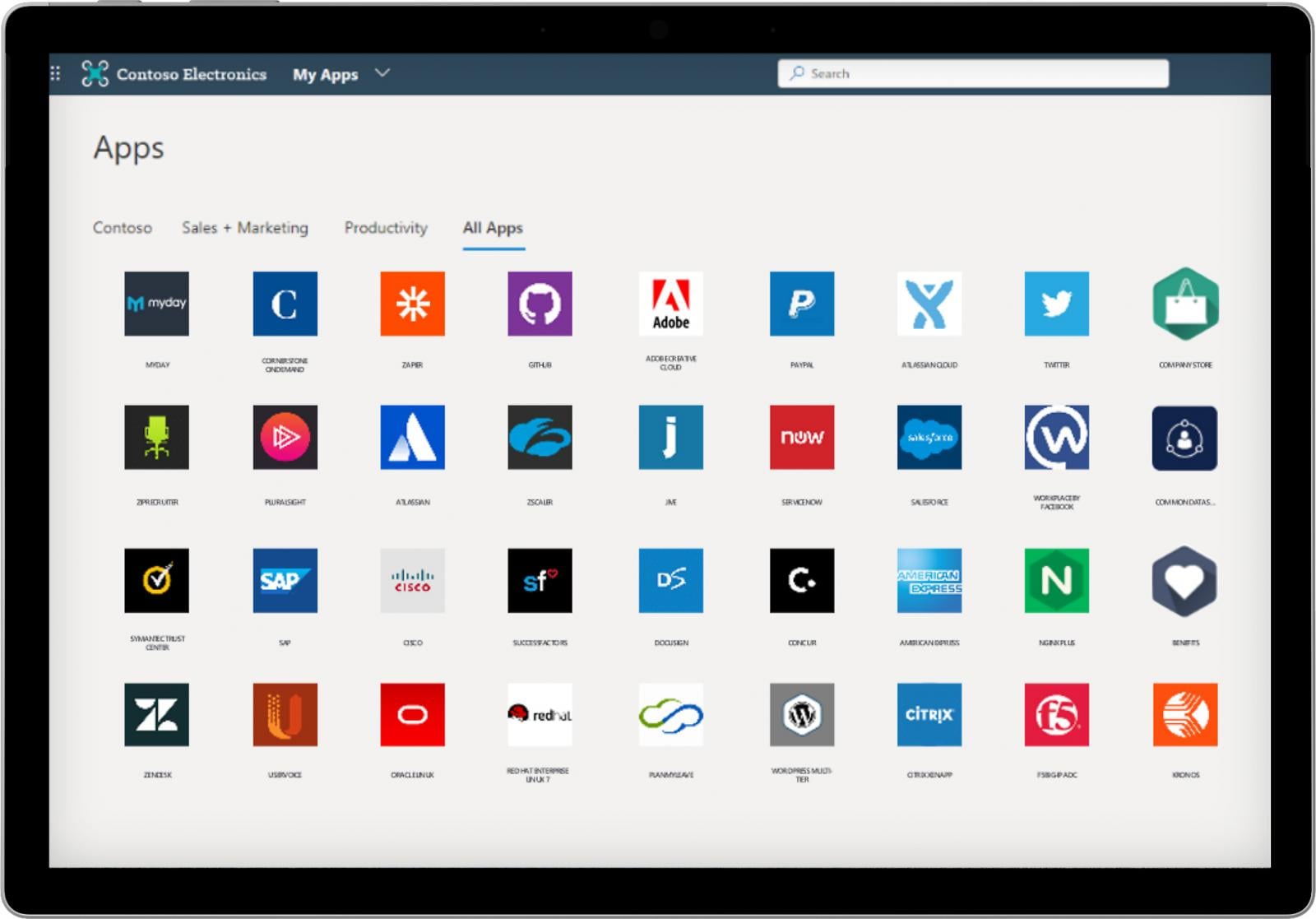
The threat actors are known for identity attacks, where they target employees through social engineering, including vishing and phishing, to compromise corporate single-sign-on accounts. Once they gain access to an account, they log in to an organization’s Okta, Microsoft Entra, or Google SSO dashboard, which acts as a centralized hub listing all SaaS applications the user has permission to access.
Example Microsoft Entra SSO dashboard
These applications include Salesforce, a primary target of ShinyHunters, Microsoft 365, SharePoint, DocuSign, Slack, Atlassian, Dropbox, Google Drive, and many other internal and third-party platforms.
For threat actors focused on data theft and extortion, the SSO dashboard becomes a springboard to a company’s cloud data, allowing them to access multiple services from a single compromised account.
Advertisement
Hardening helpdesk and SSO security
According to a July 24 advisory, ShinyHunters attacks follow a chain that begins with voice phishing (vishing) to manipulate employees or helpdesk personnel into resetting passwords, changing multifactor authentication methods, or enrolling new devices.
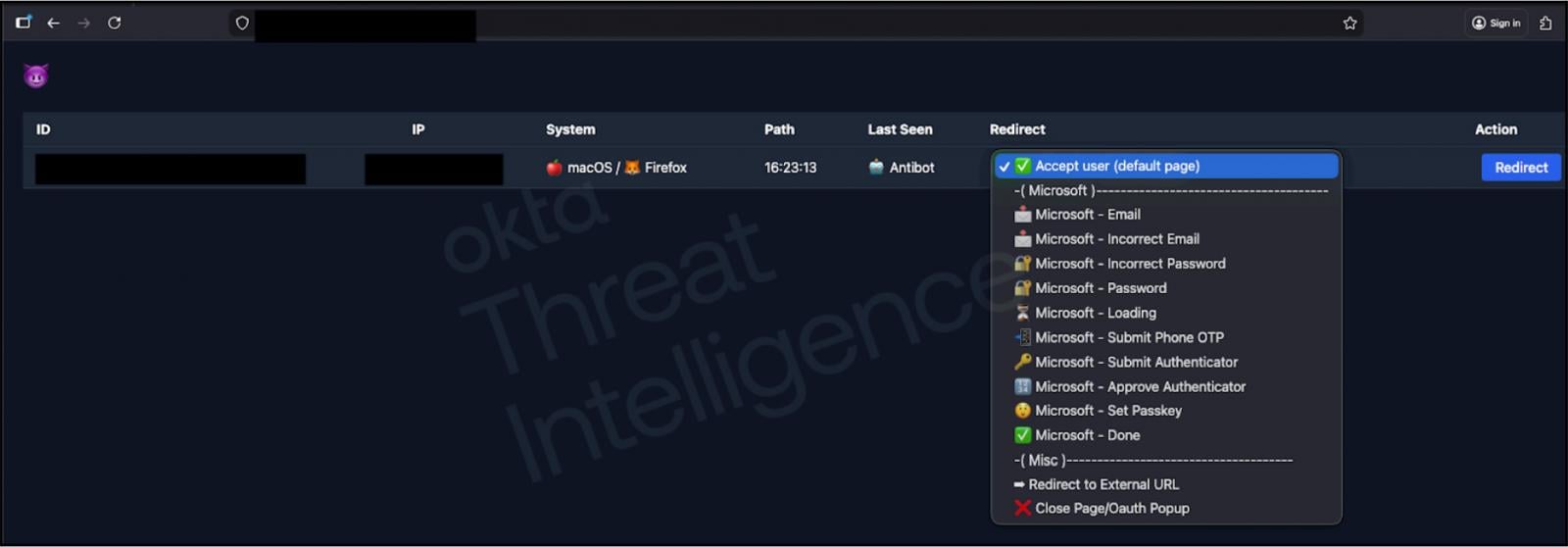
These phishing kits are designed for live interaction with targeted employees via voice calls, allowing attackers to change content and display authentication dialogs in real time as a call progresses.
A C2 panel allowing real-time control of authentication flows Source: Okta
Once an account is breached, the attackers use it to access connected SaaS platforms, where they rapidly steal data that can be used for extortion.
“SSO is the control plane, and ShinyHunters’ leverage is created through data theft at cloud scale,” Health-ISAC warned.
Advertisement
The advisory does not identify affected healthcare organizations, disclose how many incidents have been observed, or provide a timeframe for the reported increase.
However, BleepingComputer is aware of recent ShinyHunters attacks at healthcare and medtech companies, including Medtronic, DentaQuest, iRhythm, and OneMedical.
Health-ISAC said that in recent incident reporting, ShinyHunters claimed it successfully vished multiple employees, compromised a Microsoft Entra SSO account, and stole data from Microsoft 365, SharePoint, and other enterprise platforms.
However, the organization cautioned that not every data theft claim has been verified, and defenders should instead focus on the attack pattern of using compromised SSO identities to access and exfiltrate data from connected cloud services.
Advertisement
Health-ISAC says the most important defensive step is breaking the attack chain between the initial vishing call and the takeover of an SSO account.
Organizations are advised to require out-of-band identity verification for password resets, MFA resets, and device re-enrollment requests.
This can include calling users back using a previously verified phone number and requiring manager approval for privileged accounts.
The advisory also recommends helpdesk personnel follow a “no same-call” policy that prevents resets during the same inbound call. Instead, reset requests should require a support ticket and a verified callback before any changes are made.
Advertisement
Additional verification should be required when changes are requested for executives, IT administrators, security personnel, finance employees, and other high-risk users.
Healthcare organizations should also deploy phishing-resistant MFA, such as FIDO2 or WebAuthn security keys, for administrators, helpdesk personnel, executives, and other high-risk groups.
SMS and voice-based authentication should be disabled or tightly restricted. At the same time, registering new MFA factors should require additional controls, such as a managed device or a conditional access policy.
Health-ISAC also recommends treating SSO systems as “Tier 0,” which represent the most critical assets in an organization.
Advertisement
This includes requiring MFA and compliant devices when accessing sensitive cloud services, blocking legacy authentication, detecting sessions with improbable geographic changes, and limiting administrative portals to managed devices.
Detecting cloud data theft
Health-ISAC recommends centralizing identity and SaaS audit logs and monitoring for signs of account takeover and large-scale data access, including new MFA registrations, newly enrolled devices, suspicious OAuth grants, unusual API activity, and bulk file downloads.
Organizations should also restrict API tokens and third-party integrations, require approval for access to sensitive data, and ensure incident response teams can quickly revoke active sessions, reset credentials, and turn off malicious OAuth applications.
Over the next 30 to 60 days, healthcare organizations are urged to prioritize phishing-resistant MFA for high-risk users, strengthen helpdesk reset procedures, enforce conditional access policies, and test their ability to contain compromised cloud accounts.
Advertisement
Security teams log 54% of successful attacks and alert on just 14%. The rest move through your environment unseen.
The Picus whitepaper shows how breach and attack simulation tests your SIEM and EDR rules so threats stop slipping by detection.
Panasonic has announced that Panasonic AVC Networks Kuala Lumpur Malaysia will cease operations by the end of March 2027, affecting approximately 400 employees. The factory currently produces televisions, Panasonic Blu-ray Disc players and unspecified Technics branded Hi-Fi components.
This does not mean that Panasonic is abandoning Blu-ray players or that Technics is exiting the Hi-Fi market. Production is being moved elsewhere. But the closure removes another major consumer audio and video factory from Panasonic’s manufacturing network, and that matters for a company whose premium audio reputation still depends heavily on engineering consistency, build quality and control over production.
Related Reviews:
What Is Moving?
Panasonic says television production will end at the Malaysian facility, while Blu-ray Disc player production will transfer to China Hualu Panasonic AVC Networks Co., Ltd. in China by the end of September 2026.
Production of Technics branded Hi-Fi audio products will end at the Shah Alam factory by the end of February 2027 and move to another Panasonic Group operation. Panasonic has not disclosed the destination or identified which Technics products are currently manufactured at the facility.
Advertisement
That missing information is important. Technics currently sells turntables, integrated amplifiers, network players, wireless loudspeakers, headphones and true wireless earphones across multiple price categories. Consumers should not assume that every Technics component is affected, or that production is being outsourced to an unrelated manufacturer.
The official statement says Technics manufacturing will remain within the Panasonic Group.
Why This Matters
Panasonic has already reduced its direct involvement in television manufacturing. Earlier in 2026, the company entered a partnership with Skyworth for production of Panasonic branded televisions sold in the United States. The Malaysian closure shows that the restructuring extends beyond one regional TV agreement and reaches deeper into Panasonic’s global AVC manufacturing footprint.
Technics is the more sensitive part of the announcement.
Advertisement
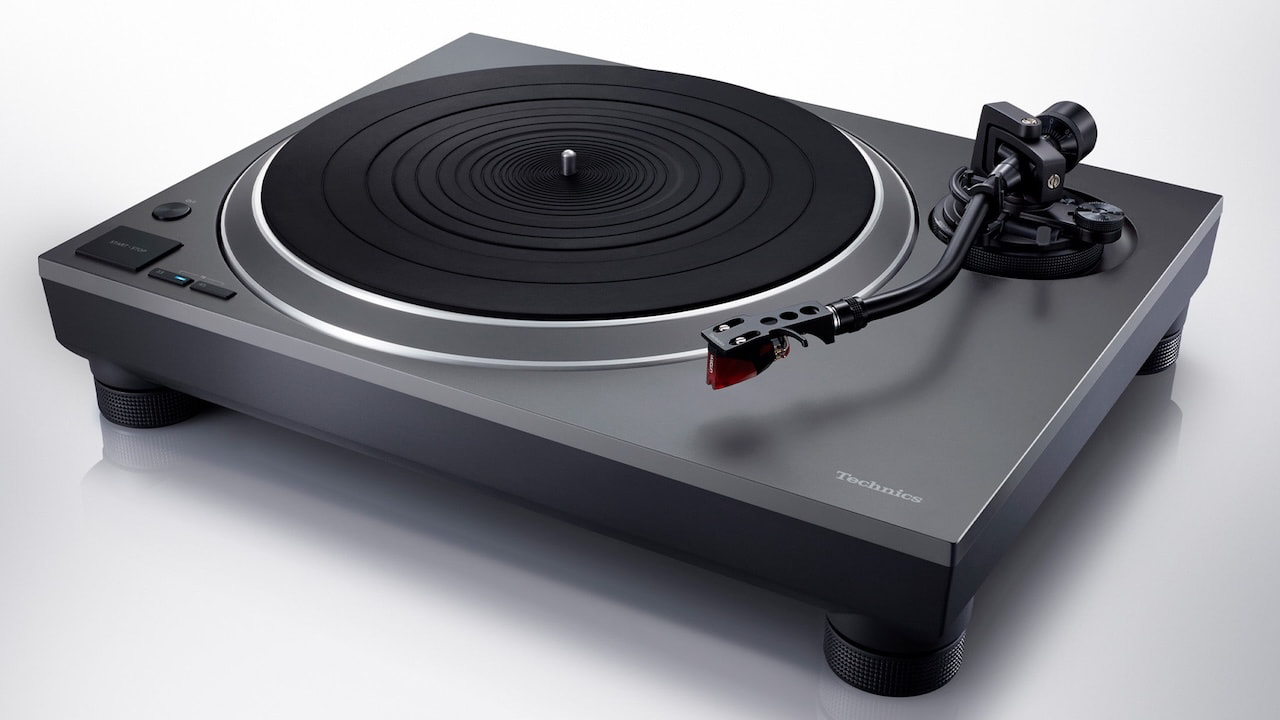
Technics SL-1500CS Turntable
Panasonic has spent the past decade rebuilding Technics as a premium audio brand, with direct drive turntables such as the SL-1200G, SL-1200GR2 and new SL-1500CS supported by proprietary motor control, digital amplification and extensive in-house engineering. Moving production does not automatically reduce quality, but relocating manufacturing can affect component sourcing, production capacity, delivery schedules, costs and country of origin labeling.
It can also require new tooling, worker training and quality control procedures. Panasonic has not announced any product delays, shortages, price changes or model cancellations connected to the move, so predicting those outcomes would be premature.
What Happens to Technics?
For now, Technics continues as normal.
Advertisement. Scroll to continue reading.
Advertisement
The company has introduced multiple new products in 2026, including the SL-1500CS turntable and limited edition SL-1200 models. Nothing in Panasonic’s announcement suggests that product development, sales, warranty coverage or customer support will end.
The unanswered question is whether Panasonic will move production to another existing Technics facility, consolidate it with a different Panasonic audio operation or create a more centralized manufacturing structure.
Until Panasonic identifies the destination and affected product lines, anything more specific would be speculation wearing a factory badge.
Malaysia Remains Important to Panasonic
Panasonic says Malaysia will remain one of its key regional hubs, with approximately 12,000 employees working across manufacturing, research and development, procurement and corporate operations. The company says it is working with government agencies and the Electrical Industry Workers’ Union to provide job placement and career transition support for the approximately 400 affected employees.
Advertisement
That does not make the closure less significant for the people losing their jobs. “Manufacturing footprint optimization” tends to sound considerably better when one is not standing inside the footprint being optimized.
The Bottom Line
Panasonic is not shutting down Technics, but it is closing a factory that produces Technics HiFi components and moving that work to an undisclosed Panasonic Group operation.
The transfer could ultimately improve production efficiency without changing product quality. It could also create temporary supply, cost or capacity issues during the transition. Panasonic has not provided enough information to know which outcome is more likely.
What is clear is that Panasonic continues to consolidate its consumer AV manufacturing while protecting the brands and product categories it still believes have value.
Advertisement
Technics remains alive and active. We just do not yet know where some of it will be built next.
Shein wanted its Hong Kong listing to be about growth. Instead, the filing meant to sell that story revealed a US regulator is investigating the company, and Shein will not say why.
The disclosure sits in the draft prospectus for Shein’s planned IPO, Reuters reported. Its US business, the filing said, is under investigation by the Federal Trade Commission. An FTC spokesperson confirmed a consumer-protection inquiry. This appears to be the probe’s first public disclosure.
A probe with no stated target
Shein did not say what the FTC is looking at. It said only that it is cooperating, and that it cannot predict the outcome or the timing. The warning it gave investors was blunter. Any resolution, it wrote, could force “significant monetary payments” with “a material adverse effect on our financial condition.”
The FTC polices unfair and deceptive business practices. It has taken on other marketplaces and platforms, from Amazon to Coupang, over how they treat their customers. It has also pressed firms over how their products lock people in. Its cases have covered hidden fees, misleading prices, awkward cancellations and the mishandling of data. None of that reveals what the FTC alleges here. It does map the territory the agency works in.
Advertisement
The dark-pattern problem
One corner of that territory is hard to ignore. The FTC has spent years going after “dark patterns,” CNBC noted. These are the design tricks that nudge people into spending or handing over data. In a 2022 report, the agency named the countdown timer as a classic example.
Shein’s app runs on exactly these mechanics. It uses countdown timers, gamified discounts and limited-time flash sales. Each is designed to turn browsing into buying before the shopper stops to think.
The FTC has not said its probe concerns any of this. But it is an uncomfortable overlap for a company about to ask public investors for money.
The worst possible timing
The disclosure lands at the end of a long, bruising road to market. Shein tried to list in New York, then London, and only reached Hong Kong after Beijing’s regulator cleared it this month. Its target valuation of $40bn to $50bn is a fraction of the roughly $100bn it commanded in 2022. Some investors have reportedly pushed for closer to $30bn.
The business underneath has weakened too. Shein swung to a $99m loss in the first quarter, from a $395m profit a year earlier. The reversal followed the US scrapping the “de minimis” exemption that let cheap parcels enter duty-free.
Advertisement
US revenue fell about 14% to $2bn. The EU has since added its own charge on low-value parcels, Forbes reported. A consumer-protection probe from its largest market is the last thing Shein needed as it finally tries to sell the story.
Feeling stressed and overworked? Don’t worry – OpenAI CEO Sam Altman thinks that we just love to work, and that’s why AI won’t result in a four-day working week
Good news everyone – it seems that the reason AI hasn’t yet resulted in less work and more leisure time, as promised by multiple “evangelists” and AI “experts” is that we just love working too darn much.
That’s according to OpenAI CEO and America’s next top (AI) model whisperer Sam Altman, who has declared that people are just really big fans of grinding away and competing with others.
Speaking on the Relentless podcast, Altman told host Ti Morse that in fact, he doesn’t expect a change in society or working practices for quite some time, despite widespread promises that AI would boost our productivity and efficiency across the board.
Advertisement
Latest Videos FromTechRadar
AI “won’t change” work – yet
“Technology, for a long time, has been promising people that they’re going to work less and they’re going to have all this leisure,” Altman said.
“But somehow we never get the promise of the four-hour workweek at mass scale in society,” he added. “And I don’t expect AI to change that.”
Advertisement
It’s a remarkably candid admission from the leader of a company which is explicitly setting out to solve some of the world’s biggest problems – whether personal or work-related – with AI.
In fact, Altman pointed out that we do have more free time and luxuries today than at any point in history – but this has led to increased expectations from many people.
Sign up to the TechRadar Pro newsletter to get all the top news, opinion, features and guidance your business needs to succeed!
Advertisement
“We always want more,” Altman added, “we think of new things to do, to create for each other, to want for ourselves. It’s like a relative game. People are very focused on how they’re doing relative to other people.”
“I think we’re all going to be much busier than we thought we were supposed to be in a post-superintelligence world. We’re still going to complain about it, but secretly we’re going to be happy,” Altman concluded.
I’m not so sure about that – but I’m happy to be proved wrong.
Play it again, Sam
I’m not so sure about that – but I’m happy to be proved wrong.
That’s because Altman has been pretty vocal on the future of AI in the workplace for some time, with his viewpoints often changing depending on the situation.
For starters, he recently revealed OpenAI’s future strategy would be not to automate everything but to allow people to make better decisions as AI improves their lives, particularly as it expects an AGI world to be here by 2028.
Advertisement
“Entirely automating everything is not the future we want”, Altman declared, as he described how OpenAI is now looking to opens a “third phase” and aims to build technology “to benefit everyone”.
“I would expect that the real impact of AI on jobs, in the next few years, to begin to be palpable,” Altman explained, adding that “Of course we’ll find new kinds of jobs.”
“I thought there would have been more impact on entry-level white-collar jobs being eliminated by now than has actually happened,” Altman said, who also admitted that while he believed OpenAI has been “roughly right” on the technological predictions it made when it launched ChatGPT in 2022, they were “pretty wrong” on the social and economic implications.
At the time of writing, 252 companies have announced job cuts in 2026 so far, leading to 124,255 employees losing their roles (via Layoffs.fyi) – people who, I suppose, do now have a lot more free time than they expected.
This article is crossposted from IEEE Spectrum’s careers newsletter. Sign up now to get insider tips, expert advice, and practical strategies, written in partnership with tech career development company Parsity and delivered to your inbox for free!
Scroll through LinkedIn right now and you may find the same advice repeated by well-meaning people: “In a market this rough, just be grateful anyone will hire you. Take the offer.”
I could not disagree more.
Negotiating your offer is not ungrateful, and it isn’t greedy. Done well, it’s good for you and good for the company hiring you. I misunderstood this early in my career, and it cost me.
Advertisement
I didn’t know it was an option
When I got my first job in tech, I didn’t know negotiation was even on the table. The recruiter asked what salary I wanted, and I gave a number below the bottom of their range. They came back with the lowest number in their band—still more than I had asked for—and I was thrilled. I had no idea I’d left money on a table I couldn’t see.
Then I started teaching at a Bay Area coding bootcamp in the evenings. A coworker mentioned what he made and it was nearly double my salary for roughly the same work. My jaw dropped.
During that time, I began interviewing and got an offer. I handed in my resignation and my manager countered with an offer for nearly 30K more. That money had been there the whole time. At that moment, I realized my salary was a business decision, not a measure of my worth.
What it looks like from the other side
Years later, I became an engineering manager and saw the salary discussion from a different angle: A position would open. Many interviews later, we’d find someone we wanted, and HR would hand me a salary range to make an offer. I was encouraged to make an initial offer near the bottom to leave room for, you guessed it, negotiations.
Advertisement
Most applicants didn’t negotiate.
The first offer is rarely the ceiling. It’s usually the floor. Companies extend a reasonable number and quietly hope you say yes.
It’s not all about the money
Negotiating isn’t only about a bigger paycheck. (But who doesn’t want that?)
Let’s say you’re on the job market, maybe recently laid off, and a low offer comes in. You take it out of relief. Then you start, you like the team, and you quietly resent the number. Now you’re stuck with it, and you’ll probably leave that role inside a year or whenever the market improves.
Advertisement
Nobody wins there. You’re back on the market starting over, and the company loses someone good and pays more to replace you, when a fair number up front would have cost far less.
Paying you fairly is cheaper than starting over.
How to actually do it
People overcomplicate this. Once I have an offer, I say some version of this:
“Thank you so much for the offer, and I’m genuinely excited to join the team. I’m hoping we can come in around [10 to 20 percent higher than the original number]. Is there any wiggle room here?”
Advertisement
Then I stop talking and let them respond.
Why 10 to 20 percent and not double? The number you ask for is itself a signal. Ask for something wildly out of range and you’ve told them you never learned what the role pays, or that your expectations are miles from reality. That’s what makes a company walk away. A calibrated request reads as someone who knows their worth and did their homework.
You’ve probably heard a horror story about someone who asked for more and had the offer yanked. Any company that would pull an offer over a reasonable question about pay is telling you exactly how they’ll treat you once you’re inside.
If the salary can’t move, it isn’t the only lever. I’ve negotiated more remote days, a later start to drop my kids off, and a sign-on bonus when the base was locked. Most people negotiate none of these perks.
Advertisement
You have more leverage than you think
Negotiating can feel like something you can only do from a position of power. But if you’re in the final stages of an offer, you already have it. They want to hire you. They’ve spent weeks finding you. Now they’re hoping you say yes.
That’s true even if you were recently laid off. Even if it’s your first job. Even if the number already looks higher than you expected.
The game is being played whether or not you join in. Sit it out, and you’re not just leaving money on the table. You may be quietly shortening your own stay at a job you could have been happy in. So ask.
—Brian
Advertisement
If you’ve been on the job market for a software engineering role recently, you’ve probably encountered—or used—AI tools in the hiring process. From application filters to live interview assistants, both applicants and employers are trying to use generative AI to their advantage. Can real, human skills still shine through in this new reality?
Sarah Downs, a Ph.D. student in electrical engineering at Texas A&M University, has long been interested in robotics and dreamed of working with NASA. This year, she achieved that dream, collaborating with NASA and the U.S. Air Force on an algorithm that enables satellites to insert an antenna into the correct spot.
Women make up only about 28 percent of the global STEM workforce, in part because of limited access to educational resources for preuniversity students—especially in areas like rural India. An IEEE initiative, the Women in Science, Engineering (WiSE) project launched to help expand opportunities and hands-on learning for young women.
Amazon reports quarterly earnings Thursday afternoon, facing the same test as every other big tech company right now: whether it’s generating enough business to justify its massive AI spending.
Wall Street expects revenue of about $196.4 billion, up 17% from a year ago, and earnings of $1.82 per share. That’s essentially the midpoint of Amazon’s own forecast for the second quarter.
Part of that growth is due to the calendar. Prime Day ran June 23-26 this year, during the second quarter in the U.S. and most large markets. Last year it ran July 8-11, in the third quarter. That gives Amazon’s retail numbers a boost this time that the year-ago quarter didn’t have.
Another factor is the cloud. AWS grew revenue 28% last quarter, its fastest rate in nearly four years, and analysts expect the acceleration to continue with revenue of roughly $40.5 billion for the second quarter, up 31%, according to Zacks Consensus Estimates.
The company plans a record $200 billion in capital expenditures this year, nearly all of it for data centers, servers and chips to support increased capacity for training and running AI models.
Advertisement
Amazon is making those investments based in part on demand from big AI companies including OpenAI and Anthropic, which have signed commitments to AWS worth $138 billion and more than $100 billion, respectively, for the coming years.
“We’re not investing approximately $200 billion in capex in 2026 on a hunch,” CEO Andy Jassy wrote in his April shareholder letter.
In the meantime, the spending is absorbing nearly all of the cash from Amazon’s operations. Free cash flow fell to $1.2 billion over the past 12 months, from $25.9 billion a year earlier.
Investors seem to be losing patience with that tradeoff overall. Google parent Alphabet beat expectations last week and its stock fell anyway, after raising its own capital spending forecast to as much as $205 billion for the year. Microsoft reports earnings Wednesday afternoon.
One difference for Amazon is its custom chip business — Graviton, Trainium and Nitro — which passed a $20 billion annual revenue run rate last quarter. Jeff Bezos said this week that it’s becoming a fourth pillar of the company, alongside Marketplace, Prime and AWS.
The company is overhauling its approach to AI model development. Business Insider reported this week that Amazon is winding down most of its in-house Nova models and concentrating engineers on a new frontier model effort, with a new flagship model expected at re:Invent this fall.
Amazon cut jobs in its AGI organization last week and confirmed that it’s closing its San Francisco AI site, while saying its frontier model research would continue.
Advertisement
At the same time, AWS is spending to help other companies deploy AI, committing $1 billion at the end of June to embed its own engineers with enterprise customers building agentic systems, following similar moves by OpenAI and Anthropic.
Check back with GeekWire for coverage on Thursday afternoon.
































































You must be logged in to post a comment Login