

Connect with us
DAPA Banner
DAPA Coin
DAPA
COIN PAYMENT ASSET
PRIVACY · BLOCKDAG · HOMOMORPHIC ENCRYPTION · RUST
ElGamal Encrypted MINE DAPA
🚫 GENESIS SOLD OUT
DAPAPAY COMING

Tech

Lenovo Yoga Slim 7x Gen 11 Review

Published

on

Verdict

The Lenovo Yoga Slim 7x Gen 11 is a lovely Windows laptop with a lot of power with its Snapdragon X2 Elite SoC, plus it comes with a comfortable keyboard, dazzling OLED screen and immense endurance. It is rather expensive in the top configuration, though, and the port selection feels a bit one dimensional.

  • Lightweight and stylish finish

  • Increased grunt from Snapdragon X2 Elite chip

  • Excellent battery life

  • Dearer than rivals in top-spec

  • One-dimensional port selection

Key Features

  • Trusted Reviews IconTrusted Reviews Icon

    Review Price:
    £1669.99

  • Advertisement

    Snapdragon X2 Elite inside

    The new Yoga Slim 7x Gen 11 packs a lot of power into a small chassis with its use of Qualcomm’s new Snapdragon X2 Elite processor.

  • Advertisement

    14-inch 3K 120Hz OLED screen

    It also has a high-res and high refresh rate OLED screen for added razzle-dazzle.

  • Advertisement

    70Whr battery

    This Lenovo laptop also has a large battery inside to help you power through work over multiple days.

Introduction

The Lenovo Yoga Slim 7x Gen 11 updates its longstanding line of excellent all-round ultrabooks with quite a boost in power.

Advertisement

The headline here is Qualcomm’s new Snapdragon X2 Elite SoC that touts a large boost in overall power against the original model, which comes alongside 32GB of RAM and a generous 2TB SSD in my sample. That comes built around a fetching blue metal chassis with a 14-inch 3K 120Hz OLED screen and large 70Whr battery.

It all sounds very promising, although Lenovo has quite the competition to overcome with its latest model. The Asus Zenbook A14 (2026) has a similar spec sheet and has been out and about for a few weeks, while there’s also the Acer Swift Edge 14 AI and of course the Apple MacBook Air M5 to worry about. Prices start at £1050/$1199 for a Snapdragon X2 Plus-equipped base model, with my tricked out sample costing £1669.99/$1899.99, making things very interesting indeed.

Advertisement

I’ve been putting the Yoga Slim 7x Gen 11 through its paces for the last couple of weeks to see if it’s one of the best laptops we’ve tested.

Advertisement

Design and Keyboard

  • Gorgeous and sturdy construction
  • Meagre port selection
  • Responsive keyboard and trackpad

One area about the Yoga Slim 7x Gen 11 I’m both relieved and surprised that hasn’t shifted too much is its overall design. I like the dark blue finish it retains, plus a metal chassis that provides a quality finish. If you’re after a Windows laptop that looks like a midnight blue MacBook Air, then this is a dead cert.

At 1.17kg, it’s quite light for a 14-inch laptop, and its compact form factor makes it especially easy to carry around. I am splitting hairs a little bit, but it isn’t quite as light as the Asus Zenbook A14 (2026) and Acer Swift Edge 14 AI, both of which push towards the sub-1kg mark, and you can feel it when you pick the laptop up.

Left Ports - Lenovo Yoga Slim 7x Gen 11Left Ports - Lenovo Yoga Slim 7x Gen 11
Image Credit (Trusted Reviews)

Advertisement

The Yoga Slim 7x Gen 11 is just 13.9mm thick, which makes it slender and svelte, but has the unintended consequence of reducing its port selection down. We’ve got three USB4-capable Type-C ports in total, with two on the left and one on the right. It’s modern and fast, but a bit too one-dimensional. 

This comes at a time when Asus’ rival is slightly thinner at 13.3mm, and manages to pack in a pair of USB-C ports, a full-size HDMI, a USB-A port and a 3.5mm headphone jack. As I said then, the Zenbook A14 (2026) is more Pro than Air, and it’s clear to see which side Lenovo has opted for.

Keyboard & Trackpad - Lenovo Yoga Slim 7x Gen 11Keyboard & Trackpad - Lenovo Yoga Slim 7x Gen 11
Image Credit (Trusted Reviews)

The Yoga Slim 7x Gen 11 excels with its keyboard in typical Lenovo fashion, though. It’s a quiet, tactile scissor-actuated offering with Lenovo’s typical deep-dish keycaps that feel brilliant to use for extended periods, while its bright white legends are big and easy to read. The smaller form factor is fine, too, while its white underglow backlighting provides vibrancy for after-dark working.

As for the trackpad, it’s got a glossy, smooth texture to it in a similar vein to a lot of modern ultrabooks, while it’s also quite large for a laptop of its size, providing your fingers with a lot of real estate.

Advertisement

Display and Sound

  • A couple of different screen choices
  • Excellent brightness, contrast and black level
  • Surprisingly competent speakers

Advertisement

Lenovo is offering the Yoga Slim 7x Gen 11 with a couple of different display variants, both of them OLED, and both of them 14-inches in size.

The base model comes with a 1920×1200 resolution 60Hz touch-enabled panel, while the higher-end variant I have ups the resolution to 2880×1800 (or 3K), the refresh rate to 120Hz and its rated peak brightness. Weirdly, though, it eschews touch capabilities but retains a lay-flat hinge for collaborative working.

In practice, though, it’s a capable screen with deep blacks and lovely contrast, as measured by my colorimeter. Here, I measured a 0.03 black level and 17250:1 contrast ratio. A 6700K colour temperature is also right where it should be.

Screen - Lenovo Yoga Slim 7x Gen 11Screen - Lenovo Yoga Slim 7x Gen 11
Image Credit (Trusted Reviews)

We’re also seeing sharp brightness, with a measured peak SDR of 480.2 nits, making it a capable panel for indoor and outdoor work, while also helping displayed images pop, given the black level and contrast ratio results. Lenovo also touts this screen to offer up to 1000 nits of HDR brightness alongside DisplayHDR 1000 True Black certification.

The Yoga Slim 7x Gen 11’s panel also impresses with its excellent colours. I saw perfect 100% coverage of both the sRGB and DCI-P3 spaces, plus an excellent 92% coverage of the trickier Adobe RGB gamut. This makes this screen suitable for productivity and more colour-sensitive workloads alike.

Advertisement

Advertisement

Screen - Lenovo Yoga Slim 7x Gen 11Screen - Lenovo Yoga Slim 7x Gen 11
Image Credit (Trusted Reviews)

Lenovo has opted for an upward-firing four-speaker array for this laptop, with two woofers and two tweeters. This helps to provide a full and quite rich sound for a set of laptop drivers with decent mids and good volume.

Performance

  • Beefier Snapdragon X2 Elite processor
  • Improved integrated graphics
  • Capacious RAM and SSD arrangement

Lenovo’s last Yoga Slim 7x laptop I tested came with one of Qualcomm’s first-gen Snapdragon laptop SoCs, and it’s arguably inside where the biggest gains have been made with this latest model.

For 2026, the Yoga Slim 7x Gen 11 I have is supplied with Qualcomm’s new Snapdragon X2 Elite processor, the second-in-command to the Snapdragon X2 Elite Extreme. There are two variants of this processor available to manufacturers, with 12-core and 18-core options – the variant I have ships with the latter. For the base model, Lenovo is also offering the Snapdragon X2 Plus, which we haven’t tested just yet.

Logo - Lenovo Yoga Slim 7x Gen 11Logo - Lenovo Yoga Slim 7x Gen 11
Image Credit (Trusted Reviews)

Advertisement

The difference between this chip and the Snapdragon X2 Elite Extreme you’ll find in the likes of the Asus Zenbook A16 (2026) appears to be clock speeds, with this chip rated for a max boost clock across single or dual cores of 4.7GHz (against the Elite Extreme’s 5GHz) and a max multi-core frequency of 3.4GHz (against the Elite Extreme’s 3.6GHz).

Qualcomm is touting major gains in both single and multi-core performance with this new 18-core chip, which I’d certainly wager is true in comparing it to laptops with the Snapdragon X Elite chip.

Advertisement
Profile - Lenovo Yoga Slim 7x Gen 11Profile - Lenovo Yoga Slim 7x Gen 11
Image Credit (Trusted Reviews)

As you’d expect, the numbers here aren’t quite as strong as with the Snapdragon X2 Elite Extreme SoC, but the difference is only a few percentage points in the synthetic benchmarks in real terms. It is much the same story, though, with especially high single-core scores in Geekbench 6 that push this laptop into Apple Silicon territory for comparison, plus much-improved multi-core scores, too. 

The improvements in Cinebench R23 are slightly more modest and peg this laptop back a smidgen, but there are nonetheless some substantial improvements to be proud of in synthetic terms against the original Snapdragon X Elite chip.

Lid - Lenovo Yoga Slim 7x Gen 11Lid - Lenovo Yoga Slim 7x Gen 11
Image Credit (Trusted Reviews)

Advertisement

There is also a major improvement to the Adreno iGPU with the Snapdragon X2 Elite, which provided a doubling in the 3DMark Time Spy test and brings it more into line with more recent iGPUs fitted to x86-based laptop chips from Intel and AMD. 

My sample of the Yoga Slim 7x Gen 11 came quite a generous RAM and storage configuration, with 32GB of fast DDR5 RAM provided and a hefty 2TB SSD. In testing, it also proves to be a brisk PCIe Gen 4 option, with reads and writes of 7144.32 MB/s and 6721.86 MB/s, respectively.

Software

  • Clean Windows 11 install with Copilot+ PC AI smarts
  • Minimal Lenovo-specific software
  • Small compatibility issues, being Arm-based

For its software situation, the Yoga Slim 7x Gen 11 comes with a reasonably clean Windows 11 install with minimal pre-installed apps, including McAfee antivirus. There are some Lenovo-specific system apps here, including the catch-all system app Lenovo Vantage in the taskbar, but that’s about it.

There is also enough AI horsepower from the Snapdragon X2 Elite chip inside to mark this laptop as a Copilot+ PC, providing access to Microsoft’s AI functionality for generative powers and filters in the Photos and Paint app, as well as the clever Windows Studio webcam effects for background blurring, auto framing and maintaining eye contact. With the latest version of Windows 11, there is also the controversial Microsoft Recall feature.

Advertisement
Logo - Lenovo Yoga Slim 7x Gen 11Logo - Lenovo Yoga Slim 7x Gen 11
Image Credit (Trusted Reviews)

Advertisement

Being Arm-based, the Yoga Slim 7x Gen 11, also has the problem of having minor issues with some compatibility.

This is because Windows is traditionally run on x86-based systems, so to work on Arm, apps have had to be translated through Microsoft’s Prism translation software. For the most part, I had little in the way of issues with compatibility in running a range of benchmark software, as well as Photoshop and similar apps. Qualcomm has also worked with lots of brands to increase overall app compatibility with its latest Arm-based laptop chips against the original run from last year. 

As with other Arm-based Windows laptops I’ve looked at, the PCMark 10 benchmark app doesn’t run fully, but that’s an issue we’ve seen on other Arm-based Windows systems

Battery Life

  • Lasted for 19 hours 42 minutes in the battery test
  • Capable of lasting for two to three working days

Lenovo has put a hefty 70Whr battery inside the Yoga Slim 7x Gen 11, which, combined with the excellent efficiency that these Qualcomm chips have traditionally yielded, should result in some fantastic battery life.

In dialling the brightness down to the requisite 150 nits and running a video loop test in PCMark 10, this Lenovo laptop lasted for 19 hours and 42 minutes – that’s just about enough for three working days with some hypermiling. For reference, that’s one of the best results I’ve seen in recent times, matching the likes of the Acer Swift Edge 14 AI and the Asus Zenbook A14 (2025). The new Zenbook A14 (2026) is nearly three hours ahead, though, and uses the same SoC as this Lenovo choice.

Advertisement

Advertisement

The Yoga Slim 7x Gen 11 comes with a reasonably compact 65W charger that’s also quite fast at getting charge back into the laptop. It took around 40 minutes to get it back to 50%, while a full charge took 75 minutes or so.

Should you buy it?

Advertisement

You want oodles of power in a lightweight chassis

The Yoga Slim 7xGen 11 packs a lot of performance with its Snapdragon X2 Elite processor into a slender and lightweight chassis.

Advertisement

The three USB-C ports Lenovo provides are okay, although it feels quite one dimensional against rival choices from Acer and Asus that are much more rounded.

Final Thoughts

The Lenovo Yoga Slim 7x Gen 11 is a lovely Windows laptop with a lot of power from its Snapdragon X2 Elite SoC, plus it comes with a comfortable keyboard, dazzling OLED screen and immense endurance. It is rather expensive in the top configuration, though, and the port selection feels a bit limited.

Advertisement

The Asus Zenbook A14 (2026) is the closest competitor, as it ships with the same SoC as Lenovo’s choice, albeit at a slightly lower £1599 price tag. There is a compromise with a 1920×1200 OLED screen being lower-res, although it gains against the Yoga Slim 7x Gen 11 in battery life and port selection. 

The Acer Swift Edge 14 AI offers similar computing power with its Intel Lunar Lake SoC, plus a similarly high-res OLED screen and a richer port selection, and is actually the cheapest of the three at £1399, making it a quietly unsung hero in the range of modern ultrabooks.

WIth this in mind, I think the Lenovo Yoga Slim 7x Gen 11 is a lovely laptop, and a lot of it is in part due to the Snapdragon X2 Elite chip inside, but rising costs mean it suffers the same price-driven criticism as the Samsung Galaxy Book6 Pro and the Asus Zenbook A14 (2026), not least with the other options offering similar spec sheets for less money. For more options, check out our list of the best laptops we’ve tested.

How We Test

This Lenovo laptop has been put through a series of uniform checks designed to gauge key factors, including build quality, performance, screen quality and battery life. These include formal synthetic benchmarks and scripted tests, plus a series of real-world checks, such as how well it runs popular apps and extensive gaming testing.

Advertisement

FAQs

What’s different between the Lenovo Yoga Slim 7x Gen 11 and the Lenovo Yoga Slim 7x Gen 10?

The Lenovo Yoga Slim 7x Gen 11 comes with a newer and faster Snapdragon X2 Elite processor, plus a stronger OLED screen, webcam and better battery life. It’s also a lot more expensive in terms of RRP.

Advertisement

Advertisement

Test Data

  Lenovo Yoga Slim 7x Gen 11

Full Specs

  Lenovo Yoga Slim 7x Gen 11 Review
UK RRP £1669.99
USA RRP $1899.99
CPU Qualcomm Snapdragon X2 Elite
Manufacturer Lenovo
Screen Size 14 inches
Storage Capacity 2TB
Front Camera 1080p IR webcam
Battery 70 Whr
Battery Hours 19 42
Size (Dimensions) 312 x 221 x 13.9 MM
Weight 1.17 KG
Operating System Windows 11
Release Date 2026
First Reviewed Date 17/06/2026
Resolution 2880 x 1800
HDR Yes
Refresh Rate 120 Hz
Ports 3x Thunderbolt 4 USB-C ports
GPU Qualcomm Adreno iGPU
RAM 32GB
Connectivity Wifi 7, Bluetooth 5.4
Colours Cosmic Blue
Display Technology OLED
Touch Screen No
Convertible? No

Source link

Continue Reading
Click to comment

You must be logged in to post a comment Login

Leave a Reply

Tech

The regular iPhone 18 may miss out on two major Siri AI features

Published

on

Apple is expected to debut the iPhone 18 Pro and iPhone 18 Pro Max this fall, possibly alongside its first foldable iPhone. The standard iPhone 18, however, is said to arrive later in spring 2027 with the iPhone 18e. While the lineup is expected to get more RAM, the upgrade may still fall short of what the standard and 18e models need for two advanced Siri AI features.

The issue is Apple’s AFM Core Advanced model. It powers Advanced Dictation Preview in iOS 27, along with Apple’s new expressive Siri voices. The model runs locally on supported devices, but it needs at least 12GB of RAM.

More memory may not be enough

TF International Securities analyst Ming-Chi Kuo says Apple’s lower-end 2027 iPhones powered by the A20 chip will move to 9GB of RAM, up from 8GB on current standard models. Forbes points out that the upgrade may still leave the iPhone 18 and iPhone 18e short of the requirement for Apple’s higher-end Siri features.

iOS 27 will bring tighter system-level integration with Apple Intelligence. My latest industry checks suggest Apple’s lower-end 1H27 iPhones, powered by the A20 chip, will move to 9GB DRAM (1.5GB × 6 dies), up from 8GB (2GB × 4 dies) in the current A19 models, to keep the system…

— 郭明錤|Ming-Chi Kuo (@mingchikuo) June 26, 2026

Advertisement

Advanced Dictation Preview is currently available on the iPhone 17 Pro, iPhone 17 Pro Max, and iPhone Air running the iOS 27 beta. The standard iPhone 17 and even the iPhone 16 Pro are excluded because they have 8GB of RAM.

Advanced Dictation Preview improves accuracy and can automatically handle punctuation and capitalization while users speak. Expressive Siri voices are designed to make Apple’s assistant sound more natural and flexible. If the 12GB cutoff stays in place, then these features will not be available on the standard 18 and 18e models.

The Pro models should have the edge

Apple has not announced the iPhone 18 lineup, so the feature split is not confirmed. Kuo says the iPhone 18 Pro, iPhone 18 Pro Max, and Apple’s rumored foldable iPhone will remain at 12GB of RAM.

The split may look like Apple is simply pushing buyers toward the Pro models, but the memory situation is more complicated than product segmentation. Apple has already raised prices across its iPad and Mac lineup as RAM prices climb, and the upcoming iPhone 18 Pro models are expected to see a jump of around $200.

The company is also reportedly seeking government approval to source RAM from China’s CXMT as it tries to manage a supply crunch that is making advanced AI features harder to bring to cheaper models.

Advertisement

Source link

Continue Reading

Tech

AirPods Max 2 vs Sony WH-1000XM6: which is king of the noise cancelling headphones game?

Published

on

Having tested countless pairs of ANC headphones, it takes something special to truly wow me. But today, we’re going to compare two sets of premium cans that did exactly that: Apple’s AirPods Max 2, and Sony’s WH-1000XM6.

If you’re considering which pair of headphones are for you, I’ve got you covered. I’ve spent hours testing both sets side by side, assessing each model on their feature-sets, performance, design, and most importantly, value for money.

Advertisement

Source link

Continue Reading

Tech

Noble Audio Osprey Review: $199 Audiophile Earbuds Put Sound Quality First

Published

on

Noble Audio is a major player in the hi-fi arena. Founded in 2013, Noble’s vast and varied work in the IEM market has helped shape much of what we now take for granted. From CNC-machined aluminum shells to sophisticated driver configurations, there are few parts of the modern IEM scene that Noble has not influenced in some way.

Today, we’re taking a look at one of Noble’s newest and most affordable earbuds: the true wireless Noble Osprey. At $199, this hybrid TWS undercuts flagship offerings from established brands like Bose and Sony on price. But does Noble have what it takes to match them in the realm of modern tech features and quality-of-life refinement? Let’s get into it.

Noble Osprey Wireless Earbuds Interior
Photo credit: Resonance Reviews

About My Preferences: My impressions are inevitably influenced by my personal preferences. While I try to mitigate that as much as possible during the review process, I’d be lying if I said my biases are ever completely erased. So, for you, my readers, keep the following in mind:

My ideal sound signature includes competent sub-bass, textured mid-bass, a slightly warm midrange, and extended treble.

Advertisement

I also have mild treble sensitivity.

Testing equipment and standards can be found here.

Related Reviews:

Key Specifications

  • Drivers: 10mm dynamic driver + custom balanced armature driver
  • Wireless: Bluetooth 6.0
  • Bluetooth chipset: Airoha 1571
  • Supported codecs: LDAC, AAC, SBC
  • Noise control: Active Noise Cancellation and Hearing Through/Transparency mode
  • Microphones: Dual microphones with cVc noise reduction
  • Multipoint: Yes
  • TrueWireless Mirroring: Yes
  • Battery life: Up to 7 hours with ANC off; up to 5 hours with ANC on
  • Quick charging: Approximately 2 hours of playback from a 10-minute charge
  • Charging case: 500mAh aluminum case
  • Charging: USB-C
  • Included accessories: Aluminum charging case, USB-C cable, ear tips, and user documentation

Tech & Features

The Osprey supports Bluetooth 6.0, along with a suite of high-quality audio codecs. LDAC, AAC, and SBC are onboard, with the only notable exclusions being aptX HD and aptX Low Latency. This appears to be a concession to keep the price low, as aptX is a proprietary suite of codecs licensed by Qualcomm.

Pairing the Osprey with my Google Pixel 10 Pro was quick and easy. A brief jaunt through the user manual confirmed that the Osprey automatically launches into pairing mode when new, which was convenient. I was able to pair the Osprey seamlessly with all of my devices, including my Windows 10/11 desktop, Linux PC, and Nintendo Switch 2. The Osprey also supports multipoint connectivity, allowing it to juggle multiple active connections without requiring user intervention.

Advertisement

The Osprey features haptic touch controls on both earbuds and supports single, double, triple, and long-press gestures. They are fine for the most part, but can be inconsistent when trying to quickly pause or play audio. As a general rule, I prefer buttons on true wireless earbuds, and the Osprey is no exception. Being forced to tap my earbuds to pause music or adjust the volume is disruptive, especially when some of those taps are not recognized.

Further, the Osprey’s hollow construction transmits a ton of noise into my ears when using the touch controls, which is a less-than-fun experience. Thankfully, you can adjust which gestures map to which functions through the app, barring the press-and-hold control for ANC modes.

Advertisement. Scroll to continue reading.

I appreciate the app’s lightweight, zero-account approach. You can update the Osprey’s firmware, select an EQ preset, or create your own using its 10-band equalizer.

Advertisement

While that minimalism is good for performance and storage footprint, it comes with some functional downsides. Mainstream rivals like Sony, Bose, and JBL offer more advanced features, including location-based profiles, find-my-device tools, and ear-health monitoring — useful extras that power users may miss.

The austere Noble app reflects the company’s priorities: Noble remains primarily focused on sound, leaving much of the more elaborate tech experience to the established names in the true wireless earbud space.

Build

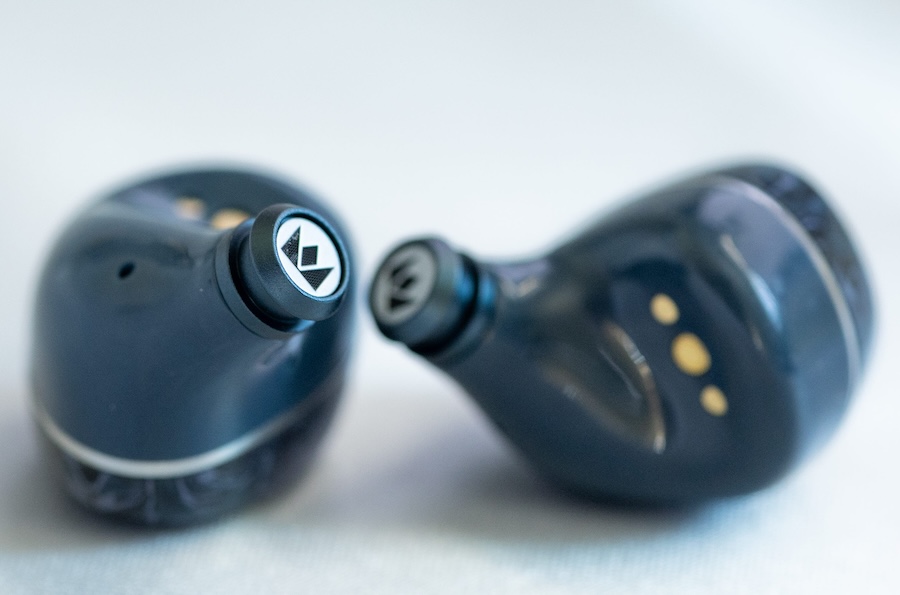
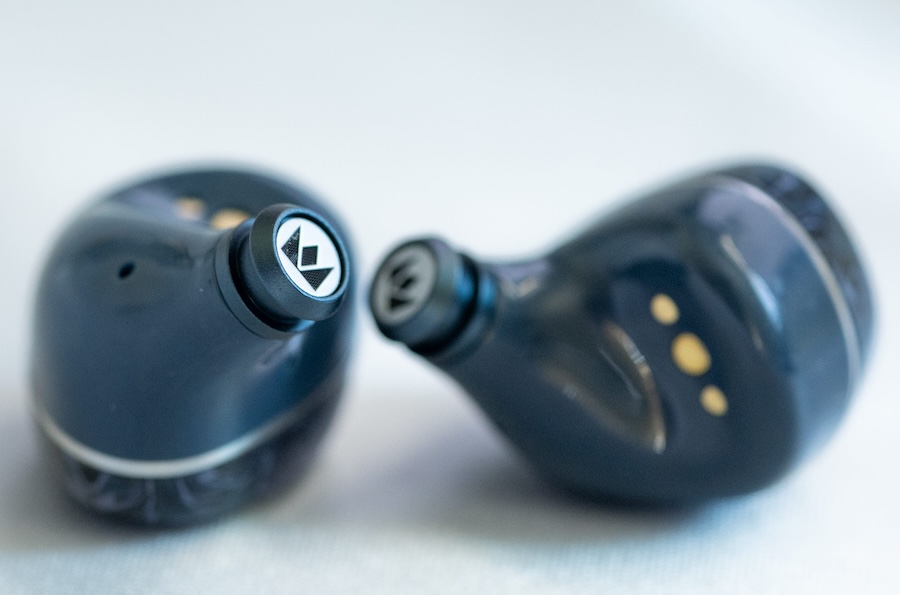
As is tradition with Noble Audio’s IEMs, the Osprey places a major emphasis on aesthetics. It features a four-piece chassis comprising a resin faceplate, plastic middle ring, resin inner face, and short aluminum nozzle. The nozzle is machined from aluminum and topped with a metal debris filter.

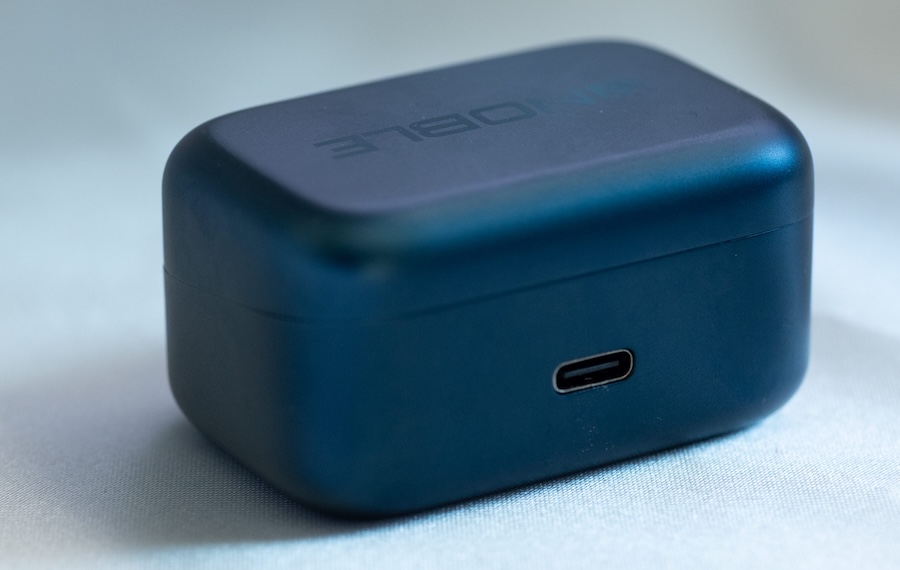
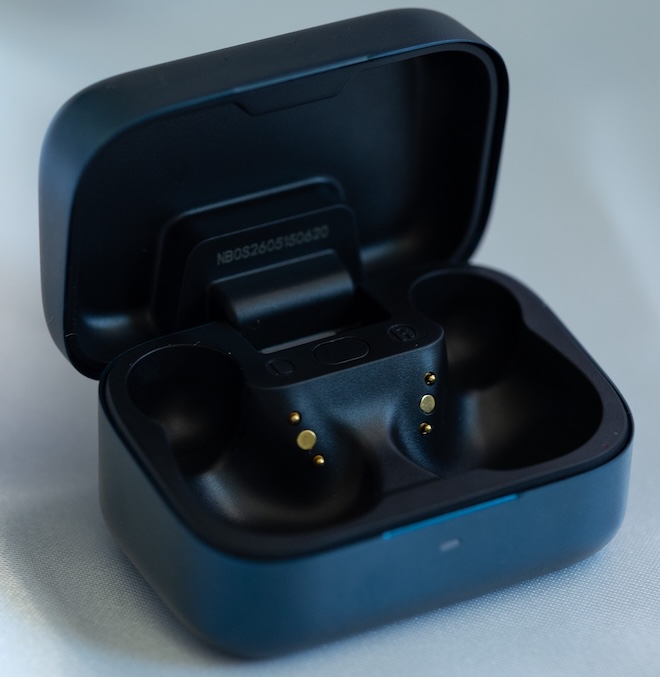
The Osprey’s aluminum charging case features a solid, spring-loaded lid. A charging-status LED is located on the front of the case.

Advertisement
Noble Osprey Wireless Earbuds Charging Case Closed
Noble Osprey Wireless Earbuds Charging Case Open
Photo credit: Resonance Reviews

The rear of the Osprey’s case features a USB-C charging port that supports quick charging. It works with any USB-C cable that meets the USB PD standard, so aftermarket options are viable. Inside, the Osprey’s case features molded recesses for each earbud, complete with standard charging pins and magnetic attachment points.

Comfort

Comfort is a metric that depends heavily on your individual ear anatomy, so mileage will vary.

The Osprey is a lightweight, compact wireless earbud. Its shorter nozzles result in a shallower fit, but I was still able to achieve a solid passive seal with the stock eartips. The foam tips worked best for me, though the silicone options were similarly comfortable. I was able to listen comfortably for multiple consecutive hours, making the Osprey a competent companion for long days in the office.

Accessories

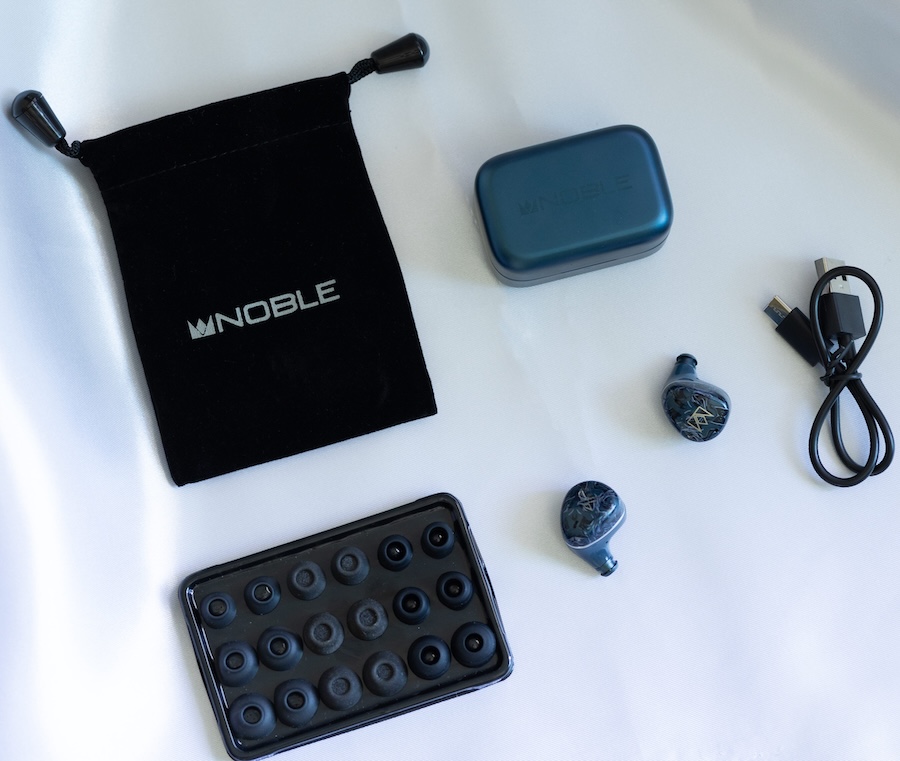
Noble Osprey Wireless Earbuds Accessories
Photo credit: Resonance Reviews
  • 1x Aluminum charging case
  • 1x Felt baggie
  • 3x Pairs of double-flanged eartips
  • 3x Pairs of foam eartips
  • 4x Pairs of standard silicone eartips
  • 1x USB-C to USB-A charging cable

For what amounts to an entry-level pair of wireless audiophile earbuds, this is a solid accessory package. You get a high-quality aluminum charging case, a felt baggie in which to store it, and ten pairs of eartips. The Osprey includes both silicone and foam options, along with three pairs of double-flanged tips.

The included charging cable is short and basic, though functional. I ended up swapping to a different USB-C cable, as the stock cable is too short for my use case and terminates in USB-A rather than USB-C. The case supports quick charging over USB-C, so make sure to use a quality aftermarket cable should you go that route.

Listening

The Noble Audio Fokus app supports onboard EQ, but I did not use it during this portion of the sonic analysis. Should you wish to tweak the Osprey’s sound, you can select a genre-based preset or adjust the 10-band EQ manually.

Advertisement

Noble’s sonic intent with the Osprey is clear: deliver a stock tuning that lives up to the audiophile promise of clear, robust sound. It features a gently V-shaped sound signature, with lifted and well-extended sub-bass, mild warmth through the lower midrange, a slight upper-midrange lift for instrumental clarity, and bright, but not sharp, treble.

Advertisement. Scroll to continue reading.

Precise, Atmospheric Bass

Noble gave the Osprey’s bass a full-bodied but nimble presentation. Its sub-bass sits just behind the mid-bass, delivering depth and articulation without becoming messy.

The Osprey’s lower register is textured and quick, allowing it to convey an excellent sense of atmosphere on “The Dark” by Thrice. The track’s mix of synthetic bass lines and plucky bass guitar plays well with the Osprey’s expressive mid-bass.

Advertisement

The weighty drums at the beginning of “Better Strangers” by Royal Blood land with body and authority, decaying precisely into the soundstage’s black background. The gritty, filtered drop-D guitars in the foreground carry an addictive bassy undertone, giving them a physicality the track desperately needs.

Electronic tracks play well with the Osprey, leveraging its solid extension to generate tactile but respectful punch and rumble. On “The People” by Uppermost, the Osprey rendered the bass line with a robust, substantial timbre.

Beyond simple extension and speed, the Osprey’s bass tuning gives it the ability to sound complete and organic without thinning out the bottom end. That said, some tracks could really use additional bass presence. “Drunk Wishing (Hairitage Remix)” relies on a wall-of-bass effect that the Osprey’s more moderate low end does not quite produce.

You can crank the bass through the EQ to get a little closer to a basshead’s preferences, but ultimately, the Osprey does not seem interested in producing much more sub-bass than it delivers by default.

Advertisement

Hearty, But Lightweight, Midrange

The Osprey’s midrange sits a little north of neutral, delivering mild warmth and an overall clean tonality. Noble balances the upper and lower mids well, allowing it to give harmonically complex elements their proper weight. Acoustic guitar is particularly synergistic with the Osprey’s midrange, pulling a fantastic sense of presence and completeness from tracks like “Life of Illusion” by Foo Fighters. Electric guitar is likewise well-toned and textured. The gritty distortion in “I Got” by Young the Giant streaks from the Osprey’s drivers, staging both guitars with realism and precision.

Even during busy passages, the Osprey maintains its composure, presenting a deep array of layers. It nails the cascading, contrasting layers of instrumentation in the outro of “Endless” by Slow Hours. Each strike of the piano hammer against its strings carries distinction and air, standing apart from the bittersweet violin breathing gently in the background.

Clear & Energetic Treble

The Osprey’s treble tuning is excellent. Combined with a carefully selected, high-performance driver setup, there are not many IEMs, wired or otherwise, at this level of treble refinement.

The Osprey’s single balanced-armature driver works overtime, delivering impressive texture alongside fine-grained control over its deeply layered treble. I was particularly impressed by its ability to manage treble-heavy elements under pressure. The dense soundstage of “Weak” by Seether is a tough mix to render, but the Osprey captures the metallic slam of the hi-hats and tambourines with aplomb. It also beautifully stages the ringing bells at 1:58 in “Wish You Were Here” by Incubus, a fragile micro-detail buried deep in the track and easy to smudge.

Advertisement

The Osprey’s treble is clear and energetic without stepping beyond the bounds of comfort, even with my treble sensitivity. There is no hint of sharpness or sibilance, even on roughly mastered tracks like “Satisfy” by Nero.

Mic & Phone Call Quality

While I’m stoked on the Osprey’s sonic performance, its microphone performance is not quite as impressive. The dual onboard mics work well in quiet spaces, but struggle to pick up my voice when I take calls in environments with considerable background noise. The built-in noise-isolation technology also seems to struggle with vocal clarity in noisier settings, sometimes introducing harsh or unnatural artifacts.

Advertisement. Scroll to continue reading.

You will also need to position each earbud carefully to maintain the proper angle for the microphones. Otherwise, the Osprey can struggle to pick up your voice when speaking quietly. Other Bluetooth IEMs offer larger microphone arrays while delivering clearer, more intelligible call audio.

Advertisement

Competitors like the Sony WF-1000XM4, WF-1000XM5, and WF-1000XM6, along with the Bose QuietComfort Ultra, offer materially better experiences for standard calls and PC meetings, especially when you are trying to keep your voice down.

Noise Cancelling

I’m not a big ANC guy, but I recognize its utility when trying to take an important call in a loud space. I also frequently make use of ANC when traveling by plane, especially if there’s a perturbed child onboard.

The Osprey’s ANC is middling at best, however. It can reduce interference from a TV in the next room or kitchen noise from down the hall, but it is not especially useful in crowded coffee shops or on busy streets. Top-tier ANC from true wireless IEMs like the Sony WF-1000XM6 provides a profoundly different experience, and if you rely heavily on ANC day to day, I would stick with an offering like that.

Thankfully, I rarely, if ever, use ANC in my daily routine, so this is a downside I’m willing to tolerate.

Advertisement

While not exactly a noise-cancelling feature, the Osprey also supports Ambient Mode, a kind of inverse ANC that pipes environmental sound into the IEMs. Parents, or anyone who needs to maintain sonic awareness of their surroundings, will be happy to know that Ambient Mode works well, even in crowded or busy places.

Noble Osprey Wireless Earbuds Back
Photo credit: Resonance Reviews

The Bottom Line

The Noble Osprey is an audiophile true wireless earbud designed with a clear sense of purpose. Rather than chasing every app feature, wellness metric, and ANC trick in the book, Noble has focused its efforts on the part that matters most to listeners who actually buy audiophile earbuds: the sound.

Its hybrid driver setup delivers a balanced, well-extended presentation with textured bass, a clean and articulate midrange, and unusually refined treble for $199. Detail retrieval is excellent, and the Osprey avoids the brittle, overcooked treble that often passes for “resolution” in this category. Add a compact fit, aluminum charging case, generous tip selection, LDAC support, and onboard 10-band EQ, and Noble has put together a genuinely compelling audio-first package.

That focus comes with obvious compromises. ANC is merely serviceable, microphone performance falls short in noisy environments, and the Noble Fokus app is stripped down compared with Sony, Bose, and JBL. There is no aptX support, no elaborate ecosystem of location-based profiles or device-finding features, and no illusion that these are meant to replace a top-tier mainstream travel earbud.

Advertisement

The Osprey is unique because it treats true wireless as a vehicle for serious portable listening rather than a feature checklist with drivers attached as an afterthought. It will not win the airport, the conference call, or a fight with a screaming espresso machine. But for listeners who value musicality, detail, comfort, and a properly sorted tuning above all else, it is one of the more persuasive options at its price.

Pros:

  • Small, light and ergonomic
  • Powerful hybrid driver setup
  • Balanced and well-extended sound signature
  • Articulate, textured midrange
  • Great detail retrieval
  • Solid accessory package
  • Support for LDAC, SBC

Cons:

  • ANC quality falls behind mainstream competitors
  • Barebones app offers minimal feature-set
  • No support for APT-X codecs
  • Mediocre mic quality while on call
Advertisement. Scroll to continue reading.

Our Ratings

★★★★★★★★★★ Sound Quality

★★★★★★★★★★ Comfort

★★★★★★★★★★ Usability

Advertisement

★★★★★★★★★★ Build Quality

★★★★★★★★★★ Value

Price & Availability

Source link

Advertisement
Continue Reading

Tech

842,000 American Households Lost Power Today During a Heatwave

Published

on

As America began celebrating its 250th birthday Saturday, 842,000 homes reported power outages, notes ABC News. Figures from tracking site PowerOutage showed states in America’s Northeast and Midwest were impacted by severe weather and extreme heat.

That number, which will fluctuate throughout the day as crews work to restore power, is for households, meaning that the number of people impacted by these outages is likely to be much larger… Millions of Americans, however, will be contending with a heatwave that is blanketing much of the country, including in Philadelphia where the Salute to Independence Semiquincentennial Parade that had been set for Friday was canceled due to the dangerous heat wave, according to Philadelphia ABC station WPVI. Elsewhere, America’s Independence Day Parade, which was scheduled for 10:30 a.m. on July 4 in downtown Washington, D.C. was canceled by organizers late Friday evening due to the extreme heat in the District of Columbia… Amtrak announced it will be canceling a number of trains due to heat-related conditions.

The outages seemed to last throughout the day, with 790,103 household outages still in effect by 4:30 p.m. EST. Ironically, the power outages hit several American states that were among the country’s original 13 freedom-declaring colonies, including New Jersey (143,072 outages), Pennsylvania (40,944 outages), and Virginia (27,392 outages).

CNBC adds that America’s largest power grid operator said Friday “it was under a federal alert to cut electricity consumption across its territory as it battled generator outages, massive overloading on its transmission lines and a surge in air conditioning use from prolonged sweltering heat.”

Advertisement


PJM said it told utilities to reduce electricity to customers who are under contract to reduce consumption during emergencies. PJM serves 67 million people in the Mid-Atlantic, South and Washington, D.C., area. Spot wholesale electricity prices in northern Virginia, home to the largest collection of data centers in the world, have surged beyond $2,000 per megawatt hour this week. That compares to about $40 per MWh when PJM is not in distress.

Source link

Continue Reading

Tech

25 Essential American Films to Watch This Fourth of July

Published

on

America has spent 250 years telling itself stories about freedom, reinvention, courage, money, violence, and who gets included in the national picture. These films do not all agree with one another, and that is precisely why they belong together. They show the country at its most hopeful, cruel, inventive, delusional, funny, ambitious, and occasionally impossible to defend.

Because nothing says “understanding America” like sitting in the dark for two hours watching cowboys, capitalists, the underdog, and Cold War freakouts.

This isn’t just a list of essential films made in America. It is a lineup of films actually set in the United States that dig into what it means to live, dream, scheme, survive, fail, reinvent yourself, or simply spiral here.

From manifest destiny and racial reckoning to suburban dread, war, ambition, greed, Hollywood fantasy, and the more questionable corners of capitalism, each film captures a different piece of the American experience—for better, though usually for worse.

Advertisement

And before anyone starts clutching their vintage film reels about Citizen Kane or The Wizard of Oz not making the cut, they’ve been on every list since the dawn of time. We know. They’re legendary. But honestly? We’re so over it. Back of the bus, Dorothy!

And let’s get this out of the way too: we’re huge fans of the ‘80s. We’ve watched The Breakfast Club and Ferris Bueller’s Day Off about 40 times each. But let’s be real—essential? Nah. We love ‘em, but they’re not making this list.

Honorable mentions? Of course. I’m not a monster, although the medication they put me on might speak otherwise. Mr. Smith Goes to Washington gave us the original idealistic meltdown back when filibusters were dramatic instead of just depressing. Ahem…Senator Booker.  

The Apartment and Some Like It Hot reminded us that Americans used to flirt with wit and cross-dressing before Elon Musk and X ruined nuance. Jaws made everyone afraid of swimming, boating, or doing anything remotely fun near the ocean—and basically invented summer panic.

Advertisement

Gettysburg is four hours of facial hair and cannonballs for the History channel crowd. 

Rocky? It’s the American Dream in sweatpants. Stallone turned a mumbling meatpacking palooka into a national icon who not only punched out Mr. T, but also singlehandedly ended the Cold War by outlasting a 6’6″ steroid-fueled Soviet science experiment. #Imustbreakyou

Oh, and Bonnie and Clyde: America’s original sexy criminals, armed with great outfits, worse ideas, and enough slow-motion bloodshed to earn permanent residency in cinematic legend.

Advertisement. Scroll to continue reading.
Advertisement

Then there’s The Philadelphia Story, where the problems of the American rich are so charmingly presented that you almost forget you’re rooting for people who have never done laundry, faced a utility bill, or checked their narcissism at the front foyer.

25 Essential American Films

These 25 essential American films span silent comedy, noir, Westerns, musicals, war dramas, political satire, horror, and the darker corners of the American dream. Each is set in the United States and offers something to say about the country’s history, ambition, class divides, race, violence, celebrity, capitalism, and enduring talent for turning disaster into spectacle.

They are also films worth owning. A proper 4K UHD or Blu ray release preserves the cinematography, sound, and detail that streaming services too often compress into submission. Our friends at The Criterion Collection would agree with that point rather strongly.

king-kong-1933

King Kong (1933)

Directed by Merian C. Cooper & Ernest B. Schoedsack

Why it’s essential: King Kong is a giant metaphor for exploitation, ambition, spectacle, and New York’s enduring habit of turning everything into a show until it comes crashing down, literally.

Advertisement

Released during the Great Depression, the film turns Manhattan into both a dream factory and a place of brutal decline, where desperate people chase money, fame, and survival beneath skyscrapers that suddenly feel less permanent than advertised. Kong is exploited, commodified, paraded before a paying audience, and then blamed when the whole arrangement goes predictably sideways. America has repeated that business model with impressive consistency.

It also helped create the modern giant monster movie, proving that visual effects, scale, terror, and genuine pathos could share the same screen. The Empire State Building finale remains one of cinema’s great images, and somehow still feels more honest about New York than half the city’s luxury condo brochures.

Where to buy: $19.99 at Amazon


gone-wind-dvd

Gone With the Wind (1939)

Directed by Victor Fleming

Why it’s essential: Victor Fleming’s Gone With the Wind remains one of Hollywood’s grandest and most technically impressive spectacles, even as it asks the audience to mourn a version of the Old South built on selective memory, wealth, and the erasure of slavery’s brutality.

Advertisement

That contradiction is precisely why it still matters. The film is beautiful, romantic, deeply problematic, and impossible to separate from America’s long habit of turning history into pageantry when the truth gets uncomfortable.

It also lands differently now, as Atlanta, Nashville, Memphis, Lexington, Raleigh, Richmond, and Charlotte reshape the economic and cultural map of the South. Money, companies, and people are moving into a region that is no longer content to play supporting character to New York, Boston, Los Angeles, or San Francisco. But the new South still carries the old one with it, including the mythology, inequality, ambition, and unresolved history that Gone With the Wind dresses up in curtains and calls tradition.

Advertisement. Scroll to continue reading.

Where to buy: $23.74 at Amazon

Advertisement

stagecoach-blu-ray

Stagecoach (1939)

Directed by John Ford

Why it’s essential: John Ford’s Stagecoach did not invent the Western, but it gave the genre a working engine. Cowboys, redemption, class anxiety, danger, and a bumpy ride through Monument Valley all arrive in one compact, thrilling package. It also made John Wayne a star and showed Hollywood that the frontier could hold an entire country’s worth of arguments.

The film is still great fun, but its larger importance is how much it helped define the American West on screen. The genre may have largely wandered away from movie theaters, but television has kept the frontier myth on life support with Taylor Sheridan’s endless range of ranches, oil fields, lawmen, and wounded men staring at mountains. Yellowstone18831923Lawmen: Bass ReevesThe MadisonMarshals, and Landman all work different corners of the same territory.

Ford’s version is cleaner, faster, and more mythic than most of what followed. But the basic machinery remains the same: land, money, violence, class, family, and people trying to outrun the country they helped build.

Where to buy: $39.99 at Amazon

Advertisement

best-years-blu-ray

The Best Years of Our Lives (1946)

Directed by William Wyler

Why it’s essential: William Wyler’s The Best Years of Our Lives is a quietly devastating film about three World War II veterans trying to return to jobs, marriages, families, and a country eager to celebrate them without fully understanding what they have brought home.

Fredric March and Dana Andrews are extraordinary, but Harold Russell gives the film its most unforgettable performance. A real World War II veteran who lost both hands during the war, Russell plays Homer Parrish with a directness and vulnerability that no amount of studio polish could fake. His performance was so powerful that the Academy gave him both an honorary Oscar for bringing hope and courage to fellow veterans and the competitive Oscar for Best Supporting Actor.

The film is compassionate without becoming sentimental and honest without turning suffering into spectacle. America loves a victory parade. This film asks what happens after the marching band goes home.

Where to buy: $21.99 at Amazon

Advertisement

godfather-4k

The Godfather (1972)

Directed by Francis Ford Coppola

Advertisement. Scroll to continue reading.

Why it’s essential: Francis Ford Coppola’s The Godfather is not merely a gangster film. It is an American family saga about power, immigration, loyalty, capitalism, and the ugly price of treating love as another business arrangement.

Marlon Brando, Al Pacino, James Caan, Robert Duvall, and Diane Keaton give the film its soul, but Gordon Willis gives it its shadows. Every darkened room, amber glow, and half concealed face makes the Corleone world feel both grand and suffocating.

It remains essential because it understands that the American dream can look remarkably noble from across the room, right up until someone closes the door and starts taking meetings. Do not settle for streaming. This one deserves a 4K UHD disc with Dolby Vision and Atmos, preferably watched with the lights down and nobody asking why Michael seems so quiet.

Advertisement

Where to buy: $25.99 at Amazon


the-general-1926-dvd

The General (1926)

Directed by Buster Keaton & Clyde Bruckman

Why it’s essential: Buster Keaton’s The General is one of the great silent comedies and one of the most astonishing action films ever made. Keaton turns a Civil War train chase into a machine of perfect timing, impossible stunts, collapsing bridges, and physical comedy so precise that most modern blockbuster directors should be required to watch it before being allowed near a green screen.

Its Confederate point of view deserves context, particularly because the film turns a brutal chapter of American history into an adventure built around loyalty, romance, and locomotives. But as filmmaking, it remains extraordinary. Keaton does not need dialogue to sell danger, heartbreak, or a man trying to save his train, his girl, and whatever remains of his dignity.

Find the best restoration you can, preferably with a strong musical score. The film moves like it was made yesterday, which is more than can be said for most action movies with a budget large enough to purchase a small country.

Advertisement

Where to buy: $16.31 at Amazon


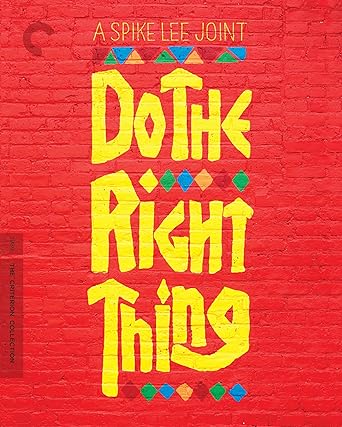
do-right-thing-criterion

Do the Right Thing (1989)

Directed by Spike Lee

Why it’s essential: Spike Lee’s Do the Right Thing is a blistering, funny, frighteningly alive portrait of race, community, policing, pride, and the pressure that builds when nobody feels heard. It does not offer a tidy lesson or a safe villain. It shows a neighborhood under a brutal summer heat, with every insult, misunderstanding, and act of disrespect adding another degree.

Along with films like Juice and Boyz n the Hood, it forced audiences to look at inner city America without the usual suburban filter or a reassuring studio ending. These were stories many people preferred not to acknowledge because they made poverty, anger, police violence, and racial tension impossible to treat as somebody else’s problem.

Advertisement. Scroll to continue reading.
Advertisement

A great deal has changed since 1989. Black actors and actresses now lead blockbuster franchises, prestige films, major television series, and command serious power in Hollywood. But progress does not hand anyone a lifetime exemption from prejudice. Some of the people who made careers exposing America’s uglier instincts have later shown blind spots of their own, which should raise an eyebrow or two. Empathy is not supposed to stop at the edge of your own group.

That is part of why Do the Right Thing endures. It is not a sermon. It is a warning about what happens when people stop seeing one another as human beings and start treating every disagreement as a reason to burn the whole block down.

Where to buy: $39.95 at Amazon


psycho-1960-4k

Psycho (1960)

Directed by Alfred Hitchcock

Why it’s essential: Alfred Hitchcock’s Psycho did not merely change horror cinema. It taught audiences that the rules could vanish halfway through the film, that a motel shower was no longer a safe place, and that checking into a roadside motel was perhaps not the carefree adventure it once appeared to be.

Advertisement

Anthony Perkins makes Norman Bates one of cinema’s most unsettling characters because he is so polite, awkward, and quietly broken. Janet Leigh does remarkable work before Hitchcock pulls the rug out from under everyone watching. The film remains a tightly constructed exercise in dread, black humor, repression, and terrible decisions, with its stark black and white photography looking especially vicious in 4K.

Where to buy: $13.99 at Amazon


Sunset Boulevard (1950)

Directed by Billy Wilder

Why it’s essential: Billy Wilder’s Sunset Boulevard is a dark, funny, and deeply unsettling autopsy of old Hollywood, fame, vanity, and what happens when an industry decides you are no longer useful but forgets to tell you.

Gloria Swanson is magnificent as Norma Desmond, a silent era star living inside a mansion sized for an empire and a fantasy sized for an entire studio lot. William Holden is no innocent either, which is part of the fun. The film understands that Hollywood will build you a palace, turn you into a legend, and then leave you there with the lights off.

Advertisement

It remains one of the great films about celebrity and self invention, with enough shadows, bitterness, and quotable cruelty to make most modern Hollywood satire look like a polite memo from Human Resources.

Where to buy: $15.99 at Amazon

Advertisement. Scroll to continue reading.

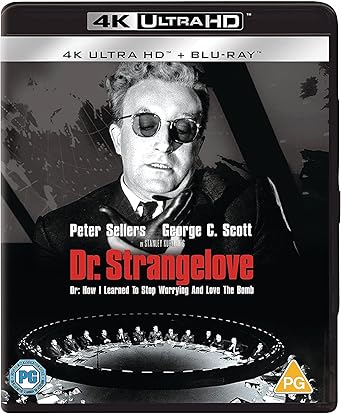
strangelove-4k

Dr. Strangelove or: How I Learned to Stop Worrying and Love the Bomb (1964)

Directed by Stanley Kubrick

Why it’s essential: Stanley Kubrick’s Dr. Strangelove is a razor sharp Cold War satire about nuclear politics, military incompetence, sexual panic, and the terrifying possibility that the people with the biggest buttons are also the least qualified to touch them.

Advertisement

Peter Sellers is magnificent in multiple roles, but he is hardly carrying the lunatic asylum alone. George C. Scott turns General Buck Turgidson into a masterpiece of red faced military hysteria, Sterling Hayden makes precious bodily fluids sound like a matter of national survival, and Slim Pickens rides into history with one of the most indelible endings in American cinema.

The film remains funny because Kubrick understood that power often looks ridiculous right before it becomes catastrophic. Sellers is at his absolute best, with The Party running a close second, although that film is considerably less likely to end civilization.

Where to buy: $26.99 at Amazon


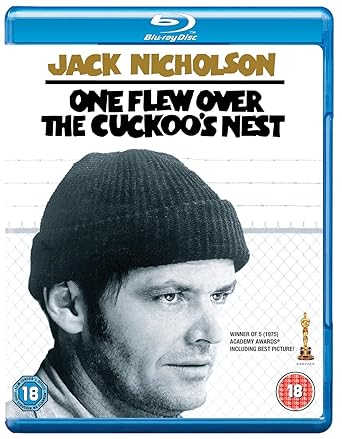
cuckoo-nest-blu-ray

One Flew Over the Cuckoo’s Nest (1975)

Directed by Miloš Forman

Why it’s essential: Miloš Forman’s One Flew Over the Cuckoo’s Nest is a furious, funny, and deeply uncomfortable battle between individuality and institutional power. Jack Nicholson’s Randle McMurphy arrives ready to charm, provoke, and generally make everyone’s life more difficult, then discovers that Nurse Ratched and the system behind her have no intention of playing fair.

Advertisement

The film remains a counterculture landmark because it understands how easily rules, routines, and bureaucracy can become tools for crushing people who do not fit neatly into the approved box. It is America in a padded room, with worse lighting and a much stricter dress code.

Where to buy: $38.63 at Amazon


the-searchers-blu-ray

The Searchers (1956)

Directed by John Ford

Why it’s essential: John Ford’s The Searchers is one of the great American Westerns, but it is far too unsettled and angry to be mistaken for simple frontier nostalgia. John Wayne’s Ethan Edwards moves through Monument Valley like a man possessed, carrying grief, racism, violence, and a very personal version of manifest destiny wherever he goes.

The landscapes are magnificent, the compositions remain staggering, and the film’s influence on generations of directors is impossible to miss. But its real power comes from the way it questions the mythology it helped create. The Searchersunderstands that the American West was built on beauty, brutality, and people who rarely came home unchanged.

Advertisement
Advertisement. Scroll to continue reading.

Where to buy: $9.99 at Amazon


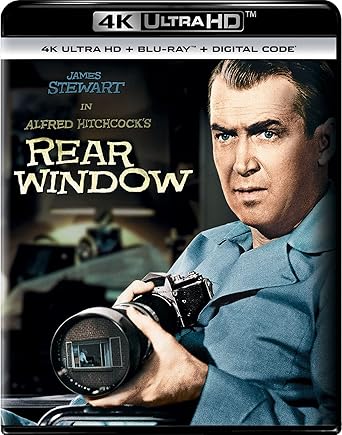
rear-window-4k

Rear Window (1954)

Directed by Alfred Hitchcock

Why it’s essential: Alfred Hitchcock turns a single apartment, a courtyard, and one bored man with a broken leg into a masterclass in suspense, voyeurism, loneliness, and the dangerous things that happen when curiosity stops minding its own business.

James Stewart spends the film watching his neighbors as though cable television has not yet been invented, while Grace Kelly arrives looking so impossibly elegant that even murder seems briefly beside the point. Rear Window is tense, witty, and endlessly rewatchable, with Hitchcock using every glance, window frame, and suspicious late night trip across the courtyard to remind us that America has always enjoyed watching other people’s lives a little too much.

Advertisement

Where to buy: $12.99 at Amazon


singin-rain-4k

Singin’ in the Rain (1952)

Directed by Gene Kelly & Stanley Donen

Why it’s essential: Singin’ in the Rain is Hollywood looking back at its own panic during the shift from silent films to sound and somehow turning professional terror into one of the most joyful musicals ever made.

Gene Kelly and Stanley Donen give the film its impossible energy, but the real trick is how sharp it remains about vanity, image, talent, and an industry terrified that the next technological change might leave half its stars unemployed. It is funny, romantic, technically dazzling, and still one of the best reminders that Hollywood has always been in the business of reinventing itself before the audience notices the scaffolding.

Where to buy: $24.25 at Amazon

Advertisement

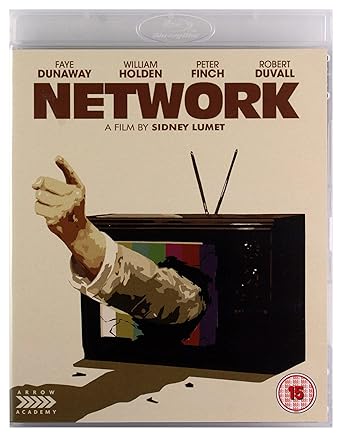
network-blu-ray

Network (1976)

Directed by Sidney Lumet

Why it’s essential: Sidney Lumet’s Network is a savage, funny, and increasingly uncomfortable portrait of television, corporate power, public outrage, and the moment entertainment decides it no longer needs to pretend it serves the public.

Paddy Chayefsky’s script saw the coming circus with frightening clarity, while Peter Finch turns Howard Beale into more than a man having a breakdown on television. He becomes a product, a ratings weapon, and eventually a warning label nobody bothers to read. The fact that it now feels less like satire and more like a staff meeting is not especially reassuring.

Advertisement. Scroll to continue reading.

Where to buy: $49.95 at Amazon

Advertisement

Double Indemnity (1944)

Directed by Billy Wilder

Why it’s essential: Billy Wilder’s Double Indemnity is the defining film noir, a perfect storm of lust, greed, bad judgment, and people making catastrophic decisions in rooms with very poor lighting.

Barbara Stanwyck is all sharp edges and ankle bracelets as Phyllis Dietrichson, while Fred MacMurray spends the film discovering that murder for profit sounds far more efficient before you actually try it. It is stylish, poisonous, and darkly funny, with every shadow suggesting that someone is about to make things much worse.

Where to buy: $49.95 at Amazon


Version 1.0.0

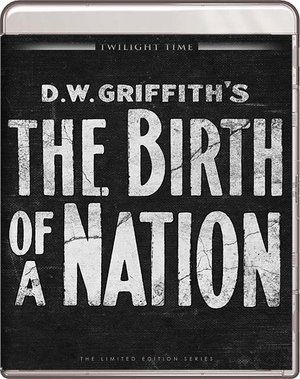
The Birth of a Nation (1915)

Directed by D.W. Griffith

Why it’s essential: D. W. Griffith’s The Birth of a Nation helped establish the language of feature filmmaking through its scale, editing, camera movement, and narrative ambition. Its influence on Hollywood is undeniable.

Advertisement

So is its racism. The film glorifies the Ku Klux Klan, distorts Reconstruction, and turns white supremacy into spectacle. It belongs in any serious discussion of American film history, but not as a casual recommendation or a nostalgic monument. Watch it with context, criticism, and a clear understanding of the damage it helped normalize.

Where to buy: $39.48 at Amazon


intolerance-1916

Intolerance (1916)

Directed by D.W. Griffith

Why it’s essential: D. W. Griffith’s Intolerance is a technical and structural landmark, interweaving four stories across different eras to examine persecution, violence, religious extremism, and the human habit of treating cruelty as a civic duty.

Its enormous sets, restless editing, and ambitious crosscutting helped expand what feature filmmaking could attempt in 1916. But it cannot be separated from the racist legacy of The Birth of a Nation, which makes this less a straightforward celebration than a complicated historical artifact. The achievement is real. So is the stain.

Advertisement
Advertisement. Scroll to continue reading.

Where to buy: $39.48 at Amazon


all-about-eve-1960

All About Eve (1950)

Directed by Joseph L. Mankiewicz

Why it’s essential: Joseph L. Mankiewicz’s All About Eve remains one of the sharpest and funniest dissections of ambition, celebrity, aging, and professional jealousy ever put on film. Bette Davis is magnificent as Margo Channing, a Broadway star watching a younger woman inch closer to her spotlight with a smile sharp enough to draw blood.

The film understands that American success often comes with a waiting room full of people hoping you will lose your grip on it. It is glamorous, vicious, wildly quotable, and still has one of the greatest warnings in movie history: “Fasten your seatbelts. It’s going to be a bumpy night.”

Advertisement

Where to buy: $39.95 at Amazon


magnificent-amberson

The Magnificent Ambersons (1942)

Directed by Orson Welles

Why it’s essential: Orson Welles’ follow up to Citizen Kane was famously mauled by the studio, with a large portion of his original cut lost to history. And somehow, The Magnificent Ambersons still remains one of the most beautiful and quietly devastating films ever made about old money, family decline, and America’s appetite for progress even when it runs over everyone in its path.

The Ambersons believe their wealth and social standing will protect them forever. Then modern life arrives, the automobiles get louder, and the family discovers that history has no particular interest in preserving anyone’s drawing room. It is a sad, elegant reminder that American dynasties rarely disappear gracefully.

Where to buy: $39.95 at Amazon

Advertisement

kill-mockingbird-1962

To Kill a Mockingbird (1962)

Directed by Robert Mulligan

Why it’s essential: Robert Mulligan’s adaptation of Harper Lee’s novel remains one of Hollywood’s clearest statements about moral courage, racial injustice, and the obligation to do the right thing when the room would prefer you kept quiet.

Gregory Peck gives Atticus Finch the decency, restraint, and moral authority that made the character an American ideal for generations. The film does not solve the racism at its center, nor should it, but it understands that justice is often less about winning than refusing to look away when everyone else has decided not to see.

Advertisement. Scroll to continue reading.

Where to buy: $29.96 at Amazon

Advertisement

there-will-be-blood-movie

There Will Be Blood (2007) 

Directed by Paul Thomas Anderson

Why it’s essential: Paul Thomas Anderson turns the American dream into an oil soaked fever dream about ambition, faith, greed, and the kind of loneliness that can only be cured by owning everything in sight.

Daniel Day Lewis is magnificent as Daniel Plainview, a man who sees every human relationship as either leverage, competition, or an inconvenience standing between him and another barrel of crude. There Will Be Blood is a modern American epic that understands capitalism as both a religion and a contact sport.

And for all of its brutality, the film does not argue that capitalism is a failed system. It argues that it works remarkably well, right up until the people most gifted at winning it decide everyone else is collateral damage. The Mayor of New York City may have some notes, but the rest of us still need to live in the world as it is.

Where to buy: $9.99 at Amazon

Advertisement

manchurian-candidate

The Manchurian Candidate (1962)

Directed by John Frankenheimer

Why it’s essential: John Frankenheimer turns Cold War anxiety into a nightmare of political manipulation, conditioned violence, personal trauma, and naked ambition. The Manchurian Candidate is not just a thriller about enemies abroad. It is about what happens when power treats people as tools and patriotism becomes something to exploit.

Its influence on political thrillers is enormous, but its real strength is how controlled and unsettling it remains. Frank Sinatra is excellent, Angela Lansbury is terrifying, and the film understands that the most dangerous people in America are often already in the room.

Where to buy: $59.95 at Amazon


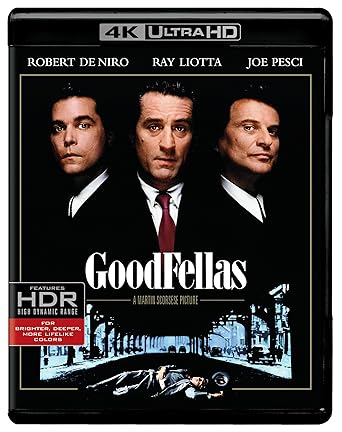
goodfellas-1990

Goodfellas (1990)

Directed by Martin Scorsese

Why it’s essential: Ray Liotta, Robert De Niro, and Joe Pesci deliver the most quotable, cocaine fueled crash course in climbing the capitalist ladder, assuming that ladder is built from stolen goods, threats, and the occasional meat slicer.

Advertisement
Advertisement. Scroll to continue reading.

Scorsese does not merely romanticize mob life. He seduces you with the clothes, money, music, and manic velocity of it all, then reminds you that the bill eventually comes due. Usually at 3 a.m. in a parking lot, or just before someone gets fed to the pizza oven.

Where to buy: $15.95 at Amazon


wonderful-life-4k

It’s a Wonderful Life (1946)

Directed by Frank Capra

Why it’s essential:  A heartwarming classic that blends optimism, personal sacrifice, and the power of community in a way that resonates with audiences year after year. It’s a Wonderful Life isn’t just a Christmas movie—it’s a timeless exploration of what truly matters in life. James Stewart’s portrayal of George Bailey, a man questioning his purpose, has become emblematic of the everyman’s struggle. A cinematic triumph that proves sometimes the most wonderful thing you can be is simply human.

Advertisement

Where to buy: $25.99 at Amazon


Start With One Tonight

Not sure where to begin? Start here.

For the American dream gone rancid: There Will Be Blood
For race, community, and a country at the boiling point: Do the Right Thing
For media, politics, and public insanity: Network
For war and the complicated business of coming home: The Best Years of Our Lives
For the American West and the myths we still cannot quit: The Searchers

Advertisement

Source link

Continue Reading

Tech

Are Wars Blurring Lines Between Corporate and National Security?

Published

on

Subsea cables. Ukrainian power stations. Russian oil refineries. Even airports, water-desalination plants and Amazon data centers.

They’ve all become targets in wartime, notes the Wall Street Journal, and around the world now arguments “are already brewing between companies and governments over new regulations and potential costs.”

In Germany, powerful associations representing private companies and municipal utilities have pushed back against new standards for physical protection, warning they could spell financial ruin. New Zealand’s government has faced resistance from industry groups over a proposal to fine critical-infrastructure companies and their directors for cybersecurity breaches… A sign of how lines are blurring: The North Atlantic Treaty Organization’s 32 countries last year agreed that as part of a pact to spend 5% of economic output on defense and security, 1.5% would go to military-adjacent needs including protecting critical infrastructure and networks. Spending targets range from cybersecurity and industrial capacity to railroads, bridges and ports needed for military logistics… “We need a wide concept of defense — defense is no longer just military,” said Italian Adm. Giuseppe Cavo Dragone, NATO’s top military adviser.

Adding to the complexity, companies now need to protect the data networks that serve as gateways to critical infrastructure. Hackers increasingly target not just computer files to steal information but also systems managing vital functions like building access and factory control, remotely causing physical damage or enabling espionage. U.S. authorities in April warned that Iranian hackers were trying to disrupt American drinking-water systems by targeting computer equipment that connects hardware with software. A year earlier, suspected Russian hackers remotely manipulated valves on a Norwegian hydroelectric dam…

Advertisement

Another challenge will be parsing jurisdictions and liability for assets that cross international waters or are damaged in combat — such as subsea data cables or energy pipelines. Turf battles between law enforcement and militaries are already complicating efforts… “The private owner can invest in redundancy, monitoring, and repair capacity, but only governments and militaries can really deter, patrol, attribute, or respond to hostile state activity,” said Marc Glasser, who worked on cybersecurity and infrastructure security for three decades at the U.S. Department of Transportation and the Department of Homeland Security…. Companies say they need greater clarity from governments on what protections they will provide and subsidies to help them defend privately owned assets that provide a public good. Most governments don’t provide incentives for companies to invest more than the minimum legal resilience requirements.
The article notes that in May the chief executive of California’s Port of Long Beach “launched a cyber-defense operations center to thwart tens of thousands of cyberattacks daily, which jeopardize computer systems and all equipment connected to them.”

The article also points out that the EU adopted new regulations requiring countries to reduce vulnerabilities, and new laws proposed in the U.K. now “seek to increase penalties for subsea sabotage, updating codes that date to when telegraph cables were first laid in the 19th century.”

Source link

Advertisement
Continue Reading

Tech

This Chinese startup thinks fizzy drink gas could make rocket launches dramatically cheaper and cleaner

Published

on


  • Supercritical CO₂ could eliminate some of rocketry’s most expensive infrastructure requirements
  • Cold launches avoid exposing launch pads to destructive exhaust temperatures exceeding 3,000°C
  • Engine ignition occurs only after the rocket clears the launch platform safely

Chinese aerospace startup Z-Trak Space is exploring an unusual launch system using carbon dioxide (CO₂) commonly associated with fizzy drinks rather than rocket exhaust.

The proposal centres on supercritical CO₂, a state achieved when the gas remains above specific temperature and pressure thresholds simultaneously.

Source link

Advertisement
Continue Reading

Tech

AI Chatbot Pricing Breakdown: Is Premium AI Worth the Cost?

Published

on

To get the most out of an AI chatbot these days, you have to pay up. The free tiers of the most popular chatbot options are decent, but those looking to take advantage of all the features will be forced to pay a premium. A couple of years ago, the idea of actually paying for AI seemed absurd, but that’s not the case now. 

A recent CNET survey revealed that US adults pay an average of $111 on subscriptions per month and lose up to $252 annually on unused subscriptions annually, with millennials and Gen Z wasting the most. The AI chatbot you once hoped to get more out of — but may no longer use — could be one of them.

If you’re looking to pay for an AI chatbot, you have options, and not all subscriptions are equal. Some just give you higher access to better models, where others offer a lot more. Paying for AI also doesn’t guarantee an ad-free experience. Below, we’ll break down what you actually get when you pay up for some of the most popular chatbots.

Advertisement

By the numbers

Here’s a price breakdown of the most popular chatbots. 

Chatbot premium pricing

Chatbot Tier Monthly | annual price
ChatGPT Go $8 | No annual pricing
ChatGPT Plus $20 | No annual pricing
ChatGPT Pro $100 | No annual pricing
ChatGPT Pro $200 | No annual pricing
Gemini Plus $8 | $80 per year
Gemini AI Pro $20 | $200 per year
Gemini AI Ultra $100 | No annual pricing
Gemini AI Ultra $200 | No annual pricing
Claude Pro $20 | $200 per year
Claude Max $100-$200 | No annual pricing
Perplexity Pro $20 | $200 per year
Perplexity Max $200 | $2,000 per year
Copilot Personal $10 | $100 per year
Copilot Family $13 | $130 per year
Copilot Premium $20 | $200 per year
Grok SuperGrok $30 | $300 per year
Grok SuperGrok Heavy $300 | $3,000 per year

ChatGPT Go, Plus and Pro

The ChatGPT logo on a phone and background.

ChatGPT’s premium pricing is straightforward and is easy to understand what its features and limitation are. 

Advertisement

Anadolu/Contributor/Getty Images

OpenAI’s first paid tier, Go, is its newest plan. For only $8 a month, you’ll get higher limits and more access across the board. That said, if you’re looking to avoid ChatGPT’s ads, you won’t be able to do so with this plan and will need to bump up to the next tier to go ad-free. 

The second premium plan is ChatGPT Plus, which opens the doors to extended GPT-5.5 access and higher limits on messaging, uploads, data analysis and image generation. You’ll also get advanced voice mode with video and screensharing and the ChatGPT agent

If you want more, you can opt for one of ChatGPT’s Pro plans, which cost $100 or $200 a month. The $100 plan will net you 5x usage, and the $200 plan gives you 20x more usage. The Pro plans will provide Pro reasoning with ChatGPT 5.5 Pro, Maximum Codex tasks, and unlimited file uploads and image generation. The plans also give users maximum memory, deep research and agent mode. Those on the Pro plans will also get first dibs on trying out new features for ChatGPT.

(Disclosure: Ziff Davis, CNET’s parent company, filed a lawsuit against OpenAI, alleging it infringed Ziff Davis copyrights in training and operating its AI systems.)

Advertisement

Google AI Plus, Pro and AI Ultra

the Google Gemini AI logo is seen displayed on a smartphone screen

Google’s Gemini may be the most accessible chatbot of them all, and its premium pricing tiers fall in line with the competition. 

Thomas Fuller/SOPA Images/LightRocket/Getty Images

With Gemini, Google is integrated at the heart of the chatbot experience, making it a great option for Google users. 

Despite the abundance of features in the Google AI Pro plan, Gemini’s free tier offers plenty for most people. Like ChatGPT, Google also introduced a $8 plan. The Plus plan offers 200GB of storage and more access to the latest Gemini models. Once you start shelling out some cash for Google’s AI plans, higher usage access and more features follow. 

Advertisement

Google’s AI Pro offers more features across the board than the free and Plus version, unlocking Gemini in Google Workspace apps, 1,000 credits for the Flow filmmaking tool and more advanced models in Search’s AI Mode. It doesn’t stop at Gemini, though. You’ll also get 5TB of storage for Google Photos, Drive and Gmail, along with a YouTube Premium Lite plan. This plan also includes a 10% credit on purchases from the Google Store. 

During Google I/O 2026, the AI subscriptions got shaken up once more. There are now two AI Ultra plans that unlock different features and higher usage limits. 

The newest plan is AI Ultra ($100), offering 5x higher usage limits compared to the AI Pro Plan. The $100 option gives access to Gemini 3.5 Flash, priority access to Google Antigravity and a YouTube Premium Individual plan. Google says this plan was specifically tailored for developers, technical leads, knowledge workers and advanced creators. 

The highest tier of Google’s AI subscriptions is the now-$200 plan, down $50 from when it was introduced. This plan offers 20x higher usage limits compared to the $100 plan. 

Advertisement

Both AI Ultra plans offer access to Gemini Spark, Google’s 24/7 agent that can act on your behalf and perform tasks for you. It can tap into other Google products and get things done for you in the background — as long as you’re willing to give it even more of your data

Lastly, the $200 AI Ultra plan gives subscribers access to Project Genie, an advanced generative AI model that can build 3D worlds for just about anything you want. 

Copilot

Microsoft’s Copilot has the advantage of being preinstalled on a ton of Windows computers, making it incredibly accessible (like Gemini on Android). Although it’s based on ChatGPT models with Microsoft Graph, Copilot feels different enough to be its own thing. 

To my surprise, Copilot produced the most interesting images when I compared it to the other chatbots. Sometimes Gemini and ChatGPT generated similar images, but Copilot nearly always produced something more distinct. Even if I don’t do it all that often, I still consider it a go-to feature. 

Advertisement

Much like Google, Copilot integrates well with Microsoft 365 apps, though some of its features are locked behind Microsoft 365 for Business, like its NotebookLM competitor, Copilot Notebooks. Without jumping into 365 for business, Copilot offers three plans that give you access to higher limits and allow you to use it in select Microsoft 365 apps. The upgraded plans will also give you access to Deep research models and Actions, which allow Copilot to fill out forms for you or assist in shopping. 

Perplexity

Perplexity AI logo on an iPhone screen with an abstract code texture backdrop

Higher tiers of Perplexity’s premium bundles in its AI Comet browser

Joseph Maldonado/CNET

Perplexity is our favorite chatbot for research, but the free version limits you to three Pro searches and Research uses per day. That might be fine for casual users, but those really trying to tap into Perplexity’s capabilities will want a bit more of everything, and you’ll need to pony up $20 a month to really get going with it. 

Advertisement

Perplexity Pro will give you unlimited Pro Searches and unlimited file uploads, and more file uploads per Space. It will also unlock image generation and access to more advanced models than the standard “best” model in the free version.  

Perplexity also has Comet, its limited-access web browser with AI baked right in. Pro and Max subscribers receive Comet Plus included in their subscription. 

Claude Pro and Max

claude-ai-9831

Premium Claude plans have vague limitations.

Advertisement

James Martin/CNET

The paid version of Anthropic’s Claude is in line with the competition, costing $20 a month, and it boasts a 5x boost in usage per session versus the free version during peak hours, though limits are still in place. Basically, if you send basic inquiries of up to 200 English sentences, each roughly 15 to 20 words, you’ll be able to send about 45 messages every 5 hours with Claude Pro. 

Despite taking the top spot on our best chatbot list, Anthropic’s pricing page for Claude’s Pro and Max plans feels a bit dry compared to others on the list. The $20 Pro plan’s first feature with “more usage” is immediately followed by an asterisk that references the limits in place for the Pro plans. Such limits are to be expected for anything that’s not the top plan, but they seem to depend on how you’re using Claude. In addition to more usage, the Pro plan will unlock Claude Code, unlimited Projects, access to Research mode and more Models. 

The Max plan offers even more usage than the Pro plan, increases the output limits on all tasks, provides priority access during peak traffic times and offers early access to new Claude features. This bump is likely helpful for the Claude power users out there and costs $100 per person per month.

One note on usage here: Anthropic was just sued for being intentionally misleading about how much usage its users actually get. The lawsuit filed in June alleges that the usage cap for its more advanced models is significantly less than advertised. It might be something to consider before shelling out $100 or $200 for its most expensive plans. 

Advertisement

Grok

Grok logo

Grok is the most expensive chatbot of the lot.

Future Publishing/Getty Images

Grok’s premium tiers are the most expensive for personal use, whether on a monthly or annual basis. The first premium tier, SuperGrok, will increase access to both Grok 3 and 4, extend token limits to 128,000, give you priority voice access, and include the Imagine image model. It costs $30 a month, or $300 for a year. This tier also opens access to Ani and Valentine AI companions

The next tier up is SuperGrok Heavy, and is mostly “more” of what you get from SuperGrok for $300 a month or $3,000 per year. This tier will give you preview access to Grok 4 Heavy, extend access to Grok 4, and provide unlimited access to Grok 3. SuperGrok Heavy has a higher token count and early access to new features. 

Advertisement

If you’re interested in trying Grok, you might be able to get it at a discount. At the time of this writing, both SuperGrok and SuperGrok Heavy are at a 67% discount for the first three months. This makes SuperGrok $9.90 a month for three months, and SuperGrok Heavy $99. If you don’t mind spending at least some cash and want to see if Grok is worth it to you, the discounted price is definitely a good time to consider it.

Source link

Advertisement
Continue Reading

Tech

Food Preservatives May Increase the Risk of High Blood Pressure and Cardiovascular Disease

Published

on

Looking at the ingredient labels on foods lining supermarket shelves, it’s common to see names such as “potassium sorbate,” “citric acid,” and “L-ascorbic acid (vitamin C).” These substances are food additives used to prevent spoilage and preserve quality, and they are widely incorporated into industrially produced processed foods. According to Open Food Facts, the world’s largest open food database, more than 20 percent of the processed foods and beverages in its database contain at least one preservative.

Against this backdrop, a research team led by scientists at Sorbonne Paris Nord University and Université Paris Cité analyzed data from the large-scale NutriNet-Santé cohort study, which followed 112,395 participants for a median of 7.9 years, to investigate the relationship between dietary preservative intake and the risk of developing hypertension and cardiovascular disease.

“Experimental studies suggest that some preservative food additives may be harmful to cardiovascular health, but we have not had enough evidence on the impact of these ingredients in humans,” said Anaïs Hasenböhler, the doctoral researcher who led the study, in a press release. “As far as we know, this is the first study of its kind to investigate the links between a wide range of preservatives and cardiovascular health.”

8 Preservatives Linked to Hypertension Risk

The researchers divided preservatives into two broad categories. The first consisted of non-antioxidant preservatives, such as sorbates, nitrites, and sulfites, which inhibit the growth of mold and bacteria. The second consisted of antioxidant preservatives, including ascorbic acid, citric acid, and erythorbates, which prevent oxidation and discoloration in foods. According to the researchers, nearly every participant (99.5 percent) consumed at least one preservative during the first two years of the study.

Advertisement

The analysis found that participants with the highest intake of non-antioxidant preservatives had a 29 percent higher risk of developing hypertension than those with the lowest intake. They also had a 16 percent higher risk of overall cardiovascular disease, including heart attack, stroke, and angina. Participants with the highest intake of antioxidant preservatives likewise showed a 22 percent higher risk of hypertension.

The researchers also examined the 17 most commonly consumed preservatives individually. Of these, eight were associated with an increased risk of hypertension: potassium sorbate (E202), potassium metabisulfite (E224), sodium nitrite (E250), ascorbic acid (E300), sodium ascorbate (E301), sodium erythorbate (E316), citric acid (E330), and rosemary extract (E392). Among these, ascorbic acid was also associated with an increased risk of cardiovascular disease.

During the follow-up period, researchers recorded 5,544 cases of hypertension and 2,450 cases of cardiovascular disease, including 1,142 cerebrovascular events and 1,308 cases of coronary artery disease. The study also found that approximately 16 percent of the association between non-antioxidant preservatives and cardiovascular disease was mediated indirectly through hypertension. In other words, the findings suggest that preservatives may contribute to hypertension, which in turn may increase the risk of cardiovascular disease.

Calls to Reevaluate Food Additive Regulations

The researchers emphasize that these findings come from an observational study and do not establish a causal relationship between food preservatives and hypertension or cardiovascular disease. The study also has important limitations. Women accounted for 78.7 percent of participants, and the cohort included a relatively high proportion of highly educated individuals, meaning it does not perfectly represent the general population.

Advertisement

Even so, the statistical models accounted for a wide range of potential confounding factors, and the results remained consistent across multiple sensitivity analyses.

“These results suggest we need a reevaluation of the risks and benefits of these food additives by the authorities in charge, such as the EFSA in Europe and the FDA in the USA, for better consumer protection,” said Mathilde Touvier, research director at the French National Institute of Health and Medical Research, in a press release. “In the meantime, these findings support existing recommendations to favor nonprocessed and minimally processed foods, and avoid unnecessary additives.”

The possibility that preservatives long regarded as safe could affect cardiovascular health raises important questions about current regulatory approaches. For additives that are consumed continuously through multiple foods without numerical limits on their use, the findings suggest it may be time to reopen the debate over whether existing regulations are adequate.

This story originally appeared on WIRED Japan and has been translated from Japanese.

Advertisement

Source link

Continue Reading

Tech

New Google commercial imagines a Declaration of Independence written with help from AI

Published

on

Two hundred and fifty years after the signing of the Declaration of Independence, a new commercial from Google asks: What if the Founding Fathers had access to Google Workspace?

With the tagline “Group project, but make it 1776,” the ad depicts a largely unseen Thomas Jefferson mid-draft when he gets a nagging text from Ben Franklin, leading to a very Google-centric collaboration process. Edits are suggested in Google Docs, a meeting gets scheduled in Google Calendar and conducted remotely via Google Meet (with every single attendee apparently turning their camera off?), then the whole thing is finalized with e-signatures; cue the fireworks.

Of course, since this is an ad from a tech company in the year 2026, AI has a role to play. The fictionalized founders use Google’s “help me visualize” AI tool to try out different animals on the national seal, Gemini takes notes on the meeting, and the founders also ask the chatbot for advice before declining King George III’s document access request.

The whole thing is very tongue-in-cheek (at one point, Sam Adams asks, “Can we settle this over beers?”), and the AI evangelism is relatively discreet when compared to many other recent ads. And unlike that infamous Google commercial in which a father uses Gemini to write a fan letter for his daughter, this one shies away from any suggestion that the actual text of the Declaration of Independence would be improved with AI. Perhaps the most AI-forward element of the ad is the footage itself, which to my eye has the uncanny glow of AI-generated video.

Advertisement

While viewer comments on YouTube and Instagram appear to be mostly positive, you may not be surprised to learn that the response on Bluesky has been far more critical. Posters declared the commercial “cringey” and “stunningly tone deaf,” and the AI angle was the biggest target — even as many users, including historian Angus Johnston, noted that it’s “amazing how little of this is actually AI.”

“Even in a corny fantasy joke, it’s impossible to make the case that AI is a useful tool for political organizing, writing, or human collaboration,” Johnston said.

When you purchase through links in our articles, we may earn a small commission. This doesn’t affect our editorial independence.

Advertisement

Source link

Continue Reading

Trending

Copyright © 2025