Lenovo can make a robot, too. Alongside proof-of-concept foldable gaming PCs and modular laptops, it introduced the AI Workmate Concept at MWC 2026. With its own Intel Core Ultra processor, 64GB of memory and its own Pico projector, it’s an AI-laced “workmate” meant to streamline office tasks and collaboration. And it has an LCD face.
For now, it’s a proof of concept, musing on how to integrate voice commands and LLMs (large language models) into workplace settings. It’s meant to sit on your desk, but preferably also near a wall – more on that later.
Voice commands aside, the concept bot supports writing, voice and gestures with on-device AI processing. While it can answer the usual voice assistant questions, it can also scan and summarize documents (both digitally and physically) and even assist with creating a PowerPoint presentation – though you might want to check its work.
Mat Smith for Engadget
The 3.4-inch 480 x 480 screen doesn’t seem to offer any data visualization or numbers. During my demo, it only seemed to show the bot’s eyes and facial expressions: it’ll sip coffee as it listens (with a moustache), cup a floating hand to the side of its face when it needs you to repeat a command, or twinkle when it’s processing more complicated tasks, like that fictional PowerPoint presentation.
Advertisement
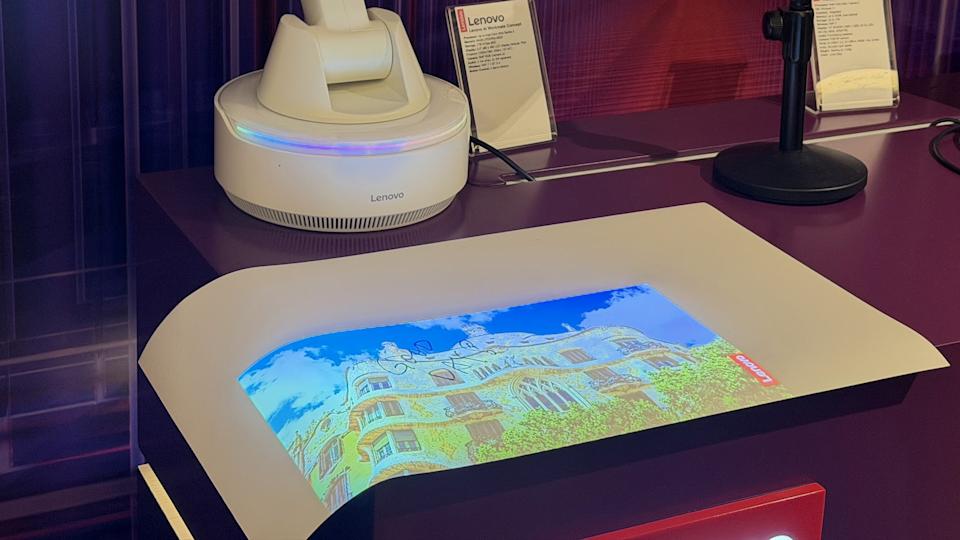
With its articulated head, which houses the projector, cameras and LCD face, you can ask it to project images or documents on either the desk in front of it or a wall nearby. No need to flip around your monitor or laptop to share with colleagues. In one example, a spokesperson asked for a postcard. The Workmate then projected a (Lenovo-branded) image of Barcelona onto the desk. The rep laid paper down, then signed the ‘postcard’ and got the robot to scan it (with two downward-facing 5-megapixel cameras), and then send the file to a nearby printer.
Image by Mat Smith for Engadget
In theory, this sort of flow could transition to document signing or adding notation to images and files. However, one caveat here is whether those of us who work in offices want the extra workplace noise of a chatty robo and the person barking orders at it.
Lenovo says this concept (and it has a few at MWC) is meant to demonstrate the company’s “exploration of spatial and physical AI experiences” that integrate “seamlessly into professional environments.” Hopefully, further evolutions offer a text-based way to make using it a little less noisy.
Lenovo was also showing a simpler AI work device, the AI Work Companion Concept. It’s a completely different premise, despite the name being a little too close to the AI Workmate Concept.
Advertisement
Image by Mat Smith for Engadget
The AI Work Companion is not a robot, but a handsome chunky desk clock, with a solid, satisfying dial on the top and programmable buttons. The front is almost entirely display, able to show calendars, task lists and other work-centric dashes. It runs independently, plugging into a USB-C port for power and pulling data down wirelessly, while also acting as a port hub for charging other accessories and devices.
It’s certainly not as high-concept as the robot, but there are some AI smarts inside.
The Work Companion’s “Thought Bubble” uses AI to sync a user’s tasks and daily schedule across devices, synthesizing a daily action plan. It will even suggest times to break up bursts of work and attempt to monitor screen time to better manage burnout.
According to the press release, Lenovo says it also has “playful interactions with the user” and will, kind of bleakly, offer an end-of-week celebration report of tasks completed. It’s lucky it’s a good-looking desk clock.
Stop Killing Games is backing a new bill from Chris Ward, a member of the California State Assembly since 2020. Introduced earlier this year, the Protect Our Games Act would require gaming companies to make clear commitments to long-term support for “server-connected” video games. The bill has undergone a significant… Read Entire Article Source link
“The new Linux kernel was released and it’s kind of a big deal,” writes longtime Slashdot reader rexx mainframe. “Here is what you can expect.” Linuxiac reports: A key update in Linux 7.0 is the removal of the experimental label from Rust support. That (of course) does not make Rust a dominant language in kernel development, but it is still an important step in its gradual integration into the project. Another notable security-related change is the addition of ML-DSA post-quantum signatures for kernel module authentication, while support for SHA-1-based module-signing schemes has been removed.
The kernel now includes BPF-based filtering for io_uring operations, providing administrators with improved control in restricted environments. Additionally, BTF type lookups are now faster due to binary search. At the same time, this release continues ongoing cleanup in the kernel’s lower layers. The removal of linuxrc initrd code advances the transition to initramfs as the sole early-userspace boot mechanism.
Linux 7.0 also introduces NULLFS, an immutable and empty root filesystem designed for systems that mount the real root later. Plus, preemption handling is now simpler on most architectures, with further improvements to restartable sequences, workqueues, RCU internals, slab allocation, and type-based hardening. Filesystems and storage receive several updates as well. Non-blocking timestamp updates now function correctly, and filesystems must explicitly opt in to leases rather than receiving them by default. Phoronix has compiled a list of the many exciting changes.
The Bose QuietComfort Headphones excel at noise-cancelation, but they’re far from a one-trick pony. With outstanding sound quality, a super-comfortable design, and an easy-to-use interface, they hit all the right notes across the board.
This limited-time deal sees the ANC masters drop back to the price we saw at Black Friday. Just note that this outstanding deal is only on the grey and pink colorways, although if you want the more traditional black alternative, then they’re only $19 more.
Advertisement
Today’s best Bose headphones deal
In our Bose QuietComfort Headphones review, we gave the popular audio product a very respectable four out of five stars. Our reviewer loved their “supreme comfort, fuss-free set-up and solid ANC”, so even though they’re not perfect, they’re still pretty impressive, especially at this reduced price.
If you’re often working in public places, then you’ll be pleased to hear that the ANC is second to none. There are also a couple of different audio modes, like ‘Quiet’ for improved noise cancelation and ‘Aware’ for more transparency. These can be toggled using the action button on the left earcup.
From a comfort point of view, Bose has opted for memory foam earcups wrapped in soft vegan leather and a well-padded headband. All of this equates to a seriously comfortable user experience.
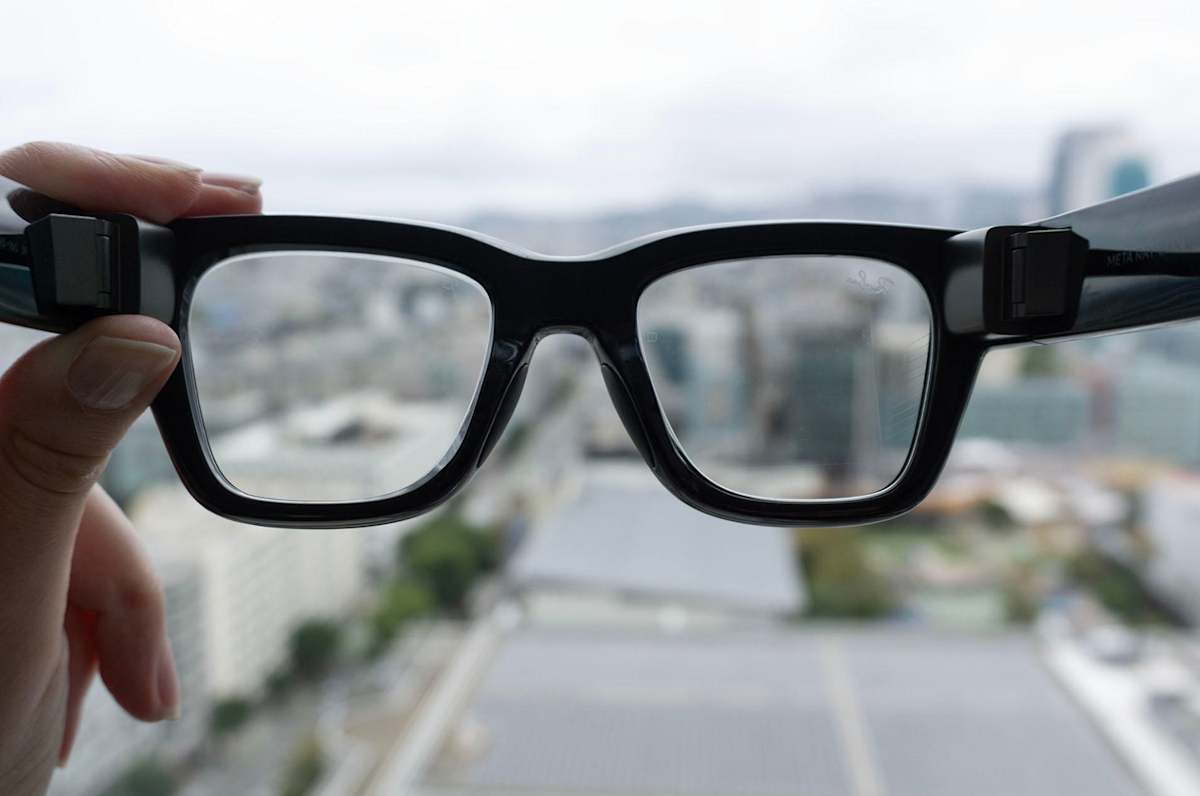
Dozens of civil rights organizations have to warn of the dangers in to the company’s smart glasses. More than 70 groups have banded together to form a coalition to urge Zuckerberg to abandon plans to incorporate the tech, on the grounds that it would empower stalkers, sexual predators and other bad actors.
This coalition includes organizations like the ACLU, the Electronic Privacy Information Center, Fight for the Future, Access Now and many others. The letter isn’t asking for safeguards. These groups want the feature to be completely eliminated, stating the idea behind facial recognition of this type is so dangerous that it “cannot be resolved through product design changes, opt-out mechanisms or incremental safeguards.” This tracks, as there would be no real way for bystanders to know or consent to being identified.
“People should be able to move through their daily lives without fear that stalkers, scammers, abusers, federal agents and activists across the political spectrum are silently and invisibly verifying their identities and potentially matching their names to a wealth of readily available data about their habits, hobbies, relationships, health and behaviors,” the letter states.
The organizations have urged Meta to disclose any known instances of its wearables being used for stalking, harassment or domestic violence. They also want the company to disclose past or ongoing discussions with federal law enforcement agencies, including ICE, about the use of Meta smart glasses and other wearables, .
Advertisement
There is certainly some cause for worry here. Meta that suggested it would roll out this technology “during a dynamic political environment where many civil society groups that we would expect to attack us would have their resources focused on other concerns.” That’s corporate speak for “we’ll do it when nobody is watching.” The coalition has called this “vile behavior” that looks to take advantage of “rising authoritarianism.”
The technology in question is called Name Tag, for obvious reasons. It uses AI to pull up information about people in a field of view to smart glasses displays. That’s about as dystopian as it gets.
The company has reportedly been working on . There’s one that would only identify people that are currently connected to a Meta platform and another that would identify anyone with a public account on a service like Instagram. It doesn’t look like there’s any way, as of yet, to use this tech to identify strangers on the street who don’t have a Meta account of any kind. In other words, the company should expect a if this rolls out.
Name Tag is currently scheduled for release at some point this year, but it’s not set in stone just yet. Public outcry has gotten Meta to back off from facial recognition in the past. The company after pushback from civil liberties groups and years of costly litigation. Meta paid out billions of dollars to settle biometric privacy lawsuits in and and another for a separate privacy case partially tied to facial recognition software.
Australia’s world-first social media ban on users under the age of 16 isn’t keeping kids off the platforms as well as the government hoped. Read Entire Article Source link
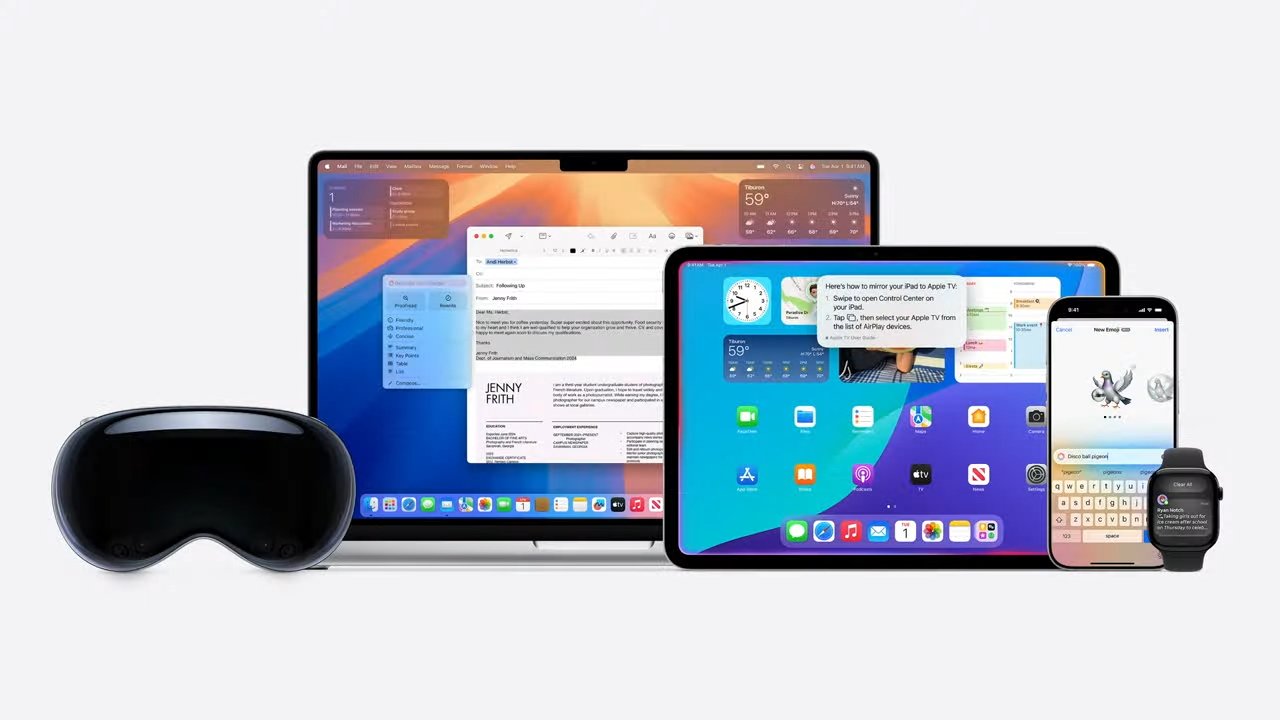
Apple is now on its second round of developer betas for iOS 26.5, iPadOS 26.5, watchOS 26.5, tvOS 26.5, visionOS 26.5, and macOS Tahoe 26.5.
Apple’s hardware that works with the 26-generation operating systems – Image Credit: Apple
The second developer betas for iOS 26.5, iPadOS 26.5, watchOS 26.5, tvOS 26.5, visionOS 26.5, and macOS Tahoe 26.5 replace the first, which arrived on March 30. However, Apple re-released the developer beta for iOS 26.5 on March 24, with a new build number.
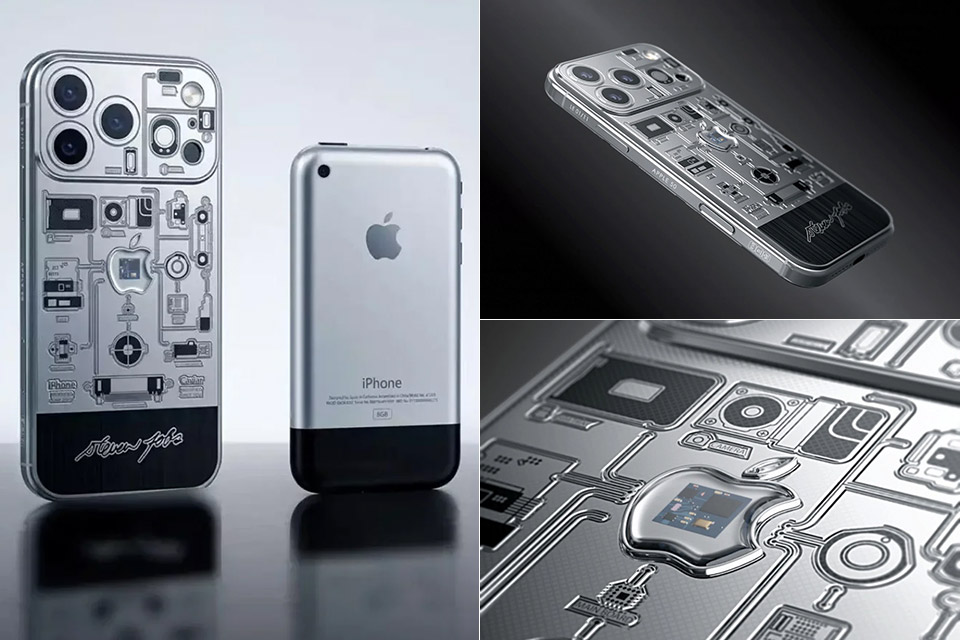
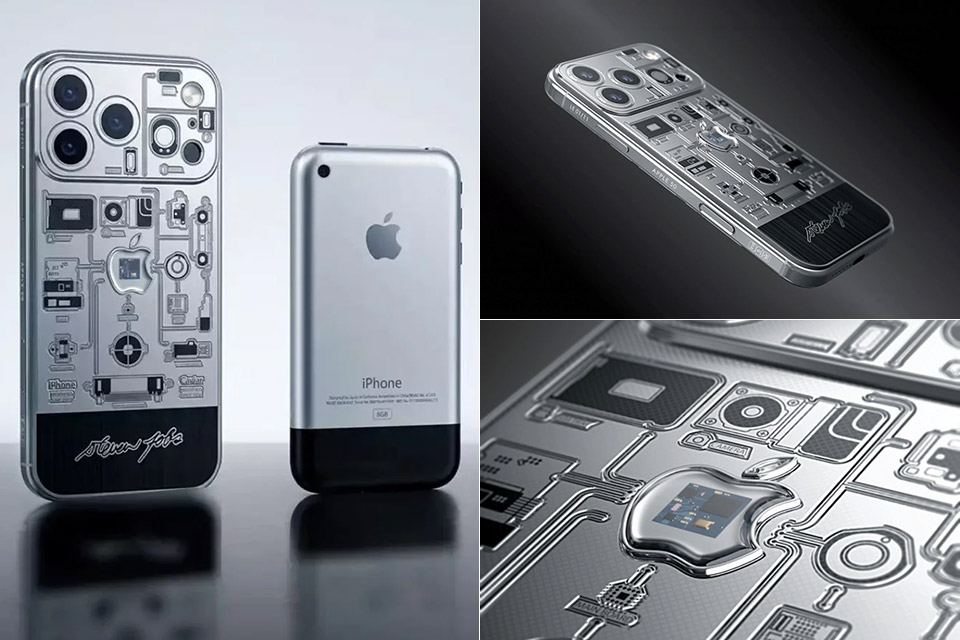
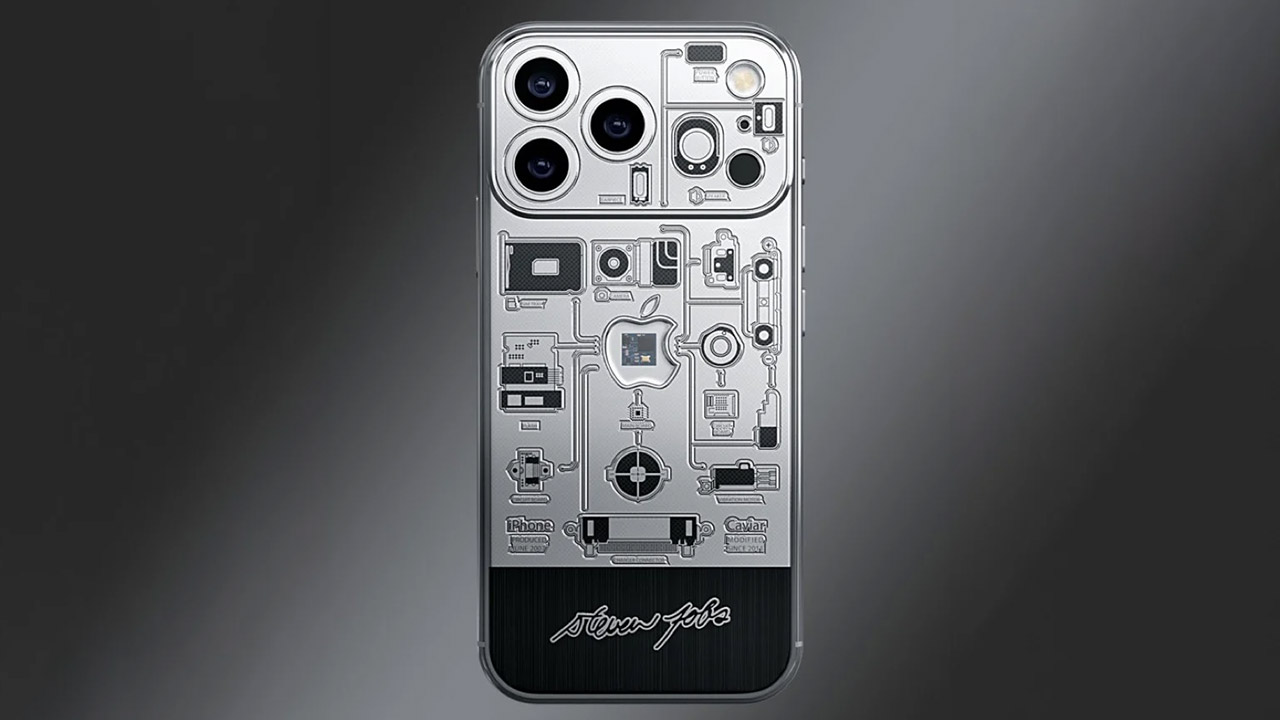
Caviar has packed over two decades’ worth of technology into a single smartphone, the iPhone 2007 Edition, which is an extravagant custom version of the iPhone 17 Pro. This ultra-limited edition of the flagship smartphone incorporates an actual piece of the 2007 iPhone 2G directly into its frame, a part literally pulled from Apple’s first handset.
The chassis is composed of titanium, which is coated in a sleek PVD black that nods subtly to the colors of 2007. The silver bits cover the majority of the surface, while the lower part transitions to black, which provides visual interest. Delicate lines carved on the rear are a careful recreation of the original mainboard’s circuit designs, and they all appear to connect at a single central point.
【Ultra-Thin Yet 10,000 mAh Capacity】Are you still struggling to find a slim power bank that can meet your charging needs? Look no further! TORRAS…
【Portable Charger with Magnetic Function】The slim power bank is a portable charger with powerful magnetic attraction, allowing for easy attachment…
【Super Fast Charging】Tired of waiting for your power bank to charge? This power bank fast charging supports 22.5W wired fast charging and 15W…
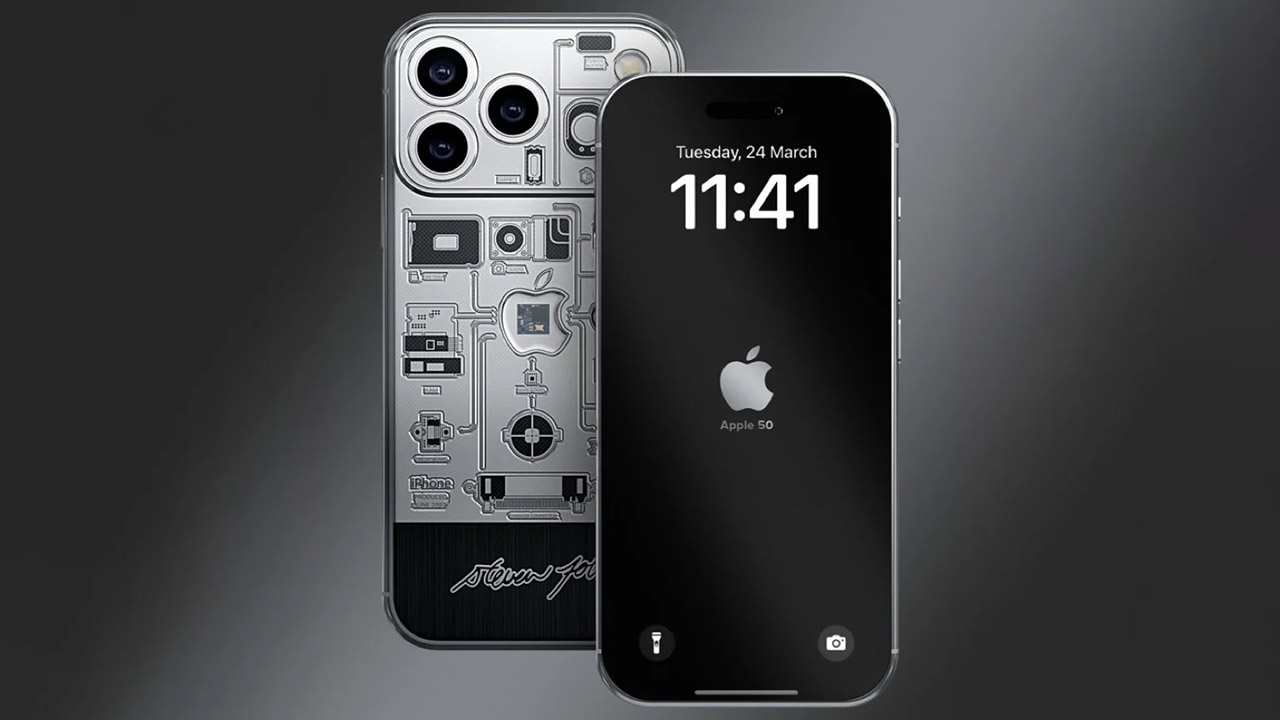
A transparent capsule shaped like the Apple logo lies in the center of the rear panel. Inside this sealed capsule is a certified piece of the 2007 iPhone 2G motherboard, securely stored away and entirely undamaged. The fragment is packaged in what appears to be a hermetically sealed little chamber. To top it all off, each device includes Steve Jobs’ signature inscribed around the frame, as well as a unique serial number etched into the titanium up to number 11.
Every last detail ties in neatly to that historic hardware. The etchings that imitate the first smartphone’s technological schematics provide a nice visual connection to the capsule. Buyers of the iPhone 2007 Edition even receive a personalized screensaver. This one is custom-made for this collection and begins loading as soon as the phone is turned on. The phone comes in a luxury branded box with a characteristic Caviar key finished in 24-karat gold plating – the works. It comes with certified certificates that indicate the motherboard is a genuine 2007 iPhone 2G fragment, directly from the source.
Pricing starts at $10,770 for the 256GB iPhone 17 Pro and goes up to $12,700 for the two-terabyte iPhone 17 Pro Max. Production is intentionally limited to just 11 pieces globally, making each one extremely uncommon. Orders are now open, with worldwide shipping handled by trusted couriers. It will take at least a week to arrive after a 1-4 business day wait for final assembly and inspection. [Source]
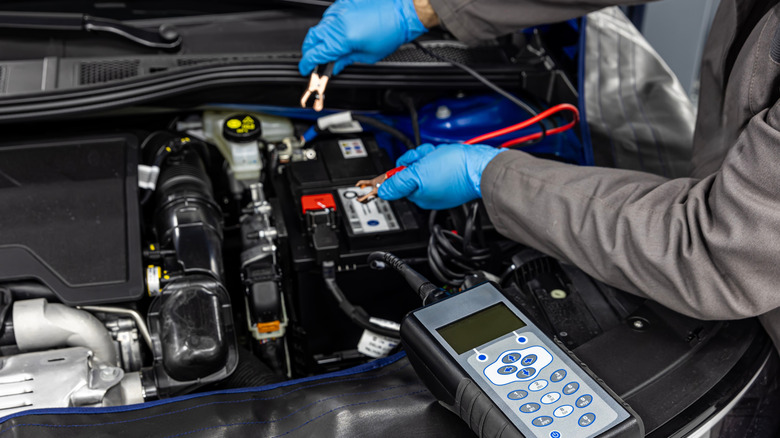
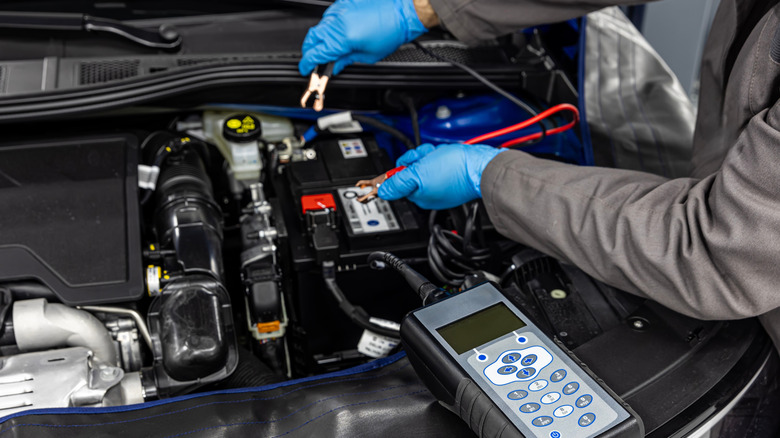
A dead car battery can take a perfectly good day and wreck it every time. The worst part is that it usually happens when you least expect it, and always when you’re in a hurry to go somewhere. While it’s easy to tell if your car battery is dead, how do you know that it’s good on a normal day, before you start it up? A healthy 12V car battery should read about 12.6 to 12.4 volts when your car is off, or resting.
These numbers mean your battery is fully charged, and you’ll likely get the performance you need. If your battery reads below 12 volts at rest, then you might have a problem, and you’ll eventually need to address it before it dies completely. The reason it’s important to check the battery at rest is that it gives you an accurate snapshot of its condition. Since your car isn’t turned on, no electronic systems are putting a load on the battery, and thus potentially skewing the results of a battery test.
The best way to check this yourself is to use a digital multimeter. This device works at your battery’s terminals, and you can use it when your engine is off to get the resting voltage. If you don’t have a multimeter, you can take your vehicle to a local garage or automotive retailer. For example, AutoZone can perform a more complete battery test, along with a full diagnostic check, typically at no cost to you.
Advertisement
Signs your car battery is losing power
Anastasija Vujic/Getty Images
A modern car battery is 12 volts, and if the resting voltage of yours is below that number, it may still start up. If your battery is putting out less than 12 volts as the vehicle is running, that’s a problem. Even if you can crank your car with less than 12 volts more than once, one of your systems is likely near the point of failure. It’s better to get it checked out by a technician before you end up getting stranded.
A car battery loses its voltage over time due to everyday use. It can also lose voltage due to its age, so even if your car is rarely driven, an older battery’s power can still decrease. Even though a battery doesn’t actually run out of voltage, its internal chemical composition changes every time it’s charged. Over the course of about three to five years, a battery’s total voltage drops, until its performance is eventually affected.
Advertisement
The good news is you usually have some warning signs that your battery’s voltage is dropping. Your headlights may start dimming or flickering. Your power windows might move slower than before. Even your car stereo can sound differently, but the most obvious sign is when your car doesn’t start as it normally would. A brief hesitation here and there usually means the end is near. If you experience any of these issues, get your battery checked out by a professional as soon as possible.
Huawei has officially shown off a wide-format foldable phone, and it is hard not to look at it and think about the iPhone Fold rumors all over again.
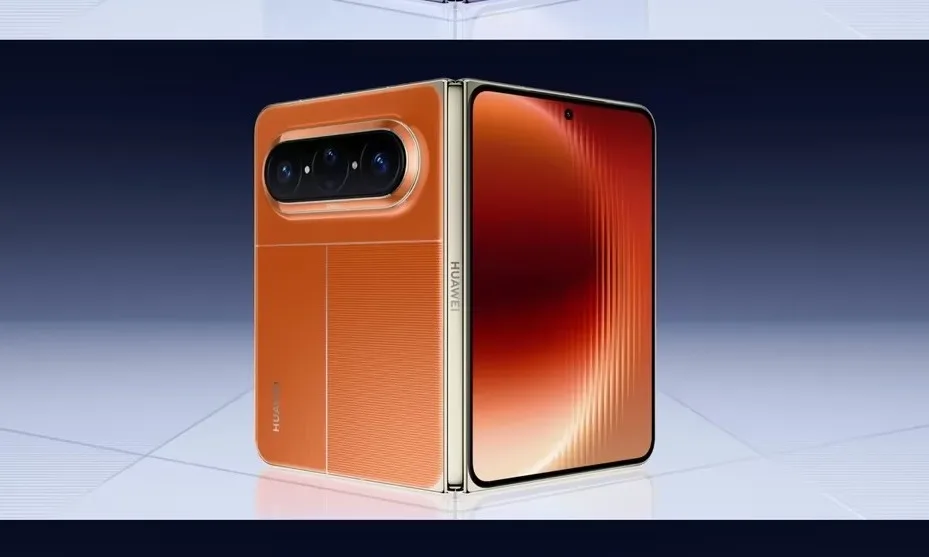
The unreleased foldable iPhone just got an unofficial rival with the Huawei Pura X Max. Huawei has already started teasing it through official materials ahead of its China launch on April 20. Image posters shared by the company show an unusually wide foldable layout that looks closer to a compact tablet when opened than the taller, narrower foldables we have gotten used to.
Huawei
Why the Pura X Max has everyone talking
The official images shared by Huawei show the Pura X Max in blue, white, black, and orange colors with a boxy, passport-like build and a triple rear camera setup. It looks like a super wide foldable, which is a format that has only been seen in rumors of future Apple and Samsung devices so far.
This is also where the iPhone Fold comparison really comes in. Recent CAD renders and rumors of the first-ever foldable iPhone shared a similar wide design language, rather than the conventional style seen in the Galaxy Z Flip or Z Fold models. But it looks like Huawei is taking the first step with a broader canvas, which should make reading, multitasking, video, and gaming feel more natural.
So no more awkward aspect ratios on the main screen. In practice, the wider main screen gives way to a compact tablet-like design when unfolded.
Advertisement
Huawei
Why it is stealing hype from the iPhone Fold
The answer is pretty simple: the Pura X Max is real.
The iPhone Fold is still making the rounds in online speculations and rumors. Many of these are likely made up, render speculation, and supply chain chatter. Meanwhile, Huawei has an actual product with official visuals, a launch date, and a design that appears to answer the same “what should the next big foldable shape be?” question before Apple ever got there.





















































You must be logged in to post a comment Login