
TL;DR
Meta quit RE100 after a decade, unable to meet renewable energy criteria as it funds 10 gas plants for AI data centres




Save $76: Amazon’s Prime Day kicks off on June 23, but the deals are already in bloom. The retailer just slashed the price of Nothing’s wireless earbuds by $76, dropping them to an all-time low. This is a limited-time deal available only to Prime members, so we suggest acting fast.
Finding a premium pair of earbuds with long battery life, active noise cancellation and fast charging can normally be quite steep. However, brands like Nothing offer an incredible, budget-friendly alternative without sacrificing great sound.
Nothing earbuds include eartips in three sizes for a perfect fit and the most out of their features. They offer up to 45 decibels of noise cancellation and have a battery that lasts up to 40 hours. The 11mm drivers provide clear bass and treble for an immersive listening experience, no matter the music genre or audiobook. If you’re an avid ChatGPT user, you’ll enjoy Nothing’s integration with the popular AI service. Simply set up integration using the Nothing app, and you can use voice controls to experiment with it.
Nothing also improved the earbuds’ connectivity, making it easier to switch between devices whenever you need to pick up on a quick phone call, join a video meeting and more. Thanks to HiRes Wireless Audio, your voice will be heard loud and clear during phone calls, so you won’t have to worry about any distractions interrupting family or work discussions.
We’ve compiled a list of the best earbud and headphone deals so you can find exactly the right discount for you.
Deals are selected by the CNET Group commerce team, and may be unrelated to this article.
Nothing earbuds include noise cancellation, crisp sound and AI features at a new record-low price. However, if these aren’t your style, we’re huge fans of Apple’s AirPods 4, which made our list of best wireless earbuds of 2026. You can snag the ANC model for $149, down from $179. Or grab the pair without ANC for less than $100 and save 23%.

The U.S. Department of Justice has charged two Volkswagen engineers with securities fraud for an alleged insider-trading scheme connected to the German automaker’s joint venture with Rivian.
The indictment, unsealed Friday by the U.S. District Attorney for the Southern District of New York, alleges that Michael Stamp and Marcus Plank made more than $300,000 by using confidential insider information. Stamp and Plank allegedly bought Rivian stock and options after learning that the EV maker and Volkswagen planned to form a joint venture — internally codenamed “Project Climb” — but before the companies made any public announcements.
Rivian and Volkswagen announced plans for the joint venture on June 25, 2024, which would focus on developing electric vehicle architecture and software. Volkswagen initially committed to invest $5 billion in Rivian, with the capital to be released as the companies achieve certain milestones. The joint venture has since grown to $5.8 billion, and Volkswagen is now Rivian’s largest shareholder.
Rivian’s stock price rose 23% following the initial announcement in June. Stamp and Plank then allegedly sold their Rivian positions, with Stamp realized about $250,000 in profits, Plank realizing about $50,000, and Plank’s close family member realizing about $12,000, as detailed in the indictment.
“Michael Stamp and Marcus Plank’s alleged exploitation of their employer’s confidential information allowed them to make more than $300,000 in illegal profits,” U.S. Attorney Jay Clayton said in a statement Friday. “When people misuse confidential information for their own financial gain, they undermine the principles that allow our markets to function fairly and efficiently. Insider trading is a crime that New Yorkers want pursued with vigor. Its effects ripple through the financial system, harming ordinary investors and eroding public confidence. Today’s charges underscore the commitment of this Office and our law enforcement partners to protecting the integrity of our markets and holding accountable those who choose to violate the law.”
Investigators allege the two engineers understood their actions were illegal. Eight days prior to the joint venture was announced, Stamp searched “statute of limitations insider trading,” and Plank’s close family member searched, in German, “how is insider trading prosecuted?,” according to the indictment.
The pair, who both live in San Jose, were arrested Friday and will appear in the U.S. District Court for the Northern District of California. The case has been assigned to U.S. District Judge Katherine Polk Failla. Stamp and Plank face up to 25 years in prison if convicted of federal securities fraud.
TechCrunch has reached out to Rivian and Volkswagen for comment and will update the article if either company responds.
When you purchase through links in our articles, we may earn a small commission. This doesn’t affect our editorial independence.
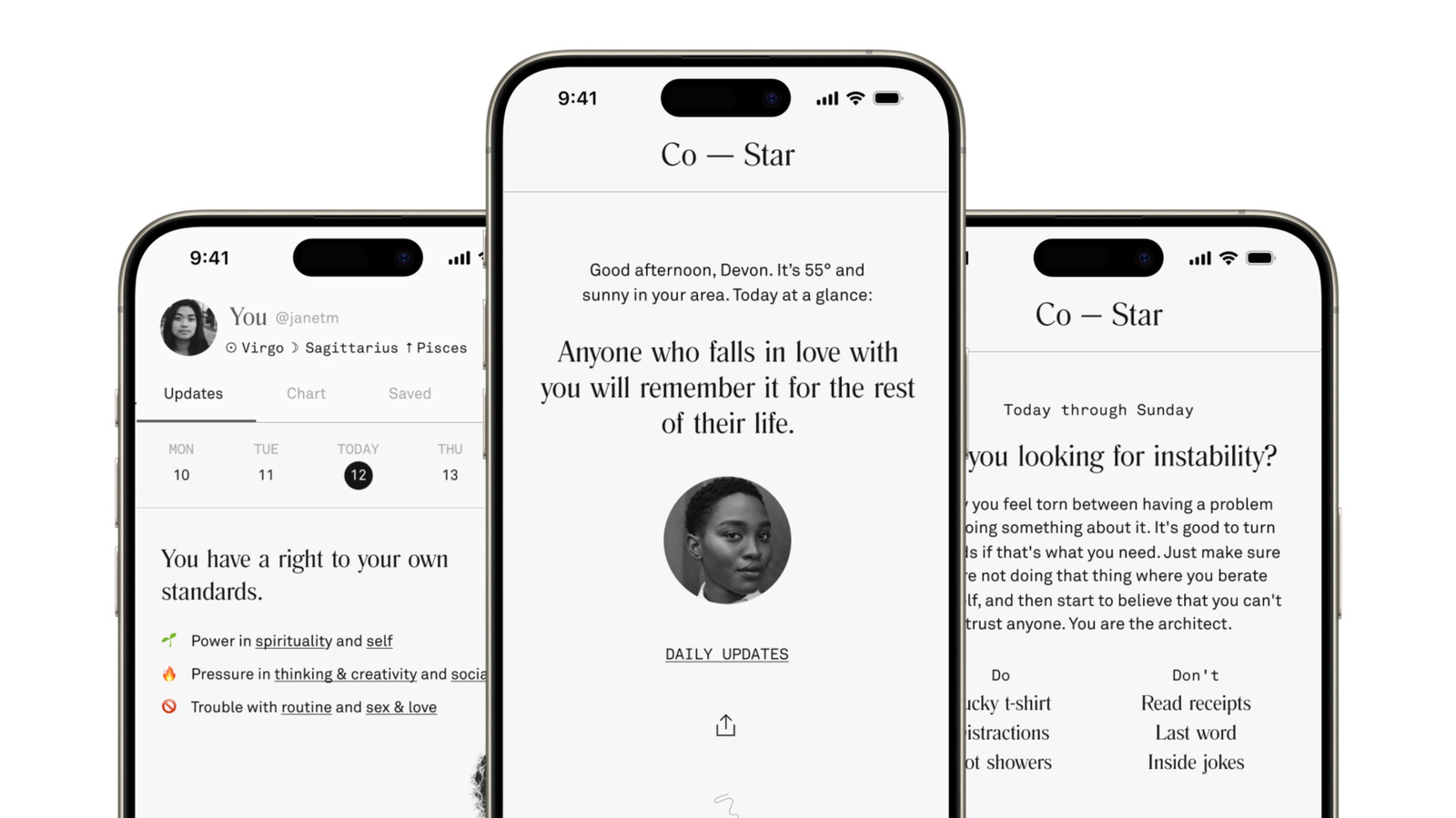
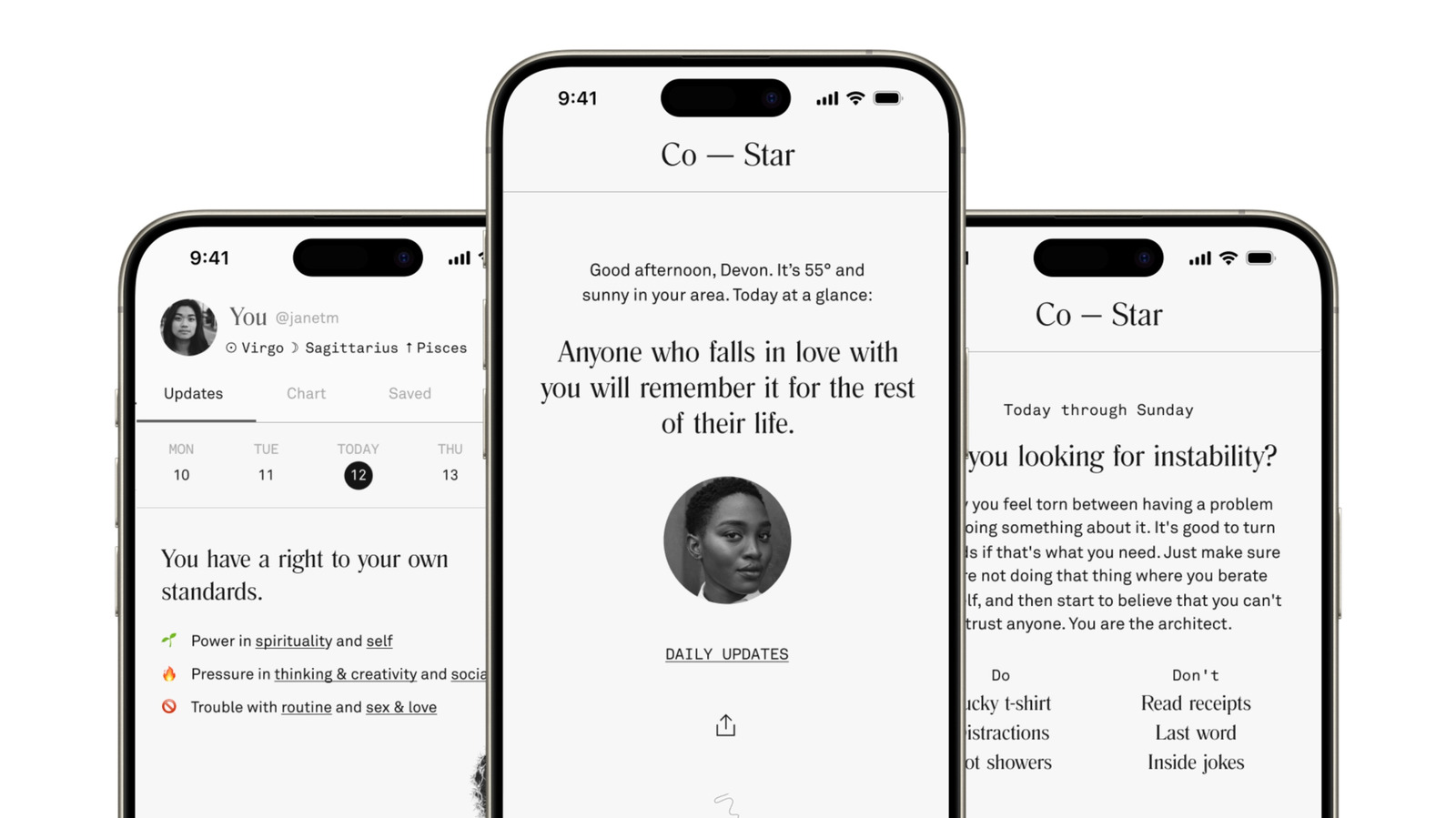
Midjourney, the company best known as a maker of AI image and video generation tools, has decided to get into astrology. The company has announced it’s purchasing Co-Star, a popular astrology app, and bringing on its CEO Banu Guler as its new Chief Design Officer. The app will still be under Guler’s “complete control,” according to the company, but now with Midjourney’s resources behind it.
In a post on X, Guler characterizes the acquisition as a natural extension of her friendship with Midjourney founder David Holz and their shared belief that “computers can be tools that reveal our humanity to ourselves. Tools that show you what you mean, how you feel, what you’re imagining, before you can articulate it yourself.”
I moved to New York when I was 17. I waited tables at a vegan restaurant, worked the night shift at Dunkin Donuts on 3rd Ave, and finally found out about bike messengering, which I figured was a great long-term career option if I wanted to focus on feminist zine/book projects and… https://t.co/Bdlu4bKMSz
— Banu Guler (@banu__guler) July 24, 2026
That fits the introspective nature of an astrology app, but seems like a weird match for the kinds of things Midjourney actually makes money selling. Then again, the company has been trying to expand beyond just being a builder and licenser of AI tools. In June, Midjourney announced it was developing a full-body ultrasonic scanner and launching a new division called Midjourney Health to build it.
Guler writes that Co-Star has reached “35 percent of young people in the US with tens of millions of app downloads,” and the app’s younger users may be the hardest audience to sell Co-Star’s acquisition to. According to a Gallup survey from April 2026, people born between 1997 and 2012 (14 to 29 year olds) continue to use generative AI regularly, but have grown increasingly negative towards it. “Gen Zers’ strong agreement or agreement that they feel excited about AI has dropped 14 percentage points to 22 percent,” Gallup says, “while hopefulness has fallen nine points to 18 percent, and anger has increased nine points to 31 percent.”

PARTNER CONTENT: Focusing on 5G deployment, AI integration, and ICT talent development to drive the nation’s digital transformation
ZTE announced that Samdech Moha Borvor Thipadei Hun Manet, Prime Minister of the Kingdom of Cambodia, held a cordial meeting with Mr. Xiao Ming, ZTE’s President of Overseas, Mr. James Zhang, Senior Vice President of ZTE, and other ZTE representatives during the 2026 World Artificial Intelligence Conference (WAIC).
The meeting focused on exploring and deepening bilateral cooperation in digital infrastructure and artificial intelligence, marking a significant step forward in the longstanding partnership between Cambodia and ZTE, while also showcasing the company’s commitment to fostering technological innovation and global collaboration.
During the discussions, Mr. Xiao Ming provided the Prime Minister with a comprehensive overview of ZTE’s development history and its global business footprint. As a global leading provider of integrated information and communication technology solutions, ZTE now operates in more than 160 countries and regions. Mr. Xiao Ming emphasized the company’s two-decade-long commitment to Cambodia, during which it has been instrumental in building the nation’s communications network and actively contributing to its digital transformation and infrastructure development.

Prime Minister Hun Manet acknowledged ZTE’s enduring efforts and significant contributions to the advancement of Cambodia’s telecommunications sector. He reaffirmed that science, technology, and digital transformation remain strategic priorities for the Royal Government, crucial for enhancing national competitiveness and fostering socio-economic development. The Prime Minister expressed Cambodia’s willingness to continue its robust partnership with ZTE and other partners to achieve shared digital goals.
The productive talks have laid a solid foundation for future in-depth collaboration between Cambodia and ZTE, particularly in the areas of 5G network deployment, artificial intelligence applications, and the cultivation of ICT talent.
Contributed by ZTE.
OS PLATFORMS
Git is aptly named: it isn’t easy – but there are alternatives
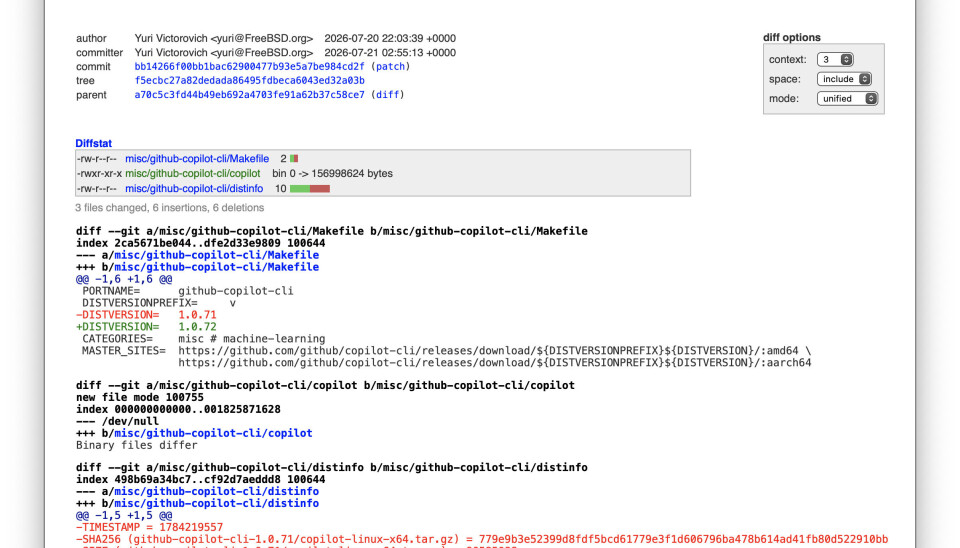
The FreeBSD project froze its ports repository on Wednesday. The reason turns out to be a slightly embarrassing Git-related oopsie where a version of Copilot got uploaded somewhere it should not have been.
The announcement of the 2026 Ports Repository Freeze went out on July 21 and remained in effect the following day, as explained in a message on the freebsd-announce mailing list. The mail delicately skirted around exactly what happened:
« The commit in question severed our ports tree mirroring to github.com due to their filesize hard limit of 100MB, and introduced a blob of questionable licensing into the repository history. »
The offending commit is this one.

It’s not a disaster; the problem is that the Ports repository is automatically mirrored to various places, including a read-only Github mirror – and as Github’s docs say, “GitHub blocks files larger than 100 MiB.”
There is already an official FreeBSD port of Copilot, but FreeBSD terminology is slightly confusing here: the “port” is effectively a sort of package that allows the Linux binary to run inside FreeBSD’s Linux emulation, called the Linuxulator. It isn’t a native FreeBSD version of Copilot, and the package is not meant to include the actual Copilot CLI binary – partly because that is under its own custom license. That’s what FreeBSD’s Kyle Evans meant by “questionable licensing”.
We don’t blame anyone for using any available resources to help with using GitHub. Navigating Linux, FreeBSD, and worst of all Git is hard, especially the last one. Git is aptly named – it’s not an acronym, it’s a real word: someone annoying or unpleasant. It is, however, now more or less the de facto standard version control system of the FOSS world. Despite not being a developer, the Reg FOSS desk worked with Git on a daily basis for over four years – blame the Docs as Code philosophy – and developed a deep and abiding dislike for it.
It’s not just us: it’s in an XKCD comic, so it must be true. (This vulture has directly lived the experience described in that comic.) Personally, we always found Git much harder work than the tar command. It should come as no surprise that multiple teams are working on compatible alternatives.
Just the day before some FreeBSD developer’s regrettably public mishap, a new version of one of those alternatives appeared: Game of Trees version 0.127.
Game of Trees, known as Got for short, is a Git-compatible version control system (VCS) developed by contributors to the OpenBSD Project. It’s been in development since 2019, and we feel that the project has a nice line in self-deprecation – starting with the homepage’s project description: “a version control system which prioritizes ease of use and simplicity over flexibility.”
This is, we suspect, in response to Git’s self-description, which says that it is “designed to handle everything from small to very large projects with speed and efficiency.”
We also like the Got project goals and especially the FAQ, which really does not beat about the bush:
« Does Got aim to replace Git?
No. Got does not aim to replace Git. Got can be used instead of Git (for some tasks), or in addition to Git. If you are already using Git and are happy with it, you don’t need Got. »
And even more succinctly, under the anchor “pointless”:
« What’s the point of all this? Why not just use Git?
If you are wondering why Got even exists, you can just ignore it. »
Got isn’t the only tool that aims to remain compatible with Git, but simplify the experience.
Gitless is another, which describes itself as “a simple version control system built on top of Git,” and says that it’s “easy to learn and use.” Unfortunately, development seems to have gone quiet: the last release appeared the same year that Got appeared.
Another (and even younger) Git-compatible VCS is Jujutsu, often called just “Jj”, and not to be confused with the traditional Japanese martial art Jiu Jitsu. Jujutsu the VCS has lots of documentation, but if it has a weakness, it’s that it rather assumes that you already know your way around VCS use in general and Git in particular. If that’s not the case for you, you might find Jujutsu for Everyone by Remo Senekowitsch more helpful. ®
Meta quit RE100 after a decade, unable to meet renewable energy criteria as it funds 10 gas plants for AI data centres
Meta has withdrawn from RE100, the global corporate clean energy initiative it joined a decade ago as Facebook, after the Climate Group confirmed the company can no longer meet the programme’s technical criteria. The departure follows Meta’s commitment to building 10 natural gas plants to power its Hyperion AI data centre campus in Louisiana, a project now valued at more than $200 billion. Meta is the highest-profile company to leave the initiative since its founding in 2014.
RE100 requires members to source 100 percent of their electricity from renewable sources. Meta claimed to have met that threshold every year since 2021, using environmental attribute certificates to match its consumption with renewable generation on an annual basis. But the scale of its gas commitments, more than seven gigawatts of new fossil fuel capacity for Hyperion alone plus a 200-megawatt gas plant in Ohio, created what the Climate Group called a structural incompatibility with continued membership.
The Climate Group, which co-founded RE100 with the Carbon Disclosure Project in 2014, said Meta had “withdrawn” because it was “no longer able to meet the technical criteria due to investments made in new gas power.” The initiative still counts 444 corporate members, including Apple, Google, and Microsoft, all of which have also expanded their data centre footprints but have not made gas commitments on the same scale. Microsoft recently signed a 20-year gas deal with Chevron for a Texas data centre, raising questions about whether other tech giants may face similar scrutiny from RE100 in the months ahead.
Meta still claims to match its electricity usage with “100 percent clean and renewable energy” through certificate purchases, a practice that environmental analysts have long criticised as paper compliance rather than genuine decarbonisation. Jonathan Bruegel, an energy finance analyst at the Institute for Energy Economics and Financial Analysis, described the gap between Meta’s certificate claims and its physical energy mix as a structural divergence that RE100’s exit makes visible. Meta has also signed a deal to beam solar energy from space to its data centres starting in 2030, but that technology remains unproven at commercial scale.
The departure underscores a tension running through the entire AI industry. Companies that spent years building renewable energy credentials are now racing to secure electricity at a pace that renewables alone cannot match, and natural gas has emerged as the default bridge fuel. Whether Meta’s exit from RE100 becomes an isolated case or the beginning of a broader withdrawal by tech companies will depend on how quickly the industry’s power demands outstrip the available renewable supply.
A working 1977 Apple-1 expected to garner at least $300,000 leads RR Auction’s sprawling sale of rare hardware, prototypes, and Steve Jobs memorabilia from Apple’s earliest years.
The Apple-1 comes from Apple’s second batch of 50 machines, according to the auction house. Known as the “Neumark” computer, it sits inside a modified Smith-Corona typewriter case and was restored to working condition by Apple-1 specialist Corey Cohen in June 2026.
Apple sold the Apple-1 as an assembled circuit board rather than a complete consumer computer, so buyers had to add the other components and an enclosure themselves. The Neumark machine stands out because it still works inside the suitcase. The auction also includes surviving documentation.
RR Auction’s estimates aren’t guarantees of what buyers will pay. Final prices will depend on how much competition each lot attracts before the sale closes.
The auction, titled “Steve Jobs & the Computer Revolution: The Apple 50th Anniversary Auction Part Two,” spans early Apple hardware, prototypes, business records, marketing material, and items connected to Jobs and his family.
Other notable lots include a factory-sealed 4GB first-generation iPhone and the P68 “Stealth iPod”, an oversized development prototype Apple used to hide the original iPod’s dimensions. RR Auction estimates each could sell for about $50,000.
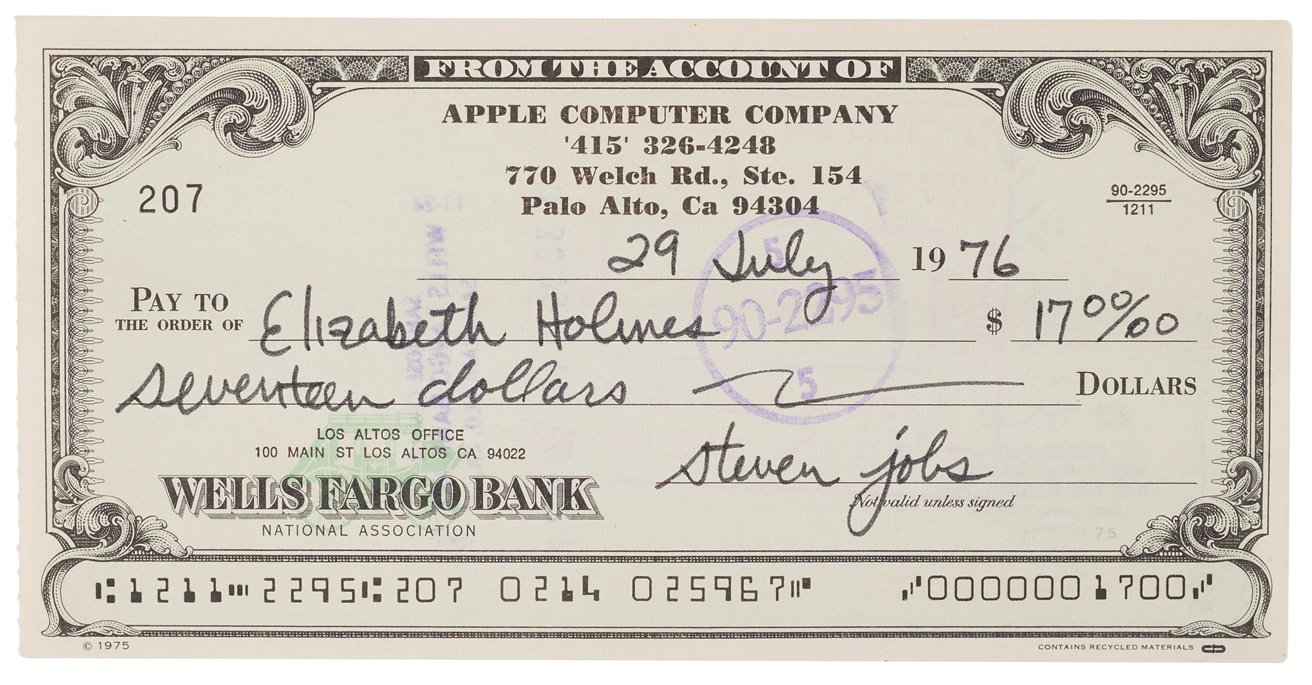
 Steve Jobs Signed 1976 Apple Computer Company Check to Apple’s First Bookkeeper, Elizabeth Holmes.
The sale also includes an early ventless Apple II with a Rev. 0 logic board and an Apple Lisa-1 with its original “Twiggy” drives. The two computers help show Apple’s progression from its earliest consumer machines to the hardware that paved the way for the Macintosh.
A Jobs-signed Apple business card graded PSA GEM MT 10 carries an estimate of $60,000 or more. A July 29, 1976, Apple check signed by Jobs and made payable to Elizabeth Holmes, whom RR Auction identifies as Apple’s first bookkeeper, is estimated at $25,000 or more.
Some of the auction’s most unusual items matter less for their technical importance than for what they reveal about Jobs and his family.
 A Jobs-signed Apple business card graded PSA GEM MT 10. Image credit: RR Auctions
One is an eighth-grade science fair project Jobs built called “What is the Silicon-Controlled Rectifier?” RR Auction estimates it could sell for $20,000 or more.
The project predates Apple by years and offers an early glimpse of Jobs’s interest in electronics.
The sale also includes a Macintosh 512K and an Apple II that Jobs gave to his father, both with their original accessories and software. RR Auction estimates each computer at $5,000 or more.
Other items from the Jobs family home include framed magazine covers, a rainbow Apple logo stained-glass decoration from Jobs’s childhood bedroom, and electronic components stored at the Los Altos property tied to Apple’s early history.
The Jobs family items probably won’t approach the Apple-1’s price, but they provide personal context that the computer hardware can’t. The magazine covers, stained-glass Apple logo, and stored electronic parts show how Apple’s early history remained intertwined with the Jobs family home.
 4GB first-generation iPhone
Bidders must place an initial bid by 6 p.m. Eastern on August 20 to keep participating after the deadline. RR Auction’s 30-minute extended-bidding rule begins at 7 p.m. Eastern.
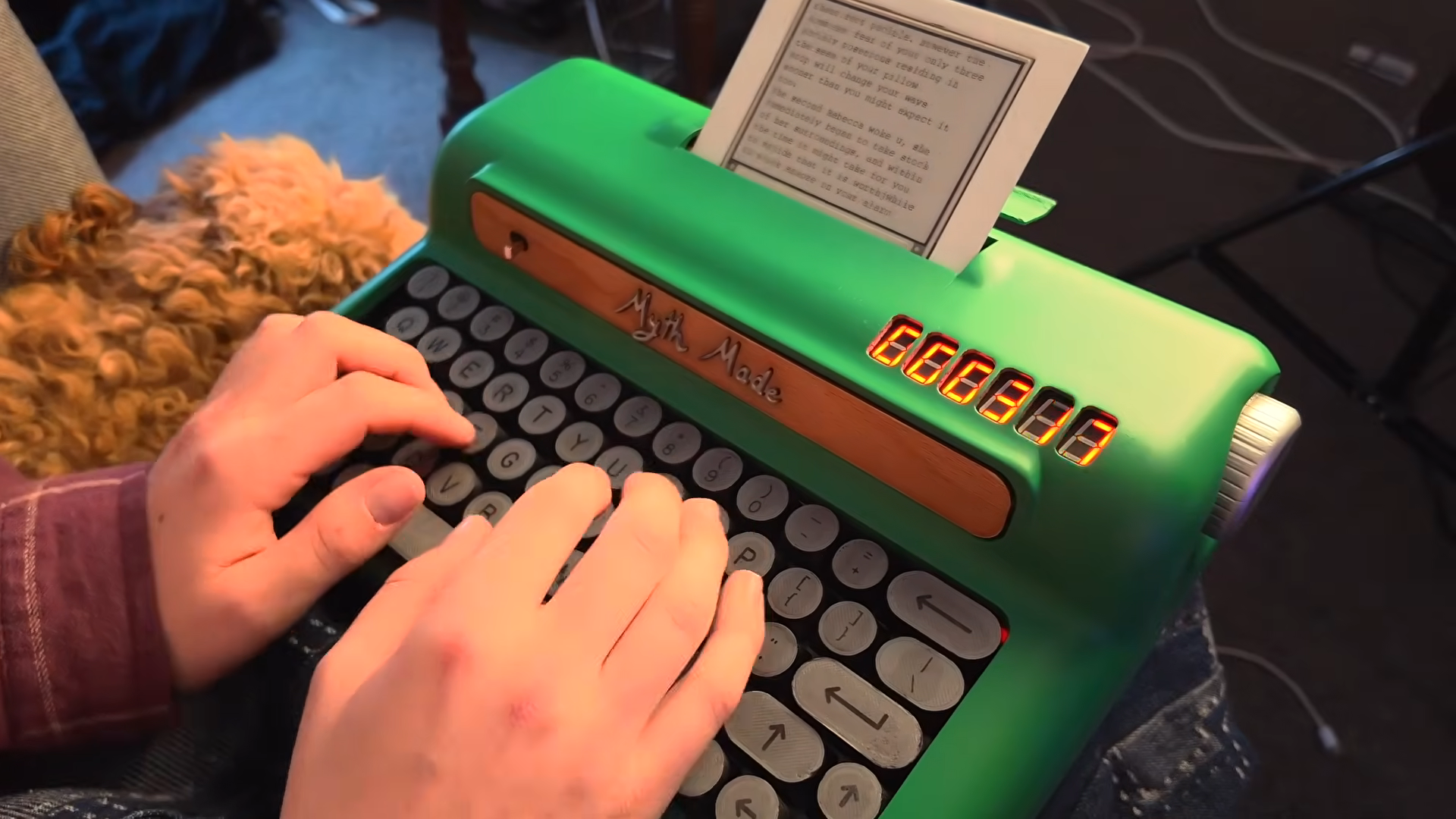
[Myth Made] has a goal to get into writing. However, she likes to do things the aesthetic way, rather than the easy way. Thus, she has eschewed simple word processing on a conventional computer, instead choosing to build a remarkably attractive writing deck styled after a classic typewriter.
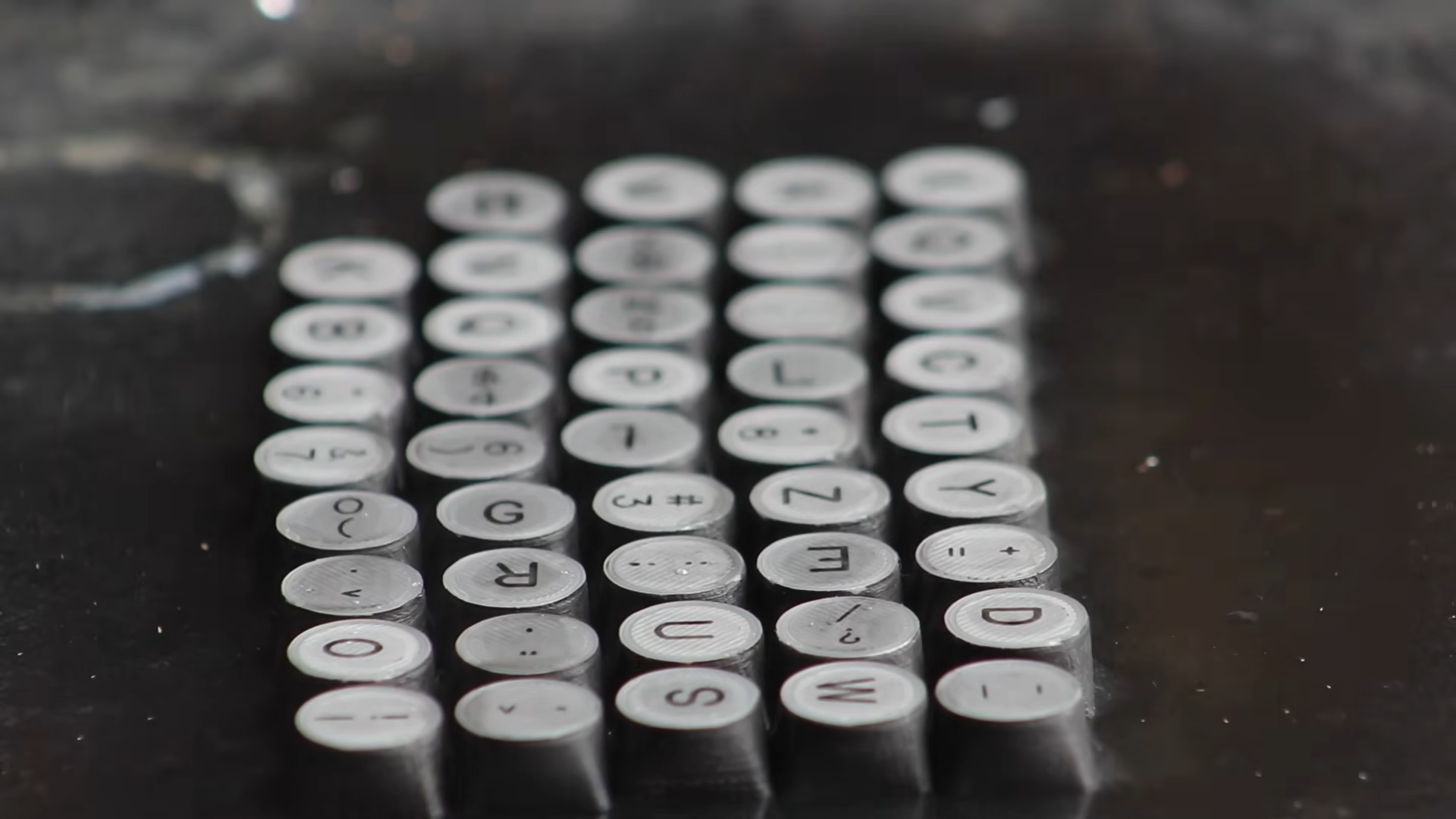
The build began with a mechanical keyboard with a compact layout. The square keycaps were swapped out for custom 3D printed versions that were rounded to suit the desired look. [Myth Made] used a neat technique where the caps were colored in with a paint marker and then ran through a laser engraver to bond the paint to the surface to make all the key markings.
With the input side sorted, the rest of the build could progress. The typewriter shell was printed in multiple parts, and then welded together with acetone. This was then covered with an ABS-acetone solution that helped remove some of the surface artifacts, before priming and paint. As for the electronics side, a Raspberry Pi Zero runs the show, hooked up to a Waveshare e-ink display which can be cranked up and down like a piece of paper coming out of a typewriter. There’s also a lovely 7-segment display which displays the current word count.
It’s a fun build that looks utterly joyous to use. Sometimes leaning into the aesthetic side of a project is what makes it so magical.
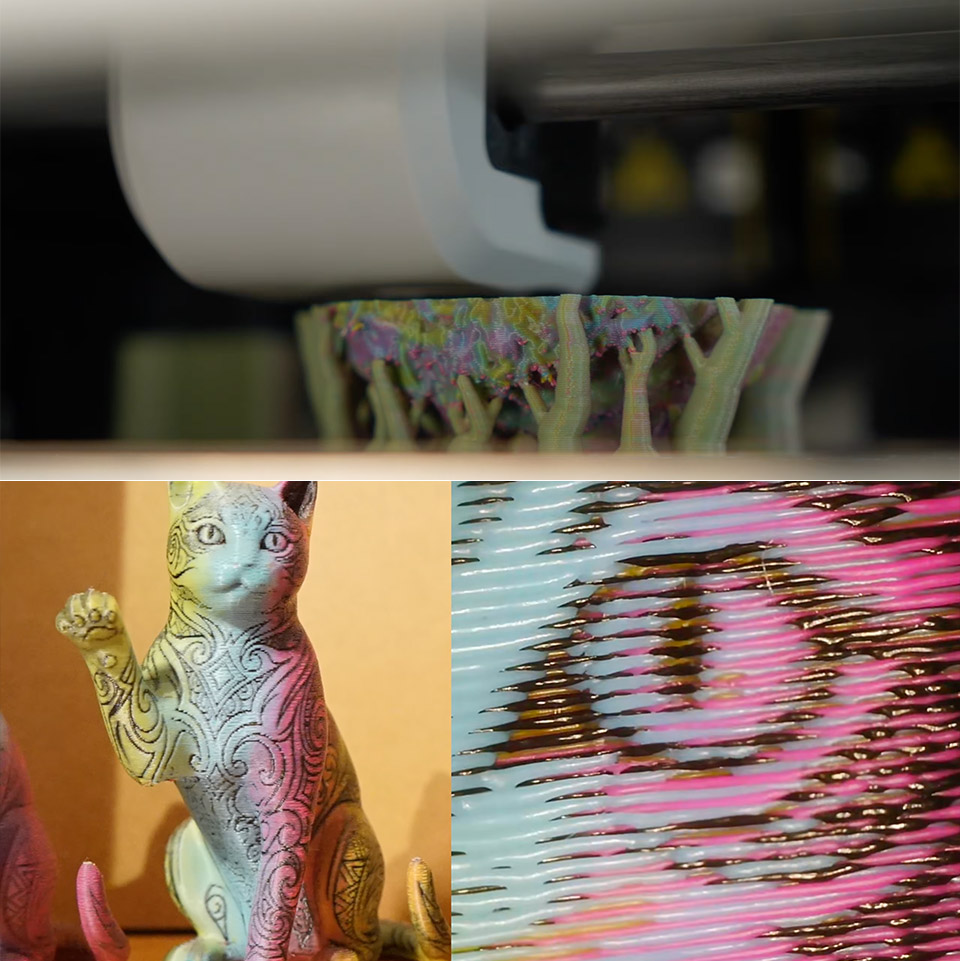
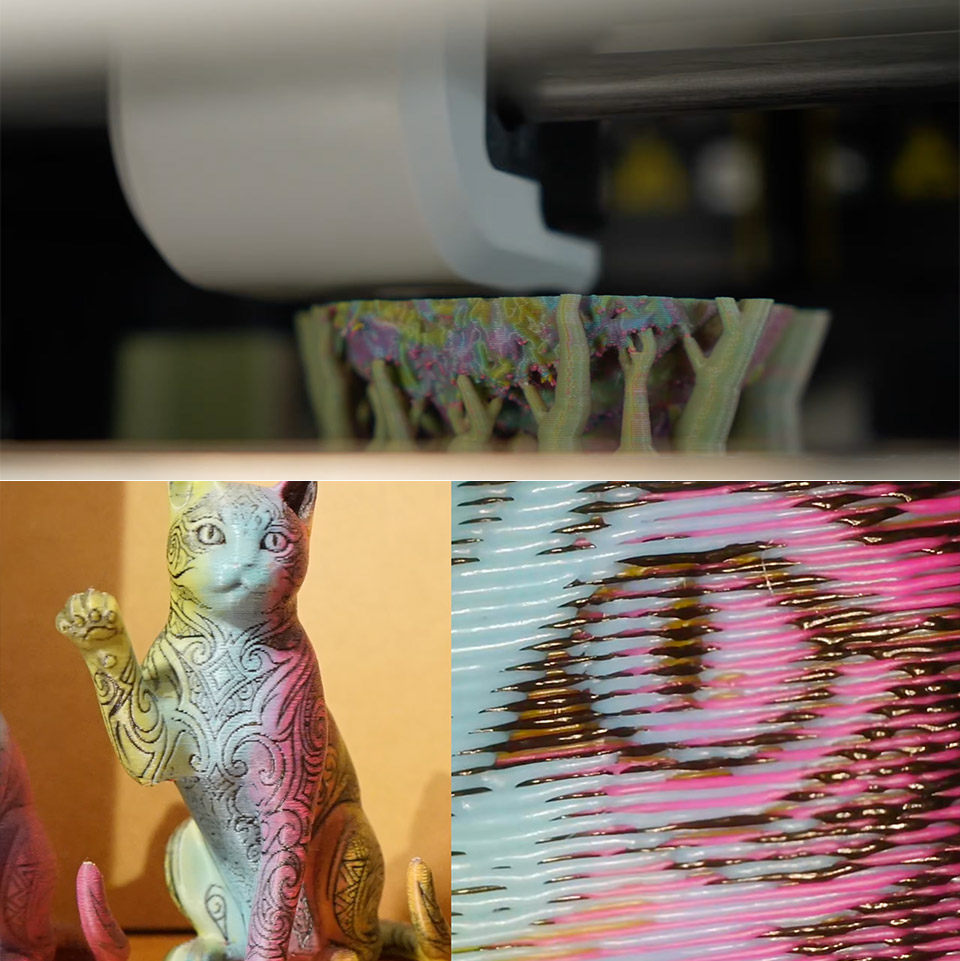
Multi-color filament printing has always carried a heavy tax. Every time a printer switches filaments mid-layer it pauses, pulls the old plastic back, primes the new one, and often dumps a blob of mixed waste into a purge tower. On complex painted models those swaps can number in the thousands. Print times stretch into days and entire spools disappear into the scrap bin.
YGK3D has just demonstrated a completely new method of printing that can significantly reduce costs. Sentient Stardust, a developer, integrated the approach in issue into a modified version of the Orca Slicer software called OraSlicer-ImageMap. The key to it all is that this software simply applies one solid color to every layer. When you move from one layer to the next, the new color appears on top of the old one, rather than a slew of interrupted tool changes within the same layer.

How does it determine the color to show on the surface? It’s all down to clever geometry. The program just widens the extrusion on the current layer or moves the perimeter route a fraction of a millimeter to the right. This leaves a small amount of plastic hanging over the edge, which ultimately slides down far enough to cover the layer beneath. The software determines which colour will dominate any given region of the model by altering how much each colour projects out from the layer behind it.
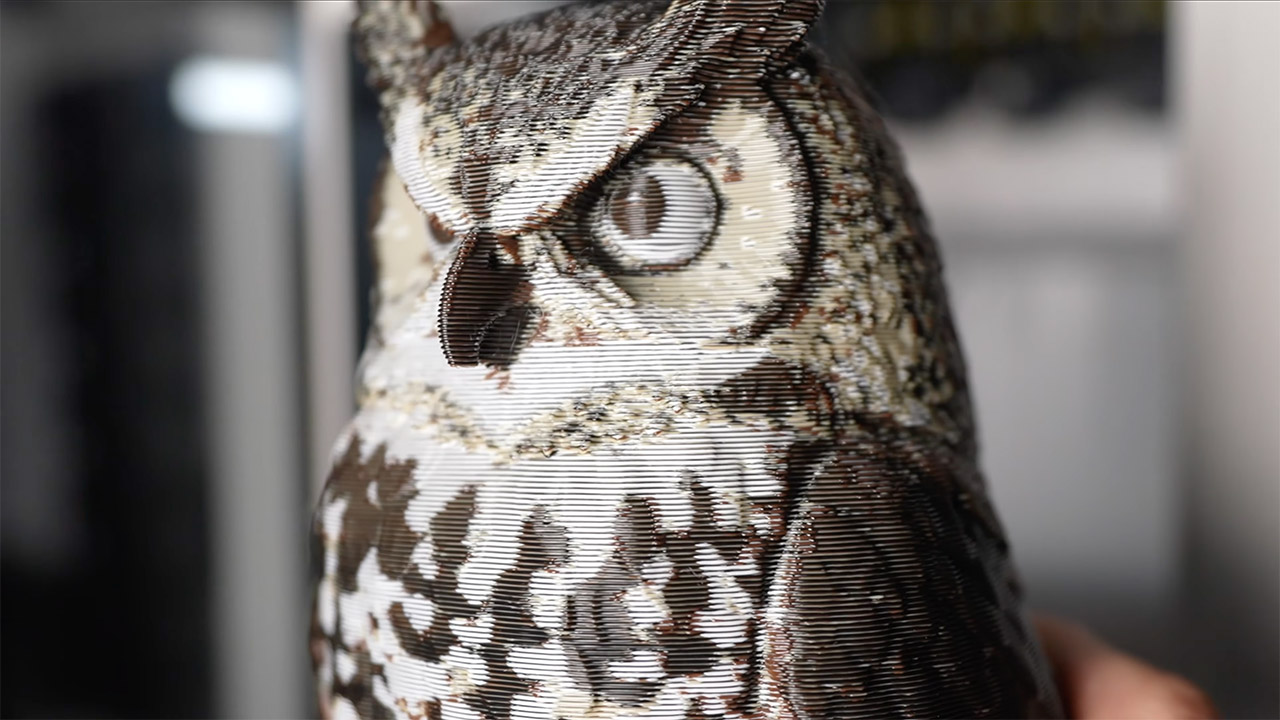
The same principle can be applied to many different colors, not just two or three. With cyan, magenta, yellow, and black loaded into the machine, the rotation of colors across successive layers produces these really nice, fine patterns, and because they are stacked vertically, just like full-spectrum dithering, those patterns optically blend into all kinds of intermediate shades. Gradients also appear much smoother because the colours simply sit side by side rather than competing for space.

He had an owl model that used to take about 5 days and 4,000 tool changes, but with this new process, it took only 3 days and he had already decreased the amount of filament needed in half. The amount of garbage decreased from two kilograms to a few hundred grams. The software begins by taking an already painted 3MF file, converting the surface colors into a texture map, and then applying the overhang modulation automatically as the model is sliced.
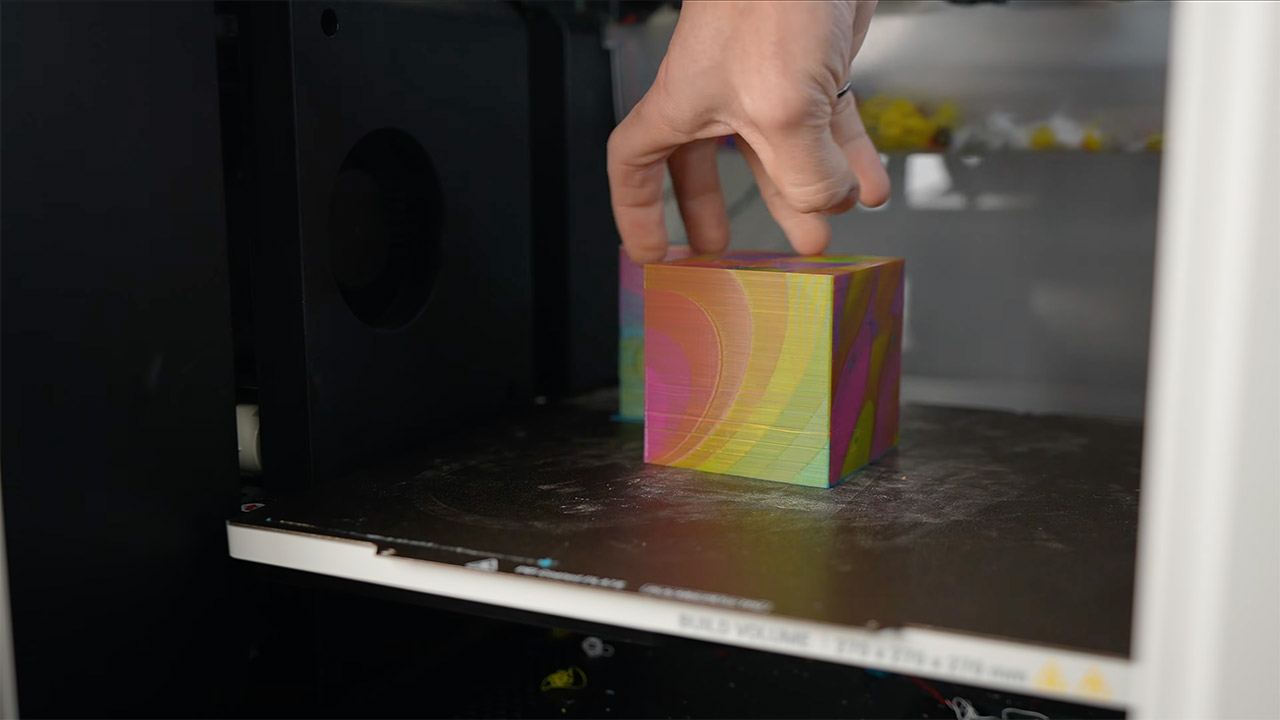
This idea comes from a 2018 research report on line-based half-toning for dual-extrusion printers. This early experiment demonstrated how controlled overhangs could disguise one filament behind another. Sentient Stardust has taken that concept and expanded on it, adding image-projection features and putting everything as a usable slicer fork that anyone can download and explore.
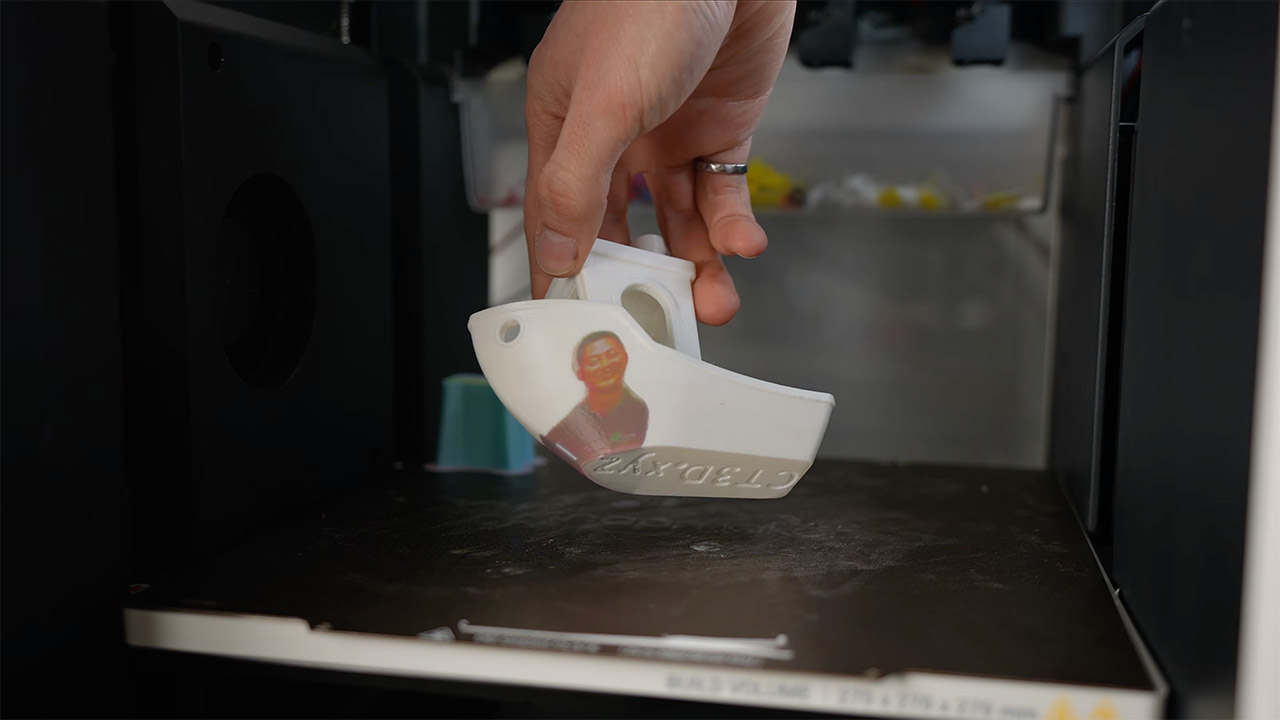
Of course, there are certain limits. With three colors on a 0.2mm layer height, the print can appear as if it was done on 0.6mm layer height. Steep walls also limit the software’s options, making the blending effect less effective. Models with very mild curves also limit the technique’s possibilities. However, for the majority of painted objects, the time and material savings outweigh any difference in surface appearance.
[Source]
ai and ml
Feature launches a day after lawsuit alleges chatbot advice contributed to near-fatal embolism
OpenAI is expanding its healthcare footprint by encouraging users to connect Apple Health data and supported medical records to ChatGPT – one day after a user sued the company, alleging the chatbot’s medical advice nearly killed him.
Health in ChatGPT, as the new feature is called, allows eligible users to connect ChatGPT to Apple’s Health app in iOS, giving the chatbot access to health information users choose to share, including medical records, sleep, activity, and other data stored in the app.
For those unfamiliar with Apple’s Health app, it’s a health dashboard that collects data from an iPhone, Apple Watch, and compatible health and fitness apps, while also allowing users to add personal health information such as medications, allergies, and medical conditions. Connecting ChatGPT to the app, says OpenAI, gives the chatbot additional context for health-related conversations, allowing it to provide more personalized responses based on a user’s health information.
“With your permission, ChatGPT can consider relevant information you have connected, such as medications, lab results, recent visits, sleep, and activity, alongside the goals and context you share,” OpenAI said in its announcement.
According to the company, the integration of health information into general ChatGPT chats comes after testing a dedicated Health experience in ChatGPT earlier this year that it found users often bypassed, instead conducting more than 70 percent of their health-related conversations outside the dedicated health space.
OpenAI said that it won’t use connected health data to train its foundation models or serve ads. Beyond those privacy concerns, however, there are some serious reasons to be skeptical of the Health in ChatGPT rollout.
Take, for example, the fact that OpenAI was sued on Wednesday in San Francisco Superior Court by a Florida man, who alleges ChatGPT gave him “extremely dangerous medical recommendations” that discouraged him from seeking medical care as his pulmonary embolism worsened. Later hospitalized, the plaintiff claims he now faces years of intensive physical and psychological recovery after the chatbot allegedly repeatedly reassured him that his symptoms were not serious and urged him to remain at home.
An OpenAI spokesperson told The New York Times that ChatGPT’s terms of service make clear it is not intended for medical diagnosis or treatment. The spokesperson also told the newspaper that the company’s models have improved since the incident at the heart of the lawsuit – a point OpenAI reiterated to The Register.
Similarly, the Health in ChatGPT announcement notes that it can still make mistakes and shouldn’t replace qualified medical professionals, even though OpenAI says it worked with hundreds of physicians to test the feature for performance and safety.
“ChatGPT is not a doctor and should never be used as a substitute for medical care, diagnosis, or treatment,” an OpenAI spokesperson told The Register in an email. “Treating chatbots as the whole story behind people’s medical decisions or outcomes oversimplifies a much bigger challenge, and risks getting in the way of people accessing powerful new tools that can aid them in their health journey.”
The inclusion of medical records in ChatGPT’s contextual data may help prevent some instances of bad advice (that plaintiff’s data may have included prior treatment that suggested increased risk for pulmonary embolism, for example), but that still won’t stop ChatGPT from simply being wrong.
We’ve published multiple stories in recent months about AI’s lack of accuracy being a major hurdle for medicine. One study earlier this year found that AI chatbots were no better at helping people make health decisions than conventional online resources, including search engines. Another study we covered found that LLMs failed at early differential diagnosis in more than 80 percent of cases. In Canada, the Auditor General of Ontario found that AI note-taking systems used by doctors routinely introduced medication errors into patient notes, omitted critical details, inserted incorrect information, and hallucinated things that neither patients nor clinicians brought up during appointments.
In other words, whether or not it’s armed with a patient’s data, involving an AI in healthcare decisions or advice sure seems like a bad idea.
“We use dedicated training to improve the models behind health conversations in ChatGPT,” OpenAI said, noting that its models have made “meaningful gains in recognizing when urgent care may be needed, asking for relevant context, explaining uncertainty, and making complex information easier to understand.”
We’re told OpenAI has trained its models to address uncertainty in health queries when information is incomplete rather than just making up an answer.
Whether that’s enough to make it safe and reliable will ultimately be up to users to decide. For those determined to put their wellness in the hands of a company defending a lawsuit alleging ChatGPT dispensed dangerous medical advice, Health in ChatGPT is rolling out now to logged-in iOS and web users aged 18 and older in the US on Free, Go, Plus, and Pro plans. ®
Europeans now get a direct look at the faces and landscapes that could soon fill their wallets. This week the European Central Bank unveiled ten shortlisted design proposals for the next series of euro notes and opened an online survey so the public can weigh in before a final choice arrives at the end of the year.
These proposals stem from two clear themes that were picked years ago after extensive public involvement and professional opinion was taken into account. One theme honors European culture in common places and concludes with some of Europe’s most well-known figures. The other walks down rivers from their mountain source to the sea, pairing each bit of water with a bird that lives there, as the one on the other side of the river is a key European institution. Both sets include the classic euro denominations from five to two hundred, and don’t worry, there will never be another 500 euro note.
Sale

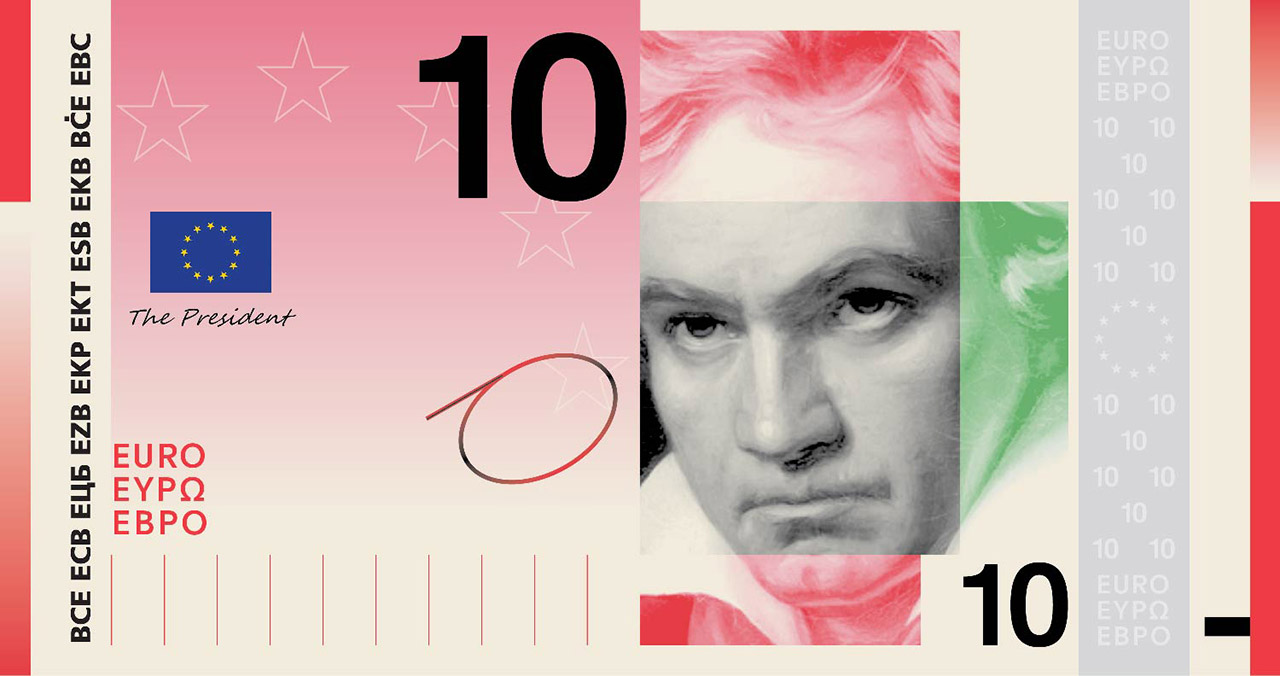
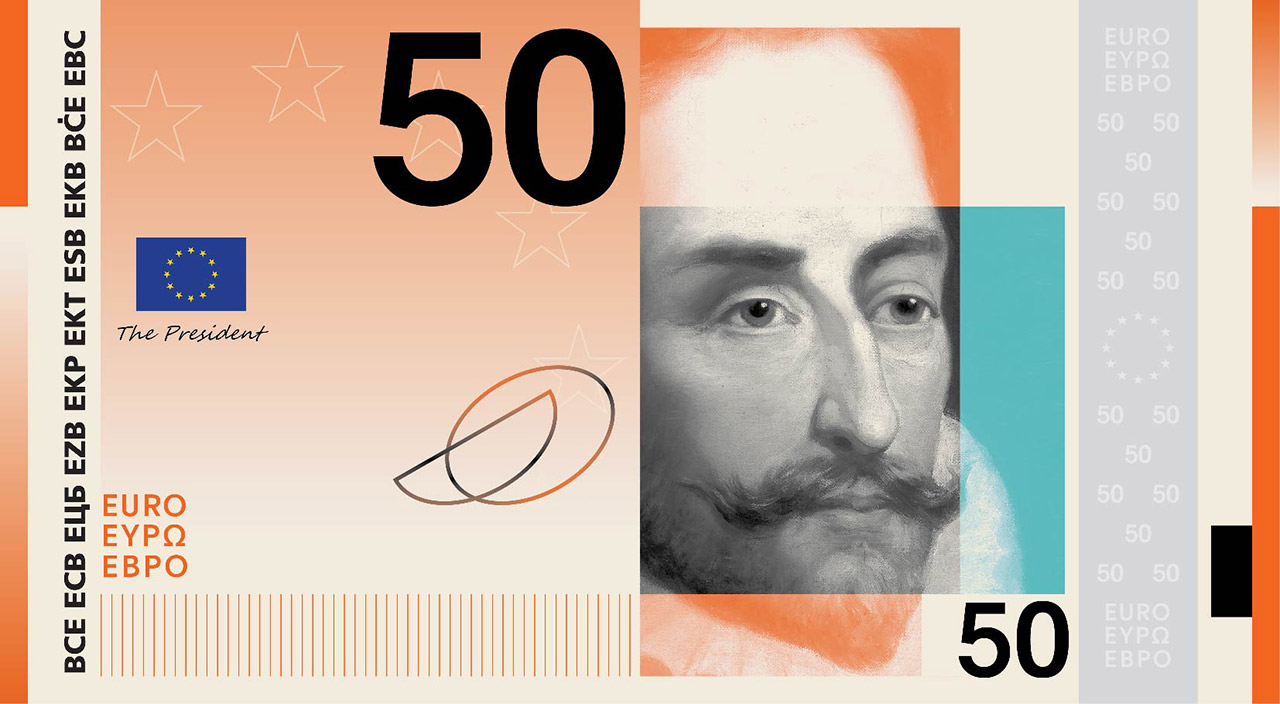
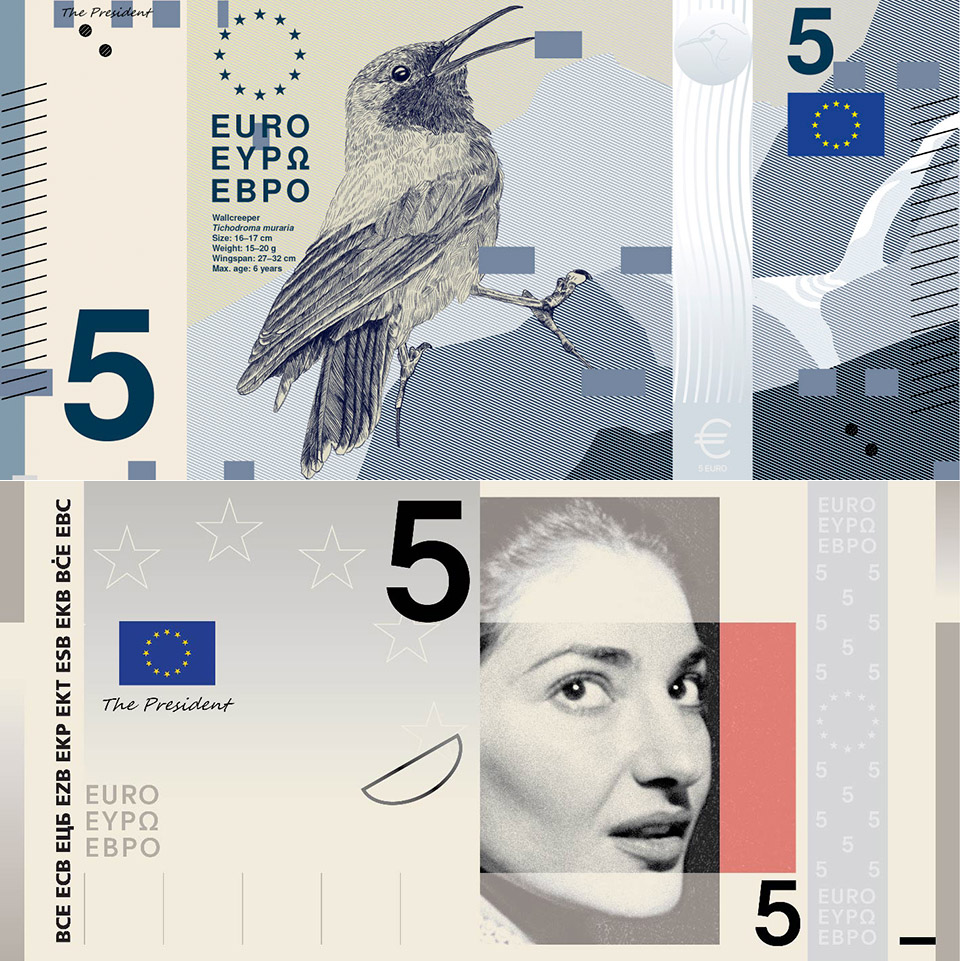
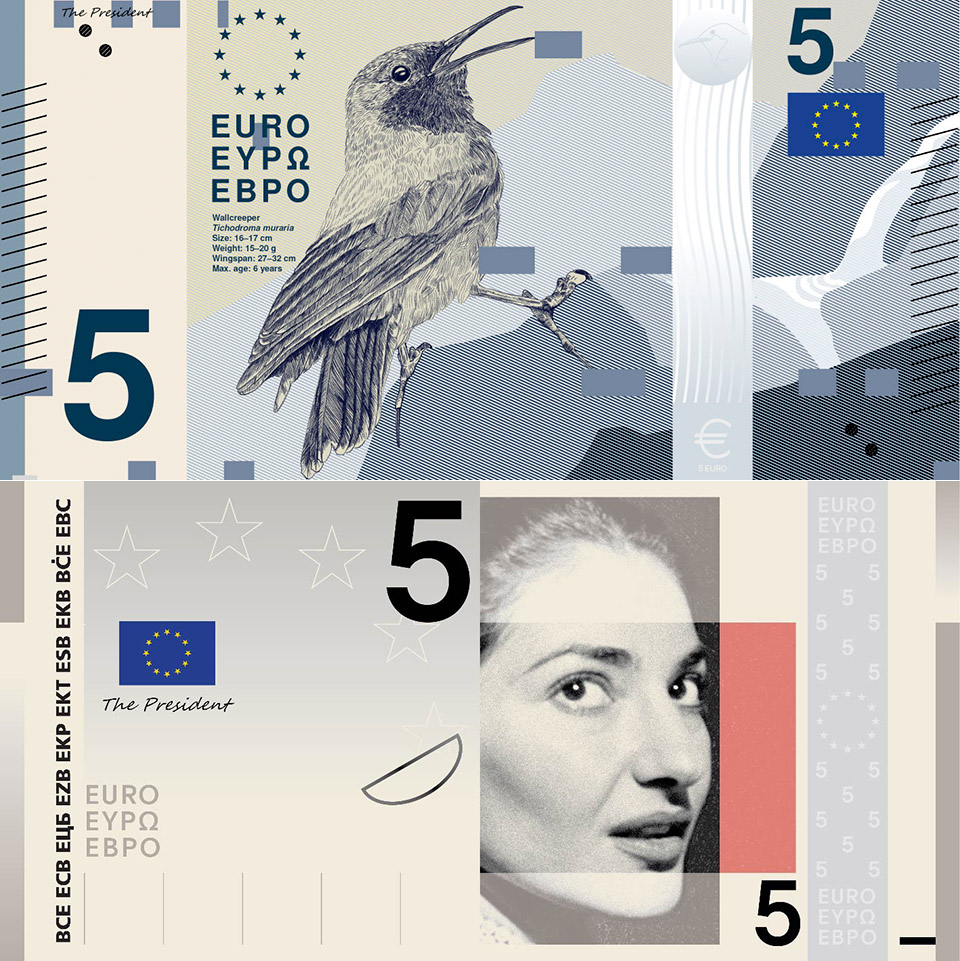
In the culture series, Maria Callas appears among a group of street performers on the five euro note. Ludwig van Beethoven appears on the tenth with a choir of young singers attending a festival. Marie Curie anchors the twenty in a classroom or at a university. Miguel de Cervantes gives the fifty to readers in a library. Leonardo da Vinci takes over the hundred, among children and adults learning art, while Bertha von Suttner, on the two hundred, has people gathered in a tree-lined square, as she was the first woman to receive the Nobel Peace Prize. The back of each note depicts ordinary Europeans participating in the cultural life associated with that figure.
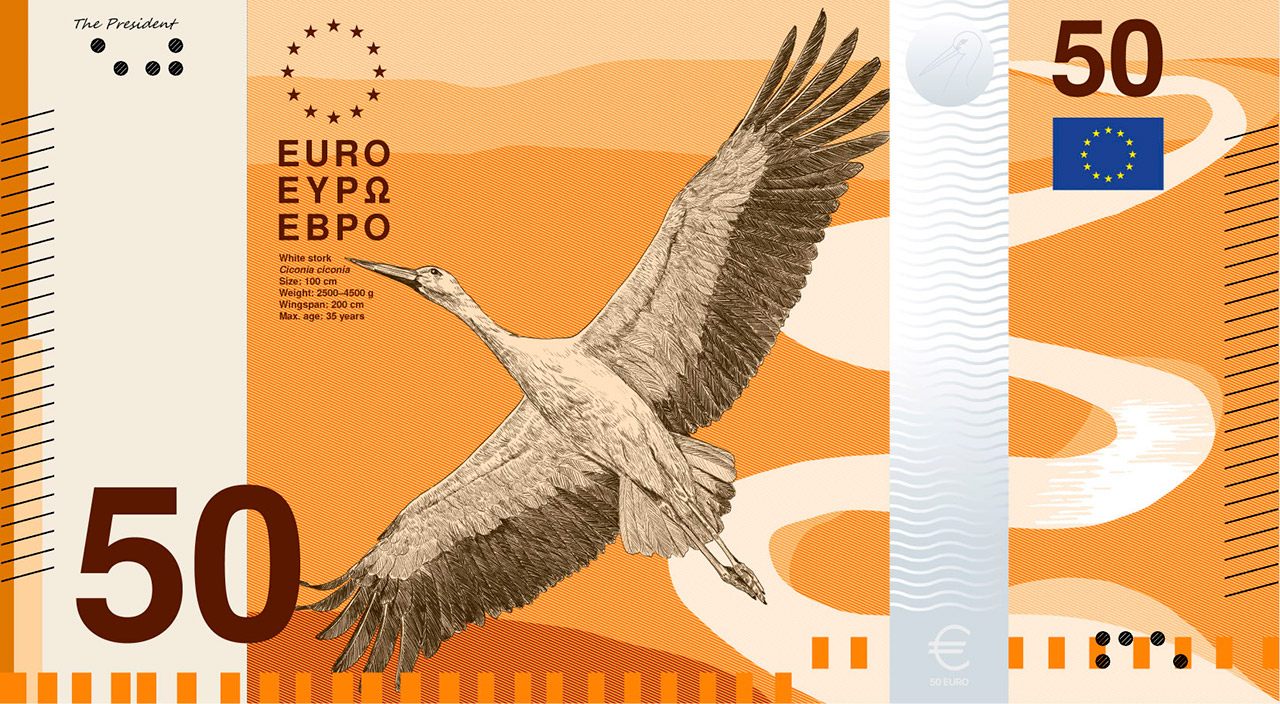
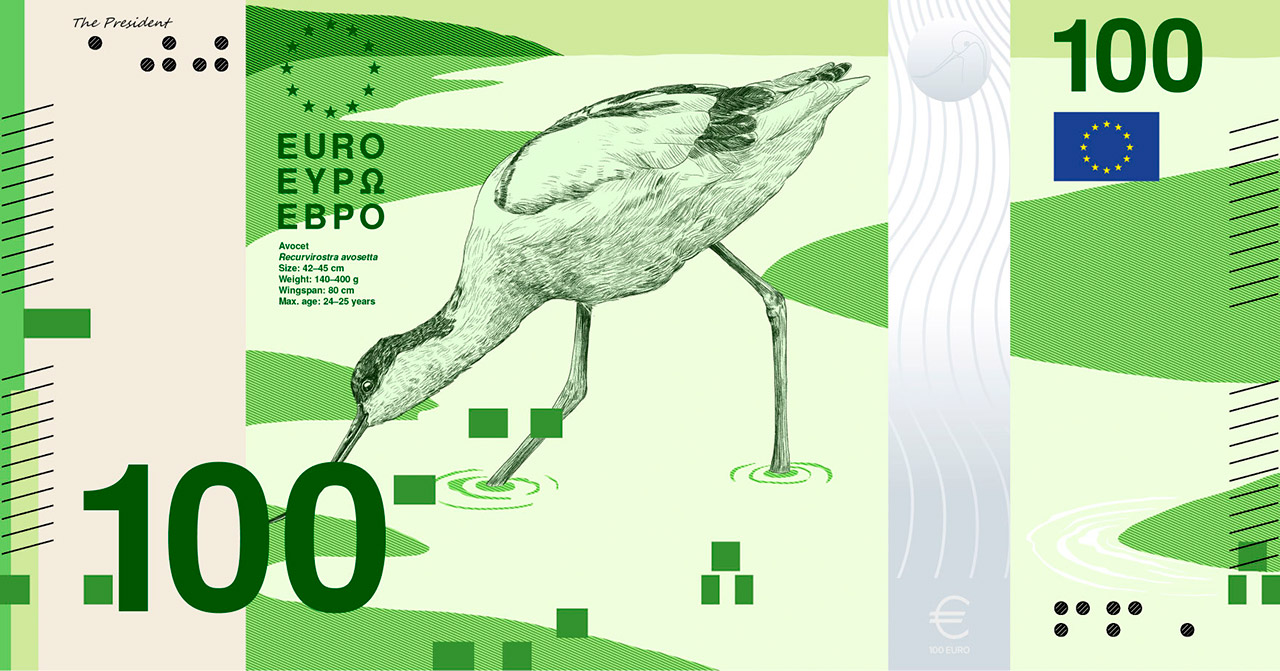
The Rivers and Birds series tells a very different story. On the five euro note, a wall creeper is depicted near the source of a river, with the European Parliament in the backdrop. On the tenth, a kingfisher waits by a waterfall, with the European Commission in the background. Bee-eaters are nesting in a sand bank along a river valley on the twentieth, and they are paired with the ECB building in Europe’s financial district. A white stork soars over a meandering river on the fifty, with the European Court of Justice in the background. An avocet is skimming across a river mouth on the hundredth anniversary of the European Council. A northern gannet is surfing the ocean waves on the two hundred, along with the European Court of Auditors. You can expect that water and wings are up front, whereas institutions are at the back.
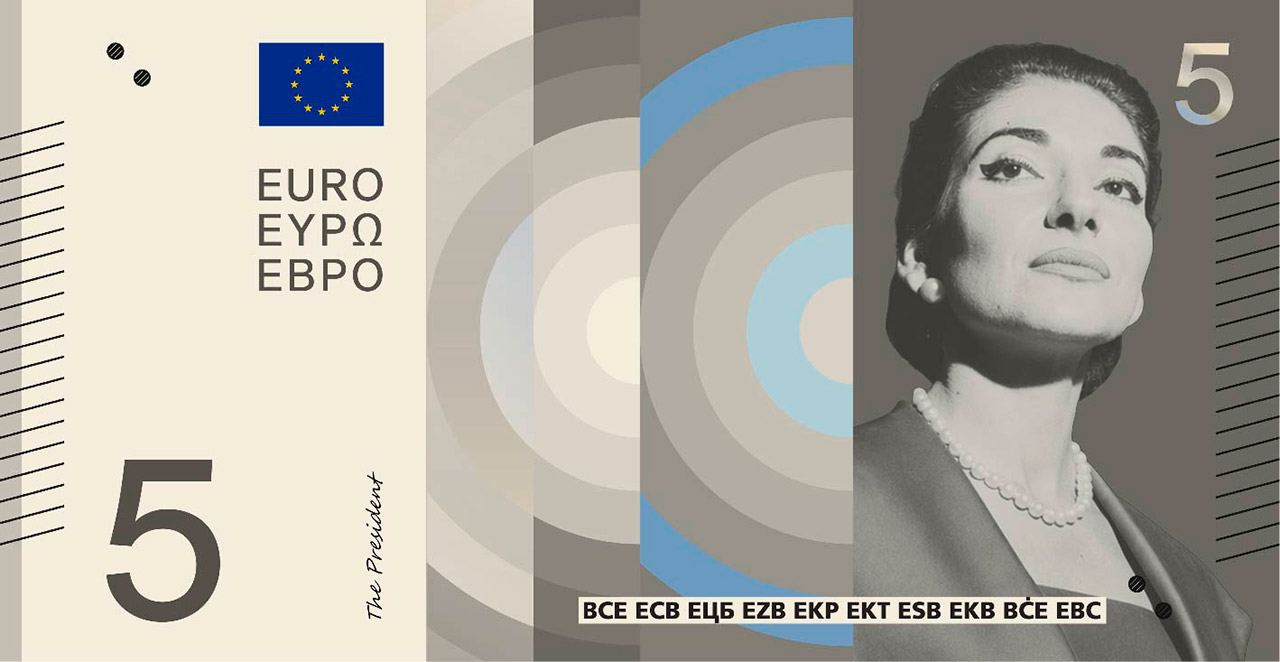

Five design teams worked on each theme. On the cultural side, one of the teams, Studio Joost Grootens, clipped historical pictures around the eyes and lips, leaving only observation and expression – it’s like a thread that runs across the designs. Another company, Neue Gestaltung GmbH, positioned the humans against the stars and purposefully selected some featureless modern people to fill out the scenes. Myrsini Vardopoulou organized a team based on circular symbols from each personality’s work in the culture portrait series. Meanwhile, Jan Robert Dünnweller created hand-drawn portraits with textured backgrounds. Rubio and del Amo, along with their sidekicks Cruz más Cruz, designed the notes to feature people gazing you directly in the eyes with the words “EURO” written in vertical blocks.

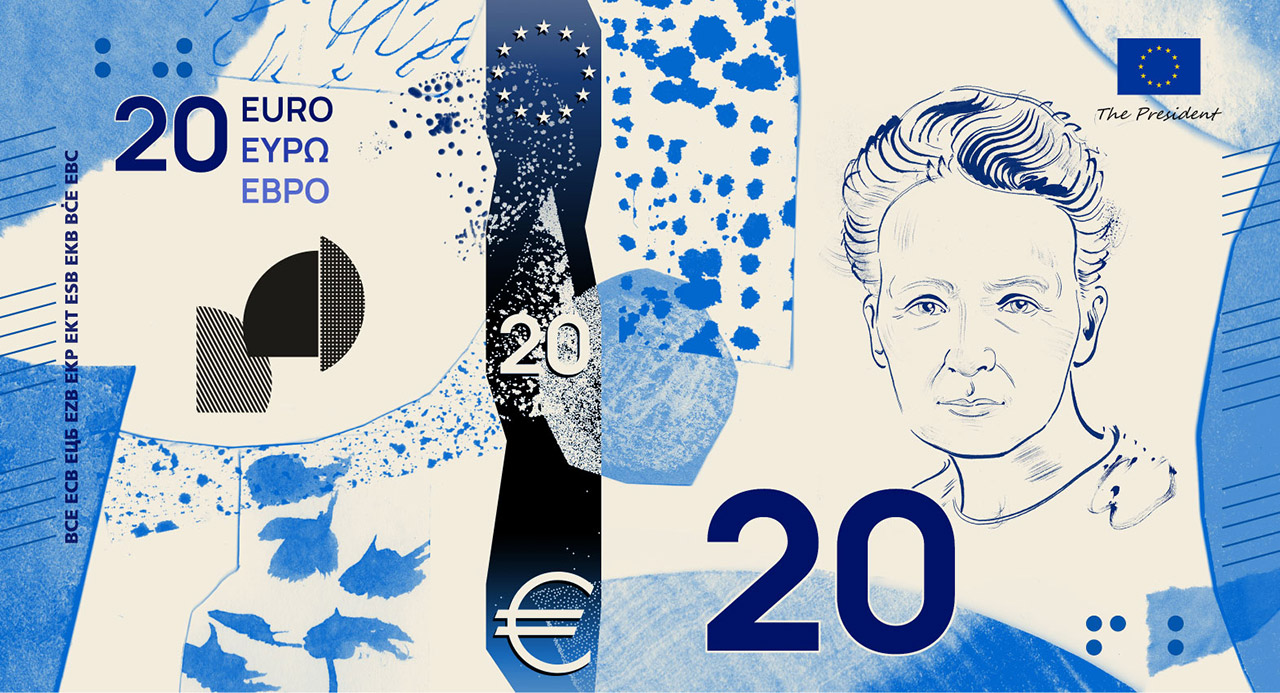
On the nature side, PunktFormStrich converts birdsong and aircraft speed into graphic data. Rudy Guedj and François Girard-Meunier pair those abstract landscapes with a continuous ribbon of light that evolves throughout the series. Meanwhile, Atelier Goppel-Toperngpong uses water as a metaphor for collective power in their work. Isabelle Daëron’s work combines hand-drawn elements with digital patterns to explore the relationship between mobility and interdependence. Ville Tietäväinen sequences the notes like a river, gradually approaching the sea with each successive value.


Getting to those ten proposals wasn’t easy. When the contest went live in 2025, more than 1200 graphic artists from throughout the EU applied. From there, 25 of them were requested to further develop their concepts into whole series, and by April 25th, a total of 39 complete proposals had arrived. An independent jury of 21 specialists, each selected by a different euro-area central bank, then began evaluating them in the dark (i.e., without knowing whose work they were reviewing). They reduced it down to five suggestions per subject based on criteria such as inventiveness, thematic clarity, accessibility, and how effectively the resulting designs will function in everyday life.
[Source]




The House | The City of London can help the new chancellor deliver growth in every postcode


Ripple Payments Joins MiCA With 14 Firms, Does It Mean Anything For XRP?


Democrats look to World Cup watch parties to register thousands of voters


Ripple wins EU-wide access as ESMA adds it to MiCA register


Grayscale Files For Worldcoin ETF, WLD Registers Sharp Rise


Sail Virtually Aboard The “Itanic” With IA-64 Emulator


Unregistered fitter used Gas Safe logo on business flyers

Turtle Beach Command Series KB7 review: a nifty screen-equipped gaming keyboard


Big Money Is Entering XRP

New Jersey voter registration controversy explained: How 6,600 noncitizens got on the rolls, and what happens next


Weekend Open Thread: Brooks Brothers


Kaspersky exposes OkoBot’s 20-module crypto wallet attack

Johnny Depp’s R-Rated Gothic Cult Classic Gets New Release Ahead of Sydney Sweeney Remake


Durham County Council to send out electoral registration emails


Ethics, other provisions in crypto Clarity Act to be further discussed


MiCA Licensing Faces Delays as ESMA Adds 14 CASPs to Register

Shanghai science forum photos show China’s AI and robotics advances in rivalry with US


Chip Stocks Enter Bear Market After Moonshot Ai Unveils Kimi K3 Model


Watch Flock Safety CEO Garrett Langley discuss the future of surveillance at TechCrunch Disrupt 2026


Subway Sandwich Computers Get a Second Life as Gaming Machines
You must be logged in to post a comment Login