

For a sport that’s more than 150 years old, the opening of the 2026 Major League Baseball season is set to feature an unusual number of firsts. The official Opening Day on March 26 is the earliest in baseball history. The first official game of the season tonight between the Giants and the Yankees — which is Opening Night, not Opening Day, totally different — will be the first-ever game streamed on Netflix.
Tech
MacBook Neo name chosen to reflect its 'fun, friendly, and fresh' look


An interview reveals Apple’s approach with MacBook Neo was a complete rethink of a budget-friendly laptop, not simply rehashing old tech at a lower price.

The MacBook Neo is a new budget-friendly product
The MacBook Neo is a brand new category in the lineup that has a new-to-Apple moniker to go with it. It’s not just a new laptop, but a new market for the premium product seller.
According to an interview with Director of Mac Product Marketing, Colleen Novielli conducted by Techradar, the MacBook Neo is meant to be competitive in the $599 price range. It brings Apple’s attention to detail and premium materials to a product nearly half the price of the MacBook Air.
Continue Reading on AppleInsider | Discuss on our Forums
Continue Reading

And chances are that some time during that game, a player will tap his helmet or hat after a pitch is thrown, challenging the umpire’s call and triggering baseball’s first-ever Automated Ball-Strike (ABS) system review. The robot umpires are here.
The system is remarkably straightforward. Each team gets two challenges per game, retaining them if successful, losing them if wrong. Only the pitcher, catcher, or batter can challenge, only over balls and strikes calls, and only within two seconds of the pitch.
Once a challenge is made, a network of 12 high-speed cameras installed around the stadium tracks the pitch’s exact location, and then software creates a 3D model of the pitch’s trajectory — on the Jumbotron for everyone to see — against the batter’s individualized strike zone. The verdict is made instantly. The umpire doesn’t go to a monitor and reconsider for minutes, like in NFL or NBA replay. He is merely the conduit to announce what the machine has decided.
This change should in theory make everyone better off. Teams have an appeal in the event of a potential blown call at a crucial moment (such as the brutal game-ending strike call for the Dominican Republic in this month’s World Baseball Classic). Challenges are limited and rapidly decided, so the game doesn’t slow down. The automated system is accurate to within 0.25 inches — roughly the width of a pencil — and quick enough to catch an Aroldis Chapman 103-mph fastball. Human umpires are still largely in charge of the game.
All in all, the ABS system appears to be an ideal compromise — preserving human judgement while allowing machines to correct the worst mistakes. While the system isn’t AI-powered, it seems like an example of how humans and AI could fruitfully work together in the future, with humans firmly in the loop but aided by the machines.
Except there’s a problem with splitting the difference between human and machine. Once you’ve conceded that the machine is the final authority on whether a call is right — which is exactly what baseball has done here — you’ve quietly eliminated the case for having the human there at all. What might seem like a stable equilibrium isn’t stable at all.
Calling balls and strikes
You can see this breakdown already underway in the minor leagues, which has been experimenting with the ABS system for years. Baseball reporter Jayson Stark has written about umpires in the AAA minors who, having grown tired of being overturned for all to see by the machine, began to change the way they handled the game, “calling balls and strikes the way they think the robot would call them.”
Because the league has given the machine final say, the human behind the mask doesn’t stay independent — he starts mimicking the machine. The umpire — once the lord of the diamond, whose word was law — becomes in effect the rough draft for the AI. Human knowledge and expertise becomes degraded.
To which a baseball fan might respond, perhaps with more colorful language, “they’re all bums anyway.” Which wouldn’t be quite fair to our carbon-based umpires, not that fairness to umps has ever been a concern for baseball fans. MLB estimates that umpires call 94 percent of pitches correctly, which on one hand is good — I’m not sure I’m 94 percent accurate on anything — but on the other hand, means they’re still making mistakes on around 17 or 18 pitches a game on average.
And even though the data suggests umpires have actually been getting better, we’re now able to see replays and precise pitch-tracking data that make it crystal clear just when a call has been blown. A guy named Ethan Singer even created an independent project called Umpire Scorecards, which uses publicly available Statcast/pitch tracking data to score every umpire, every game. The new ABS system just ratifies what previous technology made obvious years ago.
So the technological assault on the umpire’s authority has been underway for some time, and while even the ABS system has its margin of error, the end result of introducing machines will be a more accurately called game. But real human skills will be lost along the way. The best catchers are experts at framing pitches to make them look like strikes, even if they aren’t. Good batters learn an umpire’s individual strike zone and adjust game to game. (The Red Sox great Ted Williams used to say there were three strike zones: his own, the pitcher’s, and the umpire’s.) All of these skills were built on human imperfection, and all of them will become less valuable even as machines make the game “fairer.”
The one-way street of automation
To get a glimpse of baseball’s possible future, just look at tennis.
In 2006, pro tennis introduced the Hawk-Eye challenges, which allowed players to appeal a limited number of line calls to an automated camera system. The players were, initially, not fans. (As Marat Safin put it: “Who was the genius who came up with this stupid idea?”)
But the logic, especially as the sport got faster and faster, was undeniable. By 2020, the US Open had eliminated human line judging altogether, and Wimbledon followed suit in 2025. Human umpires are still employed, but mostly for the purposes of match management; i.e., shushing the crowd. The challenge system turned out to be just a stop on the path to near full-scale automation. And now baseball is stepping onto the same road.
The ABS system is what you get when an institution knows that the machine is better at the job but isn’t ready to say so. That’s exactly the position that a lot of organizations find themselves in right now, as AI grows ever more capable. The result, for the moment, tends to be a hybrid approach that leaves too many workers feeling stressed and disempowered, while failing to capture the benefits of more complete automation.
But over time, automation tends to prove to be a one-way street. The question isn’t whether machines will eventually call balls and strikes. It’s how much longer the halfway point can hold — for those umpires we love to hate, and for the rest of us.
A version of this story originally appeared in the Future Perfect newsletter. Sign up here!


Attacks leveraging the ‘PolyShell’ vulnerability in version 2 of Magento Open Source and Adobe Commerce installations are underway, targeting more than half of all vulnerable stores.
According to eCommerce security company Sansec, hackers started exploiting the critical PolyShell issue en masse last week, just two days after public disclosure.
“Mass exploitation of PolyShell started on March 19th, and Sansec has now found PolyShell attacks on 56.7% of all vulnerable stores,” Sansec says.
The researchers previously reported that the problem lies in Magento’s REST API, which accepts file uploads as part of the custom options for the cart item, allowing polyglot files to achieve remote code execution or account takeover via stored cross-site scripting (XSS), if the web server configuration allows it.
Adobe released a fix in version 2.4.9-beta1 on March 10, 2026, but it has not yet reached the stable branch. BleepingComputer previously contacted Adobe to ask about when a security update addressing PolyShell will become available for production versions, but we have not received a response.
Meanwhile, Sansec has published a list of IP addresses that target scanning for web stores vulnerable to PolyShell.
WebRTC skimmer
Sansec reports that in some of the attacks suspected to exploit PolyShell, the threat actor delivers a novel payment card skimmer that uses Web Real-Time Communication (WebRTC) to exfiltrates data.
WebRTC uses DTLS-encrypted UDP rather than HTTP, so it is more likely to evade security controls even on sites with strict Content Security Policy (CSP) controls like “connect-src.”
The skimmer is a lightweight JavaScript loader that connects to a hardcoded command-and-control (C2) server via WebRTC, bypassing normal signaling by embedding a forged SDP exchange.
It receives a second-stage payload over the encrypted channel, then executes it while bypassing CSP, primarily by reusing an existing script nonce, or falling back to unsafe-eval or direct script injection. Execution is delayed using ‘requestIdleCallback’ to reduce detection.
Sansec noted that this skimmer was detected on the e-commerce website of a car maker valued at over $100 billion, which did not respond to their notifications.
The researchers provide a set of indicators of compromise that can help defenders protect against these attacks.

Malware is getting smarter. The Red Report 2026 reveals how new threats use math to detect sandboxes and hide in plain sight.
Download our analysis of 1.1 million malicious samples to uncover the top 10 techniques and see if your security stack is blinded.

Longtime Slashdot reader JackSpratts writes: The Supreme Court unanimously said on Wednesday that a major internet provider could not be held liable for the piracy of thousands of songs online in a closely watched copyright clash. Music labels and publishers sued Cox Communications in 2018, saying the company had failed to cut off the internet connections of subscribers who had been repeatedly flagged for illegally downloading and distributing copyrighted music. At issue for the justices was whether providers like Cox could be held legally responsible and required to pay steep damages — a billion dollars or more in Cox’s case — if they knew that customers were pirating music but did not take sufficient steps to terminate their internet access.
In its opinion released (PDF) on Wednesday, the court said a company was not liable for “merely providing a service to the general public with knowledge that it will be used by some to infringe copyrights.” Writing for the court, Justice Clarence Thomas said a provider like Cox was liable “only if it intended that the provided service be used for infringement” and if it, for instance, “actively encourages infringement.” Justice Sonia Sotomayor, joined by Justice Ketanji Brown Jackson, wrote separately to say that she agreed with the outcome but for different reasons. […] Cox called the court’s unanimous decision a “decisive victory” for the industry and for Americans who “depend on reliable internet service.”
“This opinion affirms that internet service providers are not copyright police and should not be held liable for the actions of their customers,” the company said.

from the melted-snowflakes dept
Last week we covered how the government successfully convinced Judge Colleen McMahon to order the plaintiffs in the DOGE/National Endowment for the Humanities (NEH) lawsuit to “claw back” the viral deposition videos they had posted to YouTube — videos showing DOGE operatives Justin Fox and Nate Cavanaugh stumbling through questions about how they used ChatGPT to decide which humanities grants to kill, and struggling mightily to define “DEI” despite it apparently being the entire basis for their work.
The government’s argument was that the videos had led to harassment and death threats against Fox and Cavanaugh — the same two who had no problem obliterating hundreds of millions in already approved grants with a simplistic ChatGPT prompt, but apparently couldn’t handle the public seeing them struggle to explain themselves under oath. The government argued the videos needed to come down. The judge initially agreed and ordered the plaintiffs to pull them. As we noted at the time, archivists had already uploaded copies to the Internet Archive and distributed them as torrents, because that’s how the internet works.
Well, now Judge McMahon has issued a full ruling on the government’s motion for a protective order, and has reversed course. The government’s motion is denied. The videos are now back up. There are hours and hours of utter nonsense for you to enjoy. Here are just a couple of the videos:
The ruling is worth reading in full, because McMahon manages to be critical of both sides while ultimately landing firmly against the government’s attempt to suppress the videos. She spends a good chunk of the opinion scolding the plaintiffs for what she clearly views as a procedural end-run — they sent the full deposition videos to chambers on a thumb drive without ever filing them on the docket or seeking permission to do so, which she sees as a transparent attempt to manufacture a “judicial documents” argument that would give the videos a presumption of public access.
McMahon doesn’t buy it:
When deciding a motion for summary judgment, the Court wants only those portions of a deposition on which a movant actually relies, and does not want to be burdened with irrelevant testimony merely because counsel chose to, or found it more convenient to, submit it. And because videos cannot be filed on the public docket without leave of court, there was no need for the rule to contain a specific reference to video transcriptions; the only way to get such materials on the docket (and so before the Court) was to make a motion, giving the Court the opportunity to decide whether the videos should be publicly docketed. This Plaintiffs did not do.
But if Plaintiffs wanted to know whether the Court’s rule applied to video-recorded depositions, they could easily have sought clarification – just as they could easily have filed a motion seeking leave to have the Clerk of Court accept the videos and place them on the public record. Again, they did not. At the hearing held on March 17, 2026, on Defendants’ present motion for a protective order, counsel for ACLS Plaintiffs, Daniel Jacobson, acknowledged the reason, stating “Frankly, your Honor, part of it was just the amount of time that it would have taken” to submit only the portions of the videos on which Plaintiffs intended to rely. Hr’g Tr., 15:6–7. In other words, “It would have been too much work.” That is not an acceptable excuse.
The Court is left with the firm impression that at least “part of” the reason counsel did not ask for clarification was because they wished to manufacture a “judicial documents” argument and did not wish to be told they could not do so. The Court declines to indulge that tactic.
Fair enough. But having knocked the plaintiffs for their procedural maneuver, the judge then turns to the actual question: has the government shown “good cause” under Rule 26(c) to justify a protective order keeping the videos off the internet? And the answer is a pretty resounding no. And that’s because public officials acting in their official capacities have significantly diminished privacy interests in their official conduct:
The Government’s motion fails for three independent reasons. First, the materials at issue concern the conduct of public officials acting in their official capacities, which substantially diminishes any cognizable privacy interest and weighs against restriction. Second, the Government has not made the particularized showing of a “clearly defined, specific and serious injury” required by Rule 26(c). Third, the Government has not demonstrated that the prospective relief it seeks would be effective in preventing the harms it identifies, particularly where those harms arise from the conduct of third-party actors beyond the control of the parties.
She cites Garrison v. Louisiana (the case that extended the “actual malice” standard from NY Times v. Sullivan) for the proposition that the public’s interest “necessarily includes anything which might touch on an official’s fitness for office,” and that “[f]ew personal attributes are more germane to fitness for office than dishonesty, malfeasance, or improper motivation.” Given that these depositions are literally about how government officials decided to terminate hundreds of millions of dollars in grants, that framing fits.
The judge also directly calls out the government’s arguments about harassment and reputational harm, and essentially says: that’s the cost of being a public official whose official conduct is being scrutinized. Suck it up, DOGE bros.
Reputational injury, public criticism, and even harsh commentary are not unexpected consequences of disclosing information about public conduct. They are foreseeable incidents of public scrutiny concerning government action. Where, as here, the material sought to be shielded by a protective order is testimony about the actions of government officials acting in their official capacities, embarrassment and reputational harm arising from the public’s reaction to official conduct is not the sort of harm against which Rule 26(c) protects. Public officials “accept certain necessary consequences” of involvement in public affairs, including “closer public scrutiny than might otherwise be the case.”
As for the death threats and harassment — which McMahon explicitly says she takes seriously and calls “deeply troubling” and “highly inappropriate” — she notes that there are actual laws against threats and cyberstalking, and that Rule 26(c) protective orders aren’t a substitute for law enforcement doing its job:
There are laws against threats and harassment; the Government and its witnesses have every right to ask law enforcement to take action against those who engage in such conduct, by enforcing federal prohibitions on interstate threats and cyberstalking, see, e.g., 18 U.S.C. §§ 875(c), 2261A, as well as comparable state laws. Rule 26(c) is not a substitute for those remedies.
And then there’s the practical reality McMahon acknowledges directly: it’s too damn late. The videos have already spread everywhere. A protective order aimed solely at the plaintiffs would accomplish approximately nothing.
At bottom, the Government has not shown that the relief it seeks is capable of addressing the harm it identifies. The videos have already been widely disseminated across multiple platforms, including YouTube, X, TikTok, Instagram, and Reddit, where they have been shared, reposted, and viewed by at least hundreds of thousands of users, resulting in near-instantaneous and effectively permanent global distribution. This is a predictable consequence of dissemination in the modern digital environment, where content can be copied, redistributed, and indefinitely preserved beyond the control of any single actor. Given this reality, a protective order directed solely at Plaintiffs would not meaningfully limit further dissemination or mitigate the Government’s asserted harms.
Separately, the plaintiffs asked for attorney’s fees, and McMahon denied that too, noting that she wasn’t going to “reward Plaintiffs for bypassing its procedures” even though the government’s motion ultimately failed. So everyone gets a little bit scolded here. But the bottom line is clear: you don’t get to send unqualified DOGE kids to nuke hundreds of millions in grants using a ChatGPT prompt, and then ask a court to hide the video of them trying to explain themselves under oath.
Releasing full deposition videos is certainly not the norm, but given that these are government officials who were making massively consequential decisions with a chatbot and no discernible expertise, the world is much better off with this kind of transparency — even if Justin and Nate had to face some people on the internet making fun of them for it.
Filed Under: depositions, doge, justin fox, nate cavanaugh, neh, public scrutiny
Companies: american council of learned societies, american historical association, authors guild

Apple reportedly has full access to customize Google’s Gemini model, allowing it to distill smaller on-device AI models for Siri and other features that can run locally without an internet connection. MacRumors reports: The Information explains that Apple can ask the main Gemini model to perform a series of tasks that provide high-quality results, with a rundown of the reasoning process. Apple can feed the answers and reasoning information that it gets from Gemini to train smaller, cheaper models. With this process, the smaller models are able to learn the internal computations used by Gemini, producing efficient models that have Gemini-like performance but require less computing power.
Apple is also able to edit Gemini as needed to make sure that it responds to queries in a way that Apple wants, but Apple has been running into some issues because Gemini has been tuned for chatbot and coding applications, which doesn’t always meet Apple’s needs.

Meta and Google have been found liable for building intentionally addictive social media services, in a trial that sets a strong precedent for hundreds of other lawsuits that are still pending.

Meta CEO Mark Zuckerberg
On Wednesday, a jury in Los Angeles Superior Court finished its deliberations over a lawsuit between Meta and Google, and a young woman. The jury found that the tech giants were liable for enabling a woman identified as Kaley to become addicted to social media as a child.
The lawsuit commenced in January, while the jury deliberations started on March 13.
Continue Reading on AppleInsider | Discuss on our Forums


Spotify is working on a new feature to help users discover music. The immensely popular streaming service recently introduced SongDNA, an “immersive” experience that provides extended credits to the people who contributed to one or more music productions.
Read Entire Article
Source link
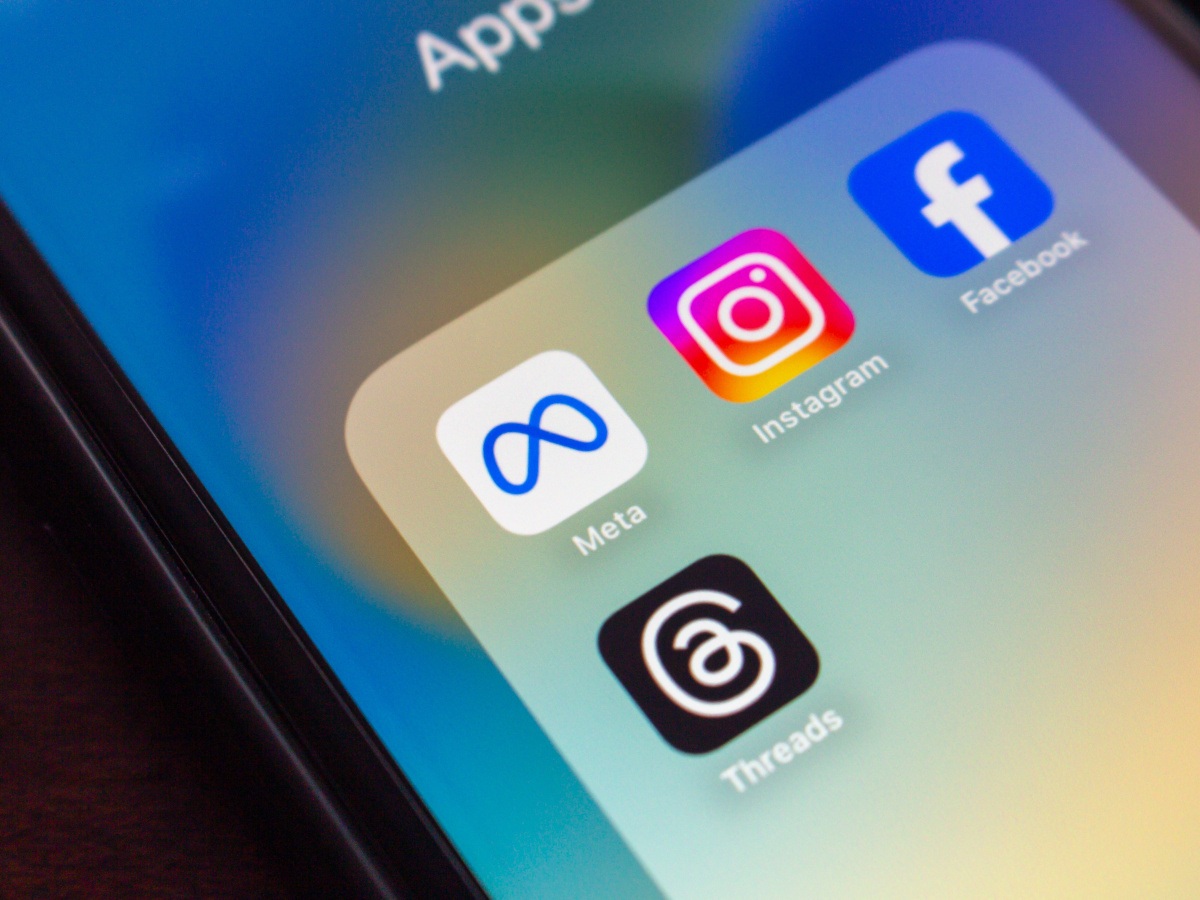

Meanwhile, a Los Angeles jury is deliberating a social media addiction lawsuit against Meta and Google.
A New Mexico jury has found that Meta endangered children by misleading users about the safety of its platforms. The decision comes after a nearly seven-week trial, resulting in Meta being told to pay $375m in damages.
“The jury’s verdict is a historic victory for every child and family who has paid the price for Meta’s choice to put profits over kids’ safety,” said New Mexico attorney general Raúl Torrez, who filed the lawsuit against Meta in 2023.
In the suit, he claimed Meta knowingly exposes children to sexual exploitation and mental harm for profit. Meta owns Instagram, Facebook and WhatsApp.
According to the New Mexico Department of Justice, evidence presented at the trial established that Meta’s design features enable bad actors to engage in child sexual exploitation. Evidence also showed platforms are also designed to addict young people, according to the department.
“Meta executives knew their products harmed children, disregarded warnings from their own employees, and lied to the public about what they knew. Today the jury joined families, educators, and child safety experts in saying enough is enough,” Torrez added. The company has been found to have violated parts of the state’s Unfair Practices Act.
Meta plans to appeal the decision. “We respectfully disagree with the verdict and will appeal,” Meta said in statement yesterday (24 March).
“We work hard to keep people safe on our platforms and are clear about the challenges of identifying and removing bad actors or harmful content. We will continue to defend ourselves vigorously, and we remain confident in our record of protecting teens online.”
Meanwhile Torrez will be asking the presiding judge to place additional penalties on Meta during a bench trial scheduled in early May. Torrez will also be asking the court to force Meta to make its apps safer for children.
The New Mexico verdict is a major loss for Meta, which is gearing up for a number of trials set for this year. A jury in Los Angeles is currently deliberating a social media addiction suit against Meta and Google. TikTok and Snapchat were involved in the original suit, but have since settled out of court.
Thousands have filed lawsuits against social media companies over the alleged harm they pose to their users, including more than 40 US state attorney generals.
A coalition suit filed in 2023 accused Meta of designing and deploying “harmful features” on Instagram and Facebook, which get younger people addicted to these platforms.
Don’t miss out on the knowledge you need to succeed. Sign up for the Daily Brief, Silicon Republic’s digest of need-to-know sci-tech news.

Big Tech is not alone in the AI innovation race. Four startup founders took the stage at GeekWire’s Agents of Transformation event Tuesday in Seattle for a rapid-fire pitch competition.
Ideas from Pay-i, Cascade, Autessa and GemaTEG were pitched to the crowd and a panel of judges, with Pay-i founder David Tepper emerging as winner and most impressive under pressure.
Judges Bryan Hale of Anthos Capital, Yifan Zhang of AI House, and T.A. McCann of Pioneer Square Labs said they were looking for someone who was “both great at presenting but also fantastic at answering the questions.”
Read more about each pitch:
Pay-i (pitch by David Tepper, founder/CEO)

An AI spend management platform that tracks ROI across an organization’s entire AI footprint — not just tokens, but the full cost stack including models, tools, and GPU resources.
David Tepper argued that tokens account for only 72% of the total expense associated with AI, and that the complexity multiplies fast when agents are drawing on multiple models, enterprise discounts, and rented GPU banks simultaneously.
Born from his days tracking Microsoft’s internal Gen AI spend on Excel spreadsheets — a period when he says he once saved his division $300,000 a week by simply asking the right questions — the company targets enterprises spending at least $500,000 on AI annually.
“After all the hype and FOMO wears off, there’s three letters that are going to survive the AI revolution, and that’s ROI,” he said.
Cascade AI (pitch by Ana-Maria Constantin, co-founder/CEO)

An agentic HR and IT support platform that deploys AI agents to handle sensitive employee situations — benefits navigation, mental health resources, leave management — confidentially and around the clock, freeing HR teams for higher-stakes human judgment.
Ana-Maria Constantin opened her pitch with a show of hands, asking the audience whether they’d ever hesitated to go to HR because they weren’t sure whose side HR would be on.
“Imagine if that’s the case for the people in this room, senior leaders working for some of the most successful companies in the world,” she said. “Imagine how regular employees are feeling. That’s the problem we’re working on at Cascade AI.”
Autessa (pitch by Roshnee Sharma, CEO)

A platform that replaces off-the-shelf SaaS with custom-built software staffed by “AI employees” — agents that handle workflows like lead qualification and order processing.
Roshnee Sharma’s pitch opened with a crowd-participation moment: what does SaaS really stand for? “Software as a spend,” she declared.
The company targets mid-market businesses with $20 million to $500 million in revenue, and prices its AI employees at roughly $7 to $10 each.
Judges pushed back on whether results were truly cost-saving or merely cost-neutral; Sharma argued the savings are real because clients avoid having to hire additional headcount: “We didn’t fire people. We got people able to do more of the work that they wanted to do.”
GemaTEG (pitch by Manfred Markevitch, co-founder/CEO)

The outlier of the group: a hardware thermal management company targeting AI data centers, using solid-state cooling technology that requires no water and uses 40% less power than conventional systems.
“AI runs on hardware. It’s not only software,” co-founder and CEO Manfred Markevitch told the crowd, noting that a conventional hybrid-scale data center can consume a million gallons of water per day.
GemaTEG’s granular approach cools at the individual chip level rather than the whole building, and the company claims its systems perform twice as well as conventional ones on a per-watt basis. The company already has installations with the U.S. Department of Energy, and partners in Italy and Switzerland.
Hyperscaler deployment is one to two years out, with chip manufacturer design-in conversations already underway. Judges pressed hard on customer lock-in risk; Markevitch compared the stickiness of their solution to Intel Inside — once designed in, it spans multiple chip generations.
Related coverage:

‘Wispit 2C’ is estimated to be about 5m years old and most likely 10 times the mass of Jupiter.
Galway native Chloe Lawlor has discovered a new planet – the second one to be found forming near an infant star called ‘Wispit 2’, some 437 light years away.
As a child, Lawlor wanted to be an artist, she tells SiliconRepublic.com. However, she changed her mind once she joined university. “I moved into physics because I did like physics in school, so I thought, ‘Oh, maybe I’ll just try this out.’”
The 25-year-old says discoveries such as these feed the innate curiosity humans have in wanting to know how we came to be, how we evolved and why we are here. Lawlor is a PhD student at the University of Galway’s Centre for Astronomy at the School of Natural Sciences and the Ryan Institute.
She is working in collaboration with project lead Richelle van Capelleveen, a PhD student from Leiden Observatory in the Netherlands, and postdoctoral researcher Guillaume Bourdarot from the Max Planck Institute for Extraterrestrial Physics in Germany, to learn more about young planets and how they’re forming.
“Most of the planets that we’ve observed have been much older,” Lawlor says. “We don’t know how they get to those sort of final stages like something like our solar system. This is really key for these formation theories and it’s hopefully going to tell us a lot about these young systems, how they’re forming, and then how they evolve.”
Lawlor’s new discovery, an exoplanet named ‘Wispit 2C’, is thought to be about 5m years old. ‘Wispit 2B’, a nearby planet, was discovered last year by van Capelleveen and Dr Laird Close from the University of Arizona.
Both these exoplanets are at early stages of formation in the disc around Wispit 2, which is located in the Constellation of the Eagle, a prominent equatorial constellation visible in the northern hemisphere summer along the Milky Way.
Lawlor’s discovery makes Wispit 2 the second known young and still forming multi-planet system. The only other system yet discovered with more than one planet developing is PDS 70, some 400 light years away from Earth.
Wispit 2C is a gas giant, likely around 10 times the mass of Jupiter. It is twice as massive as Wispit 2B and orbits four-times closer to its host star, which makes it incredibly difficult to detect with ground-based telescopes.

Wispit 2B and Wispit 2C forming around Wispit 2. Image: ESO/C Lawlor, R F van Capelleveen et al.
The exoplanet was detected using the European Southern Observatory’s Very Large Telescope in Chile’s Atacama desert. By linking several telescopes together to act as one giant instrument, the research team was able to observe regions very close to the star. In their analysis, the team was able to detect carbon monoxide gas, a chemical commonly found in the atmospheres of young giant planets.
Lawlor said earlier this week: “At first, we weren’t sure if it was a planet or a very large dust clump. We very quickly made follow-up observations using the Very Large Telescope Interferometer, an incredible setup where multiple telescopes can be connected to form a large virtual telescope.
“This allowed us to take what we call a spectrum, which is essentially a chemical fingerprint revealing the elements and molecules in an object’s atmosphere.”
Lawlor led the study, which has been published in The Astrophysical Journal Letters.
Prof Frances Fahy, director of the Ryan Institute, said: “The discovery of the planet Wispit 2C is a remarkable achievement and highlights the world-class astrophysics research taking place at University of Galway.”
The team will continue on with their efforts to hopefully find more planets in the system.
Last year, a study from Scotland’s University of St Andrews showed how giant free-floating planets could make their own miniature planetary systems without needing a star to orbit around. In a different study from 2025, scientists – for the first time – observed the very early stages of the creation of a new solar system around a baby star.
Don’t miss out on the knowledge you need to succeed. Sign up for the Daily Brief, Silicon Republic’s digest of need-to-know sci-tech news.

NewsBeat49 seconds ago
Southern Africa the title of latest Lanarkshire Philatelic Society display

Business2 minutes ago
USPS reportedly plans its first-ever fuel surcharge on packages

Crypto World3 minutes ago
CFTC’s first self-custody no-action letter signals new era for XRP derivatives


-
 Crypto World5 days ago
NIO (NIO) Stock Plunges 6.5% as Shelf Registration Sparks Dilution Worries
-

 Fashion5 days ago
Weekend Open Thread: Adidas – Corporette.com
-

 Politics5 days ago
Jenni Murray, Long-Serving Woman’s Hour Presenter, Dies Aged 75
-
 NewsBeat12 hours ago
Manchester United reach agreement with Casemiro over contract clause amid transfer speculation
-

 Crypto World4 days ago
Best Crypto to Buy Now: Strategy Just Spent $1.57 Billion on Bitcoin During Fear While Early Investors Quietly Enter Pepeto for 150x Potential
-

 Crypto World4 days ago
Bitcoin Price News: Bhutan Sells $72 Million in BTC Under Fiscal Pressure, but the Smart Money Entering Pepeto Sees What the Market Does Not
-

 Tech6 days ago
inKONBINI Lets You Spend Summer Days Behind the Register
-

 Sports2 days ago
Remo Stars and Kano Pillars Strengthen Survival Hopes in NPFL
-

 Politics6 days ago
Gender equality discussions at UN face pushbacks and US resistance
-

 Business3 days ago
No Winner in March 21 Drawing as Prize Rolls to $133 Million for Next
-

 Sports2 days ago
Gary Kirsten Accuses Pakistan Cricket Board Of ‘Interference’, Mohsin Naqvi Responds
-

 Tech3 days ago
Give Your Phone a Huge (and Free) Upgrade by Switching to Another Keyboard
-

 Sports5 days ago
2026 Kentucky Derby horses, odds, futures, preview, date: Expert who nailed 12 Derby-Oaks Doubles enters picks
-
Sports7 days ago
Vikings Free Agency Enters Phase 2 with Key Questions
-

 Tech3 days ago
AI enters the chat: New Seattle dating app relies on tech to facilitate meaningful human connections
-

 News Videos7 days ago
Amazing Cardboard Gadget That Turns Paper Into Money #techgadgets #ytshorts
-

 Politics6 days ago
Scotland’s rejection of assisted dying is a victory for humanity
-

 Tech7 days ago
Corsair K100 Air Wireless Mechanical RGB Keyboard Packs Full Power Into a Slim Frame
-

 Business6 days ago
DLocal: Entering 2026 At Escape Velocity
-
Business5 days ago
Columbia Sportswear enters $500 million credit agreement with JPMorgan Chase
You must be logged in to post a comment Login